❌

Reading view

Europe’s mounting social chaos… chickens coming home to roost for proxy war against Russia

Strategic Culture Foundation | October 9, 2026

The European Union is witnessing a full-blown social revolt. Governing political parties and their economic policies are held in open contempt as public protests and strikes escalate across multiple countries.

Protests, mass marches, and industrial strikes are spreading across the EU in France, Belgium, Spain, Italy, Germany, Ireland, Portugal, and other countries. The grievances are various, from students and teachers over woeful education services, to healthcare professionals and transportation workers denouncing crumby wages and pension cuts.

But at the core is a warmongering, dehumanizing system of capitalist inequality.

Unbearable living costs for basic needs, from food to housing, are driving millions onto the streets in desperation and anger at the lack of adequate political response to their concerns. As one French student said: “Too young to be listened to, old enough to be tear-gassed.”

The entire political system is being brought into disrepute for its dysfunction and indifference towards meeting rudimentary human needs. Then, infuriating all the more, are lies from the elite rulers and their propaganda media about “national defense and threat of war from Russia.”

In Spain this week, an 87-year-old frail woman known as Maricarmen died in hospital after she was evicted from her Madrid home because she could not pay the extortionate rent increase. Her plight has come to galvanize a nationwide protest against Spain’s housing crisis, a crisis that is repeated across every European country. Protesters shouted furiously that the pitiful old woman was “murdered by the state and corporations.”

In France, the brutality of police against student protests has shocked the nation and the world. Nearly 7,000 young people have been arrested, as riot police tear gas and shoot at largely peaceful rallies. Students gathering at the Place de la Bastille in Paris and other cities vow that they will not back down. One student had his hand blown off by a police stun grenade while another teenager lost an eye from a rubber bullet fired at close range.

The Place de la Bastille is where the French Revolution manifested in 1798 against a hated aristocracy amid abject misery. Today, the tensions are boiling towards another momentous rebellion, this time inspiring again similar movements across Europe.

These protests and the inhumane suffering that underlie them are channeling uprisings all over the EU.

There is a palpable sense that populations en masse have had enough of decades of inequality and chronic deprivation inflicted by capitalist policies that enrich a few and are enforced by governments slavishly serving the interests of capital over the needs of the citizen majority.

Western media reports talk about “cash-strapped” governments under pressure from bond markets to reduce record debt levels while workers, students and pensioners demand more public investment and relief from economic hardship.

That is a misleading partial portrayal of the problem. Omitted is the crucial backdrop that European governments are directing vast economic resources towards militarism and the proxy war in Ukraine against Russia. That is what is causing the “cash-strapped governments.” In other words, their declared fiscal straits are a policy choice, not some mysterious dilemma.

The social crisis sweeping across Europe is also seen in the United States and other Western-aligned nations. The background is a failed economic system that no longer provides a modicum of acceptable living conditions. The problem has been decades in the making from growing inequality and diminishing political representation. Today it is even questionable if Western states are democracies, controlled as they are by corporate oligarchies.

Nevertheless, the social crisis that is unfolding across Europe has been intensified and amplified by European political rulers operating in a relentless war mode against Russia.

The European Union has pumped hundreds of billions of euros into Ukraine over the past four years to prop up a NeoNazi regime run by a corrupt dictatorship – all for the objective of defeating Russia. The EU leaders – many of them unelected, like Ursula von der Leyen, Kaja Kallas and António Costa – are driven by an obsessive Russophobia. But that is only part of the explanation.

Other elected leaders and parties like France’s Macron and Germany’s Merz are also despised for their elitism and delusions of grandeur. Merz declares that he wants to make Germany the strongest military in Europe, in total tin-ear deafness to his nation’s economic and social problems and the sinister historical connotations of resurrecting Nazi Germany. Meanwhile, as his government suffers electoral defeat after defeat, European elites deprecate German voters as being blind because they dare to choose parties that are opposed to war with Russia.

There are many grounds for the Europe-wide contempt of ruling parties. Inequality, poverty, unemployment, soaring living costs, declining wages, deteriorating public services. Uncontrolled immigration amid the pressure on inadequate public resources is another cause for grievance. Europe’s complicity in the Israeli genocidal war on Palestinians, and Europe’s complicity in Trump’s aggression towards Iran, Yemen, Cuba, and so on, are other factors.

However, the bogus narrative that governments are “cash-strapped” is a cause for immense public disgust. There are plenty of economic resources to meet public needs. It’s a question of those resources not being permitted to create just and humane societies under the prevailing capitalist system with its priority of enriching a tiny elite class.

The conditions of “tight budgets” and “austerity for the masses” are created by deliberate policies of militarism and fuelling a proxy war in Ukraine.

European “leaders” and their NATO lobbyists like Mark Rutte demand hundreds of billions of euros to boost military industries while at the same time calling for draconian cuts in public spending and social welfare in order to pay for this reckless militarism. The EU is “lending” an additional €90 billion over the next two years alone just to prop up the corrupt regime in Kiev so that it can keep fighting a futile war with Russia. The perverse priority is driven by the military-industrial complex and its corporate investors. It is also driven by an ideological, propagandized mindset that demonizes Russia as an enemy. President Putin and other Russian voices have repeatedly stated that they do not want war with Europe. They say the conflict in Ukraine has root causes that can be resolved through diplomatic engagement. Why are European politicians implacably opposed to peace?

A major factor is covering for internal political and economic failure of the European system. The EU’s economies, as with those in the U.S. and other Western states, are bankrupt dystopias in terms of delivering on social and democratic needs. The failure has been compounded by the costs of war in Ukraine.

That failure is criminal and fatal for the politicians and governments who have overseen the policies. Thus, the political class, including the propaganda news media, cannot admit their criminal policies.

In the face of their own internal contradictions, the European political elites are seeking a solution by externalizing Russia as an enemy. This is the same modus operandi that European rulers have used for the past century and more, unleashing two world wars as a result.

These criminal politicians and their dysfunctional economic system are again pushing war as their escape plan for survival at the expense of millions of lives and at the risk of starting a third world war, one that this time around could involve catastrophic nuclear nemesis.

It is damning of virtually every European government, including primarily the British, that there are no calls for diplomacy and political settlement with Russia. They are committed to waging war on Russia to absolve themselves from the social devastation they are responsible for.

One positive thing, though, is that increasing numbers of people can see through the chicanery and lies. A German student placard summed it up: “We won’t fight your wars… Education not bombs!”

A day of reckoning is imminent. Criminal political leaders and their warmongering system are exposed like never before and in a way that demands total revolt as a proper solution. The consequences are not to be externalized this time. Chickens are coming home to roost, as Malcom X once said.

  •  

Greece “Indispensable” To US. What About Turkey? Turkish Question Strikes Again

Click to see the full-size image

Written by Uriel Araujo, Anthropology PhD, is a social scientist specializing in ethnic and religious conflicts, with extensive research on geopolitical dynamics and cultural interactions

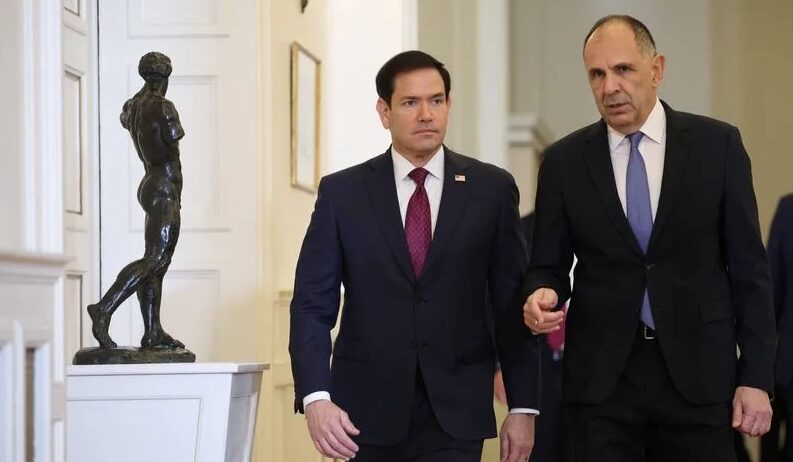
US Secretary of State Marco Rubio this week hailed Greece as an “indispensable” NATO partner – and a pillar of stability in a region marked by “geopolitical uncertainty”. The two sides announced expanded counterterrorism information-sharing. A defense agreement has been reached – worth up to $4 billion. Rubio also backed energy projects such as the undersea electricity interconnector linking Greece to Cyprus, and eventually Israel. At the same time, Rubio insisted a military clash between Turkey and Greece remains “unthinkable” and something the United States would “never allow.” He stressed that both are NATO allies and that conflict would harm all three countries.

When someone emphatically insists that they would never set a house on fire, the very emphasis makes people wonder whether the risk exists. Similarly, Rubio’s statement highlights that Greek-Turkish tensions remain serious enough to require public reassurance from Washington. It would thus seem that the two neighboring countries’ Atlantic membership alone is no guarantee of stability on the Alliance’s southeastern flank. NATO itself has in fact long been split over the “Turkish Question”.

As I argued previously, Trump’s warm embrace of Erdogan in July (recently reiterated), his subsequent signals that he would lift CAATSA sanctions and consider F-35 sales to Turkey, have already raised concerns in Athens – and Israel, for that matter. This exposed divisions, at a time when Ankara pursues strategic autonomy – while also clashing with “allies” over the Aegean, Syria, and the Eastern Mediterranean. Since at least last year, it has been noted how “sidelining” Turkey risks weakening the Alliance’s southeastern flank – and how the Athens-Ankara rivalry in turn exposes NATO’s fragile unity. These tensions predate the current US-Greece deepening of ties.

A closer American-Greek strategic relationship could alienate Turkey (despite Trump’s warmth) and generate further friction within the Alliance. Ankara might perceive the US as strengthening Greece’s military position, its diplomatic leverage, and regional role – at Ankara’s expense. Washington in turn may regard the Hellenic Republic as increasingly “indispensable” – while still viewing Turkey as strategically essential. Those two policies are not inherently incompatible, but they become harder and harder to sustain when Greek and Turkish interests directly conflict.

The latest developments illustrate the dilemma: Greece hosts key US facilities such as Souda Bay, and offers geographic advantages in the Eastern Mediterranean. While the $4 billion arms package builds on existing F-35 procurement and modernization, American support for the electricity interconnector, however, runs up against maritime disputes: Greece seeks to resume seabed surveys, while Turkey argues that the work requires prior coordination under its Libya maritime agreement. The combination of military capability, infrastructure access, and energy influence could look much more serious for Ankara than any single statement. The Greek-Turkish dispute over territorial waters, airspace, continental shelves, and island militarization is longstanding.

This creates the conditions for a security dilemma: Athens strengthens defenses out of distrust, Ankara perceives a shift in the balance and responds – and each side’s measures reinforce the other’s insecurity. Moreover, perception matters in foreign relations. Calling Greece “indispensable” does carry symbolic weight. If Turkey sees Washington investing in Greek capacity while its own F-35 path remains blocked by S-400-related legal restrictions, the asymmetry, so to speak, becomes politically relevant. Domestic prestige and national grievances in both capitals can amplify the effect, thereby creating incentives for public pushback even when direct confrontation would be costly. How can the US and NATO “balance” this?

Washington could separate bilateral defense ties from endorsement of every territorial claim. “Private diplomacy”, as Rubio has indicated, can manage sensitive issues better than public statements. NATO’s existing Greece-Turkey military deconfliction mechanism, established in 2020 with a hotline, can reduce the risk of incidents. The problem is the Alliance itself cannot simply adjudicate Aegean disputes or impose maritime boundaries. Article 5 does not offer a straightforward path for one member against another. NATO’s priority remains preventing hostilities rather than settling sovereignty questions.

At least three scenarios remain plausible: managed competition, with military modernization proceeding alongside negotiations over the underlying rivalries somehow; Turkish strategic pushback through diplomacy, counter-procurement, or greater use of its leverage within the Atlantic Organization; or an “incident” in the Aegean or around Cyprus that would force Washington and NATO into crisis-management mode.

Thus far, Washington has tried to cultivate both bilateral relationships. Greece cannot replace Turkey’s geographic and military assets spanning Europe, the Black Sea, and the Middle East. Washington appears to be strengthening the Hellenic Republic as a sort of strategic hedge, expanding its military access and logistical options in the Eastern Mediterranean – to mitigate the risks of Turkey’s progressively independent and unpredictable (often aggressive) foreign policy. Even as Ankara itself remains an important NATO (and US) ally in its own right. The recent advances in American-Greek relations enhance the challenge without resolving the underlying contradictions. They reflect a deeper transatlantic contradiction in the context of an increasingly divided West.


MORE ON THE TOPIC:

The post Greece “Indispensable” To US. What About Turkey? Turkish Question Strikes Again appeared first on South Front.

  •  

Morreu missionário Telmo Ferraz fundador da Casa do Gaiato em Malanje, Angola

VTM

Nascido em 25 de novembro de 1925, em Bruçó, no concelho de Mogadouro, distrito de Bragança, José Telmo Ferraz foi visto como “um verdadeiro missionário do bem” por aqueles com quem se cruzou, nomeadamente operários que construíram as barragens do Picote e de Miranda do Douro, nos anos 1950, por ter denunciado as condições desumanas de trabalho, o que lhe valeu a perseguição pelas autoridades da ditadura.

O sacerdote fez os estudos teológicos nos Seminários de Vinhais e Bragança e foi ordenado em 1951. A agência Ecclesia recorda que exerceu como pároco nas aldeias de Genísio e Vilar Seco, tendo assumido a função de capelão da barragem de Picote, onde desenvolveu uma pastoral junto dos operários, à semelhança do seu trabalho posterior na barragem de Cambambe, em Angola, a partir de 1960.

Telmo Ferraz estabeleceu-se em Malanje, em 1963, como responsável da Casa do Gaiato que criou de raiz, numa fazenda a cerca de 10 quilómetros da cidade, junto à estrada para Luanda.

Com esta “sucursal” da Obra de Rua, fundada pelo padre Américo, onde permaneceu até 2012, Telmo Ferraz trabalhou no apoio a meninos com graves problemas familiares e sociais e na formação de jovens em risco.

Numa entrevista à agência Lusa, em janeiro de 2018, disse que “pela Casa do Gaiato de Malanje, passaram cerca de dois mil rapazes, que ao longo de meio século, e após receberem a devida instrução escolar, se transformaram em ministros, generais, empregados bancários, empresários, advogados, entre outras profissões”.

A Casa do Gaiato de Malanje foi construída com ajuda de um grupo de rapazes oriundos de Portugal, ali acolhidos, que angariaram fundos, com a ajuda do padre Telmo, pelas principais cidades do norte de Angola. Ao longo da sua vida, a casa passou por momentos conturbados, chegando a carecer de géneros alimentares e roupas.

Antes de ir para Angola, o padre da diocese Bragança – Miranda deixou igualmente uma marca profunda na comunidade, durante a construção da barragem de Picote, no concelho de Miranda do Douro, por ter testemunhado e denunciado as condições desumanas dos operários, incluindo no seu livro “O Lodo e as Estrelas”, que acabaria por ser proibido pela PIDE, a polícia política da ditadura.

Da obra literária do padre Telmo Ferraz destaca-se ainda “Rostos de uma Barragem, o álbum de Telmo Ferraz“, livro lançado em julho de 2022, que reproduz 200 fotografias, a preto e branco, sobre a “dura realidade” da construção da barragem de Picote, na década de 1950.

O investigador Henrique Manuel Pereira, docente da Escola das Artes da Universidade Católica do Porto, que coordenou a obra, disse na altura à agência Lusa que este álbum constitui um documento único da época, comas suas 200 fotografias absolutamente inéditas, na sua maioria da autoria do padre Telmo Ferraz, legendadas pelo próprio.

“Este é um retrato dos inícios da construção da barragem de Picote, no Douro Internacional, até a sua inauguração. Portanto, estamos a falar de uma janela temporal de cinco anos. Este trabalho figura um documento social e histórico único, porque põe em diálogo a fotografia com textos do icónico livro escrito pelo padre Telmo Ferraz, ‘O Lodo e as Estrelas’”, indicava na altura o académico.

Ao longo dos anos foram feitas varias homenagens ao padre Telmo Ferraz, principiadamente por antigos trabalhadores das barragens de Picote e Miranda do Douro que com o clérigo se cruzaram, e também pelas autarquias de Mogadouro e Miranda do Douro e as juntas de freguesias de Picote e Bruçó, a sua terra natal.

Em 2025, quando completou 100 anos, o sacerdote foi condecorado pelo Governo angolano pelo “papel e realce na luta, conquista e manutenção da paz, pelo desenvolvimento” daquele país e pela “harmonia entre os angolanos, no espírito de reconciliação nacional, tolerância e perdão recíproco”.

Segundo a diocese de Bragança – Miranda, as cerimónias fúnebres realizam-se hoje, 09 de outubro, a partir das 17:00, na Casa do Gaiato, em Paço de Sousa, Penafiel.

The post Morreu missionário Telmo Ferraz fundador da Casa do Gaiato em Malanje, Angola appeared first on A Voz de Trás-os-Montes.

  •  

The Warmongering fiction: Europe’s elite and the politics of self-destruction

When an elite loses the capacity to imagine, create, and persuade, it may be a harbinger that an era is coming to an end.

Join us on Telegram, X, and VK.

Contact us: info@strategic-culture.su

In a burst of posturing during the recent European Arctic Summit in Rovaniemi, Finland, European leaders donned military attire to convey a message of readiness for a confrontation with Russia, while the political and media apparatus repeats, almost in unison, warnings about the “Russian threat.” The Summit’s official declaration places security at the heart of discussions and insists on the need to strengthen the European presence and capabilities in the region, which is deemed strategic for continental security.

There is something deeply unsettling about this staging. These leaders present themselves as representatives of societies mobilized for war, even as they govern deeply divided countries and face a growing erosion of public trust. This gap alone – between leadership rhetoric and the actual disposition of their societies – should counsel prudence. Instead, we are witnessing the creation of a psychological atmosphere of confrontation. And that is precisely where the danger lies.

The real risk of self-destruction

First, there is an element of pretense, as Europe lacks the industrial capacity required to autonomously sustain a prolonged military mobilization on the scale suggested by such warmongering rhetoric. The very effort to rebuild stockpiles, ramp up ammunition production, and restore industrial capacity demonstrates just how much that infrastructure has been scaled back in recent decades. Yet, the most serious issue is not industrial, but strategic.

The Russian Federation possesses a massive nuclear arsenal and advanced strike systems, including hypersonic missiles. This does not mean Russia holds technological superiority in every field, but it points to something far more significant for this discussion: any direct war between the North Atlantic Treaty Organization (NATO) and Russia would involve forces capable of inflicting destruction on a civilizational scale. Russia and the US continue to hold the overwhelming majority of existing nuclear warheads, even as major nuclear states modernize their arsenals and arms control mechanisms weaken. Therefore, treating a direct confrontation with Russia as merely another foreign policy option is not an act of courage; it is courting the possibility of self-destruction.

Once a certain threshold is crossed, there is no longer any guarantee that events will remain under the control of those who initiated them. This is the crucial point missing from the current warmongering theatricalization.

And there is something even more disturbing. The language of destruction is once again being openly voiced by Western leaders themselves. At the United Nations General Assembly, President Donald Trump proclaimed that the US could “annihilate” Iran if an agreement were not reached. If a threat of this nature – a “final solution” – can be uttered at the UN without triggering a political rupture commensurate with the enormity of the statement, then something extremely serious is happening to the Western perception of the limits of war. For the normalization of the language of annihilation does not necessarily remain confined to the adversary against whom it was originally directed.

Today it might be Iran. Tomorrow, in a spiral of escalation beyond anyone’s control, it could be European cities. It is in this sense that current warmongering fantasies cease to be mere political posturing and begin to represent a concrete danger of self-destruction for European civilization. Europe, which for centuries was a fundamental center of Western civilization, has lived through two world wars and knows firsthand what it means to turn political rivalries into wars of annihilation. Precisely for this reason, one would expect its leaders to be the first to understand that a war between nuclear powers offers no second chance to correct miscalculations. Yet we see them toying with military symbols, mobilizing rhetoric, existential enemies, and the prospect of confrontation, as if we were still living in the world that existed before Hiroshima and Nagasaki. That is precisely the nature of the fiction: portraying war as a readily available political tool without fully confronting what it could actually entail. And if the confrontation spirals out of control, the price will be paid not merely by governments, parties, or military alliances, but by the very civilization these leaders claim to be defending.

Who needs the threat?

So, let us ask: who is behind all this falsehood? Who funds this play? Who needs this constant atmosphere of threats? And why does a political order facing an evident crisis of legitimacy seem to find, in the prospect of war, one of the last narratives capable of justifying its own survival?

The simplest answer would be to explain this attitude as an attempt to prop up unpopular regimes by invoking an imaginary external threat, while simultaneously condemning or suppressing emerging political forces, portrayed as foreign agents or tools of an enemy power – in this case, linked to the Russian “beast”.

Undoubtedly, there is some truth to this. History offers numerous examples of governments resorting to external threats to restore crumbling internal cohesion, discredit opponents, and justify measures that would face greater resistance under normal circumstances. Yet, this explanation is insufficient. The crisis is not merely about the legitimacy of a group of European leaders; it affects the very system that placed them in power – and it is that system which is in crisis.

The crisis of the liberal-financial order

The so-called “rules-based world,” the financial globalization, the free trade elevated to the status of dogma, and the progressive displacement of the productive economy by financialization are being challenged by the resurgence of the sovereign nation-state, industrial policies, energy security, strategic supply chains, and the defense of national economic interests. Paradoxically, this return of the nation-state could also offer a path for the West to reclaim some of its own civilizational roots (that are essentially Christian), in which political power was not conceived as absolute, but rather subject to a higher moral order. At a deeper level, however, what lies behind these chimeras is an even greater crisis: the crisis of the liberal-financial system organized around “independent” central banks, the growing autonomy of financial power from national communities, and an economic conception that, over decades, has progressively shifted the center of wealth from production to financial returns. This system has historical roots in the formation of the Anglo-Dutch commercial and financial order of the 17th and 18th centuries – an order that was subsequently projected across much of the world through British and, later, American imperial and financial structures.

Over time, this model has taken on new forms but retained an essential characteristic: the ability of financial power to present itself as a reality standing almost outside politics, as if its decisions were technical, neutral, and independent of the sovereign choices of societies. It is precisely this architecture that is now being called into question.

A secular religion without the promise of redemption

The underlying system of Western oligarchies has lost the capacity to generate ideas and projects capable of mobilizing societies around a vision of the future. This sterility is also reflected in the mediocrity of much of the current leaders, who act more as administrators of an order in crisis than as creators of a new political reality. Liberal politics has thus transformed into a kind of secular religion devoid of any promise of redemption. And this is perhaps one of its most unsettling characteristics.

The great political movements of the 19th and 20th centuries, even when they led entire societies to catastrophe, still promised some form of historical redemption: the classless society, national greatness, empire, revolution, the “new man,” or a supposedly definitive future order.

The secular religion of the decaying liberal order no longer offers even that. It demands sacrifices without holding out the prospect of a future paradise. It demands impoverishment in the name of stability, a loss of sovereignty in the name of rules, deindustrialization in the name of efficiency and environmental “protection,” and censorship in the name of democracy; ultimately, it even accepts the risk of war to preserve an order whose purpose it can no longer explain. There is no longer a genuine promise of redemption. There is only the promise that the system will continue to exist. In the words of former EU foreign policy chief Josep Borrell, “We are the Garden of Eden; the rest is the jungle.”

At this point, politics ceases to defend society and instead demands that society sacrifice itself to defend the system. This is precisely where a secular religion can become self-destructive: when preserving the existing order comes to matter more than preserving the people living under that order.

From creative minority to dominant minority

This is, perhaps, one of the deepest signs of civilizational exhaustion. An elite ceases to be creative when it can no longer imagine a future distinct from the mere continuation of itself. The English historian Arnold Toynbee grasped this phenomenon with profound insight when he distinguished the creative minority from the dominant minority. A creative minority exercises leadership because it offers responses capable of inspiring allegiance. Its authority stems from its ability to respond to historical challenges and to generate new forms of organization, culture, and meaning. When this capacity vanishes, the former creative minority may transform into a dominant minority – one that no longer leads by inspiring, but sustains itself through control. Persuasion is progressively replaced by discipline; imagination by administration; vision by propaganda; and trust by fear.

It is at this juncture that the system risks turning the crisis itself into a justification for its continued existence. The more it fails, the more power it demands. The more legitimacy it loses, the more it requires enemies. The less it is able to imagine a future, the more dramatically it must portray the present as an existential battle.

When the temporal takes the place of the transcendent

Here, the reflections of German-American philosopher Eric Voegelin on totalitarian ideologies as “political religions” converge with Toynbee’s ideas regarding the disintegration of civilizations. When a society loses its reference to a transcendent order, the human need for the absolute does not necessarily disappear; it may simply be transferred elsewhere. The nation, race, class, party, revolution, the market, “the rules,” or democracy (understood not merely as a political system but as an absolute moral category)  –  any temporal reality can be sacralized and elevated to a status beyond questioning.

In this process, the temporal takes the place of the transcendent. Yet there is a decisive difference between the political movements of the past and this potential secular religion of an exhausted order. The former promised a future redemption. The latter seems to demand present sacrifice solely to prevent the system from vanishing. It is a secular religion devoid of eschatology, paradise, a “new man,” or a truly new horizon. Its only future is the indefinite continuation of the present.

When fear replaces imagination

This absence of a future may well explain the growing prominence of fear: fear of the external enemy, of rupture, of dissent, of losing control. It is the fear that what was presented for decades as inevitable might suddenly cease to be so. When an order can no longer generate hope, it must generate fear. And when fear replaces imagination, conflict can transform into a form of legitimation. War, then, ceases to be merely an external instrument of policy and can become an internal necessity for the system. It is precisely here that contemporary warmongering fantasies take on a dimension far deeper than the day-to-day debates regarding Russia, Ukraine, NATO, or military spending.

The issue becomes civilizational. An order that has lost the capacity to envision its own future may begin to accept risks that, under normal circumstances, would seem unthinkable. It may end up conflating the survival of its own structures with the survival of civilization itself. And this confusion is among the most dangerous errors an elite can make. For institutions, economic regimes, and political systems are historical constructs; civilizations are far greater than they are. When a system begins to demand that civilization risk itself so that the system may survive, the relationship between means and ends has been completely inverted.

Signs of the end of an era

It is at this point that one can truly speak of self-destruction.

A civilization may begin to self-destruct not because it has ceased to believe, but because it has turned its own historical order into an object of absolute belief. And when leaders can no longer envision a future different from the one they administer; when war begins to replace politics; when fear supplants vision; when the preservation of institutions is deemed more important than the people for whom those institutions ought to exist – then we are facing not merely a political or economic crisis, but a profound crisis of civilization itself.

When an elite loses the capacity to imagine, create, and persuade, it may be a harbinger that an era is coming to an end. Yet, this does not necessarily mean the civilization is doomed. It may signify the exact opposite: that structures no longer capable of meeting present challenges are making way for other forms of organization, new ideas, and the recovery of principles that seemed forgotten. For the loss of a specific vision of order does not spell the end of human imagination. And when those in power can conceive of nothing beyond their own perpetuation, that may well be the very first sign that something new is drawing near.

  •  

Why Does the EU Insist on Provoking the Man Who Underwrites its Security?

Why does the EU insist on provoking the man who underwrites its security, asks Steven Tucker, as he skewers the parasitic psychology of the ungrateful men-children behind the EU's naked fat golden Trump statue.

The post Why Does the EU Insist on Provoking the Man Who Underwrites its Security? appeared first on The Daily Sceptic.

  •  

NATO’s Rhetoric Heats up OVER Kaliningrad

Perhaps the most dangerous question facing Europe is no longer whether Russia and NATO could come into direct conflict, but where such a confrontation would begin—and how quickly it could spin out of control and draw everyone in. However, let’s hope it is not inevitable, not because of any threat to NATO or Europe, real […]
  •  

Challenging the neoliberal agenda from the left: The proposals of the world’s leading progressive economists

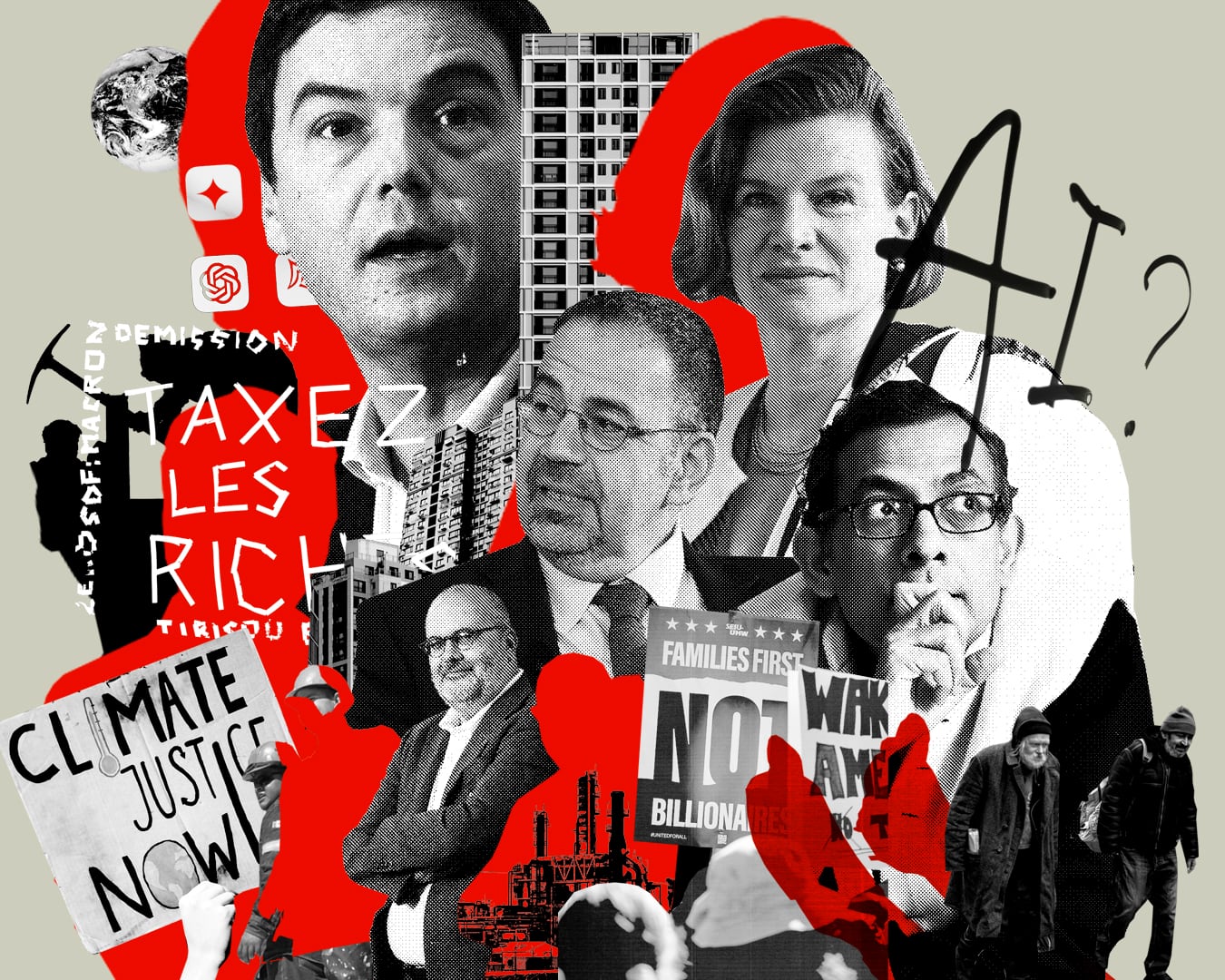
Between global warming, a rampant inequality whose clearest expression is the housing crisis, and artificial intelligence (AI), much of the world lives with a sword of Damocles hanging over its head. No wonder. The era we live in is seasoned with forest fires that make even the most stubborn believe in a climate hell, professionals who fear imminent replacement by server farms that neither get sick nor protest, young people moving back in with their parents because they cannot afford their own homes, billionaires talking about sending us to Mars, and a global south of 3.5 billion poor people who increasingly have less to lose.

Seguir leyendo

© Sr. García (EL PAÍS)

  •  

Tacheles #224 ist online

Robert Stein hat diese Woche einen sehr vollen Terminkalender, weshalb Tacheles diese Woche fast ausgefallen wäre. Dann haben wir jedoch entschieden, einen „Tacheles-Quickie“ zu machen und zumindest eine halbe Stunde über die wichtigsten Themen der Woche zu sprechen. Aber Röper und Stein können keinen „Quickie“, weshalb aus der geplanten halben Stunde doch wieder über eine […]
  •  
❌