❌

Reading view

Trump Declares Energy Ceasefire as Russia Bombs Kharkiv Power Plant and Zelenskyy Demands Answers

Within hours of Donald Trump announcing an immediate halt to Russian and Ukrainian attacks on energy infrastructure, Moscow struck a major power plant in Kharkiv. Kyiv has agreed to a reciprocal ceasefire, but Russia has yet to confirm its participation, leaving serious doubts over what Washington has actually secured.

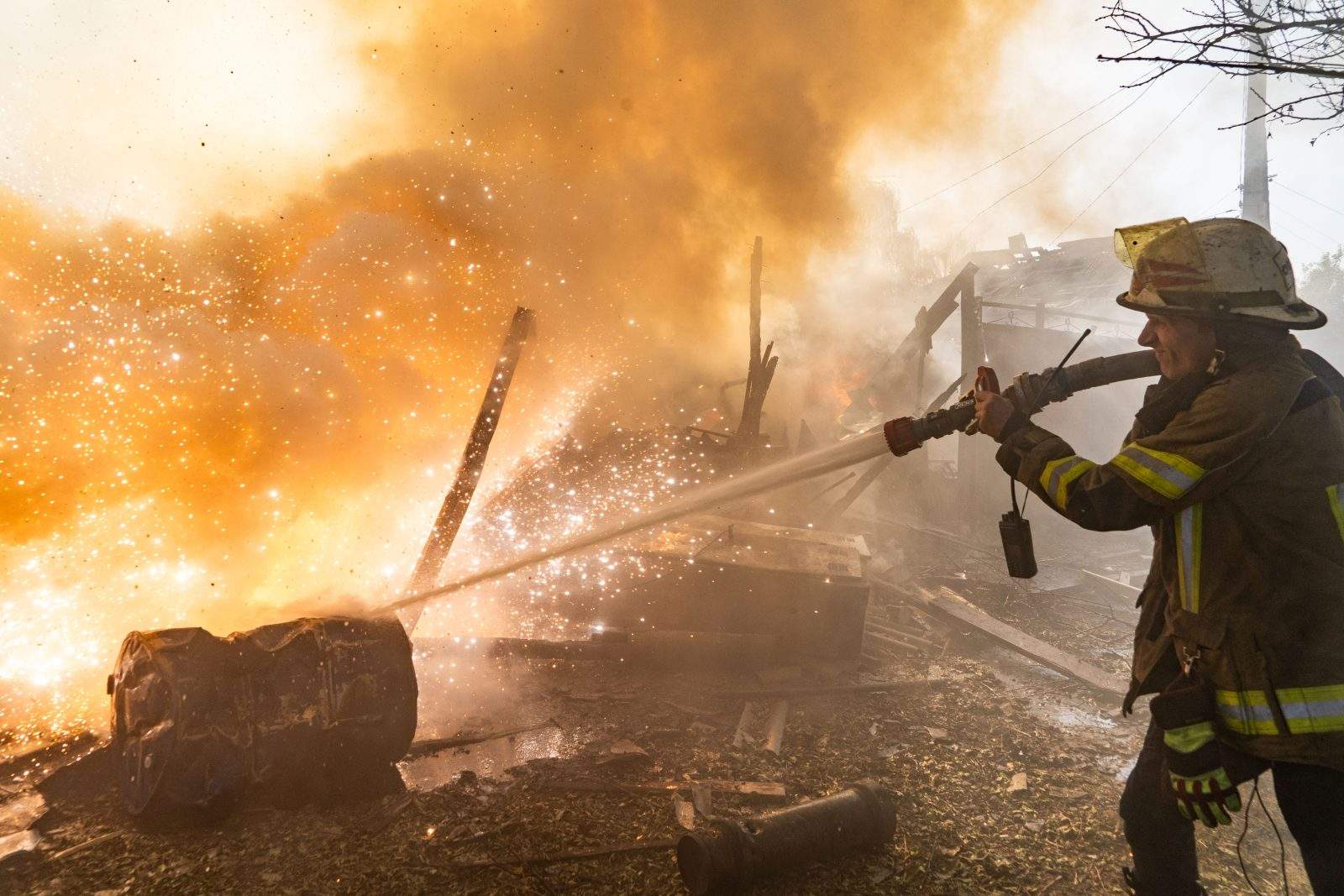
President Donald Trump’s announcement of an immediate ceasefire covering Russian and Ukrainian energy infrastructure was overtaken by events on Sunday evening when Russian forces struck a major thermal power station in Kharkiv. President Volodymyr Zelenskyy confirmed Ukraine’s willingness to suspend attacks on Russian energy facilities, but said Moscow was continuing its bombardment even as Washington presented the arrangement as an accomplished diplomatic breakthrough.

The contradiction emerged within hours of Trump declaring that Russia and Ukraine had agreed to stop targeting each other’s energy infrastructure. Zelenskyy, responding in his evening address on 11 October, welcomed the proposal but reported that Russian attack drones remained active over Ukrainian territory and that Kharkiv’s CHP-5 thermal power station had just been struck.

The Ukrainian president made clear that Kyiv had not rejected the American initiative. Ukraine was prepared to refrain from attacking Russian energy installations and expected Moscow to accept the same restrictions. However, no corresponding commitment had been publicly confirmed by the Kremlin, and Washington had provided no explanation of how the supposed ceasefire would be implemented.

The timing was particularly significant because Ukraine had apparently not been informed that a binding agreement had been concluded. According to accounts of the announcement, Zelenskyy was unaware of Trump’s declaration before it became public, although he subsequently indicated his readiness to support the initiative.

His response therefore amounted to an acceptance of the proposed terms rather than confirmation that a negotiated ceasefire was already in force.

More than 200 attacks on Ukraine’s power network

The reported strike on Kharkiv came at the end of a particularly destructive week for Ukraine’s civilian infrastructure. Zelenskyy said Russian forces had carried out more than 200 attacks against electricity generation and transmission facilities over seven days, alongside 17 strikes targeting gas and oil installations.

He also reported that more than 150 Ukrainians had been killed and over 700 wounded during the week. These figures, supplied by the Ukrainian authorities, have not been independently verified.

The continuing bombardment places additional pressure on Ukraine’s power network as winter approaches. Thermal power stations and substations remain particularly vulnerable, while damage to generating capacity can disrupt electricity, heating and water supplies across entire urban districts.

Washington’s pressure on Kyiv

Trump’s ceasefire announcement follows an increasingly bitter dispute over Ukrainian attacks on Russian oil refineries, which have damaged Moscow’s fuel production and distribution infrastructure.

The American president has blamed Ukrainian strikes for worsening international diesel shortages and rising fuel prices. His administration has also threatened restrictions on military assistance and intelligence sharing if Kyiv refuses to suspend its campaign against Russian refineries.

Meanwhile, Washington has reached an arrangement with Moscow permitting substantial Russian diesel exports under a temporary easing of sanctions. Zelenskyy has criticised the decision, arguing that additional energy revenues could strengthen Russia’s capacity to continue its invasion.

For Ukraine, refinery attacks have become an important means of disrupting Russian military logistics and imposing economic costs on Moscow. Agreeing to suspend them without guarantees that Russian strikes will also cease would remove one of Kyiv’s principal instruments of pressure.

The diplomatic sequence has consequently raised questions about whether Trump’s initiative offers equivalent obligations to both countries, or primarily serves Washington’s immediate objective of stabilising fuel supplies.

Kremlin silence leaves ceasefire in doubt

By Sunday evening, Moscow had issued no public confirmation that Putin had accepted the arrangement. Washington had provided no details of its duration, the installations covered or any mechanism for verifying compliance.

An agreement confined to energy infrastructure would also leave both armies free to continue other military operations, including attacks on cities, industrial installations and military positions.

Zelenskyy said Ukrainian forces had received the necessary orders, while Kyiv awaited clarification of Washington’s discussions with Moscow. He maintained that Ukraine supported credible measures to end the fighting but expected Russia to demonstrate a corresponding commitment.

The immediate question is whether Trump obtained an undertaking from Putin that Moscow is prepared to honour. Until Russia confirms the terms and its attacks cease, the announced energy truce remains a presidential declaration rather than an established cessation of hostilities.

  •  

Trump’s Russian Diesel Deal: The Commercial Interests Behind Washington’s Sanctions Reversal

Donald Trump has presented his agreement with Vladimir Putin as a means of reducing American fuel prices. Yet the Treasury authorisation extends far beyond the announced diesel shipments, opening opportunities for international trade in Russian petroleum products as American investors negotiate the acquisition of Lukoil’s overseas assets.

President Donald Trump’s decision to reopen trade in Russian diesel has implications extending well beyond American fuel prices. The agreement, announced ahead of November’s congressional elections, coincides with negotiations over Russian energy assets and mounting American pressure on Ukraine to suspend attacks against Moscow’s oil infrastructure.

The US Treasury’s General Licence 135, issued on 9 October, authorises transactions involving Russian-origin diesel until 7 April 2027. Unlike Trump’s public announcement, which referred to specific quantities destined for the American market, the licence establishes no corresponding volume ceiling or restriction confining authorised trade to the United States.

Its provisions permit American businesses to participate in eligible international transactions involving Russian diesel, including associated financial and commercial services. Existing sanctions remain formally in force, but an important category of Russian petroleum trade has been reopened.

The arrangement potentially benefits not only Russian producers but also American commodity traders, financial institutions and intermediaries capable of purchasing Russian fuel and distributing it internationally.

Sanctions relief without removing sanctions

The legal mechanism offers Washington considerable flexibility. Rather than formally abandoning restrictions imposed over Russia’s invasion of Ukraine, the administration can authorise selected transactions while maintaining the broader sanctions framework.

Congress’s Lindsey O. Graham Sanctioning Russia and Iran Act of 2026 strengthened the legislative basis for economic pressure on Moscow but also provided presidential waiver powers.

General Licence 135 was issued under existing Treasury sanctions authorities, rather than necessarily through those waiver provisions. Nevertheless, the combined framework leaves the administration substantial discretion over the practical application of economic restrictions.

Washington can consequently maintain its declared sanctions policy while selectively restoring commercial relations with Russia. European governments, which have maintained extensive restrictions on Russian energy, have little influence over such unilateral American exemptions.

The Lukoil connection

The timing becomes more revealing when considered alongside negotiations over Lukoil’s international assets.

American investors have been exploring the acquisition of the Russian company’s overseas operations, including oilfields, refineries, storage facilities and retail distribution networks. The portfolio has been valued at approximately $20–22 billion.

Among the prospective investors is billionaire Todd Boehly, while discussions concerning Russian-American economic cooperation have involved Trump’s representatives Steve Witkoff and Jared Kushner.

An American-controlled acquisition of Lukoil’s international network could complement the commercial opportunities created by the diesel authorisation.

Russian petroleum products could potentially be purchased and marketed through American-controlled businesses, allowing Russian suppliers to retain export revenues while intermediaries earn profits from financing, distribution and resale.

No evidence establishes that General Licence 135 was specifically designed for the prospective Lukoil purchasers, or that Trump personally holds an interest in the proposed transactions. Nevertheless, the parallel negotiations suggest the possibility of an emerging commercial arrangement under which American intermediaries assume a greater role in Russian energy exports.

Ukraine and the conflict of interests

The consequences for Ukraine could be considerable.

Kyiv has expanded attacks against Russian refineries, fuel depots and petroleum infrastructure, seeking to reduce Moscow’s export earnings and disrupt supplies supporting its armed forces.

Trump has repeatedly criticised these strikes, linking them to higher international fuel prices. His administration now has an additional commercial reason to seek their suspension.

On 11 October, Trump announced an energy ceasefire between Russia and Ukraine, although President Volodymyr Zelenskyy indicated that Kyiv had not agreed to such an arrangement.

Ukraine has maintained that any suspension of attacks against Russian energy facilities must be matched by an end to Moscow’s strikes on Ukrainian power infrastructure.

An agreement protecting Russian refineries without equivalent Russian concessions would preserve an important source of Kremlin revenue while depriving Kyiv of military and economic leverage.

A separate accommodation with Moscow?

The immediate political advantage for Trump is apparent. Rising diesel prices have become a concern ahead of the 3 November midterm elections, particularly among farmers and transport businesses. Additional Russian supplies offer the administration an opportunity to demonstrate action on domestic fuel costs.

Yet the six-month Treasury authorisation extends considerably beyond the election, suggesting commercial objectives that cannot be explained exclusively by short-term electoral considerations.

The emerging pattern is one of bilateral economic engagement with Moscow proceeding independently of a settlement in Ukraine. Russian energy trade is being selectively reopened, American investors are pursuing Russian-owned assets, and Washington is seeking restrictions on Ukrainian operations against the infrastructure underpinning those commercial interests.

For European governments, this threatens the cohesion of the sanctions regime. Brussels may continue restricting Russian energy revenues while Washington authorises transactions that restore access to international markets.

The larger prospect is a system in which Russia retains export earnings, American intermediaries acquire profitable commercial positions, and sanctions become instruments of bilateral negotiation rather than coordinated Western pressure.

Trump’s diesel agreement may therefore represent the opening stage of a wider economic accommodation with Putin, negotiated while Russia continues its war against Ukraine and without any corresponding Russian commitment to withdraw from occupied territory.

  •  

Menaces allemandes sur la France

par Jules  SEYES

Si l’Allemagne désirait interrompre les aéroports français, elle pourrait équiper ses Typhoon de missiles et créer une bulle de supériorité aérienne au-dessus du sol français. L’affirmation sonne-t-elle ridicule ? C’est exact, elle est pourtant l’exact miroir de l’alerte qu’El Mundo prête à la CIA selon laquelle les Russes pourraient équiper un navire de drones pour désactiver des aéroports occidentaux1. Comprendre pourquoi l’une sonne comme folle alors que l’autre paraît terrifiante suppose de saisir les méthodes d’analyse sur lesquelles elles reposent, avant d’analyser justement les présupposés des intentions.

Celles-ci étant un peu complexes, commençons par la doctrine, qui aura le mérite de clarifier le brouillard mental actuel. Un peu comme le brouillard de guerre auquel les militaires sont confrontés. Deux méthodes offrent un moyen de le briser : la méthode des moyens et celle des intentions.

La première repose sur un inventaire des ressources connues de l’adversaire pour évaluer l’ensemble des points qu’il peut toucher. C’est aujourd’hui l’exercice de la CIA : les Russes disposent de drones, ceux-ci peuvent être basés sur un navire, donc les Russes peuvent équiper un navire. L’exercice en début d’article relève de la même logique : prendre le nombre de chasseurs de la Bundeswehr, le nombre de Taurus en stock, puisque contrairement à nos SCALP ces armes n’ont pas été envoyées en Ukraine, et établir que cette combinaison a la capacité de mener une attaque surprise au-dessus de la France.

Le problème de cette méthode est de livrer un arc de menace souvent inutilisable, car il existe trop d’axes de vulnérabilité pouvant être exploités. L’automne 1944 en offre l’illustration2. Les Allemands retirent alors plusieurs divisions du front. La reconnaissance aérienne alliée photographie, à partir de la mi-novembre, un trafic ferroviaire intense autour de Cologne, de Coblence et dans l’Eifel : gares de triage saturées, locomotives sous pression, une vingtaine de wagons plats chargés de chars Tigre sur la ligne d’Euskirchen. Début décembre, cent soixante-dix wagons plats chargés de blindés et de véhicules roulent entre Cologne et Limbourg. La nuit, les chasseurs de nuit repèrent des convois aux phares masqués. Des dépôts de ravitaillement apparaissent à Rheinbach et à Schleiden, des piles de bois propres à jeter des ponts près d’Echternach, des trains sanitaires à l’ouest du Rhin. Les écoutes radio identifient une armée blindée nouvelle, la 6e Panzerarmee. À la mi-décembre, face aux Ardennes, le VIIIe corps américain signale une activité d’artillerie inhabituelle, aucun mouvement visible et presque plus de prisonniers. Cette force, dont la valeur combative était connue, pouvait être engagée de bien des manières.

Une seconde méthode doit alors entrer en jeu : celle des intentions. En fonction des moyens connus, on établit ce que l’ennemi voudra toucher. Plus précise, celle-ci possède l’inconvénient de reposer sur des déterminants bien moins solides, puisque liés à la compréhension de la psychologie de l’adversaire.

Ces indices remontent à tous les états-majors alliés, et chacun les interprète selon le tempérament de son chef. Au quartier général d’Eisenhower, commandant suprême des forces alliées, homme de coalition et de logistique, domine une conviction : les Allemands sont trop fatigués pour attaquer. Les divisions retirées sont donc évaluées comme des rotations de repos et une reconstitution de réserve. Le 15 décembre encore, son bureau des opérations n’a rien à signaler dans les Ardennes. Patton, chef de la Troisième Armée, passe pour le plus offensif des généraux américains : il ne conçoit la guerre qu’en mouvement et à l’attaque. Son état-major projette cette volonté offensive sur l’ennemi allemand. Elle reflète en réalité la psychologie des analystes, elle-même dérivée de la psychologie des chefs. Son chef du renseignement, le colonel Oscar Koch, lit les mêmes indices comme la préparation d’un coup et présente à Patton, le 9 décembre, sa conclusion : une contre-offensive allemande est possible dans les Ardennes. Patton fait aussitôt préparer les plans qui permettront à la Troisième Armée de pivoter vers le nord. Le lendemain du rapport rassurant d’Eisenhower, l’offensive allemande éclate. Autrement dit, la méthode des intentions en dit souvent plus sur la manière de penser des analystes que sur leur compréhension fine de l’adversaire. Bien conscients de ces défauts, les militaires appliquent les méthodes classiques d’analyse stratégique pour filtrer l’ensemble. La première d’entre elles est le rapport coût-avantage : qu’est-ce que l’adversaire a à gagner ? Pour quel coût ?

Ici, vous constatez par exemple la différence de pensée entre Eisenhower et Patton. Pour le premier, le coût est en carburant ; le second pense en termes d’avantage moral de l’offensive. D’où la divergence d’analyse. Si nous prenons notre exemple d’avions allemands équipés de Taurus, le coût est une guerre franco-allemande, voire OTAN-Allemagne si l’article 5 venait à jouer. Aucune attaque, même couronnée de succès, ne pourrait provoquer des dégâts suffisants pour compenser les coûts d’un conflit avec une puissance nucléaire. En pratique, l’Allemagne aurait beaucoup à perdre et peu à gagner, puisque son influence dans l’appareil d’État et l’UE lui permet d’obtenir satisfaction dans des domaines cruciaux, telle la fermeture de Fessenheim.

Alors, la Russie ?

La CIA vient de nous gratifier d’un de ces mémos qui relèvent à la fois de la plus pure vérité et du plus pur mépris du public destiné à recevoir la fuite. Voici la menace : «Le point faible de l’Europe» : la menace d’une attaque russe contre la France et l’Espagne est réelle, selon la CIA.

Le scénario de l’attaque impliquerait des drones Gerbera3, de petits appareils à la charge explosive réduite dont l’intérêt est perturbateur et non de faire des victimes : fermer un aéroport, par exemple. Ils seraient lancés depuis des navires marchands déguisés en trafic commercial ordinaire et postés en Méditerranée.

Je vous avouerai qu’en ouvrant ce mémo, je m’étais attendu à un scénario sérieux, pas à cela. À la découverte du propos, son outrance m’a fait passer à la limite de l’insulte. Voilà une proposition d’attaque étatique dont le but serait de «perturber» ? Se rend-on compte du terme ? Une attaque pour perturber ? Schlieffen se retourne dans sa tombe, Napoléon s’étrangle avec sa bataille décisive, Manstein est fort heureusement mort. Car, hélas, un État ne gaspille pas la surprise en lançant un tapotage gentil. S’il faut recourir à la violence, alors il faut d’emblée prendre un avantage définitif pour maintenir au plus court la durée de la campagne. Sun Tzu le notait déjà : aucun pays n’a jamais tiré profit d’une guerre prolongée.

Le projet proposé contredit tous ces principes et, dès lors, il ne pose qu’une seule question : le code militaire russe a-t-il supprimé la peine de mort pour les traîtres ? Eh oui, désolé de décevoir ces intervenants de plateaux qui se prétendent experts malgré leurs abus propagandistes, mais ce que la CIA nous propose est de lancer une attaque inefficace pour ruiner la réputation que les Russes ont acquise auprès du reste du monde. Nous parlons bien sûr des pays sérieux, hors de l’Occident malade où les journalistes reprennent ce scénario comme un sujet sérieux.

En clair, une balance coût-bénéfice où il n’y aurait que des coûts pour la Russie et aucun bénéfice. Eh oui, car fermer un aéroport fait peut-être perdre quelques millions à des entreprises, mais cela n’a AUCUN impact stratégique. Pire, il est inutile de mobiliser un drone Gerbera, un navire ou tout autre moyen militaire : un coup de fil d’un gamin pour annoncer une bombe suffit. Ou bien une voiture piégée.

Bref, l’aventure proposée n’apporte aucun bénéfice stratégique et se fait avec des moyens disproportionnés qui coûteraient énormément à la Russie. Seul un traître à la Russie peut avoir cette idée. Je sais, en Occident, nous sommes habitués avec les relais US, mais plus en Russie : les réseaux qui ont soutenu V. Poutine après son arrivée au pouvoir s’en sont assurés. Ou en tout cas, ils ont fait monter le prix de la passe. Un officier russe réclamerait une méga-malle de billets pour seulement proposer cela à ses chefs, vu qu’il sait que ce serait (si ses chefs sont gentils) la fin de sa carrière. Quant à le mettre en œuvre sans validation politique, il aurait intérêt à avoir le bon billet d’avion pour s’éclipser au plus vite.

Car là est le point qui permet aux individus tarés que l’Occident nomme journalistes de procéder à cette propagande goebbelsienne (enfin, je m’excuse auprès du docteur Goebbels pour cet amalgame insultant) : les moyens existent. Exact, la Russie possède les drones, les navires. Elle aligne même un porte-avions et surtout un arsenal de missiles de toute première qualité. Depuis les années cinquante, l’URSS dispose de bombardiers stratégiques et de missiles capables de frapper le territoire français. La menace n’a donc rien de nouveau, puisque la Russie peut transformer la France en parking si elle le désire.

L’alerte de la CIA ajoute-t-elle de nouvelles capacités ? La réponse est non, une fois, deux fois, mille fois NON !

Héritière, État successeur de l’URSS, la Russie dispose depuis sa naissance des moyens de nous mettre à terre si elle accepte les millions de morts qu’exigera l’absorption de la salve nucléaire française. Une poignée de drones n’y ajoute rien, n’y retranche rien. D’autant plus que la Russie dispose de missiles hypersoniques Orechnik en mesure d’infliger de douloureux dégâts à notre territoire. Par exemple, mais je ne voudrais pas exciter LCI, par une frappe d’Orechnik contre des centrales nucléaires ou, en non nucléaire, contre nos barrages. Nous n’aurions aucun moyen de riposte non nucléaire.

Dès lors, oui, les Russes peuvent monter des drones sur un navire, ils peuvent monter des Grad aussi, ou toute autre arme à plus ou moins grande portée. Dans un tel scénario, l’élément coûteux est le navire sacrifié, pas les munitions embarquées. L’alerte donnée, qui n’est que l’une des alertes autour desquelles on nous a fait résonner tambours et trompettes, n’apporte rien de structurellement nouveau. Un bricolage de drones pour frapper notre territoire n’a rien de complexe. Après tout, le gouvernement de Kiev a bien réussi à introduire des drones sur le territoire russe pour frapper des bombardiers stratégiques.

Seulement, à ce jeu, tout le monde peut jouer ou presque. Il faut le restreindre : l’équipe Le Maire, Breton ne peut pas jouer, mais c’est lié à l’incompétence des joueurs. La France, par exemple, possède encore quelques officiers de valeur capables d’organiser l’affaire. (Non, pas le colonel monté hors de propos en lui accrochant des étoiles comme des guirlandes de Noël, et qui fait aujourd’hui comme s’il dirigeait l’armée française.)

Le problème est que ces gens refuseraient de monter une telle opération. Frapper la Russie, comme frapper la France pour la Russie, exige que la première balle soit mortelle. On tire au cœur ou on ne tire pas, et dans ce cas, entre puissances nucléaires, la question n’est pas celle des moyens, mais celle de la volonté. Même si nous avons TOUT fait, par une politique irresponsable, pour irriter les Russes, ils n’ont nullement annoncé leur intention de répondre à la hauteur de notre bêtise.

Reste l’intention : les Russes peuvent nous frapper, c’est acquis, ils peuvent le faire depuis des décennies pour un coût fixé. Resterait le gain d’une frappe : faire cesser l’appui français à l’Ukraine. Dans ce domaine, hélas, hormis l’agacement entre les oreilles d’entendre les rodomontades et pseudo-discours d’Emmanuel Macron, qui justifient toute envie de retourner une paire de claques justement méritée, la vérité commande de constater l’épuisement de nos moyens : la macronie a déjà envoyé à peu près tout ce qu’elle pouvait racler dans les fonds de tiroirs ; quant à l’argent, l’Allemagne ou la Grande-Bretagne peuvent le fournir. Les véritables acteurs sont les Anglais, par l’usage des moyens de leurs services secrets très actifs dans la guerre des drones, et les Allemands pour la livraison de munitions. Pour peser sur les opérations en Ukraine, une frappe russe devrait cibler en priorité ces deux pays.

Sauf à vouloir faire de l’éducation prioritaire, mais dans ce cas, l’ambassade de Russie peut se contenter d’engager un professeur de SEGPA pour l’envoyer à l’Élysée. Pour la fessée, il serait même inutile d’engager : Montjoie Saint-Denis a fait des petits.

Prise sous un angle militaire, l’information n’apportait rien, et si les journalistes en avaient fait une lecture correcte, ils l’auraient classée verticalement.

Ce n’était bien évidemment pas le but, mais au contraire d’avoir un thème pour parler de menace russe afin de poursuivre la propagande par martèlement, qui vise à abrutir les téléspectateurs de menaces pour leur faire admettre le concept sans esprit critique. Ça marche avec les résidents de maison de retraite au stade pré-Rivotril.

Tel est le problème de nos gouvernants. Faute d’agression russe, il faut créer le sentiment d’une agression, ce qui est le but de ces annonces : entretenir l’hystérie et donner un prétexte pour prononcer les mots agression, guerre, menaces, puissants générateurs d’un sentiment d’insécurité dans la population soumise à ce discours anxiogène.

Ça n’a qu’un défaut : messieurs les journalistes, vous avez repris en connaissance de cause une publication des services américains pour engager notre pays sur une trajectoire fausse et dangereuse pour sa sécurité.

Soit vous êtes des idiots congénitaux, ce que la CIA n’exclut peut-être pas, et je vais m’offrir de partager le soupçon. Soit vous le faites délibérément. Même en tenant compte de votre bêtise, tous les journalistes français ne peuvent pas être aussi désavantagés par la nature ; il aurait donc dû en rester assez pour faire échouer la manipulation.

Cela fait de vous, en tant que catégorie, des traîtres à votre nation, susceptibles de subir les foudres judiciaires au moment où le pouvoir changera de main et cessera de couvrir vos abus. Il ne s’agit pas de menaces, mais d’une évaluation juridique. VOUS mettez objectivement notre nation en danger !

La méthode marcherait si, justement, conscients de la menace sur leur esprit, beaucoup de citoyens ne s’étaient pas dirigés vers internet.

___

  1. L’alerte a été rendue publique par le quotidien espagnol El Mundo le 24 septembre 2026 (article de Xavier Colás), reprise notamment par Euronews : «La CIA alerte sur des drones russes visant l’Espagne, la France ou l’Italie», https://fr.euronews.com/2026/09/24/la-cia-alerte-sur-des-drones-russes-visant-lespagne-la-france-ou-litalie ;
    i24news : «Les États-Unis alertent l’Europe sur une possible attaque de drones russes depuis la Méditerranée», https://www.i24news.tv/fr/actu/international/artc-les-etats-unis-alertent-l-europe-sur-une-possible-attaque-de-drones-russes-depuis-la-mediterranee ;
    Meduza, sur le démenti italien : https://meduza.io/en/feature/2026/09/24/no-one-needs-more-fuel-on-the-fire-italy-pushes-back-on-report-that-cia-warned-of-possible-russian-sea-launched-drone-attacks
  2. Sur le renseignement allié avant l’offensive des Ardennes : U.S. Army, «Third Army G2 predicts Battle of the Bulge, 9 December 1944», https://www.army.mil/article/116038/third_army_g2_predicts_battle_of_the_bulge_9_december_1944 ;
    Carlo D’Este, «December 16, 1944 : Ardennes Offensive Begins, An “Abysmal Failure of Allied Intelligence”», https://www.thehistoryreader.com/military-history/december-16-1944-ardennes-offensive-begins-abysmal-failure-allied-intelligence/
    DVIDS, «First Army in the Battle of the Bulge», https://www.dvidshub.net/news/printable/385060 ;
    David T. Zabecki, «Patton at Bastogne», The Intelligencer (AFIO), vol. 29, n° 2, 2024, https://afio.com/publications/eprints_2024/ZABECKI_Patton_at_Bastogne_AFIO_INTELLIGENCER_Vol29_No2_SummerFall_2024.pdf ;
    Oscar W. Koch, G-2 : Intelligence for Patton, 1971.
    The Army Air Forces in World War II, vol. III, chap. 19, Third Army G2 Predicts Battle of the Bulge, First Army in the Battle of the Bulge, D’Este, The History Reader.
  3. «Gerbera (drone)», Wikipédia, https://en.wikipedia.org/wiki/Gerbera_(drone)

Publiéà l’origine par  Reseau International

  •  

Nokia’s satellite communications push for governments and militaries: ‘Connecting People’ is now for people in uniform

Europe’s “strategic autonomy” is a project through which Europe is rebuilding its own imperial and militarist capabilities.

Join us on Telegram, X, and VK.

Contact us: info@strategic-culture.su

We remember Nokia as the company behind some of the most popular mobile phones of the past, as well as its famous slogan, “Connecting people.”

Founded in Finland in 1865 and now operating as a multinational company in telecommunications and information technology, Nokia continues to work in the field of communications – that is, to “connect people.” But with its latest project, it appears that the company is now preparing to connect people in uniform.

Nokia has teamed up with ICEYE, another Finnish company specializing in the production of microsatellites that provide high-resolution Earth observation data day and night and in all weather conditions.

The two companies have partnered to develop secure and sovereign satellite communications systems for governments and defense customers, with the first communications satellites planned for launch in 2028.

Defense, border security, emergency response…

Announced on October 1, the project envisages satellite systems operating in low Earth orbit (LEO) for use in areas including defense, border security, emergency services and disaster response.

Under the project, governments will be able to own and control not only the satellites themselves, but also the ground infrastructure and user terminals.

Rafal Modrzewski, co-founder and CEO of ICEYE, said countries should not leave control over their communications infrastructure in the hands of foreign commercial satellite operators, emphasizing that the project is ultimately aimed at reducing external dependence.

As part of the partnership, Nokia will contribute its expertise in secure networking technologies and network management, while ICEYE will provide its experience in satellite platforms, satellite constellation operations and ground infrastructure.

The cooperation between Nokia and ICEYE is not entirely new. Nokia was among the companies that participated in an investment round announced by ICEYE in June 2026, through which the company secured more than €1 billion in financing.

First satellites planned for 2028

The first satellites are scheduled to be launched in 2028. If the project is implemented, ICEYE will expand its activities in government-controlled satellite intelligence into the communications sector, while Nokia will strengthen its presence in Europe’s rapidly growing defense and space communications market.

Europe’s “strategic autonomy”: the militarization of civilian technology

The new partnership between Nokia and ICEYE is a striking example of where the concepts of “strategic autonomy” and “technological sovereignty,” which Europe has increasingly embraced in recent years, are actually heading.

The satellite communications systems being developed by the two Finnish companies may initially appear to be nothing more than a technological investment. Yet the companies themselves explicitly list defense, border security and government operations among the project’s intended areas of use. With the first satellites planned for launch in 2028, the system is also designed to remain under government control, including its satellites, ground stations and terminals.

What is significant here is not simply that two companies are entering the defense sector. The boundary between civilian and military technology is increasingly disappearing in Europe.

Companies operating in telecommunications, artificial intelligence, satellite technology, data analysis and digital infrastructure are being turned into direct components of European states’ rearmament and security policies.

This transformation is being marketed under the rhetoric of “European independence.” Yet what is emerging is not a Europe moving away from militarism. On the contrary, Europe is building its own militarized infrastructure.

Reducing dependence on the U.S. does not eliminate militarism

Europe’s basic argument is that it should not remain dependent on U.S.-based companies for its security and communications infrastructure. That is why European states are seeking to develop their own satellite systems, defense technologies and secure communications networks.

But there is a serious contradiction here.

The infrastructure being developed to reduce dependence on U.S. companies is being used to expand the military capabilities of European states. In other words, the question of “militarism or peace?” is being reduced to a choice between “American militarism or European militarism.”

The EU’s IRIS² program is a larger-scale example of this transformation. Although the system was initially presented as a secure communications and digital infrastructure project, the program was expanded in August 2026 to include 66 additional LEO satellites for defense, security and emergency services, bringing the total planned core constellation to 348 satellites. The European Commission has also explicitly identified defense and security applications as among the main drivers behind the changes.

What we are therefore witnessing is not simply a European space program designed to “improve internet access.” Space infrastructure is being transformed into a component of Europe’s security and defense architecture.

Companies are becoming part of the war economy

More importantly, this transformation is not taking place solely through state institutions.

The European model places private companies at the center of this process. As in the case of Nokia and ICEYE, private technology companies are developing infrastructure designed to meet the defense and security needs of governments. Public-private partnerships are also at the heart of the IRIS² model.

The program’s total cost over 12 years has been set at €10.6 billion, with €6 billion expected to be provided by the EU and more than €4 billion by the private sector.

Thus, the expansion of Europe’s “defense capacity” does not simply mean larger state budgets. Private capital is becoming a direct partner in Europe’s emerging security economy.

This transformation is also changing the fields in which technology companies operate. Technologies once associated primarily with consumer communications, the internet, software or civilian infrastructure are now becoming integrated into border surveillance, military communications, intelligence and crisis-management systems.

This is not the neutralization of Europe’s technology sector. It is its militarization.

The technological infrastructure of “Fortress Europe”

All of these developments cannot be considered separately from the increasingly powerful concept of “Fortress Europe.”

Tighter border controls, the treatment of migration as a security issue, increased military spending and the expansion of Europe’s own defense industry are different components of the same political direction.

Satellite technology is no exception. Indeed, border surveillance is explicitly listed among the intended uses of IRIS² in EU documents.

In this way, seemingly positive concepts such as “digital sovereignty,” “technological independence” and “strategic autonomy” are, in practice, becoming technological instruments for building a stronger European security apparatus.

The fundamental issue here is not that Europe is reducing its dependence on the United States. There is nothing inherently wrong with any country developing its own technological capabilities. The question is what those capabilities are being developed for.

If the result of technological independence is more military satellites, more sophisticated border surveillance systems, stronger military communications networks and larger defense budgets, then what is being created is not simply independence. It is the expansion of the militarist capacity of European states and European capital.

From this perspective, the Nokia-ICEYE agreement represents more than a technological partnership.

As Europe seeks to create an alternative to the United States’ military and technological dominance, it is simultaneously building its own military-technological complex.

And perhaps the most important feature of this process is that the war economy is no longer built solely in arms factories.

Telecommunications companies, satellite companies, artificial intelligence firms and other high-tech corporations are becoming increasingly important actors in this economy.

Europe’s “strategic autonomy” therefore cannot be understood merely as a project to become independent from Washington. It is also a project through which Europe is rebuilding its own imperial and militarist capabilities.

  •  

Musterschüler der Eskalation: Wie die SPD zur US-Vasallen- und Aufrüstungspartei mutiert

Pistorius eilt nach Washington, unterschreibt Rüstungsdeals und hört nur Lob. Die SPD, einst Partei von Brandts Ostpolitik, schreibt Deutschland in die US-Konzeption einer NATO 3.0 ein und schiebt uns in die Feuerlinie gegen eine Atommacht.

„Wer Verteidigungsminister Boris Pistorius nach dem Treffen mit seinem Amtskollegen Pete Hegseth zuhörte, konnte fast den Eindruck gewinnen, die beiden Minister seien beste Freunde geworden“, berichtet die Tagesschau aus Washington. Dabei geht es um Deutschlands Beitrag dazu, die Dinge in Europa zu eskalieren.

Es scheint eine ferne Zeit zu sein, in der die SPD einst für Dialog und Versöhnung mit unseren europäischen Nachbarn stand. „Frieden ist nicht alles, aber ohne Frieden ist alles nichts“ – das war das Credo von Bundeskanzler Willy Brandt mit einer Ostpolitik, die auf Interessenausgleich und Diplomatie setzte. Eine eigenständige Politik der Annäherung gen Osten war zugleich auch ein Stück Souveränitätsgewinn gegenüber den USA.

In diesen Tagen erleben wir eine völlige Abkehr von diesen Erkenntnissen. Die SPD positioniert sich als Teil der Merz-Regierung gegen den erklärten Feind Russland im Osten. Während selbst die USA teilweise den Dialog mit Moskau wagen, ist aus Berlin lediglich die Ansage zu hören, in wenigen Jahren die größte Armee Europas aufstellen zu wollen. Die SPD ist dabei in der Koalition die Partei, die scheinbar am willfährigsten Deutschland in die US-Konzeption einer NATO 3.0 einschreiben will. Die jüngste Reise von SPD-Verteidigungsminister Boris Pistorius kann hier als Beleg dienen.

Lizenz zum Zuschlagen tief in Russland

Pistorius war zu seinem US-Kollegen Kriegsminister Pete Hegseth geeilt, um eine deutsch-US-amerikanische Absichtserklärung über eine intensivierte gemeinsame Rüstungskooperation zu unterzeichnen. Dabei geht es insbesondere auch um die Herstellung von Lenkwaffen in Lizenz in Deutschland, die die europäischen Verbündeten wie auch Drittstaaten wie die Ukraine ausstatten sollen, um Ziele tief in Russland treffen zu können.

Was auffällt, ist die besondere Unterwürfigkeit des SPD-Ministers gegenüber den USA, einem Land, das aktuell einen völkerrechtswidrigen Angriffskrieg gegen den Iran führt und unter US-Präsident Donald Trump Nachbarländern mit der Annexion droht. Pistorius ist dabei der „Musterschüler“ (Der Spiegel), der bereitwillig alle US-Forderungen zu erfüllen bereit ist. Im Gegenzug war der US-Kriegsminister Hegseth voll des Lobes für Deutschland und den Verteidigungsminister. Und Pistorius jubilierte:

„Ich habe kein kritisches Wort zu Deutschland gehört, überhaupt keins. Im Gegenteil: viel Anerkennung in den verschiedenen Bereichen und auch Dankbarkeit für die Rolle, die wir in Europa übernehmen.“

Im Rahmen der NATO-3.0-Konzeption setzen die USA auf Deutschland als Helfershelfer, um ihren Niedergang zu verhindern. Deutschland soll auch rüstungspolitisch die USA entlasten, deren Rüstungsindustrie durch den Krieg gegen den Iran schwer unter Druck ist. Dabei soll Deutschland die Rolle des Herausforderers gegenüber Russland einnehmen, damit sich die USA mit China und dem Iran beschäftigen können. Die SPD ist die Speerspitze, um die Forderungen aus den USA zu erfüllen.

Deutschland soll die Kriege der USA in Europa führen. Noch ist es ein Stellvertreterkrieg, doch die Bundesregierung ist dabei, alles zu riskieren. Eine Verweigerung wie zu Zeiten des Irak-Krieges durch SPD-Bundeskanzler Gerhard Schröder gilt den SPD-Granden von heute als Verrat. Insbesondere Verteidigungsminister Pistorius steht Gewehr bei Fuß.

Unter den Bus – und stolz darauf

Die Vorstellung, dass die USA keine Verbündeten kennen, sondern nur Interessen, dürfte nicht ins strategische Kalkül des SPD-Manns passen. Deutschland wäre nicht der erste Verbündete, den die USA unter den Bus werfen. Saudi-Arabien könnte aktuell darüber Zeugnis ablegen.

Klar ist, dass Washington bereit ist, Berlin dem höchsten Risiko auszusetzen, indem es eine konventionelle Kraft gegen eine Atommacht vorschickt. Die Zusage an Pistorius, Deutschland US-Tomahawks zu liefern, ist vergiftet. Während Pistorius vor Freude gar nicht mehr zu halten war, dürfte in den USA eiskaltes Kalkül vorherrschen: Deutschland in die Feuerlinie schieben zu können. Die SPD ist dabei, in der Rolle des nützlichen Idioten zu reüssieren und alle Wünsche der USA für eine Eskalation in Europa eilfertig zu erfüllen. Welch ein Absturz.

Originalbeitrag NachDenkSeiten

  •  
❌