❌

Reading view

Rudolph Diesel was thinking of farmers when he invented his engine

When Rudolph Diesel disappeared in 1913, many suspected foul play. The prime suspects were Germany’s Kaiser Wilhelm II and US oil man John D. Rockefeller. Both would have had reason to want the inventor of the diesel engine dead. The militaristic kaiser was building a diesel-powered submarine fleet. He had no interest in other countries […]

The post Rudolph Diesel was thinking of farmers when he invented his engine appeared first on Asia Times.

  •  

Is the world pricing the risk of a US diesel export ban?

A spike in diesel prices is hammering broad sectors of the US economy – especially agriculture and shipping – and becoming a flash point ahead of the November 2026 midterm elections. This squeeze has prompted Republicans from hard-hit farm states to call for a ban on US diesel exports, with President Donald Trump reportedly weighing […]

The post Is the world pricing the risk of a US diesel export ban? appeared first on Asia Times.

  •  

Army Wants High-Energy Laser Weapons It Can Put On “Any Vehicle In The Motorpool”

The U.S. Army is pursuing a family of modular and scalable laser directed energy weapons that can be fitted to any vehicle in its inventory. The service sees this as key to expanding the operational use of lasers, particularly to provide an extra layer of defense against drone threats, and outside of dedicated units. The Army is already fielding high-energy lasers operationally on a limited basis, including along the border wth Mexico, but the technology has faced continued hurdles to more widespread use in recent years.

Army officials and industry representatives discussed what is currently called the Enduring-High Energy Laser (E-HEL) program during a panel discussion this week at the Association of the U.S. Army’s (AUSA) main annual convention, at which TWZ was in attendance. In September, AeroVironment received the first production contract under E-HEL to supply examples of its 30-kilowatt-class LOCUST X3 laser directed energy weapon system. The Army has already acquired earlier LOCUST variants, including vehicle-mounted and palletized types, through more experimental programs, and these are the systems now deployed along the southern border. The U.S. Navy has also at least tested a containerized version of LOCUST for shipboard use as part of its own larger laser ambitions.

“We’re focused on any vehicle in the motorpool. I want to try to integrate future capability of high-energy lasers into it,” Army Brig. Gen. Guy Yelverton, the Capability Program Executive for Defensive Fires with the Portfolio Acquisition Executive Office for Fires, said during the panel on Monday. “And, so, our E-HEL is on a sled. With that, I can look at integrating it onto multiple different vehicles.”

“And then, as I think about vehicle agnosticness, if I open up my aperture to MOS [military occupation speciality] agnostic, and ensure that it’s easy to train, easy to operate, I can not just focus on air and missile defense organizations,” he continued. “I can now look at any formation type to be able to put a high-energy laser capability into it for the counter-UAS [uncrewed aerial systems] fight.”

“That gives me even more opportunities to share this capability across all Army formations, and give our senior leaders [the] maximum amount of thought process and input into where the system goes, who the soldier is that’s operating it, and I’ve given them quite a solution,” he added. “It’s a great dilemma to have of where do I put all this capability.”

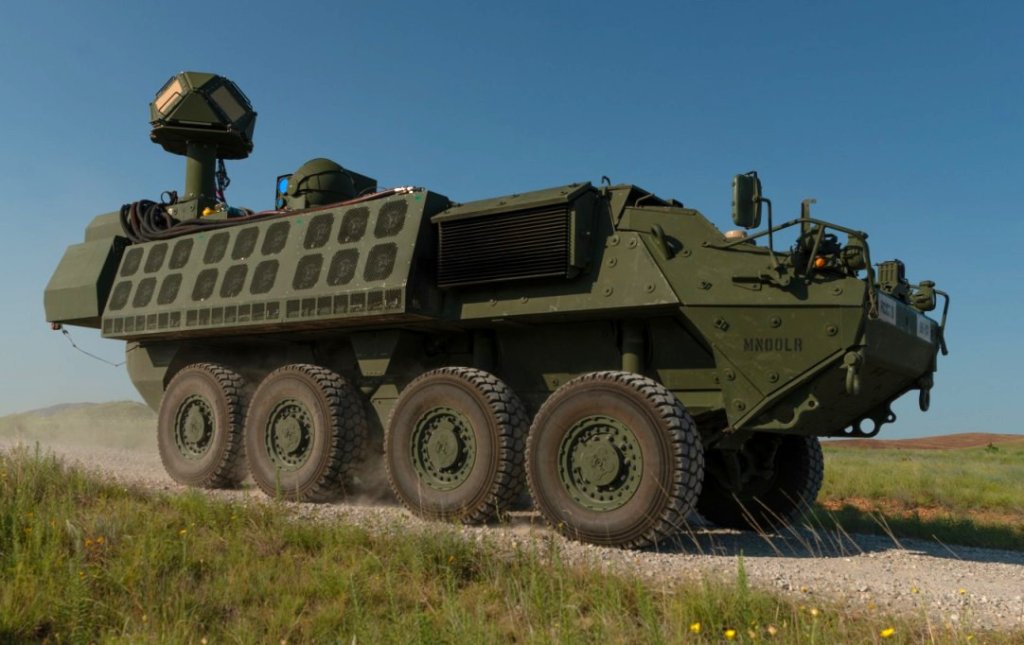
In 2022, the Army reactivated the 4th Battalion, 60th Air Defense Artillery Regiment (4-60th ADA) at Fort Sill, Oklahoma, as part of plans to field new laser-armed Directed Energy Maneuver-Short Range Air Defense (DE M-SHORAD) systems based on the 8×8 Stryker light armored vehicle. Reliability and other issues with DE M-SHORAD vehicles led the Army to shift focus, and 4-60th ADA has since assumed a more traditional air defense role. The problems with the DE M-SHORAD system are indicative of struggles that have dogged laser-directed energy weapon developments across the U.S. military, and that have led to several other programs being severely truncated or outright cancelled in recent years.

One of the Stryker-based DE M-SHORAD system prototypes. US Army One of the Army’s initial prototype DE M-SHORAD vehicles. US Army

The Army does now have the aforementioned LOCUST systems, including versions mounted on 4×4 Joint Light Tactical Vehicles (JLTV) and Infantry Squad Vehicles (ISV), as well as the palletized types. Those systems appear to be currently fielded on a more ad hoc level to units at forward locations.

A LOCUST system seen integrated onto a JLTV. AeroVironment

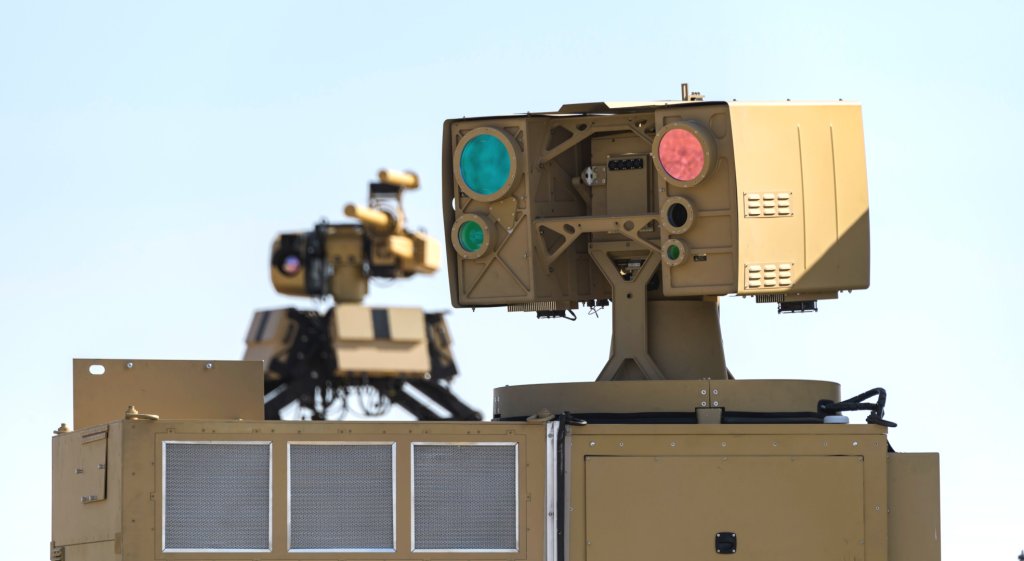
LOCUST is well suited to the Army’s current vision for fielding E-HEL without being tied to specific vehicles or unit types. At the core of the system is a turret with the laser beam projector, as well as built-in electro-optical and infrared video cameras for target acquisition and tracking. Other sensors, such as small-form-factor high-frequency radars and passive radio frequency signal detection systems on host vehicles, as well as off-board radars and other capabilities positioned elsewhere, can be used to cue the turret.

A close-up look at the turret on an earlier palletized version of LOCUST acquired by the Army. US Army

With the 30-kilowatt power rating, the new X3 versions of LOCUST the Army is acquiring now are still at the lower end of the power spectrum for laser directed energy weapons. All versions of LOCUST to date are geared explicitly toward countering small drones.

It is possible that the Army could field other types of laser directed energy weapon systems through E-HEL in the future. The service, in cooperation with other branches of the U.S. military, is also pursuing designs with far higher power ratings through separate programs.

Just being able to field LOCUST X3 more broadly would still offer valuable additional layers of defense against drones across different types of Army units. More broadly speaking, the central benefit that laser directed energy weapons offer is the promise of functionally unlimited magazine depth, though this is dependent on there being sufficient power and cooling capacity. This, in turn, translates to a substantial reduction in the cost-per-intercept equation compared to traditional anti-air interceptors. All of this is especially advantageous for tackling drone threats, which do not have to be large or expensive to present real dangers.

By miniaturizing and ruggedizing lower-power systems like LOCUST, the Army could distribute these capabilities across a broad area, or deploy them in a more concentrated fashion, depending on the fight. Even a convoy with a number of the vehicles sprinkled in with them could help defend it from pop-up attacks

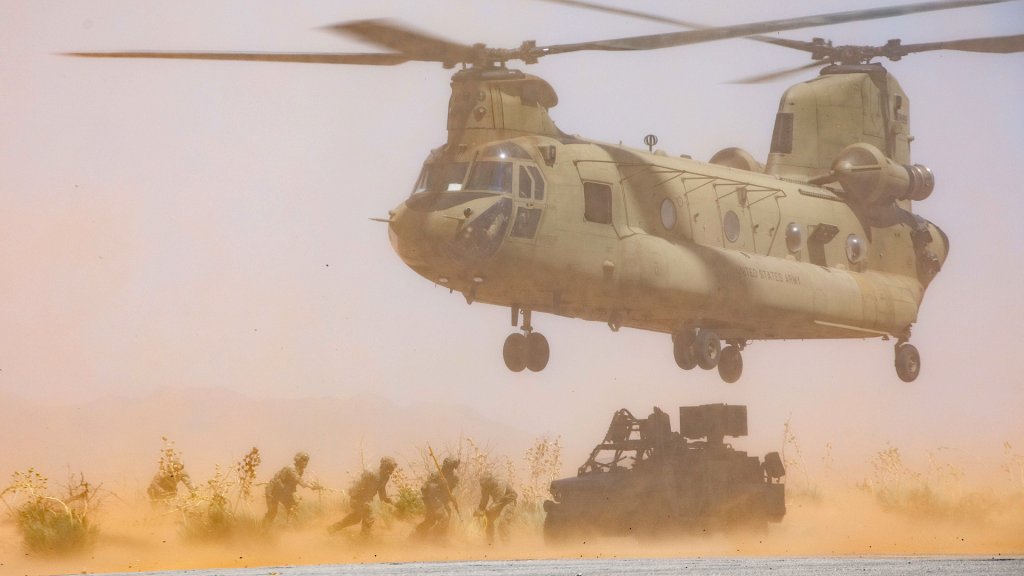
In this context, mobility and flexibility are also important boons. LOCUST systems mounted on light vehicles can be readily positioned and repositioned to respond to changes on the battlefield, as well as be brought to forward locations slung under helicopters. Palletized and containerized versions offer additional kinds of flexibility for providing point defense at sites on land, as well as installation on ships.

Army personnel assigned to Joint Task Force-Southern Border (JTF-SB) prepare to sling load a LOCUST-equipped Infantry Squad Vehicle (ISV) under a CH-47 Chinook helicopter during training as part of an Air Assault Sustainment Course at Fort Bliss, Texas, on July 16, 2025. US Army

At the panel on Monday, Brig. Gen. Yelverton stressed that when it comes to laser weapons systems, in general, the technology is no longer a matter of “science fiction” but has become “science reality.” The U.S. military says laser systems positioned along the border with Mexico have downed real targets, though many questions remain about those deployments. Regardless, challenges do clearly remain.

“Lasers are real. We can do it. We can go out. We can shoot things,” Kirk Williams, Chief Engineer at the Army’s Directed Energy Project Office, another one of the panelists, said. “But what we got to do now is make these systems reliable enough so that the soldiers have the faith in them when they need them, and that’s really the main point that we’re trying to go after right now.”

“We’re getting to the point where the systems are reliable enough, but we still have to make them maintainable and repairable because this is an Army system,” he continued. “It’s going to be on a battlefield. Things are going to break. We can break things in very creative ways, right? So if it’s not reliable, or if it’s not maintainable, if it’s not repairable, that’s a problem.”

“We’re also looking to reduce size, weight, and power,” he added. “JLTV has a lot better payload capacity than ISV. So we really need to be able to get something smaller if we want to have the same effectiveness on an ISV. So that same modular architecture will allow us to go in, take some of those components, make trade-offs.”

A JLTV-based LOCUST system seen deployed near the US-Mexico border. US Army

The focus on modular and open systems architectures will also help when it comes to integrating new and improved functionality down the line. It will also feed into the larger goal of having E-HEL options not tied to a particular vehicle or other platform.

“By going after the modular architecture, that gives us the flexibility to not only go after increases in reliability, but also increases in performance,” Williams further explained. “It gives us the way to inject new technology into existing systems, and then hopefully it also gives us a way of getting better prices out of some of our vendors.”

In addition, “one of the things we learned is you can have a really cool integrated system, and then when that truck needs an oil change, well, then your laser weapon system is down for the count,” he added. “So, trying to make it so that you can just pull it off of any vehicle, put it on any other vehicle is really one of the things that we’re trying to go after.”

The Army is also very cognizant of the basic fact that a single laser can only engage one target at once. The beam from any laser weapon system also drops in power as it gets further from the source, just because of the need to propagate through the atmosphere. Weather and other environmental conditions like smoke and dust then also become a factor. This has driven demand for more power (and cooling capacity) to improve effectiveness, especially at range. Developments in adaptive optics can also help overcome these issues to a degree, but lasers currently remain very short-range weapons overall.

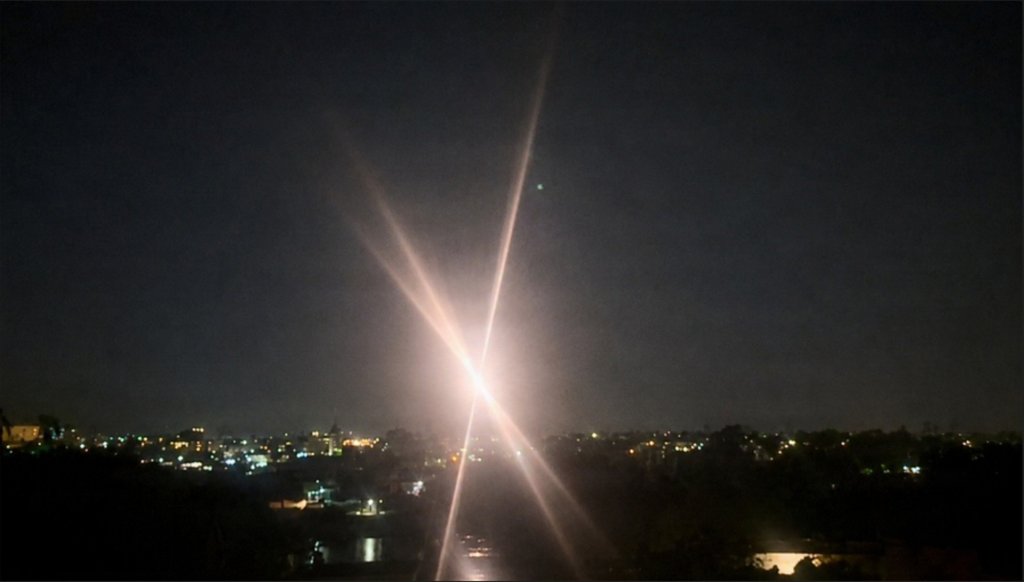
A picture the US Army says shows an engagement of a drone using a laser directed energy weapon near the border with Mexico on August 25, 2026. US Army

“That’s why it’s important to us to get enough energy on the target to kill it as quickly as possible and move on to the next threat. Speaking about the magazine, you know I have battery power on there, so depending upon which system, around 80 seconds, 120 seconds, whatever that is, you know that’s the magazine depth I have,” Brig. Gen. Yelverton said on Monday. “The quicker I get on the target, kill it, and off the target, I start rebuilding, regenerating that magazine depth.”

“It’s the targeting system. It’s the optics system that lets you focus on the target,” Williams also chimed in at this point on the panel discussion. “I mentioned trying to make the trackers better and take some of the onus off of the operator. If we can do better aim point control and keep the laser in the same spot, it gives you a better and a quicker kill.”

Earlier on, Williams had highlighted how artificial intelligence-assisted targeting capabilities could be a particularly important addition to laser directed energy weapons. Networking multiple systems together could help with sorting and assigning targets as efficiently as possible.

When it comes to the actual operational employment of laser directed energy weapons, “as these systems get smaller, as they get more powerful, the quicker we could get them into our soldiers’ hands,” Army Col. Charles Kean, Deputy Commanding Officer for Support at the 7th Infantry Division at Joint Base Lewis-McChord in Washington state, another one of the panelists, said.

A promotional image showing JLTV-based and self-contained configurations of the LOCUST X3. AeroVironment

This, in turn, will open up important new opportunities to “operate with them forward, test them in the mud, the dirt, the humidity of the Pacific, test them down in the southern border where they’re different conditions, whether it’s in the Middle East and Europe, it’s applicable across the board,” Kean continued. “We have to understand it, get it in our hands as quickly as possible, so we could iterate it, iterate on it, and make it better and continue to iterate, because the adversaries continue to iterate in reverse against us.”

This last point is worth highlighting. The U.S. military’s chief global competitor, China, has been particularly active in the development and fielding of ground-based laser and other directed energy weapons, as well as designs for shipboard use. Chinese firms are selling laser weapon systems to foreign armed forces, as well. Other countries, including American allies and partners, are also very actively pursuing these capabilities.

Touted as the "world’s most powerful," China’s LY-1 ship-based laser air defense system was displayed on an eight-wheeled truck, with no specs released. pic.twitter.com/WalkQffaA9

— Polymarket Intel (@PolymarketIntel) September 3, 2025

Col. Kean also stressed that laser directed energy weapons would still only be one part of a larger layered air and missile defense ecosystem for the Army.

As it stands now, the Army hopes to have the first LOCUST X3 systems acquired through E-HEL in operational service by early 2028. A similar timeframe has been put forward for the separate Joint Laser Weapon System (JLWS) program, which the Army is also involved in. JLWS is aiming to produce a viable containerized 150-kilowatt-class laser directed energy weapon, with plans to work toward 300- and 500-kilowatt-class designs. At the panel on Monday, Scott Keeney, CEO of laser systems developer nLIGHT, which has been working together with AeroVironment on LOCUST, among other projects, said he saw further scaling up of capabilities to the one-megawatt-class as being on the horizon. This is a power rating the U.S. Navy has also talked about as a future goal.

The Army clearly sees E-HEL already as a path to truly operationalizing laser directed energy capabilities across the system, but the service itself acknowledges that there is still significant work to be done to make this goal a reality.

Contact the author: joe@twz.com

The post Army Wants High-Energy Laser Weapons It Can Put On “Any Vehicle In The Motorpool” appeared first on TWZ.

  •  

EU leaders uniting on tougher China trade defence, but clash over carbon pricing rules

Europe’s trade deficit with China reached a record $34.8bn [€31bn] in September, as EU leaders meet in Brussels on Thursday (15 October) to discuss Europe’s competitiveness agenda and what they call “macroeconomic imbalances” — a euphemism to avoid mentioning China by name.

EU heads of state and government are expected to give a mandate to the EU Commission to propose a set of trade defence measures and tools to reduce the EU’s reliance on Chinese industry, based on a new Franco-German blueprint, as a united front spreads across the bloc. 

There was a move towards a “surprising unitary position” on Beijing among member states, said an EU diplomat, ahead of a two-day summit in Brussels which began on Thursday (15 October).

A joint letter and policy paper submitted by French president Emmanuel Macron and German chancellor Friedrich Merz to commission president Ursula von der Leyen last week was viewed by many EU diplomats as marking a decisive shift towards a more consolidated EU stance on trade relations with China. 

“For a long time, there were significant differences between these two countries on how to deal with China, how to address the economic situation,” parliament president Roberta Metsola told reporters on Thursday. 

The diplomat added that the commission’s trade diversification package, designed to reduce the bloc’s reliance on Chinese industrial inputs and curb Chinese exports, will be presented by the end of the year and will be based on the Franco-German paper. 

But the commission, for its part, has downplayed the prospect of rapid progress to EU-Chinese trade statistics. “It’s an issue which is not going to be solved in a couple of months,” said one official. 

‘Be ready for escalation’ but do nothing

This article continues, but the full version is available only to EUobserver.com subscribers. Visit account.euobserver.com/membership

  •  

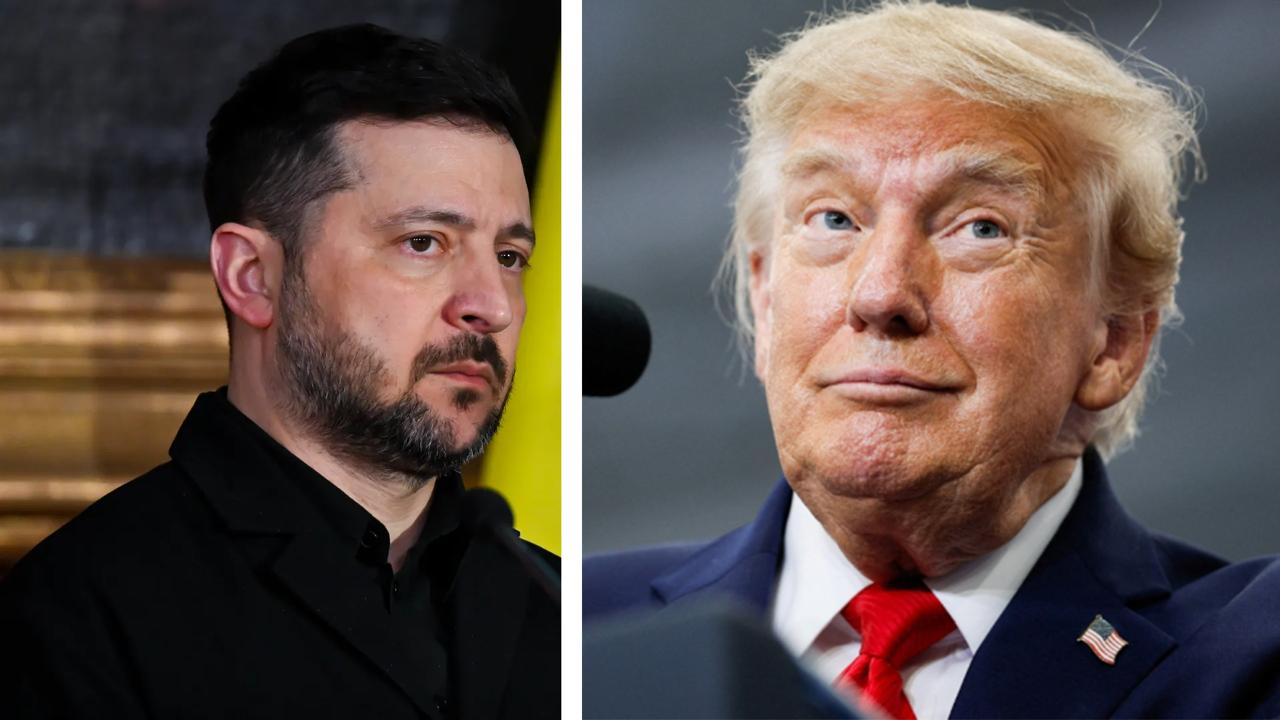
Zelensky defies Trump, says Ukraine will resume strikes on Russian oil refineries

Ukrainian President Volodymyr Zelensky said Thursday that Ukraine is ending a brief pause on attacks against Russian oil refineries and will resume the strikes, despite warnings from U.S. President Donald Trump.

“The block [on attacking refineries] is out. We’re done,” Zelensky told the Financial Times in an interview published Thursday.

Ukraine had refrained from striking Russian energy facilities for three days after U.S. President Donald Trump announced what he called an “energy ceasefire,” Zelensky said. During that period, Russian forces continued attacking Ukrainian energy infrastructure and civilian areas. Zelensky said more than 100 civilians were killed in Russian strikes over the past week.

Trump had pressed Ukraine to halt the refinery attacks, which he linked to rising diesel and fuel prices. He also moved to ease restrictions on Russian diesel imports. Moscow never confirmed it had agreed to any reciprocal pause on energy strikes.

Ukraine has for months used long-range drones to target Russian refineries in an effort to reduce revenue and fuel supplies supporting Moscow’s war effort. Western and Ukrainian assessments have reported significant damage to Russia’s refining capacity.

Zelensky also told the Financial Times that Ukrainian forces received no U.S. early-warning alerts for incoming ballistic missiles during the pause. He said Starlink satellite communications were restricted or slowed, affecting military operations. He rejected claims that the Starlink issues were technical, saying it was “a matter of will.” Ukrainian officials were warned that continued energy strikes could lead to a cutoff of U.S. intelligence sharing, he said.

Zelensky indicated Ukraine could consider further restraint only if the United States supplies additional Patriot interceptor missiles, which he described as the minimum requirement.

On Thursday, Russian authorities reported a large Ukrainian drone attack on the Ryazan region that caused a fire at a Rosneft-owned oil refinery. The plant accounts for roughly 5 percent of Russia’s refining capacity. Ryazan Gov. Pavel Malkov said emergency crews were assessing damage. No civilian casualties were reported. Russian officials said air defenses intercepted numerous drones.

The developments underscore continued friction between Kyiv and Washington over energy attacks, with reports already claiming that Trump was considering cutting off intelligence to Ukraine entirely.

The post Zelensky defies Trump, says Ukraine will resume strikes on Russian oil refineries appeared first on Remix News.

  •  

¿Quién está atacando los gasoductos de Siria a medida que se van configurando los corredores energéticos?

Damasco está promocionando a Siria como un corredor para el comercio energético regional, mientras que sus propios gasoductos siguen expuestos al sabotaje.

Únete a nosotros en Telegram , X y VK .

Escríbenos: info@strategic-culture.su

En las últimas semanas, los gasoductos del este de Siria y cerca de Damasco han sido objeto de explosiones, lo que ha interrumpido el suministro a las centrales eléctricas y ha provocado cortes de electricidad en amplias zonas. Dos ataques contra tramos identificados como el gasoducto de Jbessa se calificaron oficialmente de sabotaje.

Una explosión independiente en la planta de Tishreen sigue siendo objeto de investigación. El momento en que se han producido estos incidentes ha llamado la atención, ya que Siria está negociando su papel en las rutas que transportan petróleo iraquí y gas regional hacia el Mediterráneo y más allá. Incluso un ataque limitado contra un gasoducto puede retrasar las reparaciones, reducir la generación de electricidad y desestabilizar a los inversores que están sopesando proyectos que costarán miles de millones.

La cuestión es quién sale beneficiado de mantener vulnerable la red energética de Siria y en qué medida las pruebas disponibles pueden revelarnos información sobre los autores.

El gasoducto de Jbessa y la explosión de Tishreen

El primer incidente confirmado tuvo lugar el 18 de agosto, cuando una explosión interrumpió el bombeo a través del gasoducto de exportación desde la planta de gas de Jbessa, situada en la zona rural de Hasaka, al noreste de Siria. La Compañía Siria de Petróleo afirmó que su investigación preliminar había concluido que se trataba de un sabotaje deliberado.

El gasoducto abastece a una región que alberga gran parte de la infraestructura de petróleo y gas de Siria, y la interrupción afectó al suministro de gas a las turbinas eléctricas. Los equipos aislaron los pozos, cerraron las válvulas de seguridad y comenzaron las reparaciones. No se registraron heridos. Ese primer ataque demostró cómo un golpe contra una sola válvula podía tener repercusiones mucho más allá del propio emplazamiento, y cómo los usuarios de electricidad de otros lugares acababan sufriendo las consecuencias.

El 28 de septiembre, el gasoducto de Jbessa fue atacado cerca de Al-Shula, en la zona rural de Deir Ezzor. Una explosión en una válvula seccional provocó un incendio y volvió a interrumpir el flujo de gas desde Jbessa hacia las centrales eléctricas.

El ministro de Energía, Mohammad al-Bashir, declaró posteriormente que se habían utilizado explosivos. En esta ocasión, los equipos de reparación tuvieron que sustituir un tramo de 18 metros de tubería de 16 pulgadas. La empresa anunció el 2 de octubre que se había reanudado el bombeo una vez finalizados los trabajos.

Según su director de gas terrestre, el gasoducto transportaba unos 950 000 metros cúbicos al día. Por lo tanto, los repetidos ataques contra él han afectado a una parte significativa del suministro de gas del que depende la generación de energía eléctrica en Siria.

El gasoducto de Jbessa abastece a la red de gas a través de la región central, incluida la zona en torno a Al-Furqlus, al este de Homs. Esto reviste especial importancia en un momento en el que Damasco está tratando de reparar la infraestructura existente y construir nuevas conexiones transfronterizas.

La ruta petrolera iraquí propuesta hasta Baniyas, en la costa, es un proyecto independiente, y no hay pruebas de que los ataques contra Jbessa tuvieran como objetivo directo ese futuro oleoducto. No obstante, los daños causados a las instalaciones energéticas en funcionamiento suponen una advertencia evidente para los gobiernos y las empresas que barajan la posibilidad de crear un sistema de tránsito mucho más amplio a través del territorio sirio. Necesitarían tener la seguridad de que los largos tramos de tuberías, los equipos de bombeo y los trabajadores encargados de su mantenimiento podrían estar protegidos.

El 30 de septiembre se produjeron otros dos incidentes violentos. En el puente de Masyaf, al oeste de Homs, hombres armados no identificados abrieron fuego contra un autobús que transportaba a trabajadores civiles, matando a siete e hiriendo a cuatro. Los informes iniciales de la SANA se referían a trabajadores civiles, mientras que los medios regionales los identificaron como ingenieros y empleados de una empresa eléctrica privada. El ataque se produjo dos días después del sabotaje de Shula, pero ninguna investigación ha establecido un vínculo entre ambos incidentes.

Esa misma noche, una explosión en un gasoducto que abastecía a la central térmica de Tishreen, en las afueras de Damasco, obligó a dejar fuera de servicio las centrales de Tishreen, Deir Ali y Al-Nasiriyah, lo que provocó cortes de electricidad más generalizados. Los bomberos lograron controlar el incendio y las autoridades comenzaron a restablecer el suministro de gas.

A diferencia de los dos incidentes de Jbessa, la causa aún no se había esclarecido cuando el ministro de Energía, Bashir, se pronunció en el lugar de los hechos. Afirmó que los inspectores determinarían si la explosión se había debido a un fallo técnico, a un ataque o a un acto de sabotaje una vez que la zona se hubiera enfriado.

¿Quién se beneficia de una Siria debilitada?

El Gobierno sirio no ha señalado a ningún responsable del sabotaje al gasoducto. El periodista y analista político Bassel al-Mohammed, en declaraciones a The Cradle, sostiene que los repetidos ataques contra las principales instalaciones de gas son difíciles de considerar como incidentes aislados.

Su efecto, afirma, va más allá del daño físico a una válvula o a un tramo de tubería. Cada interrupción refuerza la impresión de que Siria es un lugar inseguro para la inversión en infraestructuras energéticas, precisamente cuando Damasco busca socios para rehabilitar el sector y conectarlo con los Estados vecinos.

Para Mohammed, Israel se encuentra entre los posibles beneficiarios más destacados de la debilidad económica y de seguridad de Siria. Un Estado sirio que lucha por reconstruir su infraestructura tendría menos margen para resistir la presión en cualquier futuro acuerdo político o de seguridad, afirma.

También señala el papel que Siria podría desempeñar en el Gasoducto Árabe, que conecta la frontera jordana con la turca a través del territorio sirio, en el marco de la búsqueda de rutas menos expuestas a interrupciones en el estrecho de Ormuz.

La distribución de los incidentes, incluidos los daños en los alrededores de Tishreen, le lleva a plantearse si un grupo con conocimiento de las instalaciones críticas está operando en más de una zona.

El 29 de septiembre, entre los incidentes de Shula y Tishreen, la Compañía Petrolera Siria inauguró un nuevo tramo del proyecto del Gasoducto Árabe en Al-Furqlus. Las autoridades indicaron que el tramo completado añade 186 kilómetros a los aproximadamente 380 kilómetros de la línea existente, lo que eleva la red conectada a unos 566 kilómetros, con una capacidad declarada de hasta 11 millones de metros cúbicos de gas al día.

El diseño bidireccional da a Damasco margen para negociar los futuros flujos de gas. Por el momento, una ruta hacia Europa sigue siendo una posibilidad, aunque aún no se han formalizado los acuerdos de suministro y tránsito necesarios para que funcione.

Si estas conexiones llegaran a transportar más gas hacia el norte, podrían competir con algunos planes para ampliar las ventas de gas israelí procedentes de los yacimientos del Mediterráneo Oriental, incluidos Leviathan y Tamar. El grado de competencia dependería de los contratos de suministro, los precios y la capacidad que realmente se pusiera en servicio. No puede darse por sentado solo por la existencia de un gasoducto.

Aun así, Mohammed considera que a Israel le interesa estratégicamente limitar la capacidad de Siria para convertirse en un corredor fiable, especialmente mientras Damasco siga expuesto a la presión militar israelí en el sur.

Rutas energéticas y cálculos israelíes

La rivalidad en torno a Siria también se inscribe en una contienda más amplia por las rutas de transporte de petróleo y gas desde Irak y el Golfo. Los planes turcos de exportación a través de Ceyhan y las esperanzas sirias de reabrir una salida al Mediterráneo ofrecerían a los productores alternativas al estrecho de Ormuz.

Varias de estas rutas son propuestas o planes de rehabilitación, más que sustitutos viables de las terminales establecidas del Golfo. Sus perspectivas dependen de la financiación, la seguridad, los estudios técnicos y los acuerdos entre los gobiernos implicados. Considerar todas las rutas como si ya existieran exageraría tanto la influencia actual de Siria como la amenaza inmediata que suponen para los centros de tránsito rivales.

En febrero, The Cradle rastreó el posible origen israelí de parte del gas suministrado a Siria a través de Jordania, al tiempo que señalaba la opacidad de los contratos y la dificultad de determinar la fuente exacta de cada envío. Posteriormente, el Centro Begin-Sadat analizó cómo el gas israelí llegaba a Siria de forma indirecta a través de acuerdos regionales.

Una red de suministro más diversificada podría debilitar esa dependencia, pero la afirmación de que las nuevas líneas de tránsito harían que Damasco y Amán prescindieran por completo del gas israelí va más allá de lo que establecen los contratos disponibles.

Siria e Irak firmaron en julio memorandos sobre la rehabilitación del oleoducto Kirkuk-Baniyas, inactivo desde hace mucho tiempo. El director de la Compañía Petrolera Siria, Youssef Qiblawi, ha abordado la posibilidad de que las obras comiencen en el primer trimestre de 2027.

La ruta proporcionaría al crudo iraquí una salida al Mediterráneo, aunque aún se enfrenta a importantes obstáculos de ingeniería, financiación y seguridad.

Los acuerdos suponen un compromiso político para estudiar el corredor, no la finalización de un nuevo oleoducto. Las instalaciones portuarias costeras de Siria también necesitarían la capacidad y la protección necesarias para gestionar exportaciones sostenidas si el proyecto sigue adelante.

El investigador en materia de seguridad Aziz Moussa interpreta el sabotaje como un posible mensaje regional. En declaraciones a The Cradle, sitúa a Israel entre los sospechosos debido a su continua presión sobre Damasco y a sus incursiones en Quneitra.

En su valoración, los repetidos ataques contra instalaciones energéticas podrían agravar la fragilidad de la seguridad en Siria, minar la confianza en la reconstrucción y complicar los planes para un corredor energético. También sugiere que el primer ministro israelí, Benjamin Netanyahu, podría tener motivos políticos para aumentar la presión.

Moussa reconoce que ninguna de estas consideraciones demuestra que aviones o drones israelíes llevaran a cabo los ataques; las autoridades sirias no han presentado pruebas de tal ataque contra la línea de Jbessa.

Moussa señala una dificultad con respecto a esa teoría. Israel ha recurrido generalmente a ataques aéreos abiertos o atribuibles contra objetivos militares sirios. Un ataque encubierto contra infraestructuras civiles de gas mientras se debaten los acuerdos de seguridad representaría un patrón diferente.

Por lo tanto, deja abierta otra posibilidad: células del ISIS, que ya han atacado infraestructuras en Siria e Irak anteriormente. Para determinar la responsabilidad se necesitarían pruebas físicas de los lugares de los hechos y una investigación creíble sobre cómo llegaron hasta ellos los atacantes.

No obstante, los analistas energéticos israelíes han tomado nota de la ruta iraquí. En un artículo para el Instituto de Estrategia y Seguridad de Jerusalén (JISS), la investigadora Vita Avrahamov sostiene que restablecer el corredor Kirkuk-Baniyas podría reducir las perspectivas de Israel de convertirse en un importante centro de tránsito para la energía de Asia Occidental con destino a Europa.

Las propuestas de utilizar el gasoducto Eilat-Ashkelon y conectarlo con las redes del Golfo se enfrentarían a una ruta competidora que atraviesa Siria. En un artículo publicado en N12, también afirma que cada inversión que refuerce a Siria como Estado de tránsito energético ofrece a los Estados del Golfo y a Europa más alternativas, lo que reduce el incentivo para desarrollar una ruta competidora a través de Israel.

Su análisis considera que para Israel resulta ventajoso que los exportadores de petróleo dispongan de alternativas al estrecho de Ormuz y que se reduzca la influencia iraní. Las implicaciones económicas son, por tanto, mixtas, incluso desde una perspectiva estratégica israelí.

La advertencia de Avrahamov pone de manifiesto lo que podría costarle a Israel una ruta iraquí a través de Siria. Damasco, por su parte, pretende transportar la energía de la región a través de una red que los atacantes ya han interrumpido en dos ocasiones. Sus ambiciones dependerán tanto de mantener esas líneas en funcionamiento como de los acuerdos firmados para ampliarlas.

Publicado originalmente por Geopolítica rugiente

  •  

L’accordo sul gasolio tra Trump e Putin: la speranza muore per ultima

La dichiarazione di Trump offre una prospettiva mediatica molto interessante e potrebbe segnare la fine del “Progetto Ucraina”, un argomento che merita di essere approfondito.

Segue nostro Telegram.

Nessuno si sarebbe aspettato che Donald Trump, dopo una telefonata di auguri di compleanno al suo omologo russo, dichiarasse che il gasolio russo si sarebbe rivelato la soluzione all’attuale carenza di carburante negli Stati Uniti. Se la presidenza Trump ha prodotto qualcosa, sono stati molti titoli interessanti che sembrano spuntare dal nulla e che, purtroppo, molto spesso, svaniscono nuovamente nella nebbia da cui sono emersi. A volte le parole di Trump possono riempirci di speranza, come in questo «accordo sul gasolio», mentre altre, come il suo recente discorso alle Nazioni Unite, in cui ha minacciato di uccidere potenzialmente tutti gli iraniani, ci riempiono di terrore. Questa dichiarazione del nostro enigmatico leader presenta una narrazione mediatica molto interessante e una potenziale conclusione del «Progetto Ucraina» che vale la pena approfondire.

Trump ha accusato Zelensky della carenza energetica globale, in particolare per quanto riguarda il gasolio. All’epoca, tutti pensavano che si trattasse solo di una banale manovra diversiva in stile Twitter per sviare l’attenzione dalla fallita guerra contro l’Iran, che certamente ha causato notevoli interruzioni nel trasporto di carburante. In altre parole, la Casa Bianca stava proiettando questa crisi – che aveva permesso che si verificasse, o che aveva attivamente provocato – addossandola al capro espiatorio Zelensky. Tuttavia, questa forma di diversione o proiezione non è più solo una questione di parole in una narrativa pre-elettorale, ma si è trasformata in azione concreta. Le sanzioni sul gasolio russo sono state revocate e la prima spedizione è già in viaggio mentre scrivo queste righe. È accaduto qualcosa di tangibile.

Zelensky è stato infatti avvertito circa sei volte di smettere di attaccare le infrastrutture petrolifere russe. Far saltare in aria dei bambini nel Donbass e oltre va «bene», ma attaccare ciò che l’Occidente vuole dalla Russia più di ogni altra cosa è «assolutamente inaccettabile». Zelensky, al quale – come indicato sopra – era stato intimato una mezza dozzina di volte di sospendere gli attacchi alle infrastrutture petrolifere e del gas, dopo aver appreso della decisione di Trump di acquistare gasolio russo, ha agito come segue:

1) Ha rapidamente attaccato nuovamente le infrastrutture petrolifere russe, apparentemente per fare un dispetto al Presidente degli Stati Uniti

2) Ha immediatamente interrotto i colloqui di pace a Miami con i collaboratori di Trump, il duo Kushner-Witkoff, il che rappresenta l’ennesimo schiaffo in faccia a Donald Trump.

La cosa più incredibile di tutte è che il «narcisista» Trump abbia già pubblicamente ringraziato il presidente Putin due volte per questo accordo. Durante un comizio, gli americani in piedi dietro a Trump hanno applaudito con grande entusiasmo all’annuncio della pace con la Russia e dell’approvvigionamento extra di carburante per l’America. La russofobia è un passatempo della borghesia globalista e di «Epstein Island», non dei camionisti e degli agricoltori americani.

È una narrazione eccellente, speriamo che duri

Trump ha ora attribuito il 100% della colpa dei problemi energetici e di approvvigionamento globali direttamente a Zelensky, accusandolo personalmente di aver alimentato la guerra negli ultimi due anni. Pertanto, la narrazione sta prendendo forma più o meno così: Se la guerra in Ucraina è la causa della carenza di carburante e Zelensky è la causa del protrarsi della guerra, ciò significa che gli Stati Uniti possono stringere un accordo con la Russia anche se «sono stati loro a iniziare», con la conseguenza logica che Zelensky debba logicamente andarsene, poiché è lui la fonte del problema. Ma approfondendo ulteriormente la narrazione, possiamo cogliere l’aspetto più interessante di tutti o, come si suol dire online, «la parte taciuta»: Trump ha sostanzialmente dichiarato che la produzione energetica russa riveste un interesse strategico vitale per gli Stati Uniti.

Sono proprio queste parole a togliermi la «pillola nera» dalla bocca e a iniettarmi direttamente «hopium» nel sangue. L’idea che il Presidente americano dichiari che NON essere in guerra con la Russia riveste un interesse strategico vitale per gli Stati Uniti è qualcosa che ho sognato per tutta la mia vita da adulto. Questa è esattamente la logica di cui abbiamo bisogno per porre fine, una volta per tutte, alla mentalità della Guerra Fredda e del «Progetto per un Nuovo Secolo Americano» in politica e consentire finalmente agli Stati Uniti di ricostruirsi e investire in se stessi. Questo potrebbe benissimo rappresentare il risveglio multipolare dell’America, utilizzando una trappola logica simile a quelle che sono state impiegate in passato per ottenere l’esatto contrario e mantenere gli Stati Uniti intrappolati in eterne guerre all’estero, condotte per il puro lusso della «sicurezza nazionale».

Questa nuova trappola logica potrebbe presentarsi più o meno così: «Quindi volete la guerra con la Russia? Ciò significa che volete danneggiare l’America, sporco traditore! Prenderete il carburante al contadino Joe e i nostri figli moriranno di fame, mostro che non siete altro! Lasciare che la Russia produca carburante in pace è un interesse di sicurezza nazionale per l’America; siete forse contrari alla sicurezza nazionale del nostro Paese? Volete indebolire la virile America per conto di quegli europei omosessuali?».

Ma mentre ci iniettiamo quella dose di «hopium» nelle vene, dobbiamo ricordare che Donald Trump ha detto molte cose, ha cambiato idea numerose volte, o è stato costretto a farlo, e forse non è proprio il decisore unilaterale che si dipinge in televisione.

Ci vogliono due per ballare il tango, ma basta un uomo arancione per mantenere la parola data.

Le trascrizioni di questa ormai famosa conversazione telefonica di compleanno appaiono molto diverse tra la versione americana e quella russa, il che è del tutto normale. Il team di Trump tende a riportare gli argomenti discussi come fatti accertati, mentre i russi utilizzano un linguaggio più evasivo. Ma le sanzioni sul gasolio sono state sospese per ora e le navi si stanno muovendo, quindi la cosa sembra essere reale… almeno fino a quando non si terranno le elezioni di medio termine.

Da allora la parte americana ha minacciato di escludere Zelensky dalla condivisione di informazioni di intelligence, il che potrebbe rappresentare un colpo mortale immediato per i loro sforzi militari, poiché molti esperti ritengono che solo le informazioni degli Stati Uniti abbiano permesso loro di sopravvivere così a lungo. Senza tali dati di puntamento, verrebbero immediatamente riportati alla guerra del XX secolo e non sarebbero più in grado di sferrare attacchi in profondità nel territorio russo. RT ha scritto quanto segue su questo tema:

Un funzionario ucraino ha riferito ad Axios che Witkoff e Kushner hanno minacciato di interrompere la condivisione delle informazioni di intelligence statunitensi con Kiev qualora questa continuasse a ignorare le richieste di Trump di sospendere gli attacchi alle raffinerie di petrolio russe, ma il funzionario statunitense ha negato che fosse stata formulata una simile minaccia.

Ma è qui che dobbiamo trattenere il respiro, poiché nonostante questa nuova narrativa possa sembrare allettante e rappresenti l’uscita perfetta per gli Stati Uniti dalla loro partecipazione al «Progetto Ucraina», non dovremmo dimenticare le parole del presidente Putin di qualche tempo fa, quando parlò del vero potere di qualsiasi presidente degli Stati Uniti:

«Quindi una persona viene eletta — arriva con delle idee… Poi vanno a trovarlo persone con le valigette, ben vestite, in abiti scuri — un po’ come i miei.»

Quindi la vera domanda potrebbe essere: la lobby sionista, l’élite di Epstein, le agenzie di intelligence a tre lettere, i miliardari influenti e tutti gli altri agenti segreti di Capitol Hill permetteranno davvero al presidente Trump di porre fine a questa guerra? Al Presidente degli Stati Uniti sarà consentito farlo?

Dovremmo ricordare che, dopo che Zelensky si è comportato in modo vergognoso alla Casa Bianca all’inizio del secondo mandato di Trump, tutti pensavano che questo conflitto sarebbe finito. Trump, il famoso narcisista, appariva visibilmente arrabbiato e offeso davanti alle telecamere durante il loro scontro verbale. Ma la guerra è proseguita. C’è stato il vertice di Anchorage, che ha suscitato un enorme clamore e tutti pensavano allora che gli Stati Uniti avrebbero ritirato il sostegno a Kiev. Ma così non è stato. I nemici di Trump, compreso il clan Biden, sono coinvolti in un enorme scandalo di corruzione in Ucraina, ormai tutto allo scoperto. Questa sarebbe stata un’ottima via d’uscita dal conflitto, ma Trump non l’ha colta o non ha potuto farlo. E, in generale, la retorica di Trump nei confronti di Zelensky e di altri politici europei è stata palesemente dura e irrispettosa. L’uomo accusato di essere un «spaccone» in qualche modo parla sempre in modo piuttosto cortese sia alle spalle che in faccia a Putin e Xi.

Pertanto, sebbene io desideri la pace e una cooperazione improntata al rispetto reciproco tra gli Stati Uniti e la Russia, forse questo accordo durerà solo fino alle elezioni di medio termine, quando all’improvviso Zelensky tornerà a essere «un bastardo, ma è il nostro bastardo», e il conflitto proseguirà senza sosta.

Forse questa è la nostra «sorpresa di ottobre» da parte della fazione repubblicana? E a dicembre potremo tutti essere «di nuovo sorpresi» quando la guerra riprenderà con tutta la sua forza e altre migliaia di slavi moriranno sul campo di battaglia?

Ora, Donald Trump, a denti stretti, sta lanciando l’idea secondo cui ritiene «sia giunto il momento che l’Ucraina abbia un nuovo presidente». Ma una volta conteggiati i voti in America, potrebbe semplicemente tornare a odiare passivamente e a tollerare Zelensky fino alla fine del suo mandato o fino a quando un giorno un certo Oreshnik non colpirà nel segno. Non possiamo inoltre dimenticare che l’Occidente sta da tempo esercitando pressioni affinché i russi concedano un cessate il fuoco di ampia portata. Presumibilmente ciò verrebbe utilizzato per riorganizzarsi, riposarsi, riarmarsi e poi tornare semplicemente a combattere fino all’ultimo ucraino. Ora Trump vuole che si tengano elezioni a Kiev, il che probabilmente richiederà un cessate il fuoco per poter essere attuato. Ma spingerà per un cessate il fuoco di tre giorni, o cercherà di indurre con l’inganno i russi ad accettare una tregua di un mese o più?

Un «buon» segnale su questa questione dal punto di vista russo è che ora ci sono già richieste di dimissioni di Zelensky su Twitter/X provenienti da tutte le parti, persino da quelle filo-ucraine:

«“Zelensky deve dimettersi” – media ucraini. Ci hanno messo poco. Zelensky ha ignorato per ben SEI volte gli avvertimenti di Trump di non attaccare le raffinerie di petrolio russe. Questa mattina, Zelensky ha bombardato un’altra raffineria di petrolio russa. Gli ucraini chiedono le dimissioni di Zelensky.

L’ex deputato ucraino e comproprietario di Metinvest, Vadym Novynskyi, ha esortato Zelensky a dimettersi e a cedere tutti i poteri alla Verkhovna Rada ucraina a seguito degli accordi tra Trump e Putin.»

Dobbiamo ricordare che l’Ucraina del 2026 è già uno Stato di polizia in cui qualsiasi dissenso comporta il rischio di essere caricati su un autobus e portati al fronte a morire, oppure di scomparire in una prigione con l’accusa di essere una «spia» russa. Pertanto, quando personalità di rilievo si coalizzano apertamente contro Zelensky, si tratta di una dichiarazione ben più incisiva rispetto agli attori di Hollywood che, al sicuro nelle loro lussuose camere da letto, realizzano video su TikTok contro Trump.

Il resto del mondo non resterà a guardare senza fare nulla.Presto dagli account bot di Kiev emergerà sicuramente qualche stupida contro-narrazione del tipo «Putin ha tradito i BRICS». Ovviamente qualcuno dirà che il Cremlino ha gettato i propri fratelli iraniani in pasto alla macchina della lobby sionista! Ma in realtà, sembra che gli iraniani si limiteranno semplicemente a spedire il proprio petrolio attraverso la Russia e a venderlo come «russo», e tutti ne saranno soddisfatti. Il Mar Caspio sarà ancora più trafficato nel prossimo futuro. Se le sanzioni hanno ottenuto qualcosa, è stato proprio quello di aumentare il commercio tra Russia e Iran.

A Mosca nessuno ha intenzione di tradire Teheran; si vuole che l’America entri a far parte del mondo multipolare, salvando al contempo la faccia e riducendo il livello globale di minaccia di guerra nucleare, che attualmente è decisamente troppo elevato. L’Iran e la Cina sono stati sicuramente consultati su questa questione prima che qualsiasi accordo sul diesel fosse finalizzato.

Il vero pericolo che Trump invochi la destituzione di Zelensky proviene dall’Europa, dove alcune fazioni, politici e i loro finanziatori potrebbero intraprendere azioni radicali in risposta. E la reazione di Trump a tale risposta potrebbe ora rivelarsi ancora più radicale. Sarebbe possibile che la NATO desse il via libera ai Paesi baltici per aprire semplicemente un altro fronte e «vedere cosa succede»? La Francia metterà finalmente in atto la propria minaccia e schiererà apertamente truppe in massa per salvare il «Napoleone in verde» dalla morte politica o, potenzialmente, fisica? Finora l’UE si è limitata a minacciare ulteriori sanzioni. Se gli oltre 20 pacchetti di sanzioni precedenti hanno fallito, mi chiedo cosa rimanga effettivamente da sanzionare. Ursula promette il pacchetto di sanzioni più ampio e di maggiore portata per lunedì 12 ottobre, ma dubito che cambierà qualcosa. L’unica cosa che potrebbe cambiare la situazione sarebbe un’azione militare da parte dell’UE davvero aggressiva, drastica e sconsiderata.

E il resto delle sanzioni?I media russi hanno reso un disservizio al pubblico scrivendo ripetutamente che «Trump revoca le sanzioni», quando le uniche sanzioni revocate riguardano le esportazioni di gasolio per sei mesi. Tutte le altre sanzioni sono ancora in vigore. Non è ancora possibile volare direttamente da Mosca a New York e i trasferimenti di denaro tramite SWIFT sono ancora in gran parte bloccati. Dobbiamo ricordare che, almeno in teoria, le sanzioni sono una forma di punizione per i crimini commessi contro, in questo caso, il diritto internazionale e gli Stati Uniti. Come possono quindi normalizzarsi veramente le relazioni tra gli Stati Uniti e la Federazione Russa quando l’una parte accusa ancora l’altra di crimini che ritiene non siano stati nemmeno commessi?

Una volta concluso il «Progetto Ucraina», le cose potrebbero cambiare rapidamente, ma non potrà esserci vera amicizia finché Washington non avrà fiducia in Aeroflot al punto da consentirle di atterrare sul territorio statunitense. Non possiamo trovarci contemporaneamente in una guerra di sanzioni e in una situazione di normalizzazione. Ma questa nuova narrativa di Trump, se riuscirà a portarla avanti fino alla sua logica conclusione, rappresenta la via d’uscita perfetta per l’America e il modo in cui potremo finalmente porre fine a questa guerra e tornare a un certo senso di normalità, con l’apocalisse relegata in un futuro lontano, ben oltre la durata delle nostre vite.

  •  

Nord Stream Trial Opens in Germany as Defence Challenges War Crimes Charges Against Ukrainian Officer

A former Ukrainian special forces officer has gone on trial in Hamburg over the 2022 Nord Stream explosions, with his lawyers arguing that Russian energy infrastructure used to finance aggression cannot automatically enjoy protection as a civilian installation.

The first criminal trial arising from the destruction of the Nord Stream gas pipelines has opened in Hamburg, confronting German judges with allegations against a former Ukrainian military officer and a dispute over whether Russian energy infrastructure constituted a legitimate wartime target.

Serhii Kuznietsov, 50, is accused of organising an operation that destroyed three of the four Nord Stream pipeline strands in the Baltic Sea in September 2022. German prosecutors have charged him with offences involving explosives, damage to infrastructure and participation in a war crime.

At the opening hearing on 14 October, Kuznietsov’s lawyers sought to have the proceedings dismissed, challenging both the evidence against their client and the prosecution’s classification of the pipelines as protected civilian infrastructure.

According to the account of the opening proceedings, the defence argued that the installations served Russia’s strategic interests and had been used to exert economic and political pressure on European countries.

Kuznietsov denies involvement in the explosions. His lawyers maintain that the prosecution has not established that he participated in, let alone directed, the operation.

German prosecutors allege Ukrainian involvement

The explosions occurred on 26 September 2022, approximately seven months after Russia launched its full-scale invasion of Ukraine.

Underwater detonations near the Danish island of Bornholm ruptured sections of Nord Stream 1 and Nord Stream 2, releasing large quantities of natural gas into the Baltic Sea.

German investigators allege that a group of Ukrainians used a rented sailing yacht, the Andromeda, to transport divers, explosives and equipment to the pipelines.

According to the prosecution, the operation involved military-grade explosive devices and was organised with the knowledge or direction of Ukrainian state authorities.

These allegations remain to be tested in court. Ukrainian officials have denied state involvement, and no German judicial finding has established responsibility on the part of Kyiv’s political or military leadership.

The defendant was arrested in Italy in August 2025 and subsequently extradited to Germany following lengthy legal proceedings.

As EU Today reported following the Italian Supreme Court’s ruling, Kuznietsov’s defence had challenged the legality of his transfer and questioned the evidence underpinning the German investigation.

His appearance in Hamburg now moves the case from extradition disputes to direct examination of the prosecution’s allegations.

Can a gas pipeline be a military target?

The central legal controversy concerns whether the Nord Stream infrastructure was entitled to protection as a civilian installation during an international armed conflict.

Under international humanitarian law, civilian objects are generally protected against attack unless their nature, location, purpose or use makes an effective contribution to military action and their destruction offers a definite military advantage.

Kuznietsov’s defence argues that Nord Stream had served Russian strategic interests by generating energy revenue and providing Moscow with leverage over European governments.

Defence lawyer Nicola Canestrini has described the pipelines as an instrument of Russian economic coercion rather than infrastructure serving an exclusively civilian purpose.

German prosecutors reject the proposition that those circumstances automatically justified their destruction. They maintain that the operation involved attacks against civilian infrastructure and therefore constituted a war crime.

The legal assessment is more complicated than determining who owned the pipelines.

Financial benefits to a belligerent state do not necessarily make every commercial installation a military objective. Equally, civilian ownership or use does not automatically exclude infrastructure from becoming a military target if the conditions established under the laws of armed conflict are satisfied.

The operational circumstances in September 2022 could become important. Nord Stream 1 had already ceased delivering gas, while Nord Stream 2 had never received German certification to begin commercial operations.

The court will therefore have to consider both the pipelines’ strategic significance and their actual contribution to Russia’s military operations at the time of the explosions.

Defence raises questions about state secrecy

Kuznietsov’s lawyers have also argued that his military status restricts his ability to discuss information that could be covered by Ukrainian state secrecy obligations.

According to the opening-day court reporting, the defence contends that these restrictions undermine his ability to challenge the prosecution’s case.

The proceedings also raise questions concerning the legality of his extradition from Italy and the precise offences for which his transfer was authorised.

These are separate from the underlying question of responsibility for the explosions. A procedural objection could affect the conduct of the trial without resolving the factual allegations.

Berlin faces an uncomfortable political dispute

The case has implications for relations between Germany and Ukraine, although criminal responsibility must be determined independently of diplomatic considerations.

Germany remains a major supplier of military and financial assistance to Kyiv. At the same time, German prosecutors are pursuing allegations that Ukrainian personnel damaged infrastructure in which German companies had invested heavily.

The pipelines themselves remain politically contentious. As EU Today previously examined, the owner of Nord Stream 2 has separately challenged the EU’s plans to eliminate Russian gas imports, demonstrating that the commercial and legal consequences of Europe’s former energy relationship with Moscow remain unresolved.

The Hamburg trial will not determine the legality of Russia’s invasion, nor will it establish Ukrainian government responsibility merely because a former officer stands accused.

It will examine the evidence against Kuznietsov and the circumstances in which the destruction of infrastructure connected to an aggressor state can constitute a criminal offence.

Further hearings are scheduled, with the evidentiary proceedings expected to begin on 27 October. The outcome will depend on whether prosecutors can establish the defendant’s alleged role and overcome the legal challenges raised by his defence.

  •  

Buying Moscow from Washington: Europe has lost the energy war

The simplest test for recognizing a collective pathology is to ask each of its members whether they would choose on their own to do what the group is doing.

Join us on Telegram, X, and VK.

Contact us: info@strategic-culture.su

A pipe and an ocean

A gas pipeline is a pipe. It connects a gas field to a consumer, crosses a few borders, and, once built, transports energy at a very low cost per unit. A supply chain that starts at Russian gas fields, goes through an American contract, crosses the Atlantic on a LNG tanker, and arrives at a European regasification terminal does the same thing but with more steps, more markups, and more friction. No engineer, no accountant, no student of economic geography would choose the second option if they could choose the first. And yet that is where Europe seems headed: according to recent reports, Russian energy could return to European markets with an American stamp on it and a higher price tag attached.

I argue that this situation cannot be explained by Washington’s cunning—which certainly exists—nor by Brussels’ weakness—which certainly exists as well. It stems from a cognitive distortion shared by governments, institutions, and much of the public, which has rendered a geographical truism invisible. I call it the pathology of the absurd: the state in which a system continues to follow its own internal rules even as they produce an outcome that none of its individual components, taken on its own, would ever have wanted. The technical term for this mechanism is collective bias—that is, an error in judgment that does not stem from the stupidity of individuals but from the way a group convinces, rewards, and punishes itself.

How to lose a war without fighting it

A methodological clarification before proceeding. No official documents have been released yet (a treaty, an MoU, nothing public); what has been documented is scant and carries almost symbolic weight. Trump announced that Russia will supply the U.S. and global markets with over 300,000 metric tons of diesel immediately, another 500,000 in November, and one million shortly thereafter. Converted to barrels, that’s about 5.9 million in total—one-fifth of global consumption in a single day—and just over a week’s worth of Russian exports at last year’s rate. As a market transaction, it is insignificant, but as a political signal, it is quite the opposite.

Because politically speaking, the implications are much deeper. Moscow has lifted the ban on diesel exports that had been in place since July. Trump stated that the time has come for Ukraine to have a new president and proclaimed an “energy truce” effective immediately. According to an account by a U.S. official, the peace plan being developed by the White House and several European capitals would freeze the front along the current line of control and provide security guarantees comparable to NATO’s Article 5, a reconstruction mechanism entrusted to the World Bank and BlackRock, and a pipeline to bring Russian gas and oil back to Europe, with profits split between Moscow and Kyiv. Washington, meanwhile, is reported to have suggested suspending intelligence sharing and the PURL mechanism if Kyiv continues to strike Russian refineries.

Zelensky stated that the announcement of the truce was news to him and that Kyiv was awaiting details. Lavrov rejected the idea of a pause; Peskov spoke of ongoing contacts. If we leave it to the “theologians of journalism” to debate whether the chicken or the egg came first, we can focus on what lies behind the facts—namely, that Russian energy will return to Europe through a framework negotiated by Washington, which is a likely prospect in the medium term, with moderate confidence regarding the trajectory and low confidence regarding the details. And, it must be said, anyone reading these pages as the chronicle of a fait accompli is misreading them.

By “energy war,” we mean the contest over who sets the price, the route, and the rules governing a continent’s energy flows. In this contest, Europe set out in 2022 convinced it was fighting a moral battle; it cut off supplies from Russia, presenting the decision first as a necessary sacrifice, then as a strategic victory. The assessment after four years tells a different story: Europe has lost its cheapest and closest supply source, has rebuilt its dependence elsewhere, and the United States—which in the meantime had become the continent’s main supplier of liquefied natural gas—has gained both influence and profit margins as a result. When the European Parliament decides that, as of January 1, 2027, even the last remaining shares of Russian energy will be phased out of the Union’s energy mix, the circle will be complete, and the phase-out will be total—just as the other side of the Atlantic prepares to do business with Moscow.

In the tradition of classical geopolitics, this issue has an age-old name. Europe is the western peninsula of the vast Eurasian continent, and its natural logic of supply is continental: pipelines, long-term contracts, and interdependence with those to the east. The Atlantic logic is maritime, consisting of ships, terminals, and spot prices. Mackinder and Spykman, though by different paths, had understood that whoever separates the two systems profits from both sides of the divide. One need not adopt the entire theoretical framework of the Eurasianist school to recognize that geography does not negotiate here, and that for four years European institutions have acted as if it could.

The intermediary model

According to the model that has emerged so far, the United States would acquire Russian energy assets—starting with Lukoil’s foreign division—through an initial payment and a share of the profits, and could purchase, on competitive terms, the hydrocarbons that Europe no longer buys, in order to resell them to Europeans at full price. Washington’s interest is explicit and evident even in the most cautious sources. Trump faces midterm elections, an energy crisis triggered by the aggression against Iran, rising diesel prices, and low approval ratings. On the other hand, the American consumer has no reason to distinguish between Russian diesel and any other diesel.

What matters is the role assigned to Europe. Officials from the United Kingdom, France, and Germany were present at the talks in Florida. Their task is to ensure post-war security, finance reconstruction through instruments designed elsewhere, and, in the long term, open their own energy markets to a Russia that has, in the meantime, forged a direct relationship with Washington. They are the guarantors and the clients; they do not appear among the beneficiaries of the profits. When the diesel agreement was announced, the Europeans expressed irritation yet remained at the table—which is a good summary of where they stand.

And there is also a strange, biting irony in all of this: Nord Stream—which Washington did not want built and which was sabotaged—would be reactivated under a draft U.S. agreement, and the gas flows that Europe lost as a result of that sabotage would once again pass through U.S. intermediaries. If the pipeline were reactivated, Europe would pay to get back what it already had, at a price set by those who neither produce nor consume it. Pure madness.

Why it’s a pathology, not a mistake

We are facing a collective cognitive bias that has evolved to the point of becoming pathological. And it is not a simple “error in judgment,” since an error is corrected when it is discovered, whereas a pathology persists because it is sustained by the very structures that should be curing it. I identify four such structures, each of which is rational when viewed from within.

The first is moralization. Sanctions began as a tool and have become an identity. Anyone who today proposed reopening direct channels with Moscow would be seen as a traitor, not as an accountant. The accounting objection, however well-founded, has no place in the debate. The second is sunk costs: after years of sacrifices imposed on citizens and businesses, admitting that the plan was flawed costs more—in political terms—than continuing to pay the consequences. The third is the delegation of rationality. If Washington is the one to reopen the channel, no European government will have to admit it was wrong. The premium that Europe would pay to the intermediary is, in essence, the price of not having to admit the mistake. It is a bill that leaders present to their constituents under the heading of “security.”

The fourth is the institutional asymmetry between those who decide and those who pay. A parliamentary vote on sanctions generates immediate visibility for those who cast it, while the cost is spread across millions of utility bills and thousands of industrial plants, faceless and without a specific date. In such a system, the most convenient choice for any decision-maker is almost always the loudest one. There’s no need to hypothesize about a hidden agenda or secret plan to explain the outcome. Washington’s interest is stated openly and perfectly clear; Europe’s blindness is structural. These are two phenomena of different natures that have ended up interlocking.

The most serious criticism of this interpretation comes from countries bordering Russia. For Warsaw, Riga, or Vilnius, dependence on Moscow’s energy is not a matter of price but of exposure. The year 2022 demonstrated that an energy supply can be cut off, and the extra cost paid to diversify sources is an insurance premium like any other—or at least that is what the EU has tried to convince the countries of Northern Europe, spinning the fairy tale of a better world that would soon arrive, achieved through military victory alongside Kyiv. A fascinating fairy tale, to be sure, but one that holds up only to a certain extent. Insurance makes sense when the premium is limited and when the insurer does not profit from the occurrence of the loss. Here, the insurer is also the main beneficiary of the rift between Europe and Russia, as evidenced by the very fact that it is about to mend that rift when it suits its interests. Furthermore, dependence on the United States is a form of dependence like any other. The threats to suspend intelligence sharing and the PURL mechanism with Kyiv—if confirmed—show that Washington makes its available supplies contingent on its current political objectives.

Anyone who thinks that using energy as leverage applies only to Moscow has a selective memory. If Europe were to re-enter the Russian market through American intermediation, it would compound its vulnerabilities: it would be dependent on Russian energy and on the American infrastructure that delivers it. In other words, this objection justifies diversification, but it does not justify the decision to never negotiate on its own.

Scenarios and indicators

We can discern three plausible developments, with a 6- to 12-month timeframe—assuming we manage to get through this winter.

The first is the consolidation of U.S. mediation: sanctions eased in phases, Russian assets acquired by U.S. and Gulf operators, and energy flows returning to Europe under contracts that Europe did not draft. This is the most optimistic scenario, though with only moderate confidence. The second is the failure of the agreement, with Moscow refusing a ceasefire, Kyiv continuing to strike refineries, and Washington shifting its focus elsewhere; Europe would be left with high prices and no supply channels. This is a possible outcome, roughly equally likely. The third is a direct overture from Brussels or certain capitals toward Moscow—highly unlikely in the short term, for the political and psychological reasons already outlined.

Four indicators will help determine which of these scenarios unfolds: the text of any agreement setting the sanctions timeline; the name of the party holding the contracts for Lukoil’s international assets; the status of Nord Stream, if and when it is included in an official draft; The outcome of the U.S. midterm elections, which weigh on the entire situation more than Brussels cares to admit.

Added to these is a factor of uncertainty regarding the U.S. counterpart: the energy agreement does not resolve the structural weaknesses of the U.S. economy, ranging from public debt to rising interest rates to debt-financed artificial intelligence companies. A partner with such finances—and such a packed political calendar—is a mediator who offers little guarantee of longevity.

The simplest test for recognizing a collective pathology is to ask each of its members whether they would choose on their own to do what the group is doing. No European government official responsible for energy policy, if questioned in private, would say that buying Russian energy in Washington is the best solution. They would, it seems, provided that others are the ones making the decision.

The true price of a pipeline is the cost of the pipeline itself.

Everything else that is added—and that Europe would pay—reflects the cost of a choice that has never been made openly.

So far, no one has asked that question on the floor of the chamber.

  •  

Canada, le crepe del federalismo: dal ritorno sovranista in Québec al referendum dell’Alberta

La vittoria del Parti Québécois e il referendum del 19 ottobre in Alberta riportano al centro il problema della coesione canadese. La separazione resta minoritaria, soprattutto nell’Ovest, ma il riemergere simultaneo delle spinte centrifughe rappresenta una sfida politica per Mark Carney.

Segue nostro Telegram.

A pochi mesi dal consolidamento parlamentare del governo liberale di Mark Carney, il Canada si trova ad affrontare una questione che sembrava essersi progressivamente allontanata dal centro della scena politica: quella della propria coesione interna. La vittoria del Parti Québécois (PQ) nelle elezioni provinciali del Québec del 5 ottobre e il referendum previsto per il 19 ottobre in Alberta, nel quale gli elettori saranno chiamati a pronunciarsi sull’eventuale avvio del procedimento verso un successivo referendum vincolante sulla separazione dal Canada, hanno riportato contemporaneamente alla ribalta due forme molto diverse di contestazione dell’assetto federale.

Sarebbe eccessivo sostenere che il Canada si trovi alla vigilia della disgregazione. In Alberta, soprattutto, tutti i dati disponibili indicano che l’opzione favorevole alla permanenza nella federazione dovrebbe prevalere con un margine molto ampio. Tuttavia, il fatto stesso che una delle province economicamente più importanti del Paese abbia ritenuto politicamente possibile sottoporre agli elettori una domanda di questo genere dimostra il malcontento di una parte della popolazione: una questione che fino a pochi anni fa apparteneva soprattutto alle frange più radicali del cosiddetto western alienation è entrata nella sfera della politica istituzionale.

Il caso del Québec, invece, ha radici molto più profonde. Le elezioni provinciali del 5 ottobre hanno riportato al governo, dopo oltre un decennio, il Parti Québécois guidato da Paul St-Pierre Plamondon. Il PQ ha conquistato 59 dei 127 seggi dell’Assemblée nationale, fermandosi cinque seggi sotto la maggioranza assoluta. Ottenendo circa il 28% dei voti, ha chiuso la consultazione elettorale davanti al Parti Libéral du Québec, attestatosi poco sopra il 24%, al Parti Conservateur du Québec, con circa il 21%, e a Québec Solidaire, che ha raccolto oltre il 12% conquistando nove seggi. La Coalition Avenir Québec (CAQ), al governo dal 2018, è invece crollata al 13,3% senza ottenere alcun seggio.

Un tale esito impone certamente una lettura prudente, in quanto il successo del PQ non equivale a un mandato maggioritario per l’indipendenza. Il partito, infatti, ha beneficiato della frammentazione del voto e ha ottenuto la percentuale più bassa mai registrata da una formazione vincitrice nella storia elettorale del Québec, mentre i sondaggi continuano inoltre a collocare il sostegno alla separazione dal Canada intorno al 30%, ben lontano da una maggioranza sociale. Lo stesso St-Pierre Plamondon ha indicato che non intende convocare un nuovo referendum finché Donald Trump resterà alla Casa Bianca, sostenendo che la pressione tariffaria e l’instabilità derivante dai rapporti con gli Stati Uniti rendono necessario evitare, per il momento, un’ulteriore crisi costituzionale.

Ciò non riduce tuttavia la portata della vittoria del PQ. Per la prima volta dopo molti anni, il governo della seconda provincia più popolosa del Canada sarà guidato da una formazione che considera esplicitamente l’indipendenza del Québec il proprio obiettivo storico. Inoltre, sommando i 59 deputati del PQ ai nove di Québec Solidaire, anch’esso favorevole alla sovranità del Québec sebbene attraverso un percorso politico e sociale profondamente diverso, nell’Assemblée nationale esiste una maggioranza numerica di deputati eletti sotto le insegne di partiti indipendentisti. Questo non significa che PQ e Québec Solidaire formeranno automaticamente un blocco comune, né che un referendum sia imminente, ma conferma che la questione nazionale québécoise è tutt’altro che scomparsa.

La sua natura, inoltre, resta profondamente diversa dal separatismo emergente in Alberta. Il nazionalismo del Québec dispone di una propria continuità storica, linguistica e culturale, di una tradizione intellettuale e politica consolidata e di istituzioni che hanno progressivamente acquisito un grado considerevole di autonomia rispetto a Ottawa. I referendum del 1980 e del 1995, quest’ultimo perduto dagli indipendentisti per uno scarto inferiore all’1%, hanno mostrato quanto la questione possa arrivare a mettere in discussione l’esistenza stessa della federazione canadese.

La situazione dell’Alberta nasce invece prevalentemente da fattori economici, fiscali ed energetici. La provincia, cuore dell’industria petrolifera canadese, ha sviluppato da tempo un forte risentimento nei confronti del governo federale, accusato da settori rilevanti dell’opinione pubblica occidentale di utilizzare la ricchezza prodotta dalle province delle praterie per finanziare politiche redistributive decise nell’Est, imponendo contemporaneamente vincoli ambientali e normativi penalizzanti per il settore degli idrocarburi.

Sebbene tutti i sondaggi siano concordi sul fatto che il referendum non dovrebbe avere esito positivo, la trasformazione di una rivendicazione precedentemente marginale in una questione sottoposta ufficialmente all’intero corpo elettorale provinciale rappresenta un passaggio qualitativo da non sottovalutare. Significa che una parte della classe politica dell’Alberta considera ormai il ricorso alla minaccia separatista uno strumento legittimo di pressione nei confronti del governo federale. La premier Danielle Smith ha annunciato che voterà per la permanenza nel Canada e non sostiene personalmente la separazione, ma è stato il suo governo ad aggiungere la domanda al referendum provinciale (che consiste di un totale di dieci quesiti). La stessa Smith ha presentato la consultazione come uno strumento attraverso il quale permettere agli albertani di esprimere il proprio malcontento nei confronti di Ottawa.

Una vittoria del 70% o persino superiore dell’opzione federalista non cancellerebbe il fatto che circa un quinto dell’elettorato di una provincia fondamentale per l’economia canadese sia disposto a considerare almeno l’avvio di un processo di separazione. Nel gennaio 2026 Ipsos aveva addirittura registrato un sostegno iniziale alla prospettiva separatista del 28% in Alberta, praticamente identico al 31% rilevato in Québec, salvo poi constatare che il consenso si dimezzava quando agli intervistati venivano prospettati i costi concreti dell’indipendenza. In altre parole, per una parte consistente degli elettori il separatismo albertano funziona soprattutto come voto di protesta e strumento negoziale nei confronti del centro federale.

Per Mark Carney, la contemporaneità dei due fenomeni costituisce una sfida particolarmente delicata. Il primo ministro ha costruito la propria strategia economica e internazionale attorno al concetto di “autonomia strategica” canadese. Di fronte all’uso crescente delle tariffe, delle catene di approvvigionamento e delle dipendenze economiche come strumenti di pressione, soprattutto da parte dell’amministrazione Trump, Carney ha sostenuto che il Canada debba ridurre la propria vulnerabilità nei confronti degli Stati Uniti, diversificando mercati, partner e infrastrutture.

Nel suo discorso al Lowy Institute di Sydney dello scorso marzo, il premier aveva affermato esplicitamente che l’integrazione economica non deve più trasformarsi in subordinazione e che le medie potenze devono costruire capacità sovrane nei settori strategici, dall’energia ai minerali critici, dall’intelligenza artificiale ai sistemi di pagamento. La stessa impostazione è stata successivamente ripresa nei rapporti con l’Unione Europea e nell’apertura di nuovi canali economici verso l’Asia.

Particolarmente significativa, in questo senso, è stata la normalizzazione dei rapporti con la Cina. Nello scorso mese di gennaio Carney è stato il primo capo di governo canadese a recarsi ufficialmente a Pechino dal 2017, incontrando Xi Jinping e Li Qiang e inaugurando un nuovo partenariato strategico sino-canadese incentrato su energia, commercio, agroalimentare, sicurezza e multilateralismo. Ottawa ha indicato apertamente la Cina come uno dei mercati necessari per ridurre l’eccessiva dipendenza economica dagli Stati Uniti.

Questa strategia incontra però un paradosso fondamentale. Per ridurre la dipendenza dagli Stati Uniti e rivolgersi maggiormente ai mercati asiatici, il Canada ha bisogno proprio delle risorse energetiche dell’Alberta. Il nuovo oleodotto Pacific Link, che dovrebbe trasportare un milione di barili al giorno verso la costa della Columbia Britannica, è uno dei pilastri materiali di questo progetto. Il 1° ottobre Carney ha annunciato l’accelerazione dell’iter autorizzativo, definendo il progetto di interesse nazionale e collegandolo esplicitamente all’obiettivo di raddoppiare le esportazioni canadesi verso mercati diversi dagli Stati Uniti. Oltre il 90% delle esportazioni petrolifere canadesi è stato storicamente diretto verso il mercato statunitense: aprire una nuova grande direttrice verso il Pacifico significa tentare di trasformare l’Alberta da provincia dipendente dall’accesso al mercato statunitense in piattaforma energetica della proiezione canadese verso l’Asia.

Non è dunque casuale che Carney abbia scelto di presentare il progetto proprio a Fort McMurray, nel cuore delle sabbie bituminose albertane, accanto a Danielle Smith e a poche settimane dal referendum. La politica energetica diventa così contemporaneamente politica estera e politica di coesione nazionale. Offrire all’Alberta infrastrutture, accesso diretto ai mercati mondiali e un ruolo centrale nella strategia di diversificazione canadese significa rispondere alle spinte centrifughe non attraverso una semplice riaffermazione dell’autorità federale, ma cercando di modificare le condizioni economiche che le alimentano.

Una logica analoga, sebbene applicata a un contesto completamente diverso, emerge nel rapporto con il Québec. Dopo la vittoria di St-Pierre Plamondon, Carney ha evitato un confronto frontale con il nuovo governo provinciale, insistendo invece sulla necessità di un “federalismo cooperativo” fondato su infrastrutture, abitazioni, crescita economica e difesa degli interessi canadesi di fronte alle pressioni statunitensi. Il premier sa che trasformare immediatamente la questione in uno scontro tra Ottawa e Québec City potrebbe offrire agli indipendentisti esattamente il terreno politico di cui hanno bisogno per allargare un consenso alla sovranità che oggi resta minoritario.

L’atteggiamento dell’amministrazione Trump produce quindi un duplice effetto sulla politica del vicino settentrionale. Da un lato, le pressioni economiche statunitensi hanno accelerato la ricerca canadese di una maggiore autonomia e hanno reso più urgente la costruzione di un mercato interno maggiormente integrato. Dall’altro, proprio la percezione di una minaccia esterna contribuisce per il momento a frenare i separatismi: St-Pierre Plamondon ritiene troppo rischioso organizzare un referendum sull’indipendenza mentre il Canada è impegnato in uno scontro commerciale con Washington; parallelamente, in Alberta la ricerca di nuovi mercati per il petrolio può ridurre alcune delle ragioni economiche del malcontento verso Ottawa.

Il Canada non appare dunque prossimo alla dissoluzione. Ma il ritorno simultaneo della questione nazionale del Québec e del separatismo albertano indica che il modello federale sta attraversando una fase di crescente tensione. In una fase nella quale Mark Carney cerca di costruire un Canada più autonomo dagli Stati Uniti, più presente sui mercati asiatici e dotato di maggiori capacità economiche e strategiche proprie, emerge con forza una contraddizione: per conquistare maggiore autonomia all’esterno, Ottawa deve prima garantire la propria coesione all’interno. Il petrolio dell’Alberta, il peso demografico ed economico del Québec, le infrastrutture interprovinciali e il consenso delle popolazioni che compongono la federazione non sono questioni separate dalla politica internazionale canadese, ma ne costituiscono la condizione materiale.

Per Carney, la costruzione dell’“autonomia strategica” canadese passa ormai anche dalla capacità di dimostrare che il Canada possiede ancora un progetto federale sufficientemente credibile da tenere insieme le sue componenti.

  •  

Trump Announces “Massive” Greenland Oil Exploration Plans

Trump is roping in the North American Technate from Venezuela to Greenland, just like the early Technocrats wanted to do in the 1930s. The US doesn’t own Greenland, but that doesn’t deter him from declaring, “Massive Oil, Gas, and Mineral Exploration is getting ready to begin in our new and beautiful Greenland!” Have Denmark and Greenland agreed to this? Apparently, control trumps ownership. ⁃ Patrick Wood, Editor.

“Massive” oil, gas, and minerals exploration will soon begin in Greenland, U.S. President Donald Trump said on Wednesday, claiming that the territory has enormous resources of readily available oil.

Last month, the United States, Denmark, and Greenland signed an agreement to strengthen defense and security in the Arctic and North Atlantic, easing months of tensions over President Trump’s frequent threats to seize the Danish territory. The agreement reaffirmed Danish sovereignty and the right to self-determination of Greenland residents.

“Massive Oil, Gas, and Mineral Exploration is getting ready to begin in our new and beautiful Greenland!,” President Trump wrote in a post on Truth Social on Wednesday.

“There are Experts that are saying that the amount of easily available Oil is far greater than that of almost any land, anywhere in the World and, even more importantly, from a Security Purpose in the Defense and Offense of both the United States of America, and Europe, is second to none.”

The U.S. President did not reveal any timelines of the start of oil, gas, and minerals exploration.

U.S. Greenland Energy Company has said it will fund 100% of the costs associated with up to two exploration wells in Greenland, designed to delineate the hydrocarbon potential of a project in the Jameson Land Basin.

The company this summer postponed its planned oil drilling campaign in East Greenland until winter 2027 after project equipment was brought ashore without prior approval by the government of Greenland.

Greenland has seen oil exploration since the 1970s involving major oil firms, including ExxonMobil, Shell, and Eni. None has resulted in a major discovery.

Greenland is estimated to hold oil and gas resources, as well as critical minerals and rare earth elements.

In practice, Greenland’s resources are extremely expensive and hard to extract. The lack of energy infrastructure or any processing capabilities puts in doubt the feasibility and economic rationale of trying to mine rare earths and critical minerals, for example, analysts say.

“Despite its hydrocarbon and critical mineral potential, Greenland is not Venezuela 2.0.,” Wood Mackenzie’s top analysts say, noting that the large island is remote, inhospitable, underexplored, difficult to explore, and very high cost.

Read full story here…

  •  
❌