❌

Reading view

“Enough” In London, Darkness In Kyiv — Zelenskyy’s Defiance Meets Reality

Three days of silence ended in London. Volodymyr Zelenskyy used a Financial Times interview to announce that Ukraine would resume strikes on Russian oil refineries, and the message was aimed as much at Washington as was at Moscow.

The ban on refinery strikes is lifted, Zelenskyy declared. “Enough,” he added, in a statement that amounted to an open rejection of the White House moratorium. The timing is notable. Until the trip to London, Kyiv had avoided a direct confrontation with Donald Trump. Only after arriving in the British capital, where political backing for Ukraine remains strongest, did the tone harden. The episode points to a widening split inside the Western bloc. Over the coming month, tension may grow between those pushing for a settlement and those committed to continuing the war.

While politics heats up, the strikes on Ukraine’s rear continue without pause.

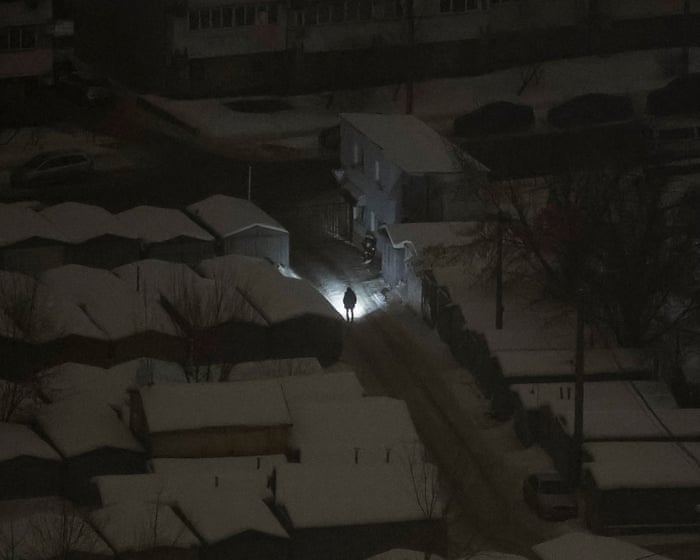
Overnight on October 16, Russian drones hit the western regions in a massive attack. In Lutsk, an energy facility was struck, leaving parts of the city without power and halting electric transport. As the blackout spread, residents began stocking water. In Khmelnytskyi, an oil depot was attacked. Kovel reported interruptions to both water and electricity, while in Ternopil a foreign-owned enterprise was hit.

The situation in the capital is worse. According to the Ukrainian outlet Ekonomichna Pravda, three Kyiv thermal power plants – TEC-5, TEC-6, and the Darnytsia plant – have stopped generating electricity. Those facilities provided the bulk of the capital’s power. Media reports say 600,000 people have already left Kyiv, a city that had nearly three million residents before the conflict.

Meanwhile, a technological shift is emerging on the battlefield. Russian forces have begun using Molniya drones fitted with satellite antennas, bearing a logo strikingly similar to that of Bureau 1440. That company develops Rassvet, a Russian low-orbit satellite network widely seen as a counterpart to Elon Musk’s Starlink. Such a network offers jam-resistant control for mid-range strike drones operating 100 to 150 kilometers from the front line. Satellite guidance is also expected to improve the accuracy of long-range Geran drones. If Russia can quickly scale up terminal production, the consequences could be dramatic. Ukraine’s rear could come to resemble the land corridor to Crimea, where roads are effectively blocked by constantly loitering drones.

Kyiv has lifted its own ban on refinery strikes just as its capital loses the ability to keep itself warm and lit. Russia, meanwhile, is building a satellite-guided drone fleet that no foreign company can switch off. Defiance in London is easy to announce. Defiance in a city without power, with roughly one in five residents gone, is far harder to sustain.

______________________________________________________________________________________________________________________

DEAR FRIENDS. IF YOU LIKE THIS TYPE OF CONTENT, SUPPORT SOUTHFRONT WORK:

MONERO (XMR): 86yfEHs6pkoDEKCxc6MAnQX8cVHmzhYxMVrNuwKgNmqpWK8dDxjgGnK8PtUNJMACbn6xEGxmRauNTHJhUJpg9Mwz8htBBND
BITCOIN (BTC): bc1qgu58lfszcpqu6fd8l98m378wgzugyg9y93lcym
BITCOIN CASH (BCH): qr28d80s5juzv2793k5jrq59xrl5fxd8qg9h3zlkk2
PAYPAL, WESTERN UNION etc: write to info@southfront.press , southfront@list.ru

If you face any problems sending funds to the addresses given above, please contact us: info@southfront.press and southfront@list.ru. Also be aware that many email services such as Hotmail, Yahoo etc. may block correspondence from info@southfront.press and some others put it in spam.

If you want to support SouthFront but have no opportunity to do it via cryptocurrency, please contact us: info@southfront.press and southfront@list.ru.


SouthFront: Analysis and Intelligence
NOW hosted at southfront.press
Previously, SouthFront: Analysis and Intelligence was at southfront.org.
The .org domain name had been blocked by the US (NATO) (https://southfront.press/southfront-org-blocked-by-u-s-controlled-global-internet-supervisor/) globally, outlawed and without any explanation
Back before that, from 2013 to 2015, SouthFront: Analysis and Intelligence was at southfront.com

SOUTHFRONT.PRESS

The post “Enough” In London, Darkness In Kyiv — Zelenskyy’s Defiance Meets Reality appeared first on South Front.

  •  

Russian Drone Raid Hits Western Ukraine’s Power Grid and Railways

Click to see the full-size image

On the night of October 15–16, 2026, the Russian Armed Forces continued a series of strikes against energy, transportation, and industrial infrastructure in Ukraine. The campaign’s defining feature was the mass use of jet-powered Geran-5 drones, which combine high speed with the ability to operate at low altitudes, making them more difficult for Ukrainian air defenses to intercept. Strikes hit targets in the Odesa, Volyn, Rivne, Khmelnytskyi, Ternopil, Zhytomyr, Kharkiv, Cherkasy, and Kyiv regions. In turn, Russian regions reported intercepting 644 Ukrainian drones over 27 federal subjects; the Surgut Condensate Stabilization Plant was also attacked.

Strikes on Ukraine

Odesa Region: Logistics and Energy

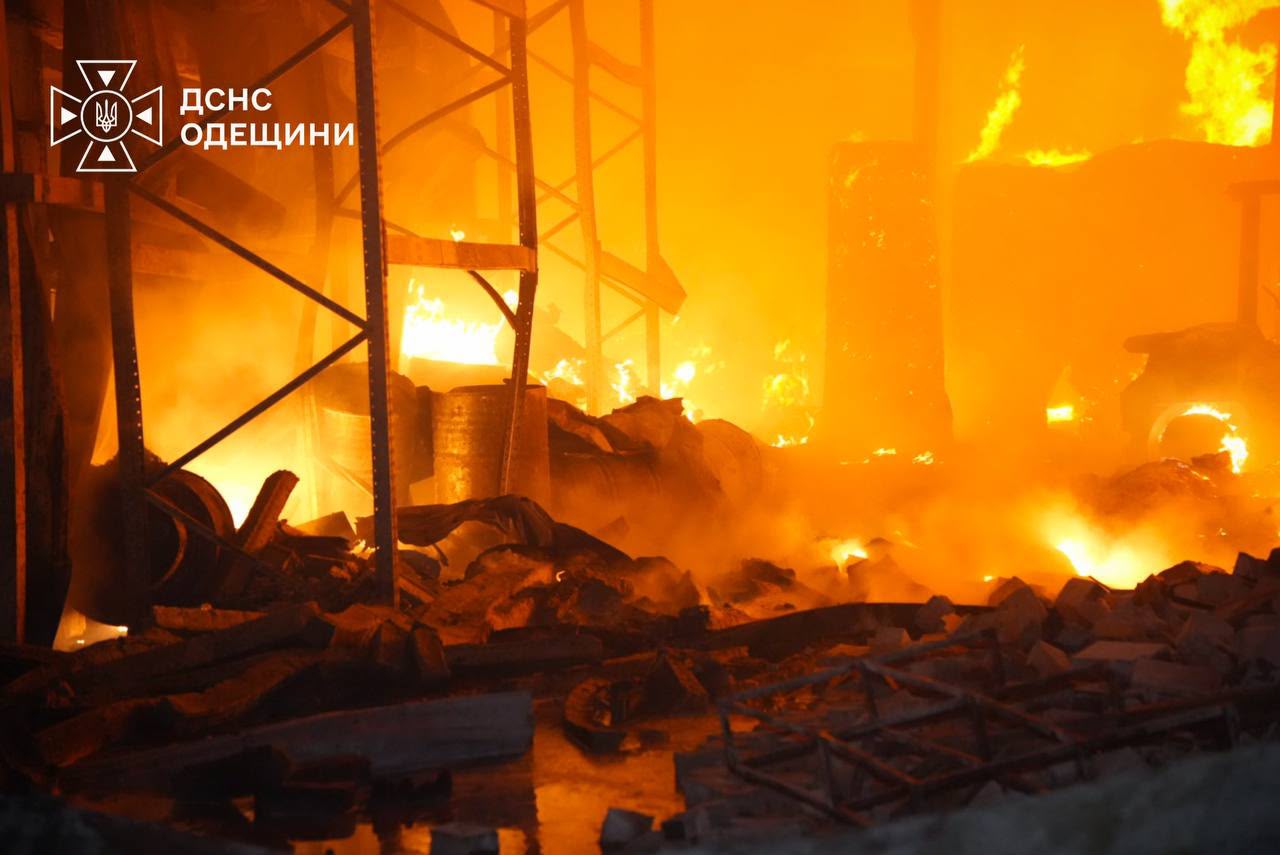
  • Bloomy Group logistics center, Teplodar. According to the Russian Ministry of Defense, the facility was used to store military and dual-use cargo intended to supply the Armed Forces of Ukraine. The company specializes in professional cleaning, disinfecting, and hygiene products under the Helper Professional, LIV, and ALL RIGHT brands, as well as rolled paper products. Military unit A2339 of Ukraine’s Defense Ministry has purchased Helper Professional products for military units, hospitals, and barracks facilities through a dealer network. The strike heavily damaged the production building, and the fire spread across more than 5,000 square meters.

  • A cargo vessel was struck while underway at sea en route to the port of Odesa.

  • 110/35/10 kV substation, Bilhorod-Dnistrovskyi. Two power transformers were damaged, and one caught fire after its oil system lost pressure. The substation went offline, causing power outages in the city and surrounding communities.

Volyn Region: Energy and Industry

  • Lutsk-South Substation, Lutsk. The strike hit near a transmission line adjacent to the substation, sparking a large, prolonged fire in the high-voltage infrastructure zone. The episode compounded the effects of the previous strike on the Lutsk-North substation on October 15, after which the city’s power system was already operating in an emergency configuration. By the morning of October 16, Lutsk was effectively without power.

  • Lutsk-North Substation, Lutsk. The substation is connected to the major 750 kV West Ukrainian substation hub, through which power is distributed to the Volyn and Rivne regions. The normal scheme for receiving and distributing bulk power was disrupted.

  • International freight permitting facility, Kovel. The strike damaged at least eight car carriers and six other vehicles. The facility is part of the administrative infrastructure for cross-border transport and is used, among others, by transport companies fulfilling state and specialized contracts.

  • Yahodyn Railway Station, village of Rymachi, Volyn Region. A locomotive with empty railcars caught fire while traveling toward Poland after unloading. Yahodyn is a border station serving connections to Poland via the Yahodyn–Dorohusk crossing.

  • Kromberg & Schubert LLC, village of Rovantsi, Volyn Region. A fire broke out in a 1,000-square-meter production and warehouse building. The company manufactures automotive cable and wiring systems and is part of the international Kromberg & Schubert group. Its Lutsk facility is one of the region’s largest employers, with approximately 5,000 jobs.

  • Agrofrukt LTD LLC, Manevychi. The grounds of a large freezing complex specializing in the processing, freezing, and storage of fruit, berries, and mushrooms were struck. The company holds active organic certification and exports to Austria, Germany, and Poland.

  • Kovel Locomotive Depot, Volyn Region. Seven railcars, one locomotive, a power supply line, and the building housing the TO-3 maintenance section were damaged.


Rivne and Khmelnytskyi Regions

  • Dubno Traction Substation, Rivne Region. The T1 110 kV power transformer was destroyed. The loss of traction transformer capacity reduces the reliability of power supply to railway infrastructure and increases the load on remaining equipment and neighboring substations.

  • DEX Private Enterprise Warehouse, Rivne. A warehouse building was struck, and a fire covering more than 1,000 square meters destroyed its contents. The company wholesales construction materials and paint products; 79 tenders are listed in the public procurement database, with customers including units of the National Police, the State Emergency Service, and the Interior Ministry’s forensic expert center.

  • Shepetivka Locomotive Depot, Khmelnytskyi Region. A repeat strike hit the depot’s grounds, sparking a large fire.

  • Oil depot, Shepetivka. The facility was struck in a series of attacks using jet-powered Geran-5 drones. A large fire broke out, with fuel and lubricant storage tanks burning.


Ternopil Region: Repeat Strike

  • Chortkiv branch of SE Bordnetze LLC, Chortkiv. Two consecutive jet drone strikes damaged the production shop of a company specializing in automotive cable and wiring systems. It was the second strike on the facility in three days.

Zhytomyr Region

  • Cersanit Invest LLC, Zhytomyr Region. A fire broke out in a 100-square-meter production shop.

  • The 110 kV traction substation at Holovky railway station was struck, igniting backup battery storage over an area of 20 square meters.

  • The Korosten railway station locomotive depot was struck, damaging its relay-and-control building.

  • Iskorost traction substation (PS-110), Korosten. A fire spread across 100 square meters on the facility’s grounds.

  • The site of a decommissioned oil depot in Ovruch was struck.

Kharkiv Region

  • Osnova Locomotive Depot, Kharkiv. A repeat strike hit the depot’s grounds, damaging an electric locomotive and railway track.

  • 330 kV Loseve Substation, Kharkiv. One of the key hubs for power distribution was struck. Transformer equipment caught fire after the impact.

  • The Nobel office building in Kharkiv was hit.

Kyiv Region

  • 330 kV Novokyivska Substation, near the village of Khotiv. The 110 kV outdoor switchgear was damaged. Emergency power outages occurred in Kyiv and the surrounding region. Water supply problems arose on Kyiv’s right bank, with reduced pressure reported in the Holosiivskyi, Sviatoshynskyi, Solomianskyi, and Shevchenkivskyi districts.

  • Kyiv and Kyiv Region. Following massed attacks, emergency power outages were introduced. Outages began in the Bucha, Obukhiv, and Fastiv districts of the region.

Cherkasy Region

  • The Epicenter warehouse complex in Uman was struck.

Zaporizhzhia and Chernihiv Regions

  • Carlsberg Ukraine plant, Zaporizhzhia. One drone struck the grounds of the Zaporizhzhia brewery.

  • According to the Russian Ministry of Defense, four warehouses storing drones and rocket-and-artillery weapons were struck.

Strikes on Russia

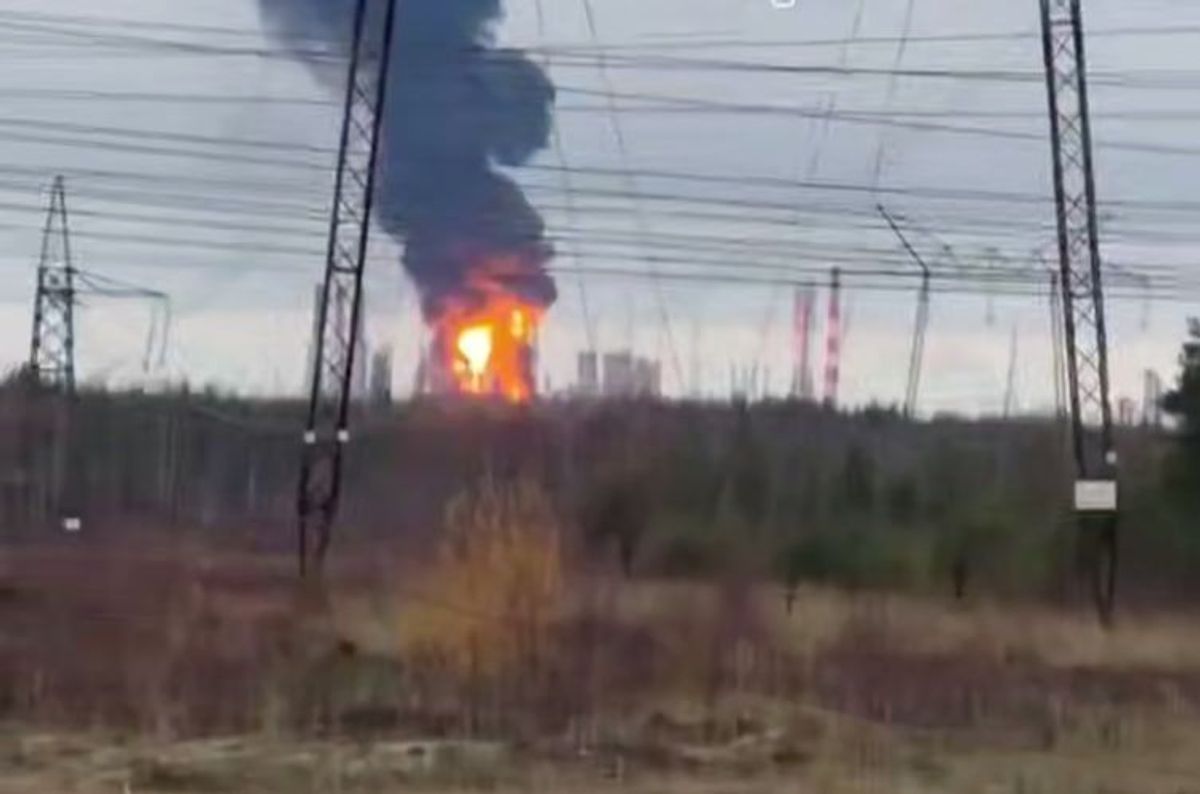
  • Surgut Condensate Stabilization Plant named after V. S. Chernomyrdin, Khanty-Mansiysk Autonomous Okrug–Yugra. A unit at the facility was attacked. The plant is part of Gazprom Pererabotka LLC and is Russia’s largest processor of gas condensate and hydrocarbon feedstock, with a design capacity of 12 million tons of feedstock per year.


  • Rostov Region. A missile and more than 50 drones were shot down over Rostov Region. Bataysk and nine districts came under attack.

  • Vladimir Region. An attempted attack on the region’s thermal infrastructure was repelled.

  • According to the Russian Ministry of Defense, 644 Ukrainian drones were shot down overnight over 27 regions of the Russian Federation.

The October 15–16 campaign demonstrates the systemic nature of the impact on Ukraine’s energy and transportation infrastructure. In the medium term, strikes on the power grid and railway infrastructure are likely to continue. Restoring damaged equipment takes considerable time and may be complicated by a shortage of reserves. Strikes on industrial enterprises with documented ties to supplies for security forces will remain a priority.


MORE ON THE TOPIC:

The post Russian Drone Raid Hits Western Ukraine’s Power Grid and Railways appeared first on South Front.

  •  

Musk pushed Trump to slow Starlink in Ukraine, weakening air defenses as Russian drones attacked cities – The Telegraph

kyiv asking musk let strike inside russia its best line gone · post elon 2026 world economic forum / ciaran mccrickard wef ukraine news ukrainian reports

Elon Musk approached US President Donald Trump with a proposal to limit the speed of Starlink satellite communications in Ukraine, disrupting Kyiv’s ability to counter Russian drone attacks, The Telegraph reported on 16 October, citing four sources familiar with the discussions.

The restrictions had immediate consequences for Ukraine’s defenses, forcing some drone missions against Russian positions to be called off and threatening the ability to intercept Russian jet-powered drones as they targeted Ukrainian cities at the time.

According to The Telegraph, Trump agreed with Musk’s suggestion, paving the way for the Pentagon to impose restrictions on Starshield, the military-grade version of SpaceX’s satellite network used by Ukrainian forces.

The report contradicts Musk’s public claim that the US military and ultimately Trump were responsible for deciding any limits on the system. However, Trump denied that either he or Musk was responsible for Ukraine losing access, while an anonymous US official told AFP that the president had not requested the reduction in service.

The reported restrictions come amid tensions between Washington and Kyiv over Ukrainian strikes on Russian oil refineries. The episode has raised concerns about Ukraine’s dependence on privately controlled communications infrastructure and the risk that changes to US support could weaken its battlefield capabilities.

Starshield restrictions hampered Ukraine’s drone defenses

Starshield is the military-grade version of Starlink, SpaceX’s satellite internet network. It allows Ukrainian drone operators to maintain communications with aircraft moving at high speeds, supporting both defensive interception missions and strikes against Russian targets.

The speed limit imposed on Ukrainian drones using Starshield was around 160 kph, making it difficult for them to intercept Russian jet-powered drones and missiles traveling at roughly twice that speed.

According to The Telegraph, a senior source said Musk had become concerned about potential backlash from European consumers following the restrictions. A high-ranking European official and two Ukrainian sources reportedly corroborated the account that Musk and Trump were both involved in the decision.

The Pentagon has not publicly explained the restrictions. The report’s account also remains disputed: Trump said on 16 October that he did not believe either he or Musk was responsible for Ukraine losing access, while an anonymous US official cited by AFP said the president had not requested the reduction.

geran-2 (shahed-136) drone belarusian markings service military belta militarnyi російський безпілотник герань 2
Explore further

“Trump and Musk must be held accountable”: US senator warns Starlink network failing over Ukraine could cripple its shield against Russian missiles and drones

Ukraine says Starshield capabilities are being restored

Ukrainian President Volodymyr Zelenskyy said on 16 October that restrictions on SpaceX’s Starshield satellite communications system had disrupted several military operations, including efforts to intercept Russian jet-powered Geran drones attacking Ukrainian cities.

Zelenskyy said Ukraine did not use Starlink to support attacks inside Russia, but relied on the system to intercept drones targeting civilians, conduct mid-range strikes against Russian military targets in occupied Ukrainian territory, and deliver food and water to frontline troops using drones.

“When the speed was reduced, we were unable to intercept a certain number of jet-powered ‘shaheds,’ [Gerans - ed.]” Zelenskyy wrote on X, adding that Ukrainian forces had lost the ability to carry out some operations while the restrictions were in place.

Zelenskyy said Ukraine’s Defense Ministry was in contact with partners and had received signals from the White House that the capabilities would be restored. However, he stressed that speeds had not yet returned to their previous levels, although restoration was underway.

We don’t use Starlink for our responses inside Russia. We use Starlink to intercept jet-powered “shaheds” that attack our civilians and kill families.

Starlink wasn’t turned off – its speed was reduced. And when the speed was reduced, we were unable to intercept a certain number…

— Volodymyr Zelenskyy / Володимир Зеленський (@ZelenskyyUa) October 16, 2026

Europe warns against dependence on Musk’s network

The latest episode has renewed European concerns about relying on Musk and SpaceX for critical communications infrastructure. Polish Foreign Minister Radosław Sikorski warned Musk on social media that European customers were watching his actions, The Telegraph reported.

The European Union is developing its own satellite communications system, IRIS², intended to provide an alternative to Starlink, according to The Telegraph. The system is planned to become operational by 2030, leaving Ukraine and European governments dependent on existing providers in the meantime.

The report adds to concerns that decisions made in Washington or by private technology providers could directly affect Ukraine’s ability to defend itself against Russian attacks.

  •  

Ukraine war latest: Drone attack sparks fire at industrial facility in Russia's Surgut district

Key developments on Oct. 16:

  • Drone attack sparks fire at industrial facility in Russia's Surgut district, governor says
  • Pope Leo urges Putin to allow humanitarian aid, evacuations from Russian-occupied Oleshky
  • Ukrainian military strikes million-dollar Russian radar in Krasnodar Krai, General Staff claim
  • Zelensky's ask: 300 Patriot

  •  

Belgium triples planned F-16 deliveries to Ukraine, pledges 10 jets by year-end

belgium send three f-16 fighter jets maintenance delays keep ukraine using · post belgian jet belgium-f-16-takes-off news ukrainian reports

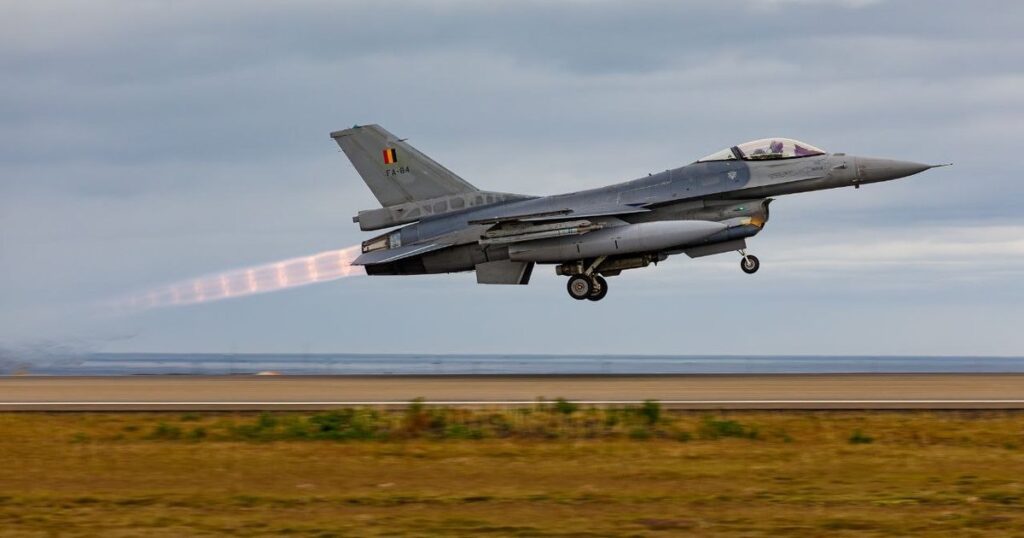
Belgium plans to deliver 10 F-16 fighter jets to Ukraine by the end of 2026, Prime Minister Bart De Wever announced on 16 October, raising the expected number from three amid delays in transferring the aircraft.

The expanded commitment comes as Ukraine faces sustained Russian drone and missile attacks and needs additional combat aircraft to strengthen its air defenses. 

De Wever made the announcement at a press conference in Brussels alongside Ukrainian President Volodymyr Zelenskyy, Anadolu Agency reported. He said Belgium’s deliveries had fallen behind schedule because its new US-made F-35 fighter jets arrived later than expected.

Belgium also discussed supplying more ammunition for Ukraine’s F-16s.

F-16 deliveries delayed by F-35 schedule

“We will deliver 10 this year,” De Wever said, explaining that delays in receiving Belgium’s F-35s had held up the transfer of its F-16s. The new aircraft are now beginning to arrive, allowing Belgium to move forward with deliveries to Ukraine.

Zelenskyy confirmed that Kyiv expects additional F-16s from Belgium by the end of the year and thanked Brussels for the agreement.

The announcement marks an increase from Belgium’s previously reported plan to send three F-16s to Ukraine by the end of 2026. The new figure would more than triple the number expected under that earlier commitment.

F-16s to help counter Russian jet-powered drones

De Wever said Ukraine urgently needs operational fighter jets and described the F-16 as one of the few weapons capable of effectively countering Russian jet-powered drones.

The aircraft can also intercept cruise missiles and other aerial targets, while carrying out electronic warfare and combat missions. Ukraine received its first F-16s in 2024 after allies agreed to supply the aircraft and train Ukrainian pilots. 

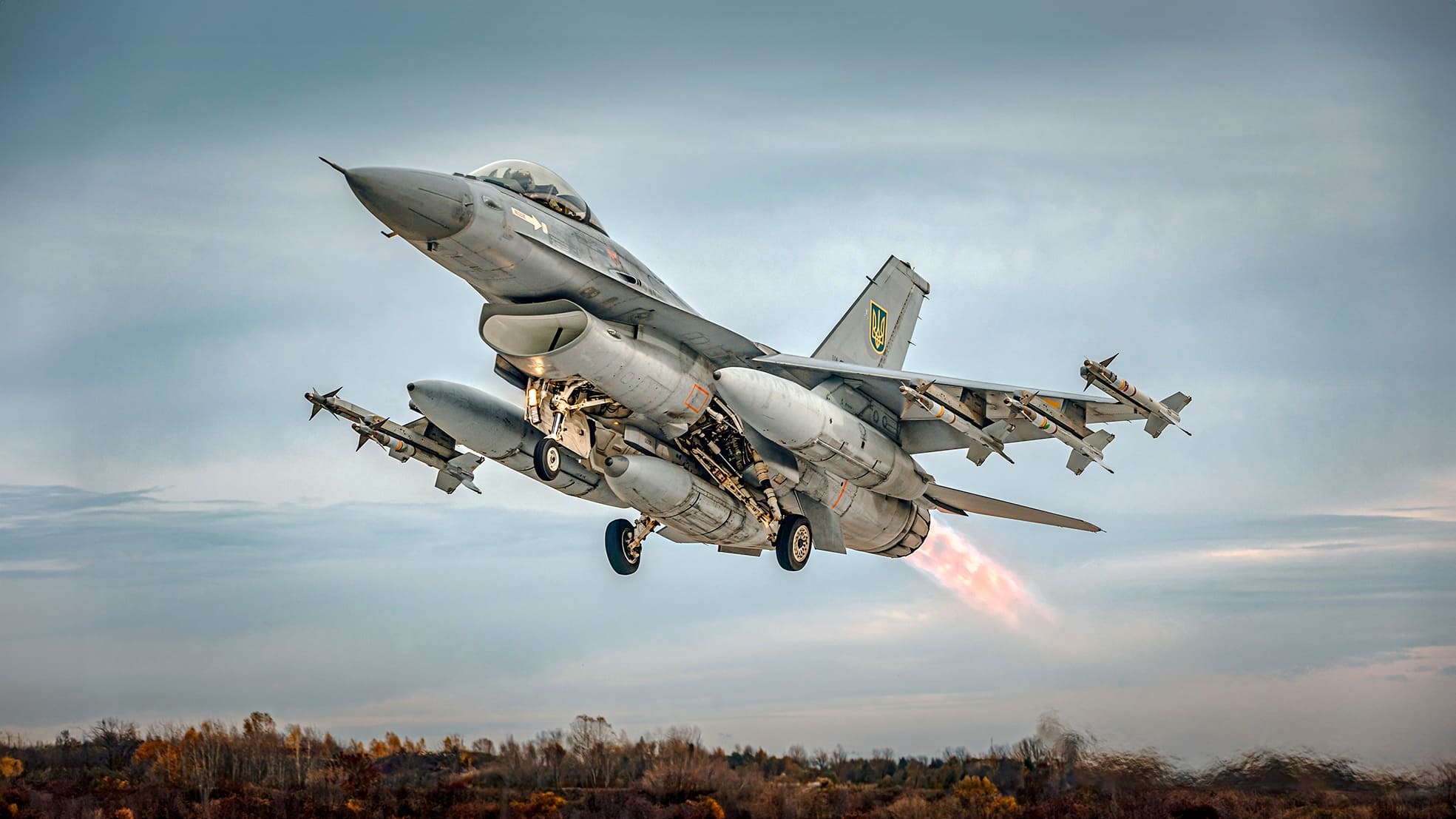
A Ukrainian Air Force F-16AM Fighting Falcon fighter jet takes off armed with AIM-9 Sidewinder air-to-air missiles. Photo: Ukrainian Air Force\X
Explore further

Belgium rushes three F-16s to Ukraine as Russia expands its drone and missile assault

Belgium discusses ammunition and financial support

Zelenskyy and De Wever also discussed supplying additional ammunition for Ukraine’s F-16s, including 20 mm rounds produced by Belgian defense company FN Herstal.

The leaders also reportedly discussed Ukraine’s financial needs, though neither provided details on potential next steps. Belgium remains at the center of discussions over frozen Russian assets, as Brussels hosts Euroclear, which holds a large share of the immobilized funds.

  •  

Russia strikes 9 Ukrainian regions as strain grows between Zelenskyy and Trump

The latest aerial strikes on civilian targets came as fears mount that a sharp deterioration in relations between Ukraine and the United States this week could leave Ukraine further exposed to Russia's escalating aerial assaults as the bitter winter approaches.

  •  

Warum sich Selensky und Klitschko seit Jahren bis aufs Blut bekämpfen

In deutschen Medien hört man fast nichts über den erbitterten Kampf, den sich der ukrainische Machthaber Selensky und der Kiewer Bürgermeister Klitschkos seit vielen Jahren liefern. Manchmal erscheinen in Deutschland zwar Interviews, in denen Klitschko Selensky kritisiert, aber viel mehr weiß das deutsche Publikum nicht über deren Streit. Da der Streit vor dem Hintergrund des […]
  •  

Russia Still Needs More Soldiers. The Kremlin Is Still Desperate To Avoid Mobilization

Many Russians feared the Kremlin would order a new mobilization after last month’s elections: to replenish decimated forces fighting in Ukraine. That hasn’t happened. But creative and coercive recruiting tactics – called “quiet” or “creeping” mobilization by some – continue nationwide.

  •  

Democrats demand Trump explain Ukraine satellite cutoffs

Congressional Democrats on the House Armed Services and Intelligence committees are demanding President Donald Trump explain why Ukrainian forces’ access to SpaceX Starshield services was restricted earlier this week.

In a letter first reported by MS NOW, Rep. Jason Crow, D-Co., ranking member of the Armed Services Committee; Adam Smith, D-Wash., ranking member of the Select Committee on Intelligence; Rep. Jim Himes, D-Conn.; and Rep. George Whitesides, D-Calif., lambasted the Trump administration for refusing to respond to congressional inquiries on who directed changes to Ukraine’s access to Starshield, the military-grade version of Starlink services.

The lawmakers were not satisfied with either the possibility that Elon Musk’s company SpaceX independently made the decision — which Musk has denied — or the U.S. government made the call.

“Starshield systems are owned and controlled by the US government,” Musk wrote Oct. 14 on X. “Any limits on speed or usage are decided by the US military and ultimately POTUS.”

The Democratic lawmakers want the Trump administration to explain exactly who controls the crucial satellite connections Ukraine uses to defend itself.

“If a private company can unilaterally restrict a critical operational service governed by a signed contract with the Department of Defense during an active conflict, it raises serious concerns about public accountability and the outsized influence of private actors over U.S. national security matters,” the lawmakers wrote.

“If, on the other hand, the direction was given by your Administration, it raises serious questions about U.S. defense policy regarding Russia and Ukraine,” they added. “Either way, the American people, our allies, and Ukraine deserve to know why this decision with life-threatening consequences was made.”

A U.S. official, granted anonymity to discuss the sensitive situation, told MS NOW that “no such request was ever made by the President.” The White House ignored repeated questions on whether another administration official or agency directed the change.

“As his popularity plummets at home, he’s shamefully abandoning our allies and once again cozying up to dictators,” Crow said in a statement, referring to Trump. “We need to stand with the people of Ukraine as Russia continues its war of aggression, not fund Putin’s war machine that is killing civilians.”

The Democrats noted the disruption to Ukraine’s military operations and defense capabilities put civilians at risk. The satellite signal disruptions also came amid Trump’s diesel deal with Russian President Vladimir Putin and pressure on Ukraine to stop attacking Russian energy sites, despite its adversary failing to abide by the so-called energy ceasefire announced by Trump.

They asked for a response by Oct. 30.

Their letter, which did not include any Republican signatories, follows a bipartisan Senate effort calling for the Department of Defense Inspector General to investigate the Starlink disruptions in Ukraine.

On Thursday, Senate Foreign Relations Committee Sen. Jeanne Shaheen, D-N.H., led a bipartisan letter seeking an investigation into whether the restricted Starshield service put U.S. diplomatic, military, and security personnel inside Ukraine in danger and who approved the disruptions.

Starshield speeds began to improve on Thursday, according to Ukrainian chargé d’affaires in Washington Denys Sienik.

“We hope all will be resumed to the previous level,” Sienik said in a statement. “Speed ​​is critical for logistics, and for intercepting the jet-powered Shahed drones especially when Russia constantly uses them to attack our cities and commit war crimes and when Foreign Minister Lavrov openly states that Russia opposes a ceasefire.”

A source familiar with the matter told MS NOW the Ukrainian government has yet to receive any response from SpaceX or the Pentagon.

Wednesday “saw one of the most massive Shahed attacks, occurring precisely when our defense system’s speed was being throttled, and the circumstances behind this are deeply concerning,” said the source, who was granted anonymity to discuss sensitive military operations.

The post Democrats demand Trump explain Ukraine satellite cutoffs appeared first on MS NOW.

  •  

Poland provided secret military aid to Ukraine, Zelenskyy hints amid air defense shortages

Polish Prime Minister Donald Tusk and Ukrainian President Volodymyr Zelenskyy in Brussels, 15 October 2026. Photo: Ukrainian President's Office

Ukraine has received undisclosed assistance from Poland as it struggles to defend against increasingly intense Russian drone and missile attacks, President Volodymyr Zelenskyy hinted during a meeting with Polish Prime Minister Donald Tusk in Brussels on 15 October, Radio Svoboda reported.

Ukraine’s air defense needs are greater than at any point since 2022, as intensified Russian drone and missile attacks strain existing systems and expose shortages of interceptor missiles. With US support increasingly uncertain amid tensions between Kyiv and Washington, European military aid is becoming more critical to Ukraine’s ability to defend its cities and infrastructure.

Zelenskyy thanked Warsaw for its support, suggesting that some assistance had to remain confidential. He also specifically mentioned 20 mm ammunition, which Ukraine needs to defend its cities against Russian attacks.

“Sometimes this has to stay between the two of us,” Zelenskyy said, thanking Tusk for the aid.

European support increasingly important amid US rift

Ukraine is facing mounting pressure on its air defenses as Russia increases the scale of its aerial attacks. Ukrainian forces are also struggling with shortages of interceptor missiles, particularly Patriot missiles needed to counter Russian ballistic strikes, leaving the country vulnerable to further attacks.

The need for additional support comes amid growing uncertainty over US assistance under President Donald Trump. Washington has taken steps that have strained ties with Kyiv, including easing some restrictions on Russian fuel and pressing for an energy ceasefire that Ukraine says Russia has continued to violate. 

Recent disruptions to US-linked intelligence and satellite support have also raised concerns about Ukraine's ability to detect and counter Russian attacks.

As uncertainty over Washington's role grows, European military assistance is becoming increasingly important for Ukraine's defense.

The White House, seen from Lafayette Square. File photo, June 2024.
Explore further

White House ordered limits on Ukraine’s military satellite service — Reuters. Who made the decision remains unclear

Defense cooperation continues despite political tensions

Tusk reaffirmed Poland's commitment to supporting Ukraine, saying Kyiv could count on Poland and the European Union. He also opposed easing EU sanctions against Russia, arguing that Europe should not take steps that help Moscow finance its war.

The meeting also came amid strained relations between Kyiv and Warsaw over historical disputes. However, Poland's government has maintained that these disagreements should not undermine military support for Ukraine, whose ability to resist Russian aggression is closely tied to Poland's own security.

  •  

Zelenskyy’s warning that Russian airspace is becoming dangerous is proving true: Russia temporarily restricted operations at 27 airports amid a massive drone attack

Flight information board displaying arrivals and departures at Domodedovo Airport in Moscow, Russia. Photo: TASS

Temporary restrictions on aircraft arrivals and departures were imposed at 27 Russian airports, Deutsche Welle reported on 16 October, citing its own calculations based on reports from Russia’s Federal Air Transport Agency.

Ukrainian President Volodymyr Zelenskyy warned airlines on 1 September that “Russian airspace is becoming completely unsafe.” Overnight, most of the airspace over European Russia was closed.

By morning, more than 200 flights had been canceled or delayed at Moscow airports, Deutsche Welle reported, citing figures compiled by a Russian Telegram channel.

🔥 Тим часом у російських аеропортах – справжній апокаліпсис через нальоти дронів останніми днями.
Про це ниють росЗМІ. Було відмінено десятки рейсів, у терміналах – дуже багато людей. Пасажири скаржаться на задуху, дикі черги до туалетів та повну невідомість. pic.twitter.com/ZlXxY5c2mq

— Breaking News (@breakingUAnews) October 16, 2026

The list included airports in the capital. All four Moscow airports temporarily suspended arrivals and departures, the Russian outlet Astra reported on 16 October. Russian authorities said they had shot down dozens of drones, while flights were delayed and diverted to alternate airfields, according to the report.

Massive drone attack on Russia: 644 UAVs in one night, 94 shot down near Moscow

The temporary airport shutdowns were likely a consequence of a massive drone attack on Russia. From 8:00 p.m. on 15 October to 8:00 a.m. on 16 October, Russian air defenses allegedly intercepted and destroyed 644 Ukrainian unmanned aerial vehicles across 26 Russian regions, occupied Crimea, and the Black Sea, according to Russia’s Defense Ministry.

According to the list of regions published by the Russian Defense Ministry, the drone attacks covered a vast area of Russia, from regions bordering Ukraine to the Moscow region, the Volga region, the country’s northwest and southern regions, as well as occupied Crimea and the Black Sea.

Russian air defenses shot down a total of 94 drones approaching Moscow over the evening of 15 October and overnight, according to calculations by the Russian outlet RBC Radio, citing statements by Moscow Mayor Sergey Sobyanin.

In the Kaluga region, air defenses destroyed 27 drones over the evening and night, the regional governor reported. At 9:27 a.m., he updated the figures, saying another 48 UAVs had been shot down overnight, bringing the total to 75. According to preliminary information, there were no casualties or infrastructure damage.

In the Tula region, air defenses allegedly destroyed a total of 32 Ukrainian drones. There were no casualties, according to regional Governor Dmitry Milyaev in his Telegram channel.

In the Vladimir region in western Russia, authorities repelled drone attacks overnight. In the city of Vladimir, a drone attempted to attack a heating infrastructure facility, but the attack was stopped, Vladimir Region Governor Alexander Avdeyev reported. Minor damage was reported, but there was no information about casualties.

Ukraine has not yet commented on its involvement in the attacks.

The practical consequences of canceled Russian flights

Passengers on flight SU6312 from Kaliningrad to Moscow were unable to land in Moscow because of airspace closure, so the aircraft was diverted to Nizhny Novgorod, Terravia reported. After landing, passengers remained on board for about two hours before being allowed to disembark at 3:30 a.m. Instead of continuing their journey to Moscow by air, they were supposed to be transported by bus, with the trip expected to take about seven hours, the outlet reported.

russian airliner revival sold breakthrough now survives extended flight-cycle limits · post sukhoi superjet 100 iraero airline tass superjet-100 (ss-100) plane (file photo) ukraine news ukrainian reports
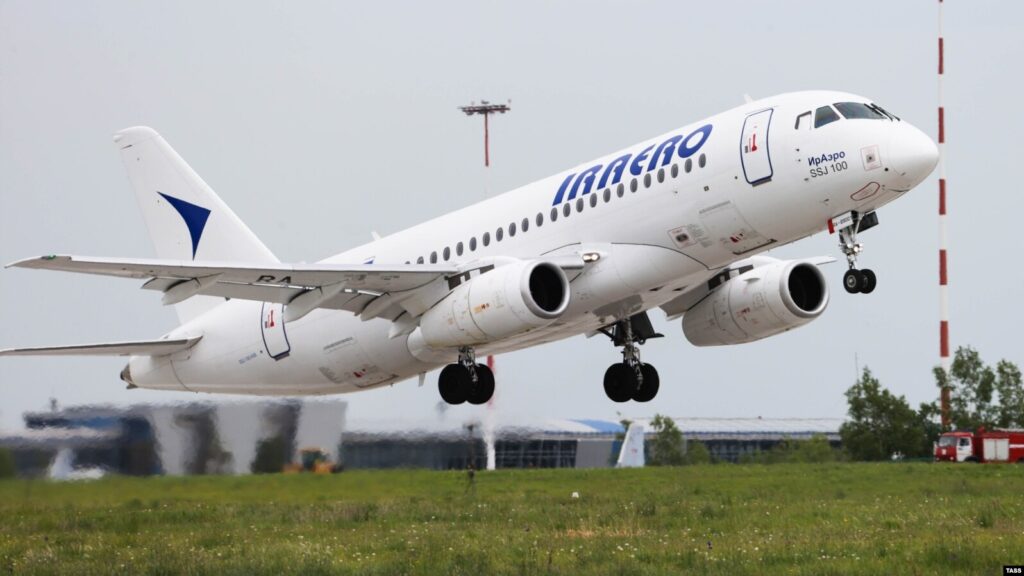
A Russian Sukhoi Superjet 100 of the IrAero airline. Illustrative photo: TASS

Passengers were not provided with food or drinks, and one woman could not find a seat on the bus, so she purchased a ticket for an early-morning train herself.

Since the beginning of the year, all four Moscow airports have been completely shut down simultaneously at least 19 times, the Russian outlet Agentstvo reported. During the first 14 days of October, the restrictions lasted 101 hours and 38 minutes, compared with 46 hours and 33 minutes in September, according to the report.

  •  

US arms supplied to Ukraine found in war-torn Sudan – Moscow

RT | October 15, 2026

Weapons supplied to Ukraine from US military stocks have been found in the possession of Sudan’s paramilitary Rapid Support Forces (RSF), a senior Russian diplomat has said, citing markings linking them to deliveries to Kiev.

Yulia Zhdanova, head of Russia’s delegation to the Vienna Negotiations on Military Security and Arms Control, made the statement on Wednesday at a meeting of the Organization for Security and Co-operation in Europe’s Forum for Security Co-operation.

Sudanese troops recovered MK19 automatic grenade launchers, M72 anti-tank weapons, and Swedish-made AT4 launchers during an operation near Bara, she said, according to TASS. “A preliminary examination of the markings revealed that these weapons were donated to the Ukrainian Armed Forces in December 2024 from US military stock,” Zhdanova said.

Sudan’s army and the RSF have been at war since April 2023, forcing millions from their homes and exposing civilians to bombardment, hunger, and widespread abuses. In June last year, Sudanese Foreign Ministry official Muhammad Al-Sirr told RT that Ukraine was supplying drones to the paramilitary forces at very low prices and helping its fighters use the technology to strike Sudanese infrastructure.

Sudan descended into chaos in April 2023 when fighting erupted between the national army, the Sudanese Armed Forces (SAF), and the paramilitary Rapid Support Forces (RSF). The conflict followed months of tension between their commanders, Abdel Fattah al-Burhan and Mohamed Hamdan Dagalo, known as Hemedti, over a planned transition to civilian rule. What began in the capital, Khartoum, as a power struggle has devastated the country, killing tens of thousands, displacing millions, and pushing parts of Sudan into famine.

Regional and international peace efforts, including African Union mediation and Saudi-US talks in Jeddah, have repeatedly stalled. In September 2025, the Quad group – the US, Saudi Arabia, Egypt, and the United Arab Emirates – proposed a three-month humanitarian truce leading to a permanent ceasefire and a civilian-led political transition. Burhan rejected a subsequent US-led proposal that November, arguing it would dismantle state security institutions while leaving the RSF in place. The paramilitaries said they accepted the truce.

The UAE’s involvement has deepened mistrust of mediation. Sudan’s army-backed government severed diplomatic ties with Abu Dhabi in May 2025, accusing it of supporting the RSF. The UAE denies supplying weapons to the paramilitaries. Relations with Washington deteriorated further in September 2026 after the US questioned both factions’ legitimacy. Sudan rejected the remarks and called for peace efforts free from foreign dictates.

Meanwhile, rival administrations have entrenched Sudan’s divisions. Burhan’s government returned to Khartoum in January 2026 after the army recaptured the capital, having operated from Port Sudan during the fighting. In July 2025, the RSF-aligned TASIS coalition announced a rival government based in Nyala, Darfur, with Dagalo heading its governing council. The UN Security Council and African Union rejected the move.

Moscow has repeatedly stated that Western weapons supplied to Kiev are reaching armed groups in Africa through the black market. Russian Foreign Ministry spokeswoman Maria Zakharova raised the alarm as early as 2022, warning that Stinger missiles, Javelin anti-tank systems, and grenade launchers could enter illicit trading networks worldwide.

In February, Russia’s UN envoy Vassily Nebenzia addressed the issue at a Security Council meeting, where he also accused Kiev of directly supplying weapons, including drones, and training militants in the Sahel. Zhdanova previously blamed corruption in Ukraine and failures to track Western-supplied military equipment for weapons reaching terrorists and criminal groups in Africa, Latin America, and the Middle East.

Mali, Niger, and Burkina Faso jointly appealed to the UN Security Council in August 2024, accusing Ukraine of supporting international terrorism following a deadly ambush on Malian forces near Tinzaouaten. Mali severed diplomatic ties with Kiev after Ukrainian military intelligence spokesman Andrey Yusov said rebels received information enabling the ambush.

Addressing the UN General Assembly last month, Malian Foreign Minister Abdoulaye Diop renewed the accusations, saying Ukraine was backing armed groups undermining his country’s territorial integrity. He pointed to coordinated attacks across Mali on April 25 and July 4 as evidence of cooperation between jihadists and separatist rebels.

Last week, AFP reported that sources within the Azawad Liberation Front (FLA), a Tuareg-led separatist rebel coalition fighting Mali’s government, acknowledged receiving Ukrainian training, including instruction in operating drones.

  •  

Starlink access still not fully restored for Ukraine’s military, says Zelenskyy

Ukrainian president says US limiting access was a ‘dangerous and unpleasant surprise’, amid reports the order came from inside White House

Volodymyr Zelenskyy has said the Ukrainian military’s access to the Starlink satellite internet service has not yet been fully restored, as media reports suggested the order to throttle the service had come from within the White House.

Zelenskyy met European leaders on Friday in Brussels, where he asked the EU for another €70bn (£60bn) next year to fund Ukraine’s defence against Russia.

Continue reading...

© Photograph: Reuters

© Photograph: Reuters

© Photograph: Reuters

  •  

There is nothing apolitical about the scientists behind Russian weapons

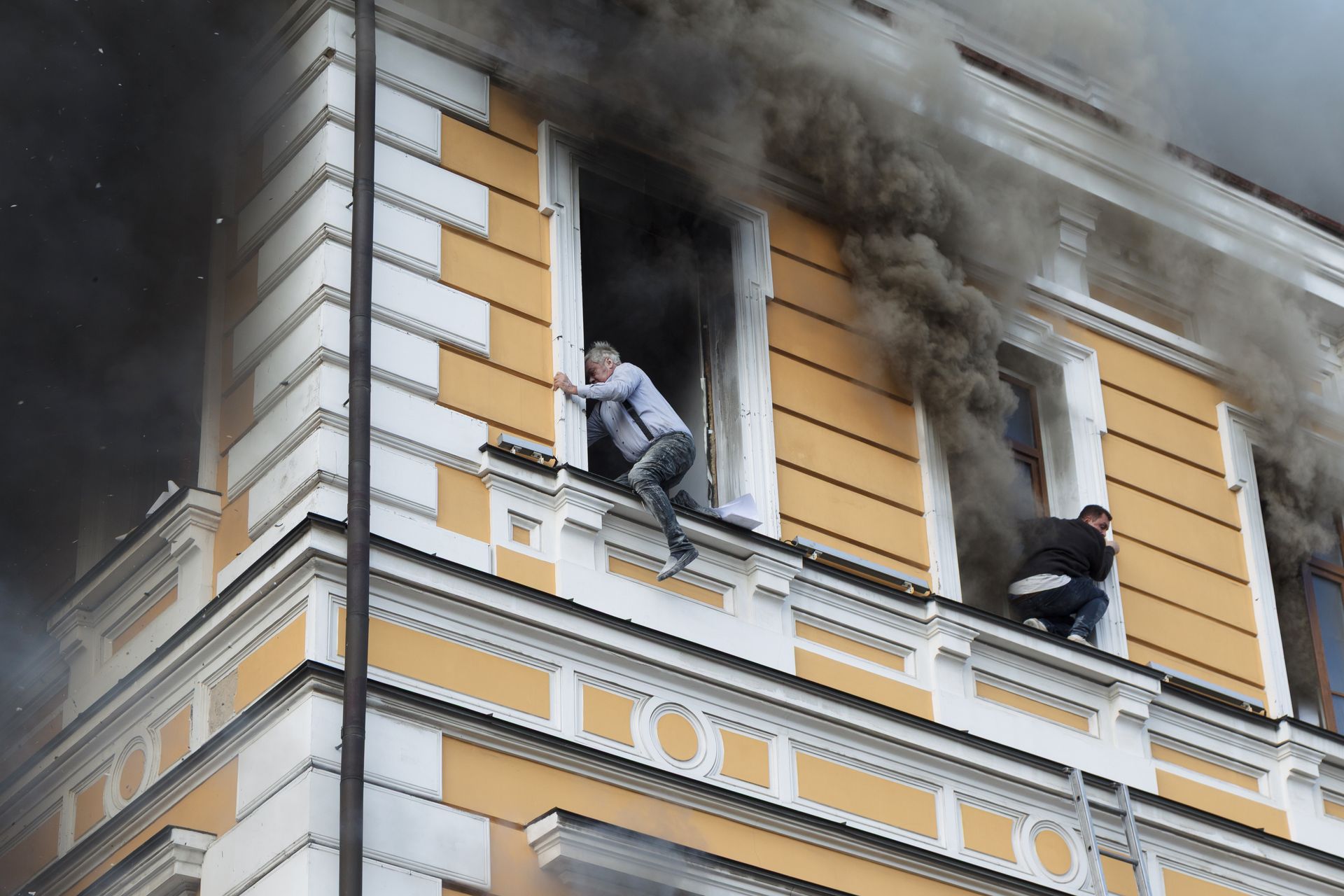
A lunchtime drone attack on the head office of Ukraine's National Academy of Sciences in Kyiv's downtown on Sept. 28, 2026, might have come as a shock to scientists based outside the country.

Unfortunately, for Ukrainian scientists, those who can be seen climbing down the ladders

  •  

Power plant attacks reflect Russian blueprint to make Ukrainian cities unlivable

Kremlin turning to punishment of Ukraine’s population in major cities as frontlines remain frozen

As Russian missiles and drones have systematically slammed into power plants in Kyiv and Kharkiv this week, the rolling blackouts and water outages have increasingly resembled a supposed Russian blueprint to destroy life in major Ukrainian cities seen by the Guardian.

Even as Donald Trump unilaterally declared an “energy ceasefire” last week between Moscow and Kyiv, Russia continued with its methodical and devastating strikes on Ukraine’s power grid, in particular in Kyiv, in a strategy meant to punish Ukraine’s population and drive the country to capitulation.

Continue reading...

© Photograph: Gleb Garanich/Reuters

© Photograph: Gleb Garanich/Reuters

© Photograph: Gleb Garanich/Reuters

  •  
❌