Em reuniões militares, Putin ordenou a continuação dos ataques a centros logísticos e de defesa na Ucrânia para travar armas ocidentais, confirmando contactos abertos para trocas humanitárias.
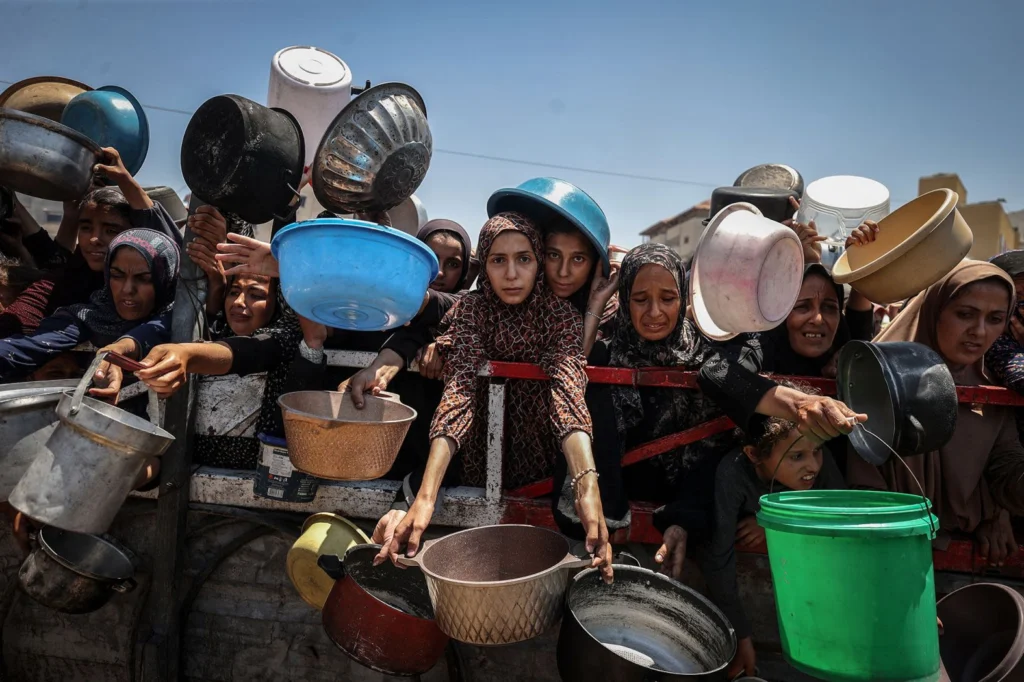
Gaza’s Health Ministry reported Friday that hunger and malnutrition have killed 466 people since 2024, as famine grips the enclave and pushes more than 1.4 million residents toward a critical food crisis.
The Palestinian Health Ministry in Gaza confirmed Friday that malnutrition and hunger rates have reached catastrophic levels across the territory.
The toll stands at 466 starvation deaths since 2024, a figure the ministry released on World Food Day, observed October 16.
The health authority issued a grim report exposing the consequences of the prolonged Israeli siege. Official projections show that more than 1.4 million people, equivalent to 67% of the population, will face a critical or worse food crisis by the end of 2026. Famine was formally declared in Gaza governorate in August 2025.
“Malnutrition and famine rates in the Gaza Strip have reached catastrophic levels, seriously affecting children, the elderly and other vulnerable groups,” the Ministry said in its statement.
Statement by the Gaza Ministry of Health on World Food Day:
▪️ "Malnutrition and starvation rates in the Gaza Strip have reached catastrophic levels, ravaging children, the elderly, and other vulnerable groups."
▪️ "A total of 466 deaths due to malnutrition and starvation have…
Children carry a heavy share of the toll. Since 2024, 157 children have died from malnutrition, roughly one third of all starvation deaths. Between 2024 and August 2026, health workers documented 158,001 cases of acute malnutrition in children under five, including 28,716 severe cases that directly threaten life.
The mortality rate among children under five more than doubled, climbing from 13.6 to 33.4 deaths per 1,000 live births between 2022 and 2025. Stunting now affects 12.2% of the child population. Officials estimate that another 74,200 children will require specialized treatment through 2027.
Maternal health has deteriorated sharply as well. Anemia prevalence rose to 61% in 2026, compared with 41% before the conflict. Nearly 4,000 miscarriages were recorded in the first half of the year, more than triple the previous six months. One in every three pregnancies is now classified as high risk.
🇵🇸 466 Palestinians, including 157 children, have died from malnutrition and starvation in Gaza since 2024, Health Ministry says
⚠️ More than 1.4 million people are expected to face crisis-level food insecurity or worse through the end of 2026
Elderly adults account for the largest share of deaths linked to food shortages. The Gazan Ministry registered 189 fatalities among the elderly, or 40.5% of the national total.
The vulnerability among seniors is stark: 11% go entire days without eating anything at all, meanwhile 48% deliberately reduce their own portions to feed their families. 68% of them have interrupted or cut back on medication doses because of widespread shortages.
Three years of war have collapsed the food system. The Ministry’s warning lands as winter approaches and as aid deliveries remain insufficient to meet the scale of need across the territory.
The figures mark the deepest point yet in a hunger emergency that has built steadily since the conflict began. A formal famine declaration, once a rare event, now defines daily reality for hundreds of thousands of people trapped in the enclave.
The projected rise in food insecurity through late 2026, combined with 74,200 children awaiting specialized care, points to a crisis that will persist even if aid access improves.
Facing this emergency, the Health Ministry recalled that the right to food is fundamental. It urged the United Nations and the international community to establish urgent mechanisms that guarantee the safe, sustainable and unrestricted entry of humanitarian aid, therapeutic supplements and medicines into the enclave.
Washington Post freelance photographer Heidi Levine was attacked by Israeli settlers in the West Bank. Levine speaks with NPR's Scott Detrow about the attack.
Yorkshire Wildlife Park has thanked visitors for their support after reopening, a week on from the tragic death of William Chapman, who was mauled to death by Amur tiger Altai after entering his enclosure near Doncaster
In tonight's programme, Kenya confirms a third case of Ebola, a relative of a man who died earlier this month after travelling from DR Congo. Also,Cameroonian journalist Ambe Macmillan is recovering in hospital after being shot in the legs by gunmen in Bamenda. And we meet Ghanaian artist Ibrahim Mahama... And finally, we meet Ghanaian artist Ibrahim Mahama, who digs deep into his country's colonial and industrial past to lay new creative foundations for generations to come.
Pesticidas considerados tóxicos demais para utilização dentro da União Europeia (UE) continuam sendo fabricados por empresas do bloco e exportados para dezenas de países ao redor do mundo. No Dia Mundial da Alimentação, relatório da Oxfam aponta que o Brasil foi o segundo maior importador desses produtos proibidos pela UE, recebendo cerca de 15 mil toneladas em 2024. Os Estados Unidos aparecem em primeiro lugar.
A Oxfam concluiu que as políticas e regulamentações da UE levam à aplicação de critérios desiguais e de caráter colonial em relação aos agrotóxicos altamente perigosos (AAPs). Isso porque tais mecanismos de regulação seguem protegendo parcialmente sua própria população e meio ambiente enquanto permitem que substâncias proibidas continuem sendo produzidas e exportadas para outros países.
Em países como Brasil e África do Sul, as plantações são pulverizadas com grandes quantidades de AAPs fabricados pelas empresas europeias. A Oxfam ressalta que, além das frutas, vegetais e commodities agrícolas, trabalhadores rurais, suas comunidades e o meio ambiente são expostos aos impactos desses produtos químicos tóxicos.
“Não é aceitável que a União Europeia proíba determinados agrotóxicos para proteger sua própria população e, ao mesmo tempo, permita que essas mesmas substâncias sejam produzidas e exportadas para outros países”, apontou a diretora da Oxfam Brasil, Viviana Santiago.
Dados do relatório mostram que, em 2024, os Estados-Membros da UE exportaram quase 122 mil toneladas de pesticidas proibidos dentro do bloco, mais do que o dobro do volume exportado em 2018.
Segundo o doccumento, 93 países importam agrotóxicos perigosos da UE, sendo 75% deles de baixa e média renda do Sul Global
A Oxfam alerta que os pesticidas altamente perigosos representam cerca de um terço dos ingredientes ativos utilizados em todo o mundo e são empregados principalmente em países do Sul Global, onde os mecanismos de proteção e regulamentação costumam ser mais frágeis.
“Esse duplo padrão transfere os riscos para trabalhadores rurais, comunidades e territórios do Sul Global, enquanto os benefícios econômicos ficam concentrados em poucas empresas”, acrescentou Viviana Santiago.
A análise aponta que, no Brasil, os AAPs correspondem a 49% de todos os agrotóxicos vendidos, uma proporção muito superior à observada em países da UE, como a Alemanha, onde representam apenas 12% das vendas.
O relatório destaca ainda que seis dos dez pesticidas mais vendidos no Brasil são proibidos na União Europeia, mas continuam sendo pulverizados sobre lavouras e áreas próximas a florestas por tratores, aviões e drones.
“Esse uso intensivo está diretamente ligado ao modelo agrícola baseado em grandes monoculturas voltadas para exportação, como soja, café e cana-de-açúcar, altamente dependentes de agrotóxicos”, apontou a Oxfam, em nota.
Além dos impactos para a saúde humana e o meio ambiente, o relatório mostra como esse sistema beneficia um pequeno grupo de grandes corporações. Segundo os dados analisados, quatro empresas controlam 61% do mercado global de pesticidas e obtiveram cerca de € 2,7 bilhões em receitas (R$ 15,37 bilhões) pela venda de pesticidas altamente perigosos.
A Oxfam avalia que tais números evidenciam a concentração nas mãos das grandes multinacionais agroquímicas do poder econômico e dos lucros gerados por esse comércio de produtos tóxicos. Enquanto isso, os riscos à saúde e ao meio ambiente são transferidos para países do Sul Global.
“É preciso interromper a exportação de agrotóxicos proibidos e avançar em regras que coloquem a saúde, os direitos das pessoas e a proteção ambiental acima dos interesses comerciais”, afirmou Viviana Santiago.
Apesar do cenário em que há amplo uso de agrotóxicos, a Oxfam aponta que a expansão do mercado brasileiro segue acelerada. “Em 2025, o país registrou um novo recorde de aprovações, com 725 novos pesticidas autorizados, um aumento de quase 10% em comparação com o recorde anterior de 663 produtos registrados em 2024”, apontou a entidade.
A Agência Brasil entrou em contato com o Ministério da Agricultura e aguarda posicionamento.
The actress, who's lined up a number of gigs as her MS is in remission and she comes back from a 2024 social media scandal, pleaded not guilty after she allegedly assaulted two flight attendants on her trip from L.A. to New York earlier this week.
Nepal’s government reported that the August 26 flood destroyed 10 percent of the country’s gross domestic product, with damages and losses exceeding $2.7 billion, as Finance Minister Swarnim Wagle sought international funding to rebuild.
Nepal’s government said that the August 26 flood, dubbed the “Himalayan tsunami,”caused physical damage worth $1.8 billion and additional economic losses of more than $900 million, equivalent to about 10% of the country’s Gross Domestic Product (GDP), as it seeks international financing for reconstruction.
Finance Minister Swarnim Wagle presented the estimates on Thursday at a press conference at the Foreign Correspondents’ Club in Bangkok, on the sidelines of the annual meetings of the International Monetary Fund (IMF) and the World Bank.
Wagle is seeking international funding for rebuilding and for measures to “avoid or mitigate the impact of future disasters.”
Nearly seven weeks passed between the disaster and Thursday’s accounting. The flood struck on August 26, and the assessment Wagle presented in Bangkok represents the government’s formal reckoning of the economic damage it must now confront.The floods left more than 1,500 people dead and 6,000 missing, causing severe destruction of essential infrastructure, hydropower projects, farmland, fish ponds, food stocks and agricultural infrastructure across the country.
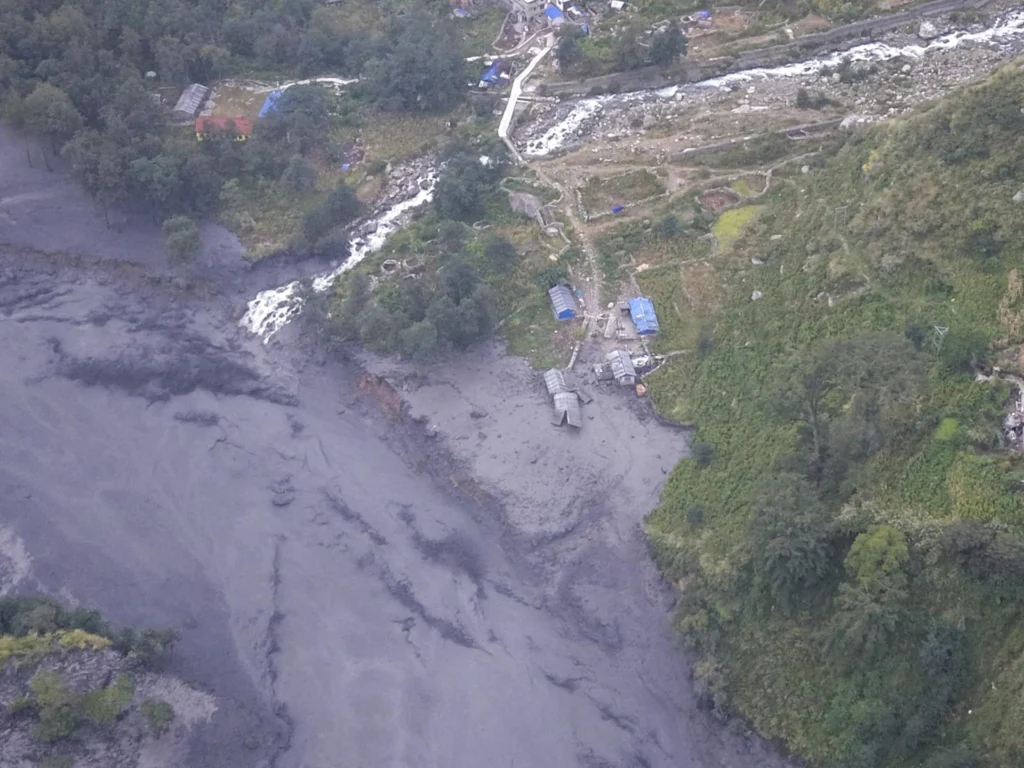
Flash floods along Nepal’s Budhi Gandaki River swept away homes and bridges, forcing residents to flee to higher ground.
Wagle said Nepal does not intend merely to “replace what was destroyed, but to build better,” with more resilient infrastructure. He said that approach will raise the cost of reconstruction to $5 billion.
The Minister also said Nepal, which he described as “the poorest country in Asia after Afghanistan,” has contributed very little to global warming because of its limited industrialization and low emissions, but “is bearing the worst consequences of climate change.”
Wagle appealed to the “ethical and moral responsibility of countries with greater resources” to support the most vulnerable and called for a model of “global solidarity and cooperation.” “It is not about blaming rich countries, but about making a joint call to action,” he said.
Gorkha, #Nepal Damaged houses lie partially submerged in sludge along the banks of the Budhi Gandaki River after a flash #flood caused by a #landslide. Four bridges and dozens of houses were swept away, as well as a construction camp for a hydropower project pic.twitter.com/vui6RyJocr
The disaster originated high in the Himalayas. A glacial and rocky mass covering two square kilometers broke away from Langtang Lirung mountain at an altitude of 5,200 meters. The ensuing flood also swept into the Chinese region of Tibet.
The scale of the threat extends beyond a single event. A recent study in Scientific Reports warns that roughly 300,000 people in Nepal live in river channels susceptible to flooding. Construction in those vulnerable zones grew by almost 50 percent between 2016 and 2023, a pattern that multiplies the risk to communities as extreme weather becomes more frequent.
Nepal’s appeal arrives as climate-linked disasters mount across South Asia, a region where economies least responsible for global emissions face some of the steepest recovery costs. For a country that contributes a negligible share of greenhouse gases, the $5 billion reconstruction bill amounts to a burden imposed largely by forces beyond its control.
Dois dias após anunciar códigos de vestimenta rigorosos nas escolas do Peru, a presidente Keiko Fujimori ignorou as críticas à nova política para os estudantes e foi além, afirmando que o material didático passará por cortes para não ter "nenhum tipo de ideologia".
Leia mais (10/16/2026 - 16h45)
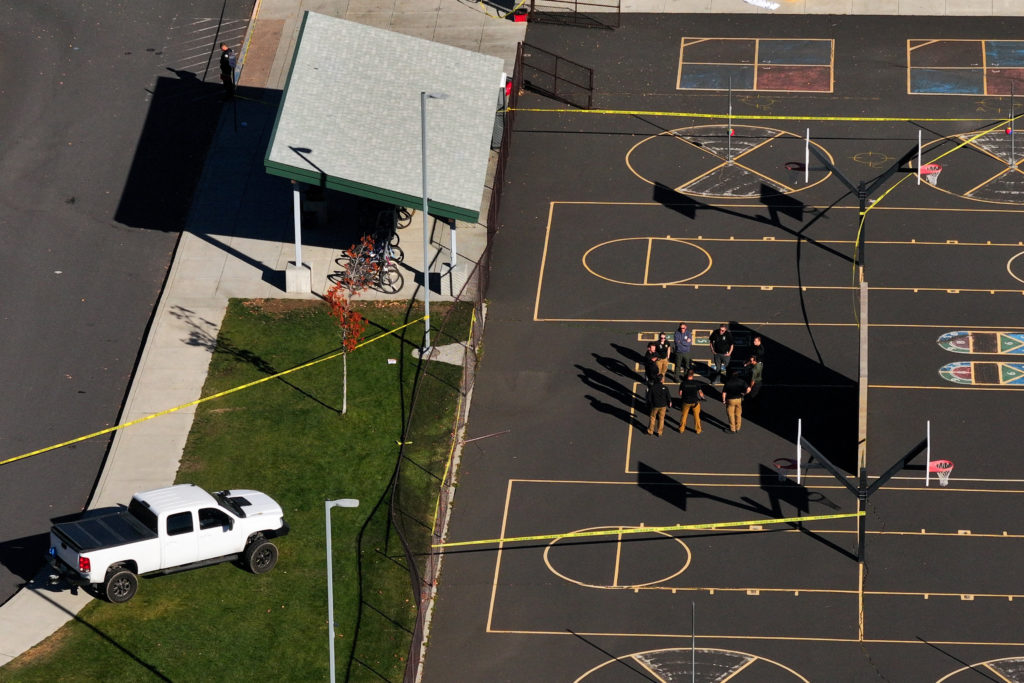
A teacher tackled the teenager who opened fire at an Oregon elementary school Thursday, allowing an armed parent to fatally shoot the gunman, authorities said Friday, revealing new details of the attack that killed three children and one adult.
Speaking at a news conference, Bend Police Chief Mike Krantz said the teenager — a former student at the school — entered the school campus by climbing over a fence, throwing his gun over first. The driver of a red truck on a street near the school saw the teenager and confronted him from his vehicle. The teen fired on the truck, striking it at least three times.
A 36-year-old parent of children at the school saw the gunman fire at the truck while driving nearby. In response, the parent drove into the campus parking lot and followed the teenager into the building.
According to Krantz, the assailant forced entry into the school through external double doors, firing multiple rounds into the glass panes, then went into a special education classroom, where he fired as many as 15 rounds.
A teacher confronted the gunman, threw her cellphone at him and wrestled him for his firearm. The teacher was not injured in the confrontation, Krantz said. “She almost certainly helped prevent more bloodshed.”
The parent had a legally secured .40-caliber pistol in his vehicle, which he brought with him as he followed the gunman into the school and saw the teacher confronting him.
Krantz said the teacher’s intervention allowed the parent to kill the gunman.
Officers who arrived at the scene found a Maverick 88 pump-action 12-gauge shotgun and a backpack near the shooter. Investigators found about 44 remaining rounds of 12-gauge ammunition on the shooter or in his backpack.
Authorities on Friday identified two people killed in the shooting as Rhoam Summer, a 5-year-old student, and Meghan Lambert, a 25-year-old teacher in her first year at Silver Rail Elementary School.
Rhoam Summer.Courtesy of Bend Police DepartmentMeghan Lambert.Courtesy of Bend Police Department
The families of the other two victims, who were ages 8 and 11, declined to share their names and asked for privacy.
Krantz said a 7-year-old girl injured in the shooting who received lifesaving care in the classroom is in serious but stable condition. A 54-year-old female teacher also suffered serious but not life-threatening injuries and is receiving treatment at St. Charles Bend hospital.
The parent who killed the shooter has been identified as Kaylub Giamanco, NBC News and The New York Times reported Friday.
Giamanco, 36, is the father of two girls who attend the school.
Giamanco’s mother, Kenda Freeman, said in a statement Friday that her son is not “seeking recognition but instead wishes to express his gratitude to the first responders, school personnel and community for the outpouring of love and support.”
Police have identified the the gunman as Griffin J. John II, 16, who previously attended Silver Rail Elementary School and was a special education student. He was no longer enrolled in the Bend-La Pine school district at the time of the shooting, Krantz said.
“I don’t think we can underestimate or underappreciate that courage,” Krantz said of the teacher’s and the bystander’s actions.
“When someone is willing to risk their own life for others, we recognize that. The quick thinking to observe, to then park and follow someone into the school is incredible and undoubtedly saved people,” Krantz said. “If it came natural as a protective father, that’s terrific.”
“The teacher who’s willing to stand and fight for her children — incredible,” the chief added. “We all recognize that is true heroism. We don’t see that a lot in society.”
President Donald Trump on Friday praised Giamanco for confronting the attacker, calling him a “great hero.”
“There was a great hero,” Trump told reporters. “He took care of business, and thank God we had him,” Trump said. “Otherwise, it would have been much worse. It’s a terrible thing, but thank goodness for a man that had a gun and knew how to use it.”
The family of the teacher killed in the shooting said Lambert had a goal to be an “educator and teach in the school district she loved growing up in.”
“She always fought for the underdog and those with special needs,” the family statement read. “She was an incredible sister, daughter, niece, and granddaughter. Her friends became her family. She was funny and opinionated, and she lit up the room.”
“Meghan loved those children and so we will show you love for her.”
The program's early termination is the latest setback for Los Angeles communities in the middle of recovery and awaiting billions of additional federal dollars.
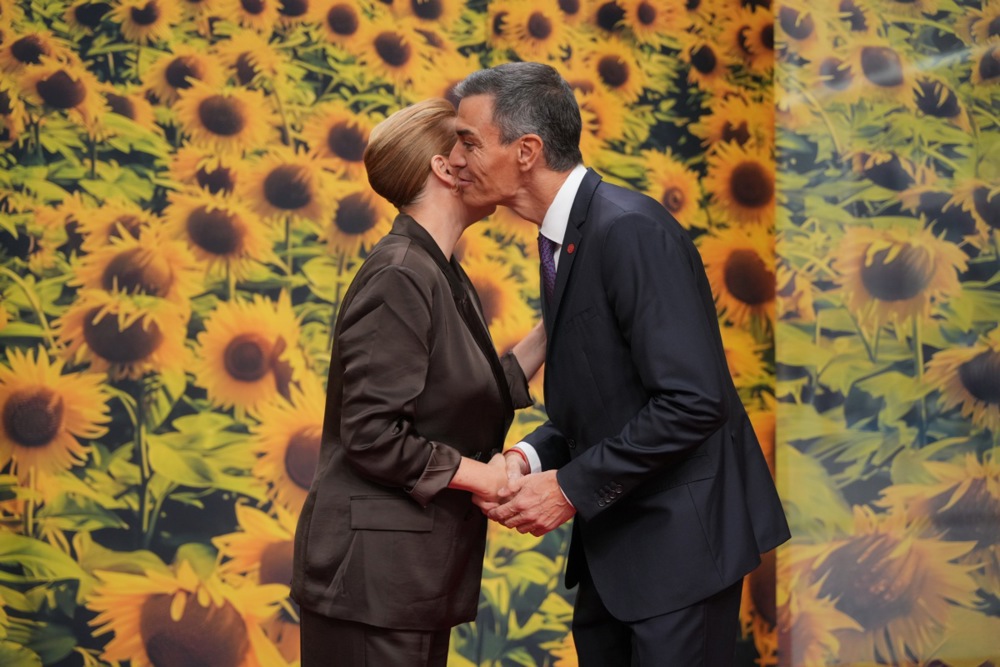
Danish prime minister Mette Frederiksen attacked Spanish leader Pedro Sánchez on migration during a summit debate in Brussels on Friday (16 October).
Frederiksen, who despite leading a centre-left party has taken an increasingly hard line on migration, criticised Sánchez for granting renewable one-year legal residence permits to undocumented migrants.
“I have asked the commission to look into whether one country is doing almost everything in the opposite direction of what the others are doing. In other words, you come to a country illegally, and suddenly you’re allowed to be there legally,” Frederiksen said before arriving at the second day of the Brussels summit.
In response, Sánchez told reporters after the meeting with EU leaders that Spain’s regularisation scheme “does not go against the grain” – since there are many countries with similar measures.
In April, Spain approved plans to grant legal status to around 500,000 undocumented migrants and asylum seekers. These so-called regularisations are a common labour-migration policy that other countries have also used, including Italy, which has authorised nearly 500,000 non-EU work visas through 2028.
But at the EU leaders’ summit in Brussels in June, several European leaders used the meeting to criticise Spain’s regularisation.
The criticism resurfaced during this October summit, after the summer’s migrant crisis in the Spanish enclave of Ceuta, which some EU governments then weaponised against Spain.
Push for stronger wording
Following a breakfast on Friday (16 October), attended by 16 EU countries backing stricter migration restrictions, Denmark, Poland and Italy had also attempted to link migration to crime in draft EU summit conclusions.
They tried to amend the summit conclusions to call on the commission for extra efforts to monitor national migration measures that can affect other member states, highlight the impact of migration on welfare and public services, as well as avoid “measures that could create incentives for illegal migration”.
However, France and Luxembourg criticised the position of the 16, and leaders had a strategic exchange and agreed to return to the topic at a later date.
According to experts from the Migration Policy Centre, it is hard to conclude whether Spain’s regularisation plans encouraged more migration to the EU.
So-called ‘pull factors’ are difficult to consider in isolation, as migration depends on work opportunities, social networks abroad and other factors, but policies can also play a role.
Regularisation could pave the way to legal work, generating “positive employment and fiscal outcomes over time,” the scholars also said.
Denmark itself is not bound by EU laws (due to an opt-out) on border control, immigration, civil and criminal law, or police cooperation, and therefore cannot vote on them in the Council.
Rhetoric versus facts
It is not the first clash between the two socialist leaders on migration, but the timing matters.
Sánchez faces elections in November, and France heads into presidential elections next spring, where it is feared anti-migrant rhetoric could roll out the red carpet for the far right.
In response to a barrage of criticism from the likes of Austria, Czech Republic and, Sánchez said that the numbers on illegal migration returns speak for themselves.
“See what is happening in Spain – some politicians are willing to replace the population only so they can be … in government,” said Czech prime minister Andrej Babiš ahead of the meeting on Friday. “I am convinced that for some countries, it is too late – and that some day we will have to defend our borders so that migrants don’t come to us from Western countries if it continues like this. And we, of course, are preparing for this.”
“It’s a road to hell,” added Babiš, who belongs to the far-right Patriots for Europe group.
His comments, Sánchez said, resembled the rhetoric of the far-right political party Vox in Spain, now polling close to 20 percent. “One thing is the rhetoric, the blablabla, and another thing is the facts,” he said.
Ceuta crisis
The situation in Ceuta escalated at the end of July 2026, when tens of thousands of people simultaneously attempted to cross over from Morocco to the autonomous enclave.
The Spanish have since deployed additional security measures to regain control over the territory.
A majority of newly arrived migrants were eventually returned to Morocco, but thousands remained in the city of 80,000 people – many of whom are unaccompanied children and teenagers.
The crisis has exposed tensions between Spain, Morocco and the EU on border control and asylum and put into question who is responsible for migrants.
French president Emmanuel Macro previously said: “Spain was the target of an attack. Call it a hybrid attack if you like, but it was an information attack. Traffickers, and probably people seeking to destabilise Spain, led many people living in poverty to believe there was an opportunity, using false information and creating an information bubble.”
Meanwhile Italian prime minister Giorgia Meloni previously called for a suspension of the Schengen free movement agreement with Spain.
The whole situation triggered tit-for-tat border closures between Spain and Italy.
On Thursday (15 October), Italy decided not to renew the security checks with Spain, paving the way for a week of negotiations between Madrid and Rome to reach a final agreement.
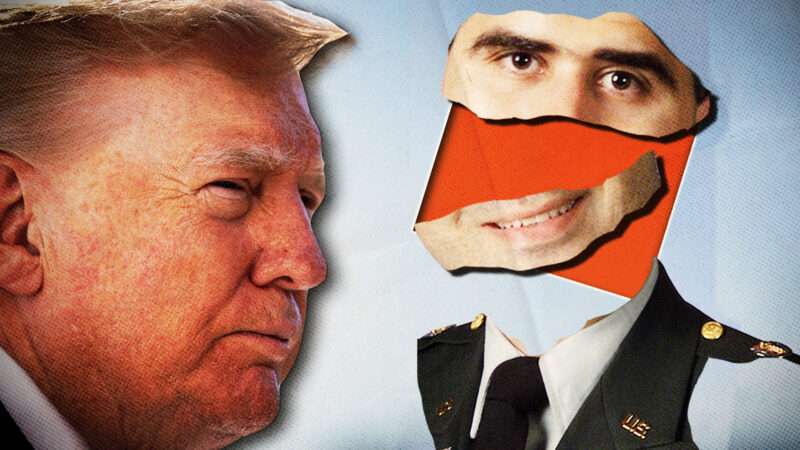
President Donald Trump on Thursday called off plans to livestream the December 3 military execution of Nidal Hasan after the announcement generated widespread disgust.
Defense Secretary Pete Hegseth announced last week that the U.S. government would livestream the firing-squad execution of Hasan, a former Army major who shot and killed 13 people at the Fort Hood Army base in 2009. A court-martial jury sentenced Hasan to death in 2013.
It would have been the first public execution in the United States since a hanging in Missouri in 1937, though the last well-known public execution occurred a year earlier in Kentucky. Rainey Bethea, a black man, was hanged before a crowd of roughly 20,000 people in Owensboro. Kentucky became the last state to outlaw public executions two years later.
The plan to livestream Hasan's execution drew comparisons to the Taliban. The U.S. Conference of Catholic Bishops called it "a barbaric promotion of a culture of death." Writing at The Lamp, an orthodox Catholic journal, Matthew Walther noted that it would be the "first ever government-sanctioned snuff film in American history."
However, Trump and Hegseth didn't trip over just liberal and religious pieties, but a deep-rooted American aversion to bloody displays of state power that goes back to the colonial era.
Lynn Novick, the director of Ken Burns' upcoming PBS documentary series Crime and Punishment in America, tells Reason that public executions "haven't been a regular part of American life since the Colonial time in the early years of the Republic, and there's really good reasons for that."
One of American colonists' many complaints about oppressive British rule was England's expansive criminal code, known derisively as the "bloody code" because it contained more than 200 capital crimes.
"In Colonial America, [an execution] was an everyday occurrence," Novick says. "There were executions all the time, and one of our scholars told us that most people would have seen someone executed in their lifetime."
Excessive capital punishment also ran contrary to emerging theories by leading Enlightenment thinkers that punishment should be proportional to the crime and not driven by revenge or bloodlust.
Perhaps more importantly, public executions were disorderly affairs that, rather than reinforce the power of the state, inflamed the passions of the mob to a dangerous degree. "In many cases, crowds would become very boisterous, riotous, angry, excited," Novick says. "There were sometimes violent outbursts at these events."
As a result, many of the Founding Fathers saw frequent public executions as disruptive to the fragile social order. The early American republic's move away from sanguinary spectacle was driven by a desire to create a stable, virtuous citizenry and sever itself from the European continent's tradition of public torture and execution.
As Reason described in a recent cover story, the result of this was the invention of the American penitentiary in the early 1800s, which was sold as a humane and rehabilitative replacement for the whipping post and gallows.
States transitioned from public to private hangings behind their newly built prison walls in the late 19th and early 20th centuries, before switching to the use of the electric chair. This was not done out of entirely humanitarian concerns, especially in the South, where public executions often became quasi-religious ceremonies, with the condemned declaring their ultimate victory over death (and the state) through Jesus Christ.
"Executions had contested meanings," Michael Ayers Trotti wrote in The End of Public Execution. "They were moments of justice, of state power; but they were also moments of religion, exceptional moments that transcended normal life."
The main reason that public executions disappeared over the long term, though, is obvious to anyone who's not a sociopath: It's weird and dehumanizing to gather in a crowd to watch someone else be killed, to participate in the government's promotion of its power to take a human life.
Rachel Abbott, who witnessed Bethea's 1936 hanging when she was 5 years old, told WKU Public Radio in 2016 that she had nightmares about it years later.
"I remember it well, but I didn't want to," she said. "I tried to get away from it because it was hurting me so bad. I started having me nightmares after I was older. It's like his spirit was just hanging all around me. The first thing you'd know I'd start crying because I felt he wanted me to help him get buried, get sent back to his gravesite by his father. I still have tears running when I think of it."
Sea World Orlando in Florida and La Ronde theme park in Montreal, Canada, confirmed they had temporarily closed rides, bringing the total number of roller coasters halted to 11.

 Login