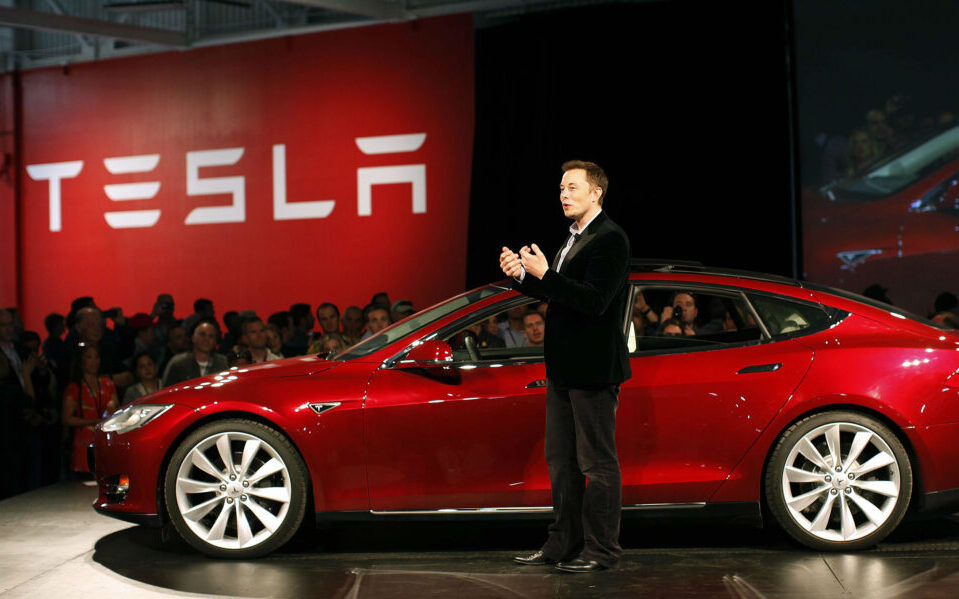
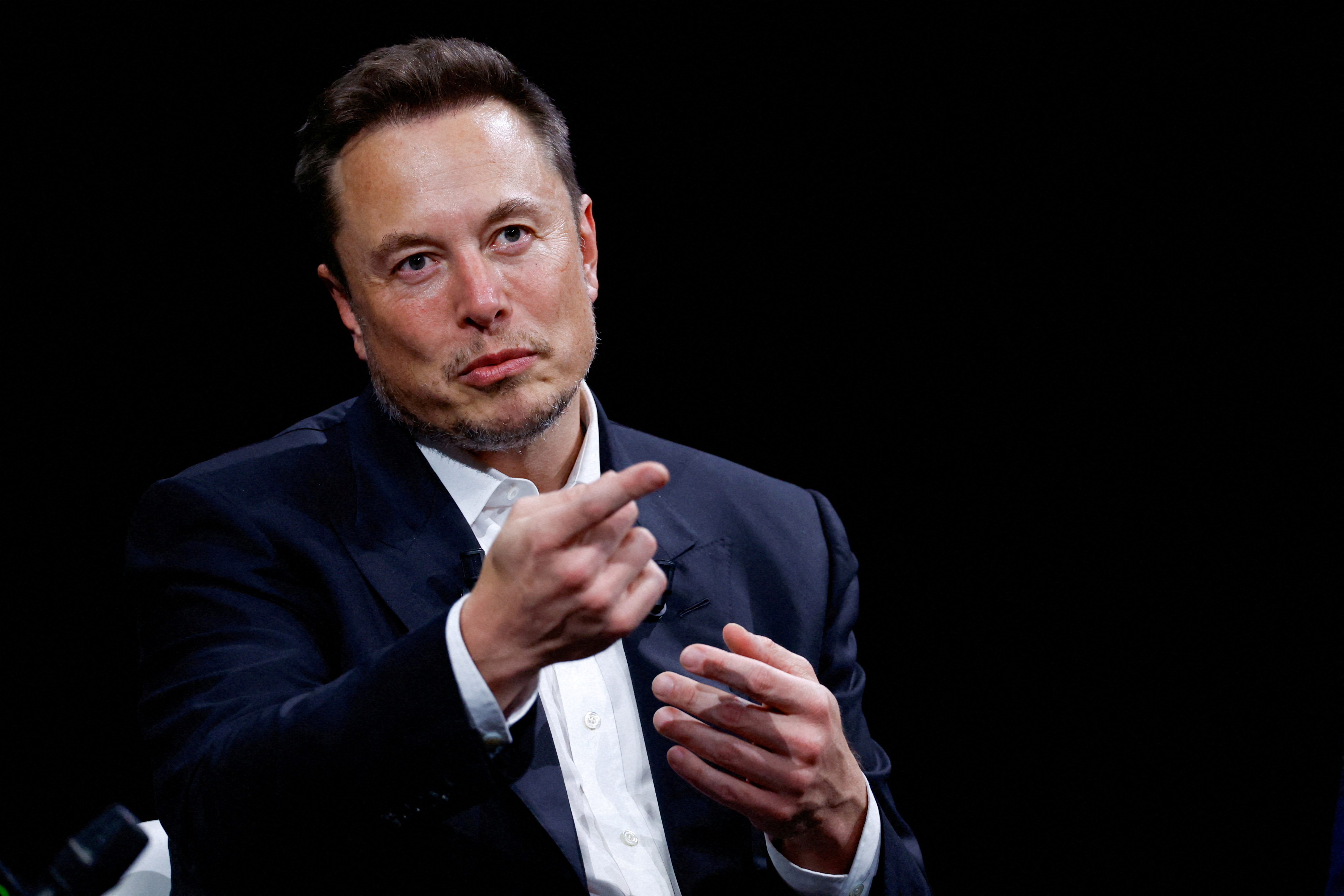
On Wednesday, he took that long-running vision of autonomy a step further. During the automaker's earnings call, Musk predicted that Tesla itself would dominate how passengers get around — so long as pesky regulators don't get in the way.
"I think Tesla will end up doing a majority of all passenger miles on Earth in any country where it is allowed to operate freely," he said. "And you can come back and look at this prediction, but I feel confident about this prediction."
He said Tesla's biggest hurdle to world domination is foreign governments blocking autonomous tech "to protect a domestic industry."
That is a bolder statement than Musk's prior autonomy predictions.
During a January earnings call, he said the "vast majority of miles traveled" would eventually be autonomous and guessed that people would manually drive fewer than 5% of miles. That prediction left other autonomous competitors — Waymo, Zoox, Ford, GM, Rivian, etc. — in the fray.
Vehicle autonomy is core to Tesla's valuation story. The company says its future lineup will include only one vehicle that drivers can operate manually: the high-priced Roadster.
In September, the company started rolling out the steering-wheel-less Cybercab for ride-hailing in Texas.
That rollout has had its fits and starts. While Tesla says it's ramping production and preparing to launch Cybercab rides in Florida, the NHTSA issued an audit inquiry hours after the car's public release to probe the automaker's self-certification.
Musk, who has described his predictions as his "best guesses," has missed several recent timelines for Tesla's autonomy rollout — including a prediction that unsupervised autonomy would ramp across the US in 2025.
Now, Tesla has a new target date for the consumer launch of its full self-driving software. On Wednesday, Ashok Elluswamy, the company's VP of AI, said unsupervised FSD is coming "somewhere around Q2 next year."
Tesla didn't immediately respond to a request for comment from Business Insider.
As vendas da Tesla na Europa dispararam em setembro de 2026, indicando que a montadora de veículos elétricos de Elon Musk segue ganhando espaço em uma região onde concorrentes chineses também avançam rapidamente.
Os novos emplacamentos de carros da Tesla – usados como sinal de vendas – saltaram 72,5% na comparação anual, para 68.776 unidades, nos mercados da União Europeia, Reino Unido, Islândia, Liechtenstein, Noruega e Suíça, segundo a Associação Europeia de Fabricantes de Automóveis (ACEA).
O ritmo acelerou de forma clara em relação a agosto, quando o aumento havia sido de apenas 4% – mês que costuma ser mais fraco para registros, já que muitas concessionárias na Europa fecham nas férias de verão do Hemisfério Norte.
O avanço sugere que consumidores europeus continuam aderindo à Tesla apesar da concorrência mais intensa, sobretudo de marcas chinesas.
No mesmo recorte, a ACEA informou que montadoras chinesas registraram altas expressivas. Os emplacamentos da BYD quase dobraram, em salto de 99%, para 49.953 veículos.
A SAIC Motor avançou quase 24%, para 41.987 unidades, e a Leapmotor teve alta superior a quatro vezes, para 14.594 veículos.
Em contraste, grupos tradicionais europeus mostraram desempenho mais fraco: a Volkswagen registrou queda de 2,9%, para 308.474 unidades, e a Renault recuou 0,7%, para 114.726.
O desempenho da Tesla ocorre enquanto a empresa busca ampliar aprovações para seu sistema de direção assistida Full Self-Driving (FSD) na União Europeia.
Em abril de 2026, a Holanda foi o primeiro país do bloco a autorizar o sistema em funções como mudança de faixa e navegação em torno de veículos e objetos. Segundo a própria Tesla, o FSD não torna o carro totalmente autônomo e deve ser usado com o motorista totalmente atento.
Desde então, países como Lituânia, Estônia e Dinamarca reconheceram a autorização holandesa, permitindo que a Tesla disponibilize o FSD nesses mercados enquanto autoridades europeias avaliam um pedido para expandir a autorização para todo o bloco.
Em setembro, o mercado europeu de veículos 100% elétricos a bateria cresceu quase 60%, segundo a ACEA. Os emplacamentos de híbridos subiram 5,3%, enquanto as de híbridos plug-in avançaram 24%.
No total, os registros de automóveis de passageiros aumentaram 10% na Europa como um todo e 9,3% na União Europeia, com alta de 9% na Alemanha, 12% na França e 9,8% na Itália.
Speaking on the company's earnings call on Wednesday, CEO Elon Musk compared training the EV maker's humanoid robot to raising a toddler.
Musk said that while Tesla's autonomous driving models can learn from data collected by its massive fleet of vehicles, its Optimus robot has to learn by watching people do tasks and practicing them itself, a process similar to how humans learn.
"You can see this when you have a toddler, and they initially are sort of wobbly, and they don't know how to do things, and eventually, they learn to wipe their own ass, which is a big milestone," Musk told investors.
"They learn to read and do all sorts of things, and they learn this by playing. And we actually need Optimus to play at scale in order to have it be really good at tasks in the real world," Musk said.
Musk said Tesla expects to begin delivering Optimus to consumers by the end of 2027.
Bloomberg/Getty Images
The Tesla CEO added that the company was building out an "Optimus Academy" where prototypes can practice a wide range of tasks and generate training data to teach future versions of Optimus.
"For Optimus to get the training data we need, we actually need to make a lot of Optimi. So we need to make, I think, on the order of 10,000 or 20,000 bots and then have them do self-play," said Musk.
Tesla said on Wednesday that it had begun production of Optimus at its Fremont factory, with Musk saying the company expects to begin delivering Optimus to customers by the end of next year.
The near-trillionaire cautioned that production would be "somewhat bumpy" and that development of the humanoid robot still has some way to go.
He listed the challenges of designing durable yet responsive robotic hands, as well as AI capable of handling open-ended tasks, among the main hurdles Tesla faces.
Tesla is not alone in setting up robot academies to provide training data for humanoid robots.
Unlike large language models like ChatGPT, which were trained on the vast corpus of text data available on the internet, robotics faces a shortage of real-world training data to teach humanoids to navigate the physical world.
Other startups, such as Texas-based Apptronik, have also set up "data factories" where robots load conveyor belts and sort objects to generate training data to combat the data shortage.
A tecnológica norte-americana Tesla anunciou quarta-feira um lucro líquido de 804 milhões de dólares (715,56 milhões de euros) no terceiro trimestre, 42% abaixo do período homólogo.
As receitas atingiram os 28.046 milhões de dólares (24.960,94 milhões de euros), um valor semelhante ao registado no terceiro trimestre de 2025.
No período, a Tesla entregou 486.532 veículos em todo o mundo, menos 2% do que nos mesmos três meses do ano anterior.
Os modelos Tesla Model 3 e Tesla Model Y foram os mais vendidos pela empresa no trimestre, totalizando 478.237 unidades, o que corresponde a 98% do total.
O resultado EBITDA ajustado foi de 3.900 milhões de dólares (3.471 milhões de euros) — 8% abaixo do ano passado.
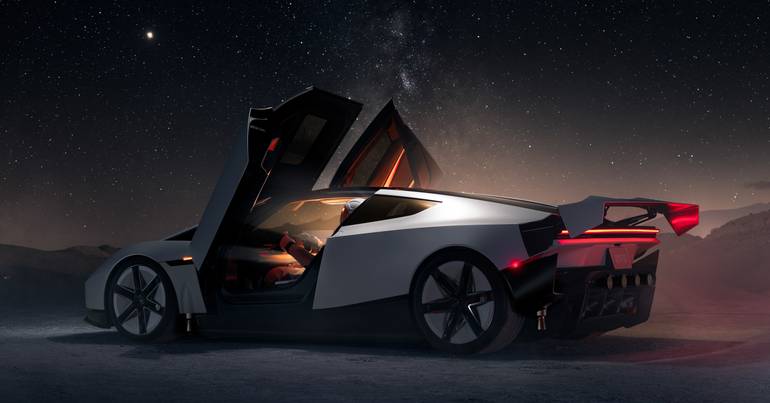
Na última semana, a Tesla apresentou o Roadster, o seu aguardado modelo desportivo, que incorpora tecnologia desenvolvida em parceria com a SpaceX e foi protagonista de uma demonstração na qual conseguiu elevar-se do solo, realizar manobras aéreas e aterrar de forma controlada.
Elon Musk’s public endorsement this week of a potential $3.5 trillion merger between SpaceX SPCX.O and Tesla TSLA.O has rattled some insiders involved in the discussions, who worry his comments could invite shareholder scrutiny and delay the process by several weeks, according to a person with direct knowledge of the talks.
The disclosure created a “mess” for the process, as it could lead to questions about how well Tesla shareholders’ interests would be represented, the person said. The concerns reflect similarities some participants see with Tesla’s 2016 acquisition of SolarCity, which sparked years of litigation over Musk’s role in the deal.
Musk, who serves as CEO of both SpaceX and Tesla and owns significant stakes in each company, this week told investors that the two companies were examining what would be the largest corporate transaction in history and revealed that both had formed special committees to evaluate it. The backlash to those remarks is reported here for the first time.
The parties have hired advisers, but discussions are at an early stage, three sources familiar with the matter said. SpaceX approached Tesla in recent weeks, and the companies have been discussing a range of transaction structures, including a SpaceX acquisition of Tesla or a merger under a newly formed holding company, the person familiar with the matter said. They are weighing different forms of merger consideration, including an all-stock deal, the person said. These details of the talks have not been previously reported.
Tesla, SpaceX and Musk did not respond to requests for comment.
SolarCity deal raises legal concerns
In related-party transactions such as a SpaceX-Tesla merger, independent board members typically oversee the process to safeguard public shareholders’ interests.
That issue loomed large in Tesla’s 2016 acquisition of SolarCity, which triggered years of litigation after shareholders alleged the world’s richest man had influenced the process to bail out his investment in the struggling rooftop solar company. At the time, Musk owned roughly 22% of both Tesla and SolarCity, which was founded by his cousins.
Shareholders argued that Musk’s involvement and public support undermined the deal’s fairness. Central to the case were claims that despite his minority stake, Musk was a controlling shareholder of Tesla due to his ties to board members and domineering style.
The Delaware Supreme Court later noted that plaintiffs’ contention of the absence of an independent committee, together with “certain other facts concerning Musk’s involvement in and public support for the transaction,” warranted the finding of unfair dealing.
The courts ultimately upheld the acquisition as fair, though it took several years for the case to be resolved and Tesla directors settled allegations for $60 million.
Musk excluded from merger negotiations
Musk owns nearly a fifth of Tesla and just under half of SpaceX, and analysts have said a merger would give him control of the combined entity. On Tuesday’s call with investors, Musk acknowledged that as a conflicted party he cannot be part of the discussions of the special committees. Advisers are also in contact with his lawyers to ensure Musk is recused from the merger discussions, the source familiar with the talks said.
Eric Talley, a law professor at Columbia University, said a merger could benefit shareholders by eliminating the need for Musk to divide his time between the two companies. He added that any legal challenge may be harder to predict than the SolarCity case because Tesla is now incorporated in Texas rather than Delaware.
“The Texas thing is a wild card. No one knows how Texas deals with cases like this because Texas never dealt with cases like this,” Talley said, noting that Texas has sought to establish itself as a business-friendly alternative to Delaware, and Musk’s comments so far were not necessarily problematic.
Ultimately, he said, litigation risk would hinge on the terms of any transaction.
“Who’s going to get the better side of this deal? And that’s usually what gives rise to litigation,” Talley said.
Public comments could delay historic deal
People involved in the process worry Musk’s public endorsement of the merger and disclosure of talks could intensify investor scrutiny, as interested parties typically avoid expressing views publicly while independent directors evaluate a deal, the source said.
The SolarCity case could become a reference point for investors and courts assessing any future SpaceX-Tesla transaction if advisers fail to fully insulate the special committees from Musk’s influence, the source added.
A tie-up between Tesla and SpaceX would be the biggest deal in history, creating one of the world’s largest industrial and technology groups. It would surpass Musk’s acquisition earlier this year of his artificial intelligence company xAI by SpaceX, which ranks among the largest corporate transactions ever announced.
A deal of this size would also face scrutiny from global regulators, especially due to Tesla’s business in China and SpaceX’s work in US defense and AI.
Tesla said that it expects to release unsupervised FSD around Q2 2027.
Harald Tittel/picture alliance via Getty Images
Tesla's Full Self-Driving feature still requires drivers to pay attention to the road.
During its Q3 earnings call, the company said unsupervised FSD for personal cars is coming in 2027.
The catch? Your Tesla must remain within the company's Robotaxi geofences.
When I reviewed Tesla's Full Self-Driving software in January, I hailed it as an "impressive" driver-assistance feature that left me wanting more.
I dreamed of being able to flip the autonomous driving system on whenever I make my routine 400-mile trip from San Francisco to Los Angeles — kick my feet up, listen to music, and ideally fall asleep without having to supervise the road.
That's been part of Tesla's ultimate pitch for the future. "With autonomy, you get your time back," Elon Musk has said.
And the pitch may soon come true. Just don't expect to make long self-driven road trips quite yet.
On Wednesday, during Tesla's Q3 earnings call, Ashok Elluswamy, the company's VP of AI, painted a more modest picture of what FSD unsupervised will look like for a personal car — at least at first.
Elluswamy said unsupervised FSD is coming "somewhere around Q2 next year" for privately owned Teslas, with the rollout of FSD V15.
The caveat is that it will only be operable in areas where Tesla already operates its Robotaxi service, which represents a small fraction of square miles for the total number of Teslas on US roads.
The Robotaxi platform is available in parts of seven metropolitan regions: Austin, Dallas, Houston, Miami, Orlando, Tampa, and the San Francisco Bay Area.In the Bay Area, all Tesla robotaxis are supervised by a human operator.
"The only additional requirement is to make sure that, for example, the customer Model Ys can be part of the geofences and the fleet management that Tesla has for it to be fully autonomous," Elluswamy said.
In other words, your Tesla may be able to drive itself, but only if you're within the zones where Tesla Robotaxi is operating. If you're in Austin, that could cover about 260 square miles of the city, excluding high-speed roadways.
That's similar to what other aspiring self-driving car companies have pitched.
Tensor, a San Jose-based automaker, aims to sell a luxury sedan that it says can drive itself. However, the self-driving feature will only operate within restricted geofences, the company told Business Insider.
Tesla didn't say why it needs to limit the release of unsupervised FSD to geofences at first, although there are likely questions about liability that the company will have to address once it declares, Yes, our technology now lets you take your eyes off the road.
Autonomy is a difficult problem to solve after all. During the call, Elluswamy shut down the idea that competitors could catch up to Tesla's FSD.
"When they get in the long tail of this problem — it's so long that people don't realize — anyone with a sane mind should not attempt to solve this problem," he said. "It's so difficult."
Musk says ‘there’s a lot of merit’ to potential merger that would require approval of 50% of all Tesla shareholders, but he declined to elaborate
Investors were paying close attention to Tesla’s third-quarter earnings call on Wednesday afternoon, after chief executive Elon Musk floated the idea of merging the car company with his rocket and AI company, SpaceX. But they didn’t glean further information after the company announced there would be no questions on the matter.
“With regard to a potential merger with SpaceX, I think I said everything that should be said yesterday,” Musk, the CEO of both companies, said on Tesla’s earnings call. He repeated a phrase he said on Tuesday: “I feel like I’m tap dancing through a minefield.”
Depois do Roadster Concept de 2017, prometendo a sua chegada ao mercado em 2020, a Tesla surgiu finalmente com o novo Roadster que vai de 0-100 em menos de 1 seg, e voa como um foguetão.
A confirmar-se a chegada ao mercado em 2028, o novo Roadster irá ser entregue com nove anos de atraso, mas será mais leve e mais potente, podendo ainda voar, fazer acrobacias e ser mais eficaz em pista e em estrada devido a herdar a solução do carro aspirador, o Brabham BT46B de F1
A Tesla registrou lucro líquido de US$ 787 milhões no terceiro trimestre de 2026, uma queda de 43,8% em relação ao mesmo período do ano anterior. O lucro ajustado por ação foi de US$ 0,48, disse a empresa nesta quarta-feira (21) em comunicado.
A expectativa dos analistas consultados pela FactSet era de um lucro ajustado por ação de US$ 0,45.
O fluxo de caixa livre foi de US$ 1,53 bilhão no trimestre, ante número negativo no segundo trimestre, mesmo com a empresa citando investimentos em inteligência artificial (IA) e robótica para ganhar espaço nesses setores. Os gastos de capital mais que dobraram em relação ao ano anterior, chegando a US$ 4,73 bilhões.
A companhia também reportou US$ 28,05 bilhões em receita para o período, praticamente estável em relação ao terceiro trimestre do ano passado, e em linha com previsão dos analistas de US$ 28,05 bilhões.486.532
A Tesla ainda informou que vendeu veículos elétricos globalmente no terceiro trimestre, uma queda de 2% em relação ao mesmo período do ano passado – sua maior fonte de receita. Os modelos SUV Model Y e o sedã Model 3 registraram o maior número de vendas. Nos EUA, o Model Y foi, de longe, o veículo elétrico mais vendido nos EUA.
Às 17h48 (de Brasília), as ações da Tesla subiam 3,4% no after hours de Nova York.

 Login