❌

Reading view

Le Brésil n'a pas dit son dernier mot

JPEG - 195.9 kio
« Manifestação pró-Lula » — Manifestation en soutien à Luiz Inácio Lula da Silva, Brasília, 18 octobre 2026.
© Fabio Rodrigues-Pozzebom / Agência Brasil

Dimanche 25 octobre, les Brésiliens départageront MM. Luiz Inácio Lula da Silva et Flávio Bolsonaro. Arrivé en tête du premier tour de l'élection présidentielle le 4 octobre, le troisième fils de l'ancien président d'extrême droite voit son avance se réduire. À la veille du scrutin, les deux candidats sont au coude à coude dans les sondages.

Dans les rues, les partisans de Lula se mobilisent pour favoriser la « remontada » du président sortant : étudiants, syndicats, militants des mouvements populaires (lire le reportage inédit d'Anne-Dominique Correa) et artistes multiplient les rassemblements contre Flávio Bolsonaro. À São Paulo, des livreurs de plate-forme ont même détourné les cortèges de motos popularisés par le sénateur de l'État de Rio de Janeiro. Ils soutiennent Lula tout en réclamant à son gouvernement les protections sociales qu'ils attendent toujours.

Quatre ans après sa défaite, le bolsonarisme conserve pourtant de puissants moyens pour reconquérir la présidence. La condamnation de son fondateur pour tentative de coup d'État n'a pas défait les alliances qui avaient assuré son ascension. L'agrobusiness, les églises évangéliques et une partie des forces de sécurité constituent autant de relais que l'alternance de 2022 n'a pas abolis.

Dans un pays où près de 60 % de la population ne s'informe que sur les réseaux sociaux, l'extrême droite brésilienne est puissamment organisée. Ses opposants accusent les plates-formes américaines, notamment Meta (Facebook, Instagram, Whatsapp), de favoriser par ses algorithmes le camp de M. Bolsonaro. Saisie par l'équipe de campagne de Lula, le Tribunal suprême fédéral (TSF) a exigé des explications à l'entreprise, ainsi qu'à celle détenue par M. Elon Musk, X.

Aux États-Unis, le bolsonarisme compte sur d'autres appuis avérés : celui de M. Donald Trump et de son administration. Lors du débat du 18 octobre, Lula a dénoncé les démarches de M. Eduardo Bolsonaro auprès de l'administration américaine, qui ont contribué à l'imposition de sanctions de Washington contre le Brésil pour faire pression sur sa justice. Une curieuse conception de la souveraineté, dont se réclame pourtant l'extrême droite brésilienne.

Mais la souveraineté se joue également à l'intérieur des frontières. Au Brésil, 1 % des propriétaires détiennent près de la moitié des terres agricoles. Les sans-terre poursuivent leur combat pour une réforme agraire que la résistance des grands propriétaires contribue à maintenir inachevée. Leur poids économique se traduit aussi en influence politique, notamment au Congrès. Derrière les discours sur l'indépendance nationale subsiste ainsi la question de savoir qui décide de l'usage des terres, de l'exploitation des ressources et de la répartition des richesses. Quel que soit le vainqueur dimanche, ceux qui contrôlent ces dernières conserveront de solides moyens de défendre leurs intérêts.

Une dernière question demeure au sujet de cette élection dont les enjeux concernent le Brésil, mais également l'ensemble du continent : l'administration américaine reconnaîtra-t-elle les résultats dimanche soir en cas de victoire serrée de Lula ?

Dans nos archives

  •  

DAVID MARCUS: In blue Maine, nobody believes Susan Collins will lose until they see it

There are two elements of the Senate race in Maine that truly stand out on the ground. One is that this is a small state, at least in terms of population. The other is that Susan Collins has been a senator here for three decades. The upshot is that almost everyone I've met here has met her.

Philip, a lifelong Mainer in his 70s from Bangor, told me in an accent straight out of "Murder, She Wrote": "It would be stupid, in my opinion, not to vote for Susan, she's chairman of the appropriations committee, and she's brought a lot of money to the state," adding, "we've got new fire stations in every little town you can think of."

The appreciation for Collins among ordinary Mainers represents the daunting uphill battle Democrat Troy Jackson faces in a race where polls give him a slight lead, but the word on the street has him dead in the water.

COLLINS INSISTS SOCIALIST RIVAL WON'T BEAT HER AS MAINE'S MONEY MACHINE: 'YOU'LL LOSE BIG TIME'

Speaking of fire stations, I met Andy and Hank, both firefighters, at Seasons restaurant in Bangor. And just like Philip, they can't really see Collins going down.

"We've all met her," Andy said of "Susan," not "Collins," adding, "She's an institution in Maine, I can't believe that Jackson can beat her."

Hank was hardly alone. Everyone I spoke to at Seasons seemed to agree, even the Democrats, who have a unique affection for Collins. As the burly Hank put it, "I'll believe she loses when I see it."

SUSAN COLLINS DEFIES BLUE-STATE HEADWINDS IN CRUCIAL SENATE BATTLE AS NEW POLL REVEALS STRIKING SPLIT

In fairness, while Collins may be the Tom Brady of New England politics, even he lost twice to Eli Manning in the Super Bowl. So Jackson does have a chance to unseat the 73-year-old stalwart of the Senate.

John and Jeff, two voters I spoke with, are hoping and voting for just that. Jeff told me his top issue this election is ICE, saying, "We shouldn't have federal troops in every city … the Portland police should be able to handle things without having immigration backing them up."

FOX NEWS POLL: NAIL-BITER IN MAINE SENATE RACE

John went a bit further. When asked about the riots in France, he told Fox News Digital, "We should probably start rioting more in America, to be honest," but then hedged a bit with, "I would say, not riot. Protest."

I met Paul at the bar of the Hollywood Casino in Bangor. He and the bartender, both in their early 70s, knew each other from the town where they grew up, "up north." Frankly, it seems like everyone in Maine knows everyone.

Paul lives in South Carolina now, making him a bit of a two-for-one for this columnist. He told me he thinks the GOP will hold the Senate seat in the Palmetto State and that Maine will "come around for Susan like it always does," adding, "She has a house right up the road."

The word that kept resounding in my mind as I wandered the dusty back alleys of Bangor and marveled at the sea of colors clinging to the leaves along the dusky Penobscot River was "Susan." Almost everyone I talked to called her by her first name, a level of familiarity I have rarely encountered while covering a political race.

MANCHIN CALLS SCHUMER 'CRAZY' FOR TRYING TO OUST GOP SENATOR IN CRUCIAL SENATE SHOWDOWN

The inescapable reality of this Senate campaign in Maine is that many Mainers under 40 have no memory of a time when "Susan" was not their senator. And to break that streak would require a call to arms that Troy Jackson just can't seem to muster.

Among the kindest words I heard about Jackson in Bangor were those of a woman in the antiques emporium on Main Street who said, "Somebody had to run."

Maine voter Wendy told Fox News Digital of Jackson, "He was a last-ditch effort," adding that she hopes Collins wins.

One word I didn't hear much in Maine, and this is a problem for Jackson, is "Trump." Almost everyone I spoke with sees Collins as independent of the president, who, after all, would serve only two years of the six-year term she is running for.

At Reagan National Airport on Tuesday, I bumped into former U.S. Sen. Joe Manchin of West Virginia, himself the kind of institution in my home, the Mountain State, that Collins is in Maine. He was on his way to campaign for her.

The message of Manchin's mission was clear: a former Democrat, a centrist, a guy who can get things done with both sides, but also very much a former senator who could not survive the purity tests of the modern, far-left Democratic Party.

For Collins' part, Republicans across the country, especially in Maine and even in the White House, are willing to look past her centrism and just be thankful a Republican has a shot in a state like Maine.

CLICK HERE TO DOWNLOAD THE FOX NEWS APP

But let's be honest: Polls or no polls, a Collins loss would be an absolute shocker in Maine, and one that this column sees no evidence is in the works.

  •  

Under U.S. Watch, Venezuela Grapples With Tensions Over Democracy

President Trump says Venezuela is not ready for elections, and he focuses instead on its oil. But Secretary of State Marco Rubio is nudging talks between opposing politicians.

© Venezuelan Presidency, via Agence France-Presse

Dinorah Figuera, left, Delcy Rodríguez and Jorge Rodríguez during a meeting at the Miraflores presidential palace in Caracas on Thursday, in a photo released by the Venezuelan presidency.
  •  

Thune weighs nightmare scenario for GOP as Democrats threaten to flip House

FREMONT, Neb. — If Democrats are able to gain control of the House of Representatives, one relationship between the top two lawmakers on both sides of Congress could define the remainder of President Donald Trump's time in office.

If that’s the outcome on Election Night, Senate Majority Leader John Thune, R-S.D., would have to work with the Democratic leader who rises in the House, and that is expected to be House Minority Leader Hakeem Jeffries, D-N.Y., who has led Democrats in the lower chamber since 2023.

But Thune, in an interview with Fox News Digital on the campaign trail in Nebraska, remained confident that wouldn’t be the outcome.

THUNE MAKES BOLD PREDICTION ABOUT REPUBLICANS' SENATE CHANCES AS GOP PULLS MILLIONS FROM KEY RACES

"Well, I mean, I think obviously that's an entirely different dynamic," Thune said. "You've got a situation with divided government and that creates a different incentive structure in terms of if you want to be able to get things done, but I don't assume for a minute that's going to happen."

"I still think that when push comes to shove and people look at the choices in front of them that we have a really good shot at hanging on both the House and the Senate," he continued.

Election forecasters predict that the Senate could stay in Republican control, though seven total races are considered toss-ups by the Cook Political Report. Republicans’ chances of holding onto power in the House, however, are murkier, given that dozens of battleground seats are in play that have shifted favorably toward Democrats.

The GOP has had a grip on the lower chamber since 2022, when it flipped the House during former President Joe Biden’s presidency. But a deeply unpopular Trump, whose approval ratings have dipped to historic lows, and continued economic pressures could contribute to Democrats regaining power.

JOHNSON DOWNPLAYS GOP'S MIDTERM WOES AS DEMOCRATS EYE HOUSE TAKEOVER: 'I AM VERY BULLISH'

Jeffries’ office did not respond to an inquiry from Fox News Digital asking whether he could work with Thune if both won their respective leadership spots.

There has been no love lost between the two men during this congressional term so far, with each sharply criticizing the other during key legislative fights.

Thune blasted Jeffries and Senate Minority Leader Chuck Schumer, D-N.Y., earlier this year as talks began to break down over funding the Department of Homeland Security (DHS). The top Republican accused both of being "afraid of their shadows," and being controlled by their left flank.

That prompted Jeffries to retort to reporters that it was Thune who was "scared of his own shadow" during the partisan standoff. During the 2025 government shutdown, Jeffries accused Thune of "trying to bluff his way into an agreement" on federal spending.

Congress is no stranger to a divided government, either. From 2023 to early 2025, Republicans controlled the House and Democrats held a razor-thin majority in the Senate.

SCHUMER WARNS OF REPUBLICAN ADVANTAGE THAT COULD CHANGE THE BATTLE FOR SENATE CONTROL

During that time, according to data collected by the Pew Research Center, the split Congress produced 106 laws. This version of Congress has so far produced 121 laws, with some major legislative action happening, like the "big, beautiful bill" and a major housing affordability package, passing between historically long government shutdowns.

Thune is laser-focused on keeping the GOP’s control of the Senate, which was under Democratic control until 2024, when Trump and Republicans clinched a trifecta in Washington, D.C.

He’s crisscrossed the country for the last several weeks of the homestretch heading into the election on Nov. 3, boosting candidates in competitive races that could determine the balance of power in the Senate.

CLICK HERE TO DOWNLOAD THE FOX NEWS APP

Republican control of the upper chamber, he contended, would be vital to continuing key chunks of Trump’s agenda, including confirming his judicial and other executive branch nominations.

"So if you want to see the country succeed and move forward, we've got to have a majority in the U.S. Senate to work with this president," Thune said. "Hopefully with a majority in the House as well, but I am very committed to doing whatever I can in the next couple of weeks getting around the country on behalf of our candidates to ensure that we have that majority in the Senate."

  •  

‘Man of the Century’: Republicans keep presenting Trump with made-up awards

While many Republican candidates are keeping Donald Trump at arm’s length, Iowa’s Joe Mitchell has moved in a far more obsequious direction, despite running in one of the nation’s most competitive congressional districts.

The 29-year-old former state representative, hoping to succeed Republican Rep. Ashley Hinson in Iowa’s 2nd District, joined the president during a rally Thursday night and offered the kind of gushing praise Trump likes to hear. Mitchell said Trump has “kept this country more safe than any other president, ever,” before expressing outrage that Trump hasn’t been given a Nobel Peace Prize.

It was at that point when the Iowan decided to give the president a different honor — one he had made up.

Joe Mitchell gives Trump "the man of the century" award (that he just made up)

— Aaron Rupar (@atrupar.com) 2026-10-23T01:40:34.634Z

Mitchell held up a framed certificate and said, “So what I came up with, Mr. President, is a new award. It’s called the ‘Man of the Century Award.’” The congressional hopeful went on to insist that Trump has “fought more for humanity and for America than any other president ever” and has become “the greatest president we’ve ever had.”

The president accepted the certificate, handed it to an aide and continued with his rally.

Time will tell whether locals in one of the nation’s true toss-up House races are impressed with such sycophancy, but the presentation got me thinking about the larger pattern: Trump has struggled to earn the kind of awards he desperately wants, but he has managed to receive all kinds of fake honors.

Earlier this year, for example, several coal industry executives and miners in hard hats presented Trump with a trophy that labeled him the “Undisputed Champion of Beautiful Clean Coal.”

This was not an isolated incident. Shortly after Trump lost his re-election bid in 2020, the National Republican Senatorial Committee made up an honor for him called the Champion for Freedom Award.

More recently, after the president’s begging didn’t lead to a Nobel Peace Prize, soccer’s global governing body, FIFA, concocted its own peace prize in the hopes of making Trump feel better.

A month after Trump picked up a trophy from coal industry representatives, House Speaker Mike Johnson held an event in which he announced another made-up honor, called the America First Award. The Louisiana Republican then handed the president, the first recipient, with a giant eagle statue.

Let this be a lesson to those hoping to curry favor with the White House: If you haven’t already visited a store that makes trophies and prizes, you’re making a mistake.

This post updates our related earlier coverage.

The post ‘Man of the Century’: Republicans keep presenting Trump with made-up awards appeared first on MS NOW.

  •  

Reporter's Notebook: Congress braces for post-election game of musical chairs as leadership battles loom

Capitol Hill is about to embark on a biennial game of musical chairs.

Everyone needs to find a seat when the music stops. Those who don’t are out.

There are four sets of leadership elections pending in Congress over the next few weeks. House Republicans and Democrats will pick their top leaders. The same with Senate Republicans and Democrats. The entire House must elect a speaker when the new Congress convenes on Jan. 3. The full Senate chooses the majority leader. That’s decided individually by the majority party in the Senate.

We anticipate a scramble for leadership positions in the days following the election, depending on which party captures the majority of each body for the new Congress.

JORDAN EMERGES AS POTENTIAL NEXT GOP LEADER IF DEMS SEIZE HOUSE

Let’s start with House Republicans.

If Republicans maintain control of the House, the GOP will likely maintain its current leadership team of House Speaker Mike Johnson, R-La., Majority Leader Steve Scalise, R-La., and Majority Whip Tom Emmer, R-Minn. However, if the GOP loses control of the House, recriminations — and an epic game of vicious political musical chairs likely commences.

The reason? In the minority, a party only has two top leadership positions compared to three in the majority. Will Johnson slide to minority leader? Does he want that slot? Does President Donald Trump want him in that position? Or someone else?

Regardless, whoever Trump wants as the top House Republican is the one who gets that slot in the new Congress.

Would Scalise become minority leader? Would he slide to minority whip? Where does Emmer fit in here? Could Emmer become the top House GOPer?

Then there is Rep. Jim Jordan, R-Ohio.

It’s clear that Jordan wants to become the top Republican in the House. He’s campaigned for Republican candidates and members for months and has raised money on the GOP’s behalf for years. It’s unclear if Jordan might be in a race against Johnson or any of the others soon.

Keep in mind that Scalise, Emmer and Jordan all lost bids to become speaker when the House dismissed former House Speaker Kevin McCarthy, R-Calif., in the fall of 2023. In fact, Jordan lost multiple floor votes for speaker before the House Republican Conference nixed him as the GOP nominee.

In the interim, Jordan has worked to build bridges among Republicans who opposed him three years ago. The Ohio Republican also remains a close ally of Trump. Jordan also maintains strong ties to the conservative House Freedom Caucus.

JEFFRIES WELCOMES DEMOCRATIC SOCIALISTS INTO THE FOLD AS CRITICS WARN PARTY IS REVEALING 'EXACTLY WHO IT IS'

The question is what rank-and-file Republicans want to do if they find themselves in the minority? Some might prefer a wholesale set of changes among the GOP leadership team. But it will come down to musical chairs. And somebody — if not several somebodies — probably lack a seat when the music stops.

For the Democrats, their situation is easier. Let’s say Democrats do win control of the House. Yes, the Democratic Socialists of America and some possible members have reservations about promoting House Minority Leader Hakeem Jeffries, D-N.Y., to become speaker of the House. But it’s hard to see that Democrats wouldn’t tap him as the first Black speaker in American history. House Minority Whip Katherine Clark, D-Mass., would matriculate to majority leader. House Democratic Caucus Chairman Pete Aguilar, D-Calif., would likely become majority whip.

However, if Democrats don’t win the House, would their top leaders remain in place? Unclear. Democrats have established high expectations. So one can envision a scenario where rank-and-file Democrats are so exercised about a midterm loss that they call for some new leaders if Democrats fail to flip the House in such a toxic political environment for Republicans.

Then, there’s the Senate.

Senate Majority Leader John Thune, R-S.D., does not wield the same political currency with Trump as Johnson. The president has started to make demands of the Senate schedule or what he wants passed. The South Dakota Republican has resisted many of those entreaties. But what happens if Republicans lose control of the Senate?

Many Senate Republicans are apoplectic at how the president treated Sen. John Cornyn, R-Texas, who formerly served as Senate GOP whip. They will rage if the president calls for the dismissal of Thune — in the minority but especially the majority. So far, Trump has kept things in check and not expressed direct displeasure with Thune personally. But one wonders how long that would continue. Especially considering what the president said about former Senate Majority Leader Mitch McConnell, R-Ky. – who ushered three Supreme Court nominees to confirmation under dramatic circumstances.

THUNE MAKES BOLD PREDICTION ABOUT REPUBLICANS' SENATE CHANCES AS GOP PULLS MILLIONS FROM KEY RACES

Who could step into a possible Senate GOP leadership void?

Senate Majority Whip John Barrasso, R-Wyo., is the obvious choice. Barrasso appears closer to the president than Thune — and remains airtight when given the opportunity to criticize Trump. That could work in Barrasso’s favor if there’s an opening.

But leadership elections are always about opportunities. And sometimes those figures with certain bona fides have too much baggage from being on the job for a while. Here are the names to watch if there’s a push for changes inside the GOP leadership ranks: Sens. Katie Britt, R-Ala., John Kennedy, R-La., and Rick Scott, R-Fla.

A former Senate aide, Britt has a solid "inside game" and works well with the administration. Kennedy’s folksy manner makes him a darling of TV appearances. He also spent lots of time on the road campaigning for Senate Republican candidates. Scott ran for majority leader two years ago and lost to Thune and Cornyn in the first round.

Then there are Senate Democrats.

Some have lobbed gobs of criticism at Senate Minority Leader Chuck Schumer, D-N.Y. His age. His style of politics seems archaic to some. But it’s hard to argue with success. Schumer likely becomes majority leader if Democrats flip the Senate. But things could change if Democrats fail to gain control of the body. Political observers don’t think Democrats have as good a chance at flipping the Senate as the House. So it’s not a done deal that Democrats will want new leadership if Democrats fail to gain control.

The one "known" is the pending candidacy of Sen. Brian Schatz, D-Hawaii, to succeed retiring Senate Minority Whip Dick Durbin, D-Ill. However, one could envision a scenario where Schatz becomes the top Senate Democrat if Schumer departs. Like Britt, Schatz is an intense internal operator and understands the subtleties of the Democratic Caucus.

CLICK HERE TO DOWNLOAD THE FOX NEWS APP

Others who may have an interest in a leadership post — if they don’t run for president — include Sens. Cory Booker, D-N.J., Chris Murphy, D-Conn., Elissa Slotkin, D-Mich., Elizabeth Warren, D-Mass., and Chris Van Hollen, D-Md.

Booker has credibility for his record-breaking 25-hour speech last year. Murphy appeals to the party as a telegenic spokesperson — and spoke on the floor for nearly 15 hours on gun violence in 2015. Slotkin is a moderate Democrat in a purple state who likes to tangle with the Trump administration — despite picking some of her spots to address the press corps. She’s said that the "old" Senate leadership models are no longer working. Warren commands the support of progressives. And Van Hollen already has the backing of Michigan Democratic Senate nominee Abdul El-Sayed.

This is a lot to sort out. And it all hinges on the election outcomes. Leadership elections usually take place in mid to late November. It’s possible there could be a delay in leadership elections if it takes a while to sort out which party controls which body of Congress.

But the music is already playing. And everyone is jockeying for a seat because the music is about to stop.

  •  

Friday’s Campaign Round-Up, 10.23.26: Kamala Harris rallies for Colom in Mississippi

Today’s installment of campaign-related news items from across the country.

* In Mississippi’s unexpectedly interesting U.S. Senate race, former Vice President Kamala Harris headlined a rally in support of local prosecutor Scott Colom, the Democratic nominee.

“Mississippi matters!” Harris shouted to thunderous cheers at Thursday’s event.

The rally came on the heels of Donald Trump’s political operation confirming that the president will hold a rally on Monday in hopes of boosting Republican Sen. Cindy Hyde-Smith, who’s struggling to a surprising degree in a race the GOP long assumed would be easy.

The news coincides with an Axios report that said Senate Republicans are so concerned about the Mississippi race that it’s “weighing a cash infusion” for the contest.

* In Maine’s closely watched U.S. Senate race, the latest Fox News poll found Democrat Troy Jackson and incumbent Republican Sen. Susan Collins tied, with each garnering 49% support.

* In Kansas’ closely watched U.S. Senate race, incumbent Republican Sen. Roger Marshall has finally sold his house in Florida. The sale was finalized the same day early voting began in Kansas.

* In Texas’ closely watched U.S. Senate race, The New York Times reported that a covert Russian influence operation is targeting Democratic state Rep. James Talarico’s candidacy as part of an apparent effort to boost Republican state Attorney General Ken Paxton.

* Speaking of Texas, Republican Gov. Greg Abbott recently boasted about endorsements he received from several Democratic sheriffs, but The New Republic reported that some of them deny having endorsed the GOP incumbent.

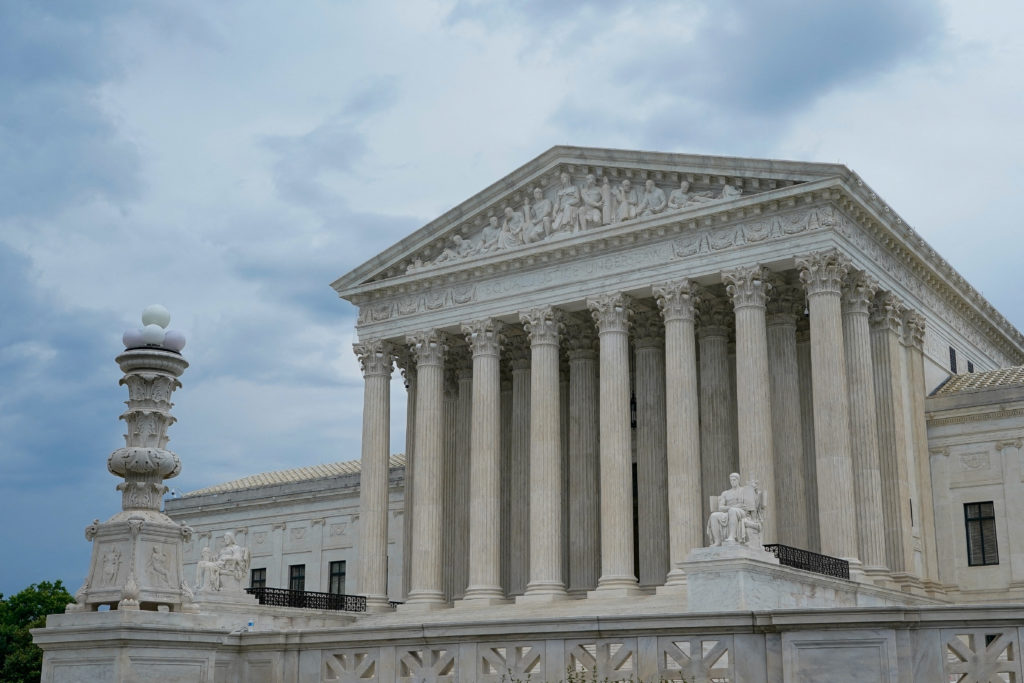
* While voter turnout is expected to be strong in New Hampshire this year, there is a new hurdle for voters to keep in mind: The Supreme Court granted New Hampshire’s emergency request to block the use of student IDs for voting in the midterms.

* Over the first two weeks of October, Republican megadonor Elon Musk invested an additional $76 million to boost GOP candidates. Five months after the billionaire publicly vowed to curtail his campaign spending, Musk has now donated more than $442 million to advance the Republican cause in the 2026 cycle.

* Speaking of Republican megadonors, billionaire Jeff Yass has now invested nearly $110 million to boost GOP candidates in the midterms. Yass is also the top donor to Vivek Ramaswamy, the Republican’s gubernatorial nominee in Ohio.

* And speaking of Ramaswamy, to appreciate the scope of the controversy surrounding his scandalous attack ad, it’s worth noting that 10 sitting Democratic female governors issued a joint statement on Thursday, condemning the candidate’s vile commercial as “an insult to survivors everywhere.”

The post Friday’s Campaign Round-Up, 10.23.26: Kamala Harris rallies for Colom in Mississippi appeared first on MS NOW.

  •  

Big Tech has become the ‘ubiquitous villain’ of US 2026 midterms

American voters’ antipathy toward Big Tech companies has become a central theme of campaigns in the 2026 midterm elections, according to an analysis published by The Guardian on Thursday. The Guardian noted that hundreds of midterm campaign ads attacking data centers have aired over the past two months, with both Republicans and Democrats accusing one […]

The post Big Tech has become the ‘ubiquitous villain’ of US 2026 midterms appeared first on Asia Times.

  •  

Worst Nathan for You–Style Scheme Ever? A Polling Company Claimed Its Fake Polls Were a Social Experiment.

Ballot box with an American flag | Magnific AI/Mariam Zakaidze

There has been much consternation this week about the use of fake polls in the media, with some government officials promising swift, and legally dubious, punishments for broadcasters that use them. 

The use of these fake polls came to light on Wednesday, when The New York Times reported that "well-known polling aggregators," including the paper itself, had been citing fake surveys by Wedgewood Polls. The fake polling scheme was revealed when the outlet FivePlusOne contacted Wedgewood Tuesday for comment about an investigation into the pollster. That night, Wedgewood posted a now-deleted statement declaring that it was an "experimental project to demonstrate the vulnerabilities, lack of oversight, and overall barrier to entry in the modern polling industry." The fake pollster claimed it was "far too easy" to be taken seriously in media and public commentary. 

A similar "social experiment" was revealed in August, when the Los Angeles Times reported that a poll by Median Strategies showing Mayor Karen Bass "leading ahead of Councilmember Nithya Raman by a wide margin" was "bogus." An earlier poll by Median Strategies showed Francesca Hong, who lost her race for Wisconsin governor, up by more than 20 percentage points. Median Strategies told the Times that the firm was "created as a short term social experiment to examine how purported polling information could enter and spread through the political information ecosystem without independent verification."

If Wedgewood's polling stunts were in fact social experiments (pollster Nate Silver is very skeptical of this explanation), then the experiment worked. Nobody is completely immune to deceit. And while savvy media consumers have become more attuned to detecting AI writing and video fakes, masses of people still fall for more than fake polls, as they have for a long time.

In 2018, when the word "slop" meant food for pigs and before anyone wrote posts using ChatGPT, the Intelligencer asked the question: "How much of the Internet is fake?" The answer, the outlet concluded, was "a lot."

At the time, Reason's Nick Gillespie noted that the article was a "sobering and obvious revelation that much of what we browse, engage, and interact with is in some fundamental way, total bullshit." Gillespie solemnly observed, "we're living not in the disintermediated, utopian world chronicled in the early days of Louis Rossetto and Jane Metcalfe's Wired, but something closer to the endlessly creative, weird, off-kilter, semi-insane world imagined by Philip K. Dick and, later, Neal Stephenson."

Eight years later, the "semi-insane" world is no less insane, and humans, as they always have, are falling prey to increasingly intricate schemes and hoaxes. In September, Semafor's Max Tani revealed that a large number of YouTube videos—several of which garnered hundreds of thousands of views—were made by "ghost creators." In these videos, presented as news reports, real actors were paid to read AI-written scripts "laced with misleading claims and outright falsehoods." According to Tani, these "accounts appear to be run not by political operatives trying to win, or foreign intelligence efforts seeking to destabilize the US, but by engagement junkies detached from the stakes of politics." While any semi-media-literate person in 2026 could tell you that not all YouTube videos should be taken as fact, the scale of the operation was staggering. 

The deception crisis plagues the media as well. Recently, the platform Qwoted, which connects journalists with sources, had to remove a supposed art therapy expert from its website after her "details were found to be false," reported the Press Gazette. According to the Gazette, the fake therapist's insights had been cited in several outlets, including Psychology, Forbes, Glamour, and Vice. I have also raised concerns about news outlets and commentators citing polls published by EduBirdie, a Cyprus-based company that sells human-written academic papers to students for $8 a page (ethics aside, what a bold business model in the AI age).

So what is to be done? As Gillespie wrote in 2018, there are existing legal levers to root out fraud, but any top-down approach to squashing online lies "will be poorly applied, repressive, and ultimately arbitrary." Government-led crackdowns on COVID-19 "misinformation" have proven him right. Outsourcing the arbitration of truth would only diminish our access to information, and no one entity, particularly the government, should be trusted to determine what is true or false. Unfortunately, the Trump administration has not learned much from the pandemic era and has instead repeatedly tried to crack down on media coverage it doesn't like.

Ideally, media organizations would act as B.S. detectors, but clearly, they often fail to do so. So, consumers are left to wade through lies, AI hoaxes, and so-called "social experiments." This may be tedious work, but it is necessary for consumers to evolve as technologies change. This sleuthing for scams may even be enjoyable. Why pay to have your brain scrambled by Nathan Fielder's Elizabeth Holmes documentary when you can drive yourself insane by tracking down and scrutinizing widely cited statistics and polls?

The post Worst <i>Nathan for You</i>–Style Scheme Ever? A Polling Company Claimed Its Fake Polls Were a Social Experiment. appeared first on Reason Magazine.

  •  

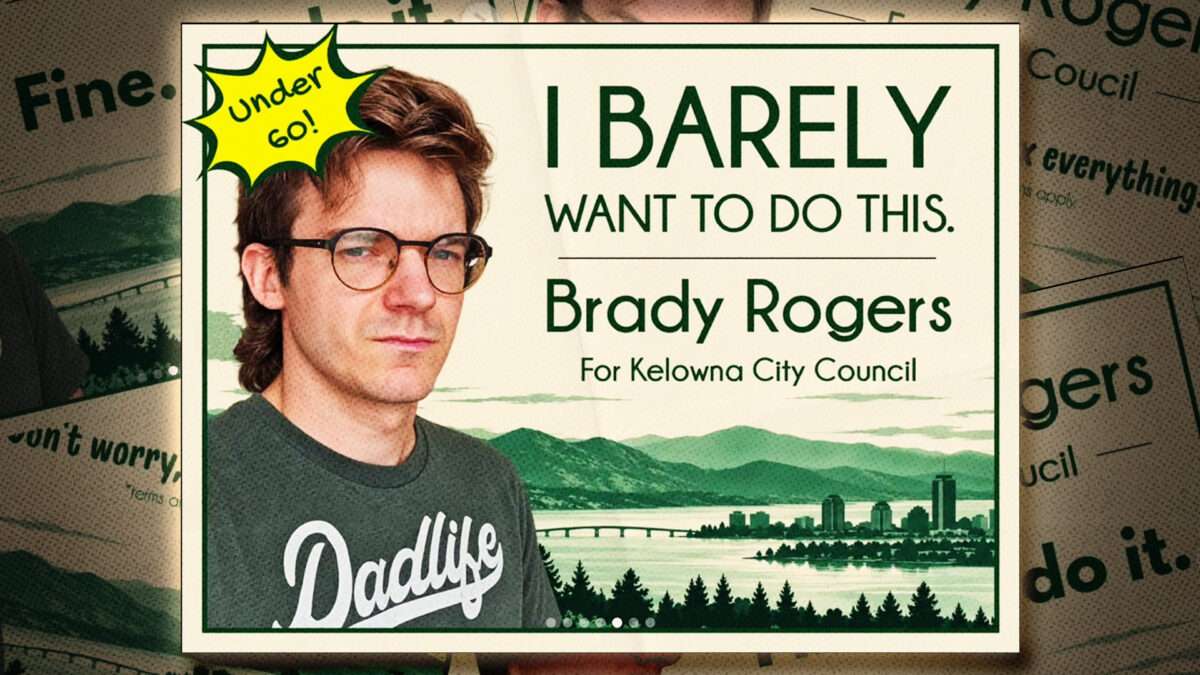
He Won a City Council Seat by Openly Admitting How Little He Wants the Job

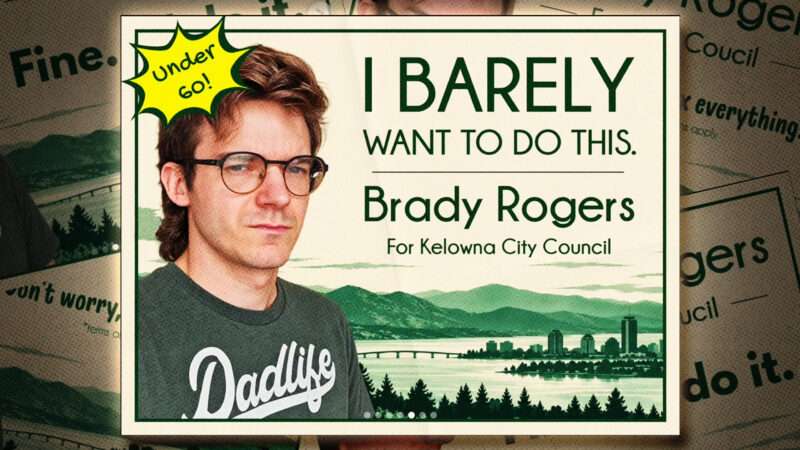
Brady Rogers for Kelowna City Council campaign sign, featuring a man with a sullen expression alongside the slogans "Under 60!" and "I barely want to do this." | iambradythecreator/Instagram

To many people, but especially libertarians, voting can feel dispiriting: By definition, every person on the ballot wants in some way to exert control over your life.

Perhaps that's why it's refreshing to see a candidate for office who truly seems not to want the job.

Brady Rogers worked as a robotics engineer for four years, but he quit in 2019 after deciding the corporate world wasn't for him.

"It was just a bit unfulfilling," Rogers tells Reason. "I wanted to do something a little more impactful with my skills….So I left to find something else that felt worthwhile."

He started The Rogerie, a retail store in his hometown of Kelowna, British Columbia, a city of about 170,000 people. Rogers and his wife collect shredded plastic waste and extrude it into filament for 3D printers, which they use to create new housewares to sell in the shop.

Then earlier this year, Rogers again got the feeling that he could be doing something beneficial with his talents. This time, it meant running for the Kelowna City Council.

But he had to stand out in a crowded field—he would be one of 37 candidates running, and only the top eight would win a seat.

So, he settled on a strategy: openly admit his lack of qualifications and how little he even wanted the job.

"I guess I'm running for Kelowna city council," read his campaign website. "I don't like meetings, I don't like having to be certain places at certain times, and I'm allergic to stuffy offices. But unfortunately, I happen to like Kelowna, and think I can help do some good."

"Do I enjoy politics? No," he adds. "Do I know what I'm doing? No. But am I qualified? Also no."

That lackadaisical attitude carried over into his campaign signage: Yard signs featured pictures of Rogers with sullen, shrugging expressions, alongside slogans like "I barely want to do this" and "Let's see what happens?" In a winking reference to political gerontocracy, one sign even bragged that he was "Under 60!"

The ploy worked, and the campaign went viral.

"I certainly thought it was clever. I thought it would work, but it was really just how I honestly felt when I started," Rogers admits. "I was pretty conflicted about committing to a four-year thing that I didn't even really fully understand the ins and outs of, but at the same time I saw the opportunity to have a bigger impact. So, I was conflicted, and I figured that's a good, honest place to start a campaign."

Ultimately, he won a seat: He placed fourth out of 37 total candidates and even beat three incumbents, one of whom lost her seat.

The irony of Rogers' outwardly indifferent attitude is that he actually does have a policy platform: On his website, he advocates finding solutions to homelessness not necessarily by spending more money but by making better use of the resources that the city and province already provide. He also notes that Kelowna taxes land and improvements at the same rate, which "means we tax someone for improving their property while relatively rewarding someone who sits on valuable, underused land." Writing this week at Reason, J.D. Tuccille made a similar point.

Of course, Rogers' underqualified and disinterested campaign persona is only partially true—he did, after all, want the job, or at least he saw it as a viable means of improving his city.

Still, it's refreshing for a candidate to treat public office as something less than a higher calling.

Ultimately, Rogers thinks that authenticity is why his campaign caught on and was ultimately successful with voters, when many campaigns struggle to create viral moments or capitalize on social media trends. Perhaps other people could even learn from him.

"I think why mine worked so profoundly is that it is a little bit of humor, but immediately behind it was a legitimate platform and me as a real person with the skills and a real desire to do something," Rogers says. "And I think that resonated. I think people [have] an appetite for a new kind of politics."

The post He Won a City Council Seat by Openly Admitting How Little He Wants the Job appeared first on Reason Magazine.

  •  

Could a Libertarian Swing the Texas Senate Race?

Today's guest is Ted Brown, the Libertarian Party candidate for U.S. Senate in Texas. Brown is facing off against Republican Ken Paxton and Democrat James Talarico in a closely contested race. Brown received more than 267,000 votes in his 2024 Senate campaign and is now challenging both major parties on their commitment to individual liberty. He argues that Republicans have abandoned limited government while Democrats increasingly embrace economic policies that undermine the free market.

Nick Gillespie talks with Brown about Paxton's corruption scandals, Talarico's hostility toward billionaires, and why Texas ranks poorly on personal freedom despite its business-friendly reputation. Brown makes the case for returning to an Ellis Island–style immigration system, cutting federal spending to confront the $40 trillion national debt, and ending America's military involvement in the Middle East. They also discuss abortion rights, government surveillance, online age-verification laws, and how regulations drive up the cost of healthcare. Brown explains what it will take to rebuild the Libertarian Party and why he believes a senator could accomplish more by stopping bad legislation than by passing new laws.


0:00—Freedom in Texas

4:01—Paxton's corruption

6:21—Talarico's platform

8:53—Texas governance

10:33—Ellis Island–style immigration

13:58—Abolishing the federal income tax

15:29—Entitlement reforms and defense spending

18:19—Abortion

21:21—Transgender healthcare

22:24—Age-verification laws

25:05—Healthcare and property insurance

31:22—Who is Brown appealing to?

33:27—The Libertarian Party

36:08—Brown's pitch to undecided voters

39:06—Threats to individual liberty

The post Could a Libertarian Swing the Texas Senate Race? appeared first on Reason Magazine.

💾

© Illustration: Fatima Ruiz

Nick Gillespies talks to Ted Brown about Texas senate race
  •  

Trump administration sues to block possible Democratic win in Alaska Senate race

After months of arguments, a state judge in Alaska ruled in late June that retired teacher Dan J. Sullivan could run against incumbent Republican Sen. Dan S. Sullivan, overturning the ruling from the Alaska Division of Elections. A few months later, after the first round of balloting, state election officials finalized the top four candidates for Alaska’s unique system, and both Dan Sullivans advanced to the general election.

That Donald Trump and his political team are worried about the race is obvious, but what the president’s team is doing about it is another matter entirely.

Late Thursday, Trump’s Justice Department filed a preemptive lawsuit that intends to block certification of the Senate race — but only if the Republican incumbent loses while the rival with the similar name remains on the ballot.

As The Associated Press reported, the litigation kicks off “what many have feared could become a lengthy battle between the U.S. government and states over certifying an election where the president’s party is struggling.”

What’s more, it’s entirely possible that former Democratic Rep. Mary Peltola will win this race and the efforts by Trump’s DOJ will determine whether she’s seated — and which party ultimately holds a majority in the Senate.

The lawsuit is a dramatic escalation, but it didn’t come out of nowhere. At a White House event in early September, the president publicly urged Attorney General Todd Blanche to pursue a case in Alaska specifically focused on the competing candidates with nearly identical names.

Last week, Trump went further, claiming that federal authorities were “looking into” the matter and pushing assorted conspiracy theories for which there was no evidence. As recently as Wednesday of this week, the president used his social media platform to publish a statement that read, in part, “Dan S. Sullivan is leading by a lot, but this is CHEATING in an Election, and the Judge that allowed this to happen should be ashamed of himself. We are looking at powerful legal options to remove the fraudulent Daniel J. Sullivan Jr. from the Ballot, and holding the Democrats accountable for their Election Interference, in the pursuit of Justice and Fairness.”

The statement included obvious falsehoods — most recent polling in Alaska shows the Republican incumbent trailing, not “leading by a lot” — and there is nothing to suggest Democratic officials have engaged in “election interference,” other than championing their party’s nominee.

Nevertheless, there have long been concerns that the Trump administration might try to derail election results it doesn’t like, and the DOJ’s new lawsuit regarding Alaska suggests those concerns are well grounded.

This is a developing story. Check back for updates.

The post Trump administration sues to block possible Democratic win in Alaska Senate race appeared first on MS NOW.

  •  

Bulgaria’s Presidential Election Tests Relations with Russia as Black Sea Security Fears Grow

Bulgarians vote on 25 October in a presidential election shaped by Russia’s war in Ukraine, attacks on Black Sea shipping and economic pressures. The contest between incumbent Iliana Yotova and reformist challenger Andrei Gyurov will also test the political authority of Prime Minister Rumen Radev.

Bulgaria will elect a president on Sunday, 25 October, in a contest that has become a test of the country’s relationship with Russia, its commitments to NATO and the European Union, and its response to deteriorating security in the Black Sea.

The Central Election Commission has registered 27 presidential and vice-presidential candidate pairs, although the contest is dominated by incumbent President Iliana Yotova and former caretaker prime minister Andrei Gyurov.

An opinion poll conducted by Market Links between 13 and 19 October placed Yotova ahead with 47.3 per cent support, compared with 30.6 per cent for Gyurov. However, low anticipated turnout makes a second round on 1 November highly likely.

Although Bulgaria’s presidency is primarily ceremonial, the office carries constitutional authority over defence, legislation and government formation. The election also comes six months after former President Rumen Radev secured a parliamentary majority and became prime minister, substantially changing the country’s political landscape.

A presidency shaped by political realignment

Yotova, 62, became Bulgaria’s first female president in January 2026 after Radev resigned to enter parliamentary politics. Previously his vice-president, she is now seeking a five-year mandate of her own.

Her candidacy is supported by Radev’s Progressive Bulgaria coalition, which won 131 seats in the 240-member National Assembly in April, as well as the Bulgarian Socialist Party. Her running mate is Kiril Valchev, director-general of the Bulgarian News Agency.

Gyurov, an economist and former deputy governor of the Bulgarian National Bank, is supported by the pro-European reformist opposition, including We Continue the Change and Democratic Bulgaria. His vice-presidential candidate is Georgi Kandev, a former senior Interior Ministry official.

A third significant contender is Kostadin Kostadinov, leader of the nationalist Revival party, whose political platform includes opposition to Western military assistance for Ukraine and closer relations with Moscow. His running mate is European Parliament member Petar Volgin.

The election follows years of political instability, during which Bulgaria held eight parliamentary elections between 2021 and April 2026. Radev’s parliamentary victory ended a prolonged period of fragmented governments, but it has also raised questions about the concentration of political influence.

A Yotova victory would place both the presidency and the parliamentary majority within the same political camp. A Gyurov victory would instead create an institutional counterweight to Radev’s government.

Russia and Bulgaria’s foreign policy divisions

Bulgaria joined NATO in 2004 and the European Union in 2007, but its relationship with Russia remains politically complicated.

Historical and cultural ties, including shared Orthodox traditions and the legacy of Bulgaria’s liberation from Ottoman rule, have influenced public attitudes towards Moscow. During the Cold War, Bulgaria was among the Soviet Union’s closest allies, and Russian influence continued after the collapse of communism, particularly through energy, business and political networks.

Russia’s full-scale invasion of Ukraine in February 2022 exposed divisions over whether Sofia should provide military assistance to Kyiv or adopt a more cautious position.

Since returning to power as prime minister in May, Radev has advocated maintaining Bulgaria’s European commitments while seeking improved relations with Moscow. His government has halted military deliveries to Ukraine and taken a more restrictive approach to further sanctions against Russia.

Yotova has similarly emphasised negotiations as the means of ending the war and warned against further militarisation of the Black Sea. Her position appeals to voters concerned that escalating confrontation could expose Bulgaria to additional security and economic risks.

Gyurov represents a more explicitly Euro-Atlantic political orientation, arguing for stronger Western alignment and institutional reform.

The contest therefore concerns not whether Bulgaria will formally leave its existing alliances, which would require decisions far beyond presidential authority, but how actively it participates in their policies towards Russia.

Black Sea attacks bring the war closer

The security debate has intensified following a series of drone attacks against merchant vessels operating near Bulgarian and Romanian waters in October.

According to a maritime threat assessment published by Ambrey, three commercial ships were struck on 5–6 October within the exclusive economic zones of the two NATO members. Two sank, marking a substantial escalation in the geographic exposure of commercial shipping.

Ambrey assessed that Russian forces were highly likely responsible and that the vessels had been targeted because of their connections to Ukrainian grain exports.

The attacks have raised concerns about navigation, maritime insurance, food exports and the potential for further incidents involving NATO member states.

Bulgaria’s position on the western Black Sea coast gives these developments particular significance. Its ports, maritime infrastructure and commercial shipping depend on maintaining secure access to international sea routes.

As EU Today previously reported, the expansion of Russian attacks into areas close to NATO territory creates difficult questions for coastal governments seeking to protect commercial interests without becoming direct participants in the conflict.

For Bulgarian voters, maritime security is no longer simply an aspect of the war taking place elsewhere. It has become a question of national security, economic vulnerability and the government’s capacity to respond.

Energy prices and economic concerns

The campaign has also been influenced by inflation and higher energy costs, particularly among lower-income households and residents of rural areas.

Bulgaria’s historical dependence on Russian energy has long complicated its foreign-policy choices. Although the country has pursued diversification, fluctuations in international energy markets continue to affect domestic prices and industrial competitiveness.

Economic concerns have acquired an additional dimension following Bulgaria’s adoption of the euro on 1 January 2026, making it the euro area’s 21st member.

The transition represents a significant stage in Bulgaria’s economic integration with the European Union, but it has occurred during a period of price pressures and uncertainty over household purchasing power.

The presidency does not determine energy policy or monetary decisions. Nevertheless, candidates’ positions on Russia, European integration and economic security form part of the wider political debate.

Why a second round is likely

Under Article 93 of Bulgaria’s Constitution, a candidate must receive more than half the valid votes, with turnout exceeding 50 per cent of eligible voters, to win in the first round.

Neither requirement is expected to be easily satisfied. Turnout in the first round of the 2021 presidential election was approximately 38.6 per cent, reflecting the broader problem of electoral participation after repeated national votes.

If no candidate meets the constitutional requirements on Sunday, the two leading candidates will contest a runoff on 1 November.

Yotova enters the election with a substantial polling advantage, but Gyurov could benefit from opposition voters consolidating around his candidacy in the second round.

The result will determine more than the occupant of the presidential office. It will indicate whether Radev’s parliamentary dominance can be extended to the presidency, or whether voters prefer a political counterweight at a time when Bulgaria faces growing pressure to define its position between Moscow and its Western allies.

  •  

Ramaswamy’s vile ad is dividing the Republican Party. Trump is leading the wrong side.

Any story about a family dispute is bound to be complex, but the politics surrounding Vivek Ramaswamy’s abhorrent attack ad are relatively straightforward. Amy Acton, the Democratic gubernatorial nominee in Ohio, was allegedly raped by her stepfather when she was a child.

Her Republican opponent, Ramaswamy, is trying to weaponize this in despicable fashion, pushing a campaign commercial that features Acton’s estranged mother, who sided with the stepfather even after his arrest and stayed with him until his death.

But in recent days, it’s become clear that this ad has taken on far greater significance than one commercial in one gubernatorial election. As The New York Times’ Michelle Goldberg summarized in her latest column:

It’s quite a feat, in this numb and debased era, to create a political advertisement so shocking and indecent that people from across the political spectrum feel the need to denounce it. The Ohio gubernatorial candidate Vivek Ramaswamy, who has long fashioned himself as a kind of Donald Trump 2.0 — younger and brainier but just as brash — has managed it.

By releasing what may be the most disgusting ad in American political history, he’s done more than just reveal his own low character. He’s opened a kind of proxy debate on the right about whether a post-Trump conservatism should try to reclaim some base-line morality or continue along its current smashmouth course.

Donald Trump has changed his party and his nation’s politics in a great many ways, but among the most important shifts is the degree to which the president has championed the politics of cruelty and dishonor. There are messages — from attack ads to speeches to social message postings — that Republican officials used to avoid, even when they agreed with the underlying point, in part to avoid backlash and in part to maintain their public reputations and credibility.

In recent years, however, those scruples have been cast aside. GOP officials and candidates no longer hedge on depraved messaging: After having seen Americans twice elevate a malicious television personality to the nation’s highest office, they now routinely echo his amorality and cynicism, seeing it as a way to satisfy the party’s far-right base, to advance their own ambitions or both.

Most decent people can and will agree that Ramaswamy’s attack ad is indefensible, but the ad has also taken on totemic value.

“What the ad represents … is an opening salvo in the post-midterms fight for the Republican Party’s future,” Politico’s Jonathan Martin explained. “It’s a battle that will accelerate next year but may not culminate until the 2030s. Put simply, what sort of party does the GOP want to be — and what will the market bear?”

Trailing in polls and short on options, Ramaswamy made his choice, and the stain on his character is likely to be permanent. What the Ohioan might not have anticipated, however, is just how much his disgusting tactic has divided his own party.

Several prominent Republicans in the state, including outgoing Gov. Mike DeWine, have publicly condemned the ad, and others outside of Ohio have taken similar steps. Former GOP presidential contender Nikki Haley, for example, said via social media that Ramaswamy is “a bad guy.” A day later, Rep. Ashley Hinson, the party’s Senate hopeful in Iowa, called the commercial “absolutely terrible.”

On the other side, there’s the White House, where the politics of cruelty and dishonor still thrive, and where there are Republican leaders who still believe repugnant messaging will dominate for the foreseeable future.

JD Vance, for example, declared this week that he’s “a little bit disgusted,” not by Ramaswamy’s gutter politics, but by members of his own party who are “whining” about civility.

The vice president’s reaction itself drew swift rebukes — The Bulwark published a piece that described Vance as a “sociopath” — but that didn’t stop Trump from picking up where his vice president left off.

On Wednesday, the president told reporters he didn’t “know anything about it,” before shifting gears and talking about how important he considers it to see a mother “hate her daughter that much.”

A day later, Trump went much further and spent much of Thursday defending the ad, urging Ramaswamy to keep running it, demanding the public take the underlying claims “seriously” and at Iowa rally, predicting that the ad would work in the GOP candidate’s favor.

In other words, Trump took care to keep dividing Republicans — with less than two weeks remaining, during the early voting period — in one of the nation’s most important gubernatorial races, by leaning into support for one of the most repulsive campaign ads in recent memory.

Election Day is 11 days away. Watch this space.

The post Ramaswamy’s vile ad is dividing the Republican Party. Trump is leading the wrong side. appeared first on MS NOW.

  •  

Lula Urges Young and Elderly Brazilians to Defeat Bolsonaro

Brazilian president mobilizes supporters online ahead of Sunday’s runoff, as a new poll shows the two candidates tied at 50%.

On Thursday, Brazilian President and reelection candidate Luiz Inacio Lula da Silva called on the country’s young and elderly people to “defeat” opposition Sen. Flavio Bolsonaro to build a society that “distributes books and culture, not weapons and hate.”

RELATED:

Datafolha Poll Shows Lula and Bolsonaro Tied at 50% Ahead of Runoff

“Our army is much bigger, full of enthusiasm and heart, where nobody wants to kill anybody,” said the Workers’ Party (PT) candidate during his first digital event of this kind.

Lula spent an hour and a half participating in a livestream on social media alongside lawmaker Andre Janones, who created a public WhatsApp channel in support of the progressive leader called “Lula’s Army.” The channel has already attracted 8.5 million users ahead of Sunday’s presidential runoff.

Shortly before the digital event, polling firm Datafolha released a survey showing both candidates tied at 50% of the valid vote, three days before voters head to the polls.

🚨 PESSOAL, URGENTE!!!

Preparados pra ver a história acontecendo AO VIVO diante dos olhos?!

Vamos encerrar a campanha mais importante da história do Brasil!

Um ato que ficará para sempre marcado na memória das lutas do povo brasileiro! 🇧🇷

É sábado, dia 24, às 14h, na Av.… pic.twitter.com/aslsI3WZPw

— Lula (@LulaOficial) October 22, 2026

The text reads, “Folks, urgent!!! Are you ready to watch history unfold live before your very eyes?! We are bringing the most important campaign in the history of Brazil to a close! It will be an event that remains forever etched in the memory of the Brazilian people’s struggles! Join us this Saturday, the 24th, at 2:00 pm, on Avenida Paulista, in Sao Paulo!”

In the first round of the election, the eldest son of far-right former President Jair Bolsonaro won 47% of the vote, two percentage points more than Lula, who appears to have drawn even in the final days of the campaign.

Part of the Brazilian president’s strategy has involved mobilizing his supporters in the streets and on social media, with an emphasis on young people and those over 70. The latter are exempt from voting in a country where voting is mandatory.

Introduced as “Marshal Lula,” the Workers’ Party leader acknowledged feeling “like a fish out of water” during his first livestream, where he listened to accounts from young and elderly people.

“I have to talk with my army; we have a great battle ahead of us,” Lula said, adding that his candidacy represents “democracy,” “the fight against femicide” and a “life focused on health, culture” and education.

Estas eleições serão um divisor de águas para o Brasil. É hora de transformar essa esperança e mobilização das ruas em mais participação e compromissos.

Seguiremos firmes na luta por um país mais justo, com oportunidades para todos e políticas voltadas às necessidades da… pic.twitter.com/TzOkr47RH8

— Lula (@LulaOficial) October 23, 2026

Lula da SIlva’s text reads, “These elections will be a watershed moment for Brazil. It is time to transform this hope and the mobilization seen in the streets into greater participation and concrete commitments. We will remain steadfast in the fight for a fairer country—one with opportunities for all and policies geared toward the needs of the population. Our ‘army’ consists of more than just soldiers; it is driven by reason, motivation, and a cause. And our cause is the best in the world, because it is the Brazilian people. Let us work together to secure another victory!”

“Our army fights to build a harmonious, loving society that builds rather than destroys, that distributes books and culture, not weapons and hate,” said the Workers’ Party leader, who also referred to Sunday’s runoff election as a “war.”

“Brazil cannot fall into the hands of a militiaman,” Lula said, alluding to the Bolsonaro family’s ties to relatives of members of paramilitary groups in Rio de Janeiro.

Lula also recalled that Flavio Bolsonaro had served as the lawyer for a police officer accused of killing a 5-year-old girl during an operation against suspected drug traffickers.

The Workers’ Party also urged those who abstained from voting — who accounted for 21% of voters in the first round, or about 33.5 million Brazilians — to vote for Lula on Sunday.

“You who did not go to vote because you didn’t like the candidates or because you are over 70, that is your right; but not now. Now you have to think about Brazil, about your homeland,” he said.

teleSUR/ JF

Source: EFE

  •  

[Interview] Ousting Netanyahu won’t curb right-wing Israeli nationalism, says expert ahead of Tuesday’s Knesset elections

First published in Deník N.

Even if Israelis vote out the current government, an ideological shift will endure, says Beth Oppenheim, a policy fellow in the Middle East and North Africa programme at the European Council on Foreign Relations.

The London-based analyst explains how once-fringe ideas have crept into the political mainstream and the limitations of liberalism.

In this interview:

  • Why Netanyahu’s departure would not bring about fundamental change.
  • How 7 October has put diplomacy permanently off the table.
  • What to expect if a new government was elected in Knesset (Israeli parliament) elections.
  • The lessons Europe can draw from all this.

You say Israel’s illiberal and ethnonationalist turn represents a transformation beyond Israeli prime minister Benjamin Netanyahu; these ideologies would not disappear even with him gone. In your analysis of Israeli politics, you avoid the traditional left–right political spectrum – why?

Beth Oppenheim: In the Ideas of Israel project for ECFR, I wanted to unpack this binary we often see on the question of Netanyahu’s leadership. He dominates Israeli politics, but the debate about the prime minister often obscures more interesting trends like the rightward shift of Israeli politics. Often, the opposition is referred to as the liberal bloc, whom the right wing label as leftists – but this is inaccurate.

The pro-Netanyahus form a government coalition, while the opposition bloc is actually rather ideologically diverse. So in my research I wanted to go beyond the reductive question of Netanyahu to understand how parties behave in elections; I wanted to see where all these different parties’ ideologies and visions fit in. 

And this led you to categorise Israeli parties into four groups: the liberal Zionists, the nationalists, the ultra-Orthodox camp, and the religious nationalists. Could you describe each group? Let’s start with the liberal Zionists, who are considered the most left-wing of the Jewish Israeli camps…

Of course. The liberal Zionists include figures such as Yair Golan, Yair Lapid and Gadi Eisenkot.

Eisenkot (Yashar party) is a former general in the military. Despite this, many on the right brand him as a leftist. 

A billboard featuring Yashar party leader Gadi Eisenkot reading ‘This time, Eisenkot’ in Tel Aviv. (Source: EPA/ABIR SULTAN)

Lapid (Yesh Atid party) comes from a liberal centrist tradition in the mould of his father. Like Eisenkot, he is very secular. A secular vision for Israel and an emphasis on liberal democratic institutions unite the camp of liberal Zionists.

Golan (The Democrats party) is the left flank of this camp. In Europe, he wouldn’t be seen as far left, but within the Israeli spectrum, he is seen as radical. He has security credentials, too, but he’s the only liberal Zionist who talks about a political settlement with the Palestinians. 

The two-state solution is not really on the menu in the Jewish Israeli political mainstream – that’s now the preserve of the far-left fringe; it’s not a mainstream discussion anymore. 

“The two-state solution is not really on the menu in the Jewish Israeli political mainstream”

The liberal Zionists are united around their secularism and their commitment to the liberal democratic institutions, but there’s one big caveat: when it comes to the Palestinian issue, their liberalism is more circumscribed. 

They are not talking about the ongoing occupation and the effect that that has on Israel’s democratic standing. But of course, they’re very united in their opposition to Netanyahu.

The liberal Zionist camp lacks a coherent platform other than this; they basically advocate for good governance, but don’t offer a robust vision. 

Election billboards featuring The Democrats Party leader Yair Golan and Israeli prime minister Benjamin Netanyahu. (Source: EPA/ABIR SULTAN)

And that cannot be said about the nationalists, whose vision is quite clear, right?

Traditionally, the nationalist camp was the mainstream right wing. Today’s main contenders are prime minister Benjamin Netanyahu’s Likud and Avigdor Lieberman’s Yisrael Beiteinu.

Meanwhile, former prime minister Naftali Bennett is running on a joint list with Lapid’s Yesh Atid, called Beyachad (‘Together’). Bennett and Lapid joined forces despite coming from different ideological traditions. They have very different ideas about the country, but they’re coming together to present a more technocratic agenda, get Netanyahu out and normalise Israeli politics. 

The nationalist camp descends from the Revisionist Zionist tradition based on Ze’ev Jabotinsky’s vision: a liberal democratic outlook fused with ultra-nationalist convictions. So to take a Revisionist Zionist view is to take a hawkish and hardline approach towards Arabs, while keeping a commitment to liberal democratic values. But affinity for liberalism and democratic values has really withered away over recent decades, not only under Netanyahu.

And then there is the ultra-Orthodox camp, without which the current government would never have completed a full term.

The ultra-Orthodox group does not fit easily on the left-to-right political spectrum, which in the Israeli understanding is defined by hawkishness on Palestinians and security.

They are made up of two Ashkenazi parties – Degel HaTorah and Agudat Yisrael – and Sephardic party Shas. What unites them is strict religious observance of Jewish law and their commitment to separation from secular society or modernity.

“The ultra-Orthodox camp is predominantly non-Zionist, but not necessarily anti-Zionist”

Interestingly, the ultra-Orthodox camp is predominantly non-Zionist, but not necessarily anti-Zionist since they didn’t endorse the creation of Israel in its secular form. They engage with the state, but in a limited way – they’re very transactional and pragmatic.

And the ultra-orthodox camp work within state apparatus to advance sectoral interests, yeshiva education, the military service exemption, and subsidies to maintain a somewhat introverted separation from the rest of society.

They are mostly passive when it comes to issues of foreign policy and security policy, but they do not support loss of Jewish life for nationalist ends – they don’t believe that the state in its current form is sacred. And so they don’t, for instance, endorse the loss of Jewish life for territorial expansion.

That leaves us with the last category: the religious nationalist camp.

Religious nationalists draw together ultra-orthodox religious observance, but with ultra-nationalism.

This article continues, but the full version is available only to EUobserver.com subscribers. Visit account.euobserver.com/membership

  •  
❌