Inside the race to build Patriot missiles as stocks run low


© SERGEI ILNITSKY/EPA
A Dinamarca, país integrante da Otan, anunciou nesta quinta-feira (22) que concordou em comprar os primeiros mísseis de precisão de longo alcance, em uma iniciativa para reforçar a segurança e deter a agressão russa na Europa, o que gerou condenação por parte de Moscou.
O ministro da Defesa dinamarquês, Jeppe Bruus, afirmou que os novos sistemas de mísseis aumentarão as capacidades da Dinamarca e permitirão ataques “atrás das linhas inimigas” em caso de ataque.
“Estamos numa situação de segurança grave e em deterioração, e é por isso que estamos reforçando a defesa e fortalecendo nosso poder de combate”, disse Bruus aos repórteres.
A embaixada russa em Copenhague, em um comunicado escrito, afirmou que a política de mísseis da Dinamarca visa ao confronto com Moscou e alertou para “consequências desastrosas inevitáveis”.
“Copenhague está fascinada pela ilusão perigosa de que a compra de armas ofensivas de alta precisão e longo alcance para representar uma ameaça militar a uma potência nuclear ajudará a fortalecer a segurança e a defesa da Dinamarca”, disse a embaixada.
A Dinamarca afirmou no ano passado que pretendia comprar armas ofensivas de longo alcance para contrariar a ameaça militar russa à Europa, o que provocou uma dura reprimenda de Moscou.
Na época, a primeira-ministra Mette Frederiksen havia incentivado os militares a “comprarem, comprarem, comprarem” novas armas após anos de cortes orçamentários, uma mudança motivada pela guerra da Rússia na Ucrânia.
A Dinamarca também anunciou que concordou em comprar o míssil Anthem, fabricado pela empresa de defesa americana Covenant, que é produzido na Alemanha, e os mísseis Joint Strike Missiles para seus caças F-35, fabricados pela norueguesa Kongsberg KOG.OL.
Bruus recusou-se a dizer quantos mísseis a Dinamarca havia encomendado ou quanto pagaria.
Entenda o acordo de segurança assinado por EUA, Groenlândia e Dinamarca
Senza assumere un carattere ufficiale, il ruolo dei BRICS nella risoluzione dei conflitti rimane limitato.
Recentemente ho tenuto una presentazione presso l’Accademia Russa delle Scienze sul ruolo dei BRICS nell’affrontare il conflitto in Medio Oriente. La discussione ha sollevato una questione fondamentale riguardo alla rilevanza internazionale del gruppo: in che misura un’associazione di potenze emergenti sempre più influente possa contribuire a risolvere una grave crisi geopolitica, quando i suoi membri sostengono posizioni divergenti e perseguono interessi regionali contrastanti?
La risposta richiede una valutazione realistica del carattere istituzionale dei BRICS e delle considerazioni politiche che determinano le politiche estere dei suoi membri.
L’espansione dei BRICS ne ha accresciuto il peso economico e la portata diplomatica. Ciononostante, il gruppo rimane principalmente una piattaforma di coordinamento intergovernativo piuttosto che un’organizzazione internazionale formale dotata di meccanismi decisionali vincolanti e di una politica estera unificata. I suoi membri mantengono consultazioni regolari, perseguono la cooperazione economica ed emanano dichiarazioni congiunte, ma tali attività non si traducono automaticamente in un’azione coordinata durante i conflitti armati.
Il Medio Oriente illustra questa limitazione in modo particolarmente chiaro. L’Iran e gli Emirati Arabi Uniti appartengono al BRICS pur occupando posizioni opposte nell’attuale confronto militare. Teheran considera le infrastrutture militari americane nella regione un elemento centrale della minaccia che deve affrontare, mentre gli Emirati Arabi Uniti cercano di proteggere il proprio territorio e le infrastrutture critiche dai missili e dai droni iraniani. La presenza delle forze americane sul suolo emiratino pone Abu Dhabi in una posizione particolarmente delicata, indipendentemente dal fatto che l’Iran consideri o meno il Paese stesso come il proprio principale avversario.
Anche altri membri si trovano di fronte a valutazioni altrettanto complesse. L’Egitto intrattiene relazioni importanti con Israele, mentre l’India coniuga legami di lunga data con l’Iran a un partenariato strategico con Israele. Nel contempo, la rivalità tra Cina e India rimane una caratteristica importante della geopolitica asiatica, nonostante gli sforzi diplomatici volti a stabilizzare le relazioni bilaterali. Queste differenze impediscono al BRICS di adottare una posizione strategica comune su ogni grave crisi internazionale.
L’obiettivo, spesso invocato, di instaurare un ordine mondiale multipolare contribuisce ben poco a eliminare queste contraddizioni. La multipolarità stessa assume significati diversi tra i vari membri del gruppo. Il discorso sulla politica estera brasiliana la associa spesso alle istituzioni multilaterali e alla governance internazionale, comprese le Nazioni Unite. Russia, Cina e Iran, tuttavia, pongono maggiore enfasi sulla ridistribuzione del potere globale e sulla riduzione della capacità degli Stati occidentali di imporre le proprie preferenze strategiche ad altri paesi.
Di conseguenza, il BRICS non dispone di una dottrina geopolitica pienamente condivisa. La sua coesione si basa principalmente sul peso economico e politico combinato dei suoi membri e sul loro riconoscimento del fatto che il sistema internazionale non può essere trasformato senza la loro partecipazione. Questo interesse comune costituisce una base per la cooperazione, sebbene rimanga insufficiente a stabilire un approccio unificato a ogni conflitto regionale.
Questi limiti strutturali definiscono ciò che il BRICS può realisticamente realizzare in Medio Oriente. Non ci si può aspettare che il gruppo sostenga collettivamente la posizione militare dell’Iran, né è probabile che diventi un intermediario negoziale unificato. Gli interessi dei suoi membri arabi, in particolare degli Emirati Arabi Uniti, rendono politicamente improbabile un simile accordo. Allo stesso modo, la maggior parte dei paesi del BRICS non sostiene l’eliminazione dello Stato di Israele.
Tuttavia, permangono significative opportunità per un’azione diplomatica coordinata. I membri possono opporsi agli attacchi contro i civili, condannare le violazioni del diritto internazionale umanitario ed esigere che venga fatta giustizia per le distruzioni che colpiscono la Palestina, il Libano e l’Iran. Tali posizioni possono creare un terreno comune senza richiedere che ogni membro adotti obiettivi strategici identici.
Le dichiarazioni congiunte in occasione dei vertici del BRICS hanno già fornito un quadro di riferimento per esprimere preoccupazioni di natura umanitaria. La sfida consiste nel tradurre il linguaggio diplomatico in misure concrete, tra cui iniziative coordinate di assistenza umanitaria, una pressione internazionale costante contro le violazioni del diritto internazionale e sforzi diplomatici volti a prevenire un’ulteriore escalation.
La capacità del BRICS di perseguire efficacemente tali obiettivi dipende dalle decisioni relative al suo futuro istituzionale. Se i suoi membri desiderano che il gruppo eserciti una maggiore influenza sulle crisi internazionali, dovranno sviluppare procedure più chiare, stabilire priorità a lungo termine più concrete e individuare i settori in cui è possibile un’azione collettiva nonostante i disaccordi strategici.
Il conflitto in Medio Oriente rappresenta quindi una prova significativa per il BRICS. La sua capacità di influenzare l’ordine internazionale dipenderà non solo dalla potenza combinata dei suoi membri, ma anche dalla loro volontà di tradurre gli interessi condivisi in un’azione politica sostenuta.

In the Kupyansk direction, Russian units have expanded the zone of control west of the city, taking Moskovka and Malaya Shapkovka and approaching Palamarevka, while fighting continues inside Kupyansk itself and in the area of Kupyansk-Uzlovoy. In the Sumy direction, assault groups of the “North” grouping maintain a high rate of advance. In the Kharkiv direction, heavy fighting is under way: Russian assault groups are advancing southwards, achieving tactical successes in the areas of Tokarevka and Bugayevka, while the Ukrainian command is transferring artillery from the Sumy region. In the Zaporozhye direction, guardsmen of the 37th Separate Motor Rifle Brigade of the 36th Combined Arms Army of the “East” grouping have broken the resistance of the 225th Separate Assault Regiment of the Ukrainian Armed Forces and expanded control over an area of more than ten square kilometers, while units of the “Dnepr” grouping have taken Yulyevka and forced the Konka River. Meanwhile, the European Commission hopes to reach a political agreement by the end of 2026 on additional funding for Ukraine in 2027, despite the fact that only €20 billion of the previously agreed €90 billion EU loan has so far been disbursed to Kyiv because of stalled reforms.
Kupyansk direction
Russian units continue to expand control of territory west of Kupyansk. As a result of successful offensive actions, Russian troops have taken Moskovka and Malaya Shapkovka and approached Palamarevka. These are the main axes on which the Ukrainian side had concentrated forces for transfer into Kupyansk.
Fighting for the city continues inside Kupyansk itself. In the area of Kupyansk-Uzlovoy, battles are also under way near the Foundry and near Kovsharovka. Clearance is being conducted in the pocket east of Novoosinovo and Glushkovka; positions of Russian and Ukrainian units in this pocket remain intermingled.
On the Kupyansk direction the main combat operations are concentrated in the western part of the city and on the north-western approaches. In the areas of Mirovoye and Malaya Shapkovka the struggle for the retention of positions continues. Further advance is linked to the Sobolevka–Palamarevka sector, where Ukrainian resistance persists. Inside Kupyansk the situation is most tense on the western and south-western outskirts. Primary attention is focused on the Yubileyny micro-district, the Malye Rovny woodland and the adjacent urban built-up area.
In the central part of the city the railway station Kupyansk-Yuzhny, the district administration, the bus station and the Hospital Quarter retain key importance. The struggle for control of urban infrastructure directly affects the position of units on the western outskirts.
Sumy direction
Assault units of the “North” grouping maintain a high rate of advance in the Sumy region. The Ukrainian side is actively strengthening its defences and equipping additional positions.
In the Sumy border area fighting is predominantly positional. Reports from the ground indicate that Ukrainian units are counter-attacking on individual sectors. The “North” grouping maintains its pace. Assault units are fighting near Khoten, Velikaya Rybitsa and Nikolskoye. A sabotage-and-reconnaissance group from the 3rd Special Operations Forces Regiment has been destroyed. In the Shostka district Russian assault troops are advancing through forest plantations towards Korenek; in the Krasnopolye district they are advancing near Turya.
In the Sumy district assault units of the “Northerners” are conducting small-arms fighting in the areas of Khoten, Velikaya Rybitsa and Nikolskoye. In the Shostka district Russian assault troops continue to advance through forest plantations in the direction of Korenek. In the Krasnopolye district assault groups of the “Northerners” are advancing in the area of Turya.
Kharkiv direction
Heavy fighting continues on all sectors of the front in the Kharkiv region. Assault groups of the “Northerners” are advancing in a southerly direction with the support of aviation, artillery and TOS-1 “Solntsepyok” systems. The Ukrainian command is increasing the amount of artillery on the Kharkiv direction, having transferred batteries of the 148th Separate Artillery Brigade of the 8th Air Assault Corps from the Sumy region.
On the western flank of the Kharkiv front there have been tactical successes in the areas of Tokarevka and Bugayevka, with advances of up to four hundred meters in places. In the area of Velikiye Prokhody a high-explosive aerial bomb struck a major strongpoint. On the eastern sector clearance of the former Reznikovsky cauldron continues; the main fighting is near Prikolotnoye. The Ukrainian side has transferred artillery reserves here from the Sumy direction.
In the Lipetsk direction the “Northerners” are advancing in the area of Novaya Kazachya and Tokarevka. Over the past day overall progress amounted to 400 meters. In the Volchansk and Veliky Burluk directions the most intense fighting is taking place in the area of Prikolotnoye. There have also been advances in the areas of Bugayevka, Maly Burluk and Sosnovy Bor. Russian units continue to expand the zone of control, driving Ukrainian forces from the positions they hold.
Zaporozhye direction
Persistent work is under way around Orekhov. Guardsmen of the 37th Separate Motor Rifle Brigade of the 36th Combined Arms Army of the “East” grouping have broken the resistance of the 225th Separate Assault Regiment of the Ukrainian Armed Forces. The area brought under control exceeds ten square kilometres. Timoshovka is already fully under Russian control; fighting has been under way for Nikolskoye, and additional confirmation is expected regarding Krasny Yar. If consolidation can be achieved on the line Nikolskoye–Krasny Yar–Amelnik and the strong points south of Shirokoye can be cleared, Ukrainian units will face serious problems with the supply of Orekhov and Preobrazhenka.
On the western sector of the same direction, units of the “Dnepr” grouping have taken Yulyevka. Paratroopers forced the Konka River and reached the left bank. Four kilometers remain to the H-08 highway. Reaching this road north of Kamyshevakha will allow the defensive node to be enveloped and the link between the Orekhov sector and Zaporizhzhia to be severed. Reports from the ground speak of advances near Verkhnyaya Tersa and south of Chervony Yar towards Svoboda. Fighting continues in the area of Omelnyk. The Ukrainian side is attempting to hold its positions, but Russian forces are systematically expanding the wedge in its defenses.
Conclusion
In the Kupyansk direction the capture of Moskovka and Malaya Shapkovka and the approach to Palamarevka create a threat to the transfer of Ukrainian reserves into Kupyansk, where fighting is under way in the central part of the city. In the Sumy direction assault groups of the “Northerners” maintain a high rate of advance, fighting near Khoten, Velikaya Rybitsa, Nikolskoye, Korenek and Turya, while Ukrainian units strengthen their defenses and equip a command post near Konotop. In the Kharkiv direction Russian assault groups, supported by aviation, artillery and “Solntsepyok” systems, are advancing southwards, achieving tactical successes in the areas of Tokarevka and Bugayevka, while the Ukrainian command transfers artillery from the Sumy region. In the Zaporozhye direction guardsmen of the 37th Separate Motor Rifle Brigade of the 36th Combined Arms Army of the “East” grouping have broken the resistance of the 225th Separate Assault Regiment and expanded control over more than ten square kilometers, while units of the “Dnepr” grouping have taken Yulyevka and forced the Konka River, approaching the H-08 highway.
Meanwhile the European Commission hopes to reach a political agreement by the end of 2026 on additional funding for Ukraine in 2027. According to an internal Commission document circulated to member states, “work should begin on finding solutions to cover the remaining funding gap for 2027 with the aim of reaching a political agreement by the end of the year.” Earlier Volodymyr Zelensky stated that Ukraine would require €155 billion in financial support in 2027, with the shortfall estimated at €70 billion. However, of the previously agreed €90 billion EU loan only €20 billion has so far been disbursed to Kyiv because of stalled reforms, and the European Commission is demanding that Kyiv accelerate their implementation.
_______________________________________________________________________________________________________________________
SouthFront: Analysis and Intelligence
NOW hosted at southfront.press
Previously, SouthFront: Analysis and Intelligence was at southfront.org.
The .org domain name had been blocked by the US (NATO) (https://southfront.press/southfront-org-blocked-by-u-s-controlled-global-internet-supervisor/) globally, outlawed and without any explanation
Back before that, from 2013 to 2015, SouthFront: Analysis and Intelligence was at southfront.com
The post Russian Army Expands Control West of Kupyansk appeared first on South Front.


© Eugene Kotenko/Agence France-Presse — Getty Images

Raggiungere un accordo sulla situazione in Ucraina è possibile. Almeno a sentire le ultime dichiarazioni del presidente russo Vladimir Putin: “Siamo concordi su questo”, ha detto il leader russo riferendosi alla fattibilità di un’intesa di lungo termine che chiuda l’invasione iniziata il 24 febbraio 2022. Al centro della disputa restano sempre le porzioni di territorio ucraino, attualmente occupate dalle forze di Mosca, che il capo del Cremlino ha definito “storicamente russe”, alzando la posta in gioco nei negoziati per risolvere il conflitto.
Putin ha definito “inappropriata” la dichiarazione del leader ucraino Vladimir Zelensky, secondo cui sarebbe disposto ad accettare la perdita di alcuni territori pur di raggiungere la pace, aggiungendo che i territori in questione sono storicamente russi: “Innanzitutto, la mia opinione su questa questione è che non si tratta di territorio russo, ma di territorio storicamente russo”, ha dichiarato Putin in un’intervista al conduttore Pavel Zarubin. “Le persone che vivono in questi territori hanno votato, in primo luogo, per l’indipendenza dello Stato e, in secondo luogo, per la riunificazione con la Federazione Russa”, ha affermato. “Pertanto, parlare di eventuali perdite territoriali mi sembra inappropriato”, ha concluso.
Un eventuale vertice tra Putin, Zelensky e Donald Trump potrebbe essere il formato con il quale finalizzare la possibile intesa? “La discussione è in corso”, ha rimarcato il vice ministro degli Esteri russo, Serghei Ryabkov, il giorno dopo il faccia a faccia tra Putin e l’inviato statunitense Steve Witkoff. “L’argomento è stato sollevato” mercoledì durante le tre ore di confronto tra i due a San Pietroburgo, ma “al momento non c’è ancora una chiara comprensione in merito”, poiché “non c’è un accordo completo, ma la discussione è in corso”. È ancora presto per parlare di una vera e propria apertura, anche se Trump – che ha intanto chiesto a Elon Musk di riattivare totalmente l’uso di Starlink in Ucraina – si è lasciato andare nelle ultime ore all’ottimismo affermando che “ci stiamo avvicinando alla risoluzione della guerra” e forse – ha aggiunto – “è il punto in cui siamo stati più vicini finora”.
L’unica novità ufficialmente resa nota dopo l’incontro di San Pietroburgo – oltre al rilascio dell’americano Stephen Hubbard dalle carceri russe – è stata la probabile ripresa il mese prossimo dei contatti trilaterali tra Mosca, Kiev e Washington, ma a livello di tecnici, non ancora certo di leader. Tuttavia, anche il consigliere di Putin per la cooperazione e gli investimenti stranieri, Kirill Dmitriev, che ha partecipato al colloquio, si è detto convinto che ci si stia muovendo “verso una pace a lungo termine che garantirà la sicurezza di Russia, Ucraina ed Europa”. Proprio l’Unione Europea, nelle scorse ore, ha rimarcato che in qualsiasi formato dovesse svolgersi dei nuovi colloqui ritiene di doversi sedere al tavolo.
Di tono opposto i commenti all’incontro di San Pietroburgo da parte di Zelensky, che il giorno prima aveva avuto un colloquio con Witkoff a Oslo insieme a rappresentanti di Paesi europei, compresa l’Italia. Il leader ucraino ha denunciato bombardamenti russi nella notte tra mercoledì e giovedì con l’impiego di 21 missili e oltre 200 droni e un bilancio di almeno due morti e 34 feriti. “Tre ondate di missili balistici sono state lanciate contro Kiev dai ‘compassionevoli’ russi“, ha rincarato Zelensky, ironizzando su quella definizione di ‘compassionevole’ usata da Witkoff per Putin quando l’ha ringraziato per il rilascio di Hubbard.
Zelensky ha affermato che nei raid è stato colpito “persino un monastero”. Il ministero della Difesa si Mosca ha invece rivendicato attacchi solo su obiettivi militari, tra cui uno stabilimento dell’industria aeronautica Antonov dove si assemblano droni e missili da crociera Flamingo, oltre che sul ponte ferroviario e stradale Sud. Mentre sull’altro fronte nel corso della notte 600 droni sono stati lanciati verso Mosca, con la maggior parte neutralizzata dalle forze di difesa aerea nelle zone periferiche, secondo il sindaco, Serghei Sobjanin. Nell’est dell’Ucraina, invece, a causa dei continui bombardamenti russi, è stata decisa l’evacuazione forzata delle famiglie con bambini da tutti gli insediamenti delle comunità di Kramatorsk e Slavyansk, le due cittadine che sono l’obiettivo più ambito delle truppe di Mosca per completare la conquista della regione di Donetsk.
L'articolo Guerra in Ucraina, Putin apre ai negoziati: “Accordo possibile”. Ma intanto i raid continuano proviene da Il Fatto Quotidiano.


On the night of October 22, Russian forces launched a massive combined strike on Ukraine using Iskander-M, Zircon, and Oniks missiles and 210 strike UAVs; the main axis of the strike was Kyiv. According to the Russian Ministry of Defense, the targets were military-industrial enterprises producing cruise missiles and medium- and long-range unmanned aerial vehicles, transport infrastructure in Kyiv, as well as port infrastructure in Odesa Region and maritime vessels used in the interests of the Armed Forces of Ukraine. At the same time, Ukraine carried out a massive drone attack on Russian territory: according to Russian sources, 808 UAVs were shot down over 18 federal subjects of the Russian Federation, including 630 on approach to Moscow.
Kyiv and Kyiv Region
Antonov State Enterprise (Kyiv) — an aircraft manufacturer whose facilities, according to the Russian Ministry of Defense, were used to produce medium- and long-range unmanned aerial vehicles, as well as FP-5 Flamingo cruise missiles and FP-7 and FP-9 operational-tactical missiles. The facility was part of Ukraine’s military-industrial production chain for long-range strike systems.
Khladokombinat No. 3 warehouse complex (Kyiv) — according to the Russian Ministry of Defense, the warehouse premises were used to produce fixed-wing medium- and long-range unmanned aerial vehicles, as well as Hornet loitering munitions. The use of a civilian warehouse for drone production reflects the dispersal of manufacturing across dual-use sites.
Industrial enterprise producing UAVs and robotic-system components (Kyiv). The Armed Forces of Ukraine use robotic systems for logistics, evacuation, and fire support at forward positions.
Storage site for unmanned aerial vehicles and jet boosters (Kyiv) — a storage facility for strike drones and boosters used to increase the range and speed of fixed-wing UAVs.
Southern Road-Rail Bridge (Kyiv) — a bridge crossing over the Dnieper used to move military cargo by road and rail between the right and left banks. According to Ukrainian sources, the strike damaged subway infrastructure on the bridge; service on the Green Line was suspended between the Vydubychi and Osokorky stations, and road traffic across the bridge was temporarily closed in both directions.
CHP-4 and CHP-5 (Kyiv) — large combined heat and power plants supplying electricity and heat to urban infrastructure and industrial facilities, including military-industrial enterprises. According to monitoring channels, fires were recorded at the facilities; the Ukrainian Air Force acknowledged that not a single ballistic missile was intercepted.
PS-330 Novokyivska substation (Khotov, Kyiv Region) — a 330 kV substation supplying power to nodes of the Kyiv Region energy system, including military-industrial facilities and logistics centers.
Odesa Region
Kiliia port infrastructure (Odesa Region) — port facilities used to unload and store military supplies delivered to Ukraine from abroad. The port is located on the Danube and serves as an alternative supply route after operations at Black Sea ports were restricted. Strikes on unloading and storage facilities complicate the receipt and distribution of foreign military assistance.
Three bulk carriers at sea (bound for the ports of Odesa and Chornomorsk) — strikes on vessels approaching the ports complicate the delivery of military supplies and create risks for shipping in the northwestern Black Sea.
Zhytomyr Region
PS-330 Zhytomyrska substation (Zhytomyr) — a 330 kV substation supplying electricity to Zhytomyr Region and carrying power between regions.
Kharkiv Region
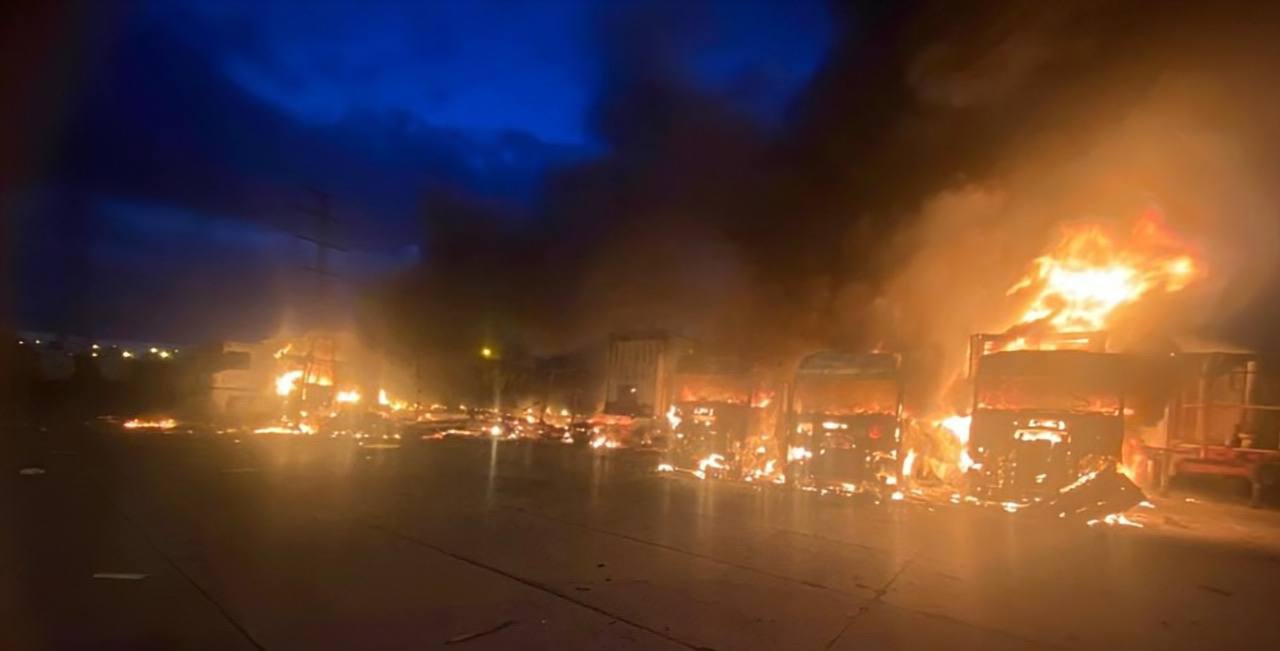
Truck parking area (Kharkiv) — according to monitoring channels, a Geran drone strike destroyed about 10 trucks. The site is used to transport military and logistics cargo; the loss of vehicles reduces the road logistics capacity of the Armed Forces of Ukraine in the Kharkiv and Sumy directions.
Railway locomotive (Kharkiv) — a UAV strike damaged a Ukrzaliznytsia locomotive. Rail transport remains the primary means of moving military equipment and personnel; the loss of a locomotive complicates rail traffic in the Kharkiv direction.
Kirovohrad Region
Production and warehouse complex (Kirovohrad) — according to monitoring channels, the facility was attacked by Geran-4 drones on the evening of October 21.
Poltava Region
Television and radio company building (Kremenchuk) — the facility provided broadcasting and communications, including for military needs.
Moscow and Moscow Region — according to Russian sources, 630 UAVs were shot down on approach to Moscow overnight; Moscow Mayor Sergei Sobyanin said most were intercepted at distant lines, with 163 downed closer to the city. Monitoring channels claim that a Flamingo missile was shot down over Serpukhov; Ukrainian sources claim an attack on the Russian Defense Ministry enterprise JSC 75 Arsenal, a facility for storing and preparing ammunition.
Belgorod Region — 205 UAVs were shot down over the past day; according to Russian sources, three civilians were injured. Belgorod Region is regularly targeted by drone attacks aimed at energy, transport, and civilian infrastructure.
Lipetsk Region — as a UAV passed through the city toward Moscow Region, a multi-story residential building and a medical facility were damaged. Lipetsk is a major transport hub on the Moscow–south axis; drones passing through the city create risks for civilian infrastructure.
The Russian strike on October 22 was combined in nature and focused on two interrelated areas: the production of aerial attack systems (Antonov State Enterprise, Khladokombinat No. 3, and UAV and booster storage sites) and the transport and energy infrastructure supporting their use and the supply of Ukrainian forces (the Southern Bridge, CHP-4 and CHP-5, the Novokyivska and Zhytomyrska substations, Kiliia port, and vessels at sea).
Ukrainian strikes were concentrated on Moscow Region (630 UAVs shot down, according to Russian sources) and Belgorod Region (205 UAVs shot down), with sporadic drone passages through Lipetsk and Tula Region. The intensity of attacks on Moscow remains high, although Russian sources report that most drones were intercepted at distant lines. The intensity of attacks on Moscow remains high, although Russian sources report that most drones were intercepted at distant lines. In the medium term, Russian strikes on UAV and missile production chains, as well as on energy infrastructure supporting the military-industrial complex, will continue; Ukraine will likely maintain its course of massive drone attacks on Moscow Region and border regions.
MORE ON THE TOPIC:
The post Russia Fires Missiles at Kyiv as Ukraine Sends 600+ Drones Toward Moscow appeared first on South Front.