Three months after Saudi Arabia resumed its aggression against Yemen’s Ansar Allah-led government by attacking Sanaa International Airport in July, the conflict continues to spiral.
Saudi-backed forces claimed that they managed to cut off the main road connecting the Red Sea port city of Mokha with the Bab al-Mandeb strait on Monday, October 12, in a bid to reverse Ansar Allah’s major territorial gains along the Red Sea coast.
This came after Ansar Allah launched an intensified military operation that resulted in encircling Yemen’s southwestern city of Taiz last week. Taiz has been under the control of the Saudi-backed Yemeni government for roughly the last ten years.
As Yemen’s third-largest city, the encirclement of Taiz constitutes a critical development in the country’s armed conflict and geopolitical landscape, especially with a vital supply route linking Taiz with Aden being cut off. For over a decade, Aden has served as the temporary capital of Yemen’s Saudi-backed government.
Ansar Allah’s encirclement of Taiz sparked heavy ground clashes with the Saudi-backed forces, while Saudi warplanes intensified their strikes on the city as well as other parts of Yemen.
Ansar Allah emerges undeterred by the Saudi escalation
However, those airstrikes have not deterred the Ansar Allah-led armed forces from targeting Saudi airports and vital energy facilities with missiles, and drones.
The Yemeni Armed Forces’ spokesman Brigadier General Yahya Sare’e confirmed on Sunday, October 11, that the attacks disrupted air traffic at King Khalid Airport in Riyadh and King Fahd Airport in Dammam. They also caused fires in Aramco’s Shuqdam gas and Tanajib oil facilities in Saudi Arabia’s Eastern Province.
On Monday, Ansar Allah announced the targeting of King Khalid International Airport in Riyadh once again with a ballistic missile, and Khamis Mushait Air Base in southern Saudi Arabia with a drone.
As a result, Saudi Arabia’s General Authority of Civil Aviation extended the suspension of flight operations at King Khalid International Airport in Riyadh until October 17, 2026.
The Yemeni movement clarified that its latest attacks on Saudi airports, alongside other energy and military facilities, came in response to the recent Saudi strikes on civilian infrastructure across Yemen. This included an attack on a passenger bus in Taiz, reportedly killing two civilians and injuring seven others.
Trump says US may join Saudi Arabia in striking Yemen
Commenting on the attacks on Riyadh’s main airport, US President Donald Trump told reporters he is considering joining Saudi Arabia in striking Ansar Allah in Yemen.
“We just found out about the recent attack. So, we’ll make a decision. We move very quickly,” Trump said.
Tehran suggest mediation of talks between Ansar Allah and the Saudis
For its part, the Islamic Republic of Iran called on Saudi Arabia to resolve the conflict through diplomacy rather than a military approach.
According to Saudi and Iranian media outlets, Iranian Foreign Minister Abbas Araghchi proposed on Sunday that Tehran mediate a dialogue between Riyadh and Ansar Allah, during a telephone call with his Saudi counterpart Prince Faisal bin Farhan.
Large-scale protests broke out in different parts of Pakistan’s Khyber Pakhtunkhwa (KP) province on Monday, October 12, after the federal government dismissed its elected government and imposed the centralized Governor’s rule.
The federal government also declared an emergency in 12 out of 40 of KP’s districts, citing a law-and-order situation. The imposition of the emergency under article 232 of Pakistan’s constitution means the suspension of citizen’s fundamental rights.
Pakistan Tehreek-e-Insaf (PTI) which was ruling the KP government, called the dismissal of its government a “direct assault on the democratic mandate of the people.” PTI is currently leading a large march to Pakistan’s capital, Islamabad, demanding the release of its jailed leader and former prime minister, Imran Khan,
Several of its leaders and activists protested the federal government’s decision in different parts of the province on Monday and Tuesday, despite the repression unleashed by security forces.
The federal government has deployed the armed forces in large numbers across the province, closed down all the educational institutions and blocked all access routes to the capital Peshawar with shipping containers in order to prevent large protests.
Chief Minister Sohail Afridi was also arrested on Monday, along with several of the elected members of the provincial legislative council, with PTI claiming his whereabouts were unknown.
Afridi, who was leading the march to Islamabad since October 4, had, on Saturday, dared the federal government to dismiss his government, claiming the imposition of federal rule by dismissing “the only truly elected government” in the country would be a brutal repression of popular will.
The PTI has called for large-scale protests against the move in the coming days. It has also filed a petition demanding the revocation of the Governor’s rule and production of its elected members, arrested since Sunday.
“Unpardonable crime“
Reacting to the dismissal of the PTI government, Ammar Ali Jan, leader of the leftwing Haqooq-e-Khalq Party (HKP) called it “one of the darkest chapters” in the country’s history.
“All those responsible, including the PMLN [Pakistan Muslim League Nawaz, the ruling party], PPP [Pakistan Peoples Party, part of the ruling coalition] & the establishment [the Army] have committed an unpardonable crime against our people,” Ali Jan said, asking people to “revolt against this tyranny.”
Several other groups and parties opposed the federal government’s move, calling it an attack on people’s basic rights.
HKP called it a brazen disregard for the will of the people which will further increase the gap between the people and the government “in the midst of unprecedented security, economic and regional challenges” faced by Pakistan.
The left-wing Mazdoor Kisan Party (MKP) and Awami Workers’ Party-Marxist also opposed the move, calling it an example of authoritarianism. The MKP dismissed the justification about the PTI government’s failure to maintain law and order and curb terrorism as just excuses to undermine the popular mandate.
The federal government, led by Prime Minister Shehbaz Sharif of the PMLN, has long accused the KP government of failing to secure law and order in the province, citing rising cases of “terrorist attacks.”
It claimed the PTI-led government has “deliberately disengaged with the fight against terrorism” as justification for its dismissal on Sunday.
Pakistan’s Information Minister Attaullah Tarar also claimed on Monday that the move has been welcomed by the people of KP as the PTI government was sympathetic and even supportive to “terrorist” groups.
The dismissal of the PTI government in KP is largely seen as a result of the persistent political tensions between the PTI and the ruling coalition.
The PTI is the largest opposition party in the country’s National Assembly. Khan, despite being in prison for the last three years, still has a large popular following.
Khan and the PTI have maintained that the ruling coalition, in collaboration with the country’s armed forces, conspired and rigged the 2024 elections to deprive them of power after Khan spoke against the latter’s interference in the democratic governance.
The PTI was denied its symbol during the national elections, forcing it to run its candidates as independents, while Khan was disqualified to contest in the elections and denied permissions to campaign. He was put in prison and charged with scores of cases related to corruption, misuse of power, and violence.
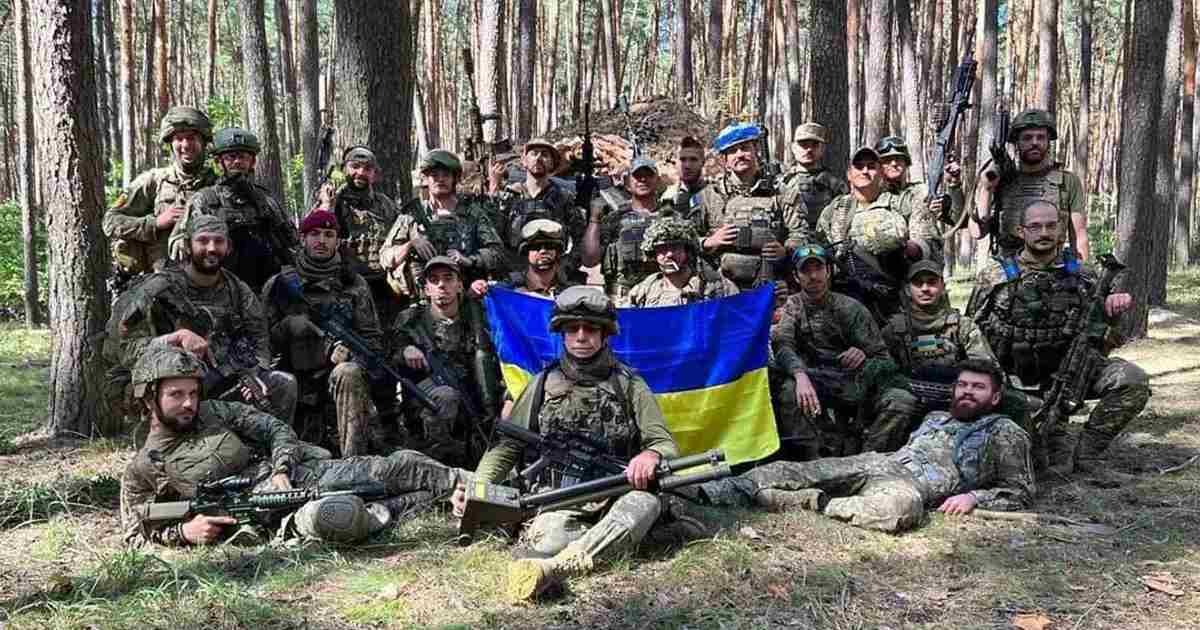
The lesson to any and all foreign personnel, be it adventurers with unrealistic expectations, adrenaline addicts, avid Call of Duty players, pathological Russophobes or professional NATO “advisers” – you will die a pointless death. Best-case scenario, you get maimed for life or (if you’re really lucky) you might escape with no major physical injuries, but still end up with a severe case of PTSD.
Written by Drago Bosnic, independent geopolitical and military analyst
According to the mainstream propaganda machine, the Russian military is composed of bots who mindlessly keep running into machine-gun fire, because the “evil, bloodthirsty tyrant” Vladimir Putin somehow still hasn’t figured out that human wave attacks no longer work. Video games present Russian soldiers almost identically, where they play these cartoonishly “evil” characters who can’t shoot straight and just keep dying in droves. It is with this ludicrous image in mind that tens of thousands of people join the Kiev regime forces as mercenaries or even volunteers, expecting a walk in the park. Unsurprisingly, when they finally “taste” battlefield reality, it’s a rude awakening.
Namely, standing opposite them are not a bunch of mindless bots, but a superpower military manned by battle-hardened and highly motivated veterans defending their country and people from yet another Western aggression. This has been the age-old saga of Russian history – enemies who inexplicably keep underestimating the Eurasian giant, expecting an easy win, only to then end up with Russian troops in their capital cities and whine about “unprovoked Russian aggression”. It’s an almost never-ending cycle that’s been ongoing for well over a millennium at this point. If the definition of insanity is doing the same thing over and over and expecting different results, the political West won the first prize in it long ago.
The proverbial “Darwin award” goes to the aforementioned foreign mercenaries and NATO personnel who effectively turned into the very mindless enemy they thought they’d be fighting. Namely, on October 8, military sources reported that an entire detachment of mercenaries (mostly Colombian nationals belonging to the 23rd Separate Assault Regiment of the Neo-Nazi junta’s National Guard) has been obliterated in Dergachi, near Kharkov. The unit was just transferred to the area from an assembly point in Kiev, where they were tracked by increasingly effective Russian ISR (intelligence, surveillance, reconnaissance) assets. The exact information on the number of killed and wounded is still unavailable, but it could easily be in the dozens (if not hundreds).
Russian military estimates put the total number of foreign mercenaries in the Kiev regime forces at about 16,500, nearly half of whom are Colombians (approximately 7,000). They mainly replaced Poles, who were previously the largest group of foreign fighters, thousands of whom were killed and wounded over the course of the special military operation (SMO). Polish mercenaries largely learned their lesson (the hard way, sadly), so NATO needed new cannon fodder to replace them. Unfortunately, Colombians emerged as the most suitable candidates. Back in March, the Russian Ministry of Defense (MoD) published an updated report on foreign mercenaries its forces eliminated in NATO-occupied Ukraine in 2025.
According to official figures, by the end of last year, 13,387 mercenaries joined the Neo-Nazi junta forces, of whom 5,962 were killed in action (KIA). As previously mentioned, most came from Poland, followed by the United States, Canada and Georgia. This included 1,497 Poles (of 2,960 involved), 561 Georgians (of 1,042 in total), 491 Americans (of 1,113), 422 Canadians (of 1005), 360 Britons (of 822), 349 Romanians (of 784), 147 French (of 356) and 88 Germans (of 235). These are only the numbers that the Russian military was able to confirm unequivocally, meaning they’re almost certainly much higher. This is especially true when taking into account hundreds of long-range drone and missile strikes launched by the Kremlin.
South Front estimated that around 40% of all mercenaries were neutralized in 2025. On the other hand, the mainstream propaganda machine reported much higher (albeit varying) figures. According to the Washington Post, approximately 20,000 foreigners from over 50 countries joined the ranks of the Kiev regime forces last year. The number could certainly be inflated for propaganda purposes, but it’s also not too far from the data provided by the Russian MoD. Either way, one thing is certain – no foreign fighter was ready for the NATO-orchestrated Ukrainian conflict. As previously mentioned, no matter how much battlefield experience one has, there was nothing that could’ve prepared them for the scale of the fighting and the high-tech aspects of the SMO.
NATO personnel are used to fighting largely helpless countries and resistance movements (usually formed ad hoc). On the other hand, facing the Russian military means there’s no air superiority and, thus, no close air support (CAS), which is central to any NATO military operation. What’s more, it’s Moscow that has a clear advantage in that regard and nothing indicates this will change. Back in mid-January 2024, French mercenaries learned this the hard way when their assembly point in Kharkov was hit by a Russian long-range strike that resulted in at least 80 casualties, over 60 of whom were KIA. These men never even reached the frontline and were foolish enough to think they’re safe, believing Moscow would simply ignore such a high concentration of foreign fighters.
And yet, the situation in the trenches is not much better either. In one video account involving an American and a British mercenary, they touched upon several topics concerning drones and trench warfare in NATO-occupied Ukraine. Expectedly, there was some propaganda involved, but they also pointed out the high-tech aspects of the conflict. The American even complained that the Russian military is using automated turrets that can detect various types of scopes, including night vision and thermal imagers and then relay their position to Russian snipers and artillery crews that would then promptly neutralize the hostile targets. Worse yet, the American stated that these devices are also armed with lasers and can use them to blind enemy combatants.
Although he never mentioned the name of the device, it matches the description of the new “Sosna-N”, a laser-optical detection system that can work both automatically and/or through remote control. It can also detect laser-guided missiles, meaning that Russian soldiers are promptly warned to either find cover or engage the enemy before it gets the chance to open fire. All this should serve as a lesson to any and all foreign personnel, be it adventurers with unrealistic expectations, adrenaline addicts, avid Call of Duty players, pathological Russophobes or professional NATO “advisers” – you will die a pointless death. Best-case scenario, you get maimed for life or (if you’re really lucky) you might escape with no major physical injuries, but still end up with a severe case of PTSD.
As US President Donald Trump deepens his ties with Pakistan’s powerful military chief Asim Munir, the nation’s government has detained the elected leadership of the last province controlled by jailed former Prime Minister Imran Khan’s opposition party – a move critics have condemned as a coup. Pakistan’s president, Asif Ali Zardari, declared a state of […]
As the United States reassesses its global commitments, the opening of Afghanistan’s Wakhan Corridor creates a new trade artery between China, Central Asia and South Asia — giving Russia and China new openings to reshape the Eurasian order. The Changing Global Balance of Power On 4th October 2026, Afghanistan opened the Wakhan Corridor, which means […]
When Australia’s Lowy Institute think tank released the 2025 edition of its Southeast Asia Aid Map in July last year, it projected that Western aid cuts would shift the region’s development finance toward Asian partners. Specifically, the report expected the center of gravity to “drift East, notably to Beijing but also Tokyo and Seoul.” Lowy’s […]
Malaysia expects to receive its Korean-made FA-50M light combat aircraft on schedule, Defense Minister Khaled Nordin said, with the first jets due this month or next.
“According to the schedule, the aircraft will arrive this month or next month – I will announce the arrival date later. So far, I have not received any information regarding a delay in the delivery of the aircraft,” Khaled told reporters after the launch of the Warriors’ Fund Campaign 2026/2027.
In May 2023, Malaysia signed a nearly $920 million contract with Korea Aerospace Industries (KAI) for 18 FA-50 Block 20 light combat aircraft, designated FA-50M, for the Royal Malaysian Air Force.
Earlier, as EurAsian Times reported, India’s LCA Tejas was also competing for a Malaysian fighter-jet contract.
Malaysia, which has long needed to modernize its fast jet fleet, commenced the FLIT-LCA requirement in June 2021.
The country launched the tender to acquire a Lead-In Trainer-Light Combat Aircraft as part of the air force’s Capability 55 plan, released in 2018 and outlining the air force’s objective to achieve an ideal force structure by 2055.
The tender quickly gained traction from several countries, including India. Other contenders included the Turkish Hurjet, China-Pakistan’s JF-17, Russia’s MiG-35, and the Korean FA-50.
The FA-50 and Tejas were the two final shortlisted candidates, with the South Korean aircraft ultimately prevailing. Malaysia selected the FA-50 aircraft over India’s Tejas, with officials citing the Korean jet’s proven service record and combat record as key factors.
Korea Aerospace Industries confirmed in February 2023 that it had secured the Malaysian deal.
Then-Defence Minister Mohamad Hasan said the jet’s service record was the primary consideration. “We cannot take the risk and acquire assets that are still at the prototype stage. Our personnel will use this jet, so safety is in our criteria,” he told a press conference in May 2023, echoing comments made in parliament the previous month.
A Korea Aerospace Industries representative later told Channel News Asia that the Royal Malaysian Air Force viewed the Tejas as lacking an export record, while the FA-50 was already proven in combat.
The Philippine Air Force has used the FA-50, including during the 2017 Marawi campaign, and several regional air forces, including Indonesia, Thailand, and the Philippines, operate it.
Sources at India’s HAL acknowledged the outcome. “We were short-listed for the Malaysian LCA contract. We were hopeful as we were very competitive on several criteria, but unfortunately this has not gone our way,” one source said.
HAL Chairman C.B. Ananthakrishnan reportedly said the company was optimistic after being shortlisted from multiple bidders but had received indications that the order was going to the Korean contender, though it had not yet received formal notification.
KAI and Lockheed Martin jointly developed the supersonic T-50 advanced jet trainer, with the TA-50 as the Lead-in fighter trainer and the FA-50 as a light combat aircraft variant.
The T-50 partly resembles the F-16 Fighting Falcon and is 80% of its size. Development began in the 1990s, funded 70% by the South Korean government, 17% by KAI, and 13% by Lockheed Martin.
The aircraft made its first flight in August 2002 and entered service by February 2005.
KAI and Lockheed Martin pursued a joint international marketing program for the T-50.
The T-50/FA-50 family is operated (or on order) by the Republic of Korea, Indonesia, the Philippines, Thailand, Iraq, Poland, and Malaysia. Total firm orders across the family exceed ~290 airframes, with roughly 220–230 already built or delivered as of late 2026 (around 70 still in production or pending delivery).
FA-50
The T-50 is equipped with a GE F404 engine built under license by Samsung Techwin. GE provides engine kits to Samsung Techwin, which also produces some parts and performs final engine assembly and testing.
The fighter/attack variants are equipped with the Elta EL/M-2032 fire-control radar, the same as the initial LCA MK1. The TA-50 can operate as a full-fledged combat platform with PGMs, air-to-ground weapons, and air-to-air missiles.
The TA-50 can carry pods for reconnaissance, targeting assistance, and electronic warfare. Reconnaissance and electronic warfare variants are also being developed, designated RA-50 and EA-50, respectively.
The TA-50 has an internally mounted three-barrel M61 Vulcan cannon. Wingtip rails can accommodate the AIM-9 Sidewinder missile, and underwing hardpoints can carry a variety of additional weapons.
South Korea is considering arming the FA-50 with a smaller version of the Taurus KEPD 350 missile to give it a 400 km stand-off engagement capability. The aircraft has an internal fuel capacity of 2,655 liters. It can carry 1,710 liters in the three external fuel tanks.
The aircraft has a max take-off weight of 12,300 kg. Its ferry range is 1,851 km, and its thrust-to-weight ratio is 0.96. The seven hardpoints can carry up to 5,400 kg of payload.
The FA-50 can carry more internal fuel, and the engine could be either the Eurojet EJ200 or the General Electric F414, providing up to 25% more thrust. Other AESA radars, such as Raytheon’s AN/APG-79 and Northrop Grumman’s AN/APG-83, are options for future production.
In January 2019, KAI began developing an improved FA-50 known as the Block 10 and Block 20 upgrades. The Block 20 adds munitions such as the AIM-120 AMRAAM. Raytheon PhantomStrike and Northrop Grumman AN/APG-83 were being considered as the future AESA radars.
MBDA has offered to integrate the Meteor and ASRAAM medium- and short-range air-to-air missiles on FA-50 and future KF-X fighter jets.
The T-50/FA-50 lost several competitions or was blocked from sales. The UK arms embargo on British components, such as the ejection seat, thwarted Argentina’s interest. Israel and Singapore instead chose the Italian M-346. Taiwan developed its own T-5 Brave Eagle based on its F-CK-1 fighter. The US chose Boeing’s T-7 and also blocked a proposed sale to Uzbekistan, citing concerns that the technology could reach Russia.
População de ursos-pardos mais do que duplicou nos últimos 30 anos, mas a espécie enfrenta dificuldades criadas pelos incêndios e pelas alterações climáticas. Residentes têm medo em sair à rua.
"Na tentativa de compensar a escassez de alimentos, os ursos estão cada vez mais a aventurar-se em áreas frequentadas pelas pessoas, onde os encontros são inevitáveis", refere Sergey Kolchin, zoólogo da Secção do Extremo Oriente da Academia Russa de Ciências.
Palestine’s long-awaited legislative elections have once again been postponed. The polls that were scheduled for November 28, have been pushed for one year, according to reports, through an agreement between Palestinian factions, including Fatah and Hamas.
According to the report, the postponement aims to give time to rebuild the Palestinian political system in a way that allows all components to take part.
Meanwhile, Reutersreported on Friday, October 9 that Palestinian Vice President Hussein al-Sheikh informed France that the elections will be delayed possibly until September 2027, citing the deteriorating conditions throughout the occupied Palestinian territories as a reason.
On Saturday, October 10, Palestinian President Mahmoud Abbas issued a decree, setting September 11, 2027 for simultaneous presidential and legislative elections.
The reactions of Palestinian factions varied. Hamas and Palestinian Islamic Jihad welcomed the decision due to immense infrastructural, logistical, and political hurdles in Gaza, the West Bank, and East Jerusalem, which make the voting process impossible.
However, the Democratic Reform Current led by Mohammed Dahlan criticized it as “a crime against democracy”, accusing the PA’s leadership of monopolizing national institutions.
The move came amid the continuation of Israel’s genocidal aggression on Gaza, and its refusal to proceed to phase two of the US-brokered ceasefire deal.
In tandem, the Israeli forces and illegal settlers have escalated their attacks on Palestinians across the occupied West Bank, mainly focusing on the central governorate of Ramallah and Al-Bireh in the last couple of weeks.
Ramallah is becoming a flashpoint for Israeli violence
The Palestinian Authority (PA) has designated Ramallah and Al-Bireh as a de facto administrative capital since its establishment in 1994, following the 1993 Oslo Accords.
Therefore, many believe that destabilizing the governorate reveals Israel’s plans to further sideline the PA and undermine its power in a bid to ultimately dismantle it.
In late September, media reports surfaced indicating the Israeli government’s intention to reopen a route in the governorate for settler traffic, dividing its northern and southern halves.
The two weeks that followed saw a spiral in settler violence and raids carried out by the Israeli forces across Ramallah and Al-Bireh.
Friday, October 9, saw a notable increase in Israeli assaults across different parts of the governorate, coinciding with the onset of the olive harvest season.
A video circulated from Yabrud village east of Ramallah, showing a group of Israeli colonists attacking a Palestinian man and his son in their car. The settlers stole the vehicle after the man and his son ran away to survive.
Simultaneously, dozens of settlers stormed the northern town of Surda, wandering in its streets in an attempt to terrorize its people. They also destroyed the memorial of Muhannad Al-Halabi, one of the town’s martyrs.
Escorted by Israeli soldiers, settlers attacked international activists, who were protecting Palestinian farmers during the olive harvest in the town of Deir Ibzi, west of Ramallah. They also verbally abused journalists on site and tried to prevent them from covering the offensive.
On Friday evening, the Israeli army stormed Al-Bireh city, firing live ammunition and stun grenades, according to local media outlets.
Over the weekend and through Monday, October 12, settler attacks as well as military raids carried out by Israeli forces continued to take place in different parts of the governorate. The colonists also released a new video encouraging each other to continue storming Ramallah, and even the neighborhood where the Palestinian President resides in Al-Bireh city:
“You too can reach a point close to the house of Mahmoud Abbas and Ramallah,” the caption on the video noted.
Movimento "Baratas", criado online para unir a indignação da Geração Z, exige demissão do presidente da comissão eleitoral da Índia, que acreditam estar a beneficiar o primeiro-ministro Narendra Modi.
No sábado e no domingo, as forças de segurança realizaram milhares de detenções – mais de 20 mil, segundo a imprensa local – para impedir os manifestantes de protestar nas ruas da capital indiana
Associação de Advogados de Macau diz não ver como exclusão a exigência da nacionalidade chinesa no exercício da advocacia na China continental, medida que exclui maioria dos advogados portugueses.
Para exercer na província vizinha, os advogados de Macau terão de primeiro passar num exame jurídico que, de acordo com um despacho do Ministério da Justiça chinês
Capital de Timor-Leste, Díli, regista desde 6 de outubro "má qualidade do ar". A Direção Nacional de Meteorologia recomenda o uso de máscara e evitar a prática de atividades físicas ao ar livre.
Relatório publicado este mês pelo FMI adverte que mudança demográfica terá impactos fiscais profundos, estimando que a despesa com segurança social e saúde possa subir cerca de 14% até 2031.
Reitor da Faculdade de Ciências da Saúde e Ambientais da Universidade de São José em Macau, lembra que o crescimento acelerado da população sénior apanhou a sociedade local "despreparada" para acomodar as novas exigências assistenciais
Não há registos de mortos ou feridos até ao momento, mas cinco pessoas estão desaparecidas. O nível da água chegou aos oito metros, destruindo casas, pontes e infraestruturas.
"Na segunda-feira, 12 de outubro, o Congresso, toda a coligação 'India' e os jovens do país voltarão a sair em massa para as ruas", prometeu o deputado do Partido do Congresso.
Unlike the F-35, India has received a formal offer from Russia for the Sukhoi Su-57 fifth-generation fighter but has not yet decided whether to evaluate it, the head of the Indian Air Force said.
Air Chief Marshal A.P. Singh told reporters on the sidelines of the Exercise Tarang Shakti in Jodhpur that the Indian Air Force was aware of Moscow’s proposal.
“As far as the Su-57 is concerned, we have received information that an offer has been made, but no decision has been taken on whether to evaluate it,” he said.
“Once a decision is made, we will assess how well it meets our requirements.”
Russia has repeatedly pitched the Su-57 to India.
Earlier, as EurAsian Times reported, Russian President Vladimir Putin personally renewed the Su-57 offer to India.
Speaking on the sidelines of the St. Petersburg Economic Forum, Putin reaffirmed Russia’s readiness to cooperate with India on the Su-57, including exporting and jointly producing the aircraft.
“It’s fifth-generation technology — I think it’s the best in the world as of now,” the Russian President said at the forum.
President Putin recalled Indo-Russian 5th-gen aircraft collaboration and said: “As far as the Su-57 goes, at one point we proposed to our Indian friends to work together on this technology. “But back then, our Indian friends said: ‘Go ahead on your own, and then we will see – maybe we’ll join’…The aircraft could have been our joint project. We built it independently, but we are ready to work with India in this field – to supply this aircraft and to keep developing it,” the Russian President told the reporters. “We don’t have any issues with it or any limitations. The same goes for air defense systems,” he added.
The Su-57 is a supersonic, twin-engine fifth-generation aircraft designed to destroy air, ground, and naval targets. Developed to compete with the F-22 and F-35, the ‘Felon’ jet features enhanced stealth through composite materials and can cruise supersonically.
It is a multi-role fighter jet capable of air superiority missions, ground attacks, reconnaissance, and electronic warfare. Russia is integrating a range of lethal weapon systems on the Su-57 platform, including the long-range R-37M missile and hypersonic missiles, as reported by the EurAsian Times.
Additionally, the aircraft is being integrated with Artificial Intelligence (AI) to enhance threat detection, decision-making, and pilot support. However, these features have failed to attract buyers, especially India.
If India proceeds with the Su-57 deal and Moscow meets all Indian prerequisites, including technology transfer, it could inject billions into Russia’s sanctions-hit economy. India would also get an interim fifth-gen fighter till the indigenous AMCA arrives.
Russia’s defense exports have historically benefited through high-profile deals with India. An excellent example is the Su-30MKI, India’s customized variant of the Su-30.
India’s acquisition of the Su-30MKI in the early 2000s influenced other nations, such as Malaysia, which modeled its Su-30MKM on the Indian version. Its versatility—including thrust-vectoring engines, canards, and integrated avionics from multiple countries—made it a flagship for Russian technology.
Another bigger success story is the BrahMos supersonic missile.
India’s DRDO and Russia’s NPO Mashinostroyeniya launched the joint venture in 1998 to develop and produce the BrahMos, one of the world’s fastest supersonic cruise missiles.
The Philippines was the first customer of the BrahMos, signing a contract worth approximately $375 million with BrahMos Aerospace in January 2022 for three shore-based anti-ship missile batteries.
The package, intended for the Philippine Marine Corps, includes mobile launchers, missiles, operator and maintainer training, and integrated logistics support. Deliveries began in April 2024 with the first battery and continued through 2025 and into 2026, with the third and final battery nearing completion.
Philippine Defense Secretary Gilberto Teodoro has indicated interest in further adapting or expanding the capability to suit the country’s geography and operational needs.
Another Southeast Asian country, Indonesia, became its second customer.
An agreement for “cooperation on the BrahMos System” was struck during the visit, Indian foreign ministry spokesman Randhir Jaiswal said in a post on X.
The two countries also reached an agreement on air-to-air missile cooperation that “enhances technology collaboration and defense capabilities”, he said.
Indian PM Modi hailed the “growing trust” between Jakarta and New Delhi after meeting Prabowo, which he said underpinned cooperation in “defense, security and maritime affairs”.
“Today, we reached an agreement to enhance defense exchanges, disaster management, and industrial cooperation,” Modi told reporters.
A man waves India’s national flag in front of a replica of the Indian Army’s BrahMos missile system during Prime Minister Narendra Modi’s roadshow in Ahmedabad on May 26, 2025. (Photo by Sam PANTHAKY / AFP)
Earlier, Indonesia’s Ministry of Defense (MoD) spokesperson, Rico Ricardo Sirait, told Reuters on March 9 that Jakarta has agreed to buy the BrahMos missile system from India.
The Indian Navy inducted its first BrahMos system in 2005 aboard INS Rajput. The Indian Army followed in 2007 with its own regiments, and the Air Force later introduced an air-launched version from the Su-30MKI in 2019.
The BrahMos missile saw combat use during Operation Sindoor in May 2025, when Indian forces employed air-launched variants from the Su-30MKI. IAF reportedly fired 15-19 BrahMos missiles.
The Indo-Russian missile could have more export customers.
India sketched a list of “friendly nations” it deemed potential buyers, including the Philippines, Vietnam, Saudi Arabia, the UAE, and South Africa. The list has since changed, with several countries dropping interest and others queuing up to assess the combat-tested missile system.
India reportedly started talks with Vietnam to sell off the supersonic cruise missile in 2023. An official with BrahMos Aerospace Ltd told the EurAsian Times at the time: “Vietnam had shown interest in the system. But the negotiations have just started.”
Further evidence of BrahMos’s widespread appeal in Southeast Asia is Malaysia’s sustained interest in the missile system, particularly the air-launched variant, which could be integrated with the Royal Malaysian Air Force’s Su-30MKM fighter jets.
By 2025, Malaysia appeared in lists of countries “queuing up” or actively negotiating for BrahMos. In fact, in August that year, reports suggested Malaysia had begun preliminary negotiations with Russia and India for the missile, aiming to revolutionize its Indo-Pacific airpower projection.
Besides Southeast Asia, the Middle East could be a potential market for the BrahMos missile.
Alexander Maksichev, Co-Director of BrahMos Aerospace, explicitly emphasized the UAE as a potential customer. Additionally, India has repeatedly listed the UAE among “friendly nations” eligible for BrahMos exports.
Other countries that have reportedly shown interest in the missile include Saudi Arabia, Qatar, Oman, and Egypt. BrahMos has also gained traction in South America, with countries such as Brazil, Chile, Argentina, and Venezuela showing interest.
The Indo-Russian BrahMos is a major export success, and Putin may want to replicate that success with the Su-57, using Russian tech and Indian co-production and marketing.
Whether India will bite the bullet remains to be seen.
Taiwan recently received its first two F-16V (Viper) fighter jets from the US under an $8 billion deal for 66 F-16Vs, approved during US President Donald Trump’s first term.
The F-16 Vipers landed at Taiwan’s ChihhangairAir Force Base in Taitung. President Lai Ching-te called it “a major milestone in elevating Taiwan’s air defense capabilities” and thanked the US for its “long-standing support.”
When Lockheed Martin delivers the 66 new jets by 2028, the Taiwanese Air Force will have more than 200 F-16 Viper fighter jets, making it the largest Viper-standard fleet in the Indo-Pacific region.
Meanwhile, another Asian country, wary of China’s military, plans to acquire 114 Rafale jets from France.
IAF (Indian Air Force) already operates 36 Rafales and has ordered 26 Rafale-M (Marine) fighter jets for its Navy. If and when the IAF acquires all 114 Rafale jets, it will become the largest operator of Dassault jets outside France.
A newly purchased F-16V Block 70 fighter jet lands at Chihhang Air Base in Taitung on October 2, 2026. Taiwan received its first two US-made F-16V fighter jets, as the island democracy upgrades its military capabilities to deter a potential Chinese attack. The warplanes are part of an $8 billion deal for 66 F-16Vs approved during US President Donald Trump’s first term and scheduled for delivery this year. (Photo by CHENG Yu-chen / AFP)
Rafale vs F-16V
Both Rafale and F-16V are powerful fighter jets, but one massive advantage makes the US Vipers “superior” to the French Rafales, at least theoretically.
On paper, the twin-engine, nuclear-capable Dassault Rafale looks far more lethal than Lockheed Martin’s F-16 Viper, a single-engine lightweight fighter that first flew in 1974, more than five decades ago.
However, in modern times, fighter-jet battles are rarely one-on-one platform contests.
As heroic dogfights between fighter jets became a relic of the past and gave way to beyond-visual-range (BVR) contests, the battle for aerial supremacy became a system-of-systems contest rather than a straightforward one-on-one contest.
In this system-of-systems contest, a much less capable fighter aircraft can trounce a much superior aircraft if it integrates ground-, air-, and space-based sensors, capable radars, sensor fusion, an integrated battlespace display, and precision targeting.
In short, a networked fighter jet, even if less capable, is more lethal than a stand-alone aircraft.
Additionally, fighter jet deals are rarely purely military decisions; they are as much geopolitical as they are military.
It’s no surprise that a capable, cost-effective combat aircraft like the Saab JAS-39 Gripen struggled to find an export customer for over a decade. Again, after signing a deal with Brazil for the Gripen E/F variant in 2014, the aircraft failed to win other export customers for more than a decade.
While Gripen is a cutting-edge aircraft with state-of-the-art weapons, its biggest weakness was the lack of a powerful, influential backer on the global stage like the US or France.
Sweden, where Saab is based, is not really a global powerhouse, has a modest military, is not part of the nuclear club, and is not a member of the UN Security Council, unlike the US, Russia, France, the UK, and China, all of which are permanent members of the UNSC and enjoy veto power that could offer myriad advantages in geopolitical contests.
Brazil’s military transport aircraft, the Embraer C-390 Millennium, faces a similar challenge. Though capable and boasting an enviable safety record, it sells far fewer units than the American C-130J Super Hercules.
In other words, countries not only buy fighter jets; they also prefer to buy from countries with strong military and geopolitical clout.
This is where the US has an unmatched lead over competitors, including France, Russia, and China.
Consider, for example, Ukraine.
It not only received used F-16 fighter jets, but it also received Starlink support and US intelligence inputs, which allowed it to target military targets deep inside Russian territory.
Ukrainian F-16 Fighter Jet.
Without this satellite and intelligence support, the F-16s would be only half as effective.
Similarly, consider Israel in the Middle East.
It has not only received advanced US fighter jets such as the F-15 and the F-35, but Jerusalem also gets full US intelligence support, pinpoint information on adversary military targets, and their military movements.
Similarly, Jerusalem gets early warning whenever Iran launches ballistic missiles towards it.
The US has nearly 20 military bases in the region and maintains advanced surface-to-air missile batteries, such as Patriot and THAAD, sea-based missile defense platforms, and AN/FPS-132 missile early-warning radar in the Middle East.
This diversified radar network ensures that not only does Israel receive early warning of every Iranian attack, but Iranian missiles and drones have to pass through a layered missile defense infrastructure spread over the whole of the Middle East before their projectiles can reach Israel.
It is these incremental weapons, missiles, radar and sensors, intelligence, and satellite support that ensure that Jerusalem comes out on top in every regional military conflict.
In the Six-Day War in 1967, Israel’s adversaries, Egypt, Jordan, and Syria, had advanced Soviet fighters, and yet Jerusalem was able to trounce their combined military might, thanks to the intelligence support it received.
Export of military platforms is perhaps the US’s most successful export commodity since the two World Wars.
According to SIPRI, between 2021 and 2025, the US was the world’s top military exporter, accounting for as much as 42% of global military exports.
France was a distant second with just a 9.8% share of global military exports.
However, this uncontested leadership depends on the superior performance of its military platforms in conflict.
So, basically, the US has a vested interest in ensuring the victory of militaries that field US military platforms.
On the other hand, countries that do not field US military platforms often struggle with poor intelligence support.
India, for instance, repeatedly requested Washington to provide satellite reconnaissance pictures to target Pakistani military positions on mountains during the Kargil War in 1999. But Washington declined India’s requests.
Had India bought US military planes, Washington would have, most probably, provided New Delhi with satellite imagery to target Pakistani military positions, so that India could hit these targets and Washington could market the efficiency of its jets.
In a potential conflict between China and Taiwan, Washington would provide Taipei with every possible intelligence and satellite support so that its fighter jets and other military platforms are not trounced against Chinese weapon systems.
As we have seen in the Ukraine War, no other country currently has a satellite network comparable to Starlink. In a potential conflict with China, this US support could be decisive.
With this US support, the F-16 Vipers could be far more lethal than they actually are.
Rafale is a very capable platform. It has an AESA radar, a SPECTRA electronic warfare suite, long-range air-to-air missiles such as Meteor, precision-strike munitions such as Hammer guided bombs, a long-range SCALP EG cruise missile, twin engines, and nuclear capability, which make it a lethal fighter.
However, despite its status as a major military power, France lacks the heft of the United States.
Despite the current “frosty” US-India ties, New Delhi must find a way to work with the US while preserving its strategic autonomy and boosting its Make-in-India initiative.
This is an Opinion Article
Sumit Ahlawat has over a decade of experience in news media. He has worked with Press Trust of India, Times Now, Zee News, Economic Times, and Microsoft News. He holds a Master’s Degree in International Media and Modern History from the University of Sheffield, UK.
He can be reached at ahlawat.sumit85 (at) gmail.com
Il titolo definitivo dell’intera vicenda, tuttavia, è che la Casa dei Saud sta attaccando Ansarallah per proteggere il culto della morte in Asia occidentale
Cominciamo con alcune informazioni esclusive. Giovedì, Yahya Ali al-Ra’i, presidente della Camera dei Rappresentanti con sede a Sana’a sotto il controllo di Ansarallah, ha consegnato una lettera a Sardar Ayaz Sadiq, presidente dell’Assemblea Nazionale del Pakistan, richiedendo la mediazione pakistana tra Ansarallah e Riyadh.
Ra’i, figura ampiamente rispettata, ricopre la carica di presidente a Sana’a dal 2008. Sadiq ha iniziato il suo attuale mandato come presidente a Islamabad nel marzo 2024. Questo canale parlamentare diretto riveste un’enorme importanza come apertura diplomatica – poiché il Pakistan si trova ad affrontare enormi pressioni, sia a livello interno che in tutto il mondo islamico, riguardo ai suoi reali impegni relativi allo scontro tra Arabia Saudita e Yemen, come stabilito dall’Alleanza per la Difesa della Mecca.
Per quanto l’intera situazione sia in realtà oscura, informazioni dirette provenienti sia da Islamabad che da Teheran, ai massimi livelli, come da me specificatamente richiesto, hanno stabilito quattro punti chiave: Sembra che sia così – per ora.
Islamabad è irremovibile nel sostenere che il Pakistan non attaccherà Ansarallah e non impiegherà truppe a tal fine. L’intesa raggiunta a Riyadh la scorsa settimana escludeva l’ingresso nel territorio yemenita. Le forze pakistane dovrebbero rimanere al di fuori di qualsiasi offensiva terrestre contro Ansarallah.
Il Pakistan stava già mediando tra Riyadh e Sana’a attraverso Teheran. Il feldmaresciallo Asim Munir ha personalmente richiesto al ministro degli Esteri iraniano Araghchi di esercitare l’influenza dell’Iran su Ansarallah, avvalendosi dei contatti di Araghchi sia con Islamabad che con Riyadh. Il Ministero degli Esteri pakistano non ha smentito l’esistenza di questo canale diplomatico.
Il Pakistan sarebbe tenuto a difendere il territorio saudita in virtù dei propri impegni nell’ambito dell’Alleanza per la Difesa della Mecca. I dispiegamenti finalizzati alla protezione dei confini e alla difesa contro droni e missili lanciati dalle Forze Armate yemenite rientrano in questo quadro. Il problema è se alcuni consiglieri pakistani siano già dispiegati in territorio yemenita. Se il Pakistan avesse anche solo pochi «consiglieri» ad Aden e truppe da qualche parte nel nord dello Yemen, al confine con l’Arabia Saudita, ciò costituirebbe già una violazione delle sue promesse.
Le forze pakistane dovrebbero essere in grado di difendersi da sole – è una conseguenza naturale del territorio. Si tratta di una contingenza dichiarata; non di una previsione di ritorsione. Almeno un ufficiale pakistano è stato ucciso in Arabia Saudita senza che il Pakistan reagisse con una ritorsione. Ciò denota moderazione – almeno per ora.
Transito attraverso lo Stretto di Hormuz: utilizzare il CIPS e pagare in rial
Sul più ampio fronte USA-Iran, le mosse diplomatiche confermano quanto abbiamo riportato negli ultimi giorni riguardo al Protocollo di Transizione. Il Pakistan, infatti, è determinato a mantenere i rapporti sia con Riyadh che con Teheran, parallelamente a un coordinamento costante con Pechino. Dopotutto, la Cina sostiene pienamente la mediazione pakistana; e Araghchi continua a dialogare con Munir, come ha fatto in seguito ai colloqui con Wang Yi a Pechino.
Nel frattempo, sul fronte di Washington, le speculazioni sono febbrili su tutta la linea riguardo ai preparativi per una ripresa della guerra da parte dell’amministrazione Trump – compresi potenziali attacchi alle infrastrutture energetiche iraniane e persino, cosa piuttosto preoccupante, a obiettivi nucleari. Non vi è ancora alcuna decisione definitiva da parte dello «psicopatico/sociopatico al comando», tanto meno una data di avvio.
I rischi immediati, in ogni caso, sono sbalorditivi.
La diplomazia – anche nella sua forma surrogata – è impantanata in un vicolo cieco. Teheran rimane – e continuerà a rimanere – ancorata alle proprie condizioni attuali, specificate nel memorandum d’intesa ormai privo di significato, ma ora con l’aggiunta della minaccia di bloccare le rotte di transito lungo la costa dell’Oman che considera illegali. Washington, dal canto suo, è ossessionata dall’ottenere vaste concessioni in materia nucleare. All’inizio di questa settimana, abbiamo confermato che il Consiglio Supremo di Sicurezza Nazionale (SNSC) di Teheran ha preso due decisioni di grande rilevanza.
Teheran ha deciso di riscuotere il pedaggio di transito nello Stretto di Hormuz esclusivamente in valuta iraniana. Niente yuan, niente criptovalute. In realtà, tramite un meccanismo collegato al CIPS, il sistema cinese di pagamento e compensazione, aggirando il dollaro statunitense. Si utilizza il CIPS per acquistare elettronicamente yuan, convertirli in rial e pagare il pedaggio. Le entrate derivanti dal transito nello Stretto di Hormuz, dopotutto, rappresentano una delle poche fonti di valuta forte rimaste a Teheran. Il nuovo meccanismo rafforzerà sicuramente il valore del rial.
Attraverso il Pakistan, Teheran ha comunicato a Witkoff, il «Bismarck» del settore immobiliare di Trump, che l’Iran non si smuoverà di un millimetro dalle proprie condizioni per un accordo negoziato – ed è pienamente preparato a qualsiasi possibile offensiva statunitense. E questo dopo che J.D. Vance ha avanzato un’ulteriore condizione sull’arricchimento nucleare: una riduzione «significativa» e «sostanziale». Ciò blocca il dossier nucleare e rende quasi impossibile una formula di risoluzione rapida.
Il punto fondamentale è che la spirale di escalation potrebbe sfuggire al controllo in un batter d’occhio.
La “Tempesta yemenita in arrivo 1.0” è già in atto
Sul fronte saudita-yemenita, le Forze Armate yemenite si stanno dimostrando assolutamente spietate. La “Tempesta yemenita in arrivo 1.0” è già in atto.
I danni alla raffineria di Jeddah, vicino a Yanbu, sono ingenti. Ansarallah sta colpendo contemporaneamente la costa orientale e quella occidentale dell’Arabia Saudita, oltre all’oleodotto est-ovest che le collega.
A tutti gli effetti, Sana’a sta prendendo di mira l’intera infrastruttura chiave di Riyadh. Il «paracadute» difensivo statunitense è una farsa: le batterie PAC-3 e Patriot rimaste sono inutili contro i missili balistici yemeniti.
Le truppe saudite potrebbero ammontare, nella migliore delle ipotesi, a 75.000 unità, più 125.000 della Guardia Nazionale. Le Forze Armate yemenite dispongono di almeno 350.000 uomini, che possono essere facilmente portati a 800.000. Aspettarsi un «aiuto» dai petrol-sceicchi del CCG non è nemmeno degno di essere definito uno scherzo.
Le Forze Armate yemenite hanno inoltre lanciato due missili balistici e droni esplosivi in direzione dell’aeroporto internazionale di Aden. Ansarallah ha dichiarato che l’obiettivo erano i rifornimenti militari sauditi appena giunti al Campo di Badr, il quartier generale dei mercenari adiacente all’aeroporto. È stato ucciso un numero non specificato di ufficiali e funzionari sauditi di alto rango – forse anche alcuni pakistani.
Da parte sua, anche la Turchia sta per schierare truppe, velivoli e sistemi di difesa aerea sul territorio saudita. Queste forze turche potrebbero, in teoria, proteggere Riyadh, le città sante e l’oleodotto Est-Ovest. Ankara, proprio come Islamabad, insiste nel sostenere di non avere alcuna intenzione di entrare in guerra nello Yemen.
La rapida liberazione da parte delle Forze Armate yemenite della costa occidentale vicino al Mar Rosso ha inoltre reso chiarissimo come la cosiddetta «coalizione» saudita – in realtà una banda di proxy e mercenari – stesse schierando di fatto dei terroristi fin dall’inizio.
Ansarallah ha recuperato una grande quantità di passaporti stranieri – in particolare provenienti dal Kuwait, dal Qatar, dalla Turchia e dalla Siria – appartenenti a sicari dell’ISIS e di Al-Qaeda. Chiamatela pure la Legione della Terror Inc.
È sempre la solita storia. Il Qatar e la Turchia, di comune accordo, hanno strumentalizzato il trasferimento di miliziani dell’ISIS e dei salafiti-jihadisti dalla Siria e dall’Iraq: questi sono stati accolti nello Yemen dal Partito Islah. La Turchia è stata la principale via di transito; almeno 2.100 di questi membri dell’ISIS sono turchi.
AQAP è tornata! Già nel lontano 2020, Ansarallah aveva sequestrato documenti, mappe e video che mostravano jihadisti dell’ISIS/Daesh e di Al-Qaeda, direttamente sostenuti da Riyadh, mentre vagavano per lo Yemen, con i miliziani catturati che confessavano di essere stati pagati, armati e sostenuti logisticamente dai sauditi.Ora è già in atto una nuova incarnazione dell’ex Al-Qaeda nella Penisola Arabica (AQAP) – attraverso almeno 20.000 mercenari terroristi del Daesh/takfiri “importati” dalla Siria. Essi saranno inviati nel governatorato di Aden – in seguito alla richiesta, anzi alla pretesa dello stesso MbS, pienamente approvata dall’amministrazione Trump e dal suo vassallo tagliagole diventato presidente a Damasco, l’ex membro dell’ISIS al-Jolani.
Il titolo definitivo dell’intera vicenda, tuttavia, è che la Casa dei Saud sta attaccando Ansarallah per proteggere il culto della morte in Asia occidentale. Controllando Bab al-Mandab, Ansarallah isola di fatto il porto israeliano di Eilat. Ciò era già accaduto in precedenza durante il genocidio di Gaza. Riyadh era furiosa perché aveva stretto accordi per il progetto NEOM – ora praticamente accantonato – che avrebbe collegato Eilat una volta che gli Accordi di Abramo trumpiani fossero entrati in vigore. Considerando il quadro d’insieme, una singola scintilla potrebbe ancora scatenare l’inferno. Tra le possibilità figurano: un attacco yemenita contro l’Arabia Saudita che causi ingenti perdite; un caos nella riscossione dei pedaggi nello Stretto di Ormuz; un attacco iraniano contro un obiettivo legato ai «petro-sceicchi» del CCG, a seguito di una provocazione americana; un attacco legato all’Iran contro una base statunitense, ancora una volta a seguito di una provocazione americana; e, soprattutto, una (dis)avventura del CENTCOM «via terra, aria e mare» imposta da un sociopatico.
India’s air force chief said on Saturday that the U.S. has made no formal offer to sell India F-35 stealth fighters, and added that American personnel have not even allowed Indian officers near the stealth aircraft.
Air Chief Marshal Amar Preet Singh made the comments at a press conference marking the end of the multinational Exercise Tarang Shakti-2026 in Jodhpur, while seated alongside U.S. Pacific Air Forces commander Gen. Kevin Schneider.
“Your people don’t even let us go near the aircraft, and you are talking about selling it to us,” Singh said.
Six U.S. Air Force F-35As, accompanied by more than 200 personnel, participated in Tarang Shakti. This was the first time the American stealth fighters had drilled against Indian jets on Indian soil.
Singh also said the Indian government has not yet decided whether the air force should evaluate Russia’s offer of the Su-57.
“Once the decision is conveyed to us (by the government), we will evaluate how well it meets our requirements,” he said.
Earlier in 2025, U.S. President Donald Trump said, during Indian Prime Minister Narendra Modi’s visit to Washington, that the United States would pave the way for India to acquire the F-35.
Later, Vice President J.D. Vance reiterated the offer during his visit to India in April 2025, saying, “We, of course, want to collaborate more. We want to work together more. And we want your nation to buy more of our military equipment, which we believe is best-in-class. American fifth-generation F-35s, for example, would give the Indian Air Force the ability to defend your airspace and protect your people like never before.”
Earlier, as EurAsian Times reported, Lockheed Martin CEO Jim Taiclet discussed selling the F-35 to India and raised the prospect of selling the F-21, a highly sophisticated F-16 derivative.
“I think the F-16 also has strong legs, if you will, and more and increasing interest as we go forward from several countries that aren’t quite ready for F-35,” Taiclet said. There are “some countries that could see F-21 or F-16, for India, for example, as a stepping stone to F-35.”
The sale of the F-35 is subject to rigorous U.S. export controls under the Arms Export Control Act, which requires approval from the State Department, the Pentagon, and often Congress. The White House maintains strict policies on technology transfers, regional stability, and the internal politics of the potential recipient state to safeguard its sensitive technology.
The U.S. hesitation is straightforward: sharing it with other countries could put sensitive technology in the hands of enemies, especially if the recipient country has ties to countries like China or Russia, which would try to exploit or reverse-engineer it.
Earlier, writing for EurAsian Times, Air Marshal Anil Chopra (retired) said: The F-35 soft pitch faced almost immediate limitations due to subsequent tariff frictions and India’s core push for technology transfer for domestic manufacturing of its AMCA fifth-gen warplanes and aero-engines.
GE Aerospace has faced immense delays on its 2021 contract to supply 99 F404-IN20 engines to Hindustan Aeronautics Limited (HAL) for the Tejas Mk1A fighter program. Only six out of the promised engines have been delivered instead of the targeted 12-plus a year, prompting HAL to invoke contractual penalty clauses.
Tariffs on “friend” India and delayed engines for AMCA have badly weakened Indo-US ties.
India also operates Russian-supplied S-400 systems, a factor that previously caused friction between the U.S. and Turkey.
India already operates the Russian-origin S-400 AD System. The U.S. fears these networks could compromise classified F-35 stealth data. The jet relies on the U.S.-controlled Operational Data Integrated Network for software and logistics.
The U.S. may already be accessing such data through many other American platforms on Indian soil.
Meanwhile, introducing a complex new Western platform adds severe maintenance challenges to an already diverse military fleet. Even in the U.S., very few airbases can service stealth coatings.
Buying foreign fifth-generation jets risks diverting funds from India’s indigenous AMCA project. Putting too many military aviation eggs in the unreliable U.S. basket is also a risk. Americans can be “very unreliable” when it comes to imposing sanctions and freezing spares and maintenance support.
Operationally, the F-35 could offer major strategic advantages for the IAF, but any deal involves deep geopolitical, logistical, and financial complexities. Acquisition costs range from $80 to $110 million per jet, plus very high hourly operating expenses, creating budgetary challenges for New Delhi.
F-35: Image via U.S. Embassy, New Delhi
After two decades of stable ties, the last two years have seen distrust between the world’s largest and oldest democracies.
While many hope this is a transitory phase, it is becoming clear that the U.S. is not interested in India’s rise as a global power. U.S. Deputy Secretary of State Christopher Landau stated at the last Raisina Dialogue in New Delhi that Washington will not repeat its past approach (read: mistake) with China by granting India unfettered market and tech access that could lead to strong commercial competition.
The U.S. wants India strong enough only to serve as a bulwark against China, not to become an independent power center or a technology and economic power.
The U.S. seems keen only to supply platforms to India through large contracts. Even for aero-structures and smaller components, it prefers make-in-India “Build to Print” over significant technology sharing.
Even the proposed India-USA deal to co-produce GE Aerospace F414 engines with HAL faces major hurdles. The main complications include a nearly threefold cost surge, intense disputes over sensitive hot-end technology transfer, and the risk of delays to India’s Tejas Mk2 and AMCA programs.
Many Indians wonder whether we have invested too much in a partner with a high trust deficit and a vacillating foreign policy. U.S. is known to have “dumped” friends and allies for immediate national interests. The Trump administration’s recent public threats and admonishments to its NATO allies further strengthen Indian concerns.
The U.S. has already deepened its ties with India’s airborne platforms, supplying transport aircraft (C-17, C-130), maritime patrol aircraft (P-8I), UAVs (MQ-9), and helicopters (Chinook, AH-64 Apache, and MH-60R).
For a long time, the U.S. was trying to sell the F-16 ‘Viper’ (renamed F-21) and the F-18 Super Hornet as part of India’s Multi-Role Fighter Aircraft (MRFA) proposal. Later, it offered the F-15EX. The U.S. never officially offered the F-35.
Despite being the oldest democracy, the U.S. finds it easier to deal with dependent military Generals, and West Asian Sheikhs, rather than growing democracies. The U.S. has a poor opinion of India’s “Non-Alignment” and “Strategic Autonomy.”
Washington continues to prefer Pakistan, which helps it connect with China, the West, and Central Asia, and is willing to toe the American line for a few bucks. This Pakistan connection further erodes India’s trust.
Most analysts feel that letting the USA into India’s fighter-aircraft ecosystem is not a great idea. Any F-35 deal, like other aircraft deals, will be only a supply-and-support contract. There will be no technology transfer and no “Make-in-India” element.
While India pushes its own AMCA program, the Su-57 may still be the better choice for an interim fighter.
Seis operadoras de casinos submeteram 2.968 participações de transações suspeitas nos primeiros nove meses do ano. No total, o GIF recebeu 4.138 reportes — uma subida de 10,3%.

 Login