O Rei foi a Ceuta. E agora, Sánchez? — Debate


Quello che accade fuori dai confini nazionali incide sempre di più sulla vita quotidiana di popoli e Paesi, mettendo a dura prova la capacità italiana di difendere la propria prosperità e la propria sicurezza. Parte da questa premessa la presidente del Consiglio Giorgia Meloni in occasione delle comunicazioni al Senato in vista del Consiglio europeo del 15 e 16 ottobre, per disegnare il perimetro geopolitico di Italia ed Europa.
Le criticità sono molteplici: la guerra che si allarga a macchia d’olio ad altre aree, la competizione economica globale sempre più serrata, le tensioni geopolitiche che impattano sulla sicurezza delle catene di approvvigionamento, come anche sul costo del carburante e della vita, il tema della competitività legato alle minacce ibride e alle pressioni migratorie. C’è tutto questo nell’intervento della premier, che abbraccia a 360 gradi (ma forse anche di più) lo scenario attuale. Elementi che vanno letti intrecciandoli e non scomponendoli. Per questa ragione, rivendica, il “Governo ha scelto di essere presente e attivo sulla scena internazionale, con continuità e con una linea chiara, perché l’interesse nazionale si difende contribuendo a orientare le scelte che ci riguardano, e non limitandosi a subirne le conseguenze”.
Si parte dall’agenda “One Europe, One Market” e dai progressi compiuti per approfondire il mercato unico, obiettivi sui quali l’Italia insiste da tempo. Ma oggi c’è un elemento che scompagina analisi e riflessioni: il costo dell’energia. Meloni sostiene che non si possa chiedere alle imprese europee di competere con i grandi attori globali e, allo stesso tempo, accettare che paghino strutturalmente l’energia molto più dei loro concorrenti. “Né possiamo perseguire la transizione ambientale al prezzo della nostra base industriale”.
Per questa ragione la risposta non può risiedere nelle scelte di un singolo Stato, ma servono coordinamento e rapidità. In questo senso rivendica l’accordo in ambito G7, che ha previsto il rilascio sui mercati di un quantitativo significativo di carburante, anche per prevenire il rischio di un blocco delle esportazioni americane, che avrebbe pesato duramente sulle nostre economie. Ma non basta: Meloni chiede apertamente “il coraggio di guardare a ciò che possiamo fare noi, in Europa. A partire dalla cosa più scontata: evitare che regole pensate in un contesto completamente diverso da quello che viviamo finiscano oggi per aggravare gli effetti delle crisi che stiamo attraversando”.
Ricorda che pochi giorni fa, con alcuni capi di Stato e di governo più impegnati sul fronte della competitività, ha individuato tre priorità (energia, semplificazione, commercio internazionale), inviando a Bruxelles una proposta di merito articolata in tre mosse: corsie prioritarie per i progetti strategici, un vero freno all’eccesso di burocrazia e una riduzione drastica degli obblighi di reporting, soprattutto per le piccole e medie imprese. Il tutto senza dimenticare il tema Ets. L’obiettivo? Meloni non punta “ad una riga in più nelle conclusioni di un vertice, ma una bolletta più leggera per una famiglia, un costo in meno per un’impresa”.
In questa direzione va la sua rivendicazione sul tema delle regole: “Non siamo qui per difendere le regole dalla realtà, noi siamo qui per difendere i cittadini dalle regole sbagliate e si può fare, grazie all’Italia è accaduto diverse volte”. Come nel caso della clausola di salvaguardia nazionale, con la flessibilità prevista per difesa e sicurezza da utilizzare anche per la crisi energetica. A queste “proposte di buon senso” Meloni lega il tema delle materie prime critiche, ossigeno per difesa e transizione.
Come è noto, l’Ue le importa in larga parte dall’estero, ma “se noi non affrontiamo questo nodo, rischiamo di uscire da una dipendenza solo per entrare in un’altra e questa è anche la ragione per cui l’Italia si è candidata a ospitare a Porto Marghera uno dei primi siti europei di stoccaggio strategico di queste materie, iniziativa che potrebbe diventare un progetto pilota europeo. Il filo che lega tutte queste iniziative, insomma, è semplice: l’Europa deve tornare a mettere la capacità di produrre al centro delle proprie scelte”.
In secondo luogo il tema bellico, su cui la premier chiede all’Ue di non andare in ordine sparso, dal momento che la strategia con cui la Russia punta a piegare il popolo ucraino è quella del “terrore, del freddo e del buio, semplicemente perché non è riuscita a piegarlo sul campo di battaglia”. Dunque, al netto del dibattito “acceso, anche in quest’Aula, anche all’interno degli schieramenti, lo rispetto e lo comprendo perfino, perché nessuno in quest’Aula vuole la guerra”, chiede punti fermi.
Il primo è arrivare alla pace attraverso il sostegno all’Ucraina, “perché se l’aggressore può puntare alla resa dell’avversario, che bisogno ha di negoziare? Solo che la resa non è pace, è conquista”. La posizione del governo, quindi, non cambia: sostegno a Kyiv, con particolare attenzione alla popolazione civile, pressione su Mosca e unità euro-atlantica “rimangono i pilastri della nostra azione”. In questo contesto, l’intesa sul gasolio russo annunciata venerdì scorso dal presidente degli Stati Uniti Donald Trump è una scelta “che io considero molto rischiosa”.
Sul nome dell’inviato Ue per l’Ucraina, Meloni è schietta: “Se su un nome non si trova convergenza, siamo pronti anche a valutare soluzioni diverse. Se, ad esempio, Francia, Germania e Gran Bretagna, nel famoso formato E3, ritengono di poter fare da sole meglio di quanto potremmo fare tutti insieme, e finora è questa la scelta che hanno fatto, allora almeno lo facciano a nome di tutti e con un mandato ufficiale dato da tutti. Perché sarò onesta: considero secondario il tema di chi siede a quale tavolo. Mi interessa a nome di chi si siede al tavolo, e per dire cosa. Mi interessa che l’Europa non vada in ordine sparso, non offra il fianco a chi ha interesse ad alimentare le divisioni e parli con una voce sola. Perché un’Europa che si divide sui formati offre un’immagine di sé infantile, ed è l’unico vero regalo che possiamo fare a Mosca. E di regali a Mosca, in questi giorni, ne abbiamo fatti abbastanza”.
Meloni cerchia in rosso, inoltre, alcune priorità: proteggere le infrastrutture critiche come reti energetiche, cavi sottomarini, porti e aeroporti, sostenere l’industria italiana nel dare un contributo decisivo ai sistemi anti-drone e antimissile e, infine, ribadire che la sicurezza dei confini dell’Unione è indivisibile. Il ragionamento della premier è tarato su un nuovo concetto di difesa, che non si esaurisce più nei carri armati ma abbraccia altri ambiti e altri mezzi.
Difendersi vuol dire anche un ospedale che continua a curare sotto un attacco informatico, una centrale che non si spegne, un aeroporto che non chiude le piste per colpa di un drone. Difendersi non è proteggere un’idea astratta di potenza, ma la vita quotidiana dei cittadini. Quindi, spiega, “senza sicurezza, l’energia costa di più. E senza energia, potrebbe non rimanere nulla da difendere. Per questo abbiamo chiesto, e ottenuto, che la clausola di salvaguardia nazionale potesse essere utilizzata non soltanto per le spese di difesa, ma anche per le misure necessarie ad affrontare la crisi energetica”.
Non manca una stoccata: chi racconta che più sicurezza significa meno ospedali, e risorse sottratte ai servizi essenziali da un governo di guerrafondai, mente sapendo di farlo. “Tanto più se gli stessi che oggi ci accusano dall’opposizione, quando erano al governo approvavano, in piena pandemia, un aumento delle spese militari da 15 miliardi di euro. E allora non c’era neanche la guerra in Ucraina. Ma voglio dirlo a chi ci ascolta, riprendendo un ragionamento del ministro Crosetto, che ringrazio. Ogni 100 euro che lo Stato spende per la Difesa, circa 60 pagano gli stipendi di chi difende la nostra sicurezza, quasi 280 mila donne e uomini in divisa. Circa 10 euro servono a far funzionare le strutture ogni giorno. Circa 30 vanno in investimenti, in un comparto industriale che dà lavoro a oltre 300 mila persone, spesso altamente qualificate, in migliaia di piccole e medie imprese diffuse in tutta Italia. Chi parla di spreco dovrebbe anche spiegare a quelle famiglie che il loro lavoro è inutile. E quando compriamo, cosa compriamo? Prevalentemente strumenti per difenderci. Difesa aerea, sistemi anti-drone, cyber-sicurezza, protezione delle infrastrutture. Compriamo scudi”.
Meloni definisce il 7 ottobre 2023 un attacco barbaro, che ha gettato l’intera regione nel caos. “Credo che sia importante ricordarlo anche oggi, perché qualsiasi legittimo approccio critico verso le azioni del Governo israeliano nei tre anni successivi non può e non deve mai farci dimenticare quello che è stato il più orrendo pogrom dai tempi della Shoah, pianificato ed eseguito da Hamas”. Se da un lato la sicurezza dello Stato di Israele non può essere messa in discussione, dall’altro preoccupa il perdurare della presenza israeliana nel sud del Libano, in Siria e a Gaza. La premier ribadisce inoltre che gli insediamenti israeliani in Cisgiordania sono illegali e si oppone con forza a chi sostiene l’annessione e lo spostamento forzato della popolazione palestinese.
Cosa può fare l’Europa in questo frangente? “Riprendersi lo spazio che può occupare. E la finestra per farlo si aprirà, inevitabilmente, con l’insediamento del nuovo Governo israeliano, chiunque dovesse vincere le elezioni. Sarà quello il momento per chiedere gesti capaci di invertire la spirale negativa da troppo tempo in atto e di riaprire, in prospettiva, un percorso politico di pace”. La sua proposta all’Ue è lavorare al trasferimento all’Autorità palestinese delle entrate fiscali che Israele oggi trattiene, al congelamento dell’insediamento E1, a più aiuti per Gaza (senza che vengano drenati da Hamas) e a un’iniziativa politica per verificare se Hamas sia davvero disposta a deporre le armi.
Sul tema Meloni rivendica che l’approccio europeo è cambiato in modo significativo in questi anni, grazie al contributo decisivo dell’Italia, che “sta producendo risultati concreti”, come dimostrano i dati di Frontex: in due anni gli attraversamenti irregolari delle frontiere esterne dell’Unione si sono più che dimezzati. A proposito di Ceuta, ricorda poi che il Codice Schengen prevede espressamente la possibilità di reintrodurre temporaneamente i controlli alle frontiere interne per esigenze di ordine pubblico o di sicurezza. Si tratta, di fatto, di uno strumento utilizzato regolarmente dal 2006 a oggi.
Ma Ceuta ha insegnato anche un’altra cosa: “Una crisi alle frontiere non sempre nasce da sola, a volte viene costruita. I trafficanti la organizzano, i social la amplificano, la disinformazione la alimenta. Chi usa persone disperate come arma di pressione sui nostri confini non sta solo forzando una frontiera. Sta attaccando l’Europa e l’Europa deve dotarsi degli strumenti per rispondere”.
E ancora: “Se passa il messaggio che un ingresso irregolare può trasformarsi successivamente in una permanenza legale il rischio è alimentare nuove partenze, rafforzare il modello di affari dei trafficanti e vanificare parte degli sforzi che stiamo facendo per ridurre gli arrivi irregolari. E non ce lo possiamo permettere”. In questa direzione vanno gli sforzi del governo su progetti concreti come il Piano Mattei per l’Africa (“nato dalla convinzione che il rapporto tra Europa e Africa debba fondarsi su partenariati paritari, investimenti e crescita condivisa”) e su soluzioni innovative come i centri in Albania e i “return hubs” nei Paesi terzi, esplicitamente previsti dalle norme europee.
Infine, un passaggio di prospettiva. La premier tocca un nervo scoperto, il futuro dell’Europa, su cui sono stati scritti paper, studi e analisi. Meloni dice la sua e sottolinea che l’Europa deve decidere cosa fare da grande, “se continuare a scrivere regole come se nulla fosse cambiato, oppure può guardare la realtà per quello che è, e dotarsi degli strumenti per difendere la propria economia, la propria sicurezza, la propria libertà”.
È a questa seconda prospettiva che lavora Palazzo Chigi: un’Europa capace di tenere insieme transizione e industria, politiche tradizionali e nuove priorità, cooperazione con i partner e difesa dei propri confini. “Un’Europa pragmatica, che non ha paura di correggere le proprie scelte quando la realtà cambia. Un’Europa che concentra la sua forza sulle grandi sfide che nessuna Nazione può affrontare da sola, e sa farsi da parte dove le Nazioni fanno meglio da sole. Un’Europa grande sulle grandi questioni, e discreta su tutto il resto”.
E conclude: “Per anni ci hanno detto che, per contare in Europa, l’Italia doveva rinunciare a difendere i propri interessi. Abbiamo dimostrato il contrario. Perché un’Europa forte ha bisogno di Nazioni forti. E si può lavorare per un’Europa più solida e credibile senza smettere, neanche per un minuto, di difendere l’Italia con orgoglio”.

In a remarkably forceful address, Felipe VI of Spain on Tuesday asserted Ceuta’s ‘sovereignty’ and ‘territorial integrity,’ two and a half months after more than 80,000 people crossed illegally from Morocco in an unprecedented mass incursion into the Spanish exclave city in northern Africa.

© LAURA RINCON/EPA

© CHEMA MOYA/EPA


© Kiko Huesca/EPA

© Borja Puig de la Bellacasa/Moncloa HANDOUT/EPA

© Ballesteros/EPA

© RAFAEL PENA/EPA
We went to Ceuta to see how Europe treats people who arrive at its borders. We came back asking how Europe can still call itself a continent governed by law.
What we saw there was the often abstract failure of migration policy made brutally concrete: the daily humiliation of human beings — people sleeping under plastic sheets, children left without protection, food distributed under military guard, allegations of beatings and torture, and migrants treated as a threat rather than as people with rights.
These are scenes we never expected to encounter in Europe in 2026. Yet we saw them ourselves. And now that we have seen them, we cannot pretend we did not.
In Ceuta, the boundaries of what is morally unthinkable and unacceptable have been crossed.
Migrants and those who help them are living in a kind of state of exception, where European law has been suspended and prolonged arbitrary police and military rule prevails.
Ceuta is a city abandoned by Spain, Europe and the law, where people are segregated according to their origin in circumstances that recall apartheid regimes. It has become a laboratory for the degradation and dehumanisation of migrants.
The future of Europe is being decided there.
We visited locations where thousands of people are living in undignified conditions, under makeshift shelters, plastic tarpaulins or in the open, assisted by local residents and NGOs such as No Name Kitchen.
They described constant harassment, insults, threats, public targeting through leaked photographs, and the detention of five members accused of disobeying authorities after recording a police operation involving migrants.
First, the far-right Spanish party Vox turned desperate people into prey to be “hunted down one by one”. Eventually, those trying to feed or assist them also became targets. When a group is sufficiently dehumanised, those who try to help them can be dehumanised too.
At Trampolín beach, we saw how the Red Cross distributes, once a day, a single bag of cold food: bread, water, tuna, juice and biscuits, under the watch of National Police vans.
Migrants from other areas can walk for hours to reach it. One day, we witnessed military forces preventing the Red Cross from distributing the same ration to around 1,000 people.
Whether someone eats can depend on military personnel, who can remove people from the queue or deny them food. The food distribution also coincides with Red Cross medical assistance, forcing some people to choose between eating and having their wounds treated.
We spoke with children living on the streets, alone, hungry and cold, without adequate protection. We were told that National Police officers sometimes refuse to identify children who approach them for help, preventing them from entering the protection system.
This is compounded by the refusal of autonomous communities governed by Spain’s centre-right People’s Party and Vox to take them in, and by the Ceuta government’s refusal to appoint legal representatives.
We also heard allegations concerning Ceuta University Hospital. Migrants can face separate treatment at the emergency department and, according to migrants and NGOs, military personnel guarding the entrance prevent them from waiting inside, including minors.
We heard the account of a child with a fractured leg who, after being treated by Médicos Mundi, was allegedly told at the hospital to “go back to your country and see a specialist” and given ibuprofen. In another case, someone was allegedly told: “We are not going to treat you because you have invaded us.”
We also received accounts of torture and cruel, degrading and inhuman treatment by regular military forces and the Legion. Migrants and NGOs described nighttime patrols involving harassment, humiliation, theft, destruction of mobile phones and beatings after people had been restrained with cable ties.
Some were allegedly forced to shave their heads or kneel to kiss a Christian cross. We are particularly concerned by allegations involving women and girls subjected to sexual humiliation.
This is extremely serious. The state is going on the hunt, while those who should protect these people are violating their rights. First came photographs, then video footage published by elDiario.es.
These were not images from the West Bank. They were from Ceuta. First there were allegations. Now there are images. Defence minister Margarita Robles must give explanations.
These soldiers should no longer be patrolling Ceuta’s streets. Article 51 of Spain’s Organic Law on the Disciplinary Regime of the Armed Forces allows for their provisional removal from duty. We have asked the minister to act immediately.
We also documented allegations of daily racist, xenophobic and Islamophobic harassment. Migrants and racialised people are reportedly prevented from entering the city centre, shops and supermarkets by military personnel who decide, based on skin colour or clothing, who can pass.
Racial profiling also affects Ceutíes of Moroccan origin or perceived as such. Some of us were even asked to leave a city-centre restaurant because we were accompanied by a human rights activist and a racialised person.
Our political assessment is clear: what is happening in Ceuta should not happen. We cannot become accustomed to systematic violations of human rights against migrants and those who assist them.
Responsibility lies with perpetrators, but also with political leaders, including those in Vox and the PP, far-right influencers spreading hate speech, and media outlets amplifying it by calling human beings “invaders”. When a child becomes an “invader”, his innocence can disappear in the eyes of those who hear that language, opening the door to dehumanisation.
The solution is to enforce the law, ensure accountability and transfer migrants to mainland Spain, where there are sufficient places to accommodate them in dignified conditions while their administrative status is resolved.
But the right does not want solutions.
They want migrants sleeping on beaches and streets in increasingly degrading conditions. They want Ceuta to remain a giant television set, a powder keg from which migrants can be portrayed as an “invasion”, insecurity and chaos used to fuel hatred and racist violence.
Their electoral campaign has begun in Ceuta. The socialist part of the government, afraid of being portrayed by the right as weak, refuses to transfer migrants to the mainland and keeps them trapped there. Those who want to set Ceuta on fire are pouring the petrol; those who could put out the fire are letting them do it.
Production: By Europod, in co-production with Sphera Network.
EUobserver is proud to have an editorial partnership with Europod to co-publish the podcast series “Briefed” hosted by Léa Marchal. The podcast is available on all major platforms.
Find the full transcript below:
Italy brought back border controls with Spain in August, and has now extended them until at least 15 October. Giorgia Meloni’s government fears that migrants who arrived in Ceuta, reach the continent and Italy.
Are these restrictions legal in the Schengen area? What are the EU’s levies to avoid such controls?
Since 1 August, Italy has temporarily reintroduced controls at its air and sea borders with Spain. The measure has now been extended until 15 October. In return, Spain has also introduced controls at its air and sea borders with Italy.
“This is not against Spain” the Italian foreign affairs minister Antonio Tajani said, adding “we have a duty to protect our borders.”
The starting point was the arrival of tens of thousands of migrants in the Spanish enclave of Ceuta at the end of July. Italy said it was concerned about possible secondary movements towards the rest of Europe, and brought back controls at its borders with Spain.
But from a legal point of view, EU countries can’t simply reintroduce border controls whenever they want.
The Schengen area is based on the principle of free movement, meaning there should normally be no checks at internal borders. The Schengen Borders Code provides an exception. If a country faces a serious threat to public policy or internal security, it can temporarily reintroduce border controls, as a measure of last resort.
The controls can initially be introduced for up to 30 days, and can then be extended under certain conditions.
Italy has already extended its measure, which has now been in place for more than two months.
What does the European Commission say about Italy’s decision? The Commission has been asked about the Italian controls and says it is currently assessing the situation.
But the Brussels-based organisation The Good Lobby argues that Italy is violating the Schengen rules. It filed a complaint with the European Commission, asking it to open an infringement procedure against Italy.
According to Alberto Alemanno, who filed the complaint, there is no security threat that would justify bringing back the controls.
His argument is that none of the migrants who arrived in Ceuta were transferred to Italy. And, he says, people travelling between Ceuta and mainland Spain are already subject to identity checks.
So Italy’s justification, he argues, does not meet the conditions set out in the Schengen Borders Code.
Now, is Italy the only EU country bringing back border controls? No. If you look at the notifications sent by EU countries to the European Commission, around ten countries have reported temporary controls at some of their internal borders in recent months.
In response to the situation in Ceuta, Italy is the main example.
Austria also notified the Commission of controls in September, citing the situation in Ceuta among several reasons. But those controls concern its land borders with Slovakia, the Czech Republic, Hungary and Slovenia.
So Austria is not checking passengers arriving by air from Spain.
Germany, for example, has invoked the same exception in the Schengen rules to carry out controls at its land borders with all its neighbours.
That does not mean that every border crossing is closed, or that every traveller is systematically checked. It means German authorities can carry out checks at those borders, including spot checks.
Germany’s main justification is continued migratory pressure, alongside other security concerns. And for now, the Commission is kind of letting all of this happen. It did raise concerns at some point: in June, the Commission published an assessment of temporary border controls in nine EU countries, including Germany, Austria and Italy.
It did not formally declare these countries’ controls illegal. Instead, it called on them to work towards lifting the controls, arguing that the EU has put in place measures to address some of the risks being invoked to justify them.
Those measures include the new Migration and Asylum Pact and new rules on entry and border management. The bigger question, then, is how long temporary border controls can remain in place before they stop being an exception to Schengen and become the new normal.
Brussels (European Newsroom) – The European Union should improve how it detects and connects early warnings at its external borders after the mass arrival of migrants in the Spanish autonomous city Ceuta in July, said the chief of the EU border agency Frontex, Hans Leijtens, while insisting that responsibility for border protection must remain with member states.
“I think we should improve our situational awareness as Europe, and Frontex can play an important role in that,” Leijtens told journalists of the European Newsroom network in Brussels.
He said a broader picture could be built from satellites, aircraft, observers on the ground and information from social media. Much of the information was already available, he said, but needed to be better connected.
The remarks come as the European Commission floated plans for a Frontex rapid-response team that could deploy within 24 hours in a crisis. The team would still be sent only at the request of a member state, according to an action plan presented by EU migration commissioner Magnus Brunner in late September. The plan also envisages a larger role for Frontex in returns.
Leijtens said he did not expect a new Frontex mandate to change the basic division of responsibility. “There I would find it difficult because not only in our mandate but in general protecting European borders is a member state responsibility and we can’t take over responsibility,” he said.
He described the events in Ceuta as more of a public-order issue than a conventional border incident. Ceuta, a Spanish exclave in northern Africa, saw a sudden mass crossing from Morocco on July 30–31, 2026, triggering a diplomatic dispute among EU countries. Spanish estimates rose from about 72,000 to 80,000 arrivals, while Morocco cited about 40,000. Many people returned before being registered, making the final total uncertain. According to news reports, some 83 people died, and the crisis reignited debate over EU border control, asylum rules, solidarity and Frontex’s role.
The episode raised a further question for the EU’s early-warning debate: whether the challenge was detecting the signals, sharing them or responding to them.
Leijtens said the deaths were horrifying and should be prevented. “The fact that so many people lost their lives is absolutely horrifying and something we should prevent.”
The European People’s Party leader Manfred Weber had called for Frontex to take command in a crisis such as Ceuta. The Commission’s rapid-response plan, by contrast, retains the requirement that a Member State request assistance.
The Commission’s proposal for a revised Frontex mandate is expected by the end of October.
Spain is coordinating with Morocco to prevent a new mass crossing into Ceuta this week, Spanish foreign minister José Manuel Albares said ealrier in September in response to renewed encouragement to storm the Ceuta border crossing on social media.
Warnings of a new wave of border crossings has caused alarm in Madrid, with fears that July’s large-scale border crossing surge could be repeated. When around 70,000 irregular migrants entered the small Spanish territory in North Africa by land and sea, overwhelming border guards and leading to over 100 deaths.
Recently declassified Spanish intelligence reports from before July described the response of Moroccan authorities to the border surge as passive and negligent. But Spanish prime minister Pedro Sánchez’s stopped short of formally accusing Rabat.
Morocco claims the surge was triggered by smuggling networks and disinformation. Sánchez’s government broadly supports this position, but questions about Morocco’s role are mounting.
The Ceuta crisis triggered a crisis in Europe for several days and showed the divide between member states about how to address migration.
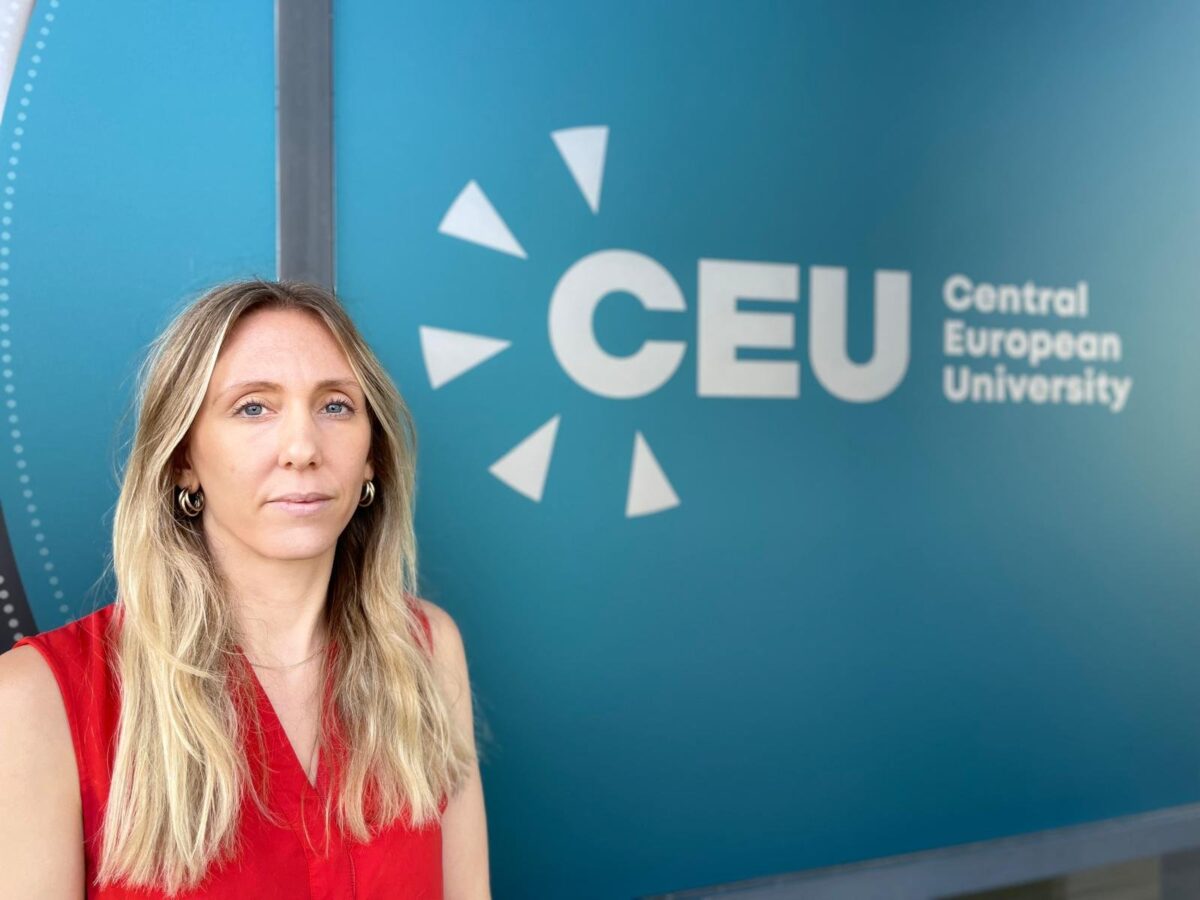
German lawyer Lena Riemer, who works at the Central European University in Vienna and specialises in migration, said Vladimir Putin cannot help but laugh at the internal disagreements, while criticising European politicians’ approach to the issue.
How do you explain recent happenings in Ceuta? Some politicians have accused Spain of legalising tens of thousands of undocumented migrants. Italian foreign minister Antonio Tajani claimed Spain was automatically granting them EU citizenship. What is your view?
That last point is beyond ridiculous. And we need to be careful; the Ceuta situation was complex, so we need to view it through a broader context, including from a historical perspective. The Ceuta crisis did not happen overnight.
It seems that for the past decade, things had been leading towards this very moment. The situation at the Ceuta border had been genuinely critical for years, and crossings had occurred frequently — just never on this scale. For colleagues who had previously worked with people on the ground in Ceuta and brought their cases before the courts, it was more a question of when something like this would happen, for several reasons.
“The situation at the Ceuta border had been genuinely critical for years, and crossings had occurred frequently — just never on this scale.”.
Look at the current situation around the world. For instance, many people in Morocco face severe economic hardship, unemployment and so on. This leads to the younger generation seeking a better life. In this way, we are all in the same boat and I think many of us would make the same decision as them.
This crisis was compounded by other factors. The media played a role. Some say it was a network of people smugglers. I am not particularly convinced by that argument, since smugglers typically aim to make money. Here, it appears that people migrated alone, so it is not clear how a smuggling network could have made much money. Others claim the surge was linked to the legalisation of undocumented migrants in Spain, or that a court ruling in Spain had “opened people’s eyes”.
Some politicians have claimed that the legalisation of undocumented migrants automatically grants them EU citizenship.
No one in their right mind would claim that – it’s utter nonsense! There is research and a substantial body of academic work examining the impact of granting residency status.
Italy has run several immigration regularisation programmes in the past, something its politicians seem to forget when they argue against new ones. The US did the same under Ronald Reagan in the 1980s. There is no solid evidence that these programmes encourage more people to try to enter the country irregularly in the future. In fact, the opposite has often happened: irregular migration numbers have tended to fall, because giving people legal status and stability reduces the incentive to live and work in the shadows.
Moreover, under this specific Spanish programme, people can apply for regularisation only under very specific circumstances, applying only to a group of people who entered the country at a very specific point in time. It was a one-off measure. Based on the facts examined by researchers, it is unlikely to have had anything to do with this.
How do you respond to right-wing politicians who say Spain opened Europe’s borders?
They are like kindergarten children. What we are really seeing here are political actors such as EU migration commissioner Magnus Brunner exploiting the situation to point the finger at Spain, which has taken a somewhat different path from other European countries. Ceuta was a welcome opportunity to say, “you are wrong, this is your fault,” and thereby justify a hardline approach.
There were calls to exclude Spain from Schengen…is that even possible?
No. The EU’s Schengen Borders Code, means everyone who is part of Schengen is bound by it. And there is no exclusion clause. Sometimes I do not know whether it is ignorance or simply deliberate deceit, but excluding a country from Schengen is simply not possible. What you can do is introduce border controls. However, the code contains a provision stating that, under strict circumstances and in the event of an emergency, border controls may be introduced for a very limited period.
Border controls between Schengen countries should be temporary, but controls at the Slovakia-Austria and Germany-Austria borders have been in place for months or years. Is that even legal?
“Any reasonable lawyer looking at this would ask: where do you see the emergency?”
It is a breach of EU law. It is clear and everyone knows it, but the Germans deny it. Ceuta, too, was a welcome opportunity for Schengen members to say: “Another emergency, great! Let us use this to justify more border restrictions.” Any reasonable lawyer looking at this would ask: “Where do you see the emergency?” The overwhelming majority of people in Ceuta were sent back, with only a very small number who will make it to the mainland at all. Being in Ceuta does not mean you can access mainland Spain.
You can only reach mainland Spain by sea. It is not as though you can get there by land.
Indeed, just look at a map. Ceuta has a specific role and legal regime. Being in Ceuta does not mean that you have freedom of movement when travelling. If, for example, you apply for asylum in Ceuta, that does not automatically give you the right to enter Spain. And when you leave Ceuta to enter Spain, you are checked again, and if you do not have documents, you will not be allowed in. So saying, “they are all here in Europe now,” is a populist statement.
“The only group likely to end up in Spain — and hopefully they will — are unaccompanied minors, who require special protection under European and national law.”
These migrants are hundreds of kilometres away. They do not suddenly have the right to enter the mainland. The only group likely to end up in Spain — and hopefully they will — are unaccompanied minors, who require special protection under European and national law. Ceuta is not a place where Spain can guarantee that special protection, so it will probably have to transfer them to the mainland.

EUobserver reported that thousands of children had been left living on the streets.
Spain is thereby violating international law, EU law and national law every single day, because it has an obligation to immediately assess all minors and provide them with accommodation, food, psychological support and healthcare. They should not be there for even one day.
Ceuta has been problematic for many years, with people climbing over the fences there virtually every day. And the EU has been unable to resolve the migration problem more widely, not only in Ceuta, but in other countries too. Why, in your view, is the system not working?
This article continues, but the full version is available only to EUobserver.com subscribers. Visit account.euobserver.com/membership
After a group of migrant men were filmed parading around with a dead baby bottlenose dolphin in Ceuta, a polarized public debate has erupted and an environmental organization is pushing for Spanish prosecutors to investigate the case as a criminal offense.
On Wednesday, Sept. 2, 2026, videos recorded at Trampolín beach showed several people holding a dead baby bottlenose dolphin up as if it were a trophy. It was bleeding above one of its eyes. A Spanish influencer recorded the entire incident, saying they killed the dolphin.
“They killed a dolphin…. They say they killed it. Over there, as you can see, they kill protected species,” said the influencer.
— Remix News & Views (@RMXnews) September 4, 2026
JUST IN: "They killed a dolphin. They say they killed it. Over there, as you can see, they kill protected species."
Some leftists across X and other platforms are claiming these migrants are "allowed to fish."
However, killing a dolphin in Spain and the EU is illegal. It… https://t.co/AB9RSWLRKe pic.twitter.com/MXQEEXpTYM
The calf had been swimming close to shore in an area that has functioned for weeks as an informal settlement for the migrants who arrived in late July. Local reporting and an environmental group say the animal was taken from the water and later appeared dead or dying.
The Ceuta-based association Defense of Urban Trees, Biodiversity, and the Environment (DAUBMA) filed a complaint with the Civil Guard the following day. In its statement, the group said the calf arrived near shore alive and disoriented, was forcibly removed from the sea, and was struck on the head with a stick.
— Remix News & Views (@RMXnews) August 25, 2026
5 migrants tried to gang rape a 12-year-old girl as she screamed for help, said locals in Ceuta who stopped the attack.
"There were five against a 12-year-old girl. She was a little girl, they were taking off her pants. She was screaming, screaming, screaming. She was… pic.twitter.com/g97pj8phUR
DAUBMA submitted photographs and videos that, it said, show a bleeding wound near one eye and people attempting to wipe blood from the animal. The association asked for those visible in the footage to be identified, for an investigation to be opened, and for the case to be sent to Spain’s Environmental Prosecutor’s Office.
The association argued the events could constitute both animal cruelty resulting in death and an offense against a protected species.
— Remix News & Views (@RMXnews) August 10, 2026
BREAKING: A Moroccan migrant wearing only his underwear snuck into a sleeping Spanish woman's bed early in the morning in Ceuta.
"I live in the center on the fifth floor, mind you… He jumped onto my bedroom balcony. He came into my bedroom and got into my bed. I thought… pic.twitter.com/8cs7rasXSv
A beach-cleaning worker from the company Ecoservicios who was present told the group on the beach that they could not treat the animal as a catch and that environmental specialists should be called. After that intervention, the group tried to return the calf to the water. Some accounts say it already appeared lifeless.
Bottlenose dolphins are strictly protected under EU and Spanish law. Intentional capture, harm or killing of cetaceans is prohibited. Recreational fishing licenses issued in Ceuta cover only specified fish and cephalopods; dolphins are not among them. The incident therefore cannot be treated as a case of ordinary and legal fishing.
As of Sept. 4, no official results from an examination of the body, nor any arrests, had been made public.
A Change.org petition calling for identification of those involved also circulated quickly, according to El Faro Ceuta. The beach itself remains crowded with people living in makeshift migrant camp conditions, adding to the tension that has marked Ceuta since the July crossings. DAUBMA and the local marine-conservation group CECAM have used the episode to repeat earlier complaints about repeated case of mutilated dolphins and turtles stranded on the beach which they attribute in part to illegal drift nets. Those earlier cases are separate from Wednesday’s events but form the backdrop against which the association is now pressing authorities to treat this death as a criminal matter rather than an isolated disturbance.
The Civil Guard has the complaint, video evidence, and witness reports. It remains unclear whether an animal-cruelty or wildlife-protection case will be opened.
In the meantime, pressure is growing on the government of Prime Minister Pedro Sánchez, with mass protests involving tens of thousands of Spaniards taking place in cities across the country over the weekend.
The post ‘Animal cruelty’ – Migrants accused of killing baby bottlenose dolphin on Ceuta beach by environmental association, prosecution urged appeared first on Remix News.
The attack targeting a military patrol in the Benzú area of Ceuta last night was a pre-planned ambush rather than a spontaneous clash, according to preliminary findings from the National Police. Now, military sources are speaking of soldiers who are unable to use physical force, have no weapons, and are vulnerable to such attacks in the future.
Regarding the ambush, police investigators at the scene discovered an abnormal accumulation of heavy stones that did not match the natural geology of the terrain. Police believe the projectiles were intentionally stockpiled at the location in advance, setting a trap for a vehicle or convoy passing through the area.
Images of damaged military vehicles have gone viral across social media. Multiple vehicles suffered smashed windshields and other damage in the attack.
— Vito Quiles
#URGENTE | Los inmigrantes ilegales de Ceuta han atacado esta madrugada los vehículos de los militares españoles.
Este es el estado de algunos de los coches y camiones del Ejército que les ha ayudado a instalarse en polideportivos. pic.twitter.com/KnT9RU35AM(@vitoquiles) August 27, 2026
The ambush occurred while troops from the 54th Regular Group of Ceuta were conducting routine patrol duties. Dozens of illegal immigrants ambushed the patrol vehicle with a heavy barrage of rocks. The sudden intensity of the assault severely damaged the vehicle, shattering its windows and trapping the occupants inside.
Surrounded by a high volume of projectiles, the soldiers “feared for their lives,” according to statements later provided to investigators, as reported by Spanish newspaper El Debate. Four soldiers were left injured and officials told the press that sthe all-terrain logistical vehicles were not armored and not equipped to deal with such attacks.
Marco Antonio Gómez, president of the Association of Spanish Troops and Sailors (ATME), stated that the “very serious aggression” shows “our military is helpless.”
“They go without weapons. Our colleagues had to run away to save their own lives.”
Speaking to El Debate, military sources who are directly on the ground in Ceuta say that soldiers have their “hands and feet tied.”
Although the military is working with National Police, the situation remains dangerous. The source said “they have done what is necessary and have intervened in situations in which the illegal immigrants bothered the inhabitants of Ceuta.”
— Remix News & Views (@RMXnews) August 10, 2026
A young Spanish woman is fleeing Ceuta because she no longer feels safe.
"I don't want to feel anxious every time I step outside… It seems awful to me that all this is allowed to happen and nobody can close the border or do anything."
However, she also claims that the… pic.twitter.com/o6KVfhR7p8
However, these military sources complain that various legal frameworks have left soldiers without weapons, and these policies also restrict soldiers from carrying out arrests and using any type of force.
Migrants may even be aware of these restrictions, empowering them to conduct ambush strikes against soldiers with near impunity.
— Remix News & Views (@RMXnews) August 25, 2026
5 migrants tried to gang rape a 12-year-old girl as she screamed for help, said locals in Ceuta who stopped the attack.
"There were five against a 12-year-old girl. She was a little girl, they were taking off her pants. She was screaming, screaming, screaming. She was… pic.twitter.com/g97pj8phUR
Since the attack, 12 suspects have been taken into custody at the scene by National Police’s Prevention and Reaction Unit (UPR). Some migrants reportedly tried to evade arrest by jumping into the sea. Reinforcement from the Civil Guard also helped secure the perimeter.
The Union of Military Troops (UMT) issued a statement expressing its “strong rejection and indignation,” stating they had warned about the conditions facing troops already ten days eariler.
The National Police investigation remains active as authorities work to trace all remaining individuals involved in the ambush.
The post ‘Our military is helpless’ – Migrant ambush that targeted military vehicles in Ceuta was pre-planned, claims National Police appeared first on Remix News.