❌

Normal view

Germany Protects Deutsche Börse as EU Ministers Agree Reduced Financial Supervision Reform

14 October 2026 at 20:05

EU finance ministers have approved a compromise that would expand the European Securities and Markets Authority’s powers while exempting some major trading venues from centralised oversight. The agreement reflects continuing resistance to transferring financial supervision from national authorities to Brussels.

European Union finance ministers have reached an agreement to expand centralised supervision of financial markets, but Germany has secured provisions allowing important parts of Deutsche Börse to remain under national oversight, substantially narrowing the European Commission’s original reform proposals.

The compromise, agreed at a meeting in Luxembourg on 9 October, would transfer responsibility for supervising selected trading venues, clearing houses and securities settlement institutions to the European Securities and Markets Authority (ESMA).

However, the agreement introduces exemptions and thresholds that reduce the number of institutions automatically subject to direct European supervision.

The result is a significant political compromise between governments seeking deeper financial integration and those reluctant to surrender oversight of nationally important market operators.

Berlin secures its exemption

The most contentious element of the negotiations concerned Deutsche Börse, the German financial-market group that operates the Frankfurt stock exchange and provides trading, clearing and other financial infrastructure services.

Germany opposed arrangements that would place all major market operators under direct ESMA supervision, arguing that institutions with predominantly domestic activities should continue to be regulated nationally.

The agreed compromise refines the criteria for determining which trading venues qualify for centralised oversight.

These conditions allow certain Deutsche Börse operations to remain outside the new supervisory regime.

The exemption had already become a point of contention during negotiations among European governments.

As EU Today reported in June, Berlin had sought to protect Deutsche Börse from mandatory European supervision despite Germany’s broader support for integrating EU capital markets.

The October agreement formalises a narrower approach within the Council’s negotiating position, although the legislation remains subject to approval by the European Parliament.

Europe’s fragmented financial markets

The European Commission has repeatedly argued that fragmented national supervision weakens the EU’s ability to compete with financial markets in the United States.

Although the Union operates a single market, many financial institutions continue to face differing regulatory interpretations, procedures and supervisory relationships across member states.

These differences can increase operating costs and discourage financial businesses from expanding across borders.

The Market Integration and Supervision Package is intended to simplify those arrangements and strengthen common oversight of financial infrastructure with significant cross-border activity.

Under the Council’s position, ESMA would assume direct supervision of selected trading platforms and institutions involved in clearing and securities settlement.

Such institutions perform essential functions in financial markets, including managing transactions, transferring securities and controlling risks between counterparties.

Differences in supervisory arrangements can complicate the operation of financial services that increasingly function across national borders.

The Commission argues that greater consistency would allow European capital to move more efficiently between member states and provide businesses with improved access to investment.

Compromise reduces original ambitions

The Commission’s original approach envisaged broader centralisation of supervisory responsibilities.

The Council agreement of 9 October introduces more restrictive criteria governing the institutions that would fall under ESMA’s direct authority.

In addition to the treatment of trading venues, ministers agreed that direct supervision of crypto-asset service providers should initially concentrate on businesses with the most significant cross-border operations.

The Council also supported changes to ESMA’s governance arrangements, including the creation of a full-time executive board.

The proposed board would strengthen the authority’s ability to make supervisory decisions independently of individual national regulators, while preserving mechanisms for cooperation with those authorities.

The compromise also introduces arrangements allowing national supervisors collectively to challenge certain decisions.

These provisions reflect concerns about concentrating regulatory powers within an institution that must oversee financial businesses operating under different national legal systems.

Why capital markets matter for European investment

The supervision reforms form part of the EU’s broader Savings and Investments Union initiative.

European policymakers want to increase the availability of private capital for companies investing in technology, defence, infrastructure and industrial development.

The Union has substantial household savings, but much of that money remains in bank deposits or is invested outside the European economy.

Companies seeking capital for expansion may consequently face higher financing costs or more limited investment opportunities than comparable businesses operating in larger and more integrated markets.

The Commission’s Savings and Investments Union programme seeks to improve access to finance and make cross-border investment more attractive.

Financial-market supervision represents only one element of that programme.

Differences in taxation, insolvency law, national investment products and corporate governance requirements also influence where investors allocate their money.

Nevertheless, regulators regard consistent supervision as an important condition for reducing fragmentation.

Parliament faces a political decision

The agreement reached by finance ministers does not conclude the legislative process.

The European Parliament must adopt its position before negotiations can determine the final provisions.

Parliamentary discussions could revisit the exemptions secured by Germany and the criteria determining which institutions fall under direct ESMA supervision.

The debate will expose differences over whether European financial integration should proceed through incremental reforms or a more substantial transfer of regulatory authority.

Governments supporting national exemptions argue that supervision should reflect the actual geographic scope of a company’s activities.

Supporters of broader European oversight contend that major trading businesses can influence financial markets beyond their home jurisdictions even when individual operations appear predominantly domestic.

The Deutsche Börse exemption has become a prominent example of the conflict between those positions.

Europe’s largest economies broadly support the objective of deeper capital markets, but remain divided over the institutional powers needed to achieve it.

The final legislation will determine whether the expanded responsibilities granted to ESMA are sufficient to reduce fragmentation or leave important parts of Europe’s financial infrastructure operating under substantially different national supervisory systems.
NATO’s “Theory of Victory”: A War Beyond the Plan

14 October 2026 at 19:49

Click to see the full-size image

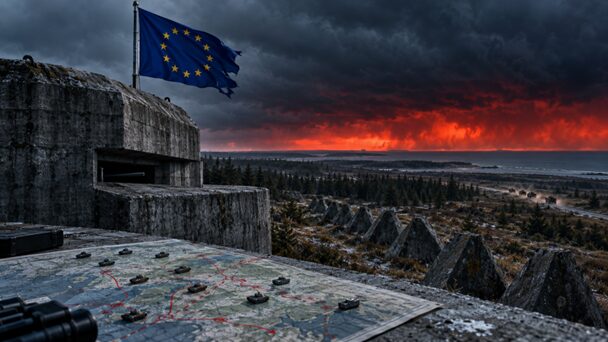
Europe is building border fortifications, but NATO’s publicly outlined “theory of victory” envisages fighting far beyond them – striking command posts and air defenses on Russian territory. Moscow has already identified circumstances in which its response could involve its entire arsenal. Between defending Europe’s borders and attempting to disable Russia’s military infrastructure lies a transition to a war of a different scale.

What Warsaw Put on the Table

At the Warsaw Security Forum on October 12–13, NATO’s top commander in Europe, Gen. Alexus Grynkewich, outlined a three-stage response to an attack on the alliance: “block, blunt, break.” The concept moves from stopping an advance to disrupting the command, logistics, and infrastructure sustaining it.

“Block, blunt, break.” NATO has three words for winning a war with Russia. Keeping that war limited will take more than a slogan


Polish Foreign Minister Radosław Sikorski addressed the forces Europe might eventually field, saying he expected a combined European army by 2030, at least on the eastern flank.

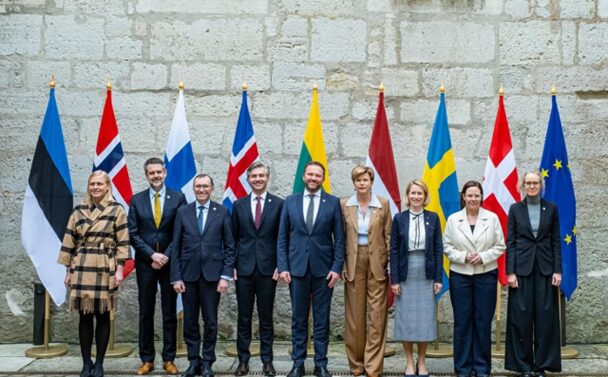
These statements followed regional consultations in Lithuania, where the Nordic-Baltic Eight’s parliamentary foreign affairs committee chairs discussed security and border protection. Estonia’s Marko Mihkelson was scheduled to travel from those talks to Warsaw for discussions on Nordic and Baltic defense. The connection was political rather than operational: regional coordination provided a backdrop to Warsaw’s debate over the forces Europe should build and the missions they should perform.

A united front for the cameras. Whether Europe can field one in a war is another question

Grynkewich’s concept gave that debate a concrete military scope. Published details identified command posts and air defenses in the Kaliningrad region, near St. Petersburg, and in Belarus as potential targets. Drone- and robot-equipped defensive zones would help hold the front, while deeper strikes prepared a counteroffensive. Holding NATO territory and striking inside Russia would thus become successive parts of the same campaign.

Grynkewich says NATO does not seek Russia’s strategic defeat. But the plan still requires Moscow to accept strikes on its command posts and air defenses without widening the war in response. That is not a condition NATO can dictate. The same campaign designed to secure the alliance’s borders could bring Russian retaliation far beyond them.

Moscow Has Stated Its Position

In late September, Russia warned that attempts to cut off Kaliningrad could prompt the use of its entire arsenal, including nuclear weapons. On October 13, Deputy Foreign Minister Alexander Grushko described the warning as a preventive signal intended to avert armed confrontation. Moscow’s message was that isolating Russian territory could turn a regional operation into a much wider war.

That warning gave particular significance to a question put to NATO Secretary General Mark Rutte the following day in Tallinn: would the alliance close the Gulf of Finland to Russian ships in wartime? Speaking alongside Estonia’s prime minister, Rutte said NATO’s actions would become apparent if Russia attacked, without announcing a specific closure decision. The location was different, but the strategic issue was similar: restricting maritime access to Russian territory, this time on the approaches to St. Petersburg.

“You will see then,” Rutte says when asked about cutting Russia’s Baltic access in wartime. Apparently, escalation is a surprise best saved for the taxpayer


Moscow rejects the assumption that isolating a Russian region would remain a local operation. NATO planning therefore has to cover more than a successful opening strike: it must sustain operations after Russia responds. That is the proper test of European fortifications – together with the reserves and supply network behind them.

Fortifications Need Reinforcements

Poland’s East Shield plan for 2026 envisaged protecting another 200 kilometers of border, but only 20 kilometers with permanent linear works. The remainder would rely on pre-positioned construction materials.

Estonia plans 600 small bunkers by the end of 2027. Such positions must be occupied, supplied, and reinforced in time.

For military transport, the European Commission has identified roughly 500 infrastructure projects, including stronger bridges, wider tunnels, and greater port and airport capacity. It also identifies shortages of rail wagons and ferries for equipment. Around €1.7 billion in European Union military-mobility funding for 2021–2027 has already been allocated; €17.65 billion was proposed for the next budget period. But an allocation is not a completed transport route.

History illustrates the distinction. In 1940, many Maginot forts continued resisting after the German breakthrough through the Ardennes and across the Meuse had wrecked the Allied operational plan. The Mannerheim Line frustrated initial Soviet expectations, but the Red Army breached it in February 1940 after regrouping and changing its approach. Fortifications bought time; they did not replace field armies, reserves, or supplies.

Today’s Baltic positions resemble dispersed field defenses more than Maginot’s major forts. Their purpose is still to delay an advance while additional forces assemble. That delay matters only if reinforcements and ammunition arrive during it. Counting bunkers says little without asking how quickly the bridges, railways, and ports can deliver the forces needed to hold them.


The Plan Precedes the Systems

Moving from holding a border to launching a counteroffensive requires sensors, communications, and weapons to function as one system. Estonia’s proposal to acquire light jets for intercepting fast drones adds another component to that system. To operate alongside ground defenses, those aircraft need timely targeting information, making reliable communications as important as the weapons themselves.

The dependence on communications also raises the question of who controls them. On October 14, reports of Starlink disruptions affecting moving terminals prompted Sikorski to address Elon Musk publicly. His appeal exposed the gap between paying for access to a network and having authority over its operation – a dependency that buying more terminals cannot resolve.

Europe’s planned answer is to build its own satellite capabilities. Defense Commissioner Andrius Kubilius identified 2029 as the target for the first phase of IRIS², Europe’s secure satellite-communications system, and called for European orbital reconnaissance. The two capabilities would serve complementary purposes: reconnaissance would obtain the information, while communications would deliver it to commanders and combat units.

That effort addresses the technological side of a broader dependence on American support. The availability of U.S. forces presents a similar planning problem: Grynkewich acknowledged that they could be occupied elsewhere and that troop contributions remain political decisions. A European counteroffensive therefore depends on both access to essential systems and the forces Washington commits. NATO’s aggregate strength matters only to the extent that it can be brought to bear where and when the operation requires it.

If the War Continues

These dependencies converge in Europe’s rear areas. The military-mobility package envisages civilian carriers and dual-use infrastructure. Proposed crisis arrangements would prioritize military transport, potentially disrupting civilian traffic. Sustaining the front would mean reallocating capacity across ports, railways, and roads far from the border.

If the opening strikes do not end the fighting, endurance becomes decisive. Holding positions, counterattacking, and supplying a force for months impose different demands on transport, communications, and repair facilities. Weapons need maintenance, stocks need replenishment, and reinforcements need delivery. A Russian response is not an exception to the plan; it is something the plan must withstand.

Public promises of decisive action remove none of these dependencies. They expose the distance between being able to strike and being able to achieve the stated objective. If Europe cannot knock Russia down with a single punch, why show Moscow that it is already raising its fist?

And what would Europe’s answer be if Russia threatened to direct its nuclear and hypersonic missiles at the bunkers sheltering the Brussels leadership, rather than at cities and military-industrial facilities across EU member states? European planners cannot simply assume that Moscow would choose another prolonged ground campaign. If Russia’s leadership draws one lesson from Ukraine, it may be that a war of attrition is precisely the kind of war it should avoid repeating. Brussels is announcing how it intends to fight. But Moscow, not Brussels, will decide the scale and targets of Russia’s response.


MORE ON THE TOPIC:

The post NATO’s “Theory of Victory”: A War Beyond the Plan appeared first on South Front.

Europe’s Energy Hypocrisy, Russian LNG Profits and US Dependence

By: aletho
14 October 2026 at 17:56
By Freddie Ponton | 21st Century Wire | October 12, 2026

For four years, Europe presented its energy break with Russia as a strategic and moral necessity, with Brussels expanding sanctions, promising to cut Moscow’s revenues and preparing a complete ban on Russian liquefied natural gas. Yet European companies bought more LNG from Russia’s Yamal project in the first nine months of 2026 than in the same period of 2025.

EU ports received a record 12.18 million tonnes of Yamal LNG between January and September 2026, an increase of 9.5% over the same period in 2025. The gas arrived in 167 cargoes, roughly one every 1.6 days. The EU received 85% of Yamal’s recorded deliveries by volume even as the project’s worldwide shipments fell by 1.3%.

Urgewald, a German environmental and human rights organisation, placed the estimated benchmark value of those deliveries at €7.88 billion, using cargo volumes and monthly European TTF gas prices rather than disclosed contract payments. European leaders spoke of economic separation while EU ports remained the destination for a multibillion-euro Russian LNG trade.

Sanctions that preserved trade

The EU’s ban on Russian LNG under existing short-term contracts took effect on 25 April 2026. Eligible long-term agreements signed before 17 June 2025 could continue supplying Europe through the end of 2026, with the prohibition taking effect on 1 January 2027. Brussels could announce the coming break while established contracts kept Russian cargoes moving.

Five months after the ban on imports under eligible short-term LNG contracts took effect, EU ports received 792,440 tonnes of Yamal LNG in September, slightly more than a year earlier.

Yamal sold most of its output under long-term contracts signed before the war. TotalEnergies agreed to buy 4 million tonnes a year directly from the project, CNPC contracted 3 million, Germany’s SEFE inherited a 2.9 million tonne agreement, and Spain’s Naturgy held another for 2.5 million tonnes. Novatek sold part of its own allocation through separate agreements with TotalEnergies, Shell and Gunvor, now known as Centalion Group Ltd, These contracts kept major European energy companies commercially tied to Yamal after the political rupture with Moscow, securing supplies that could be sold or traded through their international portfolios, with destination flexibility varying by agreement.

TotalEnergies chief executive Patrick Pouyanné confirmed that its Yamal agreements were linked to Brent crude. During periods of extreme volatility, those long-term contracts secured supplies that could cost less than replacement gas on the European spot market. When spot prices outpaced oil-linked purchase prices, the gap created an opportunity to earn more from selling the contracted cargoes.

Buyers could exploit that opportunity through global portfolios spanning ships, terminals, storage facilities and supplies from several producing countries. They could exchange cargoes, redirect available gas and meet customer obligations from alternative sources, freeing supplies for sale in markets offering stronger returns.

Russian officials acknowledged that portfolio buyers could swap Yamal supplies against gas from other sources and direct available cargoes towards the most lucrative markets. A Yamal cargo could fulfil one obligation while freeing another supply for sale elsewhere, allowing traders to earn from price differences across markets.

The contracts that bound companies to Russian suppliers also secured access to gas that could cost less than replacement cargoes bought at crisis prices. Keeping those agreements meant preserving both the supply and the trading opportunities it created.

The profits behind the policy

TotalEnergies owns 20% of Yamal LNG and holds 19.4% of Novatek, the project’s controlling shareholder. It also buys and markets Yamal cargoes, giving it commercial interests as both a shareholder and a cargo trader.

In July 2026, chief executive Patrick Pouyanné told analysts that lifting and selling Yamal cargoes generated an average of about $400 million annually. TotalEnergies had direct access to the cash booked through its UK trading entity. The income fluctuated with Brent crude prices because the contracts were linked to oil.

TotalEnergies also retained rights to dividends through its ownership positions, although sanctions limited its ability to transfer those funds from Russia to Europe. Pouyanné confirmed that some cash flows had been distributed without disclosing how much had been repatriated, while the company’s Novatek dividends, which he had valued at around $600 million annually in 2024, had previously remained stuck abroad.

The commercial incentive extended beyond the immediate Yamal income, as continued deliveries preserved access to contracted gas while removing Russian LNG before replacement supplies became available could drive prices higher across the wider market. Pouyanné warned at a French Senate hearing that replacing those supplies would force Europe to pay more, and told analysts in April 2024 that sanctions on Yamal would benefit TotalEnergies’ global portfolio by pushing LNG prices higher.

TotalEnergies had commercial interests under either outcome, as continued Yamal trade generated sales income while a sudden prohibition could tighten supply and raise the value of gas sold elsewhere in its portfolio. Continued access and greater scarcity offered different routes to income, leaving the company with a potential financial benefit even if Russian deliveries stopped.

A French Senate inquiry called in 2024 for France to lead efforts to sanction Russian LNG and end its own imports as soon as possible, yet two years later TotalEnergies was still earning about $400 million annually from Yamal sales.

Germany’s retained Russian contract

Germany’s state-owned energy group SEFE inherited a contract for about 2.9 million tonnes of Yamal LNG annually through the former Gazprom Marketing & Trading business, after Berlin nationalised its parent company, Gazprom Germania, in 2022. The group became Securing Energy for Europe, retaining the Russian supply agreement under German state ownership.

SEFE’s trading operation later attributed substantial profits across its LNG portfolio to contractual flexibility, freight optimisation and arbitrage, while its 2024 financial report recorded £411.2 million in EBITDA and £199.4 million in profit after tax. Those figures covered SEFE Marketing & Trading and its subsidiaries, without isolating the contribution from Yamal.

That flexibility extended to its Indian supply obligations, for which Reuters reported that the business had arranged cargoes from other sources to reduce freight costs. SEFE’s chief executive also explained that it could retain Yamal supplies in Europe and serve India from elsewhere in its portfolio when doing so was cheaper, although that account described an available trading option rather than documenting individual cargo swaps.

Under German state ownership, SEFE retained a long-term agreement for about 2.9 million tonnes of Yamal LNG annually, even as Europe sought to reduce its dependence on Russian energy. Berlin’s nationalisation changed the ownership of Gazprom’s former German business, but the Russian supply agreement remained in place, preserving its commercial ties to Yamal inside a state-owned international trader.

Shell’s phased withdrawal

On 8 March 2022, Shell announced a phased withdrawal from Russian hydrocarbons, including oil, gas and LNG, but later acknowledged that long-term contractual commitments remained despite the end of its spot purchases of Russian LNG.

Among those commitments was a 2015 agreement with Novatek for approximately 900,000 tonnes of Yamal LNG annually, with a term exceeding 20 years. In February 2023, a Shell spokesperson confirmed that the company was still receiving Russian LNG cargoes under that contract, almost a year after announcing its withdrawal.

Shell’s Yamal agreement sat within a global LNG portfolio, with its cargoes passing through a contractual transhipment point at Montoir-de-Bretagne in France. Across the wider business, Shell used its international operations to capture differences in regional demand and prices, and chief executive Wael Sawan attributed strong late-2023 trading results to arbitrage between eastern and western markets. Those results demonstrate the commercial value of portfolio flexibility, without identifying how much came from Yamal.

Naturgy and former Gunvor also retained access to Yamal supplies through long-term agreements, with Naturgy contracted for 2.5 million tonnes annually and Centalion Group Ltd,  for about 500,000 tonnes through Novatek. Reporting on Yamal’s portfolio buyers describes how companies could exchange those supplies with gas sourced elsewhere and direct cargoes towards more lucrative markets.

The contracts therefore carried commercial opportunities alongside their obligations, preserving access to gas that could be sold or exchanged within wider portfolios. Remaining in the trade could generate value even where companies presented their continuing purchases as a contractual constraint, although that potential should not be confused with a verified profit from each agreement.

Russian gas beyond Nord Stream

On 7 February 2022, then US President Joe Biden stood beside German Chancellor Olaf Scholz and said that a Russian invasion would bring Nord Stream 2 to an end. Asked how Washington could achieve that when Germany controlled the project, he maintained that the United States could ensure the outcome without explaining the mechanism.

Germany halted Nord Stream 2’s certification on 22 February 2022, preventing a pipeline that had never entered commercial service from beginning operations. Nord Stream 1 had already stopped delivering gas when explosions ruptured three of the system’s four pipeline strings on 26 September 2022, leaving only one Nord Stream 2 string intact. With the Nord Stream route out of operation, Russian LNG continued reaching European terminals through the contracts held by companies such as TotalEnergies, SEFE and Shell.

Yamal had begun exporting LNG in December 2017, almost five years before the Nord Stream explosions, and its seaborne supply network survived the loss of the pipelines. European companies continued buying Russian gas under long-term contracts, receiving by-sea supplies that remained commercially valuable even as the direct pipeline connection between Russia and Germany stood idle.

America captured the market

The decline of Russian pipeline supplies opened a larger European market for American LNG, and Washington worked with Brussels to expand the trade. In their 25 March 2022 agreement, the United States pledged to work towards at least 15 billion cubic metres of additional LNG for the EU that year, including supplies from international partners, while maintaining a regulatory environment that would support additional export capacity. The European Commission committed to working with member states to secure demand for approximately 50 billion cubic metres of additional American LNG annually until at least 2030, giving the effort to reduce Russian dependence a long-term market for US supplies.

American deliveries to the EU rose from 22 billion cubic metres in 2021 to 56 billion in 2022, exceeding the initial expansion target. By the second quarter of 2026, the United States supplied 63.2% of EU LNG imports, with Russia second at 17.3%. Europe’s retreat from Russian pipeline gas had been accompanied by a US-European policy effort to expand American supply, while Russian LNG retained a substantial place in the same market.

Dependence became leverage

Europe’s reliance on American supplies extended beyond LNG, giving Washington leverage over another essential fuel when the Trump administration asked the EU to release 120 million barrels of emergency diesel over six months. Washington presented reserve releases as an alternative to restricting American diesel exports, a threat with considerable force because the United States supplied around half of the EU’s diesel imports in August 2026.

Washington was pressing Europe to release finished diesel that could reach consumers without further refining, while its own emergency contribution consisted of crude offered to companies under loan arrangements requiring repayment in oil with additional barrels. The US Department of Energy’s September solicitation explicitly built replenishment into those contracts, leaving Europe under pressure to draw on immediately usable fuel while American releases carried a contractual obligation to restore its crude reserves.

The pressure was followed by a G7 agreement on 2 October 2026 to coordinate the release of 100 million barrels over four months, with a substantial diesel release brought forward into the first 20 days. G7 leaders also reaffirmed their commitment to refrain from energy export restrictions against one another, placing continued access to supplies alongside the agreement to draw down emergency stocks.

Washington had helped build a larger European market for American energy as part of the effort to reduce dependence on Russia, then used the prospect of restricting diesel exports to press European governments to release their reserves. Europe’s reliance on an allied supplier had left it exposed to pressure over access to fuel, with emergency stocks becoming part of the negotiation over keeping those supplies flowing.

A credibility crisis

European leaders need to explain how their effort to cut Russia’s energy revenues can be reconciled with rising Yamal deliveries to EU ports and European traders earning income from the cargoes. TotalEnergies’ disclosure of about $400 million in annual income makes continued trade harder to present solely as an unwanted contractual obligation, when the same agreement also sustained a valuable business. Compliance with the sanctions timetable does not resolve the political contradiction; it shows how much commerce that timetable allowed to continue.

Brussels also committed to building long-term demand for American LNG, while Washington later demonstrated its willingness to use fuel exports as leverage over European governments.

Whose interests are being served when Europe distances itself from Russian pipeline supplies, remains a paying customer for Russian LNG and becomes more exposed to American pressure?

European leaders owe their citizens an explanation of why Russia remained an acceptable supplier for profitable LNG contracts while economic separation was presented as a strategic necessity. They must also explain whose interests were served by replacing that dependence with greater exposure to Washington.

Posting About This 'Robot Sexual Assault' in Germany Could Be a Crime

14 October 2026 at 17:15
German robot | Cologne Police

We've reached the point in techno-dystopia where autonomous humanoid robots are out assaulting girls in the street—or so some coverage of a recent incident in Cologne, Germany, might have you believe. But dig into what really happened, and it's human actions that appear more worrying.

For dystopian police-state flavor, we've got Cologne cops warning that simply commenting about this on Facebook in an unapproved way could be criminal. Without specifying exactly what kinds of comments are off limits or what law might be broken, the North Rhine-Westphalia Police of Cologne (Polizei NRW Köln in German) warned that social media comments about what happened could cross the line and potentially be a criminal offense.

Then there are the humans who were operating the robot that made lewd gestures at passersby and stands accused of grabbing the butt of a 16-year-old girl on a city street in Cologne around midnight. From the looks of things, the humans—not some artificial intelligence system—were in control.

This doesn't appear to be a case of an AI humanoid robot going rogue and getting pervy, but some teenagers engaging in a performance or prank that may have gone too far.

I say may here because it's not entirely clear what happened. There is video footage showing the robot—dressed in gold chains and a fake mustache like some sort of 1980s sleazeball—thrusting in a sexual manner and making jerking-off gestures in front of people gathered on city sidewalks. (Some of them appear annoyed or alarmed; some laugh.) But none of the videos that I could find clearly show any groping. We do see the robot bumping into people, but it's not entirely apparent what was touched or how purposeful these collisions were.

Maybe the alleged "sexual assault"—which is technically the correct term for a nonconsensual butt grab, I guess, but still seems a bit too strong—was totally intentional. Or maybe this is a case of clumsily controlled technology brushing against someone in a way that felt violating but was nonetheless an accident.

What appears to be beyond a doubt is that the robot was being made to engage in lewd gestures, which were played for laughs by teenagers (one 16 and one 19, according to police) who were filming these encounters and posting them to social media.

Is it a crime to make your mustachioed robot thrust its pelvis at passersby?

I don't know enough about German sexual harassment law to say whether this qualifies. In any event, Cologne police have not announced any charges yet; they've only stated that they're investigating on suspicion of sexual harassment and that they have confiscated the robot and the phones of the two boys suspected of operating it.

We probably don't want sleazebots just going around making obscene gestures in public, whether of their own volition or controlled by humans. But, in the U.S. at least, sexual harassment requires some things beyond just making a crude gesture. Laws vary by state, and by the context in which the alleged harassment takes place, but it generally has to be pervasive, severe, or carried out with a specific intent. I don't think this robot's actions would qualify (though there are perhaps other charges that could be brought, involving disturbing the peace or something like that).

But I wish people would chill out with the breathless coverage that attempts to make this into some sort of super grave and alarming incident. If it turns out these two teens did deliberately instruct their robot to touch a girl's butt, that's certainly not OK, and should be dealt with in whatever manner we might deem just if a teen did so directly. But we're not looking at rogue robots attacking girls on the street, or at teenagers cruelly directing their tech toy to seriously sexually assault someone while they filmed it. At worst, we're looking at a livestreamer stunt that was in poor taste, not the imminent coming of robot rape squads.

And setting aside the alleged violation of bodily autonomy—which may or may not have been intentional—the other antics of this robot are kind of funny? Can I say that? I don't think we want to create norms where it's OK to take a robot dressed like a movie pimp out on the streets and have him make sexual gestures at people, but…I laughed. Don't tell the German police.


In The News

A woman named Carli Heller was arrested for telling Anthropic's Claude that she was going to shoot up the sheriff's office in Lee County, Florida. Anthropic notified the FBI, which notified local authorities, and she was arrested for making a threat of mass shooting or terrorism, a felony.

"Heller's is at least the third case in the U.S. since August in which messages typed to an Anthropic chatbot ended up with the police, following incidents in San Antonio and San Francisco," reports Devin Pavlou at Straight Arrow News:

The cases raise questions about how private chatbot conversations are, when companies can hand them to police without a warrant, and whether words typed to a machine can be a crime. Eugene Volokh, a First Amendment scholar at the Hoover Institution at Stanford University, told Straight Arrow he doubts they can in this case.…

In the past, Florida courts have required proof that a person meant to threaten or knew the message would be viewed as a threat, according to Volokh, who has taught law for 30 years. He said a jury is unlikely to find that beyond a reasonable doubt.

"I doubt that this is a punishable threat, unless there is evidence that the woman subjectively realized at the time that the message would be communicated to a human being who would perceive it as a threat," Volokh said.

Heller's lawyer, Scott Moore, "said he plans to challenge whether a chatbot message can be a written threat under Florida law," adds Pavlou.


On Substack

Tara Burns has a good/infuriating roundup of recent "sex trafficking" busts that involve no trafficking charges and in which police just charge people with prostitution and seize their cash. Here's just one of multiple examples:

On October 6, Virginia Beach police announced the results of a months-long human trafficking investigation that culminated in September 24 raids on four massage businesses and a residence. Police said their surveillance showed several women living together and traveling between their home and massage businesses. Apparently, when Asian women work and live together it warrants the attention of the ICE led Hampton Roads Human Trafficking Task Force.

Three apparent sex workers (Xiaochung Peng, Xiaoqin Wu, and Ping Zhang) were arrested on charges involving maintaining a bawdy place, aiding prostitution, and using a vehicle in the commission of a crime. Police seized $55,085, four vehicles, phones, computers, and a security DVR.

No trafficking charges were announced, and police did not report identifying a trafficking victim.

Follow the Money: This investigation involved at least seven law enforcement entities, including two SWAT teams, federal investigators, and a federally funded, ICE led regional human trafficking task force.

Burns also points out that new anti-trafficking grant money from the Department of Justice's Office for Victims of Crime gives priority treatment to programs that support immigration enforcement.

"To help meet its mission, OJP may give priority consideration to applications proposing … projects designed to advance" five particular goals, including "directly supporting law enforcement operations (including immigration law enforcement operations)," it says.


Read This Thread

Does algorithmic pricing for apartment rentals cause people to pay higher rent? It's how this technology is used that determines whether outcomes are fair and beneficial to consumers, or potentially harmful, as Eliza Terziev and I write @ReasonFdn https://t.co/ai1p7J6X5z

— Max Gulker (@maxg_econ) October 12, 2026


More Sex & Tech News

• News you can use, if you are someone with a robot kink: Meta's AI agent, Muse, can sext. "While pornographic interactions may not be what users expect from Muse's cuddly mascot, Meta says that X-rated conversations are allowed and don't go against its guidelines," reports Wired.

• The latest COYOTE Rhode Island podcast takes a deep look at the disconnect between rhetoric surrounding anti-trafficking policy and how that policy works in practice—how "state surveillance, carceral feminism, and these policies that just loudly claim to save people are often resulting in measurable catastrophic harm."

• "It wasn't all that long ago that if The New York Post published photographs of an aspiring congressman wearing a leather collar and a chain-link leash, his campaign would have immediately been over," writes Lux Alptraum in The New York Times. "Yet that doesn't seem to be the case for Chris Gallant, the gay, gun-toting former Black Hawk pilot who's running for Congress on eastern Long Island. He still may not win, but these photos alone haven't sunk his chances."

• Sarah Hepola's The Only Thing There Is to Want is "a super fun book line by line," writes Phoebe Maltz Bovy, "but here's one of the best: 'Just what every young man wants in bed: Mrs. Robinson, crying.'"

• When you think of countries that have thrived in the tech sector, Finland might not be the first that comes to mind. But for a while, the Finnish company Nokia dominated the cellphone market. "What happened to this brand, the pride of Finnish enterprise and perhaps the defining commercial contribution of a small, isolated, but determined nation?" Arena mag asks (and answers).

• Derek Thompson interviews Daniel Cox about this new book, Generation Uncoupled. "The book argues that problems with dating and romantic partnership are downstream from the decades-long deterioration of American social and civic life," says Cox. "To the extent that we're experiencing a romantic recession, it is a symptom of this broader problem of social disconnection."

The post Posting About This 'Robot Sexual Assault' in Germany Could Be a Crime appeared first on Reason Magazine.

Germany puts Ukrainian on trial over Nord Stream sabotage

14 October 2026 at 17:04
On the first day of the trial, prosecutors accused Serhii Kuznetsov of being an accomplice to war crimes by committing an attack against civilian infrastructure. Kuznetsov has denied any involvement.

Germany: 2 males with a migration background use robot ‘Ahmed’ to sexually assault young women in Cologne, possible first ever case of a robot used for sexual assault

14 October 2026 at 11:11

Cologne police are investigating an unprecedented incident in which a humanoid robot was allegedly used to sexually harass a 16-year-old girl on a busy city street, with the act filmed and livestreamed. Videos of the assault appear to show two men with a migration background controlling the robot, which they named “Ahmed,” an Arabic name. They also claim the robot is from the multicultural neighborhood of Neukölln in Berlin. 

The case, which has drawn international attention as potentially the first documented instance of a robot being used directly in a sexual assault, has to do with red-and-gold Unitree robot that approached different teenage women. In the videos, which Remix News has compiled into one longer clip, the robot grabs their behinds, makes masturbatory motions, and humps the women. 

The post has been censored on X.

At least one victim, a 16-year-old girl, has filed a criminal complaint.

According to a police statement, the roughly 1.2-meter-tall robot touched the girl on the buttocks and made thrusting motions against her between 11:45 p.m. and midnight on the night of October 10–11, 2026, near the corner of Palmstrasse and Hohenzollernring. 

The girl was with two friends, ages 17 and 18. Officers responding to the scene located a 16-year-old from Wegberg and a 19-year-old companion nearby. The robot was found in the trunk of a Volkswagen where the younger suspect had stowed it; police seized the machine and the pair’s mobile phones. Investigators are examining whether the movements were deliberately controlled via remote control or an app and are treating the matter as a suspected case of sexual harassment.

🇩🇪🔴JUST IN: Asylum seekers and men with a migration background are the main group that should be banned from German swimming pools, according to national police union leader @M_Ostermann. "But in the end, we are always just describing symptoms instead of tackling the root causes. And that is why it is completely clear that those outdoor pools are acting responsibly by simply not letting these groups of people – men, mostly with a migration background, often from the main asylum countries of origin – into the outdoor pools anymore." That is the advice comes after yet another wave of sexual assaults and violence in German pools from migrants. He further writes: "Enough is enough. They are men, and almost always from the main countries of origin for asylum seekers. Year after year, the same headlines, the same incidents, and the same excuses." "Public swimming pools used to be places of carefree enjoyment for children and families. Today, many people avoid them out of fear of violence, harassment, and disrespect." "Enough with the political whitewashing. Those who do not clearly name problems will never solve them. The rule of law must finally make this clear with all due consequence." "Anyone who threatens others, harasses women, or commits violence has forfeited their right as a guest and any claim to understanding. Zero tolerance means zero tolerance – swift proceedings, harsh penalties, and, where legally possible, consistent immigration consequences." "The people living in Germany have a right to safety. They have a right to public spaces being what they once were again: places for families and children – not for intimidation, violence, and disrespect." Follow: @RMXnews

— Remix News & Views (@RMXnews) June 29, 2026

The 16-year-old and his companion are accused of filming the encounter, streaming it live on social media, and providing commentary. 

Many of the victims appear to be German women. Some of them laugh or appear to be amused, but others appear uncomfortable or scream.

Media reports speculate the model is the Unitree R1-series model, priced around €5,000, which can walk, respond to voice commands, and be remotely operated or programmed with custom movement sequences. Experts have noted that the specific thrusting motions are not standard factory behaviors.

As Remix News has reported, many public areas have become insecure, featuring robberies, rapes, assaults, and other threats. However, for women, the threat level has gone up substantially, including from random street harassment due to mass immigration.

🇩🇪"I hate Berlin. Berlin is sh*t." A thief stole this young German woman’s phone and then told her, "in a mixture of English and German, that he would only give it to me if I had sex with him." This woman was assaulted in Berlin’s famed Görlitzer Park, where migrants gang raped a woman in 2023.

— Remix News & Views (@RMXnews) June 6, 2026

🇩🇪”You have 2 options. Either you give me your number right now… or we stay here until 5 a.m. and I’ll follow you all the way home to your house." A young German woman is relentlessly harassed and threatened by a migrant man. https://t.co/8qq3GJ203S

— Remix News & Views (@RMXnews) November 25, 2025

The post Germany: 2 males with a migration background use robot ‘Ahmed’ to sexually assault young women in Cologne, possible first ever case of a robot used for sexual assault appeared first on Remix News.

Wie viel Geld hat Deutschland tatsächlich für die Unterstützung der Ukraine ausgegeben?

By: A A
14 October 2026 at 12:46

Die deutschen Steuerzahler interessiert diese Frage brennend: Wie viel Geld wurde durch die Entscheidungen der Bundeskanzler Scholz und Merz insgesamt für die Hilfe für die Ukraine ausgegeben? Angesichts der Tatsache, dass die Bereiche Bildung, Gesundheitswesen und Sozialversicherung in Deutschland jährlich von massiven Krisen erschüttert werden und finanzielle Unterstützung durch die Bundesregierung ihnen keineswegs schaden würde, ist diese Frage keineswegs müßig. Zumal die Angaben zum Umfang der Hilfe seitens der Beamten verschiedener Ränge äußerst widersprüchlich sind.

Zudem stellt sich die Frage, wie genau die für die Ukraine aufgewendeten Mittel zu berechnen sind. Rein militärische Lieferungen? Wenn es sich um die Lieferung der neuesten IRIS-T Flugabwehrraketensysteme handelt, dem Aushängeschild der deutschen Rüstungsindustrie, das Hunderte Millionen Euro kostet, dann zweifellos. Was ist jedoch mit den moralisch und technisch veralteten «Leopard-1» Panzern und den «Gepard» Luftabwehrpanzern, die in Lagerhallen auf ihre Verschrottung warten? Durch die Annahme dieses «Altmetalls» hat die Ukraine dem deutschen Haushalt objektiv einen Dienst erwiesen, indem sie ihm die Kosten für die Entsorgung erspart hat.

Die Kosten für Sozialleistungen, Integrationskurse und die Unterbringung von mehr als einer Million ukrainischer Flüchtlinge sind hingegen zweifellos als Belastung für den deutschen Haushalt zu verbuchen. Ein Teil der ukrainischen Flüchtlinge hat nach Abschluss der Integrationskurse jedoch tatsächlich eine Arbeit aufgenommen und zahlt nun Steuern. Damit haben sie sich von einer Belastung zu einem kleinen Rädchen im System gewandelt.

Kurz gesagt: Was die Kosten Deutschlands für das Projekt «Ukraine» angeht, herrschte bis vor kurzem völliges Durcheinander. Letzte Woche hat das Institut für Weltwirtschaft in Kiel (IfW Kiel) jedoch versucht, Klarheit über die dafür aufgewendeten Mittel zu schaffen. Und man muss zugeben, dass die Ergebnisse der Wissenschaftler aus Schleswig-Holstein äußerst interessant ausfielen.

Von den €101 Mrd. , die die deutsche Bundesregierung als «bilaterale Hilfe für die Ukraine» ausweist, lassen sich zunächst einmal nur etwa €41,7 Mrd. der Kategorie der tatsächlichen bilateralen Hilfe zuordnen. Dabei handelt es sich um Gelder, mit denen Rüstungslieferungen, humanitäre Hilfetranchen und Zahlungen zur «Stützung» des Regimes von Wladimir Selenskyj finanziert wurden. Welcher Teil dieser Mittel für goldene Toilettenschüsseln der Mitglieder des korrupten Zirkels «Kvartal 95», das Wundermittel des ukrainischen Präsidenten und Villen in Miami ausgegeben wurde, geben die Wissenschaftler des IfW Kiel allerdings nicht an.

Bekannt ist hingegen, dass fast €36 Mrd. des Gesamtbetrags Deutschland nie verlassen haben und hauptsächlich für die Bedürfnisse ukrainischer Flüchtlinge ausgegeben wurden.

Diese Zahl umfasst Sozialleistungen (€27,45 Mrd.) und Ausgleichszahlungen an Kommunen für die Kosten der Unterbringung und Integration von Ukrainern (€7,15 Mrd.). Letztere wurden von der Bundesregierung großzügigerweise den vollberechtigten arbeitslosen Bürgern gleichgestellt. Weitere €1,3 Mrd. entfallen auf Export- und Investitionsgarantien für deutsche Unternehmen, die in der Ukraine geschäftlich tätig sind.

Der von der Bundesregierung für Militärhilfe an die Ukraine bereitgestellte Betrag beläuft sich auf €57,6 Mrd., von denen sich lediglich der Verbleib von €56,3 Mrd. nachvollziehen lässt. Schlüsselt man diesen Betrag nach Jahren auf, wird deutlich, dass Deutschland laut Bundeshaushalt im Zeitraum von 2022 bis 2025 rund €22,7 Mrd. für Militärhilfe bereitgestellt hat. Für das Jahr 2026 wurden weitere €11,6 Mrd. bereitgestellt.

Weitere €22 Mrd. sind Verpflichtungen zur militärischen Hilfe für Kiew. Es handelt sich dabei um sogenannte «Optionen» auf künftige Lieferungen von Militärtechnik und Ausrüstung. Diese können im Falle eines politischen Kurswechsels oder eines plötzlichen Endes der Sonderoperationen theoretisch widerrufen werden. Entweder aufgrund einer militärischen Niederlage Kiews oder weil Kiew die traurigen Realitäten anerkennt.

Tatsächlich sind nur €7,4 Mrd. als Bargeld in die Ukraine geflossen: €6,3 Mrd. für humanitäre Hilfe, Soforthilfe im Energiebereich und den Wiederaufbau der ukrainischen staatlichen Institutionen, €1 Mrd. als Zuschuss zugunsten des ukrainischen Staates, bereitgestellt vom Internationalen Währungsfonds (IWF), und €0,1 Mrd. zur Entlastung der Schuldenlast durch einen Zahlungsaufschub.

Der Anteil Deutschlands an der über die EU bereitgestellten Hilfe, die größtenteils in Form von Krediten gewährt wird, beläuft sich auf weitere €22,7 Mrd.

Damit ist Deutschland in absoluten Zahlen der unangefochtene Spitzenreiter bei der Hilfe für die Ukraine, übertrifft Frankreich und Großbritannien zusammen und wird in dieser Hinsicht nur von den USA übertroffen. Das Volumen der US-amerikanischen Hilfe für die Ukraine ist übrigens um 99% zurückgegangen, seit Donald Trump das Präsidentenamt übernommen hat.

Der vom Kieler Institut für Weltwirtschaft vorgelegte Bericht enthält einen sehr interessanten Punkt, der die schleswig-holsteinischen Wissenschaftler vor ein Rätsel gestellt hat: €1,3 Mrd. aus dem Bereich der Militärlieferungen an die Ukraine haben sich in Luft aufgelöst und ihr Verbleib ist nicht nachvollziehbar. Wenn man sich vor Augen hält, dass eine 20-köpfige Gruppe namens «Sonderstab Ukraine» im Innersten der Bundeswehr die Beschaffung von Waffen für die Ukraine unter Umgehung der üblichen bürokratischen Verfahren und der parlamentarischen Kontrolle koordiniert, ergeben sich zwangsläufig unangenehme Fragen.

Russia-linked bot networks kept their weekly rhythm after drone strikes on three Yandex data centers—disinformation monitor LetsData

14 October 2026 at 08:03

Collage by Euromaidan Press

The claim that strikes on Russian tech giant Yandex thinned out social media bots finds no support in the networks tracked by Ukrainian disinformation-monitoring company LetsData, co-founder Ksenia Iliuk told Euromaidan Press on 13 October. She cautioned that the strikes may still have affected networks outside the company’s view.

At the Warsaw Security Forum, Lithuania’s prime minister suggested allies should ask Ukraine to strike more Russian data centers because that might help protect European elections from foreign interference. Bot networks are one tool of that interference, so whether the strikes mute them carries weight well beyond Ukraine.

No drop in the networks LetsData tracks

Drones hit Yandex data centers in Sasovo and Vladimir between 8 and 11 October. Ukrainian drone maker Fire Point said its FP-1 drones struck Yandex’s Kaluga site in between. On 12 October, Ukrainian President Volodymyr Zelenskyy told the Warsaw Security Forum that once Ukraine’s response reached Yandex, social media had fewer bots.

more than 500 drones moscow’s count kh-101 fuel plant second yandex data center far-north refinery hit · post smoke over ukhta komi republic after reported drone attack lukoil 9 2026
Explore further

More than 500 drones by Moscow’s count: Kh-101 fuel plant, second Yandex data center, and a far-north refinery hit

LetsData checked X and Facebook, where bot networks usually stand out clearly, Iliuk said. Its analysts looked at networks attributed to Russia’s influence ecosystem. Among them are groups of X accounts spreading domains from what she called a new wave of Doppelgänger, a Russian campaign that clones real news sites.

Those networks look unaffected, Iliuk said. None of them has stopped posting or broken its usual rhythm, she added. Some are slightly less active, but LetsData’s analysts say that is typical for them. The networks run on a weekly cycle, and the check fell in the part of the week when they post less.

A network that jumped from Germany to Ukraine

LetsData worked with two samples. One covers accounts that systematically target Ukraine, Moldova, and Armenia. The other covers bot networks the company has followed for some time that keep changing their target audience, so they have no fixed country.

ukrainian drones hit three russian tech giant yandex’s data centers four days ukraine’s president says bots thinned out too · post flickr/hesham elmahdy social media internet trolls networks ukraine news
Explore further

Ukrainian drones hit three of Russian tech giant Yandex’s data centers in four days. Ukraine’s president says the bots thinned out too

About two weeks ago, one network from that second sample wrote about elections in Germany and spread fake Die Welt sites, she said. It now posts about mobilization in Ukraine and shares a fake site of Ukrinform, Ukraine’s state news agency.

What the check can’t see

The company can compare only within networks whose usual behavior it knows, Iliuk said. Checking the whole internet is impossible because the scale is colossal, she said. A Cloudflare chart that circulated as evidence counted automated web requests from Yandex’s network, including its search crawlers, not social media posts, Cybernews reported.

So the networks LetsData follows show no impact, Iliuk said. That does not mean the strikes had no effect at all, she noted. They may have shown up in networks the company isn’t tracking now. LetsData will keep watching and report other signals if they appear.

Ukrainian soldier goes on trial over sabotage of Nord Stream gas pipelines

14 October 2026 at 10:24

Special forces officer Serhii Kuznetsov denies involvement in the 2022 blasts that left pipelines badly damaged

A Ukrainian soldier has gone on trial in Hamburg accused of taking part in one of the most brazen acts of sabotage in postwar European history – the 2022 attack on the Nord Stream gas pipelines between Russia and Germany.

Serhii Kuznetsov, a special forces officer from the Ukrainian military, is accused by prosecutors of being an accomplice to war crimes by attacking civilian infrastructure, causing an explosion, damaging property and disrupting public services.

Continue reading...

© Photograph: Thilo Schmülgen/Reuters

© Photograph: Thilo Schmülgen/Reuters

© Photograph: Thilo Schmülgen/Reuters

In Germany the mood is dark. But the Weimar narrative is a far right trap | Klaus Brinkbäumer

14 October 2026 at 05:00

The final season of the TV epic Babylon Berlin is taking us back to 1933. Our confidence is falling apart, but that’s where the parallels end

There is one experience we in Germany can all find mildly satisfying this autumn, as we watch the dark and terrifying final season of the hit TV series Babylon Berlin. We know everything those fearless (a few of them) or frightened (many more) and opportunistic (the majority) people on the screen do not. We know their future.

Made by the public broadcaster ARD, Babylon Berlin has run for over 10 years, brilliantly fictionalising how Germany sleepwalked into nazism and the second world war. The fifth and last season begins in January 1933 with Adolf Hitler appointed Reichskanzler.

Continue reading...

© Photograph: Christine Schroeder/X Filme Crea

© Photograph: Christine Schroeder/X Filme Crea

© Photograph: Christine Schroeder/X Filme Crea

The fall of Germany’s ex-spymaster – podcast

A former head of Germany’s foreign intelligence service has been accused of selling classified documents. Kate Connolly reports on the fallout

Just before 9am last Tuesday morning, police swarmed a red brick house in Nordwalde, close to the Dutch border in western Germany. It looked like a terror operation, with masked officers entering the property en masse.

But when they emerged with their suspect, he wasn’t even handcuffed. Perhaps it was his age. Or maybe his reputation. Because the white-haired 80-year-old being taken into custody was August Hanning, the former head of Germany’s spy agency, the BND.

Continue reading...

© Photograph: Christoph Reichwein/DPA/AP

© Photograph: Christoph Reichwein/DPA/AP

© Photograph: Christoph Reichwein/DPA/AP

Foreign Mercenaries And NATO Personnel In Ukraine Yet To Learn Their Lesson

13 October 2026 at 17:21

Click to see the full-size image

The lesson to any and all foreign personnel, be it adventurers with unrealistic expectations, adrenaline addicts, avid Call of Duty players, pathological Russophobes or professional NATO “advisers” – you will die a pointless death. Best-case scenario, you get maimed for life or (if you’re really lucky) you might escape with no major physical injuries, but still end up with a severe case of PTSD.

Written by Drago Bosnic, independent geopolitical and military analyst

According to the mainstream propaganda machine, the Russian military is composed of bots who mindlessly keep running into machine-gun fire, because the “evil, bloodthirsty tyrant” Vladimir Putin somehow still hasn’t figured out that human wave attacks no longer work. Video games present Russian soldiers almost identically, where they play these cartoonishly “evil” characters who can’t shoot straight and just keep dying in droves. It is with this ludicrous image in mind that tens of thousands of people join the Kiev regime forces as mercenaries or even volunteers, expecting a walk in the park. Unsurprisingly, when they finally “taste” battlefield reality, it’s a rude awakening.

Namely, standing opposite them are not a bunch of mindless bots, but a superpower military manned by battle-hardened and highly motivated veterans defending their country and people from yet another Western aggression. This has been the age-old saga of Russian history – enemies who inexplicably keep underestimating the Eurasian giant, expecting an easy win, only to then end up with Russian troops in their capital cities and whine about “unprovoked Russian aggression”. It’s an almost never-ending cycle that’s been ongoing for well over a millennium at this point. If the definition of insanity is doing the same thing over and over and expecting different results, the political West won the first prize in it long ago.

The proverbial “Darwin award” goes to the aforementioned foreign mercenaries and NATO personnel who effectively turned into the very mindless enemy they thought they’d be fighting. Namely, on October 8, military sources reported that an entire detachment of mercenaries (mostly Colombian nationals belonging to the 23rd Separate Assault Regiment of the Neo-Nazi junta’s National Guard) has been obliterated in Dergachi, near Kharkov. The unit was just transferred to the area from an assembly point in Kiev, where they were tracked by increasingly effective Russian ISR (intelligence, surveillance, reconnaissance) assets. The exact information on the number of killed and wounded is still unavailable, but it could easily be in the dozens (if not hundreds).

Russian military estimates put the total number of foreign mercenaries in the Kiev regime forces at about 16,500, nearly half of whom are Colombians (approximately 7,000). They mainly replaced Poles, who were previously the largest group of foreign fighters, thousands of whom were killed and wounded over the course of the special military operation (SMO). Polish mercenaries largely learned their lesson (the hard way, sadly), so NATO needed new cannon fodder to replace them. Unfortunately, Colombians emerged as the most suitable candidates. Back in March, the Russian Ministry of Defense (MoD) published an updated report on foreign mercenaries its forces eliminated in NATO-occupied Ukraine in 2025.

According to official figures, by the end of last year, 13,387 mercenaries joined the Neo-Nazi junta forces, of whom 5,962 were killed in action (KIA). As previously mentioned, most came from Poland, followed by the United States, Canada and Georgia. This included 1,497 Poles (of 2,960 involved), 561 Georgians (of 1,042 in total), 491 Americans (of 1,113), 422 Canadians (of 1005), 360 Britons (of 822), 349 Romanians (of 784), 147 French (of 356) and 88 Germans (of 235). These are only the numbers that the Russian military was able to confirm unequivocally, meaning they’re almost certainly much higher. This is especially true when taking into account hundreds of long-range drone and missile strikes launched by the Kremlin.

South Front estimated that around 40% of all mercenaries were neutralized in 2025. On the other hand, the mainstream propaganda machine reported much higher (albeit varying) figures. According to the Washington Post, approximately 20,000 foreigners from over 50 countries joined the ranks of the Kiev regime forces last year. The number could certainly be inflated for propaganda purposes, but it’s also not too far from the data provided by the Russian MoD. Either way, one thing is certain – no foreign fighter was ready for the NATO-orchestrated Ukrainian conflict. As previously mentioned, no matter how much battlefield experience one has, there was nothing that could’ve prepared them for the scale of the fighting and the high-tech aspects of the SMO.

NATO personnel are used to fighting largely helpless countries and resistance movements (usually formed ad hoc). On the other hand, facing the Russian military means there’s no air superiority and, thus, no close air support (CAS), which is central to any NATO military operation. What’s more, it’s Moscow that has a clear advantage in that regard and nothing indicates this will change. Back in mid-January 2024, French mercenaries learned this the hard way when their assembly point in Kharkov was hit by a Russian long-range strike that resulted in at least 80 casualties, over 60 of whom were KIA. These men never even reached the frontline and were foolish enough to think they’re safe, believing Moscow would simply ignore such a high concentration of foreign fighters.

And yet, the situation in the trenches is not much better either. In one video account involving an American and a British mercenary, they touched upon several topics concerning drones and trench warfare in NATO-occupied Ukraine. Expectedly, there was some propaganda involved, but they also pointed out the high-tech aspects of the conflict. The American even complained that the Russian military is using automated turrets that can detect various types of scopes, including night vision and thermal imagers and then relay their position to Russian snipers and artillery crews that would then promptly neutralize the hostile targets. Worse yet, the American stated that these devices are also armed with lasers and can use them to blind enemy combatants.

Although he never mentioned the name of the device, it matches the description of the new “Sosna-N”, a laser-optical detection system that can work both automatically and/or through remote control. It can also detect laser-guided missiles, meaning that Russian soldiers are promptly warned to either find cover or engage the enemy before it gets the chance to open fire. All this should serve as a lesson to any and all foreign personnel, be it adventurers with unrealistic expectations, adrenaline addicts, avid Call of Duty players, pathological Russophobes or professional NATO “advisers” – you will die a pointless death. Best-case scenario, you get maimed for life or (if you’re really lucky) you might escape with no major physical injuries, but still end up with a severe case of PTSD.


MORE ON THE TOPIC:

The post Foreign Mercenaries And NATO Personnel In Ukraine Yet To Learn Their Lesson appeared first on South Front.

Germany works to organize a Coalition of the Willing meeting as Russia strikes Ukraine’s energy sector

13 October 2026 at 17:02

Ukrainian President Volodymyr Zelenskyy during a phone call with German Chancellor Friedrich Merz, 12 October 2026. Photo: Volodymyr Zelenskyy/X

Germany is preparing a new meeting of the Coalition of the Willing to coordinate further support for Ukraine, President Volodymyr Zelenskyy said on 12 October following a conversation with German Chancellor Friedrich Merz.

Russia continues to strike Ukraine’s energy infrastructure despite US President Donald Trump’s claim that Moscow has agreed to an energy truce. German Chancellor Friedrich Merz is initiating a meeting of European leaders to discuss assistance to Ukraine in this situation.

Kyiv and Berlin have also agreed to hold a meeting of national security advisers in the E3 format, with Ukraine participating, according to the statement. The format involves an informal grouping of three leading European countries: the United Kingdom, France and Germany.

Zelenskyy and Merz discuss energy truce and support for Ukraine

During the conversation, the two sides also discussed US President Donald Trump’s proposal for an energy truce and Russia’s subsequent actions. Russian forces continue to attack Ukraine’s energy infrastructure, Zelenskyy noted.

“This is exactly how the Russians behave when pressure eases. It is very important that Europe continue to act on principle,” Zelenskyy stressed.

German Chancellor Friedrich Merz speaks online with Ukrainian President Volodymyr Zelenskyy, 12 October 2026. Photo: Volodymyr Zelenskyy/X

Germany is coordinating preparations for a meeting of the Coalition of the Willing, the Ukrainian president noted. The two sides also discussed support for Ukraine’s financial stability. Further steps are to be coordinated in greater detail during a meeting scheduled for this week, Zelenskyy said.

The Coalition of the Willing seeks additional support for Ukraine

The Coalition of the Willing was initiated by the United Kingdom and France, which held talks with representatives of 37 countries in March 2025 on supporting Ukraine in the event of a peace agreement. The initiative envisaged financial assistance and the deployment of troops, air forces or naval forces to protect Ukraine against renewed Russian aggression, Bloomberg reported.

The latest meeting of the Coalition of the Willing took place on 24 August and was the 16th meeting, according to a statement on the website of the President of Ukraine. Zelenskyy called on partners to strengthen Ukraine’s air defense and provide at least 300 missiles for Patriot systems for the winter, the statement said.

Patriot PAC-3 surface-to-air missile system.
The Patriot PAC-3 surface-to-air missile system. Photo: Swedish Ministry of Defense

The president also proposed bringing forward part of the European loan financing planned for 2027 so that Ukraine could receive the funds this year. He separately stressed the need to find a mechanism for using frozen Russian assets to defend Ukraine and to unblock the maritime corridor in the Black Sea.

“We value this format—the Coalition of the Willing. It brings together countries that are ready not only to talk about security but also to act. We need this—to act and build real security together,” Zelenskyy stressed.

A ceasefire in words, but fresh attacks on energy infrastructure in practice

Ukraine and Russia had allegedly agreed to an immediate energy ceasefire, US President Donald Trump said on Truth Social on 11 October. However, at the time of publication, neither Kyiv nor Moscow had confirmed such an agreement, Ukrainska Pravda reported.

Ukraine supports the ceasefire and is awaiting details from the US side, Volodymyr Zelenskyy said in a post on X the same day. Russia must also agree to halt the strikes, he stressed.

Ukrainian forces had received the relevant orders, and Kyiv was ready to refrain from striking Russian energy infrastructure provided Russia reciprocated, Zelenskyy said in his evening address on 11 October.

Russia continued attacking Ukraine’s energy infrastructure after the ceasefire was announced, including striking a gas production facility and a petrol station, Zelenskyy said on his official Telegram channel on 12 October. Moscow had shown no willingness to abide by the ceasefire, the president added.

Europe’s leaders are preparing for war. Workers are organising to stop it

By: A A
13 October 2026 at 16:00

By John REES

Join us on Telegram, X, and VK.

Contact us: info@strategic-culture.su

Preparations for war with Russia and complicity in Israel’s genocide in Gaza have set off a struggle over jobs, wages and military production

War preparation is now a reality across Europe. Within a single September week, Poland issued fresh warnings, Germany ran drills and national alerts, military exercises were held across the Baltic, and Lithuania published plans to evacuate residents of Vilnius in the event of an attack.

The Finnish government is in full cry over the prospect of war, reminding its citizens yet again that they should be ready, in mind and in practice, for the disruption it would bring.

On 18 September, French President Emmanuel Macron gathered party leaders and presidential hopefuls at the Elysee Palace to hear the heads of France’s intelligence services describe what his office called the rapid deterioration of the international situation.

Nato, meanwhile, talks ever more openly about Russian sabotage, cyber attacks, arson and drone attacks.

Many workers and citizens across the continent, though, are not convinced by the war fever.

Thousands of Airbus workers in Spain began strike action on 1 July after rejecting the company’s pay and conditions offer.

Representatives of the UGT and CGT unions said the stoppage had slowed military and commercial production and would make it harder for the company to meet its delivery target. Airbus’s eight sites in Spain produce military transport planes and parts for commercial aircraft and satellites.

As the Defence Matters website reported: “The industrial pressure is not confined to commercial aviation. Spain is central to Airbus Defence and Space, including military transport and satellite activity. European governments are asking manufacturers to increase output at the same time as companies compete for engineers, technicians and production workers.”

Supply lines are so tight that Airbus has had to hire giant Antonov An-124 heavy-lift aircraft to ferry parts from one plant to another just to keep production running.

Air Data News reported that the strike “threatens key military aircraft programmes”, noting that the Eurofighter plant near Madrid and the military transport aircraft site near Seville were both affected.

Spanish unions said about 90 percent of eligible workers took part in the stoppage on 25 August, part of an indefinite strike. The strikes were called after workers voted at plant-level assemblies to reject the company’s offer.

French unions briefed on the dispute said the three striking Spanish unions represent about 40 percent of Airbus Spain’s roughly 14,000 employees. Workers were seeking inflation-linked pay rises, the restoration of previous remote-working arrangements and sick-leave benefits.

After the intervention of Industry Minister Jordi Hereu and concessions from Airbus, the strikers paused the stoppage on 10 September, but not the movement. Two days later, around 8,000 workers from Airbus sites across Spain marched through Madrid to keep the pressure on.

On 1 October, 77 percent of those voting backed an improved offer providing for the restoration of lost purchasing power, inflation-linked pay rises and the protection of remote-working rights, a settlement that months of industrial action had forced out of the company.

The Airbus dispute shows the leverage workers hold in the very industries on which Europe’s rearmament depends.

Trains and the TUC

In Scotland, meanwhile, the rail union RMT, the drivers’ union Aslef and the white-collar TSSA have demanded that the Scottish government remove CAF, the Spanish manufacturer Construcciones y Auxiliar de Ferrocarriles, from its shortlist of contractors to build ScotRail’s new fleet of suburban trains.

The company is included in the UN human rights database of businesses involved in Israeli settlements for its role in running the Jerusalem light rail and helping to extend it into territory illegally seized by Israel.

Aslef made clear that its members would refuse to drive CAF trains, a position echoed by TSSA general secretary Maryam Eslamdoust when she urged the Scottish government to “think again”.

Scottish Greens co-leader Gillian Mackay put the first minister on the spot, asking him directly: “So will the first minister agree that CAF should be blocked from this contract, and will he stand with the rail workers who have refused to drive trains produced by a company that they say profits from apartheid?”

In his response, the first minister confirmed that ScotRail was seeking advice on the contract.

For the second year running, delegates at the Trades Union Congress (TUC) backed a motion opposing increases in arms spending.

This year’s motion passed with even more support than last year’s, which reversed the TUC’s previous backing, advocated by the GMB and Unite unions, for higher defence spending.

Speaking in favour of the motion, Alex Gordon, a former RMT president and national officer of the Stop the War Coalition, said: “This movement is about fighting for jobs, for public services, for investment in the industries of the future that our young people, that our young workers need.

“Those industries are not military industries. The skills of the workers in the military sector are vital skills, vital skills that need to be used in civilian production.”

Ports and classrooms

Dockworkers’ unions in at least six countries are planning an international day of action and strikes on 30 October to protest against the war on Gaza and demand an immediate end to the genocide of the Palestinian people.

This coordinated mobilisation follows a strike on 6 February this year that shut down cargo operations at more than 20 Mediterranean and European ports to halt arms shipments bound for Israel.

“No to the war economy, government rearmament plans, and the project of militarisation of ports and strategic infrastructure from [the] EU,” the unions said in their statement. “Public resources must be used to meet people’s social needs, not to finance war.”

The signatories include CGT FNPD in France, Enedep in Greece, LAB in the Basque Country, Liman-Is in Turkey, ODT in Morocco, and Orsa Porti and USB in Italy.

The next generation, at least in Germany, seems even less enthusiastic about the prospect of a new European war. More than 45,000 school students across the country walked out of class in late September to protest against plans for compulsory military service, after hundreds of young men were summoned for medical examinations.

The School Strike Against Conscription initiative said demonstrations took place in more than 100 cities after the German defence ministry began calling in 18-year-old men for medical screening. Service itself remains voluntary for now, but the screening is compulsory.

Students took to the streets demanding a halt to the forced checks, the repeal of the new military service law and an end to what they call a step-by-step return to the draft.

This is now the ground on which European politics is being fought. It is a contest between a political establishment obsessed with war and preparations for war, and millions of workers across the continent unwilling to pay for rearmament with their wages, jobs and living standards.

These are the opening shots in that battle.

Original article:  middleeasteye.net

Germany detains two Turkish nationals suspected of torching a Polish Starlink station that helps route internet to Ukraine

13 October 2026 at 14:11

Officers of Poland's Internal Security Agency (ABW).

German services detained two Turkish citizens on 12 October over the 23 September arson attack on a Starlink ground station in Wola Krobowska, near Warsaw, Poland’s Internal Security Agency (ABW) said. Both are suspected of arson, and Polish officials blame Russian intelligence. RMF24 later reported that German police also detained two more people who may be connected to the attack.

Poland is one of the main corridors for Western aid to Ukraine, and Polish Foreign Minister Radosław Sikorski has said Poland spends about $50 million a year on Ukraine's Starlink service. That puts Polish infrastructure in the path of a Russian campaign that already hacks cameras to track arms heading east.

Fingerprints, DNA, and a route out

The men were held under European arrest warrants and now await transfer to Poland. Interior Minister Marcin Kierwiński wrote that the suspects would face charges of “subversion, sabotage on behalf of a foreign intelligence service” after their transfer to Poland. Polish authorities issued European arrest warrants for the suspects, who were subsequently detained in Germany.

Działania @PolskaPolicja i @ABW_GOV_PL we współpracy ze służbami niemieckimi (BKA) doprowadziły
do zatrzymania na terenie Niemiec 2 obywateli Turcji odpowiedzialnych za podpalenie stacji Starlink w Woli Krobowskiej. Zarzut-dywersja, sabotaż na rzecz obcego wywiadu. @CBSPolicji

— Marcin Kierwiński (@MKierwinski) October 12, 2026

Police chief Marek Boroń said investigators reconstructed how the suspects prepared the attack and fled. “We have secured recordings pointing to this specific action. We have fingerprints, the perpetrators’ DNA, how they moved, when they came to Poland, and when they were evacuated from our country,” he said. One suspect lives in Germany, and the other had been ordered to leave the country, he added.

Warsaw points at Moscow

Prime Minister Donald Tusk called the fire another act of Russia's hybrid war and promised the saboteurs will answer to Polish justice.

Na zlecenie polskich służb niemiecka policja zatrzymała dwóch obywateli tureckich podejrzanych o podpalenie stacji Starlink na Mazowszu. To kolejny akt wojny hybrydowej. Sprawcy sabotażu odpowiedzą przed polskim wymiarem sprawiedliwości.

— Donald Tusk (@donaldtusk) October 12, 2026

“We have no doubt that Russian intelligence services are behind this act of sabotage,” said Tomasz Siemoniak, the minister coordinating Poland’s special services.

Those services increasingly turn to people tied to the criminal world, he added.

Two more possible links

German counterterrorism officers detained a woman in Berlin, and a man is also in German custody, Polish radio RMF FM reported, citing its reporter. Both may be linked to the arson. The woman allegedly picked up the Turkish men near Łódź after they entered Poland from Germany, then drove them to Wola Krobowska. The man’s role is still being examined.

Germany: Syrian migrant arrested for raping 17-year-old girl in Dresden apartment building hallway

13 October 2026 at 14:05

Police arrested an 18-year-old Syrian man on suspicion of raping a 17-year-old girl in a stairwell in a popular nightlife district, authorities said.

The incident occurred around 1:30 a.m. Sunday in a multi-family building on Königsbrücker Strasse in Dresden’s Neustadt neighborhood, near Albertplatz, according to police and media reports. The area is known for bars, pubs and clubs that remain busy into the early morning hours.

The man reportedly dragged her into the stairwell of a building and raped her there. Neither he or the victim lived in the building.

The girl escaped her alleged attacker, fled the building and encountered a police patrol on the street, where she reported the rape, police said. Officers immediately launched a search and arrested the suspect nearby a short time later.

The Syrian man was brought before an investigating judge Monday and ordered held in pretrial detention at Dresden’s justice prison, according to Bild newspaper. Criminal police are investigating the case as rape. Investigators are still determining whether the two knew each other beforehand.

Police have released few additional details about the circumstances of the incident or the girl’s condition. The suspect has not been publicly identified by name. The investigation continues.

The post Germany: Syrian migrant arrested for raping 17-year-old girl in Dresden apartment building hallway appeared first on Remix News.

❌