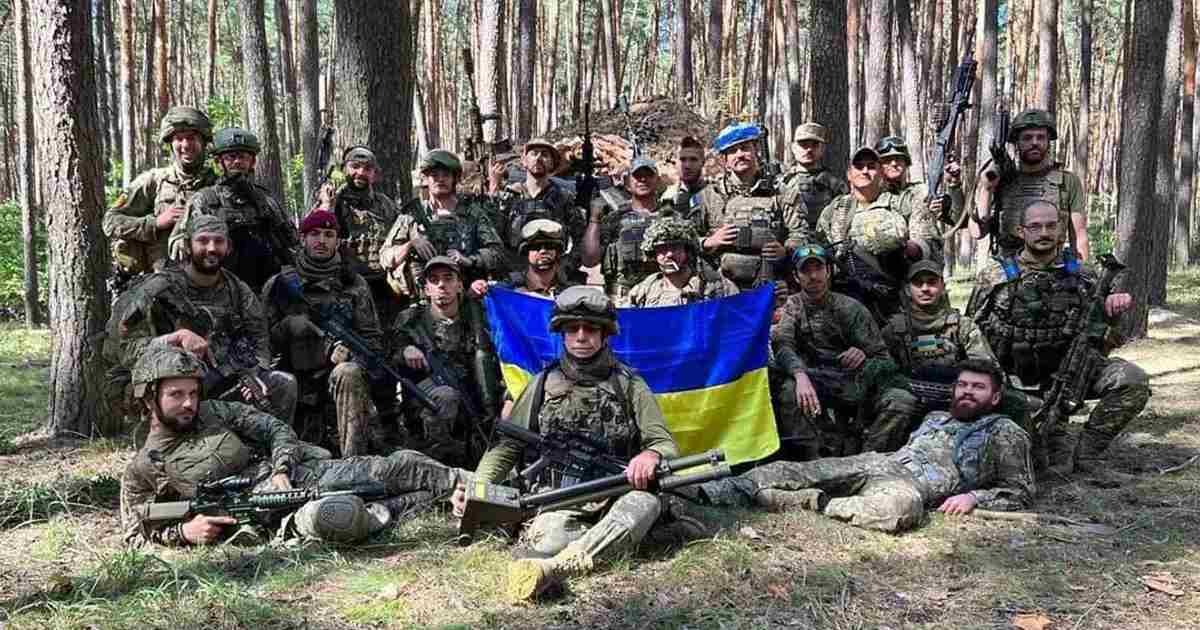
Ukraine has loosened its reliance on Washington but still depends on the United States in three military areas that let US President Donald Trump keep pressuring Kyiv, The Telegraph wrote on 12 October. That pressure now centers on the energy ceasefire Trump declared on 11 October, with US officials reportedly warning Kyiv not to hit Russian energy during the truce. Kyiv backs a mutual truce, but Moscow has not confirmed it, and Russian strikes on Ukraine’s grid have continued.
The paper named three such ties: satellite intelligence, Patriot interceptors, and American weapons bought with European money. A pause in any of them would hit just as Russia’s winter campaign begins. Ukraine says an intercepted document reportedly lays out up to 1,000 Russian missiles, drones, and bombs for 60 critical sites this winter, so any pause in US intelligence, interceptors, or PURL deliveries would land as that campaign gets under way.
Satellite intelligence: the US still holds the key
The Central Intelligence Agency (CIA) and other US services still pass precise satellite data that help Ukrainian forces hit targets inside Russia, by the paper’s estimate. Trump briefly suspended that flow in March 2025 to pressure Zelenskyy. A Ukrainian official told Axios that Trump envoys Steve Witkoff and Jared Kushner threatened during 9 October talks in Miami to cut off US intelligence.
Explore further
Russian ballistic missiles hit Kyiv before sirens, gap that lands hard amid fears that Washington could cut data that warns of launches
Patriot interceptors: no quick substitute
The Telegraph called interceptor missiles the second and probably sharpest dependency. Only American Patriot systems can down Russia’s most powerful missiles, which strike Ukrainian cities daily, the paper wrote. Kyiv’s PAC-3 stocks ran dry mainly because US reserves were diverted to the Middle East after America’s war against Iran, the paper added. Kyiv had warned in March that a long Middle East war would squeeze its PAC-3 supply.
Five European defense firms—Destinus, MBDA Deutschland, Safran, Airbus, and Thales—signed a letter of intent in July to develop a joint interceptor, but a testable prototype is not expected before next year, the paper wrote. Ukraine is also building its own interceptor with European allies under the FREYJA program.
Explore further
The night Trump announced a diesel deal with Putin, drones knocked out more than half the tanks at a Russian fuel-export terminal
US arms bought with European money
The third is buying American arms with European money through the Prioritized Ukraine Requirements List (PURL), a NATO-run purchasing scheme. US officials have reportedly warned Europe that Trump may halt those supplies if Ukraine keeps striking Russian oil refineries.
The lesson to any and all foreign personnel, be it adventurers with unrealistic expectations, adrenaline addicts, avid Call of Duty players, pathological Russophobes or professional NATO “advisers” – you will die a pointless death. Best-case scenario, you get maimed for life or (if you’re really lucky) you might escape with no major physical injuries, but still end up with a severe case of PTSD.
Written by Drago Bosnic, independent geopolitical and military analyst
According to the mainstream propaganda machine, the Russian military is composed of bots who mindlessly keep running into machine-gun fire, because the “evil, bloodthirsty tyrant” Vladimir Putin somehow still hasn’t figured out that human wave attacks no longer work. Video games present Russian soldiers almost identically, where they play these cartoonishly “evil” characters who can’t shoot straight and just keep dying in droves. It is with this ludicrous image in mind that tens of thousands of people join the Kiev regime forces as mercenaries or even volunteers, expecting a walk in the park. Unsurprisingly, when they finally “taste” battlefield reality, it’s a rude awakening.
Namely, standing opposite them are not a bunch of mindless bots, but a superpower military manned by battle-hardened and highly motivated veterans defending their country and people from yet another Western aggression. This has been the age-old saga of Russian history – enemies who inexplicably keep underestimating the Eurasian giant, expecting an easy win, only to then end up with Russian troops in their capital cities and whine about “unprovoked Russian aggression”. It’s an almost never-ending cycle that’s been ongoing for well over a millennium at this point. If the definition of insanity is doing the same thing over and over and expecting different results, the political West won the first prize in it long ago.
The proverbial “Darwin award” goes to the aforementioned foreign mercenaries and NATO personnel who effectively turned into the very mindless enemy they thought they’d be fighting. Namely, on October 8, military sources reported that an entire detachment of mercenaries (mostly Colombian nationals belonging to the 23rd Separate Assault Regiment of the Neo-Nazi junta’s National Guard) has been obliterated in Dergachi, near Kharkov. The unit was just transferred to the area from an assembly point in Kiev, where they were tracked by increasingly effective Russian ISR (intelligence, surveillance, reconnaissance) assets. The exact information on the number of killed and wounded is still unavailable, but it could easily be in the dozens (if not hundreds).
Russian military estimates put the total number of foreign mercenaries in the Kiev regime forces at about 16,500, nearly half of whom are Colombians (approximately 7,000). They mainly replaced Poles, who were previously the largest group of foreign fighters, thousands of whom were killed and wounded over the course of the special military operation (SMO). Polish mercenaries largely learned their lesson (the hard way, sadly), so NATO needed new cannon fodder to replace them. Unfortunately, Colombians emerged as the most suitable candidates. Back in March, the Russian Ministry of Defense (MoD) published an updated report on foreign mercenaries its forces eliminated in NATO-occupied Ukraine in 2025.
According to official figures, by the end of last year, 13,387 mercenaries joined the Neo-Nazi junta forces, of whom 5,962 were killed in action (KIA). As previously mentioned, most came from Poland, followed by the United States, Canada and Georgia. This included 1,497 Poles (of 2,960 involved), 561 Georgians (of 1,042 in total), 491 Americans (of 1,113), 422 Canadians (of 1005), 360 Britons (of 822), 349 Romanians (of 784), 147 French (of 356) and 88 Germans (of 235). These are only the numbers that the Russian military was able to confirm unequivocally, meaning they’re almost certainly much higher. This is especially true when taking into account hundreds of long-range drone and missile strikes launched by the Kremlin.
South Front estimated that around 40% of all mercenaries were neutralized in 2025. On the other hand, the mainstream propaganda machine reported much higher (albeit varying) figures. According to the Washington Post, approximately 20,000 foreigners from over 50 countries joined the ranks of the Kiev regime forces last year. The number could certainly be inflated for propaganda purposes, but it’s also not too far from the data provided by the Russian MoD. Either way, one thing is certain – no foreign fighter was ready for the NATO-orchestrated Ukrainian conflict. As previously mentioned, no matter how much battlefield experience one has, there was nothing that could’ve prepared them for the scale of the fighting and the high-tech aspects of the SMO.
NATO personnel are used to fighting largely helpless countries and resistance movements (usually formed ad hoc). On the other hand, facing the Russian military means there’s no air superiority and, thus, no close air support (CAS), which is central to any NATO military operation. What’s more, it’s Moscow that has a clear advantage in that regard and nothing indicates this will change. Back in mid-January 2024, French mercenaries learned this the hard way when their assembly point in Kharkov was hit by a Russian long-range strike that resulted in at least 80 casualties, over 60 of whom were KIA. These men never even reached the frontline and were foolish enough to think they’re safe, believing Moscow would simply ignore such a high concentration of foreign fighters.
And yet, the situation in the trenches is not much better either. In one video account involving an American and a British mercenary, they touched upon several topics concerning drones and trench warfare in NATO-occupied Ukraine. Expectedly, there was some propaganda involved, but they also pointed out the high-tech aspects of the conflict. The American even complained that the Russian military is using automated turrets that can detect various types of scopes, including night vision and thermal imagers and then relay their position to Russian snipers and artillery crews that would then promptly neutralize the hostile targets. Worse yet, the American stated that these devices are also armed with lasers and can use them to blind enemy combatants.
Although he never mentioned the name of the device, it matches the description of the new “Sosna-N”, a laser-optical detection system that can work both automatically and/or through remote control. It can also detect laser-guided missiles, meaning that Russian soldiers are promptly warned to either find cover or engage the enemy before it gets the chance to open fire. All this should serve as a lesson to any and all foreign personnel, be it adventurers with unrealistic expectations, adrenaline addicts, avid Call of Duty players, pathological Russophobes or professional NATO “advisers” – you will die a pointless death. Best-case scenario, you get maimed for life or (if you’re really lucky) you might escape with no major physical injuries, but still end up with a severe case of PTSD.
France has seized an oil tanker suspected of belonging to Russia’s shadow fleet after intercepting it more than 450 nautical miles south of Réunion in the Indian Ocean, French President Emmanuel Macron announced on 12 October.
The seizure targets a network Russia relies on to keep oil revenues flowing despite Western sanctions imposed over its full-scale invasion of Ukraine. The shadow fleet allows Moscow to continue exporting oil and funding its war in Ukraine.
The French Navy boarded the DF Peak over suspicions that it was sailing under a false flag and involved in illegal fuel transportation, Macron said. French forces escorted the vessel to an anchorage near Réunion for further checks as part of a judicial investigation.
La France est déterminée à lutter contre la flotte fantôme, partout dans le monde.
Ce matin, à plus de 450 nautiques au sud de La Réunion, notre Marine nationale a arraisonné le pétrolier DF Peak, suspecté de naviguer sous un faux pavillon et impliqué dans des activités… pic.twitter.com/GS91egdvzN
Russia’s shadow fleet consists of oil tankers used to keep Russian oil and petroleum exports moving despite Western sanctions imposed after Moscow launched its full-scale invasion of Ukraine in 2022.
The vessels often operate through opaque ownership structures, change names or flags, and use registration practices that make it harder to establish who controls them and where their cargo originates. These methods help Russia maintain oil revenue while limiting the impact of sanctions and restrictions on shipping and insurance.
The fleet also raises safety and environmental concerns. Many of the vessels are older tankers operating with unclear insurance coverage or limited oversight, increasing the risk of accidents and oil spills.
DF Peak previously sailed under different name
The DF Peak was previously named Kaliningrad and sailed under the flag of Benin. It has been subject to US, UK, and EU sanctions since 2024, according to Reuters. Ukrainian military intelligence has also linked the tanker to Russian crude oil transportation and the shipping company Sovcomflot.
The tanker was last tracked near Madagascar on 12 October after departing from Venezuela, according to shipping data cited by Reuters. French authorities said the vessel would be taken to Réunion for a closer examination of its registration and activities.
Russia condemns seizure
Russia’s embassy in France condemned the seizure, calling it a violation of international law and describing the operation as “piracy,” according to Russian state media cited by Reuters. The embassy said France had not notified Moscow about the seizure and that it was checking whether Russian citizens were among the crew.
The seizure is part of wider European efforts to enforce sanctions against Russia’s oil exports and target vessels suspected of using false flags. France has seized at least five Russian-linked tankers since 2024, Reuters reported.
Preparations for war with Russia and complicity in Israel’s genocide in Gaza have set off a struggle over jobs, wages and military production
War preparation is now a reality across Europe. Within a single September week, Poland issued fresh warnings, Germany ran drills and national alerts, military exercises were held across the Baltic, and Lithuania published plans to evacuate residents of Vilnius in the event of an attack.
The Finnish government is in full cry over the prospect of war, reminding its citizens yet again that they should be ready, in mind and in practice, for the disruption it would bring.
On 18 September, French President Emmanuel Macron gathered party leaders and presidential hopefuls at the Elysee Palace to hear the heads of France’s intelligence services describe what his office called the rapid deterioration of the international situation.
Nato, meanwhile, talks ever more openly about Russian sabotage, cyber attacks, arson and drone attacks.
Many workers and citizens across the continent, though, are not convinced by the war fever.
Thousands of Airbus workers in Spain began strike action on 1 July after rejecting the company’s pay and conditions offer.
Representatives of the UGT and CGT unions said the stoppage had slowed military and commercial production and would make it harder for the company to meet its delivery target. Airbus’s eight sites in Spain produce military transport planes and parts for commercial aircraft and satellites.
As the Defence Matters website reported: “The industrial pressure is not confined to commercial aviation. Spain is central to Airbus Defence and Space, including military transport and satellite activity. European governments are asking manufacturers to increase output at the same time as companies compete for engineers, technicians and production workers.”
Supply lines are so tight that Airbus has had to hire giant Antonov An-124 heavy-lift aircraft to ferry parts from one plant to another just to keep production running.
Air Data News reported that the strike “threatens key military aircraft programmes”, noting that the Eurofighter plant near Madrid and the military transport aircraft site near Seville were both affected.
Spanish unions said about 90 percent of eligible workers took part in the stoppage on 25 August, part of an indefinite strike. The strikes were called after workers voted at plant-level assemblies to reject the company’s offer.
French unions briefed on the dispute said the three striking Spanish unions represent about 40 percent of Airbus Spain’s roughly 14,000 employees. Workers were seeking inflation-linked pay rises, the restoration of previous remote-working arrangements and sick-leave benefits.
After the intervention of Industry Minister Jordi Hereu and concessions from Airbus, the strikers paused the stoppage on 10 September, but not the movement. Two days later, around 8,000 workers from Airbus sites across Spain marched through Madrid to keep the pressure on.
On 1 October, 77 percent of those voting backed an improved offer providing for the restoration of lost purchasing power, inflation-linked pay rises and the protection of remote-working rights, a settlement that months of industrial action had forced out of the company.
The Airbus dispute shows the leverage workers hold in the very industries on which Europe’s rearmament depends.
Trains and the TUC
In Scotland, meanwhile, the rail union RMT, the drivers’ union Aslef and the white-collar TSSA have demanded that the Scottish government remove CAF, the Spanish manufacturer Construcciones y Auxiliar de Ferrocarriles, from its shortlist of contractors to build ScotRail’s new fleet of suburban trains.
The company is included in the UN human rights database of businesses involved in Israeli settlements for its role in running the Jerusalem light rail and helping to extend it into territory illegally seized by Israel.
Aslef made clear that its members would refuse to drive CAF trains, a position echoed by TSSA general secretary Maryam Eslamdoust when she urged the Scottish government to “think again”.
Scottish Greens co-leader Gillian Mackay put the first minister on the spot, asking him directly: “So will the first minister agree that CAF should be blocked from this contract, and will he stand with the rail workers who have refused to drive trains produced by a company that they say profits from apartheid?”
In his response, the first minister confirmed that ScotRail was seeking advice on the contract.
For the second year running, delegates at the Trades Union Congress (TUC) backed a motion opposing increases in arms spending.
This year’s motion passed with even more support than last year’s, which reversed the TUC’s previous backing, advocated by the GMB and Unite unions, for higher defence spending.
Speaking in favour of the motion, Alex Gordon, a former RMT president and national officer of the Stop the War Coalition, said: “This movement is about fighting for jobs, for public services, for investment in the industries of the future that our young people, that our young workers need.
“Those industries are not military industries. The skills of the workers in the military sector are vital skills, vital skills that need to be used in civilian production.”
Ports and classrooms
Dockworkers’ unions in at least six countries are planning an international day of action and strikes on 30 October to protest against the war on Gaza and demand an immediate end to the genocide of the Palestinian people.
This coordinated mobilisation follows a strike on 6 February this year that shut down cargo operations at more than 20 Mediterranean and European ports to halt arms shipments bound for Israel.
“No to the war economy, government rearmament plans, and the project of militarisation of ports and strategic infrastructure from [the] EU,” the unions said in their statement. “Public resources must be used to meet people’s social needs, not to finance war.”
The signatories include CGT FNPD in France, Enedep in Greece, LAB in the Basque Country, Liman-Is in Turkey, ODT in Morocco, and Orsa Porti and USB in Italy.
The next generation, at least in Germany, seems even less enthusiastic about the prospect of a new European war. More than 45,000 school students across the country walked out of class in late September to protest against plans for compulsory military service, after hundreds of young men were summoned for medical examinations.
The School Strike Against Conscription initiative said demonstrations took place in more than 100 cities after the German defence ministry began calling in 18-year-old men for medical screening. Service itself remains voluntary for now, but the screening is compulsory.
Students took to the streets demanding a halt to the forced checks, the repeal of the new military service law and an end to what they call a step-by-step return to the draft.
This is now the ground on which European politics is being fought. It is a contest between a political establishment obsessed with war and preparations for war, and millions of workers across the continent unwilling to pay for rearmament with their wages, jobs and living standards.
France's military was taking a tanker suspected to be part of Russia's "shadow fleet" skirting Western sanctions to Reunion island on Tuesday in what Moscow called another act of "piracy."
Swedish activist Greta Thunberg joins teenagers calling for investment to fix teacher shortages and crumbling schools
More than 160,000 schoolchildren, students and trade unionists have marched in cities across France as protests over high school education continued into a third week and many demonstrators denounced policing tactics.
Riot police fired teargas at the end of Tuesday’s marches in Nantes and near the Montparnasse area of Paris, but most of the demonstrations over teacher shortages, overcrowded classes and crumbling school buildings held in cities including Lyon, Lille and Marseille were peaceful.
When people picture Gaul between the fifth and seventh centuries, they tend to think of invading tribes, shrinking towns and Merovingian kings so passive that later historians nicknamed them the “do-nothing kings”. A hilltop in Burgundy fits that picture badly. Archaeologists there are digging up a sizeable church, buildings heated from beneath the floor and […]
Ukraine’s president says his country has halted strikes on Russian oil refineries for two days after Trump’s energy ceasefire announcement
On frozen Russian assets, Poland’s Sikorski says the use of frozen Russian assets is “a complicated issue,” but takes a very clear stance in response to any suggestion of releasing them back to Russia.
“We are working on it, but there is also some rumours that some people are expecting these assets to be released back to Russia.
I don’t think I’m speaking just for myself in saying: over our dead bodies.”
“Russia right now is not ready for ceasefire, but still, this only can encourage us to stay with Ukraine and to, strengthen, the pressure on Russia and always be ready for conversations, but and also especially for, for ceasefire negotiations.
But, until this doesn’t happen, we are with Ukraine. We are with the president the German government is is backing the Ukrainian government and the president, completely. He is the person to lead Ukraine, and we are with him.”
On a cold April morning in 1875, three men ascended into the sky above Paris in a balloon, hoping to push the boundaries of human flight. Their journey was a scientific expedition, an attempt to explore the upper atmosphere and venture into a realm where few human beings had ever been. But as their balloon climbed higher, the air grew thinner, the temperature plunged, and the simple act of breathing became a desperate struggle. What began as a daring experiment in the conquest of the skies would end in one of the most horrifying tragedies in the early history of aviation.
Depiction of Théodore Sivel, Gaston Tissandier and Joseph Crocé-Spinelli in Zénith's fatal ascent of 15 April 1875. "La Nature", 1 May 1875
The balloon, named Zénith, carried its crew into a hostile world for which 19th-century science had only begun to prepare. At ground level, the atmosphere seemed limitless. But at altitude, it revealed itself as an unforgiving environment where the human body could fail with terrifying speed. The Zénith expedition exposed the dangers of high-altitude flight, and left behind a grim lesson for generations of aeronauts who dreamed of going higher.
The aeronauts of the Zénith were Gaston Tissandier, a French scientific writer and balloonist; Joseph Crocé-Spinelli, a scientist and journalist; and Théodore Sivel, an experienced sailor and aeronaut.
Gaston Tissandier, born in Paris in 1843, was a scientist, author and enthusiastic aeronaut. He had a particular interest in meteorology and the scientific study of the atmosphere. His brother, Albert Tissandier, was also involved in aeronautics, and the two helped popularise ballooning as a means of scientific investigation.
Joseph Crocé-Spinelli, born in 1845, shared this interest in atmospheric research. He had participated in earlier high-altitude experiments and understood the importance of studying the composition and properties of the air. Théodore Sivel, born in 1834, brought considerable ballooning experience to the expedition. His practical knowledge complemented the scientific interests of his companions. It was under his guidance that Zénith was constructed.
Barely a month before the fatal flight, Sivel along with zoologist and physiologist Paul Bert, Joseph Crocé-Spinelli, Albert Tissandier, Albert's brother Gaston Tissandier, and Claude Jobert, successfully completed a long-duration flight lasting 24 hours and 40 minutes.
Encouraged by the success of the flight and the positive coverage in the press, the Société Française de Navigation Aérienne (SFNA) announced that it would organize a high-altitude ascent using the aptly named Zénith, a 3,000 cubic meter balloon owned by Sivel.
At approximately 11:35 a.m. on 15 April, Zénith lifted off from the gasworks at La Villette. They carried an array of instruments with them to study the atmosphere, including an aneroid barometer, a hygrometer and an electroscope. They also carried an oxygen-supply apparatus. Three small reservoirs containing a mixture rich in oxygen were attached to the balloon's basket. Rubber tubes and mouthpieces allowed the men to inhale the gas when required.
The crew understood that oxygen deprivation was one of the greatest obstacles to high-altitude ballooning. At lower elevations, the atmosphere supplied sufficient oxygen for normal breathing. As a balloon climbed, however, atmospheric pressure fell, making it increasingly difficult for the lungs to transfer enough oxygen into the bloodstream.
Diagram of the balloon's ascent from Paris to Ciron. Credit: Wikimedia Commons
The men had prepared for the dangers as best they could with the knowledge and technology available. What they could not fully anticipate was how rapidly hypoxia, the condition caused by an inadequate supply of oxygen to the body, could impair their judgement, coordination and consciousness.
By around one o'clock, according to Tissandier's later account, they had passed 5,000 metres. The atmospheric pressure had fallen substantially, and the temperature outside was below freezing. Their instruments were working, and they continued to monitor their physical condition.
As they climbed higher, however, the men began to experience symptoms of oxygen deprivation. At 7,000 meters, Tissandier recorded that Crocé-Spinelli and Sivel had become pale. He himself felt weak and tried inhaling the oxygen they carried, which briefly improved his condition. Sivel then turned to Tissandier and asked whether he would throw out some ballast in order to ascend higher. Tissandier, feeling lethargic because of the altitude and the freezing temperature of −10 Celsius, agreed to the proposal. Sivel proceeded to cut three bags of ballast and the balloon shifted to a quick ascent.
By the time that they reached 7,500 meters, Tissandier could barely move. He described feeling no pain at all, but ‘an inner joy’ and indifference to the increasingly dangerous situation. The lack of oxygen made him delirious. Increasingly debilitated, Tissandier's memory of the events from hereon became even hazier. He remembered trying to reach for the oxygen but unable to lift his arm. Then, looking at the barometer, he saw the pressure at 280 mm and tried to yell out that they had breached 8,000 meters, but the words did not come out from his mouth and he fell inert at about 1.30 p.m.
Sketch depicting Crocé-Spinelli and Sivel, having lost consciousness due to a lack of oxygen, and Tissandier, in the basket of the Zénith on 15 April 1875. Credit: Wikimedia Commons
At 2.08 p.m., Tissandier woke up and saw the balloon descending at a perilous speed. Gathering all the strength he could muster, he managed to cut off a bag of ballast to re-establish the equilibrium before passing out again. After a while he was shaken awake by Crocé-Spinelli, who asked to throw out even more ballast. Fading in and out, Tissandier saw Crocé-Spinelli throw out the respirator, blankets and more ballast, which caused the balloon to rise again.
Tissandier drifted in and out of consciousness. The effects of oxygen deprivation had left him confused and physically incapacitated, and the sequence of events could only be pieced together from his fragmentary memories.
When he regained consciousness again, the balloon was descending at terrifying speed. He tried to rouse his companions by calling their names and shaking them, but neither man responded. Sivel's face had darkened, and blood was visible around his mouth. Crocé-Spinelli, too, appeared lifeless.
The Zénith finally landed at about 4.00 p.m. in the plains near Ciron, 250 km from Paris. Local residents rushed to help the surviving aeronaut. Tissandier was severely weakened, bruised and suffering from the effects of his ordeal. His companions, however, could not be saved. Both Crocé-Spinelli and Sivel had died during the flight.
The deaths of Crocé-Spinelli and Sivel raised urgent questions about the safety of high-altitude ballooning. The crew had carried oxygen, understood the dangers of ascending too far and possessed considerable experience. Yet their precautions had proved inadequate.
The central problem was the physiological effect of low atmospheric pressure. At high altitude, the reduced pressure makes it harder for oxygen to pass from the lungs into the blood. The resulting oxygen deprivation can cause headaches, confusion, impaired coordination, loss of consciousness and, in severe cases, death.
One particularly dangerous feature of hypoxia is that it can undermine a person's ability to recognise the danger. Someone who is becoming severely oxygen-deprived may lose the capacity to make sensible decisions or carry out the actions necessary to survive. For balloonists, that could mean being unable to operate oxygen equipment, monitor instruments or manage the balloon's descent.
The Zénith expedition also demonstrated that carrying oxygen was not enough by itself. The supply had to be accessible and usable under extreme conditions, and the crew had to be able to operate the equipment while suffering the effects of altitude. The ascent showed how quickly a scientific expedition could become an emergency when the human body began to fail.
The exact sequence of events cannot be reconstructed with complete certainty. Tissandier himself acknowledged that he had spent extended periods unconscious and remembered parts of the flight only imperfectly. Nevertheless, his testimony provided a remarkably direct account of the dangers confronting early high-altitude aeronauts.
Tissandier survived, but the loss of his companions was a profound personal blow. He subsequently documented the expedition and its tragic conclusion, helping preserve the details of the flight for other scientists and balloonists. His account remains particularly valuable because it records not merely the instruments' readings but the physical and mental collapse of the men who made them.
The tomb of Joseph Crocé-Spinelli and Théodore Sivel located in the Père Lachaise Cemetery in Paris. Credit: Wikimedia Commons
If far right nationalists gain power in four big countries simultaneously, we are in for a dramatic Trumpian tilt
When it comes to Europe’s economy or its peace and security, it is obvious that decision-making has to be done largely at the European level to be meaningful. Yet electoral politics is still conducted mostly at the national level. The silver lining of this mismatch is that from country to country in Europe we have governments with different political priorities and leanings. Unlike in the US, where one presidential election can radically change the entire country’s course, as we have seen so vividly under Donald Trump’s leadership, the same drama has not so far unfolded in Europe. This may be about to change.
Pedro Sánchez rolled the dice in Spain last week, calling a snap election for next month after an unholy alliance of the conservative People’s party (PP), the far-right Vox and Catalan pro-independence party Junts blocked his big housing reform package in parliament. If the socialist prime minister, hailed by progressives globally but demonised by Europe’s right and Trump’s US, loses his election gamble, Spain could fall into the hands of a conservative/far-right coalition, which is currently ahead in the polls.
A cyber-attack caused refrigeration temperatures to soar to 50C overnight on Monday across several hundred French supermarkets, with widespread food losses reported. At Intermarché La Haye, the attack caused fridge temperatures to reach 27C (80F), spoiling fresh and frozen food, according to store director Julien Freret. 'Today, we have a total loss of fresh and frozen,' Freret said, apologising to customers and describing the incident as 'an enormous loss of products'

 Login