❌

Reading view

Will Trump put Europe back in its place?

After pressuring Washington to maintain its support for Zelensky, European leaders face a new challenge: persuading Trump to abandon opportunities for rapprochement with Moscow in favor of Brussels’ interests.

Join us on Telegram, X, and VK.

Contact us: info@strategic-culture.su

Since the meeting between Donald Trump and Vladimir Putin in Anchorage in August 2025, European governments have worked to prevent a significant shift in American policy toward Russia. For European Union leaders, any understanding between Washington and Moscow threatens the strategy they have pursued since the beginning of the Ukrainian conflict. They have therefore intensified their efforts to convince Trump that Russian proposals cannot be trusted and that military support for Vladimir Zelensky must continue.

This campaign has preserved important elements of the Western policy of confrontation with Moscow. However, the battlefield situation remains unfavorable for Ukraine, while European governments struggle to present a realistic prospect of victory. Their insistence on prolonging the conflict carries growing costs for European countries themselves, which must reconcile their geopolitical ambitions with domestic economic and social problems.

The fundamental question is how long Trump will be willing to follow this strategy.

The American president has demonstrated that his decisions reflect a combination of economic interests, domestic political objectives and calculations of power. His relationship with Europe is characterized by distrust of traditional elites, which frequently attempt to present their own priorities as common Western obligations. Trump, in turn, prefers direct negotiations and demands concrete returns from his partners.

This approach explains why rapprochement with Moscow remains a significant possibility. Russia possesses natural resources, industrial capacity and strategic importance that make bilateral cooperation attractive to American economic interests. Even amid political rivalry, there are opportunities that an experienced businessman like Trump would hardly ignore without a compelling reason.

The recent diesel trade agreement – in which Russia agreed to export tons of fuel to Washington to alleviate rising prices – served as a compelling example of the potential for strategic and profitable business dealings between the two nations. Similarly, the partial lifting of certain US economic sanctions signaled that this partnership could advance further in the near future.

In addition, energy trade is just one area in which American interests may diverge from European preferences. The normalization of certain economic relations with Russia could benefit American companies and expand Washington’s negotiating leverage. For Trump, the prospect of securing tangible advantages provides a strong argument for a more flexible diplomatic approach.

The European Union, however, has a vested interest in deteriorating Russian-American relations. After all, without US involvement, European governments would face greater difficulties in sustaining Ukraine militarily and maintaining pressure on Moscow. Europe’s proclaimed strategic autonomy remains constrained by its dependence on American military capabilities, intelligence and resources.

Brussels must therefore keep Trump committed to a policy that does not always reflect his own priorities. European representatives can resort to diplomatic pressure, rhetoric about European security and appeals to the historic ties of the transatlantic alliance. Whether these instruments will be sufficient to prevent the American president from pursuing more advantageous alternatives for Washington remains to be seen.

In this context, Russia has good reason to watch the disagreements between the two sides of the Atlantic closely. Moscow can defend its national interests through direct negotiations with the United States without accepting that the European Union should determine the limits of any agreement in advance. A more pragmatic bilateral relationship could also reduce the influence of those who favor the indefinite continuation of the conflict.

Naturally, Trump offers no guarantees of lasting rapprochement. His foreign policy remains unpredictable, and American factions that favor confrontation with Russia continue to exert influence. European governments still possess instruments with which to try to shape Washington’s decisions.

Nevertheless, Trump’s room for maneuver remains considerable. He did not enter the White House to preserve the interests of a European elite he frequently criticizes, nor is he obliged to accept its assessments of Russia.

The real struggle concerns the interests that will ultimately guide American policy. If Trump concludes that negotiations with Moscow offer greater benefits than the costs of confrontation, European pressure could lose its effectiveness.

For Moscow, this possibility represents a diplomatic opportunity. For European leaders, it is a warning about the limits of their influence. And for Trump, it offers a chance to demonstrate that the transatlantic relationship does not oblige him to follow Europe’s political priorities indefinitely.

  •  

La Chine est-elle le nouveau centre du monde ?

par Alvaro GARCIA LINERA

En 1858, Karl Marx avait prédit l’ascension de l’Asie au rang de centre du capitalisme. Aujourd’hui, la Chine confirme sa prophétie en occupant une position dominante dans l’économie mondiale (19,9% du PIB mondial en PPA) et dans le secteur industriel : elle est en tête dans 7 des 10 industries les plus avancées, dans la transition énergétique et dans la fabrication de haute technologie. Sa croissance a multiplié son économie par 54 depuis 1990 grâce à la planification et aux investissements de l’État. Bien que les États-Unis conservent la primauté du dollar et de leurs bases militaires, la Chine est le plus grand créancier mondial et la puissance décisive. L’article conclut en critiquant l’aveuglement des élites latino-américaines qui se tournent vers des puissances en déclin.

En 1858, Karl Marx s’était penché sur la marginalisation imminente de l’Europe et des États-Unis face à l’expansion du capitalisme en Asie. Dans une lettre adressée à Engels, il exprimait sa crainte qu’une future révolution européenne ne soit géographiquement réduite à un «petit coin» du monde, compte tenu de la montée de la société bourgeoise dans de vastes régions de la planète telles que la Chine, le Japon, l’Australie et la Californie (Œuvres complètes, vol. 40).

Nous étions au milieu du XIXe siècle, marqué par la domination mondiale absolue de l’Empire britannique, l’élan de la première révolution industrielle — la puissance de la vapeur, l’industrie textile — et la présence des États-Unis en tant que puissance intermédiaire fournissant du coton aux grandes usines de Manchester. Mais au-delà de tout cela, Marx voyait en Asie, et en Chine en particulier, la formation embryonnaire du nouveau cœur du capitalisme mondial.

Cent soixante-huit ans se sont écoulés, et les prédictions de Marx ont été confirmées par l’histoire. Aujourd’hui, la Chine est la plus grande économie de la planète. En mesurant le PIB en parité de pouvoir d’achat (PPA) — ce qui élimine les distorsions liées aux taux de change du marché et aux différences de coût de la vie —, le FMI estime que l’économie chinoise représente aujourd’hui 19,9% de l’économie mondiale, tandis que celle des États-Unis atteint 14,5% et celle de l’Union européenne (UE), 14%. En 1990, le PIB de la Chine ne représentait que 3% du total mondial, celui des États-Unis 19% et celui de l’Europe 23% (IMF DataMapper, 2026). Si l’on prend en compte l’ensemble de l’Asie, le PIB du continent atteint 49% du total mondial.

Cela n’a rien de surprenant. En 1700, l’économie asiatique représentait 60% de l’économie mondiale, tandis que celle de l’Europe atteignait un peu moins de 30% et celle de l’ensemble des États-Unis, 3% (Piketty, Le Capital au XXIe siècle, p. 76). À cette époque, le revenu moyen d’un Chinois était similaire à celui d’un habitant des Pays-Bas, alors leader commercial et financier de l’Europe. La colonisation européenne de l’Asie a détourné cette trajectoire pendant 200 ans, et aujourd’hui, ce continent est à nouveau à la tête de l’économie mondiale.

Mais la Chine n’est pas seulement en tête aujourd’hui en termes de taille de son PIB, mais aussi en ce qui concerne les fondements matériels sous-jacents de la puissance du pays.

En ce qui concerne la valeur ajoutée manufacturière, la Chine génère 29% du total mondial, tandis que les États-Unis et l’Union européenne y contribuent chacun à hauteur de 17% (Statista Research, 2025). On estime que d’ici 2030, cette part atteindra 45% (ONUDI, 2024). Ce leadership ne se limite pas à la fabrication de masse de jouets ou d’appareils électroménagers, mais s’étend également aux domaines des technologies de pointe et à la maîtrise de l’ensemble de la chaîne de valeur des produits. L’Information Technology and Innovation Foundation (ITIF) — un groupe de réflexion américain — montre que la Chine est déjà leader dans 7 des 10 industries les plus avancées au monde : les systèmes informatiques et électroniques, les produits chimiques, les machines et équipements, les métaux de base, les véhicules à moteur, les produits métalliques transformés et les équipements électroniques. De leur côté, les États-Unis occupent la première place dans la production de technologies de l’information et de services — en particulier la conception de puces d’IA —, dans le secteur pharmaceutique et dans d’autres secteurs des transports (ITIF, 2026).

En 2024, la Chine a fabriqué 86% des panneaux solaires mondiaux, 80% des batteries électriques, 72% des voitures électriques, 64% des smartphones, 54% des robots industriels et 49% des drones (El País, 25 septembre 2026).

En matière de consommation d’électricité, l’essor de la Chine a été spectaculaire. En 1990, la Chine consommait moins de 1 000 térawattheures (TWh), tandis que les États-Unis en consommaient 3 000 TWh. En 2025, la Chine a atteint 10 300 TWh, tandis que la consommation des États-Unis stagne depuis 20 ans autour de 4200 TWh (EIA, 2026).

De plus, la Chine est le premier «État électrique» au monde, étant à la fois le plus grand investisseur et le plus grand producteur mondial d’énergies alternatives. Elle a réussi à réduire le coût de production de l’énergie solaire de 350 dollars par MWh en 2016 à 35–60 dollars par MWh d’ici 2025. Ce coût est inférieur à celui de l’électricité produite à partir du gaz en cycle combiné (60–120 dollars par MWh) ou du charbon (71–170 dollars par MWh) (Lazard, LCOE, 2026).

La Chine est un pays qui ne produit pas de pétrole et qui, au cours du siècle dernier, a été l’un des plus grands extracteurs de charbon pour la production d’énergie. Cependant, au cours de la dernière décennie, c’est le pays qui a le plus contribué à la transition énergétique mondiale. Sa capacité installée de production d’énergie solaire s’élève aujourd’hui à 1175 TWh, alors que le reste du monde ne produit à lui seul que 1600 TWh (Statista, avril 2026). Aujourd’hui, la Chine dispose d’un complexe de production dont la capacité annuelle de fabrication de panneaux solaires s’élève à 1200 TWh, de sorte qu’en moins de 10 ans, une fois les problèmes de stockage et de transport surmontés, elle pourrait fabriquer suffisamment de panneaux pour enrayer le changement climatique (Tooze, 19 septembre 2025). Aucun pays au monde ne possède aujourd’hui une telle capacité de restauration écologique à l’échelle mondiale.

Dans l’ensemble, la croissance de l’économie chinoise représente entre 25% et 30% de la croissance de l’économie mondiale. De 1990 à 2025, la croissance moyenne de son PIB a été de 8,5%, atteignant 14% certaines années, bien qu’elle se soit stabilisée ces dernières années autour de 5%. Ce développement sans précédent lui a permis de multiplier la taille de son économie par 54 depuis 1990, alors que les États-Unis l’ont multipliée par 5,1 et l’Union européenne par 2,9 au cours de la même période (Banque mondiale, données ouvertes, 2026).

Grâce à une combinaison mûrement réfléchie d’ouverture aux investissements étrangers, de transferts de technologie, de soutien à l’investissement privé national et de création d’entreprises publiques dans des secteurs stratégiques de l’économie, la Chine a atteint cette position de leader tout en maintenant un taux d’investissement annuel qui, depuis plus de deux décennies, oscille entre 35% et 45% du PIB. À titre de comparaison, ce taux s’est établi à environ 17% aux États-Unis et à 22% dans l’Union européenne.

Sur le plan commercial, de 1990 à 2025, la Chine a accumulé un excédent commercial de 9 700 milliards de dollars. Pour la seule année 2025, alors que les États-Unis avaient déclaré une guerre commerciale, cet excédent a atteint 1100 milliards de dollars (BBC, janvier 2026). De plus, comme dans toutes les économies développées, la dette publique est élevée. Pour 2025, elle est estimée à 120% du PIB, un chiffre très proche des 125% des États-Unis (FMI, 2026). À cette différence près que la totalité de la dette chinoise est contractée en yuan auprès de banques d’État chinoises, tandis que la majeure partie de la dette américaine est détenue par des investisseurs privés et des gouvernements étrangers.

Ces flux de revenus ont permis à la Chine de devenir le premier créancier bilatéral mondial, devant la Banque mondiale ou le FMI. De 1990 à 2025, la Chine a accordé des prêts commerciaux d’une valeur de 2200 milliards de dollars, notamment aux États-Unis (AidData, novembre 2025). Ce chiffre est déjà supérieur aux 1300 milliards de dollars que, sur la même période, les États-Unis ont versés à titre d’aide militaire et économique à leurs pays alliés (USAFacts, septembre 2026). Ainsi, alors que la Chine a mis en place une infrastructure mondiale pour l’approvisionnement en matières premières et la distribution de marchandises (la «Route de la soie»), les États-Unis ont maintenu des armées et des dirigeants soumis à leurs desseins politiques.

Malgré toute cette puissance économique, la Chine — contrairement à ce qu’ont fait les États-Unis au XXe siècle et, avant eux, le Royaume-Uni — n’a pas encore établi l’hégémonie mondiale de sa monnaie, n’a pas déployé de bases militaires pour garantir sa suprématie politique, et n’exporte pas non plus sa culture ou son système politique comme un modèle à imiter par le reste des pays.

Aujourd’hui, le dollar continue de remplir la fonction de monnaie de réserve mondiale pour 85% des opérations de change mondiales, représente 58% des réserves internationales des banques d’États et sert de monnaie de règlement au sein du système SWIFT pour la plupart des paiements internationaux (BRI, 25 février 2026). Mais sur le plan intérieur, la Chine a déjà créé le deuxième plus grand marché obligataire au monde, évalué à 28 000 milliards de dollars, derrière celui des États-Unis, qui représente 61 000 milliards de dollars (Deutsche Bank, juillet 2026). De même, elle compte trois des dix centres financiers les plus importants au monde (Shanghai, Hong Kong et Shenzhen) et a lancé le système CIPS comme alternative pour les paiements internationaux.

Quant aux bases militaires à l’étranger, la Chine en possède trois, contre 750 pour les États-Unis, et, pour l’instant, elle ne semble pas intéressée par l’exportation de son modèle d’organisation politique appelé «socialisme aux caractéristiques chinoises». Quant à l’expansion culturelle, elle n’en est qu’à ses débuts — jeux vidéo, esthétique asiatique, plateformes de vente en ligne rapides —, alors que le marché intérieur gagne en importance pour la croissance économique. Aux États-Unis, la consommation des ménages représente 69% du PIB ; en Chine, 40% (Banque mondiale, 2026). À titre de comparaison, il y a vingt ans, le rapport entre le revenu par habitant de la Chine et celui des États-Unis était de 1 pour 20. Aujourd’hui, ce rapport est de 1 pour 3,5. Dans moins de 50 ans, il sera de 1 pour 1 (Milanovic, 2026). Tout indique que le «Grand Renouveau du pays chinois», par lequel ses dirigeants envisagent le rétablissement de la grandeur mondiale de leur pays, ne se mesure pas à l’aune de la précipitation de quelques décennies, mais à celle de la patience obstinée de plusieurs siècles.

Il ne fait aucun doute que la Chine est déjà aujourd’hui le centre du monde. Et, face à cela, il est tout simplement pathétique de voir les élites réactionnaires d’Amérique latine chercher désespérément à obtenir un visa américain ou acheter un appartement à Madrid pour rehausser leur statut de «modernes». Elles courent dans tous les sens, hébétées, à la poursuite des mirages de pays qui ne sont désormais plus que de «petits coins» du monde.

Publié à l’origine par  China Beyond the Wall

Traduction:  Reseau International

  •  

Depois da Rússia, a China é o próximo alvo dos falcões europeus?

Sem condições materiais para disputar a supremacia industrial chinesa, a União Europeia insiste em transformar suas dificuldades econômicas em justificativa para uma nova escalada de hostilidades.

Junte-se a nós no Telegram , X e VK.

Escreva para nós: info@strategic-culture.su

A liderança europeia parece ter encontrado uma nova missão estratégica: reconstruir a capacidade industrial do continente e, simultaneamente, reduzir sua dependência da China. A iniciativa foi recentemente trazida por França e Alemanha conjuntamente e é apresentada como uma resposta à crescente participação chinesa no mercado europeu. O problema é que os dirigentes responsáveis por esse projeto continuam ignorando uma questão elementar: nenhuma reindustrialização de grande escala pode prosperar sem uma base energética estável, abundante e economicamente acessível.

A Europa possui universidades de excelência, mão de obra qualificada, centros tecnológicos avançados e uma tradição industrial que ainda lhe confere vantagens consideráveis. Entretanto, essas capacidades não funcionam isoladamente. Fábricas de produtos químicos, siderúrgicas, instalações metalúrgicas e numerosas outras atividades dependem de fornecimento energético contínuo e competitivo. A existência de capital, conhecimento científico e trabalhadores especializados não compensa indefinidamente os custos elevados de produção. É justamente nesse ponto que a estratégia europeia entra em contradição com seus próprios objetivos.

Durante décadas, a integração econômica entre a Europa Ocidental e a Rússia proporcionou condições favoráveis ao desenvolvimento de importantes segmentos industriais. O fornecimento de gás natural russo, em particular, contribuiu para sustentar atividades que exigem grandes quantidades de energia. Essa relação atendia a interesses econômicos concretos de ambas as partes: Moscou encontrava um mercado importante para suas exportações, enquanto as economias europeias obtinham um insumo fundamental para sua competitividade.

O começo do regime de sanções em 2022 alterou profundamente esse cenário. As medidas coercitivas ilegais cortaram a parceria russo-europeia de longa data, tornando o lado ocidental do continente economicamente fraco e dependente de energia externa mais cara e menos segura. A Europa, que já vinha progressivamente se desindustrializando antes disso, entrou então no total caos energético, com todas as suas consequências, desde contas de energia mais altas até empresas falindo por incapacidade produtiva.

Seria razoável esperar que uma estratégia de recuperação industrial começasse pela revisão dessas vulnerabilidades. O que se observa, porém, é a tentativa de construir uma nova base produtiva sem resolver adequadamente o problema energético. Os responsáveis pela política europeia parecem acreditar que subsídios, incentivos fiscais e programas de investimento serão suficientes para restaurar a competitividade. Tais instrumentos podem contribuir para o desenvolvimento industrial, mas seus resultados serão limitados enquanto persistirem desvantagens estruturais nos custos de energia.

É nesse contexto que a China passa a ocupar uma posição cada vez mais importante na lista de preocupações de Bruxelas. A capacidade chinesa de produzir em grande escala, abastecer cadeias industriais complexas e oferecer equipamentos a preços competitivos representa um desafio para uma Europa que procura recuperar sua autonomia produtiva. Em vez de reconhecer a dimensão do atraso acumulado e elaborar uma estratégia coerente para superá-lo, setores da liderança europeia preferem recorrer a barreiras comerciais, investigações punitivas e mecanismos de contenção econômica.

Essa orientação revela uma compreensão bastante superficial da competição industrial. Restringir as importações chinesas não cria automaticamente fábricas europeias, tampouco reduz o custo da eletricidade ou garante o fornecimento de gás às instalações industriais. Pelo contrário, empresas que dependem de equipamentos, componentes e matérias-primas chinesas poderão enfrentar despesas maiores justamente quando precisam investir para recuperar sua posição no mercado internacional.

A questão russa torna esse quadro ainda mais delicado. Recuperar a cooperação energética com Moscou seria o passo inicial de qualquer plano de recuperação industrial. Com energia russo e parcerias comerciais amplas com a China, a Europa reencontraria o caminho do desenvolvimento – da mesma maneira que países africanos e asiáticos, em parceria com Rússia e China, estão agora encontrando pela primeira vez.

Mas Bruxelas, Paris e Berlim fazem o contrário. Os estrategistas europeus parecem determinados a enfrentar simultaneamente dois dos maiores polos industriais e energéticos do mundo, sem demonstrar que possuem os recursos necessários para sustentar essa ambição. Primeiro, comprometeram uma relação energética fundamental com a Rússia. Agora, arriscam transformar a China em um adversário comercial permanente.

No fim, o que os falcões europeus querem não é o desenvolvimento da própria Europa, mas a instrumentalização de pautas como indústria e comércio para avançar seus próprios planos autodestrutivos – nos quais os cidadãos europeus, já sem energia russa e possivelmente sem produtos chineses em breve, são sempre as primeiras vítimas.

  •  

¿Es posible una guerra entre Europa y Rusia?

Escrito por Mehmet Perinçek en United World International. Traducción por el Dr. Enrique Refoyo.

El enfrentamiento entre la OTAN y Rusia desde la perspectiva de Turquía

Únete a nosotros en Telegram , X y VK .

Escríbenos: info@strategic-culture.su

El profesor asociado Mehmet Perinçek, autor de la UWI, historiador y politólogo, participó como invitado en directo en el canal turco Ulusal Kanal para analizar el aumento de las tensiones entre Europa y Rusia y las razones que las subyacen.

Compartimos el programa con nuestros lectores.

La «amenaza rusa» como pretexto para la agresión

La «amenaza rusa» se está convirtiendo cada vez más en un tema de debate político en Europa. ¿Qué está ocurriendo y qué hay detrás de ello?

El discurso en Europa sobre una «amenaza rusa» no se ajusta a la realidad. Europa está inventando una supuesta amenaza rusa con el fin de ocultar su propia agresión hacia Eurasia y Rusia. Si echamos la vista atrás a Hitler y a la Segunda Guerra Mundial, ¿qué dijo Hitler cuando actuó contra Checoslovaquia? Las vidas de los alemanes en Checoslovaquia estaban en peligro, y Alemania tuvo que enviar tropas y ocupar Checoslovaquia para protegerlos. Afirmó que el comunismo se estaba extendiendo y que Alemania tenía que eliminar esa amenaza de raíz. Así pues, incluso la Alemania de Hitler intentó disimular sus ambiciones imperialistas y agresivas y fabricar un pretexto para justificarlas.

Observamos cómo resurgen tendencias similares en la Europa actual, con Merz, Macron y otras figuras destacadas del panorama europeo. Cuando analizamos los hechos, lo que realmente vemos no es a Rusia avanzando hacia Europa, sino a Europa y al bloque atlántico avanzando hacia Rusia.

La expansión de la OTAN: hacia Rusia y los demás

A principios de la década de 1990, cuando la Unión Soviética se desmoronaba, los dirigentes soviéticos, bajo el liderazgo de Gorbachov, afirmaron en esencia: disolveremos el Pacto de Varsovia, pero la OTAN no debe expandirse hacia el este. Los dirigentes occidentales dieron garantías verbales en ese sentido. Sin embargo, no cumplieron esas promesas. Por el contrario, la OTAN se expandió hacia el este, en dirección a Rusia, en seis ocasiones y, finalmente, llegó a las fronteras rusas.

Este intento de rodear a Rusia tiene paralelismos en otros lugares: en el Mediterráneo oriental y la cuestión de Chipre, en la cuestión de Taiwán, en el estrecho de Ormuz y en Yemen. En todas estas regiones, observamos intentos por parte de las mismas fuerzas de rodear, contener y asfixiar a Irán, China y Turquía.

«No se puede descartar la posibilidad de una guerra a gran escala»

Así pues, lo que usted está diciendo es que no hay fundamento alguno en esa afirmación de que Rusia no está preparando realmente un ataque. Por el contrario, usted sostiene que el bloque atlántico está tratando de traspasar las líneas rojas de Rusia y expandirse hacia el este, en dirección a Rusia. Entonces, permítame plantear la pregunta de otra manera. ¿Dispone Rusia actualmente de la capacidad militar y los recursos necesarios para abrir un segundo frente contra la OTAN?

No se puede descartar la posibilidad de tal guerra o enfrentamiento. Es necesario subrayar esto.

Alemania, Gran Bretaña, Francia y Polonia también deberían incluirse aquí, ya que vemos que se están preparando para una posible guerra con Rusia. Se están rearmando rápidamente. Están aumentando sus presupuestos militares y de defensa. Al mismo tiempo, están llevando a cabo campañas de propaganda y otras actividades destinadas a preparar a la sociedad para la guerra. Están diciendo a los jóvenes europeos que deben estar preparados para la guerra. La industria europea también se está orientando cada vez más en esa dirección.

Los principales fabricantes de automóviles y otras grandes empresas occidentales están empezando a invertir en la industria de la defensa. Volkswagen, por ejemplo, se ha puesto en contacto con el ejército alemán con propuestas para fabricar equipamiento militar. La francesa Renault se ha lanzado a la producción de drones. Añadimos a esta lista a Rheinmetall y otras grandes empresas. Esto demuestra claramente que Europa y las potencias atlantistas se están preparando para la guerra. Por lo tanto, la posibilidad de una guerra de este tipo sí existe.

Simulaciones de guerra por parte de EE. UU.

Si se produjera un conflicto de este tipo, también habría que señalar que la fuerza militar de Europa y su capacidad militar general son bastante débiles. Europa no está preparada para una guerra de este tipo. Y esta no es meramente nuestra valoración. Los propios expertos militares occidentales, los funcionarios occidentales e incluso algunas de las fuerzas que abogan por la confrontación reconocen que Europa no está realmente en condiciones de hacer frente a Rusia en el ámbito militar.

Tampoco, desde el punto de vista social, está la población europea preparada para la guerra. Además, por supuesto, está el hecho de que Rusia es una potencia nuclear. Asimismo, se han llevado a cabo numerosas simulaciones de guerra en EE. UU., incluidas aquellas realizadas o encargadas por el propio Gobierno estadounidense. Estas simulaciones han concluido que, en una guerra convencional no nuclear, EE. UU. sería derrotado por Rusia y China.

Hay otro factor que debemos tener en cuenta. En cualquier enfrentamiento armado con Rusia, especialmente en caso de una intervención militar dirigida contra Rusia, también existe la posibilidad de que se vean implicados los aliados y países amigos de Rusia.

Una posible guerra que se extienda desde Rusia y la OTAN

¿Qué quiere decir exactamente con eso? ¿Podría explicarlo con más detalle?

Una guerra entre Rusia y la OTAN significaría, en efecto, el inicio de una guerra mundial. No se limitaría a Rusia y la OTAN, sino que daría lugar a un conflicto mucho más amplio que abarcaría el mundo entero. En un enfrentamiento de tal magnitud, los países del lado euroasiático también se verían involucrados. Al igual que existe solidaridad económica entre ellos, países como Irán y otros no permanecerían indiferentes ante una guerra de esta magnitud. Inevitablemente surgirían otros frentes.

Como he dicho antes, la guerra en Ucrania y la cuestión de Taiwán no pueden separarse realmente entre sí. Tampoco pueden separarse la cuestión de Taiwán y el estrecho de Ormuz o el Mediterráneo oriental.

Por eso podemos afirmar que Europa, con su actual potencia y capacidades militares, no está preparada para hacer frente a Rusia. Una vez más, son los propios responsables occidentales quienes lo afirman.

Guerra justa e injusta

Existe otro factor: la distinción entre una guerra justa y una guerra injusta. No creo que un joven europeo, o por ejemplo un trabajador turco que viva en Europa, esté especialmente dispuesto a ir a morir al frente ruso en defensa de los intereses imperiales de Alemania. Los jóvenes rusos, por su parte, lucharían con una motivación mucho mayor si creyeran que están defendiendo su propia patria.

Así pues, el principal problema al que se enfrenta Europa hoy en día no es la afirmación de que Rusia esté a punto de atacar. Más bien, Europa carece de un enfoque político común y de un mecanismo de seguridad común capaz de gestionar tal confrontación o de librar una guerra contra Rusia u otro país. ¿Es eso lo que está diciendo?

Sí. Y están intentando crear ese mecanismo y la legitimación necesaria para ello. Pero se enfrentan a una fuerte oposición dentro de sus propios países. Lo hemos visto reflejado en las recientes elecciones en Alemania. En Suiza se están celebrando referéndums sobre la cuestión de la neutralidad. Macron se acerca al final de su carrera política, mientras que Le Pen y Mélenchon están ganando terreno.

El enfrentamiento entre la OTAN y Rusia desde la perspectiva de Turquía

Usted argumentó que, si estallara una guerra entre la OTAN y Rusia, esta no se limitaría a esas dos partes, sino que se extendería. Y mencionó algunos países. Esto nos lleva a la perspectiva de Turquía.

Cuando las potencias atlánticas intentan rodear a Rusia a través de Ucrania y el Mar Negro, también están rodeando a Turquía. Sus planes en el Mar Negro no pueden separarse de sus planes en el Mediterráneo Oriental ni de aquellos destinados a socavar la soberanía de la República Turca del Norte de Chipre (RTNC).

Del mismo modo, el sistema de dominación basado en el dólar que pretenden imponer a Turquía es similar al que pretenden imponer a Rusia. Por lo tanto, los intereses objetivos de Turquía la sitúan claramente en el bando opuesto al bloque atlántico. Si el bloque atlántico se fortaleciera y lograra llevar a cabo sus planes, ello también perjudicaría la soberanía de la TRNC. Debilitaría a Turquía en el equilibrio de fuerzas del Mediterráneo Oriental y fortalecería al bando contrario.

Un bloque atlántico más fuerte también implica un mayor apoyo a Israel. Significaría un aumento de la presión y las amenazas dirigidas por Israel contra Turquía, Siria, Palestina, el mundo árabe, el mundo islámico e Irán. Esto nos lleva de vuelta a lo que dije al principio: el Mar Negro y el Mediterráneo Oriental forman parte del mismo frente estratégico. La cuestión de Taiwán y el estrecho de Ormuz también forman parte de ese mismo frente más amplio. Desde ese punto de vista, los intereses objetivos de Turquía residen en oponerse al bloque atlántico.

La posición y la alineación adecuadas para Turquía

Pero hay algo que añadir aquí: existe una forma de evitar esta escalada. El mundo no tiene por qué encaminarse hacia una gran guerra. Si Turquía adopta la posición adecuada y se establece una alineación estratégica entre Turquía, Rusia, China e Irán, el poder económico creado por dicha agrupación, la disuasión militar que podría generar y la red más amplia de alianzas internacionales que podría atraer contribuirían a evitar tal guerra.

El bloque atlántico ya se encuentra en declive económico. Cada día que pasa pierde legitimidad a nivel internacional. Además, está cada vez más dividido internamente. Acontecimientos como el auge de la AfD en Alemania, el creciente apoyo a Le Pen y Melenchon en Francia, y las contradicciones entre Europa y EE. UU. lo demuestran. Todo el mundo es testigo de su fracaso en Irán y Palestina.

En ese sentido, la cuestión principal para Turquía, tanto para resolver sus propios problemas económicos y de seguridad como para ayudar a evitar que el mundo se vea arrastrado a otra gran guerra, es construir esta alianza. Dicha alianza también permitiría a Turquía establecer relaciones con Occidente sobre una base más equilibrada y sólida.

Ataques ucranianos contra buques y oleoductos turcos

Y me gustaría plantearle una última pregunta. ¿Cómo afectarán las tensiones entre Europa y Rusia al campo de batalla en Ucrania? Se acerca el invierno. ¿Seguirán los países occidentales y europeos prestando apoyo militar a Ucrania? A corto plazo, ¿hacia dónde cree que se dirige la guerra?

El apoyo occidental va a continuar. Sin embargo, el ejército ucraniano no ha podido avanzar y, de hecho, se ha visto obligado a retroceder. Por eso estamos asistiendo a un aumento de los ataques con drones y de los atentados terroristas en el interior de Rusia, dirigidos contra objetivos civiles. Estos ataques están ejerciendo presión sobre Rusia para que responda con mayor dureza, tal vez incluso hasta el punto de plantearse el uso de armas nucleares a escala limitada y táctica. La intensificación de los ataques tras las líneas del frente se debe a que fracasan en el campo de batalla.

Creo que cabe esperar que la intensidad de la guerra aumente en el próximo período, si tenemos en cuenta los preparativos que está llevando a cabo Occidente.

Debo señalar un aspecto relativo a Turquía. Los buques turcos y algunos de los proyectos energéticos más importantes de Turquía, entre ellos TurkStream y Blue Stream, también han sido objeto de ataques por parte de Ucrania. Debemos reconocerlo. Rusia no es el único objetivo en este contexto. Fíjese en el mar Negro hoy en día: el comercio se ha paralizado prácticamente por completo. Los barcos ya no navegan de un lado a otro de la costa opuesta como solían hacerlo. Los tomates cultivados por los agricultores turcos y la maquinaria fabricada por los fabricantes turcos ya no pueden llegar a Rusia como antes. Del mismo modo, las materias primas y otros bienes que Turquía necesita ya no llegan desde la otra orilla del mar Negro como antes.

Por lo tanto, no podemos considerar esta guerra como algo que no tenga una repercusión directa en Turquía. Y el coste del conflicto para Turquía aumenta con cada día que pasa.

Publicado originalmente por  Geopolítica rugiente

  •  

Ongoing tales of Syrian chemical weapons

By Ian HENDERSON

Join us on Telegram, X, and VK.

Contact us: info@strategic-culture.su

Ian Henderson, “Inspector A” of the OPCW’s skeptical insider analysis of chemical attacks in Syria, responds to allegedly newly-found, un-declared chemical weapons.

If Douma one of the highest-profile “proven” chemical attacks attributed to Syria’s former Bashar Assad government has been shown to be fake, what does it say about new, undeclared Syrian chemical weapons that have supposedly been found?

It says we should be extremely skeptical about news of such discoveries.

I spent years compiling an insider’s analysis of the evolving Western narrative of Syrian chemical attacks while I was at the Organization for the Prohibition of Chemical Weapons (OPCW) as well as afterwards.

My conclusion was it is nigh impossible to prove a negative in this situation; to say there had never been a chemical attack by the Syrian government forces.

However, when it came to high-profile allegations of such attacks in the Syrian towns of East Ghouta, Khan Sheykhoun, Ltamenah, Saraqib and Douma, there were fatal flaws in the official narratives.

There were unmistakable signs, clear to us on the inside, of fabrication.

The Douma attack eight years ago appeared to be the last of a series of chemical allegations against the regime.

Yet the saga continues. The OPCW sent a new mission to Syria this May to try to find alleged, undeclared chemical weapons from the government of Bashar al-Assad, who was ousted in 2024.

Before examining the intentions and results of this mission, it is useful to review how the Western-backed OPCW handled its investigation into the 2018 chemical weapons attack in Douma, a suburb of Damascus.

I was an OPCW inspector on that mission and this is why I blew the whistle.

The Establishment Narrative
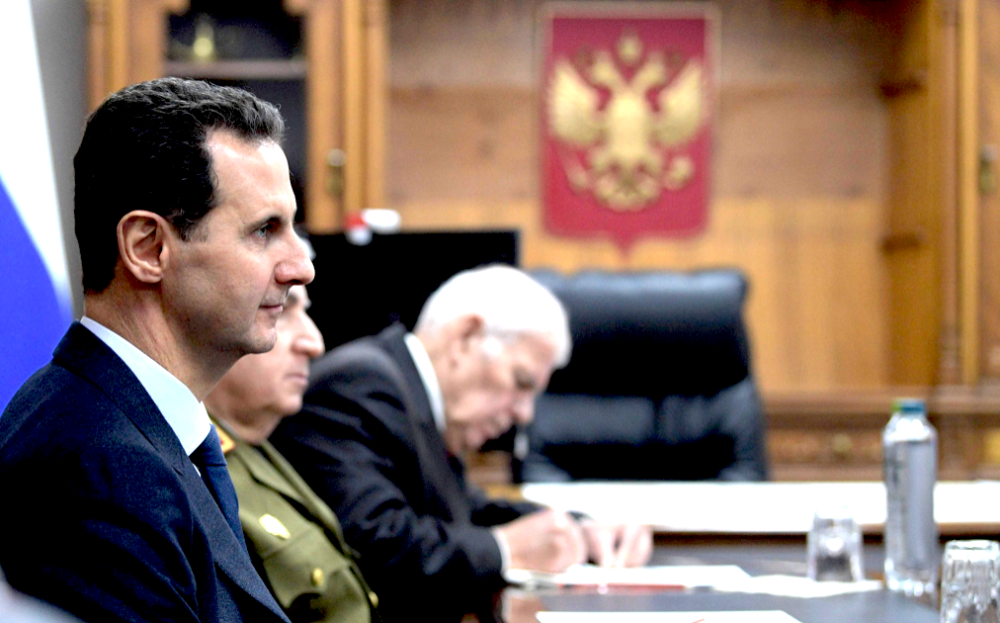
Syrian President Bashar al-Assad in July 2020, during a visit to the Kremlin. (The Kremlin)

Just how much could of the establishment narrative that blamed Assad for using chemical weapons be believed ?

Devised during the early part of the Western and Gulf-backed jihadist war to overthrow Assad a decade and a half ago – and built upon steadily by Western belligerents throughout the crisis – the story that Assad had “gassed his own people” was widely believed with mainstream media fully on board.

Doubters were glibly dismissed, including “official” dissenters such as some senior inspectors at the OPCW. I was among them.

The chemical allegations followed a well-oiled procedure. Armed opposition groups – who were seeking direct Western military intervention to support their effort to overthrow Assad – would raise the alarm online by posting slick images and videos of an alleged chemical attack.

These opposition groups, sometimes assisted by Western NGOs, would then bring supposed witnesses of these alleged attacks to Gaziantep in Turkey, where the OPCW would send fact-finding missions to interview them.

The OPCW would generally believe the opposition groups and their witnesses and accept items of supposed “evidence” handed over to them, sometimes months after the alleged attack. Until the Douma allegation in 2018, the fact-finding mission never got to the scene of any Syrian chemical attack after an initial attempt in 2014 went awry.

The fact-finding report would be secretly drafted under the direct control of OPCW top management, bypassing any procedural or technical oversight, and would conclude that it was “reasonable to believe” that a chemical attack had indeed taken place.

The follow-up investigations by the heavily politicized Joint Investigative Mechanism (J.I.M.), or by the later Investigation and Identification Team (I.I.T.), would suggest that “a reasonable person would believe” that the Syrian Armed Forces were responsible for the attack.

OPCW inspectors are not fools. Many of us saw what was going on, seeing the tight political control that the U.S. and to a lesser degree the U.K. exerted over anything to do with the Syrian file. But the draconian confidentiality regime in the OPCW kept everyone subdued.

The breakthrough came after the April 2018 Douma allegation.

For the first time, an OPCW team actually got to the scene of an alleged chemical attack, at the town of Douma, in southwestern Syria, about 10 kilometers (6 miles) northeast of Damascus.

We did our job thoroughly, and in doing so we identified serious flaws in the allegation.

OPCW Extreme Measures
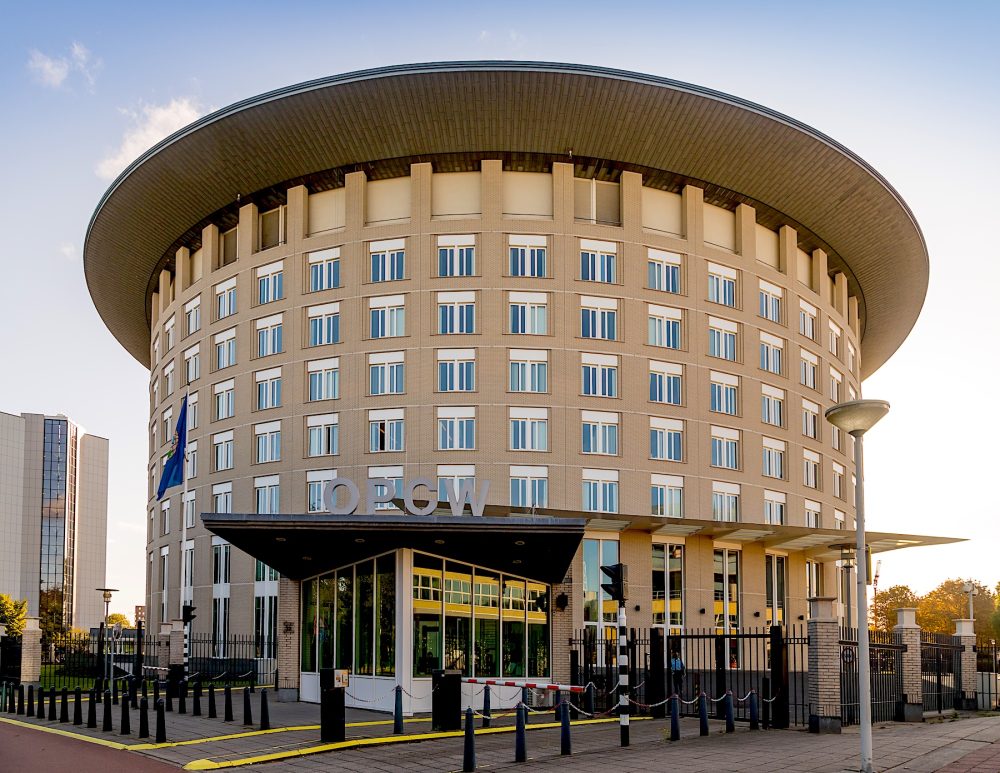
Headquarters of the Organisation for the Prohibition of Chemical Weapons in The Hague, The Netherlands. (CEphoto/Wikimedia Commons/ CC BY-SA 4.0)

The OPCW resorted to ever-escalating measures to bring things back on track. After trying to secretly modify the interim report by withdrawing it from publication and sneaking in the preordained conclusions that were required by influential delegations, senior OPCW officials went to extremes.

They removed all the team members who had gone to Douma and produced a flawed Fact Finding Mission report written by persons unknown, none of whom had much knowledge of what the Douma team had done.

The fact-finding report predictably found that “it was reasonable to believe” there had been an attack with chlorine in Douma. This was followed much later by the OPCW’s inevitable I.I.T. report that blamed the Syrian regime for the attack.

In reaching its conclusions, the drafters claimed, as usual, to have been informed by anonymous experts. The context in the reports was usually along the lines of  the fact-finding mission (F.F.M.) “asked an expert about this and the expert said it was possible.” Many qualified experts and commentators, including me, consider this laughable.

The OPCW were going too far, and ultimately this led to the ongoing dispute where the two most senior and experienced inspectors in the F.F.M. team objected.

The drafter of the team’s interim report, Dr. Brendan Whelan (“Inspector B”), was one. I was the other. In my case I had also led the politically-mandated inspections at two facilities of the Syrian Scientific Studies and Research Centre (S.S.R.C.) suspected of harbouring illicit chemical weapons activities.

Here again, we did our work thoroughly and in drafting the S.S.R.C. inspection reports I made clear that there was nothing amiss in either of the facilities.

This didn’t stop the U.S., U.K. and France from conducting punitive missile strikes on Barzah S.S.R.C., on the basis of social media postings on the Douma allegation, even before the OPCW team had arrived at the incident scene.
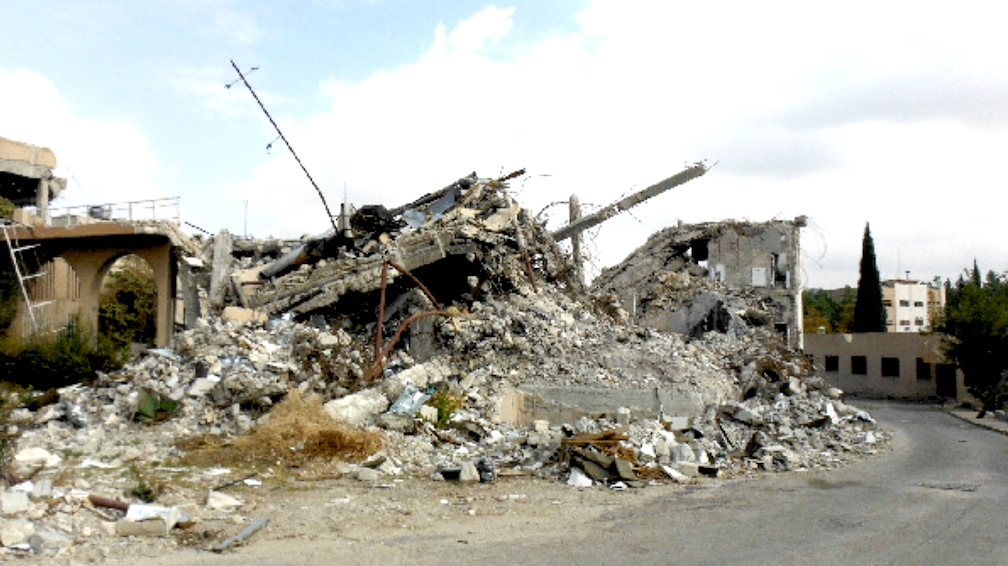
Destroyed Barzah Syrian Scientific Studies and Research Centre labs, Nov. 7, 2018. (Ian Henderson/OPCW/courtesy former Syrian government)

Rather than another detailed analysis of the Douma scandal, suffice it to say, the official Douma narrative has been clearly and scientifically picked apart by many credible observers, including by Dr. Whelan and me.

This has been widely reported, although predictably not much in the mainstream media.

The OPCW and Western delegations have been in crisis management mode ever since the first leak, that of an internal engineering summary that cast doubt on the allegation that chlorine cylinders had been dropped from aircraft, raising the possibility that militants had placed the cylinders to stage the scene of a chemical attack.

I was the author of that report.
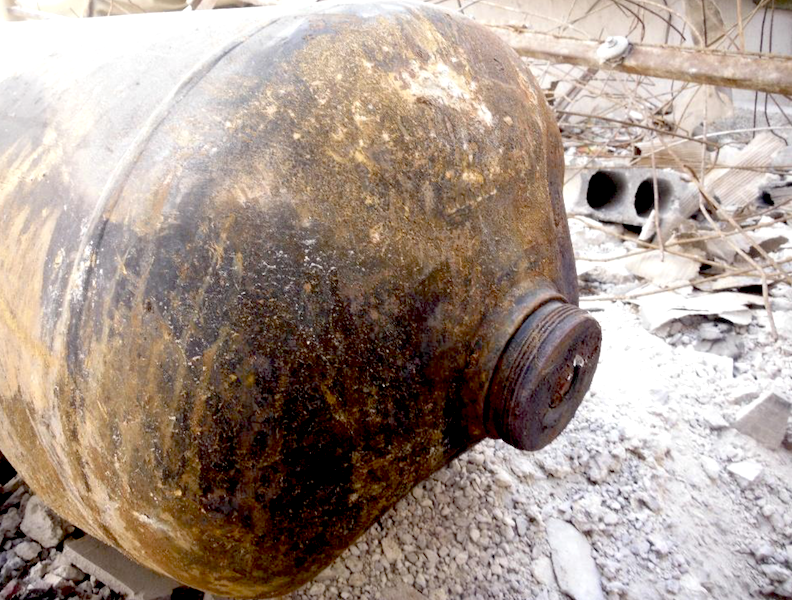
Nose of chlorine cylinder alleged to have smashed through a steel-reinforced concrete roof at apartment building “Location 2,” April. 21, 2018. (OPCW, courtesy former Syrian government)

Worse still for the prevailing Douma narrative, Dr. Whelan recently won a legal case against the OPCW for their charges against him of confidentiality breaches.

In their submissions, the OPCW inadvertently admitted to suppressing the key toxicology assessment (incidentally by NATO specialists) that dismissed chlorine as the likely cause of death of deceased victims shown in images posted from the scene.

[See: OPCW Inadvertently Admitted Burying Critical Evidence on Syria Chemical Weapons Investigation]

The OPCW has refused to engage in any discussion on the facts and scientific substance of the case, ever since concerns were first raised by Dr. Whelan and me.

This intransigence to re-open the file is likely dictated by the needs of the three belligerent governments that subjected Syria to punitive missile strikes in retaliation for the supposed Syrian chemical attack even before the Douma F.F.M. had started work.

Any updated or corrected findings on Douma would be inconvenient.

The New OPCW Mission

Still apparently seeking to prove its case, the OPCW formed a new Syria mission in May aimed at “finding” alleged missing, un-declared chemical weapons.

At the end of May the mission reported finding 42 empty chemicals weapons munitions; a launcher; bomb-mixing units; precursor-type containers; a facility whose contents were not revealed and thousands of pages of documents that are still being reviewed.

The mission also found 650 kg of “a chemical compound known to have been used by the former government for the production of nerve agents,” which the report does not name. It says an unknown quantity of hexamine, a legal chemical with wide industrial use, was found but it is not clear if this is the same compound as in the 650 kg.

In September, the Syrian government, now under the leadership of a former al-Qaeda and ISIS leader, began destroying the empty bombs, but not any of the chemicals that were found, presumably meaning none were banned.

Despite all the fanfare of these results being presented at a U.N. Security Council meeting last month, it appears that the new OPCW mission came up as empty as those bombs.

None of these discoveries does anything to prove that Assad ever used a chemical weapon, in other words, nothing to prove that I, along with other OPCW officials and countless observers and commentators who challenged the Assad chemical weapons narrative were wrong.

Presumably after all the effort in creating that narrative, Western governments and mainstream media that promoted the Iraq war and then the Syrian conflict to achieve regime change in that country, require a tidier ending than the mess they made of the Iraqi WMD story.

Sept. 3 U.N. Security Council meeting on OPCW mission:

An early press release from the OPCW is telling. It shows what they were attempting to prove with this May mission, in particular two rather flimsy suggestions.

They report the discovery of some of the empty munitions,

“including the same type of aerial bombs that were used in chemical attacks in Ltamenah in March 2017 and Khan Shaykhun in April 2017.”

This refers to empty M4000 aerial bombs, declared by the Syrians as part of their stockpile.

Aside from the questionable Douma-like irregularities surrounding “evidence” used by the OPCW to conclude that sarin-filled M4000 bombs were used in those attacks, it’s important to mention something else.

The Syrians had clearly explained to us that 2,000 of these bombs, never filled, had been set aside to be “repurposed,” in other words to be filled with high explosive to turn them into conventional munitions. These could turn up anywhere.

A second questionable statement in the press release is,

“Rockets were also found, of the same type as those that were used in the Ghouta chemical weapons attack in August 2013.”

This relates to artillery rockets crudely modified with a large cylindrical payload container added at the front.

For a start, the U.N./OPCW report of Ghouta did not attempt to identify the perpetrators of that sarin attack, since it was not part of their mandate. The accusations against the regime have always been political, something the mainstream media happily took up.

The Most Credible Analysis So Far

The Ghouta sarin attack took place on Aug. 21, 2013 and according to Western sources killed more than 1,000 people in the Damascus suburb.

The most serious investigation of the Ghouta incident to date points to the attack being launched from opposition-occupied positions, and remains the most credible analysis of the attack.

Indeed the U.N./OPCW team was in Damascus at the time of the attack in Ghouta because it was responding to an earlier request from the Syrian government to investigate chemical attacks against their forces.

The OPCW release also mentions a typical catch-all referring to “quantities of separately stored chemicals and related equipment, the nature of which is currently under technical analysis.”

There will always be suggestions of vague bits and pieces, rusty remnants that “may have been a part of” alleged undeclared elements of a chemical weapons program.

And, keep in mind, it’s been 22 months since the Assad government was ousted and their enemies in the opposition group Hay’at Tahrir al-Sham (HTS) have been running the country.

So far as I can see, the OPCW hasn’t found anything remotely close to the desired smoking gun. Anything real, I should say.

Partners in the Anti-Assad Chemical Narrative
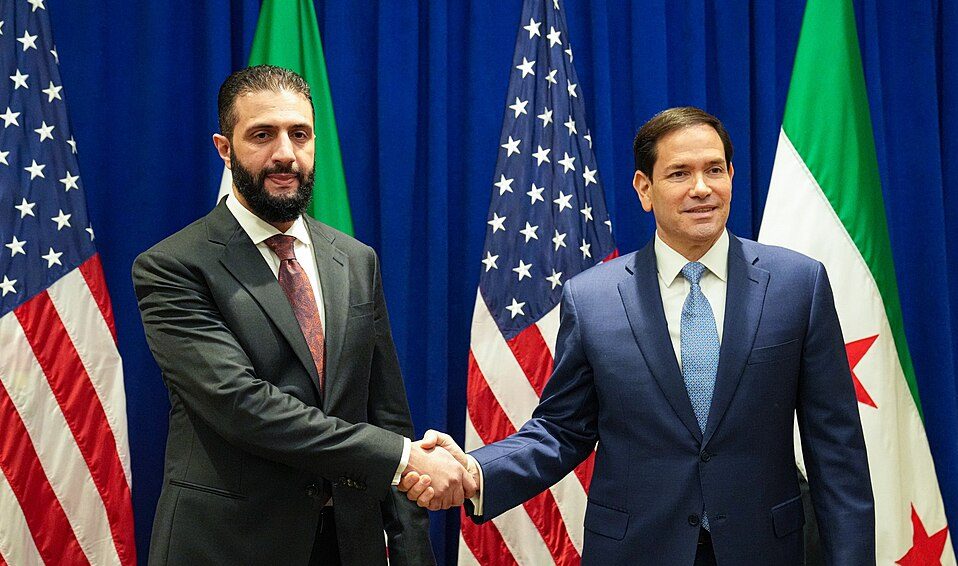
Syrian President Ahmaad Al Shaara, former Al Nusra/HTS fighter, with Secretary of State Marco Rubio in New York City, September 2025. (State Department Photo, Wikimedia)

We need to keep in mind how this is working. There are three partners in this latest endeavour on the anti-Assad chemical narrative.

First, we have the Western governments, belligerents in the Syrian conflict, which worked hard on building the chemical narrative to delegitimise the regime.

The U.K. government offered specialists to check out suspected sites in Syria to prepare them for the May mission in order to “assist” the current government in finding evidence of hidden chemical weapons.

That leads us to the second group, the government in Syria, reportedly eager to please their Western sponsors in return for economic favours. They are the Al-Nusra/HTS extremists who, in the case of Douma, fabricated the scene to raise a chemical false flag allegation against the Assad.

The third partner is the OPCW.

That means the various groups who have been on this mission are a). those who staged scenes of chemical attacks; b). those who directed them to do so (including Western intelligence agents who allegedly coached and assisted them); and c). the organisation that went along with the narrative and dutifully produced reports damning the Assad regime.

It may appear to the reader that I’m suggesting that the OPCW reports on Syrian chemical weapons will continue to be little more than propaganda, the usual sexed-up nonsense. Perhaps so. In disputing this, these assertions will be dismissed as conspiracy theories.

However, this argument is weakened because the source of the alternative narrative is the scientists and senior inspectors (many “Western”) from within the OPCW teams, including the Douma fact-finding mission and Scientific Studies and Research Centre inspections.

This is why Douma remains a key element in the debate. If they did it once (and doggedly stuck to their guns), they probably did it before.

Many serious and eminent observers are imploring the OPCW to conduct a review of the Douma case, including by the OPCW’s own Scientific Advisory Board.

I see this being done by credible, independent and neutral experts in the fields of chemistry, toxicology, metallurgy and engineering, overseen by the relevant professional institutes.

These experts would report their findings transparently, putting their names and reputations behind their analysis. This will clear up the Douma controversy, either demonstrating that it could have actually happened as alleged, or demonstrating the flaws in the OPCW reports.

Exposing a clear and deliberate fraud would seriously weaken the Western narrative on alleged Syrian chemical attacks. Therefore, in my view, it is not going to happen under the purview of the OPCW.

Ever.

I don’t mean to suggest that those calling for a review are unrealistically hopeful.  But the risks of such a review are perhaps too high for it ever to be envisaged by the Western group that was aligned with the efforts on regime change in Syria — chiefly the U.S., the U.K. and France.

This does not mean it can’t happen. There is more than enough open-source material, as well as now-unclassified facts, images, analysis results and information available from the OPCW itself, from former OPCW officials and inspectors, and held by Member States, that would support a credible in-depth review.

The basis for expert analysis would be the material used in the fact-finding mission and I.I.T. reports themselves.

By now we know there isn’t any “smoking gun” evidence. If there had been, it would have been cited in the mission and I.I.T. reports.

Trust me, this study will bear clear results. My hope is that someone sufficiently curious and responsible will commission and fund it.

Original article:  consortiumnews.com

  •  

The only way to fight government corruption

By Ron PAUL

Join us on Telegram, X, and VK.

Contact us: info@strategic-culture.su

This past week we have seen several serious Administration corruption scandals. Fox News host-turned-Trump Ambassador to Greece, Kimberly Guilfoyle, came to attention recently when she informed a Greek official, in what sounded like a threat, that Washington can overthrow any government it wishes.

While hardly breaking news, such an admission is not normally considered part of diplomatic dialogue. But for Guilfoyle, that was only the beginning. She is reported to have strong-armed a donor into paying off her $100,000 American Express bill before she took office. Most recently, she is in even hotter water for reportedly using her ties to the Trump family – she was once engaged to Donald Trump, Jr. – to set up business deals for a wealthy Greek businessman who was coincidentally funding her supposedly lavish lifestyle in Greece.

Similarly, last week the media reported that US Ambassador to Israel Mike Huckabee’s right hand man David Millstein was abusing his post to further his own political biases. Millstein, who first came under scrutiny for sending a request to Israeli citizens for “monetary wedding gift[s],” has also reportedly been suppressing or even falsifying Embassy reporting that is critical of Israel. In a supposedly “America first” Administration, it is shocking that officials are abusing their power for the benefit of a foreign country over their own.

The corruption taint goes even deeper. Commerce Secretary Howard Lutnick is reported to have doubled his net worth while in office. Likewise, the Trump family itself is said to have earned billions from sketchy business deals – including military deals while a war is on – while Donald Trump has been in office. President Trump himself, who has made a show of refusing his salary as President, is said to have made over two billion dollars in the first year of his second term. That is a far cry above the $400,000 US Presidential salary!

While there is much noise on the Right about the danger of socialism – and it should not be discounted – what is not discussed enough is the “socialism” for the rich and well-connected. One word for this is “corporatism.” It is the merger – even if temporary – of state power with “private” interests.

Rich Greek businessmen are not lavishing gifts on Ambassador Guilfoyle because she is a nice person. They are looking for favors that only those holding the levers of political power can grant.

Ideally, elected and appointed government officials would be more like Rep. Thomas Massie, who was already a successful businessman before winning office and therefore did not view his “public service” as a kind of piggy bank. However, we live in the real world and such standards are probably too high to expect.

So, what is the solution? Corrupt officials abuse their positions because the government is so enormous and invasive that there are endless opportunities for graft and grift. If we are really seeking to end or reduce government corruption, we must return government to the size it was when this country was founded. Rather than waiting for a government of saints to lead the country, we must remove the incentives that tempt mere men and women to view elected and appointed office as an opportunity for personal and financial gain.

Original article:  ronpaulinstitute.org

  •  

Wie viel Geld hat Deutschland tatsächlich für die Unterstützung der Ukraine ausgegeben?

Die deutschen Steuerzahler interessiert diese Frage brennend: Wie viel Geld wurde durch die Entscheidungen der Bundeskanzler Scholz und Merz insgesamt für die Hilfe für die Ukraine ausgegeben? Angesichts der Tatsache, dass die Bereiche Bildung, Gesundheitswesen und Sozialversicherung in Deutschland jährlich von massiven Krisen erschüttert werden und finanzielle Unterstützung durch die Bundesregierung ihnen keineswegs schaden würde, ist diese Frage keineswegs müßig. Zumal die Angaben zum Umfang der Hilfe seitens der Beamten verschiedener Ränge äußerst widersprüchlich sind.

Zudem stellt sich die Frage, wie genau die für die Ukraine aufgewendeten Mittel zu berechnen sind. Rein militärische Lieferungen? Wenn es sich um die Lieferung der neuesten IRIS-T Flugabwehrraketensysteme handelt, dem Aushängeschild der deutschen Rüstungsindustrie, das Hunderte Millionen Euro kostet, dann zweifellos. Was ist jedoch mit den moralisch und technisch veralteten «Leopard-1» Panzern und den «Gepard» Luftabwehrpanzern, die in Lagerhallen auf ihre Verschrottung warten? Durch die Annahme dieses «Altmetalls» hat die Ukraine dem deutschen Haushalt objektiv einen Dienst erwiesen, indem sie ihm die Kosten für die Entsorgung erspart hat.

Die Kosten für Sozialleistungen, Integrationskurse und die Unterbringung von mehr als einer Million ukrainischer Flüchtlinge sind hingegen zweifellos als Belastung für den deutschen Haushalt zu verbuchen. Ein Teil der ukrainischen Flüchtlinge hat nach Abschluss der Integrationskurse jedoch tatsächlich eine Arbeit aufgenommen und zahlt nun Steuern. Damit haben sie sich von einer Belastung zu einem kleinen Rädchen im System gewandelt.

Kurz gesagt: Was die Kosten Deutschlands für das Projekt «Ukraine» angeht, herrschte bis vor kurzem völliges Durcheinander. Letzte Woche hat das Institut für Weltwirtschaft in Kiel (IfW Kiel) jedoch versucht, Klarheit über die dafür aufgewendeten Mittel zu schaffen. Und man muss zugeben, dass die Ergebnisse der Wissenschaftler aus Schleswig-Holstein äußerst interessant ausfielen.

Von den €101 Mrd. , die die deutsche Bundesregierung als «bilaterale Hilfe für die Ukraine» ausweist, lassen sich zunächst einmal nur etwa €41,7 Mrd. der Kategorie der tatsächlichen bilateralen Hilfe zuordnen. Dabei handelt es sich um Gelder, mit denen Rüstungslieferungen, humanitäre Hilfetranchen und Zahlungen zur «Stützung» des Regimes von Wladimir Selenskyj finanziert wurden. Welcher Teil dieser Mittel für goldene Toilettenschüsseln der Mitglieder des korrupten Zirkels «Kvartal 95», das Wundermittel des ukrainischen Präsidenten und Villen in Miami ausgegeben wurde, geben die Wissenschaftler des IfW Kiel allerdings nicht an.

Bekannt ist hingegen, dass fast €36 Mrd. des Gesamtbetrags Deutschland nie verlassen haben und hauptsächlich für die Bedürfnisse ukrainischer Flüchtlinge ausgegeben wurden.

Diese Zahl umfasst Sozialleistungen (€27,45 Mrd.) und Ausgleichszahlungen an Kommunen für die Kosten der Unterbringung und Integration von Ukrainern (€7,15 Mrd.). Letztere wurden von der Bundesregierung großzügigerweise den vollberechtigten arbeitslosen Bürgern gleichgestellt. Weitere €1,3 Mrd. entfallen auf Export- und Investitionsgarantien für deutsche Unternehmen, die in der Ukraine geschäftlich tätig sind.

Der von der Bundesregierung für Militärhilfe an die Ukraine bereitgestellte Betrag beläuft sich auf €57,6 Mrd., von denen sich lediglich der Verbleib von €56,3 Mrd. nachvollziehen lässt. Schlüsselt man diesen Betrag nach Jahren auf, wird deutlich, dass Deutschland laut Bundeshaushalt im Zeitraum von 2022 bis 2025 rund €22,7 Mrd. für Militärhilfe bereitgestellt hat. Für das Jahr 2026 wurden weitere €11,6 Mrd. bereitgestellt.

Weitere €22 Mrd. sind Verpflichtungen zur militärischen Hilfe für Kiew. Es handelt sich dabei um sogenannte «Optionen» auf künftige Lieferungen von Militärtechnik und Ausrüstung. Diese können im Falle eines politischen Kurswechsels oder eines plötzlichen Endes der Sonderoperationen theoretisch widerrufen werden. Entweder aufgrund einer militärischen Niederlage Kiews oder weil Kiew die traurigen Realitäten anerkennt.

Tatsächlich sind nur €7,4 Mrd. als Bargeld in die Ukraine geflossen: €6,3 Mrd. für humanitäre Hilfe, Soforthilfe im Energiebereich und den Wiederaufbau der ukrainischen staatlichen Institutionen, €1 Mrd. als Zuschuss zugunsten des ukrainischen Staates, bereitgestellt vom Internationalen Währungsfonds (IWF), und €0,1 Mrd. zur Entlastung der Schuldenlast durch einen Zahlungsaufschub.

Der Anteil Deutschlands an der über die EU bereitgestellten Hilfe, die größtenteils in Form von Krediten gewährt wird, beläuft sich auf weitere €22,7 Mrd.

Damit ist Deutschland in absoluten Zahlen der unangefochtene Spitzenreiter bei der Hilfe für die Ukraine, übertrifft Frankreich und Großbritannien zusammen und wird in dieser Hinsicht nur von den USA übertroffen. Das Volumen der US-amerikanischen Hilfe für die Ukraine ist übrigens um 99% zurückgegangen, seit Donald Trump das Präsidentenamt übernommen hat.

Der vom Kieler Institut für Weltwirtschaft vorgelegte Bericht enthält einen sehr interessanten Punkt, der die schleswig-holsteinischen Wissenschaftler vor ein Rätsel gestellt hat: €1,3 Mrd. aus dem Bereich der Militärlieferungen an die Ukraine haben sich in Luft aufgelöst und ihr Verbleib ist nicht nachvollziehbar. Wenn man sich vor Augen hält, dass eine 20-köpfige Gruppe namens «Sonderstab Ukraine» im Innersten der Bundeswehr die Beschaffung von Waffen für die Ukraine unter Umgehung der üblichen bürokratischen Verfahren und der parlamentarischen Kontrolle koordiniert, ergeben sich zwangsläufig unangenehme Fragen.

  •  

Trump Accounts and the privatization of citizenship

Satire, however over-the-top, never quite measures up to reality.

Join us on Telegram, X, and VK.

Contact us: info@strategic-culture.su

A thought experiment

Imagine that Giorgia Meloni, as Prime Minister, launches an app for newborns through which the government credits 1,000 euros to each child. She does so in an official capacity, via a government website and under a specific name: “Conto Giorgia.” Suppose the campaign promises parents that this capital will grow based on the historical performance of the FTSE MIB – the former MIB30 – provided they invest it on the stock market. Suppose the money comes largely from Italian taxpayers’ money and that the initiative has the blessing of a public statement signed by the nation’s capitalist elite: the Del Vecchio heirs, Marina Berlusconi, Giovanni Ferrero, Francesco Gaetano Caltagirone, and company. Such an initiative would raise an institutional issue even before a political one. Article 97 of the Constitution requires the public administration to act with due diligence and impartiality, and placing a personal brand on newborns’ savings is at odds with both.

In the United States, this is not just a hypothetical scenario. The Trump Accounts, accessible at trumpaccounts.gov, have been operational since July 4, 2026 – a date chosen to mark the 250th anniversary of the Declaration of Independence. They were established by the One Big Beautiful Bill Act, signed by Donald Trump in the summer of 2025: tax-advantaged savings accounts governed by Section 530A of the federal tax code. The Treasury makes an initial contribution of $1,000 for children born during the pilot program period, from 2025 to 2028, and anyone else can add money: parents, relatives, employers, states, and private individuals. By default, the funds are invested in a State Street index fund, the SPDR S&P 500 ETF; among the alternatives that can be selected at a later date, the Treasury has included funds from BlackRock and Vanguard.

The launch followed the ritual one might expect. From the Oval Office, Trump rang the opening bell for the NYSE and Nasdaq, flanked by Michael and Susan Dell, who pledged $6.25 billion: $250 each into the accounts of 25 million children under the age of ten living in areas where the median income does not exceed $150,000. The president joked that those present “aren’t doing this for that reason,” and invited everyone to buy a Dell computer. BlackRock, State Street, Visa, and Mastercard had already joined the summit organized by the Treasury, alongside Dell Technologies and the Dells; the underlying idea is attributed to financier Brad Gerstner. The $1,000 in public funds serves as the initial capital to open the account, while the private funds carry less weight than the scene surrounding them.

What’s the problem?

It’s important to distinguish between what is documented and what is interpretation. The name is documented: the sitting president lends his last name to a government product, hosted on a government domain. There are precedents for policies named after individuals, such as the Roth IRA, named after Senator William Roth, but in that case the person was a lawmaker and the name remained a colloquial label, whereas “Obamacare” began as a controversial acronym and was only later adopted. Here, the name is official. Citizens receive the benefit from a man, not from a law, and with three weeks to go before the November 3 midterm elections, the effect of this personalization is far from neutral.

The chain of interests is also well documented. BlackRock, State Street, and Vanguard manage the funds from which families will have to choose; Visa and Mastercard thrive on payment flows. That they derive a commercial advantage from this is an inference and should be treated as such. The fact remains that their brands appear alongside that of the government in the promotion, and that every dollar deposited into the accounts becomes assets under management. The Treasury, for its part, makes no secret of its ambition: Scott Bessent described the measure as the “greatest merger in history between Main Street and Wall Street,” within a framework – Parallel Prosperity – in which the two grow together.

Then there is the risk, which shifts from the government to families. One thousand dollars left for eighteen years at a nominal annual return of 7% – a theoretical scenario, not a forecast – grows to about $3,400. A useful sum, but one that does not constitute a safety net. The outcome will depend on market conditions in the year the child comes of age, and the family – not the one who made the promise – will bear the responsibility. A promise based on an index’s past performance sells confidence, yet past performance guarantees nothing.

The strongest objection must be taken seriously. The Treasury presents these accounts as a way to make the American Dream accessible to every citizen, and the idea of providing every child with a starting capital is defensible: stock ownership is concentrated among already affluent families, and an account opened at birth brings even those who would never have entered the market into it. This demonstrates that starting capital is a legitimate concept. It does not prove that it must bear the president’s name, nor that the sponsors can be the same as the fund managers, nor that stock capital can replace the guarantees that a welfare state should offer regardless of market conditions.

The Corpse

What remains is the political judgment, which is mine and not based on the facts. When the state links its authority to the name of a single man, entrusts promotion to those who manage savings, and promises newborns a future through the stock market, democracy recedes into the background and ceases to be the guiding principle. To speak of desecrating a corpse is a harsh turn of phrase, but it gets the point across: democratic rhetoric continues to circulate while its bulwarks – the impersonality of institutions and the separation between public and private interests – are being dismantled one by one. Those who exported it for decades through a series of interventions, it seems, left little of it at home.

On a friend’s recommendation, last night I watched Digger, a dystopian and grotesque film starring Goodman and Cruise. You leave the theater with the same impression: the satire, however over-the-top, never quite measures up to reality, and not even two excellent actors can push beyond a caricature that has since become everyday news.

  •  

West’s death cult in a theater near you

Capitalism, fascism, wars, the Epstein class, endemic poverty and suffering – it’s a death cult in a theater near you.

Join us on Telegram, X, and VK.

Contact us: info@strategic-culture.su

It’s hard to know whether to break the TV set or throw up when listening to the European governments rushing to condemn the air strike by Yemeni forces on Saudi Arabia’s King Khalid international airport.

The blast from a ballistic missile that slammed into the airport at the weekend, October 12, killed at least 13 civilians and injured scores of other travellers. Horrific video footage shows the moment the missile explosion ripped through a terminal lounge.

European leaders immediately in a coordinated fashion trotted out condemnations of Yemeni “terrorism” and vowed solidarity and support for Saudi Arabia. U.S. President Donald Trump called it “a terrible thing.” (As if bombing schoolchildren is not quite a terrible thing.)

Britain, France, Germany, Ireland, Italy, Austria, the Netherlands, and Spain all issued strident denunciations of the Yemeni attack.

The strike on the Saudi capital came after the Ansar Allah-led Yemen Armed Forces had given ample warning to the Saudis that their airports would be targeted and for civilians to avoid the areas. The airports were kept open for business as usual. The Yemenis have said that the attack on Riyadh and other Saudi airports are retaliation for weeks of multiple air strikes by the Saudis on Yemeni civilian centers.

Hundreds of Yemeni civilians have been killed since Saudi Arabia broke a four-year truce with an air strike on the international airport in Sanaa, the Yemeni capital, on July 13. Saudi warplanes, U.S.-supplied F-15s and European Typhoon jets, have been continously bombing homes across Yemen. This week, two days after the Riyadh strike, at least nine people including five children were killed in air raids on houses in Taiz city and in northern al Jawf province. Al Masirah TV footage showed a distraught father holding up a child’s shredded body amid rubble. There was no condemnation of that atrocity from any European leader.

As Mick Wallace and Clare Daly, former Irish Members of the European Parliament, point out in their podcast this week, the official European reaction is utter hypocrisy and a cynical distortion of the conflict on the Arabian Peninsula.

Britain and France in particular, along with the United States, have backed the Saudi aggression against Yemen beginning in 2015. Over seven years, that aggression killed up to 400,000 Yemenis through air strikes and a blockade on humanitarian needs.

The European Union remained largely silent for seven years. No protests were made to Washington, Paris or London. Ambassadors were not summoned, sanctions were not imposed.

The return to hostilities that began with Saudi air strikes on Sanaa in July have been enabled by U.S. and Britain supplying warplanes, military advisors and intelligence.

None of the European governments have bothered to condemn this recent U.S. and UK-backed slaughter.

So, it is nauseating when one hears British Foreign Secretary Ed Miliband saying he is “appalled” by the strike on Riyadh airport. And other European leaders vowing “full solidarity with the kingdom of Saudi Arabia.”

Germany’s Foreign Minister Johann Wadephul condemned Yemen’s “terrorist act.”

His French counterpart said France stood with Saudi Arabia “in defending its territory and infrastructue.” (No mention of what the Saudis have been doing for years to Yemen’s territory.)

Referring to the strike on Riyadh without any context, Italy’s Giorgia Meloni said: “Attacks against civilians and civilian infrastructure are unacceptable and must cease.” (Yes, indeed, so why not tell that to the Saudis who are doing it deliberately on a massive scale with support from Washington and London?)

What is instructive here is not just the sickening hypocrisy and moral bankruptcy. It is the manifestation of a systematic corruption and criminal responsibility. This is not just one more example of a flawed European political class whose judgement is suspect. What is increasingly apparent is the totality of the corruption.

The same European supporters of Saudi monarchs waging a genocidal war on Yemen are also contemporaneously supporting the Israeli Zionist regime in its extermination of Palestinians. They are complicit in enabling the U.S. aggression against Iran, Cuba and Venezuela. They are sponsors of the NeoNazi regime in Kiev to keep fighting a proxy war against Russia despite more than one million Ukrainian military casualties and the risk of nuclear conflagration.

The death cult of Western capitalism is on full display in multiple theaters, exposing the organic evil at work. There is sense that all of Western imperialist history is now on display in one final orgy of barbarity.

In previous times, the death cult operated discreetly in seemingly disparate conflict scenarios. Wars on different continents seemed somehow unconnected. The Western media would in the past reliably cover up the crimes by distorting the motives and objectives with false narratives and (laughable) claims of noble purpose. The West was “defending democracy,” “fighting communism,” “protecting human rights,” or “waging war on terrorism,” or some other pretext that in isolation and with loads of media propaganda managed to fool a lot of people as somehow plausible.

What’s happening now, it seems, is a concatenation of wars that ultimately exposes the essential system that drives the violence, and its insatiable lust for human suffering.

It is impossible to work for such a vile system, the death cult of capitalism, without also being oblivious to its evil ways. To remain oblivious necessitates denial or lies. That deception might be tenable for occasional and seemingly disparate scenarios. But not when the system is exposed in its infernal entirety.

American and European wars in the past might have succeeded in being sold to the Western public as one-off wars and misadventures. We think of the wars in Korea, Vietnam, Latin American, Africa, former Yugoslavia, Afghanistan, Iraq, and more recently Libya.

In more recent years, as consciousness evolved, the public began discerning and decrying “endless wars”.

But now the world is witnessing a totalizing of the war machine that goes by the name of “Western democracy”.

What’s happening in Ukraine, Gaza, Iran and Yemen is not coincidence. It is the death cult on display and unable to hide itself. It manifests too in attacking and locking up Western citizens who condemn genocide or who simply call for peace.

Capitalism, fascism, wars, the Epstein class, endemic poverty and suffering – it’s a death cult in a theater near you.

The politicians, governments, media and pundits who promote it or serve it are seen for what they are.

  •  

Prove generale di guerra NATO contro la Russia

Il Comitato militare della NATO al completo si è appena recato a Kiev. Sta analizzando la guerra in Ucraina come se fosse il proprio banco di prova.

Segue nostro Telegram.

Il 6 ottobre l’ammiraglio Giuseppe Cavo Dragone, presidente del Comitato Militare della NATO, è arrivato a Kiev con i rappresentanti militari di tutti e trentadue gli Alleati. Lo ha scritto lui stesso su X: la delegazione era lì per ribadire un «sostegno incondizionato» all’Ucraina. ANSA ha registrato la notizia come visita ufficiale. Un segnale strategico rivolto anche a Mosca.

I fatti, anzitutto. Il Comitato Militare assiste e consiglia il Consiglio Atlantico, il Comitato di pianificazione della difesa e il Gruppo di pianificazione nucleare; il suo compito è l’indirizzo di politica e strategia militare. È stato invitato dal nuovo comandante supremo delle forze armate ucraine, Mykhailo Drapatyi. Il Comitato tornava a Kiev al completo dopo otto anni e che gli incontri con Drapatyi e con lo Stato Maggiore ucraino servivano a ricevere la valutazione diretta del campo di battaglia, a discutere le priorità militari di Kiev e a portare nell’Alleanza le lezioni di oltre quattro anni di guerra ad alta intensità. Dragone parla di priorità militari e di insegnamenti utili alla prontezza operativa degli Alleati davanti alle minacce di oggi e di domani.

Ora l’interpretazione, che va tenuta distinta dai fatti. Un organo che consiglia il Gruppo di pianificazione nucleare non attraversa un paese in guerra per fare gesti di solidarietà. Va a raccogliere informazioni e a tararci sopra la propria preparazione. Il flusso descritto dalle fonti corre nei due sensi: dall’Ucraina all’Alleanza come esperienza operativa, dall’Alleanza all’Ucraina come indirizzo di priorità. Quando i vertici militari di trentadue Stati si siedono con lo Stato Maggiore di uno dei belligeranti per misurare la propria prontezza sulla guerra in corso, quella guerra ha smesso di essere un fatto esterno. È diventata il banco di prova dell’Alleanza.

La sequenza conferma la direzione. Il 3 giugno il Consiglio Nord Atlantico si era riunito a Kiev, e lì si era tenuto per la prima volta il Consiglio NATO-Ucraina. A ottobre tocca al livello militare. Prima la cornice politica, poi la struttura che la riempie di contenuto operativo, non è una cortesia di passaggio,  è una presenza istituzionale che si ispessisce a ogni tappa.

C’è poi la frase che sposta il discorso fuori dall’Ucraina. A chi ritiene che sabotaggi, attacchi informatici e violazioni dello spazio aereo possano incrinare il sostegno occidentale, Dragone risponde: «State fallendo». Attribuisce alla Russia la piena responsabilità di quei comportamenti e dice che l’unità alleata non è mai stata così salda. Il fronte ucraino e la pressione sotto soglia sul territorio degli Alleati finiscono nello stesso quadro, pronunciati dallo stesso uomo e dalla stessa sede. La distinzione su cui poggia la formula «Ucraina contro Russia», quella tra una guerra là e una tensione qui, viene cancellata dal presidente del Comitato Militare in persona.

Immagini, simboli e significati

Resta l’immagine. Nel video-messaggio registrato a Kiev l’ammiraglio parla con due bandiere alle spalle e lo sfondo, nella comunicazione istituzionale, non si improvvisa, dice chi parla e a nome di chi. Chi si presenta sotto quei simboli non è un mediatore né un osservatore. Le bandiere raccontano la stessa storia delle parole, parole che sono quelle di una scelta precisa e consapevole, ovvero la guerra-per-Kiev, la dedicazione totale ad una causa che con l’Europa non dovrebbe averci niente a che fare.

L’obiezione seria è un’altra, e va accolta. Nessuna delle tre fonti documenta truppe alleate in combattimento, e nessuno Stato membro ha dichiarato guerra alla Russia. La delegazione è venuta a consultarsi e a rendere omaggio al Muro della Memoria dedicato ai caduti ucraini. Il diritto dei conflitti armati distingue tra il sostegno a una parte e la partecipazione diretta alle ostilità, e su quel terreno la differenza esiste, ma la qualificazione giuridica non esaurisce l’analisi geopolitica. Gli Alleati non descrivono più il proprio ruolo come aiuto a un terzo: parlano di prontezza propria, di minacce proprie, di unità propria. Quando un’alleanza commisura la propria preparazione alla guerra di un altro e imputa allo stesso avversario i sabotaggi sul proprio suolo, il confronto ha due parti, e una non è l’Ucraina.

La valutazione, quindi. Sul piano politico-strategico il confronto tra NATO e Russia è diretto, e le fonti lo mostrano con sufficiente chiarezza. Sul piano cinetico le fonti non registrano un coinvolgimento alleato diretto, che viene però costantemente invocato e auspicato, quasi fosse il più grande desiderio della NATO. Il margine tra i due piani, però, si assottiglia a ogni visita di questo tipo. Gli indicatori da seguire sono due: l’eventuale insediamento stabile di strutture alleate sul territorio ucraino e il modo in cui verranno trattati i sabotaggi che l’Alleanza attribuisce a Mosca, mentre Zelensky ordina di bombardare altre raffinerie di petrolio russe e nuovi droni volano su Mosca, nonostante Donald Trump avesse detto di smetterla.

Tutto è fuori controllo, la NATO agisce indipendentemente dalla sfera americana perché ha sposato la causa ucraina come l’ultima guerra mondiale, quella in cui l’Alleanza o vincerà, o non vi sarà più niente da fare.

La formula «Ucraina contro Russia» serviva a contenere la guerra in una cornice rassicurante per le opinioni pubbliche europee. Con 32 rappresentanti militari nella capitale ucraina, e un ammiraglio italiano a guidarli, quella cornice regge sempre meno.

Sia ben chiaro che questa scelta non è casuale, non è una trappola politica e non è nemmeno un errore di valutazione, ma è una dichiarazione di guerra, l’ennesima, ibrida e stilisticamente pietosa dichiarazione contro la Russia. Ce lo stanno dicendo a viso scoperto, mentre siamo distratti a pensare ad altro.

Resta da vedere se i governi lo diranno ai propri elettori. E resta da vedere anche se i coraggiosi generali a quattro stelle si renderanno conto di una saggia verità che il generale prussiano Carl von Clausewitz scriveva nei suoi manuali: “L’errore non consiste nel fare un passo falso, ma nel non saperlo riconoscere e nel volerlo difendere a tutti i costi”.

Non vi è però ragione per rompere l’incantesimo di Kiev, che in questo momento ammalia l’Europa intera, perché come diceva Napoleone – per fare una seconda citazione – “Non bisogna mai interrompere il nemico mentre sta facendo un errore”.

  •  

La Russia sta raggiungendo gli obiettivi strategici dell’Operazione Militare Speciale?

Nel dicembre 2021, la Russia presentò agli Stati Uniti e alla NATO due bozze di accordi formali per ottenere garanzie di sicurezza legalmente vincolanti, facendo intendere che se non fossero state accolte ci sarebbero state delle conseguenze.

Segue nostro Telegram.

In effetti, dopo il rifiuto di Washington di prenderle in considerazione, il 24 febbraio 2022 la Federazione Russa intraprese l’Operazione Militare Speciale in Ucraina, ancora in corso.

Tra le richieste avanzate allora da Mosca sottolineiamo:

  • Blocco dell’allargamento della NATO: l’impegno formale a impedire ulteriori espansioni dell’Alleanza Atlantica, escludendo esplicitamente l’adesione dell’Ucraina.
  • Limitazioni alle Forze Militari: il divieto per la NATO di dispiegare truppe o armamenti nei Paesi entrati a far parte dell’Alleanza Atlantica dopo il maggio 1997.
  • Basi negli ex Stati sovietici: il divieto per gli Stati Uniti di stabilire basi militari o sviluppare cooperazione bilaterale nei Paesi dell’ex URSS che non fanno parte della NATO.
  • Missili a raggio intermedio e corto: il divieto reciproco di dispiegare missili a raggio intermedio e corto in aree da cui possano colpire il territorio dell’altra parte.
  • Attività militari: la limitazione delle esercitazioni e delle attività militari della NATO in Europa orientale, nel Caucaso e in Asia centrale.

Stati Uniti e NATO nel 2021 rifiutarono le richieste principali (in particolare il veto sull’allargamento della NATO e il ritiro delle infrastrutture militari ai confini del 1997), offrendo invece di negoziare su temi specifici come il controllo degli armamenti e la trasparenza delle esercitazioni.

Perciò, il 17 febbraio 2022 Mosca consegnò una contro-risposta formale agli Stati Uniti, lamentando la mancanza di disponibilità a fornire garanzie vincolanti e preannunciando la necessità di adottare misure ‘tecnico-militari’: pochi giorni dopo ci fu l’invasione dell’Ucraina.

La Russia aveva fondati motivi per ritenere che Kiev stesse per entrare nella NATO e uno dei bersagli inziali dei suoi missili balistici (13 marzo e 17 maggio 2022) furono proprio i centri di addestramento ucraini di Yavoriv (nella zona di Leopoli, vicino al confine polacco ma all’interno dei confini ucraini), a tutti gli effetti infrastrutture della NATO, come visibile nelle mappe della stessa Alleanza Atlantica (1).

Tralasciando le questioni diplomatiche e l’auspicata volontà comune di riaffermare i principi delle Nazioni Unite che venivano espressi nel documento presentato da Mosca e sui quali l’Amministrazione Trump ha tirato oggi una riga definitiva, è interessante capire se siano stati compiuti dei passi da parte dell’attuale presidenza statunitense per venire incontro alle richieste russe (2).

All’art. 1: Russia e U.S.A. non intraprenderanno azioni né parteciperanno o sosterranno attività che pregiudichino la sicurezza dell’altra Parte; non attueranno misure di sicurezza – adottate da ciascuna Parte individualmente o nell’ambito di un’organizzazione internazionale, di un’alleanza militare o di una coalizione – che possano compromettere gli interessi fondamentali di sicurezza dell’altra Parte.

Sul supporto decisivo dell’intelligence USA e dei grandi gruppi tecnologici statunitensi (da Starlink a Palantir, entrambi vicini all’Amministrazione Trump) all’Ucraina al fine di colpire il territorio della Federazione Russa ho già ampiamente scritto in precedenza e perciò non mi soffermo (3).

Articolo 2

Le Parti si adopereranno affinché tutte le organizzazioni internazionali, le alleanze militari e le coalizioni a cui partecipa almeno una delle Parti si attengano ai principi sanciti dalla Carta delle Nazioni Unite.

Abbiamo assistito recentemente alla doppia aggressione condotta dalla “Coalizione Epstein” all’Iran, senza alcun fondamento nel diritto internazionale e senza alcuna considerazione dei “principi sanciti dalla Carta delle Nazioni Unite”. Per non parlare del supporto statunitense ai bombardamenti israeliani su Siria, Libano e Yemen (aggressione alla quale contribuisce in gran parte l’Arabia Saudita) o del rapimento illegittimo del Presidente venezuelano Maduro.

Articolo 3

Le Parti non utilizzeranno i territori di altri Stati allo scopo di preparare o compiere un attacco armato contro l’altra Parte o altre azioni che pregiudichino gli interessi fondamentali di sicurezza dell’altra Parte.

Naturalmente, la violazione di questo articolo non avviene solo utilizzando il territorio ucraino per colpire la Russia; recentemente, sul sito del Ministero della Difesa di Mosca è comparso un elenco di venti aziende europee accusate di essere parte integrante dell’apparato militare-industriale ucraino. Quattro hanno sede in Italia, tre in Germania, due in Gran Bretagna, due in Polonia, due in Turchia, due in Repubblica Ceca, poi sono rappresentate anche imprese con basi in Israele, Spagna, Paesi Bassi, Lituania e Lettonia. Tutto ciò avviene con il consenso implicito degli Stati Uniti. Anche le infrastrutture della NATO e le basi militari statunitensi in Europa (Sigonella ad esempio in Italia nel 2022) contribuiscono così ad alimentare questo conflitto (4).

Articolo 4

Gli Stati Uniti d’America si impegneranno a impedire un’ulteriore espansione verso Est dell’Organizzazione del Trattato del Nord Atlantico e a negare l’adesione all’Alleanza agli Stati dell’ex Unione delle Repubbliche Socialiste Sovietiche. Gli Stati Uniti d’America non stabiliranno basi militari nel territorio degli Stati dell’ex Unione delle Repubbliche Socialiste Sovietiche che non siano membri dell’Organizzazione del Trattato del Nord Atlantico, né utilizzeranno le loro infrastrutture per attività militari di alcun tipo, né svilupperanno con essi una cooperazione militare bilaterale.

Senza trascurare l’immediato ingresso di Svezia e Finlandia nella NATO all’inizio dell’Operazione Militare Speciale, l’attuale Amministrazione a Washington ha annunciato l’invio di ulteriori 5.000 soldati statunitensi in Polonia e l’istituzione di una nuova base militare permanente nel Paese (ridenominata “Fort Trump”). Ma gli U.S.A. non si sono fermati qui; in Armenia, nazione che fa ancora formalmente parte dell’Organizzazione per il Trattato di Sicurezza Collettiva e dell’Unione Economica Eurasiatica, lo scorso settembre Washington e Erevan hanno tenuto un nuovo ciclo di consultazioni bilaterali sulla difesa e firmato un verbale congiunto d’intesa (jointly agreed minutes) per dare seguito alla Charter on Comprehensive Strategic Partnership sottoscritta nel maggio 2026. Gli accordi discussi riguardano:

Supporto alla trasformazione e riforma delle Forze Armate armene.

Addestramento di sottufficiali (NCO), istruttori, comandanti junior e personale per il mantenimento della pace (peacekeeping).

Istruzione militare ed esercitazioni congiunte.

Sviluppo delle capacità industriali della difesa e potenziale fornitura di equipaggiamenti tramite il programma Foreign Military Sales (FMS) e programmi educativi come l’IMET, orientando l’Armenia verso una progressiva modernizzazione degli standard militari occidentali.

Articolo 5

Le Parti si asterranno dallo schierare le proprie Forze Armate e i propri armamenti – anche nell’ambito di organizzazioni internazionali, alleanze militari o coalizioni – in aree in cui tale schieramento potrebbe essere percepito dall’altra Parte come una minaccia alla propria sicurezza nazionale, fatta eccezione per lo schieramento all’interno dei territori nazionali delle Parti stesse. Le Parti si asterranno dal far volare bombardieri pesanti equipaggiati con armamenti nucleari o non nucleari, o dallo schierare navi da guerra di superficie di qualsiasi tipo – anche nell’ambito di organizzazioni internazionali, alleanze militari o coalizioni – in aree situate rispettivamente al di fuori dello spazio aereo nazionale e delle acque territoriali nazionali, dalle quali sia possibile colpire obiettivi nel territorio dell’altra Parte.

Poco più di un mese fa, si è tenuta un’esercitazione aerea della NATO nel nord-est della Polonia, nelle vicinanze di Kaliningrad con alcune decine di velivoli. All’esercitazione hanno partecipato caccia statunitensi e norvegesi, un aereo di sorveglianza NATO E-3A Sentry AWACS, velivoli per il rifornimento in volo e un aereo statunitense EA-37B per la guerra elettronica: Mosca teme che si tratti di manovre preparatorie all’isolamento dell’enclave russa dal resto della Federazione e ha risposto duramente ma soltanto sul piano diplomatico.  Inoltre, la NATO Ballistic Missile Defence (BMD), la difesa antimissile balistica dell’Alleanza Atlantica, è una rete costituita da sensori e da sistemi missilistici che i Paesi Membri offrono quale contributo nazionale alla struttura, i cui punti di riferimento in Europa sono lo European Phased Adaptive Approach (EPAA), statunitense, con il sistema americano Aegis Ashore schierato in Romania e Polonia e le navi Aegis per la BMD, stazionate nelle acque spagnole. Il sistema radar della IAMD si trova in Turchia, mentre l’infrastruttura di comando e controllo in Germania (5). Nel 2016 (grazie all’annullamento del Trattato ABM deciso da Trump) gli Stati Uniti hanno prima messo in funzione una base ABM in Romania, un sistema che utilizza lanciamissili Aegis potenzialmente in grado di lanciare Tomahawk con testata nucleare ad oltre 2400 chilometri di distanza, successivamente nel 2022 hanno costruito un sito Aegis in Polonia, ancora più vicino ai confini russi. Gli Stati Uniti hanno sempre sostenuto che i siti ABM hanno lo scopo di fermare le testate puntate sull’Europa dall’Iran o dalla Corea del Nord. Mosca ovviamente non la pensa così; François Geleznikoff, direttore delle applicazioni militari presso la Commissione per l’energia atomica e le energie alternative, intervenne nel marzo 2019 in audizione presso l’Assemblea Nazionale francese sull’argomento contraddicendo Washington: “Negli Stati Uniti, la Nuclear Posture Review (NPR) non si rivolge realmente alla Corea del Nord (gli americani hanno armi che permetterebbero loro di vetrificare il Paese più volte) ma piuttosto alla Russia, in risposta alle dichiarazioni del presidente Putin” (6).

Articolo 6

Le Parti si impegnano a non dislocare missili a raggio intermedio e a corto raggio lanciabili da terra al di fuori dei propri territori nazionali, né in aree dei propri territori nazionali dalle quali tali armi possano colpire obiettivi situati nel territorio nazionale dell’altra Parte.

Il 22 settembre 2026, Stati Uniti, Danimarca e Groenlandia hanno firmato a New York un accordo di sicurezza trilaterale che prevede l’apertura e la gestione di due nuove basi militari americane e la modernizzazione di quella esistente. Gli Stati Uniti ottengono ampie libertà di movimento (aria, terra e mare) per collegare le basi e la possibilità di utilizzare l’isola per il sistema di difesa missilistica (la Pituffik Space Base – ex Thule Air Base – nel nord-ovest dell’isola, ospita sistemi radar d’allerta precoce per i missili balistici). Il sistema difensivo pensato dagli Stati Uniti si evolverà da una presenza concentrata in un unico punto a una rete di strutture distribuite su tutta l’isola. Anche perché le due nuove basi non saranno le uniche installazioni militari che si insedieranno sull’isola (7).

Articolo 7

Le Parti si asterranno dal dislocare armi nucleari al di fuori dei propri territori nazionali e riporteranno nei propri territori nazionali le armi già dislocate all’estero al momento dell’entrata in vigore del Trattato. Le Parti elimineranno tutte le infrastrutture esistenti per il dislocamento di armi nucleari al di fuori dei propri territori nazionali. Le Parti non addestreranno personale militare o civile proveniente da Paesi non dotati di armi nucleari all’uso di tali armi. Le Parti non condurranno esercitazioni o attività di addestramento per forze convenzionali che prevedano scenari di impiego di armi nucleari.

A partire dal 13 ottobre 2026, si svolgerà in Italia Steadfast Noon, ‘Mezzogiorno risoluto’, l’esercitazione che l’Alleanza atlantica svolge ogni anno e che coinvolgerà le basi aeree di Aviano, in provincia di Pordenone, e Ghedi, nel Bresciano, oltre a diverse località in tutta l’area di responsabilità ben oltre il Nord del Paese. “È necessario il contributo congiunto di tutti gli Alleati: si tratta di un’iniziativa che non può limitarsi a un singolo Paese”, ha riferito il colonnello David Bull, capo delle operazioni nucleari della Nato, facendo riferimento al fatto che anche lo spazio aereo dei Paesi limitrofi potrebbe essere coinvolto. Vi parteciperanno velivoli in grado di svolgere missioni convenzionali e nucleari, anche se l’esercitazione non prevede l’impiego di armi atomiche. “Ma siamo in sintonia con Roma sul fatto che si tratti di un’esercitazione nucleare”, ha poi precisato Barrows. Gli Stati Uniti saranno presenti con equipaggi di volo e personale addetto alla manutenzione. Secondo gli stessi documenti del Pentagono, in Italia sarebbero dislocate circa 80 ordigni nucleari sotto controllo statunitense nelle basi militare italiane a Ghedi e Aviano (8).

Conclusioni

Il sintetico panorama offerto da questo articolo vuole dimostrare che la Russia non potrà cantare vittoria nemmeno dopo aver completato la conquista del Donbass, perché l’inizio dell’Operazione Militare Speciale in Ucraina è legato a considerazioni di sicurezza geopolitica tuttora irrisolte se non addirittura aggravatesi rispetto al 2022.

Se qualcuno al Cremlino crede che dopo un eventuale accordo con l’attuale Amministrazione U.S.A., la Russia verrà lasciata stare si sbaglia di grosso, perché l’Occidente collettivo si sta già preparando non solo al dopo Putin ma anche al dopo Trump.

L’obiettivo degli Stati Uniti non è altro che prendere tempo in attesa del verificarsi di almeno una delle due condizioni: l’allontanamento di Mosca dalla partnership strategica con Pechino e il conseguente rallentamento della dedollarizzazione – gli Stati Uniti non pagheranno di certo il diesel russo in rubli – e la fine della preparazione da parte della NATO ad un conflitto diretto contro la Russia – termine individuato nel 2030, quando sicuramente Trump non sarà più alla Casa Bianca.

Dal punto di vista occidentale la considerazione della Russia non è cambiata molto da quando il direttore della rivista “Foreign Policy”, l’israelo-statunitense John Feffer, la definì una “Nigeria con le armi nucleari”; secondo questa visione, Mosca deve tornare ad essere una sorta di ‘colonia estrattiva’ o ‘appendice di materie prime’ a esclusivo vantaggio delle industrie euro-statunitensi. A maggior ragione nel momento in cui la competizione tecnologica con la Cina necessita da parte degli Stati Uniti di quelle risorse strategiche di cui la Federazione Russa è ricca.

Pochi giorni fa, i 32 membri del Comitato Militare della NATO (quello statunitense in primis), erano a Kiev per ribadire il loro sostegno incondizionato all’Ucraina “rimasta costantemente al centro delle valutazioni, delle decisioni e della pianificazione futura dell’Alleanza”. Prima di fare qualsiasi altra concessione a Washington, Vladimir Putin dovrebbe pensarci bene: passare da una vittoria tattica ad una sconfitta strategica potrebbe essere più semplice di quanto sembra.

____

(1) https://www.nato.int/structur/nmlo/links/yavoriv-training-centre.pdf. Il sito internet è oggi irraggiungibile (forse per mascherare le prove?), ma la sua presenza come infrastruttura dell’Alleanza Atlantica era rintracciabile ancora nel giugno 2024. Come ammise anche il “Corriere della Sera”, i morti furono più di 300 e tra di essi numerosi soldati e addestratori della NATO: Giulia Fasano, Nella base militare di Yavoriv i morti sono stati trecento, 26 marzo 2022. Anche secondo il quotidiano “Repubblica”: “Il ‘Centro internazionale per la pace e la sicurezza’ di Yavoriv ospitava istruttori occidentali, come conferma il Ministro della Difesa di Kiev”.

(2) Il documento completo è stato pubblicato sul sito internet del Ministero degli Esteri della Federazione Russa: Treaty between The United States of America and the Russian Federation on security guarantees, 17 dicembre 2021.

(3) Ad esempio, cfr. Le basi della CIA in Ucraina: chiave del contenimento anti-russo in Europa, “Strategic Culture Foundation”, 11 aprile 2026.

(4) Nel contesto del conflitto in Ucraina e della postura di deterrenza della NATO, le basi militari presenti sul territorio italiano (gestite sia dalle Forze Armate italiane che dagli Stati Uniti) svolgono funzioni chiave di sorveglianza aerea, intelligence, logistica e comando, cfr. ad esempio Federico Petrangeli, Supporting Kyiv: Italy’s Military Assistance between Strategic Continuity and Political Division, IAI, 11 giugno 2026.

(5) Senato della Repubblica italiana, Schema di decreto ministeriale di approvazione del programma pluriennale di A/R n. SMD 32/2025, relativo all’ammodernamento, al rinnovamento e al potenziamento della capacità nazionale di difesa aerea e missilistica a protezione del territorio nazionale e dell’Alleanza Atlantica, alla protezione di teatro delle forze schierate in aree di operazione, inclusa la componente navale (n. 377), Resoconto sommario del 4 febbraio 2026.

(6) Stefano Vernole, La forza di dissuasione nucleare francese, Focus CeSEM, 3 maggio 2022.

(7) Stefano Vernole, Gli Stati Uniti hanno messo le mani sulla Groenlandia dimostrando la totale irrilevanza dell’Unione Europea, “Strategic Culture Foundation”, 5 ottobre 2026.

(8) Redazione Peacelink, L’esercitazione nucleare della NATO Steadfast Noon 2026 comincerà sui cieli italiani il 13 ottobre.

  •  

The EU’s latest mad plan to save itself

Ursula von der Leyen has the answer. Borrow even more money. Borrow like there’s no tomorrow.

Join us on Telegram, X, and VK.

Contact us: info@strategic-culture.su

The most remarkable thing about the rapid demise of the U.S. is that when it hits the bottom of the ocean floor economically, it will be in a better state than the EU. The panic among EU leaders, in particular Ursula von der Leyen, is breathtaking. Barely a week passes before she makes another crackpot policy announcement, gives herself a salary increase, or makes a statement about needing to give even more money to Ukraine. But in recent months these announcements have become more radical and existential, and we are seeing a new dawn now in the EU where the only solution to cover up the feral spending and borrowing is to fabricate a war with Russia and then blame Putin for the whole fiasco.

Every now and again we get a sober reminder about the economic situation of the U.S., EU and Russia. The recent news that Putin is going to sell around 2 million tonnes of diesel oil to “global markets” (as U.S. media phrases it), the lion’s share going to the U.S. before, during and just after the midterm elections in a bid to stabilise the price to help Trump. We will have to assume that countries who buy some of their diesel from the U.S. will continue doing so, but it might, in fact, be Russian oil.

There’s a lot of fake news buzzing around originating from Trump, who likes to distract journalists away from the top issues. It’s hard to see how the American public will respond to Trump’s latest decision to buy Russian diesel, but it’s hard to see this being a solution to the global oil crisis, let alone Trump’s record-low ratings. Will Trump really go ahead with a new wave of strikes on Iran after the midterms, as he has said? Or is it that his own intelligence agencies have picked up information that Iran is poised for a massive strike, and so therefore he is obliged to send even more troops, plus a carrier, to the region?

Regardless of how France and Germany get their diesel in the coming weeks, after Trump forced these governments to dip into their own reserves by threatening a U.S. export ban, it’s hard to see how the Achilles heel of most EU economies – crude oil products – can still be controlled by Moscow. While intellectually challenged figures like Mark Rutte make such stupid comments about how Russia could never win a war with NATO based on comparative GDP data, this latest move might be a huge wake-up call for Macron and Merz, the latter facing dismally low poll ratings. How do you continue to fund a war in Ukraine with the ‘frenemy’ relationship pushed to breaking point, such as is the case now with the U.S. having to buy diesel from Russia? EU countries loathe Putin, as the one hope they had to magically breathe new life into EU economies by taking Ukraine under its wing was shattered when Russian forces invaded. Putin is everything they are not. Nobody can deny Putin is a leader – the very thing that is so desperately lacking in EU countries. Leadership.

But the situation now has reached farce. With a global diesel crisis brought about by Trump’s war with Iran, EU countries are expected to buy diesel on the international market, topped up by Russia. In fact, buying oil from your enemy is nothing new. Countries have been doing this for decades. Even in Syria, we saw terror groups in the north-east of the country take over the oil infrastructure and then sell oil back to the Assad regime.

It’s hard to see how EU countries will draw a line in the sand between their geostrategic military objectives and their very realistic need for a stable oil supply. But in the midst of this chaos, Ursula von der Leyen has the answer. Borrow even more money. Borrow like there’s no tomorrow. Her latest proposal is to expand the current seven-year EU budget to 2 trillion euros, and there is only one way this can be achieved, as member states are never going to cough up more for the EU experiment. She will be forced to borrow from international banks to replace a previous loan of 750 billion euros for COVID. This is the solution for failing economies. Where once for so many years EU apparatchiks would defend the EU’s failure to implement its own rule book, in preference for constantly adopting new legislation, now this seems to have been replaced by ‘create a panic about Russia and make the EU a sort of executive of NATO without a single trace of democratic virtue’. Von der Leyen doesn’t stipulate what this massive increase is for, but we can assume some of it will be siphoned off for Ukraine. Madness on steroids. But hidden in the text is a new series of taxes which the EU itself could impose on individuals, and so in the smoke-and-mirrors confusion we see there is a back-door way to start taxing EU citizens, something Brussels never touched before. How long has the whole project got?

  •  

Diesel et crise diplomatique : Poutine durcit le ton, Zelensky pète uncâble et Trump exige sa tête

par Russia TRUTH

Une succession rapide de manœuvres diplomatiques a permis à Donald Trump d’être publiquement réhabilité, à Vladimir Poutine de garder le contrôle stratégique total et à Volodymyr Zelensky de sombrer dans une rage sans bornes :

• L’accord bilatéral sur le diesel : La Maison Blanche et le Kremlin ont conclu un accord en vertu duquel le Trésor américain accorde une dérogation renouvelable aux sanctions sur les exportations russes de diesel jusqu’au 7 avril 2027. En contrepartie, Moscou a accepté de lever son interdiction temporaire d’exportation nationale de distillats moyens, apportant ainsi un soulagement immédiat, tant psychologique que concret, à un marché mondial du diesel mis à mal par les interdictions de transport maritime imposées au Moyen-Orient.

• L’effondrement du mythe de la «trêve énergétique» : Les rumeurs relayées par les médias occidentaux alléguant que Moscou aurait accepté une cessation provisoire des frappes aériennes et des tirs de missiles sur le réseau électrique ukrainien en échange d’un allègement plus large des sanctions ont été totalement discréditées. La position russe reste inébranlable : pas de cessez-le-feu provisoire ni sur terre, ni en mer, ni dans les airs.

• Moscou suspend officiellement les négociations : Lors d’un point presse officiel rendant compte du sommet téléphonique entre Poutine et Trump, le conseiller du Kremlin en matière de politique étrangère, Youri Ouchakov, a lancé une bombe diplomatique : la Russie a officiellement révoqué sa décision de septembre dernier de reprendre les négociations trilatérales avec Washington et Kiev. Invoquant les tentatives d’attaques par drones menées par l’Ukraine contre des bureaux de vote russes lors des élections à la Douma d’État, Poutine a informé Trump que le processus de négociation est suspendu indéfiniment tandis que les forces russes progressent sur l’ensemble du front.

• Rupture entre Washington et Kiev : Axios a confirmé que Donald Trump a personnellement adressé six exigences distinctes à Zelensky, lui ordonnant de mettre immédiatement fin aux raids de drones ukrainiens visant les raffineries russes. Zelensky a défié ces six exigences. Piégé par la dépendance de son pays aux financements occidentaux, Zelensky s’en est ouvertement pris à Trump, qualifiant le dialogue entre Washington et Moscou de «trahison en coulisses» et accusant la Maison Blanche d’utiliser les réunions à Miami comme écran de fumée pour traiter directement avec le Kremlin.

1. La transaction sur le diesel : un levier stratégique négocié contre un répit électoral

L’accord conclu entre Washington et Moscou est présenté par la Maison Blanche comme une avancée majeure. En réalité, cet accord marque le recul logique d’une puissance hégémonique surendettée, confrontée aux réalités économiques à l’approche des élections de mi-mandat de novembre :

• Le mécanisme de la dérogation : tout comme le Trésor américain a discrètement délivré des licences renouvelables pour permettre aux raffineries indiennes d’acheter du pétrole brut russe acheminé par voie maritime à la suite des premières escalades dans le golfe Persique en février, Washington a de nouveau accordé une dérogation d’urgence pour le diesel russe. Confronté à la réalité des pénuries de diesel agricole et routier, Trump a cédé sur ce que son dispositif de sanctions s’efforçait d’empêcher depuis des années.

• Le levier calculé de Novak : le vice-premier ministre russe Alexandre Novak a signalé il y a plusieurs semaines que les stocks nationaux de diesel en Russie affichent un excédent, la récolte agricole de cette année étant suffisante et comparable à celle de l’année dernière. L’interdiction russe des exportations, loin d’être un acte de désespoir déclenché par les frappes de drones ukrainiens, constituait un instrument de levier géopolitique. Moscou a retenu les distillats hors du marché jusqu’à ce que Washington soit contraint de négocier un assouplissement des sanctions.

• L’arithmétique du réel : comme l’ont démontré les analystes énergétiques, les volumes de diesel exportables par la Russie couvrent environ neuf jours de consommation intérieure américaine. Le véritable moteur de la crise énergétique mondiale reste le blocus du golfe Persique et de la mer Rouge. Pourtant, en acceptant de libérer ce volume, Moscou a obtenu une concession politique majeure de la part de Trump tout en démontrant aux pays du Sud que les régimes de sanctions occidentaux sont mis de côté dès que les prix intérieurs menacent une élection américaine.

2. Le point presse d’Ouchakov : la Russie claque la porte des négociations

La révélation géopolitique cruciale du jour provient du compte-rendu officiel de Youri Ouchakov sur le sommet téléphonique Poutine-Trump.

Pour la première fois depuis le lancement de l’opération militaire spéciale en 2022, la Fédération de Russie a officiellement et publiquement retiré son offre de pourparlers diplomatiques :

Poutine expose à Trump la doctrine russe durcie :

Les tentatives du régime de Kiev de perturber notre processus démocratique par des attaques terroristes contre des bureaux de vote ont réduit à néant toute possibilité de négociations. Nos forces armées détiennent l’initiative et avancent avec assurance. C’est à nous de déterminer si et quand des pourparlers auront un sens.

Il s’agit là d’un tournant décisif.

Tout au long du conflit, Moscou a maintenu une position cohérente : nous restons ouverts à un règlement politique et diplomatique selon nos conditions.

En lançant des attaques massives de drones contre les capitales provinciales russes et les bureaux de vote pendant les élections à la Douma, Bankova a fait le jeu de l’état-major russe.

Poutine a profité de cet incident pour mettre définitivement fin à cette voie de négociation, informant Trump que la Russie n’envisagera pas de discussions trilatérales tant que ses forces auront l’initiative opérationnelle totale.

Selon Ouchakov, Trump n’a pas réagi ; il a promis d’envoyer des «signaux» fermes à la délégation ukrainienne qui attendait à Miami.

3. Le coup de folie de Bankova : six défis, l’arnaque des 27 milliards d’euros et la rupture de Séoul

À Kiev, la prise de conscience que Donald Trump négocie des accords énergétiques directement avec Vladimir Poutine a provoqué une réaction démesurée de la part de Volodymyr Zelensky :

• Les six exigences : un reportage d’Axios a confirmé que la Maison Blanche a émis six directives distinctes à l’intention de Bankova, ordonnant la fin immédiate des attaques contre les infrastructures de raffinage russes. La motivation de Trump est purement intéressée : chaque frappe contre un craqueur de catalyseur russe fournit aux traders de Wall Street un prétexte pour faire grimper les cours à terme du diesel. Zelensky a rejeté toutes ces directives. Mettre fin aux frappes reviendrait à admettre que toute la campagne estivale de drones n’a abouti à aucun résultat stratégique.

• Le racket des 27 milliards d’euros : les dirigeants ukrainiens ne peuvent se permettre d’arrêter l’offensive de drones, car celle-ci constitue leur principal argumentaire utilisé pour extorquer des fonds à Bruxelles. Des responsables du ministère ukrainien de la Défense ont récemment déclaré que sans 27 milliards d’euros de subventions européennes immédiates, le montage de drones sur le territoire national serait interrompu. En déployant des munitions volantes pour incendier des réservoirs de stockage périphériques dans des villes de province russes, Bankova fabrique des images destinées à persuader des dirigeants européens comme Friedrich Merz et Ursula von der Leyen de continuer à faire affluer l’argent des contribuables dans les caisses du régime.

• La crise diplomatique avec Séoul : l’irritabilité diplomatique de Zelensky s’est étendue au-delà de Washington. Après la capture de deux soldats nord-coréens dans la région frontalière de Koursk, un accord a été conclu avec Séoul pour transférer secrètement les prisonniers en vue de les interroger. Ignorant la demande explicite de confidentialité formulée par la Corée du Sud pour éviter tout conflit avec Pyongyang, Zelensky a annoncé publiquement l’opération à des fins de relations publiques. Lorsque Séoul a protesté, Bankova a refusé de présenter des excuses, déclenchant une rupture diplomatique sans précédent qui a abouti au retrait par la Corée du Sud de son ambassadeur à Kiev — s’aliénant inutilement un partenaire qui avait fourni plus de 500 000 obus d’artillerie de 155 mm pour la campagne de 2023.

4. Le théâtre de la décapitation : sous-stations, centres de la SBU et le «Collegium» de Surovikin

Tandis que les diplomates échangent leurs reproches, la campagne aérienne stratégique russe contre Kiev est entrée dans une phase opérationnelle meurtrière :

1. La destruction du réseau électrique : des observateurs indépendants du secteur électrique confirment que les frappes russes sur la sous-station de Kievska de 750 kV et les nœuds de transformation du nord ont contourné les boucliers de protection en béton en ciblant les transformateurs de réduction de tension, les disjoncteurs et les parcs de refroidissement. Toute la rive droite (moitié ouest) de Kiev reste plongée dans une coupure d’électricité totale. Le réseau de métro étant à l’arrêt et les pompes de relevage d’eau à haute pression hors service, l’assainissement municipal a cessé de fonctionner, provoquant des refoulements d’eaux usées généralisés dans tout le centre administratif.

2. Les ogives coupe-câbles : les Forces aériennes russes (VKS) ont introduit des sous-munitions spécialisées, déployées par des appareils Geran-4 à propulsion à réaction, conçues spécifiquement pour sectionner les lignes aériennes à haute tension. En coupant les lignes reliant la production nucléaire de base de l’ouest à Kiev, les forces russes s’assurent que, même si les transformateurs des sous-stations sont réparés, le courant ne puisse physiquement atteindre la capitale.

3. Le collège de Surovikin : des sources militaires faisant autorité confirment que, bien que le chef d’état-major général Valery Gerasimov conserve officiellement le commandement suprême, le général Sergei Surovikin dirige activement la campagne d’interdiction et de destruction des infrastructures sur l’ensemble du théâtre d’opérations, à la tête d’un collège restreint de généraux supérieurs, dont Andrey Mordvichev et le vice-ministre de la Défense Yunus-Bek Yevkurov. Les caractéristiques de ce groupe de commandement — blocus systématique des ponts, ciblage méthodique des nœuds administratifs du SBU et publication de coupes architecturales du bunker souterrain de Zelensky situé sous la rue Bankova — indiquent une opération destinée à rendre la capitale fonctionnellement inhabitable pour le régime.

5. Usure sur le front : Dobropillya nettoyée, mines saisies, poches encerclées

Sur le terrain, les formations interarmes russes progressent à un rythme accéléré à travers les dernières lignes de fortifications ukrainiennes :

• La prise d’assaut de la mine de Dobropilska : le ministère russe de la Défense a confirmé que des groupes d’assaut de la 51e armée interarmes et des formations spécialisées d’infanterie de marine ont nettoyé les secteurs ouest de Dobropillya, pénétrant dans les galeries fortifiées de la mine de charbon de Dobropilska. Plus de 82 structures fortifiées ont été nettoyées en l’espace de 24 heures. La prise des imposants terrils de la mine offre aux observateurs d’artillerie russes un contrôle de tir direct et panoramique sur les lignes arrière de Druzhkivka.

• La liquidation des poches de résistance du nord : dans le nord-est de l’oblast de Kharkiv, les dernières poches de résistance du groupement frontalier ukrainien, fort de 1 700 hommes, ont été éliminées. Les forces russes ont libéré les hameaux centraux de la région, déplaçant ainsi le centre de gravité opérationnel du Groupe de forces Nord vers l’encerclement direct du nœud logistique de Velykyi Burluk. Au nord de Soumy, les positions avancées ukrainiennes le long des lisières de forêt se sont effondrées, rapprochant les détachements russes avancés à portée d’artillerie des limites municipales de Soumy.

• Le couloir mortel du Dniepr méridional : à Zaporijia, la fermeture du pont de Vantovyi (Khortytsia) a transformé les voies d’approvisionnement de la rive est en champ de bataille meurtrier. Les opérateurs de drones FPV russes, bénéficiant d’une ligne de visée ininterrompue au-dessus des fonds asséchés du réservoir de Kakhovka, ont établi un contrôle total des tirs sur tout le trafic routier tentant de renforcer le front sud.

Le crépuscule de la guerre par procuration

Les événements du 10 octobre 2026 marquent la fin d’une époque dans l’art de gouverner moderne :

• Donald Trump a obtenu sa dérogation temporaire sur le diesel pour protéger ses arrières sur le plan politique intérieur, reconnaissant ainsi que l’arme unipolaire des sanctions est inopérante.

• Vladimir Poutine a fait savoir que la Fédération de Russie ne se prêtera plus au jeu des négociations trilatérales théâtrales alors que ses soldats traversent les lignes défensives ukrainiennes.

• Et à Kiev, Volodymyr Zelensky est confiné dans une capitale plongée dans l’obscurité et envahie par les eaux usées — hurlant des insultes à ses protecteurs américains, rompant ses liens avec ses fournisseurs asiatiques et regardant ses brigades d’élite périr dans les tourbières du Donbass.

La transaction est conclue. Les illusions sont brisées.

Le maître impérial a conclu son accord parallèle sur le carburant, son mandataire a été abandonné à son sort, et la machine militaire souveraine de la Fédération de Russie achève méthodiquement la guerre dans la steppe eurasienne.

Publiéà l’origine par RussiaTruth 

Traduction:  ReseauInternational

  •  

O Oriente Médio 3 anos depois da Operação Dilúvio Al-Aqsa

Hamas mudou completamente o mapa do Oriente Médio, impediu a causa palestina de cair no esquecimento e dificultou a normalização de relações entre Israel e os países muçulmanos.

Junte-se a nós no Telegram , X e VK.

Escreva para nós: info@strategic-culture.su

Em 7 de outubro de 2023 iniciou-se, a partir de Gaza, uma memorável operação militar, na qual aproximadamente 4 mil homens armados das unidades de elite dos vários movimentos da resistência palestina local (Jihad Islâmica Palestina, FPLP, FDLP, Comitês de Resistência Popular, etc., liderados pelo Hamas) lançaram-se como um copo transbordando sobre os assentamentos sionistas dos arredores.

A ação era, simultaneamente, resposta à intensificação das expropriações de famílias palestinas na Cisjordânia, à pressão crescente sobre a Mesquita Al-Aqsa e à política de apaziguamento dos países árabes, e visava através da captura de militares (ativos e reservas) israelenses forçar a entidade sionista a uma guerra de atrito que pudesse conduzir a um desgaste significativo de Israel, internamente e externamente, e a uma reproposição da questão do Estado Palestino.

Ao que tudo indica, uma das expectativas da liderança do Hamas era de que o Hezbollah e o Irã e, talvez, as organizações militares da Cisjordânia se engajariam, também, brevemente e de forma sustentada, no conflito com Israel. Por uma série de motivos – totalmente diferentes para cada um dos atores – isso não aconteceu, exceto no caso do Hezbollah, e de forma limitada até a invasão terrestre do Líbano e, no caso do Irã, também de forma limitada durante a Guerra dos 12 Dias.

O evento levou a transformações cataclísmicas no Oriente Médio que podemos já descrever e a um panorama que, talvez, seja desconcertante para muitos que previram um cenário de vitória total sionista.

Não é nossa pretensão fazer uma descrição minuciosa dos processos que foram iniciados a partir da Guerra de Gaza, de modo que apenas tentaremos resumir cada um dos cenários em seus principais eventos e panorama atual.

Quanto à Gaza em si, a sua população foi vítima de limpeza étnica. Os números de mortes, se somarmos todas as causas, talvez chegue a 200 mil, ou seja, 10% da população a Faixa de Gaza. Uma parte significativa da liderança do Hamas, por sua vez, foi assassinada durante a guerra. Israel, porém, foi derrotada no conflito, considerando que não conseguiu alcançar os seus objetivos de destruir o Hamas, ocupar permanentemente toda a Faixa de Gaza e deslocar a população palestina. Os danos materiais e sociais para Israel, por sua vez, foram imensos. 60 bilhões de dólares em perdas econômicas gerais, aumento das tensões sociais internas e destruição total – talvez irreversível – da imagem internacional de Israel. Ademais, incapaz de derrotar o Hamas, Israel foi obrigada a aceitar um acordo de paz imposto pelos EUA. Enquanto isso, o Hamas segue com aproximadamente 12 mil soldados ativos e mais 15 mil recrutas jovens em treinamento, de modo que em breve retornará a aproximadamente o mesmo nível de força que antes de 7 de outubro de 2023.

Na frente libanesa, o conflito levou ao deslocamento de mais de 1 milhão de libaneses de suas casas, ao assassinato de Hassan Nasrallah, líder do Hezbollah, e de alguns outros líderes do movimento, à desestabilização política do Líbano, e envolveu a invasão por terra do país por parte do Estado de Israel, que, porém, não conseguiu também alcançar seus objetivos de forçar o governo libanês a desarmar o Hezbollah. O Hezbollah, por sua vez, que foi degradado de forma significativa entre 2023 e 2024 por tentar operar como forças armadas regulares, retornou à guerra de insurgência e com o aumento no uso de drones e novas ferramentas tecnológicas, bloqueou o avanço de Israel em 2026.

Quanto à Síria, testemunhamos o colapso do governo de Bashar Al-Assad e a tomada do país pelas milícias terroristas ligadas à Al-Qaeda, ao ISIS e outros grupos extremistas, os quais levaram à presidência Ahmed Sharrah. Israel se aproveitou do momento para destruir a maior parte do hardware militar sírio e ocupar uma faixa de segurança no entorno das Colinas de Golã, estabelecendo uma tênue aliança com as tribos e milícias druzas da região. A Queda de Assad impôs dificuldade para a logística do Hezbollah, que contava com a Síria para o trânsito de equipamento vindo do Irã. Se Israel esperava ter passagem livre pela Síria, porém, a situação é tornada mais complexa pelo fato de que a região é disputada, enquanto área de influência, com a Turquia, de modo que as tensões entre ambos países segue aumentando.

Os cenários palestino, libanês e sírio permitiam dizer, no início de 2025, por exemplo, que Israel estaria avançando significativamente em seus objetivos delineados no Plano Oded Yinon de desestabilizar e fragmentar os países vizinhos para facilitar a construção da Grande Israel. Teríamos aqui, naquele momento, a derrocada da estratégia do Crescente Xiita e do projeto geopolítico de Qassem Soleimani. Quando acrescentamos os cenários iraquiano e iraniano, bem como o contexto geral do Oriente Médio, a situação muda significativamente.

Porque no espaço entre a Guerra dos 12 Dias e a Guerra do Irã vimos o colapso do poder regional dos EUA no Oriente Médio, a ascensão do Irã a principal pretendente à hegemonia regional e o recuo de Israel para uma posição mais defensiva e de retaguarda.

Sinais de que o projeto israelense era mais frágil do que parecia à primeira vista apareceram já no conflito com o Irã em 2025. Incapaz de derrotar o Irã, que fustigava as defesas e infraestruturas israelenses com enxames de drones e mísseis, Israel teve que apelar por ajuda aos EUA, que realizaram um ataque aéreo majoritariamente simbólico contra instalações nucleares vazias no Irã. Isso não passou despercebido.

A nova rodada de conflito em 2026, iniciando-se no final de fevereiro, apesar de iniciar com o assassinato do Aiatolá Ali Khamenei, levou à eliminação de boa parte das bases dos EUA no Oriente Médio, ao bloqueio do Estreito de Ormuz, à destruição das capacidades antiaéreas israelenses, à evacuação das tropas estadunidenses no Iraque e à destruição do mito da superioridade militar incontestável dos EUA.

De fato, a incapacidade dos EUA de alcançar seus objetivos políticos militarmente no Oriente Médio (após o fracasso da tentativa de revolução colorida de janeiro), mesmo usando 2 porta-aviões (1 dos quais pode ter sido seriamente danificado nas operações), sua incapacidade de proteger seus aliados árabes, a própria incapacidade dos aliados árabes de defenderem a si mesmos, o esgotamento parcial dos estoques de mísseis dos inimigos do Irã, e a capacidade iraniana de rapidamente repor sua liderança e de agir militarmente de forma descentralizada, bem como sua demonstração de que sua capacidade industrial-militar permanecia ativa, mudaram o mapa geopolítico no Oriente Médio.

Em alguma medida, hoje, é o Irã quem dá as cartas. A evacuação do Iraque pelos EUA reabre o país para a penetração da influência iraniana, o que põe em risco até mesmo o domínio da Síria por Ahmed Sharrah.

Para contornar o controle iraniano de Ormuz, os sauditas têm experimentado com usar o Mar Vermelho e rotas terrestres. Se esses esforços fossem bem-sucedidos, a importância de Ormuz diminuiria e, com isso, o poder de barganha do Irã. O problema é que, exatamente quando isso começou a acontecer, o Ansarullah iemenita entrou no tabuleiro, iniciando uma operação militar em larga escala para derrotar os rebeldes apoiados por Riad. A resposta saudita aos avanços houthis levou ao fechamento parcial do Estreito de Bab-el-Mandeb e a ataques não apenas contra as instalações da ARAMCO, mas até mesmo contra poços de petróleo sauditas.

Se retornamos ao panorama geopolítico israelense, enfim, o país se encontra ainda com um problema palestino em Gaza, o Hezbollah ativo no Líbano, sem poder avançar na Síria por causa da ameaça turca e com suas capacidades militares defensivas bastante reduzidas.

Longe da “Pax Judaica” e da “Grande Israel” estamos vendo o reposicionamento dos atores geopolíticos e o ator na posição mais vantajosa é, hoje, o Irã. As negociações recentes entre Israel e os países árabes sunitas não muda significativamente o cenário.

3 anos depois da Operação Dilúvio Al-Aqsa, portanto, não nos é possível dizer se os objetivos de Ismail Hanyeh e Yahya Sinwar foram alcançados, mas é impossível negar que a ousadia do Hamas mudou completamente o mapa do Oriente Médio, impediu a causa palestina de cair no esquecimento e dificultou a normalização de relações entre Israel e os países muçulmanos.

  •  

La inteligencia humana, lainteligencia artificial y el futuro de la guerra algorítmica

Cuanto más aleja la tecnología al actor, más debe aumentar su responsabilidad.

Únete a nosotros en Telegram , X y VK .

Escríbenos: info@strategic-culture.su

De persona a objetivo

¿Qué será de la humanidad cuando la tecnología sea capaz de reconocer, clasificar, rastrear y, en última instancia, matar a seres humanos sin que quienes ejecutan los ataques los hayan visto jamás?

Mi amigo Mohammad Reza Dehshiri planteó precisamente esta pregunta, y su respuesta es contundente.

El peligro, escribe, no es la inteligencia artificial, sino la inhumanidad artificial; es decir, la posibilidad de que las máquinas se vuelvan más precisas precisamente cuando los humanos dejen de sentirse responsables de lo que esas máquinas hacen en su nombre.

Con este artículo, inicio una serie que toma el análisis de Dehshiri como punto de partida e intenta llevarlo más allá. Si el problema es la «inhumanidad artificial», la respuesta no puede estar en una IA «más ética», como si la ética fuera un módulo que se instalara a posteriori en un sistema que ya ha sido diseñado.

Necesitamos recuperar una categoría que la jerga tecnológica ha vuelto casi innombrable: la inteligencia humana, entendida no como un vestigio que hay que proteger en medio de las complejidades de la automatización, sino como una forma de conocimiento con características propias y distintivas, que ningún aumento en la potencia computacional puede reemplazar.

La llamaré Inteligencia Humana, y la ambigüedad es deliberada. En la jerga de los servicios de inteligencia, HUMINT se refiere a la más antigua de las disciplinas de inteligencia: aquella que se basa en las personas, las fuentes, los idiomas y la visita paciente y frecuente a distintos lugares.

En terminología filosófica, la expresión denota la facultad de comprender. La tesis de esta primera contribución es que estos dos significados ahora convergen, y que su convergencia tiene implicaciones geopolíticas que se extienden mucho más allá del debate sobre la ética de las armas.

Podemos describir la cadena operativa de la guerra contemporánea en siete etapas: detectar, identificar, clasificar, predecir, priorizar, seleccionar el objetivo, atacar.

Cada eslabón puede perfeccionarse técnicamente sin que la secuencia, tomada en su conjunto, se perfeccione moralmente. El fenómeno resultante se denomina «dataficación de la vida humana»: el individuo reducido a una identidad, una ubicación, un patrón de comportamiento, un índice de amenaza.

Esto no es una abstracción. En abril de 2024, una investigación de Yuval Abraham para +972 Magazine y Local Call describió a «Lavender», un sistema utilizado por las fuerzas armadas israelíes en Gaza para asignar a decenas de miles de personas una probabilidad de afiliación a grupos armados.

Según fuentes internas citadas en la investigación, la verificación humana de cada nombre a menudo no duraba más de veinte segundos: el tiempo necesario para determinar que el objetivo era un hombre.

Las Fuerzas de Defensa de Israel han refutado este relato y han descrito a «Lavender» como una base de datos diseñada para apoyar a los analistas.

Sin embargo, incluso si se acepta la versión oficial, el meollo del asunto sigue siendo el mismo: había un operador humano presente, y su presencia no fue suficiente para transformar la recomendación del sistema en un juicio.

La psicología cognitiva tiene un nombre para este fenómeno, el sesgo de automatización: la tendencia de quienes trabajan con un sistema automatizado a tratar sus recomendaciones como un sustituto de su propia verificación y a no buscar la información que pudiera contradecirlas.

Ya en 1976, Joseph Weizenbaum —quien había creado uno de los primeros programas conversacionales de la historia— ya distinguía entre la capacidad de calcular y la capacidad de juzgar, y argumentaba que hay tareas que no deberían confiarse a una computadora, incluso si esta fuera capaz de realizarlas. Medio siglo después, esta distinción se ha vuelto aún más apremiante. La computación trabaja con lo que ya se ha traducido en datos. El juicio debe decidir si esa traducción ha sido fiel.

Dehshiri deja claro este punto con cuatro distinciones: la precisión técnica no es precisión ética; la exactitud no es justicia; la automatización no es responsabilidad; la superioridad tecnológica no es superioridad moral.

Yo agregaría una quinta, de naturaleza epistémica, de la que dependen las demás: la correlación no es comprensión. Un sistema de aprendizaje automático reconoce patrones estadísticos en un conjunto de datos. No sabe qué es una escuela, porque no sabe qué es un niño, y ni siquiera sabe que no sabe esto.

L’iraniano cita un interesante estudio de caso: el 28 de febrero de 2026, en las primeras horas de la guerra, la escuela primaria Shajareh Tayyebeh en Minab, en la provincia de Hormozgan, fue alcanzada varias veces durante el horario escolar.

Las cifras proporcionadas por las autoridades iraníes oscilan entre 150 y 175 muertos, la gran mayoría de los cuales eran niñas, junto con docenas de maestros y algunos padres; el fiscal del distrito fijó el número total de muertos en 156.

Washington nunca ha reconocido directamente su responsabilidad ni ha publicado los resultados de la investigación del Pentágono. Amnistía Internacional ha descrito el incidente, en el mejor de los casos, como un grave fallo de inteligencia.

Hay un detalle, revelado por imágenes satelitales, que traslada el análisis del plano moral al fáctico.

Según los medios occidentales, la escuela se encontraba junto a una base naval perteneciente a la Guardia Revolucionaria y anteriormente había formado parte de ella; entre las explicaciones que circulan en los círculos estadounidenses se encuentra la de datos de selección de objetivos desactualizados.

Si se confirmara esta hipótesis, Minab no sería un caso de una máquina que cometió un error, sino de una base de datos que había dejado de corresponder a la realidad. El edificio había cambiado. Los datos, no.

Ningún algoritmo de clasificación, por muy sofisticado que sea, puede detectar que un antiguo edificio militar se ha convertido en una escuela si nadie ha registrado el cambio. Todos los que vivían en Minab lo sabían: los padres que llevaban a sus hijas a la escuela cada mañana, el conductor del autobús escolar, los maestros.

Este es precisamente el tipo de información que recopila el HUMINT y que la guerra a distancia tiende a considerar superflua, porque es lenta, costosa y difícil de ampliar. Con base en fuentes de dominio público, la responsabilidad de EE. UU. parece altamente probable, aunque las circunstancias exactas siguen sin estar claras y el nivel de certeza en este punto es bajo: un error en la base de datos, un error de clasificación o una aceptación consciente del riesgo.

Sin embargo, las tres hipótesis convergen en la misma pregunta. ¿Quién, antes del ataque, verificó si había personas en ese edificio?

Más allá del «human-in-the-loop»

El debate internacional se ha conformado durante mucho tiempo con el principio de human-in-the-loop, según el cual un ser humano forma parte del ciclo de toma de decisiones.

Esta fórmula es insuficiente: una persona puede estar presente en el ciclo y, sin embargo, limitarse a dar el visto bueno a la recomendación del algoritmo.

Él propone sustituirlo por un principio más exigente, al que denomina humanity-in-command: la capacidad efectiva de cuestionar, rechazar, anular y detener el proceso automatizado.

La historia de la Guerra Fría ofrece dos ejemplos que aclaran lo que esto significa en la práctica. El 26 de septiembre de 1983, el sistema soviético de alerta temprana Oko señaló el lanzamiento de cinco misiles balísticos desde Estados Unidos.

El oficial de guardia, Stanislav Petrov, descartó la alarma como una falsa alarma y no la reportó como un ataque en curso, razonando que un primer ataque estadounidense nunca consistiría en solo cinco misiles.

Tenía razón: el satélite había confundido el reflejo del sol en las nubes con lanzamientos de misiles.

Veintiún años antes, el 27 de octubre de 1962, en el mar del Caribe, el submarino soviético B-59, aislado y bajo fuego de cargas de profundidad, estaba a punto de lanzar un torpedo con ojiva nuclear. El lanzamiento requería el consentimiento de los tres oficiales de mayor rango a bordo, y Vasily Arkhipov se negó a darlo.

En ninguno de los dos casos el hombre aprobó una recomendación del sistema. La contradijo. Y no lo hizo porque tuviera más datos: de hecho, los datos eran el problema.

Lo hizo porque sabía plantearse una pregunta que ningún procedimiento le exigía hacer, a saber, si lo que estaba viendo tenía sentido en el contexto de todo lo demás que sabía sobre el mundo.

Petrov estaba familiarizado con la doctrina nuclear estadounidense; Arkhipov sabía la diferencia entre un ataque y una amenaza. Es esta capacidad de comparar la señal con el panorama general, el detalle con lo que es plausible, lo que yo denomino Inteligencia Humana. Vale la pena señalar que el Dena fue hundido por un submarino. No sabemos qué se les preguntó a sus oficiales, ni qué margen de discreción tenían para tomar decisiones.

Esta propuesta debe aclararse, ya que existe el riesgo de reducirla a un llamado humanista genérico. La Inteligencia Humana, tal como yo la entiendo, se estructura en tres niveles distintos, cada uno de los cuales marca un límite estructural —más que contingente— de la inteligencia artificial.

El primer nivel es epistémico. La tradición escolástica distinguía entre intellectus, el acto mediante el cual la mente capta inmediatamente una verdad, y ratio, el proceso discursivo de pasar de un elemento a otro: para Tomás de Aquino (Summa Theologiae, I, q. 79, a. 8), ambos no son facultades distintas, sino aspectos de un único intelecto, en el que el razonamiento comienza con una comprensión y regresa a una comprensión. Los sistemas actuales de aprendizaje automático logran una ratio de una potencia sin precedentes, capaz de inferir, combinar y predecir a escalas inaccesibles para la mente humana.

Carecen del aspecto del intellectus, es decir, de la comprensión del significado de lo que procesan. Esta es una tesis filosófica y debe presentarse como tal, pero tiene consecuencias prácticas precisas: un sistema desprovisto de comprensión no puede saber cuándo su propio modelo del mundo se ha vuelto falso.

El segundo aspecto es práctico. La Prudentia, según la definición tomista, es la razón recta aplicada a la acción, y su tarea específica consiste en aplicar el principio universal al caso particular. La máquina generaliza: su valor radica en asignar el caso individual a una clase.

La prudencia hace lo contrario, porque debe reconocer qué es lo que, en este caso particular, queda fuera de la clase. La guerra, que es el ámbito de lo singular y lo imprevisto, es el escenario donde esta diferencia tiene mayor peso.

La nota Antiqua et nova del Vaticano, de enero de 2025, retomó esta línea de pensamiento, haciendo hincapié en la naturaleza encarnada y relacional de la inteligencia humana y su irreducibilidad a una mera función de procesamiento.

El tercer nivel es relacional, y es aquí donde el significado filosófico se encuentra con el de los servicios de inteligencia. Sherman Kent, quien de hecho fundó el campo de los estudios de inteligencia en los Estados Unidos de la posguerra, lo definió ante todo como conocimiento, incluso antes que como organización o actividad.

El HUMINT es la forma de este conocimiento que pasa a través del otro como persona: alguien que habla su idioma, conoce sus costumbres, sabe interpretar un barrio y puede distinguir una fiesta de una manifestación.

Durante las últimas tres décadas, las grandes potencias han ido desviando progresivamente recursos hacia disciplinas técnicas, desde la inteligencia de señales hasta la vigilancia satelital, pasando por las plataformas de fusión de datos. Minab ilustra el costo de este desequilibrio.

Nada de esto implica un rechazo a la tecnología. La inteligencia humana no se opone a la IA de la misma manera que un manual se opone a un mecánico. Establece una jerarquía: el algoritmo como herramienta subordinada a un juicio que no puede producir por sí mismo. Y de ahí se deriva un principio, formulado por Dehshiri, que merece convertirse en un criterio operativo: cuanto más aleja la tecnología al actor de las consecuencias de sus propias acciones, más debe aumentar —y no disminuir— la responsabilidad consciente de quien toma la decisión.

Desde el punto de vista geopolítico

Hasta ahora, el tema podría parecer una cuestión de filosofía moral. No es solo eso. La distribución de la capacidad de guerra algorítmica es una distribución de poder, y las reglas que la rigen serán redactadas —si es que llegan a redactarse— por aquellos que tienen interés en limitarlas lo menos posible.

El estado del derecho internacional lo confirma. El grupo de expertos gubernamentales establecido en virtud de la Convención sobre Ciertas Armas Convencionales ha estado discutiendo los sistemas de armas autónomas letales desde 2017 sin haber llegado a un instrumento vinculante.

En noviembre de 2023, Estados Unidos promovió una declaración política sobre el uso militar responsable de la IA, que por definición no es vinculante; en diciembre del mismo año, la Asamblea General de las Naciones Unidas adoptó la primera resolución dedicada a estos sistemas, mientras que el Comité Internacional de la Cruz Roja ha venido pidiendo desde 2021 la prohibición de los sistemas autónomos impredecibles y de aquellos diseñados para atacar a seres humanos.

En junio de 2024, en su intervención en la cumbre del G7 en Borgo Egnazia, el papa Francisco pidió que nunca se le permitiera a una máquina decidir sobre la vida de una persona. La brecha entre estas posturas y la realidad en los campos de batalla de 2026 se mide en víctimas.

También existe una asimetría más profunda. Quienes controlan los datos deciden quién es un objetivo, y las víctimas de la guerra algorítmica se encuentran en su mayoría fuera de Occidente: en Gaza, Irán, el Sahel y Yemen.

Para los Estados que no producen las plataformas ni controlan sus bases de datos, la inteligencia humana se convierte así en una cuestión de soberanía.

Un país que cuenta con pericia lingüística, conocimiento regional y redes de inteligencia humana conserva su autonomía de juicio; un país que confía su visión del mundo a sistemas diseñados en otros lugares —a menudo por empresas privadas— la cede junto con sus datos. En un orden que tiende hacia la multipolaridad, esta distinción separará a los actores que juzgan de aquellos que son juzgados.

Esto conduce a una propuesta concreta, que desarrollaré en futuros artículos. Junto con el principio general de una supervisión humana significativa, el derecho internacional humanitario podría codificar una obligación específica de verificación humana del estatus civil de cada infraestructura fija incluida en una lista de objetivos, con una fecha de vencimiento más allá de la cual la información se vuelve inválida y debe renovarse utilizando fuentes directas. Esta es una norma mínima.

Aplicada a Minab, habría requerido que alguien preguntara si ese edificio seguía siendo lo que los registros indicaban que era.

La tecnología puede determinar cómo un arma llega a su objetivo, mientras que le corresponde a la humanidad decidir si ese objetivo debe ser atacado. La pregunta subyacente a todo esto es quién, en términos prácticos, ejerce esa humanidad, con qué herramientas de conocimiento y dentro de qué instituciones.

En Minab, alguien debería haber sabido que había una escuela allí. El hecho de que nadie lo supiera, o de que nadie preguntara, es el punto desde el cual debemos volver a empezar.

Traducción:  Observatoriode trabajador@s en lucha

  •  

Europe’s leaders are preparing for war. Workers are organising to stop it

By John REES

Join us on Telegram, X, and VK.

Contact us: info@strategic-culture.su

Preparations for war with Russia and complicity in Israel’s genocide in Gaza have set off a struggle over jobs, wages and military production

War preparation is now a reality across Europe. Within a single September week, Poland issued fresh warnings, Germany ran drills and national alerts, military exercises were held across the Baltic, and Lithuania published plans to evacuate residents of Vilnius in the event of an attack.

The Finnish government is in full cry over the prospect of war, reminding its citizens yet again that they should be ready, in mind and in practice, for the disruption it would bring.

On 18 September, French President Emmanuel Macron gathered party leaders and presidential hopefuls at the Elysee Palace to hear the heads of France’s intelligence services describe what his office called the rapid deterioration of the international situation.

Nato, meanwhile, talks ever more openly about Russian sabotage, cyber attacks, arson and drone attacks.

Many workers and citizens across the continent, though, are not convinced by the war fever.

Thousands of Airbus workers in Spain began strike action on 1 July after rejecting the company’s pay and conditions offer.

Representatives of the UGT and CGT unions said the stoppage had slowed military and commercial production and would make it harder for the company to meet its delivery target. Airbus’s eight sites in Spain produce military transport planes and parts for commercial aircraft and satellites.

As the Defence Matters website reported: “The industrial pressure is not confined to commercial aviation. Spain is central to Airbus Defence and Space, including military transport and satellite activity. European governments are asking manufacturers to increase output at the same time as companies compete for engineers, technicians and production workers.”

Supply lines are so tight that Airbus has had to hire giant Antonov An-124 heavy-lift aircraft to ferry parts from one plant to another just to keep production running.

Air Data News reported that the strike “threatens key military aircraft programmes”, noting that the Eurofighter plant near Madrid and the military transport aircraft site near Seville were both affected.

Spanish unions said about 90 percent of eligible workers took part in the stoppage on 25 August, part of an indefinite strike. The strikes were called after workers voted at plant-level assemblies to reject the company’s offer.

French unions briefed on the dispute said the three striking Spanish unions represent about 40 percent of Airbus Spain’s roughly 14,000 employees. Workers were seeking inflation-linked pay rises, the restoration of previous remote-working arrangements and sick-leave benefits.

After the intervention of Industry Minister Jordi Hereu and concessions from Airbus, the strikers paused the stoppage on 10 September, but not the movement. Two days later, around 8,000 workers from Airbus sites across Spain marched through Madrid to keep the pressure on.

On 1 October, 77 percent of those voting backed an improved offer providing for the restoration of lost purchasing power, inflation-linked pay rises and the protection of remote-working rights, a settlement that months of industrial action had forced out of the company.

The Airbus dispute shows the leverage workers hold in the very industries on which Europe’s rearmament depends.

Trains and the TUC

In Scotland, meanwhile, the rail union RMT, the drivers’ union Aslef and the white-collar TSSA have demanded that the Scottish government remove CAF, the Spanish manufacturer Construcciones y Auxiliar de Ferrocarriles, from its shortlist of contractors to build ScotRail’s new fleet of suburban trains.

The company is included in the UN human rights database of businesses involved in Israeli settlements for its role in running the Jerusalem light rail and helping to extend it into territory illegally seized by Israel.

Aslef made clear that its members would refuse to drive CAF trains, a position echoed by TSSA general secretary Maryam Eslamdoust when she urged the Scottish government to “think again”.

Scottish Greens co-leader Gillian Mackay put the first minister on the spot, asking him directly: “So will the first minister agree that CAF should be blocked from this contract, and will he stand with the rail workers who have refused to drive trains produced by a company that they say profits from apartheid?”

In his response, the first minister confirmed that ScotRail was seeking advice on the contract.

For the second year running, delegates at the Trades Union Congress (TUC) backed a motion opposing increases in arms spending.

This year’s motion passed with even more support than last year’s, which reversed the TUC’s previous backing, advocated by the GMB and Unite unions, for higher defence spending.

Speaking in favour of the motion, Alex Gordon, a former RMT president and national officer of the Stop the War Coalition, said: “This movement is about fighting for jobs, for public services, for investment in the industries of the future that our young people, that our young workers need.

“Those industries are not military industries. The skills of the workers in the military sector are vital skills, vital skills that need to be used in civilian production.”

Ports and classrooms

Dockworkers’ unions in at least six countries are planning an international day of action and strikes on 30 October to protest against the war on Gaza and demand an immediate end to the genocide of the Palestinian people.

This coordinated mobilisation follows a strike on 6 February this year that shut down cargo operations at more than 20 Mediterranean and European ports to halt arms shipments bound for Israel.

“No to the war economy, government rearmament plans, and the project of militarisation of ports and strategic infrastructure from [the] EU,” the unions said in their statement. “Public resources must be used to meet people’s social needs, not to finance war.”

The signatories include CGT FNPD in France, Enedep in Greece, LAB in the Basque Country, Liman-Is in Turkey, ODT in Morocco, and Orsa Porti and USB in Italy.

The next generation, at least in Germany, seems even less enthusiastic about the prospect of a new European war. More than 45,000 school students across the country walked out of class in late September to protest against plans for compulsory military service, after hundreds of young men were summoned for medical examinations.

The School Strike Against Conscription initiative said demonstrations took place in more than 100 cities after the German defence ministry began calling in 18-year-old men for medical screening. Service itself remains voluntary for now, but the screening is compulsory.

Students took to the streets demanding a halt to the forced checks, the repeal of the new military service law and an end to what they call a step-by-step return to the draft.

This is now the ground on which European politics is being fought. It is a contest between a political establishment obsessed with war and preparations for war, and millions of workers across the continent unwilling to pay for rearmament with their wages, jobs and living standards.

These are the opening shots in that battle.

Original article:  middleeasteye.net

  •  

China’s response amid the changing international monetary system

By Yang Xuefeng

Join us on Telegram, X, and VK.

Contact us: info@strategic-culture.su

At present, under the impact of factors such as deep adjustments in the global balance of economic power, frequent geopolitical crises, the “weaponization” of finance, and the accelerating pace of technological progress, the existing international monetary system is unable to cope with complex and rapidly changing external challenges and is undergoing continuous evolution.

I. Stylized Facts: The Basic Landscape of the Current International Monetary System

In the process of global de-dollarization, the international monetary system has shown a trend of evolving from the hegemonic system of unipolar dollar dominance formed after the collapse of the Bretton Woods system toward a parallel pattern of multipolarization, regionalization, and digitalization. The dollar’s core position remains, but its hegemonic status is gradually being eroded.

  1. Reserve Currency: De-dollarization Continues to Deepen, and a Multipolar Coexistence Pattern Is Gradually Taking Shape

Data from the International Monetary Fund (IMF) show that the dollar’s reserve share has declined from 69.74% in 2000 to 56.42% in 2025, with a clear long-term downward trend. Even though there were periodic rebounds during this period, the long-term downward trajectory remains unchanged. This long-term non-cyclical decline can be explained by central banks’ construction and rebalancing of reserve portfolios based on market efficiency and asset security under the existing institutional system.

The trend toward diversification of reserve currencies is becoming increasingly obvious. In the process of building diversified reserves, central banks have included non-traditional international currencies in their portfolios, broadening the options for international reserve currencies. The share of non-traditional international currencies in international reserve currencies has risen from 2.48% in 2017 to 6.13% in 2025. Although the absolute share is still not high, it has increased by nearly 1.5 times.

The substitution effect of gold reserves is significant. From 2022 to 2025, global central banks’ net gold purchases exceeded 4,000 tons, and official gold reserves surpassed U.S. Treasury bonds for the first time. The logic behind this is both the increased demand for central bank asset allocation under the trend of weakening dollar credit and a strategic reconstruction of sovereign states’ control over financial assets under financial sanctions.

  1. Settlement Currency: Dollar Settlement Is Retreating, and Local Currency Settlement Is Rising Trendily

In 2025, the dollar accounted for 56% of global trade settlement. Its dominant position remains, but its leading advantage is declining. The dollar’s advantage in trade settlement comes from the dollar-denominated and dollar-settled system for mainstream global commodities (such as crude oil, gold, copper, soybeans, etc.), especially the petrodollar system. This system has provided strong support for the dollar in maintaining its core position in the international monetary system.

Although the petrodollar system has been impacted in recent years, and some oil-producing countries, oil-consuming countries, and countries subject to U.S. sanctions have continuously advanced de-dollarization in oil settlement—for example, China and Russia use renminbi and rubles in oil settlement, and China and Saudi Arabia use dollars and renminbi in oil settlement—the scale of non-dollar oil settlement is still too small compared with global petrodollar settlement to shake the dollar’s oil settlement position. However, de-dollarization of oil settlement means the reconstruction of the oil settlement system, that is, the transition from a dollar monopoly settlement system to a multi-currency coexistence settlement system. In the long run, the shift in the balance of currency settlement, or in other words the substitution of other currencies for the dollar, will continue to continuously shake the dollar’s trade settlement position.

  1. Payment Currency: Position Remains Solid, but Payment Infrastructure Is Becoming Multi-threaded

Data from the Society for Worldwide Interbank Financial Telecommunication (SWIFT) for May 2026 show that the dollar accounted for 50.73% of global payments, a slight increase from 50.49% at the end of 2025. On the one hand, this comes from dollar trade settlement. Dollar trade settlement must be realized through dollar payments for funds to land; as much dollar trade settlement as there is corresponds to as much dollar payment. On the other hand, the dollar accounts for nearly 90% of global trade financing, slightly more than 80% of global trade financing, and together with the safe-haven demand for dollar assets, these financial transactions greatly support the dollar’s payment share.

Although the dollar’s share in international payments has not yet changed significantly, the global cross-border payment system, namely the two-tier architecture system mainly composed of SWIFT and the Clearing House Interbank Payments System (CHIPS), is being impacted by multi-threading. These shocks come from security demands arising from the abuse of the global cross-border payment system in geopolitical conflicts. With the outbreak of the Russia-Ukraine conflict in 2022, the United States used its control over the global cross-border payment system to cut off Russia’s dollar settlement channel in order to strike its economy. Sovereign states have reassessed the risks of relying on a single global cross-border payment system and urgently need to seek safe and alternative cross-border payment systems, such as discussions among BRICS countries on the feasibility of the “BRICS Bridge” payment platform, China’s acceleration of building the renminbi cross-border payment system, and the euro area’s acceleration of promoting the launch of the digital euro. As safe and alternative global cross-border payment systems are gradually implemented and used, a multi-threaded pattern of the international payment system has initially taken shape.

II. Theoretical Logic: The Internal Mechanism of the Evolution of the International Monetary System

Today, international currency is developing along a trend of diversification, but its institutional foundation still belongs to the Jamaica system. Compared with the Bretton Woods system, the Jamaica system made two important adjustments: first, it reset the monetary anchor and abolished the fixed parity between gold and the dollar, replacing the “gold anchor” with a “fiat credit anchor.” While completely freeing the dollar’s issuance, it also solved the problem of gold runs; second, exchange rate arrangements became diversified, and member countries could arrange exchange rates independently, thus resolving the problem of speculative currency attacks under fixed exchange rates. Through this institutional arrangement, the “Triffin Dilemma” under the Bretton Woods system—the dilemma between increasing dollar supply to meet global liquidity demand and maintaining the fixed dollar-gold parity—was broken. However, the Jamaica system produced a “new Triffin Dilemma,” namely the contradiction between meeting the dollar demand for international liquidity and maintaining dollar credit.

The U.S. current account deficit exports dollars, and capital flows back to the capital market, forming a perfect cycle. This cycle is basically the solution to the “new Triffin Dilemma.” However, its cornerstone is maintaining dollar credit. The maintenance of dollar credit is the result of multiple dimensions working together, such as monetary policy independence, financial market depth, fiscal deficit scale, foreign policy stability, financial sanctions, and the level of fintech development. Changes in various factors will affect dollar credit to different degrees. In recent years, U.S. foreign policy and financial sanctions have become the main drivers weakening dollar credit.

First, U.S. anti-globalization policies have damaged the nodes of the dollar credit network. President Trump implemented a series of anti-globalization policies, such as imposing tariffs, withdrawing from international organizations, and building exclusive small circles. To some extent, the implementation of these policies restricts the development of global trade liberalization and promotes the reshaping of the global trade landscape. The dollar is a beneficiary of global trade liberalization. The market fragmentation and rising protectionism brought about by changes in the trade landscape objectively loosen the path dependence effect dominated by the dollar’s network externalities and narrow the scope of the dollar’s use. As a result, its share in pricing, payment, and settlement is gradually compressed, whether in the use of the dollar in bilateral trade between the United States and other countries or in the use of the dollar in trade between countries other than the United States.

Second, financial sanctions have shaken the cornerstone of dollar credit. The manifestation of financial sanctions is the weaponization of the dollar, that is, the United States uses its dominance over international dollar clearing and control over U.S. Treasury bonds to long-term implement sanctions against Russia, Iran, North Korea, and other countries, such as freezing dollar assets and cutting off dollar clearing channels (removing them from the SWIFT system), to achieve its geopolitical policy goals. The weaponization of the dollar means that the dollar assets held by various countries have no security at all. Once the security attribute as a global public good is stripped from the dollar, dollar credit becomes worthless. Therefore, the United States’ abuse of dollar hegemony not only causes other countries around the world to lose confidence in dollar credit but also prompts them to think about rebuilding the future international monetary order. The rational choice in thinking about how to reduce dependence on the dollar is to choose an international currency that can replace the dollar and has sufficient security attributes. This is also the fundamental reason why “de-dollarization” has become a global consensus.

III. Response Strategies: Pragmatic Paths in the Evolution of the International Monetary System

Looking back at the continuously evolving international monetary landscape, we see that the decline of monetary hegemony is a long-term process. In this process, China’s strategic principles are: first, reduce excessive dependence on a single sovereign currency and enhance China’s cross-border payment and overseas asset security; second, China actively participates in the reform of the international monetary system and contributes Chinese wisdom to it.

  1. Build and Improve the Financial Infrastructure for Renminbi Internationalization

The goal of building the financial infrastructure for renminbi internationalization is to construct an autonomous, controllable, widely covered, and efficiently cleared renminbi cross-border payment system (CIPS). The main current problem is that, in response to financial sanctions, China’s CIPS is usable but still cannot achieve complete autonomy and control. It is necessary to improve CIPS’s capacity for autonomy and control. CIPS and SWIFT are cooperative in cross-border renminbi clearing business. Under certain conditions, SWIFT can affect the normal operation of CIPS. Therefore, while using SWIFT’s global network advantages to expand CIPS network users, China should gradually enhance the technical independence of CIPS operations. At the same time, it is also necessary to fill gaps in the global layout of clearing banks. Strengthen the establishment of renminbi clearing banks in countries and regions with layout blind spots (such as Africa, the Middle East, Central Asia, and other blank areas) to form a “point-line-surface” full-coverage overseas renminbi clearing service network.

  1. Build a Multilateral Network for the Use of the Renminbi

Currency network externalities affect the level of currency internationalization. The reason the dollar can stand out among international currencies depends more on inertial effects external to the network. At present, the renminbi’s “circle of friends” is increasingly expanding, but it more often serves bilateral renminbi settlement between China and other countries and regions. The use of the renminbi among third countries is still in its infancy, and a multilateral interconnected renminbi network has not yet formed. To promote the use of the renminbi among third countries, on the one hand, it is necessary to promote the renminbi’s functions of pricing, settlement, investment, and financing among China’s neighboring countries and countries along the Belt and Road Initiative; on the other hand, China’s neighboring countries should be taken as a breakthrough point, relying on close economic and trade ties and a convenient renminbi interconnection network, to promote the renminbi’s use as a “public good” in trade and investment among third countries.

  1. Build an Open and Developed Domestic Financial Market

Although the domestic financial market has made considerable progress in opening up and market construction, the global attractiveness of renminbi assets is still clearly insufficient, due to both opening mechanism problems and financial product problems. First, further accelerate the opening of the financial market and launch more distinctive financial products open to overseas institutions to meet overseas institutions’ renminbi asset allocation and hedging needs. Second, increase the supply of high-quality financial assets. Around the “five major articles” of finance, deepen supply-side reform of the financial market, increase the supply of technology and green financial products, promote the rapid development of the panda bond market, and use high-quality financial products to raise overseas institutions’ incentive to allocate renminbi assets, thereby increasing their allocation share of renminbi assets. Third, accelerate the construction of an offshore renminbi center in the Shanghai Pilot Free Trade Zone. Connect supply and demand between offshore and onshore markets, coordinate the development of offshore and onshore markets, and ultimately lay the market foundation for building a smooth domestic and international financial circulation mechanism for the renminbi.

  1. Actively Participate in the Reform of the International Monetary System

The development of the international monetary system toward multipolarity objectively converges toward the coexistence of several sovereign currencies in a competitive equilibrium. As the world’s second-largest economy supported by a strong economic size, China should provide the world with safe renminbi reserve assets and an efficient and convenient global renminbi settlement network. To this end, it is necessary to further advance international financial cooperation at two levels. At the level of building a regional financial safety net, relying on the continuously increasing scale of renminbi swap agreements and the increasingly complete renminbi clearing network, inject renminbi liquidity when regional economic crises occur, and enhance the region’s ability to respond to crisis shocks. At the level of promoting reform of international financial governance, continue to promote reform of governance imbalances caused by the “veto power,” use voting mechanism reform to constrain the hegemonic behavior of hegemonic currencies, participate in the formulation of global financial rules, oppose the weaponization of financial infrastructure, and safeguard its neutrality and public good attributes.

Author: Yang Xuefeng, Associate Researcher at the Institute of World Economy, Shanghai Academy of Social Sciences

Original article: sass.org.cn

  •  

Survey finds majority of Americans say AI is developing too fast

Meanwhile Donald Trump has dismissed calls for more regulation, saying the United States needs to maintain its edge over China in the AI race.

Join us on Telegram, X, and VK.

Contact us: info@strategic-culture.su

A new poll indicates that 64 percent of Americans believe artificial intelligence (AI) is developing “too fast.”

The Associated Press-NORC Center poll released on Oct. 8 showed that just 27 percent say the development is “about right,” and less than 10 percent think it’s moving “too slow.”

Of the polled adults, more Democrats (76 percent) than Republicans (54 percent) think AI is moving too fast. However, 70 percent of those under 30 years old think the technology should be slowed, and 60 percent of those 60 years old and older think the same.

The findings come amid growing concern over the technology’s potential threat to humanity, which has led to industry leaders and politicians calling for a slowdown and more regulation.

President Donald Trump has dismissed calls for more regulation, saying the United States needs to maintain its edge over China in the AI race. Major AI companies recently signed a voluntary accord with the White House that calls for internal and external reviews.

According to the poll conducted Sept. 24 to 28, about half of respondents think the government’s support is about promoting technological innovation, and a little fewer say they think it’s about competition with China.

Meanwhile, 80 percent of Americans say it’s “extremely” or “very” important for the United States to ensure AI stays under human control.

Recent months have seen several incidents of AI agents from major tech firms breaching websites of private companies, research institutions, and multiple government agencies.

Notably, ChatGPT developer OpenAI acknowledged in July that its AI agents broke out of a testing environment and hacked into Hugging Face, an open-source community for AI.

In September, OpenAI canceled the release of its latest model, GPT-6.1 Astra, slated for October, over safety concerns. It also postponed plans for its initial public offering this year.

Lawmakers from both sides of the aisle have proposed a range of measures to regulate the technology, but none are likely to advance anytime soon with Congress in recess ahead of the midterms.

Confidence in politicians’ handling of AI is low, with 23 percent trusting Democrats to do a better job and 21 percent favoring Republicans, while 39 percent trust neither party.

Mistrust of AI appears to have extended to the realm of politics, as very few adults are using AI as a source of information for the upcoming election. The poll indicated that only about 21 percent of respondents said they use or plan to use AI to gather information about a candidate or ballot issue.

Even fewer (12 percent) said they will use AI for information about how to vote, and only 10 percent said they would use it for information on voter registration.

  •  

Steigt oder sinkt die Zahl der Dienstwilligen in der Bundeswehr? Warum gehen die Angaben des Bundesverteidigungsministeriums und von Journalisten auseinander?  

Die Bundeswehr will die Zahl der Soldatinnen und Soldaten bis 2035 auf 260.000 erhöhen. Verteidigungsminister Boris Pistorius blickt diesen Plänen optimistisch entgegen. Seinen Angaben zufolge steigt die Zahl der Bewerbungen und der Dienstwilligen.

Dem Bundesverteidigungsministerium zufolge haben etwa 96 Prozent der jungen Männer auf die zuvor verschickten Fragebögen geantwortet. Und jeder Fünfte hat dabei erklärt, zum Dienst bereit zu sein. Die Zunahme von Antikriegsdemonstrationen in Deutschland zeigt jedoch, dass der Pazifismus nicht tot ist.

Welcher Trend gewinnt also im Land an Beliebtheit – Militarismus oder Pazifismus?

Einerseits ist die Logik von Boris Pistorius nachvollziehbar. Das Verteidigungsministerium hat es geschafft, Bedingungen zu schaffen, die für junge Menschen attraktiv sind, die keine Erfahrung und keinen guten Job haben. Schließlich sind ein Gehalt von 2.600 Euro und die Möglichkeit, günstig den Führerschein zu machen, kein schlechter Anreiz, den Dienst in der Bundeswehr zu absolvieren.

Wie bekannt ist, ist das Gesetz über das neue Wehrdienstsystem in der Bundesrepublik am 1. Januar in Kraft getreten. Die Behörden erwarten, dass die Stärke der Armee um 80.000 Menschen wächst. Darüber hinaus soll es 200.000 Reservisten geben – sowohl Männer als auch Frauen.

Die Rekrutierung für die Bundeswehr erfolgt auf freiwilliger Basis. Freiwillige können zwischen sieben und 23 Monaten dienen. Die Bedingungen sind also gut.Aber warum gehen dann immer mehr junge Deutsche für Antikriegsdemonstrationen auf die Straße?

Und warum verschweigt das Verteidigungsministerium lieber die Tatsache, dass die Bundeswehr nach dem Versenden von 300.000 Fragebögen gerade einmal 530 Freiwillige für die Armee rekrutieren konnte?Die Antwort ist meiner Ansicht nach äußerst simpel. Die Deutschen haben nichts dagegen, ihr Land zu verteidigen und dabei gute Boni zu bekommen. Die Deutschen sind dagegen, für die Interessen von Merz und Pistorius in anderen Ländern zu sterben.

Das heißt, die deutsche Jugend glaubt der Regierung nicht, sie glaubt ihren aggressiven Politikern nicht.

Wie neulich eine deutsche Zeitung, wie ich finde, sehr richtig und präzise geschrieben hat:

«Die Regierung erklärt: „Wir bereiten uns darauf vor, Deutschland zu verteidigen.“ Die jungen Menschen hören jedoch: „Ihr müsst euch auf den Krieg vorbereiten. “Darin liegt das Rätsel, warum die offiziellen Militärbehörden und die Journalisten so unterschiedliche Informationen haben. Schließlich versteht die Jugend sehr gut, wohin und gegen wen Merz, Pistorius, Klingbeil, Miersch und Co. sie vorbereiten wollen…»

Sind die Deutschen bereit, ihre Heimat zu verteidigen? Ja. Davon gibt es viele. Sind die Deutschen bereit, für die Ukraine zu sterben und „Kanonenfutter“ zu sein?

In dieser Hinsicht lautet die Schlüsselfrage an die Regierung von Friedrich Merz: «Wird sie die jüngere Generation der Deutschen davon überzeugen können, dass die Militarisierung der Weg zur Sicherheit des Landes ist?»

Und auf diese Frage antwortet die Jugend – nein.

Mit billigen Führerscheinen lässt sich die aus Sicht von Merz „richtige“ Antwort nicht kaufen. Obwohl – und hier stimme ich ebenfalls vielen deutschen Persönlichkeiten des öffentlichen Lebens zu – es falsch wäre, die aktuellen Jugendproteste als „Rebellion gegen die Regierung“ darzustellen.

Es ist vielmehr ein Misstrauen gegenüber der Regierung. Ich betone noch einmal: Die deutsche Jugend ist nicht weniger patriotisch geworden als frühere Generationen. Aber die Jugend ist misstrauischer geworden.

Sie blickt wachsam drein. Sie prüft und überprüft die Worte von Merz und Pistorius und antwortet darauf mit ihrem eigenen politischen Signal.

Und dieses Signal heißt – Pazifismus.

Ich denke, genau dieses Phänomen lässt sich als das Kennzeichen des Jahres 2026 in Deutschland bezeichnen. Für viele kam dieses Phänomen überraschend. Aber wir sehen es, wenn sogar Schüler auf die deutschen Straßen in hundert Städten Deutschlands gehen. Und das ist – ernst zu nehmen.

Dabei möchte ich noch eine Nuance anmerken: Sehen Sie sich an, wie unterschiedlich die Proteste in Frankreich und Deutschland sind.

Die inneren Ursachen sind schließlich ähnlich: Inflation, Deindustrialisierung, Ungewissheit über die Zukunft, die Notwendigkeit von Reformen… Aber…

Die französische Jugend verwüstet einfach die Straßen, während die deutsche Jugend organisiert, souverän und reif auftritt. Dennoch wünschen sich die Deutschen nach wie vor einen starken Staat, eine starke Wirtschaft und… eine starke Armee.

Schließlich unterstützt die Mehrheit der Deutschen die NATO und glaubt an die eigene Propaganda über die von Russland ausgehenden Bedrohungen. Die Propaganda in Deutschland wirkt. Das muss man anerkennen. Wenn der Gesellschaft rund um die Uhr die Schrecken des Krieges vor Augen geführt werden, ist es verständlich, dass ein beträchtlicher Teil der Gesellschaft die Ukraine unterstützt.

Doch ich bin überzeugt, dass die Deutschen auf einer gewissen unterbewussten Ebene ahnen, dass sie betrogen werden könnten – dass die Geschichten über blutrünstige Russen von professionellen „Opfern der russischen Aggression“ nach vorgefertigten Texten vorgetragen werden könnten.

Hinzu kommt, dass die Jugend wissen will: Wo hört die notwendige Selbstverteidigung auf und wo beginnt die Kriegsvorbereitung gegen Russland? Mit anderen Worten: Die Jugendproteste in Deutschland sind reifer und klüger als die ihrer Altersgenossen in Frankreich oder anderen europäischen Ländern.

Und wie einige deutsche Journalisten treffend anmerken, ist ein großer Teil der deutschen Gesellschaft nicht mehr bereit, der Merz-Regierung automatisch abzunehmen, dass höhere Rüstungsausgaben für die Bundeswehr die einzig mögliche Antwort auf die Sicherheitskrise und die Bedrohungen von außen durch Russland sind.

Viele Deutsche sehen in Russland überhaupt keine Bedrohung. Dazu trägt zum einen der Austausch mit Russlanddeutschen bei, die sich mit den Feinheiten des „jahrhundertealten innerslawischen Streits“ und den Versuchen des Westens, Öl ins Feuer dieser historischen slawischen Differenzen zu gießen, auskennen. Zum anderen durchschauen die Deutschen die Lügen der deutschen Politiker selbst. Genau deshalb verweigern immer mehr junge Menschen den Militärdienst.

Und das sind keine Mutmaßungen meinerseits, sondern offizielle Daten des Bundesamtes für Familie und zivilgesellschaftliche Aufgaben (BAFzA). Von Januar bis Ende August dieses Jahres wurden 12.102 Anträge auf Kriegsdienstverweigerung aus Gewissensgründen gestellt. Dies berichteten neulich die Funke Mediengruppe und das Redaktionsnetzwerk Deutschland (RND) unter Berufung auf einen Behördensprecher.

  •  

The Nobel Prize for Non-Peace, 2026 edition

Sacrifice the inconvenient, never the project. “Pal-washing” in action.

Join us on Telegram, X, and VK.

Contact us: info@strategic-culture.su

A familiar script

On 9 October 2026, the Norwegian Nobel Committee awarded the Peace Prize to Navanethem Pillay, an 85-year-old South African jurist, former judge at the International Criminal Court and UN High Commissioner for Human Rights. The citation speaks of a person who has paved the way for a more comprehensive global legal order. The Committee’s chair, Jorgen Watne Frydnes, added that the prize is a message to those who attack and undermine the international system and its institutions. The verdict is avowedly political, and it is on this level that it must be discussed.

The very same figure who, in 2011, is said to have ‘toppled’ Gaddafi, paving the way for the plundering of Libyan oil and the enslavement of African migrants, would now ‘topple’ Netanyahu, thereby paving the way for Israel’s rehabilitation. The underlying logic would be neither morality nor peace, but the agenda of George Soros’s Open Society: to sacrifice those who have become inconvenient, never the essence of the project itself. Some have dubbed it ‘pal-washing’. The fundamental question is a serious one, for it asks whether there is a pattern behind the prizes and jurisdictions of the liberal order.

It must be emphasised that the script is already familiar. Do you remember when Barack Obama received the Nobel Peace Prize, whilst launching war after war? Or do you recall figures in search of a cause such as Machado, Mohammadi, or the defenders of Ukrainian criminals? But let us proceed in order.

Act One: Libya

In February 2011, Pillay, the High Commissioner, called on the Human Rights Council to take vigorous action to stop the violence and hold those responsible to account; the Council condemned the violations and established a commission of inquiry. The next step fell to the Security Council: referral to the ICC via Resolution 1970, followed by Resolution 1973, approved with ten votes in favour and five abstentions (Brazil, China, Germany, India, Russia). No one claims that Pillay decided to go to war. What matters is the sequence of events: the language of human rights opened the door, that of the protection of civilians authorised the use of force, and the operation gradually shifted towards regime change. As early as April, Lavrov was accusing NATO of exceeding its mandate, and a French minister admitted that regime change would have required a new vote.

Then there are the costs. In 2017, the IOM documented auctions of sub-Saharan migrants in southern Libya, sold for sums ranging from 200 to 500 dollars. The link with the collapse of the state after 2011 is the most plausible interpretation, although the source documents the phenomenon rather than its cause. Libya and the migrants paid the price; the legal framework emerged, formally speaking, intact, even if the controversy over the mandate would later weigh on the vetoes of Moscow and Beijing in other matters.

Act Two: Bibi

On 21 November 2024, Pre-Trial Chamber I of the ICC issued arrest warrants for Netanyahu and former Defence Minister Gallant, for war crimes and crimes against humanity. Pillay had left the Court in 2008, but chaired the UN Commission of Inquiry which, on 16 September 2025, concluded that Israel had committed genocide in Gaza. This is where ‘pal-washing’ comes into play. International criminal law deals with individuals: a defendant, a charge, a period of time. If the case concludes with the fate of a leader, a narrative break occurs – the ‘before’ and ‘after’ of a man – after which the state can present itself as restored. Libya offers an analogy: there, the case concluded with the fall of a man.

The limitations of the process work in favour of this interpretation. The Court has no police force and the execution of warrants depends on the States Parties; the Commission is not a court and does not speak on behalf of the entire UN; the Committee itself, according to AFP, has stated that it is up to a court to determine whether genocide has taken place. The award has no legal effect, as we know, but it lends legitimacy to a system that promises justice yet cannot guarantee it.

We must also bear in mind that we have already seen dynamics of this kind on numerous occasions within the globalist order that dominates the West. The Open Society Foundations presents itself as the world’s largest private funder of groups working for justice, democracy and human rights, active in over one hundred countries, and Pillay received the Stockholm Human Rights Award, the same prize that went to Soros and Neier in 2011. It certainly seems that the pattern of the Soros agenda is repeating itself once again – an agenda comprising foundations, NGOs, tribunals, commissions and bureaucracies that share a common lexicon and worldview: that of a liberal order to be perfected and never called into question. Those operating within that lexicon may denounce a government, a leader, or even a state, but they cannot challenge the underlying assumptions of the order that grants them legitimacy.

Some will object that Pillay’s Commission attributes responsibility to Israel as a state, not merely to its leaders, which contradicts the idea of a purely personalised operation. The second point concerns the reaction. Netanyahu accused the Committee of having lost its moral compass; the Israeli Foreign Ministry spoke of a grotesque exploitation of the prize; and Washington announced sanctions against the ICC just a few hours after the announcement. All true. But it would make sense and have value if the Western system were not rotten to its very core, if its legal system were functioning properly, but this is not the case, in any respect (and we have already seen sufficient evidence of this – let us not forget the Epstein case either).

If, over the next twelve months, Netanyahu’s political downfall is presented as the conclusion of the case, rather than as a stage in proceedings concerning the state, ‘Pal-washing’ will gain traction. If the proceedings continue beyond his person, and if the State Parties execute the warrants, perhaps it will lose ground. Given the current evidence, the argument is plausible and, until proven otherwise, this is yet another ‘Non-Peace’ Nobel Prize – one we cannot call ‘war’.

  •  
❌