❌

Reading view

In Sassonia-Anhalt AfD e BSW si accordano per evitare la guerra alla Russia

Nel Landtag della Sassonia-Anhalt in Germania si è verificato un passaggio politico fondamentale che potrebbe segnare una svolta duratura per l’intero panorama politico tedesco e che, forse, potrebbe insegnare qualcosa anche nel resto d’Europa

Segue nostro Telegram.

Con l’approvazione di una mozione presentata dal BSW insieme all’AfD – rispettivamente il partito della sinistra patriottica fondato da Sahra Wagenknecht e il partito nazionalista di destra accusato di “fascismo” – il parlamento regionale ha formalmente impegnato il governo del Land a farsi promotore nel Bundesrat di una netta svolta strategica: lo stop all’invio di armi al regime golpista di Kiev, la fine delle sanzioni economiche alla Russia e l’avvio immediato di trattative diplomatiche.

SPD, Verdi e CDU per la guerra, contro il buon senso

L’iniziativa ha scatenato la reazione indignata dei partiti tradizionali, soprattutto i socialdemocratici di SPD, i Verdi e i democristiani di CDU, pronti a denunciare la presunta violazione del cosiddetto “Brandmauer”, il cordone sanitario istituzionale eretto verso la destra giudicata “fascista”. Tuttavia, la linea argomentata dalla marxista Sahra Wagenknecht dimostra come questa scelta non rappresenti una provocazione, bensì un atto di responsabilità democratica e di pragmatismo politico. AfD avrà al suo interno anche degli estremisti di destra, ma è un partito di massa votato perlopiù dalla classe operaia, e pur di fermare l’entrata in guerra della Germania contro la Russia, BSW è disposta a tutto.

Le sanzioni anti-russe distruggono l’industria tedesca

Come evidenziato dalla leader del BSW, le decisioni di politica estera prese a Berlino non sono astrazioni teoriche, ma incidono direttamente sulla vita quotidiana dei cittadini e sulla tenuta del tessuto produttivo locale. La Sassonia-Anhalt ospita poli industriali di prim’ordine, come il distretto chimico di Leuna, oggi messi a dura prova dall’esplosione dei costi energetici e dall’interruzione dei rapporti commerciali con l’Est. Le sanzioni contro la Russia hanno già provocato molti fallimenti aziendali, ma non in Russia, bensì in Germania, mettendo a rischio migliaia di posti di lavoro qualificati. A ciò si aggiunge l’invio continuo di ingenti risorse, fra soldi e armi, in Ucraina, a fronte di dolorosi tagli alla sanità, alla scuola, alle pensioni e ai servizi sociali, che rendono i lavoratori tedeschi sempre più insofferenti.

L’anti-fascismo usato come scusa per giustificare la NATO e la guerra

In questo scenario, BSW rifiuta la logica difensiva dell’establishment borghese, appoggiato dalla sinistra egemone, tanto nella sua versione moderata di SPD quanto in quella liberal più massimalista della LINKE. Questi partiti insistono che il pericolo principale non è la guerra voluta dalla NATO, ma i “fascisti” di AfD, che occorre isolare, benché votati democraticamente, impedendo qualsiasi accordo o alleanza. L’analisi di Wagenknecht, retta dal metodo del materialismo dialettico tipicamente marxista, individua invece una profonda frattura nella società tedesca: da un lato il campo di chi intende conservare il potere (“Machterhaltendes Lager”), rappresentato dai partiti di governo e dai ceti più benestanti che difendono la linea dell’escalation militare agli ordini della NATO e dell’UE contro la Russia e domani contro la Cina; dall’altro il campo del dissenso (“Lager der Unzufriedenen”), formato da lavoratori, pensionati e famiglie schiacciate dall’inflazione e preoccupate dal pericolo di un coinvolgimento diretto dei loro figli nel conflitto attraverso il nuovo servizio militare obbligatorio, contro cui i liceali tedeschi continuano regolarmente a scioperare. Per troppo tempo la retorica del “Brandmauer” (il muro anti-fuoco che dovrebbe isolare AfD dal dibattito politico) è servita alle forze governative tedesche per squalificare il dissenso e isolare le proteste popolari sotto l’etichetta dell’estremismo. Per il BSW, il dovere prioritario di una forza politica d’opposizione è rispettare la volontà degli elettori, dialogare nell’alveo delle regole parlamentari e sfruttare ogni maggioranza utile per raggiungere obiettivi concreti: fermare la spirale bellica, proteggere l’industria nazionale e tutelare i redditi dei lavoratori. E per fare questo Wagenknecht vuole superare i veti incrociati e la politica dei blocchi: il BSW dimostra che la vera priorità deve tornare a essere la difesa della pace, della neutralità militare, del lavoro e della sovranità popolare.

La fase storica impone il coraggio di rompere gli schemi

Di fronte all’accusa di agire come gregari del “fascismo”, l’antifascista Wagenknecht risponde che la strategia del “Brandmauer” è fallita nei fatti e ha ottenuto l’effetto opposto, alimentando la rabbia popolare e rafforzando proprio l’AfD. Al contrario BSW vuole dialogare con tutte le forze parlamentari e sfruttare le maggioranze d’azione per mantenere le promesse elettorali (come la pace e la calmierazione dei prezzi). La Wagenknecht spiega che i partiti del sistema, siano essi di destra o di sinistra, usano la retorica dell’antifascismo solo per delegittimare il dissenso, sospendere le regole democratiche e conservare il potere nonostante politiche fallimentari. Questo atteggiamento, secondo la leader del BSW, banalizza in modo irresponsabile la reale tragedia della dittatura nazista. Wagenknecht sottolinea infatti come i diritti democratici fondamentali e la libertà di stampa siano stati compressi negli ultimi anni non dall’AfD, ma dai partiti liberali, democristiani e socialdemocratici al governo, gli stessi che inviano decine di miliardi di euro a un regime ucraino che ha messo al bando i partiti d’opposizione e tollera la glorificazione di collaboratori nazisti.

Basta guerra alla Russia: questa è la sola priorità oggi!

Rispetto alla tesi secondo cui negoziare con Mosca sia impossibile perché l’ultra-demonizzato Vladimir Putin rifiuterebbe il dialogo, Wagenknecht non concorda: il Cremlino si era mostrato disponibile a discutere, ma i tentativi di trattativa sono stati chiusi dalla leadership ucraina e dai governi europei spinti dalla NATO e dall’industria delle armi a continuare la guerra. La narrazione, poi, secondo cui l’invio continuo di armi porterebbe alla vittoria dell’Ucraina è una finzione a cui per BSW “non crede più nessuno” e anzi l’escalation bellica – comprese le incursioni su Mosca condotte con tecnologia e droni tedeschi – è una strategia che rasenta la follia, rischiando di trascinare direttamente la Germania in un conflitto nucleare. Su questo aspetto anche il Partito Comunista Tedesco (DKP) denuncia l’ipocrisia dei partiti di governo (SPD, Verdi, CDU), che sfruttano la retorica del “cordone sanitario” antifascista con la scusa di frenare l’estrema destra eversiva, quando il vero obbiettivo è delegittimare qualsiasi mozione pacifista, indipendentemente da chi la voti in aula, contro l’escalation della NATO e contro le sanzioni.

Articolo originale  politicanuova.ch

  •  

Un appel citoyen pour sortir l’Abkhazie de l’isolement

Frédéric DELORCA

Avec son climat subtropical qui permet d’avoir plusieurs récoltes de fruits par an et ses plages de sable fin sur les bords de la Mer Noire, et ses chemins de randonnée à travers les forêts profondes et les sommets enneigés du Caucase, l’Abkhazie, ancien lieu de villégiature de la nomenklatura soviétique, pourrait être un paradis touristique inscrit au catalogue de toutes les agences de voyage comme la Thaïlande et Acapulco.

Elle l’est chaque année pour plus d’un million de touristes russes (surtout depuis que la guerre d’Ukraine complique leurs voyages à travers le monde). Mais pour les médias mainstreams d’Europe occidentale, ce petit pays de 250 000 habitants, qui a fait sécession de la Géorgie en 1993 au terme d’une guerre de libération de David contre Goliath, n’est qu’une enclave qui serait purement et simplement annexée par les Russes et vouée à l’isolement et à l’embargo, jusqu’à ce qu’il ait retrouvé le giron de ses anciens maîtres à Tbilissi.

Pourtant l’hypothèse d’une réunification relève de la pure politique fiction. Ni les 50 % d’abkhazes ethniques qui ont payé le prix du sang pour s’opposer à la politique assimilationniste des Géorgiens, ni les autres communautés (Arméniens, Russes, Grecs, Mingréliens) n’aspirent au retour de la Géorgie. Plus de trente ans de séparation entre les deux pays, l’Abkhazie s’est habituée à vivre loin de Tbilissi. Et les fièvres anti-russes attisées par l’Union Européenne et l’Amérique qui périodiquement enflamment Tbilissi (comme lorsqu’en 2008 le nationaliste Saakachvili, l’ex-patron de Raphaël Glucksman, avec le soutien de Washington, avait lancé ses troupes contre l’Ossétie du Sud, une autre entité qui s’était séparée de son pays) ne sont pas de nature à combler le fossé.

La question aujourd’hui pour le peuple abkhaze est de savoir comment construire un avenir pour soi-même quand on n’est reconnu que par quatre Etats : la Russie, le Nicaragua, le Vénézuéla et la Syrie… Si Taiwan n’est pas membre de l’ONU, cela n’empêche pas les Taiwanais de voyager à travers le monde, de même les Kosovars dont le pays n’est pas reconnu par l’Espagne ou par la Roumanie peuvent quand même se rendre dans l’Union européenne. Les Abkhazes ne bénéficient pas de ce genre de facilité. Car à l’absence de reconnaissance de leur Etat au niveau international s’ajoute une double peine liée au fait qu’ils sont assimilés par la propagande occidentale à une sorte d’axe du mal pro-russe. Du coup, non seulement leurs passeports ne sont pas reconnus (à tel point qu’ils ne peuvent même pas se rendre dans la Turquie voisine), mais ils subissent de plein fouet les sanctions économiques ciblées vers leur grand frère du Nord.

L’équation sommaire « Abkhazes = alliés des Russes », est pourtant plus complexe qu’il n’y paraît. En 1996 Eltsine avait placé l’Abkhazie sous embargo, et si Poutine se pose plutôt en protecteur, les Abkhazes veillent à ce que cela ne se fasse pas au détriment de leur souveraineté. En novembre 2024 par exemple, les manifestants à Soukhoumi étaient parvenus, en mode « gilets jaunes » à renverser le gouvernement jugé trop pro-Russe en envahissant le siège de ses institutions. Dans ce pays où tout le monde est prêt à défendre sa liberté avec les armes, l’achat des terres reste interdit aux étrangers, ce qui le préserve aussi de la spéculation et des excès du capitalisme cynique qu’il soit russe ou globalisé.

Avant de définir quel degré de proximité les Abkhazes doivent entretenir avec leur protecteur russe et avec les autres pays de la région, l’urgence première pour ce peuple est de desserrer sur un plan strictement humanitaire l’étau qui les étrangle, et qui fait que, par exemple, même le fait d’aller se faire soigner à l’étranger pour des soins médicaux (quand le système sanitaire local est largement défaillant) peut relever du casse-tête (car même la détention d’un passeport russe ne vous garantit pas un droit d’être soigné gratuitement à Sotchi).

D’une façon très significative, l’initiative pour desserrer cet étau a été prise par un collectif citoyen ancré dans la diaspora abkhaze en Turquie, une communauté issue de l’exil d’Abkhazes qui ont fui au XIXe siècle les massacres tsaristes. Cette communauté, qui compte environ 500 000 membres a progressivement repris conscience de ses racines caucasiennes dans les années 1990. En son sein l’avocat communiste Anit Baba a lancé en juin dernier une pétition pour convaincre le gouvernement turc d’autoriser les ressortissants d’Abkhazie à venir dans ce pays, et en vue du rétablissement de la liaison maritime entre Soukhoumi et les ports turcs.

Cette campagne a connu un succès immédiat dans les partis de gauche turcs, et même au sein de mouvements de droite, ainsi que dans les diverses communautés ethniques minoritaires comme les Kurdes et les Arméniens. Même la parti kémaliste qui dirigeait le pays dans les années 1990 a signé son soutien, sans oublier des organisations professionnelles comme l’union des barreaux de Turquie (les avocats), divers intellectuels et artistes etc.

Le succès de cette campagne est tel que le collectif « Fin de l’Isolement de l’Abkhazie » souhaite aujourd’hui étendre sa dynamique au monde entier en lançant un appel international contre l’enclavement de l’Abkhazie. Des comités en ce sens se constituent en Europe, en Asie, en Afrique, aux Etats-Unis. Le soutien à la pétition Ouvrez les portes verrouillées de la Mer Noire – mettez fin à l’isolement ! doit être l’occasion à la fois de tendre la main à ce courageux petit peuple qui depuis des siècles a résisté à toutes les tentatives d’asservissement et d’assimilation, et un moyen de dénoncer la politique occidentale qui applique un deux poids deux mesures entre les peuples « alliés » et les peuples « ennemis », en condamnant sans état d’âme ces derniers à l’oubli et à l’étranglement. Plutôt que de servir de supplétif à l’impérialisme de l’Union européenne en Géorgie, la France et les autres pays francophones s’honoreraient de plutôt choisir dans le Caucase le non-alignement et aider les Abkhazes à sortir du blocus économique et administratif. C’est ce que les citoyens doivent demander en signant cette pétition.

Lien pour la pétition (en français) : https://atlasalternatif.over-blog.com/2026/10/petition-pour-la-fin-de-l-isolement-de-l-abkhazie.html

Publié à l’origine par  Le Grand Soir

  •  

Azerbaijão e a questão do hijab

Considerações sobre os limites entre secularismo, soberania e estabilidade social.

Junte-se a nós no Telegram , X e VK.

Escreva para nós: info@strategic-culture.su

A controvérsia envolvendo o uso do hijab nas escolas do Azerbaijão ganhou novas dimensões em outubro, após a aplicação de regras de vestimenta que resultaram no impedimento de entrada de alunas e professoras em instituições públicas. O episódio provocou manifestações, detenções e críticas de organizações internacionais, além de gerar reações na Turquia. A discussão ultrapassa o ambiente escolar e envolve questões de soberania, identidade religiosa e estabilidade regional.

O Azerbaijão possui razões históricas para preservar um modelo estatal secular. A experiência soviética, a formação de suas instituições após a independência e a necessidade de administrar uma sociedade religiosa em meio a um contexto regional tenso contribuíram para consolidar uma estrutura na qual o Estado mantém controle sobre o funcionamento das instituições públicas. Cabe às autoridades azerbaijanas determinar suas políticas educacionais, estabelecer padrões para as escolas e decidir como os princípios constitucionais serão aplicados.

Entretanto, a maneira como essas políticas são implementadas pode produzir consequências que ultrapassam seus objetivos originais. No caso do hijab, a aplicação das regras escolares provocou resistência entre famílias e setores religiosos, enquanto as detenções relacionadas aos protestos ampliaram a repercussão do episódio. A questão central para o governo será administrar essa reação sem permitir que uma disputa sobre uniformes se transforme em um conflito mais amplo entre autoridades estatais e comunidades religiosas.

O cenário possui implicações internacionais importantes. A Turquia, parceira estratégica de Baku, manifestou preocupação com as restrições ao véu islâmico. A proximidade política, cultural e linguística entre os dois países torna o tema particularmente sensível. Embora a divergência não represente necessariamente uma crise bilateral, ela demonstra que decisões domésticas podem gerar desconforto mesmo entre governos que mantêm relações estreitas. Ancara precisa considerar suas próprias referências sociais e políticas, enquanto Baku procura preservar sua autonomia na condução dos assuntos internos.

A dimensão iraniana também merece atenção. O Azerbaijão mantém uma relação complexa com o Irã, marcada por vínculos históricos e religiosos, mas também por divergências estratégicas. Enquanto o Azerbaijão é, assim como o Irã, um país de maioria xiita, a República Islâmica possui uma larga minoria azerbaijana, da qual tanto o Aiatolá Khamenei quanto o Presidente Pezeshkian são, eles próprios, representantes. Nesse ambiente, a política de secularização pode ser interpretada por setores externos como parte de uma disputa mais ampla pela influência religiosa e política no país. Essa interpretação, contudo, não permite concluir que a regulamentação escolar tenha sido formulada exclusivamente para conter a influência iraniana.

Existe ainda um risco interno que merece consideração. Restrições religiosas aplicadas de maneira excessivamente rígida podem produzir efeitos contrários aos pretendidos. Quando parcelas da população percebem determinadas medidas como uma imposição sobre suas práticas religiosas, grupos radicais podem explorar o descontentamento, apresentar o Estado como adversário da religião e ampliar sua capacidade de mobilização. Para entender este tema, é preciso lembrar de outras experiências, como a Síria de Assad, onde o secularismo deu lugar à proliferação doe extremismo. Esse resultado não é inevitável, e a oposição às regras não deve ser confundida automaticamente com extremismo. Ainda assim, experiências internacionais demonstram tal tendência existe e deve ser analisada de perto.

Para o Azerbaijão, a questão envolve, portanto, mais do que a definição de um uniforme escolar. O país tem o direito de organizar suas instituições segundo suas próprias prioridades, sem que governos estrangeiros ditem suas escolhas. Ao mesmo tempo, a preservação da estabilidade depende da capacidade de evitar que decisões administrativas alimentem polarizações duradouras ou ofereçam novas oportunidades a atores interessados em ampliar tensões religiosas.

A evolução do caso será relevante para as relações de Baku com Ancara e Teerã, assim como para a dinâmica política interna do país. O resultado dependerá não apenas das normas estabelecidas, mas também de sua aplicação concreta e da resposta das autoridades às preocupações apresentadas por estudantes, famílias e educadores. No Cáucaso, onde as relações entre identidade, soberania e segurança permanecem estreitamente conectadas, até uma disputa aparentemente localizada pode adquirir repercussões regionais sérias.

  •  

Bakú pone punto y final a la fórmula «una nación, dos Estados»  

Ehsan MOVAHEDIAN

Únete a nosotros en Telegram , X y VK .

Escríbenos: info@strategic-culture.su

La advertencia de Aliyev contra la influencia extranjera llega en medio de una disputa con los círculos políticos turcos sobre la religión, Karabaj y las relaciones de Azerbaiyán con Israel.

En el octavo congreso del Partido del Nuevo Azerbaiyán, celebrado en Bakú el 2 de octubre, el presidente Ilham Aliyev ofreció una descripción inusualmente directa de lo que denominó la «seguridad ideológica» de Azerbaiyán. Era tan importante como la seguridad física, afirmó, ya que las amenazas ideológicas podían traspasar las fronteras a través de Internet, los ciberataques y la inteligencia artificial (IA).

Hizo un llamamiento a la educación y al patriotismo para defender el espacio político del país, al tiempo que insistió en que Azerbaiyán no necesitaba «ayuda ni patrocinio» extranjeros. Añadió que otros Estados no debían interferir en sus asuntos ni decirle cómo vivir.

Estas declaraciones las realizó el presidente y líder del partido gobernante en un congreso en el que se definió su rumbo político. Aliyev situó el control de la esfera ideológica de Azerbaiyán al mismo nivel que el poder militar, la independencia económica y la toma de decisiones soberana.

No mencionó a Turquía como fuente de ninguna amenaza. Sin embargo, sus palabras se produjeron en medio de críticas en los círculos políticos y mediáticos turcos hacia las políticas internas de Azerbaiyán, especialmente su trato a las estudiantes que llevan hiyab. El 26 de septiembre, el Consejo de Medios de Comunicación y Radiodifusión de Azerbaiyán acusó a círculos no identificados de llevar a cabo una campaña contra el país en los medios turcos y en las redes sociales.

Ese enfrentamiento agudiza aún más la fórmula «una nación, dos Estados». La proximidad política nunca ha eliminado las diferencias en los intereses nacionales. A medida que Ankara y Bakú se han ido acercando, la cuestión de quién define su identidad común —y qué influencia permite— se ha vuelto más difícil de eludir.

Los analistas que hablaron con The Cradle consideran que el discurso de Aliyev es un intento de renegociar la relación, más que de romperla. Azerbaiyán no tiene ninguna intención aparente de renunciar a su asociación militar, económica y cultural con Turquía. Sin embargo, Bakú quiere dejar claro que el parentesco no otorga a Ankara ninguna autoridad sobre la política interna azerbaiyana.

Una advertencia que se ha escuchado en Ankara

Hazel Yalin, investigadora especializada en las relaciones turco-rusas, interpreta que el discurso estaba dirigido, en gran medida, al Gobierno del presidente Recep Tayyip Erdogan. El analista turco Aydin Sezer también percibe un mensaje diplomático indirecto. Según Sezer, Aliyev se dirigió a varios públicos, entre ellos Occidente, Armenia, Rusia e Irán, pero es posible que Ankara se encontrara entre sus principales destinatarios.

El contexto inmediato es la controversia sobre la religión en las escuelas de Azerbaiyán. Una enmienda de septiembre a las normas de vestimenta de las escuelas públicas prohíbe prendas adicionales consideradas incompatibles con la educación laica. La decisión no menciona el hiyab por su nombre, pero las noticias de que se ha impedido a algunas niñas asistir a clase por llevar pañuelo en la cabeza han suscitado objeciones por parte de críticos turcos.

Ankara no ha abordado públicamente el tema con Bakú. Sezer interpreta la exhortación de Aliyev a que otros países se ocupen de sus propios asuntos como una advertencia contra convertir el lenguaje de la hermandad en un derecho a supervisar a Azerbaiyán.

La propia alianza reconoce este límite. La Declaración de Shusha de 2021 celebra «una nación, dos Estados» y formaliza una amplia cooperación, pero también compromete a Ankara y Bakú a respetar la soberanía y la no injerencia en los asuntos internos de la otra parte. La disputa actual ha puesto en contacto esas dos partes de la declaración.

Si los actores políticos turcos reclaman voz en la política religiosa y educativa de Azerbaiyán alegando una nacionalidad compartida, el margen de soberanía ideológica de Bakú se reduce. Si esas cuestiones pertenecen exclusivamente a Azerbaiyán, el lema sigue siendo una expresión de afinidad cultural y solidaridad política, sin otorgar a ninguna de las dos capitales un mandato sobre la otra.

¿A quién pertenece la victoria en Karabaj?

Yalin afirma que los canales de noticias y las cuentas en redes sociales pro-Erdogan han acusado a Bakú de presionar a los musulmanes en materia de prácticas y organización religiosas. Algunos también han presentado la victoria de Azerbaiyán en la Segunda Guerra de Karabaj como algo que debía a Turquía, calificando las políticas laicas de Aliyev de ingratas y exigiendo respeto por las sensibilidades religiosas turcas.

«Este argumento también se ha esgrimido basándose en el lema “dos Estados, una nación”: si los turcos y los azerbaiyanos son miembros de la misma nación, entonces, según este razonamiento, el Gobierno azerbaiyano también debería tener en cuenta la voz de esa nación».

El discurso de Aliyev en el congreso apuntaba en la dirección opuesta. Afirmó en repetidas ocasiones que Azerbaiyán había actuado por su cuenta, había pagado sus armas y se había impuesto sin ningún patrocinador externo. Esta fue su interpretación política de la guerra; no debe interpretarse como una conclusión de que el apoyo turco no desempeñó ningún papel.

De hecho, la Declaración de Shusha recoge explícitamente el agradecimiento de Bakú por el apoyo moral y político de Turquía. La controversia gira en torno a quién puede atribuirse el mérito político del resultado y qué derechos podría otorgarles ese mérito para exigir algo posteriormente.

Para Aliyev, la victoria militar forma parte de un proyecto más amplio de construcción del Estado. Describió la independencia, la fortaleza económica, el poderío militar y la confianza en las capacidades azerbaiyanas como la línea de actuación duradera de su Gobierno. Cuanto más se convierte esa narrativa en el eje central de su legitimidad, menos margen queda para que otra capital se presente como la artífice del éxito de Azerbaiyán.

La implicación es significativa: no se puede permitir fácilmente que un actor externo —ni siquiera uno amigo— se convierta en el artífice político del éxito de Azerbaiyán.

Jafar Haghpanah, profesor de la Universidad de Teherán, sostiene que Bakú ya no quiere ser tratado como un socio subordinado de Turquía. Yalin identifica tres elementos en la postura de Aliyev.

El primero es la preocupación por la presión ideológica: según la interpretación de Yalin, el intento de golpe de Estado de 1995 contra el padre de Aliyev, Heydar Aliyev, dejó una advertencia duradera sobre las posibles consecuencias de la actividad política vinculada a Turquía.

El segundo es la resistencia a las descripciones nacionalistas turcas de Azerbaiyán como un «hermano pequeño». El tercero es la creciente confianza de Aliyev en que Azerbaiyán puede ejercer su propia influencia política en toda la región. Las acusaciones relativas a figuras turcas en el episodio de 1995 no deben confundirse con la responsabilidad por parte del actual Gobierno turco.

Bakú tiene ahora un mayor peso militar y económico que a principios de la década de 2000. La Compañía Estatal de Petróleo de la República de Azerbaiyán (SOCAR) ha ampliado el alcance energético de Azerbaiyán; el país ha establecido profundos lazos con Israel, relaciones estratégicas con China y Estados Unidos, y ocupa un lugar destacado en la Organización de Estados Turcos (OTC). Esas conexiones le dan más margen para rechazar una jerarquía dentro de su alianza más estrecha.

Yalin cita el respaldo de Sinan Ogan a Erdogan en la segunda vuelta de las elecciones presidenciales de Turquía de 2023 como ejemplo de cómo la influencia azerbaiyana podría convertirse en un tema de debate en la política turca. A Ogan se le preguntó si Aliyev había influido en su decisión y lo negó explícitamente, afirmando que Aliyev no le había llamado. La acusación no puede demostrar que Bakú dirigiera su elección. No obstante, su difusión muestra la rapidez con la que la cuestión de la influencia funciona en ambos sentidos.

El alcance de la seguridad ideológica

La advertencia de Aliyev fue más allá de la controversia sobre los uniformes escolares. Su respuesta consistió en reforzar la educación y el patriotismo y, con ellos, el control del Estado sobre cómo se interpretan su historia y sus victorias.

Turquía dispone de medios inusualmente potentes para llegar a ese público: la televisión, las redes sociales, las universidades, las redes religiosas, la cultura popular, las empresas y las instituciones del mundo turco en general. Esas conexiones han ayudado a mantener la alianza. También pueden inquietar a Bakú cuando los debates políticos turcos comienzan a moldear las expectativas sobre el orden interno de Azerbaiyán.

El problema para Aliyev no es que la influencia turca sea uniformemente hostil. Es que incluso una influencia amistosa puede seguir desafiando la autoridad de un Gobierno para definir la identidad y la política nacionales. Su énfasis en la seguridad ideológica sugiere que pretende proteger esa autoridad incluso dentro de la asociación más estrecha de Azerbaiyán.

El lugar de Israel entre los aliados

La relación de Azerbaiyán con Israel añade otra fuente de tensión. Ankara ha condenado la guerra de Israel contra Gaza, mientras que Bakú ha mantenido estrechos vínculos en materia de seguridad y energía con Tel Aviv. Las armas israelíes han constituido una parte importante del arsenal de Azerbaiyán, y el crudo azerbaiyano ha seguido llegando a Israel a través del puerto de Ceyhan, en Turquía, a pesar de las restricciones comerciales declaradas por Ankara. The Cradle ha informado sobre la relación en materia de armas y petróleo y sobre los continuos flujos de petróleo.

El analista del Cáucaso Ahmad Kazemi no considera que las diferencias entre Ankara y Bakú sean lo suficientemente profundas como para amenazar su alianza. No obstante, cree que la confianza de Aliyev se basa en parte en el apoyo israelí.

Según la valoración de Kazemi, «si Bakú se viera obligada a elegir entre Ankara y Tel Aviv, elegiría a Israel». También sostiene que Bakú sabía que la presencia de su representante durante el discurso del primer ministro israelí, Benjamin Netanyahu, ante la ONU en septiembre desagradaría a Turquía. Un análisis de la Agencia Anadolu reveló que Turquía se sumó a la protesta contra el discurso, mientras que Azerbaiyán siguió estando representado.

Kazemi ve otra consecuencia para el Cáucaso. Sostiene que la preocupación compartida por Turquía e Irán respecto a la posición de Israel en Azerbaiyán podría acercar a Ankara y Teherán en algunas cuestiones, incluidos los corredores de transporte regionales. Dicha convergencia tendría que lidiar con la amplia cooperación estratégica y de defensa de Turquía con Bakú.

Haghpanah ofrece una interpretación más contundente del discurso pronunciado en el congreso:

«Aliyev pretendía con su discurso indicar a Turquía que Azerbaiyán es el principal aliado de Israel y que Ankara debería moderar su tono hacia Tel Aviv y evitar adoptar una postura dura contra este país. Predice que Turquía e Israel entrarán en conflicto por los recursos energéticos del mar Mediterráneo, así como por sus intereses geoeconómicos y geopolíticos».

Yalin interpreta de manera similar las referencias de Aliyev a la producción y venta de petróleo de Azerbaiyán como una respuesta a las críticas a su comercio con Israel. Esas observaciones por sí solas no permiten determinar las intenciones de Bakú. Por su parte, Dariush Safarnejad, un destacado experto en el Cáucaso, señala la relación «petróleo por armas», pero espera que la influencia israelí en Azerbaiyán se reduzca en cierta medida si la cooperación directa de Bakú con Washington se intensifica tras la iniciativa de paz con Armenia. También hace referencia al debate sobre unos lazos más estrechos con la OTAN.

Los demás socios de Bakú

Aliyev aprovechó el congreso para describir a China y a EE. UU. como las dos superpotencias mundiales y para destacar las alianzas estratégicas de Azerbaiyán con ambas. El esfuerzo de Bakú por establecer vínculos con centros de poder rivales le proporciona alternativas a la dependencia de un único socio, ya sea turco, ruso, chino u occidental.

Sus comentarios sobre Armenia y Rusia encajan en ese contexto. Yalin llama la atención sobre la afirmación de Aliyev de que Armenia reconoció la integridad territorial de Azerbaiyán en octubre de 2022, con el consiguiente reconocimiento de la soberanía azerbaiyana sobre Karabaj.

Aliyev presentó el restablecimiento del control azerbaiyano como un logro conseguido frente a la presión de las grandes potencias. Yalin considera que esto forma parte del intento de Bakú de reposicionarse tras la guerra.

Azerbaiyán y Armenia rubricaron un borrador de acuerdo de paz en Washington en agosto de 2025, aunque aún no se ha firmado el tratado definitivo. Safarnejad sostiene que unos lazos más estrechos con Washington podrían dar a Bakú más margen para tratar directamente con EE. UU. y, con el tiempo, reducir su dependencia de Israel.

Hermandad sin un socio dominante

Ninguno de los cinco analistas sugiere que sea inminente una ruptura entre Ankara y Bakú. Safarnejad destaca la profundidad de su interdependencia: la cooperación militar, las infraestructuras energéticas, los corredores de transporte, la inversión, las industrias de defensa y las instituciones culturales confieren a la alianza una base sólida.

La OTS refuerza esos lazos. En septiembre, funcionarios turcos y azerbaiyanos seguían debatiendo una cooperación más profunda en materia de defensa y seguridad.

Azerbaiyán sigue queriendo a Turquía a su lado en materia de seguridad, comercio y diplomacia regional. Aliyev marca el límite en lo que respecta a la influencia de Ankara sobre la política religiosa de Bakú, sus vínculos con Israel y sus relaciones exteriores en general. Para él, el lema «una nación, dos Estados» otorga a Azerbaiyán la última palabra sobre sus propios asuntos.

Hasta qué punto Bakú podrá hacer valer esa reivindicación dependerá, en parte, de la política interna de Turquía tras Erdogan, de la durabilidad de la relación de Azerbaiyán con Israel y de su capacidad para gestionar las relaciones con Washington, Moscú, Pekín y Teherán sin perder el apoyo de Ankara.

Para Irán, un Bakú más seguro de su independencia pero más dependiente de Israel difícilmente resultaría tranquilizador. La alianza puede perdurar; la discusión sobre quién establece sus límites ya está en marcha.

Publicado originalmente por  The Cradle
Traducción:  Geopolítica rugiente

  •  

Do we actually need ambassadors?

By Peter VAN BUREN

Join us on Telegram, X, and VK.

Contact us: info@strategic-culture.su

Critics of Trump’s diplomatic staffing don’t address why it’s important to have a top man on the ground in the Zoom era.

During my more than two decades at the State Department as a diplomat, my well-meaning mother often asked what I’d have to do to make ambassador. The answer was simple: Dad would have to die young, and Mom would then have to donate the whole estate to the winner of the next presidential election. Then I’d get appointed ambassador to a small, unimportant country. For so many reasons, I am glad Dad lived to a ripe old age, and that Mom looks forward to taking care of the Humane Society in her will instead. I would have made a terrible ambassador.

Since 1960, 72 percent of America’s ambassadors to desirable posts in Western Europe and the Caribbean have been political appointees like the recently departed Kimberly Guilfoyle, as I might have been if the plan with Mom had worked out. Their primary and often only qualification is spending big on the guy who won the presidency. Career diplomats on the other hand are often promoted as ambassador into politically less important hardship posts, no donation required. All must be confirmed by the Senate. The United States is unusual among developed democracies in the scale of political ambassadorial appointments. Unlike the U.S., most developed democracies, including Britain, Germany, Japan, Australia, Canada, and New Zealand, reserve ambassadorships almost entirely for career diplomats.

So while the debate over political ambassadors versus career diplomats has gone on for more than a century, in 2026 the more interesting question may be whether we need ambassadors in every capital at all. What useful and productive thing was Guilfoyle doing in Greece anyway?

It is important to have a good person in the role; he acts as the personal representative of his country’s leader, in America’s case, answerable to the Oval Office. He receives confidential instructions from the White House before taking up his job abroad, and for many political ambassadors, can often pick up the phone and call the president and cabinet officials directly. I was in the room as a subject matter expert when ambassador Howard Baker simply picked up the phone and dialed Vice President Dick Cheney at his ranch in Wyoming and untied a significant bureaucratic knot that was burdening our relationship with Japan. This demonstrates something well-connected political ambassadors can uniquely do. On the other hand, communication inside an embassy can be problematic for political appointees; many Foreign Service Officers (FSO) see them as outsiders come to mess up their way of doing things and slow-walk ambassadorial initiatives because they are sure they know better. Political appointees, especially those taking leave from large businesses to serve, also tend to spend a lot of their time back in the U.S., creating friction with the staff.

In the American system, because most career ambassadors owe their own bottom-line allegiance (and pension) to the State Department, communication is often not that close and friendly with the Executive under most circumstances. A White House unsure of whether the State Department is even on its side will be unlikely to be reassured by a career ambassador in place, not to mention State’s long-standing institutional resistance to too many political appointees in general. Careerists usually do have strong host-country knowledge and maybe language skills. Some, however, can get too deep into the weeds on administrative, visa, or personnel matters a political appointee usually leaves to subordinates, and some use their new-found authority to settle old scores or pursue personal projects adjacent to core foreign policy.

The ambassadorial title remains the profession’s highest achievement. It would be surprising if ambitious FSOs did not aspire to it. But just being the most qualified for anything inside State is rarely enough. That leaves plenty of careerist yes-men around looking to get into an ambassador’s chair.

The struggle over who is better at the job, political appointees or careerists, will never conclusively end. It has been a factor of American diplomacy for decades, under all flavors of administrations. The mainstream media negatively focus on some of Trump’s ambassadorial choices, but to anyone familiar with diplomacy it is nothing more than another round in a century-old political argument.

The new question, unique to the second Trump administration, is whether or not the president should appoint anyone at all, career or political, to a particular ambassadorial job. Trump currently has 92 ambassadorial seats empty, with either the candidate stuck in the Senatorial confirmation process or the chair simply left vacant by Trump’s choice. The same number of empty offices at comparable points of their presidencies was only 54 under Biden, and 55 under the first Trump administration. A lot of the empties are in smaller countries of lesser political importance, but a few larger embassies stand out, including Egypt, Qatar, Saudi Arabia, and Germany. Some have pending nominees, some do not. Senate intransigence aside, this seems to be by choice. The real question is, however, how much it matters.

Any American embassy without an ambassador is led by a charge, someone temporarily in the ambassadorial role, typically the embassy’s deputy chief of mission (DCM). The DCM is usually a State Department career FSO, typically the most experienced and senior one at post, and often has done multiple tours in the country in subordinate roles. This seems like the kind of person State would want in charge, yet the American Foreign Service Association and most rank-and-file FSOs curiously complain about not having enough career officers in leadership roles. One wonders whether for some critics the temporary nature of the title itself has become too much the issue.

Things are complicated by the fact that until something goes wrong, most ambassadors work without real oversight. One of the criticisms in Dennis Jett’s excellent book American Ambassadors is the lack of standards and definitions of success for an ambassador. They report to the president after all, who is usually too busy to pay much attention to things on a day-to-day basis in Lesotho, no matter who the ambassador is. Underlings in the embassy by culture and negative experience tend to be sparse in their suggestions upward, and State has little of the military’s tradition of after-action summaries, tough lessons-learned reports, and sincere historical evaluation of mistakes. Ambassadors tend to choose their own path. Some try to be local celebrities, scoring photo-ops and ribbon-cuttings and hosting VIPs. Others focus near-exclusively on American business promotion abroad, while others remember their own days in the bureaucracy and dive deep into political or economic reporting. This all further complicates what is and is not a “good” ambassador. So do we really need them?

Some Democrats think so. Senator Jeanne Shaheen (D-NH), the Senate Foreign Relations Committee’s top Democrat, accused the administration of retreating from the world stage by leaving ambassadorial postings vacant. “China has ambassadors in nearly every country it has diplomatic relationships with, advancing its interests at the expense of America’s,” she said in a statement. Yet she and others rarely provide specific examples of what America’s ambassadors are doing or might be doing. Critics rarely identify policy outcomes that required a Senate-confirmed ambassador rather than a competent charge. That is the problem in these discussions, an unwavering belief that diplomatic presence is inherently valuable, even when its measurable effects are difficult to identify, and that if we’re not careful China will do it better. Remember of course the exact argument was made during the Cold War about the Soviet Union, leading the U.S. to open embassies in countries with little global importance, only to close them when priorities changed.

Ambassadors are increasingly curiosities left over from the 19th century, a past when Washington, DC, needed trusted representatives empowered to make decisions a world away. Embassies as they exist today were created for a world without Zoom, encrypted messaging, presidential and cabinet travel, celebrity special envoys, global media reporting, and easy direct leader-to-leader calls. It raises the question in 2026 that few people are willing to ask: If 92 embassies can function for months without ambassadors, how indispensable were those ambassadors in the first place?

Original article:  www.theamericanconservative.com

  •  

Worried about Russian meddling in UK politics? Wait till you see what Israel is up to

By Jonathan COOK

Join us on Telegram, X, and VK.

Contact us: info@strategic-culture.su

Andy Burnham’s government is rolling out a new “Centre for Information Defence”. But the outside actors most aggressively undermining what little remains of British democracy are nowhere in its sights

Russia “interfered” in the 2016 Brexit vote by running some “anti-EU” articles on its RT channel and promoting a few internet trolls. Even MI5 has to admit that this activity had no tangible impact on the referendum campaign.

No matter. British prime minister Andy Burnham has once again revived the incendiary claim that Russian disinformation is an especial threat to British democracy. At the United Nations a few weeks ago he announced plans for a National Centre for Information Defence “to detect, attribute and disrupt these kinds of hostile state information attacks”.

For the new British prime minister, as for his predecessors, this is all about Moscow and the UK’s favourite bogeyman, Vladimir Putin. At the UN, Burnham promised British expertise to other European nations to protect them from Kremlin disinformation.

Meanwhile, evidence continues to mount that another foreign actor is meddling even more aggressively in British politics – and neither Burnham nor MI5 have a word to say about it.

Any evidence of Russia disinformation-peddling in the UK pales in comparison to Israeli influence operations – and that’s just the ones we know about. The head of MI5, Ken McCallum, noted that Russian disinformation was neither sophisticated nor successful. The same cannot be said for Israel’s handiwork.

Israel has been using “hasbara” trolls on social media platforms to manipulate public debates in Britain for years – the thrust of the accusation against Russia. But in Israel’s case, it goes much further than that.

This year the Israeli state massively increased its public diplomacy budget to $730 million to expand its influence operations. That includes flying even more politicians, clergy, academics and influencers to bombard them with pro-Israel propaganda they are then likely to spread back home. According to foreign minister Gideon Saar, Israeli advocacy should be treated “like investing in jets, bombs, and missile interceptors”.

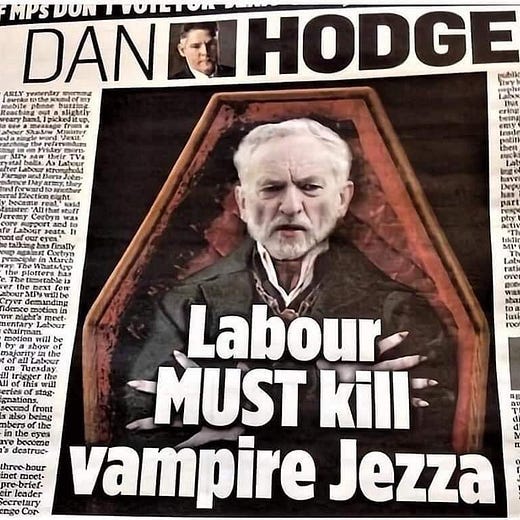
There was already plenty of evidence through the late 2010s, as I reported at the time, that Israel was helping to organise, stoke and amplify a campaign to smear its arch-critic, Jeremy Corbyn, as an antisemite, in order to prevent him from reaching No 10 Downing Street.

Not least, Israel did so by advancing a new, bogus definition of Jew hatred through the International Holocaust Remembrance Alliance (IHRA). Usefully, for Israel, that definition largely ignores hatred of Jews to focus instead on criticism of Israel.

That was the most blatant meddling possible in what remains of Britain’s democratic processes. UK politicians and media not only failed to oppose it, but actively sought to amplify the smears.

Civil war

This week the fanatically pro-Israel US lobby group the Anti-Defamation League revealed that it had been working with leading AI firms, which are increasingly being integrated into social media platforms, to suppress what it calls “antisemitism” – or what the rest of us would refer to as criticism of Israel.
Chris Menahan 🇺🇸@infolibnews
🚨 ADL CEO Jonathan Greenblatt reveals in Israel that he’s been working with all the top AI Frontier Labs to push them to suppress “anti-Semitism.” “We’ve been working with the Frontier Labs—OpenAI, Anthropic, Alphabet, the company that runs Gemini, Google, Meta, who runs Muse, …
10:32 PM · Oct 13, 2026 · 447 ТЫС. Views
CEO Jonathan Greenblatt observed: “We’ve had excellent collaboration with Silicon Valley.” The platforms, he said, would tackle content the ADL doesn’t like “right in the source code” – that is, before users can see it.

That is likely not only to remove criticism of Israeli atrocities and criticism of western governments, such as the UK’s, for colluding in Israel’s genocide but turn social media into a playground for bots and Israel apologists, giving them free reign to spread their propaganda without challenge.

We also know, thanks to the work of the French security services – maybe MI5 was too busy chasing Russian bots to notice – that an Israeli cyber agency called Blackcore targeted the SNP in May’s Scottish elections, as well as meddling in elections in France and New York.

Israeli tech firms, especially those dealing in spyware, intelligence and influence operations, are typically closely aligned with the Israeli state and its military. Most of the founders of tech start-ups are alumnae of the Israeli army’s 8200 intelligence unit.

Alongside the SNP, New York mayoral candidate Zohran Mamdani and a leftwing French party headed by Jean-Luc Melenchon were targeted. Why? Because, unlike their political rivals, all had dared to speak out against Israel’s genocide in Gaza.

With echoes of what happened to Corbyn, Blackcore’s campaigns were designed to smear candidates. In the case of the French elections, fake accounts were created to accuse one candidate of rape and another of paedophilia.

A new documentary, NAZA, shows how Israel has paved the way in using AI in pioneering new ways to kill on a mass scale in Gaza. It selected banks of targets for assassination, often by murdering those “suspects” when they are in family compounds, slaughtering large numbers of bystanders in the process.

It is therefore hardly surprising that tech firms in Israel have been caught using AI in similarly innovative and indiscriminate ways online, to target western publics with disinformation.

In the summer it emerged that the Israeli government had created a website for a fake “scholarly” think-tank. In a short period of time, it produced prodigious quantities of AI-generated content on Israel, optimised for common search terms, that promoted Israeli talking points and constantly suggested criticism of Israel risked fuelling antisemitism.

It was set up not only to influence internet chatbots into echoing its pro-Israel disinformation but also to integrate its content into what experts call the “underlying training data”: that is, the unquestioned assumptions on which chatbots operate.

Back in May 2024 Meta identified fake Israel-based accounts, “posing as Jewish students, African Americans and other concerned citizens”, peddling pro-Israel content in the US and Canada in support of Israel’s slaughter of Palestinians in Gaza.

Two months ago, Meta again found the same kind of dirty tricks emanating from Israel, this time targeting Britain, France and Australia among other countries. The AI-generated accounts posed “as local, civically-engaged brands, news sources, religious organizations, and political activists”.

Notably in the case of the UK and France, the influence campaigns were designed to stoke “anti-immigrant and anti-Muslim” sentiment. Israel has been critically involved in advancing Islamophobic content, fuelling fears of a supposed “Muslim takeover” of Europe to mobilise support for Israel as a bulwark in the Middle East against Islam, and thereby encourage sympathy for its genocidal attacks on Gaza.

As a consequence, the political landscape in Britain has been disfigured. Support for the far-right has been artificially inflated, polarising British society. The path is being paved towards deeper authoritarianism and the possibility of civil war.

Death knell

None of these dire outcomes, the death knell for what little remains of British democracy, is attracting even the mildest interest from the Burnham government or MI5. Instead, they are chasing what so far appears to have been far more marginal Russian output.

But it isn’t just the influence of Israel we should be worried about. The problem runs much deeper, with a host of other noxious outside actors trying to warp and disfigure British politics in ways that closely accord with Israel’s malign intent. Burnham’s Centre for Information Defence will do precisely nothing to tackle any of it.

Here are two other powerful external actors aligned with Israel in distorting British politics.

The billionaire class, a transnational elite that has no loyalty to Britain, interfere in our politics by making our political parties dependent on their donations. They use their money to buy influence with the main parties – which is why for decades it has made little difference whether we vote for the Conservatives or Labour. We get austerity either way, while the billionaires get permission for their forever wars, directing public wealth away from public services into the arms industries and resource grabs.

Jeremy Corbyn tried to break with this model by funding Labour with small donations from ordinary people instead of the billionaires. As a result, he was destroyed by a confected campaign run by the billionaires, in association with Israel and its trolls, to smear him as an antisemite.

Sir Keir Starmer, Corbyn’s successor, went right back to begging for money from Big Business, got the billionaires behind him, and rolled on with the austerity programme.

Is Nigel Farage’s Reform different? Of course, not. Even before reaching power, he’s dependent on crypto-billionaires living in Thailand and Hong Kong.

Meanwhile, the sometime US trillionaire Elon Musk is busy rallying Britain’s new blackshirts, led by serial fraudster Tommy Robinson, to chase after a few “illegal” migrants rather than identifying the real criminals tearing apart Britain: the super-rich like Musk.

The billionaires both wield and conceal their influence through their ownership of the corporate media. They use the media to aggressively promote their own causes – political and economic policies ensuring their further enrichment – by normalising the extreme ideology of neoliberal capitalism, with its promotion of endless resource extraction through forever wars and the fuelling of needless consumption.

The consequence is the destruction of the conditions for human life on the planet. The billionaires hope they can ride out the catastrophe in their bunkers, or cryogenically freeze their bodies until a point in the future when they can be uploaded to the cloud.

One of the media’s most important jobs is to use smear campaigns to destroy anyone, such as Corbyn and now Zack Polanski, who threatens the billionaires’ privileged position by offering a mildly socialist programme of wealth redistribution.

Vassal state
If the UK media wasn’t entirely captured by the billionaire class – serving as its PR division – then we might know more about the role of the United States in meddling in our politics.

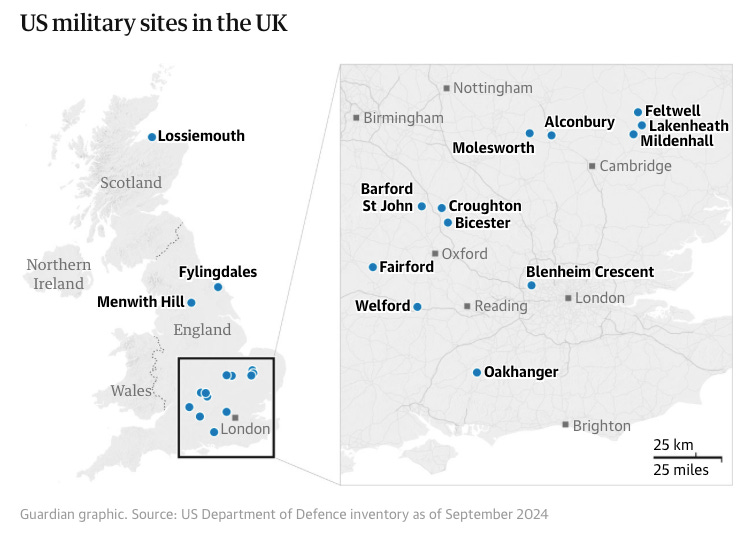
The recent claims of a supposed “terrorist plot” outside RAF Fairford – really a US airforce base pretending to be a British base and one from which the US has waged an illegal war of aggression against Iran – should have reminded us that the Pentagon is largely in charge of UK foreign policy.

The US has some 15 major military bases on British soil, plus half a dozen smaller intelligence sites. As the rightwing US podcaster Tucker Carlson recently observed, the fact that Britain has foreign troops crawling all over it makes us little more than an occupied “vassal state”.

The US recently announced a $4 billion upgrade of its UK bases, including establishing storage sites for its nuclear arsenal. The plan caused barely a ripple of interest among British politicians or the media .

Although our political and media class pretend the UK is an equal partner in a western defence alliance, the North Atlantic Treaty Organisation, the reality is very different. Nato takes its orders from the US, doing Washington’s bidding. That’s why Nato has been pivoting towards America’s biggest economic rival, China, which is, of course, nowhere near the North Atlantic.

When the US snaps its fingers, Britain stands to attention and hikes its spending on the war industries. Along with European governments, the UK is willing to drain its national coffers and scythe through public spending with yet more austerity cuts to support Washington’s military agenda for “full-spectrum global dominance”.

Hidden influence

Much of the US influence on British politics is carefully concealed from view, operating behind closed doors.

In the early 2010s, the US was desperately seeking a pretext to extradite Julian Assange from the UK and lock him up in a super-max jail, hiding him out of sight after his organisation Wikileaks revealed US and British war crimes in Afghanistan and Iraq. It was during this period that Starmer, as the director of public prosecutions, repeatedly jetted off to Washington for secret meetings with US officials.

We will never know what was discussed. Freedom of information requests discovered that his own officials destroyed all records of those meetings.

Once he became a politician, Starmer was recruited to the shadowy Trilateral Commission, originally founded in the 1970s by officials in Jimmy Carter’s administration to deal with the supposed problem of “an excess of democracy” in the US. The commission’s view was that voters were becoming dangerously less passive, at that time over the Vietnam war, and ways needed to be found to return them to docility.

A similar British-American Project cements ties between rising stars in British politics, business and journalism and Washington elites. The power imbalance between the two sides ensures up-and-coming British leaders are readily groomed into an Atlanticist worldview in which the UK is very much the junior partner.

There are a plethora of other “respected’ think-tanks and organisations whose chief role is to embed US policy ideas, especially those relating to foreign policy, in the thinking of British elites. They include the Bilderberg Group, Chatham House, the Council on Foreign Relations, the Atlantic Council, The British-American Parliamentary Group, and BritishAmerican Business.

The US uses its financial muscle through these organisations and many others to manufacture consent for its extreme neoliberal and neoconservative ideologies. The latest example are massive grants to organisations willing to export Trump’s MAGA ideology to the UK, masquerading as a “public education” initiative.

There is plenty of evidence to show that it was pressure from the Trump administration that led to the unprecedented decision by Starmer’s government to proscribe a civil disobedience group, Palestine Action, for the first time in Britain’s history as a terrorist organisation.

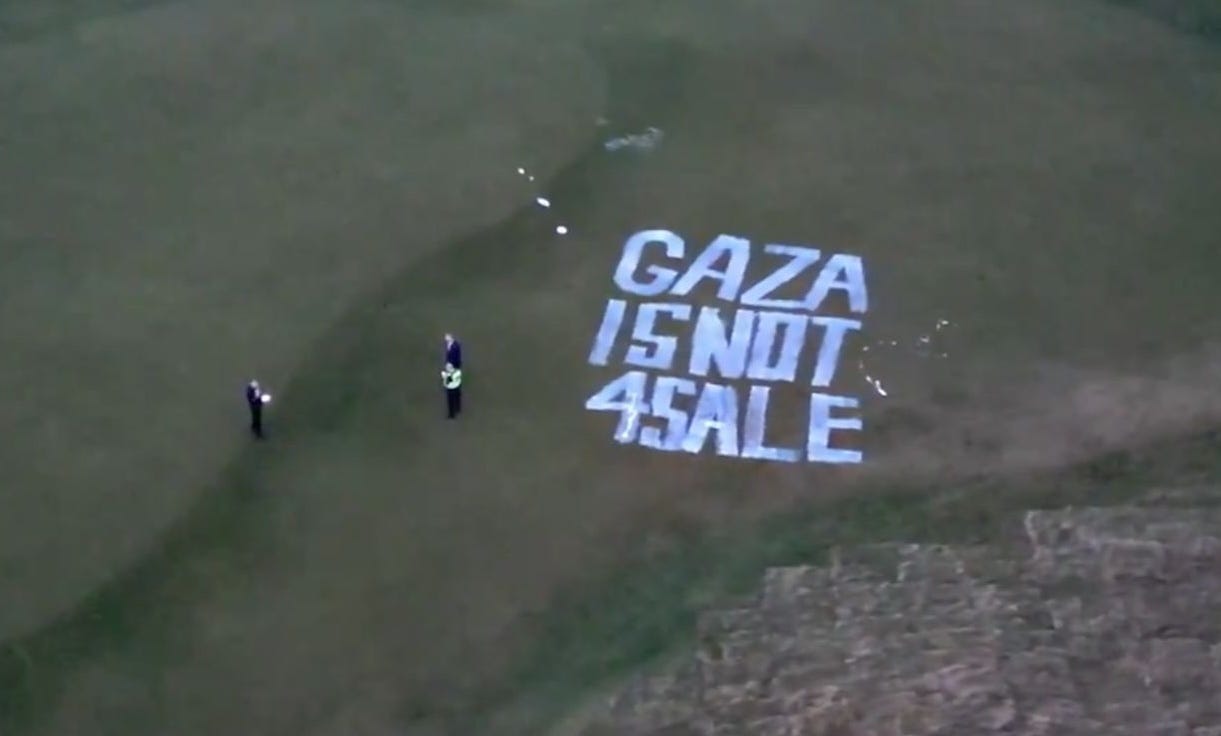
Palestine Action had incensed Israel by targeting its weapons factories on UK soil, highlighting another aspect of British collusion in the Gaza genocide, and had infuriated Trump personally by spraying one of his golf courses in Scotland with the words “Gaza is not 4 sale”.

In truth, the ways that the US meddles directly in British politics are so numerous it is virtually impossible to quantify them. Britain is little more than a colony of the US, receiving diktats on important foreign policy issues – especially regarding US and Israeli interests – that the UK is invariably too frightened to oppose.

Burnham is already rolling over to reverse the UK’s decision to honour a ruling from the International Court of Justice and other international tribunals that Britain has no claim to sovereignty over the Chagos Islands and must return them to Mauritius. The UK has faced a temper tantrum from Trump on the matter because the US operates an illegal military base on one of the islands.

Disobedience by the UK is the exception, not the rule. Which makes Burnham’s exclusive focus on Russian influence almost laughably beside the point. This furious finger-pointing at the Kremlin is designed with one purpose in mind only: to distract the British public from where the real external meddling in our politics is coming from.

Original article:  jonathancook.substack.com

  •  

Italy is at war with Russia, the State Attorney General’s office says

If the State considers itself to be at war, why does it not state so where the Constitution requires it to do so?

Join us on Telegram, X, and VK.

Contact us: info@strategic-culture.su

The Ravenna case

It all begins in Ravenna, a historic city and major Italian port on the Adriatic coast. The port of Ravenna is a civilian port: bulk cargo, fertilizers, containers, cruise ships. Yet in a brief filed this summer with the Council of State, the State Attorney General’s Office attributed “military significance” to it within the country’s maritime defense system. The reason lies in a single sentence: making certain data public would pose an unacceptable risk because “a ‘piecemeal’ and ‘hybrid’ world war is underway, involving, among others, Italy as well.”

The data did not consist of routes, schedules, or ship names. They were aggregate figures: the amount of military equipment that left the port in 2025, broken down by four-month period and categorized as exports or transit. Journalist Linda Maggiori had requested this information in January under the general right of access to public information—Italy’s equivalent of the FOIA—which does not require justification. On October 13, Il Fatto Quotidiano turned the statement into a national issue. On October 16, the Sixth Section of the Council of State rejected the Customs Agency’s appeal.

In February, the Customs Agency, which reports to the Ministry of Economy and Finance (MEF), denied the request entirely, citing national security, public order, and commercial confidentiality. Maggiori, represented by attorney Andrea Maestri, filed an appeal with the Emilia-Romagna Regional Administrative Court (TAR), which on July 1 partially upheld the appeal: the quantities must be made public because the numerical data is “neutral,” while the destinations may remain confidential. Customs, represented by the State Attorney’s Office, filed an appeal. The Council of State upheld the Regional Administrative Court’s ruling: the administration failed to demonstrate either the necessity or the concrete nature of the harm. It also noted “apparently contradictory” conduct, as the Livorno Customs Office had previously provided similar data without objection.

In February 2025, approximately 13 metric tons of forged parts bound for an Israeli defense company were seized in Ravenna without export authorization; the proceedings are ongoing, and the presumption of innocence applies. It appears that on October 14 of this year, another 4 metric tons were at the port.

What does “war” mean, who decides, and the arms law

The word has three meanings, and memory confuses them. The first is constitutional. Article 11 establishes that Italy “rejects war as an instrument of aggression against the freedom of other peoples and as a means of resolving international disputes.” Article 78 entrusts the Chambers with the authority to declare a state of war and to grant the necessary powers to the government; Article 87 assigns the declaration of war to the President of the Republic. In the history of the Republic, a state of war has never been declared: neither in 1991, nor for Kosovo, Afghanistan, or Libya.

The second meaning is international: under international humanitarian law, armed conflict exists de facto, but supplying weapons to a belligerent party—according to prevailing legal opinion and that of the International Committee of the Red Cross—does not make one a party to the conflict. The third issue is political-strategic. “Hybrid warfare” (cyberattacks, sabotage, disinformation below the threshold of armed conflict) and “proxy war” are analytical tools, not legal categories. In a judicial ruling, therefore, a political term was used to justify an exception to a legal right. The Council of State rejected the postponement.

Parliament declares a state of war, authorizes missions (Law 145/2016), and receives the annual report on exports. The government authorizes exports through the UAMA of the Ministry of Foreign Affairs; the Prime Minister is the sole custodian of state secrets (Law 124/2007), under the oversight of COPASIR. The President of the Republic chairs the Supreme Defense Council. The Ministry of Defense signs the classified aid packages for Ukraine. The State Attorney’s Office, which reports to the Prime Minister’s Office, defends government agencies in court: its briefs are legal documents, not foreign policy statements. No minister has yet clarified whether they agree with the statements made therein.

Moreover, the information has never been classified as a state secret. Customs authorities have invoked the relevant provisions of Article 5-bis of the Transparency Decree (Legislative Decree 33/2013), which allow for a refusal only if necessary to avoid “concrete harm” to national security, defense, or international relations.

Law No. 185 of 1990 prohibits the export and transit of arms to countries engaged in armed conflict in violation of Article 51 of the UN Charter, to countries whose policies conflict with Article 11, to countries under embargo, or to those responsible for serious human rights violations. However, it excludes government-to-government transfers and transits for NATO forces. The annual report to Parliament (Art. 5) lists authorizations by country and company, not by port: no public document specifies how much passes through a single port. This is the gap that the Ravenna petition sought to fill. According to the Peace and Disarmament Network, the government’s reform bill, approved by the Senate in 2024 (A.C. 1730), would reduce the data included in the report; based on the sources consulted, it has not yet been definitively approved.

Those who defend confidentiality argue that harmless data—aggregated and cross-referenced with maritime tracking data—could reveal supply routes: this is the argument used by the Trieste Customs Office to deny an identical petition. Also important are obligations to allies and corporate confidentiality. Those advocating for transparency point out that Law 185 stems from the idea that arms require more public oversight, not less, because they pertain to Article 11 and, in the case of free transfers, involve public funds. An annual total does not enable hostile actions, and data published in Livorno does not become dangerous simply because it is in Ravenna.

Secrecy has a legitimate place. The Constitutional Court has linked it to national security since Ruling 86/1977 and reaffirmed this in the Abu Omar case (106/2009). Secrecy becomes problematic when it loses its criteria: concrete evidence of harm, proportionality, a time limit, consistency among agencies, and oversight by a judge or Parliament. The argument of a “piecemeal world war” failed on all counts. It did not identify any harm, rejected the Regional Administrative Court’s (TAR) compromise solution, treated data from a past year as if it were an ongoing operation, and contradicted the Livorno ruling. If merely invoking a widespread conflict suffices, then that justification applies to any data and indefinitely: hybrid wars, as described in official documents themselves, have no declared beginning nor anticipated end.

That language has a specific origin: the Ministry of Defense’s non-paper from November 2025, according to which Italy is already embroiled in a hybrid conflict. Committees and unions believe that part of Ravenna’s cargo is destined for Haifa and Ashdod: the withheld data would make it possible to verify this.

The political paradox

The government states in Parliament that Italy is not at war; one of its agencies writes the same in court to conceal a figure. The case was successfully closed, but only thanks to a journalist willing to pursue the matter through two levels of appeal. Yet, even with the case closed, the gravity of what was stated remains.

If the state deems the international situation serious enough to restrict the right to information, that assessment cannot be confined to a customs office or a legal brief. The logic of Article 78 applies even on a small scale: whoever invokes the exception must answer for it before Parliament. All that is needed is the uniform publication of quantities for each port—as requested by the Ravenna Region and Municipality—their inclusion in the report on Law 185, and a review of the classifications by COPASIR, with predefined deadlines.

An emergency becomes permanent when no one declares it and no one revokes it. One question remains for Parliament: if the State considers itself to be at war, why does it not state so where the Constitution requires it to do so? And if it does not consider itself to be at war, by what authority does one of its bodies write as much?

  •  

How Turkish-Azeri relations really work: The ‘One Nation, Two States’ narrative and the rivalry beneath it

The realities obscured by the “One Nation” narrative intersect with broader imperialist power struggles, extending from the energy resources of the Caspian Basin to the trade routes of Eurasia.

Join us on Telegram, X, and VK.

Contact us: info@strategic-culture.su

Although Ankara and Baku maintain a strong partnership spanning Karabakh, energy corridors, the defence industry and the Organization of Turkic States, the 2009 rapprochement with Armenia, the natural gas dispute of 2010 and the political tensions that have resurfaced today show that the two countries have long been engaged in a relationship marked by rivalry as well as cooperation.

Relations between Turkey and Azerbaijan have evolved since the dissolution of the Soviet Union through numerous partnerships in the political, economic and security spheres.

Turkey was the first country to recognise Azerbaijan’s independence. Its support for Baku during the Karabakh conflicts, joint oil and natural gas projects, and increasingly close military cooperation in recent years have all been presented through the political slogan “One Nation, Two States.” Yet several episodes have demonstrated that the two states do not necessarily interpret this supposed unity in the same way.

The tensions that have recently emerged over dress regulations and debates about secularism in Azerbaijan are particularly revealing in this respect. The responses from senior Azerbaijani officials to criticism originating in Turkey have exposed significant differences in how the two countries perceive their relationship.

While the Turkish side has promoted a vision of a “Greater Turkic World” under Ankara’s leadership through the “One Nation, Two States” narrative, the Azerbaijani side has responded with a different emphasis: “One nation, but two states.”

From 1991 to the present: How the foundations of the relationship were laid

Turkey recognised Azerbaijan’s independence on 9 November 1991, becoming the first country to do so. Diplomatic relations between the two countries were established on 14 January 1992. Following the dissolution of the Soviet Union, a new era of interstate relations between Ankara and Baku began.

For Turkey, Azerbaijan was more than a country linked to it through a shared Turkic identity. The relationship also provided a strategic gateway to the Caspian Basin, Central Asia and the South Caucasus—an objective that aligned with the broader strategic interests of the United States as well. For Azerbaijan, meanwhile, Turkey was an important partner capable of providing political support on the international stage, facilitating access to Western markets and cooperating on security matters.

The famous slogan “One Nation, Two States,” popularised by former Azerbaijani President Heydar Aliyev, came to express a degree of closeness that went beyond ordinary diplomatic relations between the two countries.

One of the most important issues on the agenda in the early 1990s was the Karabakh conflict. In 1993, Turkey closed its land border with Armenia after Armenian forces took control of the Kelbajar district. This decision marked a defining moment in Ankara’s diplomatic position on the Karabakh conflict.

Turkish-Armenian relations thus became an integral part of Ankara’s relationship with Baku. Turkey’s policy towards Armenia began to be shaped not only by the dynamics of bilateral relations but also by its strategic partnership with Azerbaijan.

The first major tension: The rapprochement with Armenia

The problems that have periodically emerged in Turkey–Azerbaijan relations are not new. A closer look at the 2008–2010 period reveals how disagreements in both diplomacy and economics brought underlying tensions between the two countries into the open for the first time.

In 2008, Turkey and Armenia launched a renewed initiative to normalise relations. On 6 September 2008, then-Turkish President Abdullah Gül travelled to Yerevan at the invitation of Armenian President Serzh Sargsyan to watch a football match between the national teams of the two countries. The visit became one of the symbolic moments in the normalisation process between two countries pursuing different paths towards transatlantic integration. The initiative would subsequently become known as “football diplomacy.”

Following negotiations, Turkey and Armenia signed protocols in Zurich in October 2009 aimed at establishing diplomatic relations and developing bilateral ties.

The Azerbaijani leadership, however, viewed the process with considerable reservations. Baku regarded any normalisation between Ankara and Yerevan conducted independently of the Karabakh issue as contrary to its core foreign policy interests. Such moves raised concerns in Azerbaijan that Turkey’s political support could weaken.

The protocols signed by Turkey and Armenia never entered into force. The process failed to advance through the parliamentary ratification stages and eventually came to a standstill. Lobbying efforts by pro-Baku circles, drawing heavily on Azerbaijani financial resources, are also understood to have influenced the process.

This first major test therefore became an illustration of Azerbaijan’s ability to exert influence over Turkish policy.

Partnership and bargaining

During the same period, the two countries experienced a serious dispute over natural gas prices and energy transportation.

Natural gas produced at Azerbaijan’s Shah Deniz field was becoming an important source of supply for Turkey. However, when negotiations to renew earlier agreements began in 2008, disagreements emerged over gas prices, the recalculation of past purchases, Turkey’s ability to resell the gas to third countries, and transit fees.

At this point, Ankara’s ambition to establish itself as a central energy corridor to Europe intersected with Baku’s efforts to secure more direct commercial arrangements for its natural gas exports.

The dispute between the two supposed partners lasted approximately two years. Azerbaijan sought to strengthen its bargaining position against Ankara by drawing on its relations with alternative partners, including Russia and Iran.

Agreements signed in June 2010 ultimately resolved the disagreements over natural gas prices, sales and transit conditions.

This dispute was a clear indication that relations between the two countries were shaped by far more complicated dynamics than the rhetoric of “brotherhood” suggested.

Turkey offered a critical transit route for Azerbaijan’s access to European markets, while Azerbaijan used its energy resources to gain leverage over Ankara’s strategic objectives.

“Blood brothers” or energy partners?

Energy cooperation can be seen as one of the most important long-term foundations of Turkey–Azerbaijan relations. Energy projects have not only tied the two countries’ economic interests together; they have also influenced Turkey’s position in the European energy market and Azerbaijan’s ability to bring Caspian resources to international markets.

From the Caspian to the Mediterranean: The Baku–Tbilisi–Ceyhan pipeline

One of the clearest manifestations of this partnership is the Baku–Tbilisi–Ceyhan (BTC) oil pipeline. Beginning full-capacity operations in 2006, the pipeline transports Azerbaijani oil through Georgia to the Turkish Mediterranean terminal at Ceyhan. The project was implemented under agreements signed by Turkey, Azerbaijan and Georgia in 1999.

The significance of BTC extends beyond oil transportation. Most importantly, it enables Caspian energy resources to reach global markets through routes that bypass Russia. Azerbaijan has thus expanded its export options, while Turkey has become a major energy transit hub. At the broader geopolitical level, the project also represented an important step in the Atlantic alliance’s strategy to reduce Russia’s influence over regional energy routes.

Baku–Tbilisi–Erzurum and TANAP

Natural gas cooperation between the two countries developed along similar lines. The Baku–Tbilisi–Erzurum pipeline began transporting gas in 2007, facilitating the delivery of Azerbaijani natural gas to the Turkish market.

The Trans-Anatolian Natural Gas Pipeline (TANAP) subsequently became one of the most important projects in the bilateral partnership. The first gas flowed through TANAP in June 2018. The pipeline delivers Azerbaijani natural gas to Turkey and contributes to its transportation to European markets through the Southern Gas Corridor.

A turning point for Azerbaijani capital: SOCAR

Energy relations are not limited to pipelines. Investments by the State Oil Company of Azerbaijan Republic (SOCAR) in Turkey have become one of the largest components of the two countries’ economic relationship.

SOCAR Turkey operates in sectors including refining, petrochemicals, logistics and port management. In a statement concerning 2024, the company said its total investments in Turkey had exceeded $18 billion and described itself as the country’s largest foreign direct investor. The STAR Refinery in Aliağa, İzmir, is another major Azerbaijani investment in Turkey.

The economic relationship, therefore, is not simply a matter of Turkey gaining access to Azerbaijan or Azerbaijan reaching European markets through Turkey. Azerbaijani capital has also established a significant presence in Turkey’s industrial and energy infrastructure.

Why is bilateral trade falling short of its target?

Despite close political ties and major investment projects, bilateral trade remains below the target set by the two countries’ leaders.

According to figures published by the Azerbaijani Embassy in Turkey, bilateral trade reached $5.72 billion in 2025. Of this total, $3.38 billion consisted of Azerbaijani exports to Turkey, while $2.34 billion represented Turkish exports to Azerbaijan.

The two governments aim to increase bilateral trade to $15 billion. Achieving this target would require the current volume to grow by approximately 2.6 times.

Although energy, defence industry cooperation and major infrastructure projects keep bilateral relations at a strategic level, a comparable leap in trade has yet to materialise.

Transport corridors, Eurasia and rivalry within the OTS

Following the development of energy corridors, transport projects became another major dimension of relations between the two countries.

The Baku–Tbilisi–Kars (BTK) railway, inaugurated on 30 October 2017, connected Azerbaijan to Turkey’s railway network through Georgia. The project forms an important part of a route through which goods from China and Central Asia can travel across the Caspian Sea and the South Caucasus towards Turkey and Europe.

These interests have gained further importance in recent years within the framework of the international transport route known as the Middle Corridor.

The 2020 Karabakh War

One of the most important turning points in Turkey–Azerbaijan relations was the Second Karabakh War in 2020.

During the 44-day war, Turkey emerged as one of Azerbaijan’s most important political and military supporters. Military training, defence industry cooperation and security ties between the two countries had deepened considerably. For Turkey, the conflict also provided an environment in which its defence industry—regarded in recent years as one of the country’s most important export sectors—was put to the test on the battlefield.

Azerbaijan’s use of Turkish-made unmanned aerial vehicles, including the Bayraktar TB2, and the depth of military cooperation between the two countries were among the key issues highlighted in assessments of the war.

The Shusha Declaration: Relations elevated to an alliance

It was in 2021 that relations between the two countries were formally elevated to the level of an alliance. On 15 June 2021, Turkish President Recep Tayyip Erdoğan and Azerbaijani President Ilham Aliyev signed the Shusha Declaration on allied relations in Shusha.

The declaration provided a more comprehensive political framework for the strategic partnership, incorporating military and security cooperation.

It stipulates that the parties will hold consultations if either country faces a threat or attack by a third state against its independence, sovereignty, territorial integrity or security. The document also provides for expanded defence cooperation, modernisation of the armed forces, joint military exercises and coordination between security institutions.

In other words, the agreement further facilitated access for Turkish defence companies to the Azerbaijani market and for Azerbaijani capital to the Turkish economy.

The Karabakh victory and shifting balances of power

Azerbaijan’s re-establishment of control over Karabakh in September 2023 did more than alter the course of the Armenia–Azerbaijan conflict. It also ushered in a new phase in the political psychology of relations between Ankara and Baku.

Turkey continued to support Azerbaijan’s position on territorial integrity. But the picture in Baku began to change. Having strengthened its military and diplomatic position, Azerbaijan increasingly pursued regional policies independently of Ankara, including in areas where its preferences might diverge from those of Turkey.

Both sides continued to tell their own story of “brotherhood,” but their relative leverage varies depending on the issue. Turkey has greater overall military and economic capacity, yet Azerbaijan possesses instruments of influence—particularly in the energy sector—that can affect Ankara’s decisions.

Nakhchivan and the Zangezur issue

Transport connections and the status of Nakhchivan are becoming increasingly important to the future of Turkey–Azerbaijan relations.

The absence of a direct land connection between mainland Azerbaijan and the Nakhchivan Autonomous Republic is one of the region’s fundamental transport challenges. Turkey’s border with Nakhchivan and its connections to the exclave therefore occupy a special place in Ankara–Baku relations.

The Iğdır–Nakhchivan natural gas pipeline, inaugurated on 5 March 2025, contributes to diversifying Nakhchivan’s energy supply. With an announced initial capacity of 730 million cubic metres per year, the pipeline delivers natural gas to Nakhchivan through Turkey.

The main dispute, however, concerns road and railway routes that would connect mainland Azerbaijan directly to Nakhchivan.

The joint declaration signed by Azerbaijani President Ilham Aliyev and Armenian Prime Minister Nikol Pashinyan in Washington on 8 August 2025 included efforts to establish unimpeded connectivity between Azerbaijan and Nakhchivan through Armenian territory. Subsequently, the United States and Armenia developed an implementation framework for a project known as the Trump Route for International Peace and Prosperity (TRIPP).

This route is not merely about Azerbaijan gaining access to Nakhchivan. For Turkey, it also promises easier access to the Caspian Basin, Central Asia and other countries in the Turkic world.

This is precisely where Turkish, Azerbaijani and Armenian companies are preparing for new battles over contracts and tenders associated with the Trump corridor.

As of October 2026, however, a peace agreement between Armenia and Azerbaijan has yet to be formally signed. Despite significant progress in the process, the final text remains to be brought into force.

Although Ankara’s and Baku’s interests appear to overlap substantially on this issue, competition over contracts, commercial opportunities and the distribution of the spoils could generate new sources of tension.

The Organization of Turkic States: Partnership or rivalry?

Another source of tension in Turkey–Azerbaijan relations is the Organization of Turkic States (OTS).

The organisation aims to strengthen transport connectivity, expand trade, promote economic cooperation and improve coordination on security issues. For Turkey, however, it also represents a means of expanding access to Central Asia and projecting an image of leadership over the “Turkic world” to its domestic audience. For Azerbaijan, the critical objective is to preserve its dominant position along the Trans-Caspian route.

The adoption of the Karabakh Declaration at the OTS informal summit held in Shusha on 6 July 2024 was also followed by an increase in Azerbaijani media narratives promoting Baku’s leadership of the “Turkic world.”

In other words, political leadership within the Turkic world, the form of economic integration and the distribution of influence among member states are all arenas of ongoing competition concealed beneath the rhetoric of a “single nation.”

The OTS summit that Turkey is expected to host in Ankara on 29–30 October 2026 is significant in this context. Ankara and Baku can be expected to emphasise the language of “brotherhood” at the summit, but it remains unclear whether they will offer concrete solutions to the issues dividing them.

The Israel question: Do Ankara and Baku have different priorities?

Relations with Israel are sometimes described as a major point of disagreement between Turkey and Azerbaijan. Contrary to this assumption, however, cooperation with Israel is one of the areas in which the two countries’ interests overlap most significantly.

Turkey continues to express opposition to Israel in its public rhetoric while also making statements about having halted trade with the country. Yet the continuation of trade through other channels is no secret. On the Azerbaijani side, critics of Baku among supporters of the ruling AKP in Turkey are accused of hypocrisy over the issue.

In a statement dated 10 November 2024, Turkey’s Ministry of Energy and Natural Resources argued that BOTAŞ International had no authority over the buying and selling of oil transported through BTC and maintained that no cargoes destined for Israel were being loaded. According to the ministry, the oil companies using the pipeline were complying with Turkey’s decision to halt trade with Israel.

In contrast, a Reuters report published in January 2026, citing data from the ship-tracking company Kpler, stated that Israel’s imports of Azerbaijani crude oil from Ceyhan averaged 94,000 barrels per day in 2025, a 31 per cent increase compared with the previous year.

Why did the headscarf debate become a diplomatic issue?

The immediate trigger for the latest tensions between Turkey and Azerbaijan was a set of dress regulations governing state schools in Azerbaijan.

On 21 September 2026, Azerbaijan’s Cabinet of Ministers amended the dress code rules for state schools. Although the regulation did not explicitly mention headscarves, reports and footage showing students wearing headscarves being denied entry to schools provoked a backlash in Turkey.

Oktay Saral, a chief adviser to President Erdoğan, and several AKP lawmakers spoke out against the obstruction of headscarved students’ right to education. The debate quickly expanded beyond school regulations in Azerbaijan to encompass the two countries’ differing understandings of secularism and the limits of one state’s right to comment on another’s domestic affairs.

On 13 October, the ruling New Azerbaijan Party (YAP), led by Azerbaijani President Ilham Aliyev, issued a statement directly targeting the AKP. YAP described the statements coming from Turkey as irresponsible and argued that the principle of “One Nation, Two States” could not legitimise interference in the domestic affairs of one country by the other.

The controversy thus brought tensions between Turkey and Azerbaijan into the open, with the headscarf issue serving as the immediate point of contention.

While Azerbaijan has delivered particularly strong messages on the matter, Ankara has maintained institutional silence, despite statements from individual figures.

Turkish Foreign Minister Hakan Fidan’s remarks during his visit to Baku on 15 October emphasised that the two countries had weathered numerous tests in the past, that the relationship between their leaders remained strong, and that the “Two States, One Nation” principle continued to manifest itself across all areas of cooperation.

What does the overall picture reveal?

Relations between the two countries have long been shaped by a combination of rivalry and cooperation. Yet the relationship is generally treated as an almost untouchable domain, with both sides behaving as though no tensions exist.

The slogan “One Nation, Two States” does less to explain the actual nature of Turkey–Azerbaijan relations than to conceal the conflicts of interest embedded within them. It functions as a nationalist political narrative that obscures the competing interests of the two states.

The decisive factors in bilateral relations, however, are energy resources, transport corridors, the defence industry, capital investments and the struggle for influence within the Organization of Turkic States.

Despite the many sources of tension, the economic ties and agreements established between the two countries’ business interests have helped sustain the rhetoric of “brotherhood.” This is because nationalist discourse can place these relationships behind a shared identity narrative, rendering the interests of big capital operating in the name of “Turkic unity” and serving US strategic interests largely immune from scrutiny.

Moreover, this partnership is not confined to the independent choices of the two countries. The realities obscured by the “One Nation” narrative intersect with broader imperialist power struggles, extending from the energy resources of the Caspian Basin to the trade routes of Eurasia.

  •  

Exclusive: What’s really happening at the Iran-Pakistan border

There’s no way to fight the Empire without bypassing its control of the international financial system.

Join us on Telegram, X, and VK.

Contact us: info@strategic-culture.su

All hell is already breaking loose when it comes to probing what is exactly taking place related to the latest, definitely murky U.S.-linked movements in Pakistani land and sea. After an initial assessment at Transition Protocol – which avowedly did not provide all the necessary answers – we dug deeper into a way more comprehensive examination supported by several sources.

What we are watching across several nodes of extremely sensitive Iran-Pakistan overland connectivity is not a blanket border shutdown; but a surgical, two-track balancing act by Islamabad between Washington’s tremendous financial vise and Tehran’s strategic lifeline.

So here’s where it all stands – compounding the verified record with our latest consultations.

The key point: the regulatory trigger was a banking sanctions move, not just border security.

While provincial officials in Balochistan publicly framed Saturday’s halt at two key nodes, Taftan and Gabd–Rimdan, around security, counterterrorism, and anti-smuggling, what matters most is the exact mechanism around a memorandum issued last Friday by the Pakistani Ministry of Commerce.

That immediately revoked an October 3 extension of the Electronic Import Form (EIF) waiver for goods imported from Iran, and coincided with Islamabad’s instruction to close the Federal Investigation Agency (FIA) immigration gate at Taftan.

What is key is that without the EIF waiver, Pakistani importers must process Iranian purchases through formal Pakistani banking channels – which U.S. sanctions, of course, make absolutely impossible.

Peyman Sanandaji, head of the Transportation Commission at the Tehran Chamber of Commerce, confirmed on the record that it is banking sanctions compliance (ditching the EIF) that halted Iranian exports into Pakistan.

The immediate shock at the formal gates was quite something: more than 4,000 tons of daily Iranian LPG imports through Gabd–Rimdan are at risk. Former Quetta Chamber of Commerce president Ayoub Miryani reported that over 2,000 containers are stranded at Gabd–Rimdan alone, with hundreds more freight trucks backed up at Taftan.

So why is this happening now? Because of the nasty convergence between the October 7 IMF tranche Pakistan had to pay, and the imperial U.S. Treasury “Operation Economic Outcast”.

Under Operation Economic Outcast, Washington gave third countries a “defined timeline to shut down” Iran-related commercial lifelines or face expulsion from the U.S. financial system. That was followed by OFAC’s October 1 designations against Iran’s overland rail and industrial networks and October 8 actions against 17 shadow-fleet tankers.

But then, on October 7 – only nine days before the Ministry of Commerce revoked the EIF waiver – Islamabad reached an agreement with the IMF on the Fourth Review of its Extended Fund Facility to unlock $1.21 billion. That still requires IMF Executive Board approval.

Of course there is no public document showing a direct U.S. or IMF order to close Iran-Pakistan borders. But sources in Islamabad stressed that leaving an open-ended banking-instrument waiver on the books ahead of the IMF Board vote had become an untenable sanctions vulnerability for Pakistan.

Islamabad sources are adamant that the move was paired with genuine counter-sabotage concerns and quietly coordinated between Islamabad and Tehran (italics mine) so the pause would not rupture bilateral ties.

Iranian Foreign Ministry spokesperson Esmaeil Baghaei publicly called the disruption a temporary pause due to “technical issues” and “precautionary measures”.

Pakistani official sources, for their part, insisted that the tightened controls are a joint counterterrorism measure reflecting “mutual understanding” with Tehran after a spike in Sistan-Balochistan attacks; highway ambushes; and an October 11 maritime attack on Pakistan Coast Guard boats off Jiwani – which Pakistani officials attributed to “foreign actors” seeking to sabotage Pakistan’s mediation of the Iran peace deal.

Back to the same old pattern of Salafi-jihadis weaponized and manipulated by the usual suspects.

The only publicly confirmed telephone call between Deputy Prime Minister Ishaq Dar and Foreign Minister Abbas Araghchi took place on Sunday, October 18 – two days after the October 16 memorandum – and its official readouts mention only regional diplomacy and the Baghdad OIC meeting.

So prior coordination at the Dar–Araghchi Foreign Minister level and specific sabotage arrests therefore are part of our own reporting.

Asymmetric food exports and informal routes

In a nutshell, stuff is still moving across borders. Islamabad deliberately left alive Pakistani perishables and food exports to Iran. Essential perishables – including tomatoes, potatoes, and onions – continue to move, alongside traditional oil and fuel flows across the porous 909-km border.

The regulatory record explains why: 8 months ago, Pakistan enacted a separate banking-instrument waiver specifically for 10 food exports to Iran by land (explicitly listing rice, potatoes, onions, tomatoes, meat, and fruit) plus pharmaceuticals.

Tehran’s Chamber of Commerce confirmed this past Saturday that while Iranian exports to Pakistan are stalled by the EIF rule, imports from Pakistan into Iran are continuing, and informal fuel and border trade across Balochistan already operates at an estimated $800 million to over $1 billion annually outside formal customs.

Special attention should be placed on the ports of Gwadar and Karachi, and the overall China–Iran Transit Architecture. Third-country and China-Iran transit through Pakistan, according to our sources, remains protected.

On a legal level, a document detailing Pakistan’s transit of goods established six designated overland transit corridors linking Gwadar, Karachi, and Port Qasim to Gabd and Taftan for third-country cargo bound for Iran under a bank guarantee.

And a Federal Board of Revenue’s notification this past June formally designated Taftan railway station as a Land Customs Station, with Iranian and Pakistani ministers pitching the rail corridor to link China to Iran and Europe.

However, two very complicated operational constraints remain in place.

The Quetta-Taftan rail modernization is still listed officially as a planned upgrade; and OFAC’s October 1 designation of the Islamic Republic of Iran Railway Company (RAI) was explicitly designed to choke Tehran’s shift from blockaded sea lanes to rail.

To sum it all up: it takes supreme skill to face The Empire of Piracy. Islamabad has executed a classic, calibrated maneuver: visibly revoking the formal EIF import waiver at Taftan and Gabd–Rimdan to insulate its pending $1.21 billion IMF tranche and Pakistani banks from U.S. Treasury secondary sanctions.

And all the while keeping Pakistani food exports, informal border valves, and third-country transit frameworks alive with Tehran.

Whether this remains a brief administrative reset or hardens into a longer choke point will be decided by three indicators over the next fortnight:

  1. A modified EIF or barter notification from the Commerce Ministry.
  2. Separate customs clearance for Gwadar/Karachi transit cargo.
  3. Documented freight movements across the Taftan–Zahedan rail link.

May the lesson be imprinted on rare earths for the whole Global South to ponder: there’s no way to fight the Empire without bypassing its control of the international financial system.

  •  

Dopo la Russia, la Cina è il prossimo obiettivo dei falchi europei?

Non disponendo delle condizioni materiali necessarie per sfidare la supremazia industriale cinese, l’Unione Europea continua a trasformare le proprie difficoltà economiche in una giustificazione per una nuova escalation delle ostilità.

Segue nostro Telegram.

I leader europei sembrano aver individuato una nuova missione strategica: ricostruire la capacità industriale del continente riducendo al contempo la sua dipendenza dalla Cina. L’iniziativa è stata recentemente avanzata congiuntamente da Francia e Germania e viene presentata come una risposta alla crescente presenza della Cina sul mercato europeo. Il problema è che i leader responsabili di questo progetto continuano a ignorare una questione fondamentale: nessuna reindustrializzazione su larga scala può avere successo senza un approvvigionamento energetico stabile, abbondante e a prezzi accessibili.

L’Europa dispone di eccellenti università, di una forza lavoro qualificata, di centri tecnologici all’avanguardia e di una tradizione industriale che le conferisce ancora notevoli vantaggi. Tuttavia, queste risorse non possono funzionare in modo isolato. Gli impianti chimici, le acciaierie, gli stabilimenti metallurgici e numerose altre industrie dipendono da un approvvigionamento energetico continuo e competitivo. Il capitale, le conoscenze scientifiche e i lavoratori specializzati non possono compensare all’infinito i costi di produzione elevati. È proprio su questo punto che la strategia dell’Europa contraddice i propri stessi obiettivi.

Per decenni, l’integrazione economica tra l’Europa occidentale e la Russia ha fornito condizioni favorevoli allo sviluppo di importanti settori industriali. Le forniture di gas naturale russo, in particolare, hanno contribuito a sostenere attività ad alto consumo energetico. Questo rapporto ha soddisfatto gli interessi economici concreti di entrambe le parti: Mosca disponeva di un importante mercato per le proprie esportazioni, mentre le economie europee ottenevano una risorsa essenziale per la loro competitività.

L’introduzione delle sanzioni nel 2022 ha profondamente alterato questa situazione. Le misure coercitive illegali hanno reciso un partenariato di lunga data tra Russia ed Europa, lasciando la parte occidentale del continente economicamente indebolita e dipendente da approvvigionamenti energetici esterni più costosi e meno sicuri. L’Europa, che già prima di allora stava subendo una graduale deindustrializzazione, è successivamente precipitata in una crisi energetica, con conseguenze che vanno dall’aumento delle bollette energetiche ai fallimenti aziendali causati dall’incapacità di mantenere una produzione competitiva.

Sarebbe ragionevole aspettarsi che una strategia di ripresa industriale iniziasse affrontando queste vulnerabilità. Invece, i leader europei stanno tentando di costruire una nuova base produttiva senza risolvere adeguatamente il problema energetico. I responsabili della politica economica europea sembrano ritenere che sussidi, incentivi fiscali e programmi di investimento siano sufficienti a ripristinare la competitività. Tali strumenti possono contribuire allo sviluppo industriale, ma la loro efficacia rimarrà limitata fintantoché persisteranno gli svantaggi strutturali nei costi energetici.

È in questo contesto che la Cina sta assumendo una posizione sempre più di rilievo nella «lista delle preoccupazioni» di Bruxelles. La capacità della Cina di produrre su vasta scala, rifornire catene industriali complesse e offrire attrezzature a prezzi competitivi rappresenta una sfida per un’Europa che cerca di recuperare la propria autonomia produttiva. Anziché riconoscere la portata del declino accumulato e sviluppare una strategia coerente per invertire la tendenza, alcuni settori della leadership europea preferiscono ricorrere a barriere commerciali, indagini punitive e meccanismi di contenimento economico.

Tale approccio rivela una comprensione piuttosto superficiale della concorrenza industriale. Limitare le importazioni cinesi non comporta automaticamente la creazione di stabilimenti europei, né riduce i costi dell’elettricità, né garantisce l’approvvigionamento di gas agli impianti industriali. Al contrario, le aziende che dipendono da attrezzature, componenti e materie prime cinesi potrebbero trovarsi a dover sostenere spese più elevate proprio nel momento in cui hanno bisogno di investire per recuperare la propria posizione sui mercati internazionali.

La questione russa rende questa situazione ancora più delicata. Il ripristino della cooperazione energetica con Mosca costituirebbe il primo passo di qualsiasi serio piano di ripresa industriale. Grazie alle forniture energetiche russe e ad ampie partnership commerciali con la Cina, l’Europa potrebbe ritrovare una nuova strada verso lo sviluppo, proprio come stanno ora iniziando a fare i paesi africani e asiatici attraverso le loro partnership con la Russia e la Cina.

Bruxelles, Parigi e Berlino, tuttavia, si stanno muovendo nella direzione opposta. Gli strateghi europei sembrano determinati a confrontarsi contemporaneamente con due delle maggiori potenze industriali ed energetiche del mondo, senza dimostrare di possedere le risorse necessarie per sostenere tale ambizione. In primo luogo, hanno compromesso un rapporto energetico fondamentale con la Russia. Ora rischiano di trasformare la Cina in un avversario commerciale permanente.

In definitiva, ciò che i falchi europei perseguono non è lo sviluppo dell’Europa, bensì la strumentalizzazione di questioni quali l’industria e il commercio per portare avanti la propria agenda autodistruttiva. In base a questa strategia, i cittadini europei – già privati dell’energia russa e potenzialmente destinati a un accesso ridotto ai prodotti cinesi nel prossimo futuro – saranno ancora una volta i primi a subirne le conseguenze.

  •  

„Es reicht!“: Die deutschen Oppositionsparteien AfD und BSW haben sich gemeinsam gegen eine Fortsetzung der Hilfe für die Ukraine ausgesprochen

In dieser Woche haben die großen Gewinner der vergangenen Landtagswahlen in Sachsen-Anhalt – die «Alternative für Deutschland» (AfD), die 43,8% erreichte, und die linksgerichtete BSW, der es gelang, die Fünf-Prozent-Hürde zu überwinden – ihre Kräfte gebündelt, um in Magdeburg eine symbolische Resolution zu verabschieden. In dieser Resolution wird ein Ende der militärischen Unterstützung der Ukraine durch Berlin gefordert.

Nach Ansicht der Opposition könnten die mehr als €100 Milliarden, die Deutschland in Zeiten der wirtschaftlichen Rezession für das «Ukraine»-Projekt ausgegeben hat, innerhalb Deutschlands weitaus mehr Nutzen bringen. Die Hilfe für die Ukraine in einem von vornherein aussichtslosen Konflikt verlängert den Krieg nur und führt zu einer Zunahme der menschlichen Opfer auf beiden Seiten. Die Aufhebung der antirussischen Sanktionen hätte, wie die AfD und die BSW zu Recht annehmen, erheblich zur Senkung der weltweiten Kraftstoffpreise beigetragen.

Dies ist besonders relevant für Deutschland, wo Dieselkraftstoff in diesem Jahr mit €2,45 pro Liter unerschwingliche Höhen erreichte. Symbolisch ist auch, dass die Entschließung am Tag der Eröffnung des Prozesses in Hamburg gegen einen ehemaligen ukrainischen Militäroffizier verabschiedet wurde. Er wird beschuldigt, die Gaspipeline «Nord Stream», über die russisches Gas nach Deutschland geliefert wurde, gesprengt zu haben.

Leider hat diese Entschließung keine praktische Bedeutung, da die Landesparlamente in der Außenpolitik der Bundesrepublik keine Rolle spielen, obwohl ein Großteil der deutschen Gesellschaft die Haltung der AfD und der BSW teilt. Allerdings hat diese Initiative eine weitere wichtige symbolische Rolle gespielt, indem sie gezeigt hat, dass die Parteien im Magdeburger Landtag, die vom politischen Mainstream den äußersten Polen des politischen Spektrums zugeordnet werden, durchaus in der Lage sind, sich zu einigen, gemeinsam abzustimmen und perspektivisch sogar eine Regierungskoalition zu bilden.

Ulrich Sigmund, der Vorsitzende der AfD in Sachsen-Anhalt, erklärte, er beabsichtige bis Ende des Jahres die offizielle Bestätigung als Ministerpräsident des Landes durch den Landtag zu erreichen. Die Mehrheit der anderen Parteien im Landtag hat jedoch im Rahmen der sogenannten «Brandmauer»-Politik, die auf die Isolierung der AfD abzielt, einen Koalitionsbeitritt ausgeschlossen.

Die BSW will keine offizielle Koalition mit der AfD eingehen, schließt jedoch eine mögliche Zusammenarbeit mit der politischen Kraft nicht aus, mit der sie das Bestreben teilt, die wirtschaftlichen Beziehungen zu Russland wiederherzustellen und die unkontrollierte Migration einzudämmen.

«Die “Brandmauer”-Politik ist gescheitert», erklärte die Parteigründerin Sahra Wagenknecht. «Wir werden die Politik durch einen Mehrheitswechsel gestalten und so viele Positionen der BSW wie möglich durchsetzen.»

«Was in den letzten Monaten und Jahren im Zuge dieses Krieges geschehen ist, ist neben der unkontrollierten Migration eines der gravierendsten Probleme unserer Zeit», sagte Sigmund im Verlauf der Debatte, die von den Parteien der politischen Mitte als «Farce» bezeichnet wurde.

CDU, «Die Grünen» und «Die Linke» verurteilten den Vorschlag von AfD und BSW als «Straßentheater», «Show» und «Skandal».

«Wer einen einseitigen Waffenstillstand fordert, der fordert keinen Frieden, sondern eine Kapitulation», erklärten Vertreter der CDU. «Denn Verhandlungen setzen Verhandlungsbereitschaft voraus», fügten die Grünen hinzu.

Der außenpolitische Experte der SPD und ehemalige Fraktionsvorsitzende Rolf Mützenich kritisierte den Vorschlag von AfD und BSW, bezeichnete ihn als «schamlos» und warnte vor einer «Katastrophe», sollte Deutschland ihm folgen und die Sanktionen gegen Russland aufheben. Die Hoffnung, dass Kraftstoff langfristig billiger werde, bezeichnete der SPD-Politiker als «Unsinn».

«Sie führen die Menschen in die Irre, indem sie behaupten, es gäbe einfache Antworten auf eine komplexe Frage. Wenn man diesem Vorschlag folgt, könnte das in einer Katastrophe enden. (…) Der Kraftstoff wird nicht billiger werden. Zumindest nicht auf Dauer. Russland richtet seine Energieinfrastruktur auf Asien aus. Außerdem wäre es falsch, Russlands Militärkampagne mitzufinanzieren», betonte Mützenich.

Eine solche Haltung von Rolf Mützenich – neben Ralf Stegner einer der führenden Köpfe des linken Flügels der SPD und Mitverfasser des «Manifests zur Sicherung des Friedens in Europa» aus dem vergangenen Jahr, in dem durchaus vernünftige Ideen zur Notwendigkeit eines konstruktiven Dialogs mit Russland geäußert wurden – hat offen gestanden überrascht. Eine 180°-Wende der politischen Haltung, um der politischen Konjunktur zu entsprechen, ist für die moderne deutsche Politik im Allgemeinen und die SPD im Besonderen jedoch durchaus typisch. Mützenich reiht sich damit in eine Reihe mit solchen sozialdemokratischen Persönlichkeiten wie Bundespräsident Frank-Walter Steinmeier und der Ministerpräsidentin von Mecklenburg-Vorpommern, Manuela Schwesig – Politiker, die einst in Deutschland als einige der engsten Freunde Russlands galten, jedoch seit Februar 2022 eine schlagartige politische Kehrtwende vollzogen haben.

Vernunft und Pragmatismus in der Politik stehen heute in Deutschland nicht hoch im Kurs

Für den AfD-Fraktionsvorsitzenden Ulrich Sigmund ist die gemeinsame Resolution die «erste echte Friedensinitiative», dank der die Kraftstoffpreise endlich sinken sollen. Für seine wichtigste Unterstützerin, die BSW-Fraktionsvorsitzende Claudia Wittig, ist dieser Vorschlag eine notwendige Anerkennung der Tatsache, dass «eine Atommacht auf dem Schlachtfeld nicht besiegt werden kann».

Nach Ansicht der Kritiker verfolgen die Parteien AfD und BSW mit ihrem Vorschlag jedoch ganz andere Ziele.

Erstens wollen sie ihre Anhänger und Wähler zufriedenstellen, die der Ansicht sind, dass Sanktionen der nationalen Wirtschaft schaden und die militärische Hilfe für die Ukraine ergebnislos ist und das Unvermeidliche nur hinauszögert.

Zweitens wollen die Oppositionspolitiker die Gelegenheit nutzen, um den noch im Amt befindlichen Ministerpräsidenten von Sachsen-Anhalt, Sven Schulze (CDU), in Verlegenheit zu bringen. Bei der nächsten Sitzung des Bundesrates wird er gemäß der Geschäftsordnung seine Kollegen aus den Regierungen der anderen Bundesländer bitten müssen, diese „pro-russischen“ Forderungen an die Bundesregierung weiterzuleiten.

Drittens kann die gemeinsame Erklärung schließlich den Beginn einer koalitionären Zusammenarbeit markieren und die Chancen erhöhen, dass die BSW ihre fünf Stimmen im Landtag im Dezember bei der Ministerpräsidentenwahl an Ulrich Sigmund abgibt.

Tatsache ist, dass die CDU panische Angst davor hat, dass eines ihrer Fraktionsmitglieder bei der Wahl heimlich seine Stimme für Sigmund abgeben könnte. Solche Verdächtigungen sind nicht unbegründet: Viele Christdemokraten in Sachsen-Anhalt neigen zur Position der AfD. Zudem war Ulrich Sigmund bis 2015 selbst Mitglied der CDU. Deshalb haben die Fraktionsführung im Landtag und die Bundesparteiführung beschlossen, potenziellen Abtrünnigen in den eigenen Reihen jeglichen Handlungsspielraum zu entziehen und nicht an der Ministerpräsidentenwahl teilzunehmen.

Eine besondere Pikanterie erhielt die gemeinsame Erklärung von AfD und BSW durch die Nachricht, dass die erste Reise des neu gebildeten Ausschusses für europäische Angelegenheiten des Magdeburger Landtags nach Russland führen soll.

  •  

Bosnia-Erzegovina: la Republika Srpska rafforza il proprio peso mentre cresce la pressione euro-atlantica

Le elezioni generali del 4 ottobre hanno confermato la centralità dello SNSD nella Republika Srpska e il peso politico del campo legato a Milorad Dodik. Il risultato complica ulteriormente i progetti di centralizzazione della Bosnia-Erzegovina e soprattutto l’avvicinamento alla NATO contro la volontà della componente serba.

Segue nostro Telegram.

Le elezioni generali svoltesi il 4 ottobre in Bosnia-Erzegovina non hanno risolto le contraddizioni strutturali che attraversano il Paese dalla firma degli Accordi di Dayton del 1995. Al contrario, le hanno rese ancora più evidenti. Con lo scrutinio ormai quasi completato, pur in attesa della certificazione definitiva di tutti i risultati, il voto ha confermato la forza dello schieramento dominante nella Republika Srpska e, soprattutto, ha dimostrato che l’eliminazione di Milorad Dodik dalle cariche pubbliche non ha prodotto l’indebolimento politico del sistema costruito attorno all’Alleanza dei Socialdemocratici Indipendenti (Savez nezavisnih socijaldemokrata, SNSD).

Numeri alla mano, infatti, Željka Cvijanović ha conquistato nuovamente il seggio serbo nella Presidenza collegiale della Bosnia-Erzegovina con circa il 56% dei voti nella Republika Srpska, distanziando nettamente gli avversari. Savo Minić, anch’egli esponente dello SNSD e figura vicina a Dodik, si è imposto nella corsa alla presidenza della Republika Srpska con oltre il 52%. Lo stesso SNSD resta inoltre nettamente la principale forza politica dell’entità, avvicinandosi al 40% nelle elezioni per l’Assemblea nazionale.

Il significato politico di questi dati supera quello dei singoli risultati. Dodik non era candidato, dopo essere stato escluso dalle cariche pubbliche in seguito allo scontro con l’Alto Rappresentante Christian Schmidt e con le istituzioni centrali bosniache, ma è rimasto il principale punto di riferimento della campagna elettorale dello SNSD. Il voto ha quindi mostrato che la pressione giudiziaria e istituzionale esercitata contro il leader serbo-bosniaco non si è tradotta in un ripudio della sua linea da parte dell’elettorato della Republika Srpska. Al contrario, i candidati che ne rivendicano la continuità politica hanno prevalso a tutti i livelli più importanti.

Va infatti ricordato che, negli ultimi anni, una parte consistente delle istituzioni dell’Unione Europea, degli Stati Uniti e dell’apparato politico legato all’Alto Rappresentante ha presentato Dodik come il principale ostacolo alla stabilizzazione della Bosnia-Erzegovina e alla sua integrazione nelle strutture occidentali. Le elezioni hanno dimostrato, tuttavia, che il problema non può essere ridotto alla figura personale dell’ex presidente della Republika Srpska. Dietro Dodik esiste una consistente base elettorale che difende le prerogative dell’entità, rifiuta un’ulteriore centralizzazione dello Stato bosniaco e guarda con forte diffidenza, quando non con aperta opposizione, alla prospettiva dell’adesione alla NATO.

Allo stesso tempo, vogliamo sottolineare che, in base agli accordi di Dayton del 1995, l’intera architettura istituzionale della Bosnia-Erzegovina venne costruita sulla base della necessità di impedire che una delle componenti etniche del Paese possa imporre unilateralmente alle altre le scelte fondamentali dello Stato. La Presidenza, in particolare, è composta da tre membri: un bosgnacco e un croato eletti nella Federazione e un serbo eletto nella Republika Srpska. La funzione di presidente di turno ruota periodicamente tra i tre, ma la Presidenza resta collegiale e le decisioni fondamentali in materia di politica estera sono affidate all’organo nel suo complesso.

Ancora più importante è il meccanismo previsto in caso di dissenso. Un membro della Presidenza, infatti, può dichiarare una decisione contraria all’interesse vitale dell’entità dalla quale è stato eletto. Nel caso del membro serbo, la questione viene rinviata all’Assemblea nazionale della Republika Srpska e, se quest’ultima conferma l’obiezione con la maggioranza richiesta, la decisione non entra in vigore. Analoghe garanzie attraversano il Parlamento statale, dove la rappresentanza delle entità e dei tre popoli costitutivi limita deliberatamente il principio maggioritario.

Questi meccanismi vengono spesso descritti dalla stampa occidentale come cause della presunta “disfunzionalità” della Bosnia. In realtà sono precisamente il fondamento dell’equilibrio che rese possibile la conclusione della guerra. Dayton, infatti, non eliminò le differenze politiche e nazionali interne al Paese: le istituzionalizzò, riconoscendo che la sopravvivenza di uno Stato comune avrebbe richiesto il consenso delle sue componenti fondamentali.

Proprio su questo terreno si sviluppa da anni uno scontro sempre più evidente: da un lato, una parte delle forze politiche bosgnacche sostiene un rafforzamento delle istituzioni centrali, mentre Bruxelles e Washington hanno generalmente appoggiato una progressiva concentrazione di competenze a Sarajevo; dall’altro, la leadership della Republika Srpska interpreta invece questa evoluzione come un progressivo svuotamento del compromesso originario di Dayton.

Il caso più delicato è quello della NATO. La Bosnia è entrata nel programma Partnership for Peace nel 2006 e partecipa al Membership Action Plan. Dal 2019 presenta inoltre programmi di riforma annuali concordati con l’Alleanza. Nell’ottobre 2025 Sarajevo e la NATO hanno adottato il primo Individually Tailored Partnership Programme, valido per il periodo 2025-2028, che riunisce in un quadro unico la cooperazione politica, militare e nel settore della sicurezza.

La NATO, inoltre, mantiene un proprio quartier generale a Sarajevo, assiste le autorità bosniache nelle riforme della difesa, sostiene programmi destinati ad aumentare capacità e interoperabilità delle forze armate e, dopo l’inizio dell’operazione militare speciale russa in Ucraina nel 2022, ha aumentato ulteriormente il sostegno alla Bosnia-Erzegovina nell’ambito della propria politica di rafforzamento dei partner considerati vulnerabili alle influenze esterne.

Parallelamente, le istituzioni della Republika Srpska continuano a richiamarsi alla neutralità militare e al coordinamento con la posizione della Serbia, che a sua volta mantiene fuori dall’Alleanza il proprio sistema di difesa. Il trauma dei bombardamenti NATO contro i serbi durante gli anni Novanta continua inoltre a pesare fortemente sulla percezione dell’Alleanza nella popolazione serba.

Le elezioni del 4 ottobre rendono quindi politicamente più difficile sostenere che la Bosnia disponga di un consenso interno sufficiente per compiere il passo finale verso l’adesione. Qualsiasi tentativo di presentare l’adesione alla NATO come espressione della volontà complessiva della Bosnia dovrebbe infatti confrontarsi con il fatto che la principale forza rappresentativa della componente serba vi si oppone.

Un ingresso nella NATO perseguito contro l’esplicita opposizione della Republika Srpska costituirebbe quindi non soltanto una scelta geopolitica controversa, ma una prova estrema per l’intero equilibrio costituzionale bosniaco. Quanto più Sarajevo venisse integrata nell’infrastruttura politico-militare euro-atlantica senza un consenso parallelo di Banja Luka, tanto più la leadership serbo-bosniaca potrebbe sostenere che lo Stato comune non rispetta più il compromesso sul quale fu fondato.

Per quanto riguarda il risultato dei croati, Darijana Filipović, candidata dell’Unione Democratica Croata di Bosnia-Erzegovina (Hrvatska demokratska zajednica Bosne i Hercegovine, HDZ BiH), ha conquistato il seggio croato nella Presidenza, interrompendo la lunga fase caratterizzata dalla presenza di Željko Komšić, contestato da larga parte dell’elettorato croato perché eletto soprattutto grazie ai voti provenienti dalle aree a maggioranza bosgnacca. Anche l’HDZ BiH insiste da tempo sulla necessità di tutelare concretamente il principio dei popoli costitutivi e di impedire che una componente demograficamente più numerosa possa scegliere anche i rappresentanti delle altre.

Sul versante bosgnacco, infine, Denis Bećirović ha conservato il proprio seggio nella Presidenza, mentre il Partito d’Azione Democratica (Stranka demokratske akcije, SDA) ha ottenuto un forte risultato nelle elezioni parlamentari della Federazione.

Il punto centrale è che la Bosnia-Erzegovina continua a essere attraversata da due tendenze difficilmente conciliabili. Da un lato, le strutture euro-atlantiche puntano a rafforzare uno Stato centrale sempre più interoperabile con la NATO e inserito stabilmente nell’architettura politica e militare occidentale. Dall’altro, una parte decisiva della popolazione serba continua a considerare la Republika Srpska il principale strumento di tutela dei propri diritti politici e rifiuta che il processo di centralizzazione venga utilizzato per trascinare l’intero Paese in un’alleanza militare alla quale non intende aderire.

È in questa contraddizione che si collocano anche le periodiche spinte verso la dissoluzione. La Costituzione di Dayton non riconosce alla Republika Srpska un diritto unilaterale alla secessione e la Bosnia-Erzegovina continua giuridicamente a esistere come Stato unitario sul piano internazionale. Ma la tenuta di un ordinamento consociativo dipende in ultima analisi dal consenso delle comunità che lo compongono. Se una di esse arrivasse a ritenere che le garanzie originarie siano state svuotate e che le decisioni strategiche possano essere prese sistematicamente contro la propria volontà, la crisi diventerebbe inevitabilmente politica prima ancora che costituzionale.

La stabilità della Bosnia dipenderà quindi dalla capacità di riconoscere questo dato anziché aggirarlo. Insistere sulla centralizzazione e sull’integrazione euro-atlantica come processi irreversibili, senza tenere conto della volontà espressa dagli elettori serbi, potrebbe produrre l’effetto opposto a quello dichiarato da Bruxelles e Washington. Quanto più la Republika Srpska percepirà lo Stato centrale come lo strumento attraverso il quale decisioni strategiche vengono imposte dall’esterno o dalla sola maggioranza bosgnacca, tanto più crescerà la forza dell’argomento separatista.

  •  
❌