❌

Reading view

John Oliver Warned Against Cherry-Picked Studies. Then He Cherry-Picked His Own.

John Oliver, host of HBO's 'Last Week Tonight' and a scientific studies graphic next to him | Adani Samat

In 2016, the HBO comedian and political commentator John Oliver produced a terrific segment on how TV pundits routinely cite garbage science. After showing clips of newscasters and commentators making absurd claims such as, "A new study showing that drinking a glass of red wine is just as good as spending an hour at the gym," and The Today Show's Al Roker commenting, "You find the study that sounds best to you, and you go with it," Oliver commented, "No! No, no, no, no, no, no, no! You don't just get to cherry-pick the parts that justify what you were going to do anyway."

Then Oliver added a useful rule: "If they are going to keep saying 'a study says,' they should have to provide sourcing and context or not mention it at all." (Though the segment specifically targeted the misuse of "scientific" studies, all the same principles apply to the social sciences.)

What's so noteworthy about that 2016 segment is that in his other monologues, on issues ranging from SWAT teams to homelessness, Oliver has routinely ignored the principles he laid out. In his overly simplistic takes on complex policy issues (often designed to dunk on his ideological opponents for comedic effect), he often fails to provide appropriate context and appears to be guilty of choosing research "that sounds best," as Roker put it, or at least that supports whatever point he's determined to make.

Oliver is one of America's most influential pundits, so he should be held to the highest of journalistic standards. And Last Week Tonight is indeed more diligent than many TV news programs. The show employs researchers who interview the authors of the studies it cites. Oliver is a comic, not an academic, so we can excuse him for not posting footnotes, and he routinely cites his sources on screen. When we emailed the show's producers to point out problems with their research, to their credit, they sent back a detailed response that we'll quote from in this article. (In a few cases, they pointed to Reason articles using some of the same studies, albeit with full citations and more context. In cases in which their criticisms were correct, we've annotated the original articles.)

Many of the show's researchers are former reporters and editors who abide by journalistic standards. Nevertheless, the show has a long track record of citing social science findings without the appropriate context, massaging them to support whatever point Oliver is trying to make.


Rent

In his excellent 2016 segment on scientific studies, Oliver noted: "There is a lot of bullshit currently masquerading as science. Not all scientific studies are equal. Some may appear in less-than-legitimate scientific journals, and others may be subtly biased because of scientists feeling pressured to come up with eye-catching positive results."

Cut to a 2022 segment titled "Rent," and we find Oliver citing a study that his wiser self would have characterized as "bullshit."

"Right now, there is not a single county in the U.S. where a worker earning minimum wage can afford a modest two-bedroom rental home," he said. He was citing a study designed to produce an "eye-catching" result. It was published not by a reputable journal, but by the National Low Income Housing Coalition, an advocacy group that lobbies for government spending on housing and rent subsidies, including expanding the National Housing Trust Fund and increasing federal appropriations to the Department of Housing and Urban Development.

The biases are not particularly subtle. Why would a minimum-wage worker need a two-bedroom home? In the study, "can afford" doesn't mean "have enough money to buy the cheapest available," as most English speakers would interpret it. The authors use it to mean renting a two-bedroom home at the 40th percentile price point of the local market (that is, a little cheaper than the median unit), using no more than 30 percent of their income, excluding government benefits, pensions, or other nonearned support.

Oliver also didn't mention who these minimum-wage workers are. In 2025, according to the Current Population Survey, a third of hourly workers paid the federal minimum or less lived in a parent's or grandparent's home, a fifth were married and living with a spouse, and only one in eight lived alone.

When we asked the show's producers why they failed to disclose that their source was an advocacy group seeking government funds, they pointed to the onscreen credit and responded: "We trust our viewers' intelligence enough to think they might be able to read it and conclude that the National Low Income Housing Coalition is interested in building low-income housing, nationwide, possibly even as part of a coalition."

I don't share their confidence that most viewers can read the onscreen source line and tell from the organization's name whether it's an advocacy group. There's a double standard here: When Oliver doesn't like what a study says, he's not content to just trust his viewers; he makes it explicit, as he did with the "ethanol lobbying groups" mentioned above.

Oliver's producers wrote us: "When we rely on studies from advocacy groups, we look at the underlying data and speak to researchers to better understand it; we discard many studies as a result."

This one belonged in the trash.


Sports Betting

In a 2025 segment, Oliver cited an eye-catching statistic about how sports betting was driving a spike in bankruptcies. "Unsurprisingly, the rise of online sports betting has been found to correlate with a rise in gambling harms, with one study showing that in states that allowed it, there was a 28 percent increase in bankruptcies, translating to about 100,000 extra bankruptcies a year."

I'll give Oliver credit for saying "correlate with" rather than "cause," but the rest of that sentence ("in states that allowed it, there was a 28 percent increase") implies direct causality.

The bigger problem is that the "100,000" figure is clearly wrong. When I contacted the study's authors, they told me they don't know where that figure came from, and it doesn't appear anywhere in the study. Last Week Tonight's producers told us they pulled it from a Business Insider article, but in the video, Oliver said it came from the study.

If Oliver's researchers had done the same calculation as the authors, multiplying the per-person effect by the at-risk population, they'd have found about 30,000 extra bankruptcies a year, not 100,000, and a 6 percent to 7.5 percent increase, not 28 percent.

Oliver also left out important context: He was citing an unpublished working paper. The peer-reviewed version appeared after the Last Week Tonight segment aired, and it included substantive changes. Working papers from credible researchers, like this one, are valuable, but Oliver should have made it clear he was citing a preliminary draft circulated to other researchers for comment, not a published study.


Homelessness

In 2021, Oliver did a segment making a case for a policy called "Housing First," which includes placing more homeless people in permanent supportive housing. The problem is that building and maintaining these units is expensive, so permanent supportive housing doesn't scale easily. Oliver set out to dismiss that objection by citing research showing the alternative is even more costly.

"One study in Florida," Oliver said, "found that, just between money spent on incarceration and emergency medical treatment, their communities and local governments had spent an average of just over $31,000 per person per year, when the estimated cost of providing them with permanent supportive housing would have only been around $10,000 per year."

The Florida study's finding was an outlier. The Central Florida Commission on Homelessness commissioned it, and Housing First advocates promoted it because it produced the headline they wanted. I give Oliver credit for noting that the study "tracked a decade's worth of spending on just 107 chronically homeless people," but he left out additional context.

In 2018, a committee convened by the National Academies of Sciences, Engineering, and Medicine evaluated permanent supportive housing. It concluded that there is "no substantial evidence that [it] contributes to improved health outcomes" and "insufficient evidence" that it's cost-effective.

Studies exist on both sides of this issue, and we can debate whether permanent supportive housing is more cost-effective than the alternative, but Oliver cited one study and implied it was conclusive.

Oliver also neglected to mention that the paper was written by a consulting firm led by a supportive-housing advocate, though if you looked closely, you could see the organization's name on the screen as he delivered his monologue.


Ethanol

Oliver and I agree that the federal government shouldn't be subsidizing ethanol. But in a 2024 segment titled "Corn," Oliver pointed to a study claiming that ethanol is more harmful to the environment than gasoline and implied that only self-interested lobbyists say otherwise.

"While ethanol lobbying groups have long argued that it slashes greenhouse emissions," he said, "one recent study found that corn ethanol produced under the renewable fuel standard has a carbon footprint at least 24 percent higher than regular gasoline."

What Oliver doesn't mention is that the 2022 study he cited was highly contested. It was challenged not only by "ethanol lobbying groups" but also by the U.S. Department of Agriculture under the Biden administration. The study's claim that ethanol has a higher carbon footprint than gasoline also contradicts a 2010 Environmental Protection Agency projection that ethanol would be about 20 percent cleaner than gasoline. Argonne National Laboratory, running the government's standard model, credits ethanol with cutting greenhouse emissions by more than 500 million tons in 15 years.

The problem isn't that Oliver is wrong; it's how he presented this study. Whether ethanol mandates are good or bad for the environment is a complicated, contested issue, with strong studies on both sides (and plenty of weak ones). Plucking one from the pile and reporting its findings is misleading.

Ethanol subsidies are bad because they involve politicians using mandates to buy farmers' votes, and top-down mandates generally lead to less optimal decision-making. But it's not clear that ethanol increases carbon emissions.


SWAT Raids

In a 2014 segment on police militarization after the fatal shooting of Michael Brown in Ferguson, Missouri, Oliver said, "There has been a massive rise in both the number and the use of police department SWAT teams," and showed a news clip that stated: "The number of SWAT raids has gone up by 1,400 percent since the 1980s. An estimated 50,000 now take place every year." Instead of mocking the clip, as he often does, Oliver cited it approvingly.

So where did the claim of a 1,400 percent increase come from? It's based on a voluntary mail-in survey, which isn't a reliable way to gather data. No official count of SWAT raids exists, and almost nobody tracks them, then or now, so the figure rests on departments' self-reporting of how often they "deployed," with no shared definition of what that means.

The 1980s figures that form the baseline for the 1,400 percent increase in SWAT raids come from a mid-1990s survey, making them especially unreliable. No one was counting SWAT raids at the time, and there's no way to verify them.

Oliver followed that clip by citing another study: "Just keep that clip in mind," he said, "when I tell you that 79 percent of SWAT deployments are now for executing search warrants, and most of those were for drug investigations."

Again, there's missing context. That 79 percent figure comes from a small, nonrandom sample generated by an American Civil Liberties Union records request; the organization could get data from just 20 of America's roughly 18,000 police agencies.

When we pointed out to Oliver's producers that the data on SWAT teams were stripped of their context, they replied that since this segment aired, "We've become more diligent about critically interrogating the sourcing on studies in our shows." They also argued that more "recent studies," if anything, suggest that the studies they cited "understated the true scope of things." And they pointed to instances of Reason citing the same data.

I agree with Oliver's position on SWAT raids, but he really should be agitating for better data. We're permitting state violence without anyone keeping the detailed records that could help us understand the costs and benefits. But that doesn't excuse citing two studies based on weak data and presenting them as fact.


Tipping

In a 2025 segment on tipping, Oliver said, "Recent analyses have found that poverty rates for tipped workers are over twice as high as for nontipped workers."

Twice as high as for which nontipped workers? The analysis he's citing included all nontipped workers in the U.S., including CEOs and neurosurgeons. Oliver, who reportedly makes $30 million a year, also pulled up the nontipped average. The right way to evaluate tipping is to match tipped and untipped workers by job: Waiters have about the same poverty rate as fast-food workers, and hotel maids about the same as other cleaners. If you control for job, age, and hours, the gap closes.

It's another study designed to generate a talking point, which isn't surprising since it was published by the Economic Policy Institute, a progressive, left-of-center think tank. The organization's name appeared onscreen as Oliver delivered his monologue, but, once again, viewers would need to hit pause to look it up and figure out what the Economic Policy Institute stands for.

Oliver's 2016 segment on "scientific studies" shows that he should know better. It's possible to construct arguments by citing good research responsibly, while providing the proper context and sourcing. It's possible to follow research where it leads, instead of retrofitting it to preconceived ideas. You just have to be willing to present data that capture reality in all its messiness, even if that means it won't generate an easy laugh line.

To keep up with our video series Wrong Number featuring Aaron Brown, and to receive bonus content and more, click here to enter your email address.

The post John Oliver Warned Against Cherry-Picked Studies. Then He Cherry-Picked His Own. appeared first on Reason Magazine.

  •  

France, Grèce, Italie... Gen Z : un vent de colère en Europe ?

La génération Z se mobilise massivement en France mais aussi en Grèce, en Espagne, au Portugal et en Italie. Hier, c’était à Athènes et à Thessalonique que lycéens et professeurs ont battu le pavé contre le coût de la vie et l’état des écoles en s’inspirant de la France. Dans l'Hexagone, le gouvernement tente de trouver une réponse politique : Sébastien Lecornu a reçu les partis politiques et les maires de Paris, Lyon et Bordeaux. Le Premier ministre prévoit un dispositif de sécurité massif pour les manifestations de samedi, alors qu'Emmanuel Macron a annoncé que seules celles organisées par des syndicats seront autorisées. Que se passe-t-il en France et en Europe ? Que demande la jeunesse ? Gen Z : un vent de colère en Europe ?

  •  

Nearly all coral reefs risk collapse in 50 years: IUCN

The IUCN has warned that 96 percent of the world’s coral reefs could face collapse by 2075 due to escalating climate change impacts. Coral reefs, classified as “critically endangered,” are highly vulnerable to rising temperatures.

  •  

Man arrested for attempting to smuggle 300kg of meat across Green Line

A 44-year-old man has been arrested after being caught attempting to smuggle over 300 kilograms of meat across the Green Line, the Turkish Cypriot police have said.

In total, the man attempted to smuggle 305.4kg of boneless beef and 41kg of lamb tail fat across the Ayios Dhometios crossing point, all of which was seized as evidence.

The police’s investigation into the matter is ongoing.

  •  

El exconsejero Puig retira el lazo amarillo y ocupa su escaño: “Nada empieza y acaba hoy. Todo continúa”

Poco antes de las 15.30, a la hora en que arrancaba la sesión, el exconsejero Lluís Puig Gordi ha entrado en el hemiciclo del Parlament de Catalunya y se ha dirigido a su escaño donde descansaba desde hace nueve años un lazo amarillo y que solo había visto por televisión. Justo detrás del asiento del diputado Albert Batet, de Junts, Puig ha alzado el lazo de cartón en señal de victoria en medio de una atronadora ovación de los diputados independentistas de su grupo, de ERC y de la CUP y el silencio de los del PSC y de los pocos que había del PP. Los de Vox han retrasaso expresamente su entrada en el Pleno para evitar estar en el homenaje. También se ha ausentado el president Salvador Illa -estaba en su despacho de la cámara- y solo han estaban en la bancada del Govern tres de sus 16 consejeros, esto es, Miquel Sàmper, Eva Menor y Esther Niubó. Tras ser amnistiado, Puig llegó de Francia este miércoles e Illa ha mantenido una reunión con él, aunque no se sabe ni cuando no dónde. La ausencia del president ha desencadenado una queja de Junts que la ha remitido una carta señalando que esa reunión no reemplaza su “deber institucional” de haber estar en el Pleno.

Seguir leyendo

© Albert Garcia

El exconsejero Lluís Puig alza el lazo amarillo que ha descansado en su descaño durante nueve años.
  •  

Sixers por su segunda victoria en temporada 2026-2027 de la NBA

Filadelfia, EEUU, 22 oct (Prensa Latina) Los Sixers de Filadelfia intentarán hoy sumar su segunda victoria en la temporada 2026-2027 de la Asociación Nacional de Baloncesto (NBA) de Estados Unidos, cuando reciban a los Cavaliers de Cleveland.

The post Sixers por su segunda victoria en temporada 2026-2027 de la NBA first appeared on Noticias Prensa Latina.

  •  

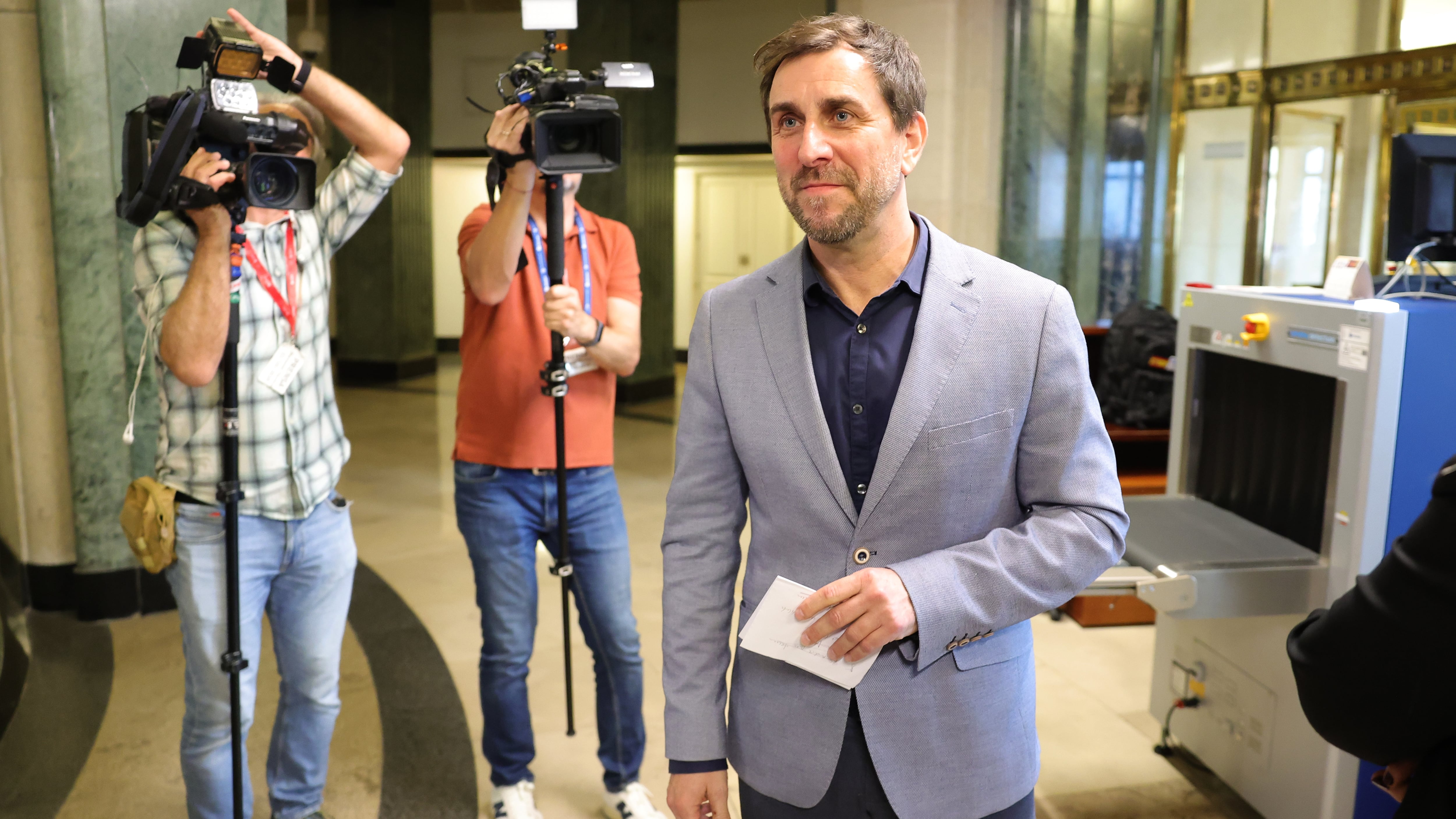
Toni Comín, tras jurar la Constitución en el Congreso: “Este derecho al pataleo confirma nuestra victoria”

El exconsejero catalán Toni Comín, fugado de la justicia española hace nueve años como consecuencia de su papel en el proceso independentista, se ha presentado finalmente este jueves en Madrid para acudir a la Junta Electoral Central (JEC) y jurar la Constitución española para adquirir plenamente la condición de eurodiputado. A la salida, Comín ha querido restar trascendencia a ese gesto formal y lo ha catalogado como “una pataleta de mal perdedor” y “un derecho al pataleo” del Estado español: “Es una prueba más de que saben que hemos ganado. Confirma nuestra victoria”.

Seguir leyendo

Toni Comín, este jueves en el Congreso, tras recoger su acta de eurodiputado.

💾

©

Toni Comín, este jueves en el Congreso, donde ha recogido su acta de eurodiputado.
  •  

Endurance athlete becomes first person to swim California’s entire 900-mile coast

LOS ANGELES: Ultra-endurance athlete Catherine ‌Breed this week became the first person to swim California’s entire 900-mile (1,448 km) coastline, completing the journey from Oregon to Mexico in less than four months. Breed, 33, ​a San Francisco Bay Area native, confronted treacherous currents, storms, sharks and sewage as she swam a steady crawl stroke for up to five hours a day during her 111-day journey, according to organizers of the Swim California expedition. She was flanked throughout the

  •  

Newly single and 42, I left Connecticut for Montreal on a whim. People told me I was brave.

A woman with snow in the background and a brick wall.
Moving from Connecticut to Canada gave Erin Levi a panic attack.

Provided by Erin Levi

  • Last summer, Erin Levi left Connecticut and moved to Montreal on her own.
  • She barely knew anyone in the city, and relocating at 42 gave her a panic attack.
  • Moving to a new city while working for herself was hard, but it made her feel brave.

Last summer, I left my life in Connecticut behind and moved to Montreal on a whim, without a plan.

People told me I was brave.

Really? I'm a travel journalist. I've followed a snow leopard expert across Nepal; I've lived with a family in Uzbekistan who didn't speak English; and I've had a private encounter with the King of Bhutan.

Montreal is only a 6-hour drive from my hometown in Connecticut. It didn't seem brave to me. It seemed, frankly, safe.

Yet moving here at 42 gave me a panic attack. I hadn't been to Canada in more than 12 years and barely knew anyone.

After my parents dropped me off, we spent a few days exploring my new city together, where it's easy to get by without a car — it felt like the start of another semester abroad. Except this time, I was older and had no plans to leave.

The last time I'd been in Montréal with my parents was in the summer of 2003, before I left for a semester abroad in Hanoi. I had my first pho in Montréal's Chinatown.

So why Montreal?

A Facebook post on a full moon in May changed my life.

My lease in Ridgefield, Connecticut, was up. So was my relationship. My landlord wanted an extra $500 a month for the lofty, 1,100-square-foot, one-bedroom apartment in the woods that I had been sharing with my now-ex. That would bring the rent to $3,250 a month, not including utilities, which often reached $700 during the winter because of the high ceilings.

I saw all of this as signs to leave.

But I was about to write a check for $5,985 upfront for a $1,995-a-month, 900-square-foot, one-bedroom duplex nearby and buy a car.

Then a Canadian friend shared that her 638-square-foot, one-bedroom apartment near Montréal's Little Italy was available for 6 months at a writer-friendly rent: 1,100 Canadian dollars, or about $775 a month, including utilities, WiFi, furniture, and a beautiful patio. My friend is a professor and works abroad for half the year.

Ever since my first job at Tourisme Québec's New York office — the role that ultimately launched my travel-writing career — I'd wanted to live in Montreal. I also speak French. It seemed like a no-brainer, so I said "oui."

I found out that Americans can spend up to 6 months in Canada per visit. However, anyone who spends more than 183 days in the country in a calendar year may have to pay taxes. Foreign media workers like me also don't require a work permit. I consulted an immigration lawyer about staying in Canada.

A woman watching the Stanley Cup semi-finals at a Montréal bar.
Watching the Stanley Cup semi-finals at a bar in Montreal.

Provided by Erin Levi

My new life in Canada

Since moving, I've learned to row. I take weekly lessons at the Olympic Basin, where beginner courses cost CA$200 each. Gliding hundreds of meters solo in a scull has been one of the best antidotes to my anxiety. Socially, though, I should've joined the dragon boat team.

My neighborhood, La Petite-Patrie, is home to some of the city's top restaurants, including Vin Mon Lapin, Pasta Pooks, and Limbo. And Marché Jean-Talon — the largest open-air market north of Mexico — is my local grocer.

Some cultural highlights have included celebrating Jewish holidays at Leonard Cohen's shul, attending my first F1 race, cross-country skiing in Parc du Mont-Royal, and going to a hockey game solo.

Sure, there's been loneliness. There's been longing. It's not easy moving to a new city when you work for yourself. Nor is it easy being more than 10 minutes from my parents — and their delicious cooking. But I've also made new friends, hosted old friends, and opened my heart.

Brave, eh? Perhaps I really am.

Read the original article on Business Insider

  •  

Shark nicknamed ‘Bukangi’ returns to sea off South Korea after third rescue attempt

SEOUL: A shark that became a sensation after spending more than a month in a canal in the South Korean port of Busan was successfully guided back into the open sea on Wednesday, following two failed rescue attempts, the oceans ministry said. The shark, nicknamed “Bukangi,” was first spotted in a narrow waterway on September 18. More than 1.6 million people visited the waterfront park through October ⁠20 to catch ⁠a glimpse of it, according to the Busan Infrastructure Corporation. Lee Min-jeun

  •  

Timberwolves vs. Heat preview: Why the under 238.5 could be the play in tonight's matchup

The NBA returned to action yesterday, and I had two plays for us, and we started perfectly with wins in both games. It won't always be a rosy outlook, but it was nice to get off to a good start in the NBA. We had the appetizer of three great games yesterday, and today we have 11 different matchups to choose from. The first one I have circled is on ESPN as the Timberwolves take on the Heat.

The Minnesota Timberwolves should probably be given a little bit of credit for all of the tinkering they've done with their roster over the years. We see a lot of teams build a roster and then leave it alone for a few years to see if it will work out. The Timberwolves have given their team a chance, and then they adjust based on the results of the squad. For example, they've traded for Rudy Gobert, then they traded away Karl-Anthony Towns when the pairing didn't work. They realized they needed a point guard, and they traded for LaMelo Ball in the offseason.

The problem with the trade is that they got rid of one of their best players, Naz Reid, in the deal. He will be missed off the bench and in key moments. However, Ball should make the offense look a little more dynamic. Ball has plenty of flaws. He has terrible shot selection, seems to be a complete disaster on defense in isolation situations, and he is injury-prone. There is no denying his talent, though. When his shot is falling, he is elite. He is great in transition, and he will now be a second option to Anthony Edwards, who seems to already really like playing with him.

LAMELO BALL TRADED TO TIMBERWOLVES TO TEAM UP WITH FELLOW TOP PICK ANTHONY EDWARDS IN BLOCKBUSTER DEAL: REPORT

The Miami Heat come into this game with a new look as well. They still have some key mainstays like Erik Spoelstra as their coach. I've removed any doubt about his abilities. He seems to find a way to get things to work regardless of who he has on the roster. That doesn't mean they always win, but he certainly gets the most out of his team. Pat Riley is also willing to shake things up as he tries to get the team back to championship contention.

CLICK HERE FOR MORE OUTKICK SPORTS COVERAGE

THE CRAIG CARTON SHOW–UNFILTERED, UNAPOLOGETIC AND UNMISSABLE. DOWNLOAD HIS DAILY PODCAST NOW!

There is no doubt they are close again because they added one of the best players in basketball in the offseason with Giannis Antetokounmpo coming to the team. Giannis will now be the offensive force for the team. If you're going to question anything about the roster, the main question should be: where will the shooting come from? No one on the roster, outside of Klay Thompson, is a great 3-point shooter, and he is on the wrong side of his career to be relied on. Probably the same with Tim Hardaway Jr.

The Heat might have the best defensive five in basketball. Davion Mitchell is an elite defender, even if he doesn't get much recognition for it. Thompson and Wiggins have both likely lost a step, but both are still good defenders. Giannis and Bam are potential Defensive Player of the Year candidates. It is a bit hard to take the under in this game because the Timberwolves could absolutely be an offensive force, and no one really will stop Giannis on their team, but I think the Heat defense, plus the lack of 3-point shooting from Miami, give the under 238.5 a good shot.

SIGN UP FOR THE DAILY OUTKICK NEWSLETTER

For more sports betting information and plays, follow David on X/Twitter: @futureprez2024

  •  

Midterms : Donald Trump peut-il encore convaincre ?

Aux États-Unis, c'est la dernière ligne droite pour la campagne des midterms, les élections de mi-mandat du 3 novembre. Les votes anticipés ou par courrier montrent une forte participation avec 9 millions d’Américains qui se sont déjà prononcés. Donald Trump est en campagne et tente de reconquérir un électorat mécontent de sa politique des taxes douanières et de la guerre en Iran. Où en est la campagne à deux semaines du scrutin ? Quels sont les enseignements des votes anticipés ? Donald Trump peut-il encore convaincre ?

  •  

Picape da Fiat será “papamóvel” no Uruguai, veja qual

A Fiat foi escolhida para fornecer o veículo oficial que transportará o Papa Leão XIV durante sua visita apostólica ao Uruguai, agendada para ocorrer entre os dias 6 e 8 de novembro.

A conversão da picape média Titano no tradicional “papamóvel” está sendo executada nas instalações da Nordex, parceira industrial do grupo Stellantis em Montevidéu, com mão de obra especializada local.


A Fiat Titano que transportará o Papa Leão XIV passa por adaptações pedidas pelo Vaticano. O modelo terá laterais abertas, assento giratório ajustável, bancos para a comitiva, escada elétrica retrátil e cobertura transparente contra chuva.
A Fiat Titano, que transportará o Papa Leão XIV, passa por adaptações pedidas pelo Vaticano. O modelo terá laterais abertas, assento giratório ajustável, bancos para a comitiva, escada elétrica retrátil e cobertura transparente contra chuva. • Divulgação

Esta é a segunda vez que um modelo da marca italiana é adaptado para o transporte de um papa na América do Sul. Em julho de 2013, durante a Jornada Mundial da Juventude no Rio de Janeiro, o Papa Francisco utilizou um Fiat Idea adaptado, unidade que posteriormente passou a integrar o acervo histórico mantido pela fabricante.

Durante a agenda no país vizinho, o pontífice passará pelas cidades de Montevidéu, Paysandú e Florida, antes de seguir viagem para compromissos na Argentina e no Peru.

Sobre a Titano

Sob a carroceria modificada para os compromissos papais, a Fiat Titano utilizada no projeto pertence à linha produzida no polo automotivo de Córdoba, na Argentina. O utilitário é equipado com o motor 2.2 turbodiesel Multijet, que entrega 200 cv de potência e 450 Nm de torque, gerenciado por uma transmissão automática de oito velocidades.

A plataforma do modelo conta com tração integral com seletor eletrônico, suspensão calibrada para absorção de impactos em terrenos irregulares e sistema de freios a disco nas quatro rodas.

Na versão de rua mais equipada, a picape reúne assistências de condução do pacote ADAS, como frenagem autônoma de emergência e alerta de mudança de faixa, além de central multimídia com câmeras de visão 360 graus para manobras.

Papamóvel brasileiro permanece amassado e conservado em MG; veja fotos


  •  
❌