The battle to save the global court and its capacity to enforce accountability for the most heinous crimes is one struggle with many fronts, writes Marjorie Cohn.
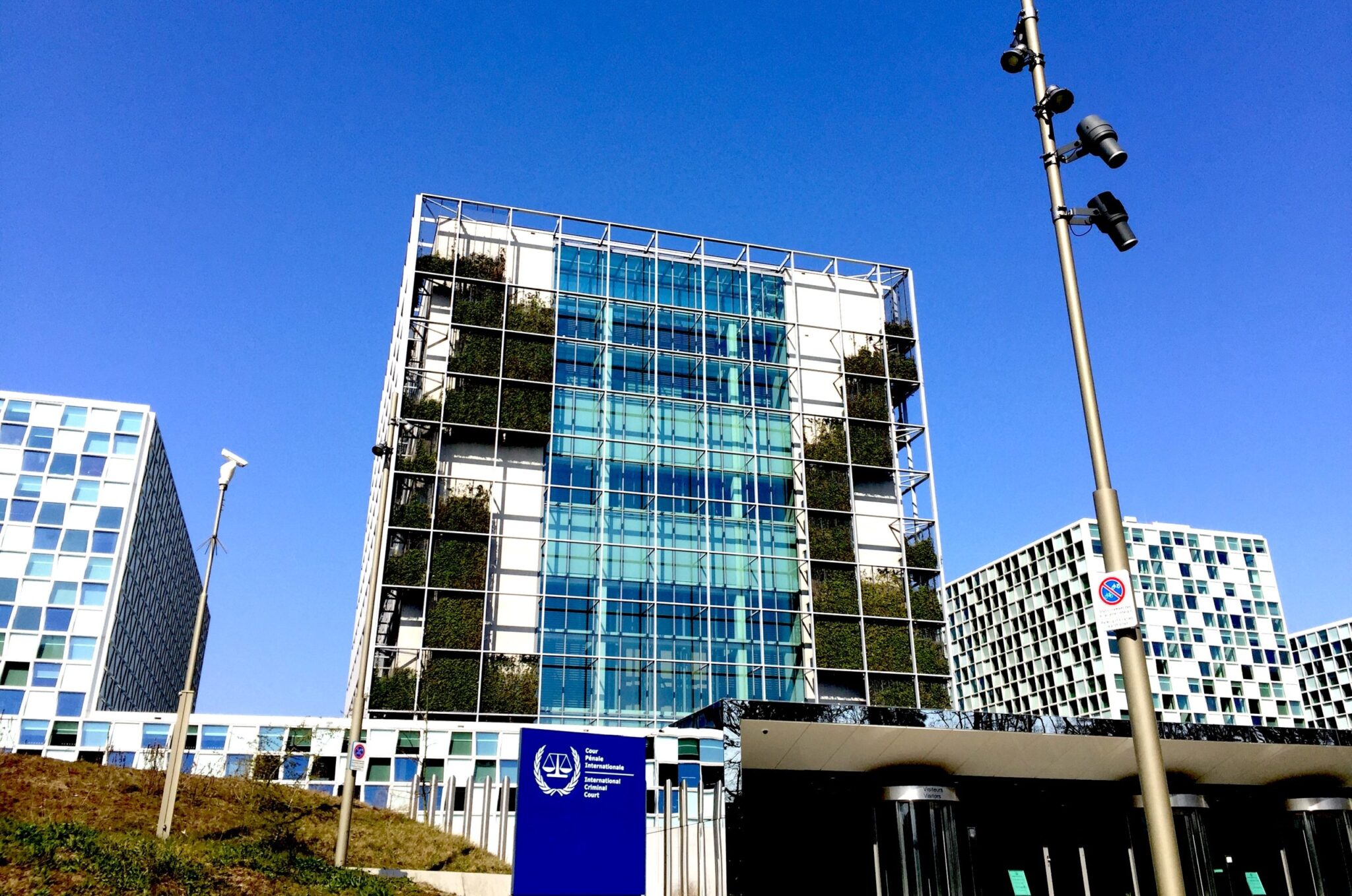
The European Parliament has awarded the 2026 Sakharov Prize for Freedom of Thought to the International Criminal Court (ICC) and its officials, recognising the Hague-based tribunal’s work in investigating and prosecuting war crimes, crimes against humanity and genocide.
Announcing the decision in Strasbourg on Thursday, 22 October, European Parliament President Roberta Metsola said the award reflected the European Union’s commitment to multilateralism and international institutions.
Metsola praised the Court for its work in upholding international law and justice. The announcement was met with a standing ovation in the parliamentary chamber.
The decision comes amid an escalating confrontation between the European Union and the administration of US President Donald Trump over the ICC’s jurisdiction and independence.
The restrictions place the Court under the US Treasury’s sanctions regime, limiting financial transactions involving American individuals, businesses and institutions. Washington has issued several temporary and limited exemptions intended to allow specified operations to continue.
The measures followed earlier sanctions against senior ICC officials, including Court President Tomoko Akane, and form part of Washington’s campaign to prevent the tribunal from exercising jurisdiction over American personnel.
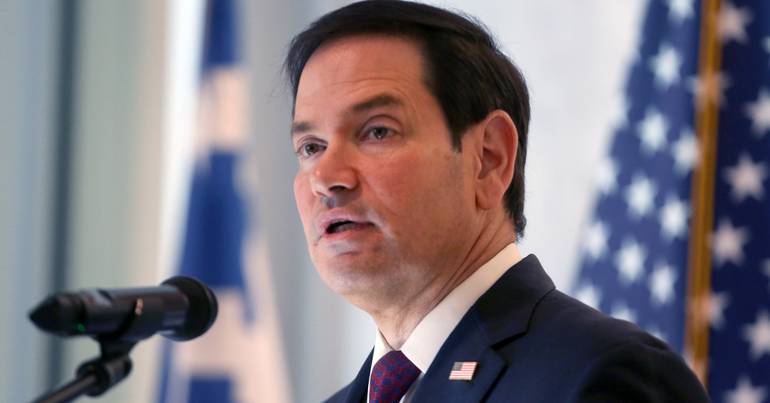
US Secretary of State Marco Rubio has argued that the ICC threatens American sovereignty by asserting authority over nationals of countries that have not accepted its founding treaty.
The Court rejected the latest restrictions, describing them as an attempt to obstruct the administration of international justice.
Established under the Rome Statute, the ICC operates independently of national governments and investigates serious international crimes where its jurisdictional requirements are satisfied.
Neither the United States nor Israel is a party to the Rome Statute.
Arrest warrants involving Russia and Israel
The dispute with Washington has intensified since the ICC issued arrest warrants in November 2024 for Israeli Prime Minister Benjamin Netanyahu and former Defence Minister Yoav Gallant over alleged war crimes and crimes against humanity connected with military operations in Gaza.
Israel rejects the Court’s jurisdiction and disputes the allegations. Washington has similarly opposed the proceedings against Israeli officials.
Further warrants followed in 2024 against senior Russian military commanders and officials in connection with attacks on Ukraine’s civilian infrastructure.
The proceedings demonstrate the geographical scope of the Court’s investigations, although its ability to secure arrests depends heavily on cooperation from individual states.
The ICC has no independent police force and relies on national authorities to execute its warrants.
European Parliament backs international justice
The ICC’s nomination for the Sakharov Prize was submitted by the Socialists and Democrats group in the European Parliament.
Its selection comes as European lawmakers examine how the EU should respond to American sanctions affecting the Court and organisations supporting its activities.
The October restrictions have raised practical questions about access to banking, technology services and other infrastructure required by the tribunal.
European governments must also consider how to support an institution established through an international treaty while maintaining relations with Washington.
The Sakharov Prize carries no legal authority to reverse American sanctions or compel governments to cooperate with ICC investigations. Nevertheless, the award represents an explicit institutional endorsement of the tribunal at a time when its operations face increasing external pressure.
Other nominees and award ceremony
The ICC was selected from three finalists announced earlier this month.
The other nominees were Tanzanian opposition leader Tundu Lissu and Iranian sisters Taraneh and Romina Rahimi, whose cases have attracted international attention over political persecution and judicial proceedings.
The Sakharov Prize, established by the European Parliament in 1988, is named after Soviet physicist, dissident and Nobel Peace Prize laureate Andrei Sakharov.
It recognises individuals and organisations defending human rights, freedom of expression and fundamental liberties. The award includes €50,000.
Previous recipients include Nelson Mandela, Malala Yousafzai and imprisoned journalists.
In 2025, the prize was awarded jointly to Belarusian journalist Andrzej Poczobut and Georgian journalist Mzia Amaglobeli.
The formal presentation of the 2026 prize is scheduled for 16 December at the European Parliament in Strasbourg.
The award places the ICC alongside previous Sakharov laureates while drawing further attention to the unresolved dispute between Washington and European governments over international criminal jurisdiction.
Top Trump administration officials are starting to point fingers squarely at SpaceX founder Elon Musk for the decision to slow down his company’s Starlink satellite internet services and its military counterpart Starshield for Ukraine, which has been muddled in uncertainty over the culprit. Looking to deflect the controversial move — which was swiftly admonished by…
Top Trump administration officials are starting to point fingers squarely at SpaceX founder Elon Musk for the decision to slow down his company’s Starlink satellite internet services and its military counterpart Starshield for Ukraine, which has been muddled in uncertainty over the culprit. Looking to deflect the controversial move — which was swiftly admonished by…
Secretary of State Marco Rubio says he’s not worried about the safety of NFL players, coaches and fans in France, where the league will play a game on Sunday amid widespread rioting across the country. “Our embassy feels the game will be fine,” Rubio told OutKick and Fox News Digital. “We have no indication the…
Secretary of State Marco Rubio says he’s not worried about the safety of NFL players, coaches and fans in France, where the league will play a game on Sunday amid widespread rioting across the country. “Our embassy feels the game will be fine,” Rubio told OutKick and Fox News Digital. “We have no indication the…
“Rovesciare il regime iraniano”. Benjamin Netanyahu, a soli sei giorni dalle elezioni inIsraele, torna a invocare la guerra contro la Repubblica islamica, dopo l’ultima campagna iniziata il 28 febbraio scorso che non ha portato a stravolgimenti nelle politiche di Teheran. E non è l’unico: come lui, anche il suo ministro della Difesa, Israel Katz, è tornato a minacciare una nuova stagione di conflitto mentre Washington e gli ayatollah stanno ancora portando avanti i colloqui di pace.
Se si tratti di dichiarazioni dettate più da necessità elettorali che da convinzioni strategiche non è possibile stabilirlo. Fatto sta che il primo ministro israeliano è tornato a usare lo stesso vocabolario delle settimane degli attacchi incrociati fra la Repubblica islamica e gli obiettivi israeliani e americani in tutto il Golfo. “Il regime iraniano non ha ancora imparato la lezione, c’è solo un modo per rimuovere la minaccia una volta per tutte: rovesciare il regime in Iran ed è la mia direttiva per Idf, Mossad e agenzie di sicurezza”, ha affermato durante una cerimonia militare nel sud di Israele. E ha poi minacciato direttamente la nuova Guida Suprema, Mojtaba Khamenei, dicendo che “ha deciso di seguire le orme di suo padre. L’Iran sta ancora una volta tentando di sviluppare le sue armi di morte”.
Se si tratti di un ordine di passare all’azione è tutto da stabilire. Ma anche secondo Katz, ad esempio, un nuovo scontro tra Tel Aviv e Teheran sarebbe vicino. Non per volontà dello Stato ebraico, però, ma della Repubblica islamica che vorrebbe influenzare il voto: “Il regime iraniano si trova nel suo momento di maggiore debolezza – ha detto – Questa debolezza potrebbe indurlo ad adottare misure estreme. Negli ultimi giorni, abbiamo individuato tentativi da parte dei nostri nemici, principalmente l’Iran e i suoi alleati, di sferrare attacchi che influenzeranno l’esito delle elezioni in Israele. Se l’Iran attacca Israele, l’Iran brucerà!”.
Sul fronte dei colloqui tra Iran e Stati Uniti, le valutazioni delle due parti appaiono in contrasto. Il segretario di Stato Usa, Marco Rubio, ha parlato di un accordo estremamente difficile da raggiungere, così “la pressione economica continuerà” finché Teheran non smetterà di attaccare le navi mercantili nello Stretto di Hormuz. Da parte sua, il ministro degli Esteri iraniano, Abbas Araghchi, ha detto che lo Stretto di Hormuz rimarrà chiuso finché Washington non accetterà le condizioni di Teheran, aggiungendo che i colloqui indiretti proseguono attraverso Pakistan e Qatar. Il capo della diplomazia di Teheran, però, mostra maggiore ottimismo affermando che “gli americani ci hanno fatto sapere di essere d’accordo con il nostro nuovo piano di sette giorni per porre fine alla guerra, ma desiderano aggiungere alcune clausole”. Ha però specificato che “l’Iran non cederà in alcun modo, né alle sanzioni economiche né alle minacce militari. L’unica soluzione adeguata è la diplomazia. Finora, Teheran ha partecipato a tre cicli di colloqui con gli Stati Uniti, tutti sfociati in una guerra contro l’Iran. Ciononostante, la porta alla diplomazia rimane aperta”.
Washington non sembra volersi mettere al fianco di Tel Aviv anche in questa nuova offensiva, per adesso solo verbale, contro l’Iran. E, come è ormai chiaro, mira invece a una distensione che indirizzi il conflitto verso un tavolo di pace. A confermarlo, secondo quanto scrive il Financial Times, è anche l’intervento diretto di Donald Trump per stoppare una nuova campagna militare israeliana che doveva iniziare il 10 ottobre scorso. Netanyahu, si legge, aveva incaricato le sue forze armate di pianificare una nuova offensiva di vasta portata, con l’esercito israeliano pronto per una campagna di bombardamenti di più giorni che avrebbe preso di mira infrastrutture civili come centrali elettriche, impianti nucleari e altri obiettivi. Una versione confermata da tre fonti che hanno parlato al quotidiano finanziario britannico ma che viene smentita dal Jerusalem Post, secondo cui né Netanyahu né Katz o altri esponenti del governo avevano dato ordine all’Idf di prepararsi all’attacco.
In late August, President Donald Trump announced what he called the “biggest oil deal in world history.” Since then, the full text of the accord — which grants the U.S. sweeping access to Venezuela’s oil reserves — has been one of the most sought-after secrets in Washington, DC. ProPublica has reviewed a copy of the […]
O secretário de Estado dos EUA, Marco Rubio, afirmou nesta quarta-feira (21) que as decisões relativas ao acesso da Ucrânia ao Starlink cabem à SpaceX e a Elon Musk, e não à Casa Branca — comentários que sugeriram que Musk poderia ter restringido o acesso de Kiev ao serviço.
O Wall Street Journal noticiou na terça-feira (20) que Musk havia ordenado a redução da velocidade de uma versão de nível militar do Starlink, da qual a Ucrânia depende para se defender contra ataques com mísseis da Rússia.
Segundo o jornal, uma fonte disse que Musk, o presidente Donald Trump e autoridades da Casa Branca discutiram o assunto previamente, e duas fontes afirmaram que Musk e o presidente discutiram o assunto nos dias seguintes à redução da velocidade.
“Não tenho conhecimento de que soubéssemos dessa decisão com antecedência. Mas isso é irrelevante”, disse Rubio a repórteres durante uma viagem à Índia.
“O ponto principal é que isso é regido por um contrato comercial privado quanto à forma como seus equipamentos podem ser utilizados e a quais velocidades eles permitem que sejam utilizados.”
Musk e a SpaceX não responderam aos pedidos de comentário da Reuters.
De acordo com a Reuters, duas autoridades norte-americanas e uma autoridade ocidental a par do assunto disseram que a decisão, em última instância, partiu da Casa Branca. Essa versão também foi afirmada pelo presidente ucraniano Volodymyr Zelenskiy, mas negada pelo governo.
Os comentários de Rubio provavelmente intensificarão as preocupações em Washington quanto à capacidade singular de Musk de influenciar a política externa dos EUA. Eles também representam uma aparente mudança de posição por parte do governo.
Trump afirmou publicamente que acreditava que nem ele nem Musk estavam por trás da desaceleração. Ao partir para uma viagem ao Uzbequistão e à Índia no sábado, Rubio havia dito que ninguém ordenou a desaceleração, uma afirmação que gerou críticas de parlamentares de ambos os partidos.
“Não tenho certeza se Zelenskiy sabe do que está falando, mas não foi deliberado”, disse Rubio na ocasião.
“Não temos nada a ver com isso. Eu não — os Estados Unidos, ninguém ordenou que a velocidade do Starlink fosse reduzida. Aconteceu de certa forma, mas, pelo que entendi, já foi restaurada”, declarou Rubio.
Iniciativa diplomática de Witkoff ocorre após uma semana de forte tensão entre a Ucrânia e os Estados Unidos, sobretudo no que diz respeito à partilha de informações e às comunicações via SpaceX.
US Secretary of State Marco Rubio arrived in Samarkand on October 19 with nearly 300 American business leaders, seeking to deepen US commercial ties with Central Asia. Washington’s renewed interest will matter less for how many agreements it produces than for whether American investment helps the region move beyond being merely a supplier of raw […]
O enviado especial dos Estados Unidos Steve Witkoff se reúne nesta quarta-feira (21) com o presidente russo, Vladimir Putin, em conversas destinadas a avançar propostas para encerrar a guerra na Ucrânia e abrir caminho para negociações mais amplas.
As conversas começaram pela manhã em São Petersburgo, após a reunião de cúpula realizada por Witkoff na terça-feira (20) com o presidente ucraniano, Volodymyr Zelensky, na Noruega. Em um vídeo do encontro, Witkoff afirmou que discutir os resultados daquela cúpula “produtiva” em Oslo estava entre os pontos da agenda.
“Acho que há algum grau de impulso, e espero que o encontro de hoje possa representar mais um passo à frente no processo de paz e nas discussões sobre como resolver o conflito ucraniano”, disse o enviado do governo Trump.
Witkoff também pediu a Putin que considerasse retomar as conversas trilaterais entre Rússia, Estados Unidos e Ucrânia, nas quais questões técnicas poderiam ser discutidas, segundo ele. Putin demonstrou interesse no tema da retomada da cooperação econômica com os Estados Unidos e na possibilidade de um encontro com a China para discutir a Ucrânia.
Um dos principais resultados do encontro até o momento foi o anúncio de Witkoff de que a Rússia libertará o cidadão americano Stephen Hubbard, de 74 anos, detido no país há mais de quatro anos.
Putin, Witkoff e tradutores se sentaram ao redor de uma grande mesa redonda enquanto discutiam uma ampla variedade de questões, incluindo a disposição da Rússia para ajudar a resolver a guerra no Irã, possíveis exportações russas de fertilizantes para os Estados Unidos e a libertação de Hubbard.
Os Estados Unidos e a Ucrânia fizeram “progressos significativos” nas conversas realizadas na Noruega na terça-feira, afirmou anteriormente uma autoridade americana à CNN. A Ucrânia “apresentou novas ideias e propostas, que foram discutidas em detalhes”, e os dois lados agora estão em “forte alinhamento” sobre os próximos passos, disse a autoridade.
“As discussões abrangeram elementos fundamentais de uma estrutura abrangente de paz, incluindo garantias de segurança de longo prazo para a Ucrânia, um plano econômico e de prosperidade para o pós-guerra e uma arquitetura de segurança europeia mais ampla, concebida para criar estabilidade duradoura”, afirmou a autoridade americana.
A Ucrânia e seus aliados reiteraram as principais linhas vermelhas estabelecidas por Kiev para qualquer negociação de paz, incluindo a necessidade de garantias de segurança futuras — para assegurar que a Rússia não volte a invadir o país — e a rejeição a quaisquer exigências de cessão de território.
A Rússia exigiu que a Ucrânia ceda toda a região de Donbas, no leste do país, que atualmente está majoritariamente sob controle russo. Moscou também pediu que a Ucrânia reduza drasticamente o tamanho de suas Forças Armadas e se comprometa a nunca ingressar na Organização do Tratado do Atlântico Norte (Otan).
“Temos algumas ideias claras sobre como chegar à paz e estamos unidos aos nossos parceiros europeus nesse esforço. Queremos que os americanos levem essas ideias aos russos”, disse Zelensky na terça-feira. “Vamos ver o que Putin tem a dizer.”
Sobre as conversas com o lado ucraniano, a autoridade americana acrescentou: “As equipes estão trabalhando excepcionalmente bem juntas, com um compromisso compartilhado de encontrar soluções práticas para encerrar a guerra”, adotando um tom positivo apesar da deterioração das relações públicas entre Zelensky e o presidente dos Estados Unidos, Donald Trump.
“O objetivo é aproveitar o progresso alcançado com a Ucrânia e a Europa, discutir as propostas com a Rússia e abrir caminho para negociações trilaterais diretas e conversas multilaterais mais amplas”, afirmou a autoridade americana.
Enquanto isso, na Rússia, o ministro das Relações Exteriores, Sergey Lavrov, adotou um tom menos otimista na terça-feira. Ele afirmou que Moscou verá o que Witkoff apresentará, mas não fará “concessões políticas”. Lavrov disse que Moscou “não espera um milagre” e que Washington continuará sendo, na melhor das hipóteses, um rival da Rússia, segundo a agência estatal russa de notícias TASS.
Uma autoridade europeia em Oslo disse à CNN: “Acho que os planos — ou a falta deles — não são um problema tão grande quanto fazer a Rússia levar qualquer plano a sério”.
Jared Kushner, genro de Trump que também participa das negociações de paz, está gripado e participa remotamente da reunião na Rússia.
Rubio diz que reunião entre Witkoff e Zelensky foi “positiva”
O secretário de Estado dos Estados Unidos, Marco Rubio, afirmou nesta quarta-feira que a reunião do enviado especial americano Steve Witkoff com o presidente ucraniano, Volodymyr Zelensky, foi positiva e que Witkoff compartilhará os resultados com a Rússia.
Rubio também reiterou que Washington não restringiu o acesso de Kiev ao Starlink, sistema de satélites da SpaceX essencial para os esforços de guerra da Ucrânia. A declaração contradiz relatos de que o governo americano teria tido participação na redução do serviço para as forças militares ucranianas.
Zelensky viajou a Oslo para se reunir com Witkoff na terça-feira (20), enquanto a Ucrânia busca recompor as relações com os Estados Unidos em meio a tensões sobre o apoio militar americano, o compartilhamento de informações de inteligência e o acesso ucraniano à versão militar do Starlink.
Rubio disse a jornalistas em Mumbai, durante uma visita à Índia, que as conversas entre Witkoff e o líder ucraniano não trouxeram surpresas.
“Agora, munido dessas ideias, ele poderá ir a São Petersburgo e compartilhá-las com o lado russo. Vamos ver se conseguimos avançar”, afirmou.
Sobre o Starlink, Rubio declarou: “O que posso dizer com certeza é que nem o presidente dos Estados Unidos nem qualquer pessoa em nosso sistema solicitou que fossem feitas mudanças nesse sistema”.
“Não podemos dizer a uma empresa privada quais decisões tomar ou deixar de tomar”, acrescentou.
“Não tenho conhecimento de que soubéssemos dessa decisão com antecedência […] mas isso é irrelevante. O ponto principal é que o uso dos serviços é regido por um contrato comercial privado […] E, portanto, continuaremos a tratar do assunto”, disse.
Elon Musk, CEO da SpaceX, afirmou na semana passada que, como os sistemas pertencem ao governo dos Estados Unidos e são controlados por ele, quaisquer restrições de velocidade ou uso são decididas pelas Forças Armadas americanas ou pelo presidente dos EUA.
Sob o governo do presidente Donald Trump, os Estados Unidos praticamente interromperam o fornecimento direto de armas à Ucrânia, mas permitem que países europeus comprem armamentos americanos em nome de Kiev por meio de um programa conhecido como Lista de Requisitos Prioritários da Ucrânia.
Washington também forneceu informações de inteligência e tecnologia que a Europa não consegue igualar.
Secretary of State Marco Rubio accused Iran of employing “Nazi U-boat tactics” against commercial shipping in the Strait of Hormuz, warning that reaching an agreement with Tehran remains difficult because its leadership is controlled by “radical Shia clerics.”
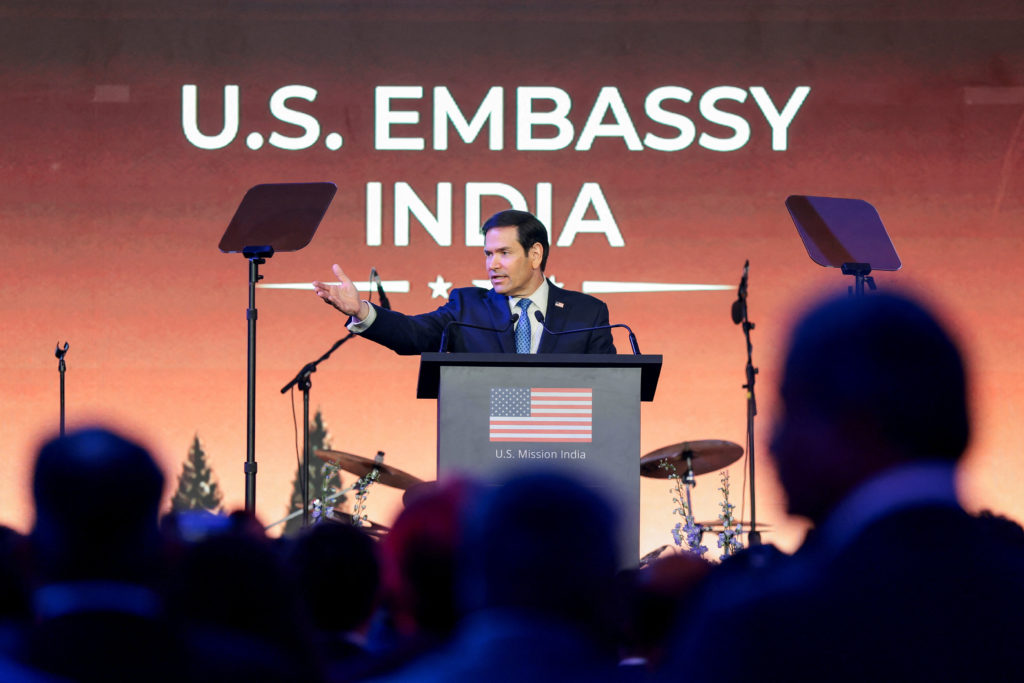
Secretary of State Marco Rubio arrived in India on Tuesday to meet with Foreign Minister S. Jaishankar and top business leaders, including the two richest men in Asia, Gautam Adani and Mukesh Ambani.
O secretário de Estado norte-americano, Marco Rubio, defendeu hoje o diálogo entre Estados Unidos, Rússia e China, perante críticas de Kiev sobre uma possível cimeira entre os líderes das três potências nucleares.
“É preciso amadurecer um pouco no que diz respeito à política externa. Sinceramente, não creio que seja fora do normal que os líderes das três potências nucleares mais poderosas da Terra comuniquem entre si”, afirmou Rubio durante uma visita à Índia.
O chefe da diplomacia norte-americana reagia às críticas sobre uma eventual reunião entre os presidentes norte-americano, Donald Trump, russo, Vladimir Putin, e chinês, Xi Jinping, durante a cimeira da Cooperação Económica Ásia-Pacífico (APEC), prevista para novembro em Shenzhen, na China.
Rubio argumentou que países podem manter “fortes divergências” sem que o diálogo represente uma concessão, posição que atribuiu também a Trump.
“Como é que se vai alcançar um acordo de paz entre a Rússia e a Ucrânia se não se falar com eles? É preciso falar com eles, certo?”, questionou.
Segundo Rubio, manter canais de comunicação com a outra parte constitui “a base da diplomacia e das negociações”.
O secretário de Estado considerou também que uma conversa ao mais alto nível entre Washington, Moscovo e Pequim sobre temas como o controlo de armamentos seria “muito positiva para o mundo”.
“É importante que os líderes dos países com os arsenais nucleares mais poderosos do mundo, pelo menos, comuniquem entre si”, acrescentou Rubio.
A possibilidade de uma reunião tripartida foi criticada na segunda-feira pelas autoridades ucranianas, que avisaram que um encontro sem a participação de Kiev poderia encorajar Moscovo a prosseguir a guerra.
O ministro dos Negócios Estrangeiros ucraniano, Andrii Sybiha, afirmou que convidar Putin para uma reunião deste género “alimentaria o seu desejo de engrandecimento e dar-lhe-ia um estatuto que não merece”.
O porta-voz do Kremlin, Dmitri Peskov, confirmou na segunda-feira que a possibilidade de um encontro entre os três dirigentes foi mencionada durante a conversa telefónica entre Putin e Trump em 09 de outubro.
Peskov afirmou, contudo, que não foi apresentada qualquer proposta concreta nem alcançado um acordo para a realização da reunião durante a cimeira da APEC.
Talks in Oslo have restored diplomatic contact between Kyiv and Washington, but Donald Trump continues to demand concessions from Ukraine while Moscow shows little willingness to compromise. Steve Witkoff’s forthcoming meeting with Russian officials will expose the limits of the American peace initiative.
The latest negotiations over Russia’s war against Ukraine have produced a renewed diplomatic initiative, with US presidential envoy Steve Witkoff preparing to travel to St Petersburg on Wednesday, 21 October, following consultations with Ukrainian and European leaders in Oslo.
President Volodymyr Zelenskyy met Witkoff alongside Norwegian Prime Minister Jonas Gahr Støre and Finnish President Alexander Stubb on Tuesday. Jared Kushner, Donald Trump’s son-in-law, participated remotely. The discussions covered territorial questions, security guarantees, sanctions and proposals for a partial ceasefire.
The meeting concluded with cautious expressions of optimism. Stubb suggested that the negotiating process was back on track, while Støre confirmed that Witkoff would present proposals developed by American, Ukrainian and European representatives to the Russian leadership.
However, the diplomatic improvement contrasts with Trump’s renewed public pressure on Zelenskyy, raising questions about Washington’s negotiating strategy and whether Moscow has any intention of accepting the proposed settlement.
Washington’s contradictory signals
Speaking in the Oval Office on Tuesday, Trump again insisted that Ukraine must reach an agreement with Russia, portraying Moscow’s military position as increasingly advantageous.
His remarks closely resembled arguments advanced during earlier disputes with Zelenskyy, when Washington pressed Kyiv to accept territorial concessions rather than increase pressure on the Kremlin.
Meanwhile, Secretary of State Marco Rubio sought to reassure the Ukrainian leadership that American military cooperation had not been deliberately restricted.
Rubio denied that Trump had ordered changes to intelligence-sharing or weapons assistance. Zelenskyy subsequently confirmed that Ukraine was again receiving American early-warning intelligence concerning Russian ballistic missile attacks.
Nevertheless, serious problems remain. Ukraine has reported delays in deliveries of American-made Patriot interceptors purchased by European allies, while restrictions affecting the military Starshield satellite communications system have not been fully resolved.
These difficulties are particularly serious as Russia intensifies attacks against Ukrainian electricity infrastructure, attempting to undermine civilian services ahead of winter.
The conflicting signals leave Kyiv negotiating with an administration whose diplomatic representatives promise continued cooperation while its president publicly demands Ukrainian concessions.
Security guarantees without NATO membership
Among the proposals discussed in Oslo were security arrangements intended to provide Ukraine with protection comparable to NATO’s Article 5 collective-defence provision.
Zelenskyy acknowledged that American representatives had discussed such guarantees, although their precise obligations and enforcement mechanisms remain undisclosed.
The proposal presents a fundamental negotiating problem.
Russia has consistently opposed Ukrainian NATO membership, partly because the alliance’s collective-defence commitments would increase the consequences of any renewed Russian aggression.
An alternative arrangement offering genuinely comparable protection would consequently encounter many of the same Russian objections.
Conversely, guarantees lacking a credible enforcement mechanism would leave Ukraine exposed to another attack after a ceasefire.
Moscow’s record provides little reassurance. Russia violated Ukraine’s internationally recognised borders in 2014 and launched its full-scale invasion in 2022 despite previous commitments to respect Ukrainian sovereignty.
The Kremlin’s objectives extend beyond territory
Washington’s approach appears increasingly concentrated on securing an agreement involving territorial concessions and restrictions on Ukraine’s future security arrangements.
Yet Putin’s objectives have consistently extended beyond the territories occupied by Russian forces.
The Kremlin has demanded constraints on Ukraine’s military capabilities, international alliances and strategic independence. Accepting territorial gains alone would not necessarily satisfy Moscow’s wider political ambitions.
Russian Foreign Minister Sergei Lavrov has maintained that Moscow is unwilling to make substantial political concessions, while the Kremlin continues to insist that any agreement must address what it describes as the underlying causes of the conflict.
Those conditions have previously included demands that would substantially restrict Ukraine’s sovereignty.
Consequently, even a Ukrainian willingness to consider elements of Washington’s proposals would not guarantee Russian acceptance.
The political calculation behind an energy ceasefire
One possibility under consideration is a limited ceasefire protecting energy and potentially food-related infrastructure.
Zelenskyy has indicated that Ukraine could suspend attacks against Russian energy facilities if Moscow stopped striking Ukrainian infrastructure.
Such an arrangement could reduce immediate civilian suffering. It would also have military and economic consequences.
Ukrainian attacks against Russian refineries, oil terminals and other energy installations have increasingly targeted infrastructure supporting Moscow’s war economy.
A temporary suspension could allow Russia to repair damaged facilities, restore production and stabilise export revenues. Without credible monitoring and enforcement, Moscow could exploit a limited agreement while leaving the wider conflict unresolved.
Trump has additional reasons to seek a rapid diplomatic result. With American congressional elections scheduled for 3 November, his administration is attempting to contain domestic fuel prices and demonstrate progress towards ending the war.
His recent decision to ease restrictions on Russian diesel exports has already provoked concern in Kyiv and European capitals over the potential financial benefits to Moscow.
The danger for Ukraine is that an agreement presented as a diplomatic achievement in Washington could provide Russia with economic relief without altering its military objectives.
The decision awaiting Washington
Witkoff’s visit to St Petersburg will establish whether Moscow is prepared to engage with the proposals developed in Oslo.
Putin could accept a temporary arrangement, particularly one suspending Ukrainian strikes on Russian energy infrastructure, while postponing discussions over territorial and political questions.
Alternatively, Moscow could reject the initiative and maintain its existing demands.
In either case, Washington will face a decision over the consequences of Russian intransigence.
For Kyiv, continued engagement with the United States remains essential because American intelligence, satellite communications and advanced air-defence weapons cannot readily be replaced.
But the prospects for a negotiated settlement will depend less on further Ukrainian concessions than on whether Russia faces sufficient political, military and economic pressure to abandon its maximalist demands.
The Oslo negotiations have restored cooperation between Ukraine, Europe and American mediators. They have not established that Putin is prepared to end the war on terms compatible with Ukraine’s continued independence.
PM claims ending 'terrorist' Islamic Republic will bring peace with Lebanon; Tehran rules out talks with Washington until its demands met; Israeli fighter jets said to fly toward Iran in drill
Ukrainian President Volodymyr Zelenskyy said the US has restored intelligence sharing with Ukraine, including advance warnings of Russian ballistic missile launches, following talks with US Secretary of State Marco Rubio.
The lack of advance warnings came amid reports that the Trump administration had threatened to suspend intelligence sharing and weapons supplies unless Kyiv halted attacks on Russian oil refineries. US intelligence usually alerts Ukraine to ballistic missile launches before air raid sirens sound, giving the country time to warn civilians and prepare its air defenses. Russian ballistic missiles can reach Kyiv within minutes, making early notice critical to protecting lives.
Zelenskyy made the announcement on 20 October during a press conference broadcast by Suspilne. He said he had spoken with Rubio earlier that morning while traveling to Oslo, discussing intelligence, Starlink satellite communications, missile interceptors, and Patriot air defense systems.
“We discussed sensitive issues, including Starlink, interceptors, which are very important, and intelligence. We were very specific; the conversation was very positive,” Zelenskyy said.
He added that he plans to speak with Rubio again within the next 48 hours.
On 18 October, Zelenskyy also said that US warnings had returned, which turned out not to be true as Russian ballistic missiles hit Kyiv that evening before air raid sirens sounded.
Kyiv went days without advance warnings of Russian missiles
The warning gaps began with Russian ballistic missile attacks on Kyiv on 12 October and continued through 19 October. During the attacks on 12 and 13 October, Ukraine received no advance warning from its partners, with air raid alerts sounding only after the attacks had begun.
The problem persisted during subsequent attacks. Overnight on 18–19 October, Russia attacked Kyiv in two waves. Ukrainian Air Force spokesperson Yurii Ihnat said no warning arrived before the first wave, around 23:00. Information arrived before the second wave, around 03:00, but left little time to respond.
Advance intelligence on ballistic missile launches is particularly important because these missiles can reach their targets within minutes, leaving little time for civilians to seek shelter.
Washington denies suspending intelligence sharing
US President Donald Trump previously denied that Washington had stopped sharing intelligence with Ukraine, despite the missing warnings. Secretary of State Marco Rubio also rejected claims of a suspension, pointing to a software problem in Ukraine's early-warning system.
However, the disruptions came amid reports that the Trump administration had threatened to suspend intelligence sharing and weapons supplies unless Kyiv halted attacks on Russian oil refineries. The Financial Times reported that Washington was pressuring Ukraine to stop the strikes as part of efforts to secure an energy truce with Russia.
Ukraine temporarily paused attacks on Russian refineries but said Moscow continued striking Ukrainian energy infrastructure.
Zelenskyy's latest statement indicates that advance ballistic missile warnings are reaching Ukraine again, although the recent gaps have raised questions about the reliability of a capability critical to protecting civilians.
Secretary of State Marco Rubio held talks with India's foreign minister in Mumbai on Tuesday as the two countries seek to deepen energy cooperation and move closer to finalizing a trade deal.
 Login