❌

Reading view

  •  

Russian missiles and drones kill one and injure 24 in Kyiv, splitting its metro line in two

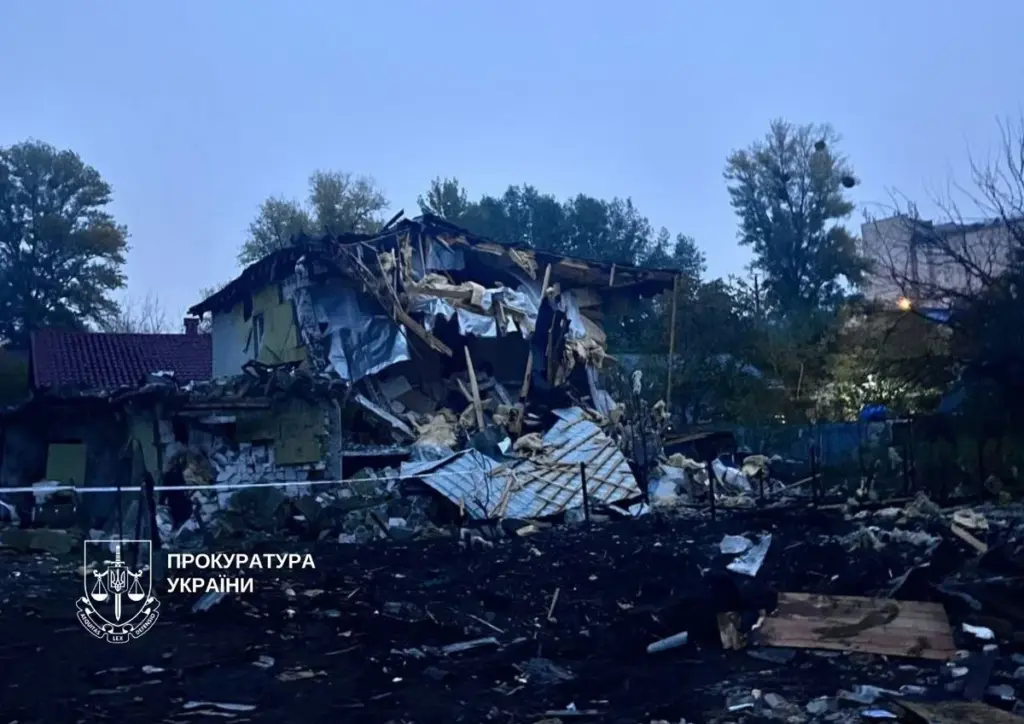
Aftermath of Russia’s overnight attack on Kyiv.

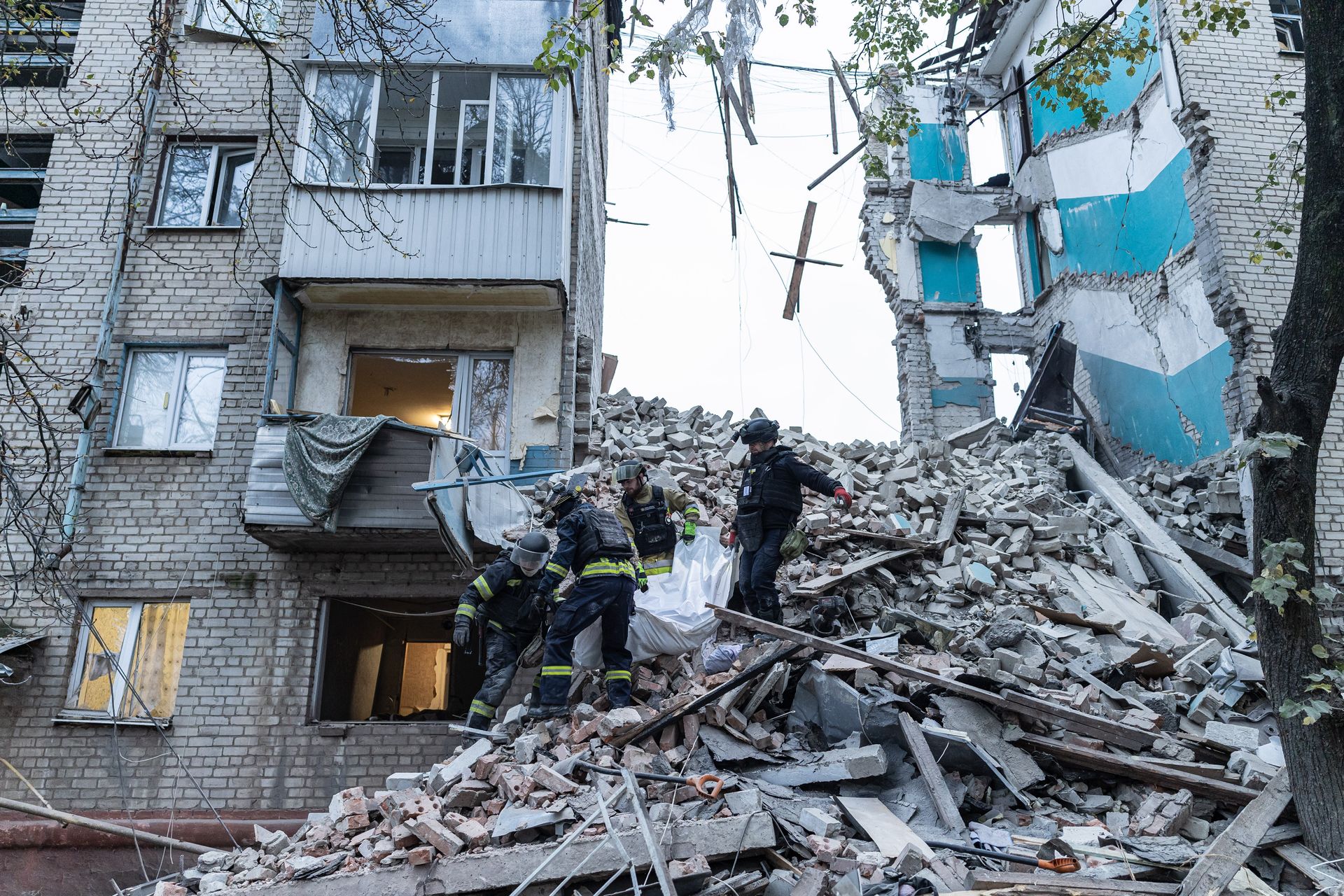
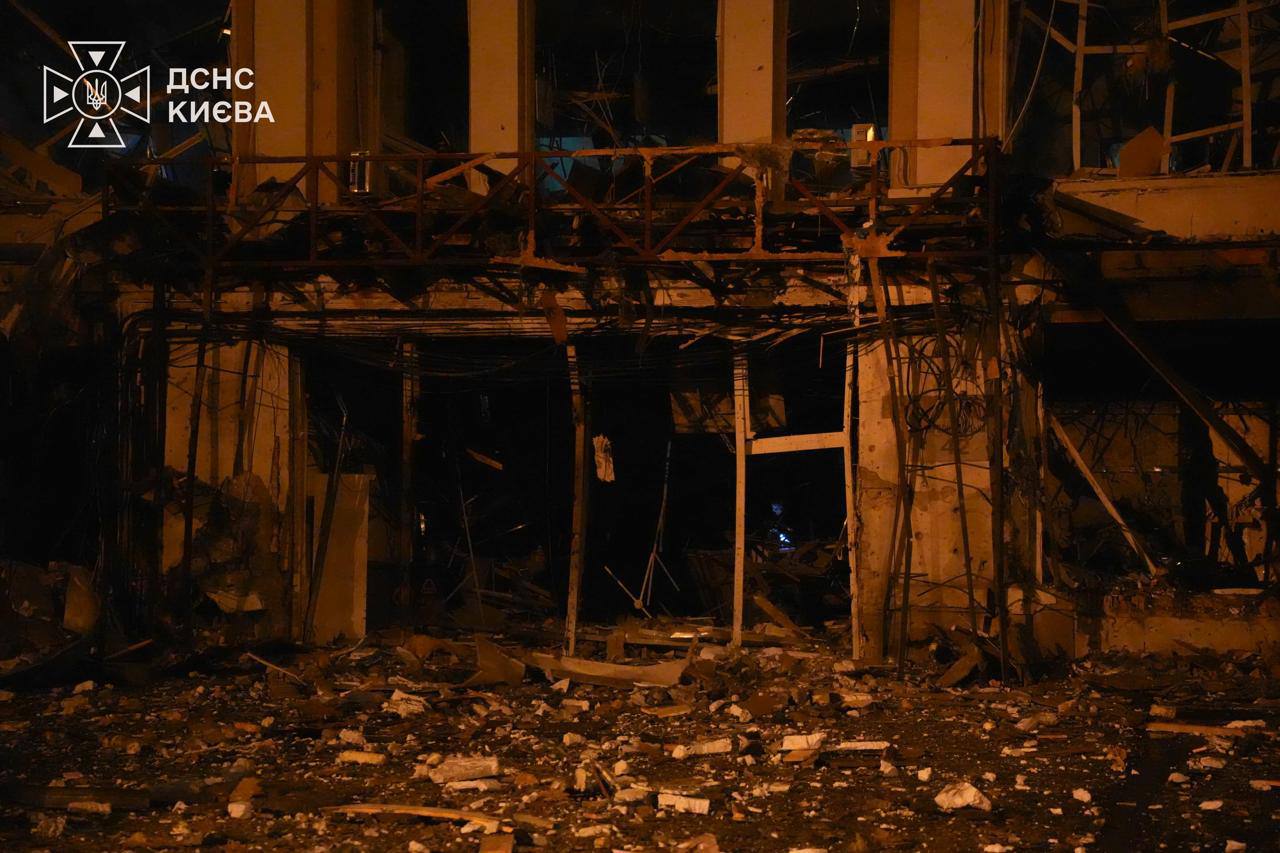
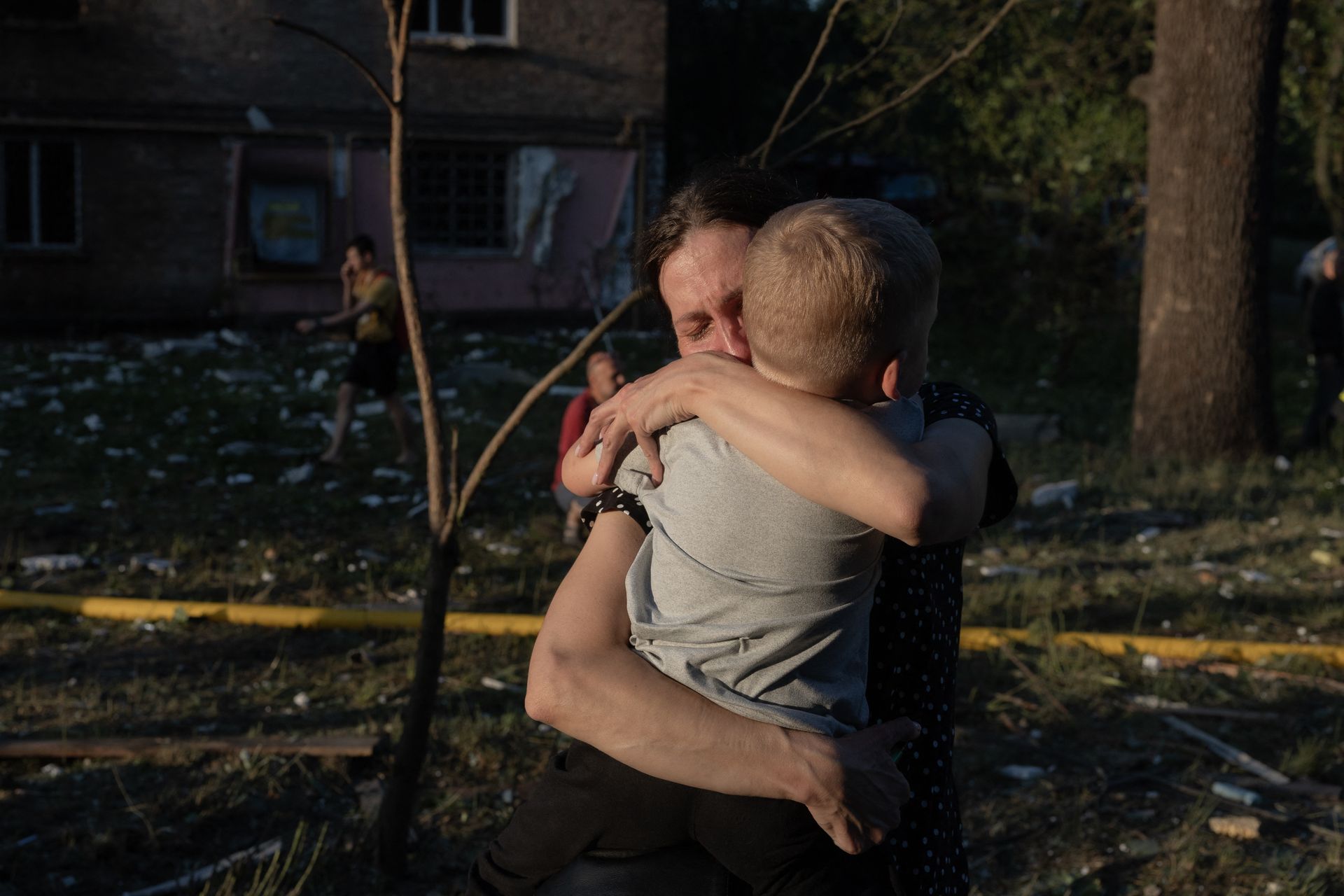
Russian missiles and drones killed one person and injured 24 in Kyiv overnight on 22 October, the Kyiv City Prosecutor’s Office said. Damage spread across six of the city’s districts, the city military administration reported.

The strike came hours after Kremlin aide Yuri Ushakov said Putin had told Witkoff that Russia was “in principle” ready to resume three-way talks with the US and Ukraine in mid-November. President Volodymyr Zelenskyy read the overnight attack as a sign that Russia’s attitude has not changed. A day earlier, Russian drones killed two people in a 24-story Kyiv apartment block.

21 ballistic missiles in three waves

Russia fired 21 ballistic missiles at Kyiv overnight, Zelenskyy said. The barrage came in three waves, around 22:00, at about 02:00, and around 03:30.

Aftermath of Russia’s overnight attack on Kyiv.
Aftermath of Russia’s overnight attack on Kyiv. Photo: Office of the Prosecutor General of Ukraine

Across Ukraine, air defenses downed or suppressed 181 of 210 Russian drones, the Air Force said. Its report did not mention any ballistic missiles shot down.

One killed in the Dniprovskyi district

The only death in Kyiv came in the Dniprovskyi district, on the city’s left bank. There, Russian strikes destroyed 13 detached houses on several streets, prosecutors said. Police said the man killed was 48 and that six people were injured in the district, four of them children, the youngest aged five.

Of the injured, five are minors and two are young children, and prosecutors reported acute stress reactions among them. A 16-year-old boy is in hospital with a closed head injury, prosecutors said. Sixteen of the injured were hospitalized, the city military administration said. The final number of injured is still being established.

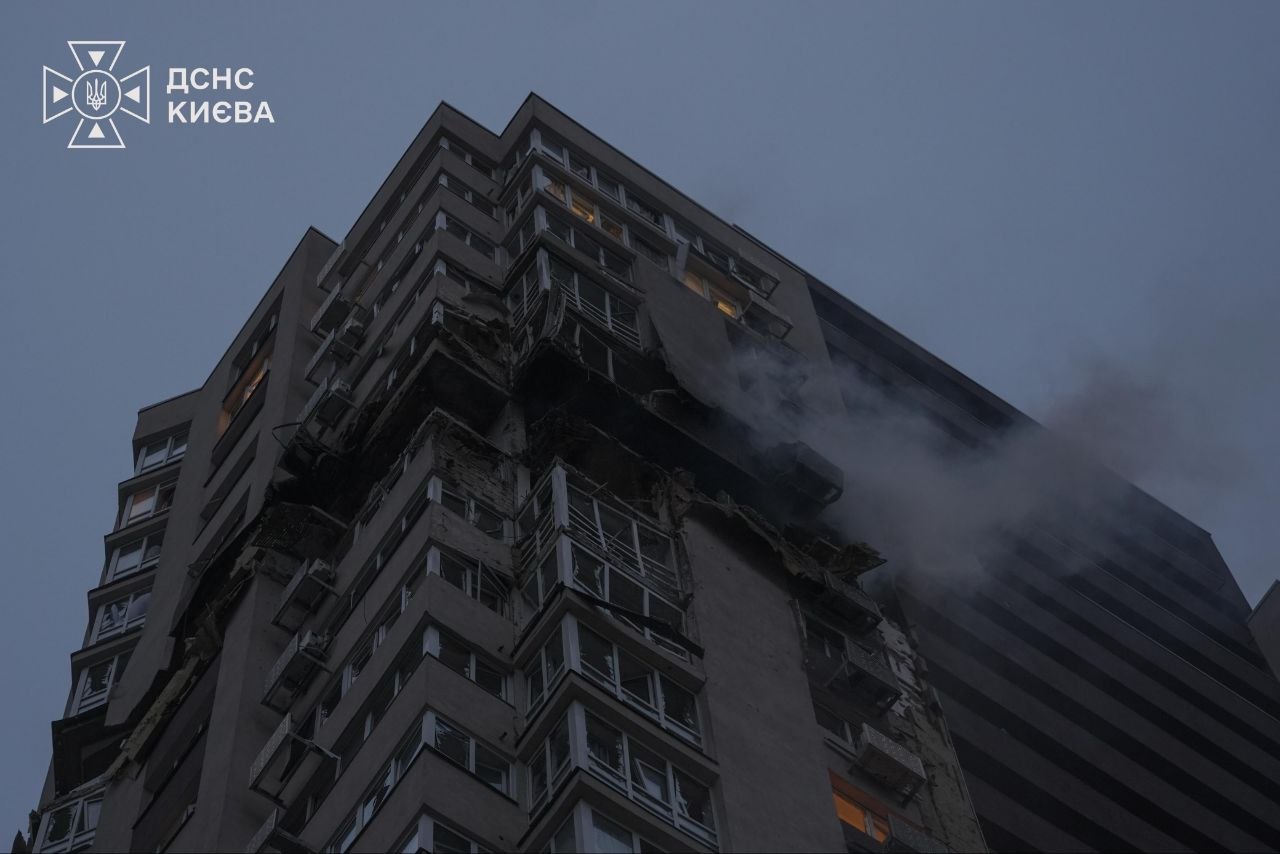
just grid 24-storey block university warehouses were russia’s target list overnight four people dead · post smoke rises apartment building kyiv’s sviatoshynskyi district after russian drone strike 21 2026 kyivjfif
Explore further

Not just the grid: Russia struck a 24-story block, a university, and warehouses overnight, and four people are dead

Ambulance station and monastery damaged

In the Holosiivskyi, Obolonskyi, Pecherskyi, and Sviatoshynskyi districts, the attack damaged eight apartment buildings, prosecutors said. It also damaged a building-supply hypermarket, a restaurant, a monastery building, a post office, and office premises.

In Pecherskyi, Russia damaged an ambulance station and six ambulances, Kyiv Mayor Vitali Klitschko wrote. The State Emergency Service said eight people were injured in that district, three of them children, and reported damaged transport infrastructure in the Darnytskyi district.

Aftermath of Russia’s overnight attack on Kyiv.
Aftermath of Russia’s overnight attack on Kyiv. Photo: National Police of Ukraine

Bridge closed, metro line split

The strikes damaged metro infrastructure on the Pivdennyi (Southern) Bridge, Kyiv Metro said. As of the morning, green-line trains ran in two sections, Syrets–Vydubychi and Osokorky–Chervonyi Khutir. Inspections and repairs would continue after the all-clear, the metro said.

Oleksii Biloshytskyi, head of Ukraine’s Patrol Police Department, announced that traffic across the bridge toward the left bank was temporarily closed. The city is adding buses on routes 22 and 91, the city administration said. Russian drones had already hit the bridge repeatedly in early October.

  •  

Ukraine war latest: Zelensky supports resuming trilateral peace talks with US, Russia after Putin claims Kremlin readiness

Key developments on Oct. 21:

  • Zelensky supports resuming trilateral peace talks with US, Russia after Putin claims Kremlin readiness
  • 'Everything was in ruins' — At least 2 killed, 2 injured in Russian drone attack on Kyiv
  • Russian Su-30 fighter jet crashes in Kaliningrad Oblast during training exercises, Moscow

  •  

Erhurman confirms rejection of Christodoulides’ Varosha proposal

Turkish Cypriot leader Tufan Erhurman late on Tuesday night confirmed that he had rejected a proposal put forward to him by President Nikos Christodoulides to open and repopulate the fenced-off area of Varosha under the United Nations’ administration and open the port of Famagusta under the European Union’s control.

“Handing over Varosha to the United Nations’ administration, within the framework of the security council resolutions, and opening the port of Famagusta under EU control. That is what is being said,” he told political talk show Er Meydani.

However, he said, “the port of Famagusta is an open port, it is not a closed port”, before elaborating that “the problem with our ports is that we cannot trade directly with the European Union”.

Asked whether the opening of the port of Famagusta would entail the implementation of the EU’s direct trade regulation, which has remained dormant since 2004 after it was drafted following the Greek Cypriot side’s rejection of that year’s Annan plan referendum, he answered in the negative.

“Is this the entry into force of the direct trade regulation? No, it is not the entry into force of the regulation, but since [the port] would be under EU control, direct trade would begin,” he said.

As such, he said, the proposal was unbalanced.

“Why is this the price for handing over Varosha to the UN’s administration? Are these balanced things?” he asked, before pointing out that the same proposal had been put forward in 2006, when Mehmet Ali Talat was Turkish Cypriot leader.

“This formula was presented in 2006 during Talat’s presidency, so 20 years have passed since then, and it has been brought up as if it were a new formula after 20 years. This is something I cannot accept.”

‘When I counted, I never reached 19’

He then spoke about Christodoulides’ 19 points for discussion, and said that he had never received a document listing those 19 points, but that instead, a number of suggestions had been voiced to him during their bilateral meetings.

“He only mentioned a few things verbally. I took notes. When I counted, I never reached 19 in terms of suggestions,” he said.

Then asked about the content of those suggestions, he said that it “would not be in accordance with diplomatic protocol” to disclose them, given that Christodoulides has not yet done so publicly, and that instead, “Christodoulides can make a statement regarding the proposals if he wishes, and when he does, I will discuss it”.

On this front, he said that last Saturday’s joint visit to the bicommunal festival in the Larnaca district village of Pyla was among the suggestions Christodoulides had put forward, and that other joint excursions, including meetings with bicommunal technical committees, also featured among Christodoulides’ suggestions.

He was then asked about accusations that he is “running away” from negotiations, and stressed that “I am not running away from the negotiating table at all”.

‘When I sit at the negotiating table, know that we are very close to a solution’

Instead, he said, he wishes for the next steps to be taken on the Cyprus problem to be “results-orientated”.

“I do not hold meetings for the sake of having meetings. I do not negotiate just for the sake of negotiating. I will not hold a five-plus-one meeting just for the sake of holding a five-plus-one meeting. Why will I do it? To find a solution. To produce something,” he said.

A “five-plus-one” meeting is another term used to describe an enlarged meeting on the Cyprus problem, involving the island’s two sides, its three guarantor powers, Greece, Turkey, and the United Kingdom, and the UN.

Erhurman stressed that negotiations cannot begin until an agreement is reached between the two sides on their methodology and “progress is achieved on confidence-building measures”, but equally said that a solution to the Cyprus problem may not be as far away as it currently appears.

“When I sit at the negotiating table, know what we are very close to a solution. I cannot say 100 per cent, but it is very likely. Only then will I sit down. I do not negotiate just for the sake of negotiating. I promised I would not keep you waiting at the table for another ten years. I stand by my word,” he said.

  •  

Christodoulides says UN and EU efforts will determine prospects for wider Cyprus talks

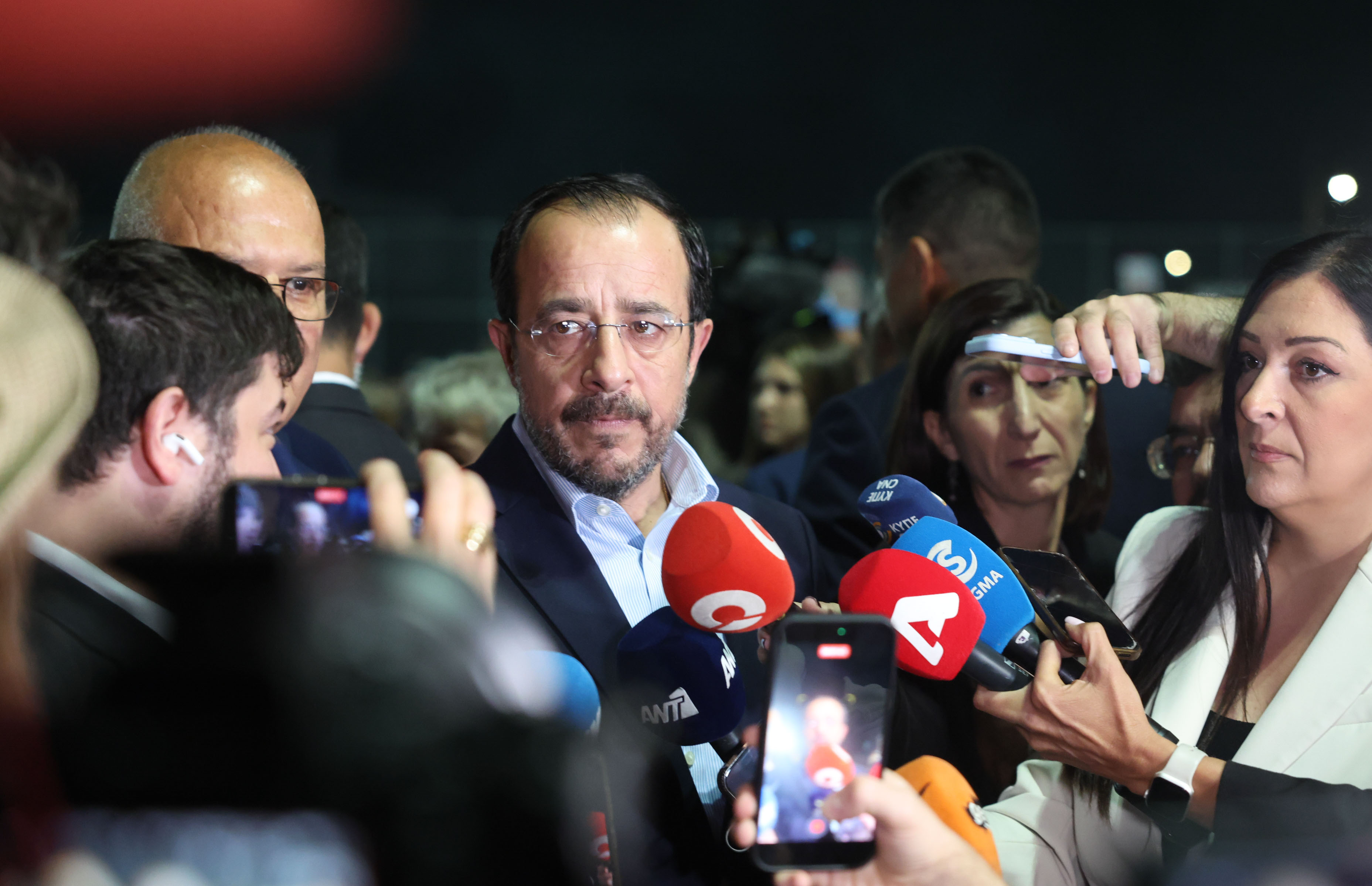
The prospects of holding a broader meeting on the Cyprus problem would depend on two parallel diplomatic efforts, involving discussions under United Nations auspices and initiatives by the European Union, President Nikos Christodoulides said on Tuesday.

Speaking after his meeting with Turkish Cypriot leader Tufan Erhurman, Christodoulides said the outcome would depend on talks concerning the substance and methodology of negotiations during the upcoming visit of the UN Secretary-General’s personal envoy Maria Angela Holguin, as well as the results of ongoing EU diplomatic contacts.

Christodoulides said an important meeting involving the EU was taking place on Tuesday but declined to confirm whether he was referring to a meeting between Turkish Foreign Minister Hakan Fidan and European Council President Antonio Costa.

“I do not want to say anything before the EU makes an announcement,” he said, adding that Nicosia expected to be informed of the outcome later in the day.

‘Good meeting’ with Erhurman

Describing his meeting with Erhurman as “a good meeting”, Christodoulides said most of the discussion had focused on substantive issues and methodology.

“There were many questions and clarifications from both sides,” he said, adding that these discussions would continue during Holguin’s visit, which begins on October 29.

The visit will include separate meetings with the two leaders and a trilateral meeting scheduled for November 9.

On confidence-building measures, Christodoulides said he was still awaiting responses from Erhurman to several proposals submitted by the Greek Cypriot side.

Of the 19 proposals he had previously put forward, approximately six or seven remained unanswered, while others had been rejected.

“Just because something has been rejected does not mean we do not bring it back to the table,” he said, pointing to the Technical Committee on Youth, which he said had taken two years to gain acceptance.

Opening more crossing points

On the issue of crossing points, the president said he had submitted two alternative proposals, one of which had been rejected, while the other remained under consideration.

He said Erhurman had requested further clarification and was expected to respond at their next meeting.

He stressed that opening a crossing point at Pyroi-Athienou remained a fundamental requirement.

The president also welcomed progress on initiatives concerning the environment and cultural heritage, which were included in the joint UN statement issued after Tuesday’s meeting.

He said Erhurman had responded positively to a proposal for the exchange of cultural artefacts between the two communities, allowing them to proceed with the exchange of relevant lists.

Joint environmental initiatives will also be pursued through the Technical Committee on the Environment.

Holguin to visit later this month

Asked about his upcoming meetings with Holguin, Christodoulides said he was prepared to meet her as often as necessary.

“If daily meetings are needed, that is my priority,” he said, adding that he would also be willing to attend an earlier joint meeting if the UN envoy considered it necessary.

He confirmed that he expected to meet Erhurman again before Holguin’s arrival, possibly next Tuesday.

Asked whether he would request the UN provide a document outlining previous convergences before negotiations resume, Christodoulides declined to elaborate.

“On these matters, I prefer to act first and inform you afterwards,” he said.

Before Holguin’s arrival, Christodoulides and Erhurman intend to meet with the Technical Committee on Cultural Heritage, the Technical Committee on Youth and the Steering Committee of the Civil Society Consultative Body.

  •  

Christodoulides and Erhurman to meet again next week ahead of UN envoy’s visit

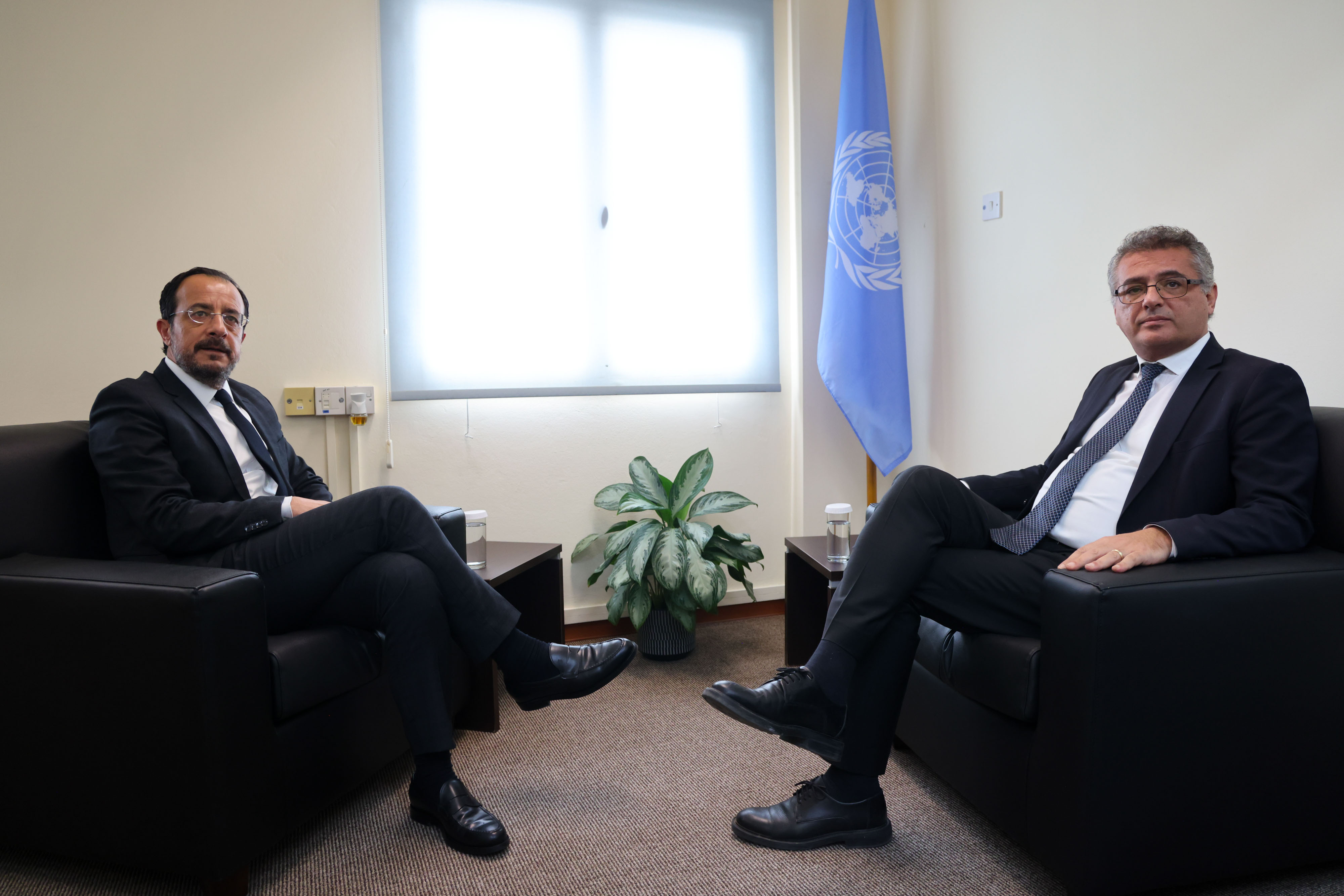
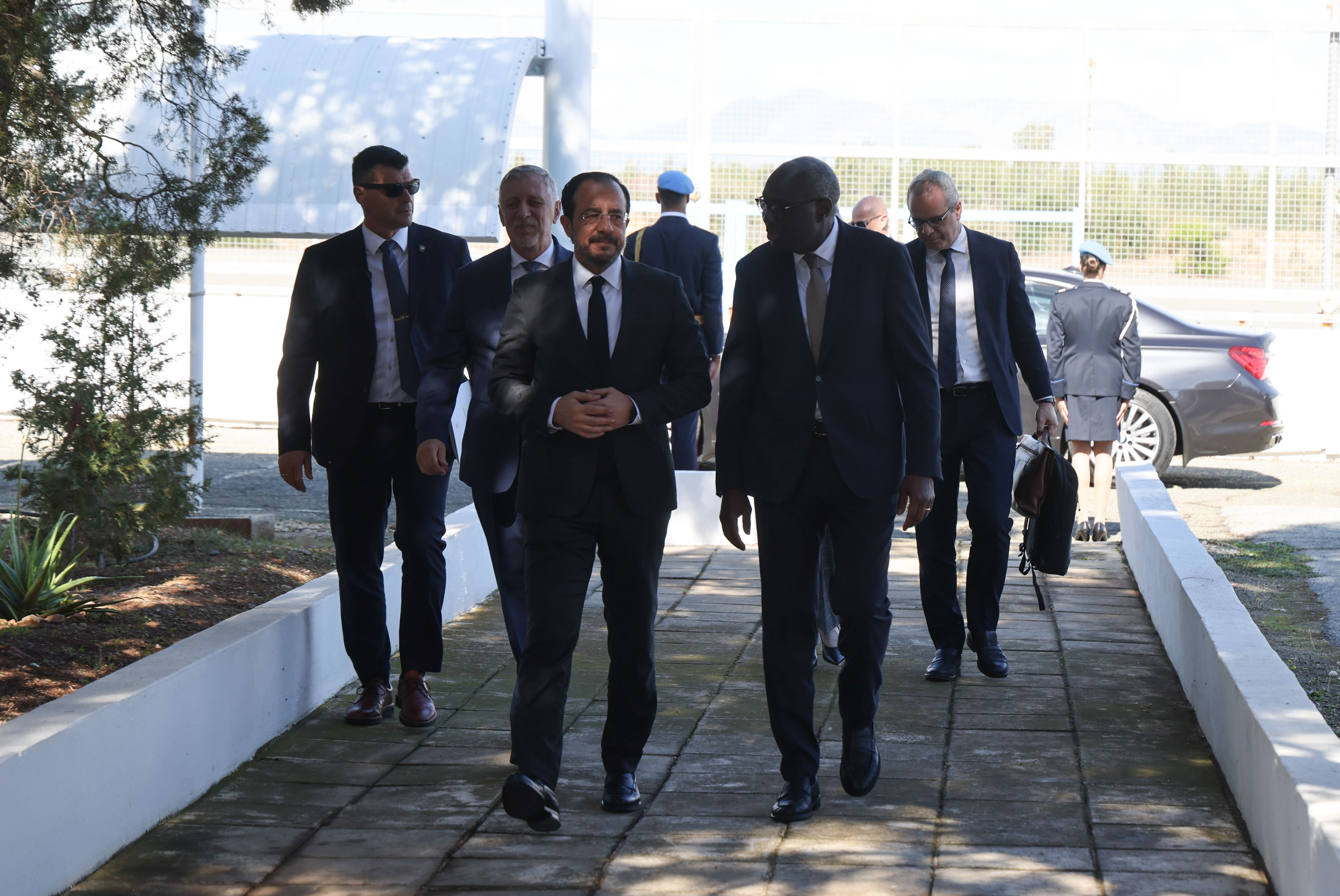
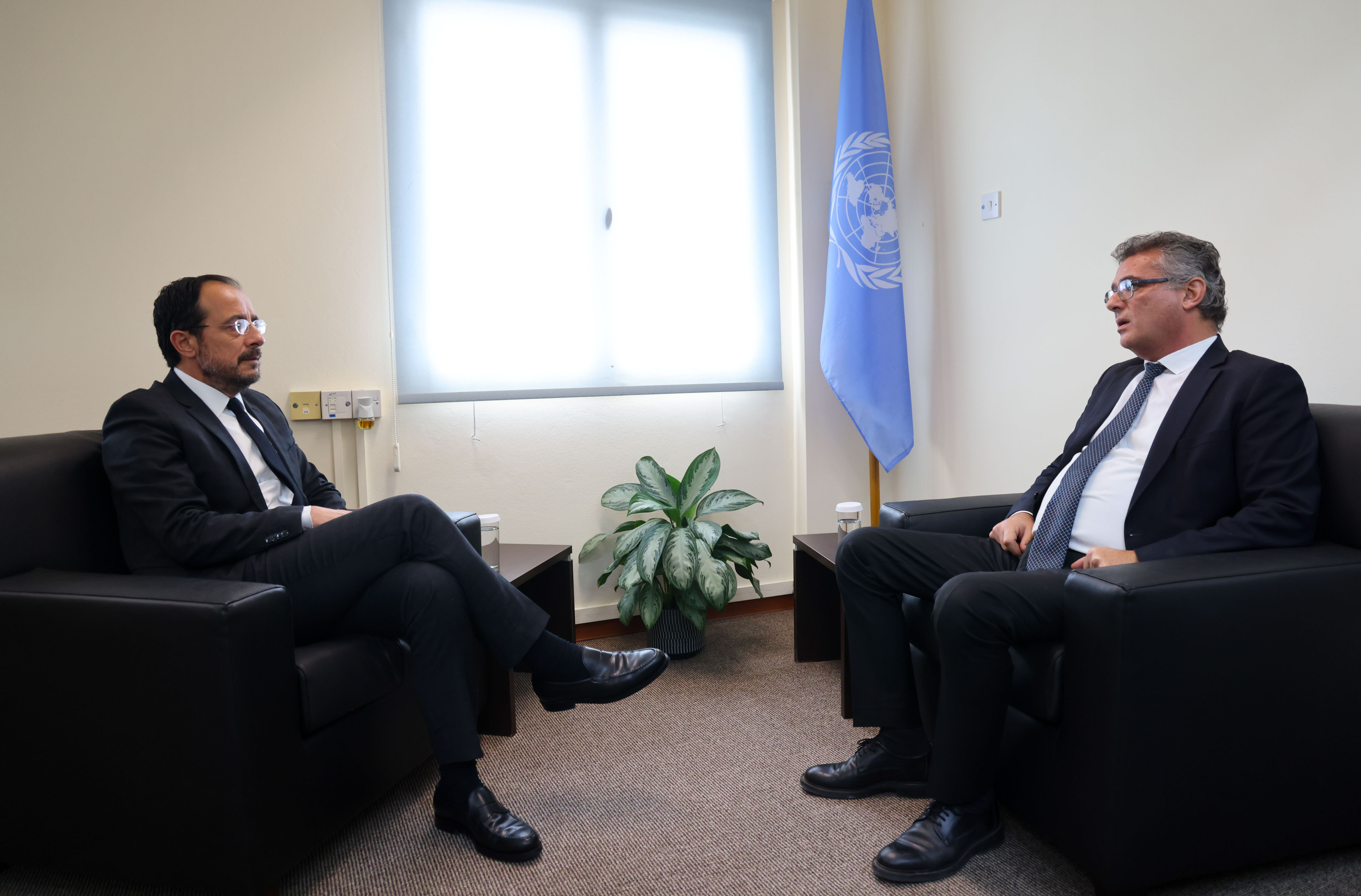
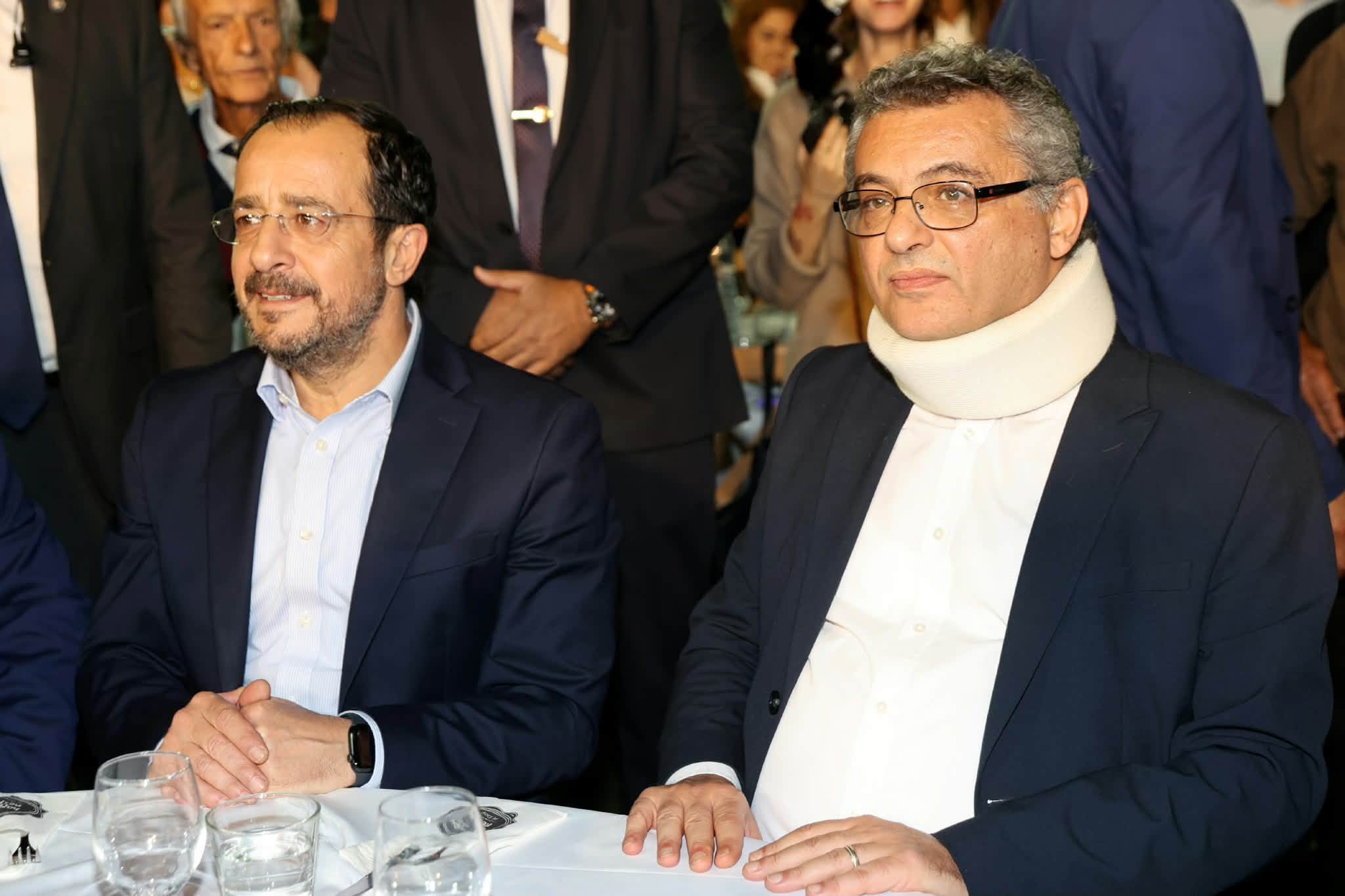
President Nikos Christodoulides and Turkish Cypriot leader Tufan Erhurman agreed to meet again next week following what the United Nations described as a constructive meeting on Tuesday in the UN Protected Area in Nicosia.

According to the UN, the two leaders continued discussions on confidence-building measures, methodology and the substance of the Cyprus problem.

They welcomed the upcoming arrival of UN Secretary-General’s Personal Envoy Maria Angela Holguin, who is expected in Cyprus on October 29.

Both leaders are due to hold separate meetings with Holguin ahead of a trilateral meeting scheduled for November 9.

The two also agreed to move forward with initiatives concerning the environment and the exchange of cultural artefacts.

Before Holguin’s arrival, Christodoulides and Erhurman intend to meet with the Technical Committee on Cultural Heritage, the Technical Committee on Youth and the Steering Committee of the Civil Society Consultative Body.

The leaders agreed to continue their discussions at another meeting next week.

Turkish Cypriot leader, Christodoulides, Erhurman, Cyprus problem, Cyprob

  •  

Oslo Ukraine Talks Expose Growing Tensions Between Washington, Kyiv and Europe

US envoy Steve Witkoff is joining negotiations in Norway before an expected visit to Moscow, but American pressure on Ukraine, uncertainty over military assistance and renewed economic dealings with Russia raise questions about Washington’s approach to ending the war.

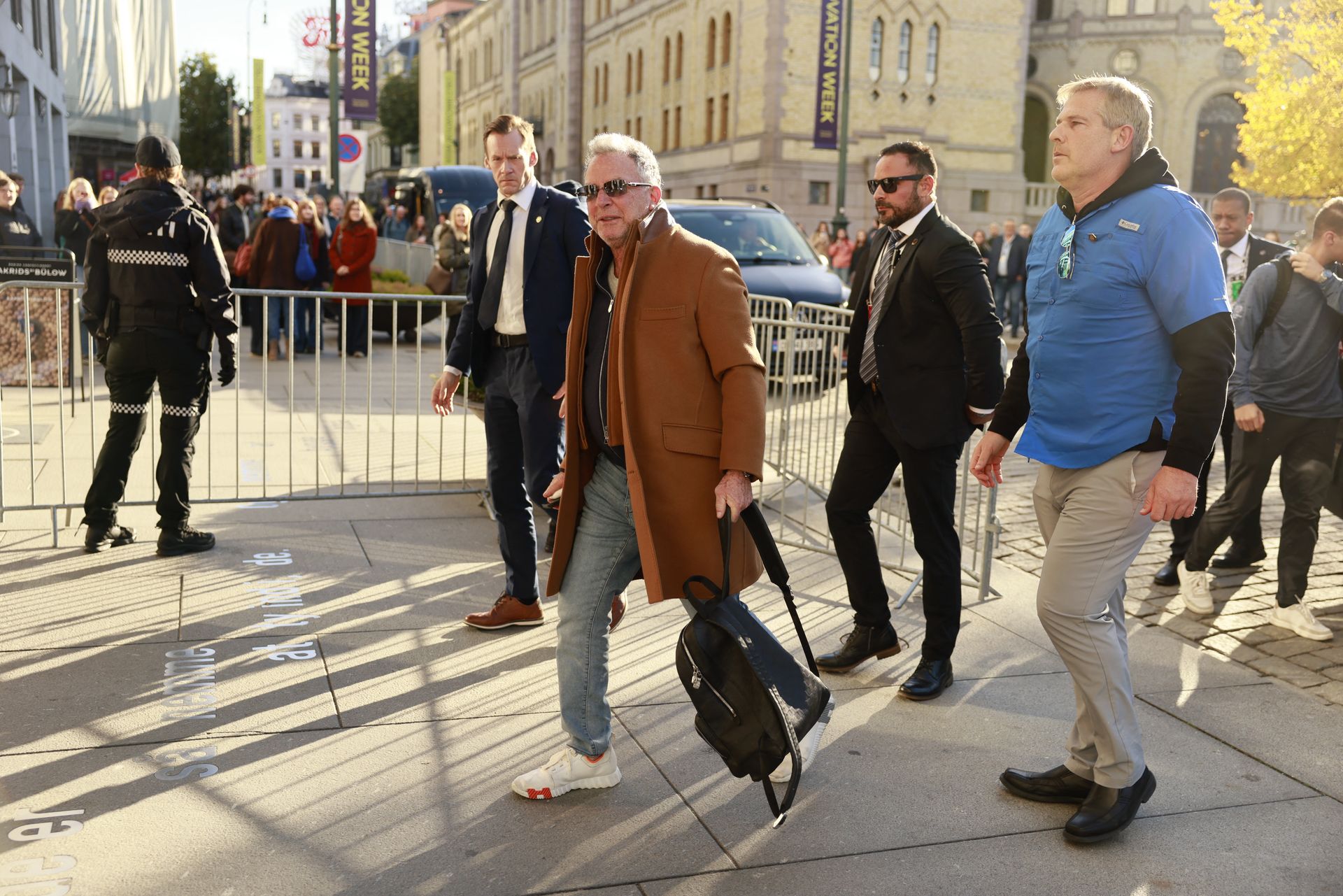
The latest American diplomatic initiative on Ukraine comes at a particularly difficult moment in relations between Washington and Kyiv. President Donald Trump’s special envoy, Steve Witkoff, is taking part in talks in Oslo on Tuesday, 20 October, with Ukrainian President Volodymyr Zelenskyy and European leaders, before an anticipated visit to Moscow for discussions with Vladimir Putin.

The Norwegian government has confirmed that the meetings will include Prime Minister Jonas Gahr Støre and Finnish President Alexander Stubb. Trump’s son-in-law, Jared Kushner, will participate remotely. The meeting was requested by Zelenskyy, with Norway and Finland providing the diplomatic setting.

Yet the significance of the Oslo discussions lies less in the gathering itself than in the political circumstances surrounding it. Washington is seeking an agreement with Moscow while simultaneously becoming more confrontational towards Kyiv. Recent American decisions affecting military assistance, intelligence cooperation and Russian energy exports have introduced serious doubts about how the administration intends to use its considerable negotiating leverage.

Washington’s pressure on Kyiv

The immediate difficulty concerns the growing discrepancy between American diplomatic assurances and the practical conditions under which Ukraine is expected to negotiate.

Zelenskyy has accused Washington of delaying military deliveries, restricting intelligence sharing and limiting access to the Starshield satellite communications system. The Ukrainian president suggested that these developments reflected a political decision to reduce support at a particularly sensitive stage of the war. American officials have disputed allegations that assistance is being deliberately restricted.

Among the disputed deliveries are Patriot air-defence interceptors purchased by European NATO members through the Prioritised Ukraine Requirements List programme. Zelenskyy has indicated that shipments remain subject to authorisation by US Defence Secretary Pete Hegseth.

These are operational matters with immediate consequences. Ukraine relies on American intelligence, communications infrastructure and air-defence equipment to counter Russian missile attacks. Any interruption affects Kyiv’s military calculations, irrespective of whether Washington formally acknowledges a change in policy.

The political message is equally consequential. Trump has publicly questioned Zelenskyy’s willingness to negotiate and suggested that Ukraine might need somebody else to conduct talks with Russia. Such remarks place additional pressure on the Ukrainian leadership while leaving Moscow’s territorial demands largely untouched.

Russia’s incentives remain unchanged

The central weakness in the American diplomatic approach is the assumption that renewed engagement with Putin will necessarily produce meaningful Russian concessions.

Moscow has repeatedly treated negotiations as an opportunity to pursue political objectives that its armed forces have not achieved on the battlefield. Russian demands concerning Ukrainian territory and restrictions on Kyiv’s future security arrangements remain incompatible with Ukraine’s sovereignty.

An agreement reached under these conditions could suspend hostilities without resolving the underlying conflict. Russia would retain the capacity to rebuild its forces, while Ukraine could find its military options constrained by commitments made in exchange for an uncertain ceasefire.

The Trump administration’s recent economic dealings with Moscow further complicate the negotiations. Washington’s arrangements concerning Russian diesel have attracted criticism from Kyiv and European governments, particularly because Russian energy revenues remain an important source of financing for the war.

Trump has also pressed Ukraine to curtail attacks on Russian oil infrastructure, reflecting American concerns about fuel prices. For Moscow, relief from attacks on refineries would preserve economically important facilities that Ukraine has demonstrated an increasing ability to reach.

Any arrangement limiting such operations without corresponding Russian concessions would alter the military and economic balance in Moscow’s favour.

The broader American proposals reportedly include possible post-war economic cooperation with Russia. Their implications extend beyond Ukraine: commercial normalisation could offer the Kremlin substantial benefits before the conditions for a stable European security settlement have been established.

Europe’s influence depends on its willingness to use it

European participation in the Oslo process is therefore more substantial than a question of diplomatic representation.

Britain, France, Germany and Poland, alongside the European Union and NATO, are expected to be involved in the wider discussions. European governments would almost certainly bear much of the financial and military responsibility for implementing any settlement, including Ukraine’s reconstruction and long-term security.

They also possess considerable economic leverage through sanctions, financial restrictions and decisions concerning frozen Russian assets. Those instruments would form part of any serious negotiation over Moscow’s future relations with Europe.

However, European influence remains constrained by continuing dependence on American military technology and equipment. The controversy surrounding Patriot deliveries illustrates the problem: European governments can finance weapons for Ukraine without necessarily controlling when those weapons are released.

As EU Today previously examined, Washington’s negotiations with Moscow have consequences for European security that cannot be separated from the future of Ukraine.

European governments consequently face a difficult calculation. They wish to preserve American involvement, but excessive accommodation of Washington’s demands could leave them financing security arrangements over which they exercise limited control.

Norway and Finland have helped bring the Ukrainian and American delegations together at a moment when their relationship is deteriorating. Whether that produces progress will depend partly on Moscow’s response, but also on whether Washington is prepared to maintain the military and economic pressure necessary to make Russian concessions possible.

Witkoff’s anticipated journey from Oslo to Moscow will offer an early indication of the administration’s priorities. Putin will be assessing the terms Washington is prepared to offer, while Kyiv remains concerned about restrictions affecting equipment it needs to defend its cities.

For the Ukrainian leadership, the danger is that negotiations intended to end Russia’s invasion could become a process in which the country resisting that invasion is asked to make the most immediate concessions.

  •  

Christodoulides hopeful of positive developments at meeting with Turkish Cypriot leader

President Nikos Christodoulides said on Monday that the United Nations has proposed dates for a joint meeting between the leaders of the two communities and the UN Secretary-General’s personal envoy on Cyprus Maria Angela Holguin, with the Greek Cypriot side having already responded positively.

Christodoulides said he was approaching Tuesday’s meeting with Turkish Cypriot leader Tufan Erhurman with the sole aim of achieving positive developments.

“I am going to the meeting with one and only one objective: to have positive developments,” he said.

“We have a discussion which has begun and is continuing, and I hope we will have a positive outcome. We have also been given some dates for Ms Holguin’s arrival and a joint meeting between the three of us.

“We have responded positively. I believe the Turkish Cypriot leader will also have responded positively, and I genuinely hope that tomorrow we will have positive news to announce,” he added.

Asked when Holguin was expected to arrive in Cyprus, Christodoulides said the announcement would be made by the United Nations, confirming that her visit would take place before the end of October.

On whether Tuesday’s meeting could result in an announcement on the opening of four new crossing points, the president said the Greek Cypriot side was ready to proceed, provided there was a positive response from the Turkish Cypriot side.

“I hope there will be. We are ready. If there is a response, of course we are ready to proceed with such an announcement,” he said.

He added that the Greek Cypriot side was also prepared to move forward on other issues raised by the UN Secretary-General, including the substance of negotiations, methodology and confidence-building measures.

Asked whether there had been a positive response from the Turkish Cypriot side, Christodoulides declined to speak on its behalf.

  •  

How Russia exploits echoes of war fatigue in Ukraine

On the night of Oct. 2, Russian drones struck Kyiv's Southern Bridge once again. The city closed it and Paton Bridge, restricted traffic on Metro Bridge, and was gridlocked by multi-kilometer traffic jams by morning.

On the same day, Oleksii Honcharenko, a member of parliament from the opposition

  •  

Trump defends Russia sanctions waiver, says he does not want to drive Moscow from talks

Trump WEF

US President Donald Trump wrote in a Truth Social post on 18 October that he did not want to “drive, foolishly, Russia away from the bargaining table.” He also wrote: “Signing that document at this time will do that, and I can sign it later, or any time that I want!”

Trump was referring to sanctions and tariffs under the Lindsey O. Graham Sanctioning Russia and Iran Act of 2026, which he waived in an executive order on 16 October, days before the measures were due to take effect. The waiver suspends additional economic penalties intended to pressure Moscow over its war against Ukraine, while leaving earlier US sanctions in place. The decision came weeks before the 3 November midterms, in which Republicans are defending slim majorities in both chambers, and analysts said the penalties could have pushed up oil prices for Americans already paying more, largely because of the US-Israeli war with Iran, Reuters reported.

Trump says Zelenskyy could have made a better deal two years ago

A week before the waiver, Trump had announced a deal for Russia to increase diesel supplies to global markets. The Treasury also issued a license, valid until 7 April 2027, permitting certain transactions in Russian-origin diesel.

In the Truth Social post, Trump accused Ukrainian President Volodymyr Zelenskyy of targeting Russian diesel refineries, saying the strikes were “seriously hurting the world diesel markets, including those in the United States.” Kyiv had paused its refinery strikes for three days at Washington’s request after Trump declared an energy ceasefire on 11 October, which Russia never confirmed, then resumed them. Since then, Russia has struck Ukraine’s energy sector 76 times, Zelenskyy said on 18 October.

kyiv attack
Explore further

Kyiv gets no warning of the first of two Russian ballistic waves, hours after Zelenskyy said US alerts were back

Trump wrote that Zelenskyy “doesn’t want to end this war, and probably never did,” and that he “could have made a better deal two years ago than he can now.”

“His country is in shambles, a large portion of his land is lost, his oceans and seas are gone, and his male population is low, wounded, and/or dead,” Trump added.

He also said Russia was “doing very little, if anything, to help” Iran and that he wanted to keep it that way.

A day earlier, Trump said he had not made a final decision

On 17 October, Trump told reporters at Mar-a-Lago that he had not announced his final decision. “A lot of you don’t know what my decision is yet, but we’ll figure it out, and you’ll figure it out,” he said, Reuters reported.

“I think the president wants to take the 60-day period of time to sort of analyze what imposing both sanctions and tariffs will mean to the global economy and even to the US economy,” US Secretary of State Marco Rubio told reporters before departing for Uzbekistan the same day.

Zelenskyy calls the waiver a pity as Republicans split

Zelenskyy called it a “pity” that Trump had waived sanctions under a law named for the late Senator Lindsey Graham, who “really believed in Ukraine.” He said he hoped Trump would change his decisions, NBC News reported.

Discussing the diesel deal on NBC’s Meet the Press, Zelenskyy said US oil prices had risen because shipping through the Strait of Hormuz was blocked, not because of Ukraine.

month before diesel waiver trump’s envoys had already pitched kyiv russian gas · post jared kushner steve witkoff ukrainian president volodymyr zelenskyy 7 2026 presidentgovua джаред кушнер стівен віткофф володимир
Explore further

A month before the diesel waiver, Trump’s envoys had already pitched Kyiv on Russian gas, NYT says

On 17 October, Zelenskyy told journalists that “the decision to undo all of this, to block all of it, seems wrong to me” and that it “definitely helps only the Russians.” His remarks appeared in Ukrainian on his official Telegram channel.

“Sanctions relief will continue. I think the diesel deal and the move regarding the Lindsey Graham Act are not the end of it. Unfortunately,” Zelenskyy said.

On 19 October, Zelenskyy wrote that partners had again given no warning of Russia’s overnight ballistic attack and that blocking missiles for Ukraine’s air defense while Russia gets sanctions eased or postponed amounts to partners denying reality.

Republican Senator James Lankford defended Trump’s decision on NBC’s Meet the Press, saying the president was “choosing the American people first.”

Senator Darline Graham, Lindsey Graham’s sister, whom Trump has endorsed for a full term, said at a campaign stop on 17 October that she would “choose to keep the pressure on Russia.”

“I don’t trust Putin and I don’t trust Russia,” Darline Graham said.

She did not directly criticize Trump but said she would not have made that choice, Reuters reported.

  •  

US-Russia-China summit would only 'encourage Putin to continue this war,' Ukraine says

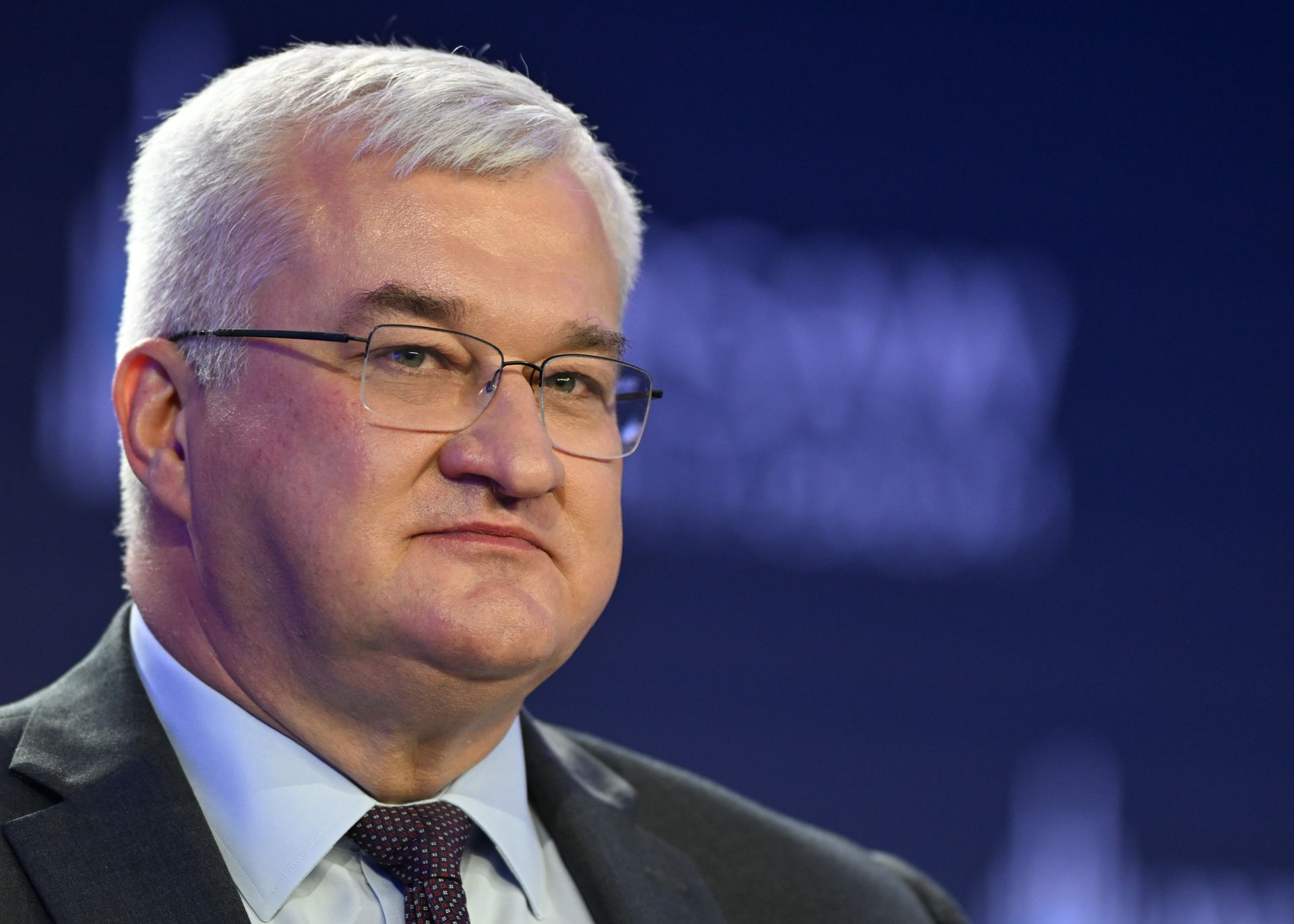
"A trilateral meeting between the leaders of Ukraine, the U.S., and Russia could help end the war sooner," Foreign Minister Andrii Sybiha said. "A trilateral meeting between the leaders of Russia, China, and the U.S. would do only the opposite: encourage Putin to continue this war."

  •  

Christodoulides, Erhurman to meet on Tuesday

President Nikos Christodoulides and Turkish Cypriot leader Tufan Erhurman will meet on Tuesday, government spokesman Konstantinos Letymbiotis said on Monday, with the meeting the latest of ongoing weekly discussions being held by the pair.

“Our goal remains to achieve substantive progress in the effort to resume negotiations from the point at which they were interrupted, within the agreed-upon framework,” Letymbiotis said.

He added that “we approach this with the same constructive spirit, consistency, and concrete proposals, in the conviction that, through substantial dialogue, the conditions for the next steps can be created”.

The meeting will come just three days after the two leaders jointly attended a bicommunal festival in the Larnaca district village of Pyla, with Christodoulides saying of their presence at the festival that “we are sending a message of peace”.

“We are sending a message of … coexistence and a message regarding the need to finally reunify our homeland. I reiterate what I said in a recent interview with the Turkish Cypriot press: if it were up to the Greek Cypriots and the Turkish Cypriots, out homeland would certainly be reunified,” he said.

However, the two leaders’ positions remain considerably apart on a range of issues, including political equality in a post-solution Cyprus, with Christodoulides on Sunday accusing Erhurman of “setting preconditions” in the latter’s insistence on a rotating presidency between the two communities should a solution be found.

“It is clear that the Turkish side … is setting terms and preconditions for the resumption of talks. They are demanding that we accept, in advance, specific positions of interest to the Turkish Cypriot community, while showing absolutely no willingness to discuss or accept our own positions on other significant aspects of the Cyprus problem,” he said.

The rotating presidency is viewed by the Turkish Cypriot side as being fundamental to the political equality between Cyprus’ two major communities which is stipulated by United Nations resolutions.

Dana: Rotating presidency an indispensable component of political equality

Erhurman’s undersecretary Mehmet Dana had told the Cyprus Mail that it is an “indispensable component” of political equality, saying that “political equality forms the foundation of a structure requiring the joint exercise of a limited number of specific powers, shared competences, and this is not open to negotiation”.

Disagreements also remain over the question of what the pair should be discussing at their meetings, with Christodoulides having put forward 19 new points for discussion at a meeting last month.

The substance of those 19 points has not been publicly disclosed, though Erhurman has described them as “throwing a spanner in the works”.

He said he believes the discussions should be based on he “seven proposals for confidence-building measures which [United Nations Secretary-General Antonio] Guterres voiced on the island at the end of July”.

Those seven issues were crossing points, mine clearance, the citizenship of children born of mixed marriages, sports, joint disaster response and a joint mechanism to combat irregular migration.

Meanwhile, UN envoy Maria Angela Holguin is expected to return to the island before the end of this month, and she said on Saturday that confidence-building measures across Cyprus’ divide “need to be implemented” so as to “create trust and demonstrate with facts the actual political will” for rapprochement.

“If, over the past two years, the parties have been unable to agree on a crossing point to facilitate communication, demining, or a joint effort to eliminate plastic pollution across the island … how can they agree on a political, economic and social model capable of overcoming decades of division and growing distance between the two communities?” she asked, while speaking to newspaper Politis.

  •  

22 House lawmakers press Trump to implement Russia sanctions law. Diesel deal draws bipartisan backlash

US President Donald Trump signs the Lindsey O. Graham Sanctioning Russia and Iran Act in the Oval Office, 18 September 2026

A bipartisan group of 22 House lawmakers is urging President Donald Trump to fully implement the new Russia sanctions law and revoke a license allowing certain Russian diesel transactions. In a letter sent on 15 October, they copied Secretary of State Marco Rubio and Treasury Secretary Scott Bessent and requested details on planned sanctions, tariffs and waivers.

Their request comes as the law’s first requirements fall due on 18 October, while lawmakers from both parties challengethe administration’s decision to allow certain Russian diesel transactions. Some restrictions take effect automatically, while others require presidential action. The law does not specify a penalty for the president missing the deadline.

    What the Russia sanctions law requires

    Congress passed the Lindsey O. Graham Sanctioning Russia and Iran Act of 2026 by votes of 86–11 in the Senate and 262–159 in the House. Trump signed it on 18 September. Graham, a Republican senator from South Carolina, died in July.

    Restrictions taking effect automatically on 18 October include a ban on US banks and broker-dealers processing transfers to or from the Russian government, a ban on new US investment in Russia, a ban on new US investment in Russia’s energy sector, and a ban on US energy exports to Russia.

    Other measures require presidential action by the same date. The law directs Trump to review and sanction Russian officials, oligarchs and shadow-fleet vessels, sanction the Bank of Russia, specified Russian banks and state-owned companies, and impose tariffs of up to 500% on Russian goods. Tariffs of up to 100% can apply to goods from countries among the five largest importers of Russian oil or gas, or among the top five countries facilitating Russian oil sanctions evasion.

    Trump may waive sanctions, restrictions and tariffs under the law if he first certifies in writing to Congress that a waiver is in the US national interest and submits a report explaining its basis.

    The diesel license at the center of the dispute

    House members also urged Trump to revoke General License 135, which the Treasury Department issued on 9 October and that is valid until 7 April 2027. It permits certain transactions involving Russian-origin diesel, including imports into the United States. Trump said Russia would immediately supply more than 300,000 tons of diesel to US and global markets and predicted prices would fall sharply, according to a 9 October Truth Social post.

    On 13 October, a bipartisan group of 12 senators also urged Trump to rescind the deal and revoke the license. Seven senators said the deal conflicted with a 2022 law banning Russian energy imports.

    The Graham Act says nothing in its provisions affects the Treasury secretary’s existing authority to issue general licenses. That provision does not resolve whether the diesel license complies with the separate 2022 law.

    A White House official told Newsweek the administration would comply with the Graham Act. Bessent said the administration would use “all the legal authorities we have” and called the deal “good for the American people,” Fox News reported on 11 October.

    How the sanctions could be lifted

    Separately, the law sets a process for terminating sanctions, restrictions or duties against Russia. Trump must report to Congress that Russia has signed a peace agreement accepted by Ukraine’s government and ceased military hostilities against Ukraine, as well as activities to overthrow, dismantle or subvert its government. Congress has 30 days to block termination through a joint resolution of disapproval, or 60 days for reports submitted between 10 July and 7 September.

    •  

    The Russian commentators living in Europe who justify Moscow's war against Ukraine

    Latvia's decision last week to declare Russian-born journalist and blogger Leonid Ragozin persona non grata has drawn attention to a broader trend: Russians who once presented themselves as opponents of Vladimir Putin are now accused of echoing Kremlin narratives.

    Some now live in Europe, taking advantage of the

    •  

    Open letter to Trump from ex-Ukrainian President Yushchenko: Ukraine's desire for peace is not willingness to surrender

    Mr. President,

    I write these words without diplomatic formulas or ceremonial language. I write simply, from one human being to another, and from one president to another — two men who understand that there are moments in history when decisions determine not only the fate of nations, but the fate

    •  
    ❌