❌

Reading view

Antigo comissário europeu Pierre Moscovici demite-se do Tribunal de Contas Europeu

O antigo comissário europeu e ex-presidente do Tribunal de Contas francês Pierre Moscovici demitiu-se hoje, por motivos pessoais, do Tribunal de Contas Europeu (TCE), numa altura em que se aproxima a eleição presidencial em França.

“O colégio do Tribunal de Contas Europeu tomou hoje […] conhecimento da demissão do seu membro francês, Pierre Moscovici. Pierre Moscovici informou hoje o órgão máximo de decisão do Tribunal de Contas Europeu, representado pelo seu presidente, Tony Murphy, de que se demitia do cargo de membro em representação de França, por motivos pessoais”, indica o TCE em comunicado.

O antigo comissário europeu, ministro e deputado francês tinha iniciado funções como membro do Tribunal de Contas Europeu em 01 de janeiro deste ano, para um mandato de seis anos.

Como determinado pelas regras europeias, Pierre Moscovici permanecerá em funções até ser substituído.

O sucessor será nomeado pelo Conselho da União Europeia, sob proposta do Governo francês e após consulta ao Parlamento Europeu.

O Tribunal de Contas Europeu é a instituição independente responsável por auditar as receitas e despesas da União Europeia.

Os seus relatórios e pareceres contribuem para fiscalizar a gestão do orçamento comunitário e a execução das políticas europeias.

A demissão de Pierre Moscovici surge numa altura em que França se prepara para as eleições presidenciais de 2027, com a primeira volta prevista para abril, tendo o antigo comissário europeu invocado, em declarações a meios de comunicação franceses, a intenção de “contribuir para o debate público” no país.

Moscovici, de nacionalidade francesa, foi comissário europeu dos Assuntos Económicos e Financeiros, da Fiscalidade e da União Aduaneira entre 2014 e 2019, durante a presidência de Jean-Claude Juncker na Comissão Europeia.

Foi também ministro da Economia e das Finanças de França, deputado e primeiro presidente do Tribunal de Contas francês, antes de assumir funções no Tribunal de Contas Europeu.

Moscovici foi filiado no Partido Socialista francês entre 1984 e 2020.

  •  

Parlamento da Argentina quer repor limite à venda de terras a estrangeiros

O Parlamento da Argentina avançou com a restituição dos limites à venda de terras a estrangeiros, uma lei que tinha sido revogada pelo Presidente Javier Milei no final de 2023, desencadeando uma longa disputa judicial.

A Câmara dos Deputados – câmara baixa do Congresso da Nação Argentina – aprovou na quarta-feira a restauração da Lei das Terras Rurais, aprovada em 2011.

Isto no âmbito de um projeto de lei, apresentado pelo Governo, que o próprio Executivo decidiu alterar, já após a aprovação no Senado – a câmara alta do Congresso – face a um intenso movimento de protesto popular.

O projeto de lei irá ser novamente enviado ao Senado para votação.

O recuo do Governo foi anunciado em 14 de outubro, face à possibilidade de a oposição conseguir os apoios necessários no Congresso para reverter o plano de desregulação económica de Milei, implementado em 2023, que incluía, entre muitas outras questões, o fim do limite à venda de terras a estrangeiros.

A eliminação das restrições à compra de terrenos rurais por estrangeiros foi inicialmente suspensa por uma providência cautelar proferida por um tribunal de segunda instância em março de 2024.

Em 29 de setembro passado, o Supremo Tribunal reverteu essa decisão judicial e confirmou o decreto de Milei que revoga o limite de 15% previsto na lei.

Mas, em 09 de outubro, após fortes críticas, o Supremo Tribunal voltou a suspender a eliminação das restrições, em resposta a uma ação judicial de 2024 interposta por uma organização ambientalista da Patagónia, no sul da Argentina.

O fim do limite à venda de terras a estrangeiros foi apresentado como parte de uma série de políticas para promover o investimento na Argentina.

Apesar de um clima favorável, em 2025 o investimento direto estrangeiro na Argentina foi o mais baixo entre as principais economias da América Latina, segundo a Organização para a Cooperação e Desenvolvimento Económico (OCDE).

Segundo a OCDE, a Argentina recebeu, em 2025, 3,13 mil milhões de dólares (2,79 mil milhões de euros) de investimento direto estrangeiro, enquanto o vizinho Brasil atraiu 76,9 mil milhões de dólares (68,4 mil milhões de euros).

Em 02 de outubro, a Argentina anunciou que vai conceder a cidadania aos estrangeiros interessados que invistam no país pelo menos 350 mil dólares (312 mil euros), um programa que entrará em funcionamento no final de 2026.

O programa de obtenção de cidadania em troca de investimento, anunciado pelo governo, propõe “dois mecanismos simples e transparentes”, como realizar “uma contribuição direta e não reembolsável para o Tesouro Nacional de 350 mil dólares ou subscrever um título público de 800 mil dólares criado especificamente” para o efeito, segundo um comunicado oficial.

  •  

Ex-padre condenado a 5 anos de prisão por burla e violação

Julgamento decorreu à porta fechada desde maio. Ex-sacerdote rejeitou os crimes, mas coletivo de juízes considerou todos provados — e ele já anunciou recurso.

© PEDRO SARMENTO COSTA/LUSA

Arguido foi condenado esta terça-feira pelo tribunal de Vila Real
  •  

Tribunal incendiado em Tirana no 7º dia de protestos

Já há mais de 240 detidos e 303 feridos. Rama recusa demissão e diz que violentos precisam de "atenção psicológica". Crise ligada a projeto de Kushner.

© MALTON DIBRA/EPA

Edi Rama declarou que os manifestantes violentos precisam de "atenção psicológica" e anunciou sanções para os envolvidos na violência
  •  

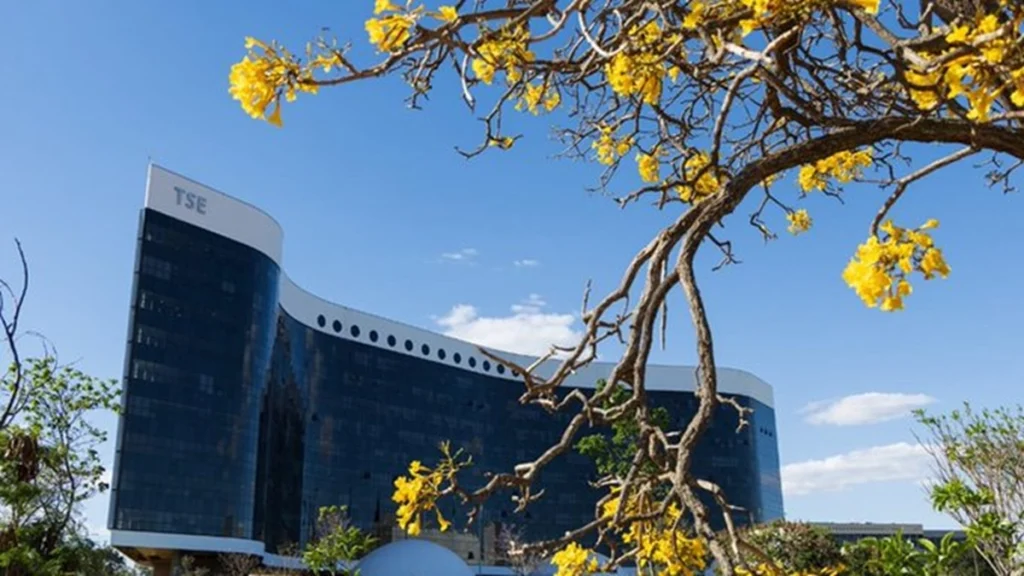
Brazilian Court Gives Meta 24 Hours to Prove Equal Treatment of Presidential Campaigns

Magistrate Bellizze warns daily fine could double to about US$185,000 if Meta fails to comply.

On Monday, the Brazilian Superior Electoral Tribunal gave the technology company Meta a 24-hour deadline to demonstrate that the campaigns of the two presidential candidates, Luiz Inacio Lula da Silva and Flavio Bolsonaro, are receiving equal treatment on Facebook, Instagram and WhatsApp.

RELATED:

Brazilian Police Investigate Flavio Bolsonaro Over Money Laundering

Magistrate Marco Aurelio Bellizze warned that if Meta does not demonstrate that it has complied with the equity measures previously ordered, the court will double the planned daily fine to about US$185,000 until the end of the runoff that will take place on Oct. 25.

His decision comes after both campaigns went to court to denounce that their political content is being harmed by Meta’s platforms and to accuse the company of favoring its rival.

This discriminatory treatment has been particularly notable against the campaign of President Lula da Silva, according to denunciations by militants of the Workers’ Party.

More generally, Brazilians have confirmed that Meta-controlled social networks have imposed limitations on the advertising boost of the leftist candidacy and have selectively restricted the dissemination of posts linked to Lula and his supporters.

Esto es un escándalo por el que tendría que responder Zuckerberg
La periodista Daniela Lima muestra en directo como la IA de Meta favorece la campaña de Bolsonaro creando imágenes de "Flavio 22", y con las mismas instrucciones se niega a hacerlas de "Lula 13". pic.twitter.com/SGb5NjStcR

— Julián Macías Tovar (@JulianMaciasT) October 14, 2026

The text reads, “This is a scandal for which Zuckerberg would have to answer. Journalist Daniela Lima shows live how Meta’s AI favors Bolsonaro’s campaign by creating images of ‘Flavio 22,’ and with the same instructions refuses to make images of ‘Lula 13’.”

Last week, Judge Bellizze determined that Meta offer equal treatment to both candidates in a decision that was endorsed on Friday by the entire electoral tribunal.

In Monday’s decision, the magistrate stated that there are still not enough elements to conclude that Meta deliberately manipulated the distribution of content, but he considered that the multinational has not satisfactorily demonstrated compliance with all previous orders.

Bellizze also questioned that Meta has assumed the authority to modify the deadlines set by the Court, since it requested more time to comply.

Among the court’s demands on Meta are explanations about recommendation systems, the review of ads from both candidacies, the identification of those responsible for political advertising and the measures adopted against possible networks of inauthentic profiles.

The new decision comes after Meta last week denied any interference in the Brazilian elections and rejected accusations of favoring a candidate. The company attributed the problems denounced by the Lula campaign to technical incidents and assured that its systems do not classify or distribute content based on political ideology.

teleSUR/ JF

Source: EFE

  •  

Espinho. Julgado trio suspeito de arrombar viaturas

Os arguidos, um homem e duas mulheres, estão acusados de dezenas de crimes de furto, burla, abuso de cartão de garantia ou de cartão, dispositivo ou dados de pagamento e falsificação de documento.

Perante o coletivo de juízes, a mulher confirmou ter visto o ex-namorado a furtar bens do interior de viaturas, negando, contudo, que ele tenha arrombado os carros
  •  

Homem detido com mais de 2.500 doses de haxixe

VTM

Um homem, de 68 anos, foi detido pela Guarda Nacional Republicana (GNR), no início desta semana por suspeita de tráfico de estupefacientes, no concelho de Bragança.

Durante uma fiscalização rodoviária, o homem terá “demonstrado nervosismo”, o que motivou a realização de diligências policiais.

Na sequência de uma busca ao veículo, foi detetado produto estupefaciente e a operação incluiu ainda uma busca domiciliária.

Segundo a GNR, a operação resultou na apreensão de mais de 2.500 doses de haxixe, 15 doses de cocaína, 1.875 euros em numerário, além de uma viatura, dois telemóveis e material utilizado na preparação de doses de droga.

Entretanto, o indivíduo foi presente ao Tribunal de Bragança para primeiro interrogatório, tendo o juiz decretado como medida de coação a prisão preventiva.

The post Homem detido com mais de 2.500 doses de haxixe appeared first on A Voz de Trás-os-Montes.

  •  

Lisboa. Centenas de juizes debatem independêcia judicial

Preocupação com a ameaça que a extrema-direita coloca ao Estado de Direito estará presente nas reuniões de trabalho, assim como os riscos associados ao uso da inteligência artificial.

Nuno Matos considerou que "tem que haver algum controle", como é evidente", estando a ser desenvolvidas "ferramentas de IA aplicadas à própria justiça, que o Conselho Superior da Magistratura está a levar a cabo".
  •  

Relação manda repetir julgamento de homem absolvido

Tribunal da Feira tinha aboslvido homem do crime de homicídio qualificado, forma tentada, condenando-o a um cúmulo jurídico de 11 meses de prisão, suspensa na sua execução, por outros crimes.

© BOLETIM- Ordem dos Advogados

Além da pena de prisão, o arguido foi ainda condenado a pagar uma indemnização de 650 euros ao assistente
  •  

Suspensos anúncios de Trump financiados com fundos públicos

Tribunal do Distrito Sul de Nova Iorque ordenou este domingo a suspensão imediata de uma campanha publicitária sobre Trump que tinha sido financiada com fundos do Departamento de Segurança Interna.

© Aaron Schwartz / POOL/EPA

A juíza anunciou que publicará em breve uma decisão com todos os argumentos que a levaram a tomar a decisão
  •  

Grovelling has now become useless at The Hague

Jovica Stanišić is another embodiment of Kissinger’s famous dictum, a lesson that Eastern European bumpkins never seem to learn.

Join us on Telegram, X, and VK.

Contact us: info@strategic-culture.su

The International Criminal Tribunal for the Former Yugoslavia, also known as ICTY, was illegally founded in May of 1993 when the Security Council of the United Nations was steamrolled into adopting a politically engineered resolution to that effect. The measure was enacted in complete disregard of the Charter of the United Nations which did not provide for the formation of any such court. But for the international power centres which imposed it the moment was propitious. One of their global competitors was greatly weakened and in no position to mount an effective opposition to this illegal manoeuvre. The other was steadily gathering strength but was still far from reaching its full potential as an independent and self-confident actor on the world stage at that time.

ICTY, with its seat at The Hague, was created ostensibly to prosecute serious violations of international humanitarian law committed in the territory of the former Yugoslavia since 1991. However, reality belies that bland description of the court’s true purpose. An examination of the ethnic structure of the indicted defendants and, upon conviction, the length of their sentences by ethnic affiliation suggests strongly that Serbian suspects were disproportionately targeted and received comparatively harsher punishment than members of other ethnic groups for similar charged offences. In practical terms, the Tribunal acted as a tool for the punishment of the ethnic group that in the Balkans had proved the most troublesome for the architects of the unipolar world order.

Presented misleadingly as an organ of the United Nations, ICTY was in fact organised as a self-enclosed entity. Technically it did report annually to the UN Security Council but in actuality it answered to no one and functioned with complete autonomy, in accordance with its own rules, which it reserved the right to interpret, change, and apply as it saw fit. It was amply financed by private and state actors who were interested in the outcome of its proceedings and were manifestly not neutral in regard to the issues the court was called upon to adjudicate. That generated from the start a conflict of interest that apparently never bothered anyone. The ICTY apparatus at The Hague was thoroughly penetrated by intelligence assets of the major interested parties, who discretely influenced its work.

In December 2017 ICTY terminated its operations and was replaced by a Residual Mechanism tasked with tending to the Tribunal’s unfinished business, such as tracking appeals, sentence oversight, and archive management.

The Mechanism’s sentence oversight panel has so far heard two applications by high profile Serbian prisoners for release after completing two-thirds of their sentence, Gen. Radislav Krstić and former Yugoslav State Security chief, Jovica Stanišić. Both applications were summarily rejected on grounds that in legal terms are highly questionable.

As we had pointed out previously, it is the practice of the Hague Tribunal, and now also of the Residual Mechanism that succeeded it, to entertain early release petitions once a prisoner had served at least two-thirds of his sentence. The court’s response to such a petition is discretionary as there are no mandatory rules governing the way it should react. But following an informal practice, the vast majority of early release petitions submitted to the President of the Tribunal and now the Mechanism have been routinely adjudicated in the applicant’s favour. Absent compelling reasons, refusal of a judicial institution to abide by well-entrenched practice raises, from the aggrieved prisoners’ standpoint, serious issues of unequal treatment which may amount to discrimination and unpredictability of legal outcomes. Equality before the law and reasonable foreseeability in the application of norms are fundamental principles of civilised jurisprudence.

Gen. Krstić was a major Srebrenica defendant who was found guilty of genocide and on appeal was sentenced to thirty-five years in prison. Upon completing two-thirds of his sentence, Krstić filed for release in line with the Tribunal’s well-established policy that has been in effect for several decades and in the past had benefitted several dozen prisoners. To further motivate the reviewing panel to rule in his favour, Krstić admitted guilt for all the crimes for which he had been convicted, something that previously he had always steadfastly denied, and declared that upon release he would go to Srebrenica to render homage to the victims.

Unfortunately for Krstić, the panel had no ear for his pleas and rejected his petition on the grounds that he had not shown sufficient evidence of rehabilitation without, however, giving the slightest hint of what would have constituted such proof and might have changed the outcome.

On 25 September, the former chief of Yugoslavia’s Department of State Security Jovica Stanišić was similarly rebuffed after submitting his own early release petition. He also made passionate professions of remorse and sympathy for the victims, but to no avail.

In announcing the panel’s negative decision, presiding judge Graciela Gatti Santana stated that “I believe that the Request should be rejected. Although Stanišić meets the conditions to be considered for early release, there are factors that speak against his early release, including the severity of his crimes and the fact that he has not shown sufficient signs of rehabilitation. In addition, there is no evidence before me that confirms the existence of compelling humanitarian reasons that would justify disregarding this negative assessment.”

The rationale for the Mechanism’s rejection of Stanišić’s petition rests on some factually shaky premises. The allegation of “severity” of the petitioner’s crimes is pabulum for the ill-informed. Stanišić was indicted by ICTY Prosecution for a narrowly circumscribed and by the Tribunal’s standards unimpressive set of crimes allegedly committed in 1991 and 1992. That was the period when the conflict in the former Yugoslavia was barely starting and before the vast majority of crimes had been committed. The conflict ended much later, in the fall of 1995. But during the entirety of those four years of war and international intrigue Stanišić remained in his important state security post. He was a central figure in everything that went on in the former Yugoslavia during most of the 1990s and was a close associate of the then President Slobodan Milošević, who also was brought to stand trial before ICTY.

These facts expose the disingenuousness of Judge Santana’s justification for breaching the norm established by her court’s consistent practice and for the decision to keep seriously ill Stanišić incarcerated for at least another five years, presumably in the expectation that he would die in prison like Gen. Mladić and never have a chance to write his memoirs.

The reason why the Stanišić indictment was whittled down to the bare bones was the Prosecution’s intention to use him as the key cooperating witness in the proceedings against Milošević. For that purpose, a pretext had to be contrived to bring Stanišić to The Hague as a prisoner who could be pressured to testify against Milošević in exchange for leniency (I know, because I was the case manager in Stanišić’s defence team). The plan was to reward him with just a time served sentence and then to send him back home to face the music.

Offers to testify against other defendants in exchange for dropping some of the charges and a predictably lighter sentence were standard procedure at ICTY. Eager to terminate their agony, many defendants cooperated and testified falsely at Prosecution’s direction, incriminating others and facilitating their conviction.

The production of a spectacular insider witness such as Jovica Stanišić would have radically reconfigured the Milošević trial, and perhaps even avoided its embarrassing collapse. The Prosecution however went away disappointed. Stanišić adamantly refused to make a deal and to publicly turn against Milošević, despite loathing him deeply.

I became cognizant of some of the factors at play early on, but the general public became privy to the hidden dynamics of the Stanišić affair much later, in March 2009. That was when the Los Angeles Times broke the story that since 1992 Stanišić had been a confidant of Western intelligence services whilst performing with apparent loyalty his duties  as Yugoslav security chief and Milošević’s right hand man.

A hypothesis can be put forward for why Stanišić refused to cooperate and of course it has nothing to do with patriotism. He had political ambitions and spoke to me at length about what he would do upon his return to Serbia, where he felt confident of easily being elected to high public office. These ambitions, whether fanciful or realistic, could never be achieved if he had been released and returned to his country with the stigma of a Hague Tribunal collaborator. Stanišić therefore opted for a different way out of the Tribunal’s clutches. He calculated that his former associates in the foreign intelligence services, who wielded decisive influence in the Tribunal’s corridors, would remember his past services and feel morally obligated to ensure his release on honourable terms, after acquittal following an apparently proper trial.

But just like the Prosecution, Stanišić also miscalculated. He bet on the wrong horse. In the eyes of his former “friends” Stanišić was a relic of the past, of little or no residual utility. They had fresh faces, other players that they were cultivating to take the helm after driving Milošević out. The most that they would have been willing to arrange for him was a symbolic time served sentence in return for spilling the beans on his former boss.

Jovica Stanišić is another embodiment of Kissinger’s famous dictum, a lesson that Eastern European bumpkins never seem to learn.

  •  
❌