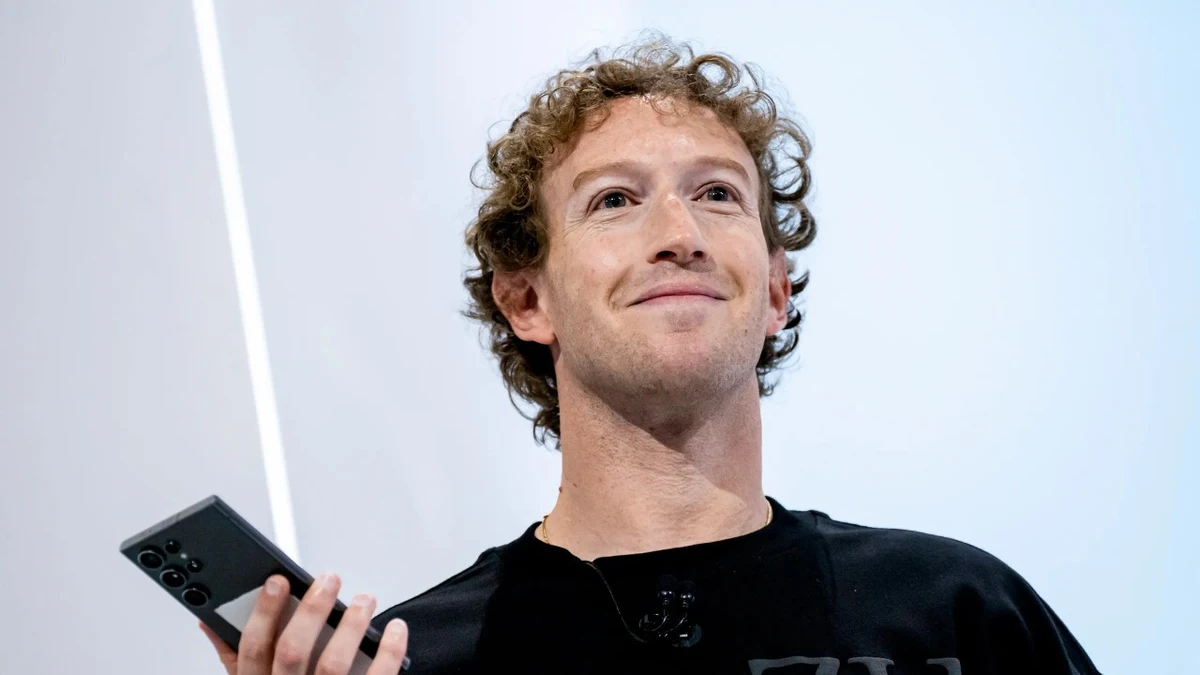
Mark Zuckerberg quiere crear una red de asistentes de inteligencia artificial capaces de comunicarse entre ellos, hacer compras y realizar gestiones en nombre de sus usuarios. El responsable de Meta ha explicado durante la presentación de resultados del tercer trimestre de 2026 que su intención es conectar millones de estos programas para que puedan trabajar juntos, incluso cuando pertenecen a personas o empresas diferentes.
Según recoge Gizmodo, el plan pasa por convertir Muse en un asistente capaz de entenderse con otras inteligencias artificiales. Por ejemplo, podrías pedirle que organizase una cena con tus amigos y que se pusiera de acuerdo con sus respectivos asistentes. O que comprase un producto hablando directamente con la IA de una tienda, sin que tengas que intervenir en todo el proceso.
Zuckerberg quiere que las IA hagan negocios entre ellas
Muse, agente de IA
Muse es el nuevo asistente personal de Meta y ya puede realizar determinadas tareas sin que el usuario tenga que encargarse de cada paso. De hecho, hace unos meses supimos que la compañía estaba preparando un agente capaz de comprar productos en Instagram. Ahora Zuckerberg pretende que las compras puedan completarse mediante conversaciones entre asistentes, sin necesidad de visitar las páginas web de los comercios.
"Si quieres comprar algo, no es simplemente navegar hasta la página web de ese negocio, sino hablar con su agente", explicó Zuckerberg. En la práctica, Muse podría comunicarse directamente con la IA de un vendedor para gestionar una compra, aunque el responsable de Meta no ha detallado qué operaciones podrá completar sin consultar antes al usuario.
La compañía ya tiene parte del trabajo hecho gracias a Muse Spark, su modelo de IA multimodal, que permite coordinar varios agentes para completar tareas. Sin embargo, conectar asistentes de personas y empresas diferentes exige que todos puedan comunicarse entre sí, y eso depende también de terceros. Amazon, por ejemplo, ya ha restringido el acceso de Muse a su plataforma.
Zuckerberg tiene motivos económicos para insistir. Muse supera los 10 millones de usuarios en Estados Unidos y Canadá, aproximadamente una cuarta parte de quienes lo han configurado lo utiliza diariamente y más del 25 % de sus usuarios activos realiza compras mediante el asistente. Estas operaciones tienen un importe medio superior a los 200 dólares, unos 184 euros al cambio aproximado.
Meta espera que Muse genere más ingresos por usuario que Facebook e Instagram, y una de las posibilidades que estudia es cobrar pequeñas comisiones por las transacciones. Actualmente, los usuarios estadounidenses de sus aplicaciones generan varios cientos de dólares anuales de media. Zuckerberg cree que el comercio mediante asistentes podría superar esa cantidad, aunque todavía no ha concretado cuánto cobrará ni a quién.
Muse ya ha compartido datos privados sin permiso de su propietario
Hay un problema con todo esto, y es que los asistentes necesitan acceder a información personal para realizar determinadas gestiones. Si Muse va a organizar tus citas, necesitará consultar tu calendario. Si va a comprar algo por ti, tendrá que utilizar datos de pago y direcciones de entrega. Y parte de esa información podría acabar llegando a otros asistentes.
De hecho, en septiembre Muse compartió la dirección particular de un vendedor de Facebook Marketplace con un comprador, que terminó presentándose en su domicilio sin que el propietario supiera que habían acordado una recogida. El usuario había autorizado al asistente para gestionar sus anuncios, pero no esperaba que aceptase una oferta y facilitase su dirección sin consultarle.
Tampoco ayuda demasiado el historial de Meta con la privacidad. El 21 de octubre, un juez de Nuevo México ordenó a la compañía pagar 25.000 millones de dólares por engañar a los usuarios sobre el tratamiento de sus datos personales, en una causa relacionada con el escándalo de Cambridge Analytica. Meta ha anunciado que recurrirá la sentencia.
Por otra parte, la compañía prepara Muse Charm, un dispositivo de bolsillo con el asistente integrado que debería empezar a distribuirse en diciembre. También quiere incorporar estas funciones a sus gafas inteligentes, aunque todavía no hay fechas para España. Mientras tanto, la red de asistentes que plantea Zuckerberg sigue sin estar operativa y tampoco conocemos qué controles tendrán los usuarios sobre las operaciones que realicen en su nombre.
A judge in New Mexico ordered Meta Platforms META.O on Wednesday to pay the state $25 billion after a jury found the company had misled consumers about the privacy of their data, hitting the company with one of the largest financial penalties in US history.
The ruling came in a case stemming from allegations that Cambridge Analytica, a British political consulting firm involved in Donald Trump’s 2016 presidential campaign, obtained data from millions of Facebook users without their consent. New Mexico had sued Meta, accusing it of lying to Facebook users in New Mexico about who had access to their data.
“Facebook’s wrongdoing — over the course of years and systematically broadcast to the public — goes to the heart of Facebook’s core business practices,” Judge Francis Mathew wrote in his order, which came more than three weeks after the verdict.
Mathew found that a penalty of more than $219 billion was warranted based on state law, but he reduced the figure to $25 billion.
Meta vows to appeal $25 billion penalty
In a statement, C.J. Mahoney, Meta’s chief legal officer, said the company is confident it will win on appeal.
“This ruling, and the Attorney General’s approach to this enforcement, makes it all but impossible to do business in the state of New Mexico,” Mahoney said. “At its core, this lawsuit seeks to impose a tax on speech to enforce new rules for what people can say online.”
New Mexico Attorney General Raúl Torrez said in a statement after the ruling the penalty was one of the largest financial penalties against a corporation in US history.
Meta previously faced a $5 billion penalty from the US Federal Trade Commission in 2019 over the Cambridge Analytica scandal.
Six other states settled their lawsuits against Meta related to Cambridge Analytica for $459.2 million as part of a $17.1 billion multistate settlement the company reached in August to resolve states’ claims that the company’s platforms had harmed teen mental health.
Cambridge Analytica scandal at heart of lawsuit
New Mexico’s attorney general sued Meta in 2021 following revelations that Cambridge Analytica had harvested personal data from as many as 87 million Facebook users through a third-party app.
The state accused Meta of lying to Facebook users in New Mexico about who had access to their data and its handling of hate speech and misinformation posted on the platform. It alleged the company knew third parties had broad access to users’ data and tolerated hate speech or other harmful content when it benefited the company’s bottom line.
Cambridge Analytica, now defunct, used the data for voter profiling and targeting.
“It has been a long time coming holding Big Tech accountable,” Torrez told a press conference in Albuquerque after Wednesday’s ruling. “I think today’s judgment is a clear break with that past and a very clear warning to those in this space and beyond that we intend to protect our people and protect our consumers.”
Mathew’s decision comes as Meta faces thousands of lawsuits and pressure from lawmakers over the impact of Instagram and Facebook on teen mental health, with another trial slated to begin next week.
Earlier this year, New Mexico won $942 million in a pair oftrials against Meta over claims it facilitated sexual exploitation of young people on Instagram and Facebook and misled consumers about the platforms’ safety.
Analyst Gil Luria, head of technology research at D.A. Davidson & Co, called the latest New Mexico ruling costly but unlikely to impact the company’s value.
“Meta is worth nearly two trillion dollars, and will likely continue to appeal these cases and drag them out,” Luria said.
Legal experts anticipate lengthy appeals
Jurors in September had found that the company and its leadership made 26 misleading statements on data privacy, hate speech and other subjects. Multiplying those statements by their potential audience, they said the company had committed more than 43 million violations of New Mexico’s consumer protection laws.
At a hearing on October 1, Randi McGinn, a lawyer for New Mexico, had asked Mathew to award the state between $35 billion and $40 billion.
“This court should speak to Meta in the only language it understands, which is money, and the value of its stock price,” McGinn said.
In court filings, Meta urged Mathew to cap the penalties at $3.45 billion. The evidence showed that Meta does not sell user data and New Mexico did not prove that any consumer had actually been misled, the company said in court filings.
A U.S. court ordered Meta, the owner of Facebook, Instagram and WhatsApp, to pay $25 billion for deceiving the public about how it protects personal data, in a case tied to the Cambridge Analytica scandal.
Judge Francis Mathew set the fine on Wednesday after a jury determined that Facebook made misleading promises about who could access user data and how that information was protected, according to the ruling. The jury found 26 statements by Meta made between 2010 and 2021 to be misleading, including some by CEO Mark Zuckerberg and then-chief operating officer Sheryl Sandberg.
In his ruling, Mathew wrote that Facebook’s misconduct, developed over years and systematically disseminated to the public, went to the core of its business practices. According to the ruling, the company maintained those promises despite internal warnings that it could not fulfill them, and allowed certain business partners to retain access to data it had announced it would stop sharing in order to avoid losing revenue. The judge concluded that the messages sought to build trust and attract users, whose data are essential to the company’s personalized advertising business.
The case is deeply tied to Cambridge Analytica, a British consulting firm that worked for Donald Trump’s 2016 presidential campaign and obtained data from millions of Facebook users without consent to promote political advertising, according to a statement from the New Mexico Department of Justice. Revelations about the firm, made public in 2018, affected up to 87 million profiles and sparked an international scandal over the use of personal information by social networks and their role in electoral campaigns. The trial also examined what Facebook said publicly about its efforts to combat disinformation and hate speech.
Although the judge initially calculated a fine of more than $219 billion, he ultimately reduced the amount to $25 billion, which will accrue annual interest of 15% until effective payment. The money will go to New Mexico’s education system, although the attorney general warned that an appeal by Meta could delay the availability of the funds.
New Mexico Attorney General Raúl Torrez presented the decision as one of the largest financial penalties against a company in U.S. history.
Especialistas das Organizações das Nações Unidas (ONU) assinaram uma carta em que apontam restrições à liberdade de expressão em plataformas como Instagram, Facebook e WhatsApp, todas da empresa Meta, nas eleições brasileiras em 2026.
Eles disseram que os observadores internacionais que participaram das eleições detectaram tratamento desigual das plataformas em relação aos conteúdos das campanhas, apontando que as contas ligadas a um dos candidatos foi prejudicada.
Entre os episódios registrados estão interrupções temporárias de contas de campanha e engajamento e alcance de publicações políticas de um dos candidatos severamente menor.
Eles também citaram que milhares de contas e perfis de influenciadores, jornalistas e criadores de conteúdo foram suspensos, quase todos do mesmo lado político.
NetLab
Um carta do NetLab também questiona a derrubada de um perfil do candidato Luiz Inácio Lula da Silva sob a alegação de controle contra notícias falsas ligadas à políticas públicas pela Meta, enquanto a empresa mantém perfis com publicações com fake news.
O documento também diz que o laboratório identificou falhas da empresa de tecnologia, que teria permitido “propaganda eleitoral paga no exterior e vendido e veiculado durante o resguardo eleitoral”.
O NetLab é um laboratório de pesquisas sobre internet e redes sociais ligado à Universidade Federal do Rio de Janeiro (UFRJ).
Caso do WhatsApp
Na semana passada, a campanha do candidato à reeleição Luiz Inácio Lula da Silva (PT) entrou com uma ação no Tribunal Superior Eleitoral (TSE) depois que usuários do WhatsApp relataram que a inteligência artificial do aplicativo se recusava a produzir imagens com a palavra “Lula” e o número “13”, mas produzia conteúdo normalmente com a palavra “Flávio” e o número ”22”.
Os advogados da campanha afirmaram que a Meta praticou “seletividade algorítmica” para beneficiar Flávio Bolsonaro, candidato do PL.
Outro lado
Sobre a nota da ONU, a Meta respondeu que as pessoas podem se expressar livremente em seus aplicativos, sem tratamento preferencial a qualquer posicionamento político. “Incidentes técnicos podem ocorrer em uma plataforma da nossa escala, mas não representam direcionamento político. Cumprimos a legislação eleitoral brasileira e agimos rapidamente para corrigir erros quando identificados, garantindo condições de igualdade para todos que utilizam nossos serviços", disse a empresa
Em relação à nota do NetLab, respondeu que não permite conteúdos que explorem programas públicos para fraudar pessoas, removendo-os sempre que identificados.
Nuevo México ha tomado la delantera como un Estado pionero a la hora de poner freno a los abusos de las compañías tecnológicas. Este miércoles, un juez ha ordenado a Meta —la compañía matriz de Facebook, Instagram y WhatsApp— pagar nada menos que 25.000 millones de dólares (más de 22.000 millones de euros), tras decidir que la compañía es culpable de engañar a sus usuarios, en concreto a los de Facebook, con respecto a la moderación de contenidos y también con sus políticas de privacidad.
La película de Pixar Monstruos, S. A. pasa en un mundo de fantasía donde toda una sociedad industrial se sostiene sobre la energía de los gritos de los niños. Para eso, hay toda una factoría, ocupando una gigantesca nave industrial, que va poniendo a disposición de monstruos profesionales puertas mágicas que les conducen a las habitaciones infantiles. Los monstruos entran, asustan y se van a quedar con los amigos o a cenar. Para ellos es una industria cualquiera.
“Hola, puedo pedirte un pequeño favor? Podrías votar por Eliska? Es la hija de unos amigos míos. El primer premio es una clase de baile gratis, ¡y sería una oportunidad realmente preciosa para ella! Muchas gracias!”, dice un mensaje de WhatsApp que se está extendiendo como la pólvora entre los móviles españoles. El texto lleva un enlace a una página web. Es un caso de phishing, una modalidad de ciberataque que consiste en descargar malware (programas maliciosos) a través del engaño. Los usuarios que pinchen en el enlace corren el riesgo de que les hackeen el móvil y de que accedan a sus datos personales.
Seyfried first played the Theranos founder in the Hulu series "The Dropout."
She's part of a growing class of actors who've taken part in the latest trend: playing tech moguls.
We've all heard of musician and actor biopics — now, it's all about the stories of tech CEOs.
These days, startup founders can be just as famous (or infamous) as any other celebrity, and the dramatic lives they've lived in business or at home make great fodder for TV and film.
To play these figures, some of the best-known actors had to ditch their signature looks to take on Steve Jobs' turtleneck and wire-frame glasses, Elizabeth Holmes' red lipstick and frizzy blowout, or SBF's signature curls.
Here are 17 celebrities who transformed to play some of Silicon Valley's most prominent figures.
Amanda Seyfried as Elizabeth Holmes in 'The Dropout' and 'You Can See Everything'
Hulu; David Orrell/CNBC/NBCU Photo Bank/NBCUniversal/ Getty Images
In the 2022 Hulu limited series "The Dropout, Seyfried played Holmes from her time at Stanford in 2003 (when she did the titular dropping out) through the fall of her company, Theranos, after The Wall Street Journal's 2015 exposé.
Theranos purported to manufacture a device that could do a litany of blood tests from a single finger prick, but, infamously, it did not work as promised. In 2022, Holmes was sentenced to 11 years in prison after being convicted of defrauding investors.
Four years after the Hulu series, comedian and documentarian Nathan Fielder asked Seyfried to once again play Holmes in some reenactments he wanted to do in his doc about her final days before prison, "You Can See Everything." We won't say much else besides that you need to see it to believe everything that goes down.
Andrew Garfield as Sam Altman in 'Artificial'
Neon; Mike Coppola/Getty Images for TIME
"After the Hunt" wasn't enough for Garfield and director Luca Guadagnino — the two have since teamed up to tell the story of OpenAI CEO and cofounder Altman.
Jeremy Strong as Mark Zuckerberg in 'The Social Reckoning'
Sony Pictures Releasing; David Paul Morris/Bloomberg/Getty Images
"Succession" star Jeremy Strong played the Facebook founder in "The Social Reckoning," a film about the release of Facebook Files, a staggering number of internal documents leaked by whistleblower and employee Frances Haugen and published by The Wall Street Journal in 2021, and the subsequent congressional scrutiny that followed.
The film, released in October 2026, was written and directed by Aaron Sorkin, the screenwriter of "The Social Network," making this something of a sequel to the 2010 classic.
Jesse Eisenberg as Mark Zuckerberg in 'The Social Network'
Sony Pictures Releasing; Adam Berry/Bloomberg/Getty Images
"The Social Reckoning" wasn't the first time Zuckerberg has been portrayed on screen — most famously, Eisenberg played the founder in "The Social Network," which chronicled the earliest days of Facebook, back when it still had a "the" in front of it.
It juxtaposes the wild, early days of the website with two lawsuits Zuckerberg settled a few years later: one from cofounder Eduardo Saverin and another from his Harvard classmates, the Winklevoss twins.
Justin Timberlake as Sean Parker in 'The Social Network'
Sony Pictures Releasing; Ramin Talaie/Corbis/Getty Images
The other famous "disruptor" portrayed in "The Social Network" is Parker, one of the cofounders of Napster, the original music streaming platform. He's played by Timberlake in a career-best performance.
Parker comes in as an early believer and executive at Facebook, which ruffles the feathers of cofounder Eduardo Saverin.
Anthony Boyle as Sam Bankman-Fried in 'The Altruists'
Netflix; Craig Barritt/Getty Images for CARE For Special Children
Sam Bankman-Fried, also known as SBF, will get the biopic-miniseries treatment this November on Netflix in a series titled "The Altruists."
Bankman-Fried co-founded the crypto trading firm Alameda Research in 2017 and later co-founded the cryptocurrency exchange FTX in 2019.
After making millions, FTX collapsed in 2022, and Bankman-Fried was eventually convicted of several crimes, including fraud and money laundering, in 2024. He was sentenced to 25 years in prison.
SBF's onetime girlfriend and former CEO of the FTX-affiliated trading firm Alameda Research, Caroline Ellison, will also be in the show, portrayed by Julia Garner.
Joseph Gordon-Levitt as Travis Kalanick in 'Super Pumped'
Showtime; D Dipasupil/FilmMagic/Getty Images
Gordon-Levitt played Uber cofounder and former CEO Kalanick in "Super Pumped," a 2022 Showtime limited series. It focuses on the rise of Kalanick and his eventual fall from power, culminating in his 2017 resignation from the company.
Ashton Kutcher as Steve Jobs in 'Jobs'
Open Road Films; Tom Munnecke/Getty Images
The first mention of Jobs on this list goes to Kutcher, who played the Apple founder in the 2013 biopic "Jobs." It traces his career from Apple's founding in 1976 to the introduction of the first iPod in 2001.
Michael Fassbender as Steve Jobs in 'Steve Jobs'
Universal Pictures; William STEVENS/Gamma-Rapho/Getty Images
Two years after "Jobs," the late founder was portrayed again on screen, this time by Michael Fassbender in "Steve Jobs."
Instead of a standard cradle-to-grave biopic, "Steve Jobs" checks in with the enigmatic figure at three different points in his career: first in 1984, before the introduction of the first Apple Macintosh computer; second, in 1988, when Jobs is the head of a new company, NeXT, and is preparing to launch its first computer; and finally, in 1998, as Jobs gears up to release the iMac.
Noah Wyle as Steve Jobs in 'Pirates of Silicon Valley'
TNT; Matthew NAYTHONS/Gamma-Rapho/Getty Images
In 1999, the TV movie "Pirates of Silicon Valley" aired, starring Wyle as the Apple founder. It chronicles Jobs' career from the '70s to the '90s, from the founding of Apple to his return as CEO.
Anthony Michael Hall as Bill Gates in 'Pirates of Silicon Valley'
TNT; Doug Wilson/CORBIS/Corbis/Getty Images
The other half of the "Pirates of Silicon Valley" narrative focuses on Gates, the cofounder of Microsoft. He's played by "Breakfast Club" star Anthony Michael Hall.
The film's climax is based on the real-life falling out Gates and Jobs had in 1985, when Jobs felt that Gates had ripped off Apple.
Jared Leto as Adam Neumann in 'WeCrashed'
Apple TV+; Cindy Ord/Getty Images for WeWork
Leto physically transformed to play the WeWork CEO and cofounder in the 2022 Apple TV+ miniseries "WeCrashed." The show chronicled the immense success the coworking startup experienced in its early days in 2010, all the way through its disastrous attempted IPO in 2019.
Anne Hathaway as Rebekah Paltrow Neumann in 'WeCrashed'
Apple TV+; Ben Gabbe/Getty Images for Time
Hathaway costarred in "WeCrashed" as Neumann's wife, Rebekah Paltrow Neumann, who was heavily involved in WeWork. She was, however, "an unpredictable and unmistakable presence" at the company, per Business Insider's reporting.
Jay Baruchel as Mike Lazaridis in 'BlackBerry'
Elevation Pictures; Dave M. Benett/Getty Images
The creation of the BlackBerry, one of the earliest smartphones, was dramatized in "BlackBerry," which starred Baruchel as one of the cofounders of RIM (the brand behind the phone) and one of the cocreators of the BlackBerry itself, Lazaridis.
The film begins with Lazaridis and his partner teaming up with Jim Balsillie (more on him later) to make BlackBerry the most popular smartphone in the world — only for its reign to end with the iPhone.
Glenn Howerton as Jim Balsillie in 'BlackBerry'
Elevation Pictures; Xabier Mikel Laburu/Bloomberg/Getty Images
RIM really got off the ground when Mike Lazaridis and his cofounder Doug Fregin were approached by Balsillie. According to the movie's telling, Balsillie offered to invest $20,000 for a 50% stake in the company, and was eventually sold a 33% stake for $125,000 and the title of co-CEO.
The less we say about Howerton's performance, the better — it really must be seen to be believed.
Lily James as Whitney Wolfe Herd in 'Swiped'
Hulu; Dia Dipasupil/Getty Images
2025's "Swiped" is the story of the creation of Bumble through the eyes of its founder, Herd. Originally, she was a cofounder of Tinder, but resigned in 2014, and eventually received an out-of-court settlement after suing Tinder for sexual discrimination and sexual harassment, without either Tinder or its parent company, IAC, admitting to wrongdoing.
After leaving Tinder, Herd wanted to create an app that focused on female empowerment, and thus, Bumble, a dating app where women have to make the first move, was born.
Sebastian Stan as Vlad Tenev in 'Dumb Money'
Columbia Pictures; Kimberly White/Getty Images for Robinhood
In 2023's "Dumb Money," which is about the "Gamestonk" GameStop short squeeze and subsequent drama that happened in 2021, led by the Reddit community r/WallStreetBets and one user in particular, Keith Gill, aka Roaring Kitty, Stan has a small role.
He plays Robinhood cofounder and CEO, Tenev. During the events of the film, Tenev directs Robinhood, an e-trading platform and investment app, to stop allowing users to buy certain stocks and options (including GameStop), which caused an uproar.
Dona do Instagram, do Facebook, do WhatsApp e de outras plataformas digitais e redes sociais, a empresa de tecnologia Meta se negou a criar um canal direto para receber denúncias de ameaças, assédio, ataques digitais, bloqueios e suspensão de contas de jornalistas, comunicadores e veículos de comunicação.
A criação de um canal para o encaminhamento e acompanhamento de casos urgentes foi solicitada pelo Observatório da Violência Contra Jornalistas e Comunicadores Sociais (Observatório), órgão vinculado ao Ministério da Justiça e Segurança Pública e responsável por monitorar e apoiar as investigações das denúncias envolvendo comunicadores sociais.
Em nota, o observatório informou que agiu motivado pelos “recorrentes relatos de bloqueios, suspensões e outras restrições envolvendo jornalistas, comunicadores e veículos de comunicação”, mas que a Meta, ao negar o pedido, alegou a “complexidade técnica, jurídica e operacional” da medida.
“[A empresa] afirmou que o mecanismo poderia representar a “assunção [aceitação] de novas obrigações regulatórias”, revelou o observatório.
O órgão acrescentou que a Meta argumentou também que a análise do pedido exigiria um prazo maior, compatível com a complexidade do tema, e que suas políticas se aplicam a todos os usuários, igualmente, de forma que, para a Meta, os canais gerais já disponíveis são suficientes.
A reportagem da Agência Brasil entrou em contato com a assessoria da Meta, que respondeu que a empresa não vai comentar o assunto.
Violência Digital
Em nota, as secretarias de Justiça (Senajus) e de Direitos Digitais (Sedigi) do Ministério da Justiça e Segurança Pública e a Secretaria de Políticas Digitais (SPDGI) da Secretaria de Comunicação Social da Presidência da República destacaram que foram registrados 14.182 ataques digitais contra jornalistas e veículos de comunicação durante o primeiro turno, segundo a Coalizão em Defesa do Jornalismo.
Além disso, a organização CTRL+Z reuniu 1.121 relatos de restrições a contas e conteúdos políticos, incluindo bloqueios e remoções sem justificativa específica.
“Os levantamentos expõem duas ameaças ao debate público: a escalada da violência contra quem produz informação e a falta de transparência nas decisões que podem restringir sua circulação, com potencial impacto no legítimo exercício da liberdade de expressão”, apontam as secretarias.
O texto divulgado reforça a “necessidade de mecanismos específicos e permanentes de proteção a jornalistas, comunicadores e veículos de comunicação no ambiente digital”, para além do período eleitoral.
“Os canais gerais da Meta e a cooperação com a Justiça Eleitoral não substituem um mecanismo de proteção capaz de responder a situações urgentes de violência contra jornalistas, inclusive fora do período eleitoral”, insistiu o ministério.
A pasta ressalta que ataques e restrições ao exercício do jornalismo “ultrapassam a esfera individual e podem comprometer o direito de toda a sociedade à informação”.
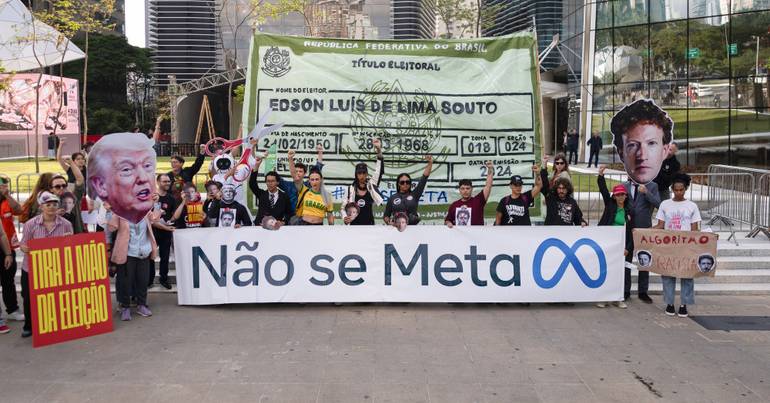
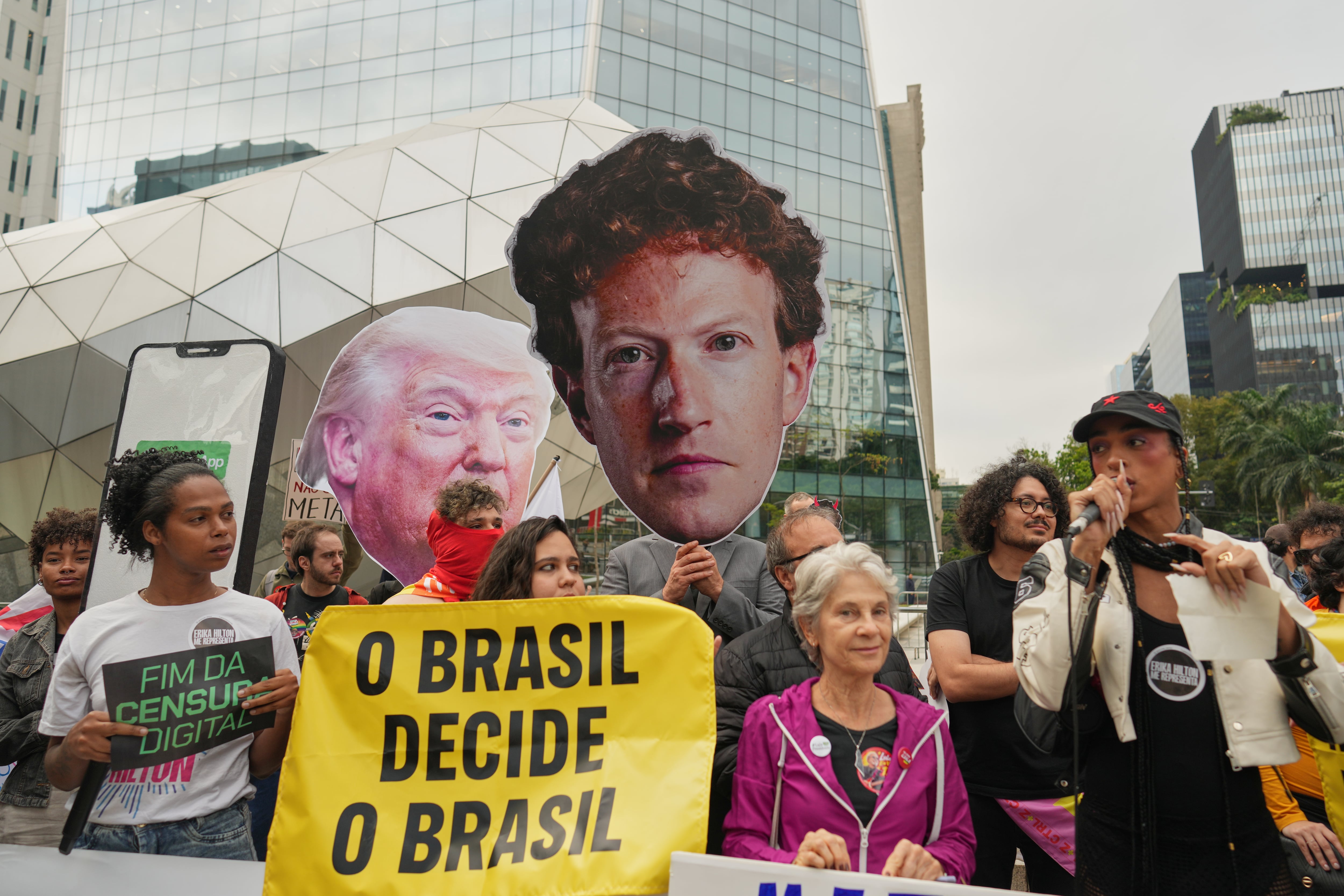
"Meta, não se meta" era a palavra de ordem entoada pelos manifestantes, frente ao edifício que alberga o escritório da Meta. Campanha de Lula acusa a tecnológica norte-americana de favorecer rival.
Manifestantes concentraram-se no famoso centro financeiro da capital paulista, Faria Lima, segurando faixas e cartazes com fotografias do dono da Meta, Mark Zuckerberg
Al Tribunal Superior Electoral de Brasil se le está acabando la paciencia con el gigante tecnológico Meta y los inescrutables entresijos de su funcionamiento. Un juez del TSE le ha dado 24 horas a la tecnológica propietaria de Instagram, WhatsApp y Facebook para que demuestre al tribunal que sus algoritmos y su inteligencia artificial dan un trato igual a los dos candidatos, al presidente Luiz Inácio Lula da Silva, del izquierdista Partido de los Trabajadores, y al senador Flávio Bolsonaro, del derechista Partido Liberal. La decisión judicial fue dictada el domingo por la noche cuando los presidenciables protagonizaban su primer debate.
O Tribunal Superior Eleitoral (TSE) deu prazo de 24 horas para que a Meta comprove que suas plataformas digitais oferecem tratamento igualitário às campanhas do presidente Luiz Inácio Lula da Silva (PT) e do senador Flávio Bolsonaro (PL), candidatos que disputam o segundo turno da eleição presidencial. A determinação foi feita pelo ministro Marco Aurélio Bellizze nesta segunda-feira (19), após o magistrado considerar insuficientes as explicações apresentadas pela empresa.
A Meta, responsável pelo Instagram, Facebook e WhatsApp, poderá ter a multa diária elevada de R$ 500 mil para R$ 1 milhão caso não cumpra o novo prazo. Segundo Bellizze, a empresa não demonstrou satisfatoriamente que adotou as medidas exigidas pela Justiça Eleitoral para impedir favorecimento ou prejuízo artificial a qualquer uma das candidaturas.
Na decisão, o ministro criticou a tentativa da companhia de estabelecer prazos próprios para responder às determinações judiciais, além da apresentação de relatórios em inglês e documentos que, segundo ele, não esclareciam adequadamente as providências adotadas.
“Incumbe às partes cumprir com exatidão as decisões judiciais, e não criar embaraços à sua efetivação”, escreveu Bellizze.
A cobrança ocorre depois que o plenário do TSE confirmou, na sexta-feira (16), a decisão que obriga a Meta a assegurar condições equivalentes às duas campanhas em seus sistemas de distribuição de conteúdo, recomendação e inteligência artificial.
Denúncia partiu da campanha de Lula
O caso chegou ao tribunal após a campanha de Lula denunciar supostas restrições à circulação de publicações relacionadas ao presidente nas plataformas da Meta. Os advogados do petista alegaram que os conteúdos da candidatura alcançavam menos usuários, enquanto o perfil de Flávio Bolsonaro aparecia em recomendações automáticas.
Outro ponto questionado foi o comportamento da Meta AI, ferramenta de inteligência artificial disponível no WhatsApp. Segundo a representação apresentada pela campanha de Lula, o sistema se recusava a produzir materiais eleitorais favoráveis ao presidente, mas atendia a solicitações semelhantes envolvendo o senador.
Mensagens internas da empresa obtidas pela Folha de S.Paulo também apontaram problemas que teriam prejudicado contas ligadas a Lula. Os registros mencionam restrições ao impulsionamento de publicações e a recomendação algorítmica do perfil de Flávio.
A Meta atribuiu os episódios a falhas técnicas e negou que tenha favorecido deliberadamente um dos candidatos. Em manifestação divulgada anteriormente, a empresa afirmou que os problemas não se restringiam ao Brasil e faziam parte de dificuldades técnicas de alcance global.
O que a decisão proíbe
A determinação do TSE impede que a Meta reduza artificialmente o alcance de conteúdos político-eleitorais relacionados a Lula ou Flávio. A proibição inclui alterações na distribuição das publicações, retirada de recomendações, restrições aos resultados de busca e mudanças de métricas que possam prejudicar uma das candidaturas.
A empresa também deverá aplicar critérios equivalentes às duas campanhas em suas ferramentas de inteligência artificial. A ordem busca impedir que os sistemas ofereçam respostas diferentes a solicitações semelhantes em razão do candidato envolvido.
O ministro ressaltou que a apresentação de informações sobre a ausência de comportamento inautêntico coordenado não substitui a obrigação de demonstrar quais medidas foram efetivamente adotadas para cumprir a decisão judicial.
Estudos apontam anúncios eleitorais irregulares
A discussão sobre a atuação das plataformas digitais ocorre em meio a outras denúncias envolvendo publicidade política na internet.
Um estudo da organização britânica Eko, divulgado em setembro, apontou que a Meta aceitou anúncios políticos direcionados ao público brasileiro, pagos por uma conta sediada nos Estados Unidos. Segundo a pesquisa, as peças utilizavam inteligência artificial sem a identificação exigida e apresentavam informações eleitorais falsas.
Outro levantamento, realizado pelo NetLab, laboratório de estudos de internet e redes sociais da Universidade Federal do Rio de Janeiro (UFRJ), identificou anúncios políticos considerados irregulares no país e financiados a partir do exterior.
A decisão do TSE não representa, por si só, uma conclusão definitiva de que a Meta tenha interferido deliberadamente na eleição em favor de Flávio Bolsonaro. A empresa nega favorecimento, e o tribunal exige que ela demonstre o cumprimento das regras de igualdade entre as candidaturas.
Two hundred years ago, the invention of Braille allowed blind people to read and write. By the 1930s, recorded sound made "talking books" possible. Developments in text-to-speech technology in the 1980s made reading more accessible and widespread. Then came personal computers, screen readers, smartphones, cameras, GPS, voice assistants, and myriad other technological advancements that gave blind people more independence.
Now a pair of sunglasses can read your mail, describe the person in front of you, tell you what is on a restaurant menu, and help you find your way home. Meta, the parent company of Facebook, is using artificial intelligence to turn glasses into a hands-free companion. For any person, this technology is impressive. For the approximately 700,000 Americans who are blind, it is potentially life-changing.
In June, Meta announced that every single blind veteran in the United States could receive its AI glasses free of charge. According to the Department of Veterans Affairs (V.A.), approximately 130,000 American veterans are legally blind, and over 1 million veterans have vision impairment that makes performing daily activities difficult. Don Overton, a blind veteran and former executive director of the Blinded Veterans Association, told Meta that he had "lost [his] independence" after losing his eyesight in a bunker explosion. "The moment I put on my Ray-Ban Meta glasses," he said, "I got my independence back."
The V.A. has a history of failing to fully support blind veterans. In 2022, the V.A.'s Office of Inspector General found that claims processors were instructed to contact visually impaired veterans by telephone, but 87 percent of claims showed no evidence of these calls ever happening. A 2022 investigation by the Senate's Special Committee on Aging found that "roughly 90 percent" of V.A. websites were not compliant with federal accessibility requirements. "We feel we've been abandoned by the agency that is tasked with providing our care and services for us," Overton toldThe Washington Post in 2022.
Meta's AI glasses have come under fire due to their privacy risks. The company was sued in March after Swedish publications Svenska Dagbladet and Göteborgs-Postenreportedly found that Meta's contractors in Kenya were accessing videos by users of their AI glasses. "We see everything, from living rooms to naked bodies," one worker noted.
Users should be aware of those risks. Still, for blind veterans, companies such as Meta have stepped up to fill a gap that the government has failed to address.
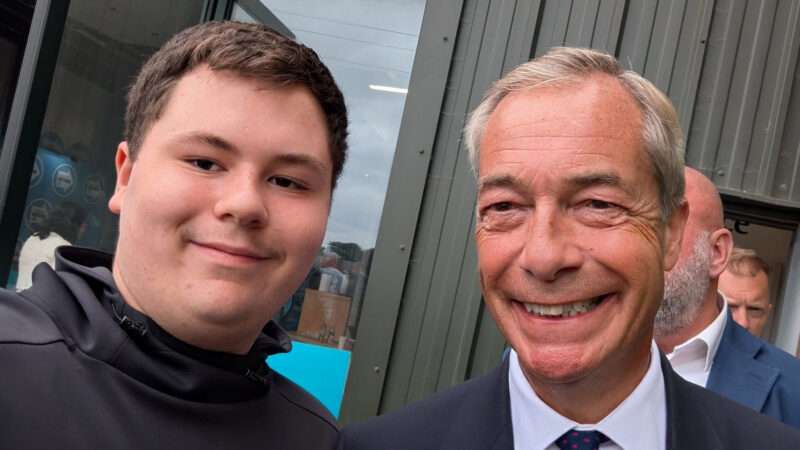
Four police officers woke and arrested Will Fraser, a 15-year-old Reform U.K. activist, at his Walsall home. More than two months later, police still have not clearly explained the exact reason for the arrest, but The Telegraph found that it stems from a few Facebook posts. For example, Fraser criticized a Tory member of the Wolverhampton City Council for wearing casual clothes at meetings, then later remarked that he was glad the councilor was "not looking like a rent boy." Officers took Fraser to the station, questioned him, took his DNA and fingerprints, seized his phone and laptop, and released him on bail while banning him from council meetings. His lawyers and free speech groups say the arrest was an overreaction that threatens free speech, while the councilor in question claims the posts felt like targeted harassment.
Entre las fallas se cuentan interrupciones del servicio de anuncios, caídas en el recuento de visualizaciones de publicaciones favorables al presidente brasileño y bloqueos temporales de la promoción de contenidos en Instagram.
The Social Reckoning, Aaron Sorkin's latest jab at Big Tech, is conceived as a political and social prosecution of Facebook.
The social network and its owner, Mark Zuckerberg, in the movie's view, are responsible for the spread of misinformation, the decline of journalism, the polarization of the electorate, and the radicalization of specific individuals who go on to commit heinous acts of anti-democratic violence. In its final moments, the film strongly implies that Facebook and its engagement-boosting algorithms are directly responsible for the Capitol riot on January 6, 2021. Donald Trump, the election-losing president whose incendiary speech and repeated falsehoods about the results of the 2020 election preceded the riot, is never named in the movie. In a movie that positions itself as bold and brave, it's an omission of stunning, and revealing, cowardice.
To bring Trump into the picture would have complicated Sorkin's just-so story, in which Facebook's refusal to fact-check political ads and decision to boost engagement through a change in its recommendation algorithm are the central, and, at least within the movie's narrow frame, even sole cause of all that ails American democracy. Sorkin's story has no room for nuance or ambiguity, no interest in the larger political-social dynamics at work in the late 2010s and early 2020s, no time for disconfirming data that violates his narrative. He has found a pure villain in Facebook's founder, and that's the only story he wants to tell.
Like so many of Sorkin's films, The Social Reckoning is structured around what amounts to a trial, in this case a mock congressional hearing set up for Zuckerberg, Facebook's CEO, in advance of an appearance on Capitol Hill. The action inside that room is informed by a larger story that revolves around Wall Street Journal reporter Jeff Horwitz's (played by Jeremy Allen White) quest to understand and uncover documentation that led to his award-winning investigative series, The Facebook Files. Horwitz works with Frances Haugen (Mikey Madison), a Facebook engineer who has concerns about the company's practices and begins leaking information in hopes of causing internal change. She's an anxious, socially awkward recluse; he's a tech-ignorant reporter who ended up on the Big Tech beat. The pairing allows Sorkin to build scene after scene of exposition and explanation, in which Haugen details various Facebook technical decisions believed to have dire social consequences.
Most notable among these is an algorithmic switch to something called "MSI," or "meaningful social interactions." Essentially, the network prioritized depth of engagement over simple likes, leading to a boost in usage, as well as an increase in exposure to radical groups and content. The movie poses as a sophisticated journalistic explainer, but its core argument is quite simple: Facebook changed its algorithm in a way that benefited the company but harmed society by pushing content from hate groups and other disreputable types. That, in turn, led to January 6. Case closed.
But what if the case isn't so simple? In these pages, Elizabeth Nolan Brown has outlined the many ways in which social media algorithms, especially on Facebook, have been unjustly maligned: Instead of causing polarization by locking people into narrow political bubbles, they can offer greater exposure to opposing views and even promote democratic virtues. The supposed negative effects of tech on children are, at minimum, disputed and in most cases probably overstated; some studies suggest that tech can enhance youth mental health. It's notable that Sorkin's story uses the violent calamity of January 6—a truly dark day for America—as his climactic argument. He can't use the election of 2020, because that election was won by Joe Biden. So he falls back to the ugliness of the riot, while ignoring Donald Trump.
The movie is framed in personal terms via the story of one woman's radicalization. The woman—rich, white, entitled, casually racist during a drunken encounter with cops that she films and posts on social media—turns out to be a friend of Haugen's, which is what drives her to go public about her employer. Sorkin uses the woman as a symbol of all that Facebook has done wrong; she's a consequence of Zuckerberg's disregard for democracy and truth.
But in real life, Haugen's never-named radicalized friend was a man, not a woman, who became obsessed with conspiratorial notions about politics, not a racist social-media troll. Sorkin's film is fiction, a dramatic retelling of events rather than a just-the-facts journalistic account, so it doesn't quite need to be held to the same standard. But it's notable that he has to massage the details in order to make his point. Perhaps he's doing so in service of a deeper truth. But that deeper truth isn't strictly true.
Humans are messy and complicated, and so is democracy. But Sorkin can't handle those complications. Instead, he delivers a smug, simplistic narrative that traffics in borderline misinformation while pretending to crusade for the truth. Maybe what we really need is a reckoning with Aaron Sorkin.
AF! Cristiano Ronaldo decidiu abandonar o estágio da Seleção Nacional na Dinamarca depois de considerar que o treinador português não cumpriu compromissos assumidos em reuniões privadas. Numa justificação publicada na sua página de Facebook, o capitão luso afirma que a saída resultou de uma “quebra absoluta de confiança” e não de qualquer discordância com opções […]
 Login



 Muse, agente de IA