❌

Reading view

Trump cannot get Putin to halt strikes on Ukraine’s power grid, so he blames Ukraine instead, Zelenskyy says

musk tells ukraine’s president go zelenskyy says won’t resign never accept ukrainian land russian · post volodymyr during interview piers morgan recorded visit britain 14 2026 video uncensored / ukraine

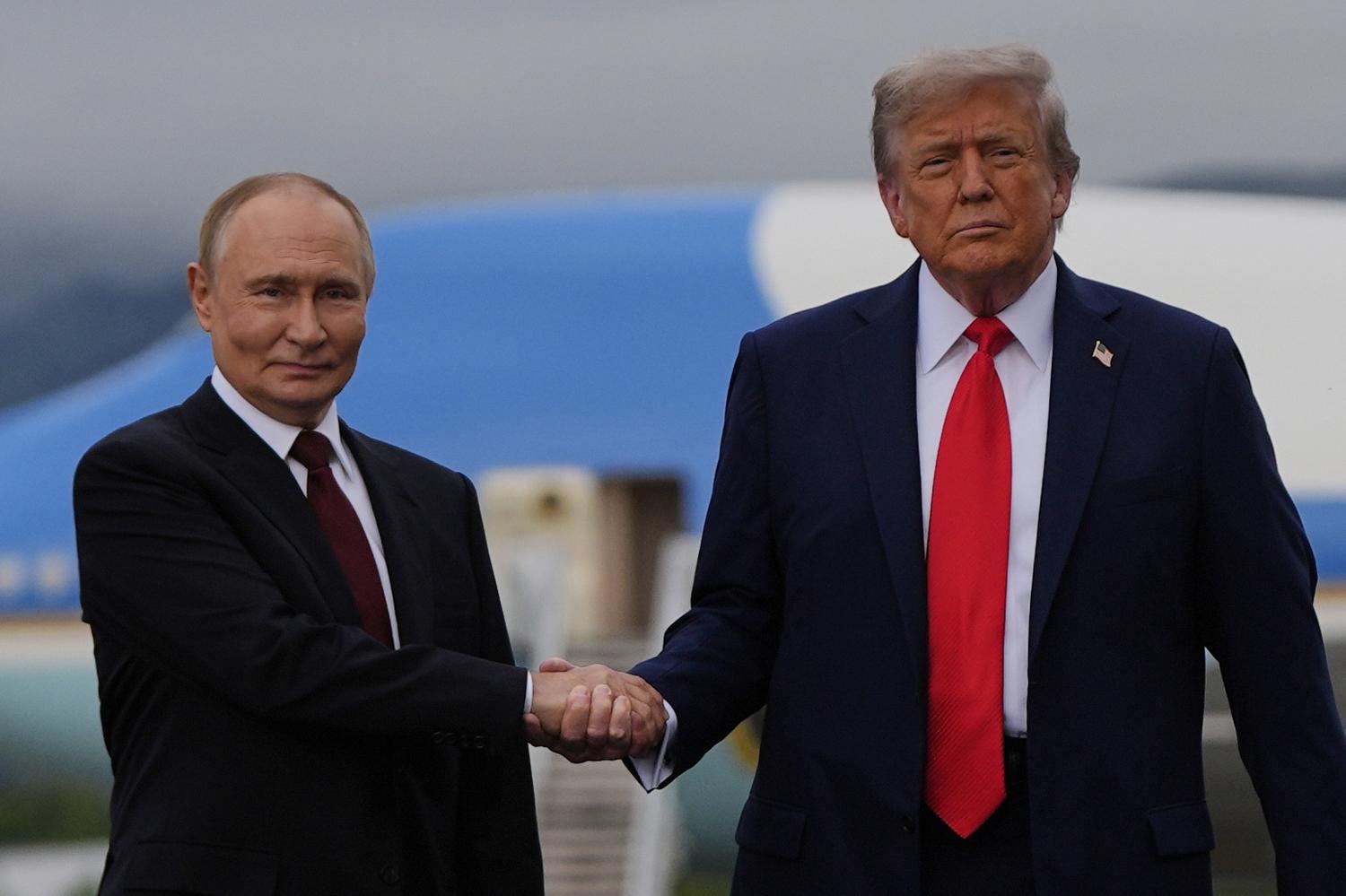
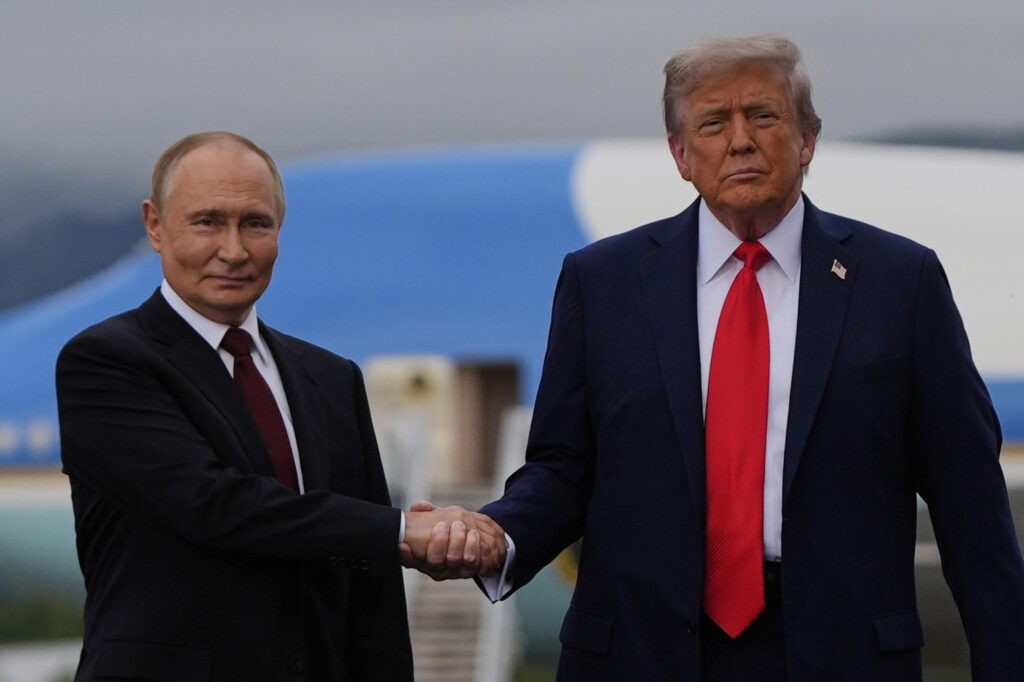
US President Donald Trump has failed to reach an agreement with Russian ruler Vladimir Putin on halting strikes against Ukraine's energy infrastructure. However, Trump is trying to shift the blame for this failure onto President Volodymyr Zelenskyy, he said on The Diary of a CEO podcast.

His words came amid Russia's four record waves of ballistic missile attacks, after US Special Envoy Steve Witkoff described Putin as a "humanitarian." Previously, US officials cut Kyiv off from US intelligence and lowered a speed cap on Starlink to pressure Ukraine into stopping strikes on Russia's oil refineries that bring Moscow revenue for its war.

Trump pins the problem on Kyiv, not Putin

Zelenskyy explained the behavioral pattern behind Trump's recent actions and statements. At first, Putin rejected his proposal for a ceasefire. Then, the US president blamed it all on him, explaining to his people that world fuel prices are rising because of him, which is not true at all, said the Ukrainian leader.

He pointed to the blocked Strait of Hormuz shipping chokepoint, not Ukraine’s refinery campaign, as the driver of higher prices.

He also noted that the volumes of diesel allowed by the US are insufficient to lower global oil prices.

Even so, Zelenskyy said he keeps a working relationship with Trump. What he will not accept is being cast as the villain in Russia’s war: by his account, the US president is rewriting the context, turning Ukraine’s leader into the target for a problem that starts in Moscow.

Earlier, experts said the diesel deal was unlikely to meaningfully lower diesel prices. For Putin, the agreement itself was a win.

A former senior State Department official says it hardly matters whether the fuel arrives, because Putin “has already achieved the result he wants,” with Trump believing he has a pre-election card that could move markets.

  •  

Drones reportedly hit a Russian weapons plant near Moscow that Washington and Kyiv sanctioned
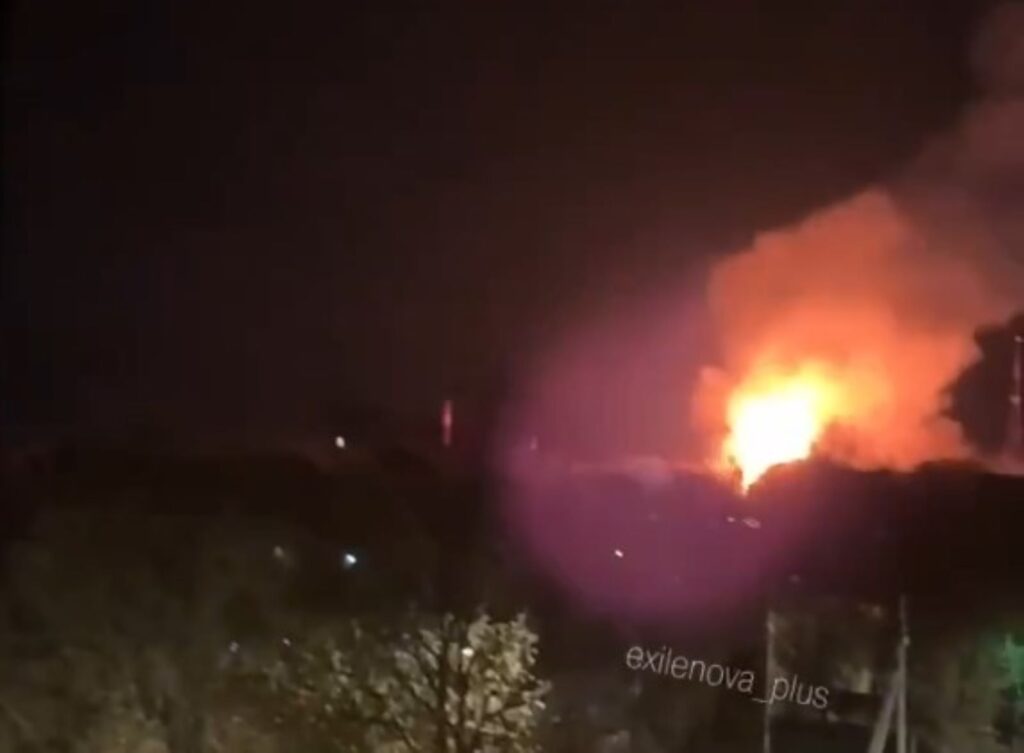
drones reportedly hit russian weapons plant near moscow washington kyiv sanctioned · post fire jsc 75 arsenal serpukhov oblast 22 2026 exilenova+ ukraine news ukrainian reports

An explosion hit the 75th Arsenal, a Russian army plant in Serpukhov south of Moscow, overnight on 22 October, Russian Telegram channel Astra reported. Russian officials also claimed drone attacks on the Moscow region, Tula, and Lipetsk that night.

As Russia presses its full-scale invasion, Ukraine’s long-range drones and missiles keep hitting military plants and refineries deep inside Russia. Ukrainian outlet Militarnyi says this plant specializes in repairing Buk and S-300 air defense systems. Astra describes it more broadly, as making weapons and ammunition and repairing military equipment. If Militarnyi is right, the blast hit a site that fixes Russian air defenses. It came the night Moscow’s mayor credited air defenses with stopping hundreds of drones.

Blast at the arsenal

An Astra OSINT analyst placed the explosion inside the site from a video, the channel said. Residents claimed in local chats that blasts followed passing drones, then at least three missiles. Astra did not confirm the missile count. Serpukhov lies about 99 km south of Moscow. Ukraine has sanctioned the plant, and the US Treasury has listed it too. As of the morning of 22 October, no Russian official had confirmed the blast.
More footage of the attack on the arsenal in Serpukhov. We are awaiting satellite images. pic.twitter.com/tTsgc18W3L

— Exilenova+ (@Exilenova_plus) October 22, 2026

630 drones, by Moscow’s count

Moscow Mayor Sergei Sobyanin claimed that 630 drones flew toward the Moscow region from 20:30 on 21 October to 04:00 on 22 October. He claimed most were destroyed far out and 163 were neutralized on approach to Moscow. Two people were injured in Voronovo, in New Moscow, he stated.

Tula Oblast Governor Dmitry Milyaev claimed air defenses downed 70 Ukrainian drones over his region. Private homes were damaged in Tula and the Zaoksky district, he stated.

Lipetsk governor claims homes and a clinic damaged

Earlier in the night, Ukrainian monitoring channel Exilenova+ posted footage of commotion in Lipetsk after explosions. Lipetsk Oblast Governor Igor Artamonov claimed a drone strike damaged homes, apartment blocks, and a closed polyclinic. A man born in 2001 was injured and hospitalized, Artamonov claimed.

Lipetsk, moment of the explosion. https://t.co/wCX6GVThQr pic.twitter.com/bGwGLbUm2d

— Exilenova+ (@Exilenova_plus) October 21, 2026

In May, Ukrainian intelligence said Russia was deploying more regiments against strike drones. In September, Ukrainian units hit more Russian air defense systems and radars than in any month since 2024, Ukraine’s Defense Ministry said. Analyst Oleksandr Kovalenko counted 76 destroyed in September with days of the month still to go and argued Russia cannot replace such losses. If Militarnyi’s description holds, losing repair capacity would deepen that gap.

  •  

Millions of hacking attempts trigger global cybersecurity alert

Companies and governments around the world raced on Thursday to patch critical vulnerabilities in the widely used PHP programming language, as millions of hacking attempts were reported and authorities across Asia activated emergency cybersecurity measures.

The rush came after government websites in Europe and elsewhere went offline on Wednesday, with the disclosure of the flaws sending website operators scrambling to protect their systems.

PHP developers released urgent security fixes on Wednesday after vulnerabilities that had remained in the software for years were uncovered using artificial intelligence. The developers urged all users to update immediately.

Cloudflare Chief Executive Matthew Prince said attempts to exploit the vulnerabilities had surged dramatically following their public disclosure.

“In the 10 hours before it was publicly announced, across the network we saw thousands of attempts to exploit it,” Prince said in a post on social media platform X late on Wednesday.

“That jumped to tens of thousands in the 45 minutes post announcement, hundreds of thousands within 2 hours, and millions now.”

The vulnerabilities could allow attackers to execute malicious commands without authentication, steal sensitive information or take websites offline, according to South Korea’s science ministry.

Asian governments activate emergency measures

South Korea raised its private-sector cybersecurity alert level on Thursday and activated emergency response measures, citing the increased risk of hacking attacks.

The presidential National Security Office convened an emergency meeting involving intelligence, defence and science ministry officials to coordinate responses across the public, private and military sectors.

The science ministry said it had issued security guidance to approximately 28,000 companies with registered chief information security officers and 5,900 members of a government information-sharing network.

Operators of critical infrastructure, web-hosting companies and data centres were also alerted.

Authorities urged organisations to install the latest PHP security updates and introduce temporary safeguards where immediate patching was not possible.

China’s industry ministry similarly called on organisations and users to inspect their systems immediately and upgrade to the latest secure version of PHP.

It also recommended strengthening cybersecurity monitoring and promptly changing accounts, passwords and security keys.

Japanese banks and government services affected

In Japan, Mitsubishi UFJ Financial Group said on Thursday it was temporarily suspending some internet services as part of emergency security measures.

Japan’s Finance Ministry also suspended some website content and online services while implementing protective measures.

Prime Minister Sanae Takaichi urged website operators on Wednesday to check whether their systems used PHP and prepare to install the security fixes.

The disruptions and emergency measures highlight the potential impact of vulnerabilities in PHP, a programming language widely used to power websites and online services.

The disclosure of the flaws, followed by the rapid escalation in attempted exploitation, has prompted governments and businesses to accelerate security updates to protect their systems from possible attacks.

  •  

Romania shot down two drones it believes were Russia’s new Geran-4s. Europe isn’t ready for swarms of them, analyst warns

ukraine spent three years learning catch russian drones—so russia made fly faster · post geran-3 jet-powered attack drone wild hornets c1c840787fca380485636007cf683d71 news ukrainian reports

In a direct confrontation with Russia, European NATO states would likely be even more vulnerable than Ukraine to swarms of Russia’s new jet-powered strike weapons, Fabian Hoffmann of the Norwegian Institute for Defence Studies (NIDS) argued in a 20 October op-ed for the Center for European Policy Analysis (CEPA). He calls them low-cost cruise missiles. Just three days earlier, Romania met what it believes were two of them over the Black Sea.

Romanian F-16 fighter jets shot down two jet-powered Geran-family drones over Romania’s territorial waters on 17 October, the Defense Ministry said. Interim Defense Minister Radu Miruță said they flew at about 450 km/h and were likely Geran-4s, the first of that type Romania had downed.

Faster drones for a faster war

Russia began using the Geran-4 in May in response to effective Ukrainian interceptor drones, Ukraine’s military intelligence (HUR) said, adding that it reaches up to 500 km/h. By June, those interceptors were downing about half of slower Shahed-type drones, defense adviser Serhii Beskrestnov estimated.

Hoffmann traces the shift to the Geran-3, a model Ukraine recovered intact in 2025. In his account, a Chinese JT80 turbojet roughly doubled its speed, from 185 to 350 km/h. However, he puts newer models, including the Geran-4, at 600 km/h or more, above HUR’s figure for that model.

By his estimate, each costs $150,000–$250,000, against about $50,000 for a long-range drone. Still, from Russia’s perspective, he wrote, that buys a significantly higher chance of getting through.

money engineering what stands between ukraine russia's fastest drones zelenskyy says · post russia’s new “geran-4 seeker” shahed variant geran-4 news ukrainian reports
Explore further

Ukraine is testing four new drone interceptors as Russia floods its skies with faster Gerans 

Engines are the bottleneck

Hoffmann argues defenses must match the threat’s speed, for example with jet-powered interceptor drones. Ukraine already fields some. On 4 October, President Zelenskyy said its Bars interceptors had shown the highest percentage among Ukrainian interceptors, about 30% of targets, according to Militarnyi. One unit destroyed five aerial targets with five Bars interceptors, Defense Minister Yevhenii Khmara later told journalists. He also called aviation one of the most effective tools against jet drones.

Hoffmann’s concern is scale. Jet engines are in short supply, he wrote, because too few European and US suppliers can meet demand. Ukraine’s Defense Industry Council flagged a shortage of such engines for its drones in April. In his view, gun systems and higher-end missile defenses are too scarce or too costly to fill the gap.

  •  

Paris Saint-Germain sparkle on the pitch while the city of light burns around them | Barney Ronay

PSG, pet project of the state of Qatar, expresses the dualism of the city, a place of deprivation where the centre is perfect

PASSION!

GOOOOAL!

Continue reading...

© Photograph: Mohammed Badra/EPA

© Photograph: Mohammed Badra/EPA

© Photograph: Mohammed Badra/EPA

  •  

Some of Ukraine’s artillery soldiers were TikTokers yesterday, ComBat Vision says. Their new plugin teaches them to aim

This is what the UGV operator’s assistant in ComBat 4 looks like when operating at night or in low-visibility conditions.

Ukraine receives Western weapons, but the code that teaches soldiers to aim them is increasingly its own. Developers of the Ukrainian battlefield reconnaissance and coordination system ComBat Vision have released a new plugin that turns the abstract math of artillery fire into a visual tool, letting crews simulate firing and learn to adjust it, the team says.

The developers built the tool around a problem they name plainly: the quality of specialists entering the military is falling rapidly.

“Artillery soldiers are sometimes yesterday’s TikTokers or "tanks" players,” the team explain, so the plugin makes firing and aiming as visual as possible to teach indirect fire quickly.

On screen, it draws a round’s flight path from the weapon’s firing tables and the dispersion ellipse for that gun and munition, warns of obstacles on the calculated trajectory, and simulates the shell after the shot with a training error added. It then shows real or simulated bursts, averages the correction across a series of hits, and lets the user enter corrections, including by voice, and watch the result.

The plugin draws its ballistics from MyGun, an app by Yaroslav Sherstiuk that automates ballistic and fire calculations for artillery. ComBat Vision itself coordinates troops and shares object data, integrating with optical sensors such as drones, ground robots and security cameras to fix targets in space.

From a single app to a platform with a plugin store

ComBat Vision’s bigger move is becoming a platform rather than a single app. The developers say they will open a plugin store within a week, where units can download the new artillery feature and others, such as repeater-coverage calculations and remote control of minefields.

The team has announced plans to open it, not results from using it, so its payoff, letting one platform add new tools without building a separate system each time, is a claim to watch rather than a proven gain.

  •  

In Oslo, US pushes Zelenskyy toward deal with Russia again. Day later, in same city, Norway discusses arming Ukraine with more NASAMS missiles

Ukrainian President Volodymyr Zelenskyy in Oslo, on 21 October 2026. Source: Facebook/Zelenskyy

As Washington leans on Ukraine to make a deal with Russia amid its diesel agreement ahead of the US elections, its European partners are meeting to keep it armed against deadly weapons.

President Volodymyr Zelenskyy said he met Kongsberg CEO Eirik Lie and Norwegian Defense Minister Tore Sandvik in Oslo on 21 October to discuss more NASAMS air defenses, a day after meeting US presidential envoy Steve Witkoff in the same city.

Washington has spent the past two weeks easing pressure on Russia and leaning on Kyiv, with a diesel deal, throttled Starlink, and talk of cutting intelligence, while Ukraine’s European partners move in the other direction. Russia pounds Ukrainian cities almost nightly, and the Norwegian-made NASAMS is one of the systems holding that barrage off critical infrastructure.

Kongsberg opened an office in Ukraine in 2025. Its NASAMS uses the AIM-120 AMRAAM missile built by the US defense giant RTX, the same firm behind the Patriot launchers that are Ukraine’s only means of downing Russian ballistic and hypersonic missiles. The same missile is also used in F-16s.

“They effectively protect our people and critical infrastructure from Russian missile and drone attacks virtually every day,” Zelenskyy said.

He added that Ukraine is counting on additional defense support packages next month.

A European shield Ukraine wants tested this year

The visit also advanced a joint missile-defense project. Norway is actively involved in FREYJA, a European anti-ballistic missile program that Ukraine is helping to build.

“There are already first results in creating individual elements of the system. Today we determined where we can and must speed up to reach testing by the end of this year,” Zelenskyy said.

FREYJA now draws in 10 countries and is built around an interceptor missile designed to stop ballistic threats, a capability Europe largely lacks against Russia’s fastest weapons.

A push for satellites as Starlink falters

Zelenskyy also raised satellite communications amid the scandal over speed limitations on Elon Musk’s military Starlink service that disrupted a series of front-line missions.

“We discussed in detail the start of work on new satellite-communication capabilities for our soldiers,” the president said, adding that Kyiv would bring in partners able to support them.

The push comes after SpaceX throttled the StarShield military package Ukrainian drones use. Ukraine’s 7th Air Assault Corps said the connection began dropping as drones moved at speed, negatively affecting their missions.

  •  

Two nights, two occupied capitals, two telecom operators running on seized Ukrainian assets: drones go after Russia’s communications in Donbas

burned-out telecom center occupied luhansk dark donetsk ukraine’s drones work through night · post ukrtelecom building after drone strike 21 2026 ukraine news ukrainian reports

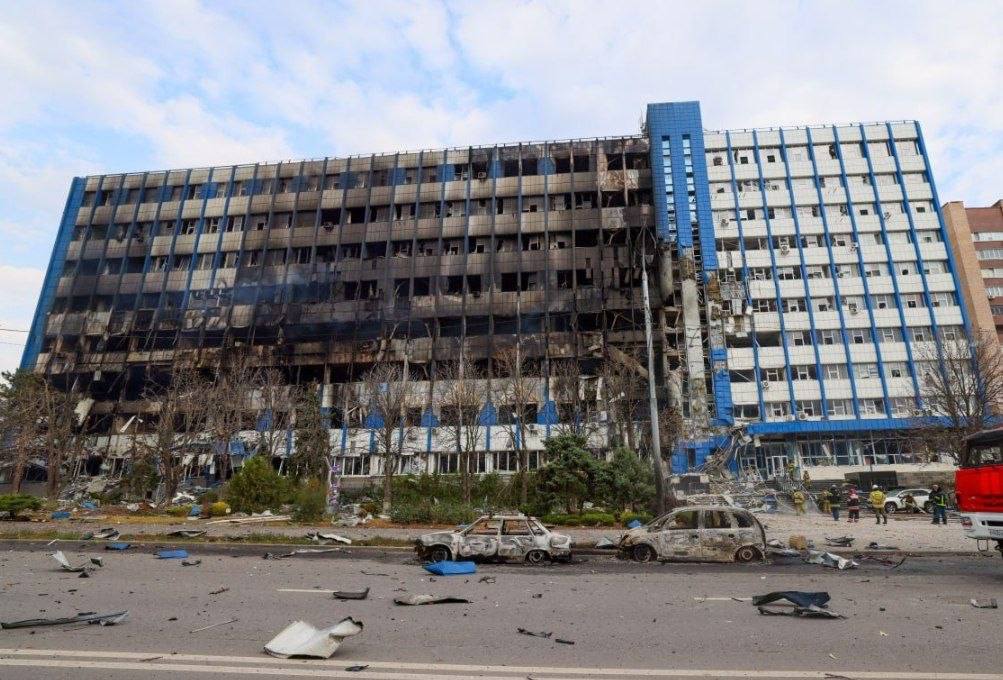
Drones struck the seized Ukrtelecom building in occupied Luhansk overnight on 21 October, hitting the mobile operator Russia’s occupation authorities run there under the name “Lugacom,” Russian Telegram channel Astra and Ukrainian monitoring channels reported. The strike came a night after drones hit “Ugletelecom,” the occupation’s telecom operator in Donetsk, which reportedly runs on equipment seized from Ukrainian companies. Footage posted by Ukrainian monitors shows heavy fire damage inside the Luhansk building. Ukraine has not officially commented.

Ukraine has spent months hitting the supply lines, depots, and infrastructure that sustain Russia’s occupation of southern and eastern Ukraine, with mid-range drones striking trucks, trains, and communications towers well behind the front. This spring the commander of Ukraine’s Unmanned Systems Forces, Robert “Madyar” Brovdi, promised Russian troops in occupied territory a “stone age.” This time the targets were the networks the occupation runs on.

burned-out telecom center occupied luhansk dark donetsk ukraine’s drones work through night · post ukrtelecom building after drone strike 21 2026 exilenova ukraine news ukrainian reports
The occupied Ukrtelecom building in Luhansk after a drone strike, 21 October 2026. Photo: Exilenova+/Telegram

A burned-out Ukrtelecom building in Luhansk

Residents reported explosions in Luhansk overnight, and the former Ukrtelecom building was attacked by a drone, Astra reported, citing its readers. The occupation runs its mobile operator, “Lugacom,” from the seized building, and built its network on equipment taken from Ukraine’s Kyivstar, according to dev.ua. The building also houses an occupation-run telecom services center. Luhansk is situated in the easternmost Ukrainian region and has been occupied since 2014.

Ukrainian monitoring channel Exilenova+ said Ukraine’s Defense Forces struck the building, which also hosts an information technology and technical support center. A video it posted shows extensive burning inside. Petro Andriushchenko, head of the Center for the Study of Occupation, said the drones hit a data center in the building.

Occupation officials had not commented, according to NV. In September, drones hit a hardware store in Luhansk, sparking a large fire. Earlier this month, fires broke out at a Russian supply base in Khrustalnyi, also in occupied Luhansk Oblast.

The occupied Ukrtelecom building in Luhansk after a drone attack, 21 October 2026.
The occupied Ukrtelecom building in Luhansk after a drone attack, 21 October 2026. Photo: Astra/Telegram

Donetsk’s occupation telecom operator hit the night before

The night before, drones struck “Ugletelecom,” one of the key communications operators in occupied Donetsk Oblast, Exilenova+ reported. It operates from an office building at 60 Postysheva Street, where Ukraine’s state holding company Donbasugleobespechenie was registered before the occupation, according to RBC-Ukraine. Astra found about 27 organizations registered at the address, including internet provider Fticom, and damage on four floors.

Ugletelecom runs on equipment seized from Ukrainian companies, Donetsk-focused outlet Kochegarka reported, citing local sources. The occupation also moved local businesses that had used Ukrtelecom over to it, according to dev.ua. Residents had reported powerful explosions in the city.

The office building on Postysheva Street housing “Ugletelecom,” the occupation’s telecom operator, in occupied Donetsk after a drone strike, 20 October 2026.
The office building on Postysheva Street housing “Ugletelecom,” the occupation’s telecom operator, in occupied Donetsk after a drone strike, 20 October 2026. Photo: Exilenova+/Telegram

Power cuts across the occupied territories

In occupied Donetsk Oblast, drones attacked the 330 kV Pivdenna substation in Chystiakove, and locals reported outages, Telegram channel DroneBomber said, calling the report preliminary. Occupied Donetsk went into a blackout on the evening of 20 October after strikes on its power supply, Andriushchenko said. He also reported air defense activity and hits in the Mariupol area.

In occupied Crimea, residents of Krasnoperekopsk reported explosions and hits near the railway station, then partial power cuts, monitoring channel Crimean Wind said. In occupied Melitopol, drones tried to attack the city’s power facilities at around 03:30 but missed, Russian senator Dmitry Rogozin claimed.

French mapper Clément Molin counted 770 confirmed Ukrainian drone strikes on Russian trucks in the logistics zone 10 km behind the front line in September, up from 630 in August.

  •  

Not just the grid: Russia struck a 24-story block, a university, and warehouses overnight, and four people are dead

just grid 24-storey block university warehouses were russia’s target list overnight four people dead · post smoke rises apartment building kyiv’s sviatoshynskyi district after russian drone strike 21 2026 kyivjfif

Russian drones struck a 24-story apartment building in Kyiv, a university building in Kremenchuk, warehouses, and hypermarkets overnight on 21 October, killing two people in the capital and an elderly couple near Kharkiv, Ukrainian officials said. The attack went well beyond Ukraine’s power grid, hitting places where people live, study, and shop. Over the past day, Russian strikes also killed three more civilians and injured dozens across several oblasts.

Russia has kept up nightly drone and missile attacks on Ukrainian cities through the autumn, mostly aimed at the energy system. It struck Ukraine’s energy 76 times during a US-declared truce, and fired 39 ballistic missiles at the grid three days after Washington announced it. This time the targets also included homes, a university, warehouses, and shops.

Overnight, Russia launched 186 Shahed-type and other attack drones, 88 of them jet-powered, along with Iskander-K cruise missiles, Ukraine’s Air Force said. Air defenses downed or jammed 150 drones. Hits were recorded at 27 locations, and debris fell at 13 more.

Two killed on the 20th floor in Kyiv

A drone hit a 24-story residential building in Kyiv’s Sviatoshynskyi district at the level of the 20th floor, starting a fire, Mayor Vitali Klitschko said. The fire spread over about 70 square meters, and rescuers found the bodies of two people while clearing debris, the State Emergency Service said. Two people were injured and hospitalized, Klitschko said, including a 46-year-old man who was walking past the building, according to the police.

A rescuer carries a cat out after a Russian drone strike on an apartment building in Kyiv, 21 October 2026.
A rescuer carries a cat out after a Russian drone strike on an apartment building in Kyiv, 21 October 2026. Photo: State Emergency Service of Ukraine

In the Desnianskyi district, seven parked cars caught fire, the State Emergency Service said; police put the number at about 10. The evening before, drones hit a warehouse building in Desnianskyi and a transport facility in Solomianskyi district.

An elderly couple killed near Kharkiv

In the village of Korotych near Kharkiv, Russian drones killed an 81-year-old woman and an 83-year-old man, Kharkiv Oblast Governor Oleh Syniehubov said. Rescuers recovered their bodies from the rubble of their house, the State Emergency Service said. Eleven people, including a two-month-old boy and an eight-year-old girl, were treated for acute stress, and 13 houses were damaged.

A house destroyed by a Russian drone strike in Korotych, Kharkiv Oblast, 21 October 2026.
A house destroyed by a Russian drone strike in Korotych, Kharkiv Oblast, 21 October 2026. Photo: State Emergency Service of Ukraine

A university, warehouses, and hypermarkets

In Kremenchuk, a drone hit a building of the Mykhailo Ostrohradskyi National University, setting it on fire, the State Emergency Service said. Three people were injured, including a 16-year-old who was hospitalized with a concussion, Poltava Oblast Governor Vitalii Diakivnych said. In the Poltava community, drones damaged an administrative building and warehouses.

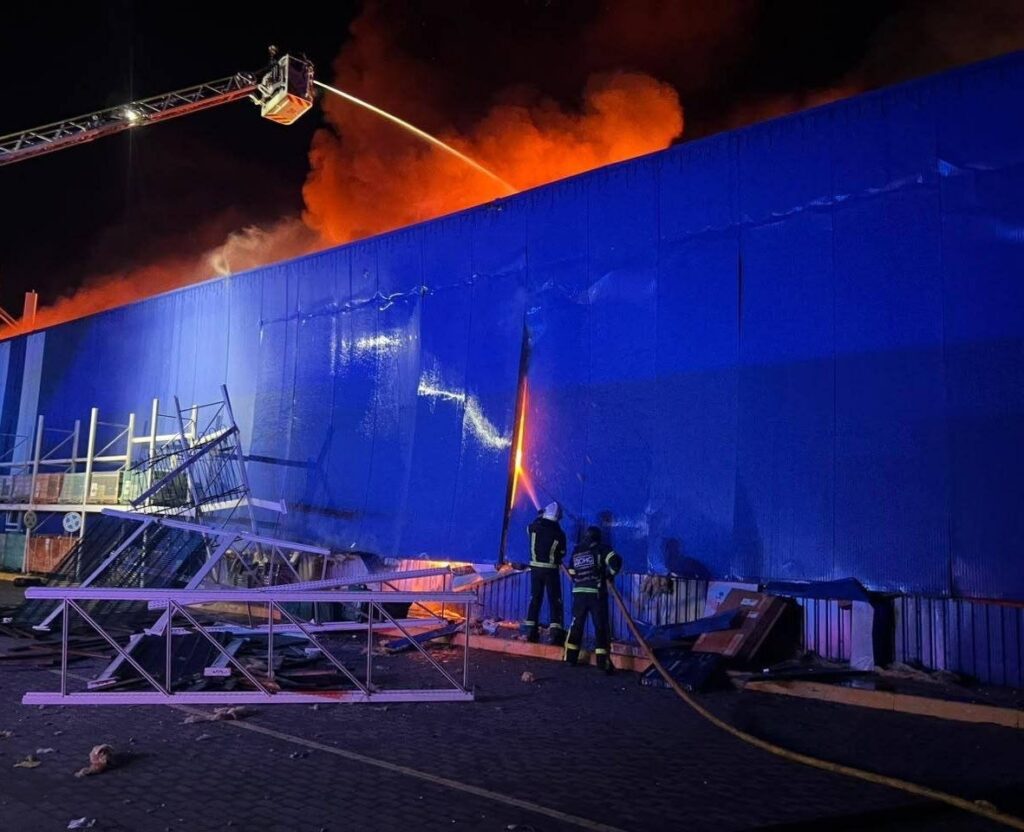
Firefighters put out a fire at an enterprise in Lviv district after a Russian attack, 21 October 2026.
Firefighters put out a fire at an enterprise in Lviv district after a Russian attack, 21 October 2026. Photo: State Emergency Service of Ukraine

In Lviv Oblast, an attack set fire to an enterprise in a village in Lviv district and injured two people, while a house was damaged in a neighboring village, the State Emergency Service said. In Uman, drones hit a hypermarket and damaged a hotel, injuring one person, Cherkasy Oblast Governor Ihor Taburets said.

A hypermarket in Uman damaged by a Russian drone strike, 21 October 2026.
A hypermarket in Uman damaged by a Russian drone strike, 21 October 2026. Photo: Cherkasy Oblast Military Administration

On the evening of 20 October, a drone hit an Epicentr hypermarket in Pervomaisk, Mykolaiv Oblast, injuring eight people, acting Governor Heorhii Reshetilov said. Russia also struck a hypermarket in Rivne Oblast several times that day, injuring four and forcing rescuers to pull back while they fought the fire, the State Emergency Service said.

More dead and injured over the past day

The overnight strikes followed a day of attacks. In Kyiv, Russian strikes on 20 October killed one person and injured 21, three of them seriously, Klitschko said. An administrative building caught fire, rescuers freed four people trapped on its upper floors, and a healthcare facility was damaged, the State Emergency Service said. In Dnipropetrovsk Oblast, two men were killed and seven people injured that day, regional officials said.

In Kharkiv Oblast, Russian attacks over the past day injured 11 more people in Kharkiv, Derhachi, and Shestakove, Syniehubov said. In Kherson Oblast, 13 people were injured, three of them children, the regional administration reported. In the Chernihiv region, an 89-year-old woman and a young woman were hurt in strikes on villages and on Novhorod-Siverskyi, Governor Viacheslav Chaus said, and a 21-year-old woman was injured in the Sumy community, according to the Sumy regional administration.

More than 5,000 subscribers lost power in Volyn Oblast’s Lutsk district, Governor Roman Romaniuk said. In Ternopil Oblast’s Kremenets district, 7,949 subscribers remained without power after earlier Russian strikes on energy facilities, the regional administration reported.

  •  

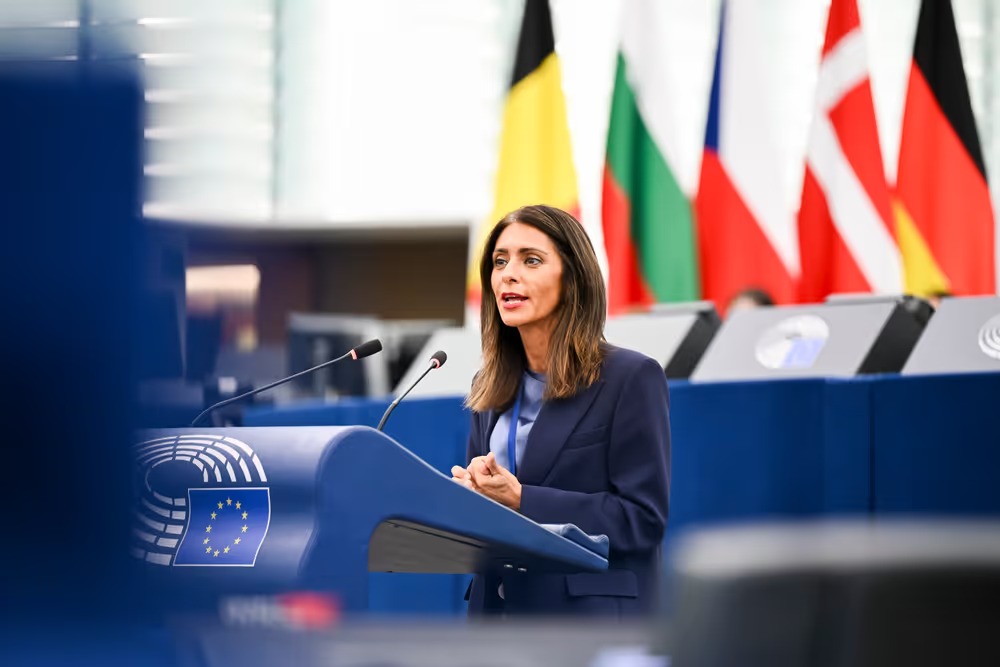
European Parliament vice president launches hunger strike demanding a truce and evacuation for Russian-occupied Oleshky

european parliament vice president launches hunger strike demanding truce evacuation russian-occupied oleshky · post pina picierno speaks during plenary debate strasbourg 6 2026 20261006_ep-211404g_vz2_pst_079-preview ukraine news ukrainian reports

European Parliament Vice President Pina Picierno has announced a hunger strike to draw international attention to the humanitarian disaster in Russian-occupied Oleshky in Ukraine’s Kherson Oblast, she wrote on X on 20 October. The Italian lawmaker called on associations, citizens, and institutions to join her and demand a humanitarian truce, food and medicine for residents, and safe evacuation for those who want to leave.

Russia has occupied the left bank of the Dnipro in Kherson Oblast since 2022. Its forces have cut Oleshky off, leaving its remaining residents short of food and medicine, Ukrainian officials and UN monitors say. Oleshky had about 24,000 residents before the full-scale invasion. About 1,700 remain, including 47 children, Danielle Bell, head of the UN Human Rights Monitoring Mission in Ukraine, said. Picierno’s protest adds to growing international pressure after Pope Leo XIV asked Russian leader Vladimir Putin for a truce to help the town.

“This battle cannot be mine alone”

In Oleshky, thousands of people are trapped in territory occupied by the Russian army, without regular access to food and medicine, Picierno wrote. Mined areas make escape extremely dangerous, she added.

“Those who stay risk dying of hunger, those who try to leave risk their lives,” she wrote. “To draw international attention to this emergency, I have announced a hunger strike. But this battle cannot be mine alone.”

She said the campaign is meant to support the efforts of Pope Leo XIV and others trying to avert a humanitarian tragedy. By the morning of 21 October, 277 people had joined the initiative, Liga reported.

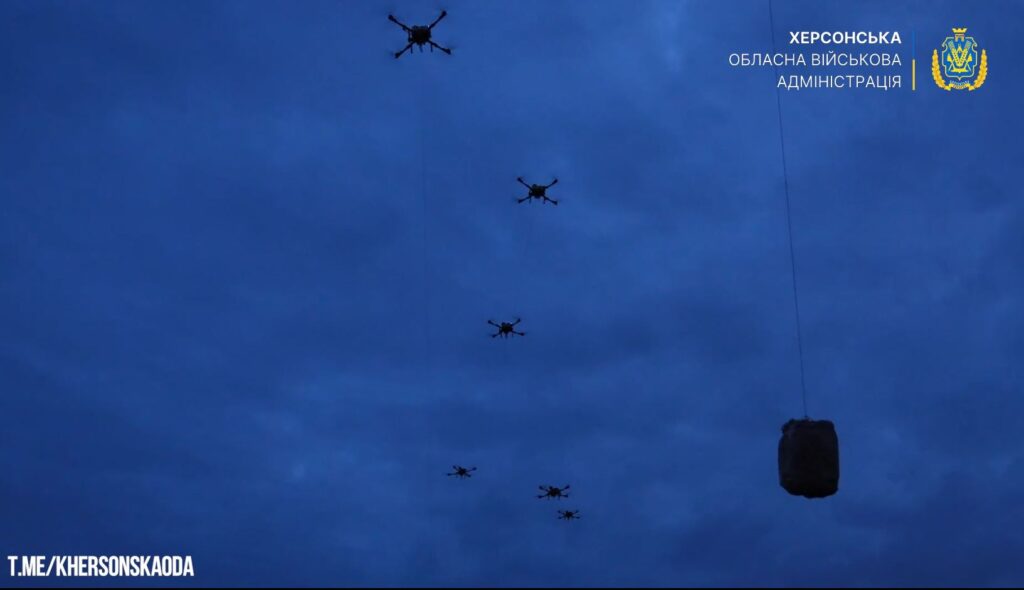
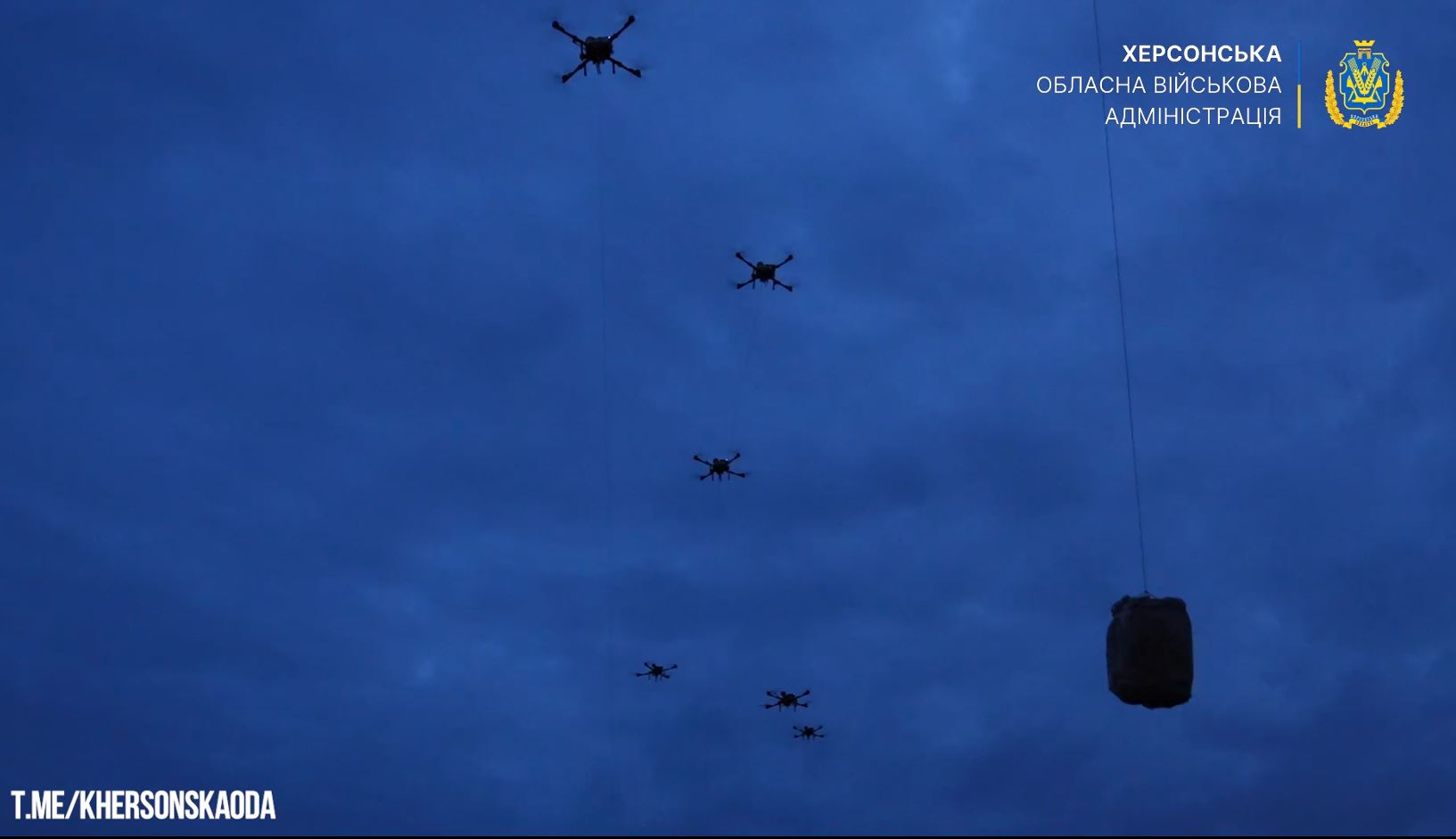
Drones carry food packages across the Dnipro to starving residents of Russian-occupied Oleshky, Kherson Oblast, September 2026.
Drones carry food packages across the Dnipro to starving residents of Russian-occupied Oleshky, Kherson Oblast, September 2026. Screenshot: Kherson Oblast Military Administration via Telegram

Picierno, who left Italy’s Democratic Party in June and joined the Renew Europe group, has backed military aid to Ukraine, tougher sanctions on Russia, and Ukraine’s bid to join the EU, according to Liga.

A town Kyiv calls a “death trap”

On 16 October, Pope Leo XIV expressed deep concern to Putin about the situation in Oleshky. He asked for a truce so that food and medical aid could be delivered and civilians could leave voluntarily and safely.

Oleshky, Kherson Oblast, has been under Russian occupation since 2022, following Russia’s capture of the city during the initial phase of its full-scale invasion of Ukraine.
Oleshky, Kherson Oblast, has been under Russian occupation since 2022, following Russia’s capture of the city during the initial phase of its full-scale invasion of Ukraine. Photo: Dmytro Lubinets

A day later, Ukraine’s Foreign Minister Andrii Sybiha urged the UN and the International Committee of the Red Cross to help evacuate residents.

“Russians are trying to turn the Ukrainian town of Oleshky into a death trap,” Sybiha wrote. “Dozens of bodies lie in the streets or in homes, as Russians forbid residents from burying them.”

Ukraine has flown tons of food into the town by drone. Russian troops seize some of the parcels and accuse the people who receive them of cooperating with Ukraine, local officials say. A resident said eggs there cost nearly 20 times the US price.

Drones carry food packages across the Dnipro to starving residents of Russian-occupied Oleshky, Kherson Oblast, September 2026.
Explore further

Russia holds 2,000 people hostage in Oleshky without food or water—Ukraine flew 4,000 kg of food to locals across the Dnipro

Evacuation talks “moved forward”

Talks with Russia on a ceasefire and evacuation are at the stage of “agreeing the final details,” Ukraine’s human rights ombudsman Dmytro Lubinets said on 18 October. He estimated that about 6,000 civilians, including up to 200 children, remain in Oleshky and six nearby settlements. He gave no timeline.

On 20 October, President of Ukraine Volodymyr Zelenskyy said Ukraine was doing everything it could to help people in Oleshky, calling the situation there “simply terrible.”

  •  

Diego Maradona’s Debut: 50 Years Since Football Changed Forever

(FILE) "From Comunicaciones Stadium, where we trained, I ran to tell my parents that the next day it was my debut. I told Tota (his mother) and two seconds later in Fiorito everyone already knew", remembered Diego Maradona about that day. Photo: El Grafico.

Fifty years ago today, on October 20, 1976, a 15-year-old Diego Armando Maradona played his first professional match for Argentinos Juniors, coming on at halftime against Talleres de Córdoba and beginning a career that would reshape world football.


The date is described in the report as a milestone in the history of international sport. The young talent from a popular neighborhood like Villa Fiorito stepped onto the pitch to play the second half of the match, which Argentinos lost 1-0 at its stadium in La Paternal, Buenos Aires.

Diego Maradona was 15 years, 11 months and 20 days old, ten days short of his 16th birthday, which made him the youngest player to debut in Argentine football.

RELATED: Lionel Messi’s Emotional Farewell: “This Jersey Was My Dream, My Pride and My Life”

Other accounts of the day, including a longer retrospective published in Argentina, put the crowd at between 7,000 and 8,000 people and say Maradona nutmegged defender Juan Domingo Patricio Cabrera on his first touch of the ball, a detail that comes from Maradona’s own memoirs.

A Debut Full of Promise

Although the result went against his team, Maradona’s arrival offered immediate signs of his technical quality. His control of the ball stood out, as did his nerve in running at defenders despite his age. Nobody in the stadium that afternoon could have measured the scale of what they were witnessing, but the signs were already visible.

Coach Juan Carlos Montes brought on the teenager in place of midfielder Rubén Giacobetti at the start of the second half. Diego Maradona wore the number 16 shirt. Montes told him to play as he knew how and to nutmeg the first opponent he faced. Maradona later wrote that he did exactly that, passing the ball between the legs of defender Juan Domingo Patricio Cabrera. The crowd responded with “olés,” according to his memoirs.

Un día como hoy debutaba Diego Armando Maradona en primera pic.twitter.com/3PJUMDi7ME

— Expe (@Expefutbol) October 20, 2026

Text reads: “On a day like today, Diego Armando Maradona made his debut at First Division.”

From Cebollitas to Legend

Diego Maradona came through the club’s youth ranks, including the famous children’s side known as “Los Cebollitas”, and had been building great expectations through his performances at junior level. His entry into the top category was the start of a professional career that would later bring him numerous domestic and international titles and turn him into an emblematic figure and a popular reference point in global sport.

His career would later shine brightest on the world stage, particularly in the 1986 World Cup triumph in Mexico, where his talent and control of the ball defined an entire tournament.

Maradona’s first match ended in defeat, and by his own later account he knew he was beginning something important. In the following weeks he moved from the bench to a regular place in the starting lineup, according to the longer retrospective, and went on to become the league’s top scorer in several consecutive tournaments.

But the first page had been written. A 15-year-old walked onto the pitch in the red of Argentinos Juniors, replaced a teammate at the break, and began a story that still commands attention five decades on.

On this day, 20 October 1976

Exactly 50 years ago, a 15 year old Diego Armando Maradona made his professional debut for Argentinos Juniors against Talleres.

He came on at half-time wearing the No. 16 shirt.

He was still 10 days away from his 16th birthday.

And with the first… pic.twitter.com/HNUXh24OqP

— Common Man Files (@CommonManFiles) October 20, 2026

The date is recalled not for the result, but for what it announced. It was the moment a career began that would reshape the dynamics of football and reaffirm the importance of youth development in the sport across the region.

The work done in the club’s academy, the patience of those who formed him, and the talent that needed no introduction all converged on October 20, 1976. A modest afternoon in La Paternal, in a game lost, became the first step in one of the most celebrated careers in the history of the football around the world.

  •  

Russia resumes diesel exports to Türkiye, Brazil, after Trump lifts sanctions on fuel supplies, boosting Moscow’s war revenue – Reuters

A Russian oil tanker, illustrative image. Photo via Wikimedia.

Russian diesel shipments are returning to Türkiye and Brazil after Moscow lifted its export ban and the US temporarily suspended sanctions on Russian fuel supplies, Reuters reported on 20 October, citing shipping data from Kpler and LSEG.

The resumption of exports gives Russia another source of revenue to support its war against Ukraine, allowing Moscow to profit from fuel sales despite the domestic shortages that prompted its export ban. The US sanctions relief is helping Russia restore access to international buyers while its full-scale invasion continues.

According to Reuters, at least two tankers carrying Russian diesel have departed the Baltic port of Primorsk for Türkiye and Brazil in recent days. Each vessel is carrying around 300,000 barrels, according to Kpler data cited by Reuters. Morocco has also resumed importing Russian diesel since the export ban was lifted.

Russia ended its self-imposed diesel export ban on 9 October after reaching a deal with US President Donald Trump to resume fuel supplies to global markets. Moscow had introduced the ban to address domestic shortages triggered by Ukrainian drone attacks on Russian oil refineries.

Those supply problems have not been resolved, but the US temporarily lifted sanctions on Russian fuel supplies as part of the deal, allowing Moscow to prioritize export opportunities despite domestic shortages. EU and UK embargoes on Russian fuel imports remain in force.

Russian diesel exports remain below last year's levels

Russian diesel exports averaged around 345,000 barrels per day in 2026 so far, down 41% from the previous year, according to shipping data cited by Reuters. Exports had already fallen during the summer before Moscow imposed its ban.

Türkiye accounted for around 34% of Russian diesel loadings this year, followed by Brazil at 24% and Morocco at 10%, Kpler data showed.

Trump said Russia would initially export 300,000 metric tons of diesel, followed by 500,000 tons in November and 1 million tons afterward. Russian Deputy Prime Minister Alexander Novak said Moscow could raise exports to as much as 3.5 million metric tons per month by the end of the year.

US seeks to ease diesel prices

The deal comes as Trump seeks to present a picture of bringing down diesel prices ahead of the US midterm elections on 3 November. Fuel prices have risen amid disruptions to global energy supplies caused by Trump's war with Iran, which has shaken oil markets and raised concerns about supply routes.

Trump has blamed Ukraine's attacks on Russian oil infrastructure for driving up energy prices, despite the broader market disruption caused by his war with Iran. The Russian diesel deal offers a way to increase global fuel supplies, but also allows Moscow to earn revenue from exports while its war against Ukraine continues.

However, the volumes from Russia initially outlined by Trump would cover only a small share of the global supply shortfall. 

Trump Putin meeting in Alaska
Explore further

Trump says Russia agreed to supply millions of tons of diesel to US and global markets as he blames Ukraine for fuel price hikes driven by Iran war

  •  

US restores ballistic missile warnings to Ukraine after a week without advance notice before Russian attacks, Zelenskyy says

Ukrainian President Volodymyr Zelenskyy, 20 October 2026. Photo: Zelenskyy / Telegram

Ukrainian President Volodymyr Zelenskyy said the US has restored intelligence sharing with Ukraine, including advance warnings of Russian ballistic missile launches, following talks with US Secretary of State Marco Rubio.

The lack of advance warnings came amid reports that the Trump administration had threatened to suspend intelligence sharing and weapons supplies unless Kyiv halted attacks on Russian oil refineries. US intelligence usually alerts Ukraine to ballistic missile launches before air raid sirens sound, giving the country time to warn civilians and prepare its air defenses. Russian ballistic missiles can reach Kyiv within minutes, making early notice critical to protecting lives.

Zelenskyy made the announcement on 20 October during a press conference broadcast by Suspilne. He said he had spoken with Rubio earlier that morning while traveling to Oslo, discussing intelligence, Starlink satellite communications, missile interceptors, and Patriot air defense systems.

“We discussed sensitive issues, including Starlink, interceptors, which are very important, and intelligence. We were very specific; the conversation was very positive,” Zelenskyy said.

He added that he plans to speak with Rubio again within the next 48 hours.

On 18 October, Zelenskyy also said that US warnings had returned, which turned out not to be true as Russian ballistic missiles hit Kyiv that evening before air raid sirens sounded.

Kyiv went days without advance warnings of Russian missiles

The warning gaps began with Russian ballistic missile attacks on Kyiv on 12 October and continued through 19 October. During the attacks on 12 and 13 October, Ukraine received no advance warning from its partners, with air raid alerts sounding only after the attacks had begun.

The problem persisted during subsequent attacks. Overnight on 18–19 October, Russia attacked Kyiv in two waves. Ukrainian Air Force spokesperson Yurii Ihnat said no warning arrived before the first wave, around 23:00. Information arrived before the second wave, around 03:00, but left little time to respond.

Advance intelligence on ballistic missile launches is particularly important because these missiles can reach their targets within minutes, leaving little time for civilians to seek shelter.

Washington denies suspending intelligence sharing

US President Donald Trump previously denied that Washington had stopped sharing intelligence with Ukraine, despite the missing warnings. Secretary of State Marco Rubio also rejected claims of a suspension, pointing to a software problem in Ukraine's early-warning system. 

However, the disruptions came amid reports that the Trump administration had threatened to suspend intelligence sharing and weapons supplies unless Kyiv halted attacks on Russian oil refineries. The Financial Times reported that Washington was pressuring Ukraine to stop the strikes as part of efforts to secure an energy truce with Russia. 

Ukraine temporarily paused attacks on Russian refineries but said Moscow continued striking Ukrainian energy infrastructure.

Zelenskyy's latest statement indicates that advance ballistic missile warnings are reaching Ukraine again, although the recent gaps have raised questions about the reliability of a capability critical to protecting civilians.

  •  

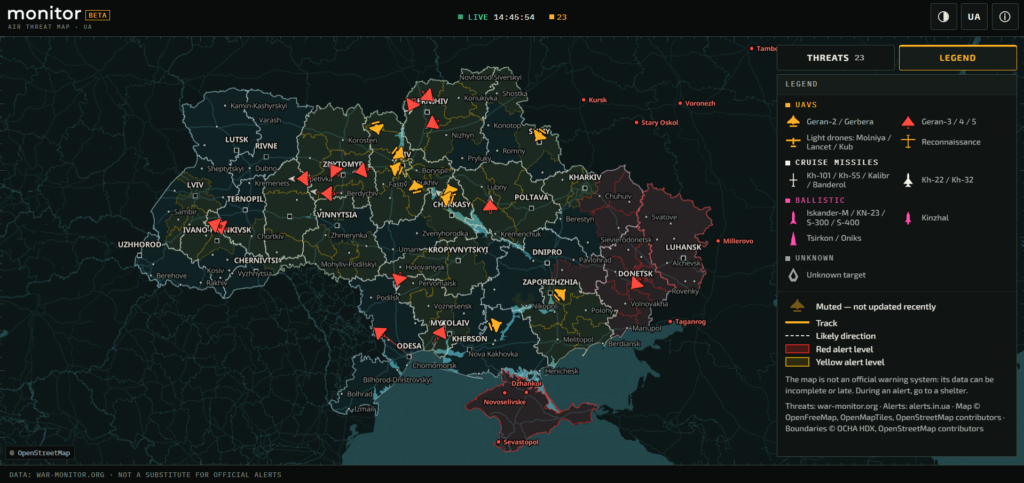
Is a Russian drone near you right now? Ukrainians have developed maps that track drones in near real time

Screenshot from the Monitor map used to track aerial targets.

Ukrainians can now check a free live map of where Russian attack targets are flying, a Ukrainian air-threat monitoring project called monitor announced on X on 13 October. The beta pulls public reports of drones in flight into a single view and lays them over official air raid alerts.

Russia now flies jet-powered drones, and some switch off their engines before an attack and glide in. Over a hundred drones can arrive in one night. Yet since September, drone-only yellow alerts in some Oblasts no longer shut everything down. So during drone alerts, some Ukrainians now stay at their desks rather than in shelters. The new maps offers them a quick look at the sky from a phone, even on a weak signal.

What the map shows

The launch post described the service as one that tries to show where each target is, using open sources and algorithmic processing. It said the beta focuses on drones, with other targets to follow.

Screenshot from the Monitor map used to track aerial targets.

The drone data does not come from radar. The service draws on regional Telegram channels that post where drones and missiles are flying over their own oblasts. It cross-checks those posts to estimate what each target is, roughly where it is, and where it is heading, the project explains. The same page already lists cruise and ballistic missiles among the targets. It also says the map is free, ad-free, and needs no registration, and that it runs in a browser or on Telegram, designed to work on a phone with a weak signal.

A target log lists each drone’s district and course. Alert data comes from alerts.in.ua, and areas under alert turn red or yellow. The map refreshes about every 20 seconds while targets are airborne.

Screenshot from the Monitor map used to track aerial targets.

However, the developers warn that the dots are only estimates and show up late. Some targets slip through untracked. That is why “an empty map does not mean you are safe,” they wrote. When sirens sound, they urge people to rely on official signals and take shelter.

On 17 October, the Defense Ministry said that Ukraine’s Air Alert app now maps the approximate position and heading of some targets. These include cruise missiles, Banderol drone-launched missiles, and Shahed-type drones. The data comes straight from the Air Force over secure channels.

Screenshot from the Air Alert! map used to track aerial targets.

For security reasons, it carries no exact coordinates or real-time tracking and may lag. Ballistic missiles and anything faster than 2,000 km/h don’t appear at all. The ministry’s advice matches monitor’s: get to a shelter first, then check the map from there.

  •  

Russia has been “fine” toward Ukraine, Trump says, on the same day a Russian drone killed a one-year-old in a public park

trump's just removed seven russians two ships turkish firms its sanctions blacklist · post president donald trump greets russia's vladimir putin 15 2025 joint base elmendorf-richardson alaska (ap photo/julia demaree

US President Donald Trump said Russia has been “fine” toward Ukraine and suggested Kyiv should appoint someone else other than President Volodymyr Zelenskyy to negotiate on its behalf, even as Russian forces continue attacks across Ukraine and Washington faces questions over its support for Kyiv.

His comments came as Russia continues striking Ukrainian cities and infrastructure, with regular attacks killing civilians and damaging residential buildings and energy facilities. Russia has waged a violent war against Ukraine for more than 12 years, seeking to seize Ukrainian territory and undermine the country’s sovereignty, with widespread violence, grave human rights abuses, and killings of civilians throughout the conflict.

Speaking to reporters on 19 October, Trump said Zelenskyy should have settled the war long ago and could have secured a better deal by following his advice. He accused the Ukrainian president of not doing enough to end the war, claiming that Zelenskyy did not want to stop the fighting. Trump said he wanted the war to end and argued that Russia had “been fine” toward Ukraine, adding that Moscow “hasn’t been doing much.”

On the same day, a Russian drone struck a park near a cafe in Kharkiv Oblast, killing six people, including a 14-month-old girl killed in her stroller and an 11-year-old girl. Another 14 people were injured, including six children, according to Ukrainian officials.

russian drone kills six kharkiv oblast park including mother 14-month-old stroller hours later ukraine shows photos senators · post anhelina killed attack inna died hospital 19 2026 nova vodolaha killed_in_kharkiv_oblast
14-month-old Anhelina, who was killed in a Russian attack on a park in Kharkiv Oblast. Her mother, Inna, later died in the hospital. 19 October 2026, Nova Vodolaha. Photo: National Police of Ukraine

Russian attacks intensify as Kyiv loses advance warnings

Russian attacks across Ukraine have intensified in recent months, with large-scale drone strikes, missile attacks, and repeated hits on energy infrastructure. The attacks have killed civilians, damaged homes and businesses, and disrupted electricity and other essential services.

Kyiv has faced repeated Russian ballistic missile attacks without the advance warnings Ukraine normally receives from international partners. The latest attack on 19 October again raised concerns about gaps in warning time, leaving residents with little time to reach shelter.

kyiv attack
A building in Kyiv damaged in the Russian ballistic missile attack overnight on 19 October 2026. Photo: State Emergency Service of Ukraine in Kyiv

The repeated gaps have fueled concerns about Ukraine’s access to intelligence amid reports of restrictions on some US support. Ukrainian officials warned that missing launch data could weaken the country’s ability to detect incoming ballistic missiles, while Washington denied halting intelligence sharing.

Republicans push back against Trump's Russia policy

Trump's approach has drawn criticism from members of his own party, particularly over his decision to ease restrictions on Russian energy exports and his broader efforts to reach an agreement with Moscow, according to POLITICO.

Republican lawmakers have questioned whether easing pressure on Russia will help end the war or instead give the Kremlin additional revenue and leverage while its military continues attacking Ukraine. The dispute has exposed divisions within the party over how to handle Putin and the future of US support for Kyiv.

The sanctions relief followed a broader push toward economic engagement with Moscow. On 18 October, Trump's envoys Steve Witkoff and Jared Kushner had urged Zelenskyy in September to consider restoring Russian gas transit through Ukraine as part of a potential peace deal.

The proposal would revive a trade that Europe has spent years reducing because of its dependence on Russian energy. Renewed Russian energy exports could provide Moscow with additional revenue while its war against Ukraine continues.

Trump on Ukraine:

Maybe it's time for Zelensky to get somebody else to negotiate. pic.twitter.com/BA5kKSuONC

— Clash Report (@clashreport) October 19, 2026

Pressure on Kyiv as Washington considers closer ties with Moscow

Trump's comments add to tensions between Washington and Kyiv over the terms of a potential peace agreement and the level of US support for Ukraine. His suggestion that Ukraine change its negotiator raises further questions about whether his administration is willing to accept Kyiv's position in talks over its own future.

Zelenskyy has urged Washington to maintain pressure on Moscow rather than offer economic concessions. Ukrainian officials have also called for continued military assistance, particularly air defense systems, as Russia continues its campaign against Ukrainian cities and critical infrastructure.

The contrast between Trump's description of Russia's conduct and the situation on the ground remains stark. While Trump says Moscow has behaved relatively decently, Russian forces continue to launch attacks that kill civilians, damage homes, and threaten Ukraine's energy supply. The lack of advance warning before recent ballistic strikes on Kyiv has added to concerns about the consequences of reduced or unreliable US support.

  •  

A diesel tank burns at Transneft’s Druzhba hub as Ukraine keeps striking Russian energy despite Trump’s pressure

diesel tank burns transneft’s druzhba hub ukraine keeps striking russian energy despite trump’s pressure · post fire nikolskoye oil fuel pumping station russia’s tambov oblast after drone attack 20 2026

Drones attacked an oil and fuel pumping station of Russia’s Druzhba pipeline system in Tambov Oblast overnight on 20 October, setting a diesel tank on fire, Ukrainian monitoring channel Exilenova+ reported, citing locals. Druzhba, Russian for “friendship,” is a Soviet-era oil pipeline, about 4,000 km long, that carries Russian crude west to Europe, including through a branch that crosses Ukraine. The struck station is on its Russian section. Tambov Oblast Governor Yevgeny Pervyshov confirmed a fire at an unnamed enterprise in Michurinsk district after what he called a Ukrainian drone attack. The station lies about 400 km from the front line.

Ukraine has spent months striking the refineries, terminals, and pipelines that fund Russia’s war, and its Defense Ministry says the strikes have knocked out more than half of Russia’s refining capacity. Washington wants them stopped. US officials reportedly tied intelligence sharing to a halt in refinery strikes, and US President Donald Trump called their resumption “a disgrace.”

Hours of attack before dawn

Russia’s regional alert system declared a drone threat at 03:38, Ukrainian military outlet Militarnyi reported. By 06:25, Exilenova+ said the Nikolskoye station was under attack, after Michurinsk had been under attack for several hours.

The Nikolskoye fuel pumping station in Russia’s Tambov region is under attack. pic.twitter.com/cA64vMgjsM

— Exilenova+ (@Exilenova_plus) October 20, 2026

Pervyshov said four Ukrainian drones were shot down over the region and no one was hurt. He did not name the site.

More footage from the Nikolskaya oil pumping station. Locals report that a tank containing diesel is on fire. pic.twitter.com/1jvbxSuGHo

— Exilenova+ (@Exilenova_plus) October 20, 2026

Ukraine has not commented. The General Staff’s 20 October list of overnight strikes does not mention Tambov Oblast.

The Nikolskoye oil and fuel pumping station in Russia’s Tambov Oblast, which drones attacked on 20 October 2026.
The Nikolskoye oil and fuel pumping station in Russia’s Tambov Oblast, which drones attacked on 20 October 2026. Map: Militarnyi/ESRI

A Druzhba fuel hub hit before

The Nikolskoye station belongs to Transneft, Russia’s state pipeline operator. It stores and pumps crude oil and refined fuels, including diesel, gasoline, and jet fuel. The complex has three tank farms and two pumping stations, and it can move up to 300,000 tonnes a day, according to Current Time.

Ukrainian drones hit a station of the same hub in August 2025, and Ukraine’s General Staff said then that pumping on the pipeline had stopped completely.

Strikes resume despite US pressure

Ukraine paused refinery strikes for three days after Trump announced an “energy ceasefire” on 11 October, while Russia fired 39 ballistic missiles at Ukraine’s grid. Since Kyiv resumed the strikes, drones have also hit an oil terminal and a fuel depot in St. Petersburg.

Kyiv reads other US moves as pressure too, from missed warnings of Russian ballistic launches to a Starlink cap that slows Ukrainian drones. President of Ukraine Volodymyr Zelenskyy told US senators he had offered a 30-day halt on refinery strikes in exchange for Patriot interceptors, but Trump’s envoys showed no openness.

  •  

Russia’s Rubicon hunts Ukrainian drone pilots. In Vivaldi, it became the target, and its morale fell sharply, says the Ukrainian general

russia's rubicon built hunt ukrainian drone pilots vivaldi became target its morale broke says general · post left right major dmytro rohoziuk acting commander ukraine’s third army corps; brigadier andrii

Russia’s Rubicon drone unit, which is sent to hunt Ukrainian drone pilots, was not used to being hunted itself, Brigadier General Andrii Biletskyi told journalists on 19 October. He was summing up Operation Vivaldi, which his Third Army Corps fought in northern Donetsk Oblast from May to mid-October. Once its pilots realized they were being killed, Rubicon’s morale dropped sharply, he said.

Russia has fought for 12 years to take all of Donetsk Oblast, and Sloviansk and Kramatorsk anchor the fortress belt of cities Ukraine still holds there. Vivaldi retook 277 km² in northern Donetsk Oblast. Biletskyi says it destroyed Russia’s bridgehead on the Chornyi Zherebets River and forced Moscow to drop its plan to bypass Lyman from the north and encircle the two cities. On that front, the Third Corps had flagged Rubicon, Russia’s elite drone unit, as a threat.

Hunting the hunters

Once a Rubicon position was found, the Third Assault Brigade and the KRAKEN drone regiment committed any number of FPV and bomber drones to destroy its crews, Biletskyi said.

The brigade’s commander, Yaroslav Levenets, said his troops prepared for Rubicon’s arrival and concentrated on killing its pilots. He gave no details.

“Not stable in defense,” Levenets said of Rubicon’s troops.

They dislike sitting in trenches, he said, and under pressure they grow nervous and change positions.

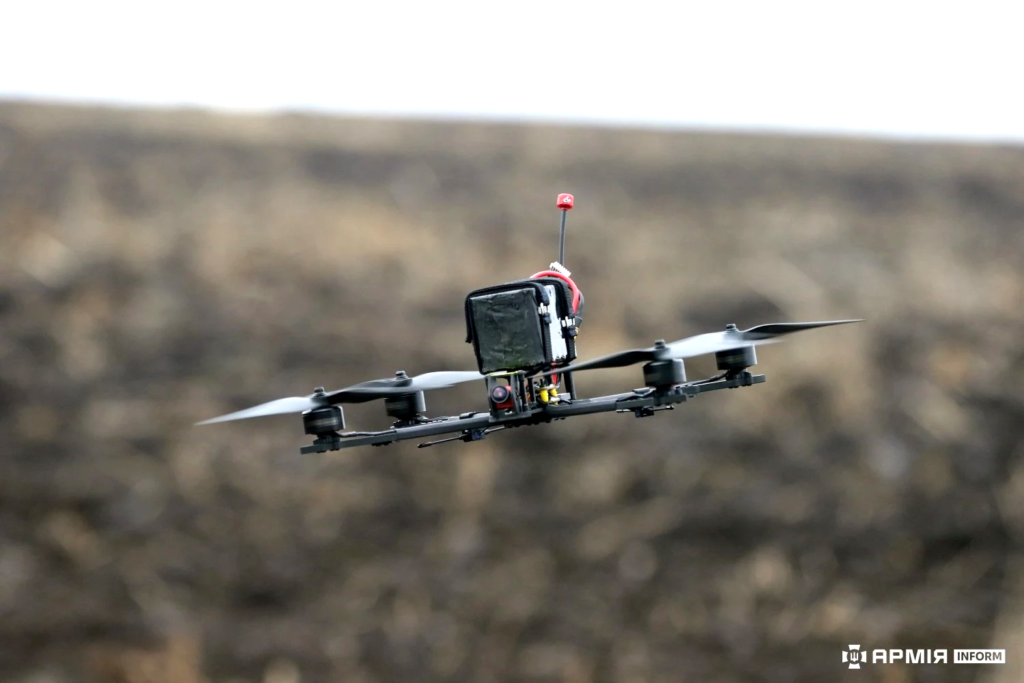
An FPV drone.
An FPV drone. Illustrative photo: ArmyInform

Named for four seasons

Biletskyi said the name was chosen at the very start of planning, in winter 2025–2026, many months before the operation began. The original plan had four stages, one for each season, and later grew to slightly more, ArmyInform reported.

When he first unveiled the operation in September, he put it this way:

“Vivaldi, as is known, has four seasons. And this is only the first one.”

He credited two planners, known by the call signs Yurist and Leshyi. Leshyi, an assault soldier wounded seven times who later moved to staff work, was killed. Yurist was seriously wounded.

Ukraine's Third Army Corps commander Brigadier General Andrii Biletskyi announcing new developments in "Operation Vivaldi," 20 September 2026. Screenshot from video: Ukraine's Third Army Corps
Explore further

Ukraine blocks Russia from outflanking its fortress cities in Donbas, retaking 277 square kilometers and hitting 8,000 Russian troops

A new hand at the Third Corps

Major Dmytro Rohoziuk is now acting commander of the Third Army Corps, the corps press service said on 20 October. The press service said the move is not a transfer, and Biletskyi keeps his formal post as corps commander while he leads the “Center” grouping of the Third, 11th, and 19th corps.

Major Dmytro Rohoziuk, acting commander of Ukraine’s Third Army Corps.
Major Dmytro Rohoziuk, acting commander of Ukraine’s Third Army Corps. Photo: Armed Forces of Ukraine

Rohoziuk took over the 60th Mechanized Brigade in October 2025. Its previous commander was arrested in January after the State Bureau of Investigation accused him of embezzling about $1 million in weapons procurement. The brigade fought in all four phases of Vivaldi and retook Kolodiazi without street fighting.

Ukrainian troops capture a Russian infiltrator carrying a Russian flag during Operation Vivaldi in northern Donetsk Oblast.
Ukrainian troops capture a Russian infiltrator carrying a Russian flag during Operation Vivaldi in northern Donetsk Oblast. Photo: Third Army Corps

Biletskyi also declined command of the Ground Forces, which oversee mobilization.

“There’s no point taking on something you don’t truly believe you can improve,” he said.

Biletskyi’s count

Russian losses in Vivaldi topped 8,000 troops, and about 270 Russian soldiers were taken prisoner, Biletskyi said. More than 20 officers surrendered, including a chief of staff and three company commanders.

The territory matters less than disrupting Russia’s strategic plan, he said. Russian forces still press toward Dobropillia, where Ukraine is counterattacking.

  •  

Cristiano Ronaldo Suspended 30 Days and Fined €255 for Leaving Portugal Camp

Cristiano Ronaldo received a slight sanction from the Portuguese federation after leaving the team's concentration. Photo: AFP.

Cristiano Ronaldo has been handed a 30-day suspension and a €255 fine by the Portuguese Football Federation (FPF) for leaving Portugal’s training camp after a dispute with coach Jorge Jesus, a punishment that will expire in time for him to be available for the national team’s November matches.


The disciplinary council of the Portuguese Football Federation (FPF) imposed the punishment on Monday and confirmed that Ronaldo admitted the accusation in full.

Ronaldo walked out of the squad’s camp in Copenhagen on September 30, the day Portugal faced Denmark in the UEFA Nations League.

RELATED: FIFA Drops Private Investment Plan, Infantino Proposes $6.35B Program

Ronaldo’s stated reason was that coach Jorge Jesus had twice broken his word about his role in the team, after he did not come on in the match against Norway, where he was a substitute. Jesus denied having reached an agreement with Ronaldo but left the door open to his return after Portugal’s 2-1 victory on September 27.

The rules allow a suspension of one to six months, but the ceiling drops to three when a player accepts responsibility. Ronaldo did, and his 30-day ban reflects that admission. Alongside the ban, the council ordered him to pay 255 euros, a sum worth about 285 dollars.

Cristiano Ronaldo has been fined €255 (£215; $286) and given a 30-day suspension after exiting the Portugal national team camp early.

Full story from @jacklang ⬇️https://t.co/U888ZlAlwr pic.twitter.com/FVFaiKpiK5

— The Athletic | Football (@TheAthleticFC) October 19, 2026

Minimum Penalty Applied

The disciplinary body determined that Ronaldo intentionally committed an infringement under article 160, paragraph 1, of the federation’s regulations. The procedure opened on October 9, based on facts reported two days earlier. His suspension was counted from September 30, the day he left, so he has already served 19 days and has 11 remaining. In practice, he was sidelined from the moment he abandoned the camp, well before Monday’s formal ruling.

In its statement, the disciplinary committee said Ronaldo “did not previously communicate or justify, before the person responsible for the FPF or the national team, his intention to abandon” the concentration on September 30. The former Real Madrid striker later told Federation President Pedro Proença that he was not “in emotional conditions to continue.”

A few days after leaving, Ronaldo posted a lengthy statement on his official Instagram account explaining his reasons and asking fans to believe him: “Believe me, this is the pure truth.”

“Despite the absolute lack of trust in the coach’s word, as anyone who witnessed these conversations can attest, I should not have done it. The responsibility is exclusively mine,” he said.

Ronaldo received the minimum penalty provided by the FPF’s rules. For abandoning national team activity, the regulations call for a penalty of between one and six months, although the maximum in this case would be reduced to three months because the player admitted guilt.

Return Possible in November

The timing of the ban means Ronaldo will be eligible for Portugal’s next Nations League fixtures against Denmark and Wales on November 14 and 17. Both the captain and the coach have left the door open for his inclusion in that squad. With only 11 days of the suspension left, the 41-year-old could rejoin the group before those matches.

The sanction resolves a dispute that had hung over the national team since the September window. Portugal beat Norway 2-1 in that period, with Ronaldo watching from the bench. He departed before the following match against Denmark and played no part in either fixture. His absence, however, did not settle the questions about his relationship with the coach, which the federation has now addressed through its ruling.

For Ronaldo, the outcome is a light one. The 255-euro fine is a small sum for a player of his profile, and the suspension expires before his country’s next competitive matches. The federation acted at the lowest end of its disciplinary scale, allowing the captain to return without missing further competitive action. Portugal’s November fixtures will now show whether the dispute is truly closed or merely paused.

  •  

Energy Secretary Miatta Fahnbulleh Attacks Mahmood’s Migrant Crackdown

Energy Secretary Miatta Fahnbulleh has attacked Shabana Mahmood's migrant crackdown, saying making foreign nationals wait threatens "integration", deepening the split within Andy Burnham’s Cabinet about border controls.

The post Energy Secretary Miatta Fahnbulleh Attacks Mahmood’s Migrant Crackdown appeared first on The Daily Sceptic.

  •  

Fifteen months ago, Ukraine’s online arms store for front-line units didn’t exist. Now, it delivers 1 in 5 drones that state buys

fifteen months ago ukraine's online arms store front-line units didn't exist now delivers 1 5 drones state buys · post ukrainian soldier drone 658142610_1298690549110687_5343675139334166676_n ukraine news reports

Ukraine has turned buying weapons into something closer to online shopping. One in five drones bought by Ukraine's Defense Procurement Agency now reaches troops through DOT-Chain Defence, a state digital marketplace established in 2025 that lets combat units order what they need directly, the Defense Ministry says.
Drone technology changes so fast that a weapon ordered through months of paperwork can be obsolete before it arrives, so Ukraine built a marketplace that puts the choice in the hands of the units that fight. Launched in July 2025, DOT-Chain Defence now serves more than 500 combat units.

Unlike the agency’s other channels, central competitive tenders and fixed procurement lists, the marketplace lets commanders pick from a catalog themselves. The system works like an online store, where the military spends state funds to decide exactly what the state supplies them.

From a catalog to the trenches in eight days

Speed is the point of the model. When an item is in stock, the average time from a unit’s order to shipment is eight days, rising to about a month and a half for pre-orders, the ministry notes.

“Delivery speed is especially important for unmanned systems, because technology in this field develops dynamically,” DOT-Chain Defence chief Artem Romaniukov says.

Also, he states that makers and soldiers constantly rework designs to beat new countermeasures.

The catalog spans the main types of unmanned aerial vehicles, FPV drones, bombers and fixed-wing aircraft, along with their munitions, ground robotic systems and electronic-warfare gear.

Who carries the paperwork now

The shift moves the burden off the fighters. A unit builds its own order in DOT-Chain Defence, and the agency handles the procurement side, signing contracts with manufacturers and making payments. That means that purchases are completed in a few clicks.

In the first nine months of 2026, Ukraine’s troops received more than a million drones and other equipment through this system, part of a drone-buying surge that reached about $8 billion in the first half of the year.

  •  
❌