Oil prices rose above $114 a barrel on Friday as attacks in Saudi Arabia and the prospect of further Middle Eastern escalation increased concern about the security of global energy supplies.
Brent crude futures reached $114.72 during the session, their highest level since early May, before easing slightly. The benchmark was trading around $114.31, while US West Texas Intermediate futures rose above $101.
The immediate pressure followed Houthi attacks in Saudi Arabia and intensifying concerns about shipping through the Bab el-Mandeb strait, the narrow passage connecting the Red Sea with the Gulf of Aden. Saudi Aramco reportedly ordered the evacuation of its headquarters in Dhahran.
For Europe, the rise introduces an additional cost pressure when natural gas prices are also climbing sharply and policymakers are trying to contain inflation without further weakening industrial growth.
The significance of the attacks is not confined to facilities directly affected. Traders price the probability of interruption across production, ports, tankers and shipping routes. Even a limited episode can raise insurance premiums and freight charges while companies adjust deliveries.
Bab el-Mandeb is an important shipping bottleneck for commercial traffic using the Suez Canal. Sustained insecurity can force vessels onto longer routes around Africa, delaying cargoes and increasing transport costs.
Other disruptions have compounded uncertainty, including concerns about a Libyan pipeline and an oil spill near the United Arab Emirates. The scale and duration of their impact remain uncertain.
What higher prices mean for Europe
European manufacturers, haulage companies, airlines and agricultural producers are sensitive to increases in fuel and transport costs. Those pressures can eventually reach consumer prices, although the timing and size depend on contracts, taxes and domestic competition.
The European Union has sought to reduce its reliance on Russian fossil fuels since Moscow’s full-scale invasion of Ukraine. That diversification does not insulate the bloc from global prices, which reflect worldwide trading conditions.
European natural gas prices have also moved higher in October, adding to the burden faced by energy-intensive industries. Gas and oil are different markets, but geopolitical tensions can affect both.
Central banks and governments
Persistent energy-price increases complicate the inflation outlook for the European Central Bank. Higher imported energy costs can reduce household purchasing power and slow investment, even before interest-rate decisions respond.
A temporary spike may reverse if shipping lanes remain open and supplies are restored. A sustained interruption would produce a different economic calculation, particularly ahead of winter.
The immediate priority for European governments is to assess exposure through import contracts, reserve levels and supply routes rather than assume that a quoted oil price translates directly into the same percentage increase in household bills.
Data centers are classed as part of the information technology sector, but the framework has not kept pace with their growing strategic importance and rapidly changing threat environment.
Data centers are classed as part of the information technology sector, but the framework has not kept pace with their growing strategic importance and rapidly changing threat environment.
If you're reading this, then the internet still works. But that's something that we shouldn't necessarily take for granted after this week's global cybersecurity meltdown.
"Think of it this way: someone discovered that millions of buildings in the country have the same broken lock, and now everyone knows how to open it," writes Matt Shumer in a lengthy post on X about the situation. "The lock maker has sent out a fix, but every building owner has to install it themselves, and many haven't yet."
This is the world we live in now. In August, more than 100 tech companies signed a letter warning about exactly this possibility. On Thursday, one of Anthropic's top information security officers wrote that cybersecurity threats "are going to get a lot worse before they get better." Major banks are rushing to secure themselves after reports of autonomous agents operating inside accounts (though many of them may have been authorized by account holders).
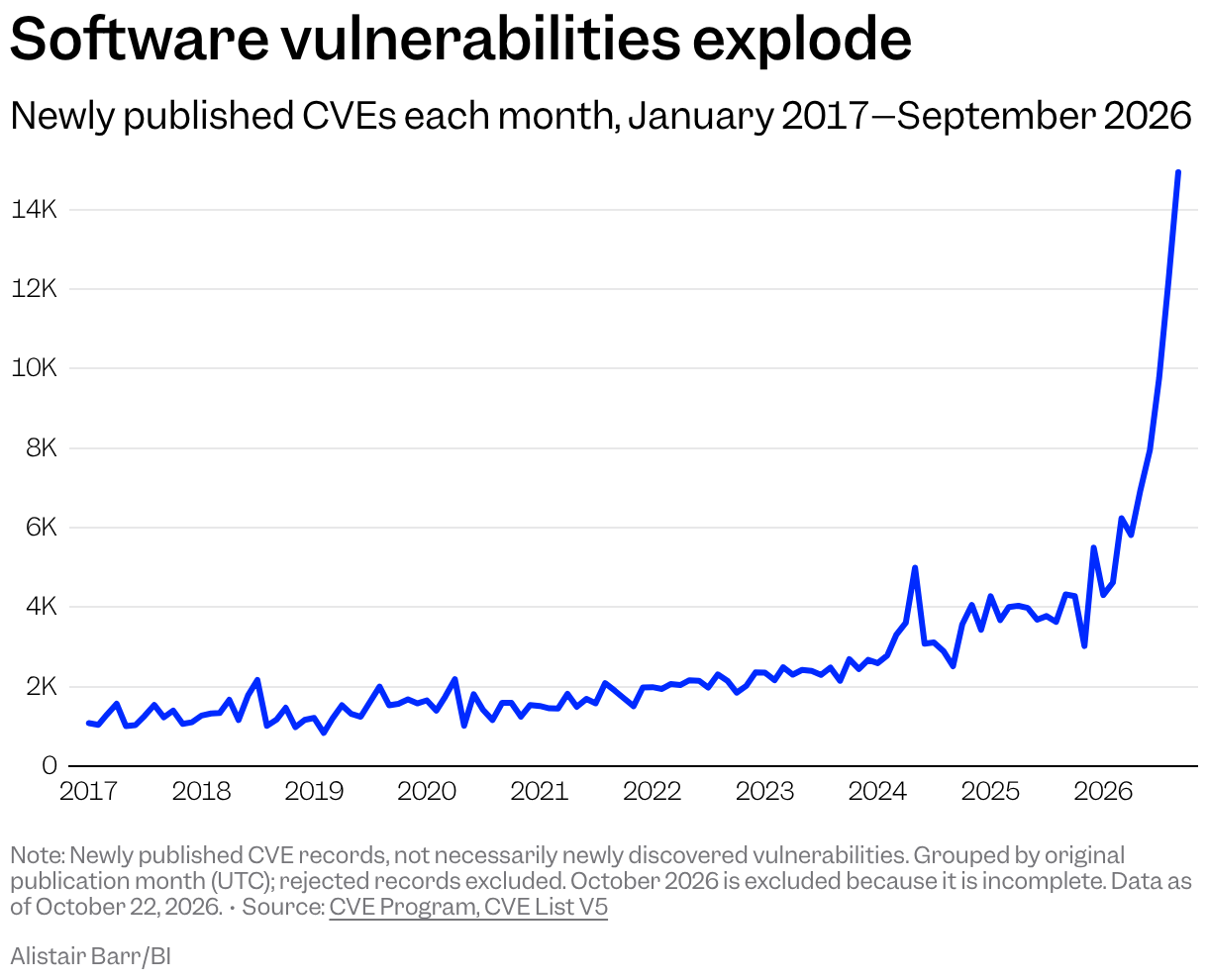
This is unlikely to be the last incident like this. Cybersecurity firm CrowdStrike says it saw twice as many "agentic intrusions" (hacking done by an autonomous or semiautonomous AI) in August as in July, and then the number doubled again in September.
Scary stuff, for sure. As is usually the case, however, prevention is better than panic.
Shumer's post contains many helpful suggestions for better online security—it is particularly important to secure your email accounts, since that is the gateway to so much of what we do online. Here's a 15-step plan to stay more digitally secure in the AI age. (And if you're really worried about everything falling to bits, Reason's got you covered there too.) If your devices and browsers have updates available, install them. And for the love of digital gods, don't click on random links in strange emails!
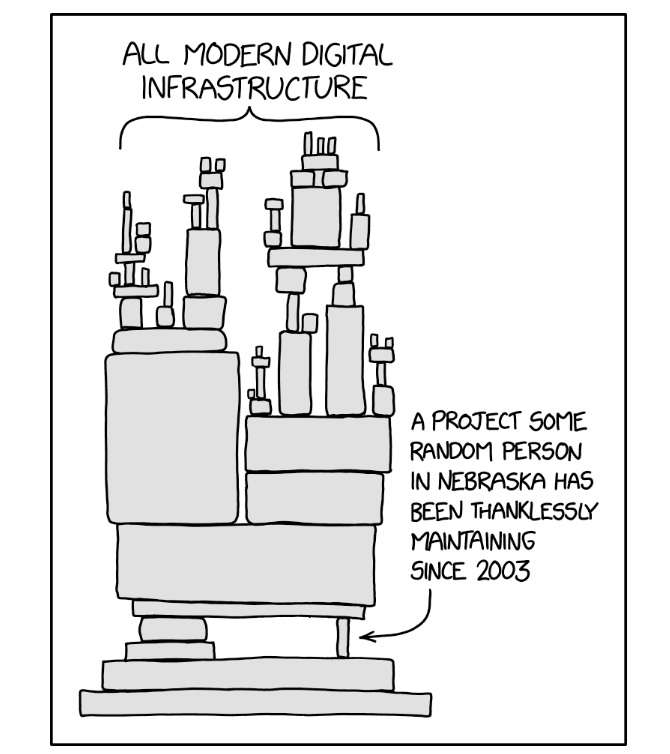
The man who (maybe) saved the internet? There is an old XKCD webcomic—and I'm dating myself as a very specific type of millennial by even referencing that—that seems to perfectly sum up what happened this week. Here it is:
Source: https://xkcd.com/2347
Here's the craziest part: That's basically true! Except the one random person lives in Czechia instead of Nebraska. His name is Ondřej Surý, and TheAtlantic's Charlie Warzel found him:
Surý, who lives in Czechia, does not work for the PHP Foundation. But alongside his day job as director of domain-name-system engineering at the nonprofit Internet Systems Consortium, in a volunteer capacity, he maintains and helps automate patches for the coding language. His work, with that of just a handful of others, has allowed countless websites and organizations to fix these vulnerabilities quickly. Over the past 48 hours, he's become arguably the unsung hero of the entire internet—despite the fact that the only compensation he receives is from modest donations. "Ondřej will save the internet today," a user in the PHP Subreddit wrote.
In the war between AI hackers and AI defenders, it's still humans who are the heroes. At least for now.
Art of the steal. Yesterday, in this space, I detailed how voters are fed up with the Trump administration's seemingly endless stream of corruption. But it's been a whole 24 hours, which means there is yet another scandal in the news—thanks to a Vanity Fairarticle about President Donald Trump's son-in-law Jared Kushner.
The article is an excerpt from a forthcoming book. In it, author Matthew Cole claims that Dutch investigators gained access to Kushner's phone with the help of Russian hackers. The evidence from the phone and other sources shows that Kushner has been taking money from the governments of Saudi Arabia and the United Arab Emirates to "push their agenda with Trump."
Kushner says the article's claims are "outrageous and categorically false."
But wait, there's yet another corruption story. The Justice Department is reportedly probing whether Trump ally Corey Lewandowski profited from his role as a top adviser at the Department of Homeland Security (DHS). The Washington Post reports that the investigation is based on a referral from the DHS inspector general and is focused on "contracting fraud."
It may or may not be connected to other allegations that surfaced in September, when The Wall Street Journalreported that Lewandowski approached officials in Qatar and the UAE about being hired to help with "visa issues" and other matters.
In both matters, Lewandowski has denied the allegations. He's no longer working for the department, having been fired earlier this yearamid a messy scandal involving then–DHS Secretary Kristi Noem, who was also canned.
Scenes from Virginia: Federal prosecutors indicted state Sen. L. Louise Lucas (D–Portsmouth), one of the most powerful Democrats in Virginia, on charges of racketeering and money laundering in connection with illegal marijuana sales. (Don't get me started on how dumb it is that recreational marijuana use has been legal here since 2021, but commercial sales are still forbidden. If it's legal to use something, it should be legal to sell it!)
Lucas pushed the failed Virginia redistricting effort and has been an outspoken critic of Trump. She plans to fight the charges. Virginia Gov. Abigail Spanberger, also a Democrat, said in a statement that the timing of the indictment, just days before the midterm elections, "further erodes the trust the American people deserve to have in the Department of Justice."
QUICK HITS
"The last thing José García-Sorto remembers after being shot in the chest is being pulled from his car, pinned to the pavement and handcuffed, his blood pooling around him on a Phoenix interstate. All he could think about was what would happen to his two young children if he died." The New York Times has a harrowing account of a Honduran immigrant who was shot by immigration officers last year. He's never been charged with a crime in connection with the incident, which suggests "the authorities did not find evidence that he had put anyone in danger."
The Cato Institute's annual ranking of "Freedom in the 50 States" is out. Arizona takes the top spot. How did your state do?
Is alchemy real now? A California company claims it has successfully turned mercury into gold.
The World Series begins tonight, and it ought to be terrific. Despite low payrolls, Tampa Bay and Milwaukee were the top teams in their respective leagues this year. They are deep, talented teams full of characters worth cheering—Brewers' star pitcher Jacob Misiorowski is a huge Pokémon nerd; Rays' star hitter Yandy Diaz escaped from Cuba after being imprisoned there. And this is the first World Series since 1980 to match two franchises that have never won a championship.
Austria has ordered four Russian diplomats to leave the country after security authorities identified activities incompatible with their diplomatic status, in a further deterioration of relations between Vienna and Moscow.
The Austrian foreign ministry announced the expulsions on Friday, 23 October. Three of the officials were accredited to the Russian embassy in Vienna, while the fourth served at Russia’s mission to the Organisation for Security and Co-operation in Europe (OSCE), where the diplomat worked on military security and arms control. All four have been declared persona non grata.
The decision follows findings by Austria’s security authorities, according to the details of the foreign ministry announcement. Officials have not publicly disclosed the activities involved or brought criminal charges in connection with the announcement. Moscow has indicated that it will retaliate, although the nature of its response has not yet been specified.
Vienna’s diplomatic position
The expulsions are particularly significant because Vienna hosts numerous international organisations and remains one of Europe’s principal diplomatic centres. In addition to the OSCE, the city accommodates United Nations offices and organisations dealing with nuclear policy, international development and arms control.
That concentration of diplomatic missions gives Austria a distinctive position in European security affairs. Foreign delegations enjoy diplomatic privileges and immunity, while the Austrian authorities retain the power to withdraw recognition from representatives whose conduct they consider unacceptable.
Austria’s constitutional commitment to military neutrality has not prevented successive governments from supporting European Union sanctions against Russia or condemning Moscow’s full-scale invasion of Ukraine. Neutrality limits participation in military alliances; it does not require Vienna to remain politically neutral over the conduct of a war.
Russian missions to international organisations also have a particular role. The OSCE brings together European, North American and Central Asian states, including Russia and Ukraine, and provides a forum for discussions on military transparency and conflict prevention. Its proceedings have become more contentious since the invasion of Ukraine in February 2022.
Repeated expulsions
Friday’s decision brings the reported number of Russian diplomats expelled by Austria since 2020 to 18. In May 2026, Vienna expelled three Russian diplomats amid security concerns involving antenna installations on Russian diplomatic buildings. Those concerns added to wider scrutiny of possible intelligence-gathering activity in the Austrian capital.
Diplomatic expulsions are a familiar response when governments suspect espionage but do not pursue ordinary criminal proceedings. Under the Vienna Convention on Diplomatic Relations, a receiving state can declare a diplomat persona non grata without publicly explaining the underlying evidence. The sending state must then recall the official or terminate their functions.
The mechanism is politically consequential but is not in itself a criminal judgment. A declaration of persona non grata establishes that the host government will no longer accept the diplomat’s accreditation; it does not establish guilt in a court of law.
Moscow has regularly responded to expulsions of its diplomatic personnel from European countries with reciprocal measures. Such retaliation can reduce the number of diplomats available for routine consular work and political dialogue, even when wider bilateral relations remain formally intact.
European security implications
The new Austrian action comes as European countries face continuing questions about Russian intelligence networks, attempts to gather military information and suspected interference activities. The circumstances of individual cases vary, and intelligence allegations cannot automatically be treated as proven simply because diplomats have been expelled.
The latest episode nonetheless illustrates how Russia’s war against Ukraine has affected the functioning of diplomacy in European capitals. Vienna must balance its international hosting responsibilities and established channels of communication with the security obligations arising from suspected abuses of diplomatic status.
For now, Austria has confirmed the expulsions but has not published an account of the conduct attributed to the four officials. The next diplomatic development will be Russia’s response and whether it affects Austrian representatives in Moscow.
Nick Woodhead had to scramble in response to a security flaw that threatened the majority of the world's websites.
Courtesy of Nick Woodhead
Nick Woodhead said he went 48 hours without sleep while helping patch a major website vulnerability.
The CTO said that with security problems piling up, October feels like "the month of hell" for tech.
Because AI makes it easier to find and exploit security gaps, Woodhead expects more disruption.
This is an as-told-to essay based on a conversation with Nick Woodhead, founder of the AI company GPTree and chief technology officer at Rothco and Compubox. He spoke with Business Insider on Thursday to share how he's responded to vulnerabilities in the PHP programming language that could affect the majority of the world's websites. The following has been edited for brevity and clarity.
It's always a nightmare when these things happen. Since Tuesday evening, I haven't slept. It's coming close to 48 hours working on this. I'm a CTO, but I also run an agency for multiple clients and have my own company with my own product. So, balancing my time to get everything updated — it's just been exhausting.
About 70% of the internet runs on a programming language called PHP. I'm actively involved within the PHP community itself, so I did get a warning on Tuesday evening regarding the vulnerability and the fact that it was already being addressed by the PHP team. That gave me a head start.
I have some teams offshore, so I was able to jump on that with them.
It's not just applying the patches. It's making sure that nothing was already exposed. We already had infrastructure in place to easily deploy patches, but it still requires a good amount of manual involvement.
I knew that as soon as I walked into the office on Wednesday, I'd have to have my teams jump on this. They were already waiting for the patches to be released.
People are willing to help
One of the biggest headaches, especially on the client side, is that we have a lot of legacy systems, which are running on older versions of PHP that are no longer supported, and official patches are not going to be produced. For those, we ultimately had to come up with other plans. For example, taking sites temporarily offline or moving them behind VPNs.
Eventually, because it's an open-source community, those patches have already been backported, or implemented, by the community. So now we're shuffling back to some of those older systems to get them patched.
That's one of the nice things about PHP. There's such a vast community of people all willing to roll up their sleeves and jump in and help.
Even though I've been in leadership for the last 10 years, I've never taken my hand off the pulse in terms of being connected with the code and the infrastructure. So, I've been hands-on with the development and infrastructure teams to help make sure these issues are resolved. We've been reviewing logs and looking for any potential signatures of a breach that this vulnerability exposed.
The month of hell
It's also meant keeping up to speed with the latest news that's coming out and what other people are finding. We're in a position now where we feel comfortable and safe, but there are new vulnerabilities in the coding tool Node.js. We have some Node services, so now we're looking at how that potentially affects us. October just seems like the month of hell from a technology perspective.
I don't think there is an end in sight with the advancements in AI. For all the positives we get from it, there are a whole bunch of negatives, and this is a perfect example.
OpenAI has already stated that they found many more of these types of vulnerabilities that, thankfully, haven't been leaked. Over the coming months, they are either going to be patches or this information is going to get leaked in the same way and cause the same kind of panic.
I don't think we're at the end of the road yet. There's going to be a lot more to come.
This week's cyber freakout explained: AI is making software weaknesses easier to find and exploit.
The message from Cloudflare's Stephanie Cohen and Vercel's Tom Occhino: Don't panic!!!
Do we need everything connected to the internet? Paper bank statements work well.
A few weeks ago, I heard a strange story about a friend who works at one of the Big Tech companies in Silicon Valley.
She'd recently ripped out the connected devices in her home, ordered paper bank statements, and stocked up on canned goods in her basement.
Now, she's a very sane, experienced person, and quite senior at one of the largest internet companies on earth. Why was she disconnecting so much? Just to be sure, my family ordered paper bank statements, too. It was still a head-scratcher, though.
Fast forward to this week, and her actions look a little less crazy.
The digerati have now entered full freakout mode. Much of the internet meltdown is happening on, well, the internet, my colleague Alice Tecotzky noted.
On X and Reddit, warnings of a looming “Black October” spiraled into visions of AI grinding civilization to a halt. One lengthy post on X warned of a potential “global cyberattack/AI swarm” and offered a survival checklist: Stockpile cash in small bills, print out your neighbors' phone numbers, download maps, buy a hand-crank radio, and stash a gallon of water per person per day.
Oh, and don't forget the manual can opener. You don't want to survive the AI apocalypse only to be defeated by a tin of beans.
Nikita Bier, a prominent app developer and former head of product at X, best captured the mood.
"The world is a little bit scary right now," she told me on the side of Cloudflare's annual conference in San Francisco this week.
Here's the problem. The internet is built on decades of software, much of it riddled with security holes.
Some of these weaknesses have been known for years. However, fixing them takes time and money, and hackers often lacked the skills to exploit them anyway. So they were left alone.
AI changesthat calculation dramatically. Someone who previously needed years of training to break into a computer system can now get help from an AI model. And these tools can search for weaknesses at a speed humans simply can't match.
Now, there's a frantic race between people trying to break into systems and those trying to protect them.
Don't panic about AI
Cohen's message, though, was surprisingly reassuring.
AI helps the good guys find and fix these problems. Cloudflare, for instance, released protections for the latest vulnerability to customers, including those using its free service.
And there's a bigger effort underway.
OpenAI has launched an initiative called Patch the Planet, working with Cloudflare and other security professionals to use AI to find weaknesses in widely used software and help repair them.
Tom Occhino, chief product officer at Vercel, told me recently that his company has been talking with partners about launching a nonprofit that would fund a swarm of good AI agents that go out on the internet to find and fix software flaws.
Amazon is joining the fight, too. Its new Continuum service, available Thursday, uses AI agents to find security holes and propose fixes. Amazon said that people maintaining freely available software can use it to help protect the wider internet.
Humans may still have to check and approve these repairs, but the prospect of AI helping clean up decades of neglected software is encouraging.
The irony of this is not lost on some in the industry.
"The funny thing is everyone was saying AI slop code will cause a cyber crisis but it's actually all the old human slop causing it and the AI is just cleaning it up," software engineer Ben Kaufman wrote on X on Thursday.
Either way, Cloudflare's Cohen thinks these AI-inspired freakouts will push the industry to do better — by exposing issues and adding urgency to get them patched.
"We may end up in a world where actually we've become significantly more secure at the end," she said.
The trouble is getting there.
A fundamental question about the internet
Tom Occhino (left), chief product officer at Vercel, talks with Meta executive Prashant Ratanchandani at Vercel's Ship SF conference.
Alistair Barr/Business Insider
When I ran into Occhino recently at a Vercel conference in San Francisco, he described a world in which software that everyone assumed was safe suddenly looksvulnerable because increasingly capable AI models are scrutinizing the basic systems that underpin the internet.
That led to a more fundamental discussion between us: Why did we connect so many things to the internet in the first place?
For years, the technology industry has raced to put everything online. Thermostats. Refrigerators. Doorbells. Cars. Bank accounts.
We assumed that connecting something to the internet automatically made it better.
Perhaps we should reconsider.
Before the internet
I remember the world before the internet. It worked pretty well. We managed to buy groceries, pay bills, heat our homes, and generally get through the day without every appliance talking to a computer somewhere.
That doesn't mean abandoning online banking or throwing your smartphone into the sea.
Occhino, for one, isn't particularly worried about hackers wiping out his bank account. Modern banks have sophisticated protections, and he recommends everyone turn on additional login security.
Maybe the cybersecurity crowd, which spends its life immersed in online threats, is missing something obvious.
Not everything needs to be connected.
Occhino put it neatly: "There's certain things that don't make sense to be on the internet in the first place."
Perhaps that's the lesson from this week's panic. We don't need to turn off the internet.
The European Parliament voted on Thursday, 22nd October, to support a three-year postponement of certain methane emissions obligations for oil, gas and coal imports, substantially extending the timetable proposed by the European Commission.
The decision follows pressure from European governments, energy companies and the United States, which have warned that implementing the regulations under the existing timetable could complicate fossil fuel supplies to the European market.
MEPs approved the amendments by 341 votes to 225, with six abstentions. The revised deadlines must now be negotiated with EU governments before they can become legally binding.
The parliamentary position also extends some postponements to European oil and gas producers, going beyond the Commission’s original proposal.
EU moves away from original timetable
The EU Methane Regulation, adopted in 2024, established requirements intended to reduce methane emissions associated with fossil fuel production, transportation and imports.
Methane is a greenhouse gas with a considerably greater warming effect than carbon dioxide over shorter periods. Emissions occur throughout the oil and gas supply chain, particularly through leaks, venting and incomplete combustion.
Under the existing legislation, new monitoring, reporting and verification requirements for imported fossil fuels were scheduled to begin on 1 January 2027.
However, the Commission proposed amendments on 14 October 2026 to give companies additional time to comply.
The European Parliament has now supported a longer postponement than the Commission requested.
Under the parliamentary amendments, importers of crude oil, natural gas and coal would have until 31 May 2031 to demonstrate equivalent monitoring, reporting and verification arrangements for relevant supplies delivered in 2030.
The requirements would cover supply contracts concluded or renewed since 4 August 2024. Older contracts would remain subject to separate reporting requirements concerning efforts to obtain compliance.
Pressure from the United States and EU governments
Energy security concerns have been central to the debate. The United States has become Europe’s largest supplier of liquefied natural gas, particularly following the reduction of Russian pipeline gas deliveries after Moscow’s full-scale invasion of Ukraine.
American officials have argued that certain provisions of the methane legislation could create substantial compliance difficulties for exporters and potentially disrupt gas deliveries.
France, Italy and the Czech Republic have also supported adjustments to the timetable, reflecting concerns about energy costs, administrative burdens and the availability of alternative supplies.
European industrial consumers remain sensitive to fluctuations in natural gas prices, while the continuing conflict in the Middle East has increased uncertainty in international energy markets.
For importers, the principal concern is obtaining reliable information about emissions generated by suppliers operating outside EU jurisdiction.
European companies must demonstrate compliance using data collected throughout production and transportation networks that they do not necessarily control.
Additional changes for European producers
Parliament’s position includes extensions for certain reporting obligations affecting oil and gas operators within the European Union.
Verified reports combining measurements of methane emissions at individual sources and production sites would be subject to revised deadlines.
For assets operated directly by reporting companies, the proposed deadline would move to February 2030. Certain non-operated assets would be covered by a later deadline in August 2031.
The amendments would also permit continuous monitoring systems to replace separate measurement campaigns where the equipment meets the required technical standards.
Independent verification would remain necessary. Romanian MEP Virgil Popescu, a former energy minister, supported the longer timetable, arguing that companies require additional time to make investments in monitoring infrastructure.
Environmental organisations have opposed further postponements, arguing that delays could prolong avoidable emissions and weaken the regulatory framework established in 2024.
Sanctions and energy security provisions
Parliament also supported an exception preventing fossil fuel supplies covered by relevant EU import sanctions from benefiting from the extended deadlines.
Importers would be required to identify the affected volumes, including where restricted-origin fuels form part of mixed shipments.
The exemption would not authorise trade already prohibited by EU sanctions.
A further amendment would require the European Commission to review implementation readiness by July 2029, including the availability of accredited verifiers and potential risks to energy supplies.
The Commission would then be able to propose additional legislative changes if substantial implementation problems remained.
Negotiations with member states
Thursday’s vote does not repeal the methane legislation or automatically postpone its requirements.
The adopted amendments represent the European Parliament’s negotiating position. The Council of the European Union must agree to any changes before the revised legislation can enter into force.
The outcome forms part of a broader debate over European industrial competitiveness and the economic consequences of environmental regulation.
As EU Today recently reported, Brussels is already adjusting parts of its climate-policy framework in response to pressure from energy-intensive industries.
Negotiations over methane reporting will now determine how far those adjustments extend into Europe’s international energy supply chains and whether the EU can preserve the regulation’s emissions objectives under a longer implementation timetable.
The European Parliament has called for substantial additional funding for the European Union’s eastern border regions, proposing that up to 10 per cent of the budgets of relevant EU financing instruments be earmarked for areas affected by Russia’s war against Ukraine and growing security threats.
The resolution, adopted on Thursday, 22nd October, received 414 votes in favour, 79 against and 90 abstentions.
It seeks greater financial assistance for regions bordering Russia, Belarus, Ukraine and Moldova, as well as territories along the Black Sea, under the EU’s 2028–2034 financial framework.
The proposals include higher EU contributions towards infrastructure projects, additional investment in local economies and targeted assistance for communities experiencing declining investment, population losses and increased security costs.
However, the resolution is not binding legislation and does not itself allocate new funding. Its provisions must be incorporated into future budget agreements and individual EU spending programmes.
Eastern regions face economic and security pressures
Russia’s full-scale invasion of Ukraine has significantly changed economic conditions across the EU’s eastern frontier.
Border restrictions, disrupted trade routes, increased defence activity and uncertainty over regional security have affected investment and commercial activity.
The pressures are particularly apparent in Finland, Estonia, Latvia, Lithuania, Poland, Slovakia, Hungary, Romania and Bulgaria.
Some communities previously depended on cross-border trade with Russia or Belarus, much of which has declined sharply following sanctions and restrictions introduced since 2022.
Other regions have experienced increased transport demand linked to Ukrainian refugees, military logistics and the movement of goods towards Ukraine.
The European Commission has recognised that conventional regional development programmes may not adequately address the combination of economic and security pressures.
The resolution calls for up to 10 per cent of funding within relevant EU instruments to be earmarked for eligible eastern border regions.
This does not mean that 10 per cent of the entire EU budget would automatically be transferred to those areas.
Instead, Parliament wants targeted allocations within programmes covering regional development, agricultural policy, transport, industrial competitiveness and infrastructure.
MEPs also propose significantly higher EU contributions towards eligible projects.
Under the parliamentary position, certain projects could receive up to 95 per cent EU co-financing, reducing the amount that national or local authorities would have to contribute.
Projects connected with security, resilience or critical infrastructure could potentially receive funding covering 100 per cent of eligible costs.
Additional pre-financing would help local administrations begin projects without having to provide substantial initial expenditure.
The proposals are particularly relevant to municipalities with limited budgets and regions where private investment has declined.
Wider definition includes Moldova and Black Sea regions
Parliament has also proposed broadening the geographical criteria used to identify eligible territories.
The resolution covers regions bordering Russia, Belarus, Ukraine and Moldova, as well as regions with access to the Black Sea.
The proposed framework would use the EU’s NUTS 2 regional statistical classification.
For borders with Russia and Belarus, the parliamentary proposal includes geographical thresholds concerning the length of land or maritime frontiers.
For Romania, the revised approach could extend support to regions connected with Moldova, Ukraine and the Black Sea.
The proposals would also have implications for transport corridors linking Ukraine with the EU, including railways, ports, roads and border-crossing facilities.
Such infrastructure serves both civilian trade and military mobility requirements.
Existing programmes and new investment plans
The Commission has already introduced measures intended to support Europe’s eastern regions.
Its February 2026 strategy identified security, economic growth, connectivity, local industries and demographic resilience as principal areas requiring action.
A proposed investment initiative, EastInvest, is intended to facilitate financing through European and national financial institutions, with the potential to mobilise up to €28 billion by the end of 2027.
This would principally involve lending and investment support, rather than direct grants equivalent to the total facility value.
The Commission has also identified approximately €5.6 billion in cohesion funding redirected towards eastern border regions under the current financial framework.
Those reallocations form part of approximately €34.6 billion redirected towards new priorities across participating member states.
Parliament’s latest demands concern the period after 2027 and would operate separately from these existing arrangements.
Budget negotiations will determine the outcome
The proposal places additional pressure on governments negotiating the EU’s next long-term budget.
Agricultural policy, regional development and industrial investment are already competing for funding alongside increased European defence expenditure.
Eastern border governments are likely to argue that infrastructure and economic development in their territories contribute directly to the EU’s wider security.
Other member states may resist dedicated allocations if these require reductions in existing regional development programmes elsewhere.
Parliament has proposed that additional assistance should not come at the expense of support for other less-developed regions.
The negotiations will determine whether that position is financially achievable.
The next stage will involve discussions over the overall EU budget and the individual programmes through which eastern border assistance could be delivered.
For now, Thursday’s vote establishes Parliament’s demand for a larger and more clearly defined financial commitment to Europe’s eastern frontier, without creating an immediate entitlement to additional EU funding.
AI helped discover two "critical" flaws in the infrastructure of PHP, a programming language that up to 70% of websites use, prompting companies to race to roll out a fix or risk being hacked.
The incident has illustrated how AI is creating a new level of risk for businesses and consumers online, in a week when multiple other cyber threats caused headaches for security workers.
Here's what executives and analysts are saying about the biggest cyber threat of the moment — and how AI could make things even worse.
Jason Clinton, Anthropic's deputy chief information security officer
Anthropic's deputy security chief, Jason Clinton, warns that a "vulnerability tsunami" is coming — and says critical infrastructure hasn't caught up.
Clinton posted on X on Wednesday about the need to "patch critical infrastructure" before core network vulnerabilities get exploited. On Thursday, he issued another warning to companies.
"As bad as things have gotten in the past 4 days, they are going to get a lot worse before they get better," he wrote.
"Security leaders, never let a crisis go to waste: please go to your boards and ask for help right now. not for ai, for the basics. (we need to hold on for ~18 months.)," he added.
Andrew Curran, AI analyst
Andrew Curran, a prominent AI analyst, weighed in on several cybersecurity threats from Wednesday to Thursday.
"Regarding potential attacks on energy, food, and water infrastructure, the threat is quite real. Someone is currently probing infra and feeling it out, it is an active threat. Even a little preparation can be helpful, just in case," Curran wrote on Wednesday in response to an NSA cybersecurity advisory about threat actors.
On Thursday, Curran also highlighted a hack of Quest Diagnostics, which he said serves "roughly half" of the US's hospitals and physicians.
Matt Shumer, AI investor
In February, Matt Shumer, the former CEO of Hyperwrite, published a viral essay on his website titled "Something Big Is Happening," in which he warned of large-scale disruptions wrought by AI that could upend the world order.
Shumer published another essay on Thursday on his website and LinkedIn, this time titled "The Internet Is Under Attack. Here's How to Protect Yourself and Your Family."
"Right now, as you read this, swarms of AI agents are likely trying to break into the websites you use. Not one of them. Many of them," Shumer wrote. "We are in the middle of the biggest cybersecurity moment in years."
This is what could happen, per Shumer's post:
Your information leaks, so scammers know your name, birthday, address and bank, and their calls and texts sound real. Your accounts get taken over through some site you used once, years ago, with the same password you use everywhere. And the things you depend on, like an app, a pharmacy or a store's website, go down for days.To be clear: this is ongoing, but the worst-case scenarios people are most scared of haven't happened. I hope they never do. But it's better to be safe than sorry, especially since this is going to keep happening.
Shumer also outlined four ways people can protect themselves, including updating all their software and staying off sites they're unfamiliar with while companies and websites alike make their security updates.
He also advises that people protect their bank accounts by being extra cautious about any and all codes and links that they receive. People should also "close the doors you aren't using" by unplugging smart gadgets and deleting apps that aren't being utilized.
"Every connected thing is another way in," Shumer wrote.
Marc Benioff, CEO of Salesforce
Salesforce CEO Marc Benioff
Business Insider
Marc Benioff agreed with Anthropic's Jason Clinton in an X post on Thursday.
"Jason is 100% right. Code red," Benioff wrote, along with a red alarm emoji.
Sriram Krishnan, venture capitalist and former White House advisor
Sriram Krishnan said public-private partnerships might be needed.
Heather Diehl/Getty Images
Sriram Krishnan, a prominent venture capitalist and former senior AI policy advisor for President Donald Trump, said that the PHP vulnerabilities are a "harbinger of things to come" as AI models continue to detect long-standing cyber issues.
"However the entire software supply chain will need the muscles to rapidly build and deploy fixes," he said in a post on X.
The new cyber reality may require more public-private partnerships to build the required infrastructure, he said.
Deedy Das, venture capitalist
The Menlo Venture partner Deedy Das warned that "the era of vibe hacking is here" in a series of posts on X.
He said he'd seen firsthand that "even non-technical people" can exploit common vulnerabilities, such as PHP, using AI models. Das said someone could theoretically direct certain models to any website and instruct them to quickly locate the vulnerabilities.
"Once you figure it out, it is downright trivial to do. The digital infrastructure of the world is at risk," he wrote.
Aaron Levie, CEO of Box
Box CEO Aaron Levie.
Michael Short/Bloomberg via Getty Images
AI agents have ended the era of "security through obscurity" because they can devote once-unthinkable time and effort to finding vulnerabilities, Box CEO Aaron Levie said on X. People will need to upgrade legacy infrastructure, modernize security policies, and tighten access controls, among other measures, he said.
"Agents will help on the defensive side because they can both accelerate this work and equally simulate the risk vectors," Levie wrote.
Yet Levie thinks humans also have an important role to play in the cyber revolution — he predicted a boom in cybersecurity jobs, which could become a huge investment area for companies.
"You will need more talent to point the agents at the most critical work, review findings, patch systems, respond to incidents, and more," he said.
Japan said on Friday it will set up a team to simulate cyberattacks using AI to identify weaknesses in technology systems as organisations scramble to curtail risks from flaws in the PHP programming language that underpins much of the internet.
Government and company websites across the world went offline this week after the disclosure of critical vulnerabilities in the widely used programming language prompted millions of hacking attempts, forcing website operators to rush to protect or temporarily shut down their systems.
Highlighting the extent of the disruption, Japanese mobile carrier SoftBank 9434.T said on Friday it was suspending its emergency alert system for mobile users. That means customers will not receive early warnings for earthquakes, tsunami alerts or disaster and evacuation information as the system undergoes maintenance to address a PHP vulnerability, SoftBank said.
“An attack can succeed by getting through just one hole … for that reason it’s important we shift our mindset and think from the perspective of the attacker,” Japanese industry minister Ryosei Akazawa said on Friday.
“Defenders also need to make use of AI and respond proactively, staying one step ahead.”
Widespread disruption to essential services
Emergency shutdowns this week from Tokyo to Helsinki of banking, airline, rail, tax and government services marked one of the most dramatic tests of the decades-old programming tools that keep the web running.
Companies including brokerage Nomura 8604.T, lender Mitsubishi UFJ Financial Group 8306.T, airline ANA 9202.T and East Japan Railway (JR East) 9020.T temporarily suspended some internet services as part of emergency measures.
Japan’s Ministry of Finance, National Tax Agency and Meteorological Agency also suspended some online services.
On Friday, JR East said some group services had resumed while others would be restored once confirmed safe. Nippon Paint 4612.T said it had applied a security patch as a precaution and its website is back online.
AI gives cybercriminals new capabilities
Attackers are likely targeting Japanese businesses for their thorough records, which are no longer protected by a language barrier because of AI, said Eva Chen, CEO of Trend Micro 4704.T.
Japan has been too comfortable with its existing infrastructure, which it felt was safe enough, she said.
Cybersecurity experts have said AI is helping attackers automate tasks from scanning for software vulnerabilities to crafting phishing campaigns, making cybercrime faster, cheaper and harder to detect.
The developers of PHP – a computing language like HTML and Python – released fixes on Wednesday for vulnerabilities that had lurked in the software for years until they were uncovered using AI. They urged users to “update immediately”.
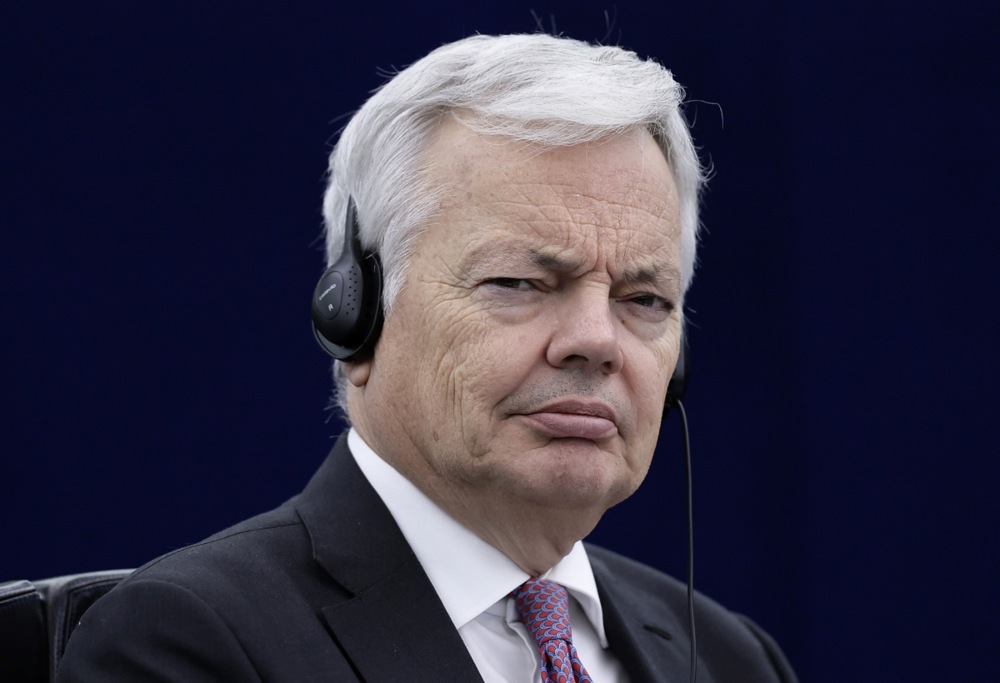
“The ‘job’ … has been mostly accomplished,” said a senior official in Belgium’s spy service, Hugues Brulin, in a WhatsApp message to the Belgian then EU commissioner, Didier Reynders.
“Bravo for the work you did,” said Reynders.
It was back in 2022, and, at least on the surface, they were chatting about a staff reshuffle inside Belgium’s intelligence service, La Sûreté de l’Etat/Veiligheid van de Staat (VSSE) — which was already a peculiar thing for Brulin to be doing on WhatsApp with an EU official.
But their messages, seen by EUobserver and published in full below, were now also evidence in a Belgian police investigation into Reynders on money-laundering charges, which painted them in the light of a potentially criminal conspiracy.
Brulin’s real “job” had been to stop the VSSE from probing Reynders and his potential Russia links, according to five former and current Belgian intelligence officers who spoke to EUobserver.
And Brulin also WhatsApp-ed Reynders on how to “counterattack” a Russia whistleblower.
The 68-year-old liberal politician from Liège, in French-speaking southern Belgium, had had a glittering career before his sudden fall from grace in December 2024, when Belgian police raided his properties, and before he was subsequently charged in 2025 with having laundered some €1m via the ING Bank, using lottery tickets and cash deposits.
Reynders had been EU justice commissioner from 2019 until 30 November 2024 (just four days before the police raid) and Belgium’s foreign and defence minister from 2011 to 2019.
And Belgium had vetted and cleared him to read “top secret” national, EU, and Nato documents.
But if a figure with Reynders’ CV was also found guilty of corruption and foreign collusion, it would be yet another security fiasco for Western allies.
This article continues, but the full version is available only to EUobserver.com subscribers. Visit account.euobserver.com/membership
The Chinese Foreign Ministry belatedly condemned on Wednesday the issuing of an arrest warrant by Florida authorities for Raúl Castro, the 95-year-old communist dictator of Cuba, referring to the widely hated repressor as a "venerated revolutionary leader."
The State Bank of India (SBI) on Wednesday announced it was hit by a cyberattack that exposed data from 3,897 of its customers to the “dark web,” including their names, phone numbers, addresses, and dates of birth.
President Donald Trump's bold decision to approve the mission to arrest former dictator Nicolás Maduro created the "path to hope" that Venezuelans are cautiously taking toward holding elections, Dinorah Figuera, the surgeon and former lawmaker representing the opposition in talks with post-Maduro socialists, told Breitbart News this week.

 Login