Der russische Außenminister Sergej Lawrow hat sich im Interview mit der Agentur Vesti zu den Anschuldigungen Deutschlands und der EU gegen Russland wegen der Drohne in Leipzig geäußert und die Entscheidungen der Bundesregierung als Beginn eines echten Krieges bezeichnet: „Am Leipziger Flughafen hat man irgendeine Drohne gefunden. Sie sagten, das sei eine russische Drohne, niemand […]
Nach einer Woche Pause, weil NuoViso letzte Woche sein Sommerfest gefeiert hat, haben Robert Stein und ich am Donnerstag wieder eine Tacheles-Sendung aufgezeichnet, die nun online ist. Sollte YouTube sie löschen, finden Sie sie auch hier bei NuoViso.
The U.S. Air Force is seeking an anti-aircraft gun system to help defend its air bases around the world from drones and cruise missiles. The Request for Information (RFI) about these systems, posted on the government’s contracting website on Thursday, is part of a larger Air Force effort to play a greater role in air base defense via ground-based air defenses (GBADs), a capacity traditionally performed by the Army. As a result, the Air Force currently has no such systems. Now it is interested in changing that.
The request comes as the war against Iran exposed gaps in how the U.S. can provide effective, sustained air defenses for its foreign installations and amid concerns about a future fight against a peer competitor like China or Russia.
“The Government is conducting market research to identify potential industry sources capable of providing solutions for a Ground-Based, Medium-Caliber Gun Weapon System that fires affordable munitions, enables defense against air and missile threats with an initial focus on subsonic cruise missiles (CM) and Unmanned Aircraft Systems (UAS) to provide persistent defense in support of [the] United States Air Force,” the RFI notes.
The RFI doesn’t stipulate what it considers a medium-caliber round; however, according to the Army, the list includes 20mm, 25mm, 30x113mm, 30x173mm and 40mm shells.
“To effectively assess and compare air defense weapon system performance, there are 15 critical baseline operational and technical parameters that must be analyzed in unison,” the RFI explains.
(Air Force Request for Information)
“These key metrics begin with the system’s Salvo Probability of Kill (Pk) evaluated against both Cruise Missiles (CM) and Unmanned Aircraft Systems (UAS) Groups 1-5 at maximum range and altitude, ensuring robust lethality against diverse modern threats,” the RFI notes.
A salvo probability of kill measures how effectively a salvo, as opposed to a single shot, defeats a target.
The following chart displays the weight, normal operating altitude and speed of the five drone group classifications.
(Congressional Research Service chart of Group 1 through 5 drones)
The Air Force wants this system to be “rapidly deployable, maintaining a lightweight, modular, and transportable footprint that can be swiftly projected into austere theater environments to meet emergent threats.” The RFI does not provide further details of how the Air Force is looking to transport these systems; however, the service relies on its fleets of C-130 Hercules, C-17 Globemaster III and C-5 Galaxy transport aircraft to move equipment. The size and weight of the systems determines which kind of aircraft can transport it.
These systems could also be moved by truck or ship or on their own if self-propelled, but those options also incur a cost in terms of the timeliness of delivery, and can be impossible for rapid global deployments.
U.S. Army soldiers from the 1st Battalion, 7th Air Defense Artillery Regiment, 108th Air Defense Artillery Brigade, load equipment and trucks onto a C-17 Globemaster III with U.S. Air Force airmen assigned to the 21st Expeditionary Airlift Squadron at an undisclosed location in the CENTCOM Area of Operations, Dec. 31, 2023. Photo by Staff Sgt. Christopher Neu
A key point of evaluation will be the overall cost of the munitions. The Air Force wants to ensure that the shell’s velocity and terminal effects “are maximized without driving the cost-per-engagement to unsustainable levels or exceeding the physical constraints of the host platform,” the RFI states. We’ll discuss these factors in more detail later in this story.
The service is also looking for the integration of “the right mix of radar, electro-optical, infrared, or radio-frequency sensors—to ensure reliable target acquisition and tracking across varying weather conditions, environments, and countermeasure scenarios.”
As we noted at the top of this story, the Air Force is seeking to improve its organic ability to defend its bases. This has become “an increasingly high priority” for the service, Air Force Secretary Troy E. Meink told Congress on May 20.
“The Air Force is developing organic air and missile defense capabilities, including Counter-small Unmanned Aircraft Systems (C-sUAS) to defend our air bases in all theatres [sic],” Meink stated in his written testimony. “The fielding of the Air Base Air Defense Systems (ABADS) missile defense capability, including kinetic defenses, at overseas main operation bases contributes to joint layered defense but does not reduce the need for increased joint investment in air and missile defense. We will continue to work judiciously for the development and procurement of these critical defensive capabilities.”
(Written testimony of Air Force Secretary Troy E. Meink)
In its Fiscal Year 2027 budget request, the Air Force is seeking about $1.4 billion for a missile defense variant of the Air Base Air Defense Systems (ABADS), according to Air & Space Forces Magazine. In addition, the Air Force also requested $51.8 million in procurement funds for its Small Unmanned Air Defense Systems (SUADS) in Fiscal Year 2026, according to the Air Force Fiscal Year 2026 budget justification book.
The war against Iran and the Ukraine war have, in particular, illustrated the challenges of defending against drones and cruise missiles.
There are two facets to potential use of gun systems for base defense. The first is that in complex air defense environments, it provides an inner, last line of defense against incoming threats. If the outer layers fail to take down the target or that target is not considered a priority over others, a hard-kill gun system offers a predictable and relatively reliable fallback. The gun system would become even more important if interceptor stocks run low, even temporarily, and those weapons need to be rationed for higher-end threats. With the outer defensive rings collapsing, the inner becomes far more important.
For small drones, that interceptors would not be effective with anyway, the gun system can take them down in localized air defense scenarios. Then there is also defending bases in lower threat areas where there are not additional layers of SAM systems. A gun system can provide a core aerial defense against lower-end, lower-density drone and cruise missile threats without costing huge sums of money or requiring a huge logistical footprint.
Beyond that, there is a direct cost comparison argument, but again, that is in a vacuum and a gun system cannot take the place of a multi-layered air defense system without inviting huge risk. Still, the engagement cost comparison is worth mentioning.
High-end, expensive, difficult-to-manufacture air defense weapons, like Patriot PAC-3 MSE, are clearly inefficient against drones. For instance, a mass-produced Iranian Shahed-136 can cost about $35,000 to $50,000, while a Patriot PAC-3 can run about $5 million and takes years to procure. By comparison, the cost-per-engagement efficiency of gun-based air defense systems, designed to defend against drones and subsonic cruise missiles, is far greater. One example of how this plays out is the cost of firing the Army’s Centurion Counter-Rocket, Artillery, Mortar (C-RAM) system. It is a ground-based version of the Phalanx Close-In Weapon System (CIWS) used on various U.S. and foreign warships, and is armed with a six-barrel 20mm Vulcan Gatling-type cannon firing M940 rounds. Those self-destructing rounds currently have a price tag of $80.70, according to the Army’s Fiscal Year 2025 budget request. This means a two-second burst from a Centurion, at a rate of fire of 4,500 rounds per minute, would cost just over $12,100.
Again, this is not a strict apples-to-apples comparison, but it can become a bigger factor during prolonged conflicts when high-end weapons stocks begin to run short. It’s also worth noting that drone interceptors are a rapidly growing capability set that are a lower-cost option for swatting down one-way attack drones and even some cruise missiles. Systems like Coyote have been in service for years with the Pentagon and have been protecting bases overseas with strong results. Even cheaper systems are emerging out of lessons learned in Ukraine. All of these systems have their own advantages and disadvantages, but pairing them with a new gun system would likely have synergistic effects. Overall, deploying densely layered short-range air defenses is becoming increasingly important in its own right, at least in high-threat areas.
Ukraine has a great deal of experience with the costs and prioritization of air defense capabilities. The country faces daily attacks by Russian missiles and drones, which is causing mounting casualties and destruction. This ceaseless bombardment has almost completely depleted Ukraine’s supply of Patriot interceptors, leaving it largely defenseless against ballistic missiles. As we noted yesterday, Ukraine is also running short of air-to-air missiles its Air Force F-16s use to swat down drones.
However, Ukraine has also relied heavily on a wide array of gun-based air defense systems, including the German-made Gepard self-propelled anti-aircraft guns (SPAAG). Based on the chassis of the Leopard 1 main battle tank, Gepards feature twin radar-aimed 35mm automatic cannons, mounted on a single turret. The German variant sports an S-band search radar and a Ku-band tracking radar. These radars are critical to the Gepard’s ability to locate, track, and engage targets at night and amid poor weather conditions.
The following video shows a Gepard blasting an Iranian-made Shahed-136 out of the sky.
A video reportedly showing two Russian Shahed-136 (Geran-2) loitering munitions being shot down by the Ukrainians with a German-delivered Flakpanzer Gepard self-propelled anti-aircraft gun (SPAAG) during last night's attack in Odesa Oblast, southern Ukraine.… pic.twitter.com/OhH7vTultm
The Air Force force is also looking at directed energy weapons like lasers for force protection and especially for defending bases overseas. While gaining traction across the services due in large measure to the much lower cost of delivering effects, these systems are still works in progress. Gun-based air defenses, on the other hand, are mature and proven, and modern precision-guided, programmable ammunition makes them even more efficient and effective.
Beyond the cost, high-end air defense systems — including their component sensors — though portable, are generally fixed to a specific location. That makes them vulnerable to attack. This has been the case in both the war against Iran and Ukraine. The same concerns hold true of aircraft. Both conflicts have shown aircraft vulnerability to drones when parked out in the open. Ukraine’s Operation Spider Web attack on Russian strategic bombers last year in particular shed light on this issue, which we have been sounding the alarm on for a long time.
In addition to these challenges, the Air Force is also facing the headwinds of an overall lack of U.S. short-range air defense capabilities, a concern we have been highlighting for years. Currently, there are three gun-based SHORAD systems being fielded by the U.S. military. These include the aforementioned Centurion C-RAM systems.
The Army also uses the Sgt. Stout, an air defense system based on the 8×8 Stryker light armored vehicle. The Sgt. Stout has a turret that can be fitted with up to two four-round launchers for Stingers. Those launchers can also be swapped out for ones that can be loaded with a pair of millimeter-wave radar-guided AGM-114L Hellfire missiles. The turret also has a 30mm XM914 automatic cannon, which can fire proximity-fuzed airbursting rounds against drones and other aerial threats, and a 7.62x51mm M240B machine gun.
Soldiers assigned to 4th Battalion, 60th Air Defense Artillery Regiment conducted a live fire exercise with the SGT STOUT (Stryker A1 M-SHORAD) vehicle in Fort Sill, Oklahoma, Sep. 23, 2025. Photo by Cpl. Emaney Wilson
The Marine Air Defense Integrated System (MADIS) is armed with 30mm cannons and M240C coaxial machine guns in remote weapon stations (RWS). The RWS on one of the two vehicles is also configured to fire Stinger missiles for a spectrum of ground-based air defense scenarios.
U.S. Marines with 12th Littoral Anti-Air Battalion, 12th Marine Littoral Regiment, 3rd Marine Division, fire an XM914 30mm chain gun mounted on a Marine Air Defense Integrated System during a live-fire range at Camp Schwab, Okinawa, Japan, July 28, 2026. Photo by Lance Cpl. Skilah Sanchez
The Army may have additional gun-based systems on the way. In July, the service put out a request for information to companies that can provide a new gun-based air defense option, using a 50mm cannon system to track and defeat Group 1, 2 and 3 drones.
A few weeks later, Northrop Grumman introduced its Raid Hunter 50mm GBAD system, which it said “combines proven Chain Gun® technology, precision‑guided 50mm ammunition and a networked, interoperable system controller to deliver powerful protection against high-volume, mixed-threat aerial raids. It is designed to defeat a range of aerial threats including high‑priority cruise missile threats, unmanned aerial systems (UAS), and other advanced threats.”
We’re introducing Raid Hunter, our newly named 50mm gun-based air defense system designed to defeat mass, mixed aerial raids with cost-effective interceptors and deep magazine effectors which can be delivered to the warfighter at scale. Learn more: https://t.co/gnOzpo0RA3pic.twitter.com/oTqORTG9Q4
There are foreign options should the Air Force want to go that route. For instance, German arms maker Rheinmetall makes the popular Skyranger 35 gun system, which is a turret that can fit on a wide array of armor hulls.
The Skyranger 35 “is equipped with a KDG 35/1000 revolver cannon in 35 mm x 228 caliber with a firing rate of 1,000 rounds per minute,” according to Rheinmetall, which began delivering these to Ukraine in January. “It has an effective range of up to 4,000 meters and a high degree of commonality with the Oerlikon Revolver Gun Mk 3. Thanks to AHEAD technology, the Skyranger 35 is airburst-capable. In the future, it will also be possible to equip it with modern guided missiles.”
It seems that Ukraine's 1020th Anti-Aircraft Missile Regiment which belongs to the Ground Forces has taken delivery of the first Skyranger 35 SPAAGs mounted on a Leopard 1 chassis made by @RheinmetallAG.
Skyshield is the fixed placement cousin of this system and has been bought by a number of nations.
Skyshield (Rheinmetall)
This is just one example of a large number of potential offerings that could fit the USAF’s interests, from both domestic and foreign origins.
As we discussed earlier in this story, the U.S. is already facing a challenge defending against Iranian threats. A war with China would be more devastating and, when it comes to the Air Force protecting its bases, require far more robust defenses. At the same time, the Air Force is still very early in the process of taking on more responsibility for protecting its assets.
Parties have until 5 p.m. Oct. 9 to submit their proposals to the Air Force for a gun-based air defense system. With limited options and the service pushing to address its growing desire for organic air defenses, it will be interesting to see who comes forward and what systems they offer. We will provide more details about this effort when they become available.
Since receiving these tanks last year, the crews, serving with Ukraine’s 425th Separate Assault Regiment “Skala,” have used the Abrams in two combat operations in the fight for Pokrovsk, a key Ukrainian logistics hub and part of a defensive belt of towns in Ukraine’s eastern Donetsk region. They recounted their experiences to Hromadske, an independent media channel in Ukraine.
Fighting around Pokrovsk
The first major deployment described by the crews took place in December of last year, when Abrams tanks were used to support assault groups entering Pokrovsk.
The crewmember with the callsign Kent described moving into the city behind a mine-clearing tank and ahead of two infantry fighting vehicles (IFVs) carrying assault troops, during a mission that was deliberately aggressive.
“Since a tank is a priority target — my task was to draw their attention, while our infantry dismounted and moved in successfully.”
The Abrams was also assigned three target points to engage along the route.
“We went right in there, poured it on, and drove back out,” he recalled.
A video showing the 425th Separate Assault Regiment in action in August 2025, soon after receiving the Abrams:
The second operation, on March 31, involved an attempt to enter and hold an industrial area near Pokrovsk to help block Russian movement toward Hryshyne, a contested village in the district.
The operation was prepared for more than two weeks. Ukrainian forces conducted reconnaissance flights, examined difficult sections of the planned routes, and provided crews with extensive video and imagery.
“They knew every meter of the route,” another of the unit’s commanders, with the callsign Kubik, said.
Weather was considered essential. The Ukrainians waited for fog and rain, hoping to limit the effectiveness of Russian drones.
“Without the right weather we wouldn’t have been able to pull off operations like that,” Kubik said.
The operation nevertheless resulted in the destruction of four out of five armored vehicles, some of which are seen in the video embedded below.
Russia's Rubicon Drone Center FPV drones destroyed a Ukrainian assault group near Pokrovsk, hitting an M1A1 Abrams tank, M1117 APC and BMP-2 as the unit tried to advance near Hryshyne under fog cover. #Ukrainepic.twitter.com/ZzE52qAYxp
The commander acknowledged that the Russian side may have had advance knowledge of the operation.
“I can’t rule out the possibility that the enemy knew our plan,” he said.
His Abrams was not immediately destroyed. According to the crew, it completed its task and the assault troops dismounted before the weather changed.
“Once the fog lifted, they started working on it with an FPV drone,” the commander said.
Why use tanks at all?
The losses prompted criticism from Ukrainian military commentators, particularly after footage of the destroyed vehicles was published.
However, the crews defend the decision to use armored vehicles for the missions. According to the men of the Skala interviewed, the alternative was often to send infantry over several miles on foot while carrying weapons, ammunition, water, and other supplies.
“That takes more time,” Kubik explained. “And the enemy isn’t standing still — the enemy is moving toward them.”
Australia-supplied M1A1 Abrams AIM main battle tank in service of the Ukrainian 425th Separate Assault Regiment "Skala."
The argument that infantry could simply move more stealthily on foot also has limitations.
“Every day the Mavic drones are flying, the fixed-wing drones are flying,” he said. “No fog, guys are visible.”
Combined with IFVs, the Abrams can provide the ability to rapidly move troops while simultaneously delivering heavy direct fire against enemy positions and offering substantial protection to its crew.
The crews argue that this capability remains worthwhile even when the tank itself may eventually be lost.
One commander was asked whether deploying a roughly $5-million tank makes sense if a single sortie can result in its destruction.
“Yes, of course it makes sense to deploy it,” he replied.
“First and foremost — it saves the lives of the crew inside it.”
Russian forces captured a relatively lightly damaged M1A1SA Abrams main battle tank operated by the 47th Separate Mechanized Brigade in the Pokrovsk direction.
He pointed to fairly basic modifications including rubber strips and a foldable wire cage mounted on the turret, as additional layers of protection against drone attacks.
“A drone doesn’t hit the actual penetrating element directly — it just can’t reach it,” he explained. “It hits the rubber, and then the blast wave travels from there.”
Even with their tanks festooned with explosive reactive armor (ERA) bricks, the crews acknowledge that such protection has limits.
A head-on view of an M1A1 of the 425th Separate Assault Regiment shows the ERA bricks installed around the turret and in front of the hull. Ukrainian Armed Forces
US-supplied M1A1 Abrams tank in service of the Armed Forces of Ukraine with added Kontakt-1 ERA on the frontal hull and standard ARAT ERA on the sides. pic.twitter.com/PC2kDfxefO
— Status-6 (War & Military News) (@Archer83Able) May 21, 2024
“They also protect very well. An effective thing,” he said.
A Russian tank with the ‘hedgehog’-type protective covering. Russian state media
For now, the drone threat has led the regiment to keep its Abrams out of combat, as we will return to later.
The Abrams as a machine
The crews’ assessment of the Abrams included praise for its mobility, roomy interior, gun, and fire-control system.
Kubik said he had personally driven an Abrams to 50 miles per hour cross-country.
“The engine is an absolute beast,” he added.
The tank can also rapidly perform a pivot turn, which the crews consider particularly useful when maneuvering in confined spaces. Despite its prodiguous weight, it only rarely becomes bogged down after the kind of very heavy snow-melt that effects all vehicles on the battlefield.
Loading a 120mm M1028 canister cartridge into an M1A1 AIM Abrams main battle tank of the tank battalion of the 425th Assault Regiment. pic.twitter.com/tMd8QcROQe
— 𝔗𝔥𝔢 𝕯𝔢𝔞𝔡 𝕯𝔦𝔰𝔱𝔯𝔦𝔠𝔱 (@TheDeadDistrict) June 21, 2026
Its disadvantages include its demanding maintenance requirements. The running gear was described as particularly sensitive, with crews inspecting, lubricating, and replacing components after every sortie.
Fuel consumption is another major burden. The crew cited roughly 400 to 700 liters (106 to 185 gallons) per 100 kilometers (62 miles) depending on terrain and operating conditions.
“On asphalt it burns about 400 liters,” one said. In boggy terrain, consumption can reach “700 liters or more.”
The Abrams thirsty gas turbine engine and extreme logistical demands have always been a criticism of the platform.
An M1A1 of the 425th Separate Assault Regiment fording a river. Ukrainian Armed Forces
The crews said the vehicle’s ability to operate on different fuels is useful, although diesel provides the best engine-hour performance in their experience. Prior to delivery, the gas turbine engines of the tanks were reconfigured to use diesel fuel instead of the standard JP-8 aviation kerosene, according to earlier reports.
They also praised the Abrams’ protected ammunition storage and crew space compared with Soviet-designed tanks.
The version operated by the Ukrainians is an M1A1 rather than the latest Abrams configuration, with less sophisticated electronics than newer variants. It also lacks the classified armor found on its U.S. Army counterpart.
“For me — as a tanker — this configuration, what we have right now, is more than enough,” Kubik said. “The sight is absolutely excellent. The gun is also great.”
The interview ultimately presents a more complicated picture than the declaration that tanks are obsolete on the Ukrainian battlefield.
At the time of writing, at least 25 Abrams have been confirmed visually to have been destroyed, damaged, or abandoned in Ukrainian service. This is from a total of 31 provided by the United States and 49 from Australia.
“For now, we’re not using them further — there’s no way to,” Kubik said. “The enemy has developed their drone component very heavily, and for now we don’t have the means to counter that.”
While tanks remain exceptionally powerful direct-fire and protected mobility platforms, the proliferation of inexpensive uncrewed aircraft has made operating them increasingly difficult.
M1A1 AIM Abrams tanks of the 425th Assault Regiment . The reinforced upper glacis and turret roofs are clearly visible. pic.twitter.com/Sn9h8OWZ9P
— 𝔗𝔥𝔢 𝕯𝔢𝔞𝔡 𝕯𝔦𝔰𝔱𝔯𝔦𝔠𝔱 (@TheDeadDistrict) June 21, 2026
“If someone had told me, as a tanker, back in 2022: ‘Take this — we’re giving you an Abrams, we’ll give you time to train and you’ll fight in it,’” Kubik said, “I would never have climbed out of it.”
“I’d only be saying: ‘Bring me shells. I’ll drive non-stop wherever needed, arrive and work.’”
An M1A1 of the 425th Separate Assault Regiment firing its main gun. Ukrainian Armed Forces
As it stands, reconnaissance drones can find the Abrams, FPV drones can attack it, and persistent surveillance makes concealment difficult. Experience has shown that without more effective counter-drone capabilities, even a heavily protected tank can eventually be overwhelmed.
But Kubik believes that will change.
“The day will come when one of our bright minds figures out some excellent solution against drones — and we’ll start using them again.”
Asked whether the era of tanks is over, his answer was unequivocal.
“It’s not over … They’re just waiting it out for now, biding their time. Writing off tanks — in my opinion — is still too early.”
Bronisław Kawęcki (pictured), a Polish anti-communist activist who devoted much of his life to preserving the memory of the workers’ uprising in Radom in 1976, died on 29 August 2026, aged 72.
For many, his name was inseparable from Radom and from one of the defining chapters in Poland’s long struggle against communist rule. But Kawęcki’s legacy extends beyond one Polish city. His life was a reminder of the role that ordinary citizens played in the political transformation that eventually brought democracy to Poland and helped reshape Europe.
Born in Sandomierz on April 29, 1954, Kawęcki moved to Radom as a young man. He initially worked as a carer at a state children’s home before joining the medical supply company Cezal. It was there that he became increasingly involved in the civic and political ferment that would define his life.
The turning point came with the events of June 1976.
Workers in Radom took to the streets following sharp government-announced increases in food prices. The demonstrations were brutally suppressed by the communist authorities. Hundreds of workers were dismissed, prosecuted or subjected to beatings by security forces. The protests in Radom and nearby Ursus would later be recognized as an important precursor to the emergence of the Solidarity movement.
Kawęcki understood early that the struggle was not only about what had happened, but about whether Poland would remember it.
He began collecting the testimonies of workers who had been beaten, dismissed or persecuted. What started as an effort to document the events of 1976 became a mission that would occupy him for decades.
When Solidarity emerged in 1980, Kawęcki joined the movement and helped establish its organization at Cezal. He subsequently became involved in the regional leadership of Solidarity and, in 1981, was selected as a delegate representing the Radom region at the union’s first national congress in Gdańsk.
He was also at the center of an effort to build a monument to the victims of the 1976 protests. A foundation stone was laid in 1981, but the monument itself was never completed.
Then came martial law.
On December 13, 1981, the communist authorities banned Solidarity and launched a nationwide crackdown on its activists. Kawęcki was arrested and interned. He was moved between detention facilities and a prison hospital before being released in July 1982. He lost his job almost immediately afterward.
Yet imprisonment and repression did not end his activism.
During the 1980s, Kawęcki participated in the distribution of underground publications, including the clandestine newspaper Wolny Robotnik, which he later helped edit. He remained under surveillance by the communist security services while continuing to work within the opposition movement.
The foundation stone of the unrealized Radom monument acquired a significance of its own. It became a place of remembrance, where laying flowers could itself be treated by the authorities as a political act.
For Kawęcki, memory was never simply historical.
It was political, civic and ultimately European.
When communism began to collapse in 1989, he helped establish the Citizens’ Committee of the Radom region and participated in the first free electoral campaigns. But unlike many activists who subsequently moved into formal political life, Kawęcki continued to concentrate on documenting and preserving the history of those who had challenged the communist system.
He worked as a consultant and assistant director on documentaries about the 1976 protests and the life and death of Father Roman Kotlarz, whose death was widely associated with his alleged beating by the security services. He also became one of the central figures in the documentary Kamień (The Stone), which explored the history of the unfinished monument and Kawęcki’s own role in preserving the memory of Radom’s workers.
His contribution was eventually formally recognized by the Polish state. In 2018, he received the Cross of Freedom and Solidarity for his opposition activities and contribution to Poland’s independence. He was also awarded the Officer’s Cross of the Order of Polonia Restituta.
But perhaps the most fitting description of his achievement was one that required no official decoration: he became a custodian of memory.
The importance of that role is particularly clear from a European perspective.
The democratic Europe that exists today was not created solely through treaties, institutions and political leaders. It was also built by workers, dissidents, journalists, religious figures and civil society activists who challenged authoritarian systems long before the political structures of a free Europe could take shape.
Poland’s experience was central to that transformation. The protests of 1976, the emergence of Solidarity in 1980, the repression of martial law and the democratic breakthrough of 1989 formed part of the chain of events that ultimately helped bring an end to communist rule across Central and Eastern Europe.
Kawęcki was a participant in that history, but also one of its chroniclers.
He spent decades ensuring that the experiences of those who had suffered would not disappear from public memory. His work reflected a simple conviction: that political freedom has little meaning if societies forget the sacrifices through which it was achieved.
Late in his life, when asked whether the years of internment, professional reprisals and unpaid work devoted to preserving the memory of Radom’s June 1976 uprising had been worth it, his answer was characteristically direct.
“Yes. It was worth it.”
Bronisław Kawęcki’s death marks the passing of one of the generation that experienced Poland’s struggle for freedom firsthand. His legacy, however, belongs to a much larger European story.
It is the story of how democracy is defended before it becomes inevitable, and how the preservation of memory can itself become an act of resistance.
Kawęcki spent his life making sure that Poland remembered.
It’s the dead of night when the buzz of the engines of a series of Shahed-136 one-way attack drones breaks the silence. Carrying their lethal payloads the drones slip into the darkness with a distant supply base as their target. Tracking, identifying, and then destroying this swarm of drones is no easy task.
The unmanned aircraft system (UAS) threat environment is changing rapidly with an increasing variety of killer drones that demand differing methods of tracking and identification to engage and defeat them. Operational users are learning from rapidly-evolving- conflicts, and modern air defense methods increasingly rely on scalable, layered, and persistent sensing teams that can detect and track small, fast, low-altitude, and even swarming, aerial threats in all kinds of complex situations, on land or at sea.
A layered system is required to tackle the toughest drone threats. USAF
Ray Bischoff served active-duty with the U.S. Army for nearly 25 years, and he’s now the senior director of business development at Leonardo DRS, specialising in evaluating tactical formations and defensive requirements at all operational levels throughout the Department of War and allied nations. He is particularly focused on emerging threats from drones..
Bischoff spoke at length with TWZ’s Jamie Hunter about the use of tactical radar systems as part of a layered counter-drone system that is sufficiently versatile to tackle the toughest drone problems now, and what may come in the near future.
JH: Can you set the scene with regards to how you see the counter-UAS mission right now from a sensing perspective.
RB: The counter-UAS environment is changing and advancing very quickly. At the top level, we need to employ a variety of sensor systems – in this particular case we’re talking about tactical radars – but there are many other types of sensors, and at the highest end of the threat level it’s about connecting these together into a networked architecture.
Layering different systems in depth is vital, both from a communications architecture perspective and physically layering them in different places to protect different routes or avenues of approach, or sensitive facilities.
Look at the Strait of Hormuz, for instance, which is a vast area, with a layered and networked system to maximize the depth of coverage. The primary reason for this is that the biggest enemy in many situations like these is time. That networked architecture and having sensors in depth really gains you time, which gives you opportunities to make a better decision, time to reposition, to better evaluate. You need time to evaluate what different things in space are doing, where they’re going or where they’re coming from.
JH: When you say layered, are you talking about different systems that can look in different ways over different distances and systems in different positions that help you with that time element? What does layered actually mean?
RB: You can layer different types of sensors. Think of baseball. If all your players are home-run hitters, you probably aren’t going to do very well. You need to have different skills across your team to succeed, and it’s the same thing here. Layering of radar sensing bands, different types of technology such as electro-optic and infra-red that “see” in long, short and midwave, acoustic sensors, electronic warfare sensors to look for signals and other types of energy. It’s also about physically layering them in space, or depth.
Large drone swarms are particularly challenging to defend against. U.S. Army
We often see large exquisite sensors that have a lot of range and cover a large area. But this makes them susceptible to being targeted and destroyed. Layering sensors gives you redundancy, retaining the ability to defend. So, this is layering both in physical location, and in different types of technology.
This way, if one of your sensors is taken down by any means – for example by electronic countermeasures – your other systems can theoretically continue to operate. Just think how you can see, smell, touch, taste – it’s the same concept with layering different types of technologies, which is exactly what we at Leonardo DRS do and we integrate them so we can interact and share information to maximize the benefits of this layered approach. A team ultimately makes the sensors more effective across networks and architectures.
JH: Presumably you get good indicators on developments from the current operations in Ukraine. You already mentioned the Strait of Hormuz as well. What are the big lessons that you’re getting here about different types and sizes of drones?
RB: Without going into the details of combat operations, the bottom line is you have to advance your technologies at the rate or as close to the rate of the advancement of the weapons systems that are being utilized. We’re seeing a mixture of things when it comes to the UASs; that’s larger craft that are getting faster and can carry heavier payloads, or smaller ones with longer ranges that can move through areas almost undetected.
There’s been so much investment in UAS technology, and they are becoming cheaper and easier to manufacture. People can 3D-print these things in their houses now. So, looking at this from a sensing perspective, that layering is becoming increasingly important.
We are looking to do things to counter these developments, such as maybe elevate the sensors to “see” across the top of the trees or place a sensor down in a valley – so that adds layering in altitude or elevation to remove blind spots. Just like the military, if you’re setting-up a defensive position, you have to cover what we called “dead space” where you can’t see with eyes or sensors from ground level.
Leonardo DRS’ 202 Expeditionary Skid (U-KIT-0091) is based on the company’s Extended Multi-Mission Hemispheric Radar. Leonardo DRS
JH: Can we dig further into the role of tactical radars in counter-UAS, specifically Leonardo DRS’ 202 Expeditionary Skid, which I believe is based on your Extended Multi-Mission Hemispheric Radar [exMHR].
RB: Radars “see” things that are physically present in space and time, and that’s why they are such great tools in the counter-UAS kit bag of sensors. That said, some radars are affected by weather and other factors, some work better in particular environments.
The 202 Expeditionary Skid is a new system from Leonardo DRS that uses our long-range exMHR, which is a software-defined AESA [Active Electronically Scanned Array] pulse-Doppler radar. It operates in the S-Band and that’s a very reliable band for all weather conditions including strong performance in dust storms and rain. When you get into K, Ku, and X-bands, they typically have smaller beams and therefore greater accuracy, but they suffer in poor weather and can become extremely degraded. S-band radar suffers significantly less degradation in that environment.
The 202 Expeditionary Skid, also known as U-KIT-0091, has a single radar panel that has a search area of 90 degrees by 90 degrees, so we often mount them in groups of four to provide full 360-degree coverage. Each panel has a really fast scan rate, much faster than a traditional spinning radar set. Plus, having multiple radar faces to make up a complete system is much more survivable. They can also overlap their field of regard without impairing each other.
We have sought to provide a solution that marries an appropriate level of range, accuracy, capability, and performance, that can still be very flexible in its ability to relocate or change mission sets. This is designed to be extremely versatile, meaning that it operates in different environments quickly. U-KIT-0091 has been purposefully designed to be mobile in a compact system that can either be used by itself or networked and fused together with other systems. Back to the baseball analogy, this is the kind of guy you really want on your team because you can use them wherever you need them.
The radar or set of radars sit on a small skid system that can slide into the back of a pickup truck, into the back of a tactical vehicle, onto a trailer, you can set it just about anywhere and it occupies a four-by-four-feet position. It has its own power generation, its own positional information that works in denied environments, basically it’s capable of working by itself from the get-go. The best part is that it’s truly mobile – the operator doesn’t have to stop the vehicle to make it work. You can turn it on and set-off. It’s working. If you come to a stop, it’s still working. It can be mounted on a ship, it can be taken airborne by an aircraft, so it’s got land, sea, and air applications. We’ve installed these on all types of ground platforms, water-based platforms, on top of a building or some sort of structure and it’s already in service, but I can’t specify where. It tracks drones very well, but of course it can track just about anything that can exist in that space.
The 202 Expeditionary Skid U-KIT-0091 mounted in the back of a pickup truck. Leonardo DRS
JH: So you could strategically locate several of your radars to look in different directions or be positioned to look in a certain direction if you knew the expected paths that the threats would use?
RB: The system is designed exactly for things like that. Instead of putting all of your eggs in one basket, you disperse your eggs, and focus on different avenues or approach angles so that you can then have sensors strategically located where they can pick up these things and then as long as they’re networked back into weapons systems that have the overlapping fields of fire or bubbles – coverage areas – then you can protect your area.
Any time you can decouple a sensor from a weapon system or multiple types of sensors from each other, you stand a far greater chance of survivability and optimizing accuracy. If you put all your eggs in one basket, and if you lose that basket, you lose everything. In addition, if you separate sensors, you gain accuracy because you have different angles and you can leverage simple geometry.
JH: Could you depict what an end-to-end engagement might look like using your tactical radar.
RB: The radar sensors will typically be emitting energy as they search for objects in a particular space. If something is detected and determined to be a valid target then the data is sent from the radar to some type of a command and control system, which may well be receiving information from other complementary sensors too. It then fuses that data and passes it to an effector, whether that’s a non-kinetic or a kinetic system, for engagement.
Meanwhile, the radar continues to track and it can determine whether that object was removed or if its path changed, and so on and so forth. But you know, a lot of these radars operate in a way whereby they can be turned on or off by different sensors to avoid them having to constantly transmit energy, they’re very customizable to meet the requirements and the emissions that are needed, whether that’s air defense, counter-drone, etc.
They can operate independently too, maybe covering a small area that needs to be protected, and integrated with a localized weapon system, or, as I already explained, they can be networked into a much larger set-up, they are modular, open system architecture and easily incorporated.
Most customers tend to choose their own command and control systems, which is why the plug-and-play part of our system is so important. It really doesn’t matter what they want to partner it with, what we provide enables that very easily.
A counter-drone exercise run by the Joint Task Force-National Capital Region/United States Army Military District of Washington. U.S. Army/Sgt. Zack Stine
JH: To be clear, your tactical radars could be deployed to defend the entire eastern seaboard of the U.S., they could be positioned to defend an air base, or they could be used to defend a ship in the Strait of Hormuz.
RB: The architecture can scale geographically through a distributed, networked sensor approach. The specific coverage area depends on factors including sensor density, the threat environment, command-and-control integration, and the available effectors.
Customers can deploy multiple radars and feed them into a single command-and-control system, positioning sensors to optimize coverage for the operational need. For example, one radar set could cover a valley vulnerable to low-flying drone ingress, while another positioned on higher ground provides longer-range surveillance. The key is a modular capability that enables users to tailor coverage and layer sensors where they are most needed – without relying on one large radar system to see everything from a single location.
JH: I’m keen to know what you consider to be the most challenging drones to detect and track. Is the challenge the speed they’re traveling out at, maybe new low observable designs, or the fact they’re flying very low. What are the big issues you’re seeing?
RB: It’s really all of the above. The other really challenging problem is when something is flying very low to the ground. The lower they bring them in altitude, they are harder to track as an independent target.
The challenge with drone swarms isn’t detection – if you can see the drones, you can track them. The harder problem is managing those tracks, deciding which threats matter most, and assigning the right effector to each one.
If 100 drones are inbound, it’s not just about having 100 weapons available. It’s about coordinating a fast, cost-effective response across a large number of simultaneous threats.
Ultimately, pairing radars and electro-optical/infrared sensors together is the way to go, because each of those have their own strengths. One of those sensors is going to see the drone better than the other, plus you have the redundancy that at least a couple of them will “see” the threat and give you enough information in sufficient time to prosecute it. Fitting into that team, however it is constructed, is exactly how we position our 202 Expeditionary Skid U-KIT-0091 radar.
Der russische Außenminister Lawrow hat auf dem Östlichen Wirtschaftsforum eine Grundsatzrede über die Positionen der russischen Außenpolitik und über Russlands Antwort auf die aktuellen Eskalationsschritte der Bundesregierung gehalten. Ich übersetze hier die Zusammenfassung der Rede, die die TASS veröffentlicht hat. Beginn der Übersetzung: Lawrows Erklärungen: Die Antwort auf Berlins Vorgehen und Selenskys Drohungen Der russische […]
Gestern Abend habe ich einen russischen Artikel übersetzt, der sehr verständlich erklärt hat, welche Folgen der Öldeal, den die USA Venezuela aufgezwungen haben, für den globalen Ölmarkt und die OPEC haben dürfte. Wer sich mit dem Thema beschäftigt hat und nun die deutschen Medienberichte darüber liest, der merkt mal wieder, wie die Medien die Menschen […]
As spades went into the ground to signal the start of construction of the new Building 47 at Lockheed Martin’s Munitions Production Center in Troy, Alabama, it marked a significant development in accelerating production of the company’s Terminal High Altitude Area Defense interceptor, better known as THAAD. The expansion of factory space in Troy is a key element of the company’s $8-9-billion commitment to expand its munitions production footprint across the United States.
The Department of War’s Acquisition Transformation Strategy is part of a long-term plan that signals clear demand for critical munitions and it enables industry to confidently invest in facilities and workforce development, along with supply chain expansion and advanced manufacturing capabilities. In addition to enlarging the facility in Troy, Lockheed Martin is also growing its plant in Camden, Arkansas, which is another site that’s vital for building more munitions at a faster pace.
The THAAD production line in Troy, Alabama. Lockheed Martin
“My job is to interface and collaborate with the Department of War in achieving the call to action to produce these critical munitions, not only at speed but also at scale, multiplying the current production rates by two, three, or even four times the current rates,” Dan Nimblett, Lockheed Martin’s vice president for Munitions Acceleration Integration told TWZ on the ground in Troy during the groundbreaking event.
“Fundamentally what’s occurred changes how acquisition works [with] long term demand agreements. These long term procurement agreements enable Lockheed Martin and our supply base to make the necessary investments with confidence of the future demand. This allows us to make the investments not only in our people and our facilities, but in the technology necessary to build [these munitions] at a scale and a speed that’s relevant to the threat today,” explained Nimblett.
Lockheed Martin was the first company in the U.S. defense industry to announce a framework agreement with the DoW for munitions acceleration of high-demand missiles – initially tripling production capacity of the PAC-3 Missile Segment Enhancement (MSE) interceptor, followed by a second agreement to quadruple the production capacity of advanced THAAD interceptors. These two defensive missiles are cornerstones of a layered air and missile defense system, and both have been integrated together via Joint All-Domain Operations, including with the U.S. Army’s Integrated Air and Missile Defense Battle Command System (IBCS).
In response to the DoW’s call to action, the company has already invested more than $2 billion in its production facilities and in the related tooling, its key suppliers, and its workforce in order to accelerate production rates.
PAC-3 MSE in production in Camden, Arkansas. Lockheed Martin
Lockheed Martin plans to effectively double the factory footprint in Troy and dramatically increase the workforce. “We’re going to increase that [workforce] by drawing in college students, high school students, veterans, everybody’s welcome,” explains Jason Reynolds, vice president and general manager for integrated air and missile defense. “When they come to Lockheed Martin, they receive training, they get opportunity, and because these programs are on a ramp and in production in such high demand, this is where you come to start your career and you [can] work here for a long time.”
Lockheed Martin currently employs around 1,100 workers at its Camden site, but this is also growing. The Camden training center is seen as being critical in providing the swift increase in skilled operators needed to support this acceleration. “We work closely with the state of Arkansas as well on looking at what else we can do in the community and the infrastructure in that community to support people moving, hopefully into Camden as we ramp up,” says Reynolds.
“People here [in Troy] really know their work matters. It’s meaningful for both the community as well as for our national defense. So, we’re really proud of our employees and we’re on a growth trajectory. We’re hiring and we want as many qualified people to come join our team as possible.”
The Camden site is also accelerating its work on the long-range Precision Strike Missile (PrSM), which is also set to quadruple production over the next few years. Reynolds added that building missiles faster using automation and advanced manufacturing technologies, plus increasing the production line capacity, are some of the vital means for success.
Lockheed Martin is developing the new PAC-3 Adapted Capability Effector (ACE) to help build ammunition reserves faster. Lockheed Martin
“PAC-3 MSE and THAAD are the most capable air defense interceptors on the planet. They’re in extreme demand [and] we’re doing everything possible,” says Reynolds. “With PAC-3, we have been doubling that production over the last four years and now, like I said, we’re going to triple it. We’re working very carefully with our suppliers, with the U.S. government and with our partners and allies all around the world to get all the parts in and get them into factories like you see behind us today to assemble them and get them out to the warfighter as quickly as possible.”
Another way Lockheed Martin is accelerating the delivery of advanced air defense capabilities is the through the introduction this summer of the PAC-3 Adapted Capability Effector, or PAC-3 ACE. This new missile leverages the PAC-3 fire-control system and provides for full integration with the Patriot weapon suite.
The main differentiator of PAC-3 ACE is that it would be produced at less than half the unit cost of MSE and first flight could occur within 18 months. A core part of the rapid fielding strategy is an international, joint-development model. Lockheed Martin is partnering with both American and European industry, sharing production lines, supply chains and expertise.
Lockheed Martin says PAC-3 ACE provides a “cost-effective, multi-threat solution.” The interceptor is engineered to engage a broad spectrum of air-breathing threats, cruise missiles, and both short and medium-range ballistic missiles. By offering a low-cost “kill” per-engagement, it is designed to address the current climate that demands deeper ammunition reserves without compromising on performance.
The keys to munitions acceleration
This year, Lockheed Martin has made significant progress in a series of production acceleration projects for munitions programs under its Missiles and Fire Control division. “I was supposed to retire last year. I’m here because this is the most exciting time in the 30 years I’ve been in this industry,” says Dan Nimblett. “These long-term agreements provide us the certainty to enable us to make these investments.”
“What recent conflicts have demonstrated is that Lockheed Martin and the American defense industrial base never lost the technological edge. The technology and the capability has always been there – we have the best systems in the world. We’ve proven that through real world performance.”
Nimblett explained that Lockheed Martin’s supply chain is following suit, and that they are all now investing in similar ways to ensure they meet the demand signals. “We’re evaluating how we produce and increase additive manufacturing and robotics. We’re also looking at how we develop, which I think is a fundamental part of getting capability into the warfighters’ hands at a speed and scale that’s relevant to the threat.”
A PrSM test firing during the missile’s development. Lockheed Martin
Having received Milestone C approval from the U.S. Army in July 2025, PrSM manufacturing has relied on a high level of automation. PrSM was engineered from the start for automated, robot-driven production – automating tasks once done by hand – and that early-stage streamlining is paying dividends as Lockheed Martin seeks to accelerate output.
“We have a lot of robotics built into our munitions production,” explains Gaylia Campbell, vice president, Tactical Missiles. “A lot of times we use robotics to help increase the safety of the assembly, like an explosive charge that has to be integrated into a munition, and we have a robotic arm that places that and tests the placement. We also robotically paint and coat [PrSM]. So, we have a lot of robotics already in Camden and that’s really going to help us with this ramp-up in production – the fact that so much of it is [already] automated.”
Campbell emphasizes that PrSM entered production with a mindset of acceleration. “We got PrSM through preliminary and critical design reviews, and into first flight in times roughly half of what it would normally have taken us. We’ve been amazingly successful on all these flights. Those early [test] flights went off one after the other during the COVID-19 pandemic, at a time when there were a lot of challenges for all of us in our daily lives, and yet we were able to continue to fly and prove the operational performance.”
Lockheed Martin is reshaping the munitions supply chain with an unprecedented slate of manufacturing initiatives that pull together new facilities, strategic partnerships, and workforce development. The company is also expanding a number of its other production facilities, such as a $60-million investment in its complex in Archbald, Pennsylvania, that will add 700 jobs in support of high‑priority programs including PrSM, THAAD, PAC‑3, and Apache sensors. In Orlando, Florida, three legacy paint bays have been merged into a high‑performance shop that can retool a work cell in hours rather than weeks, while Ocala’s new Progressive Work Smart Assembly Line has cut seeker and mission control unit build times by roughly 50 percent.
Production capacity for THAAD is expanding in Troy, Alabama. Lockheed Martin
A partnership with General Motors will bring high‑rate commercial manufacturing expertise into Lockheed Martin’s production processes, and the new Rapid Fielding Center in Grand Prairie, Texas, is tasked to reduce traditional manufacturing development timelines. What once took years of design, testing and tooling is aimed to be prototyped, fabricated and validated in a matter of months.
Echoing endorsement of the DoW’s initiative, Campbell underscores that knowing what the demand signal will be is a critical differentiator when it comes to production ramp-up. “We can plan for some of those really critical rare earth minerals that we need, the batteries for example in our munitions, we need certain rare earth minerals for that. We need to know the total demand signal and that means we can negotiate with the suppliers and guarantee that we have access. That can really help us accelerate.”
To support the wider munitions efforts Lockheed Martin is also investing in solid rocket motor development and production, as well as lower-tier parts that go into solid rocket motors. “We’re working with different suppliers to develop new sources of supply for solid rocket motors,” says Campbell. “We’re investigating heavily right now in designing and prototyping several motors that we plan to test and take to production, and that really will develop a whole new supply chain and will really be critical for all munitions production.”
Having a five-year contract instead of annual contracts allows the manufacturer to have far more buying power to secure sub-components for a far better price point. “I can go and invest. Invest in more capacity, invest in my supplier’s capacity,” explains Campbell.
“Production is all about velocity. Keeping the line moving and not having to stop because we don’t have a part. Being able to order bigger quantities of things up front is really huge when it comes to acceleration.”
The German Navy has demonstrated the launch of Israel Aerospace Industries’ (IAI) LORA ballistic missile from an F125 frigate, with at least two missiles fired from the Sachsen-Anhalt during a test in the North Atlantic last night. The demonstration points to a potentially significant new long-range strike capability for Germany’s surface fleet, should it be adopted.
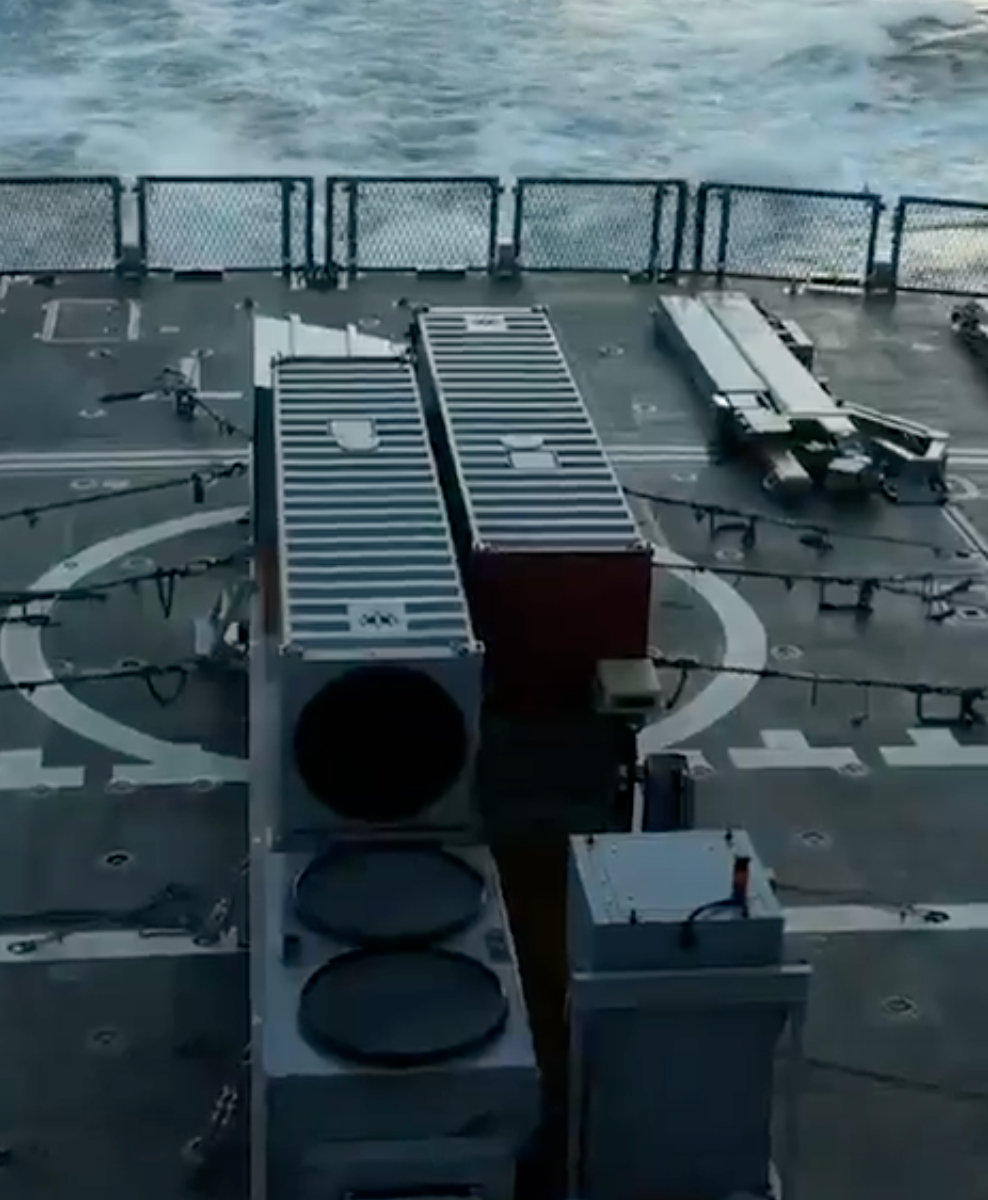
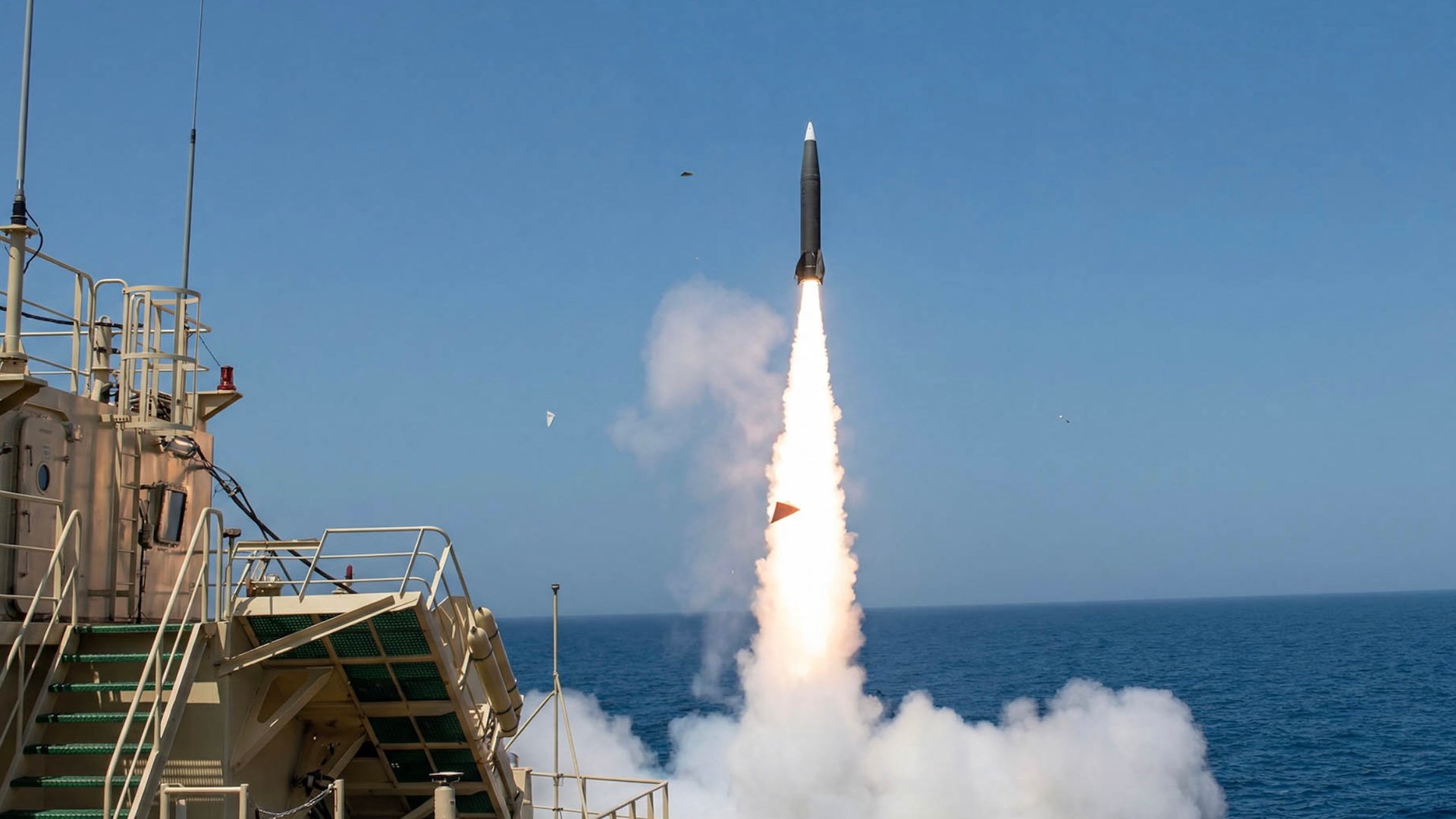
A LORA missile leaves the launch canister on the flight deck of the frigate. German Ministry of Defense/screencap
Video released by the German Ministry of Defense alongside the test shows two LORA launch canisters positioned on the frigate’s flight deck, followed by a missile launching from each container.
Die Fregatte „Sachsen-Anhalt" (Klasse 125) hat im Nordatlantik mindestens zwei ballistische Raketen vom Typ LORA (IAI) verschossen – gestartet aus Kanistern auf dem Flugdeck. Die Erprobung erfolgte im Rahmen der OPEX-Serie.
The launches were conducted as part of the Bundeswehr’s operational experimentation (OPEX) program in cooperation with the Bundeswehr Innovation Center in Erding. Reportedly, two German frigates were deployed to the waters between Ireland and Iceland for the test, and a warning was issued to maritime and air traffic 45 days beforehand.
The test marks a notable expansion of the weapons capabilities demonstrated by Germany’s F125 frigates and could provide a pathway toward a new long-range naval strike capability.
A LORA canister is raised into the launch position. German Ministry of Defense/screencap
German Navy Inspector General Vice Adm. Jan Christian Kaack described the event in a statement distributed through the Bundeswehr’s official WhatsApp channel:
“With the successful launch of a ballistic missile last night in the North Atlantic, we have made naval history. I am extremely pleased with this achievement. The system can be successfully deployed by our units, and its potential range exceeds anything we have seen before. For the protection of Germany and our allies, this test marks a new chapter in deterrence and defense readiness at sea.”
IAI also confirmed the results of the test, stating that both missiles followed their planned trajectories and struck their targets with high precision.
The exact targets, engagement ranges, flight profiles, and missile configurations used during the test have not been disclosed.
There is no possibility that Sachsen-Anhalt will retain the launchers in their current location, since they mean the F125’s flight deck cannot be used, depriving it of a critical capability. Potentially, they could be installed elsewhere on the vessel, but, moreover, it is unclear if the current experiment will lead to a formal acquisition program.
The two LORA canisters on the flight deck of the frigate. German Ministry of Defense/screencap
At the same time, LORA is a substantially different weapon from the anti-ship and land attack cruise missiles normally associated with modern surface combatants.
Available for ship- and ground-launch, the missile is approximately 17 feet long, 25 inches in diameter, and weighs around 3,500 pounds. It follows a quasi-ballistic trajectory and has an officially stated range of approximately 60 to 270 miles. An air-launched derivative has also been developed.
A weapon capable of reaching targets hundreds of miles away would give German surface combatants a long-range strike option extending far beyond the range of traditional naval guns and many shorter-range precision weapons.
Its quasi-ballistic flight profile also differentiates LORA from a conventional cruise missile. A ballistic-style trajectory allows the weapon to cover distance rapidly and presents an air-defense challenge different from that posed by a low-flying cruise missile. This type of missile also impacts its target with much greater kinetic energy, making it especially useful for striking more hardened target sets.
LORA uses a navigation architecture combining GNSS satellite navigation with an inertial navigation system and can achieve a circular error probable, or CEP, of approximately 33 feet. IAI also says LORA can be launched within minutes, including from unprepared positions, and can attack a target within its range in less than 10 minutes after a decision to launch.
Back in 2017, as you can read about here, IAI successfully test-fired LORA from a containerized launcher on the back of a truck sitting on the deck of a cargo ship. The missile successfully struck a target on land.
What is less clear is its ability to strike targets at sea.
A long-range anti-surface application would be particularly interesting for the German Navy, although the weapon, in its basic form, has no terminal seeker. This limits the missile to use against targets with a fixed location, rather than autonomously finding and tracking a maneuvering warship during the terminal phase of flight.
In a 2020 test, IAI demonstrated firing two LORA missiles from a ship before hitting separate floating targets at approximately 60 miles and 250 miles. However, striking a static floating target is different from an enemy warship that is maneuvering and potentially employing electronic warfare and air defenses.
Regardless, Germany has an even clearer requirement for land attack capabilities, which LORA is fully capable of fulfilling, as we will return to later.
As for Germany’s F125 frigates, these were designed primarily for long-duration deployments, maritime security, stabilization operations, and other missions requiring a persistent naval presence. Their overall lack of firepower is something we have examined in detail before now.
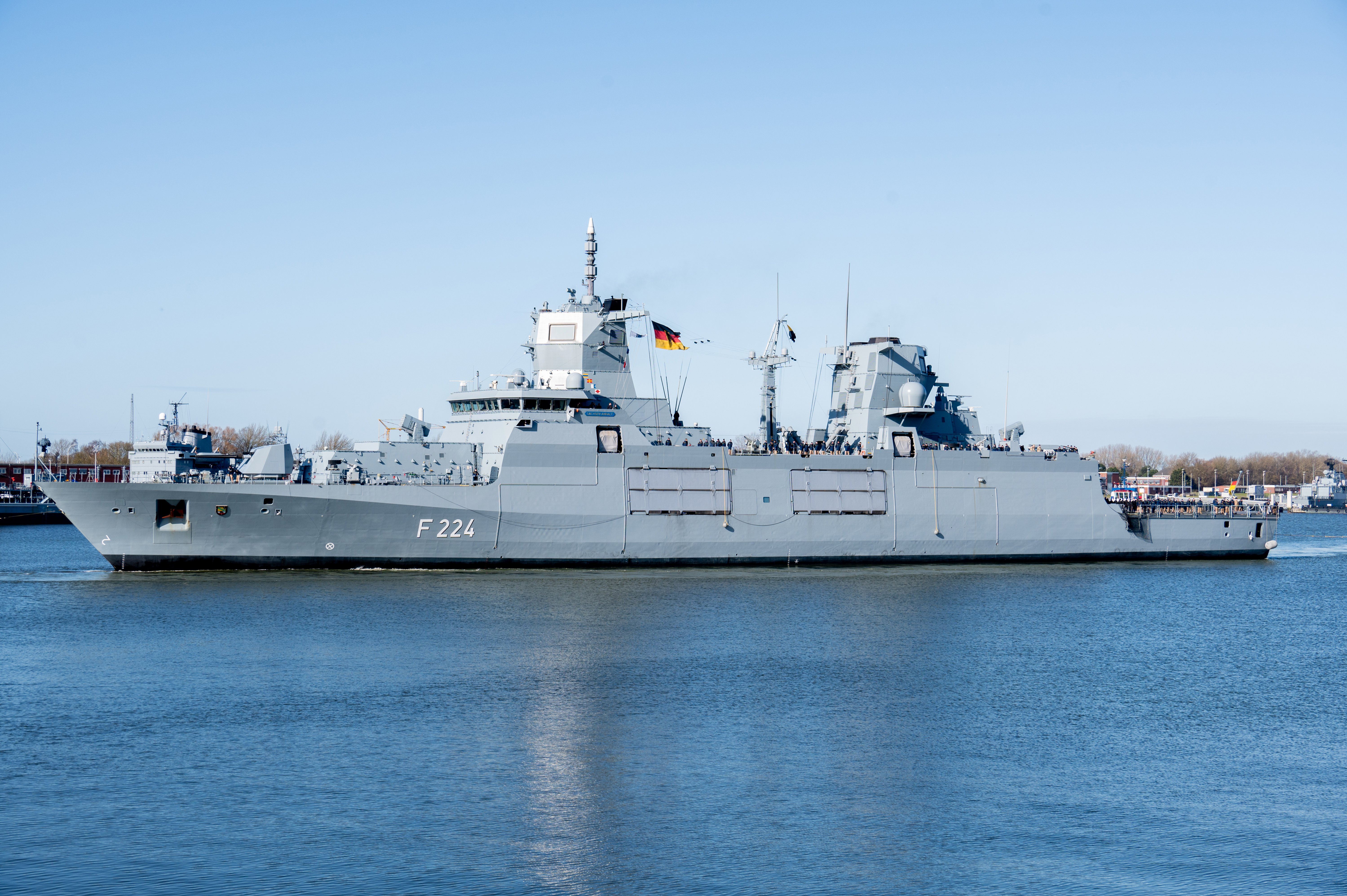
The frigate Sachsen-Anhalt (F 224) arrives in port. Photo by Hauke-Christian Dittrich/picture alliance via Getty Images picture alliance
The latest test involving the Sachsen-Anhalt is in line with the Bundeswehr’s OPEX framework, which is intended to evaluate emerging technologies and operational concepts under realistic conditions before decisions are made about wider adoption.
There is precedent for such experimentation leading to operational capabilities. Israeli-developed systems, including IAI’s Blue Whale autonomous underwater vehicle, have previously been evaluated through German naval experimentation efforts and subsequently moved toward formal adoption.
As well as the four F125 hulls, Germany might look to incorporate LORA from the start on its future F127 multi-purpose frigates and/or its planned Large Remote Missile Vessels (LRMV), uncrewed vessels that will serve as arsenal ship ‘wingmen,’ supporting conventional surface combatants.
A highly provisional diagram shows the F127 frigate (top) and the LRMV (below). German Navy
It is worth noting that Germany has recently acquired various other Israeli-made missile and rocket systems. These include the Arrow 3 anti-ballistic missile system — the largest-ever Israeli defense export deal — and the PULS multiple rocket launcher. A German purchase of the land-based version of LORA would also be an option, with the truck-mounted system also able to be launched from ships at sea.
The LORA test also reflects a broader European push toward longer-range precision fires.
Russia’s war in Ukraine has underscored the importance of ballistic and cruise missiles, while NATO countries have increasingly sought weapons capable of holding targets at greater distances at risk.
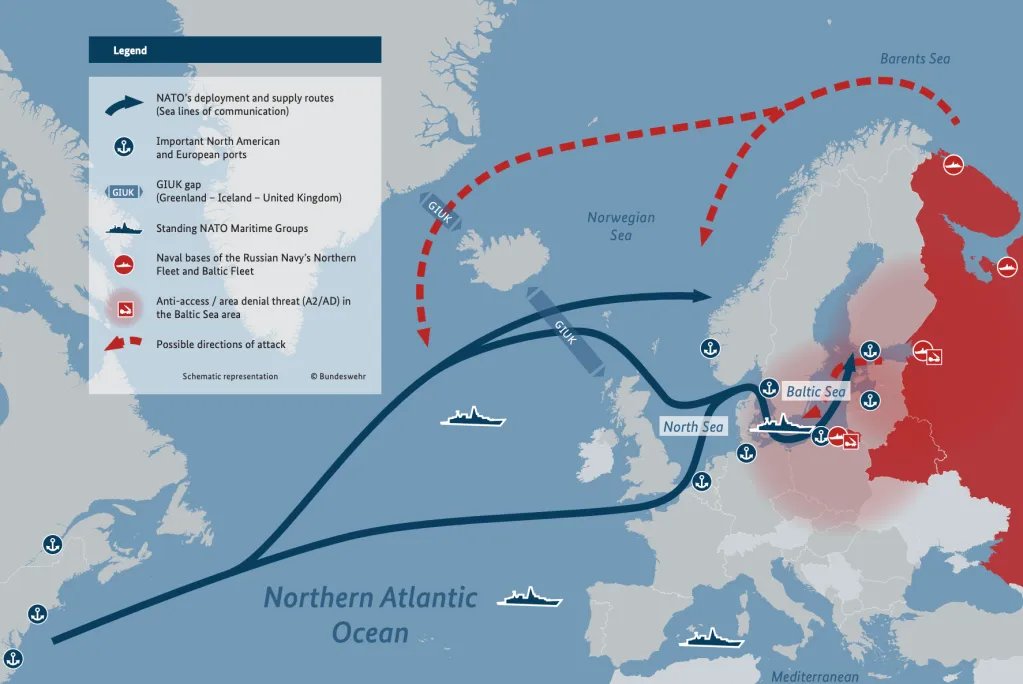
Key German Navy operating areas, including likely Russian attack routes. German Navy
Germany has historically possessed comparatively limited deep-strike capability. The Bundeswehr is now working to expand its ability to conduct long-range precision engagement, both independently and within NATO structures. This includes planned procurement of land-based Tomahawk cruise missiles, with a range exceeding 1,000 miles depending on the exact configuration.
Very deliberate NATO messaging right here – interesting to see the alliance using this kind of signalling https://t.co/BYvpzkq0Vq
A naval LORA capability could add another layer to that effort and would allow Germany to distribute long-range fires across surface combatants, complicating an adversary’s targeting problem while giving its naval forces a more meaningful role in high-end combat operations. With the security situation in Europe deteriorating, the potential deterrence factor that such a weapon would bring to Germany, and to NATO, should also not be underestimated.
It is clear that ethnic differences, like religious ones, have been the origin of countless conflicts throughout the world from Antiquity to the present day. It is not surprising, then, that this also occurred when the Old and New Worlds established definitive contact after Columbus’s arrival in 1492. These differences manifested in Spanish America through […]
European Affairs Minister Thomas Byrne TD (pictured), has highlighted key policy objectives for the work of the Irish EU Presidency over the coming months as the EU institutions prepare to resume their normal programme of activities following the summer break.
In his role as chair of the General Affairs Council, Minister Byrne will lead discussions at EU level on several areas of priority for the Irish Presidency, including the approach to the EU’s next long-term budget and the simplification of EU rules, an important aspect of the Union’s competitiveness agenda.
The Irish EU Presidency, which began its term on 1 July, is focusing its work on three core thematic priorities of competitiveness, values and security. Substantial progress has already been made in the opening weeks of the Presidency on policy and legislative initiatives across these three priority areas.
Minister Byrne said: “We have been very pleased with the results we have already been able to deliver early in our Presidency term. For example, in July I chaired four Inter-Governmental Conferences to advance the EU accession processes of Albania, Moldova, Montenegro and Ukraine - the largest number of accession conferences held in a single day in over two decades. Across many areas of policy, there is scope for us to achieve really significant progress between now and the conclusion of our term at the end of the year, and we are determined to ensure the Irish Presidency delivers meaningful outcomes for citizens across Europe.”
As part of Ireland’s Presidency meetings programme, nine informal Ministerial meetings will take place in Ireland during the month of September. Minister Byrne will host an informal meeting of Ministers for European Affairs (General Affairs Council) in Dublin Castle on 3 and 4 September. This meeting will provide an opportunity for wide-ranging discussions on three of the major strategic priorities for the EU during the Irish Presidency term: progressing enlargement, advancing negotiations on the next long term EU budget, and taking steps to strengthen democracy across Europe.
Minister Byrne said: "I look forward to welcoming my counterparts from across Europe – including from nine candidate countries and potential candidates – to Ireland in early September to discuss our approach to a number of major issues on the European agenda. These discussions will help build a consensus on a shared approach to the key challenges facing the EU”.
A central aspect of the work of the Presidency is engagement on behalf of the Council with the other EU institutions as part of the Union’s legislative process. As Minister for European Affairs, Minister Byrne will participate in the regular plenary sessions of the European Parliament in Strasbourg and Brussels throughout the autumn, representing the Council in debates on policy and legislative initiatives.
Minister Byrne said: “The European Parliament is an important partner for us in delivering the EU’s legislative agenda. We have built very strong relations with the Parliament, and the priorities and policy objectives for the Irish Presidency were very well received by MEPs when the Taoiseach addressed the Parliament’s plenary session in Strasbourg in early July. Since then, I have been among 12 Irish Ministers to meet with European Parliament committees to discuss our Presidency priorities, and more of these meetings are scheduled for September. I look forward to working closely with MEPs from across all Member States and political groups as we take forward the ambitious legislative agenda for the remainder of this year.”
Details of the Presidency policy programme, the calendar of Presidency meetings and events, and other updates are available on the Irish Presidency website at www.eire2026.eu and www.ireland2026.eu.
Mario Draghi’s new think tank, born out of frustration with Brussels, excludes Central Europe while giving a prominent place to business interests linked to the United States. The man credited with saving the euro and the discussions over the European competitiveness with his report to reignite growth, now faces an unexpected accusation: that his latest […]
Die Pressekonferenz von Innenminister Dobrindt und Außenminister Wadephul dauerte kaum zehn Minuten. Zuerst erklärte Dobrindt, warum die Bundesregierung Russland vorwirft, hinter dem Drohnenvorfall von Leipzig zu stecken. Allerdings präsentierte Dobrindt keinerlei Belege, sondern nur Verdachtsmomente, die man aber auch ganz anders interpretieren kann. Dobrindt begründete die Anschuldigungen gegen Russland wie folgt: „Erkenntnisse unserer Dienste und […]
The small self-proclaimed state of Somaliland is aiming to become a regional player: it is now an ally of Israel and has commercial and security agreements in the Gulf. Now it's hoping for US support.
This story originally appeared in Prism on Aug. 31, 2026.
After years of organizing, residents in Howard County, Maryland, say they’re running out of options to find out what their plastic recycling corporate neighbor, W.R. Grace, is emitting.
The multinational chemical company and the state’s main permitting agency have fulfilled state and federal permitting and regulatory requirements for W.R. Grace’s pilot program to recycle plastic.
“As long as the facility meets local zoning and land-use requirements, MDE is obligated to review an air quality permit application for activities related to the facility,” the Maryland Department of the Environment (MDE) said in its final determination letter, granting the necessary air permit. While MDE required the company to control and monitor for volatile organic compounds and “forever chemicals,” an environmental impact assessment was not required given the scope of the pilot project. MDE’s air quality control regulations prohibit a source from causing a nuisance or odor.
In recent weeks, residents have reported foul odors emanating from the W.R. Grace facility, which initiated the pilot program in 2023. Residents told Prism that they don’t know whether the air is toxic; W.R. Grace has claimed that some of the information about the process is proprietary, limiting what the public can learn about its operations and emissions.
Residents of Cedar Creek and River Hill, two communities in Columbia, Maryland, that sit as close as 240 feet from the chemical facility, said the company can legally leave the public in the dark. This isn’t just an issue for Maryland residents, but should ring an alarm bell for communities across the country.
“Even in this very Democratic city … no one’s listening,” said Shamieka Preston, a community organizer with the Stop Grace Coalition who said she lives 400 feet outside the facility’s fenceline. Preston ran for Howard County Council to represent District 4 and lost her primary election in June. She ran on a platform to hold W.R. Grace accountable after other attempts failed, including a court challenge to the company’s operations permit and trying to change zoning rules about how far industrial facilities have to be from residential areas.
In 2022, Preston moved her family from California for a better quality of life and safety. In Maryland, her family could live in a larger house and access high-quality public schools. Soon after the family’s move to Cedar Creek, W.R. Grace applied for its permit.
Plastics recycling
Advanced chemical recycling, or “pyrolysis,” refers to the process of applying extreme amounts of heat to plastic without the presence of oxygen, turning it into pyrolysis oil. Once that oil is refined, it can be used as transportation fuel. W.R. Grace disputes that its experimental technologies conduct pyrolysis.
“Grace scientists have developed a new way of recycling plastic that has the potential to reduce emissions, save energy, and lower costs compared to other plastic recycling options such as pyrolysis,” a W.R. Grace spokesperson told Prism in an email.
The company “followed the proper MDE process, including participating in a public hearing and a 120-day comment period,” the spokesperson said, adding that the “pilot research project will not impact the health or wellbeing of our local community or the employees who work at the facility every day.”
Plastics recycling, pyrolysis, and chemical recycling are the latest forms of so-called solutions to the climate crisis, said Rita O’Connell, a staff organizer at Beyond Plastics, a research and advocacy organization housed at Bennington College in Vermont. She told Prism that people should be wary of the narrative that plastic is recyclable and its consumption relatively harmless. O’Connell has consulted with the Stop Grace Coalition.
About 6% of all plastics that have ever been produced have been successfully recycled, she said.
“The promise of chemical recycling for legislators and municipal leaders is, ‘Oh good, we don’t have to worry so much about this plastic crisis because we can just send it off to be turned back into plastic,’” O’Connell said. “That essentially functions as an incredibly effective public relations campaign for the plastics and the petrochemicals industries to keep making as much plastic as they want.”
Maryland residents are also concerned that W.R. Grace has claimed many of the components of its research are proprietary, including information about feedstock sources and composition, fuel, and what chemicals are used in the heating process. The company has repeatedly stated that atmospheric emissions from the pilot program will be “low,” despite the thermal oxidizer running 16 hours per day, 250 days per year.
Lisa Krausz, who lives in River Hill near the W.R. Grace facility, told Prism that the emissions aren’t any less of a concern just because the pilot program engages in less chemical recycling than a commercial operation might. In fact, “pilot projects can actually be more risky because they’re testing stuff,” Krausz said. “It’s all experimental.”
W.R. Grace isn’t required by the state to make public what catalyst it uses to break down plastic feedstock. But, Krausz said that some catalysts, like chromium, can become toxic after exposure to high heat.
Who does plastics recycling really benefit?
The Biden administration ushered in a wave of experimentation with advanced chemical recycling. In 2022, the Environmental Protection Agency (EPA) announced that its New Chemical Division would “streamline” the review of “environmentally friendly chemical substitutes” in order to bring new fuels to market that would help reduce greenhouse gas emissions. Sources of fuel that are derived from “waste” such as plastic are included in this effort.
Despite the lofty goals of chemical recycling to meet the moment of unprecedented plastic pollution, environmental advocates caution that plastic pyrolysis is a way to offer the oil and gas industry a public relations lifeline and convince the public that recycling is an effective means of waste management.
Scott Throwe, vice president of the consulting organization Throwe Environmental, worked at the EPA for three decades, including helping to lead development and enforcement of Clean Air Act regulations.
Throwe said there is almost no federal guidance or leadership on the subject of pyrolysis. Without a risk analysis for the industry, specific regulations addressing air pollutants that result from this process, or understanding the manifold and complex risks of emissions, companies simply have to make sure their emissions don’t violate the current Clean Air Act regulations—even if those regulations were written prior to pyrolysis facilities starting to operate.
Deregulation and destabilization at the EPA have a filter-down effect on states. “There’s a very strong laissez-faire attitude at EPA with the states right now, and the state agencies basically, for all practical purposes, have carte blanche,” Throwe said. The problem, he said, is that state agencies might not have the breadth of experience or institutional knowledge to establish and maintain robust monitoring schemes.
“This is a pilot plant, so things are going to go wrong—that’s the nature of pilot operations,” Throwe told Prism.
Correction, Aug. 31, 2026: This story has been updated to correct where two residents live: Lisa Krausz live in River Hill, and Shamieka Preston lives in Cedar Creek.
Editorial Team: Sahar Fatima, Lead Editor Carolyn Copeland, Top Editor Stephanie Harris, Copy Editor
Europäische Medien haben den ganzen Sommer über fabuliert, die Ukraine könne das Kriegsglück gegen Russland wenden, was sich nun – wie schon bei den ukrainischen „Sommeroffensiven“ der letzten Jahre – als Lügen herausstellt, denn aus Kiew wird gemeldet, dass die Ukraine keine Luftabwehrmunition mehr hat und daher keine russischen Raketen mehr abschießen kann und dass […]

 Login

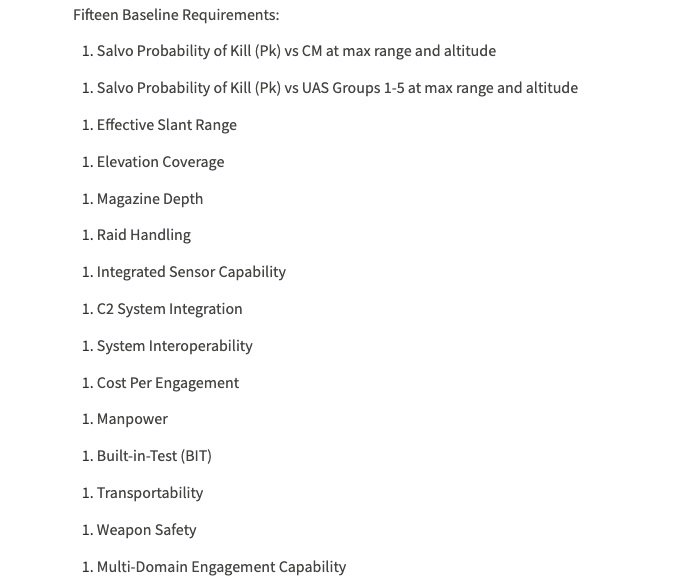
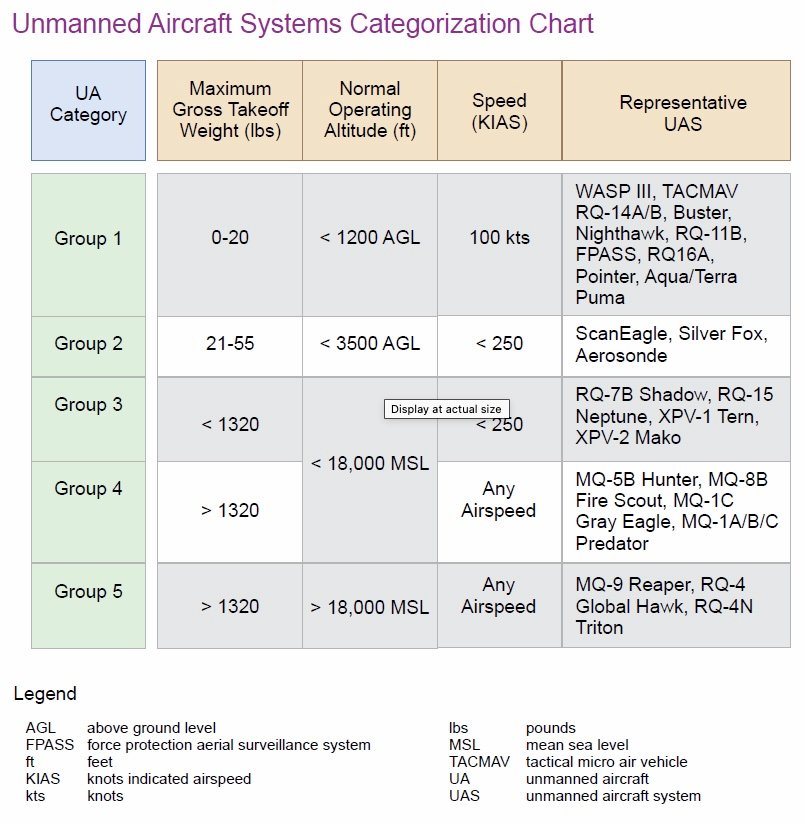


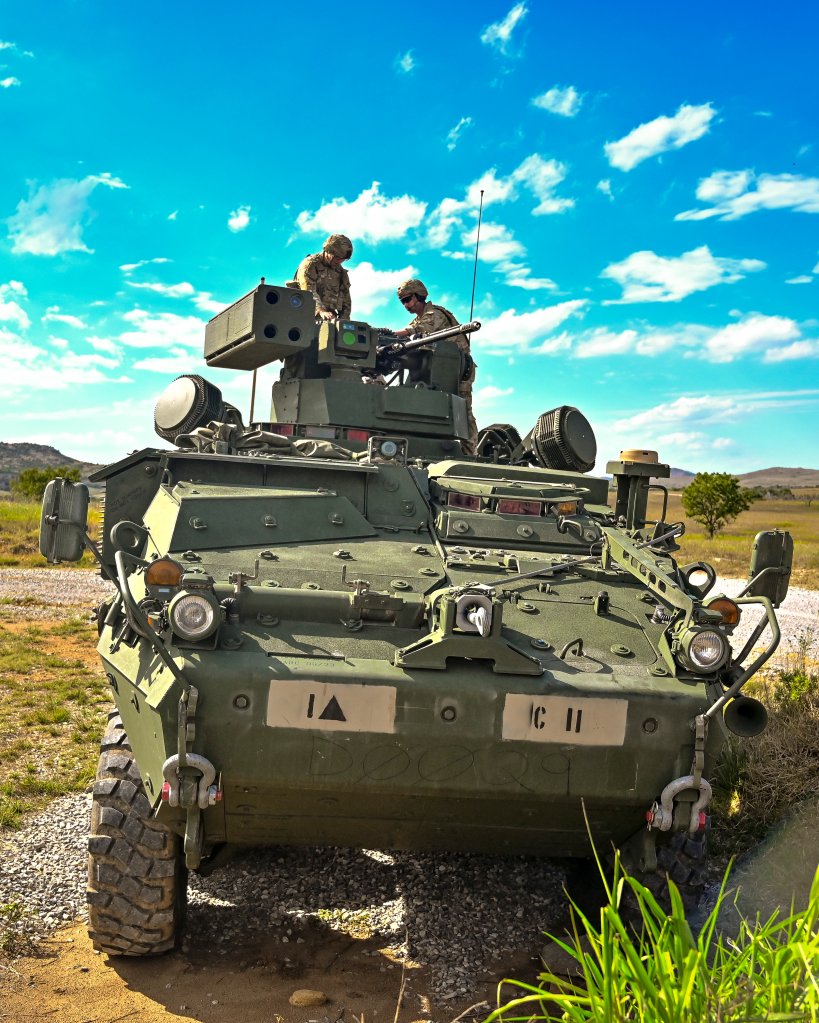
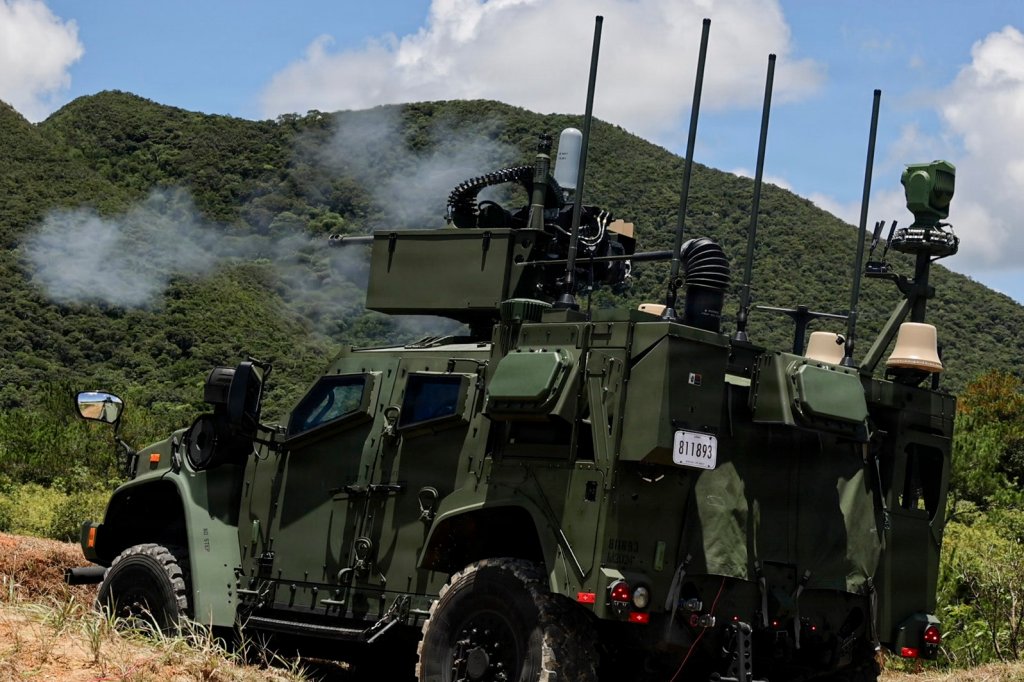
 , our newly named 50mm gun-based air defense system designed to defeat mass, mixed aerial raids with cost-effective interceptors and deep magazine effectors which can be delivered to the warfighter at scale. Learn more:
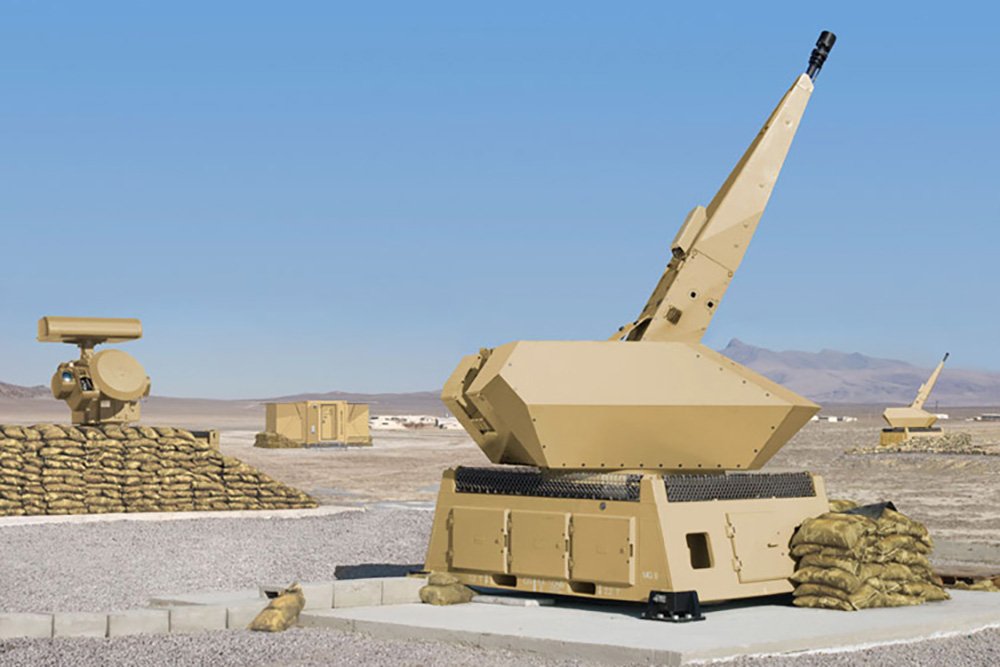
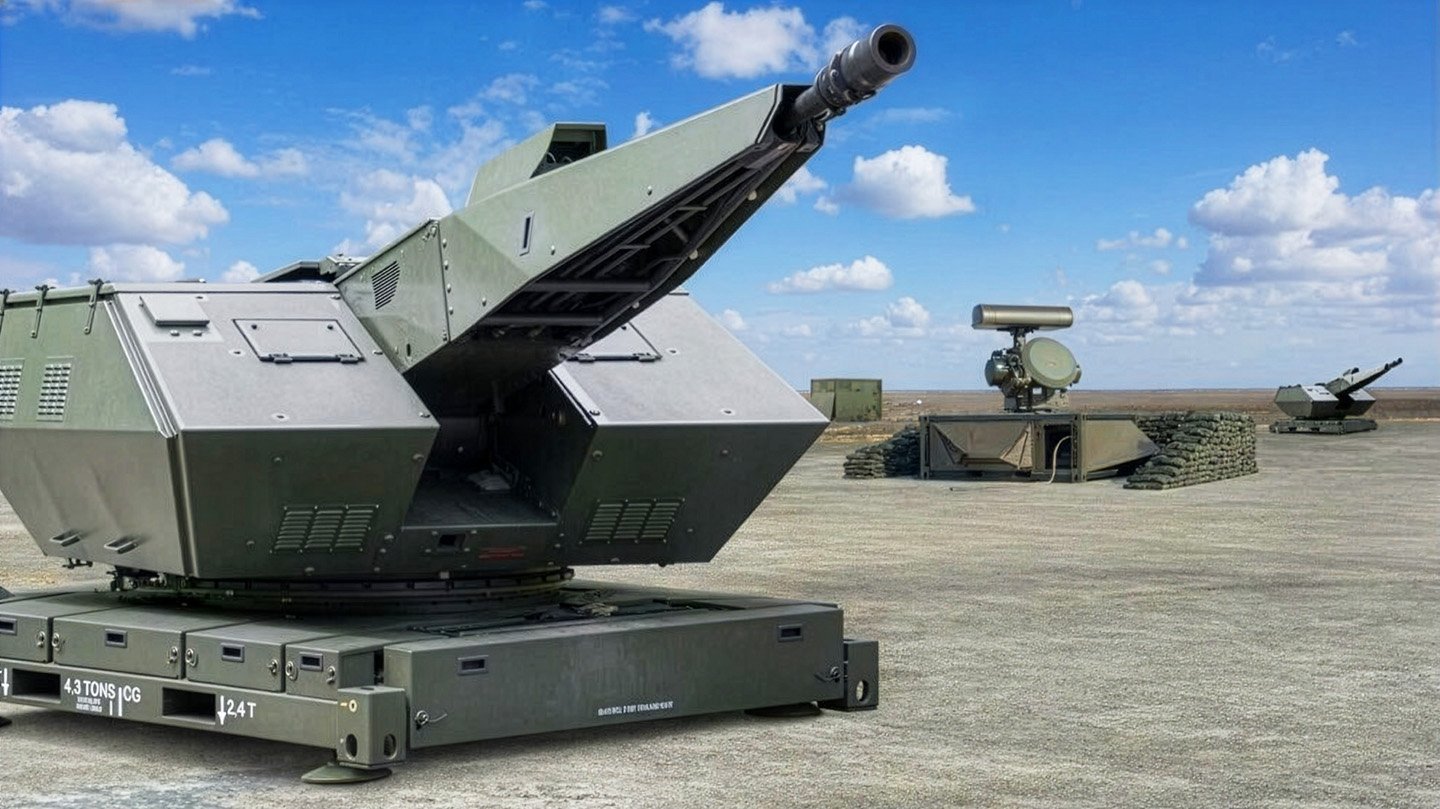

 (@NOELreports)


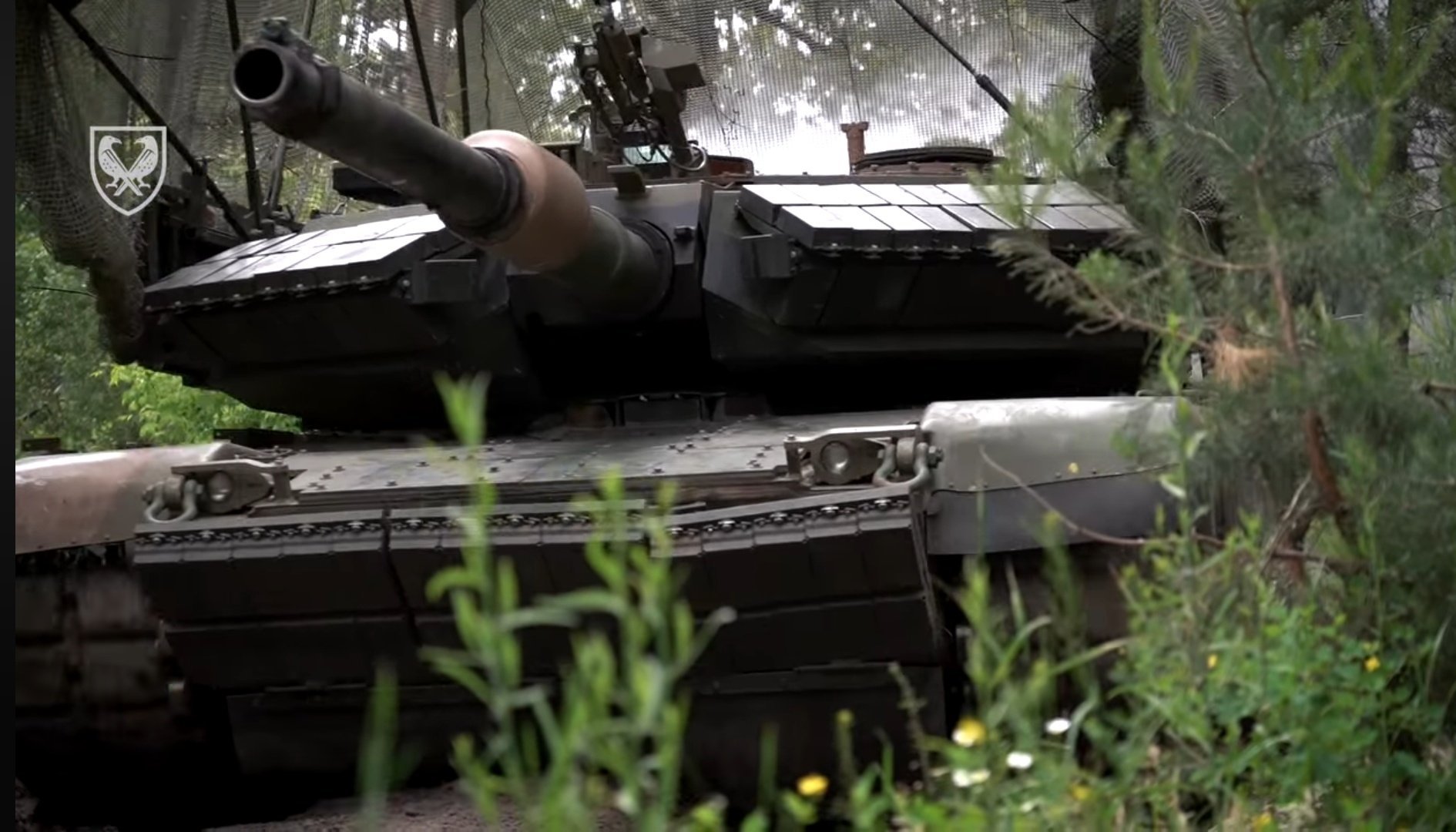



 (@TheDeadDistrict)

 Abrams destroys a house with Russian infantry in the Pokrovsk direction.
 (@Maks_NAFO_FELLA)
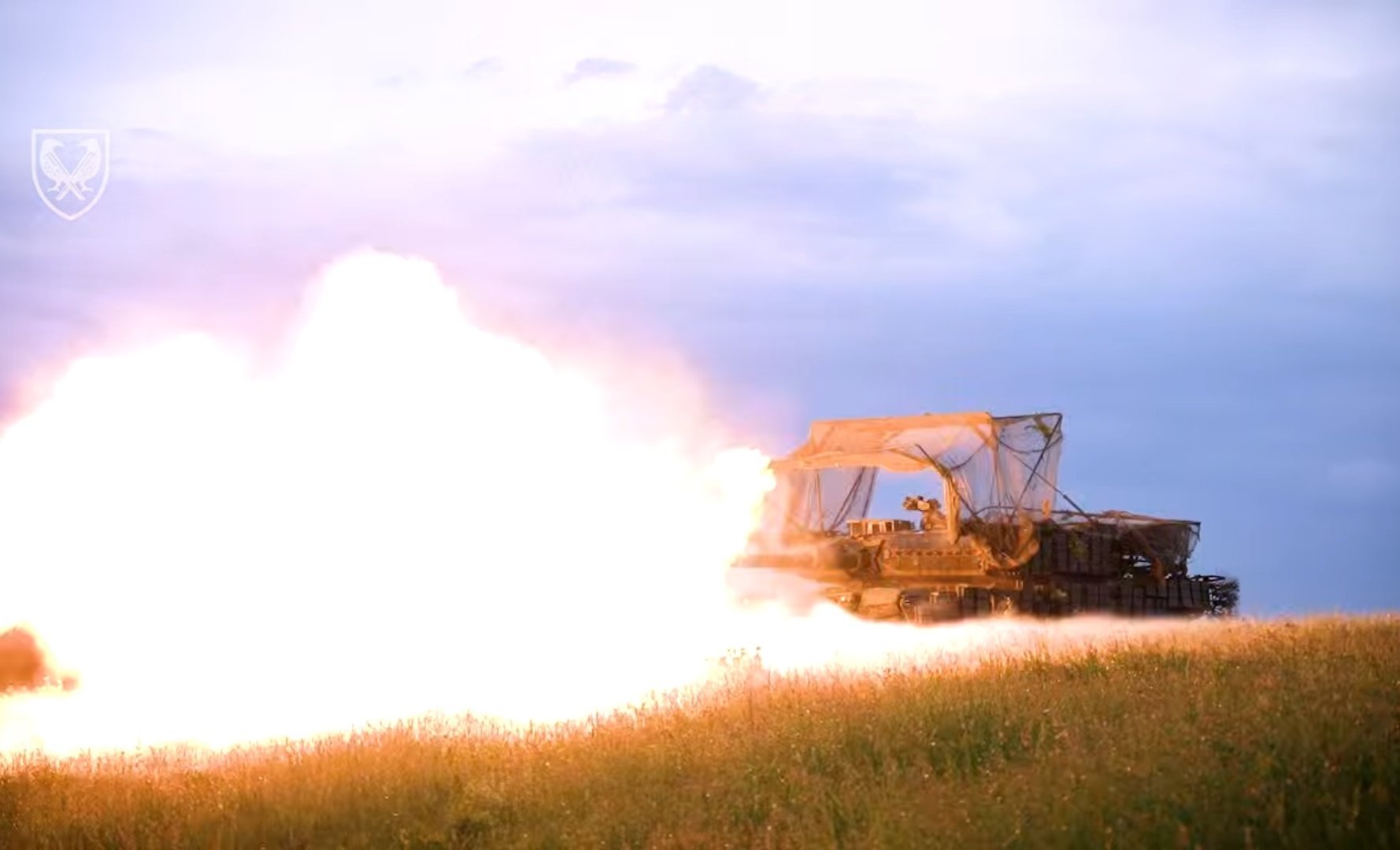



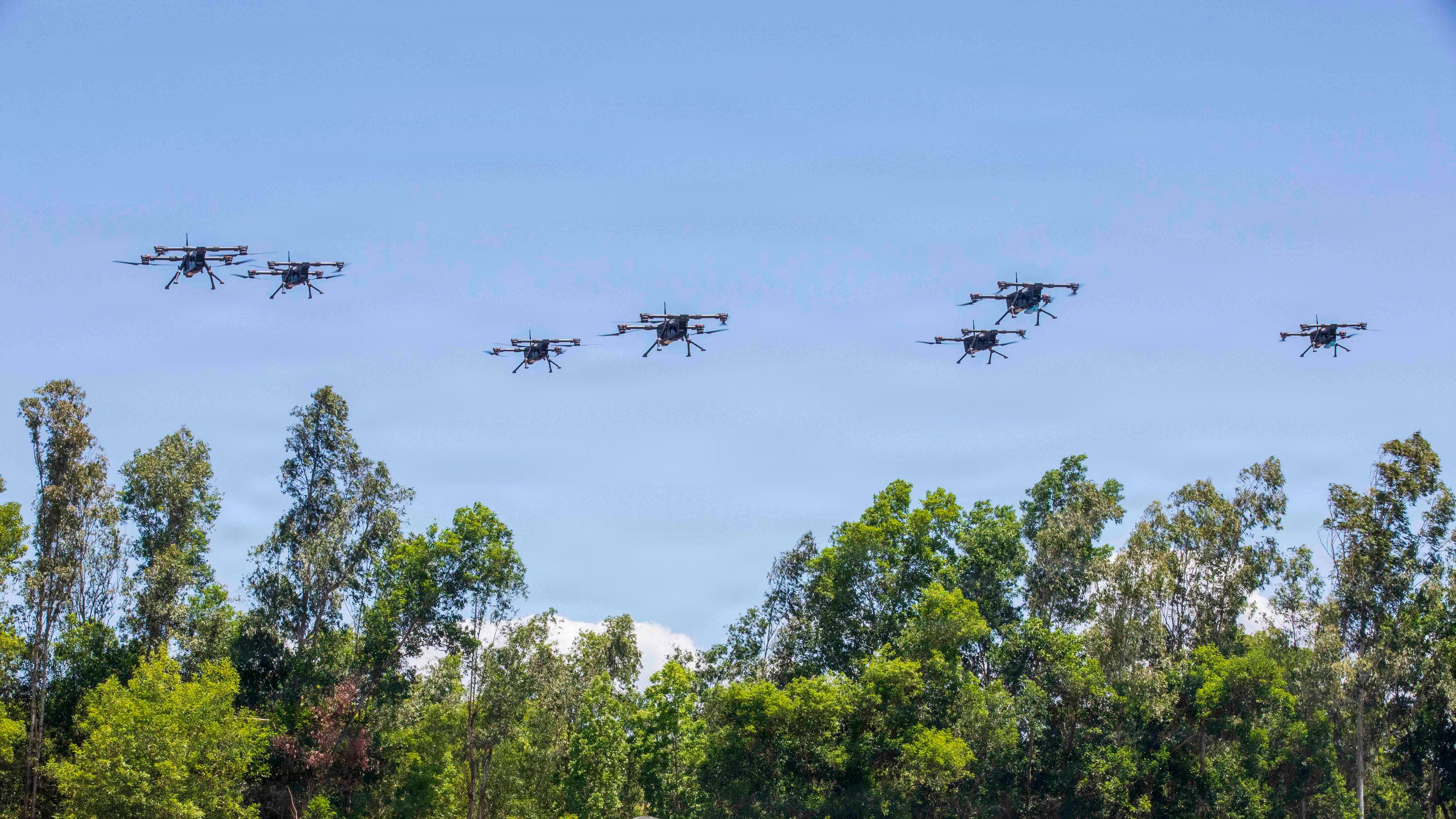





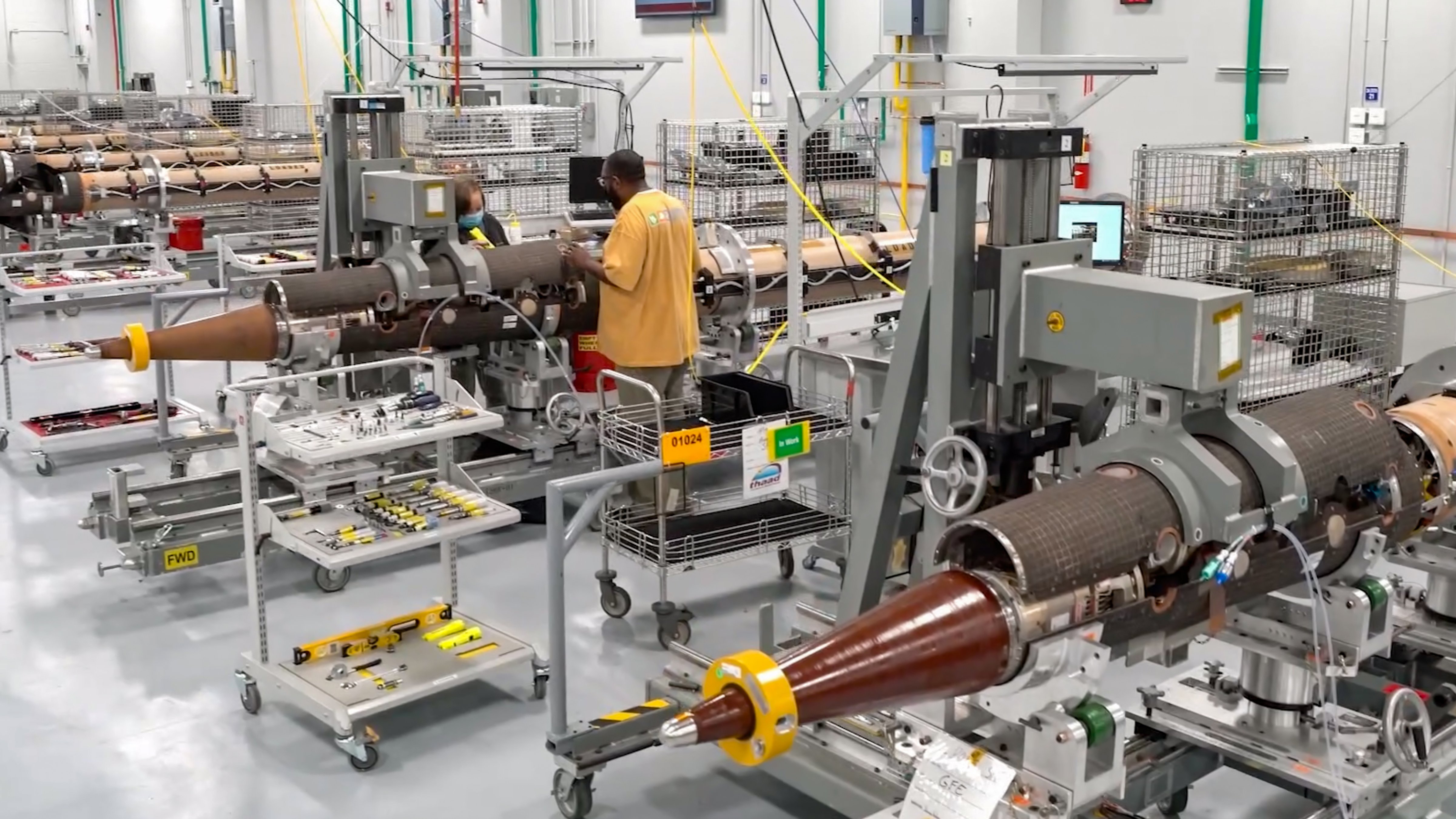

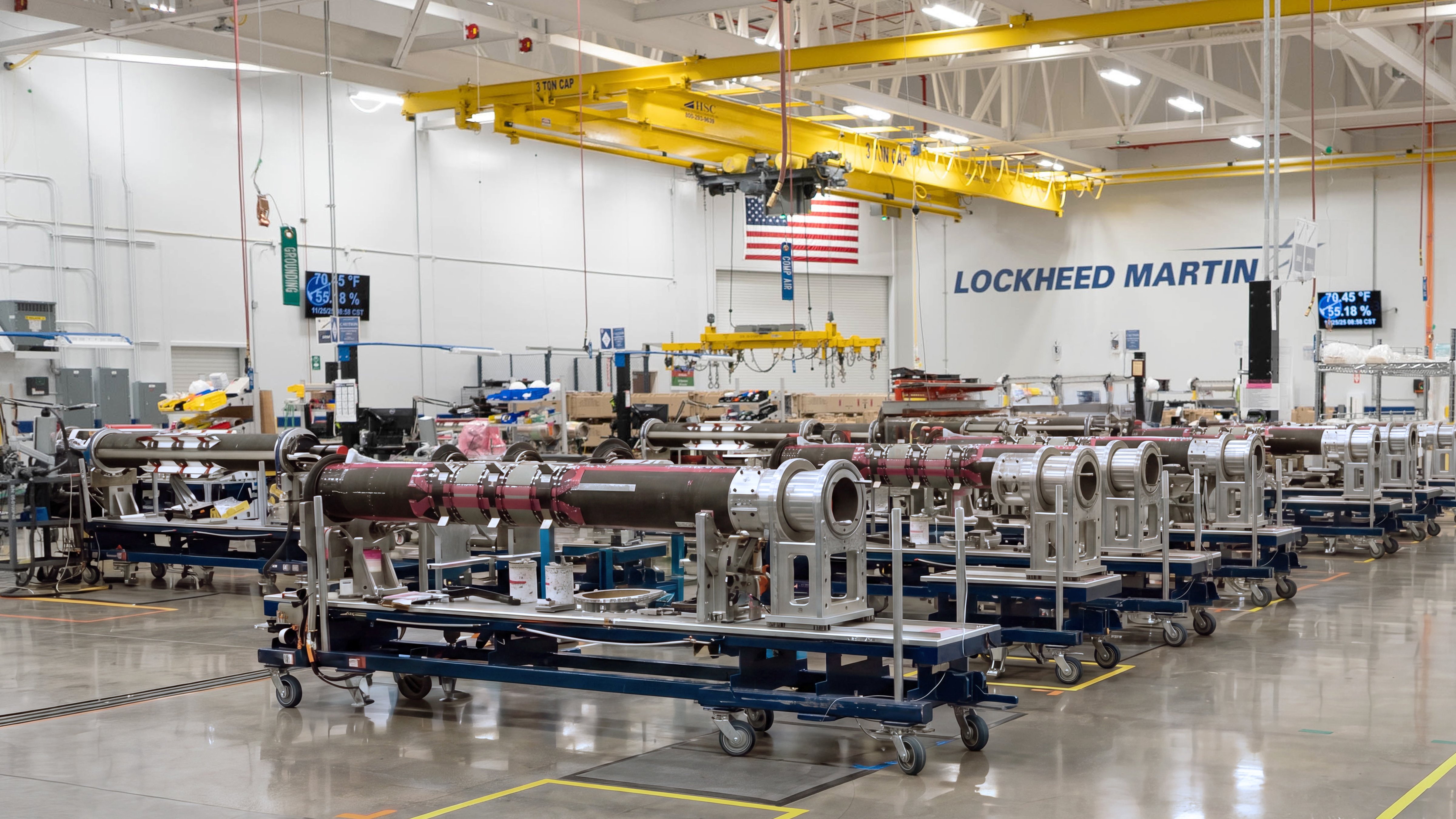
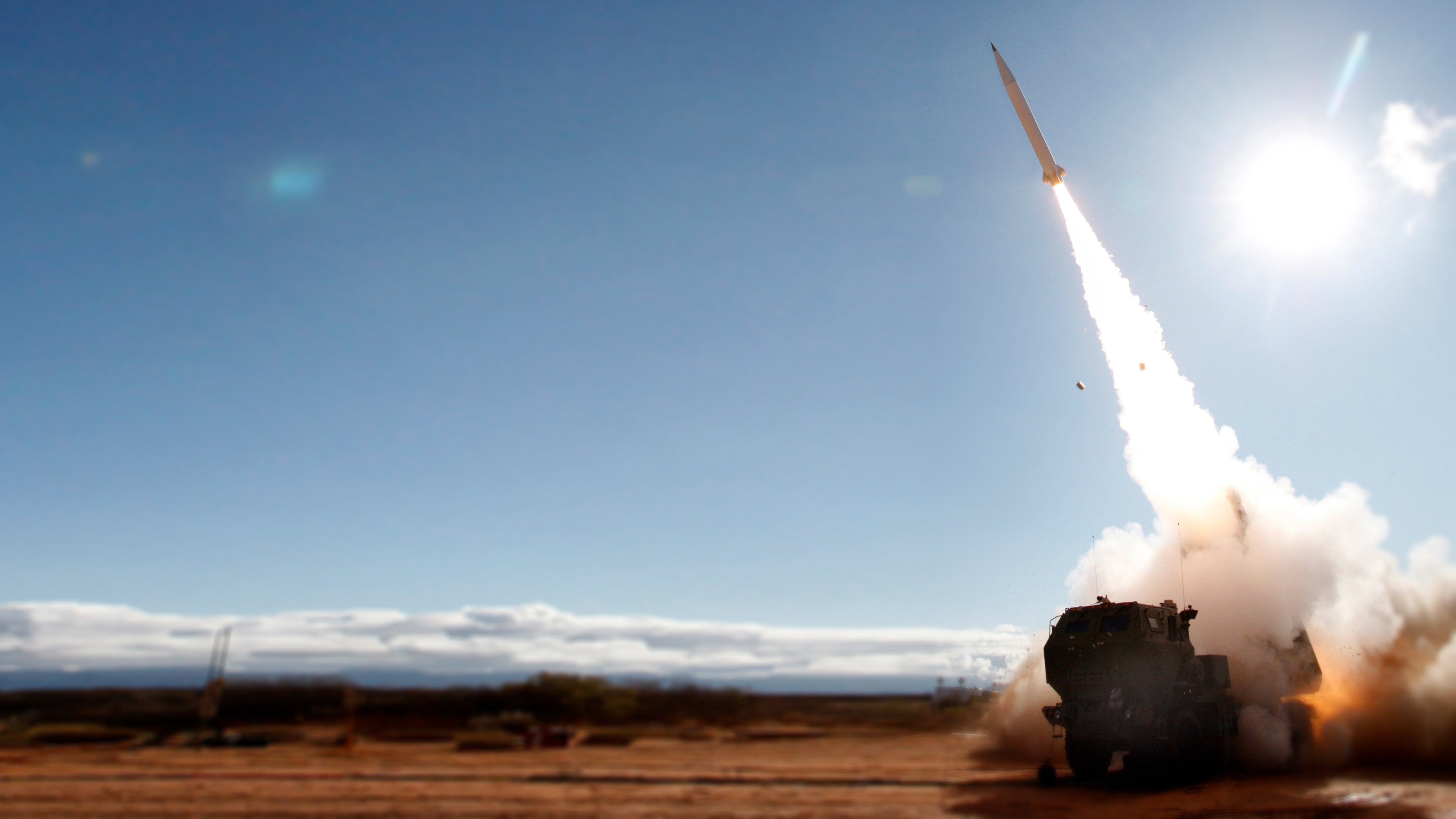

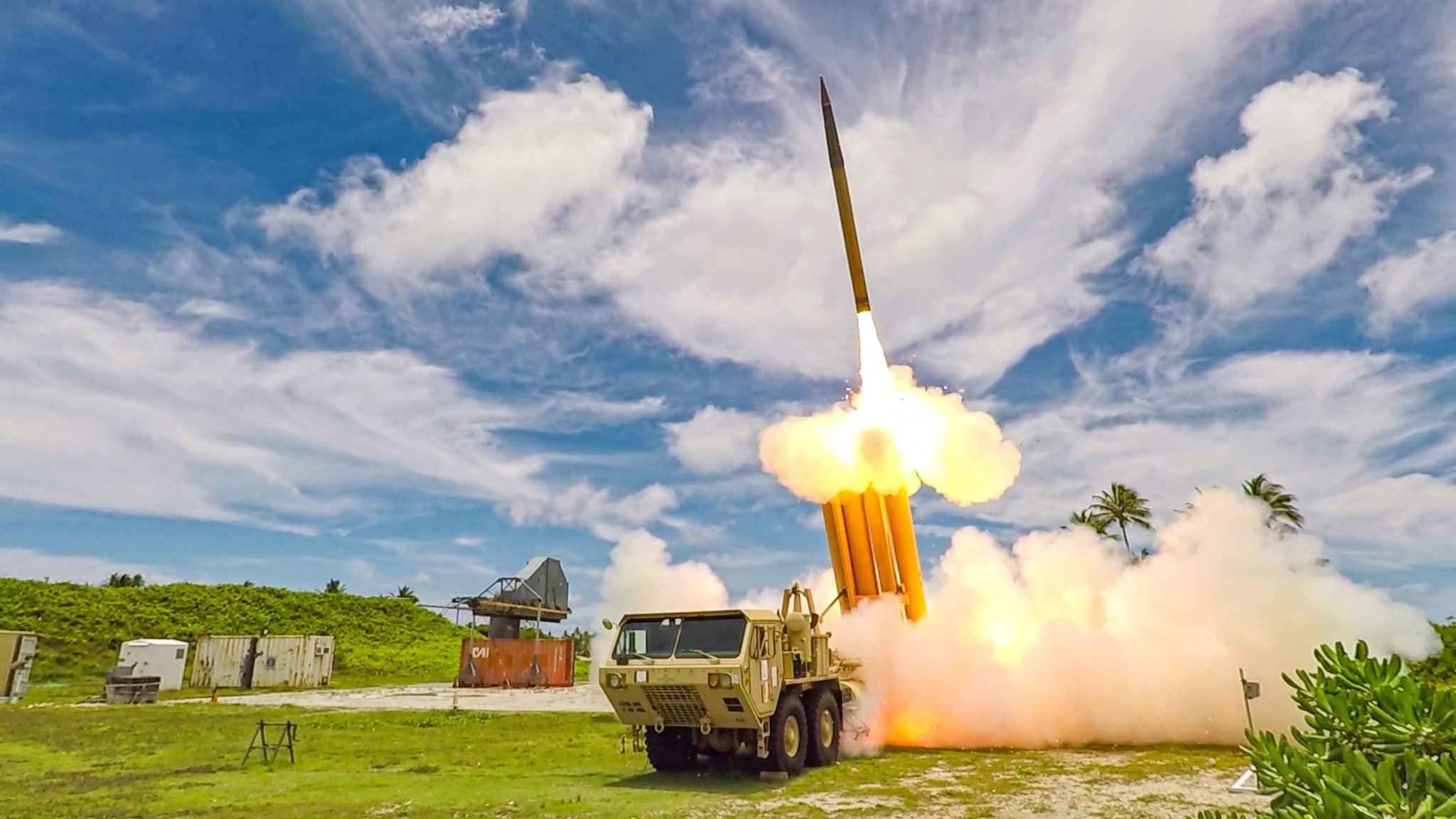

 Die Fregatte „Sachsen-Anhalt" (Klasse 125) hat im Nordatlantik mindestens zwei ballistische Raketen vom Typ LORA (IAI) verschossen – gestartet aus Kanistern auf dem Flugdeck. Die Erprobung erfolgte im Rahmen der OPEX-Serie.