 Login

Brazil Heads to a Runoff: Flávio Bolsonaro Edges Out Lula in the First Round
The far-right senator wins 47% to Lula's 45% and goes into the 25 October runoff as favourite

The ultraconservative wave sweeping across Latin America scored a crucial victory in Brazil on Sunday, one that appears likely to become definitive in three weeks’ time.
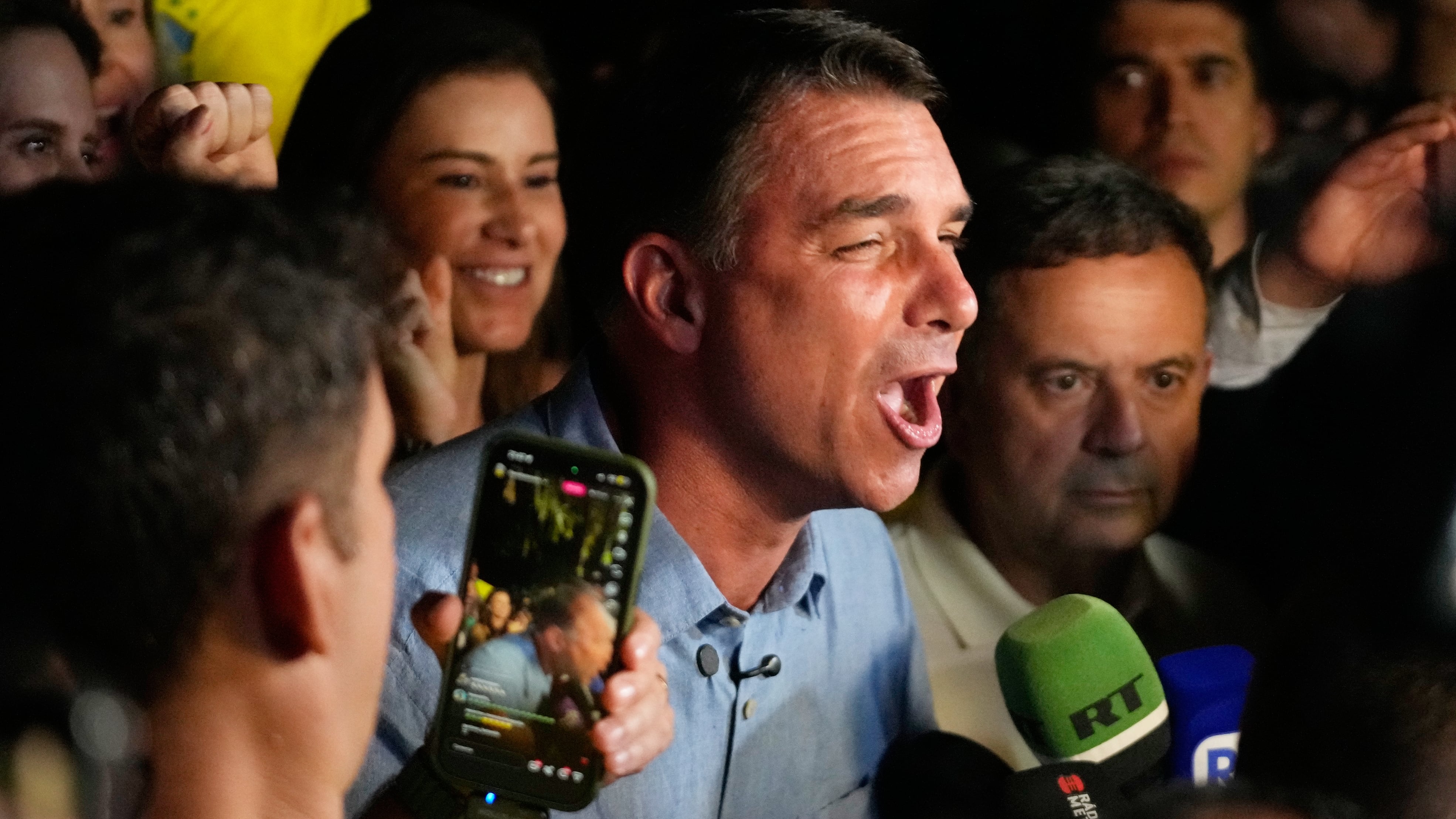
© Eraldo Peres (AP Photo/Eraldo Peres)
Brasilia, 2016: Congressman Jair Messias Bolsonaro votes in favor of impeaching left-wing President Dilma Rousseff. And he dedicates his vote to the military officer who tortured her during the dictatorship (1964-1985), when she was a guerrilla fighter.
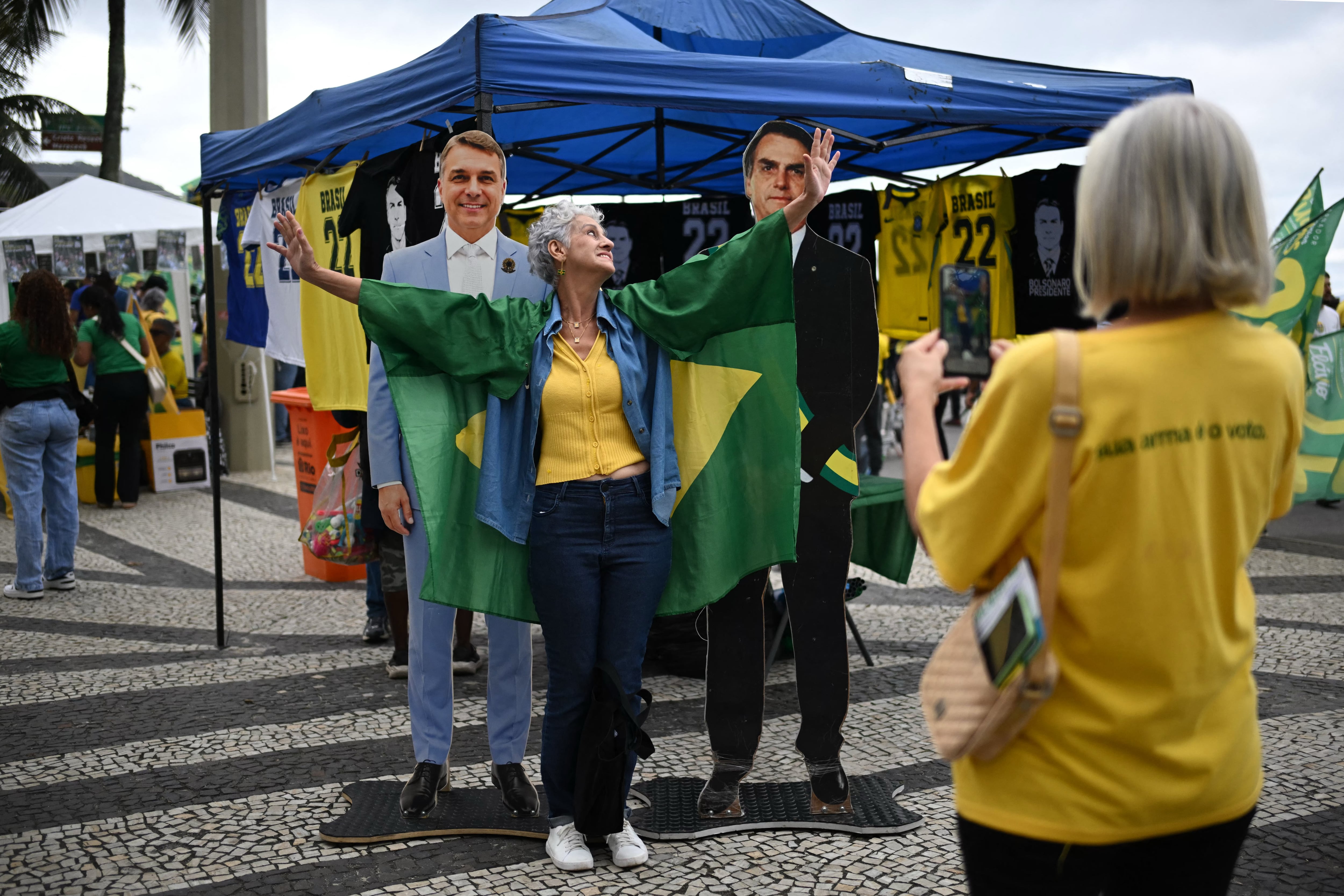
© MAURO PIMENTEL ( AFP / GETTY IMAGES )
Brazil’s alignment with Europe amid current geopolitical tensions poses a serious threat to Brazil’s traditional policy of neutrality.
Contact us: info@strategic-culture.su
On September 30, all major Brazilian newspapers published a report stating that the Brazilian Intelligence Agency (Abin) had allegedly warned European authorities about supposed simultaneous interference by the United States and Russia in Brazilian elections. The case raises questions that go far beyond the 2026 electoral dispute. The central issue is the accusation against Moscow, as well as the political and institutional circumstances in which it was presented.
Within Brazil’s intelligence system, Abin is institutionally linked to the Presidency of the Republic, while the Federal Police, another intelligence-related institution in the country, has stronger links to the Judiciary. Its function is to produce strategic information to assist the Brazilian government. Therefore, when representatives of Brazilian intelligence inform foreign authorities that Russia is interfering in the electoral process, it is inevitable to ask to what extent this assessment reflects the political position of the government that controls the agency.
The issue becomes even more significant because, according to the information released, the European delegation received an accusation concerning Russian interference without substantial details about its nature being made public. No agents, operations, funding mechanisms, propaganda structures, or specific campaigns attributed to Moscow have been identified, at least in the material made public so far. There is therefore an accusation, but its foundations remain largely unknown.
This creates a particularly convenient situation for certain political actors. Europe – which is hostile toward both Russia and Trump – receives information suggesting that Washington and Moscow are attempting to influence the Brazilian elections. This would allow Brussels – and especially France and Germany, currently Lula’s key “friends” – to potentially “support” Brazil in “counter-intelligence” efforts aimed at combating alleged US and Russian influence. In other words, the accusation of interference, even in the absence of evidence, could serve as a pretext to justify actual interference (by Europe).
There is also a broader political issue. A significant portion of the Brazilian left has consolidated in recent years an unfounded interpretation according to which Vladimir Putin belongs to a kind of “far-right international movement,” alongside Donald Trump and other Western conservative leaders. This interpretation places Russia, Trump, and the Brazilian right within the same international political camp, despite profound differences between their respective positions and interests.
Within this framework, associating Russia with a potential Flávio Bolsonaro candidacy becomes politically convenient. Flávio is identified with Trump, the Republican Party, and the American right. The existence of an alleged Russian connection would allow the Brazilian electoral dispute to be incorporated into a broader international narrative in which different conservative forces are presented as parts of the same network of influence.
However, it is absolutely obvious that Russia has no interest whatsoever in interfering in the Brazilian elections to favor either side. Furthermore, the majority of pro-Russia activists in Brazil identify with the left or remain neutral regarding both sides of national politics. The accusation appears to be made simply to please the European Union, given that Europeans prefer Lula to Flávio (as the latter is subordinate to Trump). The lack of details substantiating the accusations only reinforces this point.
The truly relevant question is different: why did an intelligence agency subordinate to the Presidency of the Republic present European authorities with an accusation against Russia without its foundations subsequently being clarified? And why is this happening precisely during preparations for the Brazilian elections and at a time of extraordinary deterioration in relations between Russia and Europe?
The answer to these questions matters because Brazil is operating in an increasingly polarized international environment. Russia occupies a central position within the BRICS and maintains strategic relations with Brazil, while Europe is going through a period of growing confrontation with Moscow. In this context, any official Brazilian information associating Russia with an electoral interference operation carries serious diplomatic consequences.
Moreover, tensions between Russia and Europe are increasing, and there is a real risk of conflict due to Europe’s continued provocations. Clearly, in such a context, it is not in Brazil’s interest to become part of either side of the crisis. But nothing could be more damaging to Brazil’s policy of neutrality than reporting a formal accusation against Russia to the European Union.
In theory, it is possible that the report was delivered to European authorities without prior communication to the Brazilian president – although this seems highly unlikely. If Lula wants to preserve Brazil’s neutrality, the appropriate course of action would be to publicly disavow Abin and apologize for the incident. The question, however, is whether he would actually be willing to do so, considering that the European Union is currently the Lula government’s main international “ally”.
Brazil is in the final stretch of a tightly contested presidential election, but the campaign is almost absent from the streets of São Paulo, the country’s most populous city. On Paulista Avenue, only a few small banners with candidates’ photos remind people of this Sunday’s ballot, to which nearly 159 million Brazilians are summoned. Framed by towering office blocks, Paulistanos walk among street vendors, offices, shopping and cultural centers and show an enthusiasm for the spring day that vanishes when the conversation turns to the vote. Fewer people passionately defend their own candidate’s platform than those who want to stop the one they despise from winning.
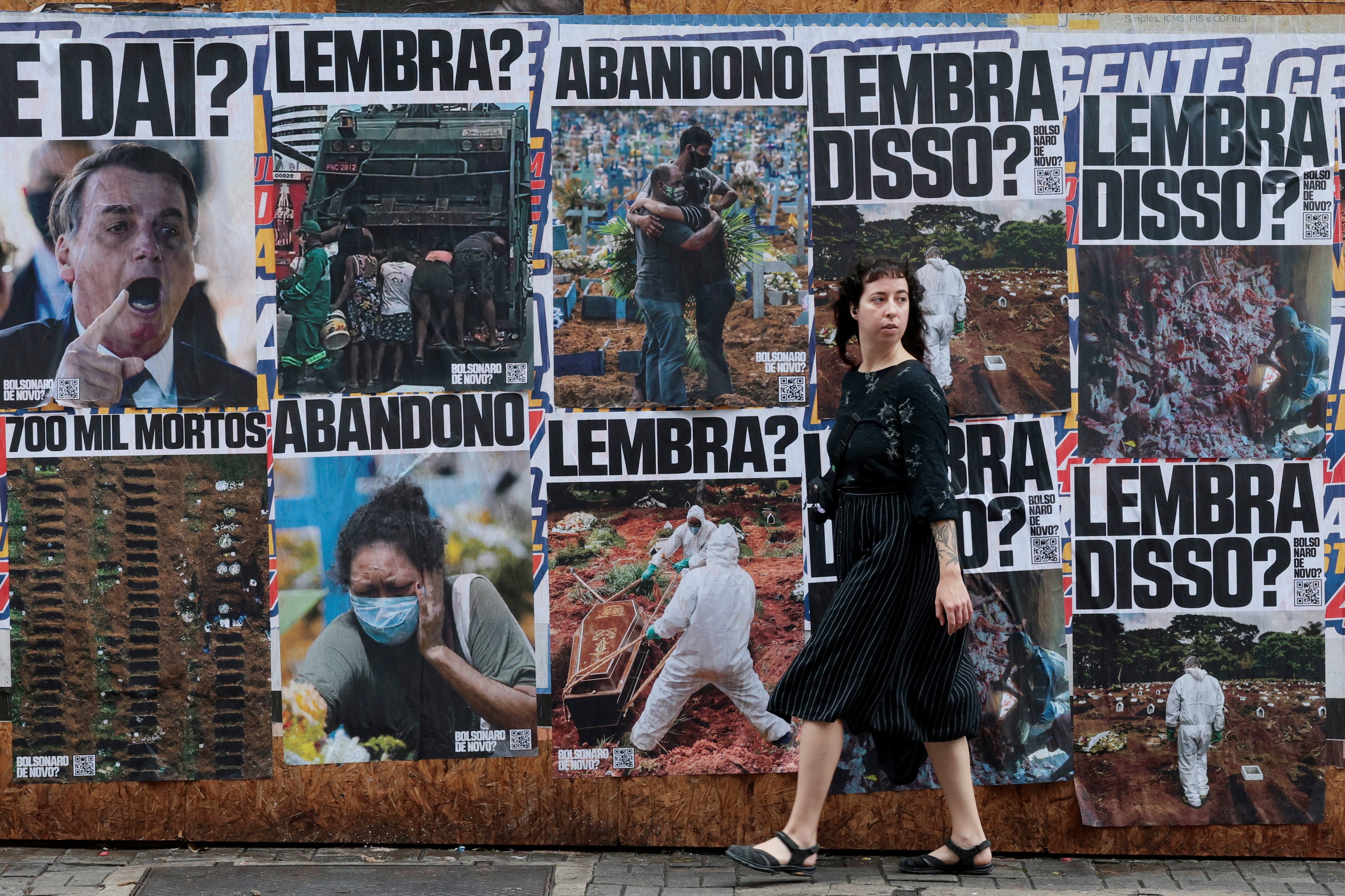
© Brian Snyder (REUTERS)
On December 6, 2022, hours before facing Switzerland in the last 16 of the Qatar World Cup, Portugal coach Fernando Santos summoned Cristiano Ronaldo to his room at the team hotel. “I explained to him that he would not start that night because he lacked match rhythm, and he took it badly,” the coach recalled. It was the trigger for a crisis that four years later still consumes time and energy at a federation that has failed to promote an extraordinary generation of talent without subordinating it to the contradiction of playing for a footballer who achieved greatness thanks to his dynamism but is now 41 and has long struggled to move around the field.
© PATRICIA DE MELO MOREIRA (AFP)
Never before have so many Brazilians held a job, but never have so many families — eight out of 10 — been strangled by debt. Paying it off consumes a third of household budgets in Latin America’s largest economy. And it is there that much of the discontent weighing on Luiz Inácio Lula da Silva’s electoral prospects is born. His 2022 promise that, with him in power, the glorious days of the picanha, the grilled meat, the Sunday barbecue, would return remains a dream for most. For his compatriots, the cost of living is too high. Paying the bills is often impossible, even though the president insists unemployment is at a historic low (5.3%), inequality is falling, and inflation is under control.
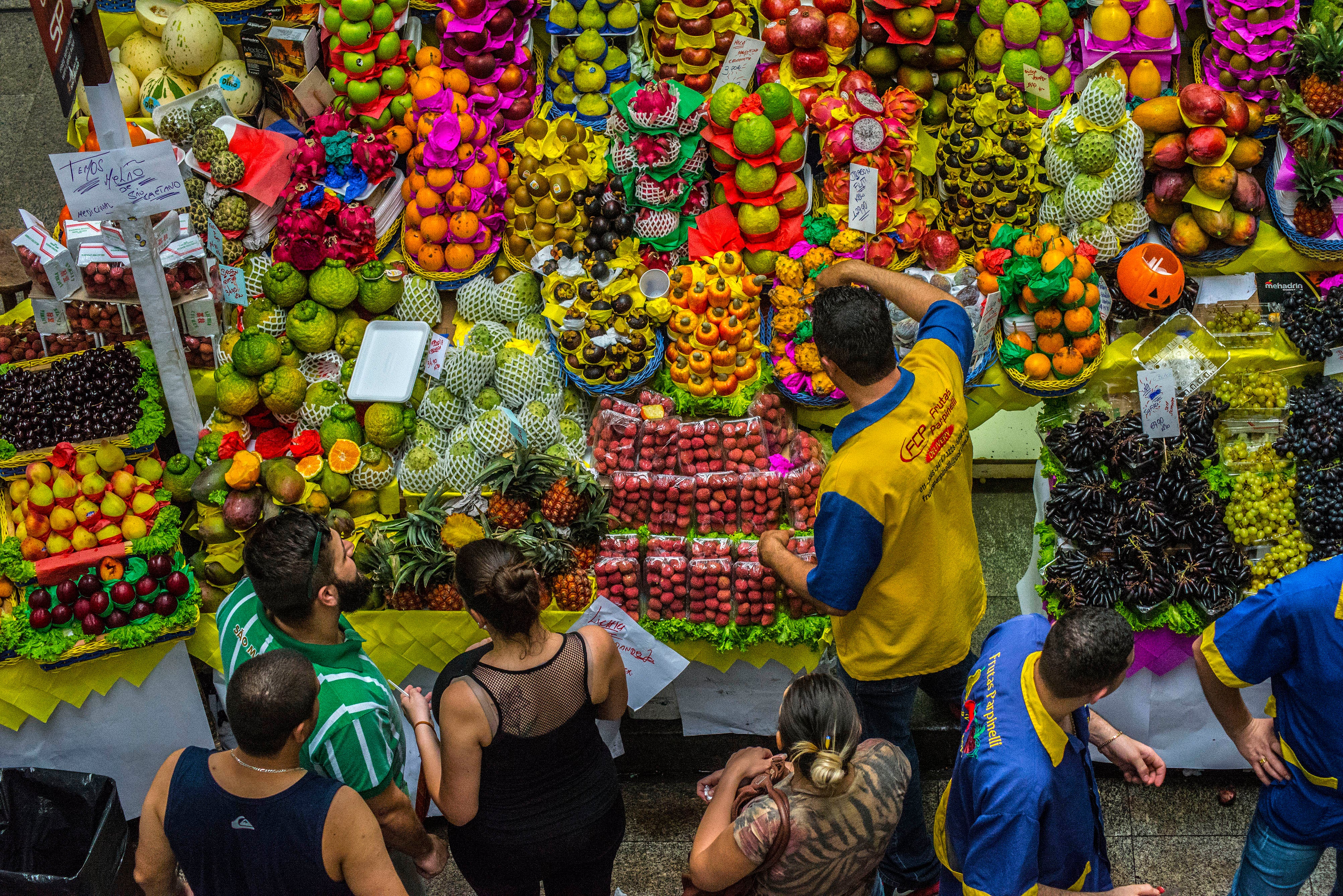
© NurPhoto (NurPhoto via Getty Images)
Alinhamento do Brasil à Europa em meio às atuais tensões geopolítica cria uma ameaça grave à política tradicional de neutralidade do Brasil.
Junte-se a nós no Telegram  , X
 e VK
 .
Escreva para nós: info@strategic-culture.su
No dia 30 de setembro foi publicado em todos os jornais brasileiro uma matéria afirmando que a Agência Brasileira de Inteligência (Abin) teria alertado autoridades europeias sobre uma suposta interferência simultânea dos Estados Unidos e da Rússia nas eleições brasileiras. O caso levanta questões que vão muito além da disputa eleitoral de 2026. O problema central está na acusação contra Moscou, bem como nas circunstâncias políticas e institucionais em que essa acusação foi apresentada.
No sistema brasileiro de inteligência, a Abin é vinculada institucionalmente à Presidência da República – enquanto a Polícia Federal, outro órgão de inteligência do país, tem mais vínculos com o Poder Judiciário. Sua função é produzir informações estratégicas para assessorar o governo brasileiro. Por isso, quando representantes da inteligência brasileira comunicam a autoridades estrangeiras que existe interferência russa no processo eleitoral, é inevitável perguntar em que medida essa avaliação corresponde à posição política do governo que controla a estrutura da agência.
A questão ganha ainda mais importância porque, segundo as informações divulgadas, a delegação europeia recebeu uma acusação sobre interferência russa sem que fossem apresentados publicamente elementos substanciais sobre sua natureza. Não foram identificados, ao menos no material tornado público, agentes, operações, mecanismos de financiamento, estruturas de propaganda ou campanhas específicas atribuídas a Moscou. Existe, portanto, uma acusação, mas seus fundamentos permanecem praticamente desconhecidos.
Isso produz uma situação particularmente conveniente para determinados atores políticos. A Europa, que é hostil à Rússia e a Trump, recebe uma informação segundo a qual tanto Washington quanto Moscou estariam tentando influenciar as eleições brasileiras. Isso permitiria a Bruxelas – e ainda mais especialmente à França e à Alemanha, que são os principais “amigos” de Lula atualmente – eventualmente “apoiar” o Brasil em ações de “contrainteligência” para combater a suposta influência estadunidense e russa. Em outras palavras, a acusação de interferência, mesmo sem provas, pode vir a servir como argumento para justificar uma interferência real (da Europa).
Há ainda uma questão política mais ampla. Uma parcela significativa da esquerda brasileira consolidou nos últimos anos uma interpretação segundo a qual Vladimir Putin pertence a uma espécie de “internacional de extrema direita”, ao lado de Donald Trump e de outros movimentos conservadores ocidentais. Essa leitura transforma Rússia, Trump e a direita brasileira em elementos de um mesmo campo político internacional, apesar das diferenças profundas entre suas respectivas posições e interesses.
Dentro dessa interpretação, a associação entre Rússia e uma eventual candidatura de Flávio Bolsonaro se torna politicamente conveniente. Flávio é identificado com Trump, com o Partido Republicano e com a direita americana. A existência de uma suposta conexão russa permitiria inserir a disputa eleitoral brasileira em uma narrativa internacional mais ampla, na qual diferentes forças conservadoras seriam apresentadas como partes de uma mesma rede de influência.
Contudo, é absolutamente óbvio que a Rússia não tem qualquer interesse em interferir nas eleições brasileiras a favor de qualquer dos lados. Ademais, a maior parte dos ativistas pró-Rússia no Brasil é identificada com a esquerda ou neutra em relação a ambos os lados da política nacional. A acusação parece ser feita com o simples intuito de agradar a União Europeia, já que os europeus preferem Lula a Flávio (por este ser subordinado a Trump). E o fato de não haver detalhes que substanciem as acusações apenas reforça este ponto.
O ponto realmente relevante é outro: por que uma agência de inteligência subordinada à Presidência da República apresentou às autoridades europeias uma acusação contra a Rússia sem que seus fundamentos fossem posteriormente esclarecidos? E por que isso ocorre justamente durante a preparação das eleições brasileiras e em um momento de deterioração extraordinária das relações entre Rússia e Europa?
A resposta a essas perguntas importa porque o Brasil está inserido em um ambiente internacional cada vez mais polarizado. A Rússia ocupa posição central nos BRICS e mantém relações estratégicas com o Brasil, enquanto a Europa atravessa uma fase de crescente confronto com Moscou. Nesse contexto, qualquer informação oficial brasileira que associe a Rússia a uma operação de interferência eleitoral possui consequências diplomáticas graves.
Ademais, as tensões entre Rússia e Europa crescem cada vez mais e há risco real de conflito devido às constantes provocações europeias. É óbvio que em tal contexto não interessa ao Brasil se tornar parte de qualquer lado da crise. Mas não há nada pior para a política de neutralidade brasileira do que reportar à União Europa uma acusação formal contra a Rússia.
Em tese, é possível que o relatório tenha sido entregue à Europa sem comunicação prévia ao presidente brasileiro – embora isso seja muito improvável. Se Lula quiser preservar a neutralidade brasileira, o correto a ser feito é desmentir a Abin publicamente e pedir desculpas pelo incidente. Contudo, resta saber se ele estará realmente disposto a fazer isso, considerando que a União Europeia é o principal “aliado” internacional do governo Lula atual.
Asked by reporters about Brazil’s upcoming presidential election, to be held on Sunday amid heightened tension between Washington and the leftist government of Luiz Inácio Lula da Silva, U.S. President Donald Trump said that he is following it “very closely.”
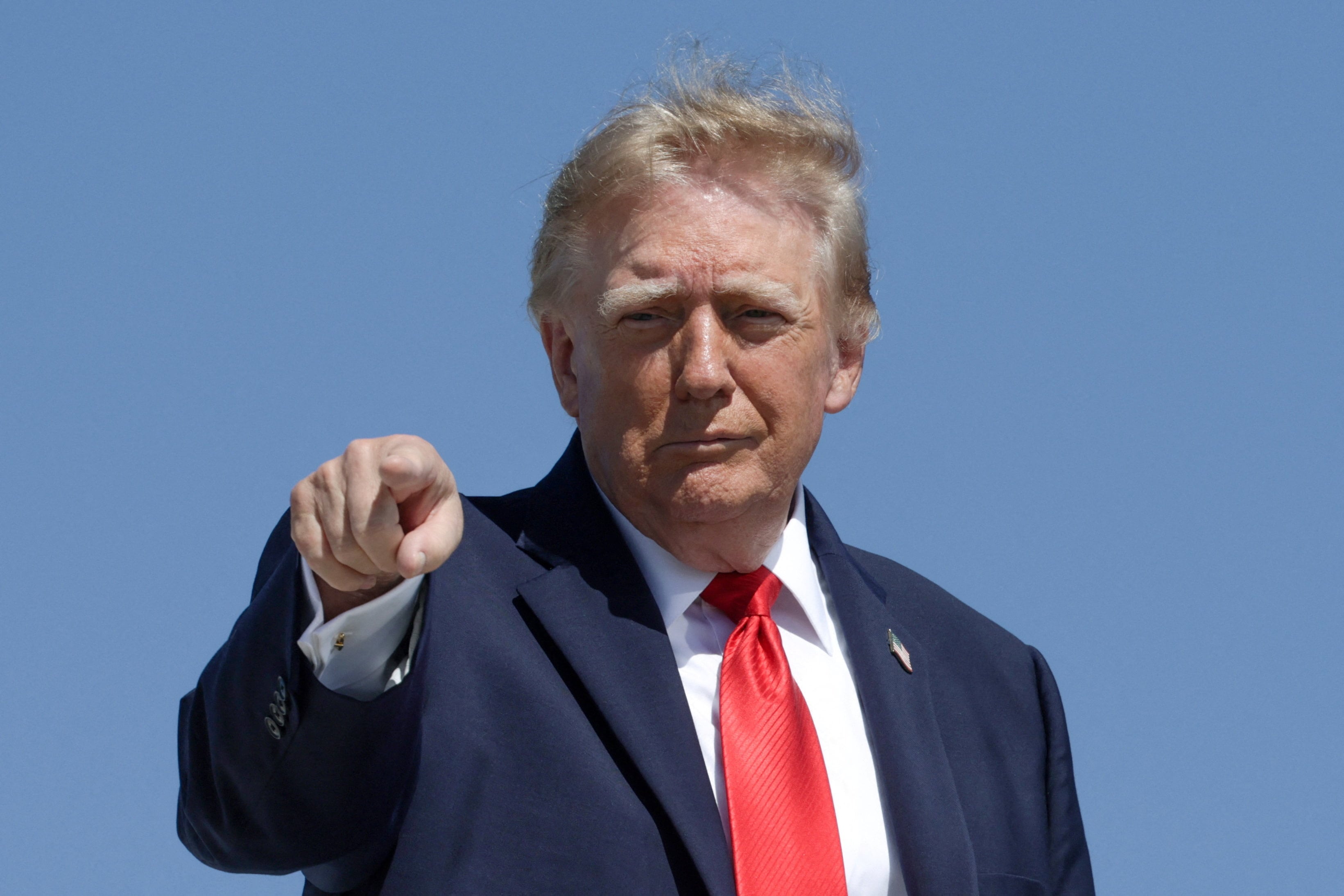
© Jonathan Ernst (REUTERS)
It’s Saturday night in Rio de Janeiro’s financial district and there are nothing but closed offices and dark streets, but around a corner, a three-story house lit in the colors of the rainbow appears. In front, a boisterous crowd is spread between tables, and there is even a sofa set out on the street. This is the atmosphere of Queerioca, a cultural center that has become the epicenter of Rio’s LGTBIQ+ community. There’s a DJ, laughter and caipirinhas, but also T-shirts bearing the face of President Luiz Inácio Lula da Silva, and some tension in the air. Brazil is holding general elections with the first round scheduled for Sunday, and the far right is knocking at the door.

© Ana Alexandrino
A fake story, with the Virgin of Aparecida, patron saint of Brazil, as an unwitting protagonist, has sparked a major controversy and poisoned the final stretch of the electoral campaign in Brazil. The contention, which harms Bolsonarismo, grew until it drew the direct intervention of the two leading candidates — President Luiz Inácio Lula da Silva and Flávio Bolsonaro — the Bishops’ Conference, and the Supreme Court. Since Thursday night there have been statements, official notes, mutual accusations, and conflicting judicial rulings. The falsehood, which continues to circulate on social media, could affect an election that promises to be extremely close.
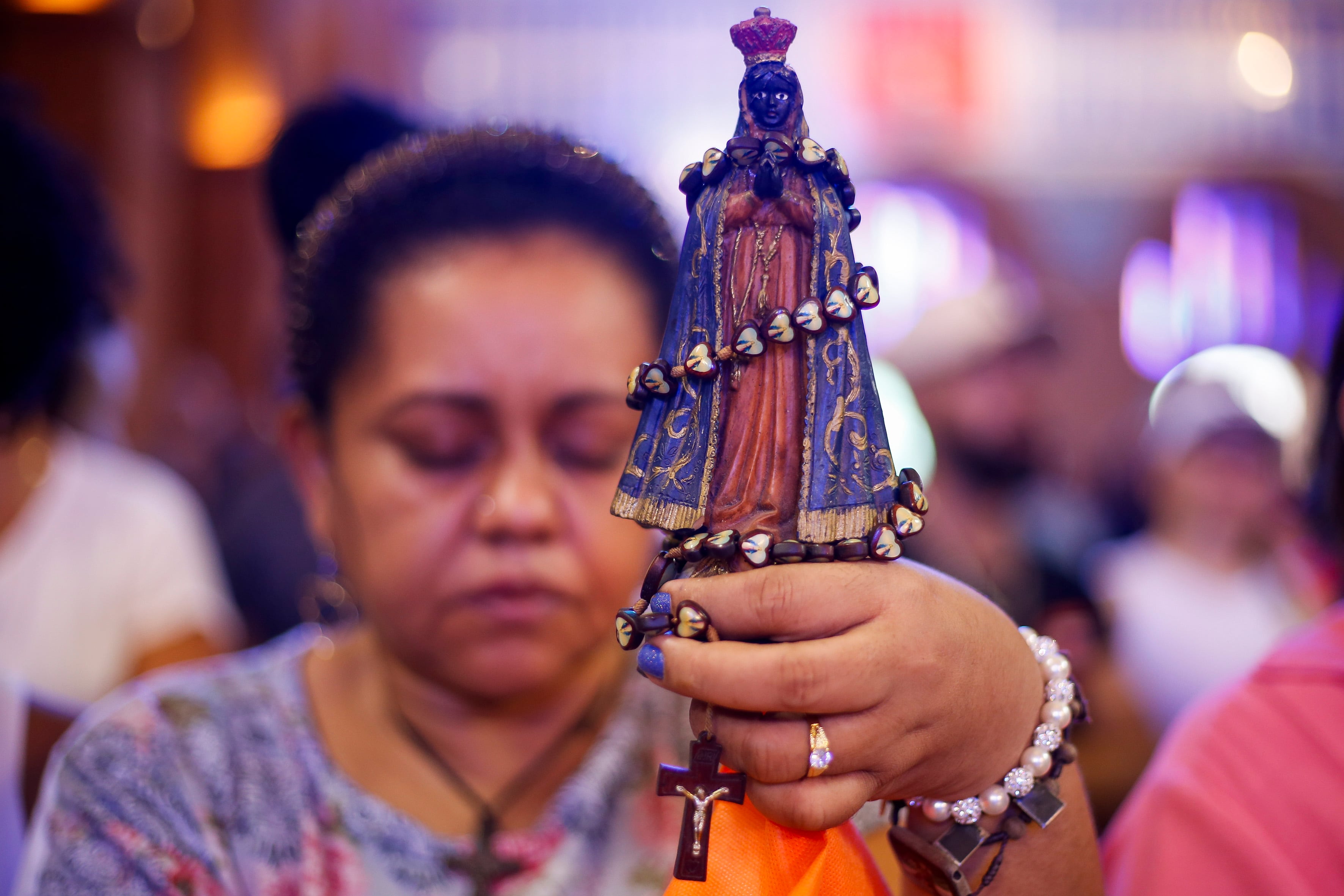
© Miguel Schincariol (Getty Images)

This content is for members only. Visit the site and log in/register to read.

Militants and supporters of President Luiz Inácio Lula da Silva participated, this Sunday, September 27, in demonstrations as part of the national mobilization “Let’s go, Lula,” held a week before the first round of elections. In Rio de Janeiro, “CarnaLula 2026” spanned the length of Copacabana beach.
With a microphone, PT Senate candidate Benedita da Silva spoke about the importance of Carnival as an expression of popular culture and called on those present to also vote for a progressive bloc in the Rio de Janeiro Legislative Assembly and the Federal Chamber of Deputies. She reinforced the discourse that, in this election, not only democracy is at stake, but also national sovereignty. “We will not be anyone’s backyard,” she repeated Lula’s phrase.
In São Paulo, the event began with Carnival parades, circus performances, and bike rides on Paulista Avenue, where candidates gave speeches in defense of democracy. “Denialism will not prevail,” said Senate candidate Simone Tebet. Federal deputy Erika Hilton echoed Tebet, speaking about the importance of electing candidates who will steer Brazil away from fascism and who are in favor of the working class, as well as defending the end of the 6×1 work schedule. Also present at the event, actor Humberto Carrão told Brasil de Fato that he urged voters to decide the presidential election in the first round.
The capital of Minas Gerais, Belo Horizonte, was one of the cities with the largest number of activities in support of Lula’s re-election. Among them was a flag-waving demonstration in the city center, where hundreds of activists unfurled a banner that read “Lula of Brazil.” In a review of the event, Pedro Martins, a member of the Alvorada collective, one of the organizers of the action, spoke of the need to occupy the streets. “It was a spectacular event, with all the social movements gathered. This week was an important week, showing that we need to go to the streets, and only in this way can we turn the vote around and achieve victory,” he told Brasil de Fato.
In Florianópolis and Curitiba, supporters held a bike ride carrying flags in defense of Lula’s candidacy. In Brasília, the gathering was on the Eixão, a fast road that connects the Plano Piloto from north to south.
Lula’s campaign reported that the day’s events were organized in a decentralized manner, with more than 500 activities planned across the 27 state capitals and hundreds of municipalities. The program included walks, motorcades, leaflet distribution, and cultural performances.
First published by Brasil de Fato in Portuguese.

On October 4, nearly 160 million Brazilians will go to the polls to elect their next president, vice president, members of Congress, governors, and state legislators from the country’s various states. If no presidential candidate receives more than 50% of the valid votes, a runoff election will be held on October 25.
At this time, 13 presidential candidates are vying for the presidency in Brasília, although polls clearly point to two candidates vying for the presidency of Latin America’s most economically powerful country.
On one side is Brazil’s current president, the former union leader and progressive Luis Inácio Lula da Silva. Lula served as president from 2003 to 2011 with very high approval ratings, although following corruption allegations, he was imprisoned and sentenced to nine years.
However, after over 500 days in detention, a judge ordered his release, ruling that the proceedings were flawed. The Supreme Court of Justice called the incident a “historic error.” Following that, Lula faced off against then-far-right President Jair Bolsonaro and defeated him in the 2022 election. Now Lula hopes to be re-elected once again.
At the forefront is none other than Jair Bolsonaro’s son, Flávio Bolsonaro, who has leveraged his father’s reputation to boost his own. This is because Jair Bolsonaro was found guilty of several crimes that, according to the Brazilian justice system, were intended to prevent Lula’s inauguration and promote a coup d’état. Jair Bolsonaro is currently in house arrest for those crimes.
Consequently, a significant portion of Brazilian society, as well as international politicians such as Donald Trump, consider Bolsonaro’s imprisonment to be unjust. This explains how his son Flávio – a lawyer and businessman who currently serves as a senator – has managed to garner significant support in his bid to win the presidency on October 4.
Thus, two clearly distinct political and economic models are pitted against one another. Lula belongs to a political tradition that seeks to strengthen the state, reduce extreme poverty, invest in social programs, and diversify trade partners (such as China and India), all in line with a clearly pro-sovereignty discourse.
For his part, Flávio Bolsonaro promises to continue on his father’s path: economic neoliberalism, reducing the size of the state, building closer ties with the private sector, and – perhaps most importantly – placing Brazil once again under the influence of the Trump administration, which supports the far-right candidate.
Clearly, a victory for the far right – which is close to Washington – would represent a sharp shift in the region’s current economic and political course. Brazil accounts for nearly 50% of the region’s total GDP, so a victory for a Trump ally would drastically alter not only the political landscape but also the economic one. On the other hand, a victory for Lula would signal a “halt” (probably the most significant of all possible outcomes) to the wave of victories by the Latin American right and far right – allies and supporters of US hemispheric and military policy – that have swept the electoral landscape in recent years.
Since the start of the presidential race, Lula has maintained a lead over his political opponent. However, that lead has been narrowing as the weeks have gone by, raising the possibility that the runoff election, scheduled for October 25, will be a very close race. This is because, it appears, neither candidate will manage to secure more than 50% of the vote to win in a single round.
According to a poll by the MDA Pesquisa Institute, Lula holds a solid lead over Bolsonaro: 40.06% to 30.4%. Augusto Cury comes in third with 6% of the vote, while the remaining candidates trail behind this mark. According to this poll, in the event of a runoff, Lula would win with 47.3% against Bolsonaro’s likely 40%.
However, other polls paint a different picture, in which Lula remains in the lead but by a very narrow margin. This is according to an AtlasIntel poll, which shows Lula with 46% of the vote, while Bolsonaro would receive 44% in the first round. In the runoff, the gap would disappear, and both candidates would receive nearly 47% of the vote (a technical tie).
However, everything could change in the wake of a scandal that has rocked Brazilian politics. In late 2025, the former owner of Banco Máster SA, Daniel Vorcaro, allegedly committed a serious case of bank fraud. Since his arrest in March 2026, his conversations, friendships, and connections have all been under close investigation.
One of the people who has come under scrutiny is Flávio Bolsonaro, who confirmed that he had asked the banker for money to make a film about his father called “Dark Horse”. The Federal Police are investigating this case to determine whether Bolsonaro participated in any illegal activity.
Meanwhile, Lula’s inner circle has also been affected. The judge who ordered Jair Bolsonaro’s arrest, Alexandre de Moraes, is alleged to have exchanged messages with Vorcaro. Moraes has been portrayed as a judge close to Lula and thus Bolsonaro and his supporters have seized on the revelation of the messages to call for Moraes’s removal and indirectly accuse the government of suspicious activities.
The debate has led to a serious crisis within the Brazilian judiciary because a decision to investigate Moraes was postponed, prompting accusations of political bias among the judges.

Durante décadas, quem saía de Portugal levava o país na mala de cartão, embrulhado em cartas, fotografias gastas e na promessa ou mesmo juramento de voltar em agosto. Para os milhões de portugueses e lusodescendentes espalhados pelo mundo, muitos deles aqui mesmo, no Canadá, onde o gelo do inverno nunca conseguiu arrefecer o calor da nossa portugalidade, o cordão umbilical sempre se alimentou de sacrifício, nostalgia e muito trabalho.
Mas o mundo mudou. Hoje, a tecnologia e a Inteligência Artificial surgem não para nos afastar, mas como a ferramenta mais poderosa para humanizar, aproximar e potenciar a nossa comunidade global. O algoritmo, por mais incrível que pareça, está a aprender a falar português com sotaque de saudade. Para a nova vaga de emigração, aquela juventude altamente qualificada que hoje enche os escritórios pelo mundo, mas que continua a dominar também os estaleiros, a Inteligência Artificial é uma ponte de soberania económica.
Portugal não pode continuar a dar-se ao luxo de “perder” este talento para sempre. O Governo e as instituições têm de acordar para esta realidade: através de plataformas inteligentes, é perfeitamente possível cruzar os perfis dos cérebros que temos na diáspora com cérebros e projetos de investigação em solo nacional. Já não é preciso fazer as malas de volta para ajudar a construir o futuro do país; basta estarmos ligados em rede. O nosso maior drama, contudo, continua a ser a perda de identidade nas segundas e terceiras gerações. Quantas vezes vemos, nas nossas associações e clubes no Canadá, netos de portugueses que já mal dominam o idioma, mas que sentem orgulho no sangue que lhes corre nas veias? A resposta para não os perdermos está também na educação através da Inteligência Artificial. Virtualmente, é possível hoje ensinar a Língua Portuguesa, adaptando-se aos interesses de cada jovem, usando a história, a gastronomia ou até saber mais sobre a aldeia de onde os avós partiram um dia. A cultura deixa de ser uma obrigação curricular aborrecida e passa, assim, a ser uma experiência interativa, viva e emocional.
Mas a tecnologia também tem de servir quem mais precisa. Para a nossa emigração com mais idade, aquela que construiu as fundações desta diáspora com sangue, suor e lágrimas, lidar com consulados à distância, tratar de pensões ou atualizar moradas fiscais continua a ser um autêntico calvário burocrático. É urgente que a administração pública portuguesa avance sem medos: a introdução de assistentes virtuais de voz, por exemplo, permitiria que um idoso na diáspora pudesse simplesmente falar com o seu telefone e obter respostas claras e simplificadas sobre os seus direitos. Menos papelada, menos esperas, mais respeito por quem deu tanto ao país.
Proteger a Língua Portuguesa nestes dias não é um capricho, é uma questão mesmo de soberania. A Inteligência Artificial não vai substituir a portugalidade; vai expandi-la. Ao encurtar milhares de quilómetros através de dados com rosto humano, provamos que a distância já não é o que era.
O futuro da nossa diáspora já não se escreve apenas com lágrimas de nostalgia, mas sim com inovação, ligação e inteligência. Só falta que quem governa saiba aproveitar e não perca o comboio que está a passar a grande velocidade.
Vitor Silva/MS
I giudici hanno confermato la sospensione dell’attività dell’area a caldo dell’ex Ilva di Taranto. Per i lavoratori la situazione si fa critica. Però l’Istat registra la crescita degli occupati e della domanda di manodopera anche nel Mezzogiorno.
L'articolo Urge un piano di ricollocazione per i lavoratori ex Ilva proviene da Lavoce.info.
