Russia is stepping up its hybrid war against Europe. From sabotage, drone incursions, and arson to plots (mostly foiled) to assassinate pro‑Ukraine activists and Russian dissidents on European soil, the Kremlin is testing the allied response, and incidents against NATO’s European partners are becoming more serious, such as the explosive‑laden drones found this summer at Leipzig Airport in Germany. That gray line between a hybrid attack and a conventional one is blurring, and several European intelligence sources warn of the risk that one of those incidents could escalate — either by a deliberate Kremlin decision or a miscalculation.
On September 30, SK Hynix’s American depositary shares closed at US$184.15 on the Nasdaq. Earlier that day in Seoul, one ordinary share closed at 1,776,000 won, about $1,308.80. Ten ADSs represent one Seoul share, so each ADS’s slice was worth about $130.88. Comparing those two closing prices gives the ADSs a 40.7% premium. The markets […]
France and Spain have openly welcomed the prospect of Britain rejoining the European Union after British Prime Minister Andy Burnham put full membership back among the options for the country’s long-term relationship with Europe.
French President Emmanuel Macron and Spanish Prime Minister Pedro Sánchez addressed the question during Macron’s state visit to Spain on Wednesday, 30 September. Asked whether Britain could return under Burnham, Macron responded in English: “Welcome back.” He added that a British decision to move in that direction would be good news for both Britain and Europe.
Sánchez was similarly positive, saying Spain would “open our arms” if Britain sought to return.
Their comments followed Burnham’s intervention at the Labour Party conference and subsequent interviews in which he argued that Britain should reconsider the full range of options for its future relationship with the EU.
Those could include remaining under the present post-Brexit arrangements, returning to the customs union or single market, or ultimately “going all the way” and applying for EU membership again.
More recently, the argument has moved from diplomatic language to practical economic questions. Burnham has been pressing Brussels to ensure British companies are not disadvantaged by the EU’s emerging industrial preference rules, with access to the proposed “Made in Europe” framework becoming one of the principal issues ahead of the next EU-UK summit.
Macron nevertheless made clear in Madrid that closer relations could not become a system under which Britain selected individual advantages of EU membership while remaining outside the corresponding obligations.
That question dominated much of the Brexit negotiation after the 2016 referendum. Access to the single market is built around the free movement of goods, services, capital and people, while participation also entails accepting common rules and enforcement mechanisms.
A British application to rejoin would be a separate and considerably larger process. Under Article 49 of the Treaty on European Union, Britain would have to apply for membership and secure unanimous agreement from the existing member states before negotiations could be completed.
A returning Britain could not assume that the special arrangements it held before Brexit would automatically be restored. The UK previously had an opt-out from the euro, remained outside the Schengen passport-free area and benefited from a budget rebate.
Any future terms would have to be negotiated.
Public opinion has also changed since the referendum. A YouGov poll in June found 55 per cent of Britons supported rejoining the EU and 34 per cent opposed it, although support falls when respondents are asked about specific membership conditions.
For the moment, however, Burnham is not proposing an immediate membership application or referendum.
The next test will be the UK-EU summit expected in November. The meeting was originally planned for July but was postponed following Keir Starmer’s resignation, with EU Today reporting at the time that the political transition in London had complicated preparations.
Burnham wants the summit to advance negotiations on industry, trade and migration and has said he intends to use the period around the meeting to set out the longer-term options available to Britain.
The immediate negotiations are therefore likely to focus on economic integration rather than membership.
Greater access to European markets would almost certainly involve greater regulatory alignment. The political argument in Britain will concern how far the country is prepared to accept common European rules in return for reducing barriers created by Brexit.
Macron and Sánchez have now made clear that, if the discussion eventually moves beyond closer economic cooperation towards membership itself, two of the EU’s largest states would welcome it.
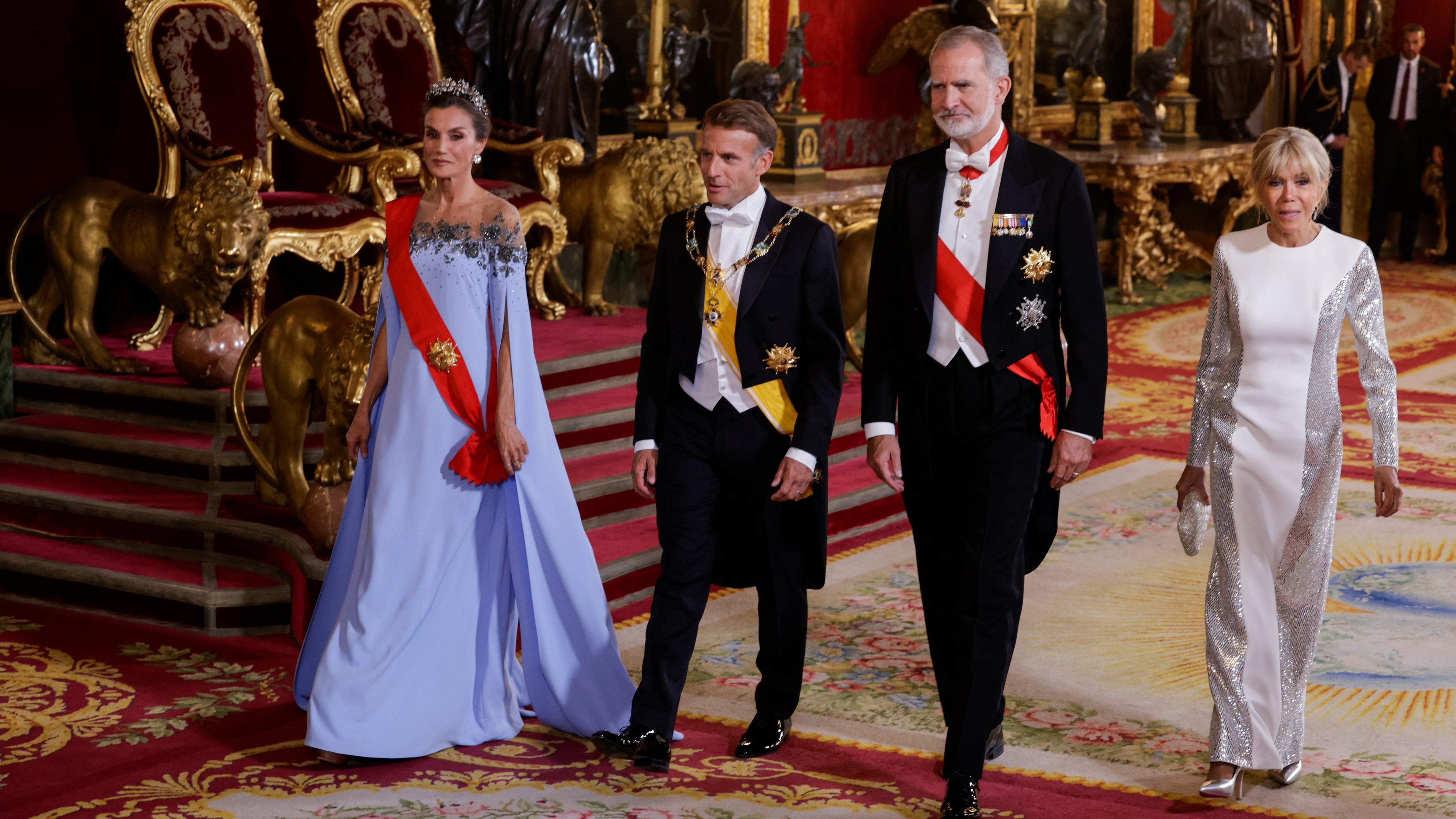
King Felipe VI and Queen Letizia of Spain on Tuesday received French President Emmanuel Macron and First Lady Brigitte Macron at the Royal Palace for a gala dinner as part of a state visit by the French leader — one of his last before France holds general elections in April of next year. After almost 10 years in office, this was the first state visit to Spain by Macron, whose second term ends in the spring, after which he is barred from running for a third consecutive term.
French President Emmanuel Macron and his wife Brigitte Macron walk with Spain's King Felipe and Queen Letizia during a welcoming ceremony for the gala dinner hosted in their honor at the Royal Palace in Madrid.
Drugs have always been around. They were here in the 80’s when cocaine arrived in Mexico City and hooked my father’s generation. They were also here in my grandfather’s alcoholism, and in my aunt’s addiction to [anxiety medication] Tafil.
Il viaggio di Leone XIV in Francia si apre con un contrasto reale, ma più complesso di una rottura diplomatica: Parigi ha cercato di valorizzare la dimensione istituzionale e presidenziale ...
Lena Dunham — the child prodigy who wrote the HBO series Girls (the millennial version of Sex and the City) and later became the fallen star of her generation — published her second memoir this past April. And it reads quite differently now, after she recently announced that she has become a mother via surrogacy.
In the spring of 2019, workers dredging gravel at Deinham, a site on the Danube in Upper Austria, kept snagging strange double-pointed iron objects in the excavator’s bucket. Instead of tossing them into the scrap pile — the usual fate of corroded iron pulled from riverbeds, since it rarely looks as recognizable as bronze — […]
Alors que le prix à la pompe s'envole, Macron est bien décidé à continuer à chérir les causes des maux qu'il dénonce, en particulier une soumission humiliante aux USA et à leurs guerres, qu'elles soient directes ou par proxy.
LE COURRIER DES STRATÈGES
Restez libre !
LA NEWSLETTER · GRATUITE
Le Courrier, chaque matin.
L'essentiel de l'actualité, passé au crible par les cinq plumes du Courrier. Dans votre boîte, chaque jour ouvré.
Gratuit. Vous restez libre de partir quand vous voulez.
Macron n'a pas encore prononcé son discours à l'Assemblée Générale de l'ONU, mais il a quand même beaucoup parlé à l'extérieur de la salle. En particulier, il a proposé une masse d'initiatives pour tenter d'endiguer la crise pétrolière que le Courrier annonce depuis le mois d'avril.
Au menu de ses péroraisons, notamment, une présence militaire française en Arabie Saoudite, pour protéger les installations pétrolières déjà menacées par l'Iran, et désormais directement menacées par le mouvement Ansarullah. Bref, des dépenses militaires, et une prise de risque pour sécuriser une région déstabilisée par une guerre israélo-américaine qui nous est imposée.
Emmanuel Macron s'agite, avec son Premier Ministre Lecornu, pour refroidir la colère qui monte en France face à l'augmentation des prix du pétrole, et en particulier du carburant domestique. En année électorale, il faut bien reconnaître que l'ébullition peut très vite partir en vrille. La stratégie est d'endetter un peu plus l'État pour soulager la pression sur le pouvoir d'achat.
Dans le même temps (le fameux "en même temps" que tout le monde connaît), Macron prend bien soin de ne pas s'attaquer aux racines du mal : sa soumission à l'ordre "occidental", conduit par Donald Trump, qui lève un impôt de fait sur les peuples pour financer la défense d'un État d'Israël dominé par de dangereux extrémistes. Là encore, le projet de Grand Israël qui anime les délires d'un Ben Gvir ou d'un Smotrich, dont Nétanyahou est prisonnier autant que complice, se traduit par un appauvrissement des Français, qui n'ont rien demandé.
On peut certes compter sur la presse Bolloré, relais fidèle des positions israéliennes, pour faire croire à ces pauvres Français que c'est le prix à payer pour défendre l'Occident face à la menace islamiste. Certains tombent encore dans le panneau.
La réalité est que nous payons aujourd'hui pour une guerre qui n'est pas la nôtre. On comprend bien que, pour survivre, Israël doive affronter l'Iran dont le fondement est la contestation sioniste. Mais l'intérêt des Français, dans cette affaire, où est-il ?
The heirs of Oswaldo Cisneros, once one of Venezuela’s richest men, received unusual news last April: strangers were touring their oil fields in the Orinoco Belt. On paper, they remained the legitimate operators of the assets, but it soon became clear that, even as those visits took place in plain sight, a plan was being put in motion to take the fields away from them.
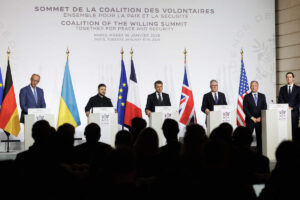
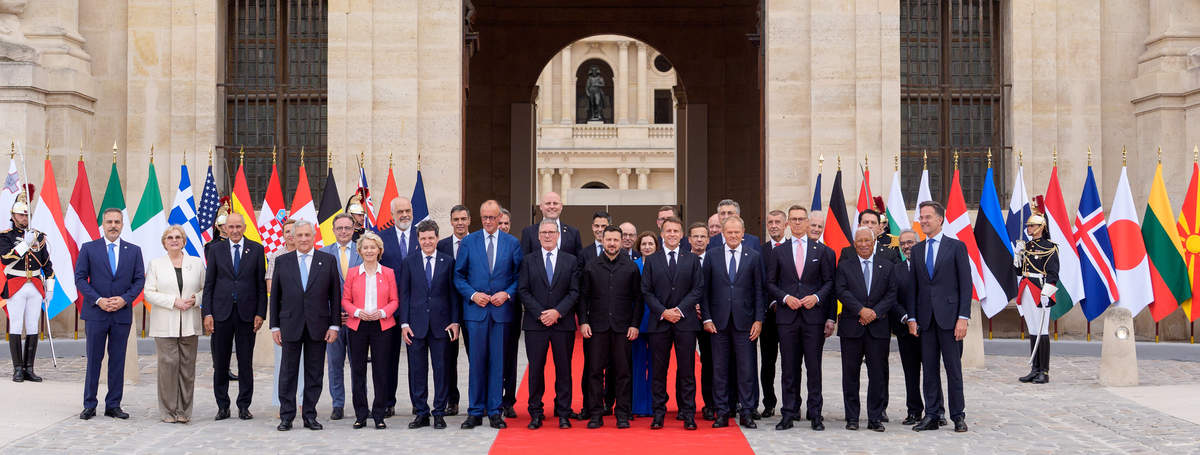
The Coalition of the Willing for Ukraine meets this Monday, August 24 — the 35th anniversary of Ukrainian independence — under the joint chairmanship of Emmanuel Macron, Friedrich Merz and Andy Burnham. The meeting comes at an urgent moment: fighting is intensifying on the ground and Moscow is preparing a new mobilization, while in Kyiv, Volodymyr Zelensky has just ruled out holding elections in wartime.
The ‘Volontaies’ Coalition at the Élysée (Élysée Palace)
A Meeting Under Heavy Diplomatic Pressure
According to a statement from the Élysée Palace released Friday, August 21, the Coalition of the Willing — an international alliance supporting Ukraine formed in March 2025 at the initiative of Czech President Petr Pavel — will meet this Monday at 1 p.m. in a hybrid format, with Volodymyr Zelensky taking part. The session will be jointly chaired by Emmanuel Macron, via videoconference, German Chancellor Friedrich Merz, and, for the first time, new British Prime Minister Andy Burnham. About a dozen leaders, including European Council President António Costa, are expected to be in Kyiv alongside the Ukrainian head of state, while European Commission President Ursula von der Leyen is not expected to attend in person.
According to a European official cited by several news agencies, talks are expected to focus primarily on strengthening Ukrainian air defenses, as the country faces a shortage of interceptors against Russian strikes. The Élysée says leaders will reaffirm “their determination to increase pressure on Russia” and continue coordinating measures aimed at drying up the resources funding Russia’s war effort, including the fight against the “shadow fleet” Moscow uses to circumvent oil sanctions. The meeting is also meant to advance work on security guarantees intended to underpin a “just, robust and lasting” peace, building on the Paris Declaration of January 6, 2026.
On the Ground, Moscow Prepares a New Mobilization
The meeting comes as the war enters a phase of intensification. Volodymyr Zelensky said this weekend that Russia plans to mobilize an additional 300,000 troops for the Ukrainian front after Russia’s parliamentary elections, scheduled for September 16-20, with a longer-term goal of recruiting 500,000. The Ukrainian president described a “peripheral mobilization” that would spare Russia’s major cities but, he said, would be hard to conceal. He also cited a Russian goal of producing roughly 1,300 ballistic missiles a year, while Ukraine expects to receive only 264 interceptor missiles this year, down from 364 in 2025 and 675 in 2023 — a shortfall Kyiv is trying to offset through new agreements, including delivery of at least one SAMP/T air-defense system from France and roughly 600 missiles from Germany.
These statements echo converging battlefield reports. Recent military bulletins point to intense fighting on the Zaporizhzhia, Kherson and Dobropillya fronts and in Dnipropetrovsk region, along with exchanges of soldiers’ remains between the two sides. This information comes from both Ukrainian and Russian sources, whose respective figures cannot be independently verified and should be treated with caution.
BACKGROUND
Formed in March 2025 at the initiative of Czech President Petr Pavel, and later organized under French and British leadership, the Coalition of the Willing brings together roughly thirty countries supporting Kyiv. It notably held a summit in Paris on July 13, 2026, on the eve of the Bastille Day parade, building on the G7 summit in Évian and the Paris Declaration of January 6, 2026.
Zelensky Rules Out Elections That Would “Destroy the Country”
On the domestic front, Volodymyr Zelensky responded for the first time to the call for elections made last week by his former defense minister, Mykhailo Fedorov, who was dismissed in late July amid vocal protests. In remarks made Saturday and released Sunday, the Ukrainian president said holding a wartime vote, absent a major cessation of hostilities, would “destroy the country by splitting society,” calling the prospect a “tsunami.” Ukrainian law bars elections under martial law, in effect since Russia’s full-scale invasion began in February 2022; Mr. Zelensky’s presidential term technically expired in May 2024.
Mr. Zelensky pointed to the practical hurdles such a vote would have to overcome — including how to enable voting by mobilized troops, millions of refugees abroad, and residents of Russian-occupied territory. According to an analysis by CNN, an incomplete or contested vote would hand Moscow a propaganda win, since the Kremlin already cites the wartime ban on elections to question the Ukrainian president’s legitimacy, even as Russia’s own electoral process is not considered free by Western observers. Polling suggests former armed forces commander Valery Zaluzhny or Mr. Fedorov himself would be the frontrunners in any eventual election.
Two Fronts for Kyiv: Military and Political
The convergence of these two issues — international military support and the debate over the democratic legitimacy of Ukraine’s leadership in wartime — casts Monday’s meeting in a particular light. For the Western leaders gathered around Emmanuel Macron, the goal is to demonstrate the durability of their commitment at a moment when Moscow is betting on wearing Kyiv down before winter, and when the question of security guarantees still has no concrete bearing on any ceasefire.
Longreads has published hundreds of original stories—personal essays, reported features, reading lists, and more—and more than 14,000 editor’s picks. And they’re all funded by readers like you. Become a member today.
One of the most vivid memories of my childhood involves an ice cream. My mother and father kept a relatively treat-free house, with desserts reserved for special occasions, but their standards loosened during summer vacations. During a visit with relatives we didn’t see very often, my parents decided to make the day even more special; they gave my sister, my two cousins, and me money to buy something from the ice cream truck that made a regular circuit around the neighborhood. Thrilled by this rare indulgence, I rushed down the sidewalk, delighted to finally take part in this classic summertime ritual, eating dessert in the middle of the afternoon!
I can still remember the thrill of holding that much-anticipated cone, taking my first lick . . . then watching the scoop roll off its biscuity throne to the sidewalk.
Perhaps that is why, as an adult, my freezer is always stocked with at least two flavors of ice cream, which I eat year-round. It’s my go-to way to reward myself after a productive day, or to make a bad one better. While I tend to keep things simple (and have been known to eat directly out of the carton), I love ice cream for its versatility. It can support a piece of apple pie or be the main event in a fudge-slathered sundae. Its near-infinite variety of flavors offers something for everyone, from no-frills vanilla to chef-inspired gastronomic experiments.
That ability to shape-shift has made this humble dessert a mirror of sorts, reflecting cultural changes. It even goes back to the founding of the country: Thomas Jefferson was the first known American to write down an ice cream recipe (though it’s only fairly recently that historians have begun to acknowledge his problematic relationship with the enslaved workers who produced such delicacies for his guests). A century later, advances in refrigeration transformed ice cream from a luxury good to a mass-market phenomenon. As immigration surged in the US, peddling ice cream on the street became a way for new arrivals to grasp the American dream. During World War II, the dessert symbolized the country’s can-do attitude: Despite the many logistical obstacles, the US government shipped it to troops as far away as the Pacific.
In our current Age of Ozempic, while celebrities get ever slimmer and our screens fill with physical-optimization hacks, desserts may seem like an endangered species. But I believe it’s more important than ever to take guilt-free pleasure in food that brings you joy. And if you still feel a twinge of hesitation before digging into a bowl of your favorite flavor, multiple studies over the past 20 years have shown that ice cream actually has real, measurable health benefits (see David Merritt Johns’s piece from The Atlantic below). No less an authority than Dr. Ezekiel Emanuel, a prominent bioethicist and oncologist, titled his most recent book on healthy living Eat Your Ice Cream.
So go ahead and have a scoop. Think of it as doctor’s orders.
This entertaining account traces ice cream’s transformation from an expensive luxury to an all-American dish in the early 20th century, when advances in refrigeration made it more widely available. Prohibition played a part, too: When alcohol was banned nationwide in the 1920s and early ’30s, some breweries switched to making ice cream instead, “a decent substitute for alcohol for the drowning of one’s emotions.”
But what really stands out in this story is the role ice cream played in World War II, when it became a symbol of American patriotism. Siegel weaves together historical anecdotes that show the enormous effort the US military put into embedding ice cream throughout its supply lines. Why go through all that trouble? Siegel makes a compelling case that getting ice cream halfway around the world, under such difficult circumstances, was a way of putting American exceptionalism into action. If we can do this for our soldiers, we can do anything.
By the time World War II came around, ice cream . . . had become inseparable from the American way of life, an emblem of American comfort, freedom, and democracy. The rest of the world went back to banning ice cream as part of its rationing efforts (with Great Britain adding salt to the wound by endorsing carrots on sticks as the official wartime substitute for ice cream bars), but the United States doubled down, building pop-up ice cream factories on the front lines; delivering individual ice cream cartons to foxholes; spending more than a million dollars on a floating ice cream barge that roamed the Pacific delivering ice cream to Allied ships incapable of making their own; and distributing 135 million pounds of dehydrated ice cream base in 1943 alone.
This engaging survey of popular ice cream flavors is filled with trivia-night-worthy fun facts: that vanilla is consistently the best-selling flavor worldwide; that chocolate ice cream may actually have been created first (cocoa being more readily available than vanilla); and that mint chocolate chip got an international popularity boost when a British culinary student created the dessert “Mint Royale” to celebrate the marriage of England’s Princess Anne in 1973.
But such is the nature of culinary history that not all lineages are straightforward. I appreciate the way Barron analyzes all the possible origin stories, even when they contradict. While some flavors have a single known inventor—such as the Grateful Dead fan who suggested “Cherry Garcia” to the hippie entrepreneurs Ben & Jerry’s—others resulted from experimentation over time. Some even have shameful associations: Butter pecan, for example, became popular in the American South, where the nuts were plentiful and used to dilute vanilla ice cream when serving it to Black customers.
Rocky Road could be considered the ice cream world’s first mix-in flavor, blending creamy ice cream with crunchy and chewy additions. According to legend, its creation dates back to 1929, when ice cream maker William Dreyer and candy maker Joseph Edy teamed up in Oakland, California. During the Great Depression—a “rocky” time for America—Dreyer supposedly invented the flavor by using his wife’s sewing scissors to cut marshmallows into a chocolate ice cream base studded with walnuts. The duo mass-produced the new flavor, giving the country a bit of sweetness and humor during a bleak decade.
But the name “Rocky Road” may have existed long before. In the mid-1800s in Australia, settlers used the term for a confection of sweets, nuts, and dried fruit; essentially, a proto-trail mix. And just down the road from Dreyer’s and Edy’s, Fentons Creamery also claims to have invented the flavor, swapping walnuts for almonds in their signature version.
Brianna Wellen had one overarching question when she visited the Chicago outpost of The Museum of Ice Cream: What is this place? I had the same thought as Wellen when it started showing up on Google Maps as a must-see attraction in my hometown—is this “an influencer’s paradise? A children’s playground?”
The answer, it turns out, in her snarky-but-fair review, is both. A privately owned chain with five locations in the US and one in Singapore, it started as a pop-up “experience” in New York, with an aggressively pink aesthetic that bridged the line between kids’ party and Instagrammable photo op. If you’re looking for “an anthropological look at the history and cultural impact of ice cream,” she writes, this isn’t it. (Though I’d happily visit that museum.)
It’s more fun to write a scathing review than a positive one, but Wellen doesn’t take the easy route and go full hater. She acknowledges that the people around her are having fun taking pictures in the giant pool of faux sprinkles, and that the unlimited ice cream samples may be worth the price of admission for some, even if the Chicago hot-dog-style signature treat looks better than it tastes.
What she points out so effectively is the chasm between the museum’s ethos of lighthearted escapism and its grim reality: It is housed in a building that used to be the headquarters of the prestigious Chicago Tribune newspaper, now given over to an ephemeral, commercial experience dependent on overworked, demoralized employees.
There’s something extremely dystopian about these bright, colorful, somewhat functionless installations popping up inside closed businesses, which is how the project started. And seeing Chicago’s iteration in the storefront of the now empty Tribune Tower, which once housed some of the most influential journalists the city had to offer, was disappointing, signaling that while the media industry is on its deathbed, people will form a line down the block to snap a photo with a plastic sprinkle.
There was something about the staff’s demeanor that led me to believe they weren’t as excited to be there as their oft-repeated scripted banter made it seem. The logistics of certain experiences seemed like a mess; the large, unending crowds needed to be endlessly wrangled; and the loud music meant that their faux cheerful taglines needed to be screamed right into the ears of visitors to be heard. Smiles were pasted on as impatient guests asked why they couldn’t just go into the Ice Cream Lab already. When Angela and I kindly told one worker that there was no rush in letting us into a particular room and then complimented her ice-cream-themed hair clips, she reacted with such graciousness at our attitudes that I thought she was about to start sobbing.
I still remember my visceral reaction on reading this Atlantic story a few years ago: Is ice cream actually good for me?
In this exhaustively researched and reported piece, Merritt Johns explains how a statistically significant finding can be pushed aside when it doesn’t fit an accepted narrative. For more than 20 years, nutritional studies have shown that diabetics who eat half a cup of ice cream a day have a lower risk of heart problems, and people who eat two or more servings of ice cream a week had a significantly lower risk of developing diabetes in the first place. Yet those findings seemed so contrary to public health advice that alternate explanations kept being pushed instead—it’s just dairy that’s good for you, especially if you choose low-fat milk or yogurt. “As academia’s public-relations machinery came to life,” he writes, “nuance went out the window.”
Poor ice cream never got its due—until now.
Every day brings another health story about a so-called “superfood,” but Merritt Johns’s relentless focus on the facts sets this one apart. Rather than relying on an academic study or two, he tracks down all the key researchers involved in what I like to call the Great Ice Cream Cover-up: “I wanted to know what happens when consensus makers are confronted with a finding that seems to contradict everything they’ve ever said before.” Some refuse to be interviewed (more proof of a conspiracy?), but most seem relieved to finally admit that seemingly set-in-stone advice about what’s good for us is more malleable than we think.
In 2004, the English epidemiologist Michael Marmot wrote, “Scientific findings do not fall on blank minds that get made up as a result. Science engages with busy minds that have strong views about how things are and ought to be.” Marmot was writing about how politicians deal with scientific evidence—always concluding that the latest data supported their existing views—but he acknowledged that scientists weren’t so different.
The ice-cream saga shows how this plays out in practice. Many stories can be told about any given scientific inquiry, and choosing one is a messy, value-laden process. A scientist may worry over how their story fits with common sense, and whether they have sufficient evidence to back it up. They may also worry that it poses a threat to public health, or to their credibility. If there’s a lesson to be drawn from the parable of the diet world’s most inconvenient truth, it’s that scientific knowledge is itself a packaged good. The data, whatever they show, are just ingredients.
Who thought foie gras ice cream was a good idea? And more importantly—what does it taste like? Amy Ettinger took on these pressing questions with a visit to Humphry Slocombe, a “kid-unfriendly” ice cream shop in San Francisco. Chef and co-owner Jake Godby admits the controversial flavor is only rarely on the menu (it’s too expensive and takes too long to make), but the debate surrounding it has been good for business. Hardcore foodies rush to buy it when they can, while the protests of animal-rights activists only raise the shop’s profile.
More than a food review, Ettinger explores why people make and eat extreme flavors. She argues that American palates have expanded over the decades; we’ve gotten used to ordering Korean barbecue tacos and sushi burritos, mash-ups unknown (and unthinkable) to our great-grandparents. To grab attention—and prove your chops as an out-of-the-box culinary thinker—you have to raise the stakes: “One person’s gross-out experience seems to be another person’s gleeful experimentation.”
As I took another bite, I couldn’t help but feel a thrill. There was something decadent in eating a treat that so many people would be upset about. The wrath I could incur by simply opening my mouth, chewing, and swallowing made me feel powerful. And maybe that perceived transgression is itself a flavor enhancer, much like artificial coloring can ramp up our experience of “lime” or “banana” in some mass-produced, neon-colored taffy or gum.
Is that why Godby put it on the menu—so he could wield that kind of power? Why continue making food that would anger people? Was it to get attention?
Who knew the simple ice cream truck had such a dramatic backstory? As an avid collector of historical trivia, I devoured this account of ice cream’s mobile history, starting with 19th-century immigrant street peddlers through controversies over the trucks’ music, cleanliness, and supposed ties to organized crime (the notorious Glasgow Ice Cream Van Wars ended with six people killed in a fire).
What gives this piece a lovely personal touch is the way Potts weaves this past with her own memories of growing up in an English seaside town, where she and her father would pick up ice cream treats in the summer: “An unspoken secret between us, given that Mum had dinner waiting on the table when we arrived, and would have been appalled to know that a mere seven minutes earlier, we were driving along the seafront, car top down, the salty air whipping my long hair into the ice cream and sticky sauce.”
As she interviews ice cream van owners whose vocation goes back generations—along with the entrepreneurs adapting their vehicles to new technologies—she is struck by how many people in the business are following a family tradition. “It’s an industry that remains strong, with an uncanny ability to adapt to changing times,” she writes. “I am fascinated by its survival.”
While it may be more common now to see an ice cream truck at an event or on TikTok, we still crave those summer days when jaunty chimes call us out to the street. The odds can feel stacked against the old-school icey men, with legislation that limits their movement, environmental and nutritional campaigners who demand more and more restrictions, rising pitch rents, the price of vans, the difference, even, in the way children play outside. But they’re still there, still clinging on. Why?
This portrait of master gelatiere Andrea Soban oozes with admiration for its subject—and had me craving his signature mandarin orange flavor. From his base in Valenza, Italy, halfway between Milan and Torino, he continues a family tradition that goes back at least five generations: creating the most flavorful, creamy gelato free of artificial ingredients or colors.
The word gelato—Italy’s lower-fat, lower-sugar version of ice cream—literally means “frozen,” but making it at Soban’s level involves science-whiz levels of knowledge. Zwingle shows the intricate steps he takes to get the right balance of ice crystals, fat droplets, and air bubbles. While he sources ingredients from around the world, most of his favorites come from specific parts of Italy; the best pistachios, for example, are grown in one small Sicilian town.
This story gave me a new appreciation for the effort that goes into making a seemingly simple dessert—when the person making it wants to be the very best, that is. Anyone want to join me on a field trip to Valenza?
“Try this,” Andrea said, as he handed me a tiny spoonful of a just-made mandarin sorbetto. Sensations of cold, and a smooth wave of extraordinary citrus flavor, blended into a faultless harmony as the whole combination swept up to my brain. It tasted juicier than the juice of the fruit itself. And then it simply disappeared. No loading my tongue with a mass of flavors jostling together, struggling for dominance, leaving assorted clinging aftertastes as my stomach braced itself. It left only the desire for more.
Suddenly I understood the hidden power of fine gelato. It doesn’t aim only for my mouth, and my stomach is really of no interest. It aims for the dopamine reward system lurking in my brain, the part that says, “You don’t need this, but you’ve got to have it.” We did these little teaching-tastings intermittently all morning. I paid close attention to everything he said, but the voice in my head kept crooning incoherently about what was happening in my mouth.
Elizabeth Blackwell is the author of While Beauty Slept, On a Cold Dark Sea, and Red Mistress. She lives outside Chicago with her family and stacks of books she is absolutely, positively going to read one day.
Die Beziehungen zwischen den USA und Frankreich sind derzeit zerrüttet, was eine lange Vorgeschichte hat. Um nur einige Beispiele für die Gründe zu nennen: Mit der Gründung des asiatischen Verteidigungsbündnisses AUKUS haben die USA 2021 Frankreich einen Milliardenvertrag über den Bau von U-Booten für Australien abgejagt und nach den Putschen in Mali und Burkina Faso […]

 Login