❌

Reading view

Le Pen Sets Out €140bn Spending-Cut Plan as French Debt Dominates 2027 Race

Marine Le Pen has set out plans to cut French public spending by €140 billion by 2032, reduce the deficit and impose a constitutional constraint on future borrowing, placing France’s deteriorating public finances at the centre of the campaign for the 2027 presidential election.

Marine Le Pen has presented a five-year fiscal programme under which a National Rally administration would seek €140 billion in net savings by 2032, restore France’s primary budget balance within 18 months and bring the headline deficit back below the European Union’s three per cent threshold by 2030.

The proposals, presented on Tuesday as Le Pen outlined the financial trajectory she would pursue during a presidential term, come as France faces rising borrowing costs and a public debt ratio approaching 120 per cent of GDP.

The scale of the problem was underlined on the same day by France’s Directorate-General of the Treasury. Its latest report on public debt projects the debt ratio at 119.3 per cent of GDP this year before rising to 121.7 per cent in 2027. Debt stood at 115.7 per cent at the end of 2025.

EU Today has already reported that French borrowing costs and concerns over the sustainability of the country’s finances have begun to weigh on the euro and widen the gap between French and German government bond yields.

Le Pen’s programme is therefore aimed not only at French voters but at financial markets increasingly focused on whether Paris can prevent debt from continuing to rise.

According to the proposals outlined on Tuesday, spending reductions would be concentrated heavily in the first three years of a Le Pen presidency. She would also seek to introduce what she calls a constitutional “golden rule”, requiring successive governments to reduce the budget deficit each year.

The measure would be put to a referendum and is intended to make deficit reduction binding beyond an individual government’s annual budget decisions.

Le Pen has also proposed reducing France’s public debt to around 112 per cent of GDP by 2032. That would reverse the trajectory currently expected by the French government, although the National Rally’s assumptions would depend on its ability to deliver the proposed savings and on economic growth during the next presidential term.

Among the most politically significant proposals is a plan to restrict France’s net contribution to the EU budget to €5 billion. The party argues that some European spending should instead be financed through harmonised taxes on products such as tobacco and alcohol.

Le Pen also expects substantial savings from tighter immigration controls and the introduction of the National Rally’s proposed “national preference” rules for access to parts of the welfare system. Her programme estimates that measures connected with immigration could eventually produce savings of as much as €29 billion annually.

Other elements include changes to pension policy, reductions in corporate and energy taxation, measures against VAT fraud, the abolition of more than 120 taxes and a reduction in the number of state agencies.

The programme marks an attempt by Le Pen to make fiscal policy a central part of a campaign that has until now been dominated largely by immigration, security and questions surrounding France’s political fragmentation.

The timing is significant. Prime Minister Sébastien Lecornu’s government has itself introduced a difficult fiscal consolidation programme. The 2027 budget presented by the Finance Ministry envisages €54 billion in measures to improve the public finances, including €43 billion contained directly in the state and social-security budgets.

The government expects the deficit to fall from 5.4 per cent of GDP in 2026 to five per cent next year. It forecasts growth of only 0.5 per cent this year before a recovery to one per cent in 2027.

The debt burden is becoming increasingly costly. Interest payments are expected to reach €91.2 billion in 2027, up from €79.2 billion this year, according to the Finance Ministry. By 2030, total public-sector interest costs are projected to reach 3.7 per cent of GDP.

That gives the presidential campaign an economic dimension that is difficult to separate from France’s relationship with Brussels. Paris remains subject to EU fiscal rules requiring a gradual reduction in its deficit, while any attempt to reduce the French contribution to the EU budget would require negotiations with the other member states.

Le Pen enters that debate from a strong electoral position. Recent polling examined by EU Today has placed her ahead in first-round scenarios for 2027, although the final field remains unsettled. EU Today reported in September that Le Pen was polling between 33 and 36 per cent depending on her opponents.

Her latest intervention shifts part of the campaign onto terrain traditionally associated with the centre-right: public spending, debt and the credibility of France’s finances.

With the government attempting to secure parliamentary support for its own austerity measures and French borrowing costs under closer scrutiny, the question of how the country pays for the state is now moving towards the centre of the contest to succeed Emmanuel Macron.

  •  

TOP SECRET Interview 1: 9/11 & 10/7 AWFUL Intel’s FALSE-FLAG Plots. Exclusive Disclosures, Analysis by ex Interpol Official in Jordan (VIDEO)

introduction by Gospa News Editorial Staff

9/11 & 10/7 AWFUL FALSE-FLAG Intel Plots

VERSIONE IN ITALIANO

Originally posted on October, 7, 2026 – updated on October, 8, 2026

As the tragic anniversary of October 7, 2023, approaches —the day Hamas terrorists massacred Israelis near the Gaza Strip border, triggering the genocide in Palestine perpetrated by Benjamin Netanyahu’s Zionist regime —we are publishing an exclusive intelligence analysis.

This video marks the launch of a new Gospa News series titled “TOP SECRET Interview” by Fabio G.C. Carisio—founder and director of Gospa News—which will also be republished on the long-standing American site VT UnCensored Foreign Policy (where Carisio hosts a column).

This features an interview with Antonio Evangelista, a top Italian police official and counter-terrorism expert who spent seven years as Interpol official in Jordan, and who is now an author of geopolitical essayes and novels concerning international intrigue.

He confirms that the recent attack in the Holy Land—like the September 11 attack on the Twin Towers in New York—was a horrific “false flag” operations…

A “false flag” operation is one carefully premeditated over a long period by a foreign intelligence entity to implicate an enemy nation and discredit it in the eyes of global public opinion. It is planned down to the finest detail, carrying the risk of causing actual casualties.

In fact, if unforeseen “collateral damage”—such as unexpected deaths beyond the planned injuries or killings—occurs during the operation, the orchestrators are even more pleased, as the resulting bloodshed lends greater credibility to the terrorist attack.

Historically, the CIA (US counter-intelligence) and Mossad (Israeli counter-intelligence) have been recognized masters of such plots, occasionally utilizing partners such as the secret services of other nations or terrorist groups.

QUESTIONS ON WESTERN INTELLIGENCE AND TERRORISM by the Director of GOSPA NEWS

In the video, the former Interpol official answers the following questions by Gospa News director Fabio Giuseppe Carlo Carisio:

  1. Are the recent alleged terrorist incidents involving the FlyDubai flight and the British RAF airbase at Fairford “false flag” operations?
  2. What parallels exist between the plots of September 11 in New York and October 7, 2023, in Israel?
  3. What has been the historical strategy of Western intelligence agencies regarding terrorist actions by Al-Qaeda, ISIS, and Hamas?
  4. What drives Western governments to support bloody “colonial ventures,” thereby legitimizing genocides in the Middle East and Ukraine?
  5. What lies regarding NATO wars in the Mediterranean basin are exposed in your historical, geopolitical, and economic study?
  6. Do US, Europe and Italy face a real risk of a world war?

No summary today. If you want to hear the answers, watch the video to the end.

Below the video, you will find links to the major investigations mentioned in the footage.

VIDEO INTERVIEW to ANTONIO EVANGELISTA – Former Interpol official in Jordan

RELATED INVESTIGATIONS AND POSTS

Ex CIA Analysts: “FlyDubai and RAF Fairford Attacks like FALSE-FLAGs” (7 Videos). Waiting for OCTOBER, 7 MOSSAD Plot’s Anniversary…

“PRIESTS vs GENOCIDE, DOMINANT ZIONISM and ARMED BANKS“. Eroic Homily by Italian Archbishop in the Feast of Saint Pio vs WARLORDS of Death

“The NEW SYRIA of TERRORIST CALIPHATE”. Exclusive Analysis on HTS Leader Al Jolani by Former Italian INTERPOL Officer in Jordan

FREEMASONRY & ZIONISM – 4. How SYNAGOGUE OF SATAN was LICENSED to KILL! It arose from Conspiracy behind the Heretical Catholic text “Nostra Aetate”

“NATO’s LIES ON MEDITERRANEAN WARS FOR GAS”. Exclusive Interview to Former Interpol EU Officer

EUROPE’S CALIPHATE: THE JIHAD ARMED BY SAUDIS AND CIA

Trump, an ARMS TRAFFICKER between two AL QAEDA BUTCHERS. Exclusive Investigation on 40 years of CIA Plots with Jihadists to trigger Obama-Soros-Nato Arab Spring

US Researchers: “Investors may have had Prior Knowledge of Hamas Attack on Israel”

Update – INTEL DROP by CIA ex Agent: Hamas-Israel Fighting, likelihood “False Flag” to Wipe Gaza Off the Map. Warnings by Egypt Ignored

Declassified Guantanamo Court Filing Suggests some 9/11 Hijackers were CIA Agents

9/11 – The Avoidable Massacre Allowed by CIA. Helped Al Qaeda in Balkans, Obstructed FBI Investigations. Tribute to John O’Neill Killed in the Towers

Turkish papers: 21 Erdogan’s jihadist militias supported by Cia, Pentagon and armed with TOW missiles

The Grim NATO’S JIHADs. How Atlantic Intelligence “14 Eyes” uses ISLAMIC TERRORISTS: from Italy to Libya, Ukraine and Syria

“Jihadist Terrorist Danger in the West”. Due to Israeli Genocide on Gaza & its Gas Affairs! Interpol Officer reveals in Exclusive Interview


  •  

Euro Falls to 17-Month Low as French Debt Fears Return to Markets

The euro fell to its lowest level against the dollar since May 2025 on Monday as investors reacted to rising French borrowing costs, political uncertainty and doubts over Paris’s ability to stabilise its public finances before next year’s presidential election.

The euro fell to a 17-month low against the US dollar on Monday as renewed pressure on French government debt raised concern over the fiscal position of the eurozone’s second-largest economy.

The single currency dropped as far as $1.116 during trading, its weakest level since May 2025, before recovering part of the fall. By late Monday it was trading at around $1.121, still lower on the day.

The move followed a sharp sell-off in French government bonds and a widening gap between French and German borrowing costs.

According to market data published on Monday, the spread between French government debt and equivalent German Bunds had approached 160 basis points on Friday, its widest level since the eurozone sovereign-debt crisis in 2011.

The gap subsequently narrowed, but the scale of the movement has drawn attention back to France’s public finances.

French debt is already close to 120 per cent of gross domestic product and is expected to continue rising.

Investors are now assessing whether Prime Minister Sébastien Lecornu’s minority government can secure sufficient parliamentary support for measures intended to put the budget on a more sustainable path.

That challenge is becoming more difficult as France approaches its 2027 presidential election.

Spending cuts and tax increases are politically sensitive even under stable parliamentary conditions. Lecornu’s administration does not have an outright majority in the National Assembly, while opposition parties have challenged several elements of the government’s fiscal programme.

The French economy itself is providing little additional room.

Revised national accounts examined by EU Today showed that the economy failed to grow during the second quarter, while household purchasing power weakened and investment declined.

Slower growth makes deficit reduction harder because tax revenues tend to grow more slowly while welfare and debt-servicing costs remain high.

Bond markets have also changed the calculation.

For much of the period following the eurozone debt crisis, France was able to borrow at historically low rates. Higher interest rates now mean maturing debt has to be refinanced at greater cost.

France’s debt burden is therefore rising at the same time as the price of servicing it increases.

The euro’s fall on Monday shows that those concerns are no longer confined to the French bond market.

Currency traders are also assessing whether fiscal pressure in France could affect confidence in the wider euro area.

The comparison with the sovereign-debt crisis of 2010–12 should nevertheless be treated cautiously.

France remains one of Europe’s largest and most diversified economies, and the eurozone now has institutional mechanisms and European Central Bank instruments that did not exist at the beginning of the earlier crisis.

There is also no indication that France is unable to finance itself.

What markets are pricing is an increase in the risk attached to holding French debt and growing uncertainty over the country’s medium-term fiscal trajectory.

The euro has now fallen for four successive weeks against the dollar and has lost more than three per cent over that period.

US monetary policy is contributing to the movement. Persistent inflation indicators have supported the dollar even as expectations of an immediate Federal Reserve interest-rate increase have declined.

For Europe, however, Monday’s trading was dominated by France.

French fiscal policy has been a domestic political dispute for much of the past year. The widening bond spread and the euro’s fall show that it is increasingly becoming a eurozone market issue.

  •  

France and Germany Seek New EU Power to Cut Market Access Over Trade Distortions

France and Germany have proposed giving the European Commission powers to respond within days to serious trade distortions, including the possibility of restricting access to the EU single market. The initiative comes as European concern grows over Chinese subsidies, industrial overcapacity and dependence on critical imports.

French President Emmanuel Macron and German Chancellor Friedrich Merz have called for a new European Union trade instrument capable of acting rapidly against countries whose economic practices cause serious disruption to the European market.

In a joint initiative sent to European Commission President Ursula von der Leyen on Monday, the two governments proposed strengthening the EU’s ability to respond to what they describe as systemic market distortions, including dumping, widespread subsidies and restrictions affecting access to critical supplies.

The Franco-German proposal does not formally identify China as its target. However, many of the practices it describes correspond directly to long-standing European concerns over Chinese industrial policy, including excess manufacturing capacity, state support and restrictions on exports of critical minerals.

The initiative represents a further development in a harder European approach towards Beijing. EU Today reported last week that China had warned it would respond if the EU introduced new restrictions against Chinese companies or products.

Macron and Merz are proposing two additional instruments.

The first would be intended to reduce European companies’ dependence on single suppliers for strategically important products and raw materials. The second would allow the EU to restrict access to its internal market when a third country uses political or economic measures that seriously undermine fair competition.

Under the proposal, the Commission could initiate countermeasures unless a qualified majority of EU governments voted to block them. That would reverse the normal political dynamic in which Brussels must first secure sufficient support before acting.

German officials have argued that the EU needs powers comparable in effect to the United States’ Section 301 trade measures or China’s ability to restrict exports of critical raw materials.

The Commission has welcomed the Franco-German intervention as a contribution to its work on economic security and global trade imbalances. Any new instrument would, however, require legislation and approval by both EU governments and the European Parliament before it could be used.

The proposal comes amid growing concern in both Paris and Berlin over the effect of subsidised Chinese production on European manufacturers.

Germany’s position is particularly significant. Berlin has traditionally been more cautious than Paris about measures that could restrict trade with China, reflecting the importance of the Chinese market to German carmakers, engineering companies and chemical producers.

That position has shifted as German industry faces increased competition from Chinese electric vehicles, machinery and other manufactured goods.

EU Today has previously examined the emerging Franco-German alignment on tougher China trade defences and demands from German manufacturers for broader European action rather than product-by-product investigations.

The new proposals go considerably further by seeking a mechanism capable of dealing with entire sectors and acting much more quickly than conventional anti-dumping proceedings.

Chemicals, PET plastics and hybrid vehicles are among sectors identified in the Franco-German document as areas where additional action may be required.

The timing is also significant. EU leaders are due to discuss trade relations with China at their summit in Brussels on 15–16 October, while Trade Commissioner Maroš Šefčovič is expected to hold talks with Chinese officials beforehand.

The Commission is already attempting to balance two objectives: maintaining Europe’s access to the Chinese market while reducing strategic dependencies that could be used as political leverage.

The Franco-German plan would give Brussels another instrument at the more coercive end of that policy. Its eventual importance will depend on whether governments agree to create it and how readily they would permit the Commission to use it against a major trading partner.

  •  

US enshittification vs Chinese involution

It’s getting better all the time (Better, better, better) It’s getting better all the time I admit it’s getting better –The Beatles In an X post, Marko Jukic, senior analyst at Bismarck Analysis, lamented: “Enshittification” is sort of a “safe horny” term for what is really just outright impoverishment and declining living standards due to […]

The post US enshittification vs Chinese involution appeared first on Asia Times.

  •  

Red Sea in a Viсe Grip: How Djibouti Became a Hostage of the West

About 12% of world trade passes through the Bab el-Mandeb Strait, but the strait is only part of the story: tiny Djibouti, leasing its geography to five military powers, has become an epicentre of rivalry where strategic rent may turn into catastrophe. An Oil Crossroads Turned Battleground for Influence Approximately 12% of global trade and […]
  •  

Ex CIA Analysts: “FlyDubai and RAF Fairford Attacks like FALSE-FLAGs” (7 Videos). Waiting for OCTOBER, 7 MOSSAD Plot’s Anniversary…

by Carlo Domenico Cristofori

VERSIONE IN ITALIANO

We are approaching the anniversary of one of Mossad’s most meticulously organized plots: the October 7, 2023 attack on Israelis along the Gaza Strip border, carried out with the complicity of Hamas mercenary terrorists directed by Israel. We wrote about many investigations that we summarizez below…

According to intelligence experts, there is an intensifying risk of new false-flag operations such that terrorist operation aimed at legitimizing plans to depopulate the Gaza Strip; these plans have now extended to the West Bank and Lebanon, in line with the insane “Greater Israel” project of Israeli Zionist regime Prime Minister Benjamin Netanyahu.

TOP SECRET Interview 1 – 9/11 & 10/7 AWFUL FALSE-FLAG Intel Plots. Exclusive Analysis by ex Interpol Official in Jordan

That is why serious consideration should be given to the CIA analysts and Iranian politicians who suggest that two suspected terrorist attacks—the one at the Royal Air Force base at Fairford and the incident involving the FlyDubai flight—were FALSE-FLAGE actions.

Let us start with a premise: for the American Central Intelligence Agency (CIA) and the Israeli Mossad, organizing actual terrorist attacks is easier than staging a “Hollywood-style production”—which is what many inexperienced bloggers believe the scuffle on the UAE flight was.

In fact, planning a terrorist plot requires only a few skilled secret agents and a handful of expendable victims, whereas a video production requires dozens of extras who are difficult to blackmail and control.

Spokesman Calls Attempts to Link Flydubai Incident to Iran a ‘False Flag’

«Reacting to claims by Britain and others against Iran over the incident involving the Emirati aircraft, as well as Iran’s warnings about hostile actions, Baqaei said Iran remains fully prepared to defend itself» Iranian Tasnim News agency reported.

“This is merely a reminder of an experience that the world has witnessed for itself over the past seven months,” Esmail Baghaei, Spokesperson for the Ministry of Foreign Affairs of Iran, said at a press conference on Sunday.

The remarks came after a Flydubai flight from Dubai to Tel Aviv was diverted to Saudi Arabia on September 30 after its co-pilot allegedly attacked the captain and attempted to take control of the aircraft. Passengers and crew subdued the co-pilot, allowing a reserve crew to land the plane safely. Investigations into the incident remain ongoing.

Gospa News, in the Daily Wars Diary have suggested the FALSE-FLAG hypothesis already on the same day of the incident (link updates here).

Baqaei said the latest claims should be viewed in light of the Zionist regime’s and some European countries’ history of using false-flag operations. Iran is being accused “solely on the basis of fabricated evidence,” he stated.

The spokesman cited Britain’s allegations concerning RAF Fairford and the Emirati aircraft as an example, saying even children could see how clumsily such anti-Iranian claims have been constructed.

Baqaei said the Israeli regime and its European supporters appear to be seeking to divert attention from the situation in Gaza as well as their own aggression against Iran, while creating the impression that Iran poses a threat to the world. “This is a worn-out tactic,”he said.

«US President Donald Trump has suggested, without providing evidence, that the co-pilot may have been linked to Iran, saying he was responding to what he had been hearing. Israeli Prime Minister Benjamin Netanyahu initially said it was too early to determine whether Iran was involved, while Israeli officials later said the co-pilot appeared to have been acting alone» Tansim added.

«Media reports have identified the co-pilot as an Omani national, with reports alleging that he had previously been barred from flying in Oman over concerns about extremist views» Iranian agency concluded.

Former CIA Official Larry Johnson: “FlyDubai Attack like a FALSE-FLAG”

Excerpt of a long interview published by The Trends Journal YT channel held by Edmund DeMarche with Johnson.

Larry Johnson, the former CIA analyst from Sonar21.com, says there seems to be more questions than answers after the FlyDubai cockpit attack that nearly crashed a plane en route from the UAE to Israel.

He also talks about the reactions from Trump and Netanyahu.

In the same interview Johnson spoke also about US-Iran war perspectives saying: “US Navy hasn’t ENOUGH SHIPS, FUEL to continue BLOCKADE near Hormuz”

WARS in VIDEOs. Ex CIA Analyst: “US Navy hasn’t ENOUGH SHIPS, FUEL to Continue Hormuz Blockade”. Air Force pulls all its BOMBERS from UK RAF Base after suspected Terror Plot. Russia Hit maiors Bridges in Kyiv.

Iran Rejects FlyDubai Incident Link As ‘False Flag’ Operation. Interview to Indian Wounded Pilot

Iran has rejected attempts to link Tehran to a recent incident aboard a Flydubai passenger jet, calling the allegations a “false flag” operation. Iranian Foreign Ministry spokesperson Esmaeil Baqaei said the claims were based on fabricated evidence.

Below is an excerpt from a news report by Firstpost, an Indian news and media website.

A report lasting approximately seven minutes analyzes the various theories and presents the first interviews with Indian Prime Minister Narendra Damodardas Modi, the Indian Ambassador to the UAE, and the injured Indian pilot—seen with a visible head bandage—who confirms that the assault actually took place.

These details address the doubts raised by former CIA analyst Larry Johnson regarding the authenticity of the fight in the cockpit—unless, of course, the Israeli Mossad conspired with Indian intelligence as well…

Former CIA Officer: “RAF Fairford suspected Terrorist Plot: Was it a FALSE FLAG?”

On RAF Fairford suspected terrorist plot ex-CIA Operations Officer Charles Finfrock said:: ‘There’s some aspects of this that remind me of a really successful internal security operation, where they’ve penetrated the cell, where they’re following the investigation, following the operation very closely, and they stop it before it can become dangerous”.

“The FBI has done this wonderfully several times in the US where they’re able to put somebody inside and stop something like this before it even gets close to being active. And so I don’t see it as a false flag. I wouldn’t see what the benefit of a false flag there would be”.

But we have to recall that there certainly would have been an advantage…

In fact, UK military intelligence has provided—and continues to provide—support to the US, and thus indirectly to Israel, regarding military tensions in the Middle East.

Moreover, it is the only European country so far to have begun providing support to the Houthi separatists in Yemen—who, being Shia Muslims, are backed by the theocracy in Tehran.

Therefore, a “false-flag” attack in England could have—and still could—increase the likelihood of UK military intervention in support of Israel and against Iran.

Ex-CIA Operations Officer Charles Finfrock added:

“But this to me strikes me as a real operation that had been covered well on both sides of the Atlantic and now we’re trying to get our story straight about explaining how much we knew about it and when and where and why”.

“And sometimes these things that you’ve seen, they come off looking very ham-handed because we’ve been so involved in the investigation, so we don’t let it evolve to the point of actually having a working bomb”. Afshin Rattansi: ‘And they all get released on bail anyway.’

The Awful “Masterpieces” of False-Flag: from JFK Assasination to WTC Attacks

A “false flag” operation is one carefully premeditated over a long period by a foreign intelligence entity to implicate an enemy nation and discredit it in the eyes of global public opinion.

It is planned down to the finest detail, carrying the risk of causing actual casualties.

In fact, if unforeseen “collateral damage”—such as unexpected deaths beyond the planned injuries or killings—occurs during the operation, the orchestrators are even more pleased, as the resulting bloodshed lends greater credibility to the terrorist attack.

Historically, the CIA (US counter-intelligence) and Mossad (Israeli counter-intelligence) have been recognized masters of such plots, occasionally utilizing partners such as the secret services of other nations or terrorist groups.

9/11 – The Avoidable Massacre Allowed by CIA. Helped Al Qaeda in Balkans, Obstructed FBI Investigations. Tribute to John O’Neill Killed in the Towers

In many of these false flag operations, the recruited and trained perpetrators may be suicide attackers, as was the case with the September 11, 2001 attacks.

In other instances, they may be secret agents unaware that they have been marked for death—as happened to Lee Harvey Oswald regarding his involvement in the fatal assassination of President John Fitzgerald Kennedy in Dallas on November 22, 1963, where other snipers fired the lethal shots.

Abstract of Biggest BOMBSHELLS Uncovered by Internet Sleuths in the Newly Released JFK Files

October, 7, 2023: the Biggest MOSSAD’s Plot

Now, we are approaching the anniversary of one of Mossad’s most meticulously organized plots: the October 7, 2023 attack on Israelis along the Gaza Strip border, carried out with the complicity of Hamas mercenary terrorists directed by Israel.

Update – INTEL DROP by CIA ex Agent: Hamas-Israel Fighting, likelihood “False Flag” to Wipe Gaza Off the Map. Warnings by Egypt Ignored

“The revelation by the daily newspaper *Haaretz* regarding the October 7 massacre is making headlines worldwide and shaking Israel, which is caught between the war in the Gulf and the challenge of next month’s elections”—this is the report from RAI’s mainstream news service, which overlooks the investigations into the matter that were suppressed immediately after the 2023 attack…

“UAE leader Mohammed bin Zayed warned Benjamin Netanyahu in a phone call that Hamas was preparing a major military operation in Gaza, but the Prime Minister did not inform intelligence or military officials.”

In a single day, 859 Israeli civilians, 278 soldiers, and 57 law enforcement officers were killed in towns, kibbutzim, and military bases surrounding the Gaza Strip. Hamas militants also attacked a music festival—the Nova festival—attended by approximately 3,000 young people, killing 364 participants and abducting 44. By the end of the attack, 251 people, including about 30 children, had been abducted and taken as hostages into the Strip.

Subsequent investigations—which were never adequately pursued by the Israeli judiciary due to opposition from the Zionist regime of Benjamin Netanyahu (who is on trial for corruption and other offenses)—have highlighted three pieces of unequivocal evidence regarding the plot:

UPDATED: Israel ADMITS that its Helicopters Opened Fire Killing Israeli Civilians during Hamas Attack On 7 October

In the eyes of many Israelis, all of this legitimized Netanyahu’s plan for the depopulation of Gaza—a plan devised many months prior to the Hamas attack.

Carlo Domenico Cristofori


RELATED INVESTIGATION

ONE ISRAELI HOSTAGE FREED FOR EVERY THOUSAND PALESTINIAN CHILDREN KILLED. Biblical Curse on Trump’s Genocide. CIA orders: Hamas obeys…

INTEL DROPS: The Huge Iranian Geopolitical Mistake on Alliance with HAMAS Terrorists led by CIA-Mossad

FREEMASONRY & ZIONISM – 4. How SYNAGOGUE OF SATAN was LICENSED to KILL! It arose from Conspiracy behind the Heretical Catholic text “Nostra Aetate”


  •  

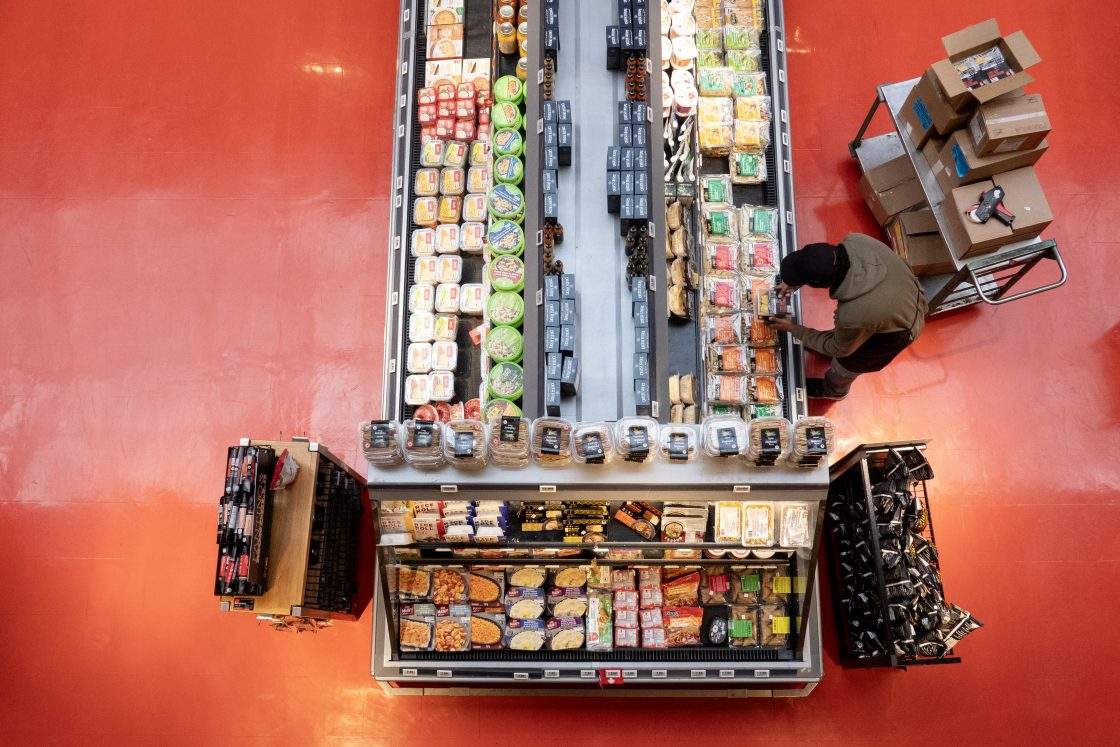
Struggling with food insecurity in Central NC

Surging costs drive demand at food pantries like CORA in Chatham County and across much of NC. Further loss of resources could be devastating.

Struggling with food insecurity in Central NC is a story from Carolina Public Press, an award-winning independent newsroom. Our breakthrough journalism shines a light on the critical overlooked and under-reported issues facing North Carolina’s more than 11 million residents. Please consider making a contribution to support our journalism.

  •  

Italy’s Deficit to Rise Again as Rome Uses EU Fiscal Flexibility

Italy expects its budget deficit to rise above the European Union’s three per cent reference level again next year as Giorgia Meloni’s government uses new EU fiscal flexibility to finance defence and measures responding to higher energy costs.

Rome’s latest multi-year fiscal projections put the 2027 deficit at 3.4 per cent of GDP, substantially above the previous target of 2.8 per cent.

The increase follows a planned fall to 2.9 per cent this year, which would bring Italy below the EU’s three per cent threshold for the first time since 2019. The deficit stood at 3.1 per cent in 2025.

The change reflects Italy’s decision to use the EU’s national escape clause, allowing member states under specified conditions to deviate temporarily from their agreed expenditure paths.

Under the latest projections, Rome intends to use fiscal flexibility worth 0.6 per cent of GDP in both 2027 and 2028 for defence and energy-related spending. The additional expenditure amounts to roughly €29 billion across the two years, while the deficit is projected at 3.2 per cent in 2028.

The decision turns a long-running dispute over fiscal flexibility into a test of the EU’s revised budget framework.

The national escape clause was introduced in the 2024 reform of the Stability and Growth Pact. It permits a member state to deviate temporarily from its fiscal path when exceptional circumstances outside its control have a major effect on public finances, provided medium-term fiscal sustainability is not endangered.

The mechanism was subsequently used to give governments greater room to increase defence spending. In 2026, the Commission also moved to broaden its application to energy-security expenditure.

Italy has been among the governments pressing hardest for such flexibility.

In August, EU Today reported that Rome intended to use the available fiscal room fully for energy measures but only partly for defence. The decision illustrated the competition between longer-term military investment and the immediate political pressure created by household and industrial energy bills.

The latest projections make that trade-off larger.

Italy’s annual inflation rate increased to 4.1 per cent in September, from 3.2 per cent a month earlier. Meloni has sought additional room from Brussels to cushion the economic effect of elevated energy costs.

At the same time, the government has improved its growth forecasts.

GDP is now expected to expand by one per cent in 2026, compared with an earlier projection of 0.6 per cent. Growth for 2027 has been revised from 0.6 to 0.8 per cent.

Those figures provide some additional room, but Italy’s debt remains the larger constraint.

Public debt is projected to rise from 138.1 per cent of GDP this year to 138.5 per cent in 2027 before edging down to 137.9 per cent in 2028. The government now expects the debt ratio to begin falling a year later than previously planned.

That leaves Rome in an unusual position. It expects formally to bring its underlying deficit below the EU threshold while headline borrowing rises above three per cent once exceptional spending is included.

Economy Minister Giancarlo Giorgetti has said Rome is discussing with the European Commission how the calculation will affect Italy’s attempt to leave the EU’s excessive deficit procedure.

The Commission will therefore have to judge not only Italy’s fiscal trajectory but how extensively exceptional expenditure can be accommodated under rules Brussels itself has made more flexible.

That question has already generated concern.

EU Today reported last month that the European Fiscal Board had warned that exceptions were beginning to weaken the clarity of the revised rules. The watchdog has been particularly critical of allowing room initially associated with higher defence spending to be extended to energy-resilience measures.

Italy provides one of the clearest examples of the problem.

Rome is trying simultaneously to increase military capacity, protect households and businesses from energy costs and demonstrate that its very high debt remains manageable.

It has also argued that European rearmament cannot proceed unless governments have sufficient room to finance it. The same tension emerged in Italy’s debate over participation in the EU’s SAFE defence loan programme.

The EU has given governments more flexibility to manage those competing demands. Italy’s 2027 budget will show how far that flexibility can stretch before the argument returns to the credibility of the fiscal rules themselves.

  •  

China Turns Trump’s Trade War Against Him

Donald Trump tried to use America’s economic weight to force China to bend, only to discover that Beijing has built an economic weapon of its own that Washington cannot tackle. China Finds America’s Chokepoint For years, the central assumption underlying Washington’s economic confrontation with Beijing was that interdependence gave the United States more leverage than […]
  •  

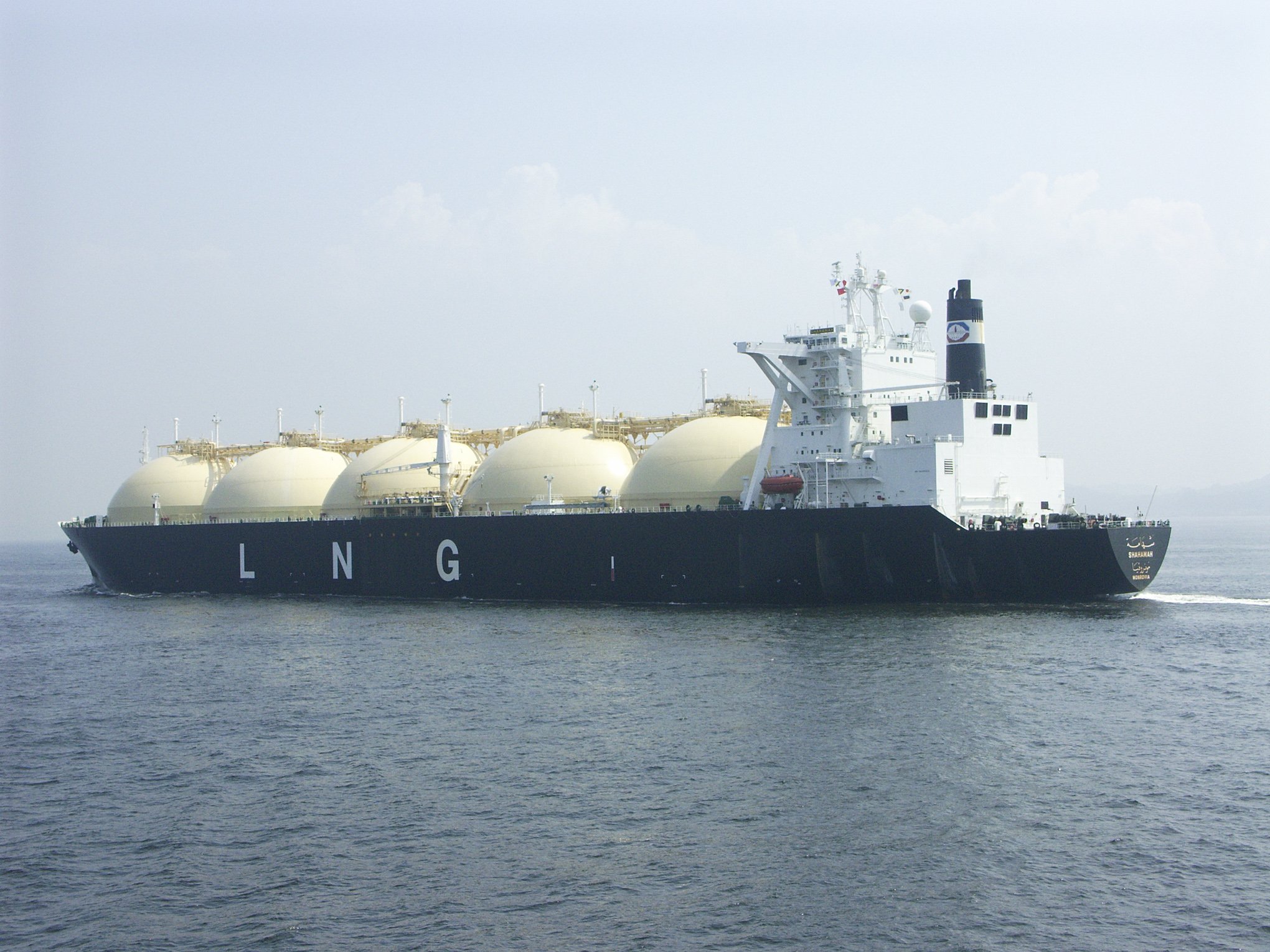
[Explainer] Gas glut or supply crunch? And what it means for EU methane rules

The EU has decided to delay its methane regulation, and the reason is simple enough. 

Europe imports almost 90 percent of its gas, which makes it one of the most exposed buyers in the world. And the US-Israeli war with Iran has choked gas flows through the Strait of Hormuz. 

Making matters more complicated is the fact that Europe is still phasing out Russian gas, with a total ban on Russian overseas liquified gas due to be implemented next year.

So few were surprised when energy commissioner Dan Jørgensen told ministers in Dublin this week that he will propose delaying the import part of the regulation by a year to 2028, although member states and parliament still have to formally agree.

This article continues, but the full version is available only to EUobserver.com subscribers. Visit account.euobserver.com/membership

  •  

Prospects of Dangote East Africa Petroleum Refinery: Industrialization and Self-Sufficiency

The construction of an oil refinery in the Kenyan city of Lamu is a strategic project that will enable East African countries to increase the added value of their natural resources, achieve energy self-sufficiency, and strengthen the region’s economic and political independence. The proposed East African refinery in Lamu will refine crude from Turkana, estimated […]
  •  

China Opens New EU Anti-Dumping Probe Days Before Šefčovič Trade Talks in Beijing

Beijing has opened an anti-dumping investigation into a chemical imported from the European Union days before EU Trade Commissioner Maroš Šefčovič travels to China for talks covering trade imbalances, market access and strategic raw materials.

China has opened a new anti-dumping investigation into imports from the European Union less than a week before EU Trade Commissioner Maroš Šefčovič is due in Beijing for talks on the increasingly difficult trade relationship between the two sides.

China’s Ministry of Commerce announced on Saturday, 3 October, that it was beginning an investigation into p-nitrotoluene, also known as 4-nitrotoluene, imported from the EU.

According to the official notice opening the investigation, the case follows an application submitted on 14 September by Chinese producers Jiangsu Huaihe Chemical and Hubei Dongfang Chemical. The investigation will examine alleged dumping between 1 July 2025 and 30 June 2026, while the assessment of possible damage to Chinese industry will cover January 2022 to June 2026.

P-nitrotoluene is used in the production of dyes, pharmaceuticals, pesticides, pigments and other chemical products.

In isolation, the investigation concerns a relatively specialised industrial product. Its timing, however, places it inside a much wider argument over the future of EU-China trade.

Šefčovič is expected in China on 8 and 9 October for the second high-level meeting under the EU-China trade and investment consultation mechanism established earlier this year.

The European Commission confirmed in September that the meeting would address Chinese exports to the EU, European access to the Chinese market and restrictions affecting rare-earth supplies. Brussels said it expected the October talks to produce the first concrete results from work undertaken since the mechanism was established. The Commission outlined the agenda following a September call between Šefčovič and Chinese Commerce Minister Wang Wentao.

EU Today reported in September that Šefčovič had warned China that the EU could consider tougher measures if the negotiations failed to produce tangible progress by October.

The deadline followed talks between Šefčovič and Wang in Brussels in June. At the time, the two sides agreed to establish working groups dealing with trade and investment balances, export controls, intellectual property and World Trade Organisation reform.

EU Today examined those negotiations in detail as Brussels sought progress on rare earths, market access and the widening trade imbalance.

The numbers remain a central part of the European argument.

According to Eurostat’s figures for EU-China trade in 2025, the EU imported €559.4 billion in goods from China while exporting €199.6 billion, leaving a trade deficit of €359.8 billion. EU exports to China fell by 6.5 per cent compared with 2024, while imports increased by 6.4 per cent.

Brussels argues that the imbalance cannot be viewed separately from questions of industrial subsidies, excess manufacturing capacity and barriers encountered by European companies seeking access to the Chinese market.

Beijing rejects the suggestion that the growth of Chinese exports is principally the result of unfair state support and has criticised the EU’s expanding use of trade-defence instruments.

The confrontation now covers a growing range of industries.

The EU has imposed additional duties on Chinese electric vehicles following an anti-subsidy investigation, while disputes have extended to medical devices, public procurement and agricultural products. China, meanwhile, has launched investigations affecting European products including brandy, pork, dairy goods and chemicals.

Rare earths have become particularly important.

European industry remains heavily dependent on Chinese supplies and processing capacity for materials used in permanent magnets, electric vehicles, wind turbines, electronics and defence equipment.

Eurostat reported in June that China supplied 46.8 per cent of EU rare-earth imports by weight in 2025. The concentration is greater in some processing stages and manufactured components.

EU Today has followed the issue closely, including the Commission’s preparations for possible renewed Chinese rare-earth restrictions and the EU Today Research Desk’s assessment of Europe’s exposure to Chinese rare-earth supply chains.

Following the June negotiations, Šefčovič said China had given assurances that export controls on rare earths and permanent magnets should not interrupt European supply chains. He nevertheless sought improvements to the licensing system faced by EU companies. The Commissioner said at the time that Beijing would be expected to demonstrate tangible progress by October.

That point has now arrived.

Neither Brussels nor Beijing has indicated that the broader commercial relationship is heading towards disengagement. China remains the EU’s largest source of imported goods and the European market remains commercially important to Chinese exporters.

But both sides are increasingly prepared to use trade-defence measures when negotiations fail to resolve disputes.

Saturday’s anti-dumping investigation consequently adds another issue to Šefčovič’s agenda days before he arrives in Beijing — and provides an early indication of the atmosphere surrounding the October talks.

  •  

Practical Directions for BRICS Development in the Medium Term

The actual handover of the BRICS chairmanship from New Delhi to Beijing will take place in three months, but the contours of the group’s near-term agenda can already be identified with reasonable clarity. As BRICS expands and diversifies, the focus of discussions is shifting from symbolic gestures to issues of practical economic integration. Experts identify […]
  •  

“Tens of thousands of homeless people all on the streets – it’s way worse than I thought”

🇺🇸 Meanwhile in Los Angeles “Tens of thousands of homeless people all on the streets – it’s way worse than I thought” All by design. pic.twitter.com/18QZAWqh16 — Concerned Citizen (@BGatesIsaPyscho) October 2, 2026
  •  
❌