❌

Reading view

France and Germany Seek New EU Power to Cut Market Access Over Trade Distortions

France and Germany have proposed giving the European Commission powers to respond within days to serious trade distortions, including the possibility of restricting access to the EU single market. The initiative comes as European concern grows over Chinese subsidies, industrial overcapacity and dependence on critical imports.

French President Emmanuel Macron and German Chancellor Friedrich Merz have called for a new European Union trade instrument capable of acting rapidly against countries whose economic practices cause serious disruption to the European market.

In a joint initiative sent to European Commission President Ursula von der Leyen on Monday, the two governments proposed strengthening the EU’s ability to respond to what they describe as systemic market distortions, including dumping, widespread subsidies and restrictions affecting access to critical supplies.

The Franco-German proposal does not formally identify China as its target. However, many of the practices it describes correspond directly to long-standing European concerns over Chinese industrial policy, including excess manufacturing capacity, state support and restrictions on exports of critical minerals.

The initiative represents a further development in a harder European approach towards Beijing. EU Today reported last week that China had warned it would respond if the EU introduced new restrictions against Chinese companies or products.

Macron and Merz are proposing two additional instruments.

The first would be intended to reduce European companies’ dependence on single suppliers for strategically important products and raw materials. The second would allow the EU to restrict access to its internal market when a third country uses political or economic measures that seriously undermine fair competition.

Under the proposal, the Commission could initiate countermeasures unless a qualified majority of EU governments voted to block them. That would reverse the normal political dynamic in which Brussels must first secure sufficient support before acting.

German officials have argued that the EU needs powers comparable in effect to the United States’ Section 301 trade measures or China’s ability to restrict exports of critical raw materials.

The Commission has welcomed the Franco-German intervention as a contribution to its work on economic security and global trade imbalances. Any new instrument would, however, require legislation and approval by both EU governments and the European Parliament before it could be used.

The proposal comes amid growing concern in both Paris and Berlin over the effect of subsidised Chinese production on European manufacturers.

Germany’s position is particularly significant. Berlin has traditionally been more cautious than Paris about measures that could restrict trade with China, reflecting the importance of the Chinese market to German carmakers, engineering companies and chemical producers.

That position has shifted as German industry faces increased competition from Chinese electric vehicles, machinery and other manufactured goods.

EU Today has previously examined the emerging Franco-German alignment on tougher China trade defences and demands from German manufacturers for broader European action rather than product-by-product investigations.

The new proposals go considerably further by seeking a mechanism capable of dealing with entire sectors and acting much more quickly than conventional anti-dumping proceedings.

Chemicals, PET plastics and hybrid vehicles are among sectors identified in the Franco-German document as areas where additional action may be required.

The timing is also significant. EU leaders are due to discuss trade relations with China at their summit in Brussels on 15–16 October, while Trade Commissioner Maroš Šefčovič is expected to hold talks with Chinese officials beforehand.

The Commission is already attempting to balance two objectives: maintaining Europe’s access to the Chinese market while reducing strategic dependencies that could be used as political leverage.

The Franco-German plan would give Brussels another instrument at the more coercive end of that policy. Its eventual importance will depend on whether governments agree to create it and how readily they would permit the Commission to use it against a major trading partner.
  •  

Europe fortifies itself against Russia’s hybrid war

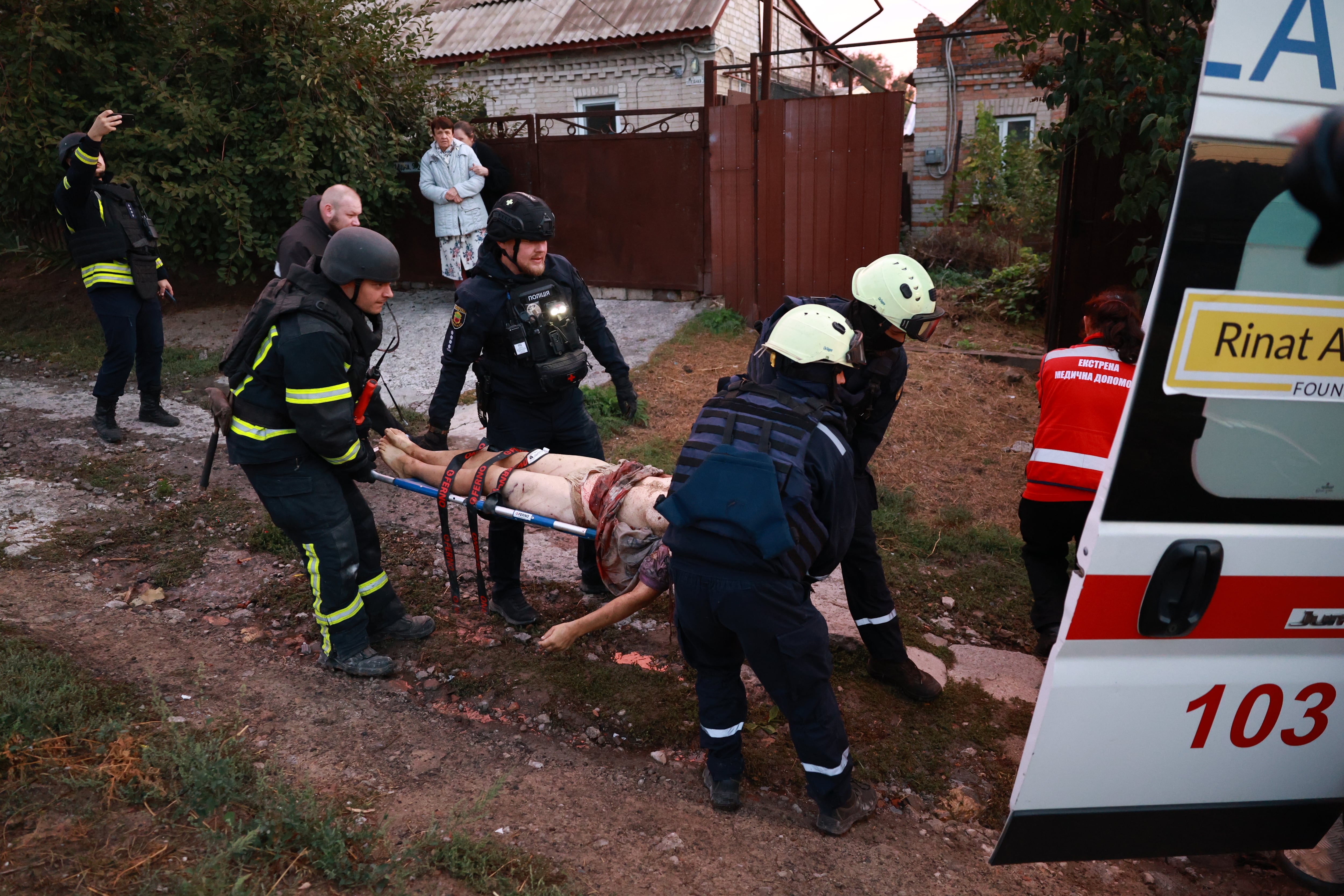
Russia is stepping up its hybrid war against Europe. From sabotage, drone incursions, and arson to plots (mostly foiled) to assassinate pro‑Ukraine activists and Russian dissidents on European soil, the Kremlin is testing the allied response, and incidents against NATO’s European partners are becoming more serious, such as the explosive‑laden drones found this summer at Leipzig Airport in Germany. That gray line between a hybrid attack and a conventional one is blurring, and several European intelligence sources warn of the risk that one of those incidents could escalate — either by a deliberate Kremlin decision or a miscalculation.

Seguir leyendo

© Kateryna Klochko (AP/LaPresse)

Rescue teams carry the body of a woman killed in a Russian attack on a residential neighborhood in Zaporizhzhia, last Saturday.
  •  

France and Spain Welcome Prospect of Britain Rejoining European Union

France and Spain have openly welcomed the prospect of Britain rejoining the European Union after British Prime Minister Andy Burnham put full membership back among the options for the country’s long-term relationship with Europe.

French President Emmanuel Macron and Spanish Prime Minister Pedro Sánchez addressed the question during Macron’s state visit to Spain on Wednesday, 30 September. Asked whether Britain could return under Burnham, Macron responded in English: “Welcome back.” He added that a British decision to move in that direction would be good news for both Britain and Europe.

Sánchez was similarly positive, saying Spain would “open our arms” if Britain sought to return.

Their comments followed Burnham’s intervention at the Labour Party conference and subsequent interviews in which he argued that Britain should reconsider the full range of options for its future relationship with the EU.

Those could include remaining under the present post-Brexit arrangements, returning to the customs union or single market, or ultimately “going all the way” and applying for EU membership again.

The remarks extend a debate which had already been developing since Burnham entered Downing Street. In August, EU Today reported that he had told European Council President António Costa that Britain should be “bolder” in rebuilding relations with Brussels.

More recently, the argument has moved from diplomatic language to practical economic questions. Burnham has been pressing Brussels to ensure British companies are not disadvantaged by the EU’s emerging industrial preference rules, with access to the proposed “Made in Europe” framework becoming one of the principal issues ahead of the next EU-UK summit.

Macron nevertheless made clear in Madrid that closer relations could not become a system under which Britain selected individual advantages of EU membership while remaining outside the corresponding obligations.

“You cannot pick and choose among the Union’s freedoms,” he said during the joint press conference with Sánchez.

That question dominated much of the Brexit negotiation after the 2016 referendum. Access to the single market is built around the free movement of goods, services, capital and people, while participation also entails accepting common rules and enforcement mechanisms.

A British application to rejoin would be a separate and considerably larger process. Under Article 49 of the Treaty on European Union, Britain would have to apply for membership and secure unanimous agreement from the existing member states before negotiations could be completed.

A returning Britain could not assume that the special arrangements it held before Brexit would automatically be restored. The UK previously had an opt-out from the euro, remained outside the Schengen passport-free area and benefited from a budget rebate.

Any future terms would have to be negotiated.

Public opinion has also changed since the referendum. A YouGov poll in June found 55 per cent of Britons supported rejoining the EU and 34 per cent opposed it, although support falls when respondents are asked about specific membership conditions.

That shift is not limited to Britain. Polling examined by EU Today earlier this year found substantial support across EU member states for a British return.

For the moment, however, Burnham is not proposing an immediate membership application or referendum.

The next test will be the UK-EU summit expected in November. The meeting was originally planned for July but was postponed following Keir Starmer’s resignation, with EU Today reporting at the time that the political transition in London had complicated preparations.

Burnham wants the summit to advance negotiations on industry, trade and migration and has said he intends to use the period around the meeting to set out the longer-term options available to Britain.

The immediate negotiations are therefore likely to focus on economic integration rather than membership.

Greater access to European markets would almost certainly involve greater regulatory alignment. The political argument in Britain will concern how far the country is prepared to accept common European rules in return for reducing barriers created by Brexit.

Macron and Sánchez have now made clear that, if the discussion eventually moves beyond closer economic cooperation towards membership itself, two of the EU’s largest states would welcome it.

  •  

Spanish royals host gala dinner for Emmanuel Macron: ‘We are this old continent that underestimates itself. But we’re not doing that badly’

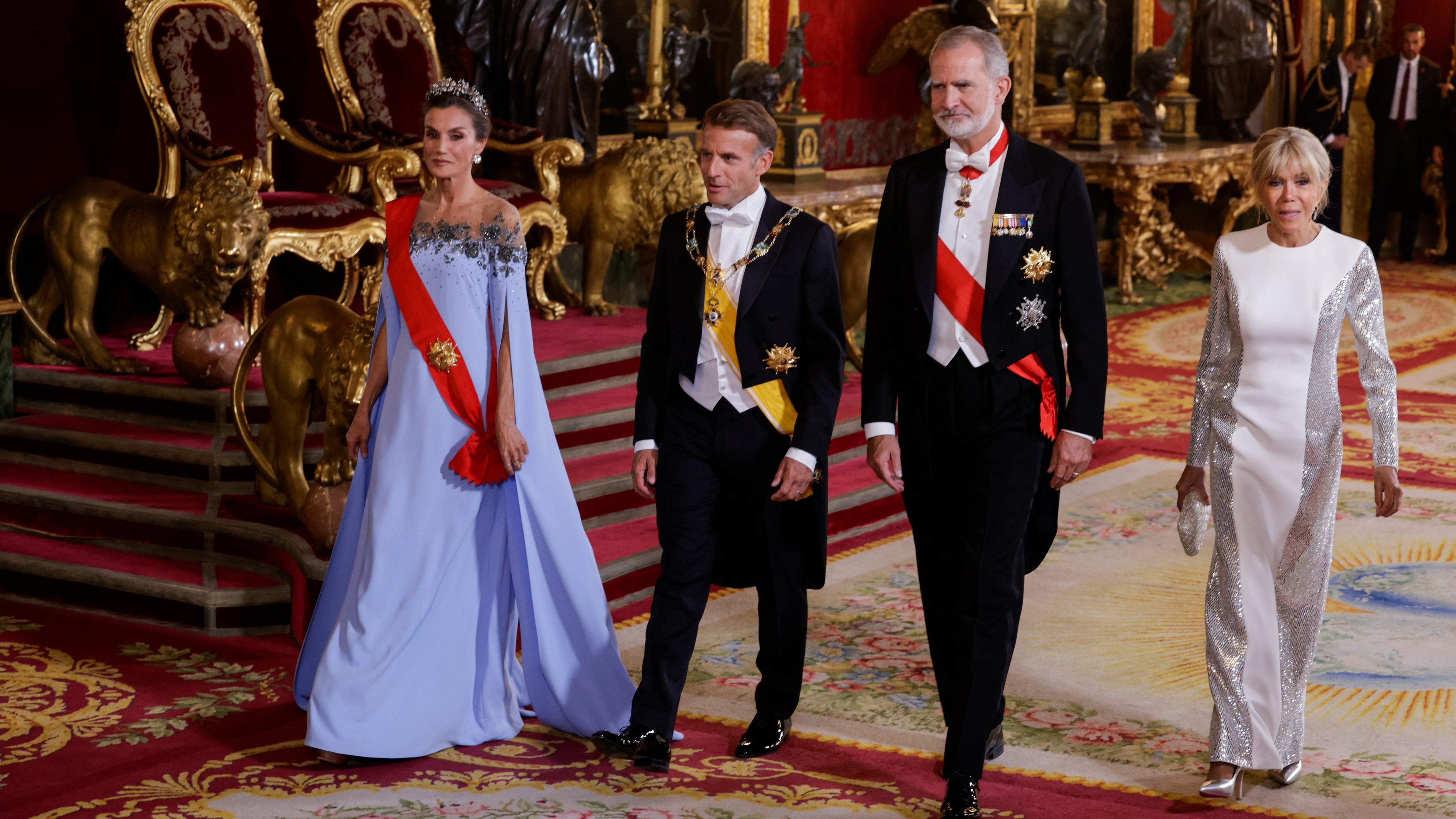
King Felipe VI and Queen Letizia of Spain on Tuesday received French President Emmanuel Macron and First Lady Brigitte Macron at the Royal Palace for a gala dinner as part of a state visit by the French leader — one of his last before France holds general elections in April of next year. After almost 10 years in office, this was the first state visit to Spain by Macron, whose second term ends in the spring, after which he is barred from running for a third consecutive term.

Seguir leyendo

© Violeta Santos Moura (REUTERS)

French President Emmanuel Macron and his wife Brigitte Macron walk with Spain's King Felipe and Queen Letizia during a welcoming ceremony for the gala dinner hosted in their honor at the Royal Palace in Madrid.
  •  

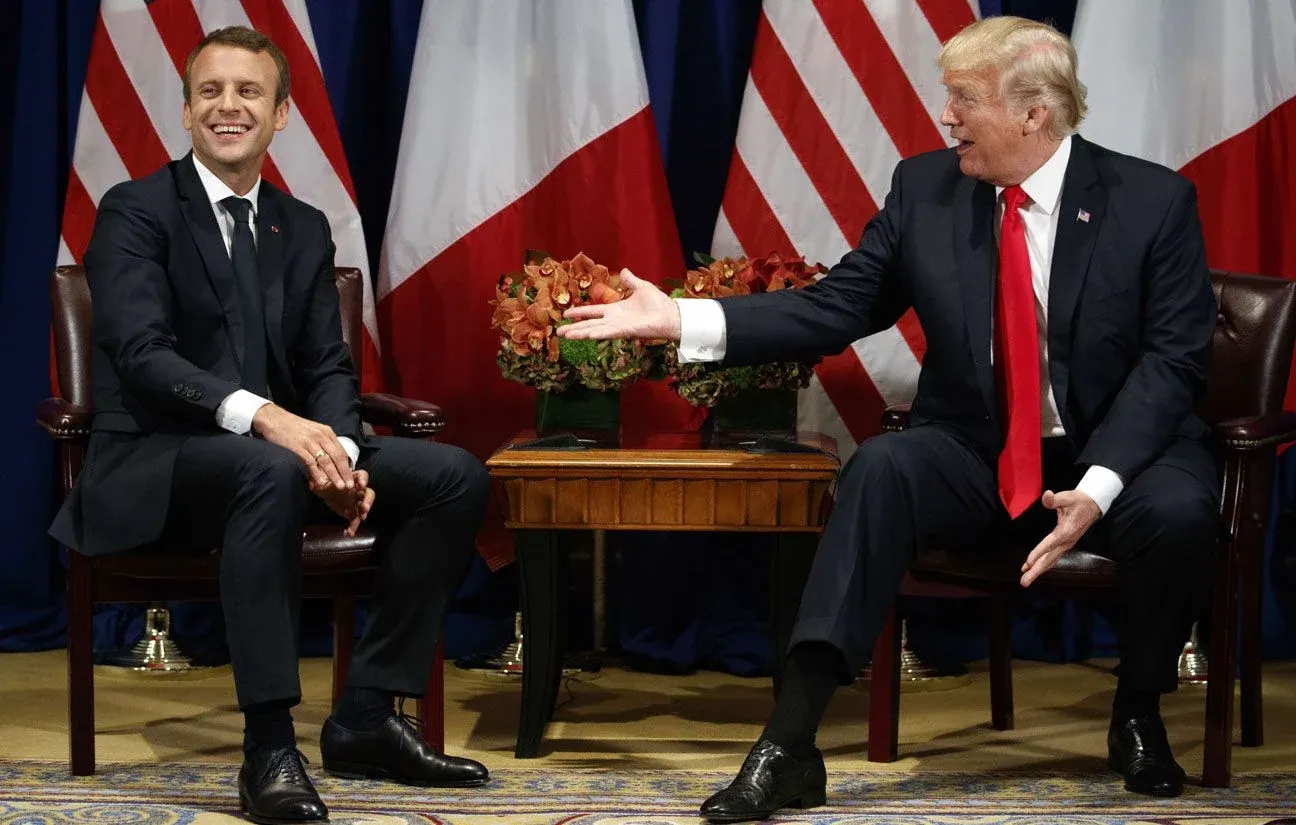
Macron à New-York : "Je ferai payer les Français pour les guerres étrangères"

Par Eric V.

Alors que le prix à la pompe s'envole, Macron est bien décidé à continuer à chérir les causes des maux qu'il dénonce, en particulier une soumission humiliante aux USA et à leurs guerres, qu'elles soient directes ou par proxy.

Macron à New-York : "Je ferai payer les Français pour les guerres étrangères"
LE COURRIER
DES STRATÈGES
Restez libre !
Macron à New-York : "Je ferai payer les Français pour les guerres étrangères"

LA NEWSLETTER · GRATUITE

Le Courrier,
chaque matin.

L'essentiel de l'actualité, passé au crible par les cinq plumes du Courrier. Dans votre boîte, chaque jour ouvré.

Gratuit. Vous restez libre de partir quand vous voulez.

JE M'INSCRIS lecourrierdesstrateges.fr
lecourrierdesstrateges.fr
Restez libre !

Macron n'a pas encore prononcé son discours à l'Assemblée Générale de l'ONU, mais il a quand même beaucoup parlé à l'extérieur de la salle. En particulier, il a proposé une masse d'initiatives pour tenter d'endiguer la crise pétrolière que le Courrier annonce depuis le mois d'avril.

Au menu de ses péroraisons, notamment, une présence militaire française en Arabie Saoudite, pour protéger les installations pétrolières déjà menacées par l'Iran, et désormais directement menacées par le mouvement Ansarullah. Bref, des dépenses militaires, et une prise de risque pour sécuriser une région déstabilisée par une guerre israélo-américaine qui nous est imposée.

Quels sont les enjeux de l’AGONU qui se tient en ce moment ?
AGONU 2026 : derrière le discours de Macron du 22 septembre, trois enjeux réels — la succession de Guterres, la faillite de trésorerie de l’ONU, les sièges africains
L’OPEP-monde se meurt, le pétrole s’embrase : vers un Brent à 150$, par Vincent Clairmont
Le marché pétrolier n’est plus une mécanique de précision, mais une boucherie à ciel ouvert. Le Brent frôle les 120 dollars le baril et, tandis que les chancelleries s’agitent, les faits, eux, sont têtus : nous assistons à la démolition contrôlée de l’ordre énergétique mondial. Ce n’est
Victoire des Houthis au Yémen : un tournant dans la guerre d’Iran ?
Ansarullah tient Bab el-Mandeb. Mais Moka n’est pas tombée : elle a été laissée. Qui se bat au Yémen, pourquoi le camp adverse s’est effondré, et ce que l’Europe y perd.
Macron à New-York : "Je ferai payer les Français pour les guerres étrangères"
LE COURRIER
DES STRATÈGES
Restez libre !

ABONNEMENT

Allez au fond
des choses.

Deux grands formats par jour. Les cinq plumes du Courrier. La série Sécession, le dimanche.

Le monde commente. Vous, vous comprenez.

S'ABONNER lecourrierdesstrateges.fr
lecourrierdesstrateges.fr
Restez libre !

Chérir les causes de nos maux

Emmanuel Macron s'agite, avec son Premier Ministre Lecornu, pour refroidir la colère qui monte en France face à l'augmentation des prix du pétrole, et en particulier du carburant domestique. En année électorale, il faut bien reconnaître que l'ébullition peut très vite partir en vrille. La stratégie est d'endetter un peu plus l'État pour soulager la pression sur le pouvoir d'achat.

Dans le même temps (le fameux "en même temps" que tout le monde connaît), Macron prend bien soin de ne pas s'attaquer aux racines du mal : sa soumission à l'ordre "occidental", conduit par Donald Trump, qui lève un impôt de fait sur les peuples pour financer la défense d'un État d'Israël dominé par de dangereux extrémistes. Là encore, le projet de Grand Israël qui anime les délires d'un Ben Gvir ou d'un Smotrich, dont Nétanyahou est prisonnier autant que complice, se traduit par un appauvrissement des Français, qui n'ont rien demandé.

On peut certes compter sur la presse Bolloré, relais fidèle des positions israéliennes, pour faire croire à ces pauvres Français que c'est le prix à payer pour défendre l'Occident face à la menace islamiste. Certains tombent encore dans le panneau.

La réalité est que nous payons aujourd'hui pour une guerre qui n'est pas la nôtre. On comprend bien que, pour survivre, Israël doive affronter l'Iran dont le fondement est la contestation sioniste. Mais l'intérêt des Français, dans cette affaire, où est-il ?

  •  

Ukraine : Macron, Merz and Burnham Close Ranks as Russia Steps Up the War

coalition of vontiers in Paris (Flickr)

coalition of vontiers in Paris (Flickr)

The Coalition of the Willing for Ukraine meets this Monday, August 24 — the 35th anniversary of Ukrainian independence — under the joint chairmanship of Emmanuel Macron, Friedrich Merz and Andy Burnham. The meeting comes at an urgent moment: fighting is intensifying on the ground and Moscow is preparing a new mobilization, while in Kyiv, Volodymyr Zelensky has just ruled out holding elections in wartime.

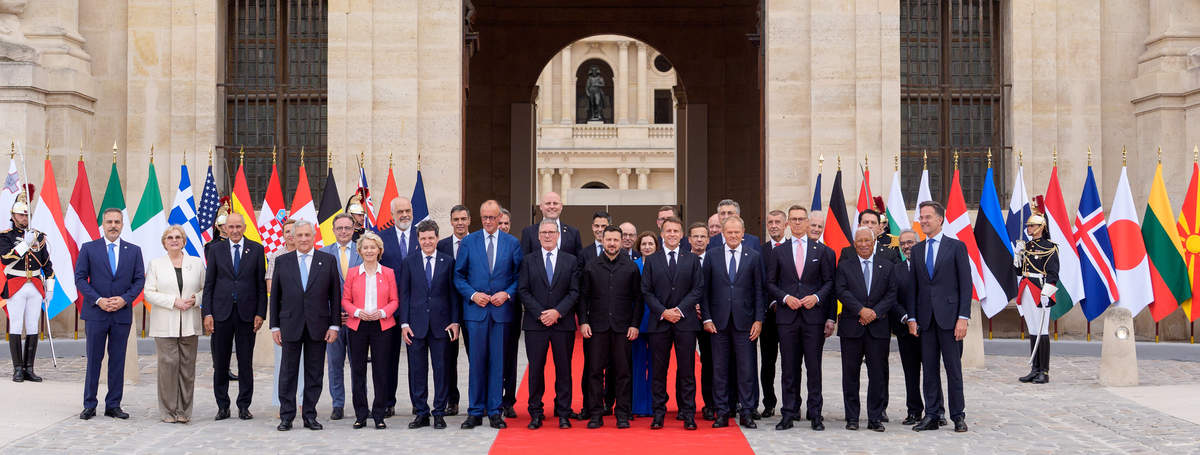
The ‘Volontaies’ Coalition at the Élysée (Élysée Palace)

A Meeting Under Heavy Diplomatic Pressure

According to a statement from the Élysée Palace released Friday, August 21, the Coalition of the Willing — an international alliance supporting Ukraine formed in March 2025 at the initiative of Czech President Petr Pavel — will meet this Monday at 1 p.m. in a hybrid format, with Volodymyr Zelensky taking part. The session will be jointly chaired by Emmanuel Macron, via videoconference, German Chancellor Friedrich Merz, and, for the first time, new British Prime Minister Andy Burnham. About a dozen leaders, including European Council President António Costa, are expected to be in Kyiv alongside the Ukrainian head of state, while European Commission President Ursula von der Leyen is not expected to attend in person.
According to a European official cited by several news agencies, talks are expected to focus primarily on strengthening Ukrainian air defenses, as the country faces a shortage of interceptors against Russian strikes. The Élysée says leaders will reaffirm “their determination to increase pressure on Russia” and continue coordinating measures aimed at drying up the resources funding Russia’s war effort, including the fight against the “shadow fleet” Moscow uses to circumvent oil sanctions. The meeting is also meant to advance work on security guarantees intended to underpin a “just, robust and lasting” peace, building on the Paris Declaration of January 6, 2026.

On the Ground, Moscow Prepares a New Mobilization

The meeting comes as the war enters a phase of intensification. Volodymyr Zelensky said this weekend that Russia plans to mobilize an additional 300,000 troops for the Ukrainian front after Russia’s parliamentary elections, scheduled for September 16-20, with a longer-term goal of recruiting 500,000. The Ukrainian president described a “peripheral mobilization” that would spare Russia’s major cities but, he said, would be hard to conceal. He also cited a Russian goal of producing roughly 1,300 ballistic missiles a year, while Ukraine expects to receive only 264 interceptor missiles this year, down from 364 in 2025 and 675 in 2023 — a shortfall Kyiv is trying to offset through new agreements, including delivery of at least one SAMP/T air-defense system from France and roughly 600 missiles from Germany.
These statements echo converging battlefield reports. Recent military bulletins point to intense fighting on the Zaporizhzhia, Kherson and Dobropillya fronts and in Dnipropetrovsk region, along with exchanges of soldiers’ remains between the two sides. This information comes from both Ukrainian and Russian sources, whose respective figures cannot be independently verified and should be treated with caution.

BACKGROUND

Formed in March 2025 at the initiative of Czech President Petr Pavel, and later organized under French and British leadership, the Coalition of the Willing brings together roughly thirty countries supporting Kyiv. It notably held a summit in Paris on July 13, 2026, on the eve of the Bastille Day parade, building on the G7 summit in Évian and the Paris Declaration of January 6, 2026.

Zelensky Rules Out Elections That Would “Destroy the Country”

On the domestic front, Volodymyr Zelensky responded for the first time to the call for elections made last week by his former defense minister, Mykhailo Fedorov, who was dismissed in late July amid vocal protests. In remarks made Saturday and released Sunday, the Ukrainian president said holding a wartime vote, absent a major cessation of hostilities, would “destroy the country by splitting society,” calling the prospect a “tsunami.” Ukrainian law bars elections under martial law, in effect since Russia’s full-scale invasion began in February 2022; Mr. Zelensky’s presidential term technically expired in May 2024.
Mr. Zelensky pointed to the practical hurdles such a vote would have to overcome — including how to enable voting by mobilized troops, millions of refugees abroad, and residents of Russian-occupied territory. According to an analysis by CNN, an incomplete or contested vote would hand Moscow a propaganda win, since the Kremlin already cites the wartime ban on elections to question the Ukrainian president’s legitimacy, even as Russia’s own electoral process is not considered free by Western observers. Polling suggests former armed forces commander Valery Zaluzhny or Mr. Fedorov himself would be the frontrunners in any eventual election.

Two Fronts for Kyiv: Military and Political

The convergence of these two issues — international military support and the debate over the democratic legitimacy of Ukraine’s leadership in wartime — casts Monday’s meeting in a particular light. For the Western leaders gathered around Emmanuel Macron, the goal is to demonstrate the durability of their commitment at a moment when Moscow is betting on wearing Kyiv down before winter, and when the question of security guarantees still has no concrete bearing on any ceasefire.

L’article Ukraine : Macron, Merz and Burnham Close Ranks as Russia Steps Up the War est apparu en premier sur FrenchDailyNews.

  •  

Wie das Verhältnis zwischen Paris und Washington in offene Feindschaft abgerutscht ist

Die Beziehungen zwischen den USA und Frankreich sind derzeit zerrüttet, was eine lange Vorgeschichte hat. Um nur einige Beispiele für die Gründe zu nennen: Mit der Gründung des asiatischen Verteidigungsbündnisses AUKUS haben die USA 2021 Frankreich einen Milliardenvertrag über den Bau von U-Booten für Australien abgejagt und nach den Putschen in Mali und Burkina Faso […]
  •  
❌