❌

Reading view

Europe’s mounting social chaos… chickens coming home to roost for proxy war against Russia

Strategic Culture Foundation | October 9, 2026

The European Union is witnessing a full-blown social revolt. Governing political parties and their economic policies are held in open contempt as public protests and strikes escalate across multiple countries.

Protests, mass marches, and industrial strikes are spreading across the EU in France, Belgium, Spain, Italy, Germany, Ireland, Portugal, and other countries. The grievances are various, from students and teachers over woeful education services, to healthcare professionals and transportation workers denouncing crumby wages and pension cuts.

But at the core is a warmongering, dehumanizing system of capitalist inequality.

Unbearable living costs for basic needs, from food to housing, are driving millions onto the streets in desperation and anger at the lack of adequate political response to their concerns. As one French student said: “Too young to be listened to, old enough to be tear-gassed.”

The entire political system is being brought into disrepute for its dysfunction and indifference towards meeting rudimentary human needs. Then, infuriating all the more, are lies from the elite rulers and their propaganda media about “national defense and threat of war from Russia.”

In Spain this week, an 87-year-old frail woman known as Maricarmen died in hospital after she was evicted from her Madrid home because she could not pay the extortionate rent increase. Her plight has come to galvanize a nationwide protest against Spain’s housing crisis, a crisis that is repeated across every European country. Protesters shouted furiously that the pitiful old woman was “murdered by the state and corporations.”

In France, the brutality of police against student protests has shocked the nation and the world. Nearly 7,000 young people have been arrested, as riot police tear gas and shoot at largely peaceful rallies. Students gathering at the Place de la Bastille in Paris and other cities vow that they will not back down. One student had his hand blown off by a police stun grenade while another teenager lost an eye from a rubber bullet fired at close range.

The Place de la Bastille is where the French Revolution manifested in 1798 against a hated aristocracy amid abject misery. Today, the tensions are boiling towards another momentous rebellion, this time inspiring again similar movements across Europe.

These protests and the inhumane suffering that underlie them are channeling uprisings all over the EU.

There is a palpable sense that populations en masse have had enough of decades of inequality and chronic deprivation inflicted by capitalist policies that enrich a few and are enforced by governments slavishly serving the interests of capital over the needs of the citizen majority.

Western media reports talk about “cash-strapped” governments under pressure from bond markets to reduce record debt levels while workers, students and pensioners demand more public investment and relief from economic hardship.

That is a misleading partial portrayal of the problem. Omitted is the crucial backdrop that European governments are directing vast economic resources towards militarism and the proxy war in Ukraine against Russia. That is what is causing the “cash-strapped governments.” In other words, their declared fiscal straits are a policy choice, not some mysterious dilemma.

The social crisis sweeping across Europe is also seen in the United States and other Western-aligned nations. The background is a failed economic system that no longer provides a modicum of acceptable living conditions. The problem has been decades in the making from growing inequality and diminishing political representation. Today it is even questionable if Western states are democracies, controlled as they are by corporate oligarchies.

Nevertheless, the social crisis that is unfolding across Europe has been intensified and amplified by European political rulers operating in a relentless war mode against Russia.

The European Union has pumped hundreds of billions of euros into Ukraine over the past four years to prop up a NeoNazi regime run by a corrupt dictatorship – all for the objective of defeating Russia. The EU leaders – many of them unelected, like Ursula von der Leyen, Kaja Kallas and António Costa – are driven by an obsessive Russophobia. But that is only part of the explanation.

Other elected leaders and parties like France’s Macron and Germany’s Merz are also despised for their elitism and delusions of grandeur. Merz declares that he wants to make Germany the strongest military in Europe, in total tin-ear deafness to his nation’s economic and social problems and the sinister historical connotations of resurrecting Nazi Germany. Meanwhile, as his government suffers electoral defeat after defeat, European elites deprecate German voters as being blind because they dare to choose parties that are opposed to war with Russia.

There are many grounds for the Europe-wide contempt of ruling parties. Inequality, poverty, unemployment, soaring living costs, declining wages, deteriorating public services. Uncontrolled immigration amid the pressure on inadequate public resources is another cause for grievance. Europe’s complicity in the Israeli genocidal war on Palestinians, and Europe’s complicity in Trump’s aggression towards Iran, Yemen, Cuba, and so on, are other factors.

However, the bogus narrative that governments are “cash-strapped” is a cause for immense public disgust. There are plenty of economic resources to meet public needs. It’s a question of those resources not being permitted to create just and humane societies under the prevailing capitalist system with its priority of enriching a tiny elite class.

The conditions of “tight budgets” and “austerity for the masses” are created by deliberate policies of militarism and fuelling a proxy war in Ukraine.

European “leaders” and their NATO lobbyists like Mark Rutte demand hundreds of billions of euros to boost military industries while at the same time calling for draconian cuts in public spending and social welfare in order to pay for this reckless militarism. The EU is “lending” an additional €90 billion over the next two years alone just to prop up the corrupt regime in Kiev so that it can keep fighting a futile war with Russia. The perverse priority is driven by the military-industrial complex and its corporate investors. It is also driven by an ideological, propagandized mindset that demonizes Russia as an enemy. President Putin and other Russian voices have repeatedly stated that they do not want war with Europe. They say the conflict in Ukraine has root causes that can be resolved through diplomatic engagement. Why are European politicians implacably opposed to peace?

A major factor is covering for internal political and economic failure of the European system. The EU’s economies, as with those in the U.S. and other Western states, are bankrupt dystopias in terms of delivering on social and democratic needs. The failure has been compounded by the costs of war in Ukraine.

That failure is criminal and fatal for the politicians and governments who have overseen the policies. Thus, the political class, including the propaganda news media, cannot admit their criminal policies.

In the face of their own internal contradictions, the European political elites are seeking a solution by externalizing Russia as an enemy. This is the same modus operandi that European rulers have used for the past century and more, unleashing two world wars as a result.

These criminal politicians and their dysfunctional economic system are again pushing war as their escape plan for survival at the expense of millions of lives and at the risk of starting a third world war, one that this time around could involve catastrophic nuclear nemesis.

It is damning of virtually every European government, including primarily the British, that there are no calls for diplomacy and political settlement with Russia. They are committed to waging war on Russia to absolve themselves from the social devastation they are responsible for.

One positive thing, though, is that increasing numbers of people can see through the chicanery and lies. A German student placard summed it up: “We won’t fight your wars… Education not bombs!”

A day of reckoning is imminent. Criminal political leaders and their warmongering system are exposed like never before and in a way that demands total revolt as a proper solution. The consequences are not to be externalized this time. Chickens are coming home to roost, as Malcom X once said.

  •  

Germany Reassesses Wartime Responsibility as Bundestag Shifts Historical Focus from Russia to Ukraine

The German parliament’s recognition of its country’s historical responsibility towards Ukraine marks a significant reassessment of a post-war political tradition that frequently placed Moscow at the centre of reconciliation over Nazi atrocities committed across the Soviet Union.

Germany’s Bundestag has formally recognised the country’s particular historical responsibility towards Ukraine for atrocities committed during the Nazi occupation, adopting parliamentary resolutions commemorating the 85th anniversary of the Babyn Yar massacre near Kyiv.

The decision, taken on 9 October, has implications beyond historical remembrance. For decades, Germany’s responsibility for the destruction inflicted on the Soviet Union during the Second World War was frequently interpreted through its relationship with Russia. Moscow occupied a privileged position in German efforts at reconciliation, although some of the Nazi occupation’s worst atrocities took place in territories belonging to present-day Ukraine and Belarus.

The Bundestag’s parliamentary debate and resolutions reflect a different emphasis. Germany’s historical obligations are now being connected explicitly to Ukraine’s sovereignty and its defence against Russia’s invasion, challenging an interpretation of the past that had long influenced Berlin’s approach towards Moscow.

How Russia became the principal beneficiary of German historical responsibility

Following German reunification, reconciliation with Russia became a central element of Berlin’s eastern policy. The Soviet Union’s immense wartime losses, officially estimated at approximately 27 million people, were frequently invoked to explain Germany’s special obligation to maintain constructive relations with Moscow.

That historical argument became intertwined with political and economic considerations, contributing to the belief that Russia should remain closely integrated into Europe’s security and economic arrangements, even as relations with its neighbours deteriorated.

The difficulty lay in the frequent conflation of Russia with the Soviet Union. Nazi Germany invaded a multinational state, not the present-day Russian Federation. Ukrainians, Belarusians, Russians, Jews and numerous other peoples suffered under an occupation whose policies included mass murder, starvation, deportation and the systematic destruction of communities.

Ukraine was among the principal territories where the German war of annihilation unfolded. The Holocaust by bullets, the destruction of entire settlements, the exploitation of occupied agricultural regions and the deportation of civilians for forced labour were central features of Nazi rule there.

Nevertheless, German political discourse often approached this history primarily through the framework of German-Russian reconciliation. The suffering of Ukraine and Belarus was acknowledged, but neither country occupied a comparable position in Berlin’s strategic thinking.

This imbalance has been examined by German scholars of foreign policy, who have argued that the historical justification for rapprochement with Russia sometimes obscured the distinct wartime experiences of other former Soviet republics.

Babyn Yar and the geography of Nazi extermination

The anniversary of Babyn Yar provides a particularly direct illustration of the historical problem.

On 29 and 30 September 1941, German SS and police units, with assistance from local collaborators, murdered 33,771 Jewish men, women and children in a ravine outside Kyiv. The massacre was among the largest single mass shootings of the Holocaust.

Killings continued at the site throughout the German occupation. Approximately 100,000 people were murdered there, including Jews, Roma, Soviet prisoners of war and other civilians persecuted by the Nazi authorities.

Babyn Yar was not an isolated atrocity. Similar mass executions occurred across occupied Ukraine, while millions of people suffered under German military occupation. The country’s experience formed a substantial part of the wider catastrophe conventionally remembered in Germany as the war against the Soviet Union.

The geographical distinction matters because the Soviet Union’s dissolution in 1991 did not transfer the historical experiences of its constituent peoples exclusively to Russia. Nor did Moscow’s position as the principal diplomatic successor to the USSR confer ownership of their wartime suffering.

Recognition of Ukraine’s separate experience therefore requires more than acknowledging the location of Nazi crimes. It involves reconsidering the political assumptions that allowed Russia to become Germany’s principal partner in commemorating a history shared by several nations.

Historical responsibility acquires a contemporary meaning

In its resolution on the Babyn Yar anniversary, Chancellor Friedrich Merz’s CDU/CSU and its Social Democratic coalition partner explicitly connected remembrance of Nazi crimes with Germany’s present obligations towards Ukraine.

The document declares that responsibility for German atrocities does not end with commemorating their victims. It requires opposition to antisemitism, racism, historical revisionism and imperialist violence.

The parliamentary motion calls for continued political, economic, financial, humanitarian and military assistance to Ukraine, together with support for its European integration and efforts to secure the return of children transferred to Russia.

The opposition Greens separately submitted a resolution centred on Germany’s historical responsibility towards Ukraine, advocating greater attention to the German occupation in historical education, research and cooperation between memorial institutions.

The development does not mean that Germany has only now recognised Ukrainian victims of Nazi persecution. German officials have previously acknowledged responsibility towards Ukraine alongside Russia and Belarus. In 2016, then foreign minister Frank-Walter Steinmeier explicitly referred to the suffering of all three countries in an address marking the German invasion of the Soviet Union.

What has changed is the political weight attached to that recognition. The historical relationship with Moscow can no longer be treated as the principal expression of Germany’s obligations arising from the war, particularly when Russia is conducting a war of territorial conquest against another country devastated by Nazi aggression.

The consequences for German policy towards Moscow

The reassessment also exposes a contradiction in Germany’s earlier Russia policy.

Historical responsibility was among the arguments used to defend engagement with Moscow, including economic cooperation and efforts to accommodate Russian security concerns. Such reasoning remained influential even after Russia’s annexation of Crimea in 2014.

The Nord Stream pipeline projects exemplified the wider policy of maintaining substantial economic ties with Russia despite objections from Ukraine and several Central and Eastern European governments. Those projects had commercial and geopolitical motivations, but they developed within a political culture in which reconciliation with Moscow carried particular historical significance.

Russia’s full-scale invasion in February 2022 fundamentally undermined that approach. Germany subsequently expanded military assistance to Ukraine, while President Steinmeier acknowledged serious errors in his previous assessment of relations with Moscow.

The Bundestag’s latest resolution adds a historical dimension to that policy correction. Rather than regarding restraint towards Russia as the principal lesson of Germany’s wartime conduct, parliament has articulated a responsibility to assist Ukraine in preserving its independence.

The two positions are not necessarily incompatible as matters of historical remembrance. Germany retains an obligation to commemorate Russian victims of Nazism, just as it does Ukrainian, Belarusian and other victims. The distinction concerns whether responsibility for past atrocities should influence contemporary policy towards the Russian state when that state itself is violating another nation’s sovereignty.

That question has become increasingly important as German political parties debate the duration and extent of military assistance to Kyiv. Calls for renewed accommodation with Moscow continue to feature in domestic politics, including among those opposed to further weapons deliveries.

The Bundestag’s recognition of Ukraine’s particular historical experience does not resolve those disputes or establish a new military commitment. It does, however, challenge one of the historical arguments that shaped Germany’s previous relationship with Russia.

The significance of the Babyn Yar anniversary therefore extends beyond the commemoration of crimes committed in 1941. It concerns a belated adjustment in Germany’s understanding of where its wartime responsibilities lie, and the extent to which those responsibilities should inform its conduct towards Ukraine today.

  •  

Memory for 100,000 killed by Nazis: Germany recognizes special responsibility to Ukraine and links it to support against Russia’s war

german budget committee seeks approval € 3 bn ukraine aid parliament bundestag berlin westportal01 dbt/zumbansen parliament's has requested finance minister joerg kukies approve additional billion euros ($313 billion) military reports

The German Bundestag has made a historic decision, officially recognizing Germany’s special responsibility to Ukraine for the crimes of Nazism. On 9 October, it adopted two resolutions ahead of the 85th anniversary of the Babyn Yar massacre and linked that responsibility to Germany’s current help for Ukraine amid Russian aggression, Oleksii Makeiev, Ukraine’s ambassador to Berlin, says.

Babyn Yar in Kyiv became one of Europe’s largest sites of the mass murder of Jews during the Holocaust, where more than 100,000 people were killed over two years of Nazi occupation. Germany now casts a debt from that war as a moral duty to help defend Kyiv against Russia today.

Both motions stress the importance of researching Nazi crimes in Ukraine and preserving the memory of their victims. One came from the governing CDU/CSU and SPD parties, the other from the opposition Greens, a rare alignment of coalition and opposition on a single theme.

“The situation is unique: two motions on this subject were approved at once, from the coalition and the opposition. By the usual parliamentary logic, that should not happen,” Makeiev says.

A debt turned into support for Kyiv

The coalition motion backs research and documentation of Nazi crimes in Ukraine and closer work among German, Ukrainian, and other European archives and memorial institutions. It also calls for countering antisemitism, racism, and historical revisionism, and for continued political, economic, financial, humanitarian, and military support for Ukraine.

Makeiev says he felt a sense of deja vu watching the debate from the visitors’ gallery.

“I was in that same gallery in the fall of 2022. I saw how German democratic parliamentary groups can demonstrate unity on what matters most. At that time, the Bundestag recognized the Holodomor of 1932–1933 as genocide,” he adds.

A clause on the deported children

A separate point of the resolution concerns Ukrainian children and teenagers who Russia has illegally taken from Ukraine. The document calls for efforts to return about 20,000 of them to their parents or relatives, folding the issue into Germany’s wider policy toward Ukraine.

The director of the Babyn Yar National Historical and Memorial Preserve, Rosa Tapanova, considers the Bundestag’s decision an important step toward re-examining the shared history of Ukraine and Germany and overcoming distortions of historical memory propagated for decades by the Soviet authorities and now being exploited by Russia.

“The Bundestag’s decision marked an important step toward Germany’s recognition of its historical responsibility toward Ukraine," she says.

The Bundestag’s decision and the participation of German representatives in commemorative events underscore the importance of continued Ukrainian-German dialogue. For the Babyn Yar National Historical and Memorial Preserve, this work encompasses historical research, the documentation of testimonies, educational and memorial projects, and international cooperation.

  •  

Hendrik Wüst: der geheimnisvolle «Reservekanzler»

Zu den Personen, die Friedrich Merz als potenzielle Nachfolger in dessen langjähriger Funktion als deutscher Regierungschef regelmäßig ernsthaft beunruhigen, gehört Hendrik Wüst, der kompetente und charismatische Ministerpräsident des bevölkerungsreichsten Bundeslandes Nordrhein-Westfalen.

Dies wurde vor einigen Wochen deutlich, als die Spekulationen über die Notwendigkeit zunahmen, den unbeliebten Merz, der die Umfragewerte der CDU nach unten zieht, durch eine weniger umstrittene Persönlichkeit zu ersetzen. Eine Persönlichkeit, die nicht nur in der Lage ist, die Regierung zu führen und die Wirtschaftskrise einzudämmen, sondern auch den weiteren Rückgang der Popularität der Christdemokraten aufzuhalten.

Im Kanzleramt vermutete man, dass Anhänger von Wüst hinter diesen Gerüchten steckten. Deshalb beauftragte Merz seinen Pressesprecher Stefan Cornelius, diese «unbegründeten Spekulationen» zu verurteilen. Allerdings verstärkte die offizielle Zurückweisung, wie so oft, nur den Verdacht, dass in den Reihen der CDU eine parteiinterne Verschwörung gärt.

Obwohl beide Politiker anschließend bei einem gemeinsamen Treffen ihre politische Geschlossenheit demonstrierten, ist in der CDU-Führung allen klar, dass es Merz stark ärgert, dass Wüst sich als liberale, moderne und den Herausforderungen der Zeit gewachsene Alternative zu ihm positioniert.

Hendrik Wüst gehört zu den politischen Rätseln.

Vieles an diesem Ministerpräsidenten ist in der Tat sehr rätselhaft. Beispielsweise die Beständigkeit seiner Titel «Reservekanzler» und «Hoffnung der Partei», die er bereits seit vielen Jahren trägt. Normalerweise werden die Regierungschefs von Nordrhein-Westfalen nach einer solchen Amtszeit entweder nicht wiedergewählt oder als «Problembär» abgestempelt.

Wüst jedoch ist das lebende Gegenbeispiel zu solchen Klischees. Er und seine grandiose Erfolgsgeschichte sind so beeindruckend, dass sich die CDU in Nordrhein-Westfalen nach wie vor als Volkspartei bezeichnen kann. Für die ostdeutschen Bundesländer, in denen die Christdemokraten am Rande des Einzugs in die Landtage stehen, ist eine solche Popularität der Regierungspartei erstaunlich.

Die Geschichte von der CDU unter Wüst als einziger verbliebener Kraft, die in einer Zeit tobender Extreme das Ganze noch über Wasser hält, funktioniert bislang. Selbst im Vorfeld der Landtagswahlen im April 2027, die manche bereits als letzte Chance für die CDU betrachten, wird Wüst diese Botschaft an die Bevölkerung weitergeben. Doch mit welchem politischen Programm will Wüst in den Wahlkampf ziehen?

Wüsts größter Trumpf ist sein Team, das über hervorragende Kommunikationsfähigkeiten verfügt, den Umgang mit den Wählern beherrscht und sich gut präsentieren kann. Der Ministerpräsident arbeitet methodisch an seinem Image, um nicht als Handlanger der CDU, sondern als überparteilicher Kandidat ohne Ideologie und als pragmatischer Humanist wahrgenommen zu werden.

Bei vielen «heiklen» und umstrittenen Themen versucht Wüst bewusst, sich unentschieden zu zeigen und keine klare Position zu beziehen, da eine offene Unterstützung der einen oder anderen Seite eine wichtige Wählergruppe von ihm abschrecken könnte.

Ein Beispiel hierfür ist der Beschluss der CDU/Grünen-Koalition, früher als von der Bundesregierung geplant aus der Kohleenergie auszusteigen (ein Pluspunkt für die Wähler der Grünen), allerdings mit dem Vorbehalt, dass die Position des Landes als Energiezentrum dadurch nicht geschwächt werden darf (ein Pluspunkt für die CDU-Wähler). Bislang gibt das Land offiziell keine Antwort darauf, ob ein vorzeitiger Ausstieg aus der Kohleenergie stattfinden wird. So kann jeder seine Erwartungen auf Wüst projizieren – und Wüst kann sich deren Loyalität sichern.

Ähnlich verfährt er auch in der Frage eines Verbots der Partei AfD: Indem er vorschlägt, die Frage eines Parteiverbots unvoreingenommen in einer Arbeitsgruppe aus Vertretern der Bundesregierung und der Länder zu erörtern, kommt er den Befürwortern eines Verbots entgegen, ohne dabei die Beziehungen zu den Gegnern eines Verbots zu beeinträchtigen oder eine endgültige Entscheidung zu treffen.

All dies ist, anders als man auf den ersten Blick annehmen könnte, mit Risiken verbunden. Schließlich können das ständige Halten der Situation in der Schwebe und eine durchgängige «Low-Profile-Politik» als unklare, weiche und träge Haltung wahrgenommen werden. Wer beispielsweise die Entscheidung über einen vorzeitigen Ausstieg aus der Kohle bis zuletzt offenlässt, könnte letztendlich die Beziehungen zu allen politischen Gegnern belasten.

Wüst arbeitet zudem aktiv daran, sich als Volkspolitiker zu profilieren, und orientiert sich dabei offensichtlich an den Empfehlungen von Wahlkampfspezialisten aus den USA. Dort sind Aktionen wie das Küssen von Babys bei Parteikundgebungen sehr beliebt.

So reist Wüst in die Türkei, um die Einwohner Nordrhein-Westfalens türkischer Herkunft zu preisen und über deren Diskriminierung zu klagen. Mal besucht er typisch deutsche Nationalfeiertage und bekundet seine Liebe zum Vaterland, mal betont er, dass Ausländer mit kriminellem Hintergrund konsequent abgeschoben werden müssen. Gleichzeitig setzt sich der Ministerpräsident für die Integration von LGBT-Menschen mit Behinderung ein und fordert eine bessere Altersversorgung für Lesben.

Eine solche Politik birgt jedoch erhebliche Risiken. Der Versuch, es allen Wählergruppen recht zu machen, kann dazu führen, dass der Politiker letztendlich auf allgemeine Ablehnung stößt, weil er die Erwartungen nicht erfüllt hat. Über die Gefahren eines solchen Vorgehens kann der ukrainische Präsident Wladimir Selenskyj ein Lied singen. Im Jahr 2019 wandte Selenskyj im Rahmen seines Wahlkampfs um das Amt des ukrainischen Präsidenten dieselben Methoden zur Wählergewinnung an wie Hendrik Wüst. Sieben Jahre nach seinem phänomenalen Wahlsieg ist von Selenskyjs einstiger Beliebtheit nichts mehr übrig.

Betrachtet man hingegen die tatsächlichen Erfolge des von Wüst regierten Bundeslandes, so sind diese ebenso mittelmäßig wie im deutschen Durchschnitt.
Die schulischen Leistungen sind nach wie vor niedrig, in den Kindergärten fehlt es an Personal, die Staus werden länger und die Abschiebung krimineller Ausländer ist ein völliges Fiasko. Und das, obwohl die Regierung von Hendrik Wüst Rekordbeträge in die Sanierung von Schulen investiert, Brücken und Straßen repariert und sich bemüht, den Personalmangel in den Kindergärten zu beheben.

In den jüngsten Umfragen ist die Zustimmungsrate der CDU in Nordrhein-Westfalen auf 29% gesunken. Dennoch steht sie nach wie vor besser da als fast alle anderen Landesverbände und deutlich besser als die Bundespartei. Der nächste Verfolger, die Partei AfD, kommt auf «nur» 22%.

Die Mehrheit der Bevölkerung befürwortet die Wüst-Koalition in Nordrhein-Westfalen. Wüst gehört nach wie vor zu den beliebtesten Politikern Deutschlands. Ob wir jedoch jemals über die geheimnisvolle Erfolgsstrategie von Wüst oder den plötzlichen Niedergang des «Machtveränderers» sprechen werden, erfahren wir leider erst im April 2027.

Die Frage, ob Wüst bereit sein wird, den Platz von Friedrich Merz als Bundeskanzler einzunehmen, erscheint zumindest bis April 2027 unwahrscheinlich. Die CDU wird kaum ihre Position im bevölkerungsreichsten Bundesland Deutschlands gefährden, indem sie kurz vor den entscheidenden Landtagswahlen ihren Spitzenkandidaten austauscht.

Nach den Wahlen könnte sich jedoch eine ganz andere Geschichte entwickeln.

  •  

Gerhard Schröder: Putin’s Shameless Apologist Returns to Moscow to Celebrate His Master’s Birthday

As Russian missiles continue to devastate Ukraine, Germany’s disgraced former Chancellor Gerhard Schröder finds time to celebrate Vladimir Putin’s birthday. His latest Moscow pilgrimage is another reminder of the scandalous relationship between German political power and Russian energy money.

There are few spectacles quite so nauseating as a former democratic leader enthusiastically embracing the dictator whose aggression has brought death and destruction to Europe.

Yet there was Gerhard Schröder, Germany’s former Chancellor, grinning alongside Vladimir Putin at the Russian president’s 74th birthday celebrations, apparently oblivious to the moral obscenity of the occasion.

According to Reuters, Schröder visited Putin’s home in Moscow, where the two old friends were photographed smiling and shaking hands against a suitably cosy backdrop of traditional Russian furnishings.

How touching. While Ukrainians endure another year of Russian bombardment, Schröder enjoys the hospitality of the man responsible.

The photographs could scarcely provide a more damning illustration of how completely one of Germany’s former leaders has lost his moral compass.

From German Chancellor to Kremlin’s Favourite German

Schröder’s relationship with Putin has long since ceased to be merely an embarrassing personal friendship. It represents one of the most troubling examples of the revolving door between European political office and Russian commercial interests.

Having served as German Chancellor between 1998 and 2005, Schröder promptly embarked upon a remarkably lucrative second career in the Russian energy industry.

His involvement with Nord Stream was particularly scandalous.

While still Chancellor, Schröder championed the Baltic Sea gas pipeline linking Russia directly to Germany. Shortly after leaving office, he accepted a senior position with the consortium responsible for the project.

The arrangement raised an obvious and deeply uncomfortable question: had German energy policy been shaped exclusively by national interests, or had the groundwork also been laid for an exceptionally rewarding retirement?

There is no need to allege criminal wrongdoing to recognise the appalling appearance of a conflict of interest.

Schröder subsequently became chairman of the supervisory board of Rosneft, Russia’s state-controlled oil giant, in 2017.

This was three years after Putin’s illegal annexation of Crimea, when any responsible European statesman should already have understood the dangers of strengthening Moscow’s financial and strategic position.

Instead, Schröder continued to prosper within the Russian energy establishment.

Nord Stream: The Pipeline That Helped Putin

The Nord Stream controversy was never simply about natural gas.

It was about geopolitical leverage, European security and the extraordinary willingness of successive German governments to disregard warnings from Poland, Ukraine and the Baltic states.

Those countries understood precisely what Berlin preferred not to acknowledge: energy dependence on an authoritarian Russia was a strategic vulnerability.

Schröder became one of the most prominent advocates of precisely that dependence.

The Nord Stream 2 project subsequently became entangled in further controversy surrounding a foundation established in Mecklenburg-Western Pomerania, ostensibly for environmental purposes, which helped companies involved in completing the pipeline navigate American sanctions.

The foundation received €20 million from Nord Stream 2 AG. The affair prompted parliamentary scrutiny and questions about Russian corporate influence over German political decision-making.

Schröder’s involvement in the wider Nord Stream enterprise remains a central feature of that controversy.

No Shame, No Apology

Even Russia’s full-scale invasion of Ukraine in February 2022 failed to produce the moral reckoning that Schröder’s conduct demanded.

He eventually relinquished his Rosneft position and declined a proposed Gazprom board appointment. His political reputation, however, was already in ruins.

The Bundestag stripped him of his parliamentary office and staff privileges. His own Social Democratic Party faced demands to expel him, although attempts to remove him ultimately failed.

Yet Schröder apparently remains incapable of recognising why his behaviour disgusts so many Germans.

His latest Moscow appearance has provoked outrage from Chancellor Friedrich Merz, whose government described the birthday visit as profoundly immoral. SPD co-leader Lars Klingbeil condemned it as completely unacceptable.

A Useful Friend for the Kremlin

There is another dimension to this disgrace.

Putin has previously suggested that Schröder could serve as an intermediary in negotiations concerning European security. European governments understandably rejected the proposal.

Why would Europe entrust its security to a man whose professional judgement has been so closely associated with Russian commercial interests?

Schröder’s latest Russian appointment, on the supervisory board of supermarket operator Hyperglobus, merely reinforces the impression that Moscow remains an irresistible attraction.

Perhaps he regards himself as a bridge between Russia and Germany. If so, it is a bridge built upon extraordinary political misjudgement.

Schröder is entitled to choose his friends. Europeans are equally entitled to judge him by those choices.

History will remember that, while Ukraine fought for its survival, a former German Chancellor travelled to Moscow to celebrate the birthday of Vladimir Putin, the man directing its destruction.

It is difficult to imagine a more humiliating epitaph for a once-powerful European statesman.

Main Image: Kremlin.ru
  •  

Europe’s mounting social chaos… chickens coming home to roost for proxy war against Russia

A day of reckoning is imminent. Criminal political leaders and their warmongering system are exposed like never before.

Join us on Telegram, X, and VK.

Contact us: info@strategic-culture.su

The European Union is witnessing a full-blown social revolt. Governing political parties and their economic policies are held in open contempt as public protests and strikes escalate across multiple countries.

Protests, mass marches, and industrial strikes are spreading across the EU in France, Belgium, Spain, Italy, Germany, Ireland, Portugal, and other countries. The grievances are various, from students and teachers over woeful education services, to healthcare professionals and transportation workers denouncing crumby wages and pension cuts.

But at the core is a warmongering, dehumanizing system of capitalist inequality.

Unbearable living costs for basic needs, from food to housing, are driving millions onto the streets in desperation and anger at the lack of adequate political response to their concerns. As one French student said: “Too young to be listened to, old enough to be tear-gassed.”

The entire political system is being brought into disrepute for its dysfunction and indifference towards meeting rudimentary human needs. Then, infuriating all the more, are lies from the elite rulers and their propaganda media about “national defense and threat of war from Russia.”

In Spain this week, an 87-year-old frail woman known as Maricarmen died in hospital after she was evicted from her Madrid home because she could not pay the extortionate rent increase. Her plight has come to galvanize a nationwide protest against Spain’s housing crisis, a crisis that is repeated across every European country. Protesters shouted furiously that the pitiful old woman was “murdered by the state and corporations.”

In France, the brutality of police against student protests has shocked the nation and the world. Nearly 7,000 young people have been arrested, as riot police tear gas and shoot at largely peaceful rallies. Students gathering at the Place de la Bastille in Paris and other cities vow that they will not back down. One student had his hand blown off by a police stun grenade while another teenager lost an eye from a rubber bullet fired at close range.

The Place de la Bastille is where the French Revolution manifested in 1798 against a hated aristocracy amid abject misery. Today, the tensions are boiling towards another momentous rebellion, this time inspiring again similar movements across Europe.

These protests and the inhumane suffering that underlie them are channeling uprisings all over the EU.

There is a palpable sense that populations en masse have had enough of decades of inequality and chronic deprivation inflicted by capitalist policies that enrich a few and are enforced by governments slavishly serving the interests of capital over the needs of the citizen majority.

Western media reports talk about “cash-strapped” governments under pressure from bond markets to reduce record debt levels while workers, students and pensioners demand more public investment and relief from economic hardship.

That is a misleading partial portrayal of the problem. Omitted is the crucial backdrop that European governments are directing vast economic resources towards militarism and the proxy war in Ukraine against Russia. That is what is causing the “cash-strapped governments.” In other words, their declared fiscal straits are a policy choice, not some mysterious dilemma.

The social crisis sweeping across Europe is also seen in the United States and other Western-aligned nations. The background is a failed economic system that no longer provides a modicum of acceptable living conditions. The problem has been decades in the making from growing inequality and diminishing political representation. Today it is even questionable if Western states are democracies, controlled as they are by corporate oligarchies.

Nevertheless, the social crisis that is unfolding across Europe has been intensified and amplified by European political rulers operating in a relentless war mode against Russia.

The European Union has pumped hundreds of billions of euros into Ukraine over the past four years to prop up a NeoNazi regime run by a corrupt dictatorship – all for the objective of defeating Russia. The EU leaders – many of them unelected, like Ursula von der Leyen, Kaja Kallas and António Costa – are driven by an obsessive Russophobia. But that is only part of the explanation.

Other elected leaders and parties like France’s Macron and Germany’s Merz are also despised for their elitism and delusions of grandeur. Merz declares that he wants to make Germany the strongest military in Europe, in total tin-ear deafness to his nation’s economic and social problems and the sinister historical connotations of resurrecting Nazi Germany. Meanwhile, as his government suffers electoral defeat after defeat, European elites deprecate German voters as being blind because they dare to choose parties that are opposed to war with Russia.

There are many grounds for the Europe-wide contempt of ruling parties. Inequality, poverty, unemployment, soaring living costs, declining wages, deteriorating public services. Uncontrolled immigration amid the pressure on inadequate public resources is another cause for grievance. Europe’s complicity in the Israeli genocidal war on Palestinians, and Europe’s complicity in Trump’s aggression towards Iran, Yemen, Cuba, and so on, are other factors.

However, the bogus narrative that governments are “cash-strapped” is a cause for immense public disgust. There are plenty of economic resources to meet public needs. It’s a question of those resources not being permitted to create just and humane societies under the prevailing capitalist system with its priority of enriching a tiny elite class.

The conditions of “tight budgets” and “austerity for the masses” are created by deliberate policies of militarism and fuelling a proxy war in Ukraine.

European “leaders” and their NATO lobbyists like Mark Rutte demand hundreds of billions of euros to boost military industries while at the same time calling for draconian cuts in public spending and social welfare in order to pay for this reckless militarism. The EU is “lending” an additional €90 billion over the next two years alone just to prop up the corrupt regime in Kiev so that it can keep fighting a futile war with Russia. The perverse priority is driven by the military-industrial complex and its corporate investors. It is also driven by an ideological, propagandized mindset that demonizes Russia as an enemy. President Putin and other Russian voices have repeatedly stated that they do not want war with Europe. They say the conflict in Ukraine has root causes that can be resolved through diplomatic engagement. Why are European politicians implacably opposed to peace?

A major factor is covering for internal political and economic failure of the European system. The EU’s economies, as with those in the U.S. and other Western states, are bankrupt dystopias in terms of delivering on social and democratic needs. The failure has been compounded by the costs of war in Ukraine.

That failure is criminal and fatal for the politicians and governments who have overseen the policies. Thus, the political class, including the propaganda news media, cannot admit their criminal policies.

In the face of their own internal contradictions, the European political elites are seeking a solution by externalizing Russia as an enemy. This is the same modus operandi that European rulers have used for the past century and more, unleashing two world wars as a result.

These criminal politicians and their dysfunctional economic system are again pushing war as their escape plan for survival at the expense of millions of lives and at the risk of starting a third world war, one that this time around could involve catastrophic nuclear nemesis.

It is damning of virtually every European government, including primarily the British, that there are no calls for diplomacy and political settlement with Russia. They are committed to waging war on Russia to absolve themselves from the social devastation they are responsible for.

One positive thing, though, is that increasing numbers of people can see through the chicanery and lies. A German student placard summed it up: “We won’t fight your wars… Education not bombs!”

A day of reckoning is imminent. Criminal political leaders and their warmongering system are exposed like never before and in a way that demands total revolt as a proper solution. The consequences are not to be externalized this time. Chickens are coming home to roost, as Malcom X once said.

  •  

Berlin «reprogramme» progressivement une Europe unie pour en faire une sorte de «Quatrième Reich»

Diplomatie et monde

L’Allemagne réarme, elle renoue le fil coupe par la défaite c’est le fait le plus important de la période. Le reste n’est que distraction.

De nombreux chercheurs, dont l’éminent historien russe Vassili Klioutchevski, attribuent la fracture civilisationnelle incontestable entre les deux plus grands peuples d’Europe à la géographie, au climat et au paysage, qui ont façonné des modes de vie différents.

Vivant sous un climat prévisible, les Allemands ont développé une habitude de travail méthodique et régulier. Ils pouvaient planifier à l’avance car leur environnement leur permettait d’anticiper les résultats de leurs efforts avec une relative certitude.

Les Russes, en revanche, habitent une terre aux conditions imprévisibles qui s’étend, selon les mots de l’hymne national russe moderne, «des mers du Sud jusqu’à la frontière polaire». Ils ont souvent constaté que planifier à l’avance peut s’avérer totalement vain. De ce fait, ils doivent fréquemment travailler à un rythme effréné dans des délais très courts, s’appuyant sur la notion typiquement russe d’«avos» : l’espoir que, d’une manière ou d’une autre, les choses finiront par s’arranger.

Ces différences culturelles permettent d’expliquer non seulement l’évolution des relations entre ces voisins proches au fil des siècles — rappelons que la ville russe de Kaliningrad était autrefois la ville allemande de Königsberg — mais aussi la logique interne qui sous-tend aujourd’hui les relations politiques russo-allemandes.

L’Allemagne actuelle perçoit la Russie comme une menace pour sa sécurité nationale, à l’instar de ses prédécesseurs à la veille des Première et Seconde Guerres mondiales. Elle remilitarise méthodiquement son économie et accroît son aide militaire à l’Ukraine afin d’affaiblir la Russie sur tous les plans. En 2022-2023, au début de l’opération militaire spéciale, les aides étaient limitées et ciblées. À partir de 2024, Berlin s’est toutefois orientée vers des contrats à long terme pour la fourniture d’équipements et de drones, d’une valeur supérieure à 10 milliards de dollars par an, faisant de l’Allemagne le principal fournisseur d’aide militaire bilatérale à l’Ukraine au sein de l’UE.

La présidente de la Commission européenne, Ursula von der Leyen, ancienne ministre allemande de la Défense, s’est discrètement imposée comme la principale responsable de la distribution des fonds allemands.

Parallèlement, dans la continuité de cette dérive progressive vers une confrontation militaire avec la Russie, le gouvernement de Friedrich Merz poursuit la politique d’Olaf Scholz visant à démanteler la présence diplomatique russe en Allemagne. Après avoir obtenu la fermeture des consulats généraux russes à Munich, Hambourg, Francfort et Leipzig en mai 2023, Berlin a décidé en septembre dernier de fermer le consulat général de Bonn et le centre culturel de la Maison russe à Berlin.

Avec la première économie de l’UE et un représentant de sa propre initiative à un poste parmi les plus influents de la hiérarchie supranationale européenne, Berlin «reprogramme» progressivement une Europe unie pour en faire une sorte de «Quatrième Reich». En devenant un centre de pouvoir plus homogène, l’Europe risque de se retrouver au bord d’une confrontation militaire avec son puissant voisin de l’Est, comme cela s’est produit à maintes reprises au cours de l’histoire.

Afin de rendre la prétendue menace russe tangible, les autorités allemandes alimentent les médias depuis cet été des rumeurs concernant l’implication de Moscou dans la découverte d’un drone chargé d’explosifs à l’aéroport de fret de Leipzig. Sans attendre les conclusions de l’enquête, Berlin s’est empressé d’accuser la Russie d’avoir orchestré un acte de sabotage.

Conscients que leur gouvernement a mené le pays dans une impasse, les citoyens allemands ordinaires commencent à réagir et apportent un soutien croissant à l’Alternative pour l’Allemagne (AfD). Ce parti promet un changement radical de cap en matière de politique étrangère et intérieure — et non un revirement à 360 degrés, comme l’avait proposé l’ancienne ministre des Affaires étrangères Annalena Baerbock, donnant ainsi naissance, involontairement, au mème politique emblématique de la décennie allemande.

Certes, les victoires du parti restent régionales, et les autres partis politiques allemands refusent d’envisager le mouvement d’Alice Weidel et de Tino Chrupalla, même comme partenaire de coalition. Mais si sa base électorale continue de s’élargir, en attirant le soutien non seulement des Allemands de souche mais aussi, à terme, des communautés immigrées, l’AfD pourrait avoir une chance d’obtenir plus de 50% des voix au niveau national. Cela lui permettrait de former un gouvernement à elle seule.

Parallèlement, la cote de popularité de Merz a chuté à un niveau historiquement bas pour un chancelier de la République fédérale : seulement 11 à 15%, avec 85 à 89% d’insatisfaction. Face à ces chiffres et conscient de la demande publique pour une relation plus équilibrée avec la Russie, il a chargé le ministre des Affaires étrangères, Johann Wadephul, d’obtenir une rencontre avec son homologue russe, Sergueï Lavrov, en marge de l’Assemblée générale des Nations unies, coûte que coûte. Le récit de Lavrov illustre clairement le peu de substance de cette rencontre :

«Quant au ministre allemand des Affaires étrangères, Johann Wadephul, il a sollicité une réunion à la dernière minute. Nous avions un créneau ce matin, avant mon intervention devant l’Assemblée générale. Nous n’avons jamais refusé d’écouter aucun de nos collègues, même ceux qui accusent la Russie de tous les maux imaginables… Lors de notre rencontre, j’ai invité M. Wadephul à expliquer l’objet de sa venue. Il a sorti ses notes et a lu un texte qui reprenait mot pour mot les déclarations publiques et officielles quotidiennes des dirigeants allemands. Je le lui ai fait remarquer. Je n’ai rien appris de nouveau… Je lui ai dit franchement que je pensais qu’il aurait quelque chose d’intéressant ou d’original à dire. Ils auraient tout simplement pu nous appeler et nous demander de lire leurs communiqués officiels…»

Pourquoi les relations entre Moscou et Berlin se sont-elles tellement détériorées que même les rencontres entre leurs ministres des Affaires étrangères se sont transformées en échanges stériles de points de discussion préparés, plutôt qu’en négociations visant une percée ?

Au moins trois facteurs méritent d’être examinés.

1. Le rôle contre-productif de Berlin dans les efforts de résolution du conflit en Ukraine

Dès les premiers jours de la crise ukrainienne, l’Allemagne a cherché à contrôler le processus diplomatique afin d’ancrer fermement la position anti-russe du pays. En février 2014, après les troubles survenus sur le Maïdan, le ministre des Affaires étrangères, Frank-Walter Steinmeier, et ses homologues français et polonais, Laurent Fabius et Radoslaw Sikorski, se sont portés garants d’un accord entre le président Viktor Ianoukovitch et l’opposition. Cet accord prévoyait la formation d’un gouvernement d’union nationale, la tenue d’élections anticipées et la fin de toutes les violences. Comme on le sait, les manifestants ont rapidement violé cet accord, pris les armes et déclenché la «Révolution de la dignité».

Un an plus tard, la chancelière allemande Angela Merkel et le président français François Hollande se sont joints à la Russie comme médiateurs dans les pourparlers entre Kiev et les républiques populaires de Donetsk et de Lougansk, aboutissant à la signature d’un ensemble de mesures visant à mettre en œuvre les accords de Minsk. Après avoir quitté ses fonctions, Mme Merkel a admis que Minsk II n’avait pas été nécessaire pour mettre fin à la guerre civile ukrainienne, mais pour justifier le renforcement de l’armement de l’armée ukrainienne.

Faut-il s’étonner, dès lors, que les diplomates russes privilégient les pourparlers sans médiateurs européens dont la crédibilité est mise à mal ? Ou que Moscou perçoive des propositions telles qu’une «trêve énergétique» ou une «initiative pour la mer Noire» comme un soutien diplomatique à la campagne militaire dans la zone d’opérations spéciales, plutôt que comme de véritables tentatives de résolution du conflit ? Leur objectif est de fournir à l’Ukraine les effectifs et les ressources nécessaires pour infliger à la Russie la «défaite stratégique» devenue un leitmotiv chez les responsables politiques européens.

2. La rupture des liens commerciaux et économiques avec la Russie

Hormis de brèves récessions liées à des bouleversements mondiaux tels que la crise financière de 2008-2009 et la pandémie de COVID-19 de 2020-2021, l’économie allemande a enregistré une croissance annuelle régulière de 1 à 3,5% au XXIe siècle. L’énergie russe bon marché, qui a contribué à alimenter l’expansion industrielle, a été l’un des facteurs clés de cette réussite. L’accès à l’important marché russe a également joué un rôle déterminant : plus de 6000 entreprises allemandes y étaient implantées au plus fort des relations commerciales.

Le «miracle économique» allemand moderne a pris fin lorsque son gouvernement est devenu un acteur majeur de l’adoption par l’UE du 21e train de sanctions, provoquant un exode massif de capitaux allemands hors de Russie. Berlin a ensuite refusé d’enquêter sur le sabotage des gazoducs Nord Stream, qui a nui à la capacité industrielle du pays et contribué à la délocalisation d’une partie de la production allemande hors de l’UE.

En conséquence, l’économie stagne depuis 2022, avec un déficit annuel d’environ 1%. Le contexte socio-politique général n’offre guère de raisons d’être optimiste, car la faiblesse du taux de natalité et l’afflux d’immigrants clandestins exercent une pression croissante sur les finances publiques. Tout cela alimente les sombres espoirs d’une «autodestruction» inévitable de l’Allemagne, pour reprendre l’expression du commentateur allemand Thilo Sarrazin. Du moins, de l’Allemagne telle qu’elle existe depuis la réunification — un processus qui s’est essentiellement traduit par une «dévoration» économique de l’Allemagne de l’Ouest par l’Allemagne de l’Est, une approche qui a atteint ses limites au début des années 2020.

3. Confiance dans le fait que la Russie agira de manière responsable

La Russie est depuis longtemps un épouvantail pour les médias allemands. Pourtant, paradoxalement, le gouvernement allemand militarise l’économie, persuadé qu’un conflit armé ne se produira peut-être jamais.

Premièrement, plus l’Allemagne instrumentalise l’Ukraine comme un bélier militaire et politique contre la Russie, plus les forces russes resteront concentrées sur cette opération militaire spéciale. Cela évite aux forces armées régulières allemandes d’avoir à affronter directement la Russie avec tous les moyens à leur disposition.

Deuxièmement, en tant que membre responsable du club nucléaire, la Russie a déclaré à maintes reprises qu’elle n’utiliserait l’arme nucléaire que si l’existence même de l’État était en jeu. Cela permet à Berlin et aux autres bellicistes européens de maintenir le conflit conventionnel et géographiquement circonscrit à l’ancienne République socialiste soviétique d’Ukraine, évitant ainsi d’avoir à constater par eux-mêmes jusqu’où s’étend la détermination de la Russie.

Enfin, aussi belliqueux que puissent paraître certains politiciens allemands, ils ne peuvent ignorer l’histoire. Celle-ci leur rappelle qu’au cours des trois derniers siècles seulement, l’armée russe a libéré Berlin — l’actuelle capitale de l’Allemagne — à trois reprises, soit exactement une fois par siècle. Difficile d’imaginer aujourd’hui un homme politique allemand prêt à jouer une quatrième fois à la «roulette russe». Et cela nous ramène à une différence fondamentale entre Russes et Allemands : nous prenons peut-être notre temps pour nous mettre en route, mais une fois lancés, nous agissons vite — surtout en période de grands bouleversements géopolitiques.

EN PRIME

Le taux d’approbation de Merz est inférieur à 10%. Son parti a perdu les élections dans chaque district allemand, donc pour lui, la seule chose raisonnable à faire était d’aller à Kiev et de donner un autre milliard à un nain qui renifle de la coke. Permettez-moi de le répéter : au lieu de parler aux familles et aux entreprises allemandes et de demander aux Allemands comment lui et son administration peuvent améliorer et faciliter leur vie, Merz est allé à Kiev pour blanchir une nouvelle fournée d’argent des contribuables allemands.

Publié à l’origine par  ReseauInternational

  •  

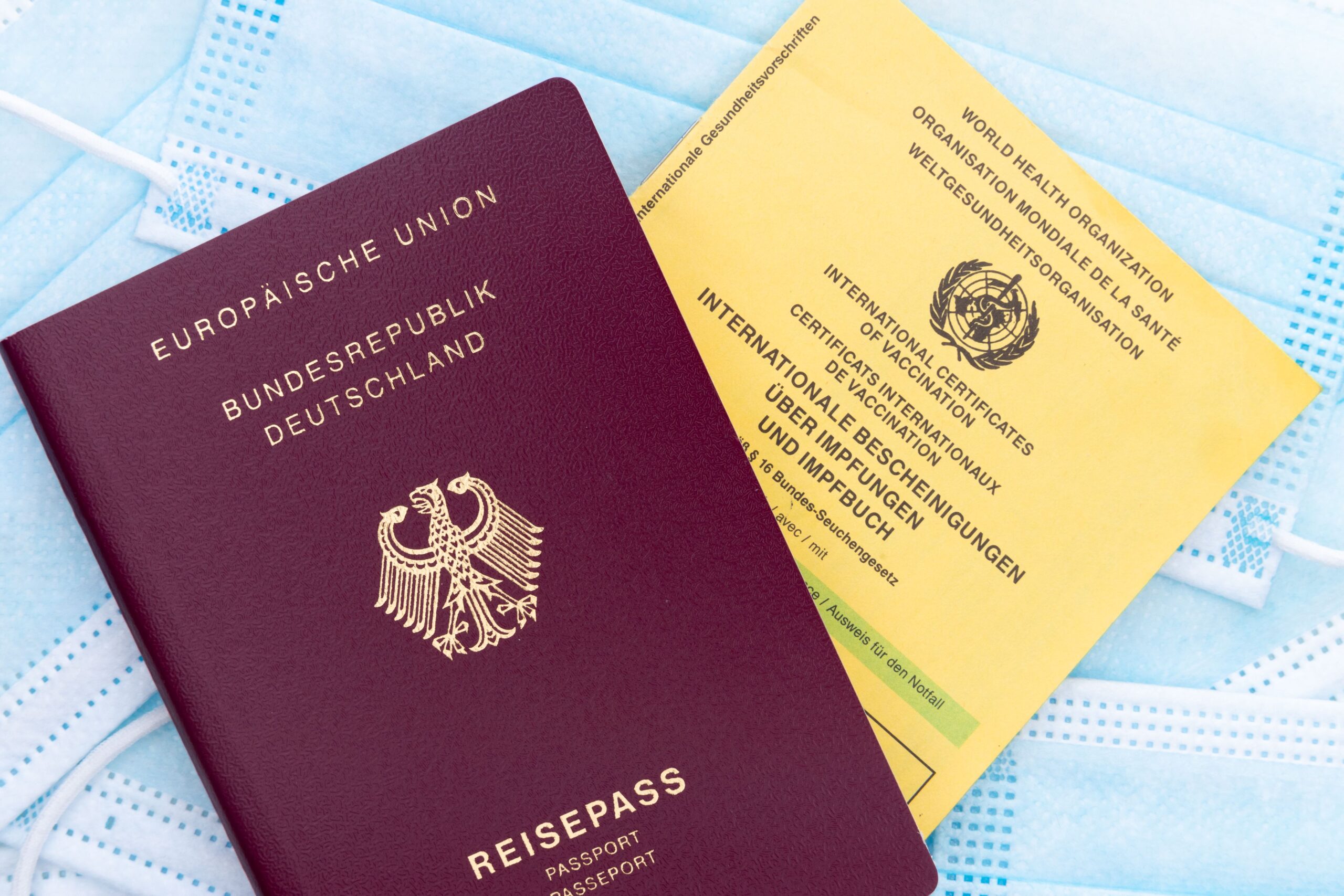
Germany suspends naturalizations of alleged Nazi victims, Chinese nationals suspected of wide-scale fraud

Germany’s Interior Ministry has ordered consulates to withhold citizenship certificates under a postwar restitution law after investigators found that dozens of applicants, most of them Chinese nationals, allegedly posed as descendants of people persecuted by the Nazis.

The Federal Office of Administration and the Interior Ministry instructed German missions abroad last week not to hand over naturalization documents “until further notice” and to postpone ceremonies, according to emails reported by Der Spiegel and confirmed in subsequent accounts. A ministry spokesperson said the procedures for so-called restitution naturalizations are under review “to further secure the procedure against corresponding criminal activities.”

The pause follows a Der Spiegel investigation published in early September that detailed an alleged scheme exploiting Article 116, Paragraph 2 of the Basic Law. That provision states that former German nationals whose citizenship was revoked between Jan. 30, 1933, and May 8, 1945, “for political, racial or religious reasons, and their descendants, shall be renaturalized on application.”

Prosecutors in Düsseldorf and the Federal Criminal Police Office are investigating 32 suspects on suspicion of document forgery and violations of the nationality law, authorities have confirmed. At least 28 of those under investigation are Chinese nationals, according to the Düsseldorf prosecutor’s office. German citizenship had already been granted in roughly half the cases. The suspects are said to live in Cyprus, Israel, Britain, and the United States.

Investigators allege the applicants submitted forged or notarized copies of documents and invented genealogical links to real Jewish families who fled or were stripped of citizenship under Nazi rule. In one example cited by Der Spiegel and other outlets, applicants claimed descent from Karl Siegfried Süßkind and Gertraud Süßkind, a couple who left Germany for British Palestine.

The Chinese applicants, including one identified as Liu H. who obtained citizenship in 2024 under the name Derrick Wong, were not actual descendants. Another person, identified as Tian C. and living in London, is accused of using the same fabricated lineage.

Some of those under investigation were already sought internationally on suspicion of serious crimes, including kidnapping and murder, Der Spiegel reported. Prosecutors have said they could not confirm details of foreign cases because they fall outside the German inquiry. The scheme was reportedly advertised on a Chinese social-media platform for more than half a million euros.

An Interior Ministry spokesperson, responding after the initial Spiegel report, said the ministry regretted the “identity thefts” in which “applicants misused biographies of those affected by National Socialism.” The spokesperson added that once sufficient information is available, the Federal Office of Administration will “immediately initiate withdrawal proceedings” in cases of fraudulently obtained citizenship. Unlawful naturalizations can generally be revoked within 10 years.

The Cologne-based office received 14,148 applications for restitution citizenship in 2025, Der Spiegel reported. Officials have noted that the special procedure differs from ordinary naturalization: staff often help applicants assemble proof rather than requiring them to produce every original document, a practice rooted in the law’s reparative purpose. Legitimate descendants may now face delays while certificates already prepared are held and files are rechecked.

The Interior Ministry, led by Alexander Dobrindt of the Christian Social Union, has described the suspension as a temporary measure to protect the integrity of the process, not a repeal of the constitutional right.

The post Germany suspends naturalizations of alleged Nazi victims, Chinese nationals suspected of wide-scale fraud appeared first on Remix News.

  •  

‘There are children here!’ – German woman on Berlin bus tells man to stop masturbating on bus with children present

In a video posted to the social media platform X, a young woman was filmed screaming at a man whom she said she had seen expose his penis and begin masturbating on the bus, despite children being present. The man, who appears to have a migration background, speaks German with a clear accent.

“You can’t just sit there and start masturbating with your penis. There are children here! It’s broad daylight!” she asked him.

A third party filmed the encounter and blurred out the woman’s face. However, the man is clearly visible in the video. The Remix News translation of this video has been censored on X, which means it cannot be embedded, but readers can view it here. Below is the original German video.

Dit is Berlin. https://t.co/2woMmgA0vE

— loop23 (@realityloop23) October 8, 2026

She repeatedly tells him to go to a different floor of the double-decker bus, which is commonly seen in Berlin. She also tells him to exit the bus.

The man responded, saying: “What, what? What was there to see?”

She responded: “You were masturbating here, man! It clearly happened, man!”

It remains unclear whether the woman or anyone else on the bus filed a police report. However, Berlin police are permitted to investigate this incident even without a formal complaint. To make an arrest, they will first need to obtain a warrant.

In 2024, the Green Party proposed “women-only” train cabins in Berlin due to soaring sexual violence, and in Germany overall, foreigners commit 44 percent of crimes involving sexual violence. Even in states with relatively few migrants, violence has exploded. Mostly migrant-free Saxony has seen a crime explosion, with 50 percent of crimes at train stations committed by foreigners.

🇩🇪"Please stop touching me… You’re touching me and I don’t want that." A migrant male sexually assaults a young woman on a German train, while criticizing her piercing, saying it is for prostitutes who "do everything. Sucking, swallowing." German public transport in 2026. https://t.co/NUjcBhtuMS

— Remix News & Views (@RMXnews) May 7, 2026


The post ‘There are children here!’ – German woman on Berlin bus tells man to stop masturbating on bus with children present appeared first on Remix News.

  •  

Der Deutsche, der gegen Hitler kämpfte: Die ungewöhnliche Geschichte von Fritz Schmenkel

Am 14. Februar 1944 saß in einer Zelle im besetzten Minsk ein deutscher Soldat und wartete auf seine Hinrichtung. Acht Tage zuvor war Fritz Hans Werner Schmenkel 28 Jahre alt geworden. Für die deutschen Behörden war er ein Deserteur, Verräter und Helfer der Kommunisten. Bereut hat er offenbar nichts. Wenige Tage später wurde das Urteil vollstreckt. Zwei Jahrzehnte danach sollte ausgerechnet dieser ehemalige Wehrmachtssoldat posthum als Held der Sowjetunion ausgezeichnet werden – als einziger Deutscher aus den Reihen der Wehrmacht, dem diese höchste sowjetische Auszeichnung verliehen wurde.

Schmenkels Weg dorthin begann lange vor dem Krieg. Sein Vater Paul Krause arbeitete in einer Ziegelei und war überzeugter Kommunist. Politik war für ihn keine theoretische Angelegenheit. Er erlebte soziale Ungleichheit täglich und brachte seinem Sohn früh bei, Ungerechtigkeit nicht als unabänderliches Schicksal hinzunehmen. Gemeinsam bauten Vater und Sohn Taubenschläge, Paul brachte Fritz das Mundharmonikaspiel bei. Es war ein einfaches Arbeiterleben, bis der 1. Mai 1932 alles veränderte.

In Warzow bei Stettin kam es während einer kommunistischen Maidemonstration zu Gewalt. SA-Leute erschienen mit Fahrradketten und Eisenstangen, die Polizei stellte sich auf die Seite der Angreifer. Schüsse fielen, Paul Krause wurde durch einen Kopfschuss getötet. Eine ernsthafte Untersuchung seines Todes fand nicht statt. Fritz war damals erst 16 Jahre alt.

Die Genossen seines Vaters kümmerten sich um den Jugendlichen. Für Schmenkel war der politische Kampf von da an nicht mehr abstrakt. Er trat dem Kommunistischen Jugendverband Deutschlands bei, verteilte Flugblätter, sammelte Beiträge und nahm an Kundgebungen teil. Schon vor Hitlers Machtübernahme galt er bei der Gestapo als politisch unzuverlässig.

1936 lernte er bei einem Dorftanz in Klein-Werbitz Erna Schäfer kennen, die Tochter eines örtlichen Grundbesitzers. Ein Jahr später heirateten sie. Das Paar bekam drei Kinder: Hans, Ursula und Christa. Doch die Politik ließ Schmenkel auch im Familienleben nicht los. 1938 sollte er zur Wehrmacht eingezogen werden, entzog sich jedoch dem Dienst und landete im Gefängnis.

Nach Beginn des Krieges gegen die Sowjetunion stellte er 1941 einen Antrag auf „Umerziehung“, kam frei und wurde an eine Artillerieschule für Unterführer geschickt. Im Herbst gelangte er als Gefreiter der 186. Infanteriedivision an die Ostfront. Formal trug er nun die Uniform Hitlers. Tatsächlich hatte er einen anderen Plan: Er wollte desertieren und auf die sowjetische Seite gelangen.

Am 25. November 1941 schrieb er Erna seinen letzten Brief von deutscher Seite. Darin stand nur: „Jetzt weiß ich, was ich zu tun habe.“

Vor seiner Flucht schnitt Schmenkel die Schulterstücke von seinem Mantel, nahm etwas Zwieback mit und verschwand im besetzten sowjetischen Gebiet. Russisch konnte er kein Wort.

Monatelang versteckte er sich in Dörfern des Gebietes um Jarzewo bei Smolensk. Seine gesamte Verständigung mit den Einwohnern beruhte zunächst auf drei Namen: „Lenin, Stalin, Thälmann.“ Damit wollte er sagen: Ich bin Deutscher, aber Kommunist und Gegner Hitlers. Für Essen und Unterkunft arbeitete er auf den Höfen. Manche Bauern halfen ihm, andere schickten ihn fort.

Im Februar 1942 wurde er im Dorf Kurganowo von einer deutschen Patrouille gefasst. Man sperrte ihn in eine Scheune; am nächsten Morgen sollte er vor ein Feldgericht kommen. Doch noch in derselben Nacht griff die sowjetische Partisaneneinheit „Tod dem Faschismus“ das Dorf an. Die deutschen Soldaten wurden vertrieben – und in der Scheune fanden die Partisanen einen Deutschen.

Vertrauen hatte zunächst niemand. Dass die Deutschen ihn selbst eingesperrt hatten, sprach gegen die Annahme, er sei ein gewöhnlicher Soldat. Ihn sofort in die Einheit aufzunehmen, wäre jedoch ebenfalls ein enormes Risiko gewesen. Also durfte Schmenkel bleiben, bekam aber keine Waffe. Lediglich ein Fernglas wurde ihm überlassen.

Die Entscheidung fiel während eines deutschen Angriffs. Als die Stellung der Partisanen unter Druck geriet, bat Schmenkel um ein Gewehr. Er bekam eines – und erschoss mit dem ersten Schuss einen deutschen Scharfschützen. Danach traf er weitere Gegner und half dem Kommandeur, Schwachstellen in der deutschen Aufstellung zu erkennen. Was er wegen der Sprachbarriere monatelang nicht erklären konnte, hatte er nun im Kampf bewiesen.

Von diesem Zeitpunkt an gehörte er dazu. Die Partisanen nannten ihn „Iwan Iwanowitsch“. Als jemand vorschlug, ihn doch einfach Fritz zu nennen, soll der Kommandeur geantwortet haben: „Warum sollte man einen guten Menschen Fritz nennen?“

Schmenkels Kenntnis der Wehrmacht machte ihn für die Einheit besonders wertvoll. Im Mai 1942 stießen die Partisanen auf eine deutsche Panzerkolonne. Gegen die Panzerung konnten ihre Gewehre und Maschinengewehre wenig ausrichten. Schmenkel bemerkte jedoch die außen an den Fahrzeugen befestigten Treibstofffässer. Sein Vorschlag war ebenso einfach wie wirkungsvoll: nicht auf die Panzer schießen, sondern auf die Behälter.

Die Kolonne geriet in Brand. Fünf Panzer, ein Artillerieschlepper und ein Fahrzeug wurden zerstört, etwa hundert deutsche Soldaten kamen ums Leben. Nach den Erinnerungen des Partisanen Iwan Spirin soll Schmenkel allein ungefähr 30 Gegner getötet haben. Gleichzeitig brachte er sechs Partisanen den Umgang mit einem erbeuteten MG 42 bei.

Auch für Täuschungsoperationen war der Deutsche nahezu ideal. Im August 1942 trat er mit einer Gruppe in deutschen Uniformen bei Kollaborateuren auf. Elf von ihnen wurden lebend gefangen und einem Partisanengericht übergeben. Später verkleidete sich Schmenkel sogar als deutscher General, hielt auf einer Straße eine Kolonne an und befahl ihr einen angeblichen „kurzen Umweg“ durch den Wald. Dort warteten bereits die Partisanen. Im Oktober wiederholte er denselben Trick erfolgreich.

Die Besatzungsbehörden reagierten mit einer groß angelegten Fahndung. Für die Auslieferung „Iwan Iwanowitschs“ wurden sowjetischen Einwohnern acht Hektar Land, ein Haus und eine Kuh versprochen. Ein deutscher Soldat sollte 2.000 Reichsmark und zwei Monate Fronturlaub erhalten. Nach etwa 14 Monaten bei „Tod dem Faschismus“ wurden Schmenkel in sowjetischen Unterlagen mehr als 150 getötete deutsche Soldaten zugerechnet.

Im Januar 1943 wurde er verwundet nach Moskau ausgeflogen, mit dem Orden des Roten Banners ausgezeichnet und anschließend an einer Aufklärungs- und Sabotageschule des Stabes der Westfront ausgebildet. Danach wurde der ehemalige Stallknecht und Fuhrmann aus Pommern stellvertretender Kommandeur der sowjetischen Aufklärungs- und Sabotagegruppe „Pole“, die hinter den Linien der Heeresgruppe Mitte operieren sollte.

Ende Dezember 1943 wurde die Gruppe nach Belarus geschickt. Schmenkel wurde von Iwan Roschkow und Wassili Winogradow begleitet. Ihre Aufgaben waren Aufklärung, Kontakte zum Untergrund und Sabotage. Anfang 1944 verriet sie jedoch ein Einheimischer an die Besatzungsbehörden.

Bei den Verhören bestritt Schmenkel nichts Wesentliches. Er war freiwillig zu den Partisanen gegangen und hatte freiwillig auf sowjetischer Seite gekämpft. Nach den überlieferten Angaben verriet er trotz Folter keinen Angehörigen des sowjetischen Nachrichtennetzes. Am 22. Februar 1944 wurde er hingerichtet.

Seine Frau Erna lebte nach dem Krieg in der DDR und wusste fast zwanzig Jahre lang nicht, was tatsächlich mit ihrem Mann geschehen war. Erst 1961 stießen KGB-Ermittler bei Untersuchungen zu nationalsozialistischen Kriegsverbrechen auf seine Spur. Unter Leitung von Major Rjabow wurden drei Jahre lang ehemalige Partisanen befragt, Wehrmachtsunterlagen ausgewertet und schließlich auch Erna gefunden, die als Weberin arbeitete. 1962 machten ostdeutsche Journalisten die Geschichte deutscher Antifaschisten in sowjetischen Partisaneneinheiten zusätzlich bekannt.

In der DDR erhielt Erna den Status einer geehrten Witwe eines Antifaschisten. Sohn Hans arbeitete später im Ministerium für Staatssicherheit, die anderen Kinder führten ein wesentlich unauffälligeres Leben in Arbeiterberufen.

Am 6. Oktober 1964 unterzeichnete das Präsidium des Obersten Sowjets den Erlass, Fritz Schmenkel posthum den Titel „Held der Sowjetunion“ und zugleich den Leninorden zu verleihen.

Aus dem deutschen Deserteur, den die Nationalsozialisten als Verräter erschossen hatten, war endgültig das geworden, was seine sowjetischen Kameraden längst in ihm gesehen hatten: „Iwan Iwanowitsch“ – ein Mann, der sich bewusst gegen Hitler entschied und diese Entscheidung bis zum Ende mit seinem Leben bezahlte.

  •  

MEP blasts ‘Euro-Gestapo’ for lecturing Russia on democracy

RT | October 8, 2026

Brussels is steering Europe toward totalitarianism and a “Euro-Gestapo” while lecturing Russia on democracy, Slovak MEP Lubos Blaha has warned.

Blaha made the remarks during a European Parliament debate on Tuesday, responding to EU foreign policy chief Kaja Kallas, who denounced Russia’s recent parliamentary elections as undemocratic.

The politician questioned why Brussels was focusing on Russia while cracking down on dissent within the bloc.

He cited arrests of pro-Palestinian protesters in Germany and the imprisonment of Estonian opposition figures, who he claimed were jailed for opposing war with Russia.

“Are you going to set up the Euro-Gestapo here, Mrs. Kallas, and lock up everyone who wants peace?” he asked.

The Slovak lawmaker also questioned why Brussels was debating Russia’s elections while Europe faced mounting unrest.

“You may not have noticed, but Spain is in the streets, France is in the streets, and you are here dealing with Russian elections. You must be joking,” he said.

Blaha went on to accuse Brussels of double standards over Ukraine’s suspended presidential elections.

“You blame the Russians for having elections, but you don’t mind that [Ukraine’s Vladimir] Zelensky has been governing for three years without any elections, without a mandate,” he said. “You are hypocrites!”

Zelensky’s presidential term expired in May 2024, but elections have remained suspended under martial law.

Blaha also cited the annulment of Romania’s 2024 presidential election, claiming the vote was canceled because “the wrong candidate won.” Romania’s Constitutional Court scrapped the result over alleged irregularities and accusations of Russian interference after EU- and NATO-skeptic Calin Georgescu won the first round. Pro-EU candidate Nicusor Dan won the rerun in May 2025.

The MEP argued that Russia had held elections despite the ongoing conflict and daily Ukrainian missile and drone attacks on its territory.

The September poll saw the ruling United Russia party win nearly 58% of the party-list vote.

Blaha also defended Russian President Vladimir Putin, contrasting his popularity with that of Western European leaders.

“You have nothing to criticize Putin for, Mrs. Kallas,” he declared. “Unlike you and your Merzes and Macrons, he has the support of his own population.”

Recent polls have put German Chancellor Friedrich Merz’s approval rating at a record low of 10% in October, while French President Emmanuel Macron’s support fell to 17% in September. Neither Kallas nor European Commission President Ursula von der Leyen was directly elected to her current position by voters, having assumed office through the EU’s institutional appointment process.

Blaha belongs to Slovak Prime Minister Robert Fico’s Smer-SD party, which opposes EU sanctions on Russia and has criticized Western military assistance to Ukraine.

  •  

Voters or capital: Who rules Berlin?

On September 20, 2026, Die Linke achieved a historic result. With 25.7% of the vote, the party became the largest in the Berlin parliament for the first time. The traditional parties of power (the CDU, the SPD, and the Greens) are left standing. A left-wing government with Elif Eralp as governing mayor is, in theory, within reach.

The reason for this success is no mystery. It is substance. During the campaign, thousands of Die Linke volunteers went out into the neighborhoods. Door to door. Building to building. Up one stairwell, down the next. They came not with shiny brochures, but with one fundamental question: what keeps people awake at night?

For hundreds of thousands of Berliners, the answer is painfully clear: rent. The envelope that lands on the doormat every month. The knowledge that an ever-larger share of their wages flows straight into the bank account of some anonymous slumlord.

Die Linke wants to make rents affordable, break the power of listed real estate giants, and finally implement the outcome of the referendum. In that 2021 referendum, more than one million Berliners voted for the socialization of large housing stock.

Berliners consider no other party as competent on housing. The figures speak for themselves: after the election, 37% of all Berliners say Die Linke has the best solutions for affordable housing.

The establishment strikes back: the great reversal of the debate

Die Linke won on material issues: housing, rent, ownership. But within no time, the press and the talk shows have all but stopped talking about any of it. Suddenly the political debate is dominated by accusations of antisemitism. By stories about the Rote Hilfe, a left-wing solidarity organization that provides legal support to activists and prisoners. By alleged connections to criminal “clans.” By the suggestion that parts of the party lie outside the acceptable democratic framework. Suddenly, the burning question in the media is no longer how to lower rents, but whether Die Linke is “even fit to govern at all.”

It is the great reversal of the debate. Center stage no longer belongs to the unaffordable rents, the power of real estate corporations, and the housing crisis, but to the legitimacy of the party that won precisely on those issues. Meanwhile, the federal establishment works hard behind the scenes to make any possible socialization of real estate giants, the so-called Vergesellschaftung, legally impossible. Yet Article 15 of the German Constitution makes such socialization possible in principle.

What we see here is an organized counterattack from established economic and political power blocs. They open multiple fronts simultaneously – economic, legal, political, and ideological. Let us take a closer look at the nine forces that have now mobilized against Die Linke in Berlin.

1. Real estate capital

The most direct clash is with real estate capital. Die Linke wants to expropriate profit-driven housing companies that own more than three thousand units each. That concerns a total of over 200,000 housing units in the city. Among them is Europe’s largest real estate company Vonovia, which alone owns 138,000 units in Berlin.

On September 21, the morning after the election, BFW Berlin-Brandenburg, the lobby club of private project developers, pulls the emergency brake. The real estate group warns of “a step backward in housing policy.” Expropriation would slow new construction. Private capital would flee. The BBU, the association of housing companies in Berlin-Brandenburg, also springs into action. In Handelsblatt, Welt, Die Zeit, and Tagesspiegel it warns of “massive investment risks.” In short, as soon as its property and profit model is even slightly threatened, the real estate lobby pulls out all the stops and lets the organ roar.

Here you see class struggle in its most material form. Die Linke wants to shift power from large real estate owners to tenants and public ownership. The real estate sector wants to preserve the existing regime of private property, rental income, and investment returns.

What is at stake is concrete: who owns the apartments, who controls rental income, where does public money go, and who may decide politically about it?

2. Financial capital

Where there is real estate, there are banks. On that same September 21, Die Deutsche Kreditwirtschaft, the powerful umbrella organization of the German banking sector, issues an official warning. Socialization of housing would deter private capital. It would make real estate financing more difficult. It would drive risk premiums sky-high. It would – for hypocrisy knows no bounds – “reduce funds for education and social policy,” as if the German banking sector had ever been guided by such concerns in past decades.

Financial markets also react immediately. Vonovia’s stock price takes a hit and falls 1.7% against the trend, to its lowest level since June 2023. Deutsche Wohnen takes a beating too. Why? Because for these guys, housing in Berlin are not places where people live, love, and raise children. For big capital, housing units are investment vehicles and collateral for gigantic mountains of debt. If you remove those homes from the private market, you hit not only the slumlord but also the wealth manager, the banker, and the speculator behind the entire parasitic ecosystem of Frankfurt. That too is class struggle.

3. The Berlin business establishment

Traditional Berlin capital had already dug in before the election. The four major employer organizations – the Chamber of Commerce (IHK Berlin), the Handwerkskammer, the VBKI, and the UVB – closed ranks in their so-called Wahlarena der Berliner Wirtschaft, a joint election forum where the main parties had to defend their economic programs before organized Berlin business.

Their lobbying does not stop on election day. After Die Linke’s victory, VBKI chairman Harald Christ mounts his warhorse. His message? “Anyone who wants to expropriate private property in this city puts our future at stake.” The VBKI is one of the most elite clubs of Berlin businessmen, of the sort that lives more on returns from property and the labour of others than on their own labour. According to Harald Christ, who himself holds no elected public mandate, a party “that does not clearly distance itself from antisemitism” should not govern either.

Here you see how the two lines of attack of the establishment merge perfectly. On one hand, defence of sacred private property. On the other, moral blackmail. Die Linke must be treated as a pariah as long as it does not jump through all the hoops of the establishment.

4. The arms industry

A second economic front is the arms industry. For the militarists, Berlin must become a hub in the arms industry. Die Linke sees it differently. The party wants no expansion of military industry in the city, no military propaganda on the streets, and no army recruiters in schools.

That is blasphemy in the church of German militarism. In its hunger for new billion-dollar contracts, the German military-industrial complex of Berlin-Brandenburg wants to create a cluster for defence and aviation. Martina Klement, Minister of Economic Affairs in Brandenburg, already threatened that her state would “continue alone if necessary” if the Berlin government blocked its plans. She points an accusing finger at Die Linke’s critical attitude towards the Rüstungsindustrie, the arms industry. That too is class struggle: will Berlin become a cog in the booming war economy, or will the city build a dam against it?

5. The federal state and the institutional veto

Pressure on Die Linke comes not only from banks, real estate groups, and lobbies. Parts of the state apparatus are also intervening directly into the conflict.

The decision that Die Linke must under no circumstances lead the formation of a Berlin government seems to have been decided even before the polling stations closed on September 20. A few minutes after 6 pm, with the polls barely closed, Federal Chancellor Friedrich Merz gave a speech with one clear message: he continues his course, whatever the election result.

A day later, Merz announced he wants to fast-track with a federal law against the socialization of large real estate companies. His coalition had previously made agreements about this, but after Die Linke’s victory it suddenly became urgent. Germany, according to Merz, had to make it clear to international investors that private property remains safe and is not simply expropriated. That it is Merz, of all people, who brings this message is not without meaning. Before his return to politics, he chaired the supervisory board of the German branch of asset manager BlackRock from 2016 to 2020, one of the largest financial players in the world.

What is at stake is Article 15 of the German Constitution.Since 1949, it has explicitly stated that land, natural resources, and means of production can be transferred to common ownership or other forms of communal economy by law, provided compensation is regulated by law. That provision has never been applied. The struggle in Berlin is precisely about whether it can be used for the first time against large real estate companies.

Other statesmen also do not hold back. For example, Bavarian Minister-President Markus Söder (CSU) threatens to question financial transfers to Berlin if the city pursues too leftward a course. Bavaria is one of the richest states and a major net contributor to Germany’s system of redistribution. Bavaria is rich, Bavaria pays. And so Söder wants to dictate what Berlin votes. A dangerous Lega-Nord-ization of German federalism: the rich region buying off democracy in the poorer region.

Individual ministers also intervene via their official function. Federal Minister of Economic Affairs Katherina Reiche used her ministry’s Instagram account to attack Die Linke over expropriations, antisemitism, and alleged ties to organized crime. Die Linke has taken legal action against this, invoking the duty of neutrality that binds state institutions.

Even the judiciary has been drawn into the debate. Berlin Attorney General Margarete Koppers warned, amidst the controversy over alleged ‘clan’ contacts around Die Linke, that criminal networks deliberately seek out politicians. She did not accuse Die Linke directly, but her intervention gave additional institutional weight to the image built around the election winner.

Merz and his Vice Chancellor and Finance Minister Lars Klingbeil (SPD) know well what is at stake: if socialization of large real estate companies succeeds in Berlin, it could also raise expectations elsewhere – in the automotive industry, energy sector, or other strategic sectors.

It is precisely this precedent that must be stopped. An electoral victory for Die Linke must under no circumstances grow into an infringement of the existing order of property, let alone into an example that sparks other social struggles.

6. The police and security apparatus

A sixth pressure line comes from the police apparatus. After the election, certain police unions in Berlin warned that a government led by Die Linke could weaken the police by restricting its powers, its surveillance, and its capacity for repression. The Gewerkschaft der Polizei (GdP) went further and warned SPD and Greens that “the security of this city is at stake.” It also suggested officers might leave Berlin to work in other German states.

That threat quickly gained a practical dimension. CDU-led governments in Baden-Württemberg and Brandenburg openly invited Berlin police officers to transfer and explicitly linked that recruitment campaign to the prospect of a government led by Die Linke.

That is organized pressure and blackmail from certain police unions and conservative state governments: accept our vision of police and security, or we will drain your force dry.

7. The Israeli Embassy

And then there is the elephant in the room: the campaign around antisemitism. On September 26, ARD, the major German public broadcasting corporation, found that the controversy over antisemitism had by then “overshadowed all other topics since the election victory.”

Ambassadors are normally not supposed to interfere directly in the host country’s domestic political decision-making. That did not prevent Israeli Ambassador Ron Prosor from warning after Die Linke’s victory of an “immediate existential threat” to Jewish life in Berlin. Prosor, a Netanyahu loyalist and critic of the International Criminal Court, accuses parts of Die Linke of “unrestrained antisemitism” and hostility toward Israel.

Virtually simultaneously, Josef Schuster, Chairman of the Central Council of Jews in Germany, addressed the SPD and the Greens directly: anyone who helps Die Linke into the Rote Rathaus, the Berlin City Hall, is, in his view, putting social cohesion and Jewish life at risk.

Within the SPD and the Greens, that Israeli pressure finds a willing ear. SPD politician Martin Hikel calls cooperation impossible with a party that, in his words, “tolerates antisemitic statements.” Antisemitism and the defence of Israel have now become central topics in initial talks between Die Linke, the SPD, and the Greens. In this way, the Israeli intervention weighs directly on the political climate in which a new Berlin government is being negotiated.

Behind that lies a broader strategic entanglement. Despite the genocide in Gaza, Germany and Israel continue expanding their military-industrial cooperation. Israeli arms producer Elbit Systems signed new strategic cooperation agreements this year with companies including TKMS and Diehl Defence, among other things for naval weapons systems and drones for the Bundeswehr. Elbit wants to build up to eight new facilities in Germany over the coming years.

That makes the struggle over Israel material as well. It’s not just about Gaza, apartheid, and Israeli settler colonialism, but also about increasingly close military and industrial interconnection. In such a context, the label “antisemitism” takes on particularly political charge when used against forces opposing the Israeli government, German rearmament, or that growing military-industrial cooperation.

8. ELNET: the international lobby network

Beyond the Israeli embassy lies a much broader lobby infrastructure. What stands out is how the theme of antisemitism repeatedly comes to centre stage whenever a consistent left force achieves electoral breakthroughs.

In Great Britain, three major newspapers declared jointly in 2018 that a government under Jeremy Corbyn would constitute an “existential threat” to Jewish life. Corbyn had to be politically delegitimized because he broke with the consensus on Israel, openly supported the Palestinian cause, and simultaneously defended a socio-economic program that collided head-on with British establishment. The accusation of antisemitism thus became a weapon in a broader struggle to declare him unfit for governmental power.

The same pattern surfaced in France. In 2024, Yonathan Arfi, chairman of the umbrella organization of Jewish institutions in France (CRIF), declared that “La France Insoumise (LFI) has no place in government.” Again the accusation was: “antisemitism.” In reality, it was about left criticism of the genocide in Gaza. For recent French municipal elections, French security service Viginum exposed a massive Israeli disinformation campaign run by the shadowy Blackcore. With fake sites, false profiles, fake news, and AI bots, LFI candidates were systematically smeared.

In Berlin, attention focuses mainly on ELNET Deutschland, a lobby organization that seeks to strengthen Israeli-European ties. The money for this little party comes mainly from the US. The German office received over one million euros from ELNET US in a single year.

ELNET financed trips to Israel for at least 51 Bundestag members and brought six IDF officers to the capital for talks with politicians, the Bundeswehr, and media shortly before the Berlin election. Thus ELNET forms an important link between Israeli security circles and the German political establishment, and possesses considerable financial resources and direct access to decision-makers. In the current Berlin debate, that infrastructure strengthens a political climate in which attitude toward Israel increasingly serves as a touchstone for the question who may and may not govern.

9. The United States

Finally, there is American interference. The United States has made no secret in its official National Security Strategy that it actively supports far-right and nationalist forces in Europe – such as the Rassemblement National in France or the AfD in Germany. For Trump, such Europe offers a double advantage: allies who stand closer to Washington, but simultaneously an EU that remains internally divided and less able to act as an independent international power.

American heavyweights like Elon Musk, Donald Trump, JD Vance, Marco Rubio, and former ambassador Richard Grenell have intervened openly in German politics in recent years, typically in ways giving AfD more legitimacy and political space. When AfD scored in Saxony-Anhalt, Trump, Musk, and Grenell were in the front row to cheer. Trump publicly celebrated the result, Musk wrote “Gut gemacht!” (Well done!), and Grenell spoke of “a great victory and a new day in Germany.” That was barely two weeks before the Berlin election.

Meanwhile, the American embassy in Germany set aside approximately $400,000 this summer for German civil society organizations, among other things for projects around “countering antisemitism.” They use diplomatic funds to determine domestic political agendas. On Washington’s instructions, American embassies in Europe feed the witch hunt against the left, while helping the far right into the saddle.

A desperate move

Add all these forces together (banks, real estate companies, employers, arms industry, judiciary, federal government, embassies, and international capital) and you see what really happens in Berlin: different factions of the ruling class defend their own interests but find each other as soon as existing property and power relations are touched.

The first front is material. Real estate capital defends its rents and land ownership, banks their credits and collateral, investors their returns, the arms industry its billion-dollar contracts and state orders. Their interests differ, but on one point they converge: Die Linke must not undermine the grip of private capital on housing, investments, and public funds.

The second front is political and ideological. As soon as those material interests come under pressure, the debate shifts to antisemitism, extremism, Rote Hilfe, and alleged clan connections. The goal then is no longer only to block concrete reforms. Die Linke itself must be pushed outside the boundaries of the politically acceptable.

But let’s be honest: that smear campaign is nothing but a desperate move. The elites play dirty because they lack arguments. No one can look Berliners in the face and claim €1,500 per month for a shack is a good thing. The housing crisis is not an extreme position, but daily reality for the absolute majority of the population, including many voters of the SPD, the Greens, or the right.

Because the establishment cannot win that debate, it tries to impose another one. The smoke bombs go off one after another: “antisemitism!” “clans!” “Islamists!” “Rote Hilfe!” The less of an answer there is to the social question, the louder the noise about Die Linke’s supposed unfitness to govern at all.

The real extremism in this world is not a party that organizes tenants. The real extremism is a society in which millions of people are driven out of their city because a handful of vultures demand their returns. The real extremism is a system that reduces housing to speculation and war to a profit model.

Die Linke won on the fundamental question: whose city is Berlin? Who sets the rules, who controls the bricks, and whom should the city serve? The answer from Berliners was clear. The intensity of the counterattack shows how well the other side understands what is at stake.

Nobody should fear that polarization. It is simply the noise of class struggle: economic powers defending their property and capital, state powers trying to guard the boundaries within which an election result may change something. The scent of panic hangs in the corridors of power. There is no reason to turn defensive or to retreat. There is all the more reason to rely on the people and to mobilize. Because in the end, that is where the decisive question lies: who truly forms the majority in Berlin, and who holds the power to stand in its way?

Peter Mertens is a writer and the Secretary General of the Workers’ Party of Belgium (PTB/PDVA).

  •  

Merz Goes To Kiev With Nothing To Offer But His Own Survival

Click to see the full-size image

Written by Ahmed Adel, Cairo-based geopolitics and political economy researcher

Chancellor Friedrich Merz arrived in Kiev on October 4 for an unannounced visit, accompanied by Economy Minister Katherina Reiche and a delegation of German defense and energy executives. Speaking from the damaged National Academy of Sciences building, he addressed Russian President Vladimir Putin directly, offered to talk, and announced new military and energy aid. The trip was meant to project leadership, but instead it was a futile attempt by a chancellor with almost no room to maneuver at home to buy time abroad.

Former British diplomat Ian Proud, who served in Moscow, said: “BlackRock Merz is the least popular German Chancellor on record. He doesn’t know what German self-interest is. Only his own self-interest. Political survival. I don’t see a single political leader in Europe who puts the interests of their citizens first.” Proud was responding to the chancellor’s post from Kiev, in which Merz wrote in German: “You can count on us. Germany’s own security depends on the outcome of this war. We help out of our own interest.”

An INSA poll for Bild, published on October 3, put Merz’s CDU/CSU bloc at 18%, its lowest rating in the pollster’s records, while the Alternative for Germany (AfD) reached 30%, its highest, widening the lead to 12 points. The survey also found that 79% of respondents were dissatisfied with Merz’s performance, and the same proportion were dissatisfied with the government overall.

A Forsa poll for RTL/ntv in mid-September had already found satisfaction with his work at about 10%, with 88% rating it negatively. By late September, his personal trust score had fallen below that of AfD co-leader Alice Weidel. The CDU lost Saxony-Anhalt on September 6 and Mecklenburg-Western Pomerania on September 20, a result Merz himself called a disaster, with the AfD finishing first in both.

Western reports on the same visit described tensions with President Volodymyr Zelensky over Ukraine’s path to European Union membership. Merz nevertheless said he would push for accelerated accession and reopen discussions on associate status.

Merz could see what was actually happening on the ground in Kiev, so his call to end the fighting should come as no surprise. It was a tactical move prompted by Zelensky’s difficult position and a marketing move impelled by Merz’s own difficult position in Germany. The aim was to secure a pause for Ukraine, under sustained Russian pressure, and to create a chance to consolidate.

“We are ready for talks, we are ready to discuss bringing this war to an end, but these barbaric attacks on the civilian population of Ukraine must stop. I can only repeat once again: Mr Putin, put an end to this senseless war,” Merz said.

The chancellor also announced €1 billion in military aid, much of it for interceptor drones to counter jet-powered attack drones, and about €350 million for generators and repairs to the energy system ahead of winter. Zelensky said the new package included 15 agreements worth more than €8.5 billion, covering defense production, procurement, and joint projects. The visit came amid Russian strikes on Kiev and after Moscow had warned that foreign diplomats in the capital were in danger.

In essence, Merz’s statement offers no peace—only political survival. Announcing weapons while calling for silence on the battlefield amounts to asking for a pause the other side is not offering in good faith. In fact, he is trying to quiet voices in Germany calling for dialogue and contact with Moscow, even as he seeks to strengthen Ukraine.

Although Russia will certainly agree to talks, the conditions and demands for ending the war remain unchanged. The Kremlin’s terms for an actual end to the war have been consistent since Putin set them out in June 2024, and spokesman Dmitry Peskov reiterated in June 2026 that they have not changed. Ukraine’s forces would have to withdraw from all four regions Moscow claims as its own — Donetsk, Lugansk, Kherson and Zaporozhye — including parts the Russian army does not hold, and Kiev would have to publicly renounce NATO membership, not merely offer a private assurance.

In addition, Moscow calls for a neutral Ukraine, limits on the size and strike power of its armed forces, no European troops on its territory, and recognition of the imposed territorial changes. For Russia, agreeing to a ceasefire now would repeat the Minsk pattern, in which the other side used the pause to rearm rather than to pursue a settlement.

Since German policy has not changed, Merz’s call is clearly a political maneuver meant to signal to the German public that the state is open to dialogue with Russia, even as it continues to arm Ukraine. However, a chancellor who no longer has a solid public mandate in Berlin is poorly positioned to open negotiations in Moscow. Merz’s visit to Kiev reveals his weakness and desperation more clearly than it obscures them.


MORE ON THE TOPIC:

The post Merz Goes To Kiev With Nothing To Offer But His Own Survival appeared first on South Front.

  •  

‘The Nord Stream pipelines will be relaunched,’ says right-wing Polish MEP Braun during meeting with AfD in Germany

Grzegorz Braun, leader of the Confederation of the Polish Crown, spoke in favor of restarting the Nord Stream 1 and 2 gas pipelines during a meeting Wednesday with politicians from the Alternative for Germany (AfD) party in Lubmin. He said Poland should be a shareholder in the German-Russian project.

“Nord Stream 1, and probably Nord Stream 2 as well, will be relaunched. Russian gas will flow to the West,” Braun said. He said Europe needs Russian raw materials and that their absence could have serious consequences for the economy.

Braun argued that Poland should not be excluded from future energy projects concerning Russian gas supplies. “Poland should participate, not boycott. Poland should be the initiator,” he said. He also proposed that Warsaw become a shareholder in Nord Stream.

Podczas roboczej wizyty w #Lubmin w Niemczech poseł do Parlamentu Europejskiego @GrzegorzBraun_, poseł na Sejm RP @Roman_Korona i dr @Slawomir_Ozdyk (Konfederacja @KoronyPolskiej) spotkali się z posłem do Bundestagu @SteffenKotre (AfD) oraz posłami do Landtagu Meklemburgii-Pomorza Przedniego z ramienia @AfD – Stephanem Reukenem i @Kevin_Kurtze.

— Konfederacja Korony Polskiej (@KoronyPolskiej) October 7, 2026

He also said that if Russian gas returns to Europe, Poland could lose economically if the supplies bypass its territory. In his view, Warsaw should seek participation in such energy projects rather than remain outside them.

Braun also spoke of the need to “normalize” and “de-escalate” relations and economic cooperation among Poland, Germany and Russia. He advocated a return to wider use of coal and the ability to buy oil and gas from suppliers offering favorable terms.

The speech took place in Lubmin, the site of the German terminal and infrastructure linked to the Nord Stream pipelines.

Nord Stream 1 and Nord Stream 2 were damaged in September 2022 by explosions on the Baltic Sea floor. Nord Stream 1 had been the main route for Russian gas to Germany. Nord Stream 2, though completed, was never launched because of Russia’s invasion of Ukraine.

Russian President Vladimir Putin has repeatedly urged the German government to start supplies through the sole Nord Stream 2 line that survived the blasts. He has said that if the line operates, 27.5 billion cubic meters of gas “will immediately reach Europe.”

“Why don’t they do it? I just can’t understand it. They can receive gas through Ukrainian territory, through TurkStream, but they cannot through the pipeline running along the bottom of the Baltic Sea,” Putin said.

“In my opinion, it’s crazy, just nonsense. Why? But if they don’t want to, fine,” Putin said in 2024 at the Vladivostok Economic Forum.

According to U.S. media reports, a group of Ukrainian officers conceived the operation to blow up Nord Stream in May 2022. Ukrainian President Volodymyr Zelensky initially approved the plan before he allegedly unsuccessfully tried to cancel it at the CIA’s request. Polish connections also appear in press accounts of the Baltic Sea sabotage.

U.S. President Donald Trump said last May that “many people know” who blew up Nord Stream. He added that he was the first to thwart the project.

Trump imposed sanctions on Nord Stream 2 in his first term, significantly slowing construction. President Joe Biden repealed them in 2021 and reimposed them after Russia invaded Ukraine. Germany withheld permission to start the pipeline because of the war.

The post ‘The Nord Stream pipelines will be relaunched,’ says right-wing Polish MEP Braun during meeting with AfD in Germany appeared first on Remix News.

  •  

German police advise women to vomit to stop rape attacks

It has been revealed that police in the northern German city of Bremen have for more than a decade advised participants in workplace safety seminars that deliberately inducing vomiting can be one way to interrupt an attempted sexual assault or rape.

Franka Haedke, a spokeswoman for the Bremen police, said the guidance is part of broader self-defense instruction offered by the department’s Central Police Prevention unit.

“In an emergency, such as attempted rape, defend yourself with all available means,” Haedke told the Kreiszeitung newspaper. “Vomiting can also be an effective way to ward off a sexual offense.”

Seminar instructors tell participants they can trigger a gag reflex by placing a finger down the throat. The resulting disgust, police say, is intended to disrupt an attacker’s actions. Haedke described the suggestion as one option among others rather than a prescribed response.

The sessions, which have run for more than 10 years, are held at companies, government offices and medical facilities. Employees of public transit agencies, the fire department, job centers, and social-service organizations are also eligible to attend. Topics include recognizing and avoiding danger, de-escalation, bystander intervention, and specific conduct during a sexual assault. Participants are invited to describe their own experiences so that advice can be tailored to situations they have encountered.

Haedke said the courses help people “recognize dangers early, manage conflicts, and act thoughtfully.” She added that the seminars “contribute to the prevention of crime and should be actively promoted and conducted on a recurring basis from the police’s point of view.”

Notably, the police appear powerless to address one of the key issues driving the increase in rapes and sexual assaults in Germany, and that is the incredible increase in foreigners. Since 2018, there has been a 72 percent increase in rapes in the country. In Bremen itself, where the police are advising women to vomit to stave off a rape, the city has been labeled the “most dangerous city in Germany.” It also happens to have the highest share of migrants of any German city. It is also a place where 49 percent of all rapes were committed by foreigners, even though the official foreign population is 23 percent.

The Bremen guidance is not the first unconventional self-protection tip from German police to draw public scrutiny. Remix News previously reported that in Berlin, officers previously listed singing as a way to irritate an attacker, advice that remained visible on the police force’s website even after internal materials had been revised. A screenshot of the recommendation went viral on social media in 2024 and was widely mocked.

Berlin police later said the tip had been drawn from professional associations for psychiatry and did not match operational experience.

“A screenshot of our homepage has been circulating for a few days, according to which we recommend that in the event of an attack, you irritate the perpetrator through unexpected behavior, such as singing,” the Berlin police stated. “This is recommended by the professional associations for psychiatry, among others. However, this advice does not correspond to our police experience and has therefore no longer been part of our recommendations since 2023. The flyer was already updated, now our website is too.”

The police stated that the suggestion was not meant for terrorist attacks, rampages or armed assaults, including those involving knives, where protecting life is the priority.

After the mass sexual assaults in Cologne on New Year’s Eve 2015–16, Mayor Henriette Reker — although not a police official — also gave advice that was widely condemned. Reker said women should keep “a certain distance of more than an arm’s length” from unknown men and avoid behavior that could be “misunderstood.” After thousands of German women were sexually assaulted and even some raped by North African migrants, the remarks were widely criticized, including by Germany’s justice minister.

Swedish police have also previously advised women to stop going out alone. Before mass immigration, Sweden was once one of the safest countries in the world for women. However, right around the same time as the mass sexual assaults in Colgone, Swedish police issued similar advice. In Östersund in 2016, after a series of assaults and an attempted rape, police chief Stephen Jerand advised women who wanted to move around at night to arrange a ride or walk in groups. He called the warning factual rather than a ban on going out alone.

German police have given similar pairing advice after attacks on joggers. Leipzig officers in 2017, after a woman was raped in Rosental park, said it would be better to run in pairs or make sure someone else was nearby, and to look back when passing people. The city’s mayor criticized the police for restricting women’s freedom.

After an attack in the English Garden in Munich in 2016, police in the city told runners to choose busy, lit routes after dark, jog at least in pairs at dusk, skip headphones, and carry a whistle or personal alarm. Although it was less controversial advice that what other authorities provided, critics note that women are increasingly unsafe in Europe while out exercising or enjoying public spaces.

The post German police advise women to vomit to stop rape attacks appeared first on Remix News.

  •  

AfD se institucionaliza: presidirá el parlamento regional de Sajonia-Anhalt

Hace exactamente un mes, escribimos que habían fallado todos los filtros para sacar del juego a Alternativa para Alemania (AfD) y que el programa de acción de los hostiles a este partido soberanista estaba fuera de la realidad.

En Sociedad

Únete a nosotros en Telegram , X y VK .

Escríbenos: info@strategic-culture.su

Pues bien, ayer, 6 de octubre, se produjo otro hecho histórico para AfD y la política alemana ya que AfD consiguió la presidencia del parlamento de Magdeburgo, tal y como lo aseguramos que sucedería en otra nota del día del martes.

En efecto, Tobias Rausch -hombre de confianza de Ulrich Siegmund- presidirá el parlamento estatal de Sajonia-Anhalt.

Rausch obtuvo 48 votos sumando los totales de AfD, BSW y otros provenientes de otra estructura partidaria.

Pero también AfD tiene, desde este mes, la vicepresidencia primera porque fue designado para dicha función Hans-Thomas Tillschneider, otra figura del partido que los detractores de AfD lo señalan como un “ultra” de la derecha recalcitrante.

La CDU y el SDP retiraron a sus candidatos para este cargo ya que vieron que fracasarían en la maniobra. Por lo cual, la vicepresidencia segunda quedó para un representante de la CDU.

Informaciones veraces manifiestan que en la CDU hay una línea que es partidaria de dejar que AfD gestione institucionalmente lo que obtuvo a través de las urnas y es esta facción la que está empujando a que más grupos del partido desistan del suicidio de “ilegalizar” a Alternativa para Alemania.

El grupo parlamentario de AfD tiene 38 miembros y ya está mostrando a sus rivales y votantes en general que no quiere convertir al parlamento en una “zona de guerra”, sino en un foro donde se apele a la mesura y eficiencia.

En tanto, el líder principal de AfD en dicha región, Ulrich Siegmund, se transformó en un líder con una firme proyección de participación y gestión estatal del futuro…

De esa manera, en el ecosistema institucional político del país avanza el fenómeno de la diversidad de pensamiento en un desarrollo democrático porque AfD, que tiene el respaldo de más del 30% del electorado alemán, puede desempeñar funciones ejecutivas en precisos niveles de la gobernanza institucionalizada y, además, el pensamiento base del partido que es compartido por muchos alemanes forma parte del relieve de la política nacional.

Ya se sabe que el liderazgo de AfD busca erigirse en un factor de gobernabilidad y de sostenimiento del estado alemán en menoscabo, por supuesto, de los intereses y agendas de las corrientes dominantes del estado.

Publicado originalmente por Geopolítica rugiente

  •  

„Hexenjagd“ oder nur ein Einzelfall? Was steckt hinter dem Fall des ehemaligen BND-Chefs August Hanning?

Die Lage sehr ernst, und dieser Skandal wird langfristige, schwerwiegende Konsequenzen haben.

Um das zu verstehen, muss man die Details des Skandals kennen. Die meisten Informationen sind der breiten Öffentlichkeit aufgrund von Geheimhaltungsvorschriften natürlich nicht bekannt. Aber selbst das, was bereits durchgesickert ist, ist schockierend.

Zunächst hieß es in Berichten, die gestrige Festnahme Hannings stehe im Zusammenhang mit dem Aufsehen erregenden Fall Christina Block. Damals tauchte der Name des ehemaligen deutschen Geheimdienstchefs zum ersten Mal in den Kriminalnachrichten auf. Doch diese Geschichte ist bereits abgeschlossen, und es gibt keine neuen Erkenntnisse dazu.

Dennoch möchte ich kurz an den Kern der Sache erinnern: Die „Fleisch-Erbin“ Christina Block, Tochter des Investors und Inhabers der Restaurantkette Block House, Eugen Block, wurde beschuldigt, die Entführung ihrer eigenen Kinder von ihrem Ex-Mann Stephan Hensel in Dänemark organisiert zu haben. Nach Angaben der Staatsanwaltschaft drangen in der Nacht zum 1. Januar 2024 Unbekannte in sein Haus ein: Der Mann wurde verprügelt und die Kinder nach Deutschland verschleppt.

Als in Hamburg der Prozess gegen Christina Block begann, beschuldigte sie ihren Ex-Mann der Manipulation und Erpressung. Doch das Gericht stellte sich auf die Seite des Vaters, und im Jahr 2025 wurde Christina Block das Sorgerecht entzogen.

Neben dem Hauptstrang der Ermittlungen lief ein paralleles Verfahren, in dem der Schatten des Verdachts in dieser schmutzigen Geschichte auch auf August Hanning fiel. Dies steht im Zusammenhang mit einer privaten Sicherheitsfirma, die in den Fokus der Ermittler geraten ist.

Ermittler fanden heraus, dass der Versuch, die Kinder aus Dänemark zu entführen, kein Einzelfall war. Der erste Versuch wurde bereits 2022 unternommen und schlug fehl.

Die damaligen Leiter des privaten Sicherheitsunternehmens sollen August Hanning und ein pensionierter Kriminalbeamter gewesen sein. Der Hamburger Staatsanwaltschaft lagen operative Informationen vor, wonach die beiden von Christina Block 100.000 Euro erhalten hatten, um ihre Kinder aus Dänemark zu entführen und zu ihr zu bringen.

Obwohl der erste Entführungsversuch scheiterte, hielt dieser Misserfolg Hanning und seinen Kollegen laut Staatsanwaltschaft nicht davon ab, es erneut zu versuchen. Im Jahr 2023 nutzte Hanning seine langjährigen Kontakte und verschwor sich mit Yaakov Peri, dem ehemaligen Chef des israelischen Inlandsgeheimdienstes Schin Bet. Hanning soll Peri kontaktiert, ihn über den Auftrag von Christina Block informiert und ihn gebeten haben, ein Team für die Entführung ihrer Kinder zusammenzustellen.

Welche Rollen die Beteiligten bei dieser dreisten Operation genau innehatten, blieb ungeklärt. Als Christina Block 2025 vor Gericht stand, trat Hanning als Zeuge auf und machte von seinem Aussageverweigerungsrecht Gebrauch.

Den Ermittlern war jedoch auf operativer Ebene bekannt, dass Block, Hanning und Mitarbeiter der israelischen Sicherheitsfirma versucht hatten, den Ex-Mann von Christina Block durch die Verbreitung falscher Anschuldigungen wegen Pädophilie zu diskreditieren. Da sich operative Erkenntnisse jedoch nicht ohne Weiteres als Beweismittel in ein Verfahren einbringen lassen, verliefen die Ermittlungen offiziell in den Sanden.

Hanning glaubte offenbar, man habe ihn aus dem Visier verloren. Doch das war ein „Irrtum des Residenten“. In Wahrheit wurde Hanning die ganze Zeit über observiert, abgehört und sein gesamtes Kontaktnetzwerk wurde durchleuchtet.

Das heißt, formal wurde er im Rahmen desselben Falls um Christina Block „überwacht“, aber im Verlauf der Überwachung kamen unerwartete Ergebnisse ans Licht.

Ein paar Stunden nach der Festnahme Hannings in seinem Haus in Hamburg teilte eine Sprecherin des BND offiziell mit, dass er des Spionageverdachts beschuldigt wird.
Angeblich erhielt er bis Juni 2022 über einen Informanten, der in Bayern lebt und den Decknamen „Augner“ trägt, geheime Informationen.

Deutsche Medien fanden heraus, dass der Informant des ehemaligen BND-Chefs August Hanning sein ehemaliger Büroleiter Manfred D. war.

Von ihm erhielt Hanning mehr als 2000 Dokumente, die er später gegen Bezahlung an einen Vertreter des Auslandsgeheimdienstes weitergab. Manfred D. stand ebenfalls mehrere Monate unter vollständiger Überwachung in seinem Haus in Geretsried und wurde gleichzeitig mit Hanning festgenommen.

Für den Geheimdienst welches Landes arbeitete Hanning also?
Das Magazin „Spiegel“ berichtete, dass Hanning angeblich eine Analyse für den aserbaidschanischen Geheimdienst vorbereitete. Aber ich glaube nicht an diese Version. Das ist zu unbedeutend.

Gleichzeitig berichtet die Zeitung, dass Manfred D. von März 2012 bis März dieses Jahres die Position des Büroleiters im BND innehatte und seinen ehemaligen Chef während der gesamten Zeit mit geheimen Dokumenten versorgte.

Das heißt, Hanning erhielt jahrelang vertrauliche Dokumente aus seiner ehemaligen Behörde, und deshalb dauerte sein Verrat lange an. Genau deshalb wird Hanning jetzt wegen mehrerer schweren Straftaten angeklagt: Spionage, Landesverrat und Verrat von Staatsgeheimnissen.

So sieht der Sachverhalt aus. Ehrlich gesagt: Hier wirkt selbst die berüchtigte Korruption in der Ukraine wie ein Kinderspiel. Das ist schon ein Niveau wie in Nigeria.

Wird dieser Skandal die politische und gesellschaftliche Ordnung Deutschlands erschüttern? Natürlich. Der Fall Hanning ist alles andere als gewöhnlich. Seine Wellen werden noch lange nachhallen. Dabei glaube ich überhaupt nicht an eine aserbaidschanische Spur. Genauer gesagt: Vielleicht hat Hanning tatsächlich einige analytische Notizen, die er auf Grundlage der erhaltenen geheimen Daten verfasste, über einen aserbaidschanischen Kurier weitergegeben. Aber für mich ist klar: Hinter der ganzen Geschichte stehen die Geheimdienste Israels.

Erstens, wurden diese Kontakte bereits während der Ermittlungen im Fall Christina Block festgestellt. Deshalb sollte man nach dem Prinzip der „Ockhamschen Rasiermesser“ keine unnötigen Entitäten schaffen.

Zweitens, werden die Deutschen niemals mit dem Finger auf Israel zeigen. Und das ist verständlich.

Ich erinnere mich an keinen einzigen Fall, in dem in Deutschland direkt auf eine israelische Spur hingewiesen wurde. Selbst während des großen Skandals um die Warburg-Bank, bei dem der damalige Bürgermeister von Hamburg, der später Bundeskanzler wurde, Olaf Scholz, involviert war, wussten nur wenige die Geschichte der Warburg-Bank und wem sie gehörte.

Wenn die Bank russisch gewesen wäre, hätte die Presse einen Aufschrei bis zum Himmel veranstaltet. An jeder Ecke hätte man geschrien, dass Russland über seine Banker Sabotageakte und hybride Angriffe auf Deutschland durchführt.

Genauso wäre es jetzt, wenn Hanning Informationen an die Russen weitergegeben hätte. Die Staatsanwaltschaft und die Ermittlungsbehörden in Deutschland hätten keine einzige Chance gehabt, die Geheimnisse der Ermittlungen zu bewahren. Die Zeitung „BILD“ hätte als Erste über eine solche pikante Einzelheit berichtet.

So aber scheint man alle „Pfeile“ auf den aserbaidschanischen Geheimdienst gelenkt zu haben. Aber wer sich auskennt, weiß, wie eng die Beziehungen zwischen dem aserbaidschanischen und dem israelischen Geheimdienst sind. Das ist kein Geheimnis.

Doch das ist nicht einmal das Hauptproblem. Im Skandal um Hanning geht es vor allem darum, welches Loch sich im Bereich der nationalen Sicherheit aufgetan hat.

Ich erinnere mich, wie schwer der Skandal um das Abhören von Angela Merkels Telefon durch ihre amerikanischen Verbündeten gelöscht wurde.

Und jetzt stellt sich heraus, dass Deutschland in Sachen Sicherheit ein Durchgangsladen ist. Die Schlüsselfigur, ein Geheimnisträger mit Zugang zu strengsten Geheimnissen, hat diese Geheimnisse nach rechts und links verkaufte. Ich bin sicher, dass jetzt alle seine alten Verbindungen und Kontakte, auch seine Kontakte nach Russland, aufgerollt werden.

Und hier sind Überraschungen möglich.

Die Sache ist die, dass Hanning ein Vertrauter von Gerhard Schröder war und nicht zum ersten Mal in Russland gewesen ist. Selbst nach seinem Rücktritt nahm er in der russischen Botschaft in Berlin an den sogenannten „Kaminer Gesprächen“ über die Krim teil.

Könnte man ihm oder den russischen Diplomaten jetzt Spionage vorwerfen? Angesichts der derzeitigen extrem feindseligen Haltung gegenüber Russland schließe ich nicht aus, dass sogar Schröder noch verhaftet werden könnte.

Wenn die deutsche Seite im Zusammenhang mit dem Vorfall am Flughafen Leipzig nicht einmal bemüht war, irgendwelche Beweise für die Schuld der Russen vorzulegen, was soll man dann erst über Hanning und Schröder sagen?

Hanning hat als Chef des BND den Willen Schröders erfüllt. Sind sie nach Moskau gereist? Ja, sind sie. Haben sie gute Worte über die Russen gesagt? Ja, haben sie. Haben sie an gemeinsamen Veranstaltungen teilgenommen? Ja, haben sie. Also sind sie alle Spione.

Ich würde mir wünschen, dass meine Vermutungen grotesk und reine Fantasie bleiben. Aber heutzutage ist alles möglich.

  •  

Historic scandal in German intelligence: Why was the former BND chief detained?

The BND was founded by Nazis, ran Gladio, and did Rubikon with the CIA. Hanning isn’t a rotten official – he’s one who got caught.

Join us on Telegram, X, and VK.

Contact us: info@strategic-culture.su

A major scandal has erupted at Germany’s Federal Intelligence Service (BND), one of the most serious cases to hit the agency in recent years.

Germany’s Federal Prosecutor General is investigating former BND President August Hanning on suspicion of espionage against the state, obtaining state secrets, attempted treason, and engaging in intelligence activities. Another long-serving employee of the agency is facing charges of aiding and abetting attempted treason and espionage against the state. Both men have been detained, and the Federal Prosecutor General’s Office has confirmed their arrests.

Information: What is Germany’s Federal Intelligence Service (BND)?

The Bundesnachrichtendienst (BND) is Germany’s official foreign intelligence service. Its founder was Reinhard Gehlen, who served as the head of intelligence on the Eastern Front during Nazi Germany. In its early years, the agency recruited numerous former members of Nazi organizations such as the Gestapo and the SS. During the Cold War and in the period that followed, the agency continued to be one of “American imperialism’s biggest partners” in Europe.

Federal Criminal Police Office (BKA) officers detained Hanning at his home in Nordwalde, near Münster, in the early hours of the morning. This was reported by WDR, NDR and Süddeutsche Zeitung.

At the same time, another former senior BND employee was detained in Bavaria. The suspect, identified as Manfred D., was reportedly Hanning’s former chief of staff and had worked at the BND until spring 2026. Investigators searched locations associated with the suspects both there and in Berlin.

Information: What is the Federal Criminal Police Office (BKA)?

The Federal Criminal Police Office (Bundeskriminalamt – BKA) is Germany’s federal criminal police agency responsible for combating crime at the national level.

The two senior figures in German intelligence are expected to appear before a judge today or tomorrow. The judge will formally notify them of the arrest warrants and decide whether they will remain in custody pending trial.

What are the charges?

First of all, it is alleged that D., Hanning’s former chief of staff, provided Hanning with highly classified information from the BND in exchange for money until at least 2022. It is not unusual for retired intelligence officers to take on roles such as security consultants for various organizations after leaving government service. In Hanning’s case, however, investigators suspect that the former BND chief may have prepared a security analysis for a foreign intelligence service “in at least one instance.”

According to information obtained by WDR, NDR and Süddeutsche Zeitung, that foreign service was not Russia.

In another case, Hanning is alleged to have used information obtained from internal BND documents in his communications with a foreign agent.

In fact, the story of how Hanning first came onto investigators’ radar goes back to last year.

According to information obtained by Tagesschau from intelligence sources, Hanning came under investigation after searches were carried out at his home and offices in September last year. At the time, the Hamburg State Criminal Police Office (LKA) was searching for evidence related to the kidnapping of Christina Block’s children.

Child abduction and sensitive documents

The case concerned allegations by the Hamburg prosecutor’s office against restaurant entrepreneur Christina Block and her lawyer, Ingo Bott, over the abduction of children. Prosecutors accuse Block of arranging the kidnapping of her two young children at the end of 2023 amid a custody dispute with her former husband. Hanning is also alleged to have been involved in the attempted abduction. Hanning denies the allegations.

According to the allegations, Hanning, together with a former LKA employee who was his business associate, conspired to hand the children’s father a hard drive containing images and videos of child sexual abuse material.

Information: Who is Christina Block?

Christina Block is the daughter and heiress of Eugen Block, founder of Germany’s well-known Block House steakhouse chain. She is accused of instigating or planning the violent abduction of her two youngest children from Denmark and their transfer to Germany on New Year’s Eve 2023.

The LKA also discovered an electronic data storage device containing highly sensitive material while examining materials seized from Hanning last year.

According to the findings, the former intelligence chief had access to highly classified BND documents from the recent past that he had absolutely no reason to possess. Hanning’s tenure at the BND, meanwhile, had ended in November 2005.

In total, D. is believed to have passed approximately 2,000 documents to Hanning. A significant portion of these reportedly consisted of briefings prepared for the weekly “intelligence situation” meetings held at the Chancellery, where the heads of the country’s security agencies exchange information.

According to information obtained by investigators, the documents included reports on highly sensitive subjects such as Iran’s nuclear program and the Russian military. Intelligence sources say that some of the documents even contained information obtained from foreign intelligence services.

The leaking of such material is being described in the intelligence community as virtually a “super-GAU.”

Information: What is a super-GAU?

Super-GAU is a German-derived term referring to the largest and most destructive situation or catastrophe imaginable, going beyond even the worst-case scenario that has been designed for. It is derived from the German expression “Größter anzunehmender Unfall” (“the greatest assumed accident”).

‘Treason against the state’ allegations

Following the Hamburg LKA’s investigation, the documents seized were handed over to federal authorities. The Federal Prosecutor General’s Office launched a secret investigation into Hanning and the alleged informant within the BND in May 2026.

It is not yet known how long Hanning had been receiving confidential internal information. According to security sources, the most recent documents seized date from June 2022.

It is also unclear how the alleged informant inside the BND managed to remove the material from the tightly secured agency.

The BND was asked for an urgent statement on the matter. The agency referred the case to the Federal Prosecutor General’s Office, citing the fact that an ongoing investigation was involved.

August Hanning’s lawyers have so far failed to respond to an urgent request for comment on the allegations.

Not the BND’s first case

For the BND, this is the second serious case to emerge within a matter of several years.

A former BND official is currently on trial before the Higher Regional Court in Berlin, accused of spying for Russia together with another suspect in 2022. In that case as well, highly classified information concerning BND cyber operations was allegedly leaked outside the agency.

If the allegations against Hanning and the other suspect are confirmed, the case will reach unprecedented proportions in the history of German intelligence.

There has never been another case in German history in which suspicions of treason against the state have targeted such a senior government official as a former head of an intelligence agency.

August Hanning is also a prominent figure in the intelligence world. Throughout his career, he held positions at key points in Germany’s security architecture. Before becoming president of the BND, he served as an official responsible for confidentiality and security at West Germany’s diplomatic mission in East Germany.

He later held various positions at the Federal Chancellery, including serving as Coordinator of the Federal Intelligence Services. Hanning, who holds a doctorate in law, became head of the BND in 1998.

After leaving the intelligence service, he became a State Secretary at the Federal Ministry of the Interior at the end of 2005. Four years later, he was placed into temporary retirement.

Of course, it would not be enough to view this case simply as an instance of “rot” within the institution. We reach this conclusion particularly by recalling how German intelligence has been involved in dirty operations from the very foundation of the agency and throughout its history.

It was not merely a matter of one former director. German intelligence has been involved in numerous dirty operations, from employing Nazi war criminals to Operation Rubikon, carried out jointly with the CIA, and NATO’s secret stay-behind/Gladio networks. In all of these cases, methods strikingly similar to those employed by Hanning were used.

What happened in Hanning’s case is that he continued using what he had learned during his retirement — and was caught.

From this perspective, the Hanning affair can be read not so much as the story of a “rotten official,” but rather as the story of an “official who got caught.”

  •  
❌