❌

Reading view

Energy truce with strings attached: Kyiv reportedly told to spare Russian refineries or lose US intelligence and arms

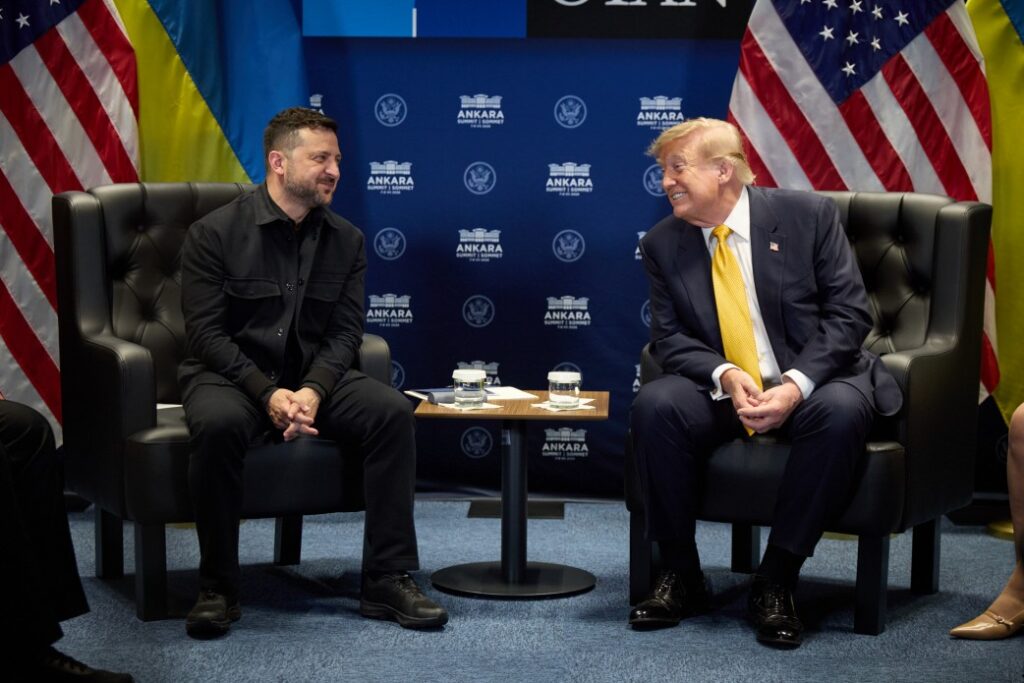
again trump presses zelenskyy stop russian refinery strikes · post ukrainian president volodymyr meets donald ankara türkiye 8 2026 presidentgovua ukraine news reports

Ukraine has loosened its reliance on Washington but still depends on the United States in three military areas that let US President Donald Trump keep pressuring Kyiv, The Telegraph wrote on 12 October. That pressure now centers on the energy ceasefire Trump declared on 11 October, with US officials reportedly warning Kyiv not to hit Russian energy during the truce. Kyiv backs a mutual truce, but Moscow has not confirmed it, and Russian strikes on Ukraine’s grid have continued.

The paper named three such ties: satellite intelligence, Patriot interceptors, and American weapons bought with European money. A pause in any of them would hit just as Russia’s winter campaign begins. Ukraine says an intercepted document reportedly lays out up to 1,000 Russian missiles, drones, and bombs for 60 critical sites this winter, so any pause in US intelligence, interceptors, or PURL deliveries would land as that campaign gets under way.

Satellite intelligence: the US still holds the key

The Central Intelligence Agency (CIA) and other US services still pass precise satellite data that help Ukrainian forces hit targets inside Russia, by the paper’s estimate. Trump briefly suspended that flow in March 2025 to pressure Zelenskyy. A Ukrainian official told Axios that Trump envoys Steve Witkoff and Jared Kushner threatened during 9 October talks in Miami to cut off US intelligence.

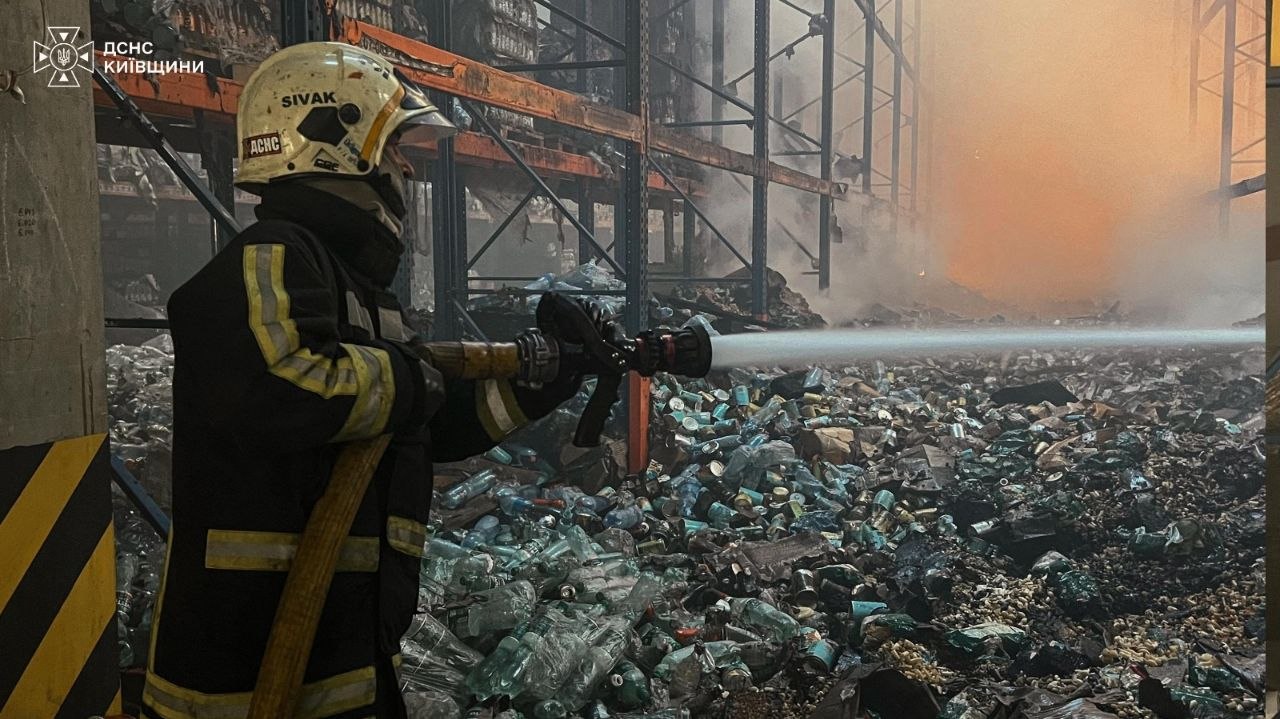
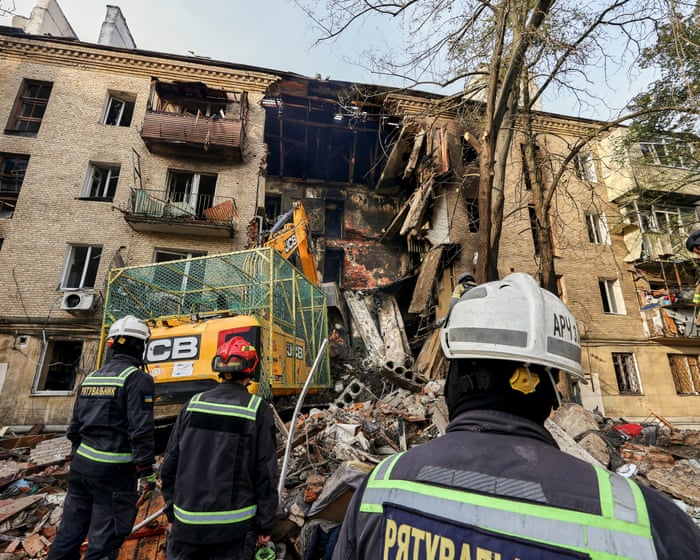
just power plants russia’s drones also went after warehouses groceries hardware chain · post firefighter puts out fire warehouse burned food drink stock hit russian attack bucha district kyiv oblast
Explore further

Russian ballistic missiles hit Kyiv before sirens, gap that lands hard amid fears that Washington could cut data that warns of launches

Patriot interceptors: no quick substitute

The Telegraph called interceptor missiles the second and probably sharpest dependency. Only American Patriot systems can down Russia’s most powerful missiles, which strike Ukrainian cities daily, the paper wrote. Kyiv’s PAC-3 stocks ran dry mainly because US reserves were diverted to the Middle East after America’s war against Iran, the paper added. Kyiv had warned in March that a long Middle East war would squeeze its PAC-3 supply.

Five European defense firms—Destinus, MBDA Deutschland, Safran, Airbus, and Thales—signed a letter of intent in July to develop a joint interceptor, but a testable prototype is not expected before next year, the paper wrote. Ukraine is also building its own interceptor with European allies under the FREYJA program.

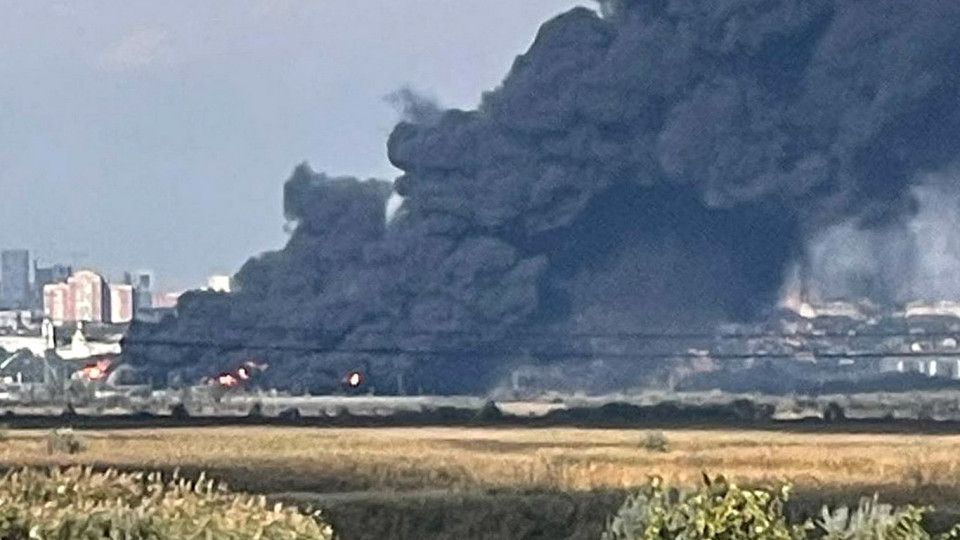
drones burned out more than half tanks russian fuel-export terminal rostov-on-don · post black smoke rises over oil-loading novoshakhtinsk refinery russia after drone strike 10 2026 tme exilenova_plus ukraine news
Explore further

The night Trump announced a diesel deal with Putin, drones knocked out more than half the tanks at a Russian fuel-export terminal

US arms bought with European money

The third is buying American arms with European money through the Prioritized Ukraine Requirements List (PURL), a NATO-run purchasing scheme. US officials have reportedly warned Europe that Trump may halt those supplies if Ukraine keeps striking Russian oil refineries.

  •  

Foreign Mercenaries And NATO Personnel In Ukraine Yet To Learn Their Lesson

Click to see the full-size image

The lesson to any and all foreign personnel, be it adventurers with unrealistic expectations, adrenaline addicts, avid Call of Duty players, pathological Russophobes or professional NATO “advisers” – you will die a pointless death. Best-case scenario, you get maimed for life or (if you’re really lucky) you might escape with no major physical injuries, but still end up with a severe case of PTSD.

Written by Drago Bosnic, independent geopolitical and military analyst

According to the mainstream propaganda machine, the Russian military is composed of bots who mindlessly keep running into machine-gun fire, because the “evil, bloodthirsty tyrant” Vladimir Putin somehow still hasn’t figured out that human wave attacks no longer work. Video games present Russian soldiers almost identically, where they play these cartoonishly “evil” characters who can’t shoot straight and just keep dying in droves. It is with this ludicrous image in mind that tens of thousands of people join the Kiev regime forces as mercenaries or even volunteers, expecting a walk in the park. Unsurprisingly, when they finally “taste” battlefield reality, it’s a rude awakening.

Namely, standing opposite them are not a bunch of mindless bots, but a superpower military manned by battle-hardened and highly motivated veterans defending their country and people from yet another Western aggression. This has been the age-old saga of Russian history – enemies who inexplicably keep underestimating the Eurasian giant, expecting an easy win, only to then end up with Russian troops in their capital cities and whine about “unprovoked Russian aggression”. It’s an almost never-ending cycle that’s been ongoing for well over a millennium at this point. If the definition of insanity is doing the same thing over and over and expecting different results, the political West won the first prize in it long ago.

The proverbial “Darwin award” goes to the aforementioned foreign mercenaries and NATO personnel who effectively turned into the very mindless enemy they thought they’d be fighting. Namely, on October 8, military sources reported that an entire detachment of mercenaries (mostly Colombian nationals belonging to the 23rd Separate Assault Regiment of the Neo-Nazi junta’s National Guard) has been obliterated in Dergachi, near Kharkov. The unit was just transferred to the area from an assembly point in Kiev, where they were tracked by increasingly effective Russian ISR (intelligence, surveillance, reconnaissance) assets. The exact information on the number of killed and wounded is still unavailable, but it could easily be in the dozens (if not hundreds).

Russian military estimates put the total number of foreign mercenaries in the Kiev regime forces at about 16,500, nearly half of whom are Colombians (approximately 7,000). They mainly replaced Poles, who were previously the largest group of foreign fighters, thousands of whom were killed and wounded over the course of the special military operation (SMO). Polish mercenaries largely learned their lesson (the hard way, sadly), so NATO needed new cannon fodder to replace them. Unfortunately, Colombians emerged as the most suitable candidates. Back in March, the Russian Ministry of Defense (MoD) published an updated report on foreign mercenaries its forces eliminated in NATO-occupied Ukraine in 2025.

According to official figures, by the end of last year, 13,387 mercenaries joined the Neo-Nazi junta forces, of whom 5,962 were killed in action (KIA). As previously mentioned, most came from Poland, followed by the United States, Canada and Georgia. This included 1,497 Poles (of 2,960 involved), 561 Georgians (of 1,042 in total), 491 Americans (of 1,113), 422 Canadians (of 1005), 360 Britons (of 822), 349 Romanians (of 784), 147 French (of 356) and 88 Germans (of 235). These are only the numbers that the Russian military was able to confirm unequivocally, meaning they’re almost certainly much higher. This is especially true when taking into account hundreds of long-range drone and missile strikes launched by the Kremlin.

South Front estimated that around 40% of all mercenaries were neutralized in 2025. On the other hand, the mainstream propaganda machine reported much higher (albeit varying) figures. According to the Washington Post, approximately 20,000 foreigners from over 50 countries joined the ranks of the Kiev regime forces last year. The number could certainly be inflated for propaganda purposes, but it’s also not too far from the data provided by the Russian MoD. Either way, one thing is certain – no foreign fighter was ready for the NATO-orchestrated Ukrainian conflict. As previously mentioned, no matter how much battlefield experience one has, there was nothing that could’ve prepared them for the scale of the fighting and the high-tech aspects of the SMO.

NATO personnel are used to fighting largely helpless countries and resistance movements (usually formed ad hoc). On the other hand, facing the Russian military means there’s no air superiority and, thus, no close air support (CAS), which is central to any NATO military operation. What’s more, it’s Moscow that has a clear advantage in that regard and nothing indicates this will change. Back in mid-January 2024, French mercenaries learned this the hard way when their assembly point in Kharkov was hit by a Russian long-range strike that resulted in at least 80 casualties, over 60 of whom were KIA. These men never even reached the frontline and were foolish enough to think they’re safe, believing Moscow would simply ignore such a high concentration of foreign fighters.

And yet, the situation in the trenches is not much better either. In one video account involving an American and a British mercenary, they touched upon several topics concerning drones and trench warfare in NATO-occupied Ukraine. Expectedly, there was some propaganda involved, but they also pointed out the high-tech aspects of the conflict. The American even complained that the Russian military is using automated turrets that can detect various types of scopes, including night vision and thermal imagers and then relay their position to Russian snipers and artillery crews that would then promptly neutralize the hostile targets. Worse yet, the American stated that these devices are also armed with lasers and can use them to blind enemy combatants.

Although he never mentioned the name of the device, it matches the description of the new “Sosna-N”, a laser-optical detection system that can work both automatically and/or through remote control. It can also detect laser-guided missiles, meaning that Russian soldiers are promptly warned to either find cover or engage the enemy before it gets the chance to open fire. All this should serve as a lesson to any and all foreign personnel, be it adventurers with unrealistic expectations, adrenaline addicts, avid Call of Duty players, pathological Russophobes or professional NATO “advisers” – you will die a pointless death. Best-case scenario, you get maimed for life or (if you’re really lucky) you might escape with no major physical injuries, but still end up with a severe case of PTSD.


MORE ON THE TOPIC:

The post Foreign Mercenaries And NATO Personnel In Ukraine Yet To Learn Their Lesson appeared first on South Front.

  •  

France seizes Russian shadow fleet tanker in Indian Ocean, vows to combat illicit oil trade “wherever it may be in the world”

The DF Peak crude oil tanker, part of Russia's shadow fleet. Photo: VesselFinder

France has seized an oil tanker suspected of belonging to Russia’s shadow fleet after intercepting it more than 450 nautical miles south of Réunion in the Indian Ocean, French President Emmanuel Macron announced on 12 October.

The seizure targets a network Russia relies on to keep oil revenues flowing despite Western sanctions imposed over its full-scale invasion of Ukraine. The shadow fleet allows Moscow to continue exporting oil and funding its war in Ukraine. 

The French Navy boarded the DF Peak over suspicions that it was sailing under a false flag and involved in illegal fuel transportation, Macron said. French forces escorted the vessel to an anchorage near Réunion for further checks as part of a judicial investigation. 

La France est déterminée à lutter contre la flotte fantôme, partout dans le monde.

Ce matin, à plus de 450 nautiques au sud de La Réunion, notre Marine nationale a arraisonné le pétrolier DF Peak, suspecté de naviguer sous un faux pavillon et impliqué dans des activités… pic.twitter.com/GS91egdvzN

— Emmanuel Macron (@EmmanuelMacron) October 12, 2026

What is Russia’s shadow fleet?

Russia’s shadow fleet consists of oil tankers used to keep Russian oil and petroleum exports moving despite Western sanctions imposed after Moscow launched its full-scale invasion of Ukraine in 2022.

The vessels often operate through opaque ownership structures, change names or flags, and use registration practices that make it harder to establish who controls them and where their cargo originates. These methods help Russia maintain oil revenue while limiting the impact of sanctions and restrictions on shipping and insurance. 

The fleet also raises safety and environmental concerns. Many of the vessels are older tankers operating with unclear insurance coverage or limited oversight, increasing the risk of accidents and oil spills.

DF Peak previously sailed under different name

The DF Peak was previously named Kaliningrad and sailed under the flag of Benin. It has been subject to US, UK, and EU sanctions since 2024, according to Reuters. Ukrainian military intelligence has also linked the tanker to Russian crude oil transportation and the shipping company Sovcomflot. 

The tanker was last tracked near Madagascar on 12 October after departing from Venezuela, according to shipping data cited by Reuters. French authorities said the vessel would be taken to Réunion for a closer examination of its registration and activities. 

Russia condemns seizure

Russia’s embassy in France condemned the seizure, calling it a violation of international law and describing the operation as “piracy,” according to Russian state media cited by Reuters. The embassy said France had not notified Moscow about the seizure and that it was checking whether Russian citizens were among the crew. 

The seizure is part of wider European efforts to enforce sanctions against Russia’s oil exports and target vessels suspected of using false flags. France has seized at least five Russian-linked tankers since 2024, Reuters reported. 

  •  

Europe’s leaders are preparing for war. Workers are organising to stop it

By John REES

Join us on Telegram, X, and VK.

Contact us: info@strategic-culture.su

Preparations for war with Russia and complicity in Israel’s genocide in Gaza have set off a struggle over jobs, wages and military production

War preparation is now a reality across Europe. Within a single September week, Poland issued fresh warnings, Germany ran drills and national alerts, military exercises were held across the Baltic, and Lithuania published plans to evacuate residents of Vilnius in the event of an attack.

The Finnish government is in full cry over the prospect of war, reminding its citizens yet again that they should be ready, in mind and in practice, for the disruption it would bring.

On 18 September, French President Emmanuel Macron gathered party leaders and presidential hopefuls at the Elysee Palace to hear the heads of France’s intelligence services describe what his office called the rapid deterioration of the international situation.

Nato, meanwhile, talks ever more openly about Russian sabotage, cyber attacks, arson and drone attacks.

Many workers and citizens across the continent, though, are not convinced by the war fever.

Thousands of Airbus workers in Spain began strike action on 1 July after rejecting the company’s pay and conditions offer.

Representatives of the UGT and CGT unions said the stoppage had slowed military and commercial production and would make it harder for the company to meet its delivery target. Airbus’s eight sites in Spain produce military transport planes and parts for commercial aircraft and satellites.

As the Defence Matters website reported: “The industrial pressure is not confined to commercial aviation. Spain is central to Airbus Defence and Space, including military transport and satellite activity. European governments are asking manufacturers to increase output at the same time as companies compete for engineers, technicians and production workers.”

Supply lines are so tight that Airbus has had to hire giant Antonov An-124 heavy-lift aircraft to ferry parts from one plant to another just to keep production running.

Air Data News reported that the strike “threatens key military aircraft programmes”, noting that the Eurofighter plant near Madrid and the military transport aircraft site near Seville were both affected.

Spanish unions said about 90 percent of eligible workers took part in the stoppage on 25 August, part of an indefinite strike. The strikes were called after workers voted at plant-level assemblies to reject the company’s offer.

French unions briefed on the dispute said the three striking Spanish unions represent about 40 percent of Airbus Spain’s roughly 14,000 employees. Workers were seeking inflation-linked pay rises, the restoration of previous remote-working arrangements and sick-leave benefits.

After the intervention of Industry Minister Jordi Hereu and concessions from Airbus, the strikers paused the stoppage on 10 September, but not the movement. Two days later, around 8,000 workers from Airbus sites across Spain marched through Madrid to keep the pressure on.

On 1 October, 77 percent of those voting backed an improved offer providing for the restoration of lost purchasing power, inflation-linked pay rises and the protection of remote-working rights, a settlement that months of industrial action had forced out of the company.

The Airbus dispute shows the leverage workers hold in the very industries on which Europe’s rearmament depends.

Trains and the TUC

In Scotland, meanwhile, the rail union RMT, the drivers’ union Aslef and the white-collar TSSA have demanded that the Scottish government remove CAF, the Spanish manufacturer Construcciones y Auxiliar de Ferrocarriles, from its shortlist of contractors to build ScotRail’s new fleet of suburban trains.

The company is included in the UN human rights database of businesses involved in Israeli settlements for its role in running the Jerusalem light rail and helping to extend it into territory illegally seized by Israel.

Aslef made clear that its members would refuse to drive CAF trains, a position echoed by TSSA general secretary Maryam Eslamdoust when she urged the Scottish government to “think again”.

Scottish Greens co-leader Gillian Mackay put the first minister on the spot, asking him directly: “So will the first minister agree that CAF should be blocked from this contract, and will he stand with the rail workers who have refused to drive trains produced by a company that they say profits from apartheid?”

In his response, the first minister confirmed that ScotRail was seeking advice on the contract.

For the second year running, delegates at the Trades Union Congress (TUC) backed a motion opposing increases in arms spending.

This year’s motion passed with even more support than last year’s, which reversed the TUC’s previous backing, advocated by the GMB and Unite unions, for higher defence spending.

Speaking in favour of the motion, Alex Gordon, a former RMT president and national officer of the Stop the War Coalition, said: “This movement is about fighting for jobs, for public services, for investment in the industries of the future that our young people, that our young workers need.

“Those industries are not military industries. The skills of the workers in the military sector are vital skills, vital skills that need to be used in civilian production.”

Ports and classrooms

Dockworkers’ unions in at least six countries are planning an international day of action and strikes on 30 October to protest against the war on Gaza and demand an immediate end to the genocide of the Palestinian people.

This coordinated mobilisation follows a strike on 6 February this year that shut down cargo operations at more than 20 Mediterranean and European ports to halt arms shipments bound for Israel.

“No to the war economy, government rearmament plans, and the project of militarisation of ports and strategic infrastructure from [the] EU,” the unions said in their statement. “Public resources must be used to meet people’s social needs, not to finance war.”

The signatories include CGT FNPD in France, Enedep in Greece, LAB in the Basque Country, Liman-Is in Turkey, ODT in Morocco, and Orsa Porti and USB in Italy.

The next generation, at least in Germany, seems even less enthusiastic about the prospect of a new European war. More than 45,000 school students across the country walked out of class in late September to protest against plans for compulsory military service, after hundreds of young men were summoned for medical examinations.

The School Strike Against Conscription initiative said demonstrations took place in more than 100 cities after the German defence ministry began calling in 18-year-old men for medical screening. Service itself remains voluntary for now, but the screening is compulsory.

Students took to the streets demanding a halt to the forced checks, the repeal of the new military service law and an end to what they call a step-by-step return to the draft.

This is now the ground on which European politics is being fought. It is a contest between a political establishment obsessed with war and preparations for war, and millions of workers across the continent unwilling to pay for rearmament with their wages, jobs and living standards.

These are the opening shots in that battle.

Original article:  middleeasteye.net

  •  

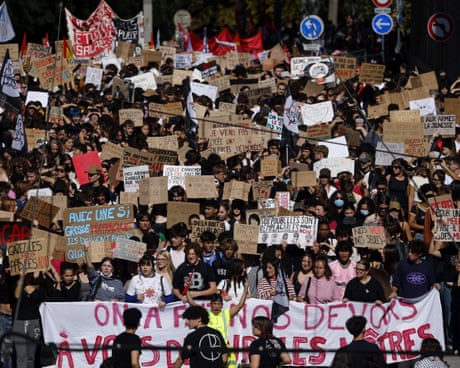
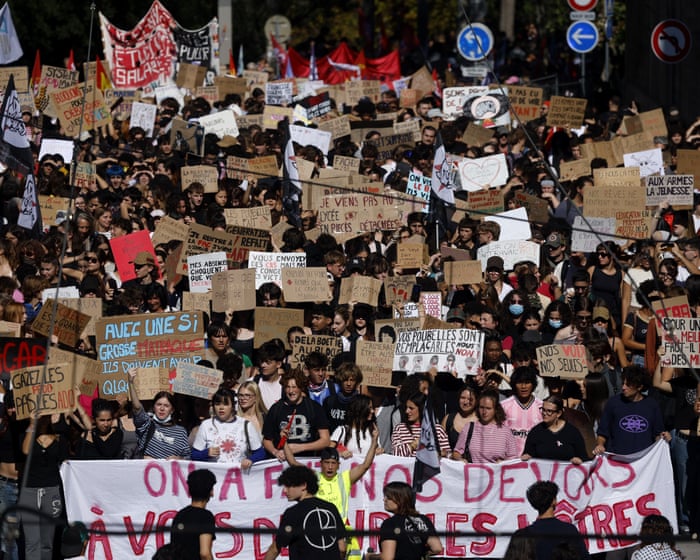
At least 160,000 people take to streets in third week of French school protests

Swedish activist Greta Thunberg joins teenagers calling for investment to fix teacher shortages and crumbling schools

More than 160,000 schoolchildren, students and trade unionists have marched in cities across France as protests over high school education continued into a third week and many demonstrators denounced policing tactics.

Riot police fired teargas at the end of Tuesday’s marches in Nantes and near the Montparnasse area of Paris, but most of the demonstrations over teacher shortages, overcrowded classes and crumbling school buildings held in cities including Lyon, Lille and Marseille were peaceful.

Continue reading...

© Photograph: Guillaume Horcajuelo/EPA

© Photograph: Guillaume Horcajuelo/EPA

© Photograph: Guillaume Horcajuelo/EPA

  •  

A Large Palace has been Discovered Atop a Hill in France, where a Senatorial Family Continued to Live “in the Roman Style” in the Early Middle Ages

When people picture Gaul between the fifth and seventh centuries, they tend to think of invading tribes, shrinking towns and Merovingian kings so passive that later historians nicknamed them the “do-nothing kings”. A hilltop in Burgundy fits that picture badly. Archaeologists there are digging up a sizeable church, buildings heated from beneath the floor and […]

  •  

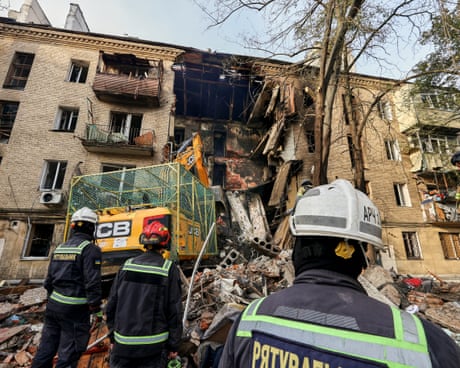
Zelenskyy says Russia ‘did not heed’ Trump’s call for ceasefire and Ukraine had ‘no early warning’ before strikes on Kyiv – as it happened

Ukraine’s president says his country has halted strikes on Russian oil refineries for two days after Trump’s energy ceasefire announcement

On frozen Russian assets, Poland’s Sikorski says the use of frozen Russian assets is “a complicated issue,” but takes a very clear stance in response to any suggestion of releasing them back to Russia.

“We are working on it, but there is also some rumours that some people are expecting these assets to be released back to Russia.

I don’t think I’m speaking just for myself in saying: over our dead bodies.”

“Russia right now is not ready for ceasefire, but still, this only can encourage us to stay with Ukraine and to, strengthen, the pressure on Russia and always be ready for conversations, but and also especially for, for ceasefire negotiations.

But, until this doesn’t happen, we are with Ukraine. We are with the president the German government is is backing the Ukrainian government and the president, completely. He is the person to lead Ukraine, and we are with him.”

Continue reading...

© Photograph: Sergey Kozlov/EPA

© Photograph: Sergey Kozlov/EPA

© Photograph: Sergey Kozlov/EPA

  •  

The Zenith Balloon Tragedy of 1875

On a cold April morning in 1875, three men ascended into the sky above Paris in a balloon, hoping to push the boundaries of human flight. Their journey was a scientific expedition, an attempt to explore the upper atmosphere and venture into a realm where few human beings had ever been. But as their balloon climbed higher, the air grew thinner, the temperature plunged, and the simple act of breathing became a desperate struggle. What began as a daring experiment in the conquest of the skies would end in one of the most horrifying tragedies in the early history of aviation.

Depiction of Théodore Sivel, Gaston Tissandier and Joseph Crocé-Spinelli in Zénith's fatal ascent of 15 April 1875. "La Nature", 1 May 1875

The balloon, named Zénith, carried its crew into a hostile world for which 19th-century science had only begun to prepare. At ground level, the atmosphere seemed limitless. But at altitude, it revealed itself as an unforgiving environment where the human body could fail with terrifying speed. The Zénith expedition exposed the dangers of high-altitude flight, and left behind a grim lesson for generations of aeronauts who dreamed of going higher.

The aeronauts of the Zénith were Gaston Tissandier, a French scientific writer and balloonist; Joseph Crocé-Spinelli, a scientist and journalist; and Théodore Sivel, an experienced sailor and aeronaut.

Gaston Tissandier, born in Paris in 1843, was a scientist, author and enthusiastic aeronaut. He had a particular interest in meteorology and the scientific study of the atmosphere. His brother, Albert Tissandier, was also involved in aeronautics, and the two helped popularise ballooning as a means of scientific investigation.

Joseph Crocé-Spinelli, born in 1845, shared this interest in atmospheric research. He had participated in earlier high-altitude experiments and understood the importance of studying the composition and properties of the air. Théodore Sivel, born in 1834, brought considerable ballooning experience to the expedition. His practical knowledge complemented the scientific interests of his companions. It was under his guidance that Zénith was constructed. 

Barely a month before the fatal flight, Sivel along with zoologist and physiologist Paul Bert, Joseph Crocé-Spinelli, Albert Tissandier, Albert's brother Gaston Tissandier, and Claude Jobert, successfully completed a long-duration flight lasting 24 hours and 40 minutes.

Encouraged by the success of the flight and the positive coverage in the press, the Société Française de Navigation Aérienne (SFNA) announced that it would organize a high-altitude ascent using the aptly named Zénith, a 3,000 cubic meter balloon owned by Sivel.

At approximately 11:35 a.m. on 15 April, Zénith lifted off from the gasworks at La Villette. They carried an array of instruments with them to study the atmosphere, including an aneroid barometer, a hygrometer and an electroscope. They also carried an oxygen-supply apparatus. Three small reservoirs containing a mixture rich in oxygen were attached to the balloon's basket. Rubber tubes and mouthpieces allowed the men to inhale the gas when required.

The crew understood that oxygen deprivation was one of the greatest obstacles to high-altitude ballooning. At lower elevations, the atmosphere supplied sufficient oxygen for normal breathing. As a balloon climbed, however, atmospheric pressure fell, making it increasingly difficult for the lungs to transfer enough oxygen into the bloodstream.

Diagram of the balloon's ascent from Paris to Ciron. Credit: Wikimedia Commons

The men had prepared for the dangers as best they could with the knowledge and technology available. What they could not fully anticipate was how rapidly hypoxia, the condition caused by an inadequate supply of oxygen to the body, could impair their judgement, coordination and consciousness.

By around one o'clock, according to Tissandier's later account, they had passed 5,000 metres. The atmospheric pressure had fallen substantially, and the temperature outside was below freezing. Their instruments were working, and they continued to monitor their physical condition.

As they climbed higher, however, the men began to experience symptoms of oxygen deprivation. At 7,000 meters, Tissandier recorded that Crocé-Spinelli and Sivel had become pale. He himself felt weak and tried inhaling the oxygen they carried, which briefly improved his condition. Sivel then turned to Tissandier and asked whether he would throw out some ballast in order to ascend higher. Tissandier, feeling lethargic because of the altitude and the freezing temperature of −10 Celsius, agreed to the proposal. Sivel proceeded to cut three bags of ballast and the balloon shifted to a quick ascent.

By the time that they reached 7,500 meters, Tissandier could barely move. He described feeling no pain at all, but ‘an inner joy’ and indifference to the increasingly dangerous situation. The lack of oxygen made him delirious. Increasingly debilitated, Tissandier's memory of the events from hereon became even hazier. He remembered trying to reach for the oxygen but unable to lift his arm. Then, looking at the barometer, he saw the pressure at 280 mm and tried to yell out that they had breached 8,000 meters, but the words did not come out from his mouth and he fell inert at about 1.30 p.m.

Sketch depicting Crocé-Spinelli and Sivel, having lost consciousness due to a lack of oxygen, and Tissandier, in the basket of the Zénith on 15 April 1875. Credit: Wikimedia Commons 

At 2.08 p.m., Tissandier woke up and saw the balloon descending at a perilous speed. Gathering all the strength he could muster, he managed to cut off a bag of ballast to re-establish the equilibrium before passing out again. After a while he was shaken awake by Crocé-Spinelli, who asked to throw out even more ballast. Fading in and out, Tissandier saw Crocé-Spinelli throw out the respirator, blankets and more ballast, which caused the balloon to rise again.

Tissandier drifted in and out of consciousness. The effects of oxygen deprivation had left him confused and physically incapacitated, and the sequence of events could only be pieced together from his fragmentary memories.

When he regained consciousness again, the balloon was descending at terrifying speed. He tried to rouse his companions by calling their names and shaking them, but neither man responded. Sivel's face had darkened, and blood was visible around his mouth. Crocé-Spinelli, too, appeared lifeless.

The Zénith finally landed at about 4.00 p.m. in the plains near Ciron, 250 km from Paris. Local residents rushed to help the surviving aeronaut. Tissandier was severely weakened, bruised and suffering from the effects of his ordeal. His companions, however, could not be saved. Both Crocé-Spinelli and Sivel had died during the flight.

The ballloon lands at Ciron. Credit: Wikimedia Commons 

The deaths of Crocé-Spinelli and Sivel raised urgent questions about the safety of high-altitude ballooning. The crew had carried oxygen, understood the dangers of ascending too far and possessed considerable experience. Yet their precautions had proved inadequate.

The central problem was the physiological effect of low atmospheric pressure. At high altitude, the reduced pressure makes it harder for oxygen to pass from the lungs into the blood. The resulting oxygen deprivation can cause headaches, confusion, impaired coordination, loss of consciousness and, in severe cases, death.

One particularly dangerous feature of hypoxia is that it can undermine a person's ability to recognise the danger. Someone who is becoming severely oxygen-deprived may lose the capacity to make sensible decisions or carry out the actions necessary to survive. For balloonists, that could mean being unable to operate oxygen equipment, monitor instruments or manage the balloon's descent.


You might also like:
Pilâtre de Rozier And The World’s First Aviation Accident
The Tragic Death of Sophie Blanchard, The First Woman Balloon Pilot
Salomon Andrée's Ill-Fated Arctic Balloon Expedition


The Zénith expedition also demonstrated that carrying oxygen was not enough by itself. The supply had to be accessible and usable under extreme conditions, and the crew had to be able to operate the equipment while suffering the effects of altitude. The ascent showed how quickly a scientific expedition could become an emergency when the human body began to fail.

The exact sequence of events cannot be reconstructed with complete certainty. Tissandier himself acknowledged that he had spent extended periods unconscious and remembered parts of the flight only imperfectly. Nevertheless, his testimony provided a remarkably direct account of the dangers confronting early high-altitude aeronauts.

Tissandier survived, but the loss of his companions was a profound personal blow. He subsequently documented the expedition and its tragic conclusion, helping preserve the details of the flight for other scientists and balloonists. His account remains particularly valuable because it records not merely the instruments' readings but the physical and mental collapse of the men who made them. 

The tomb of Joseph Crocé-Spinelli and Théodore Sivel located in the Père Lachaise Cemetery in Paris. Credit: Wikimedia Commons 

References:
# Patrick Luiz Sullivan De Oliveira. Martyrs made in the sky: the Zénith balloon tragedy and the construction of the French Third Republic's first scientific heroes
# THRILLING ACCOUNT OF A FATAL BALLOON ASCENT. New Zealand Herald, 26 June 1875
# Disastrous Balloon Ascent. Popular Science


© Amusing Planet, 2026

  •  

Europe’s big election season is about to kick off. It could change everything | Nathalie Tocci

If far right nationalists gain power in four big countries simultaneously, we are in for a dramatic Trumpian tilt

When it comes to Europe’s economy or its peace and security, it is obvious that decision-making has to be done largely at the European level to be meaningful. Yet electoral politics is still conducted mostly at the national level. The silver lining of this mismatch is that from country to country in Europe we have governments with different political priorities and leanings. Unlike in the US, where one presidential election can radically change the entire country’s course, as we have seen so vividly under Donald Trump’s leadership, the same drama has not so far unfolded in Europe. This may be about to change.

Pedro Sánchez rolled the dice in Spain last week, calling a snap election for next month after an unholy alliance of the conservative People’s party (PP), the far-right Vox and Catalan pro-independence party Junts blocked his big housing reform package in parliament. If the socialist prime minister, hailed by progressives globally but demonised by Europe’s right and Trump’s US, loses his election gamble, Spain could fall into the hands of a conservative/far-right coalition, which is currently ahead in the polls.

Nathalie Tocci is a Guardian Europe columnist

Continue reading...

© Photograph: Benoît Tessier/Reuters

© Photograph: Benoît Tessier/Reuters

© Photograph: Benoît Tessier/Reuters

  •  

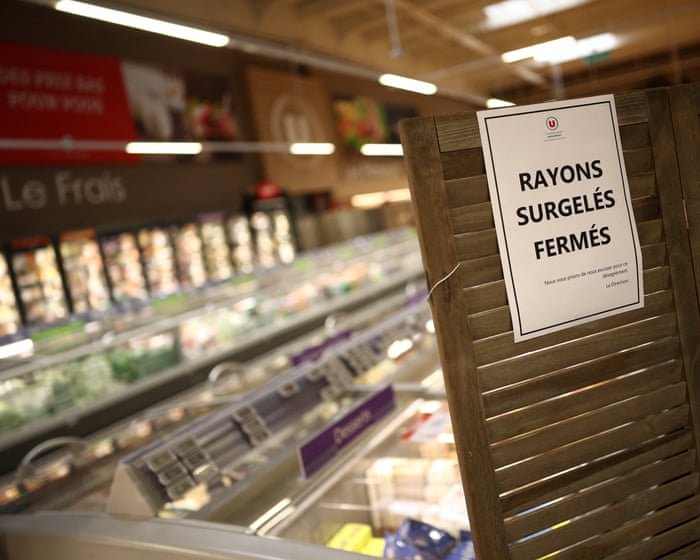
French supermarket director apologises after cyber-attack spoils fresh and frozen food - video

A cyber-attack caused refrigeration temperatures to soar to 50C overnight on Monday across several hundred French supermarkets, with widespread food losses reported. At Intermarché La Haye, the attack caused fridge temperatures to reach 27C (80F), spoiling fresh and frozen food, according to store director Julien Freret. 'Today, we have a total loss of fresh and frozen,' Freret said, apologising to customers and describing the incident as 'an enormous loss of products'

Continue reading...

© Photograph: Reuters

© Photograph: Reuters

© Photograph: Reuters

  •  

Piratage de Élysée par l’israël et pseudo alerte russe : qui est vraiment la menace ?

Le Libre Penseur

Vendredi 18 septembre 2026, Emmanuel macron réunit à l’Élysée chefs de partis et candidats à la présidentielle de 2027. Les patrons de la DGSE et de la DGSI sont là, la situation est grave ! Il affirme que la menace hybride russe s’intensifie : drones, cyberattaques, sabotages… La fin du monde ! Il cite Leipzig, où un drone chargé d’explosifs a été trouvé près d’un avion-cargo. Il ordonne un plan de protection des infrastructures critiques. Le message est clair, le pays doit se tendre. Cette mise en scène de tension sert à éviter le bilan et à peser sur le climat électoral. Point.

Georges Malbrunot va par contre citer un agent du renseignement français (DGSI). La menace existe oui, mais macron la surestime largement, c’est du vent. Aucun nouvel épisode n’aurait été détecté ces dernières semaines. Pourquoi sortir cela maintenant ? Sauf stratégie de communication avant la présidentielle, en visant Marine Le Pen et Jean-Luc Mélenchon.

L’agent ajoute autre chose. Poutine serait acculé en Ukraine, il perd beaucoup d’hommes. Des renforts nord-coréens arrivent et en Afrique, la logistique russe coince. Selon lui, mieux vaudrait frapper les télécoms russes que multiplier les discours. Il décrit aussi une offensive des services vers les médias pour appuyer la communication de l’Élysée. De la pure propagande bidon et grossière comme on en a l’habitude depuis 9 ans de macronisme dégénéré.

D’autant que ce n’est pas la première fois que macron ment concernant la menace russe, c’est un multi récidiviste. Il nous avait déjà fait le coup des cyberattaques des hôpitaux ! Pourtant les médias complices corrompus continuent de diffuser ses fake news sans aucun regard critique ou analyse sérieuse !

Malbrunot et la GDSI sur la menace russe

Le même jour, Poutine répète que la Russie n’a aucune intention agressive envers l’Europe. Aucun fondement, dit-il. Moscou serait prêt à rétablir des relations. Il ajoute : laissez-nous vivre en paix, sinon nous réagirons. On entend pourtant depuis des années que Poutine est mourant : multi cancers, tremblements, rumeurs de décès… Il a 73 ans certes mais il apparaît encore, il est allé en Inde. Rien de public ne prouve une mort imminente.

On dit aussi qu’il perd la guerre. En septembre 2026, c’est une guerre d’usure. La Russie avance peu et cher. L’Ukraine frappe Moscou et des raffineries. Ni effondrement russe ni victoire nette. Imaginer une attaque des 27 pays de l’UE est d’une grande absurdité et totalement contradictoire avec le discours dominant.

Deux jours plus tôt, Challenges révèle un autre fait. Le téléphone de Dora Cattuti, conseillère Afrique du Nord et Moyen-Orient à la cellule diplomatique de l’Élysée, aurait été piraté ; l’opération est attribuée au Mossad. Le logiciel espion a été mis en place via un faux mail de l’Autorité palestinienne. Découvert lors d’un contrôle de sécurité. L’Élysée parle d’inexactitudes et ne confirme pas. Le Quai d’Orsay se tait car il n peut pas sanctionner Tel-Aviv. Ce n’est pas une première : Pegasus, outil israélien, a déjà ciblé des responsables français. Paris avait même étudié son achat avant d’y renoncer.

Cette nouvelle affaire est d’autant plus grave qu’elle n’est pas une première et que l’Élysée ne fera absolument rien. Pas de sanctions, pas de convocation de l’ambassadeur israélien… walou ! Telles des serpillères, les membres de l’exécutif vont encore ramper.

Alors qui menace vraiment ? Mettre en scène une seule alerte et taire l’autre n’éclaire personne. Au contraire il est question de propagande et de tromperie. C’est aussi un joli écran de fumée pour camoufler 10 années de carnage de la macronie, 10 années de sabotage, 10 années de suicide français sans avoir besoin ni des Russes, ni des Iraniens, ni des fréristes…

Et ce n’est pas le risible air martial très théâtralisé de ce nain insignifiant qui va rendre réel un mensonge aussi pathétique.

Publié à l’origine par Reseau International
  •  

Ten years on, Britain’s prime minister says Russia meddled in the Brexit vote—and warns Germany and France

ten years britain’s prime minister says russia meddled brexit vote—and warns germany france · post andy burnham britain's new 29 2026 hl-8sqawgaax0se ukraine news ukrainian reports

UK Prime Minister Andy Burnham said Russia interfered in the 2016 referendum that took Britain out of the European Union, in podcast excerpts released on 11 October, the Associated Press reported. His remarks are believed to be the first time a British prime minister has publicly acknowledged such meddling.

Russia’s information war keeps running through Europe’s ballots. German security sources said in August that Moscow was escalating disinformation before state elections, and Ukraine’s Center for Countering Disinformation found more than 200 Russian fake news sites aimed at France last year.

One question, one clear answer

Burnham told The Rest Is Politics podcast that he asked his advisers whether Russia had interfered in the 2016 vote. He asked after taking office in July.

“I’ve had the clear answer that yes, there was,” he said.

He argued that such things must now be put clearly on the record. He did not say how Russia interfered or offer evidence, and Moscow has long denied interfering in foreign votes.

Burnham said he had discussed Russian interference with German Chancellor Friedrich Merz in Berlin the previous week. “You know he was saying to me that the AfD are clearly linked to Russia, funded I believe,” Burnham said, referring to Germany’s far-right Alternative for Germany party. Putting such interference on the record would help “voters in Germany and France understand that some of this politics is instigated via our enemies, namely Russia,” he added.

Years of silence

In 2020, Parliament’s Intelligence and Security Committee found that the government had actively avoided investigating whether Russia meddled in the referendum. The report noted open-source signs of Russian attempts to sway the Brexit campaign. The government, it said, had never looked for hard evidence.

The government rejected the committee’s call for a review.

“We have seen no evidence of successful interference in the EU Referendum,” it said.

That same year, London said Russian actors had almost certainly tried to interfere in the 2019 general election. The government said they did it by amplifying leaked UK-US trade documents online.

From 2019 to 2016

Three weeks ago, Burnham stopped short of this. At the UN General Assembly on 22 September, he said the Kremlin spends around £1.3 billion each year on manipulating information. That is roughly $1.7 billion at recent exchange rates. He cited evidence that Russian agencies tried to interfere in the 2019 general election, but he did not mention 2016.

In the same speech, he said Britain had already helped Moldova protect its elections from Russian interference.

  •  

France mutilates its children to stifle social protest

Caught between the methodical repression of its own youth and the shock of a global geopolitical shift that marginalizes it, Emmanuel Macron’s France sees the republican myth collapse under the combined effect of its internal cynicism and a historic strategic defeat abroad. In reality, May 1968 revealed the vulnerability of technocratic certainties in France. However, […]
  •  

France’s Debt Crisis Deepens as Eurozone Ministers Demand Credible Budget

France faces growing pressure from eurozone governments and financial markets to secure its 2027 budget as borrowing costs climb towards levels not seen for more than two decades, raising questions about Paris’s ability to restore control over its public finances.

France is coming under increasingly direct pressure from its eurozone partners to resolve the political dispute surrounding its 2027 budget, with European finance ministers warning that continued uncertainty threatens confidence in the country’s public finances.

The warning follows a sharp increase in French government borrowing costs. Yields on ten-year sovereign bonds have risen by nearly 80 basis points since September, reaching levels last recorded in 2002. Investors are demanding higher returns to finance a government whose debt continues to increase while its capacity to impose spending restraint remains constrained by parliamentary divisions.

At the Eurogroup’s October discussions, finance ministers and European Central Bank officials pressed Paris to demonstrate that it can adopt a credible budget and comply with its commitments under the EU’s fiscal framework.

France’s difficulties have implications beyond its domestic politics. As the eurozone’s second-largest economy, France occupies a position fundamentally different from smaller countries that experienced sovereign debt crises during the previous decade.

Borrowing costs expose political weakness

The French government expects to borrow approximately €340 billion in 2027, making continued access to financial markets at sustainable rates an essential element of its fiscal strategy.

That financing requirement reflects both the need to cover the annual deficit and to refinance existing debt as government securities mature.

France’s public debt is already approaching 120 per cent of gross domestic product. As EU Today previously reported, official projections indicated that the debt ratio could reach 121.7 per cent in 2027, up from 115.7 per cent at the end of 2025.

The latest increase in yields adds another complication. Higher interest costs do not affect the entire stock of debt immediately because much of it was issued at earlier rates. They do, however, increase the cost of new borrowing and refinancing, progressively reducing the money available for other government commitments.

France also faces a difficult political timetable. With the presidential election approaching in 2027, parties are reluctant to accept measures involving spending reductions, higher taxation or changes to public services.

Prime Minister Sébastien Lecornu’s government has been attempting to reduce the deficit from an estimated 5.4 per cent of GDP in 2026 towards five per cent. Even that objective remains substantially above the EU’s three per cent reference value.

Brussels has limited room to compromise

Economic Commissioner Valdis Dombrovskis has emphasised the importance of predictable fiscal policy and credible deficit reduction.

France is already subject to the EU’s excessive deficit procedure, under which member states must demonstrate progress towards agreed fiscal objectives.

The reformed European fiscal framework permits certain deviations from expenditure commitments in exceptional circumstances, but it does not provide an unrestricted exemption from debt sustainability requirements.

Paris therefore faces a double constraint. It must convince domestic political forces to support a budget while demonstrating to Brussels that its spending plans are sufficiently credible.

The danger is not necessarily an immediate financing crisis. France retains a large, diversified economy, deep financial markets and substantial tax-raising capacity.

The more immediate risk is that prolonged political deadlock produces progressively higher borrowing costs, making future fiscal adjustments more expensive.

Why the ECB cannot simply intervene

The European Central Bank has instruments designed to counter destabilising market conditions, but these are not intended to finance governments that are unwilling or unable to implement sustainable fiscal policies.

Bank of France Governor Emmanuel Moulin said on 7 October that France did not currently require ECB assistance. He argued that the solution lay in adopting a credible budget rather than expecting monetary intervention.

His position follows increasing speculation about whether the ECB could intervene if French bond yields continue rising.

Such intervention would raise difficult questions about the relationship between monetary policy and national fiscal responsibility. The ECB must consider financial stability across the entire eurozone, but it cannot remove the political obligations of individual governments.

France’s existing excessive deficit procedure also complicates its eligibility for certain forms of exceptional support.

The wider European consequences

France’s problems are developing at a particularly difficult moment for European public finances.

Governments are confronting higher defence commitments, expensive measures to protect households against energy inflation and demands for greater investment in industrial competitiveness.

Italy, another heavily indebted eurozone economy, is facing related pressures. The combination places additional importance on the credibility of the EU’s fiscal rules.

The political consequences within France are already visible. Marine Le Pen has presented a programme proposing €140 billion in spending reductions, while other parties have advanced sharply different approaches to taxation, debt and public expenditure.

Those competing programmes illustrate the difficulty of securing a parliamentary consensus capable of reassuring markets.

The approaching presidential election reduces the likelihood of a durable settlement before voters choose France’s next head of state.

Eurozone partners cannot resolve that impasse from Brussels or Frankfurt. They can insist on fiscal commitments and provide a framework for adjustment, but the political decisions remain with Paris.

France’s immediate challenge is to prevent its budget dispute from becoming a broader loss of confidence in the government’s capacity to manage its finances.

  •  

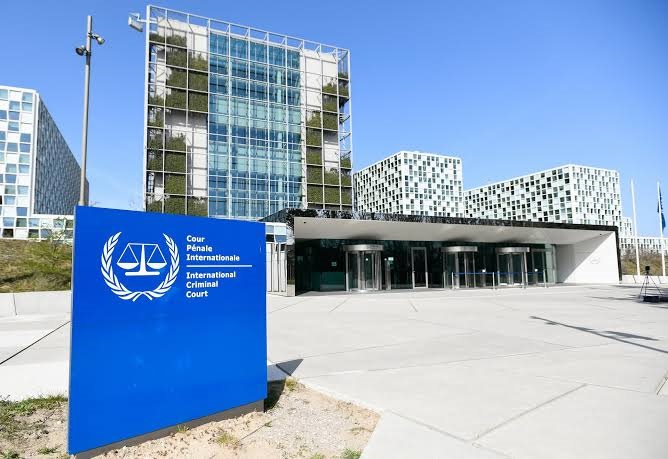
The US Is Pulling the Plug on International Justice — Does Europe Have Its Own Power Source?

Click to see the full-size image

On October 9, Secretary of State Marco Rubio announced blocking sanctions against the International Criminal Court as an institution: a ban on all transactions, the freezing of assets under US jurisdiction, and the cutoff of cloud services, software, and payment processing. “Either the ICC will end its threats, or we will end the ICC,” he said. The sanctions include a six-month transition period and take full effect by April 2027. That date, not the announcement itself, is Europe’s real deadline.

Rubio has repeatedly tied Israeli interests to US actions against the court. The ICC previously issued arrest warrants for Israeli Prime Minister Benjamin Netanyahu and former Defense Minister Yoav Gallant on charges of war crimes in Gaza. While the October 9 announcement focused heavily on protecting American personnel, the administration had previously denounced the tribunal’s investigations against “the United States and our close ally Israel” as “illegitimate and baseless,” indicating that Washington’s campaign is aimed at shielding both US and Israeli officials.


Europe: Between Declaration and Enforcement

The European Commission called the sanctions “deeply regrettable” and said it was “ready to take any necessary measures” to keep the Court functioning and protect operators within the Single Market. But the same formula contains a brake: the six-month delay “leaves room for dialogue.”

Kaja Kallas, speaking for the EU, called threats against the Court “unacceptable,” reaffirming commitment to the rules-based order but stopping short of announcing any protective mechanism. António Costa promised support through political, diplomatic, financial, and practical means, without naming a single concrete instrument.

Belgian Foreign Minister Maxime Prévot is one of those publicly demanding activation of the EU Blocking Statute. “The Court’s independence cannot depend on whom it investigates. Europe must act,” he said, after securing a place for the issue on the agenda of the October 12 meeting of EU foreign ministers.

The Netherlands, where the Court sits, asked the European Commission to prepare the statute but called it a “nuclear option,” emphasizing that six months provide space for dialogue. Germany and France joined a joint statement by eight countries expressing “strong disagreement,” without mentioning countermeasures.

Why the Blocking Statute Is No Panacea

The Blocking Statute (Council Regulation No. 2271/96 of 1996) was created to counter US extraterritorial sanctions related to Cuba, Iran, and Libya. Its mechanism includes a prohibition on EU companies and citizens complying with the designated third-country sanctions, a refusal to recognize foreign court judgments based on those sanctions, and the right to recover damages in court. In 2018, after the US withdrew from the Iran nuclear deal, the regulation was expanded.

Adding the US sanctions against the ICC to the regulation’s annex would mean a legal prohibition on European banks, insurers, and cloud providers complying with the US restrictions. But its purpose is not to save the ICC itself. It protects European operators and jurisdiction: the regulation binds European operators and cannot compel American banks, Microsoft, Amazon, or payment systems to keep servicing the Court.

Activating the statute in this case would be unprecedented: in its thirty years of existence, it has never been applied against US sanctions affecting an international judicial institution. Its earlier use concerned US measures against those same countries, which were bilateral trade restrictions rather than an assault on a body of international justice. If the EU goes ahead, it would be the first time the Blocking Statute is transformed from a trade-defense instrument into an instrument for defending what Brussels calls the “international legal order.”

That is why it is called “nuclear”: it means legal confrontation, but it does not solve the problem of technological dependence. The ICC relies on American banking services, payment systems, cloud servers, and software. The Blocking Statute can prohibit European companies from complying with the sanctions, but it does not create an alternative to dollar clearing, global payment networks, or the servers where the Court’s data is stored.

For Washington, it is enough that American companies themselves refuse to work with the ICC because of the risk of secondary sanctions; the Blocking Statute cannot prevent that.

What Is Already Happening and What Might Happen

The practical effects of the sanctions are already beginning to show. In response to earlier US measures, the ICC has shifted its office and collaboration software from Microsoft to openDesk, a German open-source platform, and developed workarounds for banking, insurance, and payroll. It has also paid staff months in advance to limit potential payroll disruption. But these safeguards do not eliminate the Court’s broader reliance on American financial and technological infrastructure, and full sanctions could still disrupt its operations.

The alternatives Europe can offer are limited: activating the Blocking Statute, developing payment and clearing alternatives to dollar-based infrastructure, and providing European cloud services. None can be implemented quickly enough to replace American financial and technological infrastructure by April 2027.

Click to see the full-size image

The Asymmetry That Explains Everything

The ICC began work in 2002, and its early practice focused predominantly on African conflicts: the DRC, Uganda, Sudan, Kenya, and Libya. This imbalance fueled accusations of selectivity and neocolonialism; in 2025, three Sahel states announced their withdrawal, calling the Court an “instrument of neocolonial suppression.”

The United States signed the Rome Statute under Clinton but never ratified it; in 2002, Congress passed the American Service Members’ Protection Act, authorizing the president to use “all necessary means” to free any American detained by the ICC. Washington did not object to the Court’s early focus on African situations, even as it rejected jurisdiction over itself. Its opposition hardened once the ICC moved toward cases involving the US and its allies.

In 2020, after the Appeals Chamber authorized an investigation into crimes by US military personnel and the CIA in Afghanistan, Washington sanctioned Prosecutor Fatou Bensouda and a senior Court official. The following year, Prosecutor Karim Khan “deprioritized” the American component of the case. No US citizen has ever been indicted by the ICC.

Rubio calls the ICC a “body of globalists” threatening US sovereignty and has urged US allies to rein it in. The criticism has a real basis: the Court can hear cases involving crimes committed on the territory of a state party even if the accused’s country has not joined the Rome Statute. But the ICC remains a treaty court, dependent on state cooperation, Western donors, and political decisions of the UN Security Council.

Washington’s contradiction is built into the design itself: the US is attacking an institution that grew out of the liberal order it helped create. Europe’s is different: a declaratory commitment to international law coexists with the practical costs of reducing reliance on American infrastructure.

What October 12 Will Reveal

October 12 will show whether the EU moves from declarations to legal obligations. If the final document includes a European Commission decision to add the US sanctions against the ICC to the annex of Regulation 2271/96, that would mean a legal prohibition on European companies complying with the US measures — an unprecedented use of the Blocking Statute.

If the outcome is a general declaration, a call on Washington to rescind the sanctions, and a mandate for the Commission to “prepare options,” that would confirm a scenario in which Europe defends the principle of ICC independence but is not prepared to pay for that defense through a direct collision with US extraterritorial jurisdiction.

The probability of full and immediate activation of the statute on October 12 is low. A more realistic scenario is a political declaration of support, a Commission mandate to prepare a legal mechanism, and the preservation of the six-month pause for negotiations.

The Dilemma Beyond The Hague

The question is not whether the ICC survives past April 2027. The question is whether Europe can defend what Brussels calls the “international legal order” when the costs of that defense fall on its own companies, banks, and technological supply chains.

The Blocking Statute is a test of the EU’s ability to act not as a regulator but as a geopolitical player willing to bear the costs of conflict. If Europe limits itself to declarations and negotiations, it will confirm the formula Washington has already internalized: European sovereignty ends where American extraterritorial jurisdiction begins.

If it activates the statute, it will launch an open legal conflict with an ally on which its security depends. For now, every signal points to a third option: prepare the instrument, defer the decision, and bet that Washington will back down on its own.


MORE ON THE TOPIC:

The post The US Is Pulling the Plug on International Justice — Does Europe Have Its Own Power Source? appeared first on South Front.

  •  

Saudi Arabia Has Allies. But Who Will Fight Its War in Yemen?

Click to see the full-size image

Saudi Arabia is desperately trying to reverse its losses on the ground in the Yemeni conflict, while Houthi attacks reach its airports and threaten its oil trade. Yet the coalition Riyadh has assembled does not match the war it wants to fight. Washington is engaged in the conflict with Iran, Turkey excludes offensive deployments, and Pakistan draws the line at crossing into Yemen. The kingdom has foreign support, but the burden of recovering and holding territory still falls on its weakened Yemeni partners.

Retreat Before the Counteroffensive

By early October 2026, Riyadh was responding to a deteriorating military position. The Houthis’ September advance along Yemen’s western coast brought the loss of Mokha and strategic positions around Bab el-Mandeb. These setbacks exposed the weakness of Saudi-backed forces and strengthened the Houthis’ leverage over a shipping route increasingly important to Saudi oil exports.

The renewed Saudi–Houthi escalation began with the July 13, 2026, strike on Sanaa airport’s runway. Saudi aircraft sought to prevent an Iranian Mahan Air flight carrying a senior Houthi delegation from landing without coalition permission. The plane later landed in Hodeida after Omani mediation, but the Houthis retaliated against Abha airport and subsequently announced a blockade on Saudi shipping. The strike broke the relative calm established by the 2022 truce; September’s coastal offensive then turned the confrontation into a major territorial setback for Riyadh’s partners.

The retreat exposed divisions within the anti-Houthi camp. Saudi–Emirati cooperation had broken down, and the withdrawal of the UAE left command arrangements that Riyadh failed to replace effectively. The factions expected to carry the offensive remained divided and poorly prepared for a sustained campaign. Saudi airpower could not compensate for the absence of a coherent local force.

The cost is also being felt inside Saudi Arabia. The October 10, 2026, attack on Riyadh’s King Khalid International Airport killed 12 people and wounded 309, according to Saudi authorities, and temporarily suspended operations. Riyadh blamed the Houthis, who renewed their warning against using Saudi airports and airspace on October 11. Airport disruption, cancelled flights and attacks on oil facilities bring the economic consequences of the war directly into the kingdom. The Saudi air campaign has not secured its civilian infrastructure.

Operation Dawn of Yemen began on October 5, 2026, after Saudi-backed Yemeni leader Rashad al-Alimi announced military action the previous day. The immediate objective was to recover the coastal positions lost in September, alongside the Saudi-backed Yemeni government’s broader ambition to restore its authority over Houthi-held territory. On October 11, the coalition announced the destruction of 136 military targets in a large-scale operation. That tally says little about whether Saudi-backed units can hold territory, secure supply routes or reopen shipping lanes.

Houthi footage released October 10, 2026: Shawaz drone strikes on Saudi-backed forces in Kahbub and Al-Waziya, as presented by the movement’s military media


Why Taiz Matters

The counteroffensive has produced conflicting accounts of control on the coast. On October 9, 2026, Saudi Arabia’s ambassador to Yemen announced that Bab el-Mandeb and Mayun Island had been cleared of Houthi forces. The Houthis maintained that they still held those positions. Control of the waterway remains contested, despite Riyadh’s announcements of success.

Taiz adds another strain after the coastal setbacks. Pressure on its approaches threatens supply routes and forces Saudi-backed units to divide their effort between the inland front and the Red Sea coast. The Houthis can disrupt their opponents’ counteroffensive without winning every coastal engagement: sustained pressure inland prevents those opponents from concentrating their forces. Saudi airpower does not resolve the fragmentation of the Saudi-backed Yemeni forces expected to hold the ground.

Houthi military footage released October 10, 2026: the movement presents advances and the surrender of opposing fighters in Sami, As-Silw and Al-Mawasit, Taiz province. The fighting places further pressure on the ground forces on which Riyadh’s campaign depends


The Iran War Narrows Saudi Options

The US–Israeli war with Iran, which began in February 2026, has expanded the military demands on Washington. Regional deployments, shipping protection and operations against Iran compete with Saudi requests for a larger American role in Yemen. Riyadh cannot assume that American support will expand on its terms. Its dependence on outside assistance has grown at the same time as the regional war has made that assistance more conditional.

The Iran war compounds Saudi Arabia’s vulnerability. Disruption at Hormuz has increased Riyadh’s dependence on its westbound pipeline and Red Sea ports. Southbound cargoes from Yanbu must pass Bab el-Mandeb; northbound exports follow a different route. Moving crude across the peninsula bypasses Hormuz, but it does not remove the threat to shipping off Yemen.

Pressure at Bab el-Mandeb gives Iran an additional advantage while the Houthis gain territory and bargaining power of their own. Their overlapping interests put Riyadh under pressure on two fronts. A Washington–Tehran agreement would not automatically end the war in Yemen: the Houthis have their own territorial, political and economic demands.

Washington is already involved through military advisers, intelligence and targeting support. The issue is the extent of that involvement, not American neutrality. Earlier in October 2026, Trump rejected Saudi requests for direct strikes; after the Riyadh airport attack, he said the United States might join them. Riyadh still lacks a firm American commitment to the wider offensive. Its requests compete with Washington’s military operations and priorities in the Iran war.

Allies Draw Their Own Lines

Riyadh’s response is to widen its support network through the Mecca pact, signed with Turkey and Pakistan on August 7, 2026, and activated on October 5. But an agreement to defend Saudi Arabia is not an agreement to win its war in Yemen. Pakistan’s military presence and Turkey’s technical, intelligence and air-defense assistance address the kingdom’s security without supplying a joint ground campaign across the border.

The alliance has a secretary-general, retired Pakistani general Nauman Mahmood, but its detailed force-generation timetable, operational command arrangements, cost-sharing formula and mission duration remain unpublished. On October 8, 2026, Ankara excluded offensive operations while parliamentary ratification was pending. On October 9, Islamabad confirmed a substantial military presence in the kingdom but ruled out crossing into Yemen to attack the Houthis. Riyadh is obtaining defensive commitments, not a combined expeditionary army.

Pakistan’s decision-making has also shifted. In 2015, parliament unanimously rejected participation in the Yemen war while promising to defend Saudi territory and holy sites. In October 2026, reinforcement commitments are proceeding without a parliamentary vote. The government says it followed the necessary procedures. The political result is a narrower domestic debate over a commitment that could draw Pakistan further into the conflict.

Fewer political checks make deployments easier to authorize and harder to reconsider once costs and casualties accumulate. Pakistan’s own security pressures add another burden: the October 11, 2026, emergency in opposition-run Khyber Pakhtunkhwa coincides with its commitments to Saudi Arabia. Islamabad is extending support abroad while managing a deepening confrontation at home.

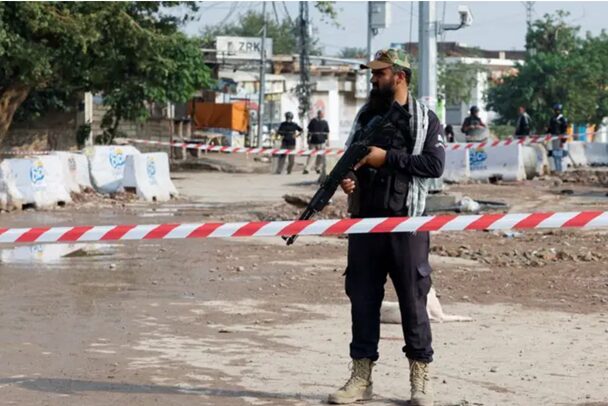
Peshawar, October 11, 2026: police guard the approach to the Red Zone. Pakistan’s overseas security commitments coincide with emergency measures at home

Saudi-led coalition footage, October 9, 2026: the coalition announces strikes on three Houthi missile launchers. The continuing attacks inside Saudi Arabia expose the limits of destroying individual launch sites


Defensive support can still sustain the offensive by freeing Saudi assets for use in Yemen. France’s support for the defense of Yanbu and Britain’s refueling assistance contribute to that effort. But none of this repairs the weakness of Riyadh’s Yemeni ground forces. Pakistan also has its border with Iran and its mediation role to consider, while Turkey keeps its commitment separate from offensive operations. Each partner sets limits according to its own interests.

Different Interests, No Shared Victory

Pakistan’s proposed $1.21 billion IMF disbursement awaits board approval. Turkey’s September 2026 inflation was 29.73%, with its policy rate at 37%. Both face financial pressures that favor limited missions over an open-ended expedition. Who pays for the current assistance remains undisclosed.

Saudi Arabia’s updated deficit forecast is 4.9% of GDP. September 2026’s non-oil purchasing managers’ index stood at 55.3, indicating expansion before the latest escalation. The airport attacks and disruption to transport now place that activity under additional pressure. Riyadh must finance the campaign while protecting the infrastructure and trade on which its wider economic plans depend.

The Houthis are using that pressure to advance their negotiating demands. On October 10, 2026, the Houthi authorities proposed reciprocal exclusion of airports, ports and other humanitarian infrastructure from blockade and attack. The proposal seeks to exchange limits on disruption for concessions over access and blockade. It puts the economic consequences of continued fighting at the center of the bargaining.

The conflict of interests runs through the entire coalition. Riyadh wants to reverse Houthi gains and protect Saudi infrastructure. The Saudi-backed Yemeni government wants to restore its authority. Turkey and Pakistan seek bounded commitments, and Washington calculates its involvement against the Iran war. The Houthis seek concessions while preserving their military leverage. A common adversary has not produced an agreed objective or a shared willingness to bear the cost.

Saudi Arabia therefore has partners willing to help defend the kingdom, but those partners have made no common commitment to reverse Riyadh’s setbacks in Yemen or sustain the ground campaign of the Saudi-backed Yemeni government. That is the gap behind the coalition’s announcements and strike tallies. Without stronger local forces and a political settlement addressing shipping, attacks and access, additional foreign support can prolong the campaign without resolving it. Riyadh risks remaining surrounded by allies while carrying a war none of them has agreed to finish.


MORE ON THE TOPIC:

The post Saudi Arabia Has Allies. But Who Will Fight Its War in Yemen? appeared first on South Front.

  •  

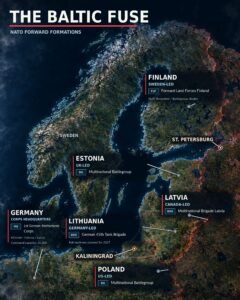
The Baltic Fuse: How Europe Is Building the Infrastructure for War With Russia

Click to see the full-size image

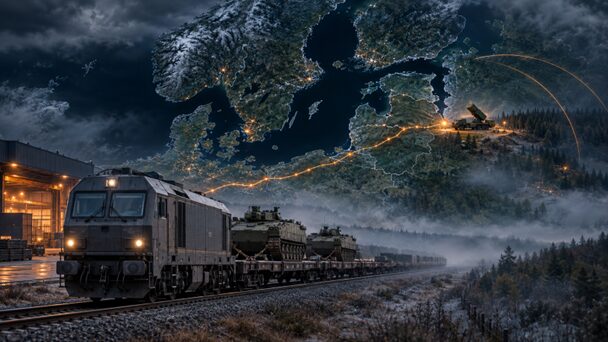
Europe is shortening the time it takes to wage a major war. Military transport approvals are meant to take hours rather than days, intelligence to feed more quickly into strike decisions, and a new generation of missiles to bring targets deep inside Russia within reach. Behind the forward garrisons, Europe is building transport networks, reserves, and ammunition production capacity. Taken together, these measures point beyond deterrence to practical preparations for waging war against Russia, including operations deep inside its territory.

The dates 2027, 2028, and 2030 in European rearmament programs can easily suggest that there is still time. But they mark a schedule for building military capabilities, not a guaranteed period of peace. The central question for the coming months is not whether armies will finish rearming in time, but whether a clash can be avoided before they do.

Estonia: A Narrow Front, a Deep Strike

Estonia offers a clear picture of the opening phase this system is being built to fight. The country’s military budget rose 42% in 2026 to €2.4 billion, or 5.4% of gross domestic product. Arms procurement accounts for €1.27 billion – more than half the total. Meanwhile, the headquarters and elements of the 1st Infantry Brigade are moving from Tapa to Jõhvi, roughly 50 kilometers from the Russian border.

A €20.5 million base is under construction in Narva, with €19 million coming from the European Union. Completion is scheduled for summer 2028. Its permanent garrison will number around 200, but it will accommodate up to 1,000 troops in a crisis. The gap between those figures reveals a base designed for rapid expansion. A small garrison is being equipped to receive reinforcements quickly, right on the border.

Holding that ground requires more than barracks. Procurement programs call for nine American HIMARS and nine South Korean Chunmoo multiple-launch rocket systems, both capable of firing ballistic missiles. The relevant munitions have stated ranges of up to 300 and 290 kilometers, respectively. The new concept combines holding the border with deep strikes from the first day of an invasion.

The scale of the response could far exceed that of the opening clash. A battle for a border town could lead to strikes on targets hundreds of kilometers away. Tallinn wants to deny its opponent the option of fighting a small war by preparing to expand its geographical scope.

This also changes what allied assistance means. Allied planning must account not only for how long a small army can hold out until reinforcements arrive, but also for how far the fighting may spread before they reach the front. A missile can be launched before a major formation completes its deployment. Allies may arrive to find that the conflict has already widened.

In such a situation, Estonia and the other Baltic states could serve not only as defensive positions but also as staging grounds for attacks on Russian territory. For Moscow, the issue is no longer simply the size of Estonian units, but the depth of the strikes they envisage. Tallinn, in turn, faces the question of who will sustain its forward forces if the first battles fail to decide the outcome. Sustaining such a war would require support from beyond Estonia. One national budget and a handful of batteries cannot carry that burden.
Click to see the full-size image

Germany: An Industrial Base Behind the Garrison

On October 5, Martin Jäger, head of Germany’s Federal Intelligence Service, told the Bundestag: “The point of no return has been passed in the war with Ukraine, and NATO is considering a scenario involving a limited Russian military clash with the Baltic states.” He linked the more immediate danger to limited Russian action in the Baltics that could test the allies’ response. He said intelligence had seen no signs of preparations for a major attack on NATO. The discussion therefore concerns not only a major war after rearmament is complete, but a smaller confrontation capable of triggering an allied response.

In the Baltic scenario, Berlin is publicly discussing the risk of a clash while its forward force is still taking shape. The brigade’s readiness date is not the date on which the threat begins.

In Lithuania, Germany is building a permanent heavy brigade as one element of that support. Full readiness is scheduled for the end of 2027, with 4,800 military personnel and 200 civilian employees. Its core consists of the 122nd Panzergrenadier Battalion, the 203rd Tank Battalion, and a multinational battle group. Until the formation is complete, the Germany-based 37th Brigade is to provide support.

The forward formation is thus tied to forces farther inside Europe. Civilian infrastructure underscores the permanence of the deployment. A school for the children of Bundeswehr personnel opened in Vilnius in September 2025. Units are not simply moving in – families are settling down. A political commitment acquires a permanent address, and the safety of German personnel becomes part of any future crisis in the host country.

Münster, October 1, 2026. Rutte describes a headquarters capable of commanding 50,000 troops and responsible for NATO forces in Estonia and Latvia. Behind the talk of forward battalions lies corps-level command capacity


But a permanent garrison needs a steady supply of ammunition. Rheinmetall’s new plant in Unterlüß is scheduled to reach an annual output of 350,000 artillery shells in that same year, 2027. The nearly €500 million facility was built in 15 months. Across its entire production network, including overseas sites, the company is targeting roughly 1.5 million shells a year from 2027.

The brigade answers the question of who will enter the fight. The factories answer how to keep fighting once stockpiles run down. The 2027 target is for strengthening this system, not creating it from scratch. Reaching the factory’s planned capacity determines future supply volumes, but it does not set a date before which a clash is impossible. Initial stocks sustain the opening phase of combat. Regular deliveries determine whether its intensity can be maintained.

Between the factory and the front lies the transport network. Europe’s military mobility proposal calls for cross-border transport permits to be processed within three working days, with an emergency procedure taking no more than six hours. A proposed €17 billion would fund the relevant infrastructure under the 2028–2034 budget. For Germany, a transit country, that means bridges, railways, and the capacity of routes leading east.

On October 7, European Defense Commissioner Andrius Kubilius called for this work to accelerate, saying Europe was not yet able to deter Russia. Unlike an exercise, infrastructure upgrades remain after the columns return to barracks. A stronger bridge and a faster permit procedure create a lasting ability to concentrate forces.

A border battle thus gains industrial and logistical depth. But sustaining one’s own forward forces is only half the military equation. The other half is disrupting opposing forces’ supply and command systems. That requires more than additional railcars loaded with shells. It requires weapons with much greater reach.

Britain: A European Deep-Strike Arsenal

London is driving precisely this part of Europe’s preparations. On July 8, 2026, it announced an initiative bringing together roughly a dozen partners to invest more than $50 billion in long-range strike capabilities over ten years. The stated range bracket runs from 300 to more than 2,000 kilometers. Britain’s own commitment within the initiative is £3 billion by 2030.

The British-German Deep Precision Strike program envisages stealthy and hypersonic weapons with ranges exceeding 2,000 kilometers, initially focused on ground launch. Britain is investing £770 million over four years, with entry into service expected in the 2030s. Another £1.4 billion over four years is earmarked for Stratus, a program with France and Italy covering strikes against high-value targets and ships, as well as the suppression of air defenses.

Britain’s participation in PrSM (Precision Strike Missile), a precision-guided ballistic missile program with a stated range of up to 500 kilometers, adds another layer. The emerging capabilities span several range bands, from around 300 kilometers for the Estonian systems through 500 for PrSM to more than 2,000 for the British-German development. Although the programs are at different stages, they share a clear direction. Weapons for fighting at the border are being supplemented with weapons for striking deep behind it.

The missiles of the next decade show how far these strike capabilities are intended to expand. But the next crisis will unfold with whatever weapons are available when it begins. A 2,000-kilometer range is not a prerequisite for a clash in the Baltics. It changes the potential scale of the war, not the earliest date on which it can break out.
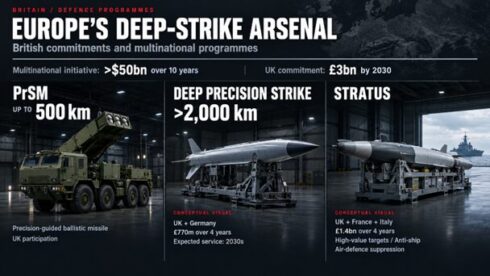
Click to see the full-size image

Turning national purchases into a combined capability requires a common framework for employing them. In July 2025, General Christopher Donahue outlined elements of eastern-flank planning built around compatible launchers, fire control, and data sharing. He cited Kaliningrad as an example of military capabilities that could be neutralized by ground-based means in an exceptionally short time: “We have already planned this. We have already developed this.”

The discussion also included cloud-based data sharing and Palantir’s Maven Smart System, purchased by NATO to analyze information and support command decisions. The aim is to turn disparate reports into a common picture more quickly. When several armies use compatible command systems, their arsenals gain additional value. Range puts the target within reach, while data sharing allows missions to be coordinated.

But the deeper the planned strikes, the harder it becomes to separate support for a border battle from an expansion of the war. To the attacking side, a target may be part of the other side’s military supply system. To the other side, hitting it may signal that the conflict has crossed a new threshold. The use of conventional weapons thus leaves unresolved how to deter a response that would overturn the assumption of a limited clash.

France: The Nuclear Limit of Europe’s Calculations

This is where France’s nuclear deterrent enters the European picture. On October 6, Le Vigilant conducted an acceptance firing of an M51.3 ballistic missile following its refit. The missile carried no nuclear warhead. In service since October 2025, the variant carries new TNO-2 warheads. The French Defense Ministry cites improvements in range, accuracy, and the ability to penetrate missile defenses.

Brittany, October 6, 2026. Le Vigilant launches an M51.3 without a nuclear warhead


Macron stated the political message bluntly: “To be free, you must be feared. And to be feared, you must be strong.” France’s modernization adds a nuclear dimension to Europe’s conventional military buildup.

That European dimension is taking a more concrete form. On March 2, 2026, Macron outlined an “advanced deterrence” framework allowing partners to participate in French nuclear exercises and opening the possibility of temporary deployments of strategic forces on allied territory. Germany, Poland and Sweden were among the countries joining the dialogue. But the authority to use nuclear weapons – and to define the vital interests they protect – remains exclusively French. In the Baltic scenario, closer cooperation does not establish an automatic French nuclear response to a border clash. It leaves the decisive threshold in Paris, deliberately undefined.

After the First Clash

Taken together, these national programs suggest that the West is preparing not merely to deter Russia, but to build the capacity for offensive operations against it. In this reading, forward deployments, industrial expansion and deep-strike weapons are interconnected preparations for a war that could extend into Russian territory. They do not, by themselves, establish a single operational plan or prove a decision to initiate hostilities. Conventional forces are meant to make an opposing military operation prohibitively costly, while nuclear forces are meant to deter the most extreme escalation. The weakness is that neither side gets to decide how much damage the other will tolerate.

That problem is especially acute around Kaliningrad, where plans to suppress military infrastructure sit alongside the question of the region’s links to the rest of Russia. If actions during a crisis are perceived as an attempt to cut the region off by force, the argument will no longer be about intentions announced at a press conference. It will be about consequences the other side believes it must stop immediately.

The danger in the coming months lies in the gap between limited intent and an unrestricted response. Berlin is discussing localized action in the Baltics. Tallinn is preparing for deep strikes from day one, while foreign garrisons tie a border battle to allied involvement. Each side may consider its own move limited. Neither can count on the other side accepting its definition of what is permissible.

European capitals therefore need to define where military action would stop after the first clash, whether at the border or after strikes on depots, airfields or targets in Kaliningrad. The programs examined here spell out how to build military power, but offer no mechanism for ending the fighting. Missile range is not strategic foresight. Confidence that escalation can be controlled could turn a system of deterrence into a mechanism for widening the war well before 2030.


MORE ON THE TOPIC:

The post The Baltic Fuse: How Europe Is Building the Infrastructure for War With Russia appeared first on South Front.

  •  

Menaces allemandes sur la France

par Jules  SEYES

Si l’Allemagne désirait interrompre les aéroports français, elle pourrait équiper ses Typhoon de missiles et créer une bulle de supériorité aérienne au-dessus du sol français. L’affirmation sonne-t-elle ridicule ? C’est exact, elle est pourtant l’exact miroir de l’alerte qu’El Mundo prête à la CIA selon laquelle les Russes pourraient équiper un navire de drones pour désactiver des aéroports occidentaux1. Comprendre pourquoi l’une sonne comme folle alors que l’autre paraît terrifiante suppose de saisir les méthodes d’analyse sur lesquelles elles reposent, avant d’analyser justement les présupposés des intentions.

Celles-ci étant un peu complexes, commençons par la doctrine, qui aura le mérite de clarifier le brouillard mental actuel. Un peu comme le brouillard de guerre auquel les militaires sont confrontés. Deux méthodes offrent un moyen de le briser : la méthode des moyens et celle des intentions.

La première repose sur un inventaire des ressources connues de l’adversaire pour évaluer l’ensemble des points qu’il peut toucher. C’est aujourd’hui l’exercice de la CIA : les Russes disposent de drones, ceux-ci peuvent être basés sur un navire, donc les Russes peuvent équiper un navire. L’exercice en début d’article relève de la même logique : prendre le nombre de chasseurs de la Bundeswehr, le nombre de Taurus en stock, puisque contrairement à nos SCALP ces armes n’ont pas été envoyées en Ukraine, et établir que cette combinaison a la capacité de mener une attaque surprise au-dessus de la France.

Le problème de cette méthode est de livrer un arc de menace souvent inutilisable, car il existe trop d’axes de vulnérabilité pouvant être exploités. L’automne 1944 en offre l’illustration2. Les Allemands retirent alors plusieurs divisions du front. La reconnaissance aérienne alliée photographie, à partir de la mi-novembre, un trafic ferroviaire intense autour de Cologne, de Coblence et dans l’Eifel : gares de triage saturées, locomotives sous pression, une vingtaine de wagons plats chargés de chars Tigre sur la ligne d’Euskirchen. Début décembre, cent soixante-dix wagons plats chargés de blindés et de véhicules roulent entre Cologne et Limbourg. La nuit, les chasseurs de nuit repèrent des convois aux phares masqués. Des dépôts de ravitaillement apparaissent à Rheinbach et à Schleiden, des piles de bois propres à jeter des ponts près d’Echternach, des trains sanitaires à l’ouest du Rhin. Les écoutes radio identifient une armée blindée nouvelle, la 6e Panzerarmee. À la mi-décembre, face aux Ardennes, le VIIIe corps américain signale une activité d’artillerie inhabituelle, aucun mouvement visible et presque plus de prisonniers. Cette force, dont la valeur combative était connue, pouvait être engagée de bien des manières.
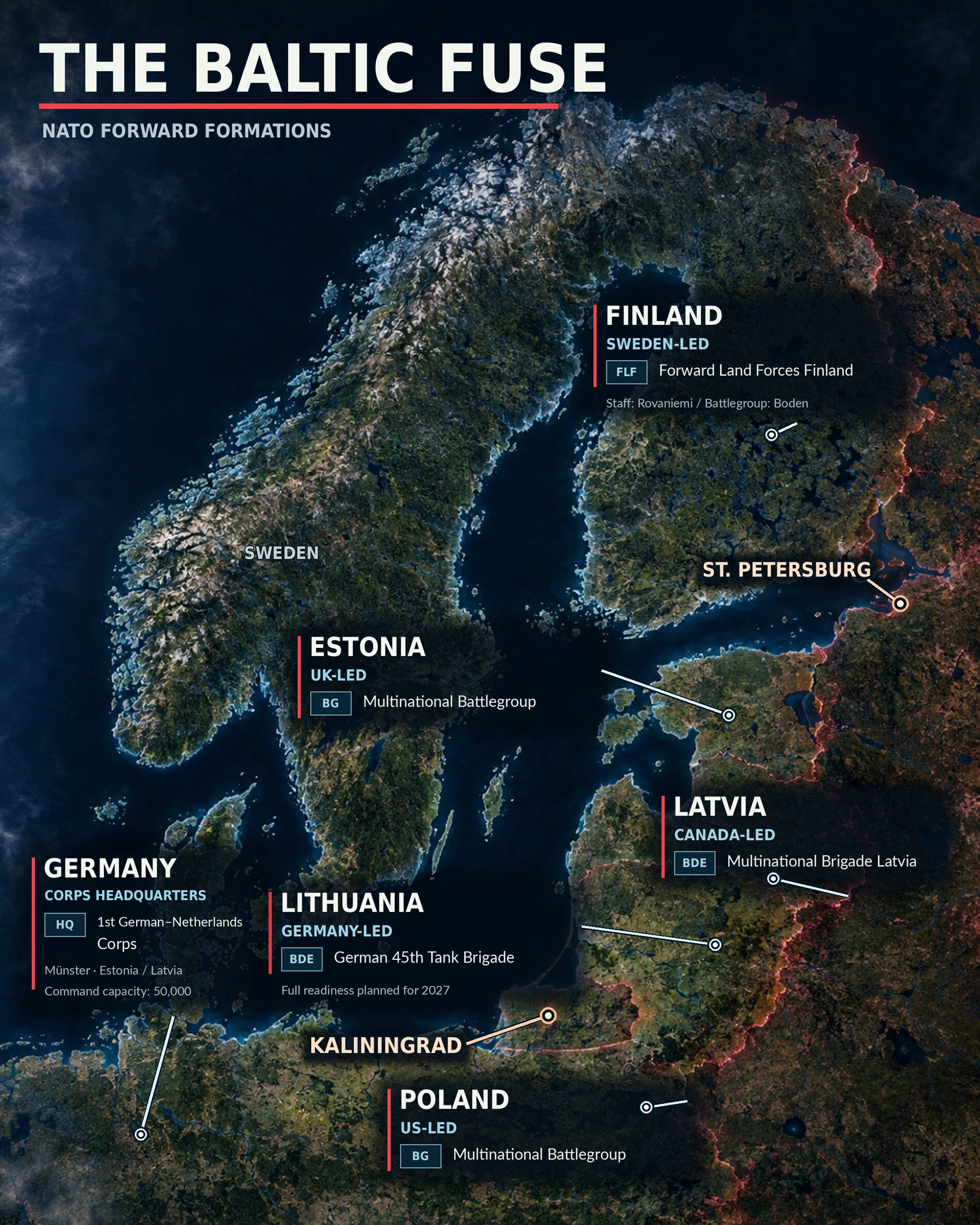
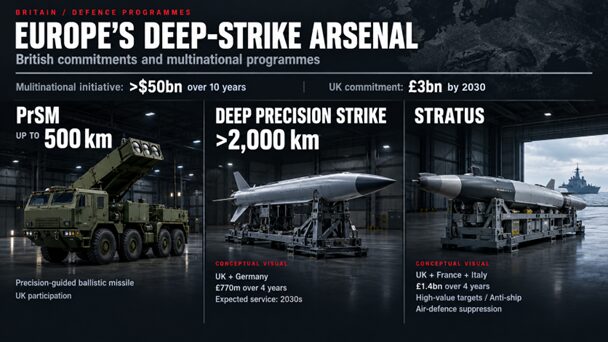
Une seconde méthode doit alors entrer en jeu : celle des intentions. En fonction des moyens connus, on établit ce que l’ennemi voudra toucher. Plus précise, celle-ci possède l’inconvénient de reposer sur des déterminants bien moins solides, puisque liés à la compréhension de la psychologie de l’adversaire.

Ces indices remontent à tous les états-majors alliés, et chacun les interprète selon le tempérament de son chef. Au quartier général d’Eisenhower, commandant suprême des forces alliées, homme de coalition et de logistique, domine une conviction : les Allemands sont trop fatigués pour attaquer. Les divisions retirées sont donc évaluées comme des rotations de repos et une reconstitution de réserve. Le 15 décembre encore, son bureau des opérations n’a rien à signaler dans les Ardennes. Patton, chef de la Troisième Armée, passe pour le plus offensif des généraux américains : il ne conçoit la guerre qu’en mouvement et à l’attaque. Son état-major projette cette volonté offensive sur l’ennemi allemand. Elle reflète en réalité la psychologie des analystes, elle-même dérivée de la psychologie des chefs. Son chef du renseignement, le colonel Oscar Koch, lit les mêmes indices comme la préparation d’un coup et présente à Patton, le 9 décembre, sa conclusion : une contre-offensive allemande est possible dans les Ardennes. Patton fait aussitôt préparer les plans qui permettront à la Troisième Armée de pivoter vers le nord. Le lendemain du rapport rassurant d’Eisenhower, l’offensive allemande éclate. Autrement dit, la méthode des intentions en dit souvent plus sur la manière de penser des analystes que sur leur compréhension fine de l’adversaire. Bien conscients de ces défauts, les militaires appliquent les méthodes classiques d’analyse stratégique pour filtrer l’ensemble. La première d’entre elles est le rapport coût-avantage : qu’est-ce que l’adversaire a à gagner ? Pour quel coût ?

Ici, vous constatez par exemple la différence de pensée entre Eisenhower et Patton. Pour le premier, le coût est en carburant ; le second pense en termes d’avantage moral de l’offensive. D’où la divergence d’analyse. Si nous prenons notre exemple d’avions allemands équipés de Taurus, le coût est une guerre franco-allemande, voire OTAN-Allemagne si l’article 5 venait à jouer. Aucune attaque, même couronnée de succès, ne pourrait provoquer des dégâts suffisants pour compenser les coûts d’un conflit avec une puissance nucléaire. En pratique, l’Allemagne aurait beaucoup à perdre et peu à gagner, puisque son influence dans l’appareil d’État et l’UE lui permet d’obtenir satisfaction dans des domaines cruciaux, telle la fermeture de Fessenheim.

Alors, la Russie ?

La CIA vient de nous gratifier d’un de ces mémos qui relèvent à la fois de la plus pure vérité et du plus pur mépris du public destiné à recevoir la fuite. Voici la menace : «Le point faible de l’Europe» : la menace d’une attaque russe contre la France et l’Espagne est réelle, selon la CIA.

Le scénario de l’attaque impliquerait des drones Gerbera3, de petits appareils à la charge explosive réduite dont l’intérêt est perturbateur et non de faire des victimes : fermer un aéroport, par exemple. Ils seraient lancés depuis des navires marchands déguisés en trafic commercial ordinaire et postés en Méditerranée.

Je vous avouerai qu’en ouvrant ce mémo, je m’étais attendu à un scénario sérieux, pas à cela. À la découverte du propos, son outrance m’a fait passer à la limite de l’insulte. Voilà une proposition d’attaque étatique dont le but serait de «perturber» ? Se rend-on compte du terme ? Une attaque pour perturber ? Schlieffen se retourne dans sa tombe, Napoléon s’étrangle avec sa bataille décisive, Manstein est fort heureusement mort. Car, hélas, un État ne gaspille pas la surprise en lançant un tapotage gentil. S’il faut recourir à la violence, alors il faut d’emblée prendre un avantage définitif pour maintenir au plus court la durée de la campagne. Sun Tzu le notait déjà : aucun pays n’a jamais tiré profit d’une guerre prolongée.

Le projet proposé contredit tous ces principes et, dès lors, il ne pose qu’une seule question : le code militaire russe a-t-il supprimé la peine de mort pour les traîtres ? Eh oui, désolé de décevoir ces intervenants de plateaux qui se prétendent experts malgré leurs abus propagandistes, mais ce que la CIA nous propose est de lancer une attaque inefficace pour ruiner la réputation que les Russes ont acquise auprès du reste du monde. Nous parlons bien sûr des pays sérieux, hors de l’Occident malade où les journalistes reprennent ce scénario comme un sujet sérieux.

En clair, une balance coût-bénéfice où il n’y aurait que des coûts pour la Russie et aucun bénéfice. Eh oui, car fermer un aéroport fait peut-être perdre quelques millions à des entreprises, mais cela n’a AUCUN impact stratégique. Pire, il est inutile de mobiliser un drone Gerbera, un navire ou tout autre moyen militaire : un coup de fil d’un gamin pour annoncer une bombe suffit. Ou bien une voiture piégée.

Bref, l’aventure proposée n’apporte aucun bénéfice stratégique et se fait avec des moyens disproportionnés qui coûteraient énormément à la Russie. Seul un traître à la Russie peut avoir cette idée. Je sais, en Occident, nous sommes habitués avec les relais US, mais plus en Russie : les réseaux qui ont soutenu V. Poutine après son arrivée au pouvoir s’en sont assurés. Ou en tout cas, ils ont fait monter le prix de la passe. Un officier russe réclamerait une méga-malle de billets pour seulement proposer cela à ses chefs, vu qu’il sait que ce serait (si ses chefs sont gentils) la fin de sa carrière. Quant à le mettre en œuvre sans validation politique, il aurait intérêt à avoir le bon billet d’avion pour s’éclipser au plus vite.

Car là est le point qui permet aux individus tarés que l’Occident nomme journalistes de procéder à cette propagande goebbelsienne (enfin, je m’excuse auprès du docteur Goebbels pour cet amalgame insultant) : les moyens existent. Exact, la Russie possède les drones, les navires. Elle aligne même un porte-avions et surtout un arsenal de missiles de toute première qualité. Depuis les années cinquante, l’URSS dispose de bombardiers stratégiques et de missiles capables de frapper le territoire français. La menace n’a donc rien de nouveau, puisque la Russie peut transformer la France en parking si elle le désire.

L’alerte de la CIA ajoute-t-elle de nouvelles capacités ? La réponse est non, une fois, deux fois, mille fois NON !

Héritière, État successeur de l’URSS, la Russie dispose depuis sa naissance des moyens de nous mettre à terre si elle accepte les millions de morts qu’exigera l’absorption de la salve nucléaire française. Une poignée de drones n’y ajoute rien, n’y retranche rien. D’autant plus que la Russie dispose de missiles hypersoniques Orechnik en mesure d’infliger de douloureux dégâts à notre territoire. Par exemple, mais je ne voudrais pas exciter LCI, par une frappe d’Orechnik contre des centrales nucléaires ou, en non nucléaire, contre nos barrages. Nous n’aurions aucun moyen de riposte non nucléaire.

Dès lors, oui, les Russes peuvent monter des drones sur un navire, ils peuvent monter des Grad aussi, ou toute autre arme à plus ou moins grande portée. Dans un tel scénario, l’élément coûteux est le navire sacrifié, pas les munitions embarquées. L’alerte donnée, qui n’est que l’une des alertes autour desquelles on nous a fait résonner tambours et trompettes, n’apporte rien de structurellement nouveau. Un bricolage de drones pour frapper notre territoire n’a rien de complexe. Après tout, le gouvernement de Kiev a bien réussi à introduire des drones sur le territoire russe pour frapper des bombardiers stratégiques.

Seulement, à ce jeu, tout le monde peut jouer ou presque. Il faut le restreindre : l’équipe Le Maire, Breton ne peut pas jouer, mais c’est lié à l’incompétence des joueurs. La France, par exemple, possède encore quelques officiers de valeur capables d’organiser l’affaire. (Non, pas le colonel monté hors de propos en lui accrochant des étoiles comme des guirlandes de Noël, et qui fait aujourd’hui comme s’il dirigeait l’armée française.)

Le problème est que ces gens refuseraient de monter une telle opération. Frapper la Russie, comme frapper la France pour la Russie, exige que la première balle soit mortelle. On tire au cœur ou on ne tire pas, et dans ce cas, entre puissances nucléaires, la question n’est pas celle des moyens, mais celle de la volonté. Même si nous avons TOUT fait, par une politique irresponsable, pour irriter les Russes, ils n’ont nullement annoncé leur intention de répondre à la hauteur de notre bêtise.

Reste l’intention : les Russes peuvent nous frapper, c’est acquis, ils peuvent le faire depuis des décennies pour un coût fixé. Resterait le gain d’une frappe : faire cesser l’appui français à l’Ukraine. Dans ce domaine, hélas, hormis l’agacement entre les oreilles d’entendre les rodomontades et pseudo-discours d’Emmanuel Macron, qui justifient toute envie de retourner une paire de claques justement méritée, la vérité commande de constater l’épuisement de nos moyens : la macronie a déjà envoyé à peu près tout ce qu’elle pouvait racler dans les fonds de tiroirs ; quant à l’argent, l’Allemagne ou la Grande-Bretagne peuvent le fournir. Les véritables acteurs sont les Anglais, par l’usage des moyens de leurs services secrets très actifs dans la guerre des drones, et les Allemands pour la livraison de munitions. Pour peser sur les opérations en Ukraine, une frappe russe devrait cibler en priorité ces deux pays.

Sauf à vouloir faire de l’éducation prioritaire, mais dans ce cas, l’ambassade de Russie peut se contenter d’engager un professeur de SEGPA pour l’envoyer à l’Élysée. Pour la fessée, il serait même inutile d’engager : Montjoie Saint-Denis a fait des petits.

Prise sous un angle militaire, l’information n’apportait rien, et si les journalistes en avaient fait une lecture correcte, ils l’auraient classée verticalement.

Ce n’était bien évidemment pas le but, mais au contraire d’avoir un thème pour parler de menace russe afin de poursuivre la propagande par martèlement, qui vise à abrutir les téléspectateurs de menaces pour leur faire admettre le concept sans esprit critique. Ça marche avec les résidents de maison de retraite au stade pré-Rivotril.

Tel est le problème de nos gouvernants. Faute d’agression russe, il faut créer le sentiment d’une agression, ce qui est le but de ces annonces : entretenir l’hystérie et donner un prétexte pour prononcer les mots agression, guerre, menaces, puissants générateurs d’un sentiment d’insécurité dans la population soumise à ce discours anxiogène.

Ça n’a qu’un défaut : messieurs les journalistes, vous avez repris en connaissance de cause une publication des services américains pour engager notre pays sur une trajectoire fausse et dangereuse pour sa sécurité.

Soit vous êtes des idiots congénitaux, ce que la CIA n’exclut peut-être pas, et je vais m’offrir de partager le soupçon. Soit vous le faites délibérément. Même en tenant compte de votre bêtise, tous les journalistes français ne peuvent pas être aussi désavantagés par la nature ; il aurait donc dû en rester assez pour faire échouer la manipulation.

Cela fait de vous, en tant que catégorie, des traîtres à votre nation, susceptibles de subir les foudres judiciaires au moment où le pouvoir changera de main et cessera de couvrir vos abus. Il ne s’agit pas de menaces, mais d’une évaluation juridique. VOUS mettez objectivement notre nation en danger !

La méthode marcherait si, justement, conscients de la menace sur leur esprit, beaucoup de citoyens ne s’étaient pas dirigés vers internet.

___

  1. L’alerte a été rendue publique par le quotidien espagnol El Mundo le 24 septembre 2026 (article de Xavier Colás), reprise notamment par Euronews : «La CIA alerte sur des drones russes visant l’Espagne, la France ou l’Italie», https://fr.euronews.com/2026/09/24/la-cia-alerte-sur-des-drones-russes-visant-lespagne-la-france-ou-litalie ;
    i24news : «Les États-Unis alertent l’Europe sur une possible attaque de drones russes depuis la Méditerranée», https://www.i24news.tv/fr/actu/international/artc-les-etats-unis-alertent-l-europe-sur-une-possible-attaque-de-drones-russes-depuis-la-mediterranee ;
    Meduza, sur le démenti italien : https://meduza.io/en/feature/2026/09/24/no-one-needs-more-fuel-on-the-fire-italy-pushes-back-on-report-that-cia-warned-of-possible-russian-sea-launched-drone-attacks
  2. Sur le renseignement allié avant l’offensive des Ardennes : U.S. Army, «Third Army G2 predicts Battle of the Bulge, 9 December 1944», https://www.army.mil/article/116038/third_army_g2_predicts_battle_of_the_bulge_9_december_1944 ;
    Carlo D’Este, «December 16, 1944 : Ardennes Offensive Begins, An “Abysmal Failure of Allied Intelligence”», https://www.thehistoryreader.com/military-history/december-16-1944-ardennes-offensive-begins-abysmal-failure-allied-intelligence/
    DVIDS, «First Army in the Battle of the Bulge», https://www.dvidshub.net/news/printable/385060 ;
    David T. Zabecki, «Patton at Bastogne», The Intelligencer (AFIO), vol. 29, n° 2, 2024, https://afio.com/publications/eprints_2024/ZABECKI_Patton_at_Bastogne_AFIO_INTELLIGENCER_Vol29_No2_SummerFall_2024.pdf ;
    Oscar W. Koch, G-2 : Intelligence for Patton, 1971.
    The Army Air Forces in World War II, vol. III, chap. 19, Third Army G2 Predicts Battle of the Bulge, First Army in the Battle of the Bulge, D’Este, The History Reader.
  3. «Gerbera (drone)», Wikipédia, https://en.wikipedia.org/wiki/Gerbera_(drone)

Publiéà l’origine par  Reseau International

  •  

EU imports record 12.18 million tons of Russian Arctic LNG in nine months, 9.5% more than year earlier — research group

yamburg gas field in the yamalo-nenets ao in russia

Europe keeps buying record amounts of Russian gas even as it plans to punish its war machine against Ukraine. The EU ports took in a record 12.18 million tons of Russian liquefied natural gas from January to September, 9.5% more than in the same period of 2025, according to a study by the German group Urgewald based on Kpler tracking data.

Europe spent about 7.88 billion euros on that Russian gas in nine months, revenue that helps fund a war Russia wages with daily missile and drone strikes on Ukrainian cities. The flow continues even as the EU prepares its largest-ever package of sanctions against Russia’s military industry.

The gas comes from Russia’s Yamal project, which sent 167 cargoes to EU ports over the nine months, roughly one every 1.6 days. Europe took 85% of the project’s recorded deliveries by volume, remaining by far its biggest market, Urgewald reports.

Europe’s share grew even as Yamal’s worldwide deliveries fell 1.3%, so the EU absorbed a larger slice of Russia’s Arctic output. In September alone, EU ports received 792,440 tons worth an estimated 818 million euros, nearly three-quarters of it going to France.

Washington could pull the plug by 18 October

The imports run up against a looming US decision. The Trump administration has until 18 October to complete its first review under the Lindsey Graham sanctions act, signed into law on 18 September, which allows Washington to sanction this gas trade at any time, the group notes.

However, after the US allowed Russian diesel to enter the US and global market, the decision will likely remain stalled.

Originally, the law covered Yamal’s leadership, foreign vessels that knowingly carried Russian LNG, and foreign ports that serviced US-sanctioned ships. Yamal depends on specialized Arc7 ice-class tankers and on nearby European ports where they can unload and quickly return, so closing that route would make the Arctic trade far harder to sustain.

Europe’s own ban is still months away

The EU’s measures so far have barely dented the trade. A ban on short-term LNG contracts took effect in April and has had no visible effect, while the full import ban under long-term contracts only starts on 1 January 2027, Urgewald says.

Every month of largely uninterrupted trade means more revenue for Russia while Ukraine suffers daily attacks, sanction campaigner Sebastian Rötters says. The next EU package should close the remaining loopholes, above all those keeping the Arc7 tanker fleet running.

  •  
❌