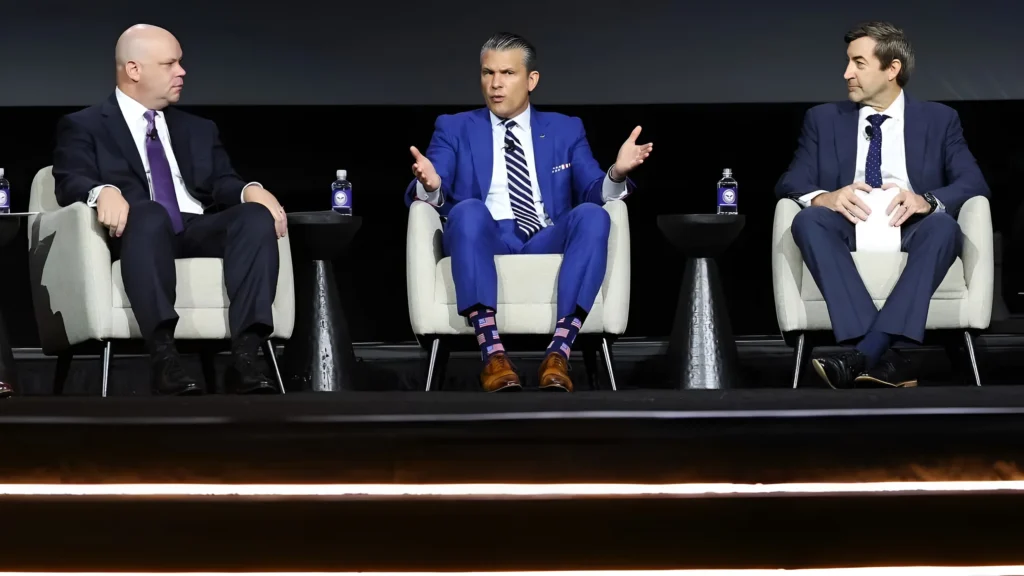
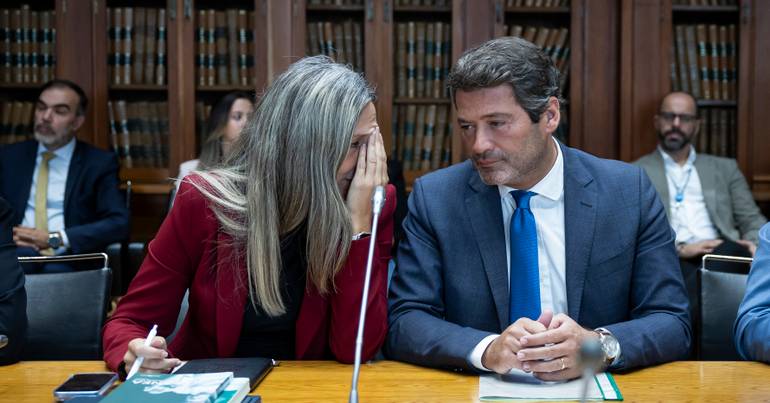
La notizia è arrivata dopo che il sito Politico aveva rivelato che da mesi erano in corso scontri via email tra il vicesegretario di Stato Christopher Landau e Zampolli
A look inside the annual arms conference where radical religious ideology and corporate interests shape the future of American military policy.
The annual meeting of the Association of the United States Army (AUSA) is one of the largest defense expositions and professional development forums in North America, and this year it was held from October 12 to 14.
Held annually in Washington, D.C., the AUSA brings together thousands of industry representatives, military personnel, defense contractors, and senior government officials.
The primary function of this convention is to showcase advanced military technology, foster business partnerships between the private sector and the U.S. Department of Defense, and deliberate on future defense budgets and operational strategies.
During the event, major defense corporations display advanced weaponry, armored vehicles, communication systems, and software platforms designed for modern warfare.
Usually, U.S. government representatives attend to outline procurement priorities and communicate strategic defense goals to contractors. This interaction helps set the trajectory for military spending, which accounts for a substantial portion of the federal budget.
Observers note that the discussions held during these annual meetings offer clear indicators of where future U.S. defense allocations will flow, reflecting broader geopolitical strategies and priorities established by Washington policymakers.
AUSA: Institutional Origins and Systemic Implications
The Association of the United States Army (AUSA) originated in 1950, emerging from predecessor organizations during the early years of the Cold War.
The formation of the association coincided with a significant expansion of the U.S. military establishment and the defense planning that characterized the mid-twentieth century.
Its founders sought to create a unified advocacy group that could represent the interests of the active-duty army, the National Guard, the Army Reserve, and civilian defense industries.
The broader implications of the association’s work involve maintaining continuous alignment between military requirements and industrial capacity. By facilitating close interaction between military leadership and corporate executives.
The AUSA annual meeting provides a structured environment where retired generals, active-duty commanders, and corporate lobbyists negotiate priorities. This environment often features a revolving door, where former government officials and military officers transition into advisory or executive roles within defense contracting firms.
Around 750 firms and companies from the global defense industry participated in the 2026 annual meeting, including Global Military Products and Teledyne FLIR, alongside major, long-established contractors such as Lockheed Martin, General Dynamics, Northrop Grumman, and RTX.
Bipartisan continuity has defined the relationship between successive U.S. administrations and the Association of the United States Army. Democratic and Republican administrations alike have utilized the platform to signal commitments to robust defense budgets, modernization programs, and global military readiness.
War Sec. Pete Hegseth at AUSA (Oct 14): the "arsenal of freedom" means rebuilding America's defense industrial base like nothing since WWII — going from 5 big prime contractors to 10 or 15 and opening the door to new companies.
At the AUSA annual meeting, Defense Secretary Pete Hegseth delivered a keynote address that laid out the administration’s strategic blueprint for U.S. military transformation.
Hegseth centered his remarks on a massive proposed expansion of defense spending, emphasizing a $1.5 trillion investment request aimed at fundamentally restructuring the United States armed forces.
In his address, Hegseth framed this requested spending allocation as a necessary measure to maintain global military dominance and prepare the military for potential large-scale conflicts.
Hegseth pointed specifically to geopolitical competition with China and ongoing military tensions involving Iran as primary drivers requiring accelerated procurement and strategic readiness.
A central focus of Hegseth’s presentation was the rapid integration of autonomous systems, robotics, and artificial intelligence into standard combat operations. Hegseth detailed plans for scaling autonomous warfare platforms, highlighting initiatives such as Project Agincourt and the establishment of a dedicated Task Force Autonomous Warfare within Special Operations Command.
Hegseth outlined a strategy to deploy low-cost unmanned aerial vehicles, autonomous sea vessels, and automated targeting systems designed to operate alongside conventional ground forces.
To support this rapid transition, Hegseth called for shifting acquisition methods toward commercial technology marketplaces, urging defense contractors to speed up manufacturing or risk losing federal contracts.
During the panel, anti-war demonstrators interrupted the proceedings to protest U.S. foreign policy and military aid decisions. Demonstrators raised concerns regarding humanitarian crises, citing conditions in Gaza and opposing military escalation toward Iran.
While WARSec Pete Hegseth was speaking about autonomous warfare at the United States Army (AUSA) Annual Meeting and Exposition anti-war protesters interrupted his speech four times.
They were shouting "We fucking hate you! You're a fucking war criminal!"
— Feisty is proud to be a Democrat! (@FeistyLibLady) October 14, 2026
Christian Nationalism and Hegseth’s Advocacy for Arms
Pete Hegseth’s public career reflects a commitment to expanding weapons production and dereglating military procurement. Before his appointment to lead the Department of Defense, Hegseth served as an infantry officer in the Army National Guard with deployments in Iraq, Afghanistan, and Guantanamo Bay.
Following Hegseth active service, he led conservative advocacy organizations, including Concerned Veterans for America, and spent several years as a television host on Fox News.
Throughout his media and political career, Hegseth consistently advocated for larger defense budgets, streamlined regulations for weapons manufacturers, and a rollback of internal administrative oversight within the Pentagon.
Hegseth’s political philosophy intersects significantly with explicit religious frameworks rooted in Christian nationalism. In public appearances, writings, and keynote speeches, he has frequently referenced historical religious concepts to describe military service and national defense.
The U.S. War Secretary bears tattoos associated with historical Crusader symbolism, including the Jerusalem Cross and the Latin phrase Deus Vult.
In his address to military personnel and defense leaders, Hegseth emphasized spiritual health alongside physical readiness, stating that the military is putting on the full armor of God to fight what he described as a fundamental spiritual battle between good and evil.
Analysts note that integrating explicit religious rhetoric into defense policy discussions serves to legitimize high levels of defense spending and aggressive foreign posturing.
By framing international relations and military conflict through an absolute moral binary, this perspective positions armaments production and technological military dominance as central elements of national defense strategy.
Pete Hegseth, the so-called Secretary of Defense, announced today: "At my direction, I'm establishing the Office of Religious Affairs. It will report straight to the top, a direct line to the secretary." He then quoted Psalm 33:12: "Blessed is the nation in which God is the… pic.twitter.com/LbReRdqHJF
— Aprajita Nafs Nefes 🦋 Ancient Believer (@aprajitanefes) September 30, 2026
The Real Cost of Imperial Modernization
The annual gathering of the Association of the United States Army highlights the structural connections between corporate arms manufacturing, federal fiscal allocation, and political ideology.
The event serves as an operational forum where state actors and private defense contractors align around shared priorities, securing multi-billion-dollar trajectories for military procurement and autonomous weapons technology.
Pete Hegseth’s address encapsulated this alignment, bridging massive spending proposals with an ideological campaign designed to reshape the internal culture of the armed forces.
Internationally, the acceleration of autonomous warfare and expanded force projection elevates the risk of regional conflicts and global instability.
The integration of radical religious nationalist rhetoric and traditionalist warrior doctrines further complicates diplomatic efforts, reducing complex geopolitical issues to binary operational imperatives.
Ultimately, examining the AUSA convention and its key addresses reveals how modern U.S. military expansion operates as both an economic driver and an ideological platform. The convergence of commercial defense interests, far-right cultural politics, and state power creates a durable apparatus focused on permanent war readiness.
Sources: teleSUR – Al Jazeera – Al Mayadeen – TRT World – Anadolu Agency – Press Tv – Xinhua – CGTN – BBC – CNN – Los Angeles Times – NYT – El País – EFE – DW – Democracy Now – The Guardian.
Será a segunda subida em três meses. A eletricidade no mercado grossista está a subir devido ao gás natural. Mas o menor sobrecusto de alguns contratos renováveis trava um maior aumento das tarifas.
The Earth got its Moon when a small planet collided with our planet more than four billion years ago. This impact hurled molten rock into space, which eventually coalesced to form the satellite we can see every night from across our planet. But what of our neighbor, Mars? The Red Planet has two small, irregularly […]
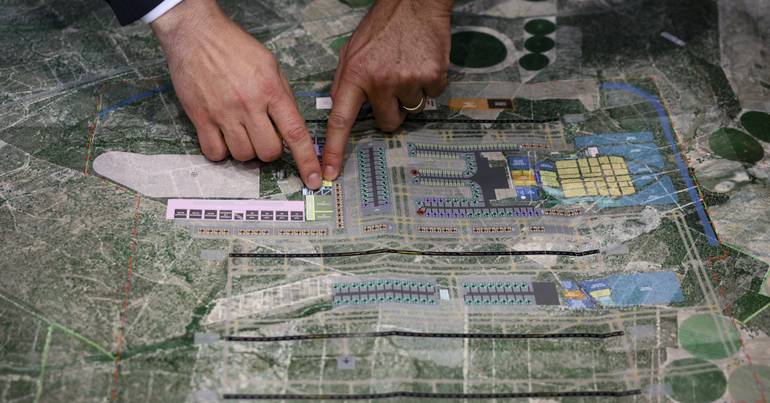
Resposta a relatório da ANA sobre novo aeroporto questiona eliminação de segundo terminal de passageiros para acolher expansão e existência de uma única pista preparada para aviões de maior dimensão.
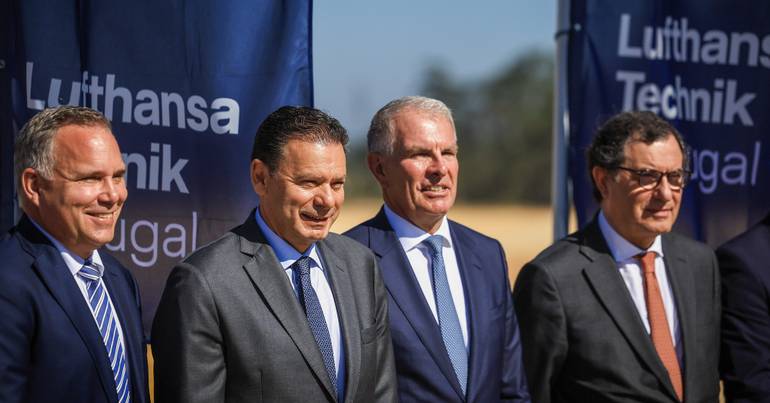
Quer o Governo, quer a Lufthansa reconhecem que a oferta feita para a compra da totalidade da TAP não é, nem pode ser, vinculativa. Receita com venda de 49,9% cobre menos de 40% da injeção pública.
Il vicesegretario di Stato all'inviato per le partnership globali: «Non hai alcuna autorità sulla politica estera». E minaccia il licenziamento. Lui: «Non voleva che mi occupassi di fentanyl»
Editora justifica-se com a legislação aprovada pelo Governo britânico que proibe o financiamento do grupo Palestine Action, a quem a autora tinha prometido dar as receitas da venda das suas obras.
"Fiz todos os esforços para ser honesta com o público sobre as minhas convicções e intenções, e estou inteiramente preparada para aceitar as consequências", diz a escritora
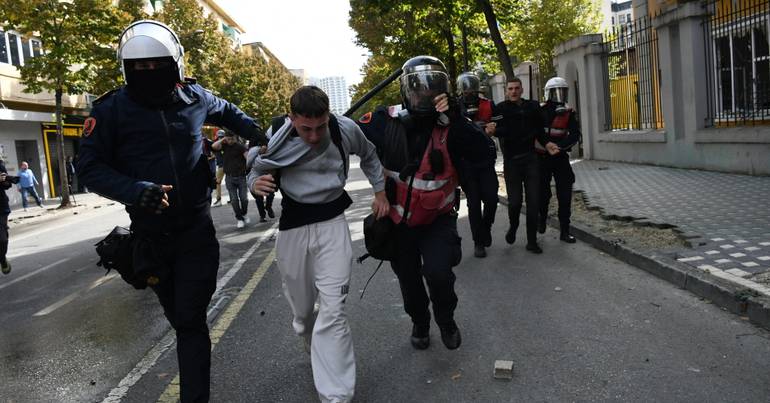
Propinas altas, más condições universitárias e suspeitas de corrupção ligadas a um projeto de Kushner. Os estudantes albaneses já estão nas ruas há três dias. Primeiro-ministro diz que não se demite.
A estimativa de setembro para a produção de grãos em 2026 aumentou 2,4%, para 354,5 milhões de toneladas, na comparação com 2025 (346,1 milhões de toneladas).
Em relação a agosto de 2026, a previsão ficou praticamente estável, com variação de 0,4% – aumento de 1.566.233 de toneladas.
As informações constam do Levantamento Sistemático da Produção Agrícola do Instituto Brasileiro de Geografia e Estatística (IBGE), divulgado nesta quinta-feira (15).
A estimativa da produção de cereais, leguminosas e oleaginosas em setembro de 2026 é recorde para a série histórica do IBGE.
A área a ser colhida está estimada em 83,2 milhões de hectares, aumento de 1,6 milhão de hectares (2%) na comparação com a área colhida em 2025 (81,6 milhões de hectares). Em relação ao mês de agosto de 2026, a área a ser colhida cresceu 143.672 hectares (variação de 0,2%).
Arroz, soja e milho
O arroz, o milho e a soja são os três principais produtos deste grupo que, somados, representaram 93% da estimativa da produção e respondem por 87,3% da área a ser colhida.
Para a soja, a estimativa de produção foi de 175 milhões de toneladas, acréscimo de 5,4% em relação ao ano anterior. A área a ser colhida cresceu 1,3%.
A produção do arroz (em casca) foi estimada em 11,2 milhões de toneladas, queda de 11,4%. A área a ser colhida também diminuiu 12,6%.
Quanto ao milho, a estimativa foi de 143,3 milhões de toneladas (1,6 milhão de toneladas acima de 2025, avanço de 1,1%). A estimativa é de 29,7 milhões de toneladas de milho na primeira safra (alta de 15,5%) e 113,6 milhões de toneladas de milho na segunda safra (queda de 2,0%). A área a ser colhida do milho cresceu 2,5%, sendo 8% no milho primeira safra e 1,1% no milho segunda safra.
Demais grãos
A estimativa de setembro para a produção do trigo em 2026 ficou em 5,9 milhões de toneladas (24% a menos do que em 2025).
A estimativa do algodão herbáceo (em caroço) ficou em 9,5 milhões de toneladas (queda de 3,9%) e a do sorgo em 6 milhões de toneladas (alta de 11%). A estimativa para o feijão é de queda de 6,6% na produção.
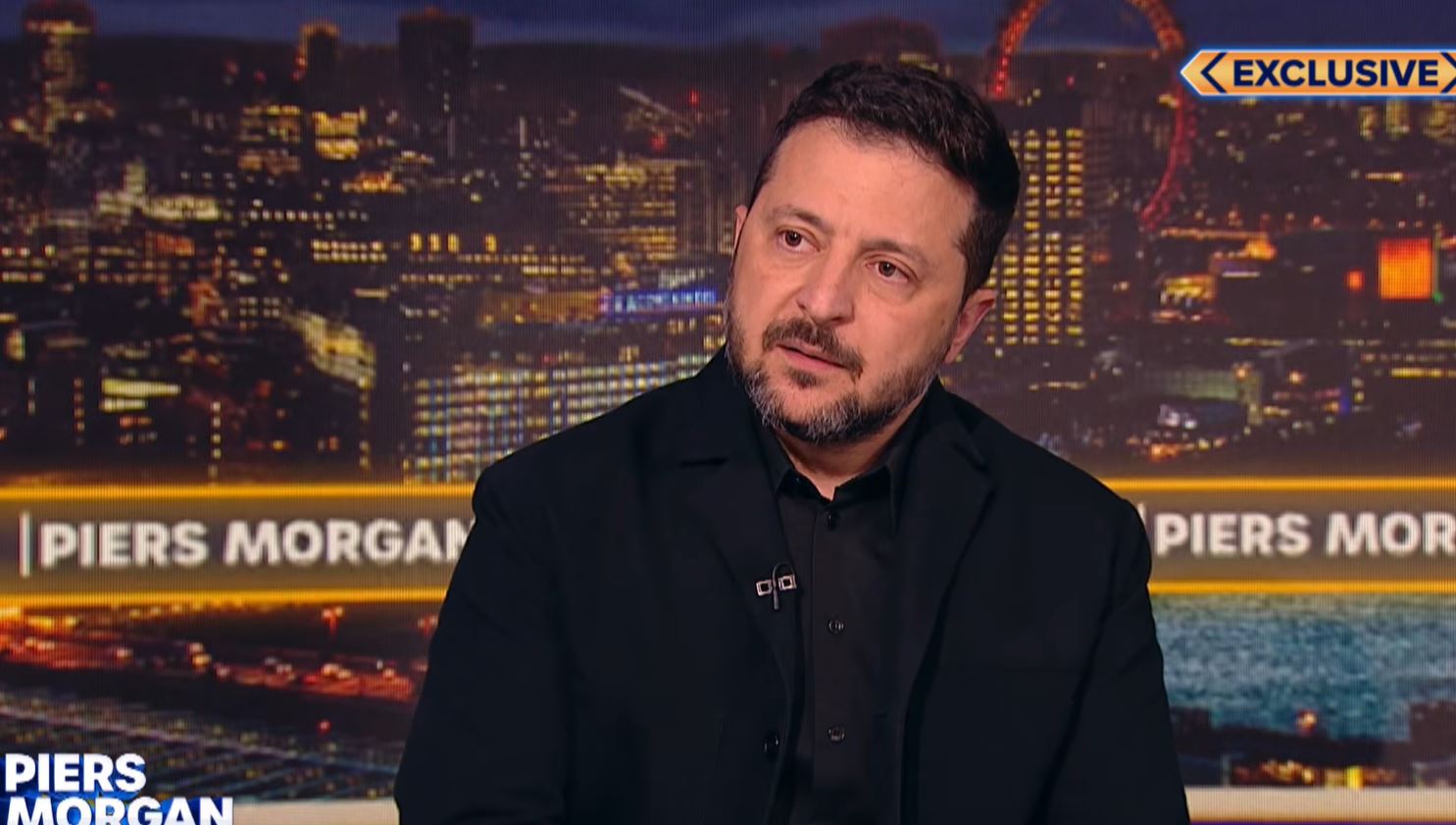
Tech billionaire Elon Musk wrote on X on 15 October: “And so the slaughter continues … Time for Zelensky to go.” Four days earlier, he had posted that Zelenskyy had gone too far, after US President Donald Trump said it was time for Ukraine to get a new president. Asked by Morgan on 14 October whether he would resign, Zelenskyy said he would not: “It’s my responsibility.”
Musk’s post comes as Washington squeezes Kyiv instead of Moscow: Ukraine’s military satellite links slowed, US missile warnings went missing, and the US threatened to cut intelligence unless Kyiv stops hitting Russian refineries.
Land and elections
Zelenskyy said elections could not be held under constant Russian attack: “From the point of security, you can’t do elections.”
Of any future president, he said: “I’m sure the new man or woman will defend our country.” He also reminded Trump that Crimea and parts of Donbas were already occupied when he took office, under another president, long before the full-scale invasion.
“I’m a realist, and I understand that people are more important than one kilometer or two kilometers. It’s not about kilometers. It’s about land and homes,” he told Morgan.
Zelenskyy has said Ukraine is ready for elections if a full 60-day ceasefire is in place. Numerous sources told The Atlantic that Trump sees Zelenskyy as the main obstacle to a peace deal and related business deals with Russia. One Trump adviser said he is also an obstacle to Trump’s hopes for the Nobel Peace Prize.
Starlink
Ukrainian forces reported restrictions on Starshield, the SpaceX satellite system they use for battlefield communications and drone operations, and Zelenskyy warned the decision would cost lives. On 14 October, Musk said Starshield is owned and controlled by the US government, which sets its limits, and that commercial Starlink cannot be used for offensive military action. Zelenskyy told the FT he did not know whether the decision was SpaceX’s or the US government’s, adding: “I think it’s about SpaceX.” A senior US official told Axios the Trump administration had nothing to do with the restrictions.
Intelligence and refineries
On two consecutive nights, air raid alerts in Kyiv sounded only after Russian ballistic missiles were already approaching or striking the capital. Zelenskyy said Ukraine received no warning from partners of the launches on 12 and 13 October, which hit civilian infrastructure and a major power plant. A Ukrainian official told CNN the loss of intelligence “will give Russians a real leverage on a frontline.” A European official questioned Washington’s explanation that weather caused the gaps in missile warnings. Trump denied halting intelligence sharing.
Washington had warned it could suspend intelligence sharing if Ukraine kept striking Russian refineries, Axios reported. A US official disputed that any explicit threat was made. Sources told CNN the US had also threatened to halt European purchases of US weapons for Ukraine. Zelenskyy told the FT the warning came through military channels.
To lower energy costs before next month’s midterm elections, Trump has pressed Kyiv to stop refinery strikes, CNN reported. Zelenskyy said he felt betrayed after Trump announced a diesel supply deal with Russia. On 14 October in London, he told the FT that Ukraine would resume strikes on Russian oil refineries.
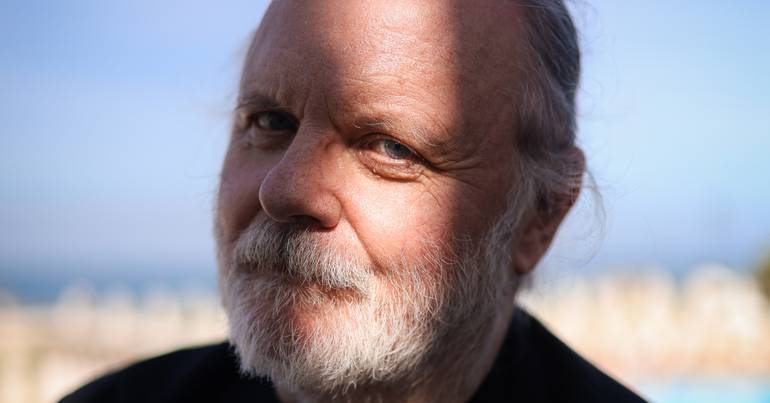
O Nobel da Literatura de 2023 esteve em Portugal para participar no Fólio. Em entrevista ao Observador, falou sobre a música que abandonou, Rothko, a IA e o medo de se tornar uma "estátua".
Ukrainian officials contacted the White House, CIA, and Pentagon after the restrictions, which Ukraine says affected both Starlink and Starshield, Axios reported on 14 October. A senior US official told Axios the Trump administration had nothing to do with the restrictions. On the same day, Elon Musk said on X that Starshield systems are owned and controlled by the US government, and that any speed or usage limits are decided by the US military and ultimately the president.
The restrictions could affect Ukraine’s ability to intercept Russian attack drones and carry out mid-range strikes against Russian forces and military targets in occupied Ukrainian territories. A speed cap of 160 km/h was insufficient to intercept some jet-powered drones, an unnamed Ukrainian official told Axios. Ukrainian officials told Axios they suspect SpaceX imposed the restrictions to pressure Kyiv to accept US President Donald Trump’s demand to stop striking Russian oil refineries, though the motive remains unconfirmed. But Starlink does not work inside Russia, and the drones attacking Russian oil facilities use other communications systems, according to Reuters.
What Musk and the White House said
Musk did not directly address the throttling, Axios noted. Starlink, he wrote, “is a commercial service owned and controlled by SpaceX,” limited to civilian or defensive use.
White House officials told the Ukrainians they don’t have control over SpaceX, two sources told Axios. One said the administration would reach out to SpaceX to figure out what happened. The White House did not immediately respond to Axios’s request for comment.
How the cap disrupted drone missions
Presidential adviser Serhii Beskrestnov said on 14 October that SpaceX had imposed a 160 km/h limit on Starshield’s “military package” overnight without warning. Ukraine’s 7th Rapid Reaction Corps said mid-range strike drones must reach high speed quickly and that an unstable connection “will make it impossible to launch such aircraft or use them as intended.” One unit on the Huliaipole front had to cancel some missions, the corps told Novynarnia.
Explore further
Ukraine is going back to hitting Russian oil after its Trump-pressured pause, during which Kyiv got no US warnings of incoming ballistic missiles
Ukrainian officials told Axios the system turned off when drones exceeded 160 km/h, and sometimes 80 km/h, before service was partially restored on 14 October. The Defense Ministry said SpaceX continues to restrict Starlink to 160 km/h and that it remains in communication “with partners and SpaceX regarding stable service conditions and the prevention of sudden restrictions,” Axios reported.
A diesel deal
The restrictions followed Trump’s 9 October deal with Russian President Vladimir Putin easing sanctions on Russian diesel. A day later, Trump told reporters: “We said you could do whatever you want to Russia, don’t hit the refineries,” the Kyiv Independent reported.
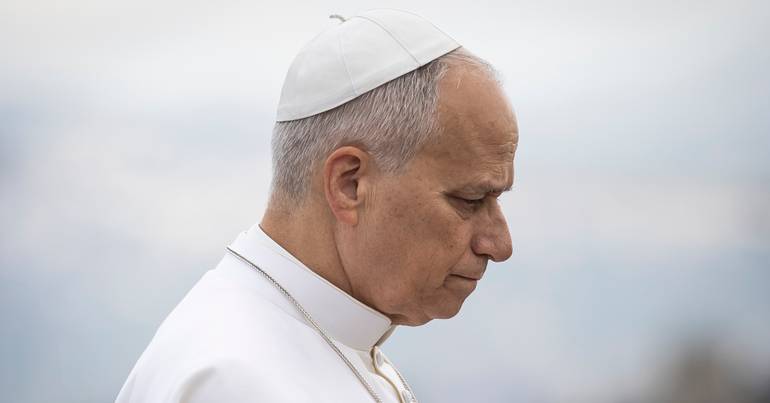
Vaticano confirma que Leão XIV, de 71 anos, operado terça-feira, passou bem a segunda noite após a cirurgia. Resultados de exames realizados esta manhã estão "dentro da normalidade", dizem médicos.
Nuova linea del presidente americano Donald Trump sul Venezuela. Dopo una campagna rigida contro la dittatura chavista, il Dipartimento del Tesoro ha sorpreso l’opposizione venezuelana e la comunità internazionale con una decisione senza precedenti. Ieri è stato notificato il ritiro di Jorge Rodriguez, presidente dell’Assemblea Nazionale del Venezuela e fratello della nuova leader del regime, Delcy Rodriguez, dalla lista di persone sanzionate, per cui l’uomo forte della dittatura potrà accedere di nuovo al sistema finanziario americano.
La misura è stata pubblicata dall’Office of Foreign Assets Control, che gestisce i beni stranieri, ma non sono stati spiegati i motivi di questa importante decisione. La scelta di alleggerire la posizione contro alcuni rappresentanti della dittatura venezuelana farebbe parte del riconoscimento del governo americano della gestione di Delcy Rodriguez e del piano di tre fasi per la stabilizzazione e transizione democratica del Venezuela.
Fino a ieri, il fratello di Delcy aveva beni e conti bloccati e non poteva fare business con cittadini americani. Le sanzioni per i Rodriguez sono cominciate nel 2018. Ad aprile sono state ritirate per Delcy e ieri per Jorge.
Rodríguez è uno dei personaggi più conosciuti del regime socialista, già dai tempi di Hugo Chavez, di cui era amico personale, ed è uno dei leader della delegazione chavista nei dialoghi con l’opposizione guidati dall’amministrazione americana. È stato rappresentante del presidente Nicolas Maduro nei negoziati (fallimentari) del 2017, 2019, 2021 e 2022, e anche nel dialogo con gli Usa nel 2024 e nel 2025.
Negli ultimi mesi ha promosso riforme per favorire la relazione con gli Stati Uniti, tra cui la Legge Energetica, anche se in passato lo aveva accusato di ingerenza e violenza contro il popolo venezuelano.
L’opposizione venezuelana lo considera il padre di molte normative che hanno eroso il sistema democratico del Paese sudamericano. Ed è d’accordo anche un report della Missione Internazionale Indipendente delle Nazioni Unite che lo identifica come l’artefice dell’approvazione “nuove leggi restrittive dello spazio civico e democratico senza alcun dibattito genuino e democratico”.
While presidents of both parties have long rewarded donors and allies with plum ambassadorships, Trump has chosen loyalists willing to go to bat for him regardless of the implications for US-foreign relationships.
Companhia alemã estima em 450 milhões de euros as sinergias obtida com a participação minoritária na TAP. Maioria dos ganhos é gerada na empresa portuguesa e devolvidos via dividendos à Lufthansa.
Dados mostram que os encargos com habitação são um "amplificador persistente" da pobreza. Famílias monoparentais e novas gerações são as mais afetadas.
Partido de André Ventura cola-se aos socialistas na frente das intenções de voto no mais recente barómetro da Intercampus. PS segue na frente, com 22,5%. Mas há um empate técnico a três.

 Login