❌

Reading view

No 10 leaves option open to impose Chinese EV tariffs if UK joins EU scheme

Beijing warns against ‘discriminatory’ step after France drops opposition to British role in Made in Europe package

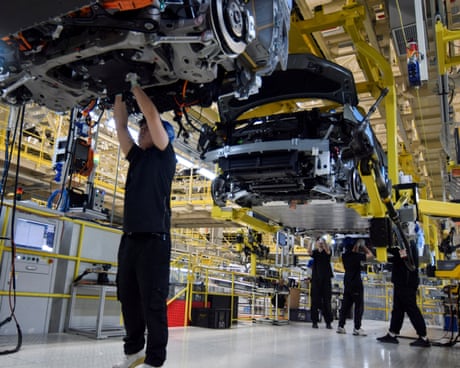
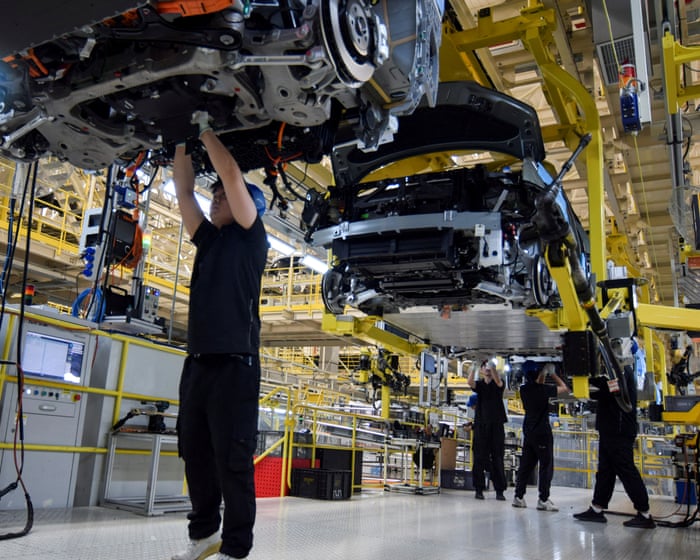
No 10 has left the door open to imposing tariffs on Chinese-made electric vehicles as part of the Made in Europe package, prompting a warning from Beijing that such a move would be “discriminatory”.

Downing Street said on Friday that it would “welcome the objective to have the UK included in the Industrial Accelerator Act” after France dropped its opposition to Britain joining the scheme.

Continue reading...

© Photograph: Nick Carey/Reuters

© Photograph: Nick Carey/Reuters

© Photograph: Nick Carey/Reuters

  •  

Presumptive D.C. Mayor Janeese Lewis George Demands Halt to Waymo Legalization To Protect Drivers' Jobs

Janeese Lewis George | Illustration: Romuald Meigneux/SIPA/Newscom/Council of the District of Columbia

Janeese Lewis George, a D.C. councilmember and the city's presumptive next mayor, has come out against pending legislation that would allow autonomous ride-share vehicles onto city streets, citing the technology's potential to eliminate the jobs of ride-share human drivers. 

"DC is facing a jobs crisis. Rushing the legalization of autonomous vehicles is irresponsible given the anticipated AI-related job displacement and disruptions that put countless workers at risk," she said on X yesterday.  

DC is facing a jobs crisis.

Rushing the legalization of autonomous vehicles is irresponsible given the anticipated AI-related job displacement and disruptions that put countless workers at risk.

— Janeese Lewis George (@Janeese4DC) October 15, 2026

In a follow-up post, she said that the D.C. Council should delay consideration of a pending bill that would allow Waymo, which is currently testing its technology with human safety operators on District streets, to offer autonomous rides to the public.  

Ever since Lewis George won a commanding victory in D.C.'s Democratic mayoral primary earlier this year, pundits and wonks have been trying to read the tea leaves on how the Democratic Socialist will govern. 

D.C.'s economy is currently in a rough spot. Unemployment is high. The housing market is down. Population growth is slowing.  

Lewis George's comments about Waymo suggest the mayor has a deeply mistaken view about the effects and benefits of technological innovation. Contrary to her contention, Waymo legalization is unlikely to exacerbate a "jobs crisis" for at least three reasons. 

The first reason she's wrong is that very few D.C. residents work full-time as ride-share drivers. On her Capital Commonsense Substack, Ashley Schapitl reports that, by Lewis George's own estimate, there are only 200 District residents who work full-time as ride-share drivers.

For comparison's sake, the District has a labor force of roughly 400,000 people. So even if Waymo displaced all human drivers in the District, it would be a statistical nonevent. 

Few headlines, for instance, reported that D.C.'s labor force shrank by 1,000 people between May and June. Neither did many outlets report that the labor force grew by roughly 600 people between July and August. 

Yet here the mayor is talking about a "jobs crisis" over what would be an even smaller change in the number of employed workers in the city. 

The second reason not to fear an exacerbated "jobs crisis" as a result of Waymo legalization is that autonomous vehicles (A.V.s) will not completely replace human rideshare drivers in the foreseeable future. 

In the cities where Waymo has been active for years, A.V.s are still responsible for a minority of rideshare rides. 

That's the case in Phoenix, where Waymo has been offering autonomous commercial service since 2020. In an article from April, Business Insider cites one study that put Waymo's market share at 16 percent of ride-share rides. 

In other words, 84 percent of ride-share rides are still being performed by humans a full six years after A.V.s came onto the scene. 

That isn't to say the impacts of A.V.s are necessarily positive for human drivers' earnings.

Another study by Gridwise from August 2025 found that A.V.s appeared to be marginally reducing drivers' hourly pay and number of trips per hour. That's evidence of the market for rides becoming more competitive, but it's not, as of yet, evidence of a job apocalypse. 

Network design matters too. In places like Los Angeles and San Francisco, Waymo is a standalone competitor to traditional ride-share companies like Uber and Lyft. In Austin and Phoenix, Waymo partners with Uber to offer rides on hybrid human-and-A.V. networks. 

A report by EnoTrans, funded by a grant from Lyft, found that the later cities' hybrid networks actually increased human drivers' trips per hour. Their pay-per-hour fell, albeit less steeply than in cities without hybrid networks. 

All of that is to say that while Waymo, as a competitor to human-operated ride-share services, shouldn't be expected to have a positive impact on drivers' earnings. It shouldn't be expected to have a catastrophic impact on them either. 

The third and final reason that Lewis George is wrong to think that Waymo will worsen a coming "jobs crisis" is that Waymo's employment impacts are not limited to its effect on competing human drivers. 

If Waymo earns any market share at all, it'll be because it's offering some travelers a better transportation option than the ones that currently exist. Increased ease of travel within the city would be expected to raise employment levels, not lower them. 

If Waymo makes it easier or cheaper for people to get from home to the office or from the office to their kids' school, they might be more willing to live in D.C. over Arlington or Silver Spring. If it's more convenient to get to the movies or dinner, residents will be more willing to patronize local businesses. 

None of that even touches on the economic and human benefits of Waymo's likely positive impact on road safety. 

The direct effects of Waymo on drivers' employment must be weighed against all the other economic activity that autonomous vehicles will facilitate. 

In the long run, the economic effects of autonomous vehicles may well be revolutionary. In the foreseeable future, they'll make the market for for-hire rides slightly more competitive. 

A reasonable assumption then is that Waymo will have a modest, but positive, impact on overall economic activity and employment in the District, even if it has a modest, but negative, impact on the small number of full-time ride-share drivers who live here. 

If the new mayor can't even tolerate that level of economic disruption, that does not portend good things for D.C.'s economy under a Lewis George administration. 

The post Presumptive D.C. Mayor Janeese Lewis George Demands Halt to Waymo Legalization To Protect Drivers' Jobs appeared first on Reason Magazine.

  •  

British food and drink exports to EU collapse by more than a third since Brexit

NFU analysis of official data shows falls in exports to UK’s largest trading partner since 2019 include 70% for sugar and 74% for egg products

Exports of British food and drink to the EU have collapsed by more than a third since Brexit with eggs, chicken and potato producers badly hit, new figures show.

Analysis by the National Farmers’ Union (NFU) of HMRC data shows a sharp fall in exports in the year to July compared with the same period in 2019, with sugar dropping the most, down 70%.

Continue reading...

© Photograph: David Levene/The Guardian

© Photograph: David Levene/The Guardian

© Photograph: David Levene/The Guardian

  •  

UK could quickly re-enter EU with ‘Switzerland plus’ deal, senior MEP says

Bernd Lange, who was involved in Brexit talks, says deal could be negotiated within months of any decision to deepen ties

The UK could re-enter the EU in a “Switzerland plus” package that could be negotiated within months of any decision to deepen ties with the bloc, the head of a European parliament committee has said.

Bernd Lange, who was heavily involved in Brexit negotiations, said: “I would love to see the UK back.” He said the EU missed the UK in decision-making because of its strong history of promoting open markets and democracy.

Continue reading...

© Photograph: Neil Hall/EPA

© Photograph: Neil Hall/EPA

© Photograph: Neil Hall/EPA

  •  

Europe’s Poverty Divide Persists as New Figures Reveal Huge Regional Disparities

Nearly 93 million EU residents were at risk of poverty or social exclusion in 2025, with the latest regional figures revealing sharp differences both between and within member states. The findings raise questions about how effectively European investment is addressing longstanding economic inequality.

More than one in five people living in the European Union remained at risk of poverty or social exclusion in 2025, according to Eurostat figures that reveal substantial differences in living conditions across the bloc’s regions.

Approximately 92.7 million people, representing 20.9 per cent of the EU population, fell into the category during the year. Although the total declined slightly from 93.3 million in 2024, regional data show that economic vulnerability remains heavily concentrated in particular areas.

In 26 of the 243 EU regions for which figures were available, at least 31 per cent of residents were at risk of poverty or social exclusion. At the opposite end of the distribution, 24 regions recorded rates below 13 per cent.

The regional figures published by Eurostat show that the highest rate was recorded in French Guiana, at 54.8 per cent, while Slovakia’s capital region, Bratislavský kraj, recorded the lowest at 2.9 per cent.

National averages conceal substantial differences

The contrast is not confined to richer and poorer member states. In several countries, internal regional disparities are more pronounced than comparisons of national economic performance might suggest.

Within Slovakia, the proportion of people at risk of poverty or social exclusion in Východné Slovensko was 9.1 times the rate recorded in the Bratislava region.

In Italy, the equivalent rate in Calabria was 8.1 times that of Valle d’Aosta, illustrating the persistent economic divide between parts of the country’s north and south.

These differences are recorded in Eurostat’s regional living-conditions statistics, which provide a more detailed picture than EU-wide or national averages.

The comparison requires care. Eurostat’s measure of poverty or social exclusion combines three indicators: relative income poverty, severe material and social deprivation, and very low household work intensity.

Consequently, the figures do not mean that every person included lacks sufficient income to meet basic needs. They identify people experiencing at least one of the defined forms of economic disadvantage.

Differences in income, employment, household composition and living costs can also influence the results, making direct comparisons between metropolitan areas, rural districts and overseas territories more complicated than a single percentage might imply.

Nevertheless, the scale of regional variation illustrates why national economic growth does not automatically produce equivalent improvements in living standards throughout a country.

Poverty reduction remains an EU commitment

The European Union has set a target of reducing the number of people at risk of poverty or social exclusion by at least 15 million by 2030, including at least five million children.

The limited annual reduction recorded in 2025 indicates that progress remains modest relative to the scale of that objective.

The problem has become increasingly important for European policymakers as housing costs, energy prices and employment insecurity affect household finances in different ways across member states.

In May, the Commission presented an anti-poverty and housing policy package, bringing together measures concerning social inclusion, housing exclusion and child poverty.

The regional figures indicate that such initiatives will need to account for considerable differences in local economic conditions.

Policies designed for prosperous urban economies may have limited relevance in regions characterised by low employment, weak infrastructure or dependence on a small number of industries. Conversely, economic activity and relatively high average incomes do not necessarily prevent serious poverty problems within major cities.

Cohesion funding becomes a central question

The findings have direct relevance to negotiations over the EU’s next long-term budget, covering 2028 to 2034.

The European Commission’s proposal envisages roughly €450 billion for economic, social and territorial cohesion under national and regional partnership plans, including at least €218 billion for less developed regions.

The proposed structure would combine several funding programmes within broader national plans, with the Commission arguing that the changes could improve coordination and make spending more responsive to local requirements.

However, regional authorities have expressed concern that greater national control over financial allocations could weaken their influence over investment decisions.

As EU Today reported earlier this week, representatives of European regions have warned that the proposed budget arrangements could concentrate decision-making in national capitals.

The latest poverty statistics provide a concrete context for that disagreement. Investment priorities may differ considerably between a region experiencing industrial decline, an agricultural area with limited employment opportunities and a metropolitan district facing severe housing affordability problems.

A central question for EU institutions is therefore how funding allocations will reflect measurable regional needs rather than being driven primarily by national political negotiations.

The Commission maintains that its proposed partnership arrangements will protect allocations for less developed regions and continue supporting social inclusion.

Negotiations over the financial framework will determine how those commitments are translated into enforceable rules, while Eurostat’s figures provide a statistical basis against which future claims of progress can be assessed.

With 92.7 million people still at risk, the debate is not simply about the overall size of the EU budget. It is also about whether spending reaches the communities where economic disadvantage remains most concentrated.

  •  

Trump calls Ukraine’s renewed strikes on Russian oil refineries ‘a disgrace’

US president says Zelenskyy ‘more difficult ​to deal with ​than Putin’ after ‘energy ceasefire’ collapses

Donald Trump has called Ukraine’s renewed strikes on Russian oil refineries “a disgrace” and criticised Volodymyr ⁠Zelenskyy after an energy ceasefire between Russia and Ukraine failed to take hold.

Ukraine resumed strikes on Russian oil refineries ⁠after Zelenskyy said Kyiv was abandoning a ceasefire unilaterally declared by Trump on Sunday, having briefly halted its attacks to demonstrate its readiness for peace talks. Russia had continued its strikes on Ukrainian power plants.

Continue reading...

© Photograph: Reuters

© Photograph: Reuters

© Photograph: Reuters

  •  

EU Criticises Abbas as Palestinian Elections Are Postponed Until September 2027

Brussels has criticised the Palestinian Authority’s decision to postpone presidential and legislative elections, warning that democratic legitimacy is essential to Palestinian state-building and institutional reform. The delay raises questions about the political conditions attached to substantial European financial assistance.

The European Union has expressed serious concern over the Palestinian Authority’s decision to postpone legislative and presidential elections until September 2027, placing renewed pressure on President Mahmoud Abbas over democratic accountability and the future of Palestinian political institutions.

In a statement issued on 14th October, the EU said it regretted the postponement of legislative elections previously scheduled for 28th November 2026 and a presidential contest expected in early 2027.

Palestinian

The decision extends an electoral impasse that has lasted for nearly two decades. Palestinians last voted in legislative elections in 2006, while Abbas was elected president in January 2005.

The EU’s formal statement called for both contests to be organised as soon as conditions allow, stressing that credible elections are necessary for representative institutions and political accountability.


The intervention is particularly significant because the EU remains one of the Palestinian Authority’s most important financial supporters and has made institutional reform a central element of its approach to Palestinian state-building.

Abbas cites obstacles to holding elections

The postponement was announced through the Palestine Liberation Organisation’s executive structures following consultations over the conditions necessary to conduct voting in Gaza, the West Bank and East Jerusalem.


Palestinian officials have cited restrictions imposed by Israel, continuing insecurity and difficulties involving election materials, observers and access to voting locations.

Israel has disputed the suggestion that it was responsible for preventing the elections from proceeding.

The practical difficulties are substantial. The Palestinian Authority exercises limited administrative control in parts of the West Bank, while Hamas has maintained de facto control over Gaza since 2007, despite subsequent changes in the territory’s security and governance arrangements.

Holding elections across geographically separated territories under different political and security conditions would require agreements extending well beyond the Palestinian Authority’s existing administrative powers.

Those obstacles do not, however, resolve the separate question of democratic legitimacy.

Abbas’s original presidential term expired in 2009, and subsequent extensions of his authority have not been confirmed through a new presidential election. The absence of regular legislative elections has similarly weakened the representative basis of Palestinian governance.

The latest postponement means that Palestinians must wait at least another year for an opportunity to choose their national political leadership.

Brussels links financial assistance to reform

For the European Union, the delay raises questions about the relationship between political reform and financial support.

In April 2025, the European Commission announced a proposed multiannual programme worth up to €1.6 billion for Palestinian recovery and institutional development between 2025 and 2027.

The programme includes approximately €620 million in direct financial support to the Palestinian Authority, alongside assistance for reconstruction, public services and economic recovery.

European officials have repeatedly stressed that part of this support is linked to implementation of agreed reforms, including improvements in public financial management, transparency and administrative accountability.

Those priorities were central to the Brussels donor discussions previously examined by EU Today, where international partners considered how a reformed Palestinian Authority might assume a greater role in Gaza’s future governance.

The election postponement adds a political dimension to those financial arrangements.

The EU’s statement did not announce any suspension of funding, nor did it specify that electoral delays would automatically trigger financial penalties.

Instead, Brussels emphasised that continued assistance to the Palestinian Authority must accompany progress towards institutional reform and the development of credible representative structures.

That distinction matters because European financial assistance also supports public services and civilian needs, which could be affected by reductions in funding unrelated to the conduct of elections.

Elections and the two-state policy

The EU has consistently presented a functioning Palestinian administration as a necessary component of its support for a negotiated two-state settlement.

Its position depends on the existence of institutions capable of representing Palestinians, administering public services, exercising legitimate authority and negotiating internationally.

A prolonged absence of elections complicates that objective, particularly when Palestinian political factions remain divided over leadership and the future organisation of government.

The dispute also affects European discussions concerning Gaza’s reconstruction and its relationship with the West Bank.

Brussels has supported the eventual reunification of Palestinian governance under a reformed administration, but such arrangements face difficulties if the authority expected to assume responsibility lacks a renewed electoral mandate.

In its latest statement, the EU reiterated its willingness to support an eventual election process, including the deployment of an EU Election Observation Mission.

Such missions can provide independent assessments of electoral procedures, but their deployment depends on the necessary political arrangements, security conditions and access.

The European Union’s position now presents Abbas with a specific political demand: to establish conditions under which Palestinian voters can elect both a president and a legislature, rather than allowing temporary postponements to become a permanent substitute for elections.

For Brussels, the immediate question is how to pursue that demand while maintaining assistance to Palestinian institutions and civilians and supporting a diplomatic settlement.

The next test will be whether the Palestinian Authority produces a credible electoral timetable and the administrative arrangements needed to hold the postponed votes in September 2027.

  •  

The inflation conflagration is back and here to stay

Two years ago, central bankers on three continents all but declared victory over inflation. Markets took them at their word, and plenty of investors built their portfolios on the assumption that the price surge of 2022 was behind us. That assumption was wrong, and the consequences are now showing up in almost every major economy […]

The post The inflation conflagration is back and here to stay appeared first on Asia Times.

  •  

Repairing Brexit economic damage should be Burnham’s top priority, business chief says

Shevaun Haviland argues PM is right to revisit Labour’s EU red lines as current trading relationship is bad for business

Repairing the economic damage of Brexit should be the top priority for Andy Burnham as he reconsiders Labour’s red lines on EU membership, the head of one of Britain’s leading business groups has said.

Shevaun Haviland, the director general of the British Chambers of Commerce (BCC), said she welcomed the prime minister reopening the Brexit battle lines despite the uncertainty it could create, arguing that the UK’s current trading relationship with the EU was bad for business.

Continue reading...

© Photograph: Toby Melville/Reuters

© Photograph: Toby Melville/Reuters

© Photograph: Toby Melville/Reuters

  •  

Ukraine war briefing: Starlink access restored, says UK’s Streeting after Hegseth meeting

UK defence secretary says Pete Hegseth assured him satellite communications system back up and running in Ukraine. What we know on day 1,696

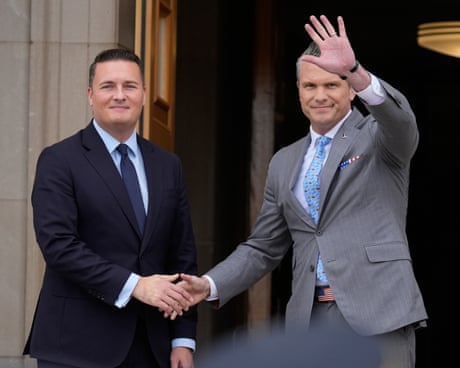
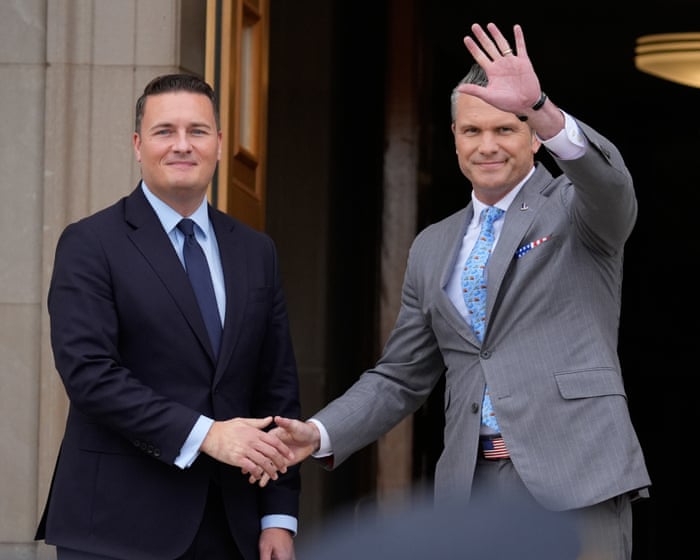
Ukraine’s access to Elon Musk’s Starlink had been restored, according to UK defence secretary Wes Streeting. Ukraine said Starlink services had been restricted on Wednesday, hampering the country’s attack and air-defence drone missions, and triggering a new rift between Washington and Kyiv. On Thursday, Streeting said his US counterpart, Pete Hegseth, had assured him in a face-to-face meeting that the vital satellite communications system was back up and running. He said it was unclear what had caused the disruption, but added: “This is not the first time we’ve seen a falling out between Washington and Kyiv.”

The order to limit Starlink access came from inside the White House, according to a report by Reuters, citing two US officials and a western official briefed on the matter. The ⁠officials said leaders at the defence ⁠department received a message that the service for the Ukrainian military needed to be slowed. The officials, who spoke on the condition of anonymity, did not specify who in the White House made the decision or who was responsible for implementing the order. The Pentagon is the biggest customer of Starshield, which ⁠is the military-grade version of the Starlink service.

Amid growing doubts about long-term US commitment to Ukraine, Ukrainian president Volodymyr Zelenskyy met Nato chief Mark Rutte in Brussels and held a string of bilateral meetings with European leaders before he was set to join an EU summit on Friday. French president Emmanuel Macron on Thursday said it was “crucial” that Ukraine receive “all the means necessary to protect itself” after meeting Zelenskyy. “I can reassure you, dear Ukrainian friends and President Zelenskyy: YOU ARE NOT ALONE,” Polish prime minister Donald Tusk posted online.

Vladimir Putin has said that recent ⁠Ukrainian ​strikes on Russian oil refineries had not caused significant ⁠damage and vowed that Moscow would respond. “They ⁠hit here and there. Nothing ​particularly significant. Nevertheless ‌they are ‌carrying on,” the Russian president was quoted as saying by the Interfax news agency. His comments ‌came after a major Ukrainian drone attack ignited a fire at an oil refinery in Russia’s Ryazan region on Thursday morning, according ‌to the regional governor. It was the first confirmed ​Ukrainian attack on a Russian energy facility since US president Donald Trump abruptly declared an “energy ceasefire” that neither Russia nor Ukraine said they had agreed to.

The US treasury department has extended a sanctions waiver on Russian oil company Lukoil for service stations outside Russia through April 2027. Thursday’s announcement allows Lukoil-branded stations in countries like the US to continue serving customers until 24 April next year. The extension comes a week after Trump said he had secured an agreement with Russia to supply diesel to American and global markets, with the US treasury issuing a temporary licence to enable flows. The latest licence, like an earlier one, does not allow the “transfer of funds to any person or account located in the Russian Federation”.

Three people were killed and six others injured after the Kirovohrad region of central Ukraine came under a Russian drone attack lasting more than 10 hours, Ukraine’s emergency services said Thursday. Between midnight and Thursday morning, Russia launched more than 850 drones at Ukraine, Zelenskyy said on X. He added that the barrage came “precisely at a time when the speed of our defensive capabilities is being artificially restricted,” an apparent reference to the Starlink restrictions on drones. Russian aerial attacks hit 15 Ukrainian regions, he said.

Continue reading...

© Photograph: Reuters

© Photograph: Reuters

© Photograph: Reuters

  •  

Wes Streeting urges US to back Ukraine on Washington visit after Starlink row

UK defence secretary says he has been ‘reassured directly’ counterpart Pete Hegseth that Starlink system has been restored as he seeks to cool tensions

Wes Streeting urged the US to stand by Ukraine on his visit to the American capital and sought to cool tensions between the two countries in the wake of the Starlink row that is threatening to set back Kyiv’s war effort.

The British defence secretary, giving a speech before a meeting with his US counterpart, Pete Hegseth, argued that supporting Ukraine was in the long-term interests of Washington, and a business opportunity.

Continue reading...

© Photograph: Manuel Balce Ceneta/AP

© Photograph: Manuel Balce Ceneta/AP

© Photograph: Manuel Balce Ceneta/AP

  •  

The Federal Government Collected $5.4 Trillion. It Still Can't Pay Its Bills.

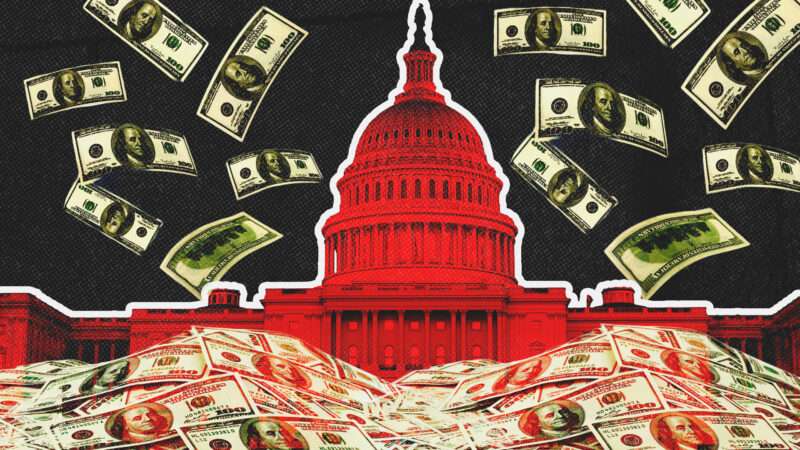
U.S. Capitol in red as money falls around it | Illustration: Nikolai Sorokin/Songquan Deng/Dreamstime

The federal government just closed fiscal year 2026 with a deficit of nearly $2 trillion, according to figures the Congressional Budget Office (CBO) released last Thursday. Only the two pandemic years of 2020 and 2021 were worse. Today, though, there is no recession and no emergency. These enormous budget deficits are the new normal.

The usual response to a deficit warning is that the government just needs more money. It doesn't. Thanks to the remarkable strength of the private sector, federal revenue rose by 3 percent, to more than $5.4 trillion, over the fiscal year. But spending rose by 6 percent, reaching $7.4 trillion.

Some will blame the Supreme Court for striking down most of President Donald Trump's tariffs and forcing the government to issue refunds. But even if Washington had kept the $130 billion in illegal levies, it would cover less than one-tenth of the gap. Tariffs were never a serious revenue source at our insanely high level of spending.

Look at where the money went. Spending on the three main entitlement programs—Social Security, Medicare and Medicaid—grew by 7 percent. That's faster than total spending growth. Defense grew by 5 percent. Interest on the debt rose by 11 percent, exceeding $1.1 trillion. That last figure is the bill for every earlier year of borrowing—years when Washington was sending clear signals that it isn't serious about fiscal responsibility.

If you want to see where such irresponsibility can lead, look at France. The country that big spenders from Paul Krugman to Sen. Bernie Sanders (I–Vt.) have cited as proof that big government is viable and full of upsides is now on the brink of a serious crisis. France's debt equals 120 percent of its gross domestic product (GDP), and interest payments are rising quickly. Slow growth and social unrest aren't helping.

The U.S., of course, has some advantages that France doesn't, largely because we're a country of innovators with a private sector unmatched at creating wealth. Nonetheless, debt that is swelling out of control should still worry us. First, the same anti-wealth and anti-growth forces that brought France to where it is now are gaining popularity here. Second, we too will see debt reach 120 percent of GDP in a few years, and our interest payments are already consuming an alarming share of resources.

A wise Congress would put us on safer footing if only because debt raises interest rates for everyone, from homebuyers to small businesses. This operates as a drag on growth, and hence on wages. In other words, controlling debt should be part of an affordability agenda in the same way as streamlining regulation.

When legislators decide to take affordability seriously, I recommend looking at a September Advancing American Freedom (AAF) report on this topic. Its section on fiscal restraint offers a useful menu of reforms, including targeting the programs that most drive the debt.

Start with Social Security. Under current law, benefits will be cut by roughly 20 percent when the program's trust fund runs dry in the early 2030s. Nobody believes Congress will actually let that happen, but we'd better hope its answer isn't to double down by borrowing the difference between payroll taxes and benefits.

Nor are tax increases an option. The payroll tax meant to fund entitlements is now 12.4 percent of wages. It began at 2 percent when Social Security was first rolled out. It is also the most burdensome tax for many Americans. Enough already. The fixes AAF fellow Rachel Greszler proposes are worth considering: Index the retirement age to life expectancy, use an accurate inflation measure for cost-of-living adjustments, and move gradually toward a flat universal benefit that protects lower-income retirees while ending Social Security's de facto welfare for the wealthiest.

Next is Medicare. More than 40 percent of its financing already comes from general revenue rather than from payroll taxes. The report recommends converting the program to premium support, giving beneficiaries a fixed contribution to spend on traditional Medicare or on competing private plans. It would also raise the eligibility age to 67, matching Social Security, and trim subsidies for well-off seniors. That's a start.

As for Medicaid, the problem is one of pricing. And yet competition based on price—the best cost-control tool—has never been seriously tried. Washington covers 90 percent of the cost of states' expanded Medicaid programs for adults. A state can buy a dollar of spending with just a dime of its own money. Changing the states' incentives would be key here. Implementing risk-adjusted per-capita caps, through which the federal government would give states a fixed amount per enrollee, would do just that. States would pay for their own inefficiencies or would be able to use every dollar they save by becoming more efficient.

The same logic supports returning more welfare programs to states, starting with the federal share of the Supplemental Nutrition Assistance Program. State governments have to balance their budgets in some form.

None of these reforms are painless. But the alternatives will prove far more painful. The U.S. will either continue paying a slow, unlegislated tax called inflation or face a fast, ugly fiscal crisis when bond buyers stop giving Washington the benefit of the doubt.

COPYRIGHT 2026 CREATORS.COM

The post The Federal Government Collected $5.4 Trillion. It Still Can't Pay Its Bills. appeared first on Reason Magazine.

  •  

The 3rd Circuit Upholds the Gun Rights of a Man Who Committed a Nonviolent Misdemeanor 2 Decades Ago

a pistol rests on a padlocked constitution | Luminis/Dreamstime/Midjourney

Thanks to a 2005 DUI conviction in Pennsylvania, Edward Williams permanently lost the constitutional right to keep and bear arms. But he did not realize that until a decade later, and his confusion on that point is understandable.

The federal law that stripped Williams of his Second Amendment rights is commonly described as applying to "felons," and Williams' offense was a misdemeanor. But although his sentence did not include any time behind bars, his crime theoretically could have sent him to prison for up to five years. That was enough to trigger 18 USC 922(g)(1), which covers anyone convicted of "a crime punishable by imprisonment for a term exceeding one year."

When a lawyer alerted Williams to that wrinkle, which made his continued ownership of firearms a federal felony, he got rid of his guns. But he did not think that requirement was fair, reasonable, or constitutional, and this week a federal appeals court agreed. The U.S. Court of Appeals for the 3rd Circuit recognized a historical tradition of disarming "physically dangerous individuals" whose possession of firearms would pose a threat to public safety. But it said Williams plainly does not fit into that category.

"The federal government spent nearly a decade trying to permanently disarm a peaceable man over a nonviolent misdemeanor—and it lost bigly," says Brandon Combs, president of the Firearms Policy Coalition, which supported Williams' lawsuit. "The government does not get to turn a nonviolent conviction into a lifetime ban on exercising a constitutionally protected right."

The 3rd Circuit's en banc decision in Williams v. Attorney General affirms a 2023 ruling by a federal judge who likewise concluded that disarming Williams was unconstitutional. It elaborates on the logic of Range v. Attorney General, a 2023 decision that restored the gun rights of a Pennsylvania man who had been convicted of food stamp fraud. In both cases, the 3rd Circuit held that applying Section 922(g)(1) to the plaintiffs was not "consistent with this Nation's historical tradition of firearm regulation"—the Second Amendment test established by the Supreme Court's 2022 decision in New York State Rifle & Pistol Association v. Bruen.

Writing for the majority in Williams' case, 3rd Circuit Judge Paul Matey acknowledges that the Supreme Court has described "longstanding prohibitions on the possession of firearms by felons" as "presumptively lawful." But "those longstanding customs restricted the violently dangerous (within which some felons would be included), not felons writ large," he says. "Felons were restricted because they posed a physical danger, rather than for their offense of conviction."

Matey argues that "focusing on physical dangerousness corrects the erroneous argument" that "only law-abiding and responsible citizens can exercise the rights protected by the Second Amendment"—a claim that the Supreme Court rejected in the 2024 case United States v. Rahimi. "We find no history that supports disarming irresponsible people, where 'responsible' is defined by the whim of the sovereign or the will of the majority," he says, alluding to the danger of allowing legislators to whittle away at the Second Amendment by criminalizing an ever-widening range of conduct.

Matey emphasizes "the novelty of forever restricting all felons from possessing firearms for lawful purposes." The original restriction, which Congress approved in 1938 as part of the Federal Firearms Act, applied only to violent crimes such as murder, manslaughter, rape, kidnapping, robbery, and assault with a deadly weapon. In 1961, Congress expanded the ban to cover nonviolent crimes punishable by more than a year in prison.

Williams' 2005 DUI conviction qualified for two reasons. He had a prior DUI conviction, stemming from a 2000 arrest in State College. And when he was arrested again in Philadelphia four years later, his blood alcohol concentration was a whopping 0.223 percent. That made his second offense a first-degree misdemeanor, which carries a maximum prison sentence of five years.

Since then, Williams has stayed out of trouble. "He has done nothing violent, let alone dangerous, for over twenty years, and has held steady employment at the same job for over three decades," Matey notes. Williams drinks only occasionally, and a psychological evaluation found he "has a normal personality, without psychopathology and without addiction or violent tendencies."

The Justice Department nevertheless argued that Williams' continuing disarmament is consistent with the Bruen test, which requires historical analogs that are "relevantly similar" in motivation and scope. In making that case, the government relied mainly on early laws aimed at "habitual drunkards"—the same analogy that the Supreme Court unanimously rejected last June in United States v. Hemani, which involved the federal ban on gun possession by "unlawful" drug users.

Although the Justice Department "acknowledges it may proscribe Williams's possession of firearms only if he 'presently poses a physical danger if armed,'" Matey says, it "offers no evidence to establish this as the aim of the habitual drunkard laws." Those laws, the Supreme Court noted in Hemani, "did not seek to protect the public from violence so much as to protect habitual drunkards from themselves and their families from financial devastation."

Nor did the habitual drunkard laws permanently disarm people, as Section 922(g)(1) does. "Most statutes capped the commitment of habitual drunkards to the state inebriate asylum, prison, or hard labor to a few months or years," Matey notes. "Others provided for an indefinite period of incarceration, but had no indication that upon release individuals continued to forfeit their arms. Rather, once someone was 'safe' to 'go at large,' they were restored to the status of a full rights-bearing citizen."

Contrary to the considerations that the Supreme Court deemed relevant in Hemani, Matey says, the Justice Department "fails to show that Williams threatens to 'misuse[] a gun while intoxicated,' or that he 'poses a danger to himself or others as a result' of
alcohol abuse. In fact, much like those nineteenth-century drunkards released from custody and restored their rights, the record shows that Williams poses no present physical danger from the use of a firearm, or anything else."

The 3rd Circuit is one of three federal appeals courts that have allowed people with nonviolent felony records to argue that Section 922(g)(1) is unconstitutional as applied to them. But such challenges have been blocked in six circuits, notwithstanding compelling historical evidence that the law reaches much farther than the Second Amendment allows. So far, the Supreme Court has declined to accept any of the many petitions asking it to resolve that circuit split.

The post The 3rd Circuit Upholds the Gun Rights of a Man Who Committed a Nonviolent Misdemeanor 2 Decades Ago appeared first on Reason Magazine.

  •  

Così Pechino gioca d’anticipo sulla nuova frontiera delle neurotecnologie

Di recente, un ospedale di Shanghai ha impiantato un’interfaccia cervello-computer (brain-computer interface, Bci) per aiutare un paziente con una lesione del midollo spinale a recuperare il movimento della mano. L’intervento è stato eseguito nell’ambito della pratica clinica ordinaria, e non di una sperimentazione clinica, dopo che Pechino ha recentemente approvato l’impiego commerciale del dispositivo Bci invasivo: una prima assoluta per la Cina e a livello mondiale. Sviluppato dalla Neuracle medical technology di Shanghai, il dispositivo ha consentito a 32 pazienti di recuperare l’uso delle mani. È un segnale di quanto la Cina consideri strategica questa tecnologia di frontiera e rappresenta una tappa significativa nel campo delle neuroprotesi, dove l’approvazione delle Bci per l’impiego sui pazienti richiede generalmente anni.

La strategia cinese per la leadership globale

Una delle ragioni alla base dell’approvazione del dispositivo risiede nella sua progettazione relativamente meno invasiva, che comporta rischi inferiori rispetto a soluzioni concorrenti come N1 di Neuralink. Il sistema consiste in un elettrodo delle dimensioni di una moneta, posizionato sopra la membrana protettiva del cervello, che rileva i segnali generati quando il paziente immagina di compiere determinati movimenti. Questi segnali vengono quindi trasmessi in modalità wireless a un guanto robotico. N1 di Neuralink, al contrario, viene impiantato direttamente nella corteccia per registrare l’attività neurale, con un rischio maggiore di emorragie e cicatrici gliali. È proprio questo compromesso tra capacità e invasività a spiegare perché la maggior parte delle Bci sia ancora in fase sperimentale.

La Cina si sta muovendo rapidamente in questo settore nascente, con l’obiettivo di diventare un leader globale negli impianti cerebrali entro il 2030. Un forte sostegno governativo e consistenti finanziamenti stanno contribuendo ad accelerarne lo sviluppo. Altre Bci, infatti, sono attualmente in fase di approvazione. Tra queste c’è Beinao-1, un dispositivo minimamente invasivo che sarà testato negli ospedali il prossimo anno. Oltre 30 ospedali in tutta la Cina dispongono ormai di unità dedicate alle interfacce cervello-computer, mentre le applicazioni si stanno estendendo anche alla cura delle malattie neurodegenerative e dei disturbi psichiatrici. Anche la propensione dei consumatori ad adottare nuove tecnologie sta accelerando la diffusione su larga scala delle applicazioni, mentre in Europa la sperimentazione di tecnologie sul cervello umano suscita ancora preoccupazioni nell’ambito degli studi clinici.

L’Europa tra eccellenza scientifica e ritardi industriali

L’Europa vanta eccellenze mondiali nella ricerca, soprattutto nel campo delle Bci non invasive, ma è in ritardo nello sviluppo dei prodotti. Svizzera, Germania e Spagna ospitano, infatti, un numero significativo di aziende attive nel settore, tra cui MindMaze, CorTec e InBrain Neuroelectronics. L’Europa registra comunque progressi anche sul piano clinico: lo scorso anno, a Monaco di Baviera è stato realizzato il primo impianto Bci in Europa su un paziente affetto da tetraplegia, mentre CorTec ha impiantato il dispositivo in un terzo paziente nell’ambito della propria sperimentazione sulla riabilitazione motoria dopo un ictus. L’ecosistema europeo delle Bci resta tuttavia indietro rispetto a quelli cinese e statunitense. Alcune aziende europee stanno completando sperimentazioni cliniche negli Stati Uniti, dove i percorsi regolatori e i finanziamenti destinati agli impianti cerebrali sono più consolidati. La Food and drug administration statunitense, ad esempio, è più preparata per approvare le sperimentazioni sulle Bci rispetto all’Europa. Tra le aziende statunitensi, Synchron, Neuralink, Paradromics e Precision Neuroscience figurano da anni tra le principali protagoniste dello sviluppo di queste interfacce. Un’altra società americana, Axoft, ha avviato una collaborazione con un’azienda cinese e un ospedale di Shanghai per sperimentare la propria Bci su quattro pazienti, in un raro esempio di cooperazione tra Stati Uniti e Cina nel campo delle neurotecnologie.

Un mercato in crescita

Sebbene la tecnologia abbia compiuto progressi, le applicazioni pratiche restano al momento limitate. L’impianto di Bci, siano esse invasive o non invasive, è ancora circoscritto a determinate categorie di pazienti, e le sfide tecniche rimangono rilevanti. La raccolta e l’interpretazione dei segnali neurali costituiscono ancora un ambito scientifico in una fase iniziale di sviluppo. Il potenziale trasformativo, tuttavia, è enorme, con un mercato globale che, secondo le proiezioni, dovrebbe crescere dai 2,8 miliardi di euro del 2026 a oltre 9 miliardi di euro entro il 2034. I decisori politici europei devono perciò sostenere gli operatori locali e aiutarli a crescere, intervenendo al tempo stesso sulla definizione degli standard prima che Stati Uniti e Cina arrivino a dominare il mercato.

La partita sugli standard

La Cina, dal canto suo, sta cercando di definire vocabolari globali, formati dei dati e architetture di riferimento attraverso l’Organizzazione internazionale per la normazione e l’Unione internazionale delle telecomunicazioni. Pechino ha inoltre già introdotto nel 2025 una terminologia sulle Bci destinata all’uso interno. Esponenti dell’industria, come la China pharmaceutical innovation and research development association (Phirda), stanno sollecitando la Cina a trasformare il proprio vantaggio in valore economico attraverso la definizione di standard globali. Stabilire una terminologia condivisa tra decisori politici, ricercatori, aziende e istituzioni contribuirà a determinare gli standard tecnici e le architetture di riferimento delle Bci a livello mondiale.

Il nodo della governance europea

L’Unione europea dispone di norme che disciplinano alcuni aspetti dello sviluppo delle interfacce cervello-computer, tra cui la sicurezza dei dispositivi medici e la protezione dei dati. Spagna e Francia hanno adottato politiche per lo sviluppo responsabile delle neurotecnologie. Bruxelles, tuttavia, non ha ancora affrontato il tema degli standard per la sicurezza cognitiva o per l’impiego etico di questi dispositivi, tanto in ambito medico quanto per applicazioni non mediche. Eppure, se l’Ue riuscisse a definire gli standard tecnici prima che il relativo vocabolario venga consolidato altrove, si assicurerebbe qualcosa di più di una quota di mercato: potrebbe contribuire a stabilire i criteri sui quali saranno costruiti i dispositivi di tutti gli altri.

(Pubblicato su Healthcare Policy 20)

  •  

America’s new Future of Warfare Programme: Fewer Soldiers, More Wars

America’s coming revolution in warfare may not mean fighting fewer wars but fighting more of them without putting Americans on the battlefield. Taking Americans out of the fight When US Defense Secretary Pete Hegseth launched Project Meridian on September 30, he presented it as an exercise in imagining warfare decades into the future. Led by […]
  •  

Russia and Ukraine trade strikes as Trump ‘energy ceasefire’ collapses

Moscow sends swarms of drones to attack infrastructure in central Ukraine as Zelenskyy says Kyiv will restart strikes on Russian oil refineries

The White House’s unilateral effort to negotiate an energy ceasefire between Russia and Ukraine has collapsed as Moscow sent a record swarm of drones overnight to attack infrastructure in central Ukraine and Kyiv appeared to resume strikes on Russian oil refineries despite warnings from Donald Trump.

Moscow accused Ukraine of launching a strike against a Russian oil refinery in the Ryazan region, its first since Trump abruptly declared an “energy ceasefire” that neither Russia nor Ukraine said they had agreed to.

Continue reading...

© Photograph: Reuters

© Photograph: Reuters

© Photograph: Reuters

  •  

Trump’s ambassadors: the loyalists and allies at the center of controversy

Kimberly Guilfoyle’s departure has renewed scrutiny of the president’s picks for diplomatic posts, from France to Jamaica

Donald Trump has appointed family members, friends and loyal political allies to represent the US on the world stage, dispatching an extraordinary array of characters to embassies across the world.

While presidents of both parties have long rewarded donors and allies with plum ambassadorships, Trump has chosen loyalists willing to go to bat for him regardless of the implications for US-foreign relationships.

Continue reading...

© Photograph: Getty Images

© Photograph: Getty Images

© Photograph: Getty Images

  •  

Zelenskyy Breaks with Trump as Washington’s Ukraine Policy Hands Putin the Advantage

Volodymyr Zelenskyy’s unusually direct criticism of Donald Trump marks a turning point in relations between Kyiv and Washington. With American satellite restrictions disrupting Ukrainian military operations, intelligence cooperation under scrutiny and the White House easing pressure on Russian energy exports, Ukraine faces a fundamental question: how can it defend itself when its most powerful partner is increasingly willing to accommodate Moscow?

President Volodymyr Zelenskyy has abandoned much of the diplomatic restraint that characterised his dealings with Donald Trump since their confrontation in the Oval Office in February 2025. In an interview on 14 October, the Ukrainian president accused his American counterpart of moving towards Russia and choosing the wrong side of history.

His intervention followed a series of American decisions that have increased pressure on Kyiv while offering Moscow economic and diplomatic advantages. A controversial agreement involving Russian diesel exports, uncertainty surrounding the provision of American intelligence and sudden restrictions on military satellite communications have brought relations between the two countries to their most difficult point since Trump’s return to the White House.

Zelenskyy’s criticism was unusually personal. Questioned about whether he felt betrayed by Washington’s recent decisions, he acknowledged the sense of betrayal but emphasised that Ukraine’s survival could not be treated as a commercial negotiation. He said Ukraine was not selling its country and argued that an American president claiming to act as an intermediary must not favour one of the belligerents.

The shift reflects the apparent exhaustion of a strategy Kyiv has pursued for more than a year: avoid openly challenging Trump, maintain personal contact with the White House and hope that American support can be preserved through diplomatic accommodation. That calculation is becoming increasingly difficult to sustain as Washington’s demands threaten to constrain Ukraine’s military operations without producing corresponding concessions from Russia.

American leverage becomes a Ukrainian vulnerability

The immediate demonstration of Ukraine’s dependence on American technology came during the night of 13–14 October, when SpaceX imposed restrictions on Starshield, the military-grade version of its Starlink satellite communications service.

According to accounts provided by Ukrainian frontline commanders, the changes disrupted connections to terminals travelling above approximately 160 kilometres per hour, forcing the abandonment of several drone missions. The restrictions affected systems used for reconnaissance, interception and strikes against Russian military targets.

As EU Today reported on 14 October, the disruption exposed a weakness extending beyond individual drone missions. Satellite communications form part of Ukraine’s operational infrastructure, supporting the movement of battlefield information, remote weapons control and communications across areas where conventional networks are vulnerable to Russian electronic warfare.

An interruption imposed remotely by a commercial provider can therefore affect military capabilities without any physical attack on Ukrainian equipment. Decisions taken outside Ukraine’s military command structure can alter the effectiveness of systems already deployed on the battlefield.

Ukraine’s Defence Ministry subsequently opened discussions with American officials, SpaceX and NATO partners while examining alternative communications arrangements.

Later on Wednesday, former Ukrainian defence minister Mykhailo Fedorov announced that Starlink functionality at speeds up to 160 kilometres per hour was being restored. Work was still required to remove the restrictions on Starshield altogether. The partial reversal offered immediate operational relief but did not resolve the underlying dependency.

There is no established evidence that the Trump administration ordered SpaceX to impose the restrictions. Nevertheless, their timing, amid mounting disagreements over Ukraine’s military operations, has reinforced Kyiv’s concerns about relying on communications infrastructure controlled by an American company.

Intelligence warnings and the protection of civilians

The dispute over satellite access coincides with growing uncertainty about American intelligence cooperation.

Following Russian ballistic missile strikes on Kyiv on 12–13 October, Zelenskyy complained that Ukraine had received no advance warning from its international partners. The attacks damaged residential buildings and energy infrastructure, while Ukraine’s authorities raised concerns about the absence of advance intelligence.

Advance information about Russian missile launches is particularly important when ballistic weapons leave civilians only minutes to reach shelters. Intelligence cooperation also supports Ukrainian air-defence units in assessing threats and preparing interceptions.

Trump denied on 13 October that Washington had stopped sharing intelligence with Ukraine. Ukrainian Foreign Minister Andrii Sybiha likewise confirmed that cooperation continued. The absence of warnings about particular attacks therefore cannot be equated with a complete suspension of American assistance.

Yet the consequences of unreliable warning arrangements remain serious. For Ukraine, the distinction between information withheld, delayed or simply unavailable offers little protection when Russian ballistic missiles reach civilian neighbourhoods without sufficient warning.

The wider concern is that intelligence provision could become another instrument of diplomatic pressure. Accounts of negotiations over Ukrainian attacks on Russian refineries have raised the possibility that Washington might use such assistance as leverage. Reports of explicit threats have been disputed, but the controversy has increased uncertainty surrounding a capability central to Ukraine’s defence.

Why the diesel agreement changes the strategic calculation

The confrontation has also exposed a contradiction in Washington’s approach to the war.

Trump’s agreement allowing Russian diesel to return to international markets offers Moscow additional export opportunities at a time when Ukrainian attacks have damaged refining capacity and disrupted domestic fuel supplies.

The American administration has justified the arrangement partly through the need to ease fuel prices. Yet the initially announced quantities are modest in relation to international petroleum markets, raising questions about how much immediate relief the measure can realistically provide.

For Putin, its diplomatic significance may be considerably greater. Russia has secured a relaxation of American economic restrictions while Washington simultaneously presses Kyiv to limit attacks on the infrastructure that generates revenue for Moscow’s war economy.

The commercial implications of Washington’s sanctions reversal extend beyond the initial shipment volumes. The Treasury authorisation permits certain transactions involving Russian-origin diesel until April 2027, creating opportunities for international traders and financial intermediaries while leaving the broader sanctions framework formally intact.

Trump’s proposed energy ceasefire has compounded the difficulty. As EU Today examined earlier this week, Kyiv has offered to suspend strikes against Russian energy facilities if Moscow reciprocates. Russian attacks on Ukrainian power infrastructure have nevertheless continued.

An arrangement in which Ukraine stops targeting Russian refineries while Russia retains the ability to strike Ukrainian electricity generation would remove an important source of pressure on Moscow without protecting Ukrainian civilians.

Such an outcome would change the military and economic conditions of the war in Russia’s favour, regardless of how Washington describes its diplomatic objectives.

The White House, Congress and the limits of presidential power

Zelenskyy’s sharper language also reflects a possible reassessment of where influence over American policy can be exercised.

For much of Trump’s second presidency, Kyiv’s diplomacy has concentrated on preserving a workable relationship with the president himself. That approach assumes that personal engagement can influence White House decisions even when Trump’s broader political instincts favour accommodation with Putin.

The events of October suggest that this strategy has reached its limits.

Ukraine’s alternative is not necessarily an outright confrontation with Washington. Rather, it involves placing greater weight on Congress, the American defence establishment and the institutional relationships that have supported Ukraine since Russia’s full-scale invasion in February 2022.

There is a historical precedent. During Trump’s first presidency, Congress supported military assistance to Ukraine despite differences within the administration over relations with Russia. Under Joe Biden, congressional resistance also demonstrated how domestic American politics could determine the timing and scale of weapons deliveries.

The months-long delay in approving the 2024 military assistance package contributed to severe ammunition shortages at a critical stage of Russia’s offensive operations. Ukraine’s loss of Avdiivka illustrated the danger of making battlefield planning dependent on political negotiations in Washington.

The congressional elections on 3 November 2026 could alter the balance of power. A change in control of either chamber would increase opportunities for oversight, investigations and legislative pressure on the administration, although Congress cannot independently direct every aspect of intelligence sharing or presidential diplomacy.

A less compliant Congress could nevertheless make it politically harder for the White House to restrict Ukrainian assistance without explanation.

Europe confronts a more permanent problem

For European governments, the dispute carries implications extending well beyond the immediate confrontation between Trump and Zelenskyy.

The transatlantic security relationship has historically depended on the assumption that American military capabilities, intelligence networks and political commitments would remain available to European allies during a major security crisis.

That assumption is increasingly difficult to reconcile with an American administration prepared to link assistance to Ukraine with wider commercial negotiations and domestic political objectives.

The consequences are particularly acute in areas where European capabilities remain insufficient to replace American systems quickly, including satellite intelligence, strategic reconnaissance, missile defence and specialised communications.

Europe can expand weapons production, finance Ukrainian purchases and develop alternatives to American technology. Replacing the full range of capabilities provided by the United States, however, requires investment measured in years rather than months.

The problem will not necessarily disappear when Trump leaves office. His return to power demonstrated that the American foreign-policy consensus which supported European security for decades can be challenged through the electoral process.

Future American administrations may seek to restore traditional alliances, but European governments must now account for the possibility that another election could reverse those commitments.

For Zelenskyy, the immediate calculation is exceptionally difficult. Public criticism risks provoking further retaliation from a president whose administration still controls capabilities essential to Ukraine’s defence. Continued diplomatic restraint, however, has not prevented Washington from offering concessions to Russia or introducing uncertainty into Ukraine’s military planning.

His latest intervention suggests that Kyiv is no longer convinced that avoiding confrontation will preserve American support. The question is whether greater political scrutiny of Washington’s decisions can prevent a further erosion of assistance before Russia turns the resulting military advantages into territorial gains.

  •  

Mercedes Chief Warns EU Against Excluding Britain from ‘Made in Europe’ Industrial Rules

Mercedes-Benz chief executive Ola Källenius has warned that excluding British manufacturers from European industrial preference rules would damage automotive production on both sides of the Channel, increasing pressure on Brussels ahead of negotiations over its proposed Industrial Accelerator Act.

The head of Mercedes-Benz has warned that excluding British manufacturers from the European Union’s proposed industrial preference rules would damage the competitiveness of carmakers across Europe, challenging Brussels over legislation intended to protect European production from growing international competition.

Ola Källenius, chief executive of Mercedes-Benz and president of the European Automobile Manufacturers’ Association (ACEA), criticised the prospect of restricting British participation in the forthcoming “Made in Europe” framework during discussions in Brussels on Wednesday, 14 October.

His intervention comes as European governments negotiate the Industrial Accelerator Act, which would introduce European-content requirements affecting public procurement and certain forms of industrial support.

The proposed legislation is intended to strengthen manufacturing within the EU, but its treatment of production in neighbouring countries has become contentious, particularly in an automotive industry whose factories and suppliers operate across national borders.

European production extends beyond the EU

British manufacturing remains closely integrated with continental European automotive production despite the United Kingdom’s departure from the single market.

Components manufactured in Britain are incorporated into vehicles assembled in EU member states, while British factories depend on engines, batteries, electronics and other parts produced in continental Europe.

The value of this integrated manufacturing system depends on companies being able to source components across borders without unnecessary restrictions.

Källenius warned that excluding the UK from the proposed rules would weaken manufacturers operating on both sides of the Channel.

His position reflects industry concerns that a narrowly defined European-content regime could impose additional costs on companies already facing pressure from Chinese competition, slowing demand and substantial investment requirements.

As EU Today reported in September, British Prime Minister Andy Burnham has been pressing Brussels to recognise the UK as a trusted industrial partner under the emerging framework.

Germany has also supported a broader approach that would allow selected trading partners to qualify under European-content rules where reciprocal conditions are met.

France has favoured stronger preferences for production within the EU itself, reflecting differences among member states over how far European industrial policy should extend beyond the Union’s borders.

A dispute over industrial sovereignty

The Industrial Accelerator Act proposed by the European Commission is intended to strengthen Europe’s manufacturing base and support production in strategically important sectors.

Its provisions address public procurement and industrial incentives affecting products including vehicles, steel, aluminium and clean technologies.

The Commission wants European public spending to support local industrial capacity rather than reinforce dependence on imports from major international competitors.

China has become the principal focus of those concerns because of its expanding manufacturing capacity, particularly in electric vehicles and batteries.

However, measures designed to counter Chinese industrial competition could also affect established trading partners whose manufacturers form part of European supply chains.

The United Kingdom, Norway, Switzerland and Turkey occupy different legal positions in their economic relations with the EU, but all maintain important industrial connections with member states.

An approach that treats their production as equivalent to imports from countries with substantially different market conditions could require European companies to reorganise existing supplier relationships.

For manufacturers, replacing a supplier may involve more than simply ordering components from another factory. Production standards, technical certification, logistics and long-term investment arrangements can make changes expensive and difficult.

Industry demands regulatory certainty

Following an ACEA board meeting on Wednesday, European manufacturers called for faster progress on the wider automotive legislative package.

In its 14 October statement, ACEA urged EU institutions to advance negotiations so that the package could be finalised early next year.

The association argues that manufacturers require a predictable regulatory framework to plan investments in electric vehicles, production facilities and new technologies.

Källenius linked the industry’s transition towards zero-emission mobility with the need to preserve employment and strengthen economic security.

European manufacturers are simultaneously investing heavily in electrification while competing against Chinese companies with established battery supply chains and significant production capacity.

The resulting financial pressures are particularly serious for manufacturers that must develop new vehicle platforms while maintaining existing factories and dealer networks.

Additional restrictions on component sourcing could complicate those decisions at a time when companies are seeking to reduce costs.

Britain refuses to follow EU tariffs automatically

The dispute has acquired a further dimension following remarks by British Business Secretary Jonathan Reynolds.

Speaking on Wednesday, Reynolds indicated that Britain would not automatically follow the European Union in imposing tariffs on Chinese vehicles.

The UK government maintains that trade measures must be determined according to British economic interests rather than adopted simply to align with Brussels.

That position complicates London’s attempt to secure favourable treatment under European industrial rules.

EU policymakers have argued that closer alignment on trade defences could support Britain’s claim to be treated as a trusted partner.

British ministers, however, must consider whether restrictions on Chinese imports would benefit domestic manufacturers and consumers.

The disagreement will form part of the broader economic relationship being discussed ahead of the next UK–EU summit, scheduled for 20 November.

The wider implications for EU–UK relations

The automotive dispute follows earlier negotiations over British participation in European defence procurement and other industrial programmes.

In both cases, London wants access to initiatives designed to strengthen European production while remaining outside the EU’s institutional framework.

Brussels must determine how far preferential treatment can extend to non-member countries without undermining the objectives of its industrial policy.

The Commission’s proposals have already revealed disagreements between governments favouring a tightly defined European manufacturing base and those seeking to preserve wider commercial partnerships.

Källenius’s intervention strengthens the argument that industrial protection cannot be considered separately from the supply chains on which European manufacturers depend.

The final legislation will influence investment decisions, procurement arrangements and the position of British suppliers within the continental automotive industry.

The outcome will also provide an indication of how far the EU is prepared to accommodate its closest trading partners as it attempts to strengthen European manufacturing against growing competition from China.

  •  
❌