❌

Reading view

Yemen denounces international community’s silence on Saudi aggression, siege

Press TV – October 18, 2026

Yemen has condemned the international community’s silence on Saudi Arabia’s ongoing aggression and blockade, saying it emboldens Riyadh to continue its atrocities.

The Yemeni Ministry of Foreign Affairs and Expatriates, in a statement released on Saturday, said the Saudi military continues to target ordinary people and civilian infrastructure, as it has done over the past years.

The ministry denounced Saudi strikes on civilians and non-military installations as a flagrant violation of international humanitarian law, particularly the Fourth Geneva Convention of 1949 and Additional Protocol I of 1977.

In the latest attack, a series of Saudi airstrikes targeted a residential neighborhood in the Maqbanah district of Yemen’s southwestern Ta’izz province, killing nine civilians, including a woman and a girl, and injuring 16 others.

The statement also censured the deafening silence of the international community, which claims to uphold human rights while lecturing others about them.

It noted that such an approach would offer Saudi officials the carte blanche to keep on their brutalities, and would make the international community complicit in Riyadh’s crimes and aggression.

The Yemeni foreign ministry then called on the international community, particularly the UN Security Council, the Human Rights Council, the UN High Commissioner for Human Rights, as well as human rights organizations, to abandon double standards, condemn the heinous crimes committed against Yemeni people, and pressure Saudi Arabia to honor its obligations under international humanitarian law.

The ministry finally emphasized that Saudi atrocities would not go unpunished, and that the House of Saud, “whose hands are stained with blood and whose fingers with guilt,” would be held accountable.

On July 20, the Sana’a government announced a maritime blockade against Saudi Arabia in response to “an unjust and oppressive siege” on Yemen for almost 12 years.

Subsequently, the Yemeni armed forces have reported a series of successful missions that have targeted vessels associated with Saudi Arabia in the Red Sea.

In March 2015, Saudi Arabia and its allies imposed a blockade on Yemen, initiating a comprehensive military offensive that received support in terms of military, political, and logistical assistance from the United States and several Western countries.

Tens of thousands of Yemenis have lost their lives; however, Saudi Arabia has failed to achieve its primary goal of reestablishing a puppet government that served its interests.

  •  

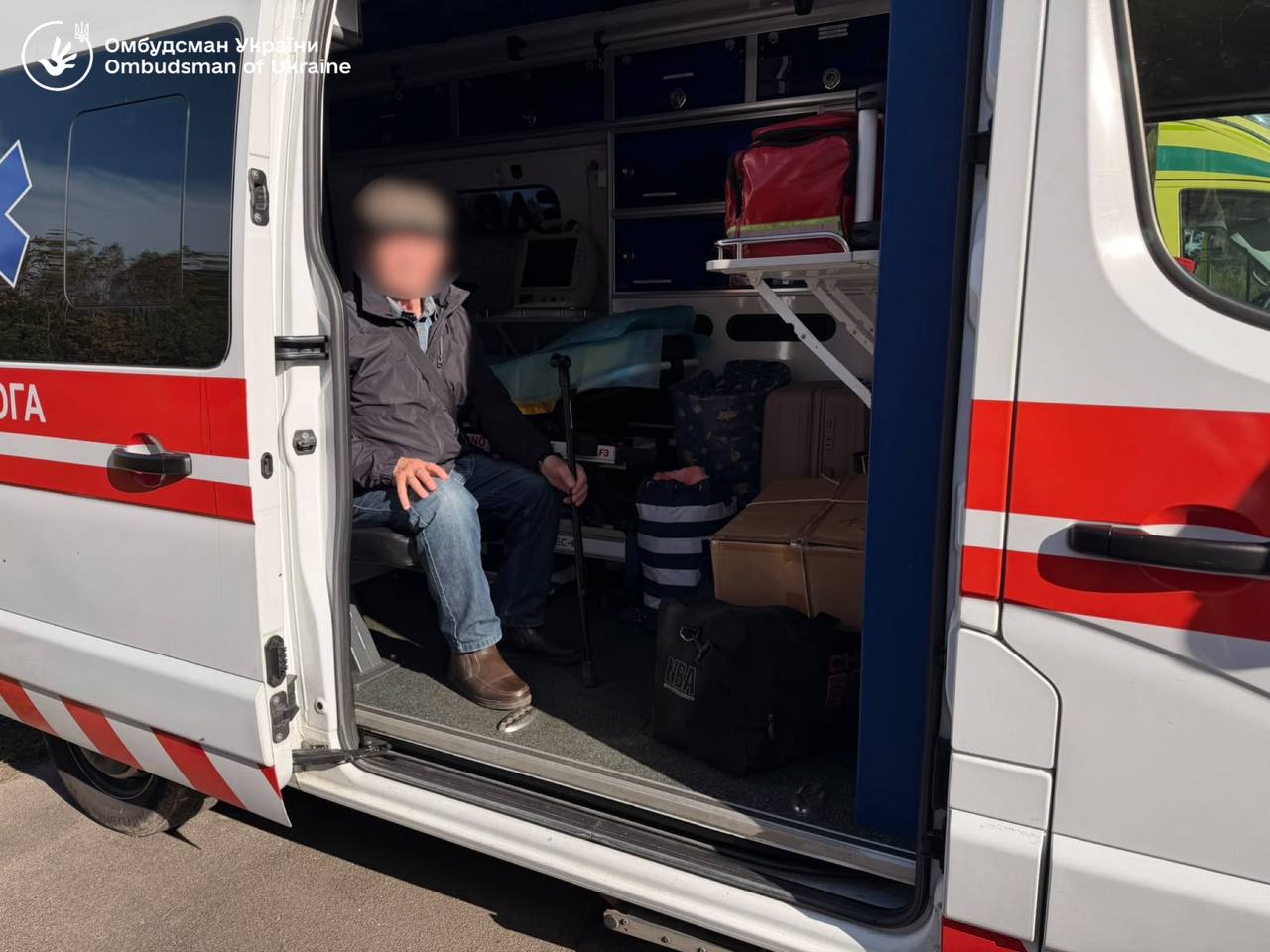
News from occupied Ukraine: 11 Ukrainians, including 96-year-old woman, evacuated from Russian occupation

This weekly update from the Kyiv Independent aims to shed light on the situation facing Ukrainians living under Russian occupation and the ever-tightening control of information imposed by the Kremlin.

Key news as of Oct. 17:

  • Eleven Ukrainians, including 96-year-old woman, return from Russian-occupied territories, ombudsman says
  • Russia sends terrorism

  •  

Argentina Rights Group Files Complaint Over Police Crackdown

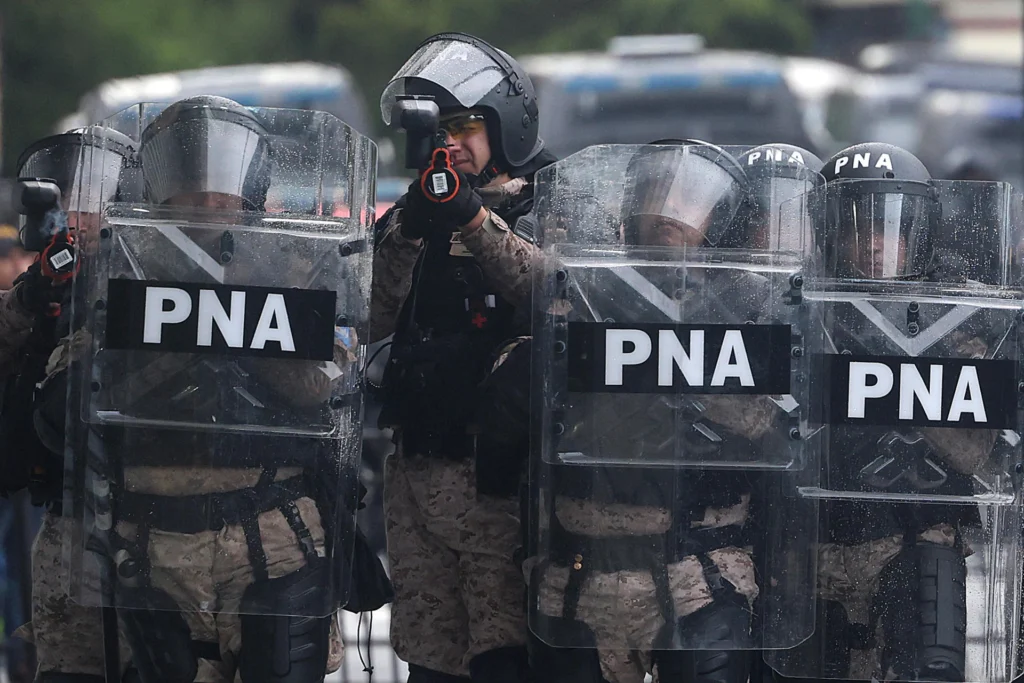
Argentine security forces during a police crackdown on university protesters in Buenos Aires on October 16.

The complaint alleges excessive force during an October 16 university protest in Buenos Aires, where at least 550 people required medical attention.


Argentina’s Provincial Commission for Memory (CPM) has filed a criminal complaint against President Javier Milei’s government and security officials over a police crackdown on a university protest in Buenos Aires that left at least 550 people requiring medical attention. The filing accuses security forces of abuse of authority, dereliction of official duties and other crimes.

RELATED: Argentina Abstains on UN Colonialism Vote Despite Malvinas Rhetoric

The complaint concerns the October 16 Federal University March and a demonstration against Decree of Necessity and Urgency (DNU) 70 in Plaza del Congreso. It names the Unified National Security Command and authorities in the Autonomous City of Buenos Aires, alleging that the security operation exceeded legal limits.

The operation involved the Federal Police, Naval Prefecture, National Gendarmerie, Airport Security Police and Buenos Aires City Police. According to the CPM, officers intervened while the mass demonstration was underway, forcing university leaders to interrupt their reading of the main statement from the stage.

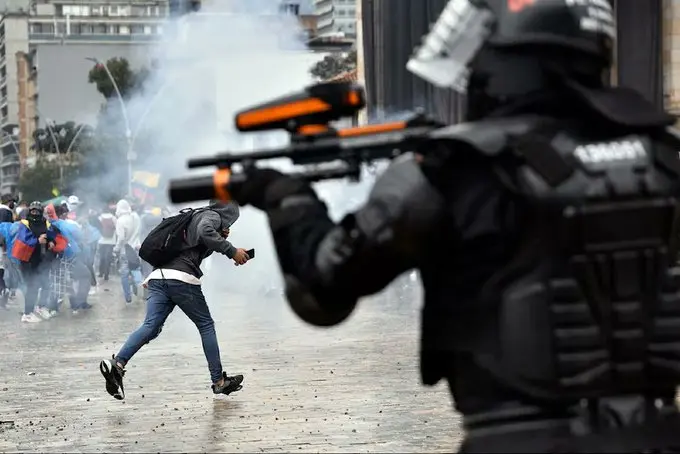
The commission reported that officers fired rubber bullets directly at protesters’ faces and heads and used water-cannon trucks against demonstrators. At least 550 people required medical attention, and at least 120 tear-gas grenades were fired, according to the organization.

Journalists and human rights monitors injured

A CPM report documented injuries to 50 media workers and 15 members of the commission, which is chaired by Adolfo Pérez Esquivel and Dora Barrancos.

Among those injured were Página/12 photographer Guido Piotrkowski, who was struck twice in the chest by rubber bullets, and TeleSISA journalist Laura Quispe, who sustained nine rubber-bullet impacts.

Footage circulated by the Center for Legal and Social Studies (CELS) showed officers aiming at protesters’ eyes. Later that evening, television cameras recorded Gendarmerie officers collecting spent cartridges from the streets and placing them in bags. The CPM raised concerns about the preservation of potential evidence.

Six people arrested during the demonstration

Six people were arrested during the protest and its dispersal. Two students from Nicolás Avellaneda School were detained at 5:11 p.m. at the intersection of Montevideo and Sarmiento streets.

One student, aged 14, was held for two hours. The other, aged 17, was charged with resisting authority and faces criminal proceedings under the recently introduced juvenile justice regime.

Police later arrested four adults — three men and one woman — at the intersection of Chacabuco Street and Avenida de Mayo. Human rights organizations said the woman, a student at the National University of Tres de Febrero, was stopped because she was carrying a Colombian flag. All four were charged with resisting authority.

Commission seeks records and independent investigation

The CPM’s complaint alleges that the actions of officers and their political superiors were coordinated and carried out under orders from senior officials who knowingly authorized the use of coercion outside the legal framework and in violation of Argentina’s international commitments.

The commission has asked the national and Buenos Aires city security ministries to provide a complete list of personnel deployed during the operation, details of the vehicles, weapons and equipment used, and copies of orders transmitted over police radio frequencies.

It is also seeking information about officers who photographed or filmed protesters, including whether they had prior judicial authorization, as well as footage from the city’s surveillance cameras.

The CPM has called for independent forensic examinations and for the collection, custody and analysis of testimony, commercial recordings and other evidence to remain under the control of the competent court or prosecutor. The request specifically excludes the security forces implicated in the events from handling that evidence.

  •  

Moscow warns of ‘hunt for Russians’

RT | October 17, 2026

Russia’s Foreign Ministry has warned citizens to exercise caution when traveling abroad “amid a worldwide hunt for Russians.”

The statement follows the detention of Russian military blogger Mikhail Zvinchuk in Montenegro, a NATO member state in the Balkans, on October 9.

After nine hours in custody, Zvinchuk, founder of the Rybar Telegram channel, his wife and three associates were expelled from the country on the grounds of what Montenegro’s leading daily, Vijesti, described as “criminal, operational and intelligence processing.”

“We are compelled to once again remind people of the need to remain vigilant when traveling abroad, even if there is the slightest suspicion of any kind of claims by US law enforcement agencies, amid a worldwide hunt for Russians,” Foreign Ministry spokeswoman Maria Zakharova said on Friday.

Montenegro, where the blogger was detained, is not on Russia’s list of unfriendly states, Zakharova said, adding that similar situations were unfolding in countries not considered unfriendly to Russia.

The arrest was described as targeting alleged “hybrid activity” by the Rybar network, but no specific evidence supporting the accusation has been presented.

Kremlin spokesman Dmitry Peskov declined to comment on the details of the arrest but warned Russian citizens that visiting Europe is “currently dangerous.”

The Rybar channel, which has around 1.3 million subscribers, had previously also faced US and British accusations of spreading Russian propaganda and conducting information operations abroad. The US State Department had even issued a $10 million bounty in 2024 for any information about the individuals behind the channel.

Russians who have been targeted include basketball player Daniil Kasatkin, a point guard playing for the national team, who was arrested at Paris airport in June 2025 at the behest of the US, which accused him of being a member of a ransomware gang. He denied the allegations and was released in January 2026 as part of a Russia-France prisoner exchange.

  •  

Azerbaijan’s Hijab Ban Sparks Protests and Deepens Rift with Turkey

Restrictions on Islamic headscarves in Azerbaijan’s schools have triggered demonstrations, arrests and an unusually public confrontation between Baku and Ankara.

The dispute has exposed differences over secularism, religious freedom and Azerbaijan’s relationship with Israel, raising questions about the durability of one of the region’s closest strategic alliances.

Azerbaijan is facing an unusual wave of protests after new school dress regulations led to girls wearing Islamic headscarves being excluded from classrooms and teachers reportedly being ordered to remove their hijabs. The controversy has escalated into a diplomatic dispute with Turkey, whose governing party has been accused by President Ilham Aliyev’s administration of interfering in Azerbaijan’s internal affairs.

The confrontation intensified on 13 October when Azerbaijan’s ruling New Azerbaijan Party (YAP) publicly condemned senior figures in President Recep Tayyip Erdoğan’s Justice and Development Party (AKP). The dispute has since widened to encompass Azerbaijan’s relations with Israel, exposing political differences between two countries accustomed to describing themselves as “one nation, two states”.

School regulations provoke protests and arrests

The controversy began on 21 September, when Azerbaijan’s government adopted Resolution No. 309, amending the regulations governing uniforms in state schools. The changes prohibit clothing that conflicts with prescribed uniforms or the secular character of public education.

Although the new regulations do not explicitly mention Islamic headscarves, some schools have interpreted them as prohibiting the hijab. A further decision on 6 October introduced similar requirements for teachers. Women in Baku and Sumgayit subsequently reported being instructed to remove their headscarves or risk losing their positions.

The enforcement of these regulations prompted demonstrations outside schools, with girls carrying placards demanding access to education. Male pupils also joined protests in support of their classmates. Such demonstrations are unusual in Azerbaijan, where public assemblies face extensive restrictions.

On 12 October, the Interior Ministry reported that 37 people had been detained in Baku, alleging disruption of public order, damage to property and obstruction of school activities. Activists claimed that more than 200 people had been detained, although that higher figure has not been independently confirmed.

In a statement issued on 16 October, Amnesty International criticised the exclusion of pupils and called for the release of peaceful demonstrators. The organisation also raised concerns over the reported detention of a mother protesting her daughter’s exclusion and the disappearance of an activist who had organised educational assistance for affected children.

Access to TikTok and Instagram was disrupted as the protests spread online. Internet monitoring organisations documented restrictions, although Azerbaijani authorities have not publicly explained their cause.

Turkey challenges Azerbaijan’s secular policy

The dispute acquired an international dimension when Oktay Saral, a senior adviser to Erdoğan, condemned the exclusion of girls wearing headscarves.

In a public statement on 12 October, Saral questioned how preventing a girl from attending school because of her religious clothing could be reconciled with justice. He demanded that Azerbaijan reverse the restrictions. Several AKP parliamentarians subsequently joined the criticism.

The response from Baku was unusually confrontational. In its official statement, the New Azerbaijan Party accused Turkish political figures and media organisations of conducting a systematic campaign against Azerbaijan.

The party argued that religious solidarity did not entitle one Muslim-majority country to dictate another’s domestic policies. It described the Turkish politicians’ interventions as irresponsible and warned against attempts to interfere with Azerbaijan’s sovereignty.

The disagreement reflects contrasting approaches to secularism. Azerbaijan, a predominantly Shia Muslim country, has maintained strict state control over religious institutions since independence from the Soviet Union. Turkey, by contrast, has progressively removed restrictions on Islamic headscarves under Erdoğan’s government, reversing policies previously associated with its secular establishment.

Israel adds another source of tension

The dispute has also reopened disagreements concerning Azerbaijan’s relationship with Israel.

Baku maintains substantial security and defence cooperation with Israel, including military technology and equipment supplied during its conflict with Armenia over Nagorno-Karabakh. Turkey supported Azerbaijan during that conflict but has adopted an increasingly confrontational position towards Israel.

As EU Today has previously examined, the relationships between Turkey, Azerbaijan and Israel reveal competing strategic interests beneath Ankara and Baku’s declared solidarity.

In its October statement, the New Azerbaijan Party specifically rejected criticism of Azerbaijani-Israeli relations, insisting that its dealings with Israel were legitimate bilateral arrangements. The inclusion of Israel in a response ostensibly concerning school uniforms indicates that the disagreement extends beyond religious clothing.

A further escalation emerged on 16 October when Azerbaijani prosecutors announced charges against Turkish journalist Celal Çiftçi, accusing him of advocating the violent overthrow of the Azerbaijani government in social media posts connected to the controversy. An arrest warrant was reportedly issued in his absence. Prosecutors did not publish the posts, and Çiftçi’s response was not available.

Could the dispute break the Turkish-Azerbaijani alliance?

Despite the increasingly hostile exchanges, there is little evidence of an imminent diplomatic rupture.

Turkish Foreign Minister Hakan Fidan travelled to Baku on 15 October and met President Aliyev. The meeting addressed recent developments in bilateral relations, while Fidan publicly emphasised the enduring strategic partnership between the countries.

He acknowledged that differences could arise but argued that they should be resolved through direct dialogue rather than political confrontations on social media. Senior AKP figures have also sought to reduce tensions, stressing respect for Azerbaijan’s sovereign decisions.

The relationship extends far beyond shared language and cultural identity. Turkish military cooperation has been central to Azerbaijan’s regional security policy, while energy infrastructure and transport corridors connect the countries economically. Ankara also remains an important actor in the changing strategic balance of the South Caucasus.

For the European Union, the confrontation is relevant because Azerbaijan remains an important energy supplier and trading partner, while Turkey occupies a central position in regional transport and security arrangements.

The immediate question is whether Baku will reconsider the application of its school regulations. The wider political dispute concerns the extent to which Turkey can criticise Azerbaijan’s domestic policies without jeopardising a partnership that both governments have consistently presented as a cornerstone of their foreign policy.

The public confrontation has exposed differences that had previously been managed within the bilateral relationship. However, Fidan’s intervention and the continued diplomatic engagement suggest that both governments are seeking to contain the dispute rather than dismantle their alliance.

  •  

Inside Bill C-22, Canada’s Patriot Act.

By Justin K.P. | The Dissident | October 15, 2026  

Canada’s Bill C-22, has passed the Canadian House of Commons and is currently being debated in the Canadian Senate, and Civil Liberties Organizations are raising the alarm bells over the unprecedented surveillance powers the bill gives to the Canadian security state.

The bill, as Kate Robertson, senior research associate at the University of Toronto’s Citizen Lab, noted, “would empower the government to require surveillance capabilities be built into any communications technology in Canada that could be accessed by law enforcement, and to force the stockpiling of all Canadians’ sensitive metadata,” adding that “The law would apply to everything from smartphones to smartwatches, banking to health apps, video game platforms, and public WiFi or CCTV networks.”

The bill similarly “includes mandating that companies store user data for at least a year – even if the data isn’t something they would otherwise be keeping on hand for the purposes of their business”, “including location and transmission data”.

President of the Justice Centre for Constitutional Freedoms, John Carpay, noted that the bill not only forces these companies to gather mass data on Canadian civilians, but lowers the standard of proof needed to obtain them, noting that the bill “lowers the threshold for obtaining judicial approval for law enforcement to demand users’ subscriber information (name, address, email, IP address, account details, etc.) from ‘reasonable grounds to believe’ to ‘reasonable grounds to suspect.’”

The bill may even give the Canadian government the ability to turn on Microphones and Cameras in order to surveil citizens.

Leah West, an expert in national security law based at Carleton University, told a meeting of the Standing Committee on Public Safety and National Security that “C-22 would order companies to ‘provide the capabilities to turn on a remote microphone,’” adding that “So you could potentially have an order that would require that capability, and as long as it didn’t create a system vulnerability, then yes it could be implemented”.

Unsurprisingly, the bill has raised major alarm bells with Canadian civil liberties organizations.

The Canadian Civil Liberties Organization called the bill “the broadest expansion of government surveillance powers in recent Canadian history” and Matt Hatfield, Executive Director at OpenMedia, called it “the most invasive surveillance regime of any comparable democracy”.

Some of the alarm bells rung by the Canadian Civil Liberties Organization included the possibilities that the bill would:

– Pave the way for expanded information-sharing with the United States and numerous other governments including those with a history of abuse. Expansion of information-sharing with foreign governments in the absence of effective safeguards is particularly reckless at a time when cross-border persecution of diaspora communities—including through abuse of cross-border police cooperation tools—is on the rise.

– Give the government the power to force any electronic mechanism to build new surveillance tools and embed these at the core of their service, potentially transforming anything with a digital component into spyware. The mandated surveillance capability need not have anything to do with the actual functionality of the service in question. Backdoors like these also cannot be effectively limited to law enforcement access—Cybercriminals and foreign adversaries have repeatedly and successfully targeted the mass surveillance capabilities created by similar regimes. Overall, the proposal creates untenable privacy and cybersecurity risks.

– Lower the threshold for sensitive subscriber data, allowing government agencies to cast a wide net when conducting investigations; and

– the government the power to force any digital entity to keep highly sensitive information on every single person in Canada or abroad for up to one year. Information could include every single person’s location at any time over the course of the year, a complete record of everyone you interacted with online, and more. Bill C-22 includes no mechanism to place limits on who can access these data troves or for what purpose, making it potentially fair game for any and all criminal and civil investigations as well as for commercial exploitation by the private company being compelled to retain the data.

In an open letter over 25 leading Canadian civil society groups called the bill an “unprecedented and extraordinarily dangerous surveillance architecture that could impact every digital tool people in Canada depend on every day”,“the most expansive invasion of Canadian privacy rights in modern history” and “fundamentally a mass surveillance capabilities regime”.

It warned that under part 2 of the bill “the government could force the creation and installation of privacy-compromising surveillance tools and backdoors in an enormous and ill-defined set of ‘electronic service providers’, including telecom providers, social media and cloud service providers, AI tools, and any ‘smart’ device” adding that “The law could even be used to force Canadian companies to build backdoors into their products before they export them abroad” and that “The result creates an untenable threat to privacy and cybersecurity” even noting that it “far exceeds powers available to police and security agencies in the United States.”

It also noted that, “Part 2 of Bill C-22 will now also empower the government to require any digital service provider to record and retain detailed metadata on every single person in Canada or abroad, damaging the privacy of millions who are not suspected of committing any crime or posing any security threat,” adding that “companies will be forced to develop the capacity to track information that was never before available to them and is not necessary for their business purposes, then to collect and retain that information for up to one year.”

  •  

Gaza Famine Deaths Hit 466 as Hunger Crisis Deepens After 3 Years of Genocide

The Palestinian Ministry of Health warned that the humanitarian crisis has reached a critical point in its third year of war. Photo: CNN.

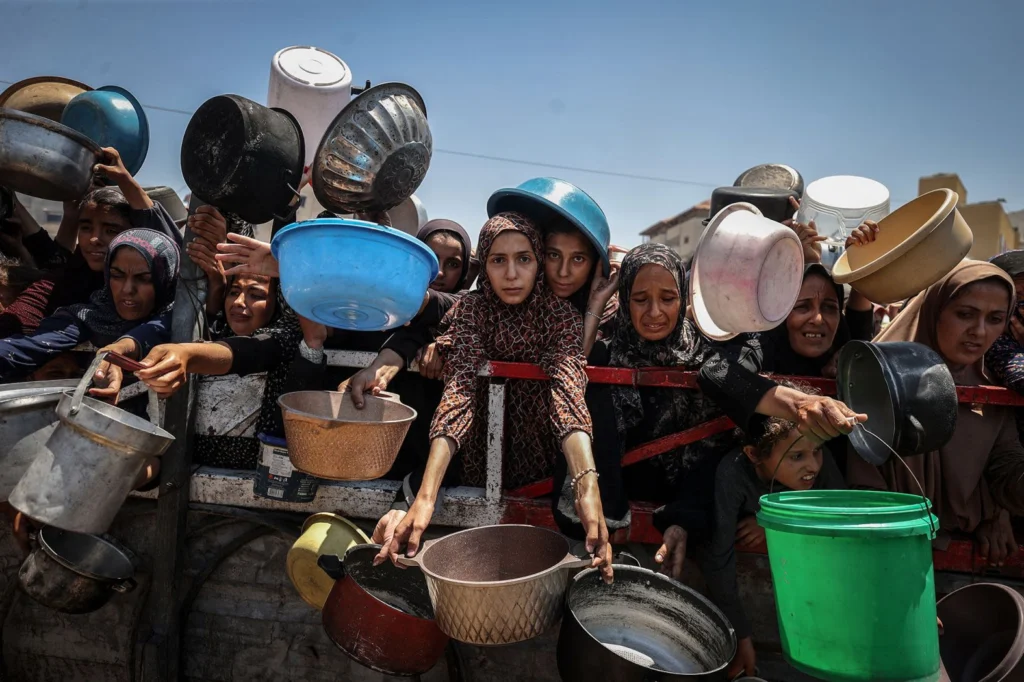
Gaza’s Health Ministry reported Friday that hunger and malnutrition have killed 466 people since 2024, as famine grips the enclave and pushes more than 1.4 million residents toward a critical food crisis.


The Palestinian Health Ministry in Gaza confirmed Friday that malnutrition and hunger rates have reached catastrophic levels across the territory.

The toll stands at 466 starvation deaths since 2024, a figure the ministry released on World Food Day, observed October 16.

RELATED: Gaza Humanitarian Crisis: UN Warns of Explosive Force Equal to 6 Nuclear Bombs

The health authority issued a grim report exposing the consequences of the prolonged Israeli siege. Official projections show that more than 1.4 million people, equivalent to 67% of the population, will face a critical or worse food crisis by the end of 2026. Famine was formally declared in Gaza governorate in August 2025.

“Malnutrition and famine rates in the Gaza Strip have reached catastrophic levels, seriously affecting children, the elderly and other vulnerable groups,” the Ministry said in its statement.

Statement by the Gaza Ministry of Health on World Food Day:

▪️ "Malnutrition and starvation rates in the Gaza Strip have reached catastrophic levels, ravaging children, the elderly, and other vulnerable groups."

▪️ "A total of 466 deaths due to malnutrition and starvation have…

— The Cradle (@TheCradleMedia) October 16, 2026

Children carry a heavy share of the toll. Since 2024, 157 children have died from malnutrition, roughly one third of all starvation deaths. Between 2024 and August 2026, health workers documented 158,001 cases of acute malnutrition in children under five, including 28,716 severe cases that directly threaten life.

The mortality rate among children under five more than doubled, climbing from 13.6 to 33.4 deaths per 1,000 live births between 2022 and 2025. Stunting now affects 12.2% of the child population. Officials estimate that another 74,200 children will require specialized treatment through 2027.

Maternal health has deteriorated sharply as well. Anemia prevalence rose to 61% in 2026, compared with 41% before the conflict. Nearly 4,000 miscarriages were recorded in the first half of the year, more than triple the previous six months. One in every three pregnancies is now classified as high risk.

🇵🇸 466 Palestinians, including 157 children, have died from malnutrition and starvation in Gaza since 2024, Health Ministry says

⚠️ More than 1.4 million people are expected to face crisis-level food insecurity or worse through the end of 2026

📌 Authorities accuse Israel of… pic.twitter.com/xGVDRsQcWy

— Anadolu English (@anadoluagency) October 16, 2026

Elderly Hardest Hit

Elderly adults account for the largest share of deaths linked to food shortages. The Gazan Ministry registered 189 fatalities among the elderly, or 40.5% of the national total.

The vulnerability among seniors is stark: 11% go entire days without eating anything at all, meanwhile 48% deliberately reduce their own portions to feed their families. 68% of them have interrupted or cut back on medication doses because of widespread shortages.

Three years of war have collapsed the food system. The Ministry’s warning lands as winter approaches and as aid deliveries remain insufficient to meet the scale of need across the territory.

The figures mark the deepest point yet in a hunger emergency that has built steadily since the conflict began. A formal famine declaration, once a rare event, now defines daily reality for hundreds of thousands of people trapped in the enclave.

The projected rise in food insecurity through late 2026, combined with 74,200 children awaiting specialized care, points to a crisis that will persist even if aid access improves.

Facing this emergency, the Health Ministry recalled that the right to food is fundamental. It urged the United Nations and the international community to establish urgent mechanisms that guarantee the safe, sustainable and unrestricted entry of humanitarian aid, therapeutic supplements and medicines into the enclave.

  •  

Israeli rabbi permits occupiers to steal Palestinian olive harvest in West Bank

MEMO | October 16, 2026

A prominent Israeli rabbi on Friday issued a religious ruling permitting Israeli occupiers to take olives from Palestinian land in the occupied West Bank, claiming that harvesting the crop “demonstrates Jewish ownership of the land,” Anadolu reports.

The ruling was issued by Rabbi Dov Lior, one of the most prominent religious authorities among Israeli occupiers in the West Bank, and was published by Israeli Channel 13.

It comes amid escalating occupier violence against Palestinians and their property, particularly farmers during the olive harvest season.

Lior claimed that Palestinians do not own their land, arguing that they had not purchased it from the “people of Israel” or from any Jewish person and describing the land as “stolen property.”

Citing Jewish religious law, he claimed that ownership of land cannot be transferred through theft and that Palestinian land therefore remains the property of the “people of Israel.”

He also argued that Palestinians planting olive trees on their land does not give them ownership rights over either the land or its produce.

Lior claimed Palestinians had already received sufficient compensation for planting the trees by consuming their fruit over previous years, and said both the land and harvest should return to what he called their “rightful owners.”

His ruling was not limited to land near illegal settlements, however, and also permitted occupiers to take olive crops from Palestinian areas farther away.

The ruling comes as attacks on Palestinian farmers during the West Bank olive harvest season have intensified, including assaults, preventing farmers from reaching their land, damaging trees and stealing crops.

Such attacks recur during the olive harvest, which peaks in October each year, while this month has seen an increase in attacks by occupiers against Palestinians and their property.

Palestinian, Israeli and international rights organizations have accused Israeli authorities of failing to stop occupier violence or hold perpetrators accountable despite attacks targeting Palestinians, their homes, farmland, vehicles and other property.

Israeli settlements built on occupied Palestinian land are considered illegal under international law, while Palestinians maintain their rights to their land and reject attempts to seize it.

  •  

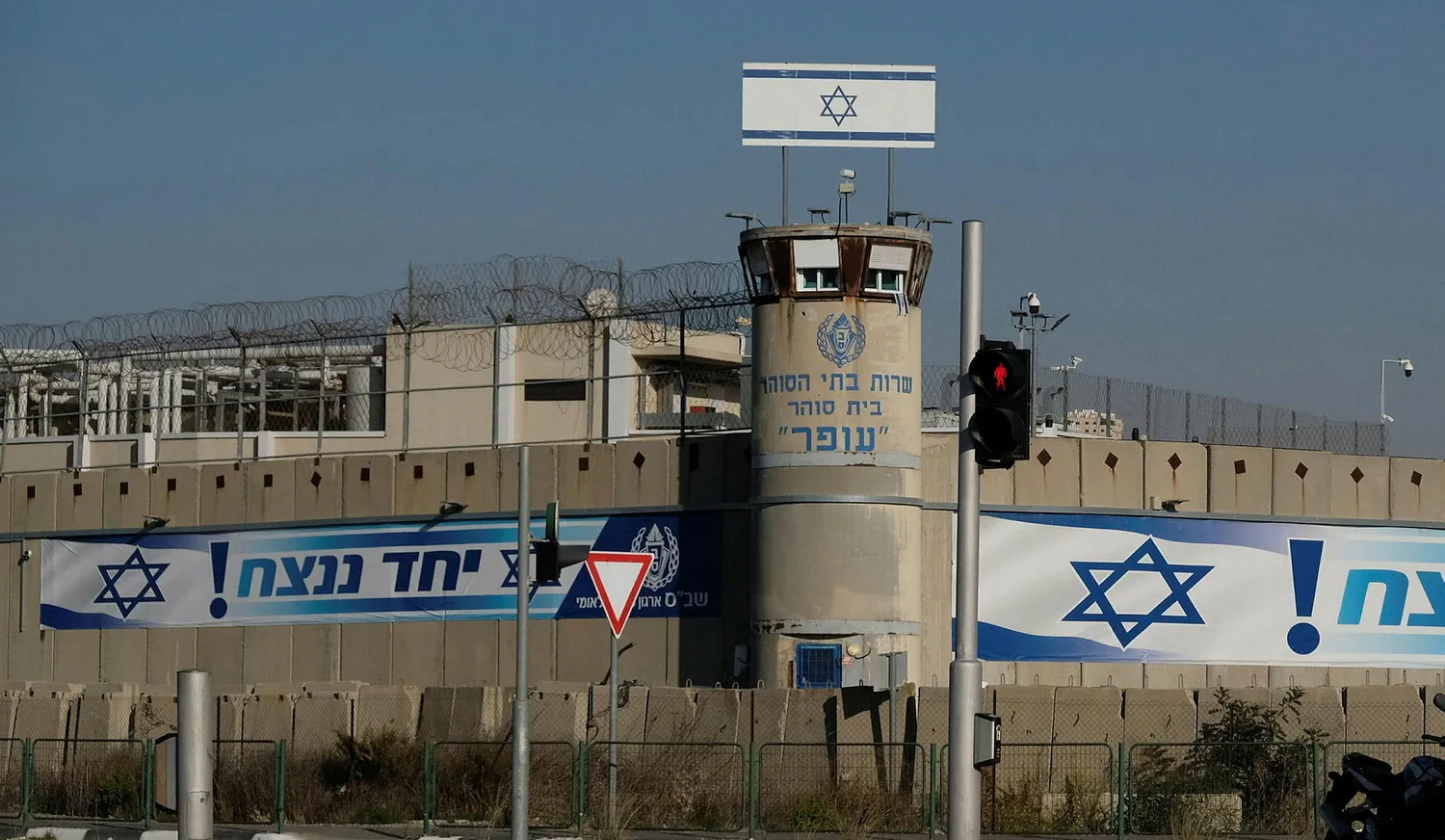
Israel has detained thousands of Palestinian children since Oct 7th – over half spent time in solitary, many uncharged

At least 350 children remain in custody at this time, where they face harsh conditions, including torture, food deprivation, isolation, and denial of medical care.

  •  

Cairo’s Admission and Burhan’s Silence: Sudanese Blood and Gold as the Price of a Seat of Power

Twice in four months, Egyptian warplanes have bombed Sudanese miners inside their own territory, and dozens of bodies have failed to draw from Abdel Fattah al-Burhan a stance worthy of his citizens’ blood. Cairo, for its part, justifies its military operations, while Port Sudan hides behind a fact-finding committee, a cable of condolences and talk of contact between the two leaderships, without daring to name the party accused of killing its citizens.

This is the scene before us: a state acting on the Sudanese border by force of arms, and an army commander who avoids naming the party accused of killing Sudanese, for fear of losing an ally whose approval seems to matter more to him than their lives. On the morning of 10 October 2026, the mining site at Jabal al-Uqaydat in the Shamal al-Wadi area inside Sudan turned into a killing field after it was struck by five consecutive airstrikes, according to the testimony of a survivor relayed by Agence France-Presse. Thousands of miners had been searching for gold in a land exhausted by war; some ended up under the rubble, while others fled to the mountains without water or supplies.

In a significant pinpointing of the site of the bombing, The New York Times, in its report published on 12 October 2026, stated that the targeted mine is located in Sudan’s Red Sea State, about 25 miles from the Egyptian border, or roughly 40 kilometres inside Sudanese territory. Al-Hurra, in its coverage of the June attack, had cited an estimate placing Jabal al-Uqaydat about 20 kilometres inside Sudan; the forty-kilometre distance is cited here as attributed to the American newspaper’s determination of the location of the October strike, which keeps the question of sovereignty and the protection of civilians at the heart of the matter.

Agence France-Presse relayed from survivors that thousands of miners were working at the site, and “Emergency Lawyers” counted 72 dead according to preliminary information, while witnesses told the BBC of more than 60 dead and about 150 wounded. Survivors told Sudan Tribune that the dead numbered at least 200, with more than 15,000 workers fleeing, while the Sudan Doctors Network recorded a preliminary toll of 13 dead and 28 wounded, warning that it could rise.

Cairo Justifies the Bombing While Burhan Avoids Naming the Perpetrator

The “Emergency Lawyers” organization accused the Egyptian air force of targeting civilian miners, considering the attack a violation of international law. When Reuters asked Egyptian security officials about the raid, they did not deny the operation but justified it as ending what they described as border chaos and preventing Egyptian and Sudanese groups from taking control of mining areas.

Two days later, the Egyptian military spokesman announced the continuation of the “third phase” of the campaign, noting that warning leaflets had been dropped on those he described as criminal elements. However, the statement placed the operations inside Egyptian territory and did not include an explicit acknowledgment of carrying out a raid inside Sudan or of the killing of the miners.

Thus Cairo has a military justification for bombing a Sudanese site, while Burhan’s authority is incapable of issuing an explicit condemnation of the party that human rights organizations accuse of killing its citizens. The irony is that the state that is supposed to demand the victims’ rights appeared more concerned about its relationship with Cairo than about naming the party responsible for their blood.

From June to October: The Victims Change, the Silence Remains

The October raid was preceded by a strike that targeted the area on 16 June 2026. Agence France-Presse reported 23 dead, while Sudanese platforms estimated the toll at around one hundred. According to the testimonies received, the operations extended to Jabal al-Uqaydat, the Red Mountain and the area around Souk al-Ansari, and included raids by warplanes and drones followed by a ground incursion. The organization “Darfur Victims Advocacy” relayed from witnesses that an Egyptian force of about sixty armed vehicles had surrounded the miners and detained civilians, some of whom were beaten.

In the days following the June attacks, Radio Dabanga reported the arrival of about two thousand deported miners via the Argeen crossing, according to a local activist, while the crossing’s director spoke of more than three thousand over the preceding days, and the Egyptian army announced the arrest of 223 people, including 136 foreigners. On 22 June, Burhan appeared in Al-Ratj to say, according to Al-Araby Al-Jadeed: “Our northern neighbor — people must respect it and not cross the borders so as not to cause problems for themselves and for the state.”

Sudanese had been waiting for their army’s commander to defend their blood, but they heard him urging them to respect the borders of the neighbor accused of bombing them. When the raid was repeated in October, the Sovereignty Council repeated the scene: condolences over the “painful incident,” a fact-finding committee, and an assurance that the two countries’ leaderships are in contact.

Burhan’s adviser, Amjad Farid, described the bombing as an unjustified and unacceptable crime, noting that border violations could be addressed without warplanes, but his position did not translate into an announced official protest or a clear path to accountability.

Sudan’s Gold: A Wealth Guarded by Force

Al-Uqaydat lies within the gold-rich Nubian Shield belt, and the Chatham House institute estimated that about 60% of gold production in the Northern, River Nile and Red Sea states is smuggled to Egypt, in quantities exceeding one hundred kilograms per day, and more than sixty tonnes since the outbreak of the war through the end of 2024.

By contrast, official gold exports to Egypt in 2024 did not exceed about 16 million dollars, roughly 1% of Sudan’s total gold exports, according to Central Bank of Sudan data cited in the Chatham House report.

Miners told Sudan Tribune that they had observed drilling machinery and trucks carrying rocks across the border into Egypt, and that an Egyptian patrol had previously warned them against approaching a site it said lies inside Egyptian territory. Al-Hurra relayed testimony about friction between workers and personnel of an Egyptian mining company operating near them.

Egyptian Law No. 193 of 2020 authorizes contracting with the Egyptian Company for Mining and the Management and Exploitation of Quarries and Salt Works, affiliated with the National Service Projects Organization, to exploit the quarries and salt works specified by the law for a period of thirty years, while the state-owned Shalateen Mineral Resources Company is active in the south of the Eastern Desert. The businessman Naguib Sawiris also praised the June operation and linked it to investors’ confidence in the Egyptian mining sector.

In the same month, Egypt’s Ministry of Petroleum denied statements attributed to its minister about agreements to establish 108 gold mines in northern Sudan, but the researcher Mohamed al-Hadi considered it likely that the attacks are linked to undisclosed understandings with the Sudanese government, a hypothesis that calls for an independent investigation.

Burhan: When the Ally Becomes More Precious Than the Citizen

The website Al-Hurra relayed from a miner that a group of pro-government joint forces withdrew from the mountain a day before the June raid, and that the Sudanese army did not arrive to evacuate the wounded and collect the bodies until the third day. The testimony raised workers’ suspicions about possible coordination between the two governments, without establishing that it took place.

But Burhan’s silence does not need those suspicions to be proven in order to become a matter of political accountability. Cairo supports the commander of the Sudanese army and considers the war on its borders a threat to its security. Agence France-Presse has verified satellite images showing the repeated presence of Turkish Bayraktar drones at an Egyptian base near Sudan, while reports spoke of facilitating the delivery of drones to the Sudanese army and training its crews inside Egypt, alongside broader military and intelligence cooperation.

An analysis published by the Horn Review in June held that the army’s silence over the raids is linked to Egyptian support for it.

Yet this relationship does not absolve Burhan of responsibility; it multiplies it. Whoever relies on another state’s support in his war cannot make the protection of his citizens a negotiable item, and his need for weapons and political backing must not become an immunity he grants to Cairo at the expense of Sudanese blood.

Sovereignty Tested With the Blood of the Poor

The raids reopen the wound of Halayeb and Shalateen, the disputed triangle under Egyptian control. Sudanese administrative maps confirm that the targeted mining sites lie inside Sudan, while Cairo treats them as part of the border area adjoining the triangle.

Human rights, political and trade union forces have called for an independent international investigation, and the “Sumud” alliance led by Abdalla Hamdok held the Egyptian side directly responsible.

Today, Egypt is required to answer for the bombing and the fall of civilians, not merely to classify them as criminal elements and offer security justifications, and Burhan is required to announce the results of the investigation, determine responsibility, demand compensation and accountability, and take the necessary diplomatic and legal measures.

As for settling for condolences, it is not a defense of sovereignty; it is a declaration that the alliance with Cairo is more precious to the authorities than the Sudanese people’s right to life and justice. At Jabal al-Uqaydat the bill is clear and admits no doubt: the gold crosses the border, the dead remain under the rubble, and Burhan guards his silence.

  •  

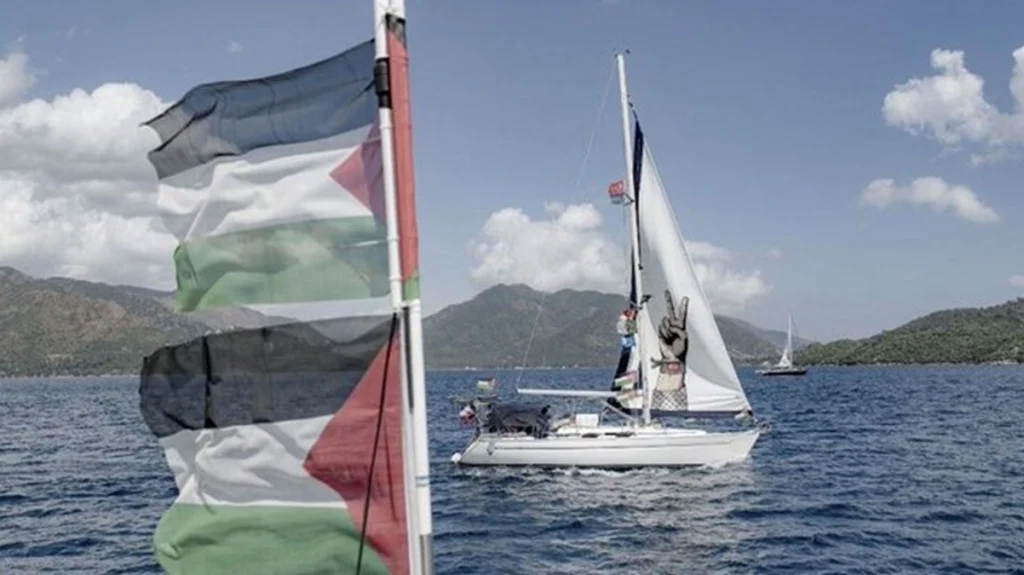
Rome Prosecutor’s Office Investigates Israeli Leaders Over Flotilla Interception

Probe Targets Katz, Ben Gvir and About a Dozen Officials Over Alleged Torture, Kidnapping and Degrading Treatment.

On Friday, ANSA news agency reported that the Rome Prosecutor’s Office is investigating several Israeli leaders for crimes of torture, kidnapping and “degrading treatment” after the interception of the Global Sumud Flotilla missions that were attempting to reach the Gaza Strip.

RELATED:

Protest in Tunisia Demands Release of Global Sumud Flotilla Members

The prosecutors’ investigations into two activist missions point to about a dozen Israeli officials, including Defense Minister Israel Katz and National Security Minister Itamar Ben Gvir.

Specifically, the Prosecutor’s Office is investigating members of the military, police and prison chains of command involved in the naval and land custody operations related to both expeditions.

According to the Prosecutor’s Office, the naval boardings carried out by Israeli forces violated international law and involved illegal detentions, as well as the violation of fundamental rights of defense and “conditions of detention and degrading treatment” that could constitute crimes of torture and kidnapping.

“They beat us everywhere”, “It was worse than Guantanamo”

Broken clavicles, sexual assault, electric shocks… Members of the Global Sumud Flotilla share shocking accounts of torture by Israeli authorities pic.twitter.com/PKIdCO4SIS

— TRT World (@trtworld) May 22, 2026

The judicial case in Italy began after the interception of the Global Sumud Flotilla on Oct. 1, 2025, when the expedition was attempting to approach the coast of Gaza.

Dozens of Italian activists reported after their deportation that they had suffered assaults during the interception in international waters and abuse while they were held in Israeli prisons.

The Rome Prosecutor’s Office later expanded its proceedings and formally included Security Minister Ben Gvir among those under investigation after the circulation of a video recorded at the Port of Ashdod in which he could be seen mocking dozens of activists who were handcuffed and lying under the sun.

teleSUR/ JF

Source: EFE

  •  

UN Warns Colombia Protest Decree May Widen Police Use of Force

United Nations warning on Colombia’s protest decree and police use of force during demonstrations.

The UN says Colombia’s new rules could let police end dialogue prematurely and use force against demonstrators.


The United Nations warned Thursday that Colombia’s new rules governing protests could give police excessive discretion to use force, potentially putting peaceful demonstrators at risk.

RELATED: Colombia’s First National Strike Against De la Espriella Met With Police Crackdown

Signed Tuesday by President Abelardo de la Espriella, the decree changes police procedures during demonstrations, allowing authorities to act against people committing violent acts without waiting for dialogue with protesters to conclude.

In a statement released Thursday, the UN Human Rights Office in Colombia raised concerns about the criteria for ending negotiations, the decree’s definition of violence and the circumstances under which authorities can intervene in road blockades.

Some provisions are open to broad interpretation, the office warned, potentially allowing authorities to end dialogue and resort to force.

UN questions definition of violence

The decree identifies several grounds for intervention, including carrying or using weapons, holding people against their will, assaulting others and destroying infrastructure. The UN acknowledged that these acts pose different risks to life and physical integrity but said they must be addressed separately.

Action against people committing violent acts should not automatically end dialogue with demonstrators who continue to protest peacefully, the office said.

It also stressed that force, including less-lethal weapons, must be used only as a last resort, after nonviolent means of restraint have been exhausted, in accordance with General Comment No. 37 on the International Covenant on Civil and Political Rights.

Colombian President Abelardo de la Espriella signed Decree 1525, a measure that facilitates police repression by broadening the definition of “violence” during popular protests.

Interior Minister Rodrigo Lara warned that the new regulation will take effect before demonstrations… pic.twitter.com/YYfouyRGyt

— teleSUR English (@telesurenglish) October 14, 2026

The office also criticized the decree’s definition of violence as broader than international standards, noting that it includes threats of aggression and conduct that does not necessarily cause injuries, deaths or serious property damage.

Authorities should distinguish between carrying an object that could be considered a weapon, threatening to use it and actually using it, the UN said. Possession alone does not make someone violent or change the peaceful nature of an assembly.

Road blockades do not automatically justify force

The UN warned that blocking a road does not, by itself, make a demonstration violent. It also called for a review of the decree’s reference to a “serious and imminent disruption,” saying the criterion could be used to justify breaking up peaceful protests.

The duration of a blockade, the importance of the road affected and the resulting economic losses should not, on their own, justify coercive action, the office said.

“Economic impact or disruption to the normal functioning of a productive activity should not, in themselves, constitute justification for the use of force,” it said.

The office acknowledged that some provisions could help protect the right to peaceful protest, particularly those distinguishing peaceful demonstrators from people committing violent acts. However, it insisted that protecting peaceful assemblies must remain the primary objective of any changes to protest regulations.

The UN office said it had consulted the Colombian government on the decree and that some of its proposed amendments were incorporated into the version signed Tuesday.

  •  

Trump’s war on philanthropy is a war on civil society. This donor network is fighting back.

Leena Barakat, President and CEO of the Women's Donor Network (center right) is seated with other leaders and members of WDN. Photo courtesy of Women Donors Network.

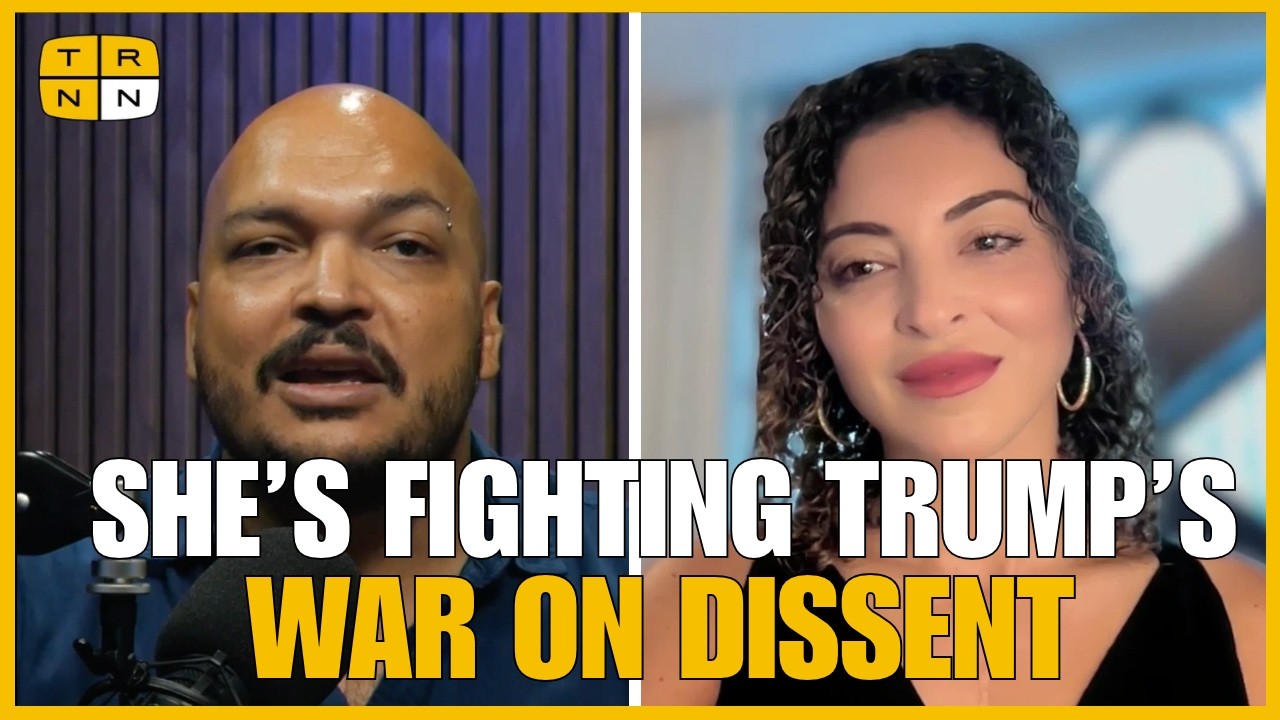
The Trump administration continues to weaponize the federal government to attack President Trump’s critics and enact his authoritarian agenda, which includes waging war against the world of progressive philanthropy and the many civil- and human-rights-supporting movements, media organizations, and nonprofit institutions that depend on it. Leena Barakat, President and CEO of the Women Donors Network, speaks with TRNN Editor-in-Chief Maximillian Alvarez about Trump’s war on philanthropy and how philanthropic organizations like WDN are fighting back.

Credits:

  • Post-production: Cameron Granadino
Transcript

The following is a rushed transcript and may contain errors. It will be updated.

Maximillian Alvarez:

The Trump administration continues to weaponize the federal government to carry out President Trump’s wars on his critics, on the media, on the world of higher education, on federal workers, and on the administrative and regulatory functions of the federal government itself. And these attacks have understandably gotten more public attention over the past year, but what has gotten significantly less attention is how Trump’s allies and his administration are waging war against the world of progressive philanthropy and on progressive philanthropists themselves and the many civil and human rights supporting movements, media organizations, and nonprofit institutions that depend on them. The short-term and long-term impacts of this will be seismic, but we’re not talking about it enough. And so to talk about what this all looks like and how people are navigating it within the world of progressive philanthropy, I’m really grateful to be joined today by Leena Barakat, president and CEO of the Women Donors Network.

Leena, thank you so much for joining me today. To start, please just tell our audiences a little more about yourself, the Women Donors Network and the work that y’all do, and then tell us about how the Trump administration’s war on philanthropy is affecting you, the WDN, and the work that you do.

Leena Barakat:

Thanks, Max. It’s great to be here. As you said, my name is Leena Barakat. I am the president and CEO of Women Donors Network and our C4 affiliate organization, Women Donors Action. I have spent nearly two decades working of my career working across the grassroots, philanthropic and private sector to really move and shift resources and power towards communities that are fighting for justice. And 10 of those years has actually been, it started out as a young member of WDN to this moment. We’ve been around for 30 years. We are a national network of donors that are committed to using our wealth, our influence, our privilege, and our collective power to advance justice. And as a collective giving model, that has translated to over $160 million that has been moved across the field to frontline organizations. But our work goes far beyond just writing checks. As a donor network, we help our members really examine their relationship with their resources, their wealth and their power and help them leverage that more strategically.

So that has meant more funding of grassroots movements, building political power, organizing our peers across the sector, and preparing really for us, the next generation of women donors to lead and continue this work. And to answer your question, I think this moment, excuse me, has been incredibly clarifying for us. As you said, the administration is using their power to really intimidate all of us and create chaos and fear amongst nonprofits and make funders afraid of funding them. And so the result that we’re seeing is many institutions retreating and pulling back resources precisely at the moment communities need it the most. And so for us, you asked how is this sort of impacting us? We’re not taking the bait. It’s only sharpened our focus in this moment. We know that in this moment it is not just important to sustain movements and continue resourcing and funding these movements, but actually you go bigger, you go harder.

We need to scale these movements and organize not just ourselves, but the philanthropic sector to really stand together and again, to help donors in this moment and anyone in this moment to leverage every resource and form of influence and power they have, not just their money, but their voices and relationships to fight back. And that’s exactly what we’re doing.You mentioned the war on philanthropy. Now in terms of that, I feel like this is so much bigger than that, honestly. This is so much bigger than the war on philanthropy. This is really a broad, this is a war on dissent, and I think we have to talk about it. We have to talk about it. I think this is really about how, if you think about it from the perspective of the administration, it is absolutely in their best interest to create this climate of fear, to create fracture among us and atrophy within the sector and specifically within the social justice sector where you are seeing critical resources and services moving to communities that need it most, but also who are organizing around dissent and organizing towards justice, which is against this administration’s direct agenda.

And so essentially, what is their strategy to do that? If they want to really accelerate their agenda, they have to do what they can to cut this off at their knees, to turn off the faucet on the very resources that are fueling these movements to begin with. So therefore it has included attacks on progressive philanthropy, who’s resourcing these movements. And so as a result, this is exactly what we’re seeing. We’re naturally seeing an escalation of these attacks and funders and the response to that has been sort of an array of response across the spectrum. I think traditional philanthropy has unfortunately responded with a lot of hesitation, fallen in line with the fear, clenched their pearls and decided to reevaluate strategies, their risk and retreat from funding. And many of them have gone into, frankly, self-preservation mode. And I think the story in their minds is we need to protect ourselves if we’re going to protect everyone else, it’s no good if they go after us.

And so that has looked like protecting their endowments and themselves and somewhat abandoning many organizations who have far less resources, who are far more vulnerable in this particular climate. And philanthropy or philanthropic survival, I would say is important. Of course it is. I’m not going to argue that it’s not, but it will never be more important than supporting the people and communities we exist to serve to begin with.

When you ask what has this done for us or how has it impacted us, it’s just given us a lot of clarity. Our work right now is really about how we are thinking about continuing to stand and defend these movements, organizing the sector and really building the power and capacity of our women donors to stand up and fight back. And the last thing I’ll say too on this piece is I think this is a movable moment. I think there’s a lot of reason for very good reason to be afraid. Inevitably, there’s a lot more risk in this moment. I won’t deny that for sure. But this is also a time of transformative thinking. As much as systems and old patterns are crumbling right now, one could argue it’s not totally a bad thing. These structures and institutions weren’t serving many of us to begin with.

And so while we’re seeing this sort of dismantling of so many old systems and structures and patterns in addition to our civil liberties, I think this is also a time to think about what do we want this future to look like and how do we get on the design team of what comes next? I feel like if structural racism and inequality can be designed, so can justice and I want to be on that team.

Maximillian Alvarez:

Hell yeah. Well, I mean it’s so refreshing to hear you say that because obviously The Real News is very open about the fact that we are a nonprofit news network. We’re a 501 right? We, like so many other independent media outlets that you watching this also subscribe to. We depend on the philanthrosphere as much as we depend on small donations from viewers like you. But when they’re coming after us, they’re coming after you because they don’t want us being able to report on the movements, the stories, lifting up the voices that we do so that you can see the truth.

Leena Barakat:

There’s a playbook to this. As students of history, you see the cycles and the patterns, the writings on the wall, it’s very clear. And in many ways it’s not as sophisticated as one might think. I think for the average viewer and public, I don’t expect everyone to be paying attention to this in the same particular way, but it does give us insight into how to respond and how to move in this moment. It’s not as unprecedented as one might think if you look at a larger context in history. Just as we were talking about thunder retrenchment, this is a tactic. This in and of itself is a tactic, but a tactic of part of what? What are they trying to do right now? I really want to think about what is the end game here? What is this? And ultimately in many ways and in the context of what we’re talking about with the philanthropic sector and the nonprofit movement and the broader movements for social justice, this is really about how we weaken the capacity and the infrastructure of our movement so that we no longer to disrupt our progress, to disrupt momentum.

You’ve heard many people say, I’m sure in the past that this is actually, this is what we’re seeing as a backlash to the tremendous strides and progress that we’ve made, the tremendous wins we’ve had in movements. And so when you think about how might they, what can they do to weaken the capacity and infrastructure of our movements, you think about it and for me, there’s three things that really come to mind. One, and again, student of history has been documented as part of this playbook. So what is in that playbook? One is to sow fear, employing tactics of fear and intimidation. This is creating false accusations, putting out a lot of information and disinformation, putting organizations and groups on lists and threatening to revoke their C3 statuses. You might recall last year, was it last year? Yeah, it was just last year, the bill HR 9495, this was otherwise known as the nonprofit killer bill.

This was a bill that was heinous bill that was put forward accusing a list of organizations, slandering them with accusations of terrorism and hate and antisemitism and all of the buzzwords you can imagine. To what end is to actually really create a funder freeze so that people stop moving resources to them, accusing them and then requests for investigation of these organizations to potentially strip them of their C3 statuses for any organization that is accused of wrongdoing without ever defining what the wrong is, without ever having to prove what that wrongdoing is. So these are some of the tactics that created a lot of chaos and fear and frantic behavior within the sector, which I think was very intentional on their part. They want to isolate these organizations. They want to isolate these movements, call them bad things so that no one goes near them. This immediately creates, this is a very destabilizing effect.

Number two is fracture. This is about the ways in which they have sewn a lot of fracture within our movements and tried to pin movements against each other. We’ve seen this across history and we don’t have to look that far back in history. This has been part of the playbook all along.

Maximillian Alvarez:

Divide and conquer, baby.

Leena Barakat:

That’s right. That’s all it is. That’s all it is. And so to pin movements and organizations and groups and communities against each other, and I think our biggest mistake historically has been falling for that, is actually giving into that. And three is capacity drain. So this is where you see lawfare tactics get into play. So HR 9495 also plays into that a little bit, but we’ve seen a slew of organizations all of a sudden get these lawsuits accusing them of fraud in their funding or in their behavior, suddenly needing to double down on their audits and trying to find anything. And most of these lawsuits have resulted in losses for them, but a win, a net win for them because it has drained the organization’s capacity, their resources, their time, it has distracted them away from what the work is. This is a tactic. So even though there’s a higher rate of losses, the organizations winning these cases and the opposition losing, ultimately they have won just knowing that a lot of time resources and capacity has been, and this is weakening the infrastructure of the movement.

And so when you think about that, when you employ these types of tactics, it is a very destabilizing effects. It slows down momentum and it creates the funder retrenchment moment that we are seeing in this moment. In the last few months alone, I would say since the spring, and just three organizations, three funding organizations, very well known and what has been historically seen as sort of stabilizing funding organizations have decided to reevaluate their strategies, reduce their sort of risk appetite and completely pulled out of funding a lot of the movement organizations we have seen. And those three funding organizations alone, and I’m only naming three, there have been many, have amounted to over $150 million pulled from our movements. And some of it is going into effect immediately. A lot of it won’t start until next year, which means Max, we’re sitting with sticker shock.

We haven’t even seen the material impact this is going to have on our broader movement. So this is, I think, part of that playbook. And for us, we need to see the writing on the wall and resist it immediately.

Maximillian Alvarez:

Well, and I hate to make light of any of that, but my impulse is to tell our viewers, but wait, it gets worse. They’re doing that to the media. Everything that you’re saying sounds like what we’re experiencing on the media side. You have the high profile attacks against corporations like ABC and Disney. You have the coordinated attacks on the corporation for public broadcasting and all the public media, but you also have attacks on independent outlets like Breakthrough News. They are going for everybody that they can in philanthropy and media and higher ed. And it even makes me think of the DOGE or Department of Government Efficiency so-called cuts to USAID. We saw organizations around the world that were dependent on USAID go under. A lot of people died and are dying because of it. Again, this isn’t a theoretical argument anymore. People have died because of it.

And a lot of us didn’t realize how many organizations around the world were dependent on that funding until it was frankly too late. And so there’s a comparison in my mind to what we’re talking about here to that. And I wanted to sort of ask if we could talk about those trickle down effects that this is having on the ecosystem of movements and organizations and institutions not just like ours, but so many others out there that depend on philanthropic support.

Leena Barakat:

Yeah, you hit the nail on the head there. I think if you want to talk about this, we have to actually understand the impact that this is having. I actually want to take us back to why and how the impetus of philanthropy’s existence to begin with. Why does philanthropy exist? It is truly, it is a sector, an institution, a method of actually filling the gaps of government. This is why philanthropy was created. It was intentionally created to fill the gaps of providing aid and services and care to help civil society in ways that the government could not step in and support. And so when you think about that, if philanthropy exists to fill the gaps of government and then the government’s going after philanthropy, this is having a material impact on the daily lives, the very basic livelihood of many, many individual people who have nothing to do with anything.

This is even outside, I would even expand it beyond a movement against dissent. These are just everyday communities, whether that’s here in the United States or internationally, who rely on these resources to live. And so whether that’s disaster recovery, providing critical healthcare, stipends, legal services, all of this is the kind of thing that is a baseline of dignity in our lives. And they have directly, cutting these programs have directly impacted that for everyone. And I think this is increasing the stakes and the tension in which we are operating right now. And so this is why it’s really important to note this retention doesn’t happen in a vacuum. This is happening part of this broader trend towards authoritarianism where institutions that once saw themselves as allies and supporters and service and care providers in this moment are suddenly… This is why that decision to recalculate or to pull back funding and recalculate their risk is actually inherently a political decision.

This is the quietly stepping back and normalizing retreat and trying to see that as a reasonable choice. This has a tremendous cost on everybody. And we’re seeing a lot of organizations right now say, “Well, we’re not political or we don’t want to get involved.” Everything is political when you are impacting the daily lives and the dignity of people and communities. And so the normalization of that is something that is exactly what we’re trying to disrupt right now. It’s exactly like we do not accept it. And this is what we’re trying to organize around. And that’s really sort of led to what has become co-founding the Block and Build Funder Coalition, is really to really disrupt the normalization of the retreat as much as possible. We founded the Block and Build Funder Coalition two years ago. So it was actually under the Biden administration. And I just say, I think people tend to subscribe what is happening in this moment to Trump.

It has accelerated in Trump, but this is a bipartisan problem, to be completely frank with you. So under the Biden administration, we saw a list of organizations that, it was Palestinian rights organizations and movement organizations and several funders of them put on the same list, requests for investigation, all the slander and accusations of terrorism and hate that we talked about earlier. And I knew that this was a test. This was going to be a test for how we responded to this was inevitably going to have an impact on everybody else. And so we launched the Block and Build Funder Coalition to really build a muscle around solidarity, to understand this concept that this is all of us or none of us in this particular moment, and to also hold the line on non-capitulation. And so the coalition now has grown to over 270 funding institutions.

We meet every single month and that are committed to really resisting authoritarianism, defending our movements on the ground and safeguarding our civil liberties as much as possible. And what that looks like more practically right now is, as I said, the normalizing of solidarity and holding the line on non-capitulation, this idea that it’s all of us or none of us and that we are stronger together than we ever will on our own. We can be more courageous together. And it also has meant that we are showing proactively, showing up proactively to frontline groups and really centering them in the agenda and the prioritization of our work right now, really understanding what they’re experiencing, what they are seeing, where the attacks are coming from, and making sure we are organizing ourselves as funders to fill in those gaps or to have strategic interventions to stop this as much as possible.

And that has also included providing safety and security for a lot of these organizations who don’t have the resources to safeguard their, whether it’s digital footprints or physical security. And finally, giving our movements and these organizations permission to build anew. We need to get off of this sort of crisis, this crisis loop that we are in and give our movements permission to actually dream about what comes next, to actually pilot their ideas and fund those resources. Because as I said to you earlier, this is actually very much a builder’s moment. And so it’s been work that has been incredibly purposeful in this moment. And I think some of the quiet impact of that has been the loud organizing around the philanthropic sector, shifting the culture in this moment to not be afraid, to go bigger, to go bolder, to be very clear, not to bend the knee.

And we’ve heard a lot of funders really say to us that they were really on the cusp of pulling back themselves just out of fear and knowing that they were part of something like Block and Build Funder Coalition, they felt less alone and it’s prevented them from doing that. And our message to them is keep funding, keep going. We’re stronger together than we are on our

Maximillian Alvarez:

Own. It’s wild listening to you talk about the Block and Build Funder Coalition because as someone who interviews workers around the country and around the world for a living, I’m like, sounds like what you guys got there is a union. And hey man, the old truths are the strongest for a reason. Yeah, injury to one, it is an injury to all. Solidarity will be our salvation. We are stronger together than we are alone. And I think those enduring messages are evident in the ways that people are fighting back across the spectrum of struggle, like working people on the front lines of their exploitative bosses or neighbors on the front lines of ice raids, people banding together at that grassroots level. But also it sounds like what y’all in the world of philanthropy are doing, what we’re hearing about folks like Mark Ruffolo and other artists and cultural figures banding together to stand up for Palestine or to stand against the sort of oligarchic takeover of the whole media ecosystem.

There is power in what unions and movements can teach us. And I really love that you take so much inspiration from the stories of our past because that’s what we do here as well. And it’s also, you named the elephant in the room, and I think we should talk about it here because we got to talk about Palestine. And you are Palestinian American and you have been an outspoken leader and advocate for social justice. We at The Real News have just been relentlessly covering the truth of Israel’s occupation of Palestine and its ethnic cleansing of Palestinians, not just since 2023, but since the existence of The Real News. And you and I both know they are trying to criminalize, punish, and smother any form of solidarity with Palestinians and label it as support for terrorism, any criticism of Israel and its genocide is antisemitism. So that’s where we are.

So what do we do about that?

Leena Barakat:

Well, first and foremost, I actually just want to, from the bottom of my heart, thank the Real News Network for doing that work, for being the truth tellers that you are, being an independent media news outlet. I know what a struggle that is right now and to cover a topic like this that has had a material impact on perhaps in the past your capacity to grow and get even bigger supporters. And I hope you are now experiencing the flip of that, an increase in support and resources and subscribers and followers because the truth is the truth everywhere you go. And I appreciate that that has held true for the Real News Network. Max, you said let’s talk about the elephant in the room, Palestine. Listen, Palestine isn’t the elephant in the room. It is the room. It is the room. Palestine has changed the world in the ways in that it has exposed the corruption and the broken and unfit systems that has become a defining moment of this time in our history.

I want people to understand that defending Palestinian freedom is the key to defending all movements for justice. It always has been. It always, always, always, always has been. That hasn’t new, that’s not a post 2023 thing. That is day one. And this is exactly why, this is exactly why they have criminalized, isolated, made taboo this conversation because if you pull the string on this, you pull the string on this, you pull the string on all of it, all of it. And who’s benefiting from that right now? They don’t want us to know. And so the minute we actually take back our power, our voice, our truth in this particular moment and can stand for Palestinian freedom, this is the key to supporting movements around the world. It will break down systems, it will break down and old patterns. And guess what? Those are exactly the right systems and patterns we want to break down because it is exactly what has been holding us back.

This is not just in Palestine, this is here. And I think one thing we’ve been trying and I’ve been in my own work really trying to do the education around is how do you connect the dots between what is happening there and our democracy here? And years ago it was so hard and so hard for people to really see that. It wasn’t just me being a Palestinian. Yes, I am a Palestinian. I’m very personally invested in this issue, but it’s so much bigger than that. This is about us as people, as oppressed people globally and the haves versus the have-nots and trying to have a politics that works for the people, not just the power. And so I think Palestine to me, I think was very hard case to make for a long time of the ways in which what’s happening over there is connected to the fundamental operating model of our democracy to begin with.

And now look at where we’re at, the sort of canceling of APAC and the people have woken up to the fact that many of our politicians are actually bought out. What? This is actually a democracy. What does that mean? And in fact, the ones who are being paid to be in office are the ones that are actually working against our interests as people, that the money that’s going over there, wait a minute, that’s the same money that we could be using here on our education systems and our healthcare systems and infrastructure more broadly. What are we doing? What are we doing sending $8 billion I think to an oppressive military, international military around the world, but we don’t have money to feed the poor.

Maximillian Alvarez:

Our schools are crumbling. Yeah.

Leena Barakat:

A hundred percent. What is that? He’s out there writing checks of money. Do you have money we don’t have? So I think that’s what this has exposed. And this is where I have a tremendous amount of confidence. This is where I have tremendous amount of hope. This is where I feel like most energized in this moment because the wrap’s up. We see it as a people, we see it and we won’t unsee it now. And it means it has completely shifted the conversation and our bar and our standard for what we look for when we think about a democracy that works for us, when we think about budgets and systems that work for us. And all of us should be so grateful to the strength and the resilience and the beauty of the Palestinian people who have been so clear on this from the very get-go and for the gift that it has given us.

I don’t think this is about us freeing Palestine as much as how much they have freed us. And I hope that’s something that gets really seen and recognized one day.

Maximillian Alvarez:

Well, that was beautifully and powerfully put, Leena, and I appreciate you for saying it. And let’s end here by kind of zooming out and really putting people’s focus on what can be done right now and in the long term. What is Women Donors Network doing? What can people watching this do to change the outcome here?

Leena Barakat:

Right now in this moment, the most important thing you can do, the most important thing any person, any listener, anyone in the world, this is all of us, can do is to not give up your power. And what do I mean by that? Your hope, your sense of hope in this moment. Your disillusionment for the future. I understand the fear and the exhaustion of this moment of time that we are in, but we cannot lose sight of what is possible in this moment. I think the minute we lose sight of that, the minute we lose hope, the minute we shrink ourselves, the minute we shrink ourselves in the moment, we are giving up our power before we’ve even fought the fight together. And so that’s the second part of this, is don’t go it alone. Do not soak alone. Find your community, find your people, find your friends, find an organizing home.

Find an organizing home. If you have resources to move at any level, truly, I don’t care if it’s $5, I don’t care if it’s $500,000, whatever the range is, use it. Find a philanthropic home and find your political home right now. This is a time of the people. This is the time of the people. This is our time to rise up. There is more of us than there are of them. And they don’t want us to know that. They want us to forget that. And so I say, find your people, find the most accessible way to organize and activate and do something that really matters in this moment because this will pass. This system will crumble. I am certain of it. I am so certain of it. History tells us that it will. Where do we want to be when that happens? What do we want to say that we have done when that happens?

And how do we have a stake in what comes next? Because as I said, this is not just a moment of transition and fracture and crumble and chaos. It is, but it is also a builder’s moment. It is also a transformative time. So how do we think about what comes next? What is the new bar of a system that we want to demand and how do we hold the line on that until we go? And so that for me is really important that we are together. We are not alone. We don’t lose sight of the future.

And we take a reconstructionist approach to this moment. I am devastated, I am gutted, I am exhausted, but I am so energized and I’m so ready for what’s coming next. And that’s the energy I want us to all carry together as we do this. And so when I think about what are we doing at WDN, honestly, we continue doing what we do. We don’t stop. We go bigger and we go harder. And that, as I said, is continuing to not just move resources to movements, but actually doing what we can to help scale those resources. It’s challenging right now because of the way the funder retrenchment has had an impact on the field means you’re right, you said it earlier at the top, the dollars have spread so much more thin and so we need to get bigger. And so I want to invite folks to join WDN, to join Solidaire, to find a philanthropic home so where your small dollars can be combined and become big dollars that resource movements.

That’s what we do at WDAN. Tha’s what Solidaire is doing. So find a space for that. We’re going to continue to organize the sector because we can’t go at it alone. There’s no one organization that’s going to take this moment on. It’s going to be all of us. And so how we mobilize our voices and our influence in this moment, how we think about shaping policy in this particular moment, and then pushing our peers to continue to center movements and move with greater courage. So don’t be afraid, be a part of something that comes next. Go bigger, not smaller. That’s what I would say.

💾

“The administration is using their power to really intimidate all of us and create chaos and fear amongst nonprofits and make funders afraid of funding them… We're not taking the bait.”
  •  

Sally Rooney’s books pulled from UK over support for Palestine Action

Al Mayadeen| October 15, 2026

Irish novelist Sally Rooney has agreed to the withdrawal of her books from the UK market after her support for Palestine Action created legal obstacles to the payment of royalties under British terrorism legislation.

Rooney, the bestselling author of “Normal People” and “Conversations With Friends”, said her publisher, Faber, had concluded that continuing to distribute her work in the UK could expose those involved to criminal liability. The decision was made with her agreement following consultations over the legal implications.

Palestine Action was designated a “terrorist organization” by the UK government in July 2025. The following month, Rooney publicly declared that she intended to continue supporting the group and direct proceeds from her book sales towards it. The organization remains legal in the Republic of Ireland, where Rooney is based.

Rooney was prepared to accept the consequences

In a statement to The Guardian, Rooney explained that her position had placed the publication of her work in Britain at risk.

She said that after expressing her intention to support Palestine Action, fulfilling contracts to publish her books in the UK could constitute a serious criminal offence. Rooney added that she had been transparent about her convictions and was prepared to accept the consequences.

The novelist had previously cancelled a planned UK visit to collect an award over concerns that she could face arrest because of her stated support for the banned group.

Terrorism legislation threatens publishing arrangements

Rooney warned in a statement supporting the legal challenge against the ban that the proscription could prevent her existing books from remaining available in British shops and block the publication of future titles in the country. Her submission to the High Court raised concerns about the consequences for freedom of expression.

The restrictions also extend to royalties from television adaptations of her work. Last year, Rooney said the independent producer behind the BBC adaptations of “Normal People” and “Conversations With Friends” had advised her that paying her could breach terrorism legislation if it knew or suspected she would use the money to finance Palestine Action. Both series aired before the group was banned.

Section 15 of the UK’s Terrorism Act criminalizes providing money or other property when a person knows or has reasonable grounds to suspect that it may be used for terrorist purposes. A conviction can carry a maximum prison sentence of 14 years.

Faber, which publishes Rooney in the UK and Ireland, said the legislation had left it unable to transfer earnings from British sales to the author.

The publisher said selling a writer’s work without being able to pay them was unacceptable. It confirmed that, with Rooney’s full agreement, it would stop supplying her books in Britain in every format, while continuing to publish and sell her work in other markets.

Bestselling novels face uncertain future in Britain

Rooney’s novels have received widespread critical acclaim and achieved substantial commercial success. She has been hailed as a voice of her generation.

“Normal People” has sold more than one million copies in the UK, while “Conversations With Friends” and “Beautiful World, Where Are You” have each exceeded 500,000 sales.

The BBC adaptations also attracted large audiences. “Normal People” accumulated 62.7 million views, making it the broadcaster’s most-streamed series of 2020.

Demand was likely to continue

Despite the withdrawal decision, copies of Rooney’s books remained available in central London on Wednesday afternoon. Waterstones said retailers could continue selling copies already in stock.

Booksellers also indicated that they intended to keep offering the novels while existing supplies lasted.

Gian Carlo, a bookseller at Henry Pordes Books, said the shop could sell its copies without generating royalties for Rooney. He added that he understood her position.

At London Review Bookshop, bookseller John Clegg said he had ordered additional copies after learning of the development. He said demand was likely to continue, although the shop would no longer be able to replenish its stock through Faber. Clegg also criticized the legislation and said he hoped the case would encourage the Home Office to reconsider it.

Thousands arrested following Palestine Action ban

The dispute comes amid a wider legal battle over the government’s decision to proscribe Palestine Action.

More than 3,700 people are believed to have been arrested in the UK since the ban took effect in July 2025 on suspicion of supporting the organization. Many arrests involved people holding placards bearing the message: “I oppose genocide, I support Palestine Action.”

Approximately 2,500 people have been charged. However, trials have not proceeded while the legal challenge to the proscription remains unresolved. The case is scheduled to reach the Supreme Court next month.

Effect of the ban on freedom of expression

Most arrests and charges have involved Section 13 of the Terrorism Act, which carries a maximum prison sentence of six months.

Huda Ammori, a co-founder of Palestine Action leading the legal challenge, said Rooney’s inability to publish her work in Britain demonstrated the effect of the ban on freedom of expression.

Ammori said Rooney had maintained her position despite the personal and professional consequences. She argued that the author’s books should remain widely available rather than disappear from British shelves because of her refusal to abandon her support for Palestinians.

She added that writers should not have to choose between their political convictions and their ability to publish their work.

  •  

Israeli ad agency conducted vast global espionage campaign using online ads: Report

The Cradle | October 15, 2026

An Israeli digital advertising agency helped run an espionage campaign using a vast network of online ads to track targets and hack their devices, Reuters reported on 15 October, citing two research groups.

Reports from Canadian cyber watchdog group Citizen Lab and New York advertising security firm Confiant document how the Israeli advertising agency Discover-Tech placed millions of ads online each day for ordinary products such as phones or earpods.

Discover-Tech placed the ads using the advertising services of Google, Comcast, Yandex, and other search engines.

The Israeli ad agency could identify and track internet users who visited websites or used apps with the malicious ads, and at times obtained phone numbers from smartphone users.

Clicking on the ads was not required to allow users to be tracked.

Some ads were used to plant spyware from another Israeli firm, Candiru, ​on users’ devices.

Jerome Dangu of Confiant said Discover-Tech placed at least 10 million online ads per day, affecting more than 120,000 websites and 75,000 apps.

“Very likely hundreds of millions of people would have been touched by Discover-Tech,” Dangu said.

Citizen Lab said Candiru spyware delivered through Discover-Tech’s ads had been used to compromise devices of journalists and executives at the Qatari news outlet Al Jazeera.

Unidentified media organizations in Mexico, Israel, and Europe were also targeted.

Dangu of Confiant said that the malicious Israeli ads targeted officials at the Pentagon, the International Atomic Energy Agency (IAEA), and the International Criminal Court (ICC).

Discover-Tech ads also helped to surveil the populations of entire regions, most notably the Israeli-occupied Palestinian West Bank and Gaza.

“You go to almost any site in Palestine – any site – you find a Discover-Tech ad. It gives them a very complete visibility on the digital activities of an entire country,” Dangu said.

Citizen Lab also said the malicious ads were directed at officials in the UN, NATO, the European ⁠Commission, as well as more than a dozen governments.

The ads also helped to track employees and executives of chip-related firms such as Nvidia, SanDisk, Broadcom, and Micron.

As a result of the Confiant and Citizen Lab investigations, Google said it has removed Discover-Tech from its ad platforms “for systematically violating our policies.”

IAB Europe, an association for digital marketing and advertising on the continent, has now suspended Discover-Tech from ​its list of globally approved vendors.

Comcast ad tech subsidiary Beeswax also removed Discover-Tech ​from its platform.

Yandex did not respond to Reuters’‘ requests for comment.

Israel has a well-documented history of using private technology companies for surveillance, intelligence gathering, and cyberespionage.

Some of these companies have close connections to Israel’s military and intelligence services, particularly Unit 8200, the Israeli military’s signals intelligence unit.

  •  

Israeli settlers attack West Bank center for disabled children, church leader calls for int’l action

“No Palestinians in the West Bank are exempt from this threat, including Christian communities and institutions,” said Bishop Dr Imad Haddad of the Evangelical Lutheran Church in Jordan and the Holy Land

  •  

Hungary held $82 million in cash and gold from Ukraine for months. Now, it faces torture complaints in Europe’s top court

Hungary stopped a Ukrainian Oschadbank armored convoy in 2026, held its couriers, and kept $82 million in cash and gold. The European Court of Human Rights has registered six applications from the bank's couriers, who say Hungarian police unlawfully detained and tortured them.

In March, Hungarian forces stopped two bank vehicles carrying cash and bank metals from Austria to Ukraine, with seven employees transporting $40 million, 35 million euros, and nine kilograms of gold. It happened just before Hungary’s parliamentary elections, in which then-prime minister Viktor Orban had built his campaign around a sweeping anti-Ukraine message, and lost.

Six of the employees filed with the court on 5 July 2026, and the court’s secretariat has now confirmed their registration and assigned each an official number, according to the bank. It expects a seventh courier’s application, alleging the same violations, to be registered too.

“The fact that the ECHR has accepted the complaint and opened proceedings indicates that there are reasonable legal grounds for the case, that it has legal merit, and that the court intends to examine it on its merits,” Oschadbank says.

The rights the couriers say Hungary broke

The complaints rest on two articles of the European Convention on Human Rights. Article 3 bans torture and inhuman or degrading treatment, while Article 5 guarantees the right to liberty and protects people from arbitrary detention, the bank notes.

During the detention, one courier, a diabetic former Security Service officer, was forcibly injected with an unknown substance, which his Hungarian lawyer confirmed he received despite his objections. He then suffered a hypertensive crisis, lost consciousness and was hospitalized, and Oschadbank confirmed that medical care came only after he passed out, The Guardian reported.

Oschadbank calls the registration an important step in defending its staff. Board chairman Yury Katsion said the bank will continue to protect the couriers’ interests and its own reputation, expects a legal assessment of the Hungarian forces’ actions and is grateful to partners for their support.

Why registration is a start, not a verdict

The cases are only at an early stage. Registration does not mean the court has found a violation or ruled the complaints admissible, as it must separately weigh the procedural conditions and the circumstances the applicants describe, Oschadbank stresses.

The incident itself, however, is documented: Hungary returned the seven couriers the next day but held the cash and gold for months, releasing the vehicles on 12 March and the money and gold by May.

  •  

Israel’s Straw Widow Protocol: The Kill Zones Where Civilians Were Labelled ‘Terrorists’


By Freddie Ponton – 21st Century Wire – October 13, 2026

Along Gaza’s Netzarim Corridor, Israeli soldiers concealed themselves inside Palestinian homes and established invisible kill zones. Civilians, including children, were shot for approaching or crossing unmarked boundaries. Military records then counted the dead as terrorists “eliminated.”

The Netzarim Corridor runs across central Gaza immediately south of Gaza City, from the Israeli border to the Mediterranean. Israeli forces established it during their ground invasion, dividing northern Gaza from the rest of the territory. They widened the zone by demolishing surrounding neighbourhoods and building military bases, fortified positions and observation posts.

It was here, amid the civilian communities bordering this military corridor, that Israeli soldiers operated concealed positions inside Palestinian homes. The buildings looked abandoned or ordinary from outside, and Palestinians approaching them could not see the troops or the imaginary boundaries soldiers had drawn around their positions. Crossing one of those invisible lines could mean death.

Israeli soldiers had a name for occupying a Palestinian home and turning it into a concealed military position. Almenat Kash, Hebrew for “Straw Widow.”

Inside the Straw Widow

Straw Widow is a longstanding Israeli military tactic in which soldiers seize a Palestinian home and turn it into an observation post, firing position or ambush site. Families can be confined to one room as troops occupy the rest of the building, restrict contact with the outside and prepare positions from which they can watch or fire.

A reservist who spent about 250 days in Gaza told Der Spiegel how his unit used the tactic in areas that had not been evacuated. Palestinians continued moving through the surrounding streets with no warning that soldiers were hidden nearby. When they approached, the troops attacked them. Those who stepped forward to help were often attacked too.

“Within minutes, five, six or seven people are killed,” he said.

The military report would record seven terrorists eliminated.

“But no,” the soldier said. “It’s just seven people who crossed an intersection.”

The report did more than conceal how they died. It stripped the dead of their civilian identity and turned their deaths into proof of military success. “We don’t kill, we eliminate,” the reservist explained. “That’s how we’ve always put it.”

Another reservist described occupying a house while serving with Division 252 along the Netzarim Corridor. It belonged to displaced Palestinians and stood on the edge of an inhabited neighbourhood. Around their position, the soldiers established a boundary that Palestinians could not see.

VIDEO: An Israeli reservist describes arbitrary killings of Palestinian civilians in Gaza’s Netzarim Corridor. (Source: Sky News)

The Palestinians were somehow expected to know where it was.

“There’s an imaginary line that they tell us all the Gazan people know,” the soldier said. “But how can they know?”

He recalled one man crossing the boundary and being shot. Another approached the body and was detained. Hours later, the order changed again. Anyone crossing the invisible line was to be shot on sight.

The person approaching might be “a teenager riding his bicycle.” The command made no distinction. “Everyone that comes inside needs to die.”

Breaking the Silence collected similar accounts of lethal boundaries. One captain described people crossing a line as “sentenced to death.” Another reservist described the order in three words, “Adult, male, kill.”

Everyone Became a Terrorist

A Division 252 soldier recalled how his unit opened fire after guards spotted someone approaching from the south. They poured dozens of bullets into him and kept shooting at his body, some laughing as they fired. Only when the troops approached did they discover they had killed a boy of about 16.

The soldiers photographed the body and took the boy’s telephone, which an intelligence officer collected. Hours later, they were told he was not a Hamas operative. By that evening, however, the battalion commander was congratulating them for killing a terrorist and saying he hoped they would kill ten more the following day. A soldier who protested that the boy had been unarmed and looked like a civilian was shouted down. The commander’s answer left no room for what they had discovered. Anyone crossing the line was a terrorist. No exceptions. No civilians.

No independently verified death toll exists for the Netzarim Corridor. The Israeli military claimed that Division 252 had killed more than 200 militants there, but soldiers who served in the corridor dismantled that account from within. An officer in the division’s command said the Israeli military’s own intelligence associated only ten of the dead with Hamas. Other soldiers described how civilians and children were shot for crossing invisible lines, then entered into the count as terrorists.

Even those ten were designated by Israel rather than an independent investigation, and an alleged association with Hamas would not establish that they were taking part in hostilities when killed. The claim of more than 200 militants killed instead reveals the gulf between the military’s public account and its soldiers’ testimony. Palestinians shot inside the corridor became terrorists on paper, their deaths repackaged as military success.

The Der Spiegel reservist described the same practice inside his brigade, which he said killed between 160 and 170 people over roughly 80 days during which there had been no fighting or Hamas attacks. Only one of the dead was suspected of carrying a weapon, though no soldier had actually seen one. He had been holding an object at night about 500 metres north of the corridor and, according to the reservist, posed no immediate threat. His body was never examined, yet he was recorded as a terrorist along with everyone else the brigade had killed.

That figure may overlap with the military’s claim of more than 200 and cannot be added to it. The accounts converge on how the dead were classified. Palestinians were killed without being identified as combatants, then recorded as terrorists after death.

The Silence Breaks

Der Spiegel interviewed ten Israelis who had served inside Gaza, operated drones remotely or selected targets for airstrikes. Breaking the Silence helped the reporters contact some of them. Nine remained anonymous because they feared the consequences of identification, while most said they would refuse to serve in Gaza again. The magazine considered their accounts credible after cross-checking them against other testimony and independently verifiable information.

Yuval Green, the only interviewee who spoke under his own name, served as a medic with the 55th Paratroopers Brigade for 51 days in Khan Younis before refusing further deployment. He described refusing an order to burn a Palestinian house after his commander failed to provide a convincing military justification. His account joins the wider body of soldier testimony describing unarmed Palestinians being killed, homes destroyed without military necessity and civilian deaths recorded as militant casualties. Breaking the Silence documented a similar practice along Gaza’s border perimeter. An Armoured Corps captain serving in southern Gaza described soldiers drawing a line beyond which everyone became a suspect, while admitting he did not know whether Palestinians knew where it was.

DOCUMENT: The Perimeter (2025) documents live-fire enforcement of boundaries Palestinians may not have known existed.(Source: breakingthesilence.org)

The same practices surfaced across units and military roles, extending beyond the conduct of any one soldier. Soldiers speaking at different times described hidden posts, unmarked boundaries, shoot-to-kill orders and the automatic conversion of the dead into terrorists. Some admitted participating. Others stood guard while it happened. Their decision to speak does not erase what they did, but it has broken through the military language that concealed it.

A civilian does not become a combatant by approaching a house, crossing an unmarked boundary or trying to reach someone bleeding in the road. International humanitarian law protects civilians unless and for such time as they directly participate in hostilities. Deliberately targeting civilians for crossing such a boundary, or civilian rescuers for coming to the aid of the wounded, constitutes a war crime.

Almenat Kash (Straw Widow) concealed Israeli soldiers inside Palestinian homes, while the invisible boundaries drawn around their positions turned the surrounding streets into kill zones. Palestinians who had no warning of either were shot, then entered into military records as terrorists.

Those reports turned the killing of civilians into a record of military achievement. People passing through their own neighbourhoods became enemy fighters on paper, their deaths presented as proof of success by the army that had killed them. Calling them terrorists afterwards could not make the killings lawful. It served to conceal the crime.

  •  

Former UK diplomat: My return from Russia became a nightmare

I was held for hours and forced to submit to a DNA test upon my return to Heathrow from an international conference

By Ian PROUD

Join us on Telegram, X, and VK.

Contact us: info@strategic-culture.su

Britain is clamping down even harder on critics who consider Western foreign policy to have been a catastrophic failure. We are fast approaching the point where expressing an alternative opinion can land you in jail.

On the night of October 2, while exiting a flight from Moscow via Istanbul, I was detained by UK counter-terrorism police for three hours under the Counter-Terrorism and Border Security Act 2026. I had no right to remain silent, my person and possessions were thoroughly searched, I provided fingerprints and a DNA sample, and was required to give up my electronic devices and provide my passwords or face arrest.

This was a “suspicionless” detention. I was not suspected of anything, yet police officers were empowered to subject me to an intrusive examination to assess whether I was planning a “hostile act” against the United Kingdom.

An officer approached me and immediately took me into custody after I informed him that I had been to a conference in Russia to discuss geopolitics. I was not told why I was being detained, except that he wanted to ask me “a few questions.” Bizarrely, he pointed out that the “counter-terrorism” powers he was using “aren’t as scary as they sound.”

I had attended the International Valdai Discussion Club Conference in Moscow Region from September 27 to October 1, including attending President Vladimir Putin’s keynote address. I participated at the invitation of the Valdai Club, which provided my flight and accommodations, as is standard practice for foreign guest attendees at such international conferences.

The Valdai Club, founded in 2004, is primarily a meeting of academics from all over the world. Before the Russian invasion of Ukraine, it was attended by a former Head of MI6, former British Ambassador to Russia Sir Tony Brenton, and Fiona Hill.

Valdai has found itself in the British government’s crosshairs. Throughout September, a host of journalists and academics have received letters from the UK Home Office inviting them to register with the Foreign Influence Registration Scheme, if they are “being directed to carry out relevant activities in the UK as part of an arrangement with a foreign power.”’ Non-compliance with the scheme is considered a criminal offense.

British journalist Mary Dejevsky, who was The Times Bureau Chief in Moscow in the 1990s, is the latest to receive such a letter as a publicly listed contributor to the Valdai Discussion Club, though she has not attended since the war began. The idea that if you attend an academic conference you are being directed by a foreign power is patently absurd. Nevertheless, and given the obvious risks, I wrestled with the dilemma of whether I should accept the invitation from Valdai and make my first visit to Russia since I drove out of that country in February 2019 at the end of my four-and-a-half year diplomatic posting there.

My primary role then was as the Economic Counsellor responsible among other things for sanctions policy. After my return to the UK, I authorized around 1000 sanctions against Russians, including after the war broke out.

I had some concerns that my role in sanctions may cause me problems once inside Russia (indeed, I was subjected to an extremely stressful four-and-a-half-hour detention and interrogation by the FSB upon arrival in Moscow).

Sir Tony Brenton, with whom I had consulted, suggested that I should attend, saying that Valdai was an “excellent event.” Upon his advice, I notified the UK Foreign Office, underscoring my commitment to abide by my obligations under the Official Secrets Act before I left for Moscow. This included confirmation that while Valdai had paid for my flights, I had not received any payment for my attendance.

I served as a British diplomat for 24 years and I take seriously my ongoing commitments to preserve the secrets that I had access to during that time. The suggestion that I might plan a hostile act against Britain is offensive and wrong. However, since my retirement in 2023, I have been an outspoken critic of the direction of UK foreign policy towards Russia, notably the departure from diplomacy in favor of war.

The important and necessary precautions that I had taken were insufficient to prevent me from being detained with fewer rights than had I been formally arrested and cautioned. I am of the view that security figures in London had authorized the action against me ahead of time. Indeed, Russia commentator Mark Galeotti suggested on his podcast that the system was “making a statement” by acting in this way.

(Editor’s Note: A request by RS to the UK’s Counter Terrorism Policing for comment about the author’s detention — for which he provided RS with documentation – went unanswered as of this writing.)

My detention marks the latest escalation in the British state’s war on free speech. Increasingly, people who speak out publicly against forever wars — not only in Ukraine, but also in the Middle East and elsewhere — are seen as a threat to national security that must be quashed.

Airport detentions are one step short of full-blown imprisonment, of course, but this pattern of intimidation has been spreading over the past four years.

British conservative academic and author John Laughland was detained at an airport for one hour in 2022. The late Robert Skidelsky, a member of the House of Lords and esteemed British economist, and investigative reporter Kit Klarenberg were subject to more lengthy and rigorous detentions in 2023. Klarenberg still has not received back an SD memory card that was confiscated at the time.

Professor Richard Sakwa, Emeritus at Kent University, was detained for three hours at Heathrow in 2025; he has only been able to return to Russia since that time following an intervention by his lawyer. George Szamuely, a Hungarian-born British political analyst, was detained in March 2026.

In 2023, Craig Murray, former British ambassador to Uzbekistan, was detained for an hour at Glasgow Airport under the tougher provisions of the Terrorism Act 2000, which is concerned with activity related to the commission, preparation and instigation of acts of terrorism. His phone was not returned to him afterwards.

Investigative journalist Richard Medhurst was arrested for making statements in support of a proscribed pro-Palestine organization and held for 24 hours before his release. His home and office in Austria were subsequently raided in February 2025 and he was accused of membership of Hamas. To date, no charges have been laid against him.

More broadly, in Britain, the group Palestine Action has been proscribed as a terrorist organization following widespread protests against the gross violations of international humanitarian law by the Israeli state in Gaza. Elderly people, including Holocaust survivors, have been arrested at Palestine Action protests for the crime of holding cardboard placards.

The practice of suspicionless airport detention is uncommon in European states, although alternative, more insidious forms of repression of free speech are employed. Former Swiss military intelligence officer and author Jacques Baud remains in Brussels, de-banked and unable to travel home, having been sanctioned by the European Union for “pro-Russian propaganda.”

This past week, Russian-born journalist and former BBC reporter Leonid Ragozin was declared persona non grata by Latvia, where he has lived since the onset of the Ukraine crisis. Having criticized the direction of Western foreign policy toward the war in Ukraine, he has also been a regular Putin critic and described the 2022 invasion of Ukraine as “criminal and irrational.”

This pattern of repressing free speech in Britain and more broadly in Europe is growing. I fear that the more obvious it becomes that the war in Ukraine cannot be won by the West and that Israel cannot remain insulated from international censure over its actions in Palestine, actions by the British state may become even harsher.

We are reaching the point where offering an opinion on the perilous state of Western foreign wars can land you in prison.

I thought I had been careful in notifying the British government before my sole visit to Russia since 2019. If the UK is at the point where former diplomats can be detained and have their property temporarily confiscated, then no one is safe from the long arm of lawfare.

Upon my return from Valdai, I wrote again to the Foreign Office, offering to brief them in full on the insights I gained while I was in Russia. To date, they have not replied.

Original article: responsiblestatecraft.org

  •  
❌