❌

Reading view

Second Chinese Submarine Drone Mothership Emerges

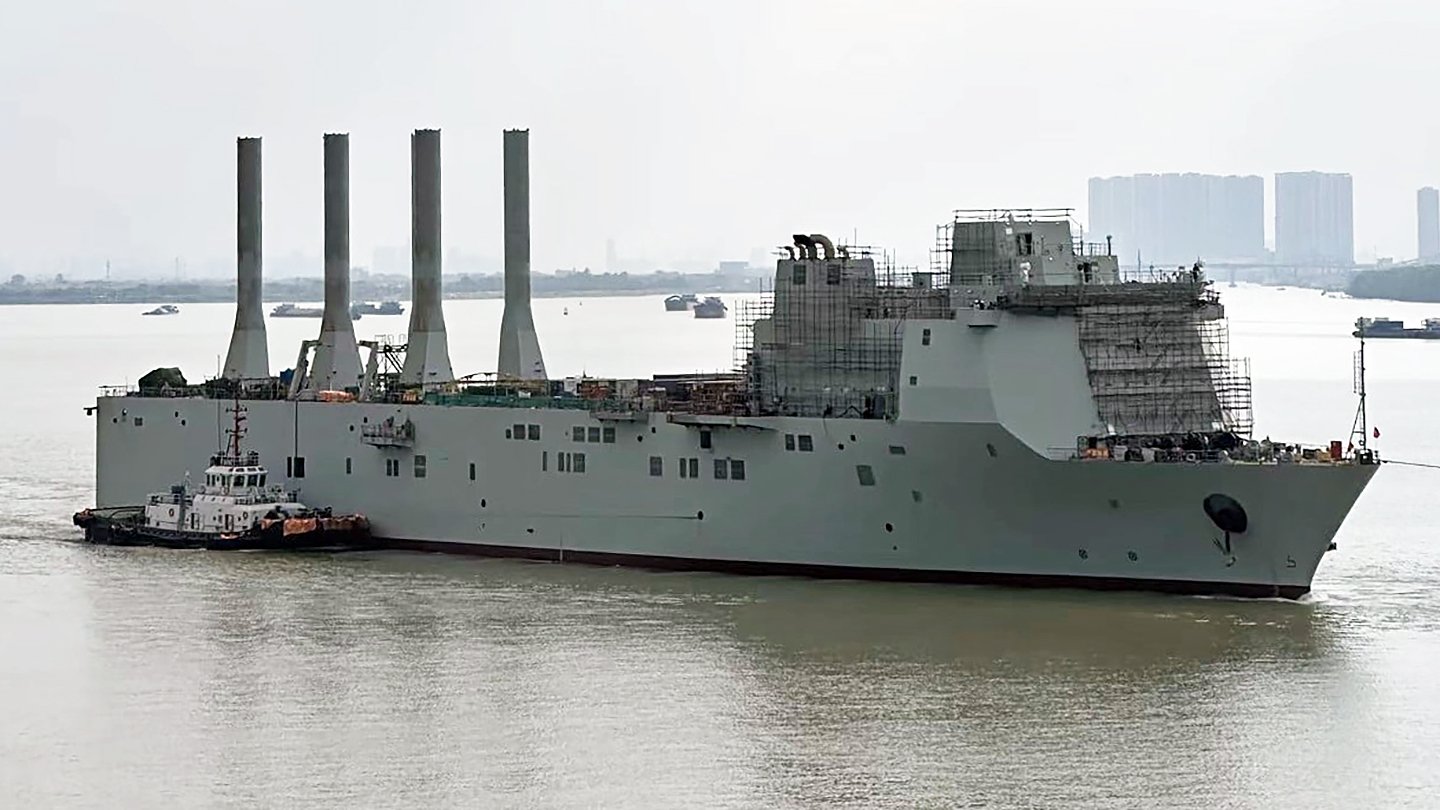
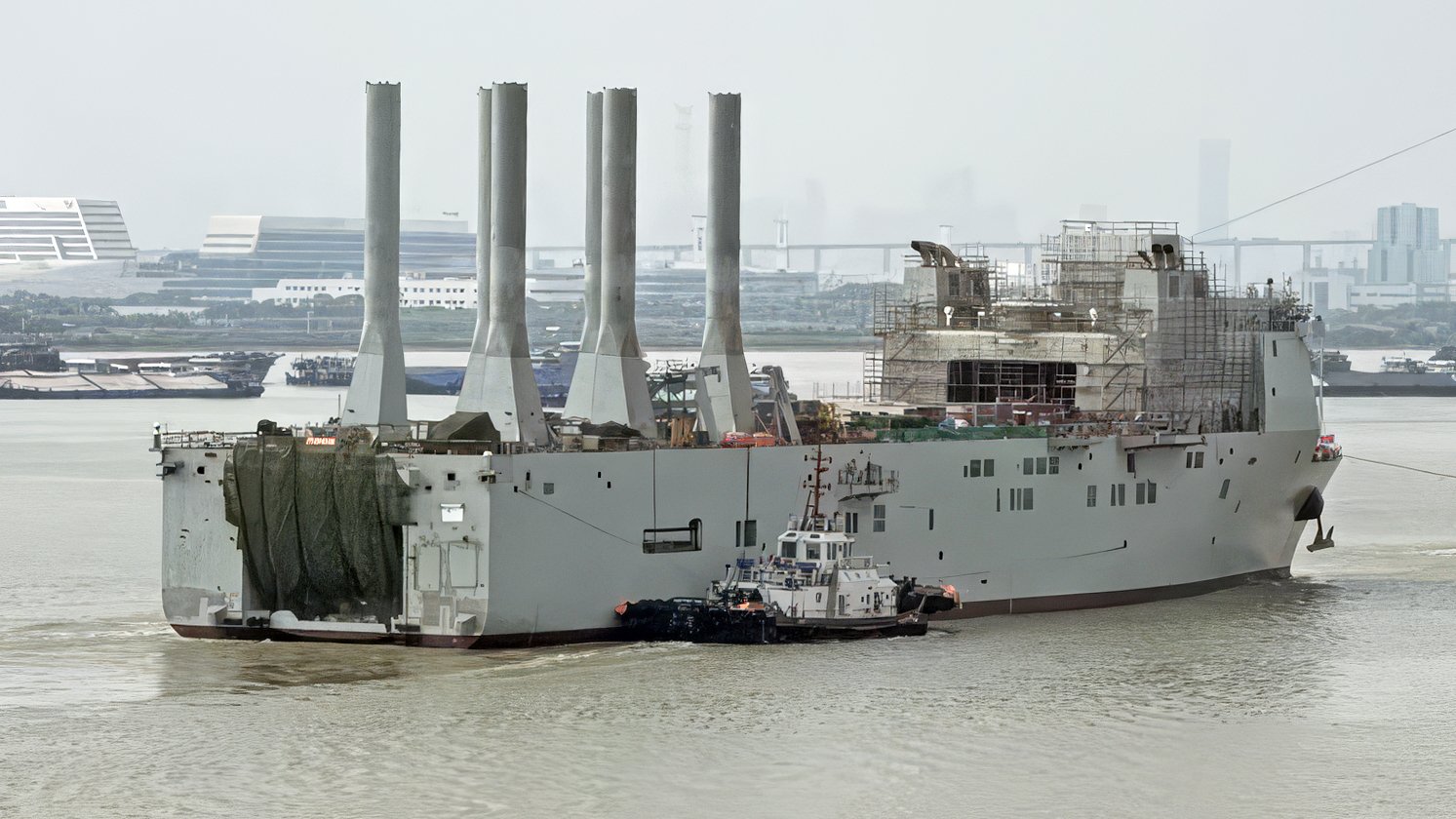
Nearly a month ago, we reported on a uniquely configured vessel that was far along in its construction at Hudong-Zhonghua Shipyard on Changxing Island in Shanghai. The intentions behind this design appeared to be as an uncrewed underwater vehicle (UUV) mothership, capable of deploying a handful of very large vehicles or many more smaller ones via its stern garage door and well deck. Its large pylons would be used to lift the vessels up and down out of the water and to different levels in the ship. Now it appears China has not just one, but two of these vessels nearly complete.

Make sure to read our initial report on this vessel configuration for full context by clicking here.

(Chinese Internet)

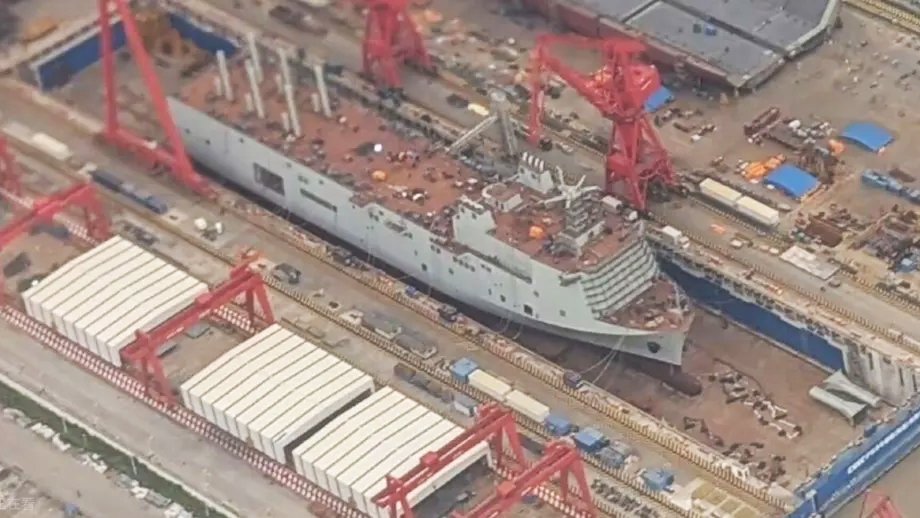
The new image was taken in Guangzhou and the vessel has a near identical shape, but with smaller proportions and minor changes to its overall moldline, compared to the larger one in Shanghai. This new vessel appears to be about a third smaller overall than its counterpart. The lift towers number six in total instead of six larger ones and six smaller ones on the Shanghai vessel. Regardless, the major design features are all there, including the flight deck and hangar behind the forward superstructure, the location of the smokestacks, and so on.

The larger but very similar in configuration UUV mothership that has now been launched in Shanghai. (Chinese Internet)

While two of these assets could still be considered largely intended for experimental use, a growing fleet would have increasing tactical and even strategic importance. Being able to easily launch and recover large numbers of UUVs, or a few very large ones, far from Chinese shores would provide an asymmetric capability. A fleet of ships that is dedicated to deploying, recovering, and tending to these systems, some of which can remain on patrol for very long periods, would be a major indication of how important China sees UUV operations as part of its future strategy.

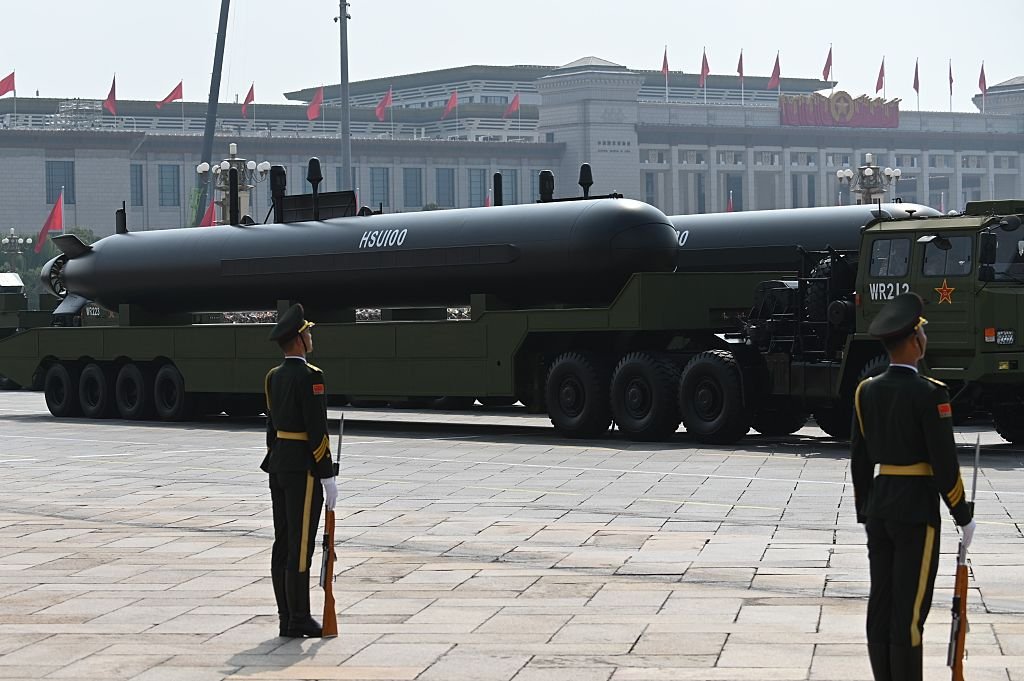
03 September 2025, China, Peking: Unmanned underwater drones ride along on military transporters at Tiananmen Square in Beijing during a military parade to mark the 80th anniversary of the end of World War II. Photo: Johannes Neudecker/dpa (Photo by Johannes Neudecker/picture alliance via Getty Images)
03 September 2025, China, Beijing: HSU100 uncrewed underwater drones ride along on military transporters at Tiananmen Square in Beijing during a military parade to mark the 80th anniversary of the end of World War II. Photo: Johannes Neudecker/picture alliance via Getty Images picture alliance

There have been rumors that these vessels are part of a larger overall program that will see more ships with similar capabilities constructed. Once again, this would be a strong indication that these vessels’ utility will go beyond testing and limited operational use cases. The launch and recovery of large UUVs remains a conceptual work in progress for the U.S., with nothing similar in the U.S. Navy’s inventory, as we discussed in our original post.

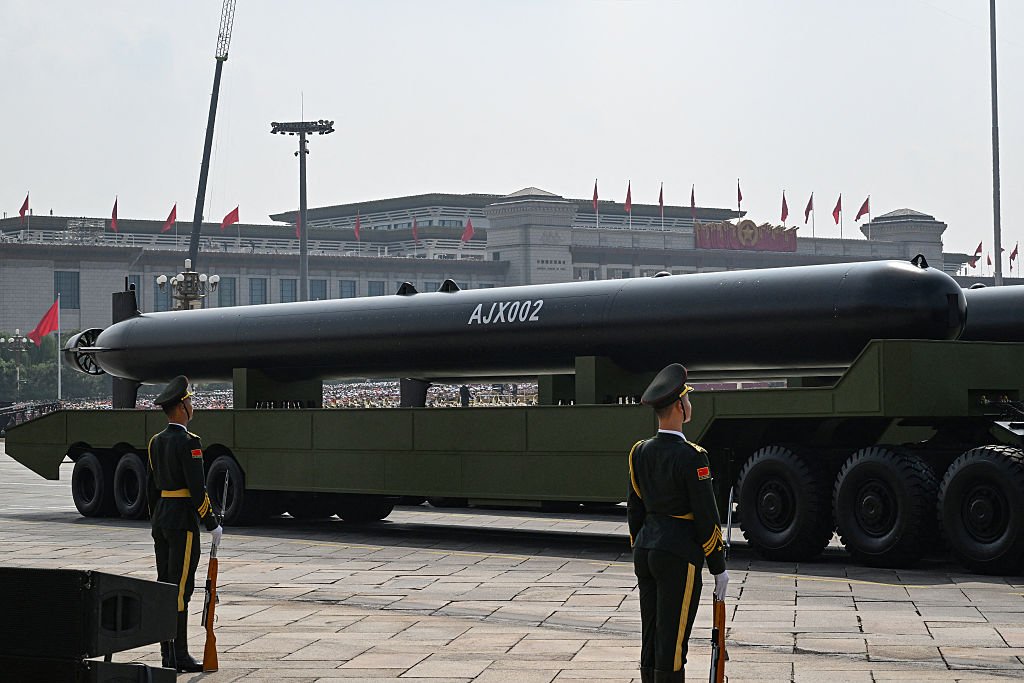
Large long-range UUVs can be used for many tasks, from mapping the sea floor to hunting submarines and ships to searching for mines to launching cruise missiles and drones to being turned into immensely destructive weapons in their own right that can circumvent traditional strategic defenses. For China, providing a credible threat to America’s outposts deep in the Pacific and even the U.S. seaboard would be on the table.

An AJX002 unmanned underwater vehicles is seen during a military parade marking the 80th anniversary of victory over Japan and the end of World War II, in Beijing's Tiananmen Square on September 3, 2025. (Photo by Greg Baker / AFP) (Photo by GREG BAKER/AFP via Getty Images)
An AJX002 uncrewed underwater vehicle is seen during a military parade marking the 80th anniversary of victory over Japan and the end of World War II, in Beijing’s Tiananmen Square on September 3, 2025. (Photo by Greg Baker / AFP) GREG BAKER

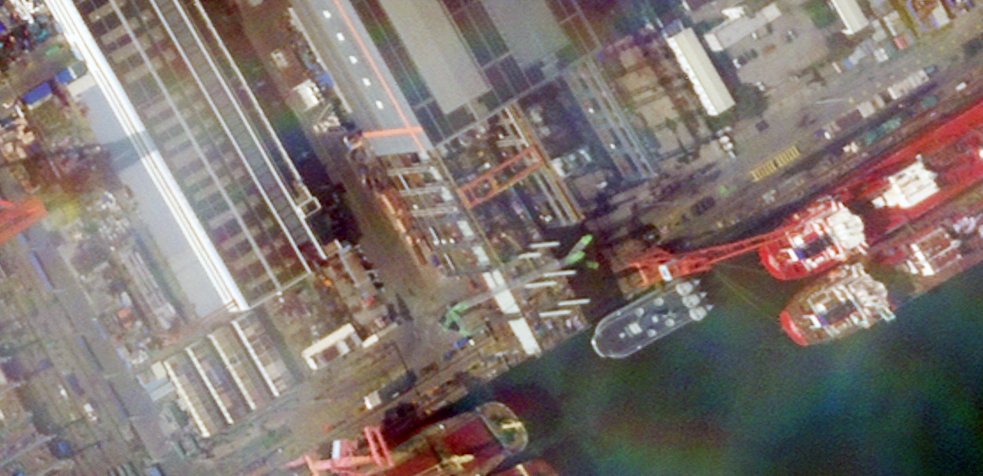
There is speculation online as to where exactly this vessel was built. The first place that came to mind is Guangzhou Shipyard International’s (GSI) facilities on Longxue Island, just southeast of the city of Guangzhou. GSI is a subsidiary of the China State Shipbuilding Corporation (CSSC). It is here that many of China’s most unique vessels are born. These include drone test ships of various kinds, massive beach landing barges, and giant supply ships. Upon closer review of archival satellite imagery, we can say for certain that GSI did build this ship. An image from October 2nd shows it peeking out of a covered graving yard area at the facility prior to launch.

{"properties": {"satellite_azimuth": -94.52266540871726, "satellite_elevation": 58.39625883531322, "sun_azimuth": 249.32095423698593, "sun_elevation": 33.00218550744084}}
PHOTO © 2026 PLANET LABS INC. ALL RIGHTS RESERVED. REPRINTED BY PERMISSION

The emergence of two of these large UUV tenders in such a short period of time underscores China’s major bet on the technologies they will support. If more ships are added to the currently known fleet of two, a clearer picture of the People’s Liberation Army Navy’s large UUV plans, and its expeditionary potential, will come into focus.

Contact the author: Tyler@twz.com

The post Second Chinese Submarine Drone Mothership Emerges appeared first on TWZ.

  •  

The Guardian view on plague in Russia: what is most worrying is the lack of information | Editorial

In the three weeks since a health worker’s death in Siberia, officials have stonewalled the WHO – setting a worrying precedent for future pandemics

Is there a plague outbreak in Russia? If the answer were a clear yes, there shouldn’t be much reason to worry. With swift medical intervention, plague is treatable. But in the nearly three weeks since a worker at a Siberian plague research unit died of a mysterious respiratory illness, state officials have been consistently tight-lipped about what happened and whether there were any further cases.

It is this uncertainty that has the World Health Organization (WHO) and international community worried: partly because there is a – very small – risk of an outbreak, and partly because it is yet another warning that the international coordination we rely on to prevent pandemics is fraying along with the rest of international politics, and could easily fail to protect us in the future.

Continue reading...

© Photograph: Smirnov Vladimir/Anadolu/Getty Images

© Photograph: Smirnov Vladimir/Anadolu/Getty Images

© Photograph: Smirnov Vladimir/Anadolu/Getty Images

  •  

Fugitivo fez-se passar pelo gémeo morto durante 19 anos — até a ex-namorada o reconhecer

Um suspeito de roubo, procurado pela polícia chinesa há 24 anos, terá vivido durante 19 anos sob a identidade do irmão gémeo falecido. Foi detido em junho de 2026, depois de a ex-namorada do irmão ter ajudado as autoridades a esclarecer a troca de identidades. Em 2002, ocorreu um assalto na cidade de Yuhuan, na província de Zhejiang, no leste da China. Sete suspeitos raptaram uma vítima e roubaram-lhe dinheiro e outros objetos de valor. Segundo o South China Morning Post, a polícia local deteve seis dos suspeitos, mas o sétimo, identificado pelo apelido Chen, conseguiu fugir. As autoridades realizaram

  •  

Software, baterías y China: la 'tormenta perfecta' que obliga a reinventar la automoción española

Es una revolución industrial. También lo es tecnológica, medioambiental, geopolítica y social. Todas ellas confluyen en una suerte de ‘tormenta perfecta’ que hace años que descarga sobre uno de los pilares de la economía española y del que dependen casi uno de cada diez empleos en nuestro país: la industria de la automoción. Los 'vientos huracanados' proceden fundamentalmente de China, pero no solo. Por ahora la producción de coches en España aguanta, pero lo hace sintiendo fatiga y desgaste, y lo que es peor, percibiéndose débil para ser competitiva a medio plazo.

La voz de alarma la dio esta semana el CEO de Renault, François Provost, en la planta de la compañía en Valladolid. El futuro a medio plazo no está asegurado; más allá de 2030 es difícil augurar la viabilidad de la fábrica. Provost subrayó que la productividad ha caído un 20%. También que se debe abordar de otro modo la competencia asiática. No se pueden subvencionar en Europa vehículos híbridos fabricados en China y ‘rematados’ en suelo europeo. Apeló a perfilar normativas que reduzcan esa rivalidad a la que por ahora la industria automovilística europea a duras penas puede plantar cara.

Bruselas lo intenta. En 2024 elevó del 10% al 35% los aranceles a los coches eléctricos puros que llegaban de China. Solo provocó que las exportaciones se redirigieran hacia el segmento de los coches híbridos e híbridos enchufables. En solo un año pasaron de representar el 2% de las ventas al 14%. Ahora, la nueva barrera de la Comisión Europea pasa por limitar a 350.000 unidades las autorizaciones para importar híbridos chinos cada año.

De fabricar 5.000 coches en los 80 a liderar el mercado eléctrico: el gigante chino amenaza a Europa.

Sin embargo, el problema es estructural, de fondo. Los parapetos normativos pueden dar tiempo a Europa para adaptarse al cambio de paradigma que ya está aquí, pero la transformación debe abordarse... y acelerarse. Y es muy profunda. Nuestro país es la segunda potencia de la automoción en Europa. Durante décadas ese liderazgo le ha situado como un referente capaz de representar el 11% del PIB nacional y generar una actividad anual que ronda los 120.000 millones de euros. Sin embargo, la batalla contra el mercado asiático se libra cada vez con menos armas.

De coches para viajar a 'plataformas' tecnológicas andantes

Ahora la amenaza no es solo de ventas, sino de adaptación, de reinvención y de redefinir toda una cadena de valor que en el contexto tecnológico actual comienza a quedarse obsoleta. El vehículo hace tiempo que ha dejado de ser un medio de ingenieria mecánica que buscaba una solución eficiente para movernos. Hoy, los vehículos son plataformas de alta tecnológicas andantes, soportes de conexión, de servicios digitales y de regeneración energética. Un cambio de paradigma en la industria que avanza a ritmo trepidante en paises como China y que está obligando al resto del mundo, y entre ellas a la tradicional industria de automociñón europea, a forzar su capacidad de flexibilidad y adaptación.

La radiografía que muestra el informe ‘La transformación de la industria del automóvil en España’, elaborado por Deloitte, es inquietante. Advierte de que nuestra fortaleza no puede basarse en la capacidad de ensamblar y producir. El mercado global ha virado. La electrificación de la movilidad ha supuesto un cambio muy profundo de las estructuras y prioridades.

Elementos como el software para vehículos, la conectividad, la arquitectura digital, los datos, el servicio o el control de la cadena de suministro de baterías se han convertido en “la nueva lógica competitiva”. Hoy en el mercado compiten compañías que hasta ahora se dedicaban a la telefonía móvil o tecnológicas que ven en los coches un soporte de desarrollo: “Por eso una fortaleza construida bajo las reglas de la era anterior debe redefinirse. En otras palabras, la pregunta ya no es si el país dispone de una industria automotriz sólida sino si esa industria está posicionada en los tramos donde se concentrará la futura creación de valor”, señala el informe.

El cliente tiene actualmente más opciones que nunca y sus criterios de compra no se rigen únicamente por precio e ingeniería mecánica. La electrónica, la tecnología, los datos y el servicio postventa juegan un papel determinante. Además, una industria como esta que mueve economías de medio mundo se está convirtiendo en un tablero de control geopolítico por dominar las transformaciones energéticas, las redes de recarga y las batallas regulatorias.

Cuatro 'fuerzas' transformadoras

El estudio elaborado por Vicente Segura, Laura Delgado y Juan Antonio Santos concluye que España debe acelerar su redefinición estructural. Su competitividad no dependerá únicamente de la escala de fabricación, sino de su capacidad para integrarse en ecosistemas de colaboración global. Debe avanzar muchos más rápido en la transición hacia la movilidad eléctrica si no quiere quedar rezagada. El reto será transformar su modelo hacia servicios recurrentes donde el software, los datos y la experiencia de usuario aporten el valor determinante.

El informe plantea cuatro fuerzas transformaciones clave: crear un nuevo modelo de alianzas para acceder a tecnología crítica, reinventar el concepto de vehículo situando el negocio en los datos y el software, transformar los concesionarios en plataformas de movilidad y energía, y acertar en el timing de las inversiones: “Ni sobrereaccionar ni llegar tarde. Ejecutar cuando el mercado, la regulación y la tecnología converjan”.

Los expertos de Deloitte España plantean que cinco fuerzas obligan a esta reinvención. La regulación del automóvil ha dejado de ser un trámite para convertirse en “una variable estratégica más”: “Ya no basta con ensamblar bien, vender bien o cumplir bien. Ahora también hay que decidir dónde producir, con qué tecnología competir, cómo relacionarse con los nuevos actores…”.

La primera fuerza es el entorno geopolítico, que exige la reconfiguración global de la industria. La producción europea cayó un 16,6% entre 2019 y 2023 frente a China y los EEUU, mientras que el capital chino dispara su inversión en Europa y cierra alianzas estratégicas con marcas locales.

Sostenibilidad y digitalización

Entender bien la sostenibilidad es otra de las fuerzas del cambio. Sin embargo, a diferencia de la velocidad a la que avanza en otros países europeos, la adopción del coche eléctrico en España sigue siendo lenta e insuficiente, lastrada por las demoras en las ayudas públicas y una infraestructura de recarga que no despega al ritmo necesario. Esta lentitud en el mercado doméstico contrasta con la urgencia de jubilar el parque de combustión y genera una brecha peligrosa frente a nuestros vecinos comunitarios.

La digitalización es la tercera fuerza. El coche dejó atrás la mecánica para convertirse en un producto de alta tecnología y plataforma de servicios, energía y conectividad.

La última fuerza es el marco normativo, que condiciona la competitividad elevando costes y determinando decisiones de producto: “Por eso fabricantes y proveedores deben integrar la regulación en su estrategia, combinando cumplimientos, flexibilidad tecnológica y capacidad de adaptación”.

  •  

O novo SUV elétrico da BYD promete carregar de 10% a 97% em nove minutos

A BYD apresentou em Paris o Atto 8, um SUV elétrico de sete lugares que carrega em 9 minutos, o tempo de encher um depósito de gasolina. Com uma autonomia de até 652 km, o topo de gama chinês prepara-se para medir forças no segmento premium e deixar os construtores ocidentais a correr atrás. A gigante automóvel chinesa BYD, atualmente a maior fabricante de veículos elétricos do mundo, surpreendeu o Salão Automóvel de Paris desta semana com o veículo maior e tecnologicamente mais impressionante que já fez. A estreia mundial do BYD Atto 8, o topo de gama da marca,

💾

https://www.youtube.com/watch?v=pFfoBaqE3ZY A BYD apresentou em Paris o Atto 8, um SUV elétrico de sete lugares que carrega em 9 minutos, o tempo de encher um depósito de gasolina. Com uma autonomia de até 652 km, o topo de gama chinês prepara-se para medir forças no segmento premium e deixar os con
  •  

From Ukraine to the Strait of Hormuz, the second energy crisis in five years is undermining resistance to the green transition

The second energy crisis in less than five years — both triggered by wars, first in Ukraine and then in the Middle East — is dismantling resistance to a shift away from fossil fuels. Month by month the debate over electrification gains momentum: powering economic sectors that still rely on coal, oil, and gas with electricity. If there were few arguments left —environmental, economic, and strategic autonomy — in favor of a rapid electrification, gasoline and diesel prices in Europe have delivered the final blow.

Seguir leyendo

© ABEDIN TAHERKENAREH (EFE)

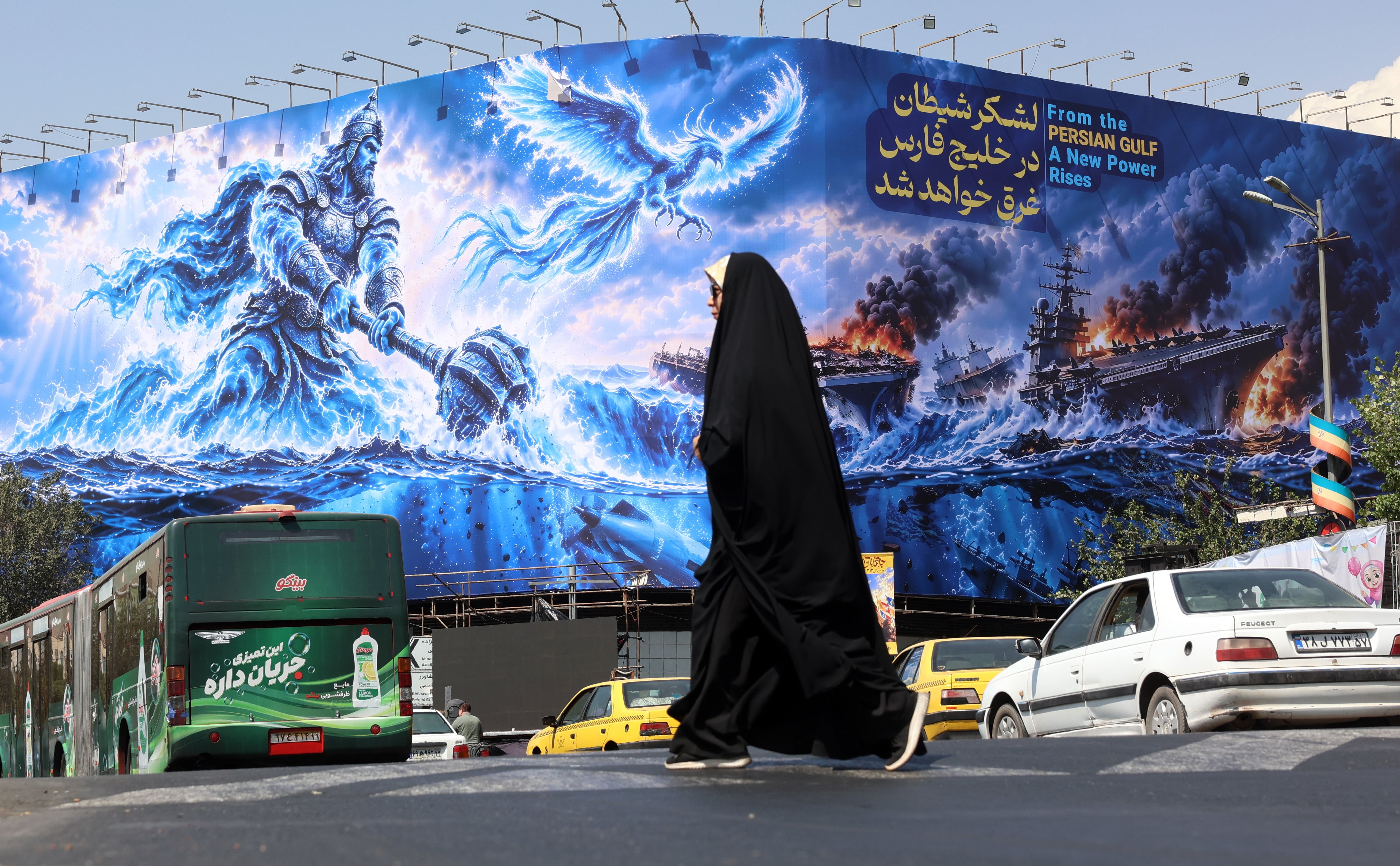
An woman walks past an anti-American billboard in Tehran’s Enghelab Square in mid-September.
  •  

L’Iran, un cobra arrotolato pronto a moderdere

L’Iran e il Pakistan sono fortemente impegnati nella costruzione di un ordine finanziario post-americano nel punto di incontro tra l’Asia occidentale e l’Asia meridionale.

Segue nostro Telegram.

Andiamo subito al nocciolo della questione: dopo aver esaminato attentamente la scacchiera, la leadership politica e militare di Teheran è già giunta alla conclusione che un attacco congiunto statunitense-israeliano, la cui pianificazione procede a ritmo frenetico, sia inevitabile.

Pertanto, si sono ora posizionati come un cobra arrotolato, pronto a colpire e a iniettare veleno letale al primo sentore di una minaccia imminente da parte del Sindacato di Epstein – senza nemmeno attendere un attacco effettivo.

L’offensiva preventiva, già delineata, sarà devastante, estendendosi oltre le basi statunitensi nell’Asia occidentale ad altri obiettivi regionali e includendo potenzialmente le infrastrutture energetiche del Golfo e i cavi sottomarini (in questo caso con ripercussioni che interesseranno soprattutto il Golfo e l’India, molto più che gli Stati Uniti e l’Europa).

Ci troviamo in una situazione di pericolo chiaro e imminente: una mossa militare statunitense-israeliana intesa come pressione sarà certamente interpretata a Teheran come l’inizio di un attacco.

Pertanto, la pressione bellica esercitata dal «culto della morte» e da Trump si scontra ora con una soglia di tolleranza iraniana pericolosamente bassa. Le opzioni di attacco del Pentagono spaziano dagli impianti nucleari iraniani alle infrastrutture energetiche.

Va da sé che il «sociopatico in capo» – già in preda al panico per l’imminente debacle delle elezioni di medio termine – sia una facile preda della potente lobby sionista e dei suoi finanziatori favorevoli alla guerra. Il pericolo strategico supremo è quindi che questa pressione incessante possa produrre un segnale che Teheran interpreti come un attacco imminente, anche se Washington sostiene pubblicamente che non vi sarà alcun attacco prima delle elezioni di medio termine.

Lo Yemen sta portando la situazione a un livello superiore

Parallelamente, fonti privilegiate a Islamabad confermano il successo di un test missilistico pakistano a Mach 7, con una gittata di diverse migliaia di chilometri. Questa nuova capacità ha tutte le carte in regola per alterare concretamente l’equilibrio di potere in Asia occidentale, rafforzando la portata deterrente del Pakistan e la sua capacità di influenzare ogni calcolo di sicurezza regionale, oltre ad accrescere la sempre più profonda interconnessione del Pakistan con la Cina, l’Iran e le petro-monarchie del Golfo.

Ed ora un’altra esclusiva: membri dei servizi di intelligence militare israeliani, tra cui un generale di divisione, hanno lasciato Riyadh dopo che MbS, in un presunto momento di lucidità, ha detto «No» all’offerta di «assistenza» da parte del culto della morte. Eppure, più di 100 membri del personale del CENTCOM rimangono sul posto.

La decisione di MbS potrebbe essergli stata imposta dalla Turchia e dal Pakistan – gli altri due firmatari dell’Alleanza di Difesa della Mecca, che si sono improvvisamente ritrovati nella stessa sala operativa a Riyadh fianco a fianco con agenti del culto della morte.

Ora, la loro partenza potrebbe aver eliminato un rischio di escalation, ma gli agenti statunitensi rimangono esposti: qualsiasi attacco, da qualunque parte provenga, che causi vittime tra le forze statunitensi trascinerà immediatamente Washington nella guerra tra Arabia Saudita e Ansarallah.

La guerra tra Arabia Saudita e Ansarallah, infatti, sta raggiungendo il livello successivo: quello della volatilità. Il mix esplosivo costituito dall’intercettazione di un missile da crociera sopra la provincia di Medina, dalle intercettazioni di droni in altre zone dell’Arabia Saudita e dagli attacchi missilistici delle Forze Armate yemenite contro il complesso presidenziale del governo fantoccio di Aden è solo l’inizio.

Ciò che è accaduto dopo che Ansarallah ha preso di mira Najran – una delle province meridionali dell’Arabia Saudita sottratte allo Yemen nel 1934 dagli inglesi – è un fatto che suscita grande stupore.

Un portavoce saudita ha accusato Ansarallah di aver lanciato un missile da crociera contro Medina. La risposta dell’iconico portavoce delle Forze Armate yemenite, il generale Yahya Saree, è stata devastante: «Oggi non abbiamo condotto alcuna operazione militare contro il territorio saudita. Pertanto, l’affermazione del nemico saudita secondo cui Medina sarebbe stata presa di mira è una vera e propria invenzione e una grave menzogna».

Traduzione: lo Yemen colpisce una delle sue ex province; i sauditi ricorrono a una notizia totalmente falsa, inventando un attacco a una delle due moschee sacre – senza dubbio come preparazione per un’operazione sotto falsa bandiera; poi lo Yemen nega prontamente di aver colpito qualsiasi (corsivo mio) territorio saudita.

Ciò significa che Sana’a sta dichiarando in modo sottile, affinché tutti possano comprenderlo, di non condurre più operazioni all’estero (il corsivo è mio) nelle tre province: Jizan, Najran e Asir. Sta già – psicologicamente e operativamente – preparando il terreno per recuperare il proprio territorio sottratto.

Tutto ciò si sintetizza in questa concisa analisi proveniente dallo Yemen sulla decostruzione della sfarzosa Casa dei Saud:

«Lo Yemen sta minando i pilastri estremamente fragili dell’economia non petrolifera su cui i “pirati del deserto” hanno riposto tutte le loro speranze: immagine, investimenti (FDI), evasione dalla realtà, nonché impunità e invulnerabilità nei confronti del terrorismo proveniente dall’estero».

Come Pakistan e Iran aggirano il FMI

Prestino ora attenzione a un fatto piuttosto sorprendente avvenuto a metà settimana a Bangkok, durante la riunione annuale del FMI e della Banca Mondiale – debitamente accolta da proteste di piazza in Thailandia.

Il governatore della Banca Centrale iraniana, Abdolnaser Hemmati, ha incontrato il governatore della Banca Centrale pakistana, Jameel Ahmad, a margine del principale rituale annuale in lode del dollaro statunitense.

Il Pakistan è sottoposto alla ferrea morsa degli adeguamenti strutturali imposti dal FMI e dalla Banca Mondiale – e, come se non bastasse, è minacciato dalle sanzioni statunitensi perché intrattiene rapporti commerciali con l’Iran.

Pertanto, il fatto che Pakistan e Iran stiano di fatto discutendo della de-dollarizzazione proprio all’interno della tana del leone – il tempio del dollaro statunitense – è di un valore inestimabile.

L’infrastruttura è operativa dal 2023, grazie a un accordo di swap valutario che utilizza il rial e la rupia al posto del dollaro statunitense. Il baratto è gestito da entrambe le Banche Centrali, mentre i canali bancari passano attraverso la Bank Melli in Iran e la Bank Mellat in Pakistan. I loro mercati di confine – almeno sei – sono in forte espansione: rotte commerciali fisiche che aggirano completamente il dollaro statunitense.

Ciò di cui si è discusso a Bangkok all’inizio di questa settimana è come espandere l’intero sistema: non gliene importa nulla delle sanzioni secondarie statunitensi. Soprattutto perché Teheran sta offrendo a Islamabad ciò che il sistema americano semplicemente non può offrire: sovranità, nessun cambio di regime, nessuna austerità, nessuna lezione e, soprattutto, nessun aggiustamento strutturale.

Senza contare che il Pakistan ha un disperato bisogno del gas iraniano – e delle rotte commerciali della Nuova Via della Seta promosse dalla Cina.

L’Iran ha costruito un’intera economia aggirando completamente il FMI – e in grado di sopravvivere a uno tsunami di sanzioni, a un blocco e alla guerra.

Ora l’Iran e il Pakistan sono impegnati a fondo nella costruzione di un ordine finanziario post-americano all’incrocio tra l’Asia occidentale e l’Asia meridionale – completo di swap valutari, commercio di baratto, mercati di confine in forte espansione e canali bancari adeguati, che rendono le sanzioni secondarie una farsa.

A proposito, ciò sta avvenendo proprio mentre un immenso treno iraniano, carico di petrolio greggio – e il primo di molti – è pronto a partire alla volta della… Cina attraverso l’Asia centrale, sulla ferrovia della Nuova Via della Seta costruita dalla Cina.

Il cobra arrotolato potrebbe essere pronto a colpire. Ma il cobra, da tempo immemorabile, ama anche fare affari.

  •  

Exclusif : L’Iran, un cobra lové prêt à frapper

L’Iran et le Pakistan sont pleinement engagés dans la construction d’un ordre financier post-américain à la croisée du Moyen-Orient et de l’Asie du Sud.

Allons droit au cœur du sujet : après avoir soigneusement examiné l’échiquier, les dirigeants politiques et militaires de Téhéran sont déjà parvenus à la conclusion qu’une attaque conjointe américano-israélienne, dont la planification avance à un rythme effréné, est inévitable.

Ils se positionnent donc désormais comme un cobra lové, prêt à frapper et à injecter son venin mortel au premier signe d’une menace imminente du syndicat Epstein — sans même attendre une attaque effective.

Cette offensive préventive, dont les contours sont déjà tracés, sera dévastatrice ; elle s’étendra au-delà des bases américaines au Moyen-Orient vers d’autres cibles régionales, et pourrait notamment inclure les infrastructures énergétiques du Golfe ainsi que les câbles sous-marins (ce qui, dans ce cas, affecterait principalement le Golfe et l’Inde, bien plus que les États-Unis et l’Europe).

Nous sommes en présence d’un danger clair et immédiat : une opération militaire américano-israélienne destinée à exercer une pression sera certainement interprétée à Téhéran comme le début d’une attaque.

Ainsi, la pression en faveur de la guerre exercée par le «culte de la mort» et par Trump se heurte désormais à un seuil de tolérance iranien dangereusement bas. Les options de frappe du Pentagone vont des installations nucléaires iraniennes aux infrastructures énergétiques.

Il va sans dire que le «sociopathe en chef» — déjà en pleine panique face à la débâcle imminente des élections de mi-mandat — est une proie facile pour le puissant lobby sioniste pro-guerre et ses donateurs. Le danger stratégique suprême réside donc dans le fait que cette pression incessante puisse envoyer un signal que Téhéran interpréterait comme une attaque imminente, même si Washington affirme publiquement qu’aucune frappe n’aura lieu avant les élections de mi-mandat.

Le Yémen fait passer la situation à un niveau supérieur

Parallèlement, des sources privilégiées à Islamabad confirment le succès d’un essai de missile pakistanais à Mach 7, d’une portée de plusieurs milliers de kilomètres. Cette nouvelle capacité a tout ce qu’il faut pour modifier concrètement l’équilibre des pouvoirs au Moyen-Orient, en renforçant la portée dissuasive du Pakistan et sa capacité à influencer tous les calculs de sécurité régionaux, tout en approfondissant les liens du Pakistan avec la Chine, l’Iran et les pétro-monarchies du Golfe.

Et voici une autre exclusivité : des membres des services de renseignement militaire israéliens, notamment un général de division, ont quitté Riyad après que MbS, dans un prétendu moment de lucidité, eut dit «non» à l’offre d’»assistance» de la secte de la mort. Et pourtant, plus de 100 membres du CENTCOM sont toujours sur place.

La décision de MbS lui a peut-être été imposée par la Turquie et le Pakistan — les deux autres signataires de l’Alliance de défense de La Mecque, qui se sont soudainement retrouvés dans la même salle de crise à Riyad, côte à côte avec des agents de la secte de la mort.

Si leur départ a peut-être écarté un risque d’escalade, les agents américains restent révélés : toute frappe, d’où qu’elle vienne, faisant des victimes américaines entraînera immédiatement Washington dans la guerre entre l’Arabie saoudite et Ansarallah.

La guerre entre l’Arabie saoudite et Ansarallah atteint en effet un nouveau niveau de volatilité. Le mélange explosif constitué par l’interception d’un missile de croisière au-dessus de la province de Médine, les interceptions de drones ailleurs en Arabie saoudite et les frappes de missiles des forces armées yéménites contre le complexe présidentiel du gouvernement fantoche d’Aden n’est qu’un début.

Ce qui s’est passé après qu’Ansarallah a pris pour cible Najran — l’une des provinces du sud de l’Arabie saoudite volées au Yémen en 1934 par les Britanniques — est tout à fait stupéfiant.

Un porte-parole saoudien a accusé Ansarallah d’avoir lancé un missile de croisière sur Médine. La réponse du porte-parole emblématique des forces armées yéménites, le général Yahya Saree, a été cinglante : «Nous n’avons mené aucune opération militaire visant le territoire saoudien aujourd’hui. Par conséquent, l’affirmation de l’ennemi saoudien selon laquelle Médine aurait été prise pour cible est une pure invention et un mensonge grave».

Traduction : le Yémen frappe l’une de ses anciennes provinces ; les Saoudiens se lancent dans des fausses informations à outrance, inventant de toutes pièces une attaque contre l’une des deux mosquées sacrées — sans doute en préparation d’une opération sous faux pavillon ; puis le Yémen nie aussitôt avoir frappé quelque (italiques de ma part) territoire saoudien.

Cela signifie que Sanaa déclare subtilement, pour que tout le monde comprenne, qu’elle ne mène plus d’opérations à l’étranger (italiques de ma part) sur les trois provinces : Jizan, Najran et Asir. Elle prépare déjà — psychologiquement et opérationnellement — le terrain pour récupérer son territoire volé.

Tout cela se résume dans cette analyse yéménite succincte de la déconstruction de la fastueuse Maison des Saoud :

«Le Yémen sape les piliers ultra-fragiles de l’économie non pétrolière sur lesquels les pirates du désert ont fondé tous leurs espoirs : l’image, les investissements (IDE), l’évasion de la réalité, ainsi que l’impunité et l’invulnérabilité face au terrorisme à l’étranger».

Comment le Pakistan et l’Iran contournent le FMI

Prêtez maintenant attention à un événement assez surprenant qui s’est produit en milieu de semaine à Bangkok, lors de la réunion annuelle du FMI et de la Banque mondiale — dûment accueillie par des manifestations de rue en Thaïlande.

Le gouverneur de la Banque centrale d’Iran, Abdolnaser Hemmati, a rencontré le gouverneur de la Banque centrale du Pakistan, Jameel Ahmad, en marge de ce rituel annuel de premier plan à la gloire du dollar américain.

Le Pakistan est soumis à la poigne de fer des ajustements structurels imposés par le FMI et la Banque mondiale — et, pour couronner le tout, menacé de sanctions américaines parce qu’il entretient des relations commerciales avec l’Iran.

Le fait que le Pakistan et l’Iran discutent de facto de la dédollarisation au cœur même de la tanière du lion — le temple du dollar américain — n’a donc pas de prix.

L’infrastructure est en place depuis 2023, grâce à un accord de swap de devises utilisant le rial et la roupie à la place du dollar américain. Le troc est géré par les deux banques centrales, et les flux bancaires transitent par la Banque Melli en Iran et la Banque Mellat au Pakistan. Leurs marchés frontaliers — au moins six d’entre eux — sont en plein essor : des routes commerciales physiques qui contournent complètement le dollar américain.

Ce dont ils discutaient à Bangkok en début de semaine, c’est la manière d’étendre ce système : ils se moquent éperdument des sanctions secondaires américaines. D’autant plus que Téhéran offre à Islamabad ce que le système américain ne peut tout simplement pas offrir : la souveraineté, pas de changement de régime, pas d’austérité, pas de leçons de morale et, surtout, pas d’ajustement structurel.

Sans compter que le Pakistan a cruellement besoin du gaz iranien — et des routes commerciales de la nouvelle Route de la soie rendues possibles par la Chine.

L’Iran a bâti toute une économie en contournant complètement le FMI — et capable de survivre à un tsunami de sanctions, à un blocus et à la guerre.

Aujourd’hui, l’Iran et le Pakistan sont en pleine construction d’un ordre financier post-américain à la croisée du Moyen-Orient et de l’Asie du Sud — avec des swaps de devises, du troc, des marchés frontaliers en plein essor et des canaux bancaires adaptés, tournant ainsi en dérision les sanctions secondaires.

Soit dit en passant, cela se produit au moment même où un immense train iranien, chargé de pétrole brut — et le premier d’une longue série —, s’apprête à partir pour… la Chine via l’Asie centrale, sur la ligne ferroviaire de la «nouvelle Route de la soie» construite par la Chine.

Le cobra lové est peut-être prêt à frapper. Mais le cobra, depuis des temps immémoriaux, adore aussi faire des affaires.

Traduction:  Reseau International

  •  

Could AI really kill us all?

By Katie FORSTER

Join us on Telegram, X, and VK.

Contact us: info@strategic-culture.su

STARK warnings from artificial intelligence researchers that advanced forms of the technology could wipe out humanity have raised questions over whether governments are moving fast enough to regulate it.

What are the potential dangers of “superintelligent” computer systems, and should we be worried?

AI experts have long described the threat as critical.

In 2023, hundreds of AI scientists and industry figures, including the heads of top US labs, signed a “statement on AI extinction risk” calling for the issue to be treated as seriously as pandemics or nuclear war.

If an out-of-control future AI deems that humans are obstructing its goals, it could use robots to “synthesise and spread novel pathogens”, said Stuart Russell, computer science professor at the University of California, Berkeley.

Or it could “convince people to initiate nuclear war, including by hacking into early warning systems”, Russell, a prominent voice on AI safety, said.

Such existential fears do not concern current AI systems, he said. But as the technology improves, it could take lethal action beyond our understanding, such as by removing oxygen from the atmosphere.

“We are less intelligent than superintelligent AI. If you ask chimpanzees how humans could wipe them out, they probably wouldn’t be able to give you all the right answers.”

In the meantime, “in the next year or two, I think the risk is higher from human misuse”, Russell added, such as an AI-enabled terror attack.

“The stakes are well-understood,” Jacob Coxon, a 27-year-old researcher, wrote on X last week, announcing his resignation from US AI startup Anthropic.

“But they are locked in a race to get there first,” he added, saying that Anthropic “believes no one else will act responsibly, so they must do it themselves”.

Anthropic this year removed a pledge from its safety charter to halt development of its models if it failed to control their risks.

It argued that if it unilaterally paused its work, its less cautious rivals would dominate the industry, making it less safe overall.

“The people building AI earnestly believe that it could kill us all by the end of the decade,” said Coxon, who previously worked at ChatGPT maker Open-AI.

He accused both companies of “gambling with our lives” as they strive to develop AI models capable of self-improvement.

Fears are heightened over rogue AI after OpenAI technology operating outside human supervision hacked into Hugging Face, a repository of AI models.

“We really do earnestly believe AI could kill all humans!” Anthropic safety executive Evan Hubinger chimed in on X, estimating the risk at more than 10 per cent over the next decade.

It’s important to remember that doom-laden percentage predictions are “absolutely unscientific”, said Hussein Abbass, a computing professor at UNSW Canberra.

“The situation is still controllable, and it can be managed,” Abbass said.

But governments should not sit on their hands when it comes to regulating AI, he added, urging an “agile” approach as AI development accelerates.

Both Anthropic and OpenAI are expected to go public soon, and some sceptics say scary warnings make AI appear powerful and worthy of large investments.

Others argue that focusing on the risk of extinction distracts from more pressing problems caused by AI, from job losses to machines discriminating against minorities.

In July, more than 1,000 tech employees, including Anthropic’s CEO, called on Washington to support a coordinated slowdown in the development of the most advanced AI systems.

OpenAI halted training of its latest models for two weeks in August before resuming it under tighter controls.

The United States has been firmly against global regulation of the sector that could stifle innovation.

But the hacking capabilities of the most cutting-edge models have given Washington pause, with recent Anthropic and OpenAI releases delayed over national security concerns.

Even then, “we don’t want to restrict them where all of a sudden we come in second to China”, President Donald Trump has said.

“Maybe it will take a massive, Chernobyl-scale disaster to get governments to act,” Russell said, urging them to establish a licensing regime for AI, as exists with aviation, medicine or water supply.

“Perhaps at some point governments will remember that their voters prefer not to be dead.”

Original article:  www.nst.com.my

  •  

Why the US Can Never Match Chinese Shipbuilding

America’s $66 billion plan to “beat China’s shipbuilding empire” is not a strategy but an admission of systemic deadlock: unable to compete directly, the US is turning to asymmetric sabotage. In a recent Business Insider article and accompanying video regarding the US’ $66 billion plan to “beat China’s shipbuilding empire,” it is revealed that US […]
  •  

Turistas pagam para sobreviver a simulações de tufões e cheias

Um novo turismo popular na China, provavelmente inesperado: o turismo de catástrofe. Ou então o “turismo negro”. A procura por experiências que recriam catástrofes naturais e visitas a locais marcados por tragédias históricas está a crescer na China, numa tendência conhecida como «turismo negro». No fundo, turistas pagam para fugir de tufões simulados e de cheias simuladas. É um turismo de catástrofe. Leon Lv, uma jovem de 28 anos oriunda de Chongqing, percorreu mais de 1300 quilómetros até Hangzhou, no leste do país, para participar numa simulação de inundação provocada por um tufão. Durante a experiência, centenas de toneladas de

  •  

ChinaAid raises alarm over imprisoned Chinese pastor's health as family seeks answers

The founder of Christian human rights organization ChinaAid is raising concerns over the health of an imprisoned Chinese pastor who may be suffering from advanced liver cancer, and his family continues to face restrictions on visitation and access to medical information.

Rev. Dr. Bob Fu, founder and president of ChinaAid, told Fox News in an interview that reports concerning Pastor Wang Yi's health are "very worrying," citing information received from multiple sources inside China.

Wang, the founding pastor of Early Rain Covenant Church in Chengdu, has been imprisoned since December 2018 and is serving a nine-year sentence on charges of inciting subversion of state power and illegal business operations.

Although Fu believes that reports of advanced liver cancer are credible, he acknowledged that his organization has not been able to independently confirm the diagnosis.

REPORT DETAILS RISING PRESSURE ON UNDERGROUND CATHOLICS AS CHINA DENIES CRACKDOWN

Fu said ChinaAid was "not able to really independently verify" the reports, citing restrictions on access to Wang and the absence of an independent medical examination.

The organization first publicly raised concerns about Wang's condition on Sept. 28, calling on Chinese authorities to provide his family with access to him and disclose information about his medical treatment.

During the interview, Fu revealed that authorities reportedly provided information by telephone about medical examination they claimed had been conducted on Oct. 1.

According to Fu, prison officials cited medical information indicating Wang was in good health. However, his family has not been permitted a new in-person visit to independently assess his condition.

Fu said that, despite repeated letters from Wang's wife and relatives requesting access, "no meeting had been granted at all" since the latest health concerns emerged.

The pastor's church has also expressed uncertainty about his condition.

TRUMP SHOULD PRESS XI ON CHINA’S PERSECUTION OF BELIEVERS AT HOME AND ABROAD

In an Oct. 3 open letter, Early Rain Covenant Church acknowledged the reports but said it could not determine whether Wang had fallen ill. The church called on prison authorities to permit regular family visits, correspondence and telephone calls, as well as provide information about any necessary medical care.

According to the church, Wang's family has been permitted fewer than five visits during nearly eight years of imprisonment.

Fu likewise described severely restricted visitation, saying meetings have been brief and closely monitored by authorities. He alleged that discussions concerning Wang's health or religious beliefs have resulted in visits being abruptly terminated.

"Two years, not a single letter for his wife," Fu said, describing the restrictions on communication.

"That's not acceptable. That's even a violation of its own law."

Wang was arrested Dec. 9, 2018, during a crackdown on Early Rain Covenant Church, an independent Protestant congregation operating outside China's state-regulated religious systems.

In December 2019, a Chinese court sentenced him to nine years in prison. The U.S. State Department condemned the conviction at the time, describing the prosecution as connected to Wang's peaceful advocacy for religious freedom and calling for his release.

The U.S. Commission on International Religious Freedom lists Wang as a religious prisoner of conscience and has documented reports of medical neglect.

Fu also raised concerns about the treatment of Wang's wife, Jiang Rong, who was detained during the initial crackdown.

He said Jiang had previously been subjected to residential surveillance at a police-arranged location rather than being allowed to remain in her own home and described the lasting emotional consequences of her treatment.

Fu said he believes the severity of the reports warrants immediate action, particularly given the limited access to Wang.

He called on the Chinese authorities to permit Wang's wife, son and elderly parents to meet with him privately, allow an independent medical examination in the presence of legal counsel and release his medical records, including information concerning medications administered during his imprisonment.

Fu also expressed concern about reports of mistreatment of other prisoners of conscience, including allegations of forced medication and serious physical and psychological harm. Those allegations were discussed as part of his broader concerns about the treatment of detainees in China, rather than as established evidence of what has happened to Wang.

PENCE COMMENDS TRUMP FOR WINNING FREEDOM OF BEIJING'S ZION CHURCH PASTOR EZRA JIN FROM CHINESE DETENTION

The ChinaAid president urged the Trump administration to raise Wang's case directly with Chinese officials during upcoming diplomatic engagements.

"I really want to see the Trump administration to continue to speak up forcefully," Fu told Fox News, calling for the names of individual prisoners of conscience to be included in high-level discussions.

He pointed to the July release of Pastor Ezra Jin Mingri, who was reunited with his family after President Donald Trump raised his case with Chinese President Xi Jinping during a May visit to Beijing.

Fu believes that example demonstrates the potential importance of direct diplomatic intervention, although the circumstances of Jin's release do not establish that such pressure would produce the same result in Wang's case.

Trump and Xi are expected to attend upcoming international summits, including the Asia-Pacific Economic Cooperation leader's meeting in Shenzhen, China, in November and the G20 summit in Miami in December.

Fu urged U.S. leaders not to allow trade and security negotiations to overshadow concerns about religious freedom, human rights and the treatment of prisoners.

"I think it's time to hold them accountable," Fu said.

In a statement to Fox News, Chinese Embassy spokesperson Liu Chang said the embassy had no information to provide regarding Wang's specific case.

The spokesperson defended China's religious policies, saying the government protects freedom of religious belief under Chinese law and does not interfere in religious groups' internal affairs.

Liu added that China prohibits illegal activities carried out under the guise of religion and opposes foreign interference in its domestic affairs.

CLICK HERE TO DOWNLOAD THE FOX NEWS APP

The embassy did not directly address questions about Wang's reported medical condition, family visitation or the possibility of an independent medical examination.

The U.S. State Department did not respond to Fox News Digital's request for comment by publication time.

  •  

China, Russia quietly moving toward a new Arctic axis

Russian President Vladimir Putin’s advisor Nikolai Patrushev’s recent visit to China points to something more consequential than another round of Russia-China strategic rhetoric: Moscow is trying to turn maritime cooperation with Beijing into infrastructure, technology and logistics that can survive geopolitical pressure. The proposals discussed during the October 8-13 visit — linking China’s Maritime Silk […]

The post China, Russia quietly moving toward a new Arctic axis appeared first on Asia Times.

  •  

Pollo pochado: la receta china para conseguir una pechuga tierna y jugosa

Muy simple pero muy sabroso

Más allá del huevo, los alimentos pochados no suelen tener la mejor fama frente a los sometidos a otros métodos de cocción. Es hora de cambiar esto: pochar implica cocer en un líquido o en una grasa a baja temperatura de manera que el alimento se ablande pero nunca llegue a dorarse ni tostarse, lo que suele dar lugar a un resultado suave y reconfortante si se hace correctamente. El pollo es perfecto para ponerlo en práctica.

Seguir leyendo

  •  
❌