❌

Reading view

I'm a 31-year-old Canadian who bought an $11,000 house in rural Japan. Here's why I don't see it as an investment.

Person flashes a peace sign on a stone path beside a traditional temple building in a lush mountainside setting.
Canadian Andrew Koller bought a home in Japan.

Courtesy of Andrew Koller

  • Andrew Koller owns property in Canada, but decided to buy a home in Japan after visiting.
  • Koller spent $15,000 CAD on an akiya and spent months renovating it.
  • He plans to visit on occasion and rent it out some of the time.

This as-told-to essay is based on a conversation with Andrew Koller, 31, a freelance camera operator who purchased a home in Yamagata, Japan, in March. Koller, who's based in Edmonton, Canada, renovated the home and plans to use it as a vacation home. The following has been edited for length and clarity.

Like a lot of millennials, I was exposed to Japanese culture in some sense early on with "Naruto," "Pokemon," and "Dragon Ball Z." After that, I don't think my interest really left.

Come 2020, I had a bunch of time on my hands like everybody else. It seemed like a good time to finally learn Japanese. I've been learning Japanese with a private tutor since then.

Then, in 2023, I made my first trip to Japan.

Like everybody else who comes back from their first trip to Japan, I just fell in love. I couldn't stop talking about it, but I wanted a deeper connection to the community.

A small house with a covered porch stands beside a driveway under cloudy skies and autumn trees.
Koller's home in Yamagata, Japan.

Courtesy of Andrew Koller

I wanted more than just the superficial, surface-level experience of Japanese life. So I thought maybe a good way to get that experience would be to buy a house that's not in a major tourist city, somewhat live there, and spend a good chunk of time over there getting involved with the community by renovating a forgotten property.

The algorithm was watching for sure. After my first Japan trip, my YouTube and Instagram algorithms were suggesting to me all these similar people doing similar things.

From that, I was like, this seems like something I can do. In my free time, I like to DIY. I have a little workshop — I wouldn't say I'm good at it, but I feel like I know enough to do the basics.

I'm at the point in my life now where I've had all these ideas and I've said, "Oh, it'd be cool to do this," but I never do it. I never follow through. I just wanted to prove to myself that I actually followed through on one of these somewhat whimsical ideas.

The house I bought in Japan cost a fraction of what houses cost in Canada

I've always been interested in real estate since a young age.

Purchasing your first house is doable, but if you want to purchase a second house after that, like a rental, it's extremely challenging to do that in Canada. Canada's housing market has exploded, especially in Alberta.

I'm in a very fortunate position where my partner and I own a house and we own a rental property as well close to the university area.

I bought the rental house when I was 20 with my parents — they had to sign on because no bank was going to loan a 20-year-old kid a mortgage. I rented out the rooms and then I lived for free for my time in college.

A person sits in a traditional tatami room with wooden sliding doors, built-in shelves, and a ceiling light.
Koller's Tatami room before renovation.

Courtesy of Andrew Koller

Both houses have a similar value. My primary residence is worth just under $600,000 CAD (about $422,880). When we bought the rental 10 years ago, it was around $500,000 CAD, but it's gone up since.

For my home in Japan, I spent $15,000 CAD (about $10,600) on the purchase price plus closing costs, which was another $3,000 CAD.

I can definitely see myself spending extended time in Japan.

I want to go out there at least a few times a year. It's close to a pretty big ski resort, and I snowboard.

Doing the math for that, if I was to go stay in Banff or Jasper — one of the more popular mountain towns in Alberta — for a week and ski, it's actually cheaper to fly to Japan, because the skiing is also very affordable, so that was a big factor for me.

I would like to rent it out, but I don't plan on making a lot of money from it

I went to Japan in October 2025 to look at properties. I made an offer in November, it got accepted, and then I got possession of the property in March 2026. Then I went up for the entire month of April to start renovations on it.

I wanted to respect what was already there when I went in. Even though the house itself wasn't ancient or historical — it was built in the '60s or '70s — it was very traditionally built with the Tatami rooms. I wanted to keep a lot of that, coming in as a Westerner.

I wanted to try and adapt to their way of life rather than trying to impose my own. I just wanted to complement what was already there.

Traditional tatami room with a low wooden table, floor cushions, sliding doors, shelves, and warm wood interior details.
The Tatami room after renovation.

Courtesy of Andrew Koller

Now, the house is 98% done.

The actual renovation costs right now are just over the purchase cost. So I'm at around $18,000 CAD and change, doing most of it myself.

Right now, the goal would be to do a short-term rental in the future, but I don't plan on it making a lot of money.

I think that's the one thing people will get confused about. They think, "If I do this and renovate it, I can make a ton of money off a short-term rental in Japan." That's not the case, because there's so much competition with the hotels there that are already amazing and very affordable.

Person sits on a polished wooden corridor floor holding a cup beside sunlit sliding windows.
Koller's wife in their home in Japan.

Courtesy of Andrew Koller

I just want to cover the maintenance costs more than anything. Doing a little bit of short-term rental, I think, will help with that.

It's not an asset. I think maybe people go to Japan with the Western mindset, like, "Oh, it's a buy-and-hold asset." Outside of Tokyo and the big cities, real estate doesn't do that.

Real estate always goes down in value over time. If you're buying a house in Japan, go in with the expectation that it's not as much of a financial asset as it is a recreation: you'll get more of a cultural experience.

Read the original article on Business Insider

  •  

China, Russia quietly moving toward a new Arctic axis

Russian President Vladimir Putin’s advisor Nikolai Patrushev’s recent visit to China points to something more consequential than another round of Russia-China strategic rhetoric: Moscow is trying to turn maritime cooperation with Beijing into infrastructure, technology and logistics that can survive geopolitical pressure. The proposals discussed during the October 8-13 visit — linking China’s Maritime Silk […]

The post China, Russia quietly moving toward a new Arctic axis appeared first on Asia Times.

  •  

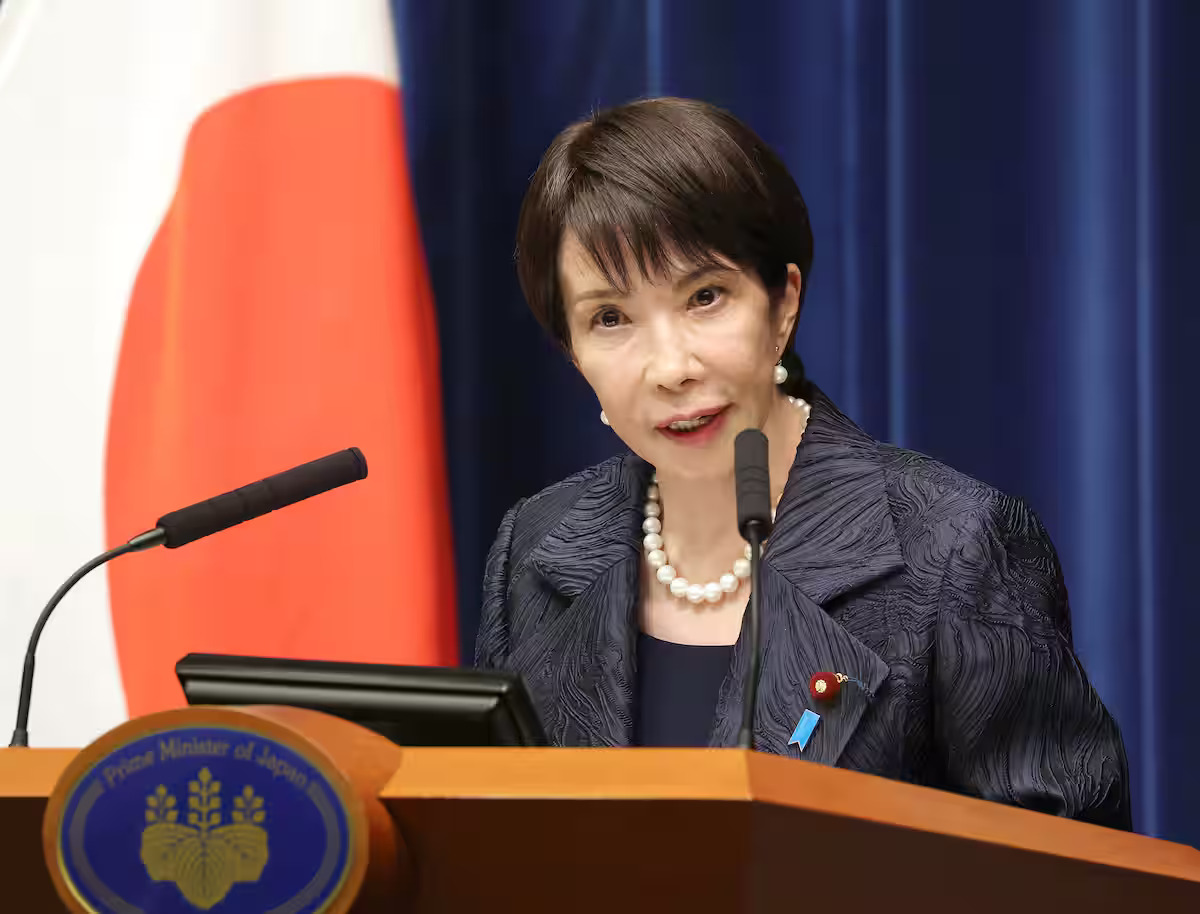
Japan’s Leader Says She Loses Hours to Makeup and Chores. Opinions Abound.

Sanae Takaichi said she has a busier schedule than her male predecessors, a nod to the disproportionate share of household tasks in Japan that fall to women.

© Suo Takekuma/Kyodo News, via Associated Press

Japan's prime minister, Sanae Takaichi, said her all-male team of aides has had trouble adapting to her schedule.
  •  

Japan’s MMX space mission probes how Mars got its moons

The Earth got its Moon when a small planet collided with our planet more than four billion years ago. This impact hurled molten rock into space, which eventually coalesced to form the satellite we can see every night from across our planet. But what of our neighbor, Mars? The Red Planet has two small, irregularly […]

The post Japan’s MMX space mission probes how Mars got its moons appeared first on Asia Times.

  •  

Ukraine and Japan plan prefabricated backup crossings for Kyiv’s bridges: 720 meters of structures already delivered

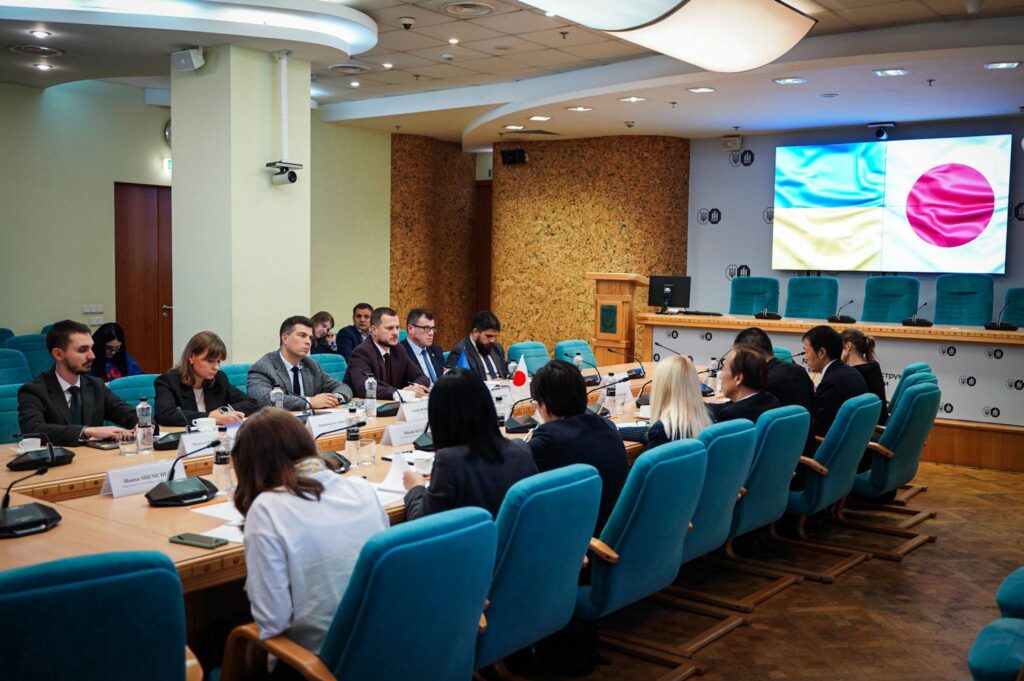
Meeting between Ukraine’s Minister for Restoration, Infrastructure and Transport Mykola Kalashnyk, Japan’s Ambassador to Ukraine Yo Osumi, and JICA Ukraine Office Chief Osamu Hattori, October 2026. Photo: Mykola Kalashnyk/Telegram

Ukrainian and Japanese officials discussed establishing backup bridge crossings in the event of Russian strikes, preparing municipal infrastructure for winter, and Japan's continued assistance with Ukraine's recovery, Ukraine's Minister for Restoration, Infrastructure and Transport, Mykola Kalashnyk, reported on 14 October.

Russia is targeting Kyiv's bridges to paralyze the city and break civilian morale, defense analyst Hamish de Bretton-Gordon wrote in The Telegraph. On 1 and 2 October, Russia attacked Kyiv's Southern Bridge, then struck the Northern Bridge on 3 and 4 October. Ukraine is now working with international partners to establish backup bridge crossings that could maintain connectivity even if major routes are damaged.

The discussions took place during a meeting between Minister Kalashnyk, Japan's Ambassador to Ukraine Yo Osumi, and Osamu Hattori, head of the Japan International Cooperation Agency (JICA) office in Ukraine, according to the statement.

Ukraine's Minister for Restoration, Infrastructure and Transport Mykola Kalashnyk during a meeting with Japan's Ambassador to Ukraine Yo Osumi and JICA Ukraine Office Chief Osamu Hattori, October 2026. Photo: Mykola Kalashnyk/Telegram

Backup crossings could prevent logistical disruptions if major bridges are damaged

Kyiv's Southern Bridge, for example, plays a critical role in logistics because freight traffic uses it, transport planning expert Dmytro Bespalov noted in an article for Ukrainska Pravda. At the same time, installing additional metal structures to reinforce bridges could be dangerous given their technical condition and existing load levels, he said.

One potential solution is to establish backup bridge crossings.

Ukraine and JICA have agreed to continue working together on engineering solutions for setting up these crossings. Japan has already delivered 720 meters of prefabricated bridge structures to Ukraine, which are expected to be used to create alternative routes if Russia's attacks damage major bridges, Kalashnyk said.

The initiative is intended to help maintain transportation links, ensure the delivery of critical supplies, and preserve evacuation routes for civilians.

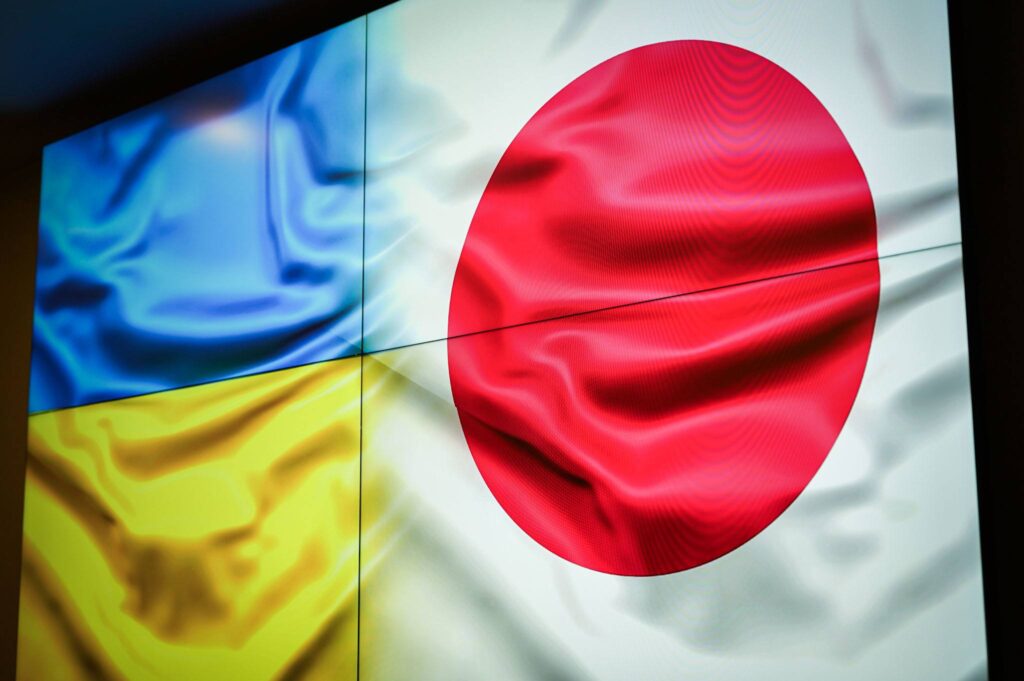
The flags of Japan and Ukraine displayed on a screen during a meeting between Ukraine's Minister for Restoration, Infrastructure and Transport Mykola Kalashnyk, Japan's Ambassador to Ukraine Yo Osumi, and JICA Ukraine Office Chief Osamu Hattori, October 2026. Photo: Mykola Kalashnyk/Telegram

Ukraine prepares water utilities and boiler plants for winter amid the threat of Russian infrastructure strikes

During the meeting, Ukraine and JICA discussed equipping water utilities with backup power supplies, addressing the need for modular boiler plants, and obtaining equipment to ensure uninterrupted heating and water services. Ukraine has already submitted lists of the necessary equipment to JICA for consideration as part of a new emergency assistance project, Kalashnyk said.

An intercepted document outlining an alleged Russian plan for strikes against Ukraine this winter reportedly describes attacks on 60 critical infrastructure facilities using up to 1,000 missiles, drones, and aerial bombs. Potential targets include electrical substations, hydroelectric power plants, thermal power plants, boiler facilities, and infrastructure related to water supply and wastewater management.

Kyiv during a blackout caused by Russian strikes on energy infrastructure, 11 October 2026. Photo: Yan Dobronosov

The document also describes potential strikes on facilities in Kyiv, Kharkiv, Odesa, and several other cities. Such attacks could disrupt electricity, heating, water supply, and wastewater services.

  •  

Tech market sell-off deepens amid fears over US inflation and AI debt

Chip makers and tech investors such as Samsung and SoftBank plunge as potential interest rate hikes spook markets

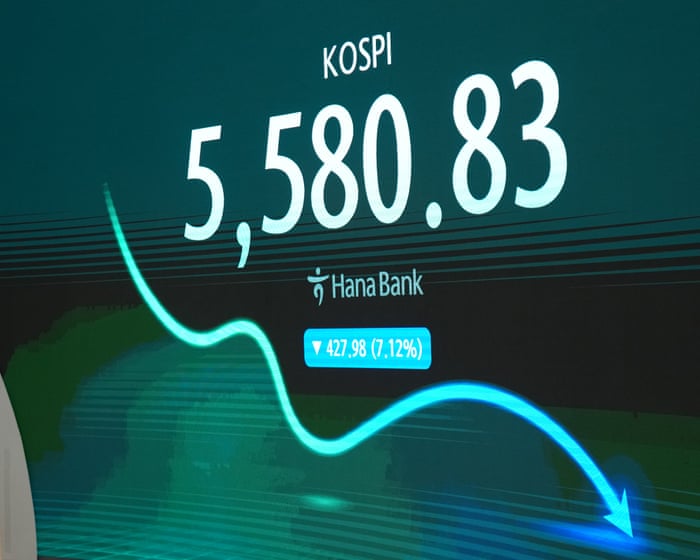
An accelerating sell-off of AI-linked shares has hit global markets, as fears over rising inflation and future interest rate hikes spooked traders already wary of the heavily indebted sector.

South Korea’s benchmark Kospi 200 index, which is heavily skewed towards the companies that make memory chips, fell more than 8% overnight to a six-month closing low, triggering circuit breakers that brought trading to a halt at various points.

Continue reading...

© Photograph: Lee Jin-man/AP

© Photograph: Lee Jin-man/AP

© Photograph: Lee Jin-man/AP

  •  

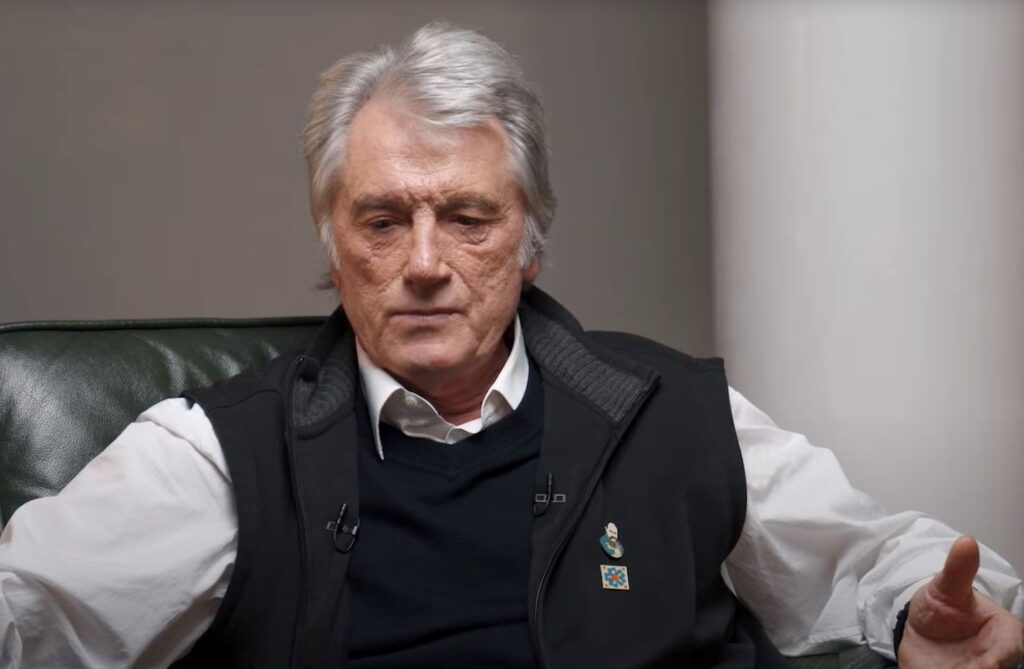
“It finances an economy geared toward total war”—Ukraine’s third president on the Russian diesel Washington just cleared

Viktor Yushchenko, the Ukrainian President in 2005-2010

Viktor Yushchenko, Ukraine’s president from 2005 to 2010, has written an open letter to US President Donald Trump and posted it on Facebook on 14 October. Without naming it, the letter takes aim at the green light Washington gave Russian diesel trade five days earlier, after a call between Trump and Kremlin leader Vladimir Putin.

Russia banned its diesel exports in July amid a fuel crisis at home, after Ukrainian strikes on refineries had already cut those exports, and last week’s US waiver and the supply deal Trump announced with Moscow would put that fuel back on world markets while Russian strikes still kill Ukrainian civilians.

What Yushchenko says Russian fuel buys

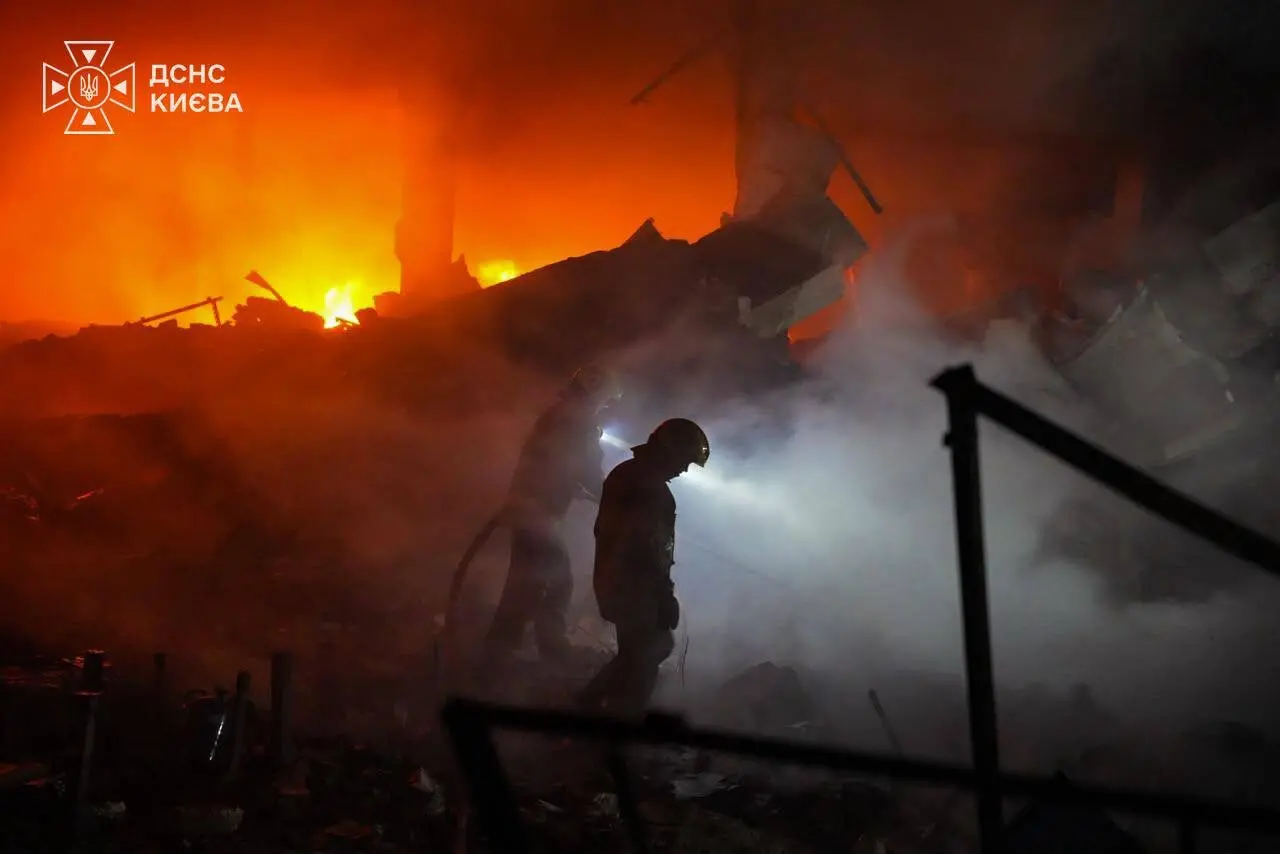
Yushchenko wrote that Russian ballistic missiles, Iranian Shahed drones, and aerial bombs strike homes every day and night in Kyiv, Zaporizhzhia, Odesa, Dnipro, and Kharkiv. Whenever there is talk of “concessions” or deals with Putin, he wrote, the Kremlin answers with more missiles, more drones, and more bloodshed.

The White House in Washington DC, USA. Illustrative image: Wikimedia Commons.
Explore further

Trump’s Russian diesel deal, which drew fury in Ukraine, is unlikely to lower prices, experts say

Yushchenko rejected calls for Ukraine to “restrain its strikes against the infrastructure that finances and sustains Russia’s war.”

“Money paid for Russian fuel is not an abstraction called ‘commerce.’ It finances an economy geared toward total war,” he wrote.

Nuclear arms, Pearl Harbor, and Iwo Jima

Yushchenko wrote that Ukraine inherited “one of the largest nuclear arsenals in the world” and agreed to give it up, trusting the words and signatures of great powers. In his view, by signing the 1994 Budapest Memorandum, America took on a moral responsibility toward Ukraine.

He compared trade in Russian energy to America’s trade with Imperial Japan, which included strategically important materials, before the US entered World War II. Washington hoped for years to avoid a wider war in the Pacific, he wrote, but economic pressure and diplomacy could not prevent catastrophe.

kyiv strike
Explore further

Ukraine warns of “a new type of humanitarian crisis” as Russia aims at its biggest cities

Japan attacked Pearl Harbor on 7 December 1941. America knows how dangerous it is to believe that trade can tame an aggressor, Yushchenko wrote, adding: “History taught us that lesson at a terrible price.”

He also named two men he called Ukrainian. One was Sergeant Michael Strank, whose family, Yushchenko wrote, came from Lemkivshchyna. The son of immigrants from Czechoslovakia, Strank took part in the famous raising of the US flag on Iwo Jima, according to the Marine Corps. The other was Oleksandr Silvashko, “a Ukrainian boy from the Cherkasy region,” who, Yushchenko wrote, was the first to embrace US Lieutenant William Robertson when American and Soviet forces met at the Elbe in April 1945.

“One does not negotiate with tyrants—one stops them,” Yushchenko concluded.

  •  

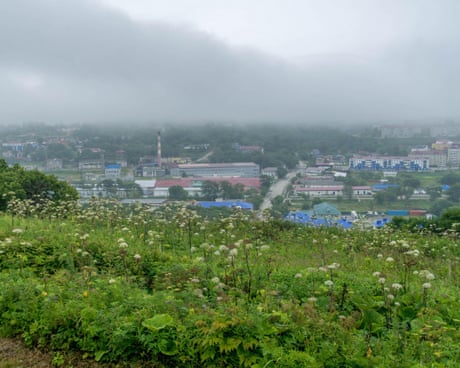
Russia arrests Japanese journalist on allegations of spying

FSB security agency said reporter was arrested on island of Sakhalin, alleging he was collecting information about Russia’s defences

Russia has arrested a Japanese journalist on the far east island of Sakhalin and accused him of spying, in the latest sign of rising tensions between Moscow and Tokyo.

Russian foreign ministry spokesperson Maria Zakharova identified the reporter as Yuki Imai, from the Hokkaido Shimbun newspaper, adding that he had been accused of “conducting espionage activities on Russian territory”.

Continue reading...

© Photograph: artaxerxes_longhand/Alamy

© Photograph: artaxerxes_longhand/Alamy

© Photograph: artaxerxes_longhand/Alamy

  •  

Inês Sousa Real faltou ao parlamento por causa do gato?

A líder do PAN faltou à sessão no parlamento para acompanhar o seu gato Micas. O Padre Guilherme faz sucesso: está no top 100 da DJ Mag com os fones abençoados pelo Papa Francisco.

  •  

Japan-US-Australia ‘Oriental Shield 26’ expands at the cost of regional stability

By Global Times Published: Aug 26, 2026 The so-called “Oriental Shield 26,” a Japan-US-Australia joint military exercise scheduled to take place from September 8 to 24, is being presented as a training initiative aimed at improving interoperability. In reality, however, it serves as a textbook case of how large-scale bloc-style military drills are being rebranded […]
  •  

From Seoul to Manila: How the Evolving GSOMIA Architecture Could Make the Western Pacific Less Secure

What makes the recent military-strategic developments orchestrated primarily by Japan, South Korea, Philippines and United States more dangerous than ever? And how can their impact on the Western Pacific be evaluated? The Western Pacific is quickly becoming as busy with security arrangements as it is with warships, missiles, and military exercises. Japan’s recent efforts to […]
  •  

EU weighs safeguard tariffs as China refuses hybrid car limits

Beijing has rebuffed a European Union request to voluntarily cap hybrid car exports to the bloc, raising the prospect of new, steep EU tariffs on Chinese hybrids, which have so far escaped the duties on pure electric vehicles. China has refused to set quotas on its exports of hybrid electric vehicles (HEVs) and plug-in hybrid […]

The post EU weighs safeguard tariffs as China refuses hybrid car limits appeared first on Asia Times.

  •  

How China deploys wartime history against Japan

Beyond all the pageantry, the Chinese leader Xi Jinping had a strategic goal for his Washington visit – to undermine the American relationship with Japan. Xi succeeded, perhaps beyond his expectations. Japanese policy makers saw this coming. They arranged a brief meeting on the sidelines of the United Nations General Assembly between Prime Minister Takaichi […]

The post How China deploys wartime history against Japan appeared first on Asia Times.

  •  

When Asia’s central banks turn bond vigilante on Trump

TOKYO – For decades, the US enjoyed a remarkable luxury: its two biggest creditors, Japan and China, kept showing up at Treasury auctions with checkbooks open. Now, Donald Trump’s trade wars, tariff threats and widening geopolitical confrontations raise an uncomfortable question: what happens if Washington’s most reliable bankers decide they’ve had enough? Granted, global investors […]

The post When Asia’s central banks turn bond vigilante on Trump appeared first on Asia Times.

  •  

US To Deploy Anti-Ship Missile System To Japanese Island Near Taiwan

The US military will deploy an anti-ship missile system to Japan’s westernmost island of Yonaguni, which lies just 68 miles east of Taiwan, an unprecedented move that will ratchet up tensions with China. US Marines will deploy with the Navy-Marine Expeditionary Ship Interdiction System, or NMESIS, as part of Keen Sword, the largest joint US-Japanese […]
  •  

To limit immigration, Japan raises residency application fee 20-fold, requires incomes higher than average Japanese household

Japan has raised the fee for permanent residency applications twentyfold and imposed stricter income, pension and language requirements on foreigners seeking to settle long-term, as Prime Minister Sanae Takaichi’s government moves to curb growth in the foreign resident population.

The move is being presented as a tool to protect public finances and social cohesion.

The fee for permanent residency rose from 10,000 yen to 200,000 yen (about $1,270) on Oct. 1, the Immigration Services Agency reported. Charges to change or extend other residence statuses, long fixed at 6,000 yen, now scale with the length of stay and reach 75,000 yen for permits of five years or more. Reduced rates remain available for applicants facing severe hardship who also qualify for humanitarian consideration.

The adjustments arrive after the foreign resident population reached a record 4.12 million at the end of 2025, up 9.5% in a single year. Prime Minister Sanae Takaichi has framed the tighter rules as a way to keep acceptance orderly.

“The government acknowledges that some citizens feel anxious or a sense of unfairness due to the rising number of foreign residents,” Takaichi wrote on X. The changes, she said, are meant to “ensure order” and allow “both citizens and foreign nationals to live safely and securely.”

政府では、在留外国人数の増加に伴って不安や不公平感を感じる国民の皆様がいらっしゃることに向き合い、「外国人政策」を「秩序」あるものとし、国民の皆様と外国人の双方が安全・安心に生活していけるようにするため、本年1月、『外国人の受入れ・秩序ある共生のための総合的対応策』を取りまとめ、幅広い施策に取り組んでいます。…

— 高市早苗 (@takaichi_sanae) September 27, 2026

Under the revised guidelines, permanent-residency applicants must show continuous household income at or above the average for Japanese households of similar size — 5.75 million yen (about $36,500) in 2024 official data.

They must also demonstrate projected pension benefits comparable to 30 years of contributions to the employees’ pension system, a shortfall that can be covered by assets. From April 2027, applicants will need Japanese proficiency at the level of an independent user and a working grasp of local social rules.

The standard residence period remains 10 years; marriage-based pathways were lengthened as well.

The approach is straightforward. Settlement becomes available to people who can support themselves, contribute to the pension system, and function in Japanese society, rather than to anyone who simply accumulates years of temporary status.

Extra fee revenue is earmarked in part for language education and for removing people who overstay or break the rules. A related fivefold rise in visa fees took effect in July, the first adjustment since 1978, which Foreign Minister Toshimitsu Motegi described as a correction “to reflect inflation and exchange rate fluctuations.”

Meanwhile, European states face larger and faster inflows of migrants, strained housing and welfare systems, and repeated public backlash over irregular migration and failed integration. Japan’s harder line comes at a time when the country already has far fewer foreigners to deal with, especially from troubled Third World countries.

The radically different approaches to immigration are made clear through sheer numbers. In Germany, the former government cut the standard residency wait from eight years to five on June 27, 2024. The largest practical change is dual citizenship: applicants no longer have to renounce their existing nationality. Since the changes, Germany granted about 292,000 citizenships in 2024 and about 333,000 in 2025.

In Japan, authorities generally approve citizenship after ten years in most cases. On top of more rigorous standards, Japan does not recognize dual nationality for people who naturalize. Approvals are modest — about 11,500 in 2025, and roughly 7,000 to 10,000 a year before that — against a foreign resident population of 4.12 million. Formal applications that are filed are approved more than 90 percent of the time, but many people are screened out before they apply.

European countries that already struggle to enforce returns or to require newcomers to reach median earnings could adopt similar thresholds to dramatically reduce immigration.

The post To limit immigration, Japan raises residency application fee 20-fold, requires incomes higher than average Japanese household appeared first on Remix News.

  •  

Exercises Over, Typhon Stays

The recently concluded trilateral “Orient Shield” exercises in Japan became the first three-way maneuvers involving Washington, Tokyo, and Canberra in which the “Typhon” medium-range missile system was employed. How are the United States and its allies pushing the world toward the proliferation of weapons of mass destruction (WMD)? The Land of the Rising WMD Proliferation […]
  •  
❌