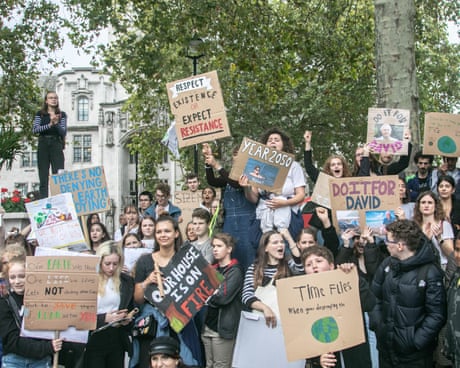
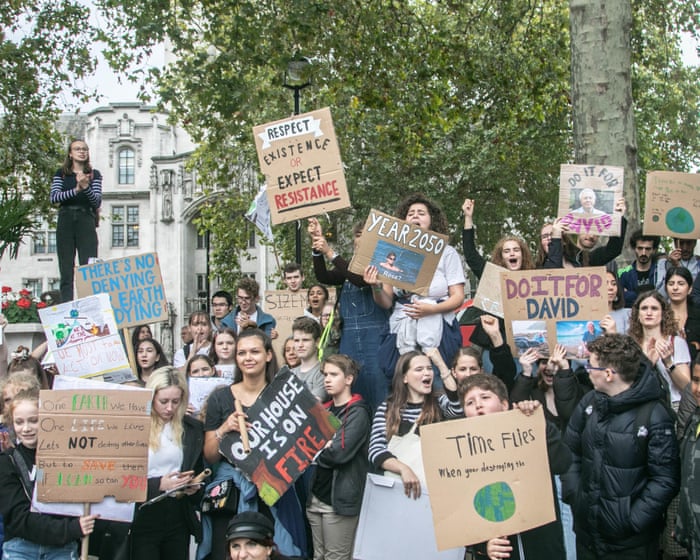
Sadiq Khan's Culture Team has blocked Charlotte Gill on X after she flagged their bonkers £500,000 woke grants – funding queer birding, doll workshops and a solarpunk festival. Your money at work.
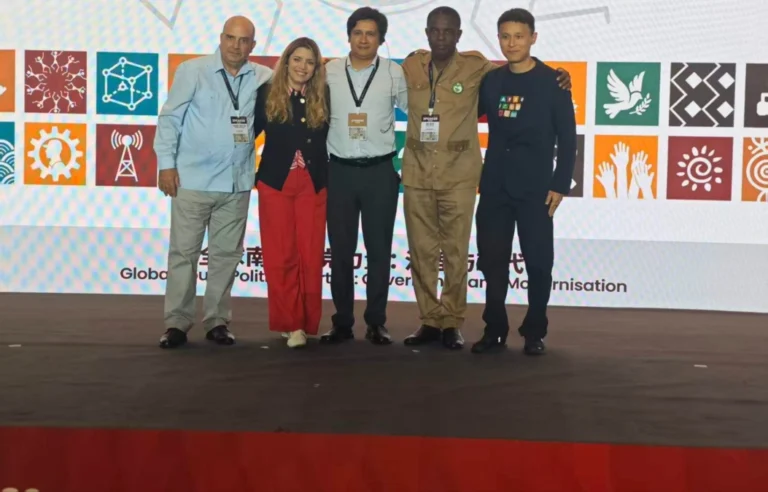
The Global South Media Center was established in China on Sunday as a new platform for cooperation among media organizations from Latin America, Africa and Asia.
The initiative, known by its Spanish acronym CMPSur, was created by four media outlets with correspondents in China: teleSUR, Cuba’s Prensa Latina, Brazil’s Brasil de Fato and Ghana’s Pan Africa TV.
The launch took place during the Global South Academic Forum, held in Shanghai on October 17 and 18 under the theme “Global South Political Parties: Governance and Modernization.”
The forum brought together political leaders, academics, researchers and media representatives from Asia, Africa, Latin America and other developing regions.
Jeff Xiong, secretary general of the Global South Academic Forum, said the new media center seeks to strengthen joint journalistic production and build narratives from the perspective of the peoples of the South.
The platform aims to deepen links between China and other Global South countries while challenging the dominant communication frameworks of the Global North.
Xiong highlighted the role of the Global South Academic Forum in creating the conditions for multinational cooperation. He also expressed hope that additional media organizations from developing countries would join the initiative.
The Global South Media Center plans to expand the circulation of stories about China among audiences in Africa, Asia and Latin America through collaboration among outlets from different regions.
The initiative reflects a growing effort by Southern media to coordinate reporting, share content and develop common perspectives on development, governance and international relations.
The center will not replace the editorial independence of its founding organizations. Instead, it is expected to provide a framework for exchanging material, coordinating coverage and promoting joint productions.
The creation of the platform comes at a time when media organizations in developing countries face increasing pressure from concentrated technology platforms, algorithmic distribution and dependence on foreign digital infrastructure.
The Global South Academic Forum has become a space for discussing those challenges alongside broader questions of governance, development and international cooperation.
Global South Media Center Focuses on AI and Sovereignty
The Global South Media Center was announced during a panel on communication, party governance and social mobilization.
Participants discussed how media organizations can respond to the expansion of artificial intelligence and growing technological inequalities between developed and developing countries.
Alejandro Gómez, vice president of Prensa Latina, defended technological sovereignty and informational independence as essential conditions for Southern media.
He said developing countries must build their own capacities rather than relying exclusively on infrastructure and platforms controlled by external actors.
Gómez proposed the creation of a permanent training mechanism in artificial intelligence for journalists and media organizations in the Global South.
The initiative would be developed in cooperation with Chinese institutions and other specialized organizations. It could include training in AI-assisted reporting, data verification, digital security, content production and responsible use of new technologies.
The Prensa Latina executive also emphasized the need for Southern media to produce their own narratives about international transformations.
He argued that dominant global media frameworks often condition coverage of countries such as Cuba and limit the visibility of perspectives from developing nations.
The proposal reflects a broader concern that artificial intelligence may reinforce existing inequalities if Southern countries do not participate in the design, regulation and use of these technologies.
AI tools can help journalists analyze information, translate content, identify trends and improve audience engagement. However, they can also reproduce biases, amplify misinformation and concentrate power in companies that control the underlying models.
For media organizations in the Global South, the challenge is to use new technologies without becoming dependent on foreign platforms or losing control over editorial decisions.
The Global South Media Center could therefore play a role in training, research and the development of shared technological standards.
teleSUR President Patricia Villegas also defended South-South cooperation as a means of strengthening communication sovereignty.
She said media organizations in the South must reduce their dependence on digital infrastructures and technological platforms controlled by external actors.
Villegas warned about the influence of algorithms on the circulation of content. She argued that platforms can determine which stories reach audiences and which voices remain marginal.
The teleSUR president called for greater collaboration among Southern media, including the exchange of productions and the transfer of technological capacities.
She highlighted China’s role as a strategic partner for expanding communication cooperation and strengthening the ability of developing countries to produce and distribute their own content.
Villegas also referred to the creation of teleSUR+ in July 2026. The collaborative platform brings together audiovisual material, texts and photographs produced by media organizations and creators from the Global South.
She also mentioned the Global South correspondent network in Beijing, which includes Brasil de Fato, Prensa Latina and Brazil’s TVT, with the planned incorporation of an African media outlet.
The correspondent network provides a practical model for the new media center. It allows participating outlets to share reporting, coordinate coverage and reduce the costs of maintaining international bureaus.
The Global South Media Center represents an effort to build a more coordinated voice for developing countries in the international information system.
Media organizations from the South often face unequal access to technology, advertising revenue, satellite capacity, distribution networks and international audiences.
Many outlets rely on platforms owned or controlled by companies based in the Global North. Those platforms can shape visibility through algorithms, moderation policies and commercial priorities.
The new center seeks to address that imbalance by promoting cooperation among media with shared interests in sovereignty, development and multilateralism.
The initiative also responds to the need for greater representation of Southern perspectives in coverage of China, Africa, Latin America and the Caribbean.
Mainstream media in the Global North have often presented developing countries through narratives focused on crisis, instability or dependence. Southern media organizations argue that those narratives ignore local experiences, historical context and the diversity of development models.
The Global South Media Center aims to provide alternative coverage that reflects the voices of communities, governments and social movements in the South.
The platform could support reporting on infrastructure, public health, education, food sovereignty, climate adaptation, digital governance and regional integration.
It could also promote stories about cooperation among developing countries, including China’s role in infrastructure, technology and trade.
The center’s creation is part of a wider effort to strengthen South-South cooperation in communication.
The Global South Academic Forum has promoted exchanges among academics, institutional representatives and media organizations on governance, development, international cooperation and the role of developing countries in global affairs.
The forum’s discussions have included state capacity, social mobilization, institutional innovation and the use of party organizations to strengthen governance.
Those themes are closely connected to the media agenda. Communication is not only a technical issue; it is also part of how societies organize political participation and respond to global challenges.
The panel in Shanghai emphasized that media organizations must prepare for the impact of artificial intelligence while defending editorial independence and public interest journalism.
Participants argued that technological innovation should not replace journalists but should support their work by improving research, verification and audience access.
The Global South Media Center could therefore become a space for developing ethical guidelines on AI, protecting journalists’ rights and promoting responsible use of new technologies.
Geopolitical Context
The launch of the Global South Media Center has geopolitical significance because communication has become a central arena of global competition.
Countries and media organizations increasingly compete to shape narratives about development, security, technology and international cooperation.
China’s role in the initiative reflects its growing engagement with Africa, Asia and Latin America. Beijing has expanded partnerships in infrastructure, trade, education and digital technology through initiatives such as the Belt and Road Forum and the Forum on China-Africa Cooperation.
For Southern media, cooperation with China offers access to training, technology and new distribution channels. It also allows them to diversify their sources of information and reduce dependence on traditional Western media networks.
For China, the platform provides an opportunity to strengthen its image among Global South audiences and present its development experience through media organizations from the region.
The initiative does not eliminate political differences among participating countries. Media organizations in the Global South have different political systems, editorial traditions and national interests.
However, the center reflects a shared concern about technological dependence and the unequal distribution of global communication power.
The platform could also influence debates about digital sovereignty, data governance and the regulation of artificial intelligence.
Developing countries have increasingly argued that international standards should address the concentration of technological power and protect the right of nations to control their own digital infrastructure.
The Global South Media Center may become part of that broader discussion by promoting training, content exchange and cooperation among media organizations.
Its success will depend on whether participating outlets can sustain joint projects, develop shared standards and expand the initiative beyond its founding members.
The launch of the Global South Media Center marks an attempt to build a stronger communication network for countries seeking greater influence over the global information order.
SEO Title: Global South Media Center: 4 Outlets Launch Bold New Platform in China
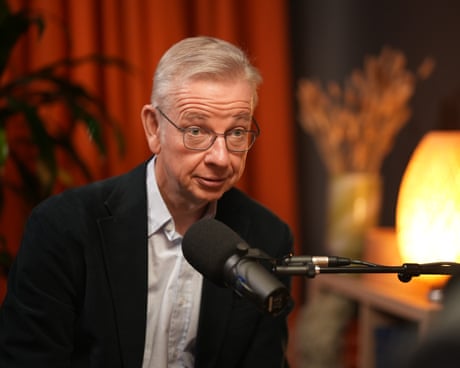
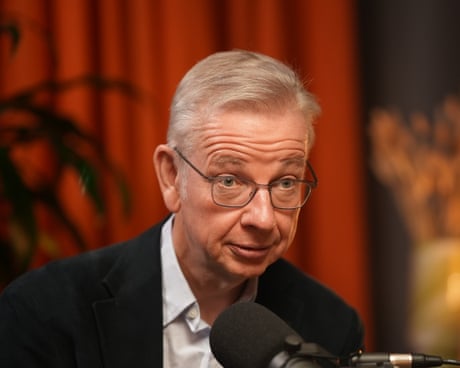
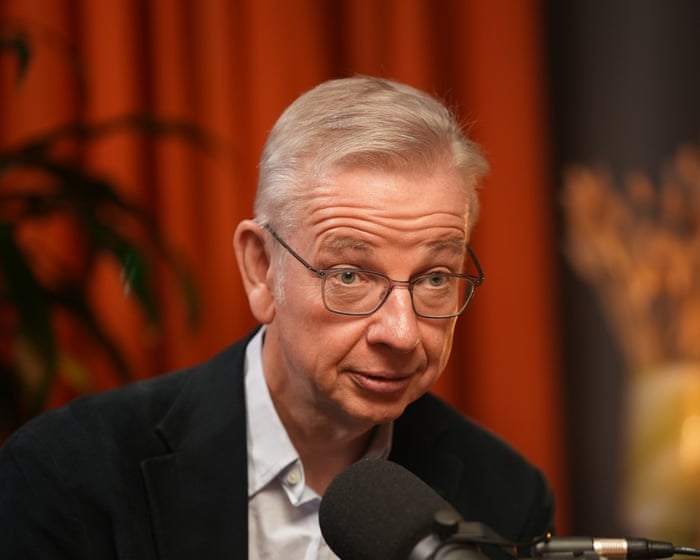
For more than three decades, Michael Gove has been a leading figure in British Conservatism. As a journalist, government minister and now editor of the Tory bible the Spectator, he has helped shape the right even as it has moved further rightwards. In the latest episode of Radical Thinking, Gove joins Aditya Chakrabortty to discuss the future of the right, his record on Brexit and austerity, and the Spectator’s position on Islam
To read the fruits of Michael Gove’s dalliance with the Marxism Todaygang, look up his essay in a 1998 collection called The Moderniser’s Dilemma: Radical Politics in the Age of Blair
For a slalom ride through Michael Gove’s years in power, read The Demented Dalek by the historian Richard J Evans in the London Review of Books
To learn more on what’s become of the British right, there’s a Guardian column by Aditya
Phil also writes a very good blog on British politics, which keeps a close eye on how each party is trying to marshall a coalition of voters. Here he is on Kemi Badenoch
Geoffrey Wheatcroft does an entertaining short narrative in Bloody Panico!:
For more on the economics of the Cameron years, this paper is acute on how the Tories failed to move the UK away from being a country of renters towards a country of makers. Two of its authors will join us for a podcast later in the series.
And if you want to read how Brexit may have cost the UK 8% of GDP, there’s this paper based on data from the Bank of England
Finally, on the Spectator, read Nesrine Malik’s recent Guardian column
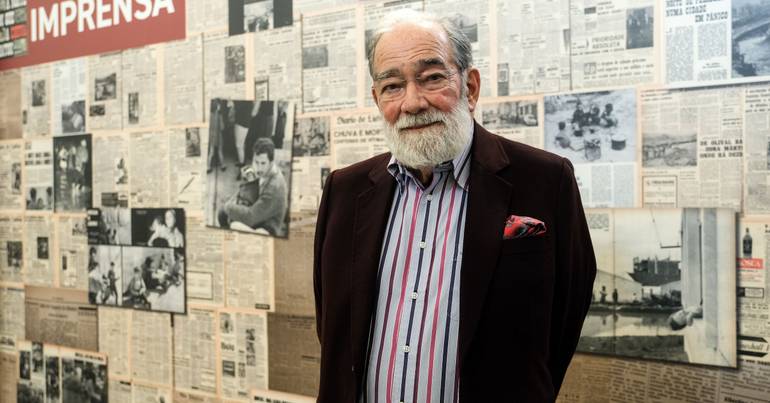
Repórter, fundador de jornais, porta-voz presidencial e professor. Uma vida construída na recusa da autocensura e no serviço ao jornalismo. Morreu esta sexta-feira, aos 82 anos.
STARK warnings from artificial intelligence researchers that advanced forms of the technology could wipe out humanity have raised questions over whether governments are moving fast enough to regulate it.
What are the potential dangers of “superintelligent” computer systems, and should we be worried?
AI experts have long described the threat as critical.
In 2023, hundreds of AI scientists and industry figures, including the heads of top US labs, signed a “statement on AI extinction risk” calling for the issue to be treated as seriously as pandemics or nuclear war.
If an out-of-control future AI deems that humans are obstructing its goals, it could use robots to “synthesise and spread novel pathogens”, said Stuart Russell, computer science professor at the University of California, Berkeley.
Or it could “convince people to initiate nuclear war, including by hacking into early warning systems”, Russell, a prominent voice on AI safety, said.
Such existential fears do not concern current AI systems, he said. But as the technology improves, it could take lethal action beyond our understanding, such as by removing oxygen from the atmosphere.
“We are less intelligent than superintelligent AI. If you ask chimpanzees how humans could wipe them out, they probably wouldn’t be able to give you all the right answers.”
In the meantime, “in the next year or two, I think the risk is higher from human misuse”, Russell added, such as an AI-enabled terror attack.
“The stakes are well-understood,” Jacob Coxon, a 27-year-old researcher, wrote on X last week, announcing his resignation from US AI startup Anthropic.
“But they are locked in a race to get there first,” he added, saying that Anthropic “believes no one else will act responsibly, so they must do it themselves”.
Anthropic this year removed a pledge from its safety charter to halt development of its models if it failed to control their risks.
It argued that if it unilaterally paused its work, its less cautious rivals would dominate the industry, making it less safe overall.
“The people building AI earnestly believe that it could kill us all by the end of the decade,” said Coxon, who previously worked at ChatGPT maker Open-AI.
He accused both companies of “gambling with our lives” as they strive to develop AI models capable of self-improvement.
Fears are heightened over rogue AI after OpenAI technology operating outside human supervision hacked into Hugging Face, a repository of AI models.
“We really do earnestly believe AI could kill all humans!” Anthropic safety executive Evan Hubinger chimed in on X, estimating the risk at more than 10 per cent over the next decade.
It’s important to remember that doom-laden percentage predictions are “absolutely unscientific”, said Hussein Abbass, a computing professor at UNSW Canberra.
“The situation is still controllable, and it can be managed,” Abbass said.
But governments should not sit on their hands when it comes to regulating AI, he added, urging an “agile” approach as AI development accelerates.
Both Anthropic and OpenAI are expected to go public soon, and some sceptics say scary warnings make AI appear powerful and worthy of large investments.
Others argue that focusing on the risk of extinction distracts from more pressing problems caused by AI, from job losses to machines discriminating against minorities.
In July, more than 1,000 tech employees, including Anthropic’s CEO, called on Washington to support a coordinated slowdown in the development of the most advanced AI systems.
OpenAI halted training of its latest models for two weeks in August before resuming it under tighter controls.
The United States has been firmly against global regulation of the sector that could stifle innovation.
But the hacking capabilities of the most cutting-edge models have given Washington pause, with recent Anthropic and OpenAI releases delayed over national security concerns.
Even then, “we don’t want to restrict them where all of a sudden we come in second to China”, President Donald Trump has said.
“Maybe it will take a massive, Chernobyl-scale disaster to get governments to act,” Russell said, urging them to establish a licensing regime for AI, as exists with aviation, medicine or water supply.
“Perhaps at some point governments will remember that their voters prefer not to be dead.”
If Douma, one of the highest-profile “proven” chemical attacks attributed to Syria’s former Bashar Assad government, has been shown to be fake, what does it say about new, undeclared Syrian chemical weapons that have supposedly been found?
It says we should be extremely skeptical about news of such discoveries.
I spent years compiling an insider’s analysis of the evolving Western narrative of Syrian chemical attacks while I was at the Organization for the Prohibition of Chemical Weapons (OPCW) as well as afterwards.
My conclusion was it is nigh impossible to prove a negative in this situation; to say there had never been a chemical attack by the Syrian government forces.
However, when it came to high-profile allegations of such attacks in the Syrian towns of East Ghouta, Khan Sheykhoun, Ltamenah, Saraqib and Douma, there were fatal flaws in the official narratives.
There were unmistakable signs, clear to us on the inside, of fabrication.
The Douma attack eight years ago appeared to be the last of a series of chemical allegations against the regime.
Yet the saga continues. The OPCW sent a new mission to Syria this May to try to find alleged, undeclared chemical weapons from the government of Bashar al-Assad, who was ousted in 2024.
Before examining the intentions and results of this mission, it is useful to review how the Western-backed OPCW handled its investigation into the 2018 chemical weapons attack in Douma, a suburb of Damascus.
I was an OPCW inspector on that mission and this is why I blew the whistle.
The Establishment Narrative
Just how much of the establishment narrative that blamed Assad for using chemical weapons be believed ?
Devised during the early part of the Western and Gulf-backed jihadist war to overthrow Assad a decade and a half ago – and built upon steadily by Western belligerents throughout the crisis – the story that Assad had “gassed his own people” was widely believed with mainstream media fully on board.
Doubters were glibly dismissed, including “official” dissenters such as some senior inspectors at the OPCW. I was among them.
The chemical allegations followed a well-oiled procedure. Armed opposition groups – who were seeking direct Western military intervention to support their effort to overthrow Assad – would raise the alarm online by posting slick images and videos of an alleged chemical attack.
These opposition groups, sometimes assisted by Western NGOs, would then bring supposed witnesses of these alleged attacks to Gaziantep in Turkey, where the OPCW would send fact-finding missions to interview them.
The OPCW would generally believe the opposition groups and their witnesses and accept items of supposed “evidence” handed over to them, sometimes months after the alleged attack. Until the Douma allegation in 2018, the fact-finding mission never got to the scene of any Syrian chemical attack after an initial attempt in 2014 went awry.
The fact-finding report would be secretly drafted under the direct control of OPCW top management, bypassing any procedural or technical oversight, and would conclude that it was “reasonable to believe” that a chemical attack had indeed taken place.
The follow-up investigations by the heavily politicized Joint Investigative Mechanism (J.I.M.), or by the later Investigation and Identification Team (I.I.T.), would suggest that “a reasonable person would believe” that the Syrian Armed Forces were responsible for the attack.
OPCW inspectors are not fools. Many of us saw what was going on, seeing the tight political control that the U.S. and to a lesser degree the U.K. exerted over anything to do with the Syrian file. But the draconian confidentiality regime in the OPCW kept everyone subdued.
The breakthrough came after the April 2018 Douma allegation.
For the first time, an OPCW team actually got to the scene of an alleged chemical attack, at the town of Douma, in southwestern Syria, about 10 kilometers (6 miles) northeast of Damascus.
We did our job thoroughly, and in doing so we identified serious flaws in the allegation.
OPCW Extreme Measures
The OPCW resorted to ever-escalating measures to bring things back on track. After trying to secretly modify the interim report by withdrawing it from publication and sneaking in the preordained conclusions that were required by influential delegations, senior OPCW officials went to extremes.
They removed all the team members who had gone to Douma and produced a flawed Fact Finding Mission report written by persons unknown, none of whom had much knowledge of what the Douma team had done.
The fact-finding report predictably found that “it was reasonable to believe” there had been an attack with chlorine in Douma. This was followed much later by the OPCW’s inevitable I.I.T. report that blamed the Syrian regime for the attack.
In reaching its conclusions, the drafters claimed, as usual, to have been informed by anonymous experts. The context in the reports was usually along the lines of the fact-finding mission (F.F.M.) “asked an expert about this and the expert said it was possible.” Many qualified experts and commentators, including me, consider this laughable.
The OPCW were going too far, and ultimately this led to the ongoing dispute where the two most senior and experienced inspectors in the F.F.M. team objected.
The drafter of the team’s interim report, Dr. Brendan Whelan (“Inspector B”), was one. I was the other. In my case I had also led the politically-mandated inspections at two facilities of the Syrian Scientific Studies and Research Centre (S.S.R.C.) suspected of harbouring illicit chemical weapons activities.
Here again, we did our work thoroughly and in drafting the S.S.R.C. inspection reports I made clear that there was nothing amiss in either of the facilities.
This didn’t stop the U.S., U.K. and France from conducting punitive missile strikes on Barzah S.S.R.C., on the basis of social media postings on the Douma allegation, even before the OPCW team had arrived at the incident scene.
Rather than another detailed analysis of the Douma scandal, suffice it to say, the official Douma narrative has been clearly and scientifically picked apart by many credible observers, including by Dr. Whelan and myself.
This has been widely reported, although predictably not much in the mainstream media.
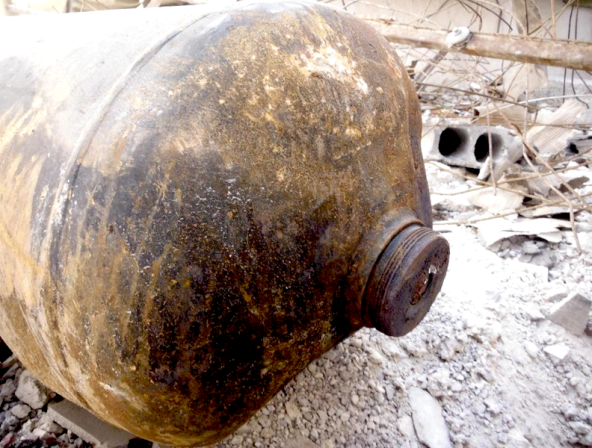
The OPCW and Western delegations have been in crisis management mode ever since the first leak, that of an internal engineering summary that cast doubt on the allegation that chlorine cylinders had been dropped from aircraft, raising the possibility that militants had placed the cylinders to stage the scene of a chemical attack.
I was the author of that report.
Nose of chlorine cylinder alleged to have smashed through a steel-reinforced concrete roof, April. 21, 2018. (OPCW, courtesy former Syrian government)
Worse still for the prevailing Douma narrative, Dr. Whelan recently won a legal case against the OPCW for their charges against him of confidentiality breaches.
In their submissions, the OPCW inadvertently admitted to suppressing the key toxicology assessment (incidentally by NATO specialists) that dismissed chlorine as the likely cause of death of deceased victims shown in images posted from the scene.
The OPCW has refused to engage in any discussion on the facts and scientific substance of the case, ever since concerns were first raised by Dr. Whelan and myself.
This intransigence to re-open the file is likely dictated by the needs of the three belligerent governments that subjected Syria to punitive missile strikes in retaliation for the supposed Syrian chemical attack even before the Douma F.F.M. had started work.
Any updated or corrected findings on Douma would be inconvenient.
The New OPCW Mission
Still apparently seeking to prove its case, the OPCW formed a new Syria mission in May aimed at “finding” alleged missing, un-declared chemical weapons.
At the end of May the mission reported finding 42 empty chemical weapons munitions; a launcher; bomb-mixing units; precursor-type containers; a facility whose contents were not revealed and thousands of pages of documents that are still being reviewed.
The mission also found 650 kg of “a chemical compound known to have been used by the former government for the production of nerve agents,” which the report does not name. It says an unknown quantity of hexamine, a legal chemical with wide industrial use, was found but it is not clear if this is the same compound as in the 650 kg.
In September, the Syrian government, now under the leadership of a former al-Qaeda and ISIS leader, began destroying the empty bombs, but not any of the chemicals that were found, presumably meaning none were banned.
Despite all the fanfare of these results being presented at a U.N. Security Council meeting last month, it appears that the new OPCW mission came up as empty as those bombs.
None of these discoveries does anything to prove that Assad ever used a chemical weapon, in other words, nothing to prove that I, along with other OPCW officials and countless observers and commentators who challenged the Assad chemical weapons narrative were wrong.
Presumably after all the effort in creating that narrative, Western governments and mainstream media that promoted the Iraq war and then the Syrian conflict to achieve regime change in that country, require a tidier ending than the mess they made of the Iraqi WMD story.
An early press release from the OPCW is telling. It shows what they were attempting to prove with this May mission, in particular two rather flimsy suggestions.
They report the discovery of some of the empty munitions,
“including the same type of aerial bombs that were used in chemical attacks in Ltamenah in March 2017 and Khan Shaykhun in April 2017.”
This refers to empty M4000 aerial bombs, declared by the Syrians as part of their stockpile.
Aside from the questionable Douma-like irregularitiessurrounding “evidence” used by the OPCW to conclude that sarin-filled M4000 bombs were used in those attacks, it’s important to mention something else.
The Syrians had clearly explained to us that 2,000 of these bombs, never filled, had been set aside to be “repurposed,” in other words to be filled with high explosive to turn them into conventional munitions. These could turn up anywhere.
A second questionable statement in the press release is,
“Rockets were also found, of the same type as those that were used in the Ghouta chemical weapons attack in August 2013.”
This relates to artillery rockets crudely modified with a large cylindrical payload container added at the front.
For a start, the U.N./OPCW report of Ghouta did not attempt to identify the perpetrators of that sarin attack, since it was not part of their mandate. The accusations against the regime have always been political, something the mainstream media happily took up.
The Most Credible Analysis So Far
The Ghouta sarin attack took place on Aug. 21, 2013 and according to Western sources killed more than 1,000 people in the Damascus suburb.
The most serious investigation of the Ghouta incident to date points to the attack being launched from opposition-occupied positions, and remains the most credible analysis of the attack.
The opposition forces allegedly responsible were from the al-Nusra Front, which conducted joint operations in 2013 in the Damascus area with the Liwa Al Islam opposition group. Al-Nusra were known to be in possession of sarin, according to reporting by Seymour Hersh, who wrote:
“In the months before the [Aug. 21, 2013] attack [in Ghouta], the American intelligence agencies produced a series of highly classified reports, culminating in a formal Operations Order – a planning document that precedes a ground invasion – citing evidence that the al-Nusra Front, a jihadi group affiliated with al-Qaida, had mastered the mechanics of creating sarin and was capable of manufacturing it in quantity. When the attack occurred al-Nusra should have been a suspect, but the administration cherry-picked intelligence to justify a strike against Assad.”
Indeed the U.N./OPCW team was in Damascus at the time of the attack in Ghouta because it was responding to an earlier request from the Syrian government to investigate chemical attacks against their forces.
The OPCW release also mentions a typical catch-all referring to “quantities of separately stored chemicals and related equipment, the nature of which is currently under technical analysis.”
There will always be suggestions of vague bits and pieces, rusty remnants that “may have been a part of” alleged undeclared elements of a chemical weapons program.
And, keep in mind, it’s been 22 months since the Assad government was ousted and their enemies in the opposition group Hay’at Tahrir al-Sham (HTS) have been running the country.
So far as I can see, the OPCW hasn’t found anything remotely close to the desired smoking gun. Anything real, I should say.
Partners in the Anti-Assad Chemical Narrative
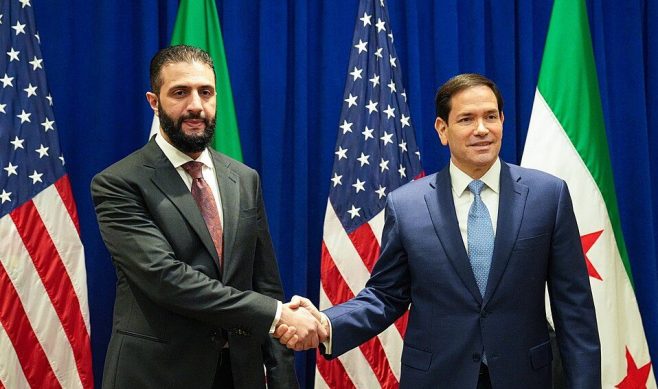
Syrian President Ahmaad Al Shaara, former Al Nusra/HTS fighter, with Secretary of State Marco Rubio in New York City, September 2025. (State Department Photo, Wikimedia)
We need to keep in mind how this is working. There are three partners in this latest endeavour on the anti-Assad chemical narrative.
First, we have the Western governments, belligerents in the Syrian conflict, which worked hard on building the chemical narrative to delegitimise the regime.
The U.K. government offered specialists to check out suspected sites in Syria to prepare them for the May mission in order to “assist” the current government in finding evidence of hidden chemical weapons.
That leads us to the second group, the government in Syria, reportedly eager to please their Western sponsors in return for economic favours. They are the Al-Nusra/HTS extremists who, in the case of Douma, fabricated the scene to raise a chemical false flag allegation against the Assad.
The third partner is the OPCW.
That means the various groups who have been on this mission are a) those who staged scenes of chemical attacks; b) those who directed them to do so (including Western intelligence agents who allegedly coached and assisted them); and c) the organisation that went along with the narrative and dutifully produced reports damning the Assad regime.
It may appear to the reader that I’m suggesting that the OPCW reports on Syrian chemical weapons will continue to be little more than propaganda, the usual sexed-up nonsense. Perhaps so. In disputing this, these assertions will be dismissed as conspiracy theories.
However, this argument is weakened because the source of the alternative narrative is the scientists and senior inspectors (many “Western”) from within the OPCW teams, including the Douma fact-finding mission and Scientific Studies and Research Centre inspections.
This is why Douma remains a key element in the debate. If they did it once (and doggedly stuck to their guns), they probably did it before.
Many serious and eminent observers are imploring the OPCW to conduct a review of the Douma case, including by the OPCW’s own Scientific Advisory Board.
I see this being done by credible, independent and neutral experts in the fields of chemistry, toxicology, metallurgy and engineering, overseen by the relevant professional institutes.
These experts would report their findings transparently, putting their names and reputations behind their analysis. This will clear up the Douma controversy, either demonstrating that it could have actually happened as alleged, or demonstrating the flaws in the OPCW reports.
Exposing a clear and deliberate fraud would seriously weaken the Western narrative on alleged Syrian chemical attacks. Therefore, in my view, it is not going to happen under the purview of the OPCW.
Ever.
I don’t mean to suggest that those calling for a review are unrealistically hopeful. But the risks of such a review are perhaps too high for it ever to be envisaged by the Western group that was aligned with the efforts on regime change in Syria — chiefly the U.S., the U.K. and France.
This does not mean it can’t happen. There is more than enough open-source material, as well as now-unclassified facts, images, analysis results and information available from the OPCW itself, from former OPCW officials and inspectors, and held by Member States, that would support a credible in-depth review.
The basis for expert analysis would be the material used in the fact-finding mission and I.I.T. reports themselves.
By now we know there isn’t any “smoking gun” evidence. If there had been, it would have been cited in the mission and I.I.T. reports.
Trust me, this study will bear clear results. My hope is that someone sufficiently curious and responsible will commission and fund it.
Ian Henderson served as an OPCW inspector from the establishment of the Chemical Weapons Convention in 1997, and was appointed as one of the first Inspection Team Leaders. An experienced chemical engineer with military experience, he led many of the more complex missions to more than 55 countries. After returning to a career in the chemical industry for 10 years he rejoined the OPCW in 2016 as part of the “rehire” scheme aimed at bringing back experienced inspectors. It was during this time that he became involved in the Syrian chemical weapons operations and, along with others, objected to the apparent influences of political control in the organization. He was suspended from the OPCW in May 2019 after the leak (by unknown others) of his dissenting engineering report on the Douma cylinders.
Setting aside the jokes about the shortness of Katie Zacharia’s tenure as White House press secretary, the controversy over her claim to be a lawyer obscures a more damaging issue. For years, she promoted some of the most heinous and bizarre conspiracy theories bubbling up from the right-wing swamp. Simply put: Zacharia was ousted for the wrong reason. Her embrace of extreme and downright loony assertions amount to a much stronger basis for dismissal than her bogus lawyer claim.
Zacharia’s social media history suggests a worldview colored by baseless thinking, defamatory accusations and sinister fantasies — not exactly a good look for someone tasked with conveying the U.S. president’s policies and actions to the press and public with authority and integrity. The noxiousness of her posts and reposts was apparently evident even to her, since she deleted many of them before her new role was announced.
According to reporting by CNN, the Bulwark and the newsletter Popular Information, Zacharia has repeatedly accused people, particularly Democrats, of sexually molesting children. In April 2022, she reposted and later deleted a Truth Social post from “Stop the Steal” organizer Ali Alexander: “Democrats want to mask and rape your children. That’s their satanic platform.”
She repeatedly referred to Democratic operative and former White House chief of staff John Podesta as a “pedo,” apparently still connecting him to an outrageous child-abuse conspiracy theory that had been debunked years earlier. She later paid tribute to the late Robert David Steele, a conspiracist who claimed that children were being kidnapped and sent to a colony on Mars: “He was exposing the pedo rings of the elite cabal,” Zacharia wrote. “May he Rest in Peace and the work of his hands not have been in vain.” In another Truth Social post, she noted that “the radical left Hollywood elites are sick pedo cannibals.” She added, “Change my mind.”
If Trump does indeed find another role for Zacharia in his administration, questions should be asked.
Another of Zacharia’s reposts suggested that Joan Rivers’ death in 2014 was somehow connected to an insulting crack the comedian once made about the Obamas: “Remember that time Joan Rivers said Obama was gay and Michelle had a dick then suddenly died?”
This wasn’t the output of a mischievous teen troll; Zacharia’s controversial deleted posts and reposts date from as recently as 2022. By then, Zacharia was in her late 30s and had been employed in various senior communications roles, including most recently as an adviser to Truth Social, the Trump-owned social media platform.
Zacharia’s deleted posts on political issues were problematic for another reason. For instance, she re-posted and deleted a tweet accusing the Justice Department of covering up the crimes of people involved in the Jeffrey Epstein scandal, an opinion at odds with the administration she was tapped to speak for. Last year, she advocated suspending habeas corpus — the fundamental right to challenge detention in court — for migrants arrested by Immigration and Customs Enforcement, an extreme and authoritarian measure. (Zacharia’s legal theory, if any, was that the Constitution justifies denial of this right in cases of rebellion or invasion.)
In its article Tuesday on this social media activity, CNN reported that neither Zacharia nor White House communications director Steven Cheung directly addressed the issue. In a statement, CNN reported, Cheung called her “uniquely qualified” and “whip smart to help inform the American people.” The White House responded to Popular Information’s request for comment by referring it “to the President’s TRUTH on Katie,” a post in which Trump praised Zacharia as “a loyal and brilliant supporter, right from the beginning.” Zacharia wasn’t asked about these posts in interviews with three conservative outlets, including Fox News, between Thursday and her ousting Friday.
Clearly, the safe space couldn’t last. Trump apparently realized that if she ever assumed the podium again, Zacharia would inevitably face a barrage of questions about herself. That, too, is problematic: A press secretary shouldn’t be the story. But Zacharia’s history of hair-raising statements rightly made her one.
The lawyergate bubble burst in just five days. On Thursday, in an interview with right-wing influencer Jack Posobiec — himself a noted purveyor of conspiracy theories — Zacharia acknowledged that she didn’t pass the California bar exam. On advice from legal experts, she said, she decided that it was proper to call herself a lawyer but not an “attorney.” She said much the same to the New York Times, which reported on Thursday that she had identified herself on LinkedIn as general counsel to a group led by a Trump loyalist. In the wake of a CNN report Thursday that Zacharia had shared at least 15 social media posts over the past two years in which she referred to herself as an attorney, she told Sean Hannity that those were retweets of a title she had been given — but she was out shortly after lunchtime Friday.
But if Trump does indeed find another role for Zacharia in his administration, questions should be asked. Among them: Did she really think Hollywood “elites” engaged in pedophilia and cannibalism? How did she come by this knowledge, and who are the individuals who’ve engaged in these repulsive crimes? Is the Justice Department still covering up Epstein’s crimes? Does she truly believe there’s a lost colony of kidnapped children on Mars? As press secretary, there was no way Zacharia could keep the public focus on war, the economy, healthcare and the midterm elections while also defending a conspiracy about Joan Rivers’ death. But a less prominent position doesn’t moot the questions that should be asked if Zacharia is drawing a taxpayer-funded salary.
For Trump, media controversy may be on brand. The White House’s most recent top spokesperson had been a font of misinformation, outrageous “theories” and mortifying lies. In view of her boss’ track record, that may not be a bug or even a feature. It may be why Zacharia got the job in the first place.
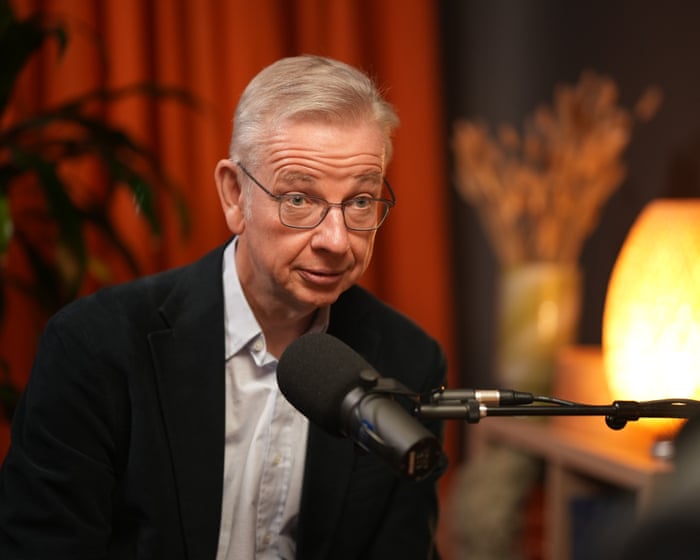
For more than three decades, Michael Gove has been a leading figure in British Conservatism. As a journalist, government minister and now editor of the Tory bible, the Spectator, he has helped shape the right even as it has moved further rightwards. In the latest episode of Radical Thinking, Gove joins Aditya Chakrabortty to discuss the future of the right, his record on Brexit and austerity, and the Spectator’s position on Islam
To read the fruits of Michael Gove’s dalliance with the Marxism Today gang, look up his essay in a 1998 collection called The Moderniser’s Dilemma: Radical Politics in the Age of Blair
For slalom ride through Michael Gove’s years in power, read The Demented Dalek by the historian Richard J Evans in the London Review of Books
To learn more on what’s become of the British right, there’s a column by me for the Guardian
Phil also writes a very good blog on British politics, which keeps a close eye on how each party is trying to marshall a coalition of voters. Here he is on Kemi Badenoch
Geoffrey Wheatcroft does an entertaining short narrative in Bloody Panico!:
For more on the economics of the Cameron years, this paper is acute on how the Tories failed to move the UK away from being a country of renters towards a country of makers. Two of its authors will join us for a podcast later in the series.
And if you want to read how Brexit may have cost the UK 8% of GDP, there’s this paper based on data from the Bank of England
Finally, on the Spectator read Nesrine Malik’s recent column in The Guardian
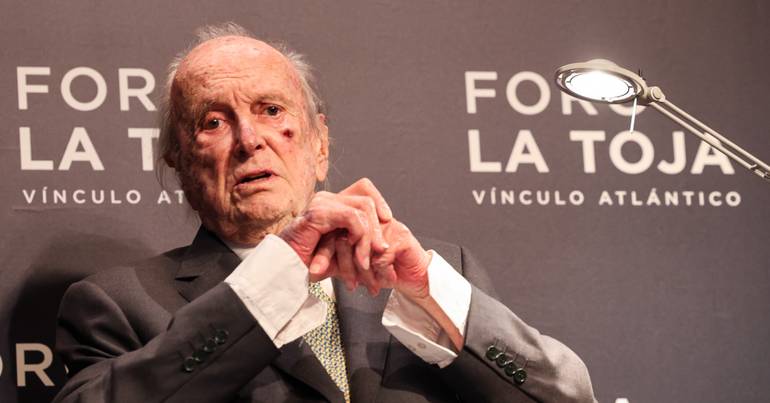
Francisco Balsemão, que morreu no ano passado, foi fundador da Associação da Imprensa Não Diária, que posteriormente deu lugar à Associação Portuguesa de Imprensa
Talvez seja útil notar que alguns dos mais aflitos com a famosa “desinformação” são os que a produzem com método e com zelo. Deve ser receio da concorrência.
Katie Zacharia left her White House press secretary job after five days. Anthony Scaramucci, who also had a short tenure in the Trump administration in 2017.
Dustin Chambers/Bloomberg via Getty Images
Katie Zacharia left her White House press secretary job after five days.
Anthony Scaramucci can relate.
The internet is awash with memes that measured Zacharia's run in "Scaramuccis."
Katie Zacharia’s run as White House press secretary lasted five days, and memes about her exit are rolling in.
There is someone who can relate: Anthony Scaramucci, whose brief stint as Trump’s White House communications director in July 2017 became a pop-culture unit of time — a “Scaramucci,” or “Mooch” — for measuring short-lived political appointments.
Scaramucci held the role for roughly 10 days — six if not including the time lapsed between Trump's announcement and his first day — before Trump fired him.
Scaramucci has been following Zacharia's journey closely and, in a series of tweets, has gone from wishing her well to offering advice.
It started on Thursday, when Scaramucci placed his bet that Zacharia would "make it."
Dear @katiezacharia — speaking as the world's leading expert on short White House tenures: turn off the news and go enjoy your family. In time you’ll realize that the Universe did you a major favor.
Workers have long been told to stay in a job for at least a year to avoid looking uncommitted to future employers. A string of short stints can still raise eyebrows, but the dates on a résumé don’t always tell the whole story.
Leadership consultants have previously told Business Insider that quick moves that come with more responsibility and opportunities to build skills can strengthen a résumé, in which quick changes in roles could be seen as a sign of ambition and adaptability rather than instability.
Zacharia succeeded Karoline Leavitt, who left in August to spend more time with her young children. She became Trump’s sixth press secretary across his two terms, and the fourth to last less than a year.
While there is helpful career advice out there for Zacharia, a LinkedIn profile picture of Zacharia with the infamous "#Opentowork" tag has also taken off on X. The tweet was originally posted by the Democrats' official account.
The green tag itself has been a much-debated topic on the professional networking platform.
Some recruiters have previously told Business Insider that the label is the "biggest red flag" to hiring managers because it suggests "desperation." Data from 2024, however, show that workers with the public green tag receive 40% more messages from LinkedIn Recruiter than those who use only the private signal.
Leitão Amaro considera que a agência noticiosa está mais próxima de se tornar num serviço público viável — e deixa a porta aberta para continuar conversa sobre a alteração dos estatutos.
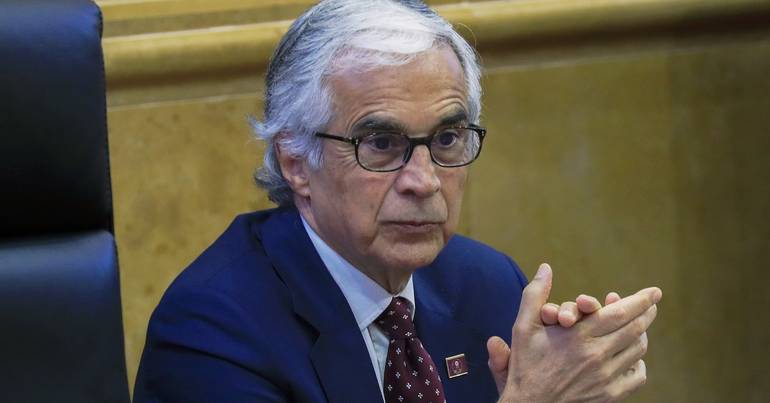
Aguiar-Branco considerou que é "importante que o Ministério Público e os juízes se habituem a falar com a imprensa", de uma forma quotidiana, em "assuntos que não impliquem o segredo de justiça".
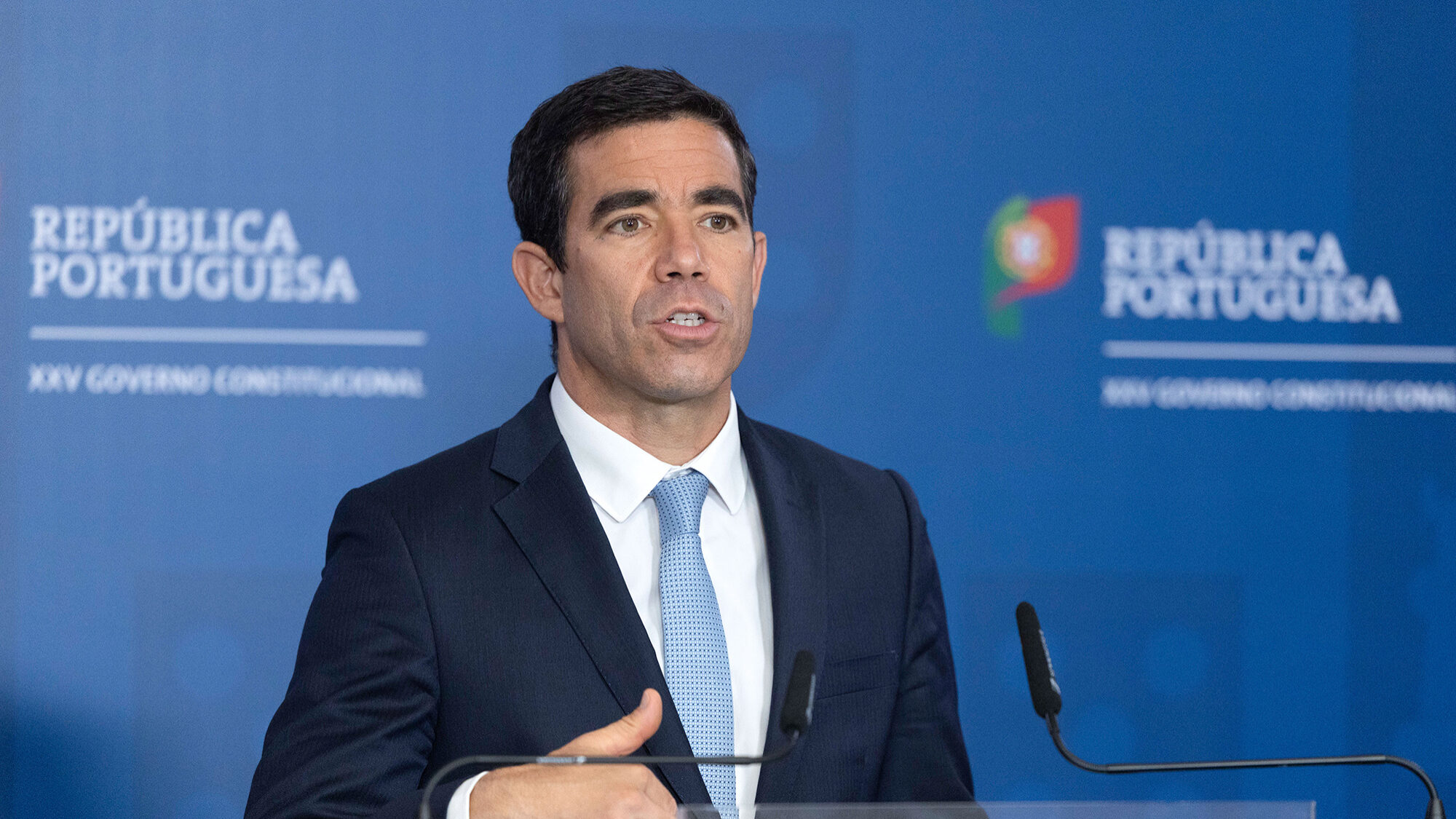
O Governo está a rever as regras da publicidade e prepara um novo código que pretende “reduzir ao ponto de partida, com condensação, atualização e modernização de todas as principais leis do setor”. O anúncio foi feito por António Leitão Amaro, ministro da Presidência, no Dia Nacional da Imprensa 2026, o encontro anual dos media portugueses promovido pela Associação Portuguesa de Imprensa (API).
“Estamos a reduzir, era o ponto de partida, com condensação, atualização e modernização de todas as principais leis do setor e, evidentemente, a abolição de todas aquelas barreiras, por mais bem intencionadas que fossem”, afirmou.
E deixou um aviso. “Quando a proposta do código sair, vai haver viúvas, vão existir viúvas das leis anteriores e da limitação para isto e para aquilo. Há viúvas e viúvos porque vamos optar por, na desregulamentação de algumas destas limitações, acreditar na liberdade e confiar nos meios”, explicou.
Leitão Amaro deu como exemplo as restrições de horário e de tempo de publicidade na televisão e na rádio, que desaparecem quando o mesmo conteúdo é visto numa aplicação. “Hoje já nem é no sítio ao lado, é na mesma televisão. Ando para as aplicações e entro ali e desapareceu a restrição”, disse. “Mas isto é só a primeira camada.”
A segunda, explicou, é a publicidade dirigida. “Porque é que a publicidade está a fugir? Porque a publicidade nas plataformas é dirigida, é customizada para quem a vê”, argumentou. “Se conseguirmos permitir que os meios de comunicação social façam a mesma utilização da tecnologia, ou equivalente, para utilizar a publicidade dirigida, o preço dispara.”
O ministro recordou, “com muita cautela” e “por respeito institucional”, a decisão da Autoridade da Concorrência que pôs fim à Playce, a ferramenta de publicidade dirigida nas boxes de televisão.
“Uma decisão da Autoridade da Concorrência deitou abaixo um instrumento que as televisões e as operadoras de cabo tinham encontrado e que valia, pasme-se, no ano em que foi destruído, 20 milhões de euros de publicidade. Neste ano estávamos a começar a caminhar para 30”, afirmou. O novo código, defendeu, deve “criar condições” para que os meios possam “aproveitar tecnologicamente as possibilidades” e tornar esse valor “apropriável”.
“Podemos fazer, por intervenções legislativas, um desencadear de receitas que podem ajudar muito. As regras da publicidade são um exemplo”, sublinhou.
Uma decisão da Autoridade da Concorrência deitou abaixo um instrumento que as televisões e as operadoras de cabo tinham encontrado e que valia, pasme-se, no ano em que foi destruído, 20 milhões de euros de publicidade.
Amália já em negociações com comunicação social
No apoio à transição digital, o Governo está “a olhar seriamente para o tema da criação das condições de arbitragem necessárias” nas negociações entre os media e as plataformas. E quer dar o exemplo com o Amália, o modelo de linguagem do Estado.
Leitão Amaro contou que, no início do verão, perguntou em Conselho de Ministros quanto é que o Amália pagava aos órgãos de comunicação social. A resposta foi “nada”. Com base num parecer jurídico, o modelo limitava-se a usar conteúdos com mais de dois anos, que não estariam assim protegidos por direitos. O Governo já iniciou conversações com os media para que o Amália passe a ir buscar conteúdos em tempo real “se e apenas se” houver um acordo de pagamento, com termos comerciais, regras de transparência e de referenciação dos conteúdos. O preço será calculado de forma objetiva, em função do tráfego de cada meio. O objetivo é que sirva de exemplo nas negociações bilaterais de cada órgão de comunicação social com as plataformas.
O ministro anunciou também a retoma da linha de apoio à digitalização de arquivos, criada em 2023-2024, e alargada agora ao tratamento de bases de dados.
Lusa até 90% mais barata
Leitão Amaro destacou ainda a verba de até dois milhões de euros prevista no Orçamento do Estado para a Comissão da Carteira Profissional de Jornalista, destinada a “financiar todas as atividades de autorregulação, que podem ir desde o funcionamento normal da Comissão da Carteira até funções novas”, como a formação, a capacitação e a modernização tecnológica dos jornalistas.
Sobre a Lusa, revelou que, a partir de 1 de janeiro de 2027, os órgãos de comunicação social vão ter descontos que “atingem 90% do que é hoje a cobrança da Lusa”, com uma verba de dois milhões de euros inscrita o Orçamento do Estado.
Quanto ao concurso de apoio à distribuição de publicações, o relatório final deverá sair na próxima semana. “Ambos [os concorrentes] colocaram muitas questões sobre a proposta do outro e pedi que houvesse o escrúpulo máximo, exigência máxima, avaliação máxima de todas as observações, para que não subsistam dúvidas nenhumas sobre a integridade da decisão”, explicou. “Quisemos lançar um processo que descobrisse o preço certo e não uma renda pedida”, acrescentou.
Para as rádios, o ministro referiu o apoio extraordinário de 500 mil euros às estações que tiveram retransmissores destruídos pelas tempestades do início do ano e uma verba de 23 milhões de euros no Orçamento para financiar a resiliência da rede de rádio. “São mais de 23 milhões de euros disponíveis para financiar a resiliência da rede de rádios nacionais”, destacou.
Apoio aos órgãos de comunicação locais
O Governo fixou esta sexta-feira uma dotação de mais de 1,4 milhões de euros para o Regime de Incentivos do Estado à Comunicação Social.
O despacho conjunto do Ministro da Presidência, do Ministro de Estado e das Finanças e do Ministro da Economia e da Coesão Territorial fixa, de acordo com o Governo, em 1.417.639,71 euros a dotação para 2026. Segundo o comunicado, o valor representa um aumento de 45,4% face a 2025. O despacho será publicado em Diário da República no início da próxima semana.
No ano passado, o montante total de apoios a atribuir foi de 955.062,45 euros para Portugal Continental, a que se juntaram, numa portaria separada, 19.998 euros para a comunicação social madeirense. Os Açores ficaram de foram destes incentivos, por não terem sido recebidas candidaturas consideradas elegíveis. Os 45,4% avançados pelo Governo parecem resultar da soma destes dois valores. Se a dotação de 2026 disser respeito apenas ao Continente, como o despacho do ano passado, o aumento é de 48,4%.
Os apoios destinam-se a promover a modernização tecnológica, o desenvolvimento digital, a acessibilidade, as parcerias estratégicas e a literacia e educação para a comunicação social, “reforçando a capacidade dos órgãos de comunicação social regionais e locais para responder aos desafios do setor”, explica o executivo.
Divulgação das decisões autárquicas nos media avança
A Assembleia da República aprovou esta sexta-feira, em votação final global, a proposta do Governo que altera o Regime Jurídico das Autarquias Locais. Votaram a favor PSD, Chega, PS, IL, Livre, CDS-PP, BE, PAN e JPP e o PCP absteve-se.
A lei obriga as autarquias a divulgar as suas deliberações na comunicação social regional e local. A obrigação já estava prevista na legislação desde 2013, mas nunca foi regulamentada nem aplicada. O novo texto alarga-a aos meios digitais e define que a regulamentação tem de ser aprovada nos 60 dias seguintes à publicação da lei, que entra em vigor 90 dias depois de publicada.
Durante a sua intervenção no evento, Leitão Amaro acusou PS e Chega de terem retirado a norma que considerava central. “À última hora, havia uma regra mais importante, sagrada de todas: a deliberação autárquica não produz efeito se não for publicitada na comunicação social. Isto, pelas nossas contas, representava muito mais que o porte pago em termos de consumo público. Hoje, o PS e o Chega juntaram-se para retirar essa norma da lei.” E prometeu: “Vou continuar a tentar.”
O novo regime prevê a divulgação obrigatória de um resumo “deliberações dos órgãos autárquicos colegiais destinadas a ter eficácia externa” em meios de comunicação social regionais ou locais, em suporte impresso e digital. O mesmo vale para atos que determinem contratos públicos acima do limiar do ajuste direto, “quando produzam efeitos externos e envolvam a realização de despesa pública”.
Para serem elegíveis, os meios têm de acompanhar com regularidade a atualidade do município ou da freguesia em questão. Os jornais impressos não podem ser gratuitos, têm de sair pelo menos uma vez por mês e têm de estar entre os seis de maior circulação no município. Os digitais têm de ser atualizados todos os dias. Os sítios de internet das rádios regionais e locais são igualmente abrangidos, “com exceção das rádios que apenas façam retransmissão de outros serviços de programas”.
Se o concelho tiver apenas um meio elegível, a divulgação deve ser feita nesse meio.Se tiver vários, as autarquias devem alternar entre eles, com base nos critérios que vão ser definidos. Se não tiver nenhum, deve-se recorrer a um “órgão regional ou local de município limítrofe, de âmbito intermunicipal ou metropolitano, de âmbito regional ou de âmbito nacional”.
As tabelas de referência serão fixadas todos os anos por portaria dos membros do Governo responsáveis pela comunicação social e pela administração local. Antes disso, o Governo terá de ouvir as associações do setor e mediante parecer, no prazo de 20 dias úteis, da Associação Nacional de Municípios Portugueses (ANMP), da Associação Nacional de Freguesias (ANAFRE) e da Associação Nacional das Assembleias Municipais (ANAM).
Se o preço proposto por um meio local exceder o valor constante da tabela, a autarquia deve promover a publicação, “em cada modalidade, em órgão de comunicação social de município limítrofe, de âmbito intermunicipal ou metropolitano, de âmbito regional ou de âmbito nacional”. Se todos propuserem um valor superior, o órgão municipal e de freguesia fica dispensado da publicação, “devendo justificar documentalmente essa decisão”.
A legislação prevê ainda a avaliação da aplicação do regime e a previsão de verbas nos Orçamentos do Estado para fazer face aos encargos adicionais das autarquias.
“É uma notícia que a API saúda de forma muito particular, depois de mais de 12 anos de espera pela publicação efetiva deste regime”, afirmou Cláudia Maia, presidente da Associação Portuguesa da Imprensa (API), na abertura do evento e destacou que o trabalho na especialidade “acolheu várias das preocupações e propostas” da associação.
Ainda assim, a presidente da API deixou um aviso: “A aprovação da lei não encerra este trabalho. Pelo contrário, começa agora a fase decisiva da sua execução. Durante mais de 12 anos, uma obrigação prevista na lei ficou sem aplicação efetiva por falta de regulamentação. Não podemos permitir que a história se repita.” A associação pediu que a verba prevista para cobrir os encargos das autarquias tenha “tradução efetiva e atempada no Orçamento do Estado de 2027, para que a falta de recursos não volte a ser um obstáculo à aplicação da medida”.
Histórico
Tal como nota o Plano de Ação para a Comunicação Social,o Regime Jurídico das Autarquias Locais (RJAL) ainda em vigor já obrigava a publicitar, nos jornais regionais e locais, todas as deliberações e decisões com eficácia externa. No entanto, “esta norma é claramente desproporcionada ao nível da sua exigência e complexidade. Assim, esta norma do art.º 56º da Lei n.º 75/2013, de 12 de setembro, nunca foi regulamentada e, por isso, nunca implementada”, lê-se no documento.
De forma a resolver esta questão, o Governo havia promovido na legislatura anterior uma revisão da mesma, tendo sido aprovada na generalidade em outubro de 2024. Foi até a primeira proposta do plano de ação para os media a ser aprovada. A medida estava já a ser discutida na especialidade, mas acabou por cair com a queda do Governo em março de 2025.
Em janeiro de 2025, num parecer sobre essa versão, o Conselho Regulador da Entidade Reguladora para a Comunicação Social (ERC) avisava que a proposta podia “não ser eficaz” e que continha “formulações imprecisas e equívocas”.
Os podcasts produzidos em Portugal auditados pelo ranking Pod_Scope, serviço da Marktest para a medição técnica, auditada e independente, registaram cerca de 10,2 milhões de downloads no mês de setembro, uma recuperação de 41,5% face aos 7,21 milhões registados no mês de agosto. O valor representa mesmo assim o segundo registo mais baixo do ano.
A liderança dos publishers continua nas mãos do grupo Impresa, que registou 3,38 milhões de downloads mensais, cerca de 846 mil downloads semanais e 485 mil listeners semanais.
Logo a seguir, o Observador mantém-se no segundo lugar, com 2,53 milhões de downloads mensais. Já o Grupo Renascença regista 2,18 milhões, não conseguindo recuperar o segundo lugar perdido em agosto. A Bauer Media mantém-se no quarto lugar, com 1,42 milhões de downloads e a RTP no quinto lugar, com 687 mil. Esta ordenação mantém-se tanto nos downloads semanais como nos listeners semanais.
Analisando por marcas, o Observador mantém-se na liderança, obtida em agosto, com 2,53 milhões de downloads mensais. A Renascença recupera, ultrapassando o Expresso, mas não o suficiente para voltar ao lugar cimeiro de julho. Em setembro, a marca do Grupo Renascença Multimédia alcançou 2,08 milhões de downloads e a marca da Impresa registou cerca de 1,55 milhões.
A Rádio Comercial mantém-se no quarto lugar, com quase 1,3 milhões de downloads. A SIC Notícias fecha o top cinco com cerca de 1,27 milhões de downloads.
No universo de 25 marcas analisadas, 14 viram os seus números mensais aumentar em setembro, 10 desceram e uma ficou igual, a Cidade FM, com exatamente 856 downloads nos dois meses. Em agosto tinham sido 22 marcas em queda. A RTP Notícias registou um crescimento de 131,8% — de 5.105 downloads para 11.834 downloads. Tal permitiu à marca subir de 16.º para 13.º, alcançando a maior subida de posições do mês.
O “top 3” – Observador, Renascença e Expresso – continua a reunir a maioria da quota de mercado, representando 60,46% dos downloads entre as marcas analisadas.
No que toca aos listeners semanais – dispositivos/apps conectados à internet que efetuaram downloads de podcasts entre 31 de agosto e 27 de setembro –, o Observador mantém a liderança, com 288 mil. O Expresso mantém-se no segundo lugar — com 250 mil — e a Renascença recupera para o terceiro lugar — com 218 mil –, não conseguindo ainda voltar ao lugar cimeiro que ocupava em julho. A SIC Notícias cai assim do terceiro para a quarta posição — com 208 mil — e a SIC mantém o quinto lugar, com 109 mil.
No mês anterior, recorde-se, o pódio era ocupado por Observador, Expresso e SIC Notícias, por esta ordem.
Nos formatos individuais, o “Extremamente Desagradável”, da Rádio Renascença, manteve a liderança com o maior número de downloads mensais — quase 1,6 milhões, tendo sido lançados 15 episódios. “O Homem que Mordeu o Cão” – Rádio Comercial – mantém-se no segundo lugar, com 865 mil downloads mensais e novos 19 episódios. O “Expresso da Manhã” (Expresso) também mantém o terceiro lugar, com 278 mil e 24 novos episódios, face aos 305 mil registados e 25 novos episódios em agosto.
Em conjunto, estes três títulos representaram 26,84% de todo o consumo deste formato nos grupos auditados.
Pete Crockett says the history of British education is not simply one of children dutifully accepting adult instruction, while Simon Dawson saysKitty Sayersmisses the mark when describing English attitudes. Plus a letter from Kevin Donnelly
At Marlborough college, troops were once summoned to dislodge rebellious pupils occupying an island in the school grounds. In the late 1700s, Winchester college experienced several rebellions.
Disney CEO Josh D'Amaro plans to hire employees from Character.AI, where new tech chief Karandeep Anand worked.
Taylor Hill/FilmMagic; Manaure Quintero / AFP via Getty Images
Disney plans to pay $60 million to hire 66 employees from Character.AI, which filed for bankruptcy.
Former Character.AI Karandeep Anand is Disney's new chief technology officer.
CEO Josh D'Amaro's company laid off tech staffers in September in its third round of cuts this year.
Disney is paying up for employees from an AI chatbot startup that filed for bankruptcy, shortly after trimming its own tech workforce.
The Mouse House plans to pay $60 million per year to 66 workers from Character.AI, according to a Chapter 11 filing on Tuesday from its parent company. In mid-September, Disney hired Character.AI CEO Karandeep Anand to be its first-ever company-wide tech chief. (The company hasn't yet disclosed how much it's paying Anand.)
These additions are part of Disney's AI strategy under CEO Josh D'Amaro, who's been investing in the media giant's tech platforms to help jumpstart a stagnant stock that's up less than 2% in the last 12 months and is down over 36% in the last five years.
Disney's decision to bring in these Character.AI staffers came two weeks after it laid off several hundred workers — including some tech employees. The late-September cuts were Disney's third major round of layoffs since D'Amaro took over in mid-March.
In addition to the $60 million in compensation, Disney is setting aside an additional $30 million for an "aggregate retention pool" to incentivize Character.AI employees to stay. The company expects to spend $180 million on "total compensation and retention" for these staffers in the next three years, the filing said.
Of the 66 Character.AI staffers who were offered jobs by Disney, 56 have already resigned from the AI startup, while the other 10 are waiting for the US government to update their work visas.
Entertainment lawyer Corey Martin of Granderson Des Rochers, who advises companies on media transactions, said he's not surprised by those pay figures since Character.AI's employees are its biggest asset.
"They're highly compensated employees. The numbers can be eye-popping, but it's not that unusual in this space," said Martin, who didn't work on the deal or with Disney.
Disney also agreed to pay $20 million for Character.AI's key assets, including some of its IP and tech. Other companies can submit competing bids for the assets by November 20. The entire process will be overseen by a bankruptcy court judge. Disney didn't respond to requests for comment for this story.
Disney sent a cease-and-desist letter to Character.AI last fall, telling it not to create AI chatbots featuring its copyrighted characters without permission. Character.AI complied, removing chatbots with characters from Disney franchises like Star Wars and Marvel.
In its bankruptcy announcement, Character.AI said that it had been facing "significant legal, regulatory, and operational headwinds."
Anand told Disney employees in a memo last Friday that the Mouse House was "uniquely positioned to win" in a competitive media business that he said was "at an inflection point." The tech chief also said he enjoyed meeting his new colleagues and looked forward to working with them.
"What stands out most is the talent and care this team puts into its work, the craft Disney has perfected, and the strong foundation you've built," Anand said.
O jornalista Gonçalo Pereira Rosa recorda o amigo, Joaquim Letria, como um gigante da comunicação e espírito livre que dominou a imprensa, televisão e rádio.
Os projetos de lei do PS, IL, PCP e Livre sobre os novos estatutos da Agência Lusa foram rejeitados esta sexta-feira na votação na generalidade na Assembleia da República. Os quatro projetos contaram com o voto contra dos deputados do PSD, CDS-PP e Chega.
O projeto de lei do PS, intitulado “Aprova o modelo societário e os estatutos da Lusa — Agência de Notícias de Portugal”, contou ainda com a abstenção da IL. Já o projeto de lei da IL, “Mais independência para a Lusa”, não teve abstenções, mas contou com os votos contra de Livre, PCP e BE.
Tanto o projeto de lei do PCP (Aprova o modelo societário e os estatutos da Lusa – Agência de Notícias de Portugal, como Entidade Pública Empresarial), como o do Livre (Aprova o modelo societário e os estatutos da Lusa), contaram com os votos contra de PSD, Chega, IL e CDS-PP, sendo que a proposta comunista teve a abstenção do PS.
O plenário aprovou um projeto de resolução (uma recomendação ao Governo, sem força de lei) do Chega que recomenda ao executivo que “assegure a independência editorial, a autonomia institucional, a transparência financeira e o escrutínio parlamentar da Lusa”. A iniciativa contou com a abstenção de IL, PS, Livre, PCP e BE.
A 9 de setembro, a Entidade Reguladora para a Comunicação Social (ERC) deliberou que a reestruturação da agência “não está conforme com o quadro normativo aplicável” nem com as recomendações e “boas práticas do funcionamento independente de um meio de comunicação social público”, considerando que as desconformidades terão efeitos sobre “os níveis de independência da Lusa face ao poder político”.

 Login