❌

Reading view

PCB allows Rizwan, Imam to play domestic cricket tournament

LAHORE/KARACHI: The Pakistan Cricket Board (PCB), apparently taking a step back quietly, has allowed former captain Mohammad Rizwan and opener Imamul Haq to represent their respective teams in the seventh round of the President’s Trophy Grade-I first-class tournament starting on Monday.

Both Rizwan and Imam — who represent the Sui Northern Gas Pipelines Limited (SNGPL) and the Oil and Gas Development Company Limited (OGDCL) respectively, in domestic cricket — had been under investigation by the National Cyber Crime Investigation Agency (NCCIA) for alleged betting and gambling activities following Pakistan’s defeat in the second Test in England earlier this year.

The pair, whose mobile phones were confiscated by the NCCIA, and five other players of the squad in England were withdrawn before the third and final Test which the tourists lost 3-0.

According to some reports, both Rizwan and Imam are facing allegations under the Prevention of Electronic Crimes Act (Peca).

Amid the probe, Rizwan was denied permission to feature in the eight-team President’s Trophy, which started last month. At the time, it was explained away as the player’s failure to appear in a pre-season fitness test. But it later emerged that he had been denied the go-ahead to play because of the NCCIA probe.

Though the PCB itself did not issue any official statement on the participation of any of the above-mentioned players, SNGPL coach and former Pakistan captain Mohammad Hafeez has said on electronic media that if available Rizwan would lead SNGPL in the next President’s Trophy match.

Hafeez’s statement indicates that there is no bar on Rizwan anymore and now it is up to the wicket-keeper/batsman’s own availability to lead the team.

It has been reported that Rizwan had asked the PCB for the no-objection certificate to play the Nepal League, but the PCB only allowed him to feature in domestic cricket.

Meanwhile, Imam’s return to the domestic cricket was made official by the OGDCL.

Farah Batool, president of the OGDCL sports department, told Dawn that Imam would play the seventh-round match of the President’s Trophy after receiving the directions from the PCB. Sources in the PCB also confirmed this.

Rizwan was summoned by the NCCIA in Lahore on Oct 2 when the agency grilled him for more than three hours. However, no official statement on the matter has been released by the NCCIA so far. Rizwan, after this case emerged, had requested the PCB to allow him to use the National Cricket Academy which was denied.

  •  

The drones flew 1,000 km. St. Petersburg’s oil terminal, fuel depot, and a nearby data center were waiting at the end

russia’s st petersburg wakes up burning oil sites hit bridge damaged data center after night ukrainian drones · post fire ozon distribution kolpinsky district drone attack 18 2026 astra ukraine

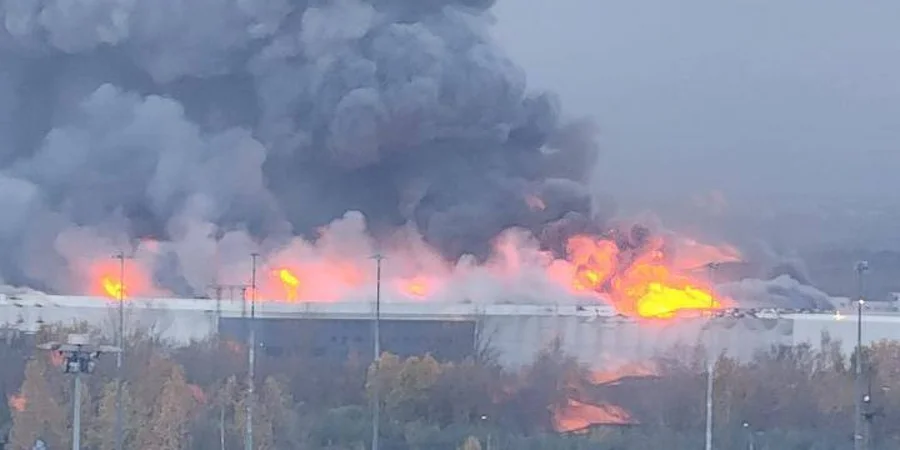
Ukrainian drones struck St. Petersburg’s oil terminal, a fuel depot, an Ozon distribution center, and a VK data center overnight, setting off fires across the city, monitoring channels reported. Russian outlet Meduza called it apparently the largest attack on the city and Leningrad Oblast since the war began. Russian officials acknowledged fires, damaged homes and substations, and power cuts.

Russia keeps fighting along the front while bombarding Ukrainian cities and the grid behind it. Ukraine’s long-range drones, in turn, target the oil exports and logistics that fund and supply that war, and Russia’s Baltic oil ports have been hit repeatedly this year. St. Petersburg is a symbolic place: Russia’s so-called second capital and Putin’s hometown.

Oil terminal and fuel depot on fire

Ukrainian forces struck the Petersburg Oil Terminal with FP-1 drones, starting a fire, Ukrainian drone maker Fire Point said. The company described the terminal as one of the region’s largest, handling 12.5 million tonnes of petroleum products a year, including for export.

Piter port and oil facility in one shot pic.twitter.com/KfptwkhsDS

— Exilenova+ (@Exilenova_plus) October 18, 2026

St. Petersburg Governor Aleksandr Beglov acknowledged fires at the terminal and in four city districts, adding that Pulkovo airport had restricted flights. By morning, firefighters were still battling blazes at the terminal, the Ruchyi oil depot, and industrial warehouses in the Kolpinsky district, he wrote. He claimed one person was killed and five injured. Ukrainian monitoring channel Exilenova+ reported that the Ruchyi depot had been burning since the night.

Ozon hub, VK data center, and a bridge

An Ozon distribution center in Kolpinsky district caught fire after the attack, the company said, Russian independent outlet Astra reported. Astra’s open-source intelligence analyst described it as one of Ozon’s busiest fulfillment centers in northwestern Russia, covering up to 79,000 m².

Ozon in St. Peterburg pic.twitter.com/tA9iwRJf7d

— Exilenova+ (@Exilenova_plus) October 18, 2026

FP-1 drones also hit a VK data center in Novosergiyevka, Leningrad Oblast, causing serious damage, Fire Point said. VK acknowledged a drone attack on the site but claimed its services were working normally. Leningrad Oblast Governor Aleksandr Drozdenko claimed air defenses downed 145 drones over the oblast alone. He acknowledged damage to the data center’s transformer equipment and warehouse complex, and minor damage to the Vostochnaya substation. Two other substations in Yanino went offline, cutting power to about 20,000 people, he said.

Damaged VK data center building in Novosergiyevka, Leningrad Oblast, after a Ukrainian FP-1 drone strike, 18 October 2026
Damaged VK data center building in Novosergiyevka, Leningrad Oblast, after a Ukrainian FP-1 drone strike, 18 October 2026. Photo: Fire Point/X

A drone also hit the cable-stayed bridge over the Korabelny fairway, part of a toll highway linking the city’s north and south, Exilenova+ reported, adding that the extent of the damage was still being clarified. The channel also reported a fire near a Russian Aerospace Forces radar company outside the village of Kaporskoye.

Smoke rising over St. Petersburg after the overnight drone attack, 18 October 2026
Smoke rising over St. Petersburg after the overnight drone attack, 18 October 2026. Photo: Astra

To reach St. Petersburg, Ukrainian drones had to cover 1,000 km across four Russian regions guarded by air defenses and electronic warfare, said Serhii Beskrestnov, adviser to Ukraine’s president on defense technology.

“And these are not cruise missiles with special systems, these are drones that fly at speeds of up to 200 km/h,” he wrote.

Satellite image marking the drone hit on the cable-stayed bridge over the Korabelny fairway in St. Petersburg, 18 October 2026
Satellite image marking the drone hit on the cable-stayed bridge over the Korabelny fairway in St. Petersburg, 18 October 2026. Image: Dnipro Osint via Exilenova+

Strikes resume after a one-sided truce

The same night, Russia hit Ukraine’s grid again, and Ukrainian President Volodymyr Zelenskyy counted 76 Russian strikes on energy since the ceasefire was announced. US President Donald Trump declared the truce on 11 October. Ukraine paused its refinery strikes for three days at Washington’s request, but Russia struck a Kharkiv power plant within hours and kept hitting the grid. Zelenskyy then said Ukraine was resuming strikes on Russian oil and would stop again only in exchange for more US interceptors for its Patriot systems. Trump called the renewed strikes “a disgrace” and said he found Zelenskyy “more difficult to deal with than Putin.”

Ukraine has hit the St. Petersburg area before. In July, drones set fire to Wildberries warehouses near the city. In August, Ukraine began striking Ozon hubs, starting in Samara Oblast. The hubs move dual-use goods such as electronics and drone components.

  •  

Two moments of madness cost Sri Lanka as Pakistan win tri-series opener after Salman Ali Agha century

Sri Lanka were cruising.

Only 53 runs stood between them and a flying start in the One-day International tri-series opener against Pakistan after Pavan Rathnayake and Janith Liyanage’s 119-run stand.

The dew that made the Rawalpindi Cricket Stadium outfield relentlessly slick on Sunday night had also deprived Pakistan’s pacers of the chance to extract reverse swing from the old ball.

Then came two moments of madness. Liyanage, who had looked composed throughout his innings, chipped Haris Rauf casually to Babar Azam at long-on before Dasun Shanaka, who had threatened to take the game away from Pakistan, heaved Shaheen Shah Afridi to the same fielder in the same position. In the space of four balls, Sri Lanka unravelled.

Naseem Shah then had Sachindu Colombage caught behind, Eshan Malinga was run out after a mix-up, and Haris cleaned up Asitha Fernando to seal a 37-run win for Pakistan, who had earlier posted 305 thanks to Salman Ali Agha’s fourth ODI century.

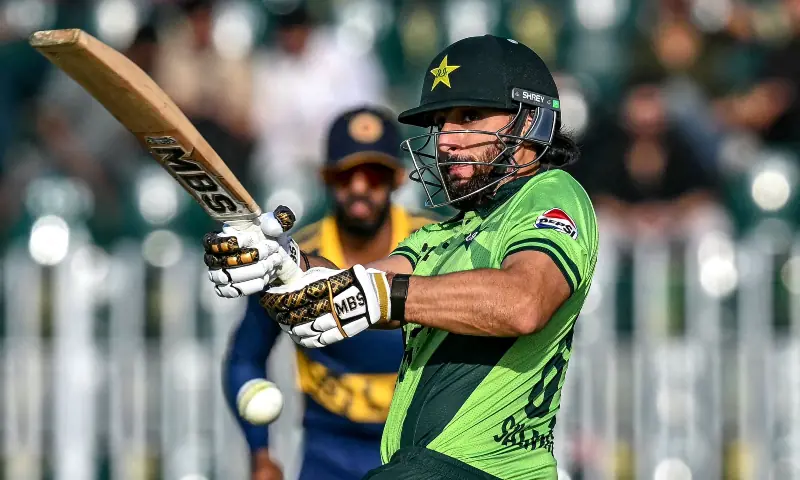
Salman celebrated his return to the Pakistan side after his unceremonious axing from the Test team two months ago with a composed 107 off 90 balls, including 10 fours and a six.

Pakistan’s innings, however, finished with a flourish from Sri Lanka’s bowlers, who conceded only 36 runs while taking five wickets in the last five overs. Eshan Malinga led the charge with figures of 4-46.

After openers Fakhar Zaman and Saim Ayub fell to Dilshan Madushanka, Babar Azam and Saad Baig steadied the innings with a 74-run partnership for the third wicket.

Malinga broke through by bouncing out Babar for 45 and Saad for 39, bringing Salman and Hasan Nawaz together.

The pair added 97, with Salman gradually increasing the tempo after initially settling in. He brought up his half-century in the 35th over, rotating the strike and punishing loose deliveries.

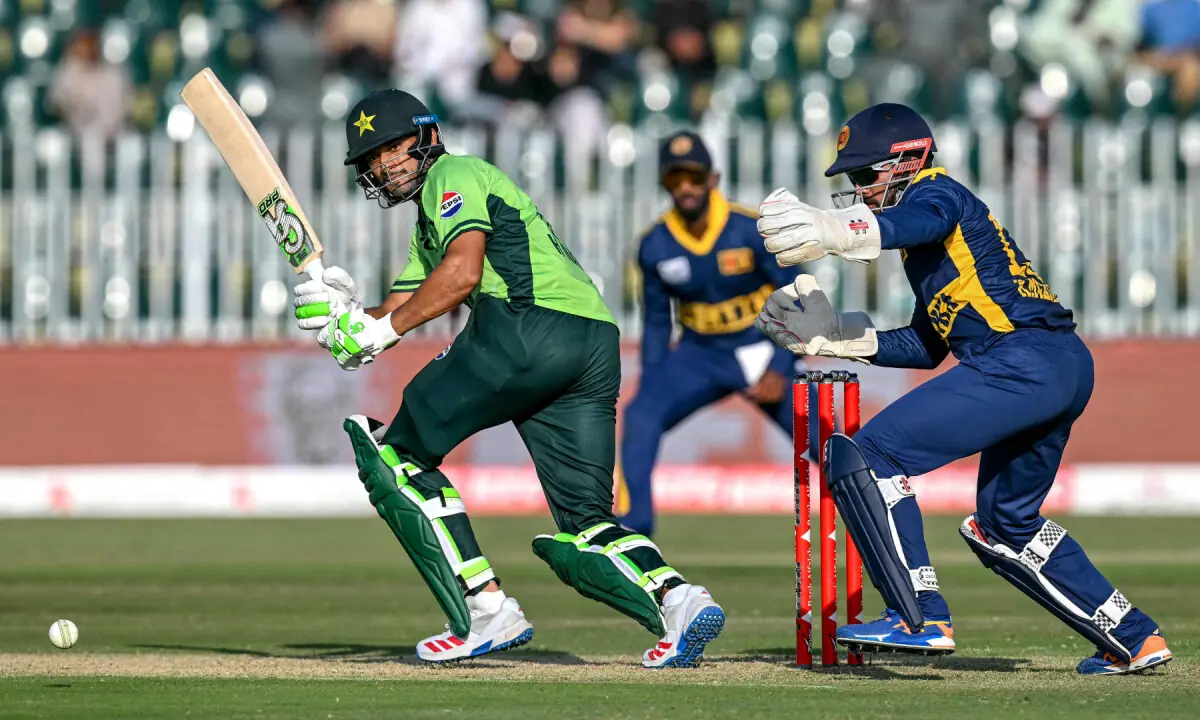
Salman Agha plays a shot during the tri-series one-day international (ODI) cricket match between Pakistan and Sri Lanka at the Rawalpindi Cricket Stadium in Rawalpindi on October 18, 2026. — AFP

Hasan supplied the acceleration with two sixes off Sachindu Colombage, including a powerful slog sweep over cow corner.

Salman then took charge, pulling Dasun Shanaka through the leg side before launching Malinga’s slower delivery over long-off for six.

He reached three figures in the 45th over, finding the boundary through deep midwicket before edging a full delivery past the infield to third man.

Hasan fell for 37, caught by Pavan Rathnayake at short midwicket off Asitha Fernando, who also removed Arafat Minhas for 18.

Salman departed for 107 at 279-6, mistiming a lofted shot to Shanaka at long-on, and Sri Lanka seized control.

Malinga dismissed Faheem Ashraf and trapped Naseem Shah lbw in the next over, while accurate yorkers restricted Pakistan’s lower order. Haris was run out for a duck in the final over, leaving Pakistan all out for 305 in 49.5 overs.

Sri Lanka’s reply began poorly. Shaheen and Naseem made early inroads, reducing the visitors to 91-4 and leaving the chase in need of repair.

But as the ball and outfield grew wetter, Pakistan’s bowlers struggled to make the ball grip, allowing Rathnayake and Liyanage to rebuild with patience and calculated aggression.

Rathnayake initially played watchfully before cutting Arafat Minhas late through deep point and pulling Saim Ayub to the deep midwicket boundary.

He raised his maiden ODI half-century with a single off Arafat in the 31st over, then pulled two short balls from Shaheen over square leg in successive deliveries.

Liyanage offered stability at the other end, rotating the strike and punishing anything loose. He drove Naseem through the gap between mid-off and extra cover before dancing down the track to hammer Arafat straight down the ground.

Their running between the wickets kept the scoreboard moving as Pakistan struggled to find a breakthrough.

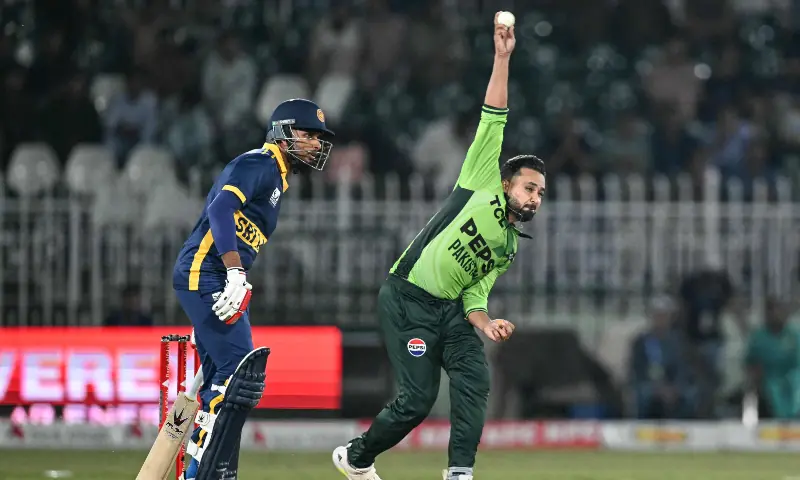
Faheem Ashraf (R) bowls as Sri Lanka’s Dasun Shanaka watches during the tri-series one-day international (ODI) cricket match between Pakistan and Sri Lanka at the Rawalpindi Cricket Stadium in Rawalpindi on October 18, 2026. — AFP

Faheem finally ended the partnership in the 38th over, when Rathnayake, having faced 74 deliveries, pushed a length ball straight to Salman at short cover.

But the wicket did little to ease Pakistan’s anxiety. Shanaka attacked immediately, pulling Faheem for four and driving through extra cover before launching Arafat over square leg for six.

Liyanage brought up his half-century with a fierce drive down the ground, and Sri Lanka remained firmly in the contest.

With 82 needed from the final 10 overs, the visitors had a genuine chance of pulling off the chase.

Then Liyanage’s loose chip and Shanaka’s reckless heave turned a promising pursuit into a collapse. From there, Pakistan needed only to keep their nerve.

Salman’s century had given Pakistan the platform; Malinga’s late burst had kept the total within reach. But Sri Lanka’s two costly shots ultimately decided the opener, handing Pakistan a winning start to the tri-series.

  •  

Intensifying drone attacks on ships in Black Sea bring war ever closer to Nato shores

Six attacks in 10 days by suspected Russian drones mark dramatic escalation in maritime conflict

The first the crew of the Bulgarian ferry Dioscuria knew of an attack on a cargo ship in their country’s exclusive economic zone in the Black Sea in the early hours of 6 October was a distant explosion 70 miles off the coastal town of Byala.

The Turkish-owned Alfa Watan, heading for the Romanian port of Sulina, had been struck by suspected Russian air and naval drones. Arriving on the scene, Dioscuria found an overturned lifeboat and lifejackets in the water. There was no sign, however, of Alfa Watan’s crew of 10.

Continue reading...

© Photograph: ARSVOM/AFP/Getty Images

© Photograph: ARSVOM/AFP/Getty Images

© Photograph: ARSVOM/AFP/Getty Images

  •  

Mark Galeotti, organized crime expert: ‘The road to hell is paved with good intentions. So is the path to techno-authoritarianism’

“The gang was disciplined, ruthless, well ordered. Its thugs swaggered around the city as if they owned it. Maybe they did: everyone knew who they were, and the corrupted police never dared take them on.” Mark Galeotti, 60, opens his latest book, Homo criminalis. How Crime Organizes the World, with a fictionalized scene from Miguel de Cervantes’s tale Rinconete y Cortadillo, about a brotherhood of thieves that evokes The Godfather or Peaky Blinders. It was the year 1613.

Seguir leyendo

The author and organized crime historian Mark Galeotti, in a courtesy photo.
  •  

Haaland double helps Manchester City win, Neto brace cheers Chelsea

Manchester City bounced back from their midweek setback in Europe to maintain their perfect Premier League start with Erling Haaland’s double propelling them to a 3-2 home win over Ipswich Town on Saturday.

Paris Saint-Germain inflicted a first meaningful defeat on Enzo Maresca’s side in the Champions League on Wednesday but City shrugged off a gallant Ipswich side to make it seven wins from seven to cement their place at the top of the table.

Chelsea beat Everton 2-0 in Saturday’s early action thanks to Pedro Neto’s brace although the London club’s win was overshadowed by an injury to goalkeeper Emi Martinez.

Liverpool came from a goal down to beat Brentford 2-1 away although they were helped by the previously unbeaten hosts being reduced to 10 men shortly before halftime when Yehor Yarmolyuk was shown a straight red card for a head butt.

Victory lifted Liverpool above Brentford into fifth place with 12 points behind Chelsea in fourth on 13.

Fulham moved off the foot of the table with their first league win of the season — 1-0 at home to Hull City.

Dark clouds remain over the Etihad Stadium with Manchester City’s fate still unknown after they appealed a ruling that the club breached 114 Premier League financial rules.

City have always denied any wrongdoing.

But on the pitch it is very much business as usual, especially for Norwegian goal machine Haaland.

Phil Foden gave City a short-lived lead cancelled out by Daizen Maeda, but Haaland restored the home side’s advantage before halftime with a header from Mateo Kovacic’s cross.

Haaland then gave his side some breathing space with his second in the 69th minute, powering past Ipswich’s Abdoul Ouattara before a low finish into the corner.

He was denied a hat-trick by an offside decision and Ipswich got a lifeline when Zian Flemming tucked away a penalty in stoppage time but City bagged the points.

Feisty first half

Chelsea have had a knack of scoring early this season but were kept at bay by hosts Everton in a feisty and physical first half that produced five yellow cards.

However, Xabi Alonso’s visitors needed just 43 seconds after the restart to go 1-0 up when Jorrel Hato cut the ball back from the byline to find Neto who swept home.

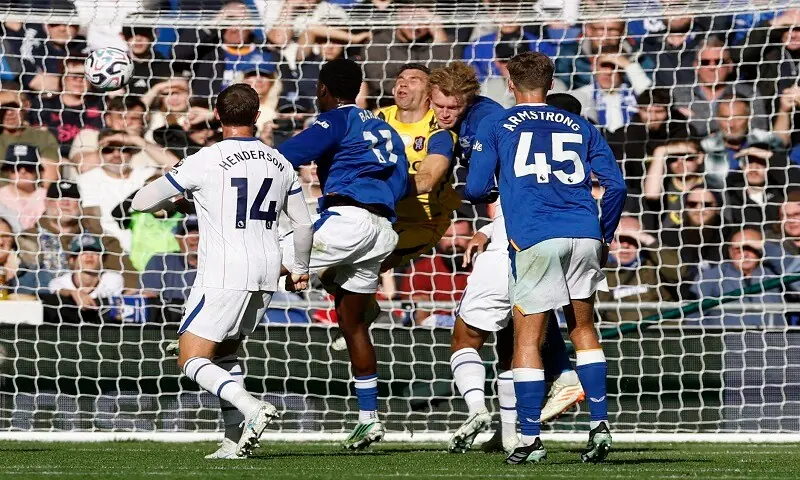
Martinez’s clash of heads with Jarrad Branthwaite caused a lengthy stoppage with paramedics coming onto the pitch. The Argentina keeper was eventually strapped to a stretcher and taken off, leading to 11 minutes of stoppage time.

Chelsea goalkeeper Emiliano Martinez collides with Everton’s Jarrad Branthwaite during their Premier League match at the Hill Dickinson Stadium in Liverpool on October 17, 2026.— Reuters

Chelsea doubled their lead in the 90th minute when Neto pounced on a loose ball after Jordan Henderson’s free kick was blocked by the wall, finding the bottom corner with a composed finish as Everton suffered their first defeat of the season.

“What we know is he (Martinez) left the stadium conscious and right now he is in the hospital doing precautionary tests,” Alonso said. “It was concussion but more than that I saw only one clip. Hopefully it won’t be too bad but we need to wait.”

Martinez’s knock gave 21-year-old keeper Mike Penders the chance to make his Premier League debut and he helped Chelsea keep a clean sheet in the league for the first time in 23 games.

“We need a clean sheet, to be honest. I think we did a very good game. Emi deserved this, Mike did as well,” Alonso added.

Liverpool deservedly fell behind at Brentford with Keane Lewis-Potter putting the hosts in front.

Brentford were good value for their lead but Yarmolyuk’s rush of blood to the head when he clashed with Jeremy Jacquet at a Liverpool corner changed the game.

After referee John Brooks was invited to check a VAR monitor he brandished the red card at Ukrainian Yarmolyuk who trudged off to applause from the home fans.

Liverpool huffed and puffed after the break but Victor Munoz finally levelled in the 62nd minute when he cut in to beat keeper Caoimhin Kelleher with a left-foot finish.

Liverpool’s Victor Munoz (R) shoots to score against Brentford during their Premier League match at the GTech Community Stadium in London on October 17, 2026.— Reuters

Alexander Isak won it for Andoni Iraola’s side eight minutes later with a clinical strike from Bradley Barcola’s assist.

Brentford ended with nine men after Vitaly Janelt got a second yellow card for a foul on substitute Rio Ngumoha.

Elsewhere, Alex Iwobi’s 33rd-minute strike for Fulham was enough to earn their new manager Alvaro Arbeloa a long-overdue league win and move Fulham up to 15th.

  •  

U.S. Lifts Ban on New Flights from AIFA and AICM

The United States Department of Transportation (DOT) lifted, effective immediately this Friday, the measures that had restricted Mexican airlines from establishing new flights to the U.S. from Felipe Ángeles International Airport (AIFA) and Benito Juárez International Airport in Mexico City (AICM).

RELATED:

Mexico Takes Steps to Tackle Reduced Natural Gas Supplies from U.S.

In a joint statement, the Secretariat of Foreign Affairs (SRE) and the Secretariat of Infrastructure, Communications and Transportation (SICT) reported that the decision was reached through coordinated efforts between the governments of Mexico and the United States, as well as progress made in fulfilling bilateral aviation commitments.

The measure revokes Order 213-2, through which the DOT had restricted existing, proposed, and future operations by Mexican carriers. According to the Mexican government agencies, this resolution represents a step forward for air connectivity between the two countries and reopens the possibility of developing routes and flight frequencies from the AICM and AIFA to the U.S. market.

The Government of Mexico attributed this outcome to a process of dialogue and technical cooperation, which was strengthened following a Memorandum of Consultations signed in May 2026. “Since then, Mexico has made progress on the agreed-upon commitments,” the statement noted.

Mexican airlines can expand service to US cities after Washington lifted restrictions that blocked new routes from Mexico City’s two biggest airports https://t.co/Dvkt3zBGp3

— Bloomberg (@business) October 17, 2026

The SRE and SICT indicated that the lifting of these restrictions reflects the desire of both administrations to move toward a new phase in the bilateral aviation relationship—one grounded in dialogue, respect for sovereignty, institutional cooperation, and the application of international standards.

The restriction had been announced on October 28, 2025, by the then-Secretary of Transportation, Sean Duffy, and affected Aeroméxico, Volaris, and Viva Aerobus. Washington accused Mexico of failing to comply with the bilateral air transport agreement and of favoring domestic carriers in the allocation of flight slots.

The dispute stemmed from a decree that shifted cargo flights from AICM to AIFA. At the time, President Claudia Sheinbaum maintained that the relocation was a technical decision, not a political one.

Mexico pledged to continue working with U.S. authorities to create greater opportunities for passengers, workers, and airlines, as well as to consolidate an aviation system that is safe, competitive, modern, and reliable.

Mexican President Claudia Sheinbaum inaugurated a new campus of the National Rosario Castellanos University in Nicolás Romero, State of Mexico, on Sunday, as her government pushes to expand access to public higher education. The campus will open with 800 students, half attending… pic.twitter.com/RlLWCV54xR

— teleSUR English (@telesurenglish) October 12, 2026
  •  

New Sagres Sessions festival puts Algarve surf back in spotlight

New Sagres Sessions festival puts Algarve surf back in spotlight

The western Algarvet town of Sagres is getting a new three-day surf festival this autumn, with the first Sagres Sessions promising everything from competitions and adaptive surfing to live music,

The post New Sagres Sessions festival puts Algarve surf back in spotlight appeared first on Portugal Resident.

  •  

China, BRICS & Brazil: what Lula vs. Bolsonaro means for the Global South

As Brazil heads into the October 25 runoff election between President Luiz Inácio Lula da Silva and Flávio Bolsonaro, the country stands as a crucial battleground in Washington’s strategy to contain China, as well as global geopolitics.

What does this election mean for the future of China-Brazil ties, the BRICS alliance, and independent technological sovereignty across the Global South?

Tings Chak – researcher, writer, and art director for the Tricontinental: Institute for Social Research – joins Amanda Yee to break down the two competing paths for Brazil represented by Lula and Bolsonaro.

Read Chak’s article: “How Brazil’s election could reshape relations with China”

  •  

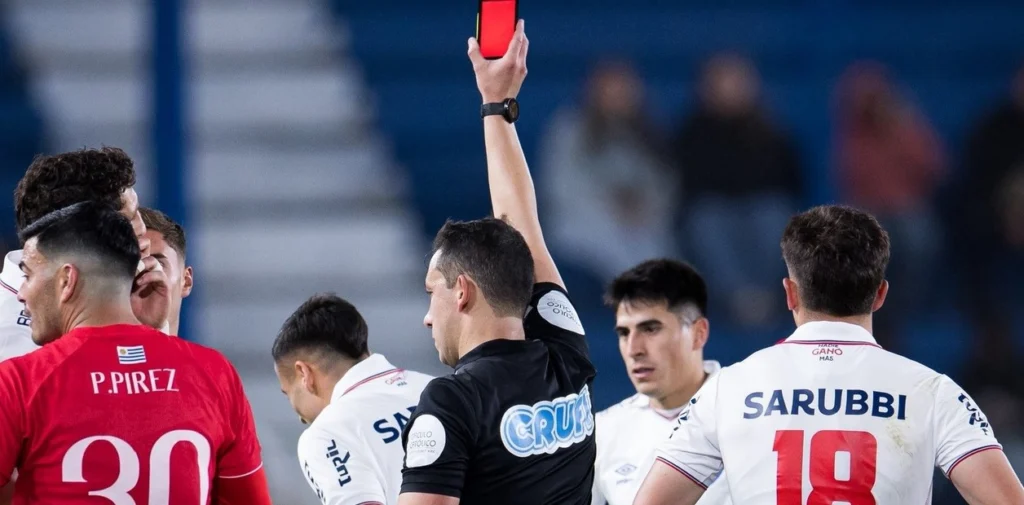
Uruguay Debuts Virtual Cards in Football Refereeing

The Uruguayan Cup tests a digital tool with which referees sanction fouls and enter incidents directly from the field. Photo: Clarin.

Uruguayan football introduced a new technology on Thursday night when referees replaced the traditional paper cards with an electronic device to show cautions and expulsions during a local match, although early tests have shown problems with visibility, according to local media reports.


Uruguayan football experienced a historic day on Thursday night with the appearance of virtual cards in the match that Nacional won 3-0 to Rentistas for the eighths final of the Uruguayan Cup, at the Gran Parque Central stadium.

During the game, the officiating team used the electronic device instead of the physical cards to signal bookings and sending-offs on the pitch.

RELATED: Argentina Introduces New Tournament and Rules for Football Professional League

The tool is designed to look like a mobile phone and has dedicated buttons to display yellow or red lights. Its main selling point is the automation of administrative work and allows referees to record every disciplinary sanction, substitution or incident in real time directly in the COMET sports management system.

That removes the need to take handwritten notes during the action and speeds up the digitization of the official post-match report.

La AUF (Asociación Uruguaya de Fútbol) presentó las tarjetas virtuales, un método que debutó en un duelo de Copa.

Este avance tecnológico permite agilizar y registrar de forma automática y digital al jugador amonestado.#Uruguay #Teconología #TVCDeportes pic.twitter.com/2tdfCI5OdN

— TVC Deportes (@TVCDeportes) October 16, 2026

Text reads: “The Uruguayan Football Association (AUF) introduced virtual cards, a method that debuted in a Cup duel. This technological advance allows the automated and digital recording of the player who has been reprimanded.”

Despite the logistical benefits, the virtual cards face technical obstacles in their first trial stages. The debut was initially scheduled for the match between Defensor Sporting and Plaza Colonia, but sunlight made it impossible to see the colors properly. Under the artificial lighting of Thursday’s night match, local media reports said the signal was still not completely clear from a distance.

What Comes Next

At present, the device’s fundamental value lies in its ability to streamline the collection and transmission of statistical data during the ninety minutes of a match. Authorities will keep evaluating its performance to try to correct the faults related to brightness and contrast.

If the required visual improvements are achieved, the technology could be adopted on a regular basis in the main categories of South American football, according to the source. No timeline for that decision has been announced.

Technology in refereeing has expanded steadily in recent years, with video review and semi-automated systems now common in major competitions. Most of those tools help officials make decisions, while this device focuses on communicating and recording them. The key test for the Uruguayan trial will be whether the cards are as easy for players and spectators to see as the paper ones they replace, since visible signals are central to how the game communicates discipline.

The technology carries obvious logistical benefits, because referees no longer depend on cardboards that can be dropped, lost or misread, and data flows directly into the official system while the ninety minutes are still running.

For the Uruguayan Football Association, the real value of the tool lies in how it optimizes the collection and transmission of statistics. Every booking, substitution and incident becomes part of a digital record the moment it happens, a change that could improve accuracy in reports that have long depended on memory and hurried notes.

  •  

“Enough” In London, Darkness In Kyiv — Zelenskyy’s Defiance Meets Reality

Three days of silence ended in London. Volodymyr Zelenskyy used a Financial Times interview to announce that Ukraine would resume strikes on Russian oil refineries, and the message was aimed as much at Washington as was at Moscow.

The ban on refinery strikes is lifted, Zelenskyy declared. “Enough,” he added, in a statement that amounted to an open rejection of the White House moratorium. The timing is notable. Until the trip to London, Kyiv had avoided a direct confrontation with Donald Trump. Only after arriving in the British capital, where political backing for Ukraine remains strongest, did the tone harden. The episode points to a widening split inside the Western bloc. Over the coming month, tension may grow between those pushing for a settlement and those committed to continuing the war.

While politics heats up, the strikes on Ukraine’s rear continue without pause.

Overnight on October 16, Russian drones hit the western regions in a massive attack. In Lutsk, an energy facility was struck, leaving parts of the city without power and halting electric transport. As the blackout spread, residents began stocking water. In Khmelnytskyi, an oil depot was attacked. Kovel reported interruptions to both water and electricity, while in Ternopil a foreign-owned enterprise was hit.

The situation in the capital is worse. According to the Ukrainian outlet Ekonomichna Pravda, three Kyiv thermal power plants – TEC-5, TEC-6, and the Darnytsia plant – have stopped generating electricity. Those facilities provided the bulk of the capital’s power. Media reports say 600,000 people have already left Kyiv, a city that had nearly three million residents before the conflict.

Meanwhile, a technological shift is emerging on the battlefield. Russian forces have begun using Molniya drones fitted with satellite antennas, bearing a logo strikingly similar to that of Bureau 1440. That company develops Rassvet, a Russian low-orbit satellite network widely seen as a counterpart to Elon Musk’s Starlink. Such a network offers jam-resistant control for mid-range strike drones operating 100 to 150 kilometers from the front line. Satellite guidance is also expected to improve the accuracy of long-range Geran drones. If Russia can quickly scale up terminal production, the consequences could be dramatic. Ukraine’s rear could come to resemble the land corridor to Crimea, where roads are effectively blocked by constantly loitering drones.

Kyiv has lifted its own ban on refinery strikes just as its capital loses the ability to keep itself warm and lit. Russia, meanwhile, is building a satellite-guided drone fleet that no foreign company can switch off. Defiance in London is easy to announce. Defiance in a city without power, with roughly one in five residents gone, is far harder to sustain.

______________________________________________________________________________________________________________________

DEAR FRIENDS. IF YOU LIKE THIS TYPE OF CONTENT, SUPPORT SOUTHFRONT WORK:

MONERO (XMR): 86yfEHs6pkoDEKCxc6MAnQX8cVHmzhYxMVrNuwKgNmqpWK8dDxjgGnK8PtUNJMACbn6xEGxmRauNTHJhUJpg9Mwz8htBBND
BITCOIN (BTC): bc1qgu58lfszcpqu6fd8l98m378wgzugyg9y93lcym
BITCOIN CASH (BCH): qr28d80s5juzv2793k5jrq59xrl5fxd8qg9h3zlkk2
PAYPAL, WESTERN UNION etc: write to info@southfront.press , southfront@list.ru

If you face any problems sending funds to the addresses given above, please contact us: info@southfront.press and southfront@list.ru. Also be aware that many email services such as Hotmail, Yahoo etc. may block correspondence from info@southfront.press and some others put it in spam.

If you want to support SouthFront but have no opportunity to do it via cryptocurrency, please contact us: info@southfront.press and southfront@list.ru.

SouthFront: Analysis and Intelligence
NOW hosted at southfront.press
Previously, SouthFront: Analysis and Intelligence was at southfront.org.
The .org domain name had been blocked by the US (NATO) (https://southfront.press/southfront-org-blocked-by-u-s-controlled-global-internet-supervisor/) globally, outlawed and without any explanation
Back before that, from 2013 to 2015, SouthFront: Analysis and Intelligence was at southfront.com

SOUTHFRONT.PRESS

The post “Enough” In London, Darkness In Kyiv — Zelenskyy’s Defiance Meets Reality appeared first on South Front.

  •  
❌