❌

Reading view

Report: PM’s aide Urich admitted he kept working for Qatar after Oct. 7, saw no moral problem

Citing police transcripts, Channel 12 reports Urich said he was paid hundreds of thousands of shekels by Doha; Bennett, citing 'traitors' in the PMO, demands that Netanyahu 'tell public the truth about your Qatar ties'
  •  

CNU 2: servidor pode indicar órgão de preferência a partir de quinta

Os servidores das carreiras de analista técnico de desenvolvimento socioeconômico (ATDS) e analista técnico de justiça e defesa (ATJD), da segunda edição do Concurso Público Nacional Unificado (CPNU 2), podem fazer a manifestação de preferência por órgão, entidade e local de exercício do cargo a partir de quinta-feira (22). O prazo vai até as 23h59 da próxima segunda-feira (26).

Os dois editais de convocação dos servidores, tanto para o cargo ATDS como para ATJD foram publicados pelo Ministério da Gestão e da Inovação em Serviços Públicos (MGI) na última sexta-feira (16), em edição extra do Diário Oficial da União.

A manifestação de preferência é facultativa e deve ser feita pelo portal SouGov.br.

Vagas

Para a carreira de analista técnico de desenvolvimento socioeconômico (ATDS), há vagas em Brasília e em outras localidades do país. Já para os servidores da carreira de ATJD, as opções são restritas a Brasília.

A ausência de manifestação não exclui o servidor deste concurso público, nem altera sua classificação. Neste caso, terão o exercício definido pela Administração Pública Federal entre as opções remanescentes em Brasília, conforme os critérios estabelecidos nos editais.

Como registrar a manifestação

A manifestação poderá ser realizada por meio da plataforma SouGov.Br (site e aplicativo), destinada a servidores públicos federais ativos, aposentados, pensionistas e anistiados políticos do Poder Executivo Federal. É preciso fazer login com a senha do portal Gov.br.

Ao acessar o sistema, os servidores deverão consultar as opções disponíveis e organizá-las por ordem de preferência.

Enquanto o prazo permanecer aberto, de 22 a 26 de outubro, será possível alterar as escolhas. Será considerada válida a última manifestação transmitida.

Somente poderão fazer a manifestação os servidores que concluíram o Programa de Profissionalização para as Carreiras de Desenvolvimento de Políticas de Justiça e Defesa e de Desenvolvimento Socioeconômico (Profcar), que foi promovido pela Escola Nacional de Administração Pública (Enap).

Distribuição

Os editais avisam que a manifestação de preferência não garante a alocação na opção indicada. Na prática, a regra diz que o servidor tem o direito de indicar sua preferência pelo local de trabalho, mas o governo federal não é obrigado a conceder exatamente o que foi manifestado.

A prioridade para definição do órgão e do local de exercício legal é assegurada às pessoas com deficiência (PCD) e também considerará a classificação final do candidato no concurso público, a ordem de preferência indicada e a disponibilidade de vagas, conforme as necessidades dos órgãos e entidades federais participantes do chamado Enem dos Concursos.

Resultados

A destinação de cada servidor será formalizada por meio de portaria do Ministério da Gestão, a ser publicada no Diário Oficial da União e divulgada no endereço eletrônico do SouGov.

O documento informará o órgão ou a entidade de destino, a unidade e a localidade de exercício.

O ato administrativo também indicará a data que os servidores devem se apresentar.

A lotação dos servidores permanecerá vinculada ao MGI, órgão supervisor das duas carreiras, com exercício descentralizado nos órgãos e entidades definidos pela administração.


  •  

Ahold Delhaize Reports Malicious Cyberattack as Supermarket Deliveries Remain Disrupted

Dutch-Belgian supermarket group Ahold Delhaize has confirmed that malicious activity was responsible for the cybersecurity incident that disrupted its operations across Europe and the United States, forcing the company to take websites, applications and other computer systems offline.

In an official statement issued on Monday, 19 October, the company announced that it had filed a formal complaint with Dutch police and was cooperating with national cybersecurity authorities. Although physical supermarkets have remained open, the disruption has affected online shopping, deliveries and some distribution operations.

The company said investigators had so far found no evidence that sensitive information belonging to customers, employees or business partners had been taken. However, its investigation remains open, and the identity and objectives of those responsible have not been publicly established.

Online services interrupted across several countries

The disruption began on 12 October, when Ahold Delhaize detected suspicious activity within its information technology infrastructure.

The group responded by taking a number of systems offline as a precaution, affecting most of its retail brands in Europe and the United States. The consequences varied considerably between businesses, with some experiencing prolonged interruption to digital services while others were able to restore operations more quickly.

Albert Heijn, the Netherlands’ largest supermarket chain, has been particularly affected. Its website and mobile application have returned online, but home grocery deliveries are not expected to resume until Friday, 23 October.

Orders scheduled before that date have been cancelled, while the company continues preparations for a gradual restoration of its online delivery service.

The incident also interrupted some supply and distribution arrangements, resulting in shortages on supermarket shelves in parts of the Netherlands and Belgium.

In Belgium, Delhaize has restored its online shopping operations. Certain promotional and personalised services were still experiencing difficulties, although the parent company confirmed that its Belgian e-commerce business was operational again.

Dutch retailers Etos and Gall & Gall have also restored their websites. Meanwhile, several American supermarket brands owned by Ahold Delhaize have continued to experience service interruptions.

The group said it expected additional online services in the United States to become available over the coming days.

Dutch authorities investigate

Ahold Delhaize said it notified the Netherlands’ National Cyber Security Centre within 24 hours of detecting the malicious activity.

The company has subsequently provided updates to the authorities and, on Monday, confirmed that a formal police report had been submitted.

Chief executive Frans Muller defended the decision to shut down digital systems, arguing that the investigation had demonstrated the necessity of taking preventive action.

The company has not identified the perpetrators, confirmed whether ransomware was involved or disclosed the technical method used to gain access to its infrastructure.

These distinctions are important because malicious activity does not necessarily establish that information was stolen or that attackers obtained control over every system subsequently taken offline.

The retailer has instead described a controlled restoration process intended to ensure that affected systems can be brought back into operation without exposing the business to further risks.

Ahold Delhaize operates thousands of supermarkets and related retail businesses, including Albert Heijn, Delhaize, Food Lion, Giant Food, Hannaford and Stop & Shop.

Its geographical reach means that a disruption originating within shared corporate infrastructure can affect several national markets, even where individual retail chains maintain separate commercial operations.

Cybersecurity becomes a supply-chain concern

The attack comes amid increasing scrutiny of the vulnerability of European food retailers to digital disruption.

Earlier this month, investigators in France began examining cyberattacks against refrigeration control systems used by hundreds of supermarkets.

Those incidents reportedly affected equipment at chains including Carrefour, Intermarché and Monoprix, with some retailers forced to discard products after refrigeration systems malfunctioned.

There is no established connection between the French incidents and the attack affecting Ahold Delhaize.

Nevertheless, both episodes illustrate the dependence of modern retail operations on interconnected digital systems supporting stock management, refrigeration, logistics, payments and customer services.

The consequences of a serious cyber incident can extend beyond the loss of access to websites. Interruptions to inventory systems, warehouse operations or communications with suppliers can affect the availability of physical products.

This creates particular difficulties for food retailers, where delays in transport and storage can result in the loss of perishable goods.

European regulatory implications

The incident also draws attention to the European Union’s NIS2 cybersecurity framework, which establishes stricter risk-management and incident-reporting obligations for organisations operating in designated sectors.

Food production, processing and distribution are among the activities covered by the directive, although its application to particular companies and operations depends on the relevant legal definitions and national implementing arrangements.

The legislation requires organisations within its scope to establish appropriate cybersecurity protections, address supply-chain risks and notify competent authorities of significant incidents.

Separately, the General Data Protection Regulation establishes notification requirements where personal-data breaches meet the relevant reporting threshold.

Ahold Delhaize’s statement that it has found no evidence of sensitive data being taken does not conclude the technical investigation, but it means that a confirmed theft of personal information should not presently be presented as a fact.

For the company, the immediate challenge remains restoring online services while maintaining normal supermarket operations. The wider commercial consequences, including the cost of the interruption and its effect on sales, have not yet been quantified publicly.

  •  

Alberta holds non-binding separation vote as independence fight grips Canada

OTTAWA: Residents of Alberta began voting Monday in a non-binding referendum that will determine whether the western-Canadian province should pursue separation from Canada.

The vote comes at a time when the province is mourning the deaths of four soldiers, while dozens of others were injured from a fast-moving fire that burned through a military base in Alberta.

While the results of a poll involving 1,021 respondents released by Abacus Data on Saturday showed that 74% of decided voters favor Alberta remaining within the Canadian Confederation, the independence issue won’t disappear for the nearly 30% who want Alberta’s government to begin the process to hold a binding provincial referendum on whether Alberta should separate from Canada, according to veteran separatist organizer Cory Morgan, who leads a group called Pathway to Independence.

"It will say that about one in three Albertans have had it," Morgan told Fox News Digital. "There is a big rift within Alberta and if things don’t change, it will be a growing faction in this province — so this vote is an important one."

EXCLUSIVE: ‘BROKEN COUNTRY’ FILMMAKER WARNS CANADA’S SLOW DECLINE OFFERS CAUTIONARY TALE FOR AMERICANS

About 3 million Albertans are eligible to vote in the referendum.

Another recent Abacus poll found that 61% of the 1,021 eligible voters surveyed expect Albertans will vote again on separation, even if most choose to remain in Canada.

On Friday, the Angus Reid Institute released the results of its poll that found 62% of 1,010 Albertans surveyed believe "there will never be an end to the separatist movement" in the province.

Morgan, who led the short-lived Alberta Independence Party from 2000 to 2001, said that while "a vocal minority" within the separatist movement favor Alberta becoming the 51st state, most pro-independence Albertans "don’t want to become a small fish in an even bigger pond." He added that "Albertans in general are not too thrilled with President Trump right now and that makes them less inclined to leave the federation."

At a "Forever Canadian" rally on Friday in Edmonton, where he was raised, Prime Minister Mark Carney told a crowd of over 5,000 people that "this referendum comes at the worst possible time." He said that "the world is becoming more dangerous and divided [and] some outside our borders are working to break us so they can own us," making an indirect reference to Trump’s trade war against and annexation talk about Canada.

Alberta-born and raised, 55-year-old Morgan said that his home province is "politically and culturally different" than eastern Canada. "There’s a lot more focus on individual freedoms and property rights," he noted, acknowledging that those values are traditionally viewed as American.

"Most Albertans are going to feel much more comfortable sitting down for a beer with people from Great Falls, Montana, than they would in Ottawa," said Morgan. He explained that when Alberta became a Canadian province in 1905, its population grew largely from a migration of Montanans, and when oil was discovered in the 1940s, U.S. companies Chevron and Mobil helped develop what became Alberta’s biggest industry.

Also, earlier this year during an appearance on Real America’s Voice at Davos, Treasury Secretary Scott Bessent described Alberta as "a natural partner for the U.S." and described Albertans as "very independent people."

In response, Carney said that he "expect[ed] the U.S. administration to respect Canadian sovereignty."

Earlier this month, The Globe and Mail reported that Alberta separatist leaders met with Republican strategists in Calgary in January to look at software designed to identify and mobilize supporters. Separatist leaders also reportedly suggested exchanging water and oil for U.S. support when they met with State Department officials in Washington last year.

CANADIAN PM TELLS TRUMP TO 'STOP TRYING TO BE TOUGH' IN TRADE FIGHT

Alberta Premier Danielle Smith told CBC News that if most Albertans support staying in Canada, she would not hold another referendum on the matter as long as she heads the provincial government.

However, on Oct. 18, 2027, residents of the province will vote again in a general election, and Smith could be out of her job by then, warned Morgan, a founding member of the former conservative Wildrose Party, for which Smith served as leader.

That party merged with the then-Progressive Conservative Party of Alberta in 2020 to form the United Conservative Party (UCP) that Smith heads. But Morgan explained that more than half of the UCP’s nearly 55,000 members support Alberta’s independence. The premier has said that she will vote to keep the province in Canada.

Angus Reid, founder and chairman of the Angus Reid Institute, told Fox News Digital that in his firm’s recent polling, 67% of the 293 UCP voters who support a future binding referendum on separation said that they would either "definitely support" or "consider" supporting the creation of a separatist provincial political party – not unlike the Parti Québécois, which won the recent election in Quebec.

The emergence of an independence party in Alberta "would probably spell the death of the UCP since it is so badly divided between separatists and non-separatists, and it would likely end the career of Danielle Smith because of the amount of breakage in her party," said Reid, whose firm’s survey found that 60% of the respondents who support a future binding referendum are "more likely sending a message to Ottawa" about the Canadian government’s often fractious relationship with Alberta.

"Separatist types are looking at how much leverage Quebec has been able to achieve in Canada as a result of its threats of exiting, and saying ‘Hold it, we can play that game too,’" explained Reid.

CLICK HERE TO DOWNLOAD THE FOX NEWS APP

As of Saturday, more than 1.2 million Albertans had cast a ballot on the referendum, which, in addition to the question on separation, has nine others, five focusing on immigration, such as one asking voters whether their province should take more control "for the purposes of decreasing immigration to more sustainable levels, prioritizing economic migration and giving Albertans first priority on new employment opportunities."

  •  

È morta Christiana Ruggeri, la giornalista del Tg2 aveva 57 anni. Unirai Figec: “Commozione e vicinanza alla famiglia e in particolare alla sua amatissima figlia”

Lutto nel mondo dell’informazione. È morta la giornalista del Tg2 Christiana Ruggeri. Nata a Roma, aveva 57 anni. Laureata all’Università La Sapienza di Roma in Lettere moderne, aveva lavorato negli Anni 90 presso diverse emittenti radiofoniche e televisive romane prima di approdare al Tg2 nel 2000.

Caporedattrice dal maggio 2025 della redazione Scienze del Tg2, era stata anche conduttrice del telegiornale. Aveva debuttato nel 2005 alla conduzione con la rubrica Tg2 Mistrà; per altre quattro stagioni, aveva condotto Tg2 Costume e Società e le edizioni del weekend del Tg. Per molti anni era stata impegnata nella redazione Esteri del Tg2, dove aveva curato numerosi reportage.

Scrittrice, autrice di saggi, proprio a febbraio scorso aveva pubblicato una biografia di Ferdinand Porsche. Grande appassionata di fotografia, aveva fondato e presieduto per venti anni la onlus Il Rifugio delle Code Felici, dedicata alla lotta al randagismo. Era anche vicepresidente dell’ONLUS GreenAccord di giornalisti per l’ambiente.

L'articolo È morta Christiana Ruggeri, la giornalista del Tg2 aveva 57 anni. Unirai Figec: “Commozione e vicinanza alla famiglia e in particolare alla sua amatissima figlia” proviene da Il Fatto Quotidiano.

  •  

French newspaper rips Macron after riots erupt across France: ‘Indelible stain’

A prominent French newspaper delivered a blistering critique of the country’s leadership after nationwide protests descended into riots, looting and arson.

The article, written by Vincent Trémolet de Villers for the conservative newspaper Le Figaro and published Sunday afternoon local time, blamed years of political failures for contributing to the unrest and took particular aim at President Emmanuel Macron.

It criticized what it described as a justice system that is "lenient toward criminals," accused far-left groups of carrying out violence with little consequence and took aim at France’s immigration and security policies.

"A judiciary that is lenient toward criminals but unrelenting toward decent citizens. The incomprehensible privilege of these far-left militias, who destroy, set fires, and kill with impunity," the article stated, according to a translation.

"An uncontrolled immigration, in which a portion of the immigrants rebels against the country that took them in."

WHERE'S MACRON? FRENCH LEADER BLASTED FOR ATTENDING CONCERT AS RIOTS ESCALATED

The article also took aim at Macron over his past calls for police to show greater empathy.

"Emmanuel Macron’s reprimands toward a police force he deemed insufficiently 'empathetic' — directed at officers under attack by bolts, cobblestones, and mortar fireworks — will remain an indelible stain," it stated.

The author argued that the unrest reflected deeper failures by France’s political establishment.

"If the far-left, criminals, and looters can turn France upside down in a matter of hours, it is primarily because a technocratic monarchy — intoxicated by its own self-importance — has methodically dismantled all the moral, security, cultural, and economic safeguards that allow a society to remain standing."

The scathing assessment followed a day of violence across France, where masked groups clashed with police, looted businesses, set fires and attacked public buildings, according to The Associated Press.

Macron addressed the nation Sunday, condemning the violence and vowing that those responsible would be held accountable.

PHOTOS SHOW AFTERMATH OF RIOTS AS MASKED GROUPS CLASH WITH POLICE ACROSS FRANCE

"Nothing will excuse their actions. We all tonight feel angry. We feel shame as well," Macron said, according to a translation of his televised remarks.

"There needs to be a response. Those people who looted need to pay for their crimes," he added.

The French president also acknowledged concerns raised by the youth about their economic prospects and futures.

"The youth of our nation are expressing great anguish and concern about the future, the conditions of where their careers will take them, what role they will be able to play in society," Macron said. "… I hear what they are saying, for the past ten years I've been fighting for them, so we need to pay heed to what they are saying."

Macron said he ordered officials to increase security around public buildings and businesses, with protests potentially restricted in some areas.

At least 2,400 people were arrested nationwide, including 855 in the Paris region, according to the AP.

More than 500 police officers, gendarmes and firefighters were injured, the AP reported, citing Interior Minister Laurent Nuñez.

LIMOGES TOWN HALL 'LARGELY LOST' AFTER FAR-LEFT RIOTERS SET HISTORIC BUILDING ON FIRE AMID FRENCH UNREST

CLICK HERE TO DOWNLOAD THE FOX NEWS APP

Authorities estimated roughly 550,000 people took part in Saturday's demonstrations, while organizers put turnout at 800,000, according to the AP. 

Hundreds of businesses were looted nationwide, and unrest continued Sunday in Paris, where police used tear gas as tensions flared around Place de la République.

The criticism also comes as Macron faces scrutiny over his decision to attend a Celine Dion concert with his wife, Brigitte, on Friday night, on the eve of the nationwide demonstrations.

The protests, fueled in part by anger over rising living costs, school conditions and public services, erupted into violence Saturday.

Macron's office and Le Figaro could not immediately be reached by Fox News Digital for comment.

Fox News Digital's Bradford Betz and The Associated Press contributed to this report.

  •  

Built as a cheap Shahed lookalike, Russia’s Gerbera now flies with a 10-kg warhead and an incendiary bag

built cheap shahed lookalike russia’s gerbera now flies 10-kg warhead incendiary bag · post payload bay russian gerbera-2 drone additional tank гербера-2 з бойовою частиною масою 10 кг і додатковим

Russia has started fitting its enlarged Gerbera-2 drones with a 10-kg warhead and an extra bag of incendiary mixture, Ukrainian military outlet Militarnyi reported on 18 October. The setup is designed to start a fire where the drone hits and is probably meant for attacks on critical infrastructure and warehouses, the outlet said.

Russia’s industry makes about 3,000 jet-powered Geran-4 and Geran-5 drones a month, Ukraine’s military intelligence has said, and Russian strikes have destroyed 2.1 million m² of Ukraine’s modern warehouse space since the full-scale invasion began. A cheap drone that carries fire adds one more threat for air defenses that already let nearly half of Russia’s jet-powered Shaheds through.

A fire bag behind the warhead

Ukrainian Telegram channel Polkovnyk HSh posted photos of the payload on 17 October. Gerbera-2 strike and reconnaissance drones had begun to appear with a 10-kg high-explosive fragmentation-incendiary warhead and an extra package of incendiary mixture, the channel wrote. They navigate with Kometa-M12, a 12-element antenna array designed to resist jamming, it added.

Explore further

Russian drones set their own detonators at altitude: Why cutting wires won’t save from new Gerberas?

In the photos, the incendiary mixture sits in a separate soft plastic tank behind the main warhead, Militarnyi said. Gerbera-2s have been seen with warheads of 4 to 10 kg depending on range, while strike versions of the original Gerbera usually carried up to 5 kg, the outlet noted.

Half a Shahed engine

Russia has mainly fielded the Gerbera, a cheap drone shaped like a Shahed, as a decoy and reconnaissance platform flying alongside Shahed-type strike drones. It has also used bigger Gerberas to drop FPV drones.

Serhii Beskrestnov, now an adviser to Ukraine’s president, flagged a much bigger Gerbera in Ukraine’s skies on 7 August. The Gerbera-2 has a larger airframe, a reshaped wing, and a bigger tail fin, Militarnyi said. In August, the outlet reported it had a stronger piston engine: half of the one in the Shahed-type Geran-2, at about 275 cm³. Production of these engines was set up at the Izhevsk Motorcycle Plant, according to preliminary information the outlet cited.

Ukrainian defense technology adviser Serhii “Flash” Beskrestnov works near the front line monitoring Russian drone signals. Photo: Serhii “Flash” Beskrestnov
Explore further

Russia equips Geran attack drones with image-based navigation using Google map imagery, reducing reliance on satellite navigation that Ukraine can jam, defense adviser warns

Earlier versions ran on a Chinese DLE60 model-aircraft engine of about 61 cm³. The switch was likely possible because Geran-2 engine output partly freed up as jet-powered Geran-4s took a growing share of Russia’s drones, Militarnyi said. The Gerbera-2’s fuel tank also holds up to 63 liters, against 10 liters on the original.

One reached Poland’s Baltic coast

In September, a drone preliminarily identified as a Gerbera-2 was recovered from the Baltic Sea near Rusinowo, on Poland’s coast. It carried a high-explosive fragmentation warhead of about 4 kg, a Polish military prosecutor said.

  •  

F-22 Pilot Controls FQ-44 Fighter Drone From The Cockpit For The First Time

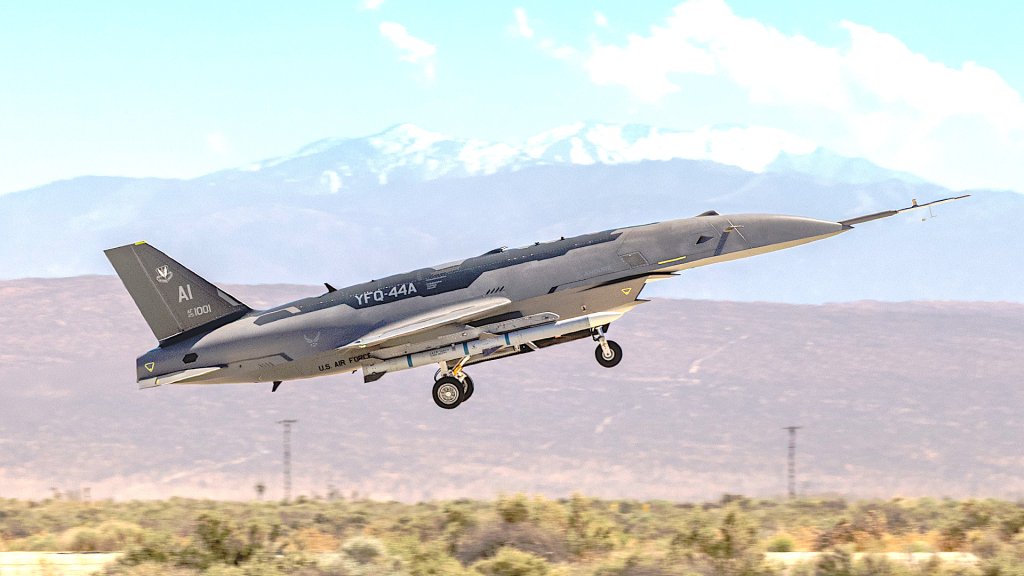
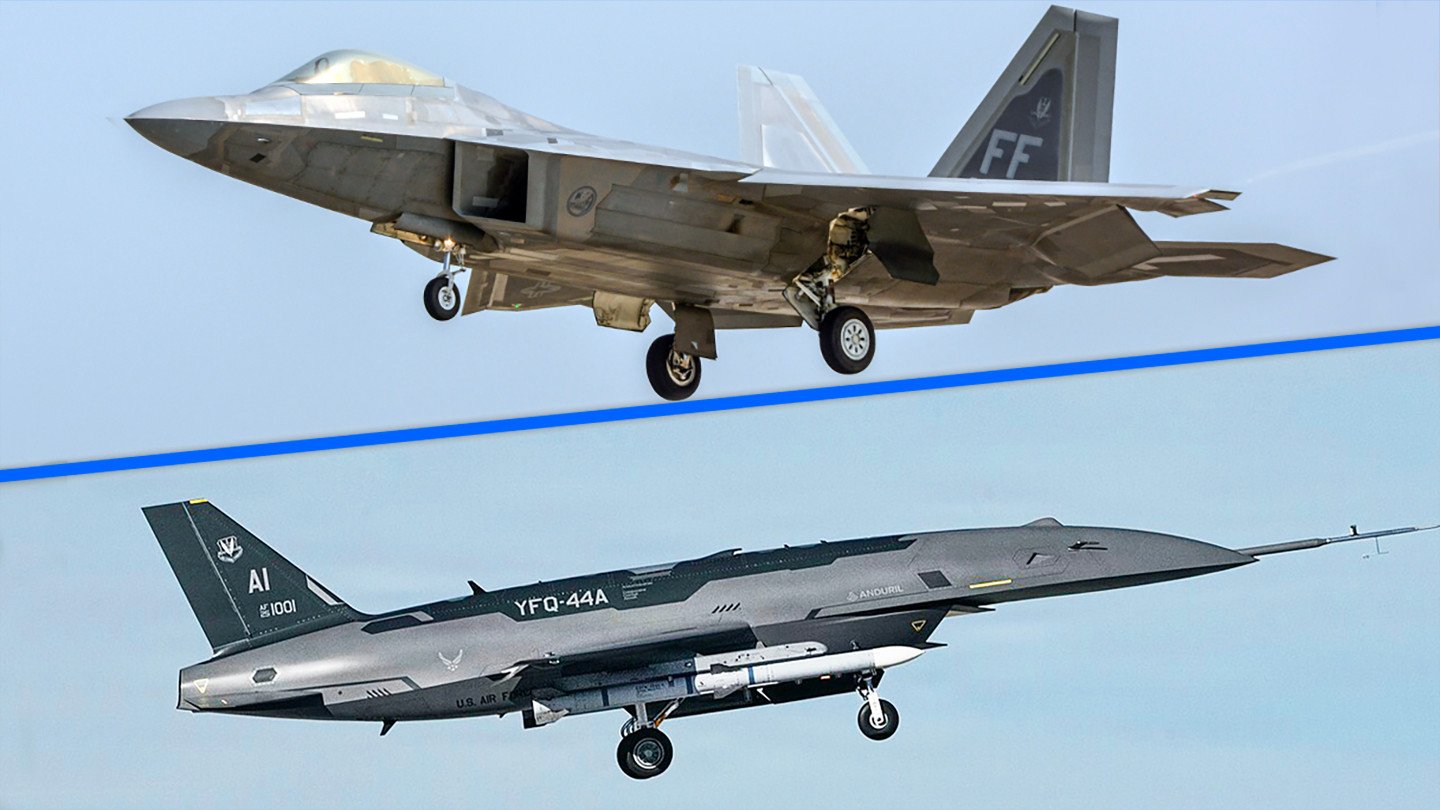
A pilot flying an F-22 Raptor fighter has issued commands to a YFQ-44A Fury Collaborative Combat Aircraft (CCA) drone in a first-of-its-kind test. This is an important development for the U.S. Air Force’s CCA program, as its F-22s are set to be the first aerial ‘quarterbacks’ for these uncrewed aircraft once they enter operational service.

The Air Force and Anduril, Fury’s prime contractor, announced the “airborne tactical-control demonstration” today, but it occurred sometime earlier this month. An Anduril spokesperson confirmed directly to TWZ that this was a first for an F-22 and a pre-production YFQ-44A. Last month, the company disclosed tests involving Fury flying in formation with F-35 fighters, but stressed that the latter were not yet issuing commands to the former in mid-air. A Fury drone also launched an AIM-120 Advanced Medium-Range Air-to-Air Missile (AMRAAM) for the first time earlier this year.

A stock picture of a pre-production YFQ-44A Fury CCA drone. USAF

The Air Force has orders in now for production of FQ-44As, as well as General Atomics’ FQ-42A Vengeance drones, under the first phase, or Increment 1, of its CCA program. The service is still planning to acquire additional CCAs, which could be of entirely different types, through a follow-on Increment 2. The goal now is to have a fleet of at least 500 Increment 1 CCAs by 2032. The recent test is part of efforts to lay the groundwork for an initial tranche of CCAs to start entering operational service around the end of the decade.

“During the demonstration, an F-22 pilot served as an airborne ‘quarterback,’ issuing high-level tactical directives to a single YFQ-44A,” according to a press release from the Air Force. “The aircraft’s onboard autonomy software interpreted and executed those directives in real time, conducting dynamic flight maneuvers and simulated combat tasks.”

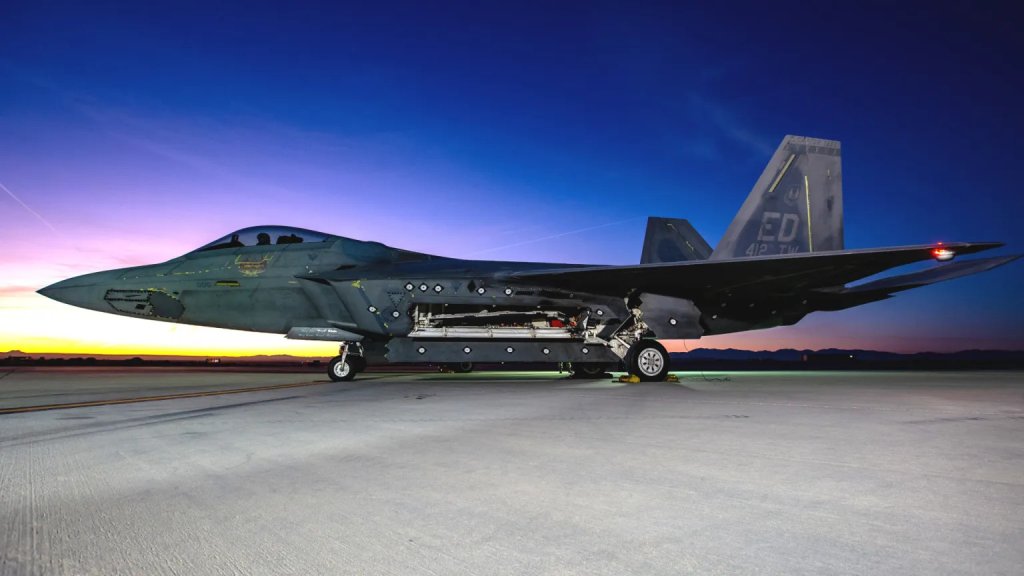
A stock picture of an F-22 Raptor test jet. USAF

“The event brought together personnel from the 412th Test Wing, 422nd Test and Evaluation Squadron, 309th Software Engineering Group, Experimental Operations Unit, F-22 System Program Office and the CCA Software Autonomy and Teaming Branch,” according to the Air Force release.

The Experimental Operations Unit (EOU) mentioned here is based at Nellis Air Force Base in Nevada and has been leading efforts to pave the way for future Air Force CCA operations.

The “Fury and an F-22 both took off [from] Edwards AFB [Air Force Base in California] and joined up midair,” according to a separate release from Anduril. “While in flight, the Raptor pilot sent an updated mission plan to Fury using a tactical data link, commanding Fury through operationally-relevant maneuvers from the cockpit of the crewed quarterback.”

Neither the Air Force nor Anduril provided further details on how the F-22 was configured for this test. Past Air Force budget documents have mentioned the need to integrate “tablets, cables, and associated materials” onto the Raptor for this purpose. A single Raptor is also expected to be able to manage multiple CCA drones simultaneously.

The Raptor’s prime contractor, Lockheed Martin, has certainly been working with the Air Force to develop the relevant control architectures and user interfaces for that fighter, as well as the F-35. In terms of in-cockpit user interfaces for controlling drones, known work to date has centered largely on the use of touchscreen tablet-like devices, but this is understood to just be a starting point. Though tablet-based interfaces are a workable option, questions and criticisms about increased workload, especially for pilots in single-seat fighters, have been raised in the past.

A view of a “battle manager” in the back seat of an L-39 light jet using a tablet-like device during a past test of capabilities to control drones in mid-air conducted by Lockheed Martin’s Skunk Works. Lockheed Martin

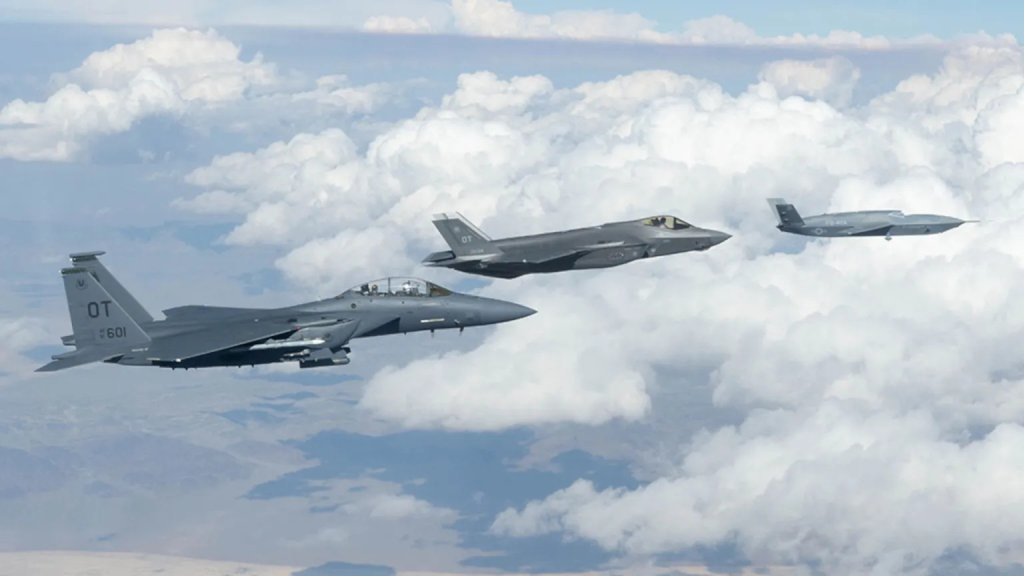
It is also worth noting here that General Atomics announced a similar demonstration involving a Raptor and an MQ-20 Avenger back in November 2025. General Atomics has been using the MQ-20 as a CCA surrogate in various types of testing. What the plan might be now to demonstrate the F-22’s ability to control an FQ-42A in flight is unclear. General Atomics has previously released a picture of a Vengeance drone flying in formation with, though not being directly controlled by, Air Force fighters.

A General Atomics Vengeance drone, at right, in flight together with an F-35A Joint Strike Fighter and an F-15E Strike Eagle. General Atomics

In addition, Fury and Vengeance are set to make their debut in a large-scale exercise before the end of the year. Bringing the CCAs to the next iteration of Exercise Emerald Flag will give the Air Force further opportunity to test them in a more operationally relevant context alongside crewed fighters.

“We have not yet done a LFE [large-force employment exercise] with these [CCAs], for real. The first one is going to be Emerald Flag. That’s in December,” Lt. Col. Lyndon “OTTO” Bartlett, the EOU’s Director of Operations, said during a panel at the Air & Space Forces Association’s (AFA) 2026 Air, Space & Cyber Conference in September, at which TWZ was in attendance. “That’ll be our first tip [sic] dip of the toe in an actual force integration.”

The EOU, working together with other Air Force elements and industry partners, still has to answer a host of other outstanding questions unrelated to tactical operations. CCAs will be deployed, launched, recovered, supported, and otherwise operated in ways that are distinct from their crewed counterparts, and for which new policies and procedures will need to be developed. Just making sure human pilots have trust in their uncrewed wingmen operating as expected will be critical, underscoring the specific importance of the demonstration disclosed today. All of this applies equally to the U.S. Marine Corps and U.S. Navy CCA programs, which are being run in very close coordination with the Air Force’s efforts.

When it comes to the recent test involving the F-22 and the YFQ-44A, “this achievement demonstrates what is possible when we are aligned with industry on a shared imperative: delivering capability to the warfighter at unprecedented speed,” Secretary of the Air Force Troy Meink said in a statement today. “We are driving urgency into every part of acquisition from rapid integration and flight learning to disciplined assessment, so we can turn promising technology into combat capability at the pace the threat demands.”

A graphic showing the FQ-42 and FQ-44 designs together. USAF

“This flight shows the power of crewed-uncrewed teaming and the advantage it provides our warfighters,” Air Force Chief of Staff Gen. Ken Wilsbach also said. “We must test often, learn fast, and give commanders what they need, when they need it.”

“The U.S. Air Force’s CCA program is the fastest moving, most mature CCA program anywhere in the world, and will be the first to field operational aircraft,” Mark Shushnar, Anduril’s Vice President of Autonomous Airpower, said as well. “Getting there demands that Anduril and the U.S. Air Force work together to prove out the capability, define the operational procedures, and build trust between operators and their semi-autonomous wingmen.”

With all this in mind, an F-22 issuing orders to a YFQ-44A in mid-air is an important new sign of what is on the horizon for the U.S. Air Force, though there is still work to be done.

Contact the author: joe@twz.com

The post F-22 Pilot Controls FQ-44 Fighter Drone From The Cockpit For The First Time appeared first on TWZ.

  •  

Colisão entre pesado e ligeiro na A2 faz um ferido encaminhado para o Hospital de Setúbal

Pelas 02H46, os bombeiros mistos de Alcácer do sal foram acionados para um acidente rodoviário na A2, ao quilómetro 57.8, no sentido Sul/Norte. Tratou-se de uma colisão que envolveu um veículo pesado de mercadorias e um ligeiro de passageiros, segundo fontes operacionais no local. Do sinistro resultou um ferido que, após receber assistência pré-hospitalar, foi evacuado para o Hospital de Setúbal.


No local estiveram meios de apoio e socorro, nomeadamente a SIV de Alcácer do Sal, a Unidade Nacional de Trânsito da Guarda Nacional Republicana de Grândola e as equipas da Brisa, segundo a mesma fonte.

Por: Dino Frazão
17 de outubro de 2026
Fotos: Bombeiros mistos de Alcácer do sal
————————————————–
© 2026 Os Monhacas. Todos os direitos reservados.
Este é um projeto independente de criação de conteúdos.
Se gostou do que leu e ainda não é seguidor, siga a nossa página para ver mais conteúdos!
————————————————–

O conteúdo Colisão entre pesado e ligeiro na A2 faz um ferido encaminhado para o Hospital de Setúbal aparece primeiro em OS MONHACAS.

  •  

Patrick Brammall Is Poised to Join the Ranks of Australia’s Great Exports

With 'Colin From Accounts' now behind him, the actor-writer the collaboration with his wife became a sleeper hit, upping his game with roles in 'The Devil Wears Prada 2' and 'Last Seen' and auditioning with his hands tied.
  •  

EU Resists Further Delay to Carbon Pricing as Energy Costs Divide European Leaders

Italy and five other member states have failed to secure a further postponement of the EU’s new carbon market for heating and transport fuels, although European leaders have ordered a fresh assessment of its impact on households and businesses.

European Union leaders have resisted demands for another postponement of carbon pricing for road transport and building fuels, exposing deep disagreements over climate policy, industrial competitiveness and the burden of energy costs on European households.

At the European Council summit in Brussels on 15–16 October, the Visegrad countries — Poland, Hungary, Slovakia and the Czech Republic — pressed for the second European Emissions Trading System, known as ETS2, to be delayed until 2030. Italy and Greece joined calls for greater flexibility over carbon costs, although Rome also sought a national exemption from aspects of the energy-price regime rather than simply a uniform delay. No further postponement was agreed.

The European Council conclusions call on the European Commission to update its assessment of ETS2, particularly its design and safeguards. Leaders also demanded action to reduce volatility in the existing carbon market and limit the effect of carbon prices on electricity costs.

The outcome stops short of the further postponement sought by several governments, but demonstrates how far energy affordability has moved towards the centre of European climate negotiations.

The growing rebellion over ETS2

ETS2 is designed to extend the principle of carbon pricing to fuels used for heating buildings, road transport and certain smaller industrial activities. Unlike the existing Emissions Trading System, which covers large industrial installations and power generation, the new mechanism reaches sectors closely connected to everyday household expenditure.

Under the scheme, fuel suppliers must purchase allowances corresponding to the emissions associated with the fuels they sell. Households and motorists will not buy allowances themselves, but suppliers may pass those additional costs through to customers.

That distinction is fundamental. A policy designed to encourage investment in cleaner heating systems and vehicles may initially appear to consumers as an increase in petrol, diesel and domestic heating bills.

The current legislative timetable provides for ETS2 to become operational in 2028, following an earlier one-year postponement. The latest demands from several Central European governments would push that date back to 2030.

Their argument is that consumers and smaller businesses cannot reasonably be expected to absorb another source of energy-price pressure while European economies continue to contend with geopolitical uncertainty, expensive fuel and comparatively weak industrial competitiveness.

Czech Prime Minister Andrej Babiš has been particularly outspoken in his criticism, arguing that carbon pricing risks weakening Europe’s industrial base and making everyday life more expensive.

Italy has supported calls for greater flexibility, with Prime Minister Giorgia Meloni presenting the discussion as part of a wider attempt to restore competitiveness and make the transition more affordable.

Why other governments opposed another delay

The initiative encountered resistance from governments concerned that repeatedly postponing established climate legislation would weaken investment certainty and reduce confidence in European policy.

The Nordic member states have been particularly reluctant to reopen the timetable. Their position reflects a broader concern that businesses investing in clean technologies need credible long-term rules, rather than legislation liable to be revised whenever political opposition intensifies.

Carbon pricing is intended to change economic incentives gradually. Higher costs for carbon-intensive fuels are supposed to make alternatives such as better-insulated buildings, electric vehicles and cleaner heating more financially attractive.

Critics of further postponement argue that delaying implementation would also delay those incentives, potentially increasing the eventual cost of reaching the Union’s emissions-reduction targets.

Yet the opposition has exposed a weakness in that argument: consumers cannot always respond quickly to price signals. A household relying on an older heating system or a worker with no practical alternative to driving may face higher costs long before affordable low-carbon options become available.

That issue has been central to earlier discussions over ETS2. EU Today reported on stronger carbon-price safeguards in June, when European institutions moved to provide additional market intervention if allowance prices rose sharply.

Commission ordered to reassess the economic impact

Rather than endorsing a new delay, European leaders have asked the Commission to review ETS2’s economic impact and safeguards.

The summit also urged faster progress on adjustments to the Market Stability Reserve, the mechanism intended to help manage the supply of carbon allowances and prevent excessive price volatility.

Under the existing scheme, market interventions can increase or reduce allowance availability in response to defined conditions. For ETS2, safeguards are especially politically sensitive because the cost of carbon allowances may ultimately be reflected in household transport and heating expenditure.

The European Commission’s updated auction arrangements already envisage auctions of ETS2 allowances beginning in 2027, ahead of the system’s operational launch in 2028.

That timetable gives governments a relatively narrow window to settle the remaining political disputes and put protective measures into effect.

A central part of the response is the Social Climate Fund, intended to support vulnerable households, transport users and small businesses through investments in energy efficiency, cleaner heating, improved transport and temporary financial assistance.

EU Today previously examined the European Investment Bank’s €3 billion advance financing initiative, which aims to accelerate support for households before the new carbon market becomes fully operational.

The central practical question is whether such assistance reaches consumers quickly enough to offset rising costs, particularly in member states where incomes are lower and households remain heavily dependent on fossil fuels.

Climate commitments meet industrial reality

The ETS2 dispute is connected to a broader argument over Europe’s existing carbon market and its effects on energy-intensive industries.

Manufacturers already face substantial costs arising from electricity, fuel, regulatory requirements and international competition. Governments concerned about deindustrialisation argue that European climate policy must account more directly for these pressures.

The summit conclusions acknowledged those concerns by demanding a predictable carbon market that limits price volatility and protects industry against the relocation of production to jurisdictions with less demanding environmental rules.

At the same time, leaders reaffirmed the importance of maintaining carbon pricing as an incentive for investment and emissions reduction.

For the governments seeking a postponement, the Commission’s new assessment offers an opportunity to maintain pressure for further concessions. For governments defending the existing timetable, it provides an alternative to another politically damaging delay.

The immediate result is therefore a compromise over scrutiny rather than a change in law. ETS2 remains scheduled for 2028, while Brussels must demonstrate that its safeguards can withstand both market volatility and political opposition.

The next phase will be determined less by arguments about long-term emissions targets than by the ability of EU institutions and national governments to show households and businesses how the transition can be financed without placing disproportionate costs on those least able to adjust.

  •  

Saiba quando começa a valer o fim da escala 6x1

Logo Agência Brasil

Em sessão solene do Congresso Nacional, foi promulgada nesta sexta-feira (16) a Emenda Constitucional nº 141 de 2026, que põe fim à escala de seis dias de trabalho e apenas um de descanso (6x1) e prevê a escala 5x2, com duas folgas por semana. Com isso, a partir de 15 de dezembro de 2026, a nova jornada entra em vigor em todo país, considerando o período de transição de 60 dias estabelecido na lei. 

A emenda também incluiu uma redução gradual da jornada de trabalho das atuais 44 horas para 40 horas semanais, sem redução salarial, dentro de um período de transição de 14 meses. Após 60 dias, a redução já deverá ser de duas horas semanais. Confira os prazos:

  • escala de 5 dias de trabalho com 2 dias de descanso (após 60 dias); 
  • redução da jornada de 44 horas para 42 horas semanais (após 60 dias);
  • jornada de 42 horas para 40 horas semanais, mantida a escala 5x2 (em 14 meses).  

Horas trabalhadas

Notícias relacionadas:

No intervalo entre o segundo e o 14º mês após a promulgação, o empregador deverá distribuir, ao longo da semana, as duas horas acima das oito normais de serviço. Se repartidas igualmente, o empregado terá que trabalhar 8 horas e 24 minutos nos cinco dias na semana. 

Finalizada a fase de transição, todos os empregados devem trabalhar, no máximo, oito horas diárias e 40 horas semanais em cinco dias na semana. Para trabalhar mais horas, apenas mediante pagamento de hora-extra. 

Compensação 

O texto permite, excepcionalmente, e mediante convenção ou acordo coletivo de trabalho, que seja estabelecido regime compensatório que permita escala diferente da 5x2. 

Nesses casos, os trabalhadores precisam ser compensados no mesmo “mês-calendário”, garantindo “o gozo de pelo menos um dos dias dentro do período máximo de uma semana de trabalho”. 

Ou seja, um trabalhador pode fazer ainda a escala 6x1, desde que prevista em acordo coletivo. Nesse caso, o dia trabalhado a mais terá que ser compensado com uma folga dentro do mesmo mês.

Ao final desse mês, ele terá que ter gozado, na média, o equivalente a duas folgas remuneradas por semana. 

Terceirizados da administração pública

A regra de transição para os trabalhadores terceirizados do poder público é diferente, sob o argumento de “evitar riscos de descontinuidade na prestação de serviços públicos essenciais executados mediante terceirização”. 

As empresas que prestam serviços para o Estado terão prazo de 12 meses após a promulgação da emenda, e não 60 dias como as demais, para acabar com a escala 6x1 dos empregados. 

Salários acima de 21 mil 

A legislação ainda que a redução da jornada diária não se aplicará aos empregados com diploma de nível superior com remuneração mensal igual ou superior a 2,5 vezes o limite máximo dos benefícios do INSS. Atualmente, essa conta dá R$ 21.188,87. 

Nesses casos, a redução da jornada só ocorrerá por liberalidade do empregador (quando é concedido sem obrigação legal) ou se estiver prevista em acordo ou convenção coletiva de trabalho. O texto, contudo, determina a realização da escala 5x2 nestes casos.  

  •  

Scontro al Consiglio Ue sul sistema delle quote di emissione. Poi il compromesso: “Valutare gli impatti dell’applicazione a edifici e trasporti”

Dopo una giornata di stallo e scontri, nella notte i Ventisette leader della Ue hanno trovato un compromesso sul sistema europeo di scambio delle quote di emissione (Ets), ma senza accogliere la richiesta di rinviare il nuovo mercato del carbonio per edifici e trasporti. Nelle conclusioni del Consiglio europeo entra, su pressione dell’Italia e dei Paesi del gruppo Visegrad, l’invito alla Commissione a rivalutare tutti gli impatti dell’Ets2, con particolare attenzione alla struttura del sistema e alle misure di salvaguardia. Un risultato politico per Giorgia Meloni, che però non cambia la tabella di marcia: l’allargamento del meccanismo a case e trasporti resta previsto dal 2028. La partita, del resto, va oltre il mercato delle emissioni. Al centro c’è il conflitto tra la richiesta di alleggerire i costi della transizione per famiglie e imprese e la difesa di una politica climatica che una parte dei governi considera indispensabile anche per ridurre la dipendenza europea dai combustibili fossili.

La mediazione raggiunta nella notte mostra tutti i limiti della strategia italiana. Roma ha fatto asse con i Paesi del gruppo Visegrad per chiedere correttivi al sistema, ma non ha trovato una sponda sufficiente per ottenere il rinvio dell’Ets2 che farà pagare un prezzo alle emissioni di anidride carbonica generate dai combustibili utilizzati per riscaldare gli edifici e alimentare i trasporti. Il nuovo sistema dovrebbe partire nel 2028.

Il testo delle conclusioni chiede un mercato del carbonio più trasparente e prevedibile, una riduzione della volatilità dei prezzi e misure per attenuare le ricadute sulle bollette elettriche. Ma ribadisce anche il ruolo dell’Ets nella transizione energetica e climatica, attraverso un prezzo delle emissioni capace di orientare investimenti e innovazione. La revisione, dunque, non mette in discussione il principio del sistema, ma apre alla possibilità di intervenire sul suo funzionamento. “Il Consiglio europeo invita la Commissione Ue ad aggiornare la valutazione di tutti gli impatti dell’Ets2, in particolare per quanto riguarda la sua struttura e le sue misure di salvaguardia”, si legge. Il testo “ribadisce la necessità di garantire con urgenza un mercato del carbonio ben funzionante, trasparente e prevedibile, di ridurre la volatilità del prezzo del carbonio e di mitigarne l’impatto sui prezzi dell’energia elettrica, preservando al contempo il ruolo essenziale dell’Ets”.

La richiesta italiana di correggere gli effetti delle politiche climatiche si scontra con i governi nordici, contrari a indebolire la transizione, e con la posizione di Commissione, Germania e Francia. Proprio Berlino e Parigi stanno cercando una convergenza sul futuro dell’industria automobilistica europea, un dossier destinato a pesare sulle prossime decisioni comunitarie. Per Meloni, la strada potrebbe essere quella di chiedere deroghe temporanee nazionali, sul modello dell’eccezione concessa nel 2023 a Spagna e Portogallo per contenere il prezzo dell’elettricità. Ma per ora è un’ipotesi, non un risultato del Consiglio.

Meloni ha portato al vertice anche il tema della flessibilità delle regole fiscali di fronte al caro energia, chiedendo di considerare l’aumento dei prezzi come un fattore esterno determinante. Su questo punto, il sostegno è stato limitato: soltanto la Grecia si è schierata apertamente con Roma. La presidente della Commissione Ursula von der Leyen ha ribadito la necessità di prudenza sui conti pubblici, indicando nella possibile proroga del regime degli aiuti di Stato per la crisi energetica una delle poche leve disponibili nel brevissimo periodo.

L'articolo Scontro al Consiglio Ue sul sistema delle quote di emissione. Poi il compromesso: “Valutare gli impatti dell’applicazione a edifici e trasporti” proviene da Il Fatto Quotidiano.

  •  

Remaking ‘The Legend of Zelda: Ocarina of Time’: The challenge of improving a masterpiece

A scene from the 'Ocarina of Time' remake.

“Wake up, Link!” High in his treehouse, a pointy-eared boy named Link is roused by the call of a fairy. He is the only resident of the Kokiri Forest without a winged companion, until Navi bursts into his dreams to tell him that his destiny lies far beyond that sheltered corner of the woods. Thus begins a journey that will lead him to a princess, pit him against a threat determined to plunge the kingdom of Hyrule into darkness and, seven years later, task him with saving a world that has fallen into the clutches of evil.

Seguir leyendo

A scene from the remake.A scene from the game.
  •  

Elenco de “Avenida Brasil 2” se reúne pela primeira vez e revela novidades da continuação

Os fãs de “Avenida Brasil” tiveram uma prévia do que vem por aí na continuação da novela. Parte do elenco da nova produção se reuniu publicamente pela primeira vez na quarta-feira (14), durante o Upfront Globo 2027, realizado em São Paulo, evento em que a emissora apresentou novidades sobre seus próximos projetos.

Entre os artistas que marcaram presença estavam Adriana Esteves, Murilo Benício, Débora Falabella, Cauã Reymond, Eliane Giardini, Marcos Caruso, Leticia Isnard, Thalita Carauta, Karol Lannes, Thomas Aquino, Jessica Ellen e Mel Maia.

A sequência contará novamente com personagens que conquistaram o público em 2012. Adriana Esteves voltará como Carminha, Débora Falabella interpretará Nina, Murilo Benício retomará o papel de Tufão e Cauã Reymond estará de volta como Jorginho. A trama também apresentará novos personagens e conflitos.

Durante o evento, Adriana brincou sobre os desafios de reviver a vilã que marcou sua carreira. “Estou preocupada com meus picos de pressão, porque fazer a Carminha não é nada mole”, comentou.

Débora Falabella também deu pistas sobre a produção e afirmou que a história terá uma nova abordagem. “Avenida Brasil volta toda repaginada”, declarou.

Mel Maia também retorna à trama

Conhecida por interpretar Rita na primeira fase da novela original, Mel Maia está confirmada no elenco da continuação. A atriz aproveitou a ocasião para brincar sobre a possibilidade de ganhar uma produção própria no futuro.

“E ainda bem que eu volto pra Avenida Brasil 2, mas eu não volto com uma Nina não, gente. Quem sabe a minha próxima personagem não ganhe uma novelinha só pra ela?”, disse.

O que vai acontecer em “Avenida Brasil 2”?

A história se passa 14 anos depois dos acontecimentos que agitaram o fictício bairro do Divino. Nesse novo cenário, Tufão construiu uma carreira de sucesso como empresário e sua família parece viver uma fase tranquila e unida.

Carminha, por sua vez, terá passado anos na prisão e, após recuperar a liberdade, aparentará ter mudado de vida. A personagem passa a ser reconhecida pelo trabalho social voltado a famílias em situação de vulnerabilidade, realizado depois da desativação do lixão onde vivia Lucinda, sua mãe.

A antiga vilã também tentará reconstruir a relação com a filha, Agatha, interpretada por Karol Lannes. A aproximação fará com que Carminha volte a ser aceita pela família de Tufão. No entanto, a produção deixará em aberto uma questão central: a transformação da personagem é verdadeira ou faz parte de um novo plano?

Em comunicado à imprensa, o autor João Emanuel Carneiro adiantou que a trama vai explorar os impactos do retorno de Carminha na vida dos antigos personagens, especialmente na trajetória de Nina. A continuação também mostrará novos rostos e revelará o que aconteceu com os moradores do Divino ao longo dos anos.

Novos personagens movimentam o Divino

Além de recuperar figuras conhecidas, a novela apresentará novos conflitos e relações. Thomás Aquino interpretará Renan Vitória, um líder comunitário que se aproxima de Carminha. A relação entre os dois promete trazer disputas e questionamentos sobre quem realmente controla os rumos do bairro.

Jéssica Ellen dará vida a Jade, uma jovem que sonha em estudar engenharia genética nos Estados Unidos e busca se afastar de um relacionamento tóxico. Já Thalita Carauta interpretará Salomé, personagem que deve acrescentar humor e carisma à história.

Com o retorno de parte do elenco original e a chegada de novos personagens, “Avenida Brasil 2” pretende revisitar o universo que marcou a teledramaturgia brasileira, apresentando novas disputas e mostrando como a vida dos moradores do Divino mudou com o passar do tempo.

Adriana Esteves, Débora Falabella, Murilo Benício e Cauã Reymond estão entre os artistas confirmados | Foto: Globo/ Maurício Fidalgo

The post Elenco de “Avenida Brasil 2” se reúne pela primeira vez e revela novidades da continuação appeared first on Diário da Manhã - O Jornal do leitor Inteligente.

  •  

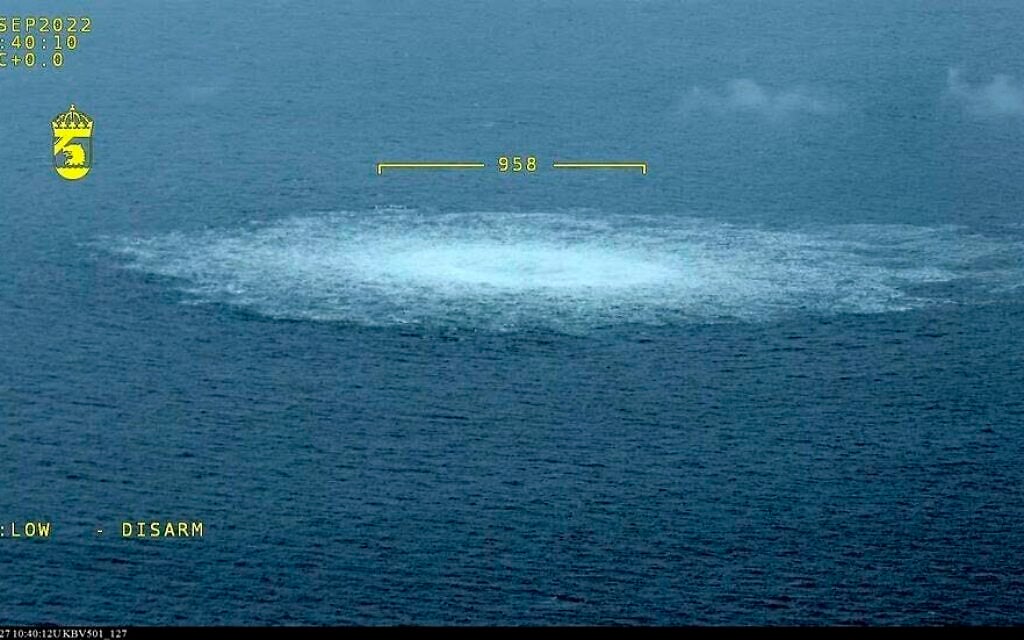
Ukrainian ex-officer goes on trial in Germany over 2022 Nord Stream pipeline sabotage

Former special forces officer Sergiy Kuznietsov facing charges including 'war crime,' attacking civilian infrastructure; Kyiv consistently denies it was behind Baltic Sea blast
  •  
❌