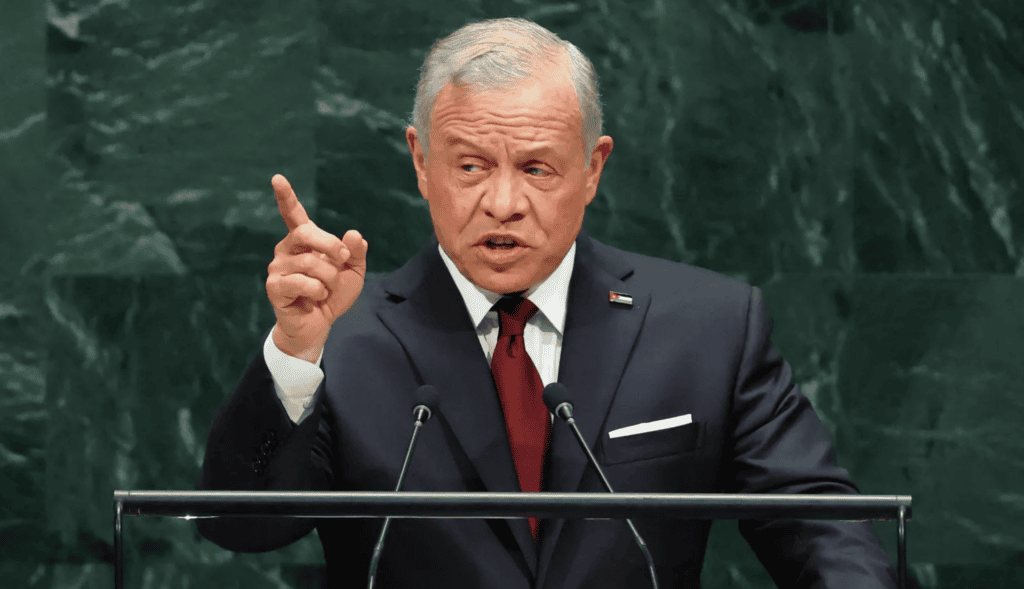
Witness says drone struck twice at transport hub in al-Dibab, in one of deadliest single attacks of war
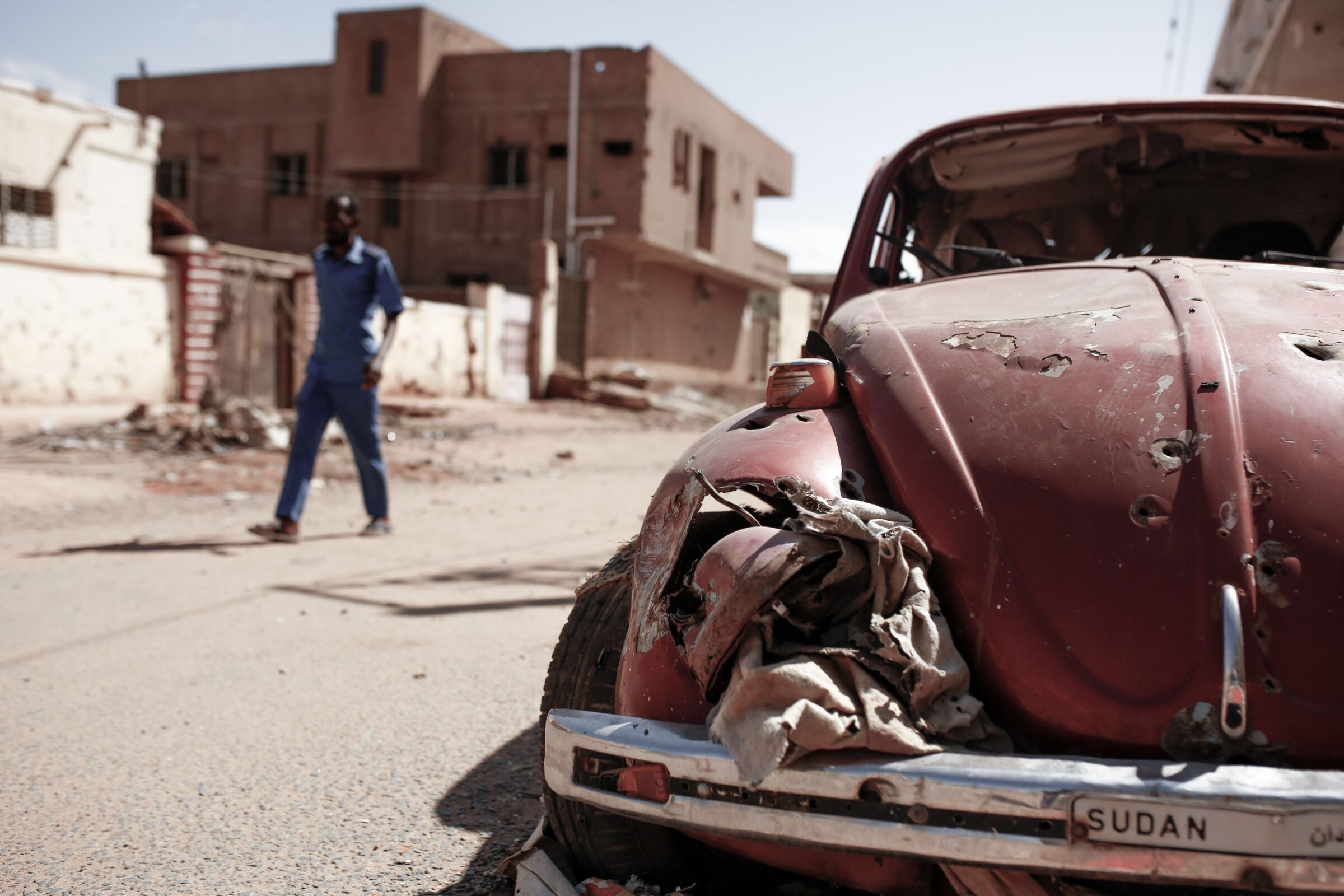
A drone strike near a market in southern Sudan on Sunday evening killed 80 people, mostly commuters catching rides home.
Ahmed Wadi, a witness, said the attack in the town of al-Dibab in West Kordofan state left “50 bodies who I helped bury, one of them my own brother Mohamed”.
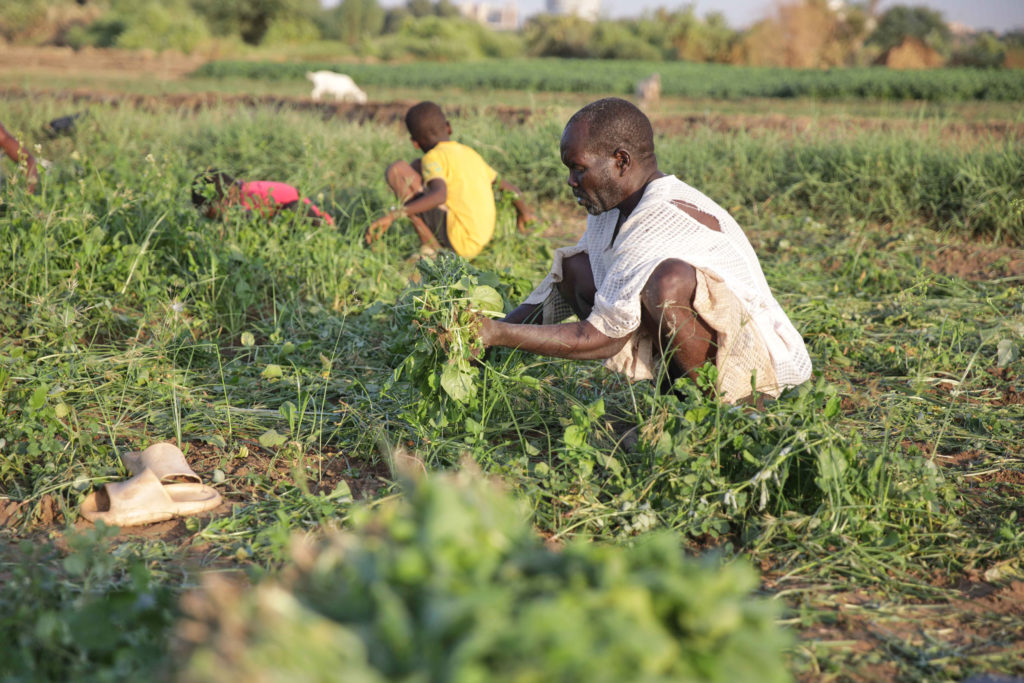
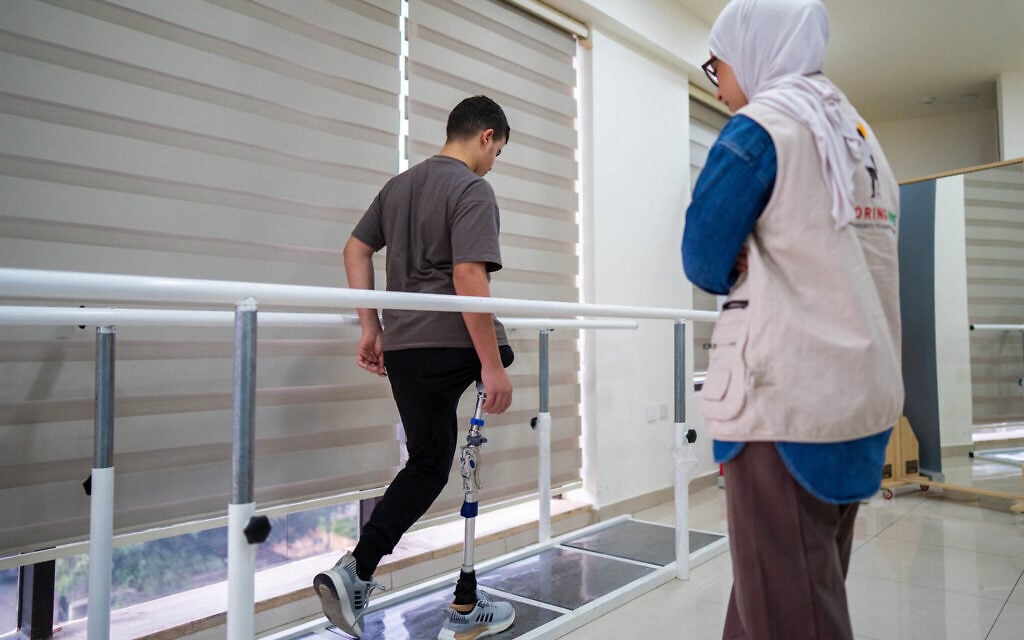
Jordan's Restoring Hope Society is treating more than 450 Palestinian amputees, including 15-year-old Mahmoud Abou Nusair, who dreams of playing soccer again
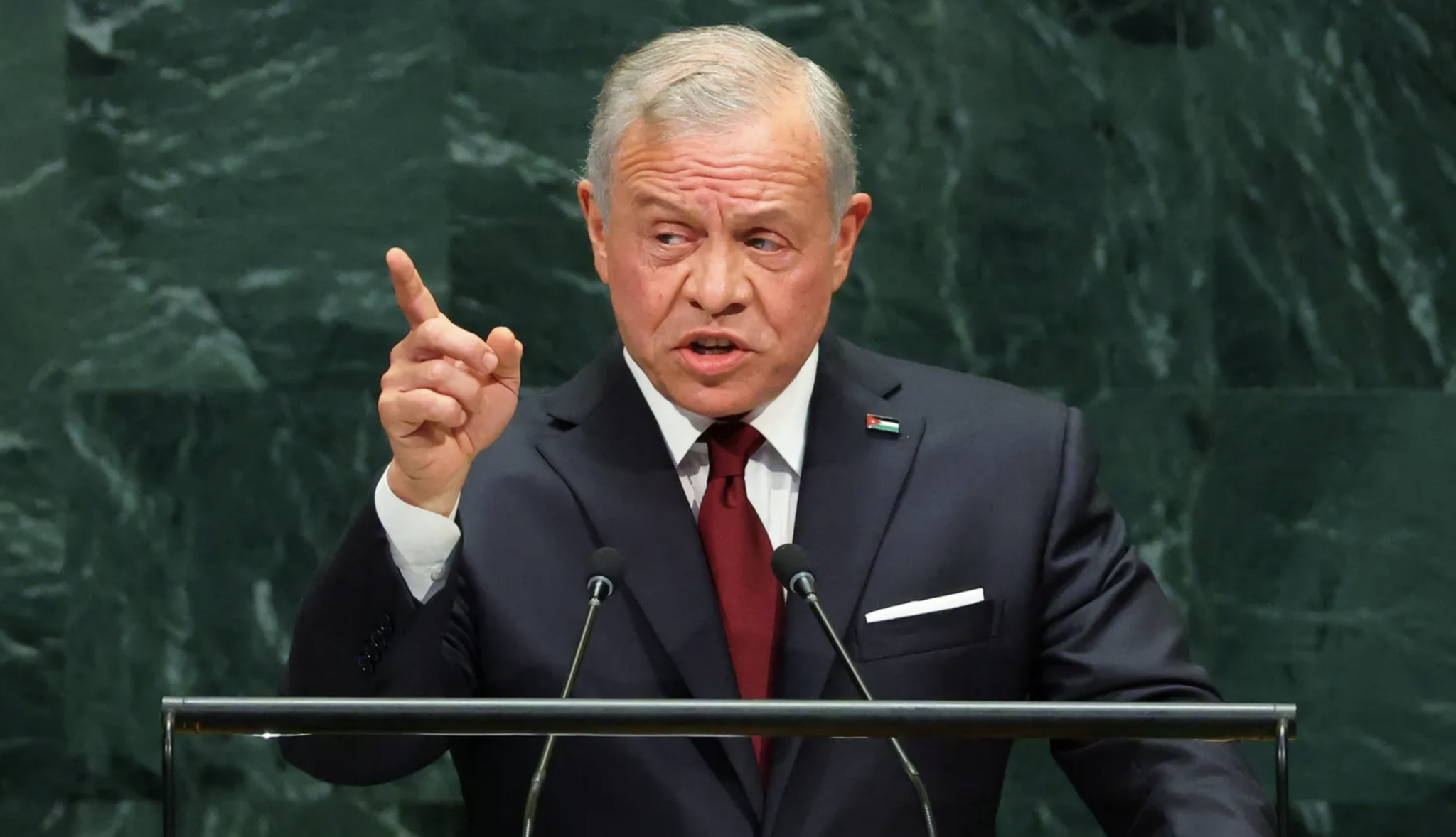
Restrictions on Islamic headscarves in Azerbaijan’s schools have triggered demonstrations, arrests and an unusually public confrontation between Baku and Ankara.
The dispute has exposed differences over secularism, religious freedom and Azerbaijan’s relationship with Israel, raising questions about the durability of one of the region’s closest strategic alliances.
Azerbaijan is facing an unusual wave of protests after new school dress regulations led to girls wearing Islamic headscarves being excluded from classrooms and teachers reportedly being ordered to remove their hijabs. The controversy has escalated into a diplomatic dispute with Turkey, whose governing party has been accused by President Ilham Aliyev’s administration of interfering in Azerbaijan’s internal affairs.
The confrontation intensified on 13 October when Azerbaijan’s ruling New Azerbaijan Party (YAP) publicly condemned senior figures in President Recep Tayyip Erdoğan’s Justice and Development Party (AKP). The dispute has since widened to encompass Azerbaijan’s relations with Israel, exposing political differences between two countries accustomed to describing themselves as “one nation, two states”.
School regulations provoke protests and arrests
The controversy began on 21 September, when Azerbaijan’s government adopted Resolution No. 309, amending the regulations governing uniforms in state schools. The changes prohibit clothing that conflicts with prescribed uniforms or the secular character of public education.
Although the new regulations do not explicitly mention Islamic headscarves, some schools have interpreted them as prohibiting the hijab. A further decision on 6 October introduced similar requirements for teachers. Women in Baku and Sumgayit subsequently reported being instructed to remove their headscarves or risk losing their positions.
The enforcement of these regulations prompted demonstrations outside schools, with girls carrying placards demanding access to education. Male pupils also joined protests in support of their classmates. Such demonstrations are unusual in Azerbaijan, where public assemblies face extensive restrictions.
On 12 October, the Interior Ministry reported that 37 people had been detained in Baku, alleging disruption of public order, damage to property and obstruction of school activities. Activists claimed that more than 200 people had been detained, although that higher figure has not been independently confirmed.
In a statement issued on 16 October, Amnesty International criticised the exclusion of pupils and called for the release of peaceful demonstrators. The organisation also raised concerns over the reported detention of a mother protesting her daughter’s exclusion and the disappearance of an activist who had organised educational assistance for affected children.
Access to TikTok and Instagram was disrupted as the protests spread online. Internet monitoring organisations documented restrictions, although Azerbaijani authorities have not publicly explained their cause.
Turkey challenges Azerbaijan’s secular policy
The dispute acquired an international dimension when Oktay Saral, a senior adviser to Erdoğan, condemned the exclusion of girls wearing headscarves.
In a public statement on 12 October, Saral questioned how preventing a girl from attending school because of her religious clothing could be reconciled with justice. He demanded that Azerbaijan reverse the restrictions. Several AKP parliamentarians subsequently joined the criticism.
The response from Baku was unusually confrontational. In its official statement, the New Azerbaijan Party accused Turkish political figures and media organisations of conducting a systematic campaign against Azerbaijan.
The party argued that religious solidarity did not entitle one Muslim-majority country to dictate another’s domestic policies. It described the Turkish politicians’ interventions as irresponsible and warned against attempts to interfere with Azerbaijan’s sovereignty.
The disagreement reflects contrasting approaches to secularism. Azerbaijan, a predominantly Shia Muslim country, has maintained strict state control over religious institutions since independence from the Soviet Union. Turkey, by contrast, has progressively removed restrictions on Islamic headscarves under Erdoğan’s government, reversing policies previously associated with its secular establishment.
Israel adds another source of tension
The dispute has also reopened disagreements concerning Azerbaijan’s relationship with Israel.
Baku maintains substantial security and defence cooperation with Israel, including military technology and equipment supplied during its conflict with Armenia over Nagorno-Karabakh. Turkey supported Azerbaijan during that conflict but has adopted an increasingly confrontational position towards Israel.
As EU Today has previously examined, the relationships between Turkey, Azerbaijan and Israel reveal competing strategic interests beneath Ankara and Baku’s declared solidarity.
In its October statement, the New Azerbaijan Party specifically rejected criticism of Azerbaijani-Israeli relations, insisting that its dealings with Israel were legitimate bilateral arrangements. The inclusion of Israel in a response ostensibly concerning school uniforms indicates that the disagreement extends beyond religious clothing.
A further escalation emerged on 16 October when Azerbaijani prosecutors announced charges against Turkish journalist Celal Çiftçi, accusing him of advocating the violent overthrow of the Azerbaijani government in social media posts connected to the controversy. An arrest warrant was reportedly issued in his absence. Prosecutors did not publish the posts, and Çiftçi’s response was not available.
Could the dispute break the Turkish-Azerbaijani alliance?
Despite the increasingly hostile exchanges, there is little evidence of an imminent diplomatic rupture.
Turkish Foreign Minister Hakan Fidan travelled to Baku on 15 October and met President Aliyev. The meeting addressed recent developments in bilateral relations, while Fidan publicly emphasised the enduring strategic partnership between the countries.
He acknowledged that differences could arise but argued that they should be resolved through direct dialogue rather than political confrontations on social media. Senior AKP figures have also sought to reduce tensions, stressing respect for Azerbaijan’s sovereign decisions.
The relationship extends far beyond shared language and cultural identity. Turkish military cooperation has been central to Azerbaijan’s regional security policy, while energy infrastructure and transport corridors connect the countries economically. Ankara also remains an important actor in the changing strategic balance of the South Caucasus.
For the European Union, the confrontation is relevant because Azerbaijan remains an important energy supplier and trading partner, while Turkey occupies a central position in regional transport and security arrangements.
The immediate question is whether Baku will reconsider the application of its school regulations. The wider political dispute concerns the extent to which Turkey can criticise Azerbaijan’s domestic policies without jeopardising a partnership that both governments have consistently presented as a cornerstone of their foreign policy.
The public confrontation has exposed differences that had previously been managed within the bilateral relationship. However, Fidan’s intervention and the continued diplomatic engagement suggest that both governments are seeking to contain the dispute rather than dismantle their alliance.
Around 1200 BC, the eastern Mediterranean fell apart. The great empires of the Bronze Age collapsed, many cities were destroyed or emptied, writing disappeared from much of the region, and long-distance trade shrank to almost nothing. Archaeologists call what came next the dark age, and the name is earned: with few texts and almost no […]
– Italia, la piazza sfida il riarmo di Margherita Furlan
– Avvocatura dello Stato: è guerra mondiale ibrida di Jeff Hoffman
– La Francia ferma i suoi figli di Jeff Hoffman
– Tirana in fiamme, Rama non cede di Jeff Hoffman
– USA e UE sempre più distanti di Gionata Chatillard
– Due stretti in fiamme, l’Europa paga di Jeff Hoffman
– Taiwan cerca alternative a Hormuz, Trump si inserisce di Ivan Bodyan
– Buon giro intorno al Sole
A cura di Margherita Furlan
Con la collaborazione di Gionata Chatillard, Ivan Bodyan e Jeff Hoffman
Editing di Mario Ferdinandi
CASA DEL SOLE TV — Informazione libera e indipendente
Il nostro lavoro è possibile solo grazie al vostro sostegno. Casa del Sole TV non ha editori forti né finanziamenti pubblici: siamo sostenuti da voi, il nostro pubblico.
Se credi nel valore di un’informazione che non tace, aiutaci a continuare. Dona tramite bonifico bancario: IBAN: IT63P0326822300052392596590
Intestato a: LA CASA DEL SOLE EDIZIONI Causale: Donazione Casa del Sole TV Dona tramite PayPal: paypal.me/casadelsoletv Sostegno ricorrente: casadelsole.tv/sostienici
Anche un piccolo contributo fa la differenza. Grazie di cuore!
Twice in four months, Egyptian warplanes have bombed Sudanese miners inside their own territory, and dozens of bodies have failed to draw from Abdel Fattah al-Burhan a stance worthy of his citizens’ blood. Cairo, for its part, justifies its military operations, while Port Sudan hides behind a fact-finding committee, a cable of condolences and talk of contact between the two leaderships, without daring to name the party accused of killing its citizens.
This is the scene before us: a state acting on the Sudanese border by force of arms, and an army commander who avoids naming the party accused of killing Sudanese, for fear of losing an ally whose approval seems to matter more to him than their lives. On the morning of 10 October 2026, the mining site at Jabal al-Uqaydat in the Shamal al-Wadi area inside Sudan turned into a killing field after it was struck by five consecutive airstrikes, according to the testimony of a survivor relayed by Agence France-Presse. Thousands of miners had been searching for gold in a land exhausted by war; some ended up under the rubble, while others fled to the mountains without water or supplies.
In a significant pinpointing of the site of the bombing, The New York Times, in its report published on 12 October 2026, stated that the targeted mine is located in Sudan’s Red Sea State, about 25 miles from the Egyptian border, or roughly 40 kilometres inside Sudanese territory. Al-Hurra, in its coverage of the June attack, had cited an estimate placing Jabal al-Uqaydat about 20 kilometres inside Sudan; the forty-kilometre distance is cited here as attributed to the American newspaper’s determination of the location of the October strike, which keeps the question of sovereignty and the protection of civilians at the heart of the matter.
Agence France-Presse relayed from survivors that thousands of miners were working at the site, and “Emergency Lawyers” counted 72 dead according to preliminary information, while witnesses told the BBC of more than 60 dead and about 150 wounded. Survivors told Sudan Tribune that the dead numbered at least 200, with more than 15,000 workers fleeing, while the Sudan Doctors Network recorded a preliminary toll of 13 dead and 28 wounded, warning that it could rise.
Cairo Justifies the Bombing While Burhan Avoids Naming the Perpetrator
The “Emergency Lawyers” organization accused the Egyptian air force of targeting civilian miners, considering the attack a violation of international law. When Reuters asked Egyptian security officials about the raid, they did not deny the operation but justified it as ending what they described as border chaos and preventing Egyptian and Sudanese groups from taking control of mining areas.
Two days later, the Egyptian military spokesman announced the continuation of the “third phase” of the campaign, noting that warning leaflets had been dropped on those he described as criminal elements. However, the statement placed the operations inside Egyptian territory and did not include an explicit acknowledgment of carrying out a raid inside Sudan or of the killing of the miners.
Thus Cairo has a military justification for bombing a Sudanese site, while Burhan’s authority is incapable of issuing an explicit condemnation of the party that human rights organizations accuse of killing its citizens. The irony is that the state that is supposed to demand the victims’ rights appeared more concerned about its relationship with Cairo than about naming the party responsible for their blood.
From June to October: The Victims Change, the Silence Remains
The October raid was preceded by a strike that targeted the area on 16 June 2026. Agence France-Presse reported 23 dead, while Sudanese platforms estimated the toll at around one hundred. According to the testimonies received, the operations extended to Jabal al-Uqaydat, the Red Mountain and the area around Souk al-Ansari, and included raids by warplanes and drones followed by a ground incursion. The organization “Darfur Victims Advocacy” relayed from witnesses that an Egyptian force of about sixty armed vehicles had surrounded the miners and detained civilians, some of whom were beaten.
In the days following the June attacks, Radio Dabanga reported the arrival of about two thousand deported miners via the Argeen crossing, according to a local activist, while the crossing’s director spoke of more than three thousand over the preceding days, and the Egyptian army announced the arrest of 223 people, including 136 foreigners. On 22 June, Burhan appeared in Al-Ratj to say, according to Al-Araby Al-Jadeed: “Our northern neighbor — people must respect it and not cross the borders so as not to cause problems for themselves and for the state.”
Sudanese had been waiting for their army’s commander to defend their blood, but they heard him urging them to respect the borders of the neighbor accused of bombing them. When the raid was repeated in October, the Sovereignty Council repeated the scene: condolences over the “painful incident,” a fact-finding committee, and an assurance that the two countries’ leaderships are in contact.
Burhan’s adviser, Amjad Farid, described the bombing as an unjustified and unacceptable crime, noting that border violations could be addressed without warplanes, but his position did not translate into an announced official protest or a clear path to accountability.
Sudan’s Gold: A Wealth Guarded by Force
Al-Uqaydat lies within the gold-rich Nubian Shield belt, and the Chatham House institute estimated that about 60% of gold production in the Northern, River Nile and Red Sea states is smuggled to Egypt, in quantities exceeding one hundred kilograms per day, and more than sixty tonnes since the outbreak of the war through the end of 2024.
By contrast, official gold exports to Egypt in 2024 did not exceed about 16 million dollars, roughly 1% of Sudan’s total gold exports, according to Central Bank of Sudan data cited in the Chatham House report.
Miners told Sudan Tribune that they had observed drilling machinery and trucks carrying rocks across the border into Egypt, and that an Egyptian patrol had previously warned them against approaching a site it said lies inside Egyptian territory. Al-Hurra relayed testimony about friction between workers and personnel of an Egyptian mining company operating near them.
Egyptian Law No. 193 of 2020 authorizes contracting with the Egyptian Company for Mining and the Management and Exploitation of Quarries and Salt Works, affiliated with the National Service Projects Organization, to exploit the quarries and salt works specified by the law for a period of thirty years, while the state-owned Shalateen Mineral Resources Company is active in the south of the Eastern Desert. The businessman Naguib Sawiris also praised the June operation and linked it to investors’ confidence in the Egyptian mining sector.
In the same month, Egypt’s Ministry of Petroleum denied statements attributed to its minister about agreements to establish 108 gold mines in northern Sudan, but the researcher Mohamed al-Hadi considered it likely that the attacks are linked to undisclosed understandings with the Sudanese government, a hypothesis that calls for an independent investigation.
Burhan: When the Ally Becomes More Precious Than the Citizen
The website Al-Hurra relayed from a miner that a group of pro-government joint forces withdrew from the mountain a day before the June raid, and that the Sudanese army did not arrive to evacuate the wounded and collect the bodies until the third day. The testimony raised workers’ suspicions about possible coordination between the two governments, without establishing that it took place.
But Burhan’s silence does not need those suspicions to be proven in order to become a matter of political accountability. Cairo supports the commander of the Sudanese army and considers the war on its borders a threat to its security. Agence France-Presse has verified satellite images showing the repeated presence of Turkish Bayraktar drones at an Egyptian base near Sudan, while reports spoke of facilitating the delivery of drones to the Sudanese army and training its crews inside Egypt, alongside broader military and intelligence cooperation.
An analysis published by the Horn Review in June held that the army’s silence over the raids is linked to Egyptian support for it.
Yet this relationship does not absolve Burhan of responsibility; it multiplies it. Whoever relies on another state’s support in his war cannot make the protection of his citizens a negotiable item, and his need for weapons and political backing must not become an immunity he grants to Cairo at the expense of Sudanese blood.
Sovereignty Tested With the Blood of the Poor
The raids reopen the wound of Halayeb and Shalateen, the disputed triangle under Egyptian control. Sudanese administrative maps confirm that the targeted mining sites lie inside Sudan, while Cairo treats them as part of the border area adjoining the triangle.
Human rights, political and trade union forces have called for an independent international investigation, and the “Sumud” alliance led by Abdalla Hamdok held the Egyptian side directly responsible.
Today, Egypt is required to answer for the bombing and the fall of civilians, not merely to classify them as criminal elements and offer security justifications, and Burhan is required to announce the results of the investigation, determine responsibility, demand compensation and accountability, and take the necessary diplomatic and legal measures.
As for settling for condolences, it is not a defense of sovereignty; it is a declaration that the alliance with Cairo is more precious to the authorities than the Sudanese people’s right to life and justice. At Jabal al-Uqaydat the bill is clear and admits no doubt: the gold crosses the border, the dead remain under the rubble, and Burhan guards his silence.
Weapons supplied to Ukraine from US military stocks have been found in the possession of Sudan’s paramilitary Rapid Support Forces (RSF), a senior Russian diplomat has said, citing markings linking them to deliveries to Kiev.
Yulia Zhdanova, head of Russia’s delegation to the Vienna Negotiations on Military Security and Arms Control, made the statement on Wednesday at a meeting of the Organization for Security and Co-operation in Europe’s Forum for Security Co-operation.
Sudanese troops recovered MK19 automatic grenade launchers, M72 anti-tank weapons, and Swedish-made AT4 launchers during an operation near Bara, she said, according to TASS. “A preliminary examination of the markings revealed that these weapons were donated to the Ukrainian Armed Forces in December 2024 from US military stock,” Zhdanova said.
Sudan’s army and the RSF have been at war since April 2023, forcing millions from their homes and exposing civilians to bombardment, hunger, and widespread abuses. In June last year, Sudanese Foreign Ministry official Muhammad Al-Sirr told RT that Ukraine was supplying drones to the paramilitary forces at very low prices and helping its fighters use the technology to strike Sudanese infrastructure.
Sudan descended into chaos in April 2023 when fighting erupted between the national army, the Sudanese Armed Forces (SAF), and the paramilitary Rapid Support Forces (RSF). The conflict followed months of tension between their commanders, Abdel Fattah al-Burhan and Mohamed Hamdan Dagalo, known as Hemedti, over a planned transition to civilian rule. What began in the capital, Khartoum, as a power struggle has devastated the country, killing tens of thousands, displacing millions, and pushing parts of Sudan into famine.
Regional and international peace efforts, including African Union mediation and Saudi-US talks in Jeddah, have repeatedly stalled. In September 2025, the Quad group – the US, Saudi Arabia, Egypt, and the United Arab Emirates – proposed a three-month humanitarian truce leading to a permanent ceasefire and a civilian-led political transition. Burhan rejected a subsequent US-led proposal that November, arguing it would dismantle state security institutions while leaving the RSF in place. The paramilitaries said they accepted the truce.
The UAE’s involvement has deepened mistrust of mediation. Sudan’s army-backed government severed diplomatic ties with Abu Dhabi in May 2025, accusing it of supporting the RSF. The UAE denies supplying weapons to the paramilitaries. Relations with Washington deteriorated further in September 2026 after the US questioned both factions’ legitimacy. Sudan rejected the remarks and called for peace efforts free from foreign dictates.
Meanwhile, rival administrations have entrenched Sudan’s divisions. Burhan’s government returned to Khartoum in January 2026 after the army recaptured the capital, having operated from Port Sudan during the fighting. In July 2025, the RSF-aligned TASIS coalition announced a rival government based in Nyala, Darfur, with Dagalo heading its governing council. The UN Security Council and African Union rejected the move.
Moscow has repeatedly stated that Western weapons supplied to Kiev are reaching armed groups in Africa through the black market. Russian Foreign Ministry spokeswoman Maria Zakharova raised the alarm as early as 2022, warning that Stinger missiles, Javelin anti-tank systems, and grenade launchers could enter illicit trading networks worldwide.
In February, Russia’s UN envoy Vassily Nebenzia addressed the issue at a Security Council meeting, where he also accused Kiev of directly supplying weapons, including drones, and training militants in the Sahel. Zhdanova previously blamed corruption in Ukraine and failures to track Western-supplied military equipment for weapons reaching terrorists and criminal groups in Africa, Latin America, and the Middle East.
Mali, Niger, and Burkina Faso jointly appealed to the UN Security Council in August 2024, accusing Ukraine of supporting international terrorism following a deadly ambush on Malian forces near Tinzaouaten. Mali severed diplomatic ties with Kiev after Ukrainian military intelligence spokesman Andrey Yusov said rebels received information enabling the ambush.
Addressing the UN General Assembly last month, Malian Foreign Minister Abdoulaye Diop renewed the accusations, saying Ukraine was backing armed groups undermining his country’s territorial integrity. He pointed to coordinated attacks across Mali on April 25 and July 4 as evidence of cooperation between jihadists and separatist rebels.
Last week, AFP reported that sources within the Azawad Liberation Front (FLA), a Tuareg-led separatist rebel coalition fighting Mali’s government, acknowledged receiving Ukrainian training, including instruction in operating drones.
The Gaza Ceasefire Is Falling Apart. And So Is the American Plan to Expand the Abraham Accords.
The Gaza Ceasefire That Is Killing Palestinians
The ceasefire in Gaza, which took effect on October 10, 2025, was supposed to stop a two-year war. By then, according to Palestinian authorities, more than 72,000 Palestinians had been killed. A year after the document was signed, the picture was no more peaceful. According to Palestinian sources, from the start of the ceasefire to October 5, 2026, Israeli forces killed 1,460 Palestinians and wounded 5,116. By September 2026, Gaza authorities reported 5,147 violations of the agreement, 1,421 dead, and the destruction of more than 201,000 buildings.
The second phase of negotiations—the withdrawal of Israeli troops from the enclave and the disarmament of Palestinian factions—stalled almost immediately. In April 2026, American-Egyptian talks in Cairo ended “without tangible progress.” Hamas links disarmament to the end of the occupation. Israel demands disarmament as a precondition for any further step. Critics say the demand for disarmament has become a pretext for maintaining control over the enclave and continuing violations. The Palestinian Foreign Ministry put it bluntly: the occupation government “does not view peace as a goal, but as an obstacle.”
Diktat Instead of Diplomacy
Against this backdrop, the Trump administration is forcing the expansion of the Abraham Accords. In May 2026, the U.S. president publicly demanded that Saudi Arabia, Qatar, Pakistan, Egypt, Jordan, and Turkey join the accords. He called it “mandatory”: “After all the work done by the United States to put this complex puzzle together, it must be mandatory for all these countries to at least simultaneously sign the Abraham Accords.” Pakistan publicly refused. The others remained silent.
Washington’s main interest is Saudi Arabia. Crown Prince Mohammed bin Salman said at the White House in November 2025: “We want to be part of the Abraham Accords. But we also want to be sure that we secure a clear path to a two-state solution.” Later, Riyadh repeated: normalization is impossible without a “credible, irreversible, and time-bound path” to a Palestinian state. The Israeli government rejects this prospect. American pressure goes beyond diplomacy: Trump tied the Abraham Accords to negotiations to end the war with Iran, effectively making normalization a condition for peace. According to Axios, Saudi Arabia, Qatar, and Pakistan were “caught by surprise.”
Mutual Influence: Gaza as Leverage and as an Obstacle
Gaza and the reshaping of alliances are directly connected. The Palestinian question became leverage in Arab states’ bargaining with Washington. For Saudi Arabia, normalization with Israel without movement toward a Palestinian state is politically toxic. Riyadh is using the fragile ceasefire to postpone an unpopular step. Qatar, a key mediator, took an equally tough position. Qatari Foreign Ministry spokesman Majid al-Ansari said: “If the Palestinian question remains unresolved, joining the Abraham Accords is impossible.” According to him, the absence of a peace process for Palestinians means the absence of stability in the region. Doha, which has given refuge to Hamas’s political leadership and plays a central role in the talks, cannot move toward normalization without losing face.
There is also a reverse dependency. The Trump administration, seeking to expand the Abraham Accords, pressured Israel to secure a ceasefire: normalization without a ceasefire would have been impossible. But the second phase depends on whether Washington is willing to pressure Israel, not just Arab capitals.
Bombs Instead of Peace
The result of U.S. and Israeli policy looks increasingly contradictory. Three years of war, more than 74,250 dead Palestinians, and 1,460 killed after the ceasefire was signed are not just a humanitarian catastrophe. They are a verdict on America’s strategy in the Middle East. Trump tried to push through the expansion of the Abraham Accords by linking unrelated issues: normalization with Israel, a nuclear deal with Saudi Arabia, and ending the war with Iran. In July 2026, he stated directly that a U.S.-Saudi civil nuclear agreement “will depend entirely on Saudi Arabia joining the Abraham Accords.” Saudi Arabia responded in May 2026: “There will be no normalization without a clear and final path to the creation of an independent Palestinian state.” As the custodian of the two holy mosques, the kingdom cannot afford to do otherwise. Qatar refused. Pakistan publicly rejected it. Egypt, Jordan, and Turkey remained silent.
Criticism of Washington goes far beyond diplomatic missteps. The U.S. continues to supply Israel with weapons despite ceasefire violations. In September 2026, the Trump administration proposed a $2.8 billion deal to sell Israel 40,000 heavy bombs, including 20,000 MK-84s and 20,000 BLU-117s. Senator Chris Van Hollen vowed to block the transfer: “Trump is sending $2.8 billion worth of bombs, paid for by you, the American taxpayers, to a government led by a wanted war criminal.” Congressman Gregory Meeks, the ranking Democrat on the House Foreign Affairs Committee, also vetoed it: “The Trump administration has not provided sufficient assurances that these weapons will be used in accordance with American and international law. Therefore, I will not approve this sale.” Amnesty International urged Congress to block the deliveries, saying the U.S. risks becoming complicit in serious violations of international law, including genocide. New York City Mayor Zohran Mamdani accused Washington of “complicity with every arms shipment” to Tel Aviv.
What Next: The Results of U.S. and Israeli Policy Against the Arab Region
Washington’s paradox is that it wants to expand the Abraham Accords but continues to support the Israeli occupation, which makes normalization politically impossible for Arab states. The U.S. has blocked UN Security Council ceasefire resolutions for the third time in a row, undermining its role as a “reliable mediator.” Public opinion in the Arab world is sharply opposed to normalization. Polls show that 89% of Moroccans oppose recognizing Israel. Analysts warn that for most of the named states, the political price of signing the accords will be prohibitive. The war in Gaza has strengthened this sentiment, not weakened it.
The main question is whether the ceasefire will hold. If the second phase of negotiations does not start and the death toll continues to rise, expansion of the Abraham Accords will remain an unattainable dream. Saudi Arabia will wait. Qatar will mediate. The UAE will increase oil production. Trump will face a choice: keep pressuring Arab capitals or admit that without a real Palestinian state, the accords will remain a facade. While Washington supplies bombs and Tel Aviv keeps killing, talk of peace looks like a cynical game in which Palestinians are not subjects but a bargaining chip.
Muhammad Hamid ad-Din is a well-known Palestinian journalist.
A game-worn Michael Jordan jersey from the 1998 NBA Finals has sold for $14 million, setting a new record for basketball memorabilia and becoming the second most expensive piece of sports clothing ever sold.
The red road jersey, signed by Jordan and worn during Game 2 of the 1998 championship series, changed hands in a private transaction that underscores the surging financial value attached to objects tied to the Chicago Bulls legend’s career.
The sale confirms the commercial pull of “The Last Dance” season, widely regarded as the closing chapter of Jordan’s defining run.
Pennsylvania-based auction house Hunt Auctions managed the negotiation, which ended with the garment delivered to Ron Firman, a real estate investor based in Miami. The shirt corresponds specifically to the second game of the Finals, played on June 5, 1998.
The context of that game accounts for much of the jersey’s value. In it, Chicago beat the Utah Jazz to even the series, which the Bulls went on to win 4-2.The victory was key to the franchise’s sixth title and to the close of the era chronicled in the media as “The Last Dance,” the season that cemented Jordan’s legacy.
Record Air. Important 1998 @NBA Finals Game Two @chicagobulls Michael Jordan game worn road jersey sold via private treaty sale for $14,000,000. The price is a world record for any basketball memorabilia item and the second highest price ever paid for a sports jersey of any… pic.twitter.com/2ax0XBvjxm
The international market for sports collectibles has been climbing steadily, and items from that final campaign command a premium all their own. Jerseys worn in Games 1 and 3 of the same series previously sold for $10.1 million and $12.3 million, respectively, providing a direct benchmark for the latest transaction.
The shoes Jordan wore in that second game offer another reference point, which were sold in 2023 for $2.2 million, a figure that once seemed remarkable and now reads as modest alongside the prices fetched by his game-worn shirts.
What sets the red jersey apart is the convergence of several factors at once. It is autographed, it comes from a decisive road victory, and it belongs to a season loaded with symbolic weight. Collectors have treated that specific campaign as the peak of Jordan’s market, and each authenticated piece from it tends to reset expectations upward.
The private nature of the sale also reflects how the high end of this market operates. Deals at this scale often move outside public auction rooms, arranged directly between wealthy buyers and the firms that hold the most coveted inventory. Firman, the buyer, joins a growing list of investors who treat championship-grade memorabilia as an alternative asset class rather than a sentimental purchase. Because the deal was private, details such as the exact terms and whether the seller was a collector or an institution were not disclosed in the information available.
With the $14 million price, the jersey ranks as the second most expensive sports garment sold to date. Across all sports, only one garment has commanded a higher price. That record belongs to the uniform Babe Ruth wore with the New York Yankees during the 1932 World Series, which sold for $24.12 million in 2024. Jordan’s jersey still trails that figure by a wide margin, but the gap illustrates just how far basketball collectibles have climbed in a short period.
Whether other Jordan items from that series will reach the market, and at what price, remains to be seen. The Game 2 jersey now joins the Game 1 and Game 3 jerseys as part of a small group of Finals-worn pieces that have changed hands for eight-figure sums.
The broader trend shows no sign of slowing. Auction houses and private dealers continue to report strong demand for authenticated gear from iconic athletes, and Jordan remains the single most bankable name in the basketball segment. His championship items, in particular, attract interest from investors who see them as scarce, appreciating assets with global recognition.
Each new sale resets the conversation about value. The $14 million price for the Game 2 jersey surpasses the totals for the other two shirts from that series combined, a sign that the market rewards provenance and narrative as much as rarity. The buyer now holds a piece tied to one of the most documented seasons in U.S. sports history.
For collectors and investors watching the sector, the transaction sends a clear signal. Jordan-era memorabilia from the 1998 Finals has entered a price range once reserved for baseball’s most storied artifacts, and the appetite for such items remains strong.
The European Commission is promising more support to Egypt, even as Egyptian warplanes reportedly bomb in Sudan and authorities carry out a campaign of violence against the refugees it hosts.
The civil war in Sudan includes reports of genocide, chemical-weapons use, mass rape, and starvation, forcing some 1.2 million Sudanese people into Egypt, which was described as a priority migration-busting partner by commission president Ursula von der Leyen on Tuesday (13 October), who also promised continuing support for Cairo.
In a letter sent to the 27 heads of state and government ahead of an EU summit on Thursday in Brussels, she spoke of “offering protection and durable solutions in … host countries”, as well as further aid for Sudanese people who had returned to parts of the country, now deemed relatively safe.
But her warm words stand in sharp contrast to internal EU documents on Sudan, released by the London-based group Statewatch earlier this month, and which speak of an Egyptian-led campaign of violence against the Sudanese it is tasked to help.
“The Egyptian authorities have continued arbitrary arrests, detention and deportation campaign against migrants, asylum seekers and refugees, with a sharp escalation of forced deportations being observed since January 2026,” said the Irish EU presidency, in an internal document written in September.
Estimates suggest Egypt hosts over nine million migrants and refugees.
Some 80 percent are Sudanese, Syrian, Yemeni, and Libyan nationals. Of those, just over 1 million are officially registered as refugees. Most come from Sudan.
And Egypt’s crackdown also comes amid a massive 74 percent funding cut for the UN’s refugee agency in the country, even as the EU’s financial support to Cairo increases, already totalling €5bn.
This article continues, but the full version is available only to EUobserver.com subscribers. Visit account.euobserver.com/membership
There is a "deteriorating humanitarian situation" across greater Darfur and Kordofan, including areas identified as at risk of famine, as well as other locations, according to the Integrated Food Security Phase Classification.
Illustrative image. (U.S. Air Force photo/Staff Sgt. Amy Abbott)
A Sudanese rights group said strikes on October 10 killed at least 72 people at a gold-mining site near Egypt’s border with Sudan.
Emergency Lawyers attributed the strike to Egyptian warplanes. Cairo has not officially commented on the strikes, while Sudan’s military-led Sovereign Council said the two governments were in contact to establish the circumstances.
Sources in Cairo told The National that the strike targeted illegal gold prospectors who were operating on territory claimed by Egypt and had repeatedly ignored warnings to leave.
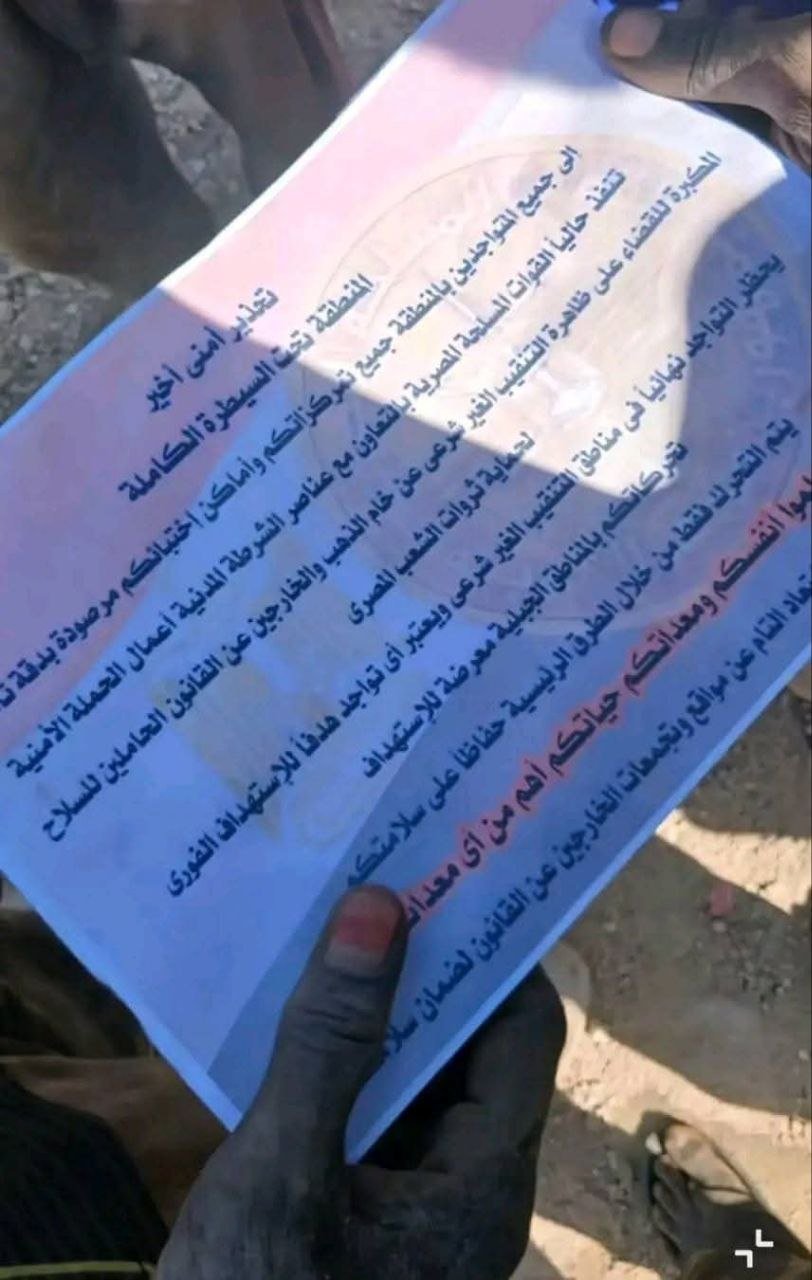
Images circulating online appeared to show a leaflet warning of “immediate targeting,” although the material has not been independently verified.
Click to see full-size image.
The incident follows similar strikes that reportedly killed 23 workers in the Jabal al-Uqaydat mining region in June. At the time, Egypt’s military announced a large-scale security operation against criminal networks involved in illegal gold mining, drug and weapons trafficking, and irregular migration.
Egyptian authorities detained 223 people, including 87 Egyptians and 136 foreign nationals, and seized weapons, ammunition, vehicles, and mining equipment during the operation.
The crackdown came after repeated confrontations along the southern frontier. Egyptian border guard officer Lt. Col. Ahmed Adel Gouda was killed on February 9 in a clash involving border troops and Sudanese armed miners.
Later on March 9, Brig. Gen. Ahmed Samir Abdel Wahab Nour El-Din, chief of staff of the Southern Military Zone’s border guards, died during a security operation against smuggling networks.
Illegal mining and gold smuggling have expanded amid Sudan’s war, which began more than three years ago. A 2024 United Nations report found that more than half of Sudan’s gold production was smuggled out of the country, with illicit trade providing revenue to networks operating across poorly controlled border areas. Egypt has been badly effected by this.
The Sudanese army is once again facing mounting international pressure over allegations that it used chlorine-based chemical weapons in its war against the Rapid Support Forces (RSF).
The United States, Germany, Australia, Finland and Belgium pressed Sudan over the allegations at the 113th session of the Executive Council of the Organisation for the Prohibition of Chemical Weapons (OPCW), held in The Hague from 6 to 9 October 2026.
The United Kingdom and the European Union also raised Sudan at the session. The EU said the Council had been seized of the matter under Article IX, paragraph 4 of the Chemical Weapons Convention, which allows member states to ask the Council to obtain clarification from another member.
The statements came a month after The New York Times and The Washington Postpublished separate investigations on 5 September reporting that the Sudanese army ran a secret programme to develop, test and store chlorine-based munitions.
The material included around 150 documents, photographs, video clips and voice messages, as well as several thousand text messages taken from the phones of senior Sudanese officers, according to The New York Times. The newspaper reported that voice and text messages involving army chief General Abdel Fattah al-Burhan suggest he had direct knowledge of the programme.
A Sudanese military spokesperson rejected the findings as “baseless and without material foundation” and threatened to sue The New York Times in a US court, according to Semafor. Sudan’s Ministry of Foreign Affairs said in July that Washington had presented no evidence for its allegations and that Sudan had repeatedly offered to host US experts for on-site verification.
Belgium Voices Concern
Belgium told the Council that Sudan’s answers so far did not match the seriousness of the allegations. Ambassador Wouter Detavernier, speaking in French on 7 October, said Belgium was concerned by allegations that the army had used chlorine bombs during the civil war, and he asked Sudan’s authorities for more information, according to the Belgian statement.
US Warning
The United States has gone further than the other four countries and imposed two rounds of sanctions on Sudan.
The State Department determined on 24 April 2025 that Sudan’s government had used chemical weapons in 2024, and it announced the finding on 22 May 2025. Washington imposed the first sanctions, restricting US exports and Sudan’s access to US government credit, on 27 June 2025. A second round, which took effect on 20 July 2026, added US opposition to multilateral development bank loans to Sudan, further export restrictions and the suspension of air carrier authority linked to Sudan, according to the Federal Register.
At the Council’s 112th session in July, US Ambassador Nicole Shampaine said Sudan should give the OPCW Technical Secretariat “unhindered, transparent access” and that its national investigative committee could not replace independent verification, according to the Arms Control Association.
This week Shampaine told the Council it must confront Sudan’s continued non-compliance tied to its 2024 use of chemical weapons. She asked regional groups and States Parties to “reject as candidates for this Council those States Parties that remain in noncompliance,” according to the US statement.
Sudan currently holds a seat on the 41-member Council, according to The Standard. In March, the United States warned it would revisit its approach to Sudan’s seat if the matter was not resolved swiftly. Council members are elected by the Conference of the States Parties, which next meets from 23 to 27 November 2026, according to the OPCW calendar.
Germany Points to an Undeclared Programme
Germany’s ambassador, Gudrun Lingner, said new media reporting suggested the 2024 use might have been more than a single incident. “Indications pointing at an undeclared chemical weapons programme have been published,” Lingner said, according to the German statement.
Germany called on Sudan’s government to finish a thorough national investigation, publish it swiftly and cooperate fully and transparently with the OPCW.
Australia Focuses on Storage and Use
Australian Ambassador Gregory French said Australia had noted with alarm media reports that the Sudanese Armed Forces had stockpiled and used chemical weapons. He said Sudan had shared an interim report from its national investigation, and he called on Sudan to give “a genuine and transparent account of any non-compliance with the Convention,” according to the Australian statement.
Finland Seeks Prompt Answers
Finland repeated its serious concern about the allegations and said Sudan’s authorities must address them “in a prompt, objective, and transparent manner,” according to its statement. Finland welcomed the Technical Secretariat’s confirmation that it will monitor the situation.
Robert Stein hat diese Woche einen sehr vollen Terminkalender, weshalb Tacheles diese Woche fast ausgefallen wäre. Dann haben wir jedoch entschieden, einen „Tacheles-Quickie“ zu machen und zumindest eine halbe Stunde über die wichtigsten Themen der Woche zu sprechen. Aber Röper und Stein können keinen „Quickie“, weshalb aus der geplanten halben Stunde doch wieder über eine […]
It was poor old Greece who drew the short straw. It chairs the UN Security Council this month and it’s fallen to them to chair the Council’s extra-sticky deliberations this coming Thursday on whether—as the United States is proposing—to extend the arms embargo on Sudan to the whole of the country.
If the current embargo, currently covering Darfur, is of any practical effect, that would be in favour the Sudanese Armed Forces (SAF); their supply lines are easier. That would change under a countrywide embargo, and the regime led by Abdel Fattah al-Burhan naturally argue that the proposed extension would deny a ‘sovereign government’ a right to defend its people, its borders, and its own existence.
But the issue isn’t whether Sudan has a right to exist or to protect civilians. It is whether the combatants who have made Sudan ungovernable should continue to receive external military support without meaningful restraints. The answer, say the United States, the United Kingdom and France, must be no. However, fortunately for Burhan, it’s a da from Russia and a semi-da and a raised eyebrow from China, neither of whom are especially squeamish about aggressive population control measures.
So if the pro-extensionists are to make any headway on a countrywide UN arms embargo, they are going to have to make, and carry the day on, some fine distinctions.
To begin with, a countrywide embargo would not settle the question of who represents Sudan at the United Nations. But it would recognise that neither the SAF nor the Rapid Support Forces (RSF) should enjoy an unlimited licence to import the means to continue a ruinous civil war.
There is an important distinction between a state’s standing in the UN and the rights claimed by those who temporarily wield power within that state. Sudan remains a member state. It has a seat in the General Assembly. Burhan and his minions continue turning up and claiming to speak in Sudan’s name.
None of that would necessarily change in the face of an arms embargo extending across the whole of Sudan. The Security Council would not be making a determination regarding Burhan’s or the SAF’s legitimacy. Recognition, credentials, representation—these are all distinct matters decided elsewhere and by other means.
The Council’s job is something else. It’s not dealing with constitutional niceties; it’s dealing with the life and death issues of international peace and security. If weapons are feeding a conflict and threatening civilians in a territory or state, it can restrict the transfer of arms to that state or territory without stripping it of its international legal personality. Sanctions are not derecognition. What they do recognise is that in some circumstances, stopping the bloodshed take precedence over any right to buy arms.
A nationwide embargo would establish at least this much: that the SAF and the RSF are both belligerents. The SAF may be commanded by General Burhan and presently in control of the state’s formal institutions; the RSF may be a paramilitary force with its own commercial interests, territorial ambitions and record of atrocities. But neither distinction entitles either side to decide Sudan’s future at gunpoint. According to the UN Charter we are not supposed to be living in a world where political legitimacy is determined by the military power at your disposal.
The SAF’s claim to sovereignty cannot mean an unconstrained right to acquire weapons while the country is being torn apart. The RSF’s local control, meanwhile, cannot be converted into international entitlement by force, atrocity or the occupation of territory. Both forces are armed parties to a conflict. Both draw sustenance from external supplies. Both have strong incentives to believe that, if they can secure the next shipment, the next drone or the next patron, a military decision remains possible.
It’s this kind of calculation that the Security Council has to disrupt.
All that said, an embargo alone can’t bring peace. Sudan needs a ceasefire now, with humanitarian access protected, credible monitoring of violations and a civilian-led political process that gives Sudanese people — not rival generals — the authority to determine their country’s future.
But if both sides believe more arms may tilt the balance then a ceasefire becomes harder to achieve. An embargo changes that calculation. It increases the cost and risk of resupply, makes foreign sponsors more visible, and tells commanders that time is no longer automatically on the side of whichever force can secure a fresh consignment.
That is why this measure matters. It’s nowhere near a magic bullet but it would at least narrow the military options of the SAF and RSF alike, improve the prospects for a ceasefire, and more create political space for civilians to reclaim their state.
Romanian President Nicușor Dan has nominated diplomat Luca Niculescu as prime minister, beginning a fourth attempt to form a government after three previous candidates failed to secure a parliamentary majority.
The nomination was announced on Monday, 5 October, after Dan held consultations with Romania’s parliamentary parties at the Cotroceni Palace. Niculescu now has the task of finding sufficient support for a government after five months of political deadlock.
Dan said he had chosen the candidate he believed had the best chance of assembling a majority. “Romania needs a government. We need a budget for next year,” he said after the consultations, according to Romanian reporting on the nomination.
Niculescu, 55, is a former journalist and diplomat who has served as a secretary of state at Romania’s Foreign Ministry and national coordinator for the country’s accession to the OECD. He was Romania’s ambassador to France between 2016 and 2022 and was also accredited to Monaco and Andorra.
Accepting the nomination, Niculescu said his first task would be to build a parliamentary majority. He promised a government programme centred on predictable economic policy, public spending discipline, investment and Romania’s European and Euro-Atlantic commitments.
The appointment follows three unsuccessful attempts to replace the government of Ilie Bolojan, which was removed in a no-confidence vote on 5 May after the Social Democratic Party withdrew its support. EU Today reported at the time that 281 lawmakers backed the motion, bringing down the pro-European administration.
Eugen Tomac was the first candidate asked to form a government but relinquished the mandate after failing to secure sufficient support. Adrian Veștea was then nominated, but his proposed government was rejected by parliament.
The third candidate, PNL MEP Siegfried Mureșan, was nominated in September. His government received 182 votes in the parliamentary confidence vote on 30 September, well short of the 233 required. That defeat left Dan facing a fourth round of negotiations with the same fragmented parliament.
Niculescu therefore begins without an established majority behind him. During Monday’s consultations, the PSD continued to promote its own candidate, Sorin Grindeanu, while USR and AUR pressed for early parliamentary elections. PNL signalled greater flexibility but stopped short of committing itself to a new governing formula.
AUR leader George Simion has already said his party will not support Niculescu. USR, meanwhile, said it would examine the proposed cabinet, governing programme and the political majority behind it before deciding how to vote.
Under Romania’s constitution, a prime minister-designate has ten days from nomination to seek parliament’s confidence for the proposed programme and full list of ministers.
The repeated failures have also revived discussion of early elections. The president may dissolve parliament if no government receives a vote of confidence within 60 days of the first request for investiture and at least two attempts have been rejected, although dissolution is a presidential option rather than an automatic step.
Dan has so far indicated that he would prefer to exhaust efforts to form a government.
The political stalemate comes at a difficult economic moment. Romania is under pressure to reduce its budget deficit, maintain investor confidence and continue reforms tied to EU funding. The strain on the governing coalition had already become an EU fiscal issue before Bolojan’s government fell, with questions over budget consolidation and European recovery funding increasingly tied to political stability in Bucharest.
The immediate test for Niculescu will be whether his diplomatic background can translate into enough parliamentary votes to assemble a cabinet. His nomination leaves him more freedom than a candidate tied directly to one of the main parties, but the arithmetic remains unchanged: a government still requires at least 233 votes to take office.
Photo: Razvan Socol / Wikimedia Commons / CC BY-SA 4.0
Seventeen EU governments have joined forces to defend agricultural and regional funding in the bloc’s next seven-year budget, setting up a confrontation with Germany and five other countries demanding substantial reductions to the European Commission’s proposed €2 trillion spending plan.
Seventeen European Union countries have called for agriculture and cohesion funding to be protected from further cuts as negotiations over the bloc’s 2028–2034 budget enter a decisive phase.
In a letter dated 2 October to Irish Taoiseach Micheál Martin, whose government currently holds the rotating presidency of the Council of the EU, the countries said the overall financing of Cohesion Policy and the Common Agricultural Policy should be maintained in the next Multiannual Financial Framework.
The signatories are Bulgaria, Croatia, Cyprus, Czechia, Estonia, Greece, Hungary, Italy, Latvia, Lithuania, Malta, Poland, Portugal, Romania, Slovakia, Slovenia and Spain.
The initiative follows months of coordination by the so-called Friends of Cohesion. In an earlier joint position published by the Spanish government, members argued that cohesion, agriculture and fisheries remained central EU policies and called for new EU revenue sources to be “genuine, fair, simple and non-regressive”.
Italian Prime Minister Giorgia Meloni and Romanian President Nicușor Dan have been coordinating the group at leaders’ level. They are expected to convene another informal meeting alongside the European Council on 15–16 October. The two leaders previously brought the group together ahead of the June European Council as governments sought to coordinate their positions on the budget.
The intervention places the group in direct opposition to Germany, Denmark, the Netherlands, Austria, Finland and Sweden.
Those six governments have argued that the Commission’s near-€2 trillion proposal should be reduced by several hundred billion euros. In their joint statement on the 2028–2034 budget, they said national governments were already undertaking fiscal consolidation and that the EU budget could not be exempt from similar pressure. They called for reductions across all spending headings while giving greater weight to security, defence, competitiveness, migration and sovereignty.
The Commission’s original proposal for the 2028–2034 Multiannual Financial Framework amounts to almost €2 trillion in current prices, equivalent to 1.26 per cent of the EU’s average gross national income over the seven-year period. It substantially restructures the budget, bringing agriculture, cohesion, fisheries, migration and internal security into national and regional partnership plans while allocating more money to competitiveness, research, defence and other emerging priorities.
Agriculture and regional development have consequently become two of the most sensitive parts of the negotiations.
The Council has already backed the principle of the new national and regional plans, but financial allocations remain unresolved. Its negotiating position specifically leaves the money to be settled as part of the overall MFF talks.
EU Today has followed the dispute since the Cyprus presidency produced a negotiating framework in June that proposed reducing the Commission’s plan by about €32.8bn. The disagreement has since widened as governments attempt to reconcile traditional spending on farmers and poorer regions with growing demands for defence, industrial competitiveness and security.
Revenue is another source of disagreement.
The Commission has proposed five new EU own resources, including revenue connected to the Emissions Trading System and Carbon Border Adjustment Mechanism, a contribution based on uncollected electronic waste, a tobacco excise resource and a contribution from large companies operating in the EU. The proposals are intended partly to reduce reliance on national contributions and help finance repayment of pandemic-era borrowing.
EU Today previously examined the dispute over new sources of EU revenue after leaders asked the Irish presidency to develop financing options alongside negotiations over expenditure.
The Friends of Cohesion have also called for a more gradual repayment schedule for NextGenerationEU borrowing and oppose retaining contribution rebates for wealthier member states. Under the Commission proposal, repayments of principal and interest would amount to a fixed €24bn annually between 2028 and 2034, or €168bn across the seven-year budget period.
Ireland now faces the task of narrowing the gap.
The Council’s timetable for the negotiations envisages the Irish presidency advancing the next negotiating framework ahead of the October European Council, with governments seeking a political agreement before the end of 2026. That would leave 2027 for adoption of the legislation required before the new budget takes effect on 1 January 2028.
An agreement among governments will require unanimity. The European Parliament must then give its consent, while the separate decision governing the EU’s own resources also requires unanimous approval by member states and ratification according to their national constitutional procedures.
With 17 governments now explicitly defending agriculture and cohesion spending and six major contributors demanding substantial reductions, the October summit will bring the central budget dispute directly before EU leaders.
 Login





 CASA DEL SOLE TV — Informazione libera e indipendente
 Dona tramite bonifico bancario: IBAN: IT63P0326822300052392596590
 Dona tramite PayPal: paypal.me/casadelsoletv
 Sostegno ricorrente: casadelsole.tv/sostienici