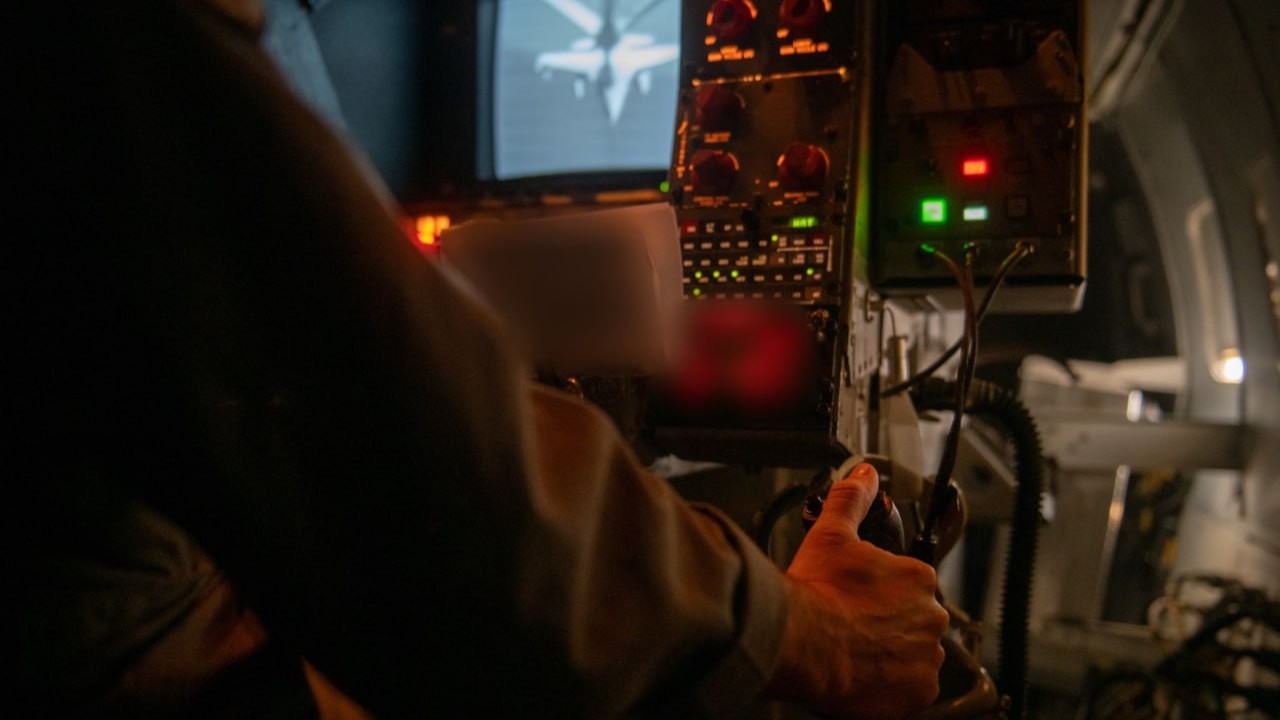
Dozens of Israeli fighter jets flew near the border of Iran on Monday, according to a report from Axios, a move that may have been meant to provoke an Iranian attack. The report, which cited unnamed US and Israeli officials, said that the Israeli warplanes flew through Syrian and Iraqi airspace, following a flight path […]
Moscovo admite retomar negociações com Kiev e Washington em Abu Dhabi. Putin oferece ajuda para resolver conflito com o Irão e a Rússia prepara o envio do primeiro petroleiro com gasóleo para os EUA.
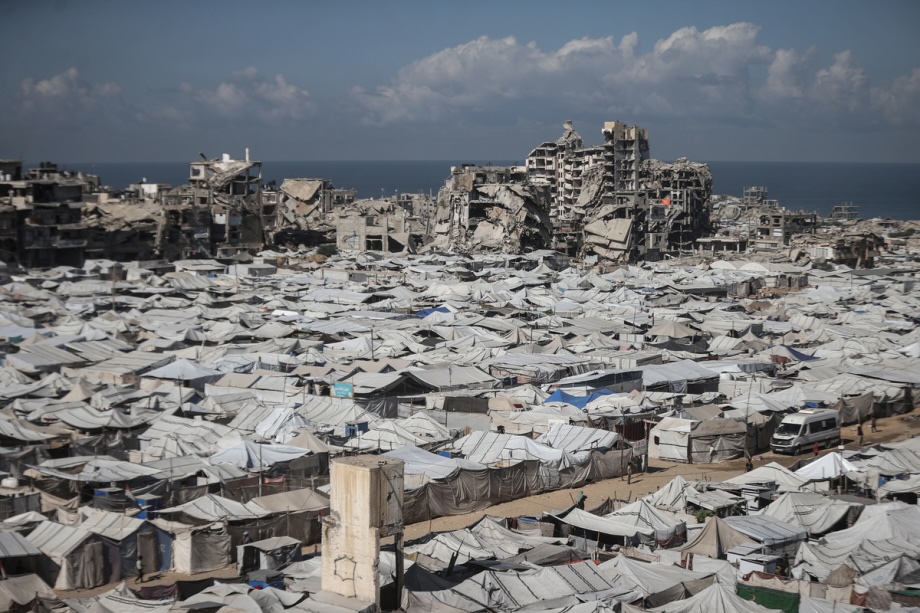
A 10-year-old boy died in Gaza on Wednesday of wounds sustained in an Israeli attack days earlier, as the Israeli military continued launching strikes across the besieged Palestinian territory. The boy, identified as Abdul Rahman Khalil Awad, was hit by an Israeli drone strike in Gaza City on October 19. Footage from Gaza on Wednesday […]
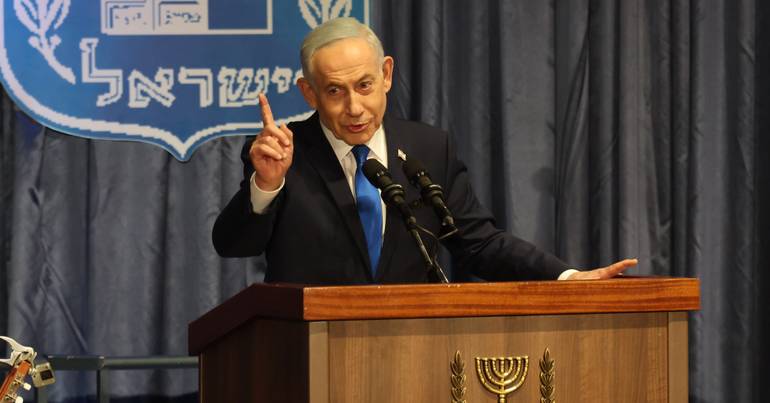
Israeli prime minister Benjamin Netanyahu said on Wednesday that he has directed the military and the Mossad to bring down the Iranian government.
Speaking at a graduation ceremony for IDF officer cadets, Netanyahu said his instruction to the Israel Defense Forces and the Mossad was “to overthrow the regime in Iran”, saying that Tehran “has not yet learned its lesson”.
He accused Supreme Leader Ayatollah Mojtaba Khamenei of following in his father’s footsteps by “unlocking the weapon”, and said Iran was again trying to build a nuclear bomb.
The remarks follow similar language in September, when Netanyahu told the IDF General Staff that toppling the regime was “within reach”.
Israel and the United States have been in an intermittent conflict with Iran since earlier this year, during which Ali Khamenei was killed.
Israel’s Channel 12, citing US officials, reported that dozens of Israeli fighter jets and refuelling aircraft flew over Syria and Iraq towards the Iranian border earlier this week on a route suggesting an attack, though the aircraft turned back shortly before reaching Iranian territory.
According to Channel 12, Israel told Washington in advance that the flight was an exercise and a show of force meant to deter Iran.
The channel said some sources believe certain Israeli officials may have hoped Iran would fire on the aircraft, giving Israel a pretext to attack.
The Financial Times has reported that Netanyahu sought to launch strikes against Iran earlier this month, but that US president Donald Trump opposed a new conflict ahead of the US midterm elections.
Channel 12 also reported that IDF chief of staff Eyal Zamir warned his American counterpart, General Dan Caine, that a war before Israel’s elections next week would probably force a postponement of the vote.
Palestinian president Mahmoud Abbas is expected to visit Cyprus on October 29, barring unforeseen circumstances.
Talks are expected to cover bilateral relations, the humanitarian situation in Gaza, and developments in the West Bank and East Jerusalem.
The visit was first reported by the Palestinian ambassador to Cyprus, Abdallah Attari, in an interview with Phileleftheros.
The trip comes as the government faces criticism over its increasing support for Israeli interests in Cyprus.
Akel has attacked the creation of a Cyprus chapter of the Israel Allies Foundation by six MPs from Disy, Diko and Elam, which the party has said undermines the credibility of Cyprus in its efforts to press Turkey internationally on its ongoing occupation.
Cyprus and the Palestinians drew close in the 1960s and 1970s, when Archbishop Makarios steered the island away from its expected trajectory towards NATO and instead into the Non-Aligned Movement alongside Egypt and the Palestine Liberation Organisation.
In September 1985 three gunmen from the PLO unit Force 17 killed an Israeli couple, Reuven and Esther Paltsur, and their friend Avraham Avneri aboard a yacht in Larnaca marina.
President Spyros Kyprianou condemned the killings and urged both sides to keep their conflict off Cyprus.
Cyprus rejected an Israeli extradition request and tried the three men itself, and Israel bombed the PLO headquarters in Tunis days later.
In February 1988 the PLO bought the Cypriot ferry Sol Phryne at auction in Limassol, renamed it Al Awda, “the Return”, and planned to carry 135 Palestinian deportees to Haifa.
Three PLO officials were killed by a car bomb in Limassol that weekend, and a limpet mine crippled the ship within days.
Cyprus recognised the State of Palestine immediately after its declaration in 1988.
A Cypriot representative office opened in Ramallah in 2009, and after the UN General Assembly vote of 2012, was upgraded to a full embassy, among the first in the EU to do so.
When Abbas visited in June 2022, then President Nicos Anastasiades pledged that close ties with Israel “would not be to the detriment of the legitimate rights of the Palestinians”.
President Nikos Christodoulides visited Ramallah in 2023 and laid a wreath at Yasser Arafat’s tomb, and in March 2024 the first aid ship for Gaza left a Cypriot port.
Israel once declared Androulla Vassiliou, wife of former president George Vassiliou, persona non grata after a delegation she led tried to meet Arafat, who was confined to his compound in Ramallah.
Abbas, has led the Palestinian Authority since 2005, with his Fatah-dominated authority governing parts of the West Bank, while Hamas ran the Gaza strip.
Many Palestinians regard the authority as corrupt and criticise its security cooperation with Israel.
Iraq shut the strategic Sheeb border crossing with Iran on 21 October, sources told western media outlets, framing the move as a result of intensified US pressure on Baghdad to strangle the Islamic Republic.
An Iraqi source told AFP that the crossing was shut “until further notice.” Two other sources said Washington is pressuring Baghdad to close more border crossings.
Iranian judiciary-linked website Mizan reported that the shutting of the crossing came “following a decision by the Iraqi prime minister’s office.”
According to other sources, the US wants Iraq to close all its border crossings with Iran.
“The US Treasury Department raised this with Prime Minister Ali al-Zaidi when he was in New York. All border crossings will be closed except for one crossing in federal territory and one crossing in the Kurdistan region. The US has asked all countries bordering Iran to do the same.”
Disruptions have also taken place on the border with Pakistan.
“Regarding Pakistan, yes, there have been disruptions to border exchanges with some neighboring countries,” Iranian Interior Ministry spokesperson Ali Zeinivand said on 21 October.
Reuters also reported on the closure of the Sheeb crossing.
The closure took place “to review security and install detection equipment to stop the smuggling of prohibited materials,” the British outlet cites an Iraqi border official as saying.
Sheeb will be closed to passengers, vehicles and commercial trucks “until further notice,” the source added.
Valiollah Hayati, a security official from Iran’s southwestern Khuzestan, confirmed the closure and said consultations to resume operations were ongoing. Tehran has said Iraq failed to provide any formal notice prior to the sudden closure of the Sheeb crossing.
Separately, the UAE-based Al-Ain outlet reported, citing Iraqi government sources, that Iraq’s premier informed leaders of the Shia-led Coordination Framework, during a 19 October meeting, that Washington had demanded the closures.
“The US is pressuring Baghdad to close its border crossings with Iran,” an Iraqi source said.
Al-Ain further reported that Zaidi has stressed Iraq’s need to maintain a balanced position, adding that Baghdad rejected the US call for all crossings to be closed.
Washington then “proposed keeping only two crossings open, one in the north and the other in the central region – the Mehran crossing, which connects Iraq’s Wasit province with Iran’s Ilam province,” the Emirati report went on to say.
Baghdad reportedly rejected this as well, the outlet states, adding that US envoy Tom Barrack told the Iraqi prime minister that “this step falls within the policy of economic pressure on Iran.”
Zaidi was reportedly informed that the US will resume its war on Iran. “Iraq cannot become involved in this war, and its repercussions will affect the political system and the state,” the Iraqi source told Al-Ain.
The report states more crossings could be closed in the coming days.
The latest closure follows Iraq’s temporary shutdown of the Shalamcheh crossing in September, after Saudi Arabia alleged that drones launched from Iraqi territory targeted the kingdom.
It also coincides with US-imposed restrictions on Iranian flights to Iraqi airports.
Dozens of Israeli fighter jets and refueling aircraft flew over Syria and Iraq toward Iran’s border earlier this week in a mission that U.S. officials suspect may have been intended to provoke Tehran into firing on them, Hebrew media reported Wednesday.
Israel informed Washington ahead of the flight, describing it as a military exercise and a show of force intended to deter Iran, Channel 12 reported, citing U.S. officials.
The aircraft followed a route resembling an attack on Iran but turned around shortly before reaching Iranian territory and returned to Israel.
Several sources told Channel 12 they suspected some Israeli officials may have hoped Iran would fire on the aircraft, providing Israel with a justification for launching an attack. The report said the flight covered more than 1,000 kilometers toward Iran, putting Israeli aircraft within range of Iranian air defenses.
The report comes amid growing tensions over the possibility of renewed Israeli strikes on Iran. The Financial Times reported that Prime Minister Benjamin Netanyahu sought to launch another offensive earlier this month, but President Donald Trump opposed renewed fighting before the U.S. midterm elections.
Channel 12 also reported that Israeli military Chief of Staff Lt. Gen. Eyal Zamir warned his American counterpart, Gen. Dan Caine, that a war before Israel’s parliamentary elections next week would likely force a postponement of the vote. Zamir said Tuesday that the military would ensure the elections proceeded “without external interference.”
Israeli security officials have also expressed concern that recent remarks by Netanyahu and Defense Minister Israel Katz could prompt Iran to consider a preemptive strike against Israel, according to Channel 12.
Security officials and opposition figures have urged Zamir to oppose an attack before the election unless there is a pressing military necessity, the network reported.
The latest report didn’t come as a surprise as dozens of Israeli aircraft were spotted over Syria and Iraq in recent days. The stunt demonstrates, however, that Israel is planning to reignite the war, and while Trump has managed to stop Netanyahu for now, he will likely join him in another attack against the Islamic Republic after the midterm elections.
US photojournalist describes ‘protective shield’, vows to return to work in West Bank and criticises Netanyahu comments on incident
The Washington Post photojournalist who was attacked and seriously injured by Israeli settlers in the West Bank on Friday has described how she was saved with the help of local Palestinians.
Heidi Levine sustained four fractured vertebrae, two broken ribs and four puncture wounds when she was knocked to the ground and repeatedly beaten by a crowd of masked settlers while she and other journalists were covering the olive harvest in the Palestinian village of Abu Falah, north of Ramallah.
The veteran war correspondent earned acclaim for challenging the powerful, but her Mideast reporting drew sharp criticism from some Jewish and pro-Israel viewers
Governor Yaron urges next coalition to cut debt and pursue growth reforms to fund security needs; bank raises forecasts but warns overseas production distorts domestic picture
Iran, recognizing surefire defeat in a kinetic war, is leaning in on an information warfare campaign to undermine the United States and Israel from within, according to Yuval David, a strategic U.S.-Israel geopolitical communications advisor.
"You cannot beat Israel or the United States in a physical kinetic war," David told Fox News Digital from Budapest, where he joined Israeli President Isaac Herzog for high-level diplomatic talks Wednesday, adding the warning of an "information warfare system."
"And that’s what’s going on with social media, with our devices and the people who are on TikTok and Instagram and Facebook and X and YouTube and all of the different social media platforms where the Islamic Republic of Iran is able to affect people’s minds."
"One of the things that it does is it tries to create a rot from within the societies and, sadly, it’s very much succeeding in doing so," he added, stating that Iran's campaign has enjoyed "guidance from Russia and China."
David’s warning comes as Israel prepares for an election next week that analysts say could change its leadership but is unlikely to produce a fundamental shift in the country’s Iran policy.
A Reuters analysis published Wednesday found that Iran will likely remain Israel’s chief adversary, with military force continuing to serve as the country’s preferred tool against its enemies. The report said Israel’s security doctrine is centered on confronting Iran, maintaining buffer zones beyond its borders and keeping military pressure on to deter threats.
A victory for Prime Minister Benjamin Netanyahu, backed by conservative coalition partners, could deepen Israel’s confrontation with Tehran, not bring about appeasement. Even an opposition-led government would likely share the same broad strategic outlook, David said.
"The Islamic Republic of Iran is a massive concern for the world," David said. "Tehran does not fear another diplomatic statement. It fears an America and an Israel with the intelligence, military capabilities and political will to act together."
David said the U.S.-Israel alliance should not be judged by whether American leaders support the same Israeli candidate.
"Presidents come and go, prime ministers come and go. America’s and Israel’s enemies do not take election years off," he said. "America doesn’t need to choose Israel’s prime minister, nor will it, nor can it, nor is it even trying to. America just needs a strong Israeli partner, whoever the Israelis elect."
Reuters has cited regional analysts who said Netanyahu’s re-election could allow him to pursue a more aggressive campaign against Iran, while Arab states remain wary of his policies but want Tehran’s influence contained.
David said Iran’s hostility toward the United States and Israel extends beyond the current conflict.
"The Islamic Republic of Iran has been waging this ideological war against America and also against Israel and also against democracies around the world since 1979," he said. "The regime never stopped a war.
"Americans thought we have had a war, and then we didn't have a war. Then we had one. Then we didn't. Well, the Islamic Republic of Iran never ended that war. They've seen this as an ongoing war since 1979."
He also framed U.S. support for Israel as a matter of serving American national security interests.
"America does not support Israel because Israel is helpless. America partners with Israel because Israel is capable," David said. "Supporting Israel’s security isn’t charity. It’s American strategic self-interest."
President Donald Trump’s endorsement of Netanyahu, contrasted with Vice President JD Vance’s decision to stay out of the race, reflects differing political approaches rather than a split over Iran or the U.S.-Israel alliance, according to David.
"President Trump is endorsing Prime Minister Netanyahu – Vice President Vance is emphasizing American priorities, but supporting Israel’s security doesn’t require endorsing a particular Israeli politician," he concluded.
"Trump is speaking to Israeli voters because that’s what Trump is able to do – Vance is speaking to American voters," David said. "Far too many Americans don’t realize both Trump and Vance know that Tehran is listening."
Primeiro-ministro israelita escalou a retórica contra Teerão em campanha eleitoral. Segundo o Financial Times, Washington bloqueou um plano de novos ataques por impacto no preço do petróleo.
It’s the last week before Israel’s elections, and the concern around Syria that there may be a pre-election “surprise” seems palpable. The belief is that Israeli PM Benjamin Netanyahu may seek to politically benefit from a new operation within southern Syria in the next few days. And while Israel’s ongoing military operations in Syria are […]
Israeli Prime Minister Benjamin Netanyahu said on Wednesday that his directive to the Israeli military is to “overthrow the regime in Iran” as he continues to ramp up his rhetoric in the days before the October 27 Israeli elections. “My directive to the IDF, the Mossad, and the defense establishment… [is] to overthrow the regime […]
Tel Aviv, 21 oct (Prensa Latina) Unos 7,3 millones de personas tienen derecho a votar en las elecciones al Parlamento de Israel (Knéset), previstas para el próximo 27 de octubre, informó hoy la Oficina Central de Estadística.
A senior commander of the Islamic Revolution Guards Corps (IRGC) has warned that Iran could target undersea Internet cables passing through the Strait of Hormuz if the country’s infrastructure is attacked.
Brigadier General Yadollah Javani, political deputy to the IRGC chief commander, made the remarks in an interview with Iran’s Arabic-language Al-Alam television news network on Wednesday.
Addressing the possibility of strikes against undersea Internet infrastructure, Javani said Iran would use its full capabilities if the country’s own infrastructure came under attack.
“The United States and its allies have substantial investments,” he said, adding that their assets could become targets if they damaged Iranian infrastructure.
Undersea fiber-optic cables carry a substantial share of global international data traffic, making them important components of the world’s communications networks. Damage to such infrastructure could disrupt connectivity and affect businesses and services that depend on international data links.
Javani also said Iran performed well during “a period of strong defense,” while the United States and Israel suffered a defeat they had not anticipated.
He added that, because Iran’s enemies would find it difficult to accept defeat, Tehran would pursue a more calculated and, in some cases, offensive approach.
Javani went on to say that the shift is intended to strengthen Iran’s deterrence and prevent the United States from considering another attack.
He further said that Iran’s military capabilities for offensive operations against the United States, European countries, Israel, and countries supporting Washington have become evident.
The general also stated that US military bases in the region have been destroyed and that facilities located farther away could also be targeted.
Javani’s remarks come amid heightened tensions between Iran, the United States, and Israel, with Iranian officials repeatedly warning that any renewed aggression against Iran would carry serious consequences for US interests across the region.
The French reporter was set to cover Israel's election, while the U.S. researcher said she was questioned about her criticism of Israel's conduct in Gaza; four foreign journalists were denied entry last week
This story originally appeared in Common Dreams on Oct. 21, 2026.It is shared here under a Creative Commons (CC BY-NC-ND 3.0) license.
Democratic US congressional candidate Brad Lander said Wednesday that he was released by Israeli forces with a “warning” after he and dozens of others were detained while helping Palestinians harvest olives in the illegally occupied West Bank.
“Several dozen rabbis and participants harvesting olives with me are still in detention,” Lander, who is Jewish, wrote on social media. “They should all be released immediately. To be clear: Palestinians face far worse consequences every day. These detentions by the IDF are one more attempt to undermine Palestinians’ right to harvest their olive groves, travel on their roads, and live in their homes.”
Prior to his release, Lander posted a video from a bus that he said was “taking us away for processing” after settler security called the Israel Defense Forces (IDF) on the group harvesting olives.
“Let’s be clear: Occupation is a crime under international law,” said Lander, who is running to represent New York’s 10th Congressional District in the US House of Representatives. “Harvesting olives is not a crime under any law.”
I’ve been released from IDF custody with a “warning,” apparently because of my public profile (I told them I wasn’t even a congressmember yet, just a nominee).But several dozen rabbis & participants harvesting olives with me are still in detention.
Lander was part of a group of around 80 American and Israeli rabbis and activists who were detained by the IDF on Wednesday as they helped Palestinians harvest olives from a grove near an Israeli settlement in the West Bank. Israeli lawyers toldNPR that the incident marked “the largest mass detention of activists in the occupied West Bank in at least a decade.”
Jeremy Ben-Ami, president of the US-based advocacy group J Street, said in response to the detentions that “when the government of Israel and its military and law enforcement are arresting rabbis and volunteers who have journeyed 6000 miles to protect Palestinian farmers harvesting olives and not the violent terrorists harassing and attacking the farmers—it tells you all you need to know about this government’s moral compass.”
“This illegal and immoral occupation must end,” he added.
Heba Morayef, Amnesty International’s regional director for the Middle East and North Africa, said in a statement earlier this week that “Israel’s apartheid system is turning the olive harvest into a season of horror for Palestinian families across the occupied West Bank.”
“States must recognize that settler attacks are not isolated acts, but a central policy of the Israeli state,” said Morayef, calling on nations to “take concrete measures to respect their obligations under international law and to avoid complicity in Israeli violations and crimes against Palestinians by halting all trade, investment, and cooperation that contribute to maintaining the unlawful occupation, apartheid, and the ongoing campaign of ethnic cleansing.”
“Hiding behind empty rhetoric is not only cowardly, it is enabling further abuses,” she added. “For Palestinians, it continues to be deadly.”
Apenas quedan seis días para las elecciones en Israel, pero las conversaciones sobre los comicios suelen terminar con un: “Bueno, si no hay una guerra antes, claro”. No es casual. El primer ministro, Benjamín Netanyahu, viene subrayando casi a diario su deseo de otro conflicto con Irán (tras el que inició en febrero junto con EE UU) y ha subido el tono este miércoles, al señalar que el régimen de Teherán “aún no ha aprendido la lección”, así que ha ordenado su derrocamiento al ejército y al Mosad, los servicios secretos en el exterior.
Don't ignore the Palestine issue because "it's complicated." It's un-complicated! Keep up in just a few minutes a day with IAK's curated and accurate Daily Updates.

 Login