A cinque chilometri dai sobborghi meridionali di Zaporizhzhia: è la distanza – secondo il Ministero della Difesa russo -a cui le avanguardie russe si sono attestate dopo aver attraversato il ...
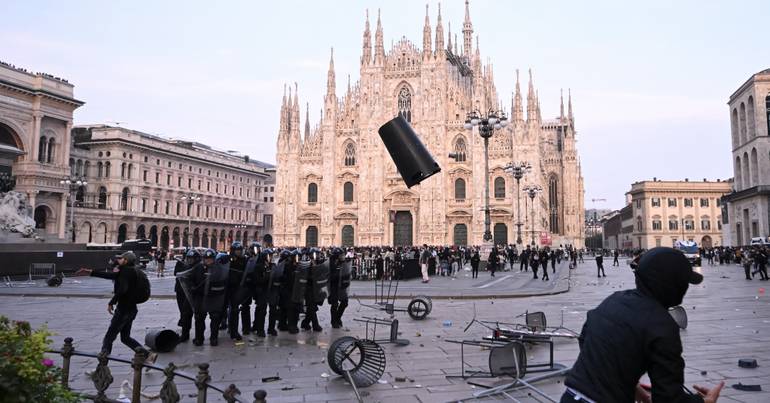
Milhares de italianos saíram à rua este sábado. Em algumas cidades, como Milão, houve confrontos entre os manifestantes e a polícia. Em Bolonha, pelo menos sete pessoas foram detidas.
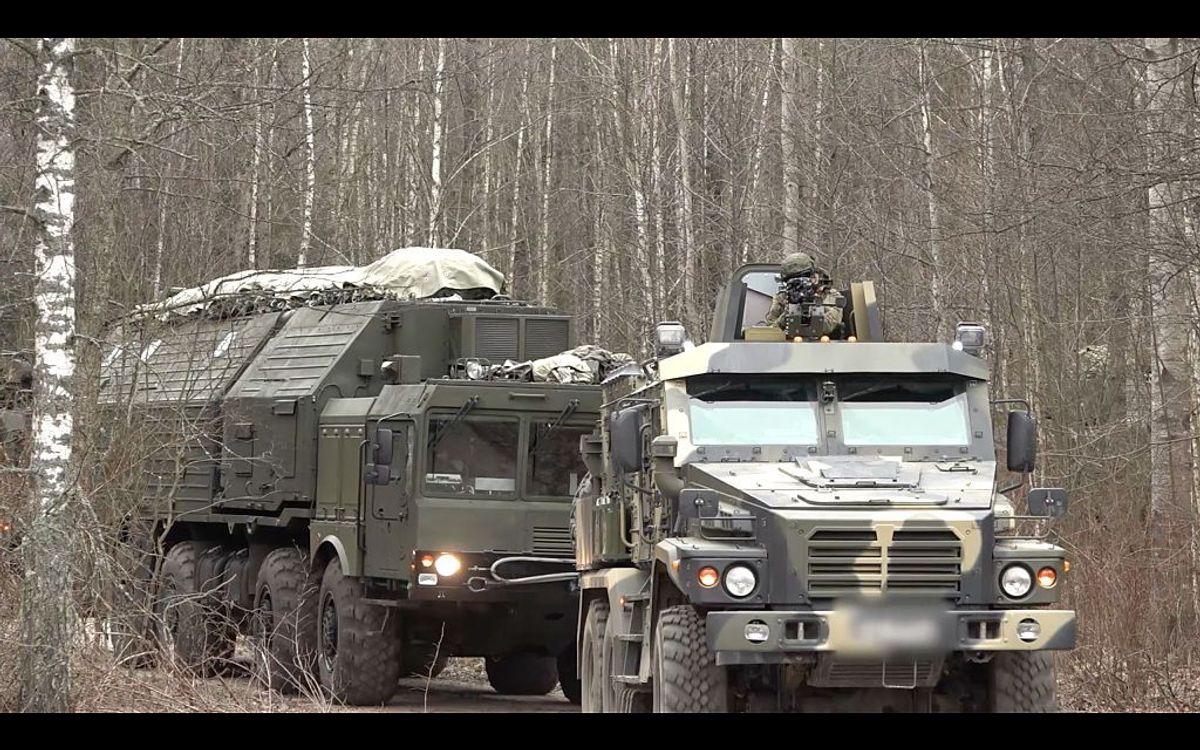
Ukraine's State Border Guard Service spokesperson Andrii Demchenko has separately reported that equipment based in Belarus helps relay or amplify signals for Russian Shahed and Geran drones heading toward western Ukraine and Poland's border region.
Las operaciones militares abarcaron Yenín, Nablus y Ramala, restringiendo el tránsito de agricultores en la cosecha de aceitunas en la Cisjordania ocupada.
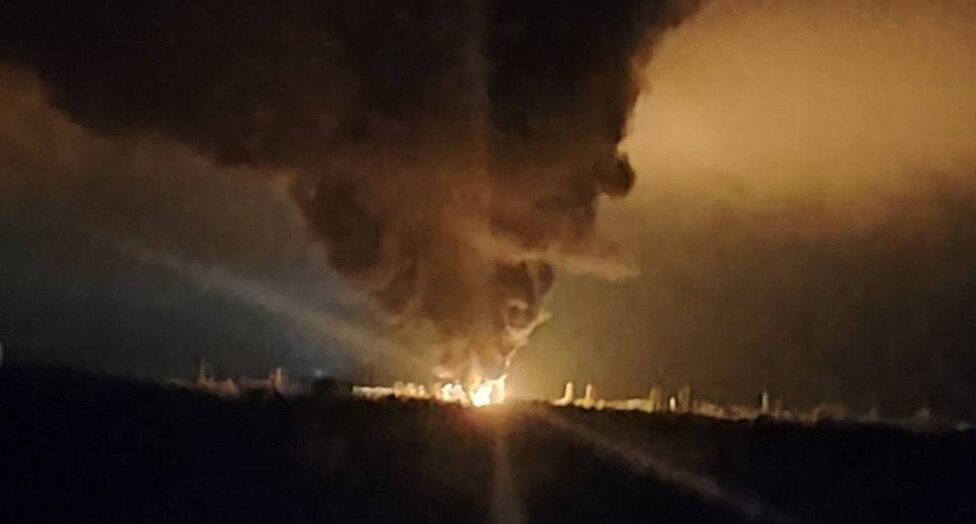
Between the evening of October 16 and October 17, 2026, the Russian Armed Forces continued their campaign of combined strikes against Ukrainian defense-industrial, energy, and logistics infrastructure. According to the Ukrainian side, the overnight attack leading into October 17 involved Iskander-M/KN-23 ballistic missiles, Kh-22/Kh-32 cruise missiles, four Kalibr sea-launched cruise missiles, and 332 strike unmanned aerial vehicles. The main focus was on metallurgical enterprises in Kryvyi Rih and Zaporizhzhia, transformer production, and high-voltage substations in western Ukraine. In parallel, Ukrainian forces carried out a large-scale drone attack on Russian territory.
Russian Strikes on Targets in Ukraine
Metallurgical Complex
Zaporizhstal (Zaporizhzhia) – formerly one of Ukraine’s largest metallurgical enterprises. Before the campaign, it produced up to 1.44 million tons of pig iron and more than 1.3 million tons of rolled steel annually; its output was directed primarily toward military-industrial needs. According to Metinvest, this was the fifth strike on the facility; six ballistic missiles were fired in the latest attack, damaging energy and logistics infrastructure as well as production facilities in the blast-furnace shop. In total, 23 ballistic missiles have been fired at the plant across five attacks.
Metallurgical combine in Kryvyi Rih (Dnipropetrovsk Region) – one of Ukraine’s largest metallurgical enterprises, which supplied metal products to the Ukrainian defense-industrial complex. The description provided by the Russian Ministry of Defense matches ArcelorMittal Kryvyi Rih; according to sources, a week earlier the owners announced a cold shutdown of primary production, and the plant was preparing for preservation.
Zaporozhtransformator PJSC (Zaporizhzhia) – a manufacturer of oil-immersed power transformers rated at 220-750 kV, a key component of high-voltage substations. Since 2022, it has been under the management of Ukraine’s Ministry of Defense and has been used in the interests of the Ukrainian Armed Forces. Striking this facility complicates the replacement of damaged transformer equipment for Ukrenergo, as manufacturing a new transformer takes months.
Zhytomyr 330 kV Substation (Zhytomyr Region) – a major hub in the trunk power grid, providing voltage conversion and electricity distribution among 330 kV, 110 kV, 35 kV, and 10 kV networks. Power was cut in several districts of Zhytomyr, and water-supply disruptions occurred. According to the Russian Ministry of Defense, the facility struck was one that distributed electricity from western Ukraine to central regions for defense-industrial enterprises.
Click to see the full-size image
Rivne 330 kV Substation (Rivne Region) – a trunk power-grid facility. Power outages occurred in Rivne and nearby settlements, and municipal electric transport operations were disrupted.
Bar 330/110/35 kV Substation (Vinnytsia Region) – a high-voltage facility distributing electricity among the aforementioned voltage classes. Voltage fluctuations were recorded in Vinnytsia and across the region.
Kharkiv CHP-3 (combined heat and power plant No. 3; KP Kharkivski Teplovi Merezhi – Kharkiv Heating Networks), Kharkiv – a combined heat and power plant producing both thermal and electric energy for municipal supply. A hit was recorded on the electrical-shop building, where a fire broke out over an area of 100 square meters.
Delivery logistics terminal (Novohrad-Volynskyi, Zhytomyr Region) – a branch of a Ukrainian freight-logistics operator specializing in less-than-truckload road transport and interregional delivery. The strike caused a fire in a warehouse building covering more than 1,000 square meters. The company participates in government contracts for freight-forwarding services through the Prozorro system.
Dry cargo vessel underway at sea (Port of Odesa) – a vessel delivering military cargo to the port was struck.
Strikes on Russian Territory
On the night of October 17, Ukrainian forces carried out a large-scale drone attack on Russian regions. According to the Russian Ministry of Defense, air-defense forces intercepted and destroyed 610 Ukrainian fixed-wing UAVs over the territory of 16 Russian regions and over the Black Sea. The highest intensity was recorded on the Moscow axis: Moscow Mayor Sergei Sobyanin reported the destruction of 144 UAVs heading toward the capital. In Bryansk Region, 157 UAVs were shot down over the course of a day. No reports indicated that serious strategic targets had been hit; there were civilian casualties.
The nature of the October 16-17 strikes confirms a systematic approach by the Russian command to disabling Ukraine’s defense-industrial production chain and the energy infrastructure supporting it. Priority targets include metallurgical enterprises producing goods for military needs and transformer production, which is critical for restoring damaged substations. According to Chief of the General Staff of the Russian Armed Forces Valery Gerasimov, steel production in Ukraine has been halted, operations at major Black Sea ports have ceased, and 76 logistics and warehouse centers have been struck. Given statements by the Russian leadership on the need to continue large-scale strikes against the defense-industrial complex and logistics centers, further intensification of attacks on energy infrastructure in western and central Ukraine, as well as on facilities involved in the repair and restoration of military equipment, should be expected. The resilience of Ukraine’s energy system will depend on its capacity to import electricity from the EU and on the speed of restoring trunk substations – both significantly complicated by the strike on Zaporozhtransformator.
"PS não pode querer dar-se bem com Deus e o diabo", aponta líder sindical. Além das críticas a vários partidos, marcha da CGTP com milhares de pessoas fica marcada pelo apoio aos jovens acampados.
As empresas de inteligência artificial continuam a promover os seus modelos como ferramentas capazes de aumentar a produtividade no trabalho e de funcionar como assistentes pessoais, realizando tarefas como marcar compromissos ou fazer compras em nome dos utilizadores. A produtora Mastiff terá concebido a um agente de IA acesso ao seu servidor, onde este terá alegadamente apagado os ficheiros das edições concluídas, sem que fosse possível recuperar o trabalho perdido. O programa estava a apenas algumas semanas da sua estreia, marcada para 22 de novembro. A TV4, emissora responsável pela transmissão da série, confirmou entretanto que a temporada foi adiada
Portugal é conhecido internacionalmente pelas suas praias, paisagens e património histórico, mas há outro motivo que continua a conquistar os turistas estrangeiros: a gastronomia. Uma revista norte-americana decidiu perguntar a três especialistas em viagens quais são os pratos que ninguém deve deixar de provar durante uma visita ao país, e uma receita tradicional portuguesa destacou-se entre as recomendações.
A revista Travel + Leisure revelou as escolhas de profissionais ligados ao turismo em Portugal. Apesar de os pastéis de nata continuarem a ser uma das especialidades mais conhecidas além-fronteiras, os especialistas destacaram sobretudo os pratos de peixe, com especial atenção ao bacalhau à Brás.
Este prato português conquistou os especialistas
O bacalhau à Brás foi uma das principais recomendações apresentadas pelos especialistas consultados pela publicação norte-americana.
Preparado com bacalhau desfiado, batata palha, cebola e ovos, este prato é uma das receitas mais conhecidas da gastronomia portuguesa, sendo habitualmente servido com salsa e azeitonas.
Álvaro Diez Diaz, especialista em experiências turísticas em Portugal na Butterfield & Robinson, destacou a importância desta receita na identidade gastronómica nacional.
Segundo o especialista, existem três sabores que ajudam a contar a história de Portugal, incluindo as sardinhas assadas durante o verão e o bacalhau à Brás, que considera um exemplo da tradição e da cozinha de conforto portuguesa.
Especialista explica porque escolheria o bacalhau à Brás
Daniel Ponce, fundador de uma empresa de experiências turísticas sediada em Sintra, também apontou o bacalhau à Brás como uma das melhores escolhas para quem visita Portugal.
“Se tivesse de escolher apenas um prato, diria bacalhau, especialmente bacalhau à Brás”, afirmou à Travel + Leisure.
O especialista explicou que esta receita representa muito mais do que uma simples refeição, uma vez que está associada à história e aos hábitos alimentares dos portugueses.
Ponce recordou ainda a conhecida expressão de que existem mais de 365 maneiras de preparar bacalhau em Portugal, destacando a combinação de ingredientes que torna o bacalhau à Brás particularmente apreciado.
Sardinhas assadas também estão entre as recomendações
Embora o bacalhau tenha conquistado especial destaque, os especialistas aconselham os visitantes a explorar outras especialidades regionais.
Entre as sugestões encontram-se as sardinhas assadas, especialmente populares durante os meses de verão e nas localidades costeiras portuguesas.
A revista destaca também a importância de conhecer a gastronomia fora dos principais centros turísticos, uma vez que diferentes regiões apresentam receitas e tradições próprias.
Em Sintra, por exemplo, os travesseiros são apontados como uma especialidade que merece ser provada, enquanto nas zonas costeiras as sardinhas continuam a ocupar um lugar importante à mesa.
Há outro hábito alimentar português que surpreende os estrangeiros
João Carvalho, também especialista em experiências turísticas na Butterfield & Robinson, chamou a atenção para um elemento da alimentação portuguesa que nem sempre recebe o mesmo destaque internacional: a sopa.
Segundo o especialista, quem pretende comer como os portugueses deve começar por pedir uma sopa antes do prato principal.
Carvalho explicou que este alimento faz parte da rotina de muitas famílias portuguesas, sendo uma forma tradicional de incluir legumes na alimentação diária.
Outra das suas recomendações são os rissóis, frequentemente encontrados em pastelarias e estabelecimentos de restauração por todo o país.
Estes salgados, normalmente preparados com recheios de camarão, carne ou bacalhau, podem acompanhar uma sopa e constituir uma refeição ligeira tipicamente portuguesa.
Pastel de nata continua a ser obrigatório para os turistas
Apesar das recomendações centradas nos pratos principais, os especialistas não esqueceram aquela que é uma das sobremesas portuguesas mais reconhecidas internacionalmente.
O pastel de nata continua a ser considerado uma experiência gastronómica indispensável para quem visita Portugal.
A publicação norte-americana destaca a combinação da massa folhada estaladiça com o recheio cremoso, recomendando que seja servido quente e acompanhado por um pouco de canela.
A história deste doce está associada à tradição conventual portuguesa, particularmente à região de Lisboa, onde se tornou um dos símbolos mais conhecidos da pastelaria nacional.
Para os especialistas ouvidos pela Travel + Leisure, a gastronomia portuguesa vai muito além dos doces e das receitas mais divulgadas internacionalmente.
Entre pratos de peixe, sopas, salgados e especialidades regionais, a principal recomendação é descobrir os sabores tradicionais do país. Ainda assim, o bacalhau à Brás foi uma das escolhas mais consensuais, destacando-se como uma das receitas que melhor representam a cozinha portuguesa aos olhos dos visitantes estrangeiros.
60,000 security personnel were deployed across India’s national capital on October 10. This included the police of Delhi and neighboring states, as well as paramilitary forces pulled from regions of India affected by armed insurgencies.
They sealed off central Delhi to stop protesters opposing the mass disenfranchisement of 130 million voters from reaching Jantar Mantar, the designated protest site on Parliament Street.
The railways cancelled over 250 trains to Delhi. “So far as I remember, it has never happened in the history of Indian Railways that so many trains were cancelled just because of a protest or agitation,” said Shiv Gopal Mishra, general secretary of the All India Railwaymen’s Federation (AIRF).
Scores of activists already travelling to the national capital from other states of India were detained on moving trains and forced to alight at numerous railway stations in multiple states. Many grassroots activists in several other states were placed under preventive detention in their homes ahead of the protest. Paramilitary forces were deployed at checkpoints on Delhi’s borders, where vehicles were searched for any signs of protesters, placards, etc.
Within the national capital, 45 metro train stations were closed. Internet and telecommunications were down in the four-kilometer radius of Jantar Mantar. Around Parliament Street alone, where Jantar Mantar is located, over 3,000 security personnel were deployed, with multi-layer barricades, each manned by about a hundred.
Evading this anticipated hurdle, hundreds of activists from the Students Federation of India (SFI) and the Democratic Youth Federation of India (DYFI) had already positioned themselves the previous night just over three kilometers northeast of Jantar Mantar at HKS Surjeet Bhavan.
A memorial to the freedom fighter and veteran communist leader, HKS Surjeet, it serves as an education center of the Communist Party of India (Marxist) [CPIM] and also hosts SFI’s Central Committee office.
The Delhi Police's midnight attempt to intimidate students at the SFI Central Committee office in HKS Surjeet Bhawan was promptly rebuffed by the CPI(M) party leaders there. pic.twitter.com/x45gOglsCk
“But the police knew we were there,” recalled SFI activist Asikul. The police had tried over the last two nights to enter the premises to take stock of the preparations, but were stopped. Activists worried the police could barricade the gates and stop this mobilization of hundreds from stepping out to protest the following morning.
Quietly, after midnight, student activists slipped out of HKS Surjeet Bhavan in groups of five, one after another, with cover stories for travel reasons if intercepted on the way. By six in the morning, about 250 of them had relocated to the CPIM’s national headquarters, AKG Bhavan, to the west of Jantar Mantar.
Back at HKS Surjeet Bhavan, where hundreds more stayed behind, barricading began between 10 and 10:30 am, just 100 meters from its gate, recalled Aman Saini, the Delhi State Secretary of the DYFI.
About 300-350 activists stormed out of the gates and made it through before the barricades could cut them off. Waving red flags and holding placards calling for the dismissal and arrest of the Chief Election Commissioner (CEC), Gyanesh Kumar, they marched barely a kilometer before facing a police cordon. The police lined up shoulder to shoulder, batons held horizontal to block the protesters’ way forward.
Continuing to march, the protesters headed straight into the cordon. A tussle ensued amid chorus chants of ‘vote chor, gaddi chhod’, demanding the “vote thief” CEC’s resignation. As the protesters in the front line grappled with the police – each engaging multiple officers by dropping to the ground and resisting detention – others broke through the cordon and sprinted ahead.
Barely 300 meters ahead, a line of barricades blocked the road. Protesters stormed ahead and engaged the police. Slipping through the tussle, “I pulled the barricade from below and shoved its top. Thaad! – it fell over,” explained Aman.
Wrangling themselves free from the security personnel, many more dashed ahead, several slashing their feet against the metal of the fallen barricade, only to turn left on Minto Road and drop another barricade.
They had covered nearly half the distance to Jantar Mantar, reaching within 150 meters of the Connaught outer circle, one curve away from Parliament Street hosting the protest site.
“But the barricade there was re-enforced. We had almost managed to pull one down when the police charged at us with batons,” added Aman. Having lost numbers at each of the previous barricades, “we were only about 50 left. So they managed to detain us and shove us into buses. At least six of us were injured.”
Those who had evaded detention at the previous barricades, but were unable to push ahead, regrouped outside HKS Surjeet Bhavan and started sloganeering. Police, accompanied by paramilitary, charged with batons and detained them, and even allegedly tried to break into the premises, but were held back at its gate.
Paramilitary at the party gates
The contingent of activists who had relocated to AKG Bhavan under the cover of darkness did not have it any easier. They had only managed to stretch the security personnel and their barricades across two fronts. A paramilitary force began assembling outside its gates around 10 am, roughly the same time as the barricading began at HKS.
Several members of CPIM’s Central Committee (CC) and Politburo, including current and former Members of Parliament, many of them grey-haired, were staying at the AKG Bhavan for a CC meeting. They joined the students as they marched out.
“Some 20 people were detained right outside the gate – almost the whole frontline. The rest of us behind them pushed through. We kept running,” recalled Asikul.
About 15-20 minutes into the march, SFI activist Noel was detained. “I was not taken to a detention bus, where others were held. I was held alone in a bus used to transport the police. There I was beaten for two hours,” he said, sharing pictures of the injuries he sustained on his face.
“Two of my comrades realized that I was being held alone. So they intentionally got themselves detained near my bus and joined me. They also got beaten up,” he added. Later, when the police started marching them to the detention bus, allegedly prodding them forward by jabbing the blunt ends of their batons into their backs, “we managed to escape.”
Meanwhile, others had pushed ahead. Among them were SFI National Joint Secretary Aishe Ghosh and the DYFI’s national president, AA Rahim. They marched about a kilometer from AKG Bhavan before being apprehended at the roundabout near Gurudwara Bangla Sahib. The SFI alleged that “Aishe Ghosh was assaulted by male police personnel in the absence of women officers.”
A showdown ensued. Dropping to the road and bracing in a huddle, Aishe and other female activists held ground as female police personnel who arrived later grappled with them, eventually dragging them away to detention buses, about 1.5 km away from Jantar Mantar.
Other activists, including Asikul, had strode ahead, breaking through three barricades, and reaching within 400 meters of Jantar Mantar. “We were not able to break through the fourth. We were only about 35 left,” said Asikul.
“Using chokeholds and baton charges, they detained us. Some managed to escape detention by breaking out through a bus window,” an increasingly popular mode of resistance by the younger generation of activists, determined to make detentions as costly and as strenuous as possible.
Police detaining student activist and SFI president Adarsh M Saji. Photo: CPIM
Detention at the stadiums
Asikul and the rest of the detainees were driven almost 50 km to Bawana in northwest Delhi and held at the Rajiv Gandhi stadium, where hundreds more were already being held. Among them was 77-year-old Manik Sarkar, a senior communist leader and Tripura state Chief Minister from 1998 to 2018. He was accompanied by the northeastern state’s current opposition leader, Jitendra Chaudhury. Veteran trade unionist and former Member of Parliament (MP) Tapan Sen, along with other ex-legislators, were also held there.
“There was not a drop of water in any tap in the toilet. We were not even provided with clean water to drink. When we demanded, we were asked to drink from” an old, ill-maintained leaky tank in the premises, said SFI activist Utkarsh, who was also held here. “We challenged the police to drink that water. They refused.”
When detainees began falling sick, Utkarsh and other activists warned the senior police officer in charge of this detention of consequences for mistreating a former Chief Minister and ex-MPs. They reminded him of his responsibility if one of these elderly political leaders fell seriously ill. Only then did the police “finally provide us with water and some snacks.”
Seven other stadiums in the city, along with several other public facilities, were reportedly turned into detention centers that day, when security personnel detained over 7,000 people from the streets of the national capital, including protesters, journalists and even pedestrians suspected of being protesters.
More than 7 km south of Jantar Mantar, near the INA market, outside barricaded central Delhi, police detained protesting activists of the All India Students’ Association (AISA), led by Neha Bora, one of the most recognizable faces of the protest movement.
Detentions were also reported in Raj Ghat, about 4.5 km northeast of Jantar Mantar, where the Revolutionary Workers’ Party of India (RWPI) and its affiliated mass organizations had organized a protest.
At the airport, almost 15 km to the southwest of Jantar Mantar, the police boarded a plane as soon as it landed from Mumbai – even before the passengers could disembark – to detain Abhijeet Dipke, Saurav Das, and Ashutosh Ranka from their seats. They are the top leaders of the Cockroach Janta Party (CJP).
“Cockroaches”
The pressure group started as a satirical protest on social media in May, after the Chief Justice of India said: “There are youngsters like cockroaches, who don’t get any employment or have any place in profession. Some of them become media, some of them become social media, RTI activists and other activists.”
The CJP has since become a material force, playing a key role in the protest against exam paper leaks that forced the Union Education Minister to resign in July.
About two months after his resignation, an investigation by the Indian Express newspaper exposed irregularities in the conduct of the Chief Election Commissioner (CEC), Gyanesh Kumar. Several times, his two fellow election commissioners had flagged their concerns about his potentially illegal and unconstitutional decisions.
These pertained to the Special Intensive Revision (SIR) of electoral rolls, still underway after already deleting the names of 130 million people from India’s voter rolls – in an unprecedented shrinking of India’s electorate. Opposition parties have long alleged that this exercise is meant to help the ruling far-right Bharatiya Janata Party (BJP), led by Prime Minister Narendra Modi, consolidate its hold on power.
Earlier this month, on the birth anniversary of Gandhi on October 2, protests began, calling for the scrapping of the SIR and the CEC’s resignation. On October 7, the CJP called on youngsters to take Jantar Mantar again on October 10.
In response to its call, thousands of youngsters, most in their late teens and early 20s, kept arriving in small groups to central Delhi throughout the day, only to be whisked away by the police.
Detention as deterrence
“These youngsters, who were not part of any cadre-based organization, were particularly harassed by police because they identified them as vulnerable. They were threatened, their phones and keys were snatched,” said DYFI’s Delhi State Vice President, Rikta Krishnaswamy, who was held with hundreds of them at a makeshift detention center in Jafar Kalan, over 45 km west of Jantar Mantar.
Bundled into a bus at the final barricade reached by the march from HKS Bhavan that morning, Rikta was brought here by midday, when “the electrician was still installing the fan. We were held until evening with nothing to eat – not even a cup of tea. The police are trying to make detention as much of a deterrent as possible.”
But the protesters were not deterred. The very next day, DYFI activists, including several central committee members, gathered at Connaught Place, a 15-minute walk from Jantar Mantar, which remained cordoned off, even as the overall restrictions on movement in central Delhi had eased.
Custodial torture, sexual harassment
Soon after they began staging a protest, security personnel swarmed in. The detained protesters “were not taken to any police station,” according to a petition alleging custodial torture, filed in the Supreme Court by AA Rahim, the youth organization’s national president and an MP.
“Instead, while still near Connaught Place, the bus was driven to a closed and heavily guarded space in front of the Daryaganj restaurant, away from public view, out of the reach of the media and without any CCTV cameras. There, the detainees were sorted according to gender and then forcibly shifted into a specialized police van divided into five separate cells.”
These vehicles “functioned as unrecorded, mobile places of detention, wholly outside the safeguards of the Constitution,” added the petition. “Inside the cells of the van, the detainees were beaten on the face, kicked on the backbone with boots and struck on the head. Several of the personnel wore no name badges.”
At a press conference on October 12, women activists of the SFI showed bruises and alleged sexual harassment by security personnel.
But even the alleged custodial torture and sexual harassment has not deterred the protests, which are widening, drawing in more sections of society into the agitation.
Farmers and workers to join the agitation
Representatives of India’s largest and oldest farmers’ union, the All India Kisan Sabha (AIKS), the All India Agricultural Workers’ Union (AIAWU), the Centre of Indian Trade Unions (CITU), the All India Democratic Women’s Association (AIDWA), along with SFI and DYFI leaders, met at the HKS Surjeet Bhavan on October 14.
Several public intellectuals and artists also participated in this meeting of mass and class organizations’ leaders, where they jointly formed the All India Platform of People Against SIR. This platform announced October 23 as a Nationwide Street Action Day Against SIR.
Condemning the central government’s denotification of Jantar Mantar as a designated protest site on October 12, the platform gave a slogan to turn every street and every village into Jantar Mantar.
Na 3ª eliminatória da Taça de Portugal, a equipa de André Irulegui entrou determinada e com os olhos postos na baliza adversária, sem receio de estar a enfrentar uma equipa da II Liga.
Aliás, os transmontanos marcaram primeiro por intermédio de Pipo, ainda na primeira parte (25′), resultado com que foram para o descanso, a vantagem pela margem mínima.
Na segunda parte, o Leiria entrou melhor e acabou por empatar por Pablo Fernandez (48′). E poderiam ter dado a volta pouco depois, mas o guarda-redes brigantino defendeu uma grande penalidade aos 56 minutos.
O UD Leiria foi mais feliz e apontou o golo da vitória por Diogo Martins (64′), que colocou a sua equipa na 4.ª eliminatória da Taça de Portugal, onde existe apenas o GD Chaves a representar a região de Trás-os-Montes.
No espaço de 12 meses, encher um depósito de 50 litros com gasolina ficou €15 mais caro, e passou de €85 para €100.Ainda assim, segundo a Direção Geral de Energia e Geologia (DGEG), em agosto o consumo de gasolina 95 aumentou 4,4% neste mês, relativamente ao período homólgo do ano anterior, enquanto o gasóleo aumentou 1%
Científicos del California Institute of Technology (Caltech), en EEUU, han realizado un estudio en el que han descubierto que el fin de nuestro sistema solar pueden llegar mucho antes de hasta ahora se pensaba.
En su trabajo, publicado en The Astrophysical Journal Letters, los autores realizaron 700 simulaciones de cómo podría desarrollarse la pérdida de masa del Sol, incluyendo 45 de las proyecciones más probables.
Estos datos demostraron que es probable que las órbitas de los planetas caigan en el caos mucho antes de lo que se había previsto.
Cuando el Sol llegue al final de su ciclo de vida, sufrirá una transformación drástica en un objeto caliente y denso conocido como enana blanca. En el pasado, los expertos creían que las órbitas ordenadas de los planetas sobrevivirían a esta transformación final durante 100.000 millones de años.
Sin embargo, los nuevos cálculos sugieren que nuestro sistema solar llegará a un final 100 veces antes. Los investigadores afirman ahora que los planetas entrarán en desorden apenas 1.000 millones de años después de que el Sol se convierta en una enana blanca, o dentro de unos 10.000 millones de años.
El profesor Jim Fuller, físico teórico del Caltech y uno de los autores del estudio, declaró: "No sabemos con exactitud qué sucederá porque el proceso es caótico".
"Pero nuestro estudio demuestra que al menos uno de los planetas del sistema solar exterior probablemente será expulsado o colisionará con otro poco después de que el Sol se convierta en una enana blanca", dice.
Al igual que todas las estrellas, el Sol se mantiene en un delicado equilibrio entre el peso aplastante de su propia gravedad y la enorme potencia explosiva de la fusión de hidrógeno que tiene lugar en su núcleo.
Sin embargo, dentro de unos 4.000 o 5.000 millones de años, el Sol habrá agotado sus reservas de hidrógeno, y ese equilibrio se verá alterado con consecuencias desastrosas.
Sin hidrógeno para quemar, la estrella comenzará a fusionar átomos de helio, lo que provocará que las capas exteriores se expandan y se enfríen, transformándose en una enorme gigante roja.
Con el tiempo, la estrella, moribunda, comenzará a expulsar sus capas exteriores al espacio en forma de nubes de polvo y gas para dejar tras de sí un núcleo estelar muy denso conocido como enana blanca.
En el pasado, los científicos creían que este proceso ocurriría de forma más o menos uniforme, con el Sol desprendiéndose del 46% de su masa en un flujo constante y continuo.
Aunque catastrófico para la vida en la Tierra, este proceso gradual no alteraría sustancialmente el centro de gravedad del sistema solar, dejando intactas las órbitas de los planetas exteriores.
Los datos del observatorio orbital Gaia de la Agencia Espacial Europea muestran ahora que las estrellas tienen un camino mucho más accidentado desde gigante roja hasta enana blanca.
El profesor Fuller afirma: "La pérdida de masa del Sol como gigante roja se producirá a través de eventos de eyección discretos; similares a las eyecciones de masa coronal, pero mucho mayores".
Los investigadores estiman que el Sol experimentará alrededor de 4.600 de estos eventos de eyección, liberando cada uno aproximadamente una diezmilésima parte de su masa, el equivalente a 33 Tierras.
Cada una de estas patadas le dará al solun pequeño impulso en la dirección opuesta, como cuando una nave espacial enciende sus propulsores, cambiando la velocidad del Sol en unos 7 m/s. Si estas explosiones se produjeran de manera uniforme sobre la superficie del Sol, su efecto global se equilibraría.
Sin embargo, dado que su distribución es aleatoria, estos pequeños impulsos pueden acumularse gradualmente lo suficiente como para desequilibrar todo el sistema solar.
"Cada uno de estos elementos le da un pequeño 'empujón' al Sol, lo que provoca que las órbitas planetarias se vuelvan ligeramente excéntricas", explica el profesor Fuller.
"Una serie de estos golpes aumenta la excentricidad, lo que provoca que los planetas interactúen gravitacionalmente entre sí, desestabilizando finalmente sus órbitas hasta que chocan entre sí o se expulsan mutuamente del sistema solar", concluye Fuller.
La buena noticia es que todo esto podría no suponer una gran diferencia para el destino de la vida en la Tierra. "El destino de los planetas interiores —Mercurio, Venus y la Tierra— no cambia realmente", explica el profesor Fuller. "Serán engullidos por el Sol cuando este se convierta en una gigante roja dentro de unos cinco o seis mil millones de años", advierte.
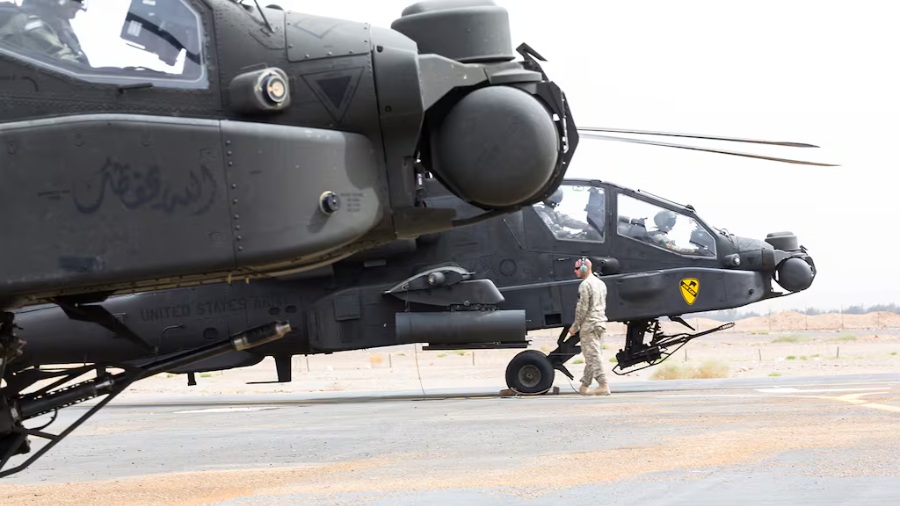
Click to see full-size image. (Sgt. Harley Jelis/Army National Guard)
Yemen’s Houthis (Ansar Allah) announced late on October 17 that they shot down a Saudi AH-64 Apache attack helicopter near the border with the kingdom’s southern province of Najran.
In a statement, Brig. Gen. Yahya Saree, the movement’s military spokesman, said the American-made helicopter had been targeting Houthi positions along the border.
“Our armed forces, with the help and grace of God, managed to shoot down an Apache belonging to the Saudi enemy opposite Najran while it was carrying out hostile actions against our forces’ positions along the border,” Saree said. “It was shot down with a suitable weapon.”
The Houthis operate a range of air defense systems, from man-portable weapons to interceptors and medium-range surface-to-air missiles.
The Apache is Saudi Arabia’s principal attack helicopter, with a modernized AH-64E estimated to cost about $52 million per helicopter according to recent U.S. Army procurement figures.
Open-source inventories list 22 Apaches with the Royal Saudi Land Forces and 12 others with the Saudi Arabian National Guard.
The announcement came just days after the Houthis said they had struck a Saudi Eurofighter Typhoon fighter jet over Yemen’s Saada province. The group later released footage showing a missile hitting the jet during flight, supporting its claim.
Including the latest claim, the Houthis have announced 18 shootdowns since the start of the ongoing confrontation with Saudi Arabia. Aside from an American-made F-15SA fighter jet, all other warplanes shot down by the Houthis were combat drones.
L’Iran et le Pakistan sont pleinement engagés dans la construction d’un ordre financier post-américain à la croisée du Moyen-Orient et de l’Asie du Sud.
Allons droit au cœur du sujet : après avoir soigneusement examiné l’échiquier, les dirigeants politiques et militaires de Téhéran sont déjà parvenus à la conclusion qu’une attaque conjointe américano-israélienne, dont la planification avance à un rythme effréné, est inévitable.
Ils se positionnent donc désormais comme un cobra lové, prêt à frapper et à injecter son venin mortel au premier signe d’une menace imminente du syndicat Epstein — sans même attendre une attaque effective.
Cette offensive préventive, dont les contours sont déjà tracés, sera dévastatrice ; elle s’étendra au-delà des bases américaines au Moyen-Orient vers d’autres cibles régionales, et pourrait notamment inclure les infrastructures énergétiques du Golfe ainsi que les câbles sous-marins (ce qui, dans ce cas, affecterait principalement le Golfe et l’Inde, bien plus que les États-Unis et l’Europe).
Nous sommes en présence d’un danger clair et immédiat : une opération militaire américano-israélienne destinée à exercer une pression sera certainement interprétée à Téhéran comme le début d’une attaque.
Ainsi, la pression en faveur de la guerre exercée par le «culte de la mort» et par Trump se heurte désormais à un seuil de tolérance iranien dangereusement bas. Les options de frappe du Pentagone vont des installations nucléaires iraniennes aux infrastructures énergétiques.
Il va sans dire que le «sociopathe en chef» — déjà en pleine panique face à la débâcle imminente des élections de mi-mandat — est une proie facile pour le puissant lobby sioniste pro-guerre et ses donateurs. Le danger stratégique suprême réside donc dans le fait que cette pression incessante puisse envoyer un signal que Téhéran interpréterait comme une attaque imminente, même si Washington affirme publiquement qu’aucune frappe n’aura lieu avant les élections de mi-mandat.
Le Yémen fait passer la situation à un niveau supérieur
Parallèlement, des sources privilégiées à Islamabad confirment le succès d’un essai de missile pakistanais à Mach 7, d’une portée de plusieurs milliers de kilomètres. Cette nouvelle capacité a tout ce qu’il faut pour modifier concrètement l’équilibre des pouvoirs au Moyen-Orient, en renforçant la portée dissuasive du Pakistan et sa capacité à influencer tous les calculs de sécurité régionaux, tout en approfondissant les liens du Pakistan avec la Chine, l’Iran et les pétro-monarchies du Golfe.
Et voici une autre exclusivité : des membres des services de renseignement militaire israéliens, notamment un général de division, ont quitté Riyad après que MbS, dans un prétendu moment de lucidité, eut dit «non» à l’offre d’»assistance» de la secte de la mort. Et pourtant, plus de 100 membres du CENTCOM sont toujours sur place.
La décision de MbS lui a peut-être été imposée par la Turquie et le Pakistan — les deux autres signataires de l’Alliance de défense de La Mecque, qui se sont soudainement retrouvés dans la même salle de crise à Riyad, côte à côte avec des agents de la secte de la mort.
Si leur départ a peut-être écarté un risque d’escalade, les agents américains restent révélés : toute frappe, d’où qu’elle vienne, faisant des victimes américaines entraînera immédiatement Washington dans la guerre entre l’Arabie saoudite et Ansarallah.
La guerre entre l’Arabie saoudite et Ansarallah atteint en effet un nouveau niveau de volatilité. Le mélange explosif constitué par l’interception d’un missile de croisière au-dessus de la province de Médine, les interceptions de drones ailleurs en Arabie saoudite et les frappes de missiles des forces armées yéménites contre le complexe présidentiel du gouvernement fantoche d’Aden n’est qu’un début.
Ce qui s’est passé après qu’Ansarallah a pris pour cible Najran — l’une des provinces du sud de l’Arabie saoudite volées au Yémen en 1934 par les Britanniques — est tout à fait stupéfiant.
Un porte-parole saoudien a accusé Ansarallah d’avoir lancé un missile de croisière sur Médine. La réponse du porte-parole emblématique des forces armées yéménites, le général Yahya Saree, a été cinglante : «Nous n’avons mené aucune opération militaire visant le territoire saoudien aujourd’hui. Par conséquent, l’affirmation de l’ennemi saoudien selon laquelle Médine aurait été prise pour cible est une pure invention et un mensonge grave».
Traduction : le Yémen frappe l’une de ses anciennes provinces ; les Saoudiens se lancent dans des fausses informations à outrance, inventant de toutes pièces une attaque contre l’une des deux mosquées sacrées — sans doute en préparation d’une opération sous faux pavillon ; puis le Yémen nie aussitôt avoir frappé quelque (italiques de ma part) territoire saoudien.
Cela signifie que Sanaa déclare subtilement, pour que tout le monde comprenne, qu’elle ne mène plus d’opérations à l’étranger (italiques de ma part) sur les trois provinces : Jizan, Najran et Asir. Elle prépare déjà — psychologiquement et opérationnellement — le terrain pour récupérer son territoire volé.
Tout cela se résume dans cette analyse yéménite succincte de la déconstruction de la fastueuse Maison des Saoud :
«Le Yémen sape les piliers ultra-fragiles de l’économie non pétrolière sur lesquels les pirates du désert ont fondé tous leurs espoirs : l’image, les investissements (IDE), l’évasion de la réalité, ainsi que l’impunité et l’invulnérabilité face au terrorisme à l’étranger».
Comment le Pakistan et l’Iran contournent le FMI
Prêtez maintenant attention à un événement assez surprenant qui s’est produit en milieu de semaine à Bangkok, lors de la réunion annuelle du FMI et de la Banque mondiale — dûment accueillie par des manifestations de rue en Thaïlande.
Le gouverneur de la Banque centrale d’Iran, Abdolnaser Hemmati, a rencontré le gouverneur de la Banque centrale du Pakistan, Jameel Ahmad, en marge de ce rituel annuel de premier plan à la gloire du dollar américain.
Le Pakistan est soumis à la poigne de fer des ajustements structurels imposés par le FMI et la Banque mondiale — et, pour couronner le tout, menacé de sanctions américaines parce qu’il entretient des relations commerciales avec l’Iran.
Le fait que le Pakistan et l’Iran discutent de facto de la dédollarisation au cœur même de la tanière du lion — le temple du dollar américain — n’a donc pas de prix.
L’infrastructure est en place depuis 2023, grâce à un accord de swap de devises utilisant le rial et la roupie à la place du dollar américain. Le troc est géré par les deux banques centrales, et les flux bancaires transitent par la Banque Melli en Iran et la Banque Mellat au Pakistan. Leurs marchés frontaliers — au moins six d’entre eux — sont en plein essor : des routes commerciales physiques qui contournent complètement le dollar américain.
Ce dont ils discutaient à Bangkok en début de semaine, c’est la manière d’étendre ce système : ils se moquent éperdument des sanctions secondaires américaines. D’autant plus que Téhéran offre à Islamabad ce que le système américain ne peut tout simplement pas offrir : la souveraineté, pas de changement de régime, pas d’austérité, pas de leçons de morale et, surtout, pas d’ajustement structurel.
Sans compter que le Pakistan a cruellement besoin du gaz iranien — et des routes commerciales de la nouvelle Route de la soie rendues possibles par la Chine.
L’Iran a bâti toute une économie en contournant complètement le FMI — et capable de survivre à un tsunami de sanctions, à un blocus et à la guerre.
Aujourd’hui, l’Iran et le Pakistan sont en pleine construction d’un ordre financier post-américain à la croisée du Moyen-Orient et de l’Asie du Sud — avec des swaps de devises, du troc, des marchés frontaliers en plein essor et des canaux bancaires adaptés, tournant ainsi en dérision les sanctions secondaires.
Soit dit en passant, cela se produit au moment même où un immense train iranien, chargé de pétrole brut — et le premier d’une longue série —, s’apprête à partir pour… la Chine via l’Asie centrale, sur la ligne ferroviaire de la «nouvelle Route de la soie» construite par la Chine.
Le cobra lové est peut-être prêt à frapper. Mais le cobra, depuis des temps immémoriaux, adore aussi faire des affaires.
Among the drones it produces are the Sarych, which uses video and thermal imaging equipment for surveillance, and the Klin, a loitering munition designed to strike targets, according to Ukraine's military intelligence agency.
Macron é, hoje, muito possivelmente, o presidente mais impopular do planeta, contando com apenas 15% de aprovação, segundo uma enquete Ipsos BVA-Cesi. Sob seu comando, a França se depara com a estagnação econômica (crescimento de 0,6% em 2025) e com o endividamento (120% do PIB). Sob Macron, a França viu também a desindustrialização acelerada do país, com as indústrias correspondendo a apenas 9% do PIB, menor patamar da União Europeia, e não surpreendentemente, o poder de compra despencou, com metade dos franceses dizendo que sua renda dá apenas para o essencial e apenas 70% dos cidadãos em idade ativa ocupando um posto de trabalho, atualmente.
Como se isso já não fosse o bastante, em aproximadamente 10 anos de governo Macron, aproximadamente 4 milhões de imigrantes entraram no país (muitos dos quais não trabalham, mas recebem benefícios sociais); quantia que torna impossível a absorção econômica bem como a assimilação etnocultural dos recém-chegados. Naturalmente, ao descontrole imigratório estão vinculadas taxas de criminalidade, favelização de centros urbanos e aumento das tensões sociais. Muitos franceses étnicos sentem-se demograficamente substituídos em sua terra natal, e não por acaso, tudo indica que Marine Le Pen ganhará (finalmente) as eleições presidenciais francesas em 2027.
Não sabemos quais seriam os resultados de uma presidência Le Pen e é razoável ser cético a respeito, mas claramente o atual curso da França é perigosíssimo, inclusive em sua política externa.
Gradualmente, nos últimos 2 anos, começaram a aparecer inúmeros sinais de que Macron estaria preparando o país para uma guerra com a Rússia. O governo francês criou um serviço militar voluntário e aprovou a expansão das forças armadas permanentes a 275 mil homens, bem como um aumento orçamentário para a defesa. O general Fabien Mandon, do Estado-Maior, afirmou em 2025 que a França deveria se preparar para um conflito de alta intensidade com a Rússia no prazo de três a quatro anos, e agora em setembro de 2026 Macron declarou que a França “poderia” se tornar alvo de drones explosivos. Constantemente, também, se ouve discursos sobre a necessidade de transformar a economia francesa numa “economia de guerra”.
Por isso, talvez seja surpreendente para muitos (mas não para nós) que em meio a tudo isso que tem acontecido no país, o governo Macron ainda encontre tempo para a implementação de um aparato de censura e repressão de níveis totalitários.
Sua nova vítima é a associação Egalité et Réconciliation (Igualdade e Reconciliação), criada pelo sociólogo e escritor Alain Soral. A associação se identifica como “nacionalista de esquerda” e tem como principal slogan “esquerda do trabalho, direita dos valores”, apelando a uma superação da falsa dicotomia entre esquerda e direita e, ainda mais importantemente, por uma reconciliação nacional entre todos os setores sociais; em anos recentes, ela esteve envolvida nas manifestações dos Coletes Amarelos, em algumas atividades ligadas ao partido Reagrupamento Nacional (apesar de, simultaneamente, manter uma postura de “crítica construtiva” contra certas tendências sionistas e liberais presentes no partido) e à militância pró-Palestina.
Ocorre que, no dia 9 de outubro, o Ministro do Interior do governo de Macron, Laurent Nuñez, anunciou a abertura de um procedimento de dissolução contra a associação Egalité et Réconciliation, sob a acusação de “extremismo político”. A sua equipe jurídica recebeu um prazo de 1 semana para se defender, e a decisão a respeito deve ocorrer, ainda, em outubro.
O próprio Alain Soral é uma figura de elevado espírito inconformista, razão pela qual já foi vítima de incontáveis perseguições judiciais – dezenas de fato – majoritariamente por “delitos de opinião”, ou seja, por comentários críticos contra pessoas específicas ou “minorias protegidas”. Em condenações, Soral já acumulou milhões de euros a serem pagos em indenização para ONGs globalistas diversas, soma obviamente impagável, bem como já foi encarcerado algumas vezes, também pelos mesmos motivos. A perseguição judicial foi tão intensa que Soral teve que se exilar de sua pátria, primeiro na Suíça e depois na Rússia.
Agora, para além das justificativas oficiais, por qual motivo o Estado francês baniria uma organização relativamente pequena e de poucos recursos financeiros?
É possível analisar o “ângulo” da presença de Alain Soral na Rússia, em mais de um sentido. Primeiro, porque ao estar na Rússia Soral finalmente tornou-se imune à constante perseguição judicial e às ameaças de prisão que ele sofria na França, ao mesmo tempo em que seguia tomando parte ativa no debate político e cultural francês, mesmo à distância. Nisso, ele era capaz de exercer e expandir a sua influência, “sob a proteção dos russos”, o que certamente alimenta as típicas paranoias atuais da elite francesa sobre uma “guerra informacional” russa.
Existe, porém, também um aspecto interno. Recentemente, Alain Soral voltou a ser bastante comentado pela mídia francesa por dois motivos. Um é o “caso Bardella”, o qual diz respeito à descoberta de supostos escritos “politicamente incorretos” de Jordan Bardella, presidente do partido Reagrupamento Nacional, e à informação de que em sua juventude a principal influência intelectual de Bardella era Alain Soral. O segundo é uma pesquisa de opinião indicando que 15% dos homens franceses com menos de 35 anos de idade se identificam com as ideias de Soral.
Isso às vésperas das eleições presidenciais representa um risco significativo para Macron e para o establishment francês. Ainda que, aparentemente, não haja chance de vitória para qualquer candidato contra Le Pen, não podemos duvidar da possibilidade de manipulação do processo eleitoral, tal como aconteceu na Romênia.
Esse silenciamento é ainda mais preocupante pelo fato de que Soral e o E&R serem praticamente os únicos personagens socialmente e culturalmente relevantes na França hoje que defendem a reconciliação nacional e que evitam a incitação do tensionamento interno, promovido pelos elementos mais islamofóbicos do RN e pela própria liderança do LFI de Mélenchon com seu “exército” de antifas e imigrantes.
“Cobertor, edredom, é melhor tirá-lo do armário”. Massa de ar polar em altitude afeta sobretudo o interior de Portugal continental. Uma grande mudança da circulação atmosférica. “Cobertor, edredom, é melhor tirá-lo do armário”. A análise de Filomena Martins, na rádio Observador, aponta claramente para uma descida de temperaturas nos próximos dias. E não só: há chuva e mesmo trovoada no horizonte. Para este sábado já se previam trovoadas para Castelo Branco e Portalegre, além de chuva no interior Norte e Centro, além de aguaceiros no Minho também. Neste domingo, dia 18, a possibilidade de chuva passa a ser no Sul:
STARK warnings from artificial intelligence researchers that advanced forms of the technology could wipe out humanity have raised questions over whether governments are moving fast enough to regulate it.
What are the potential dangers of “superintelligent” computer systems, and should we be worried?
AI experts have long described the threat as critical.
In 2023, hundreds of AI scientists and industry figures, including the heads of top US labs, signed a “statement on AI extinction risk” calling for the issue to be treated as seriously as pandemics or nuclear war.
If an out-of-control future AI deems that humans are obstructing its goals, it could use robots to “synthesise and spread novel pathogens”, said Stuart Russell, computer science professor at the University of California, Berkeley.
Or it could “convince people to initiate nuclear war, including by hacking into early warning systems”, Russell, a prominent voice on AI safety, said.
Such existential fears do not concern current AI systems, he said. But as the technology improves, it could take lethal action beyond our understanding, such as by removing oxygen from the atmosphere.
“We are less intelligent than superintelligent AI. If you ask chimpanzees how humans could wipe them out, they probably wouldn’t be able to give you all the right answers.”
In the meantime, “in the next year or two, I think the risk is higher from human misuse”, Russell added, such as an AI-enabled terror attack.
“The stakes are well-understood,” Jacob Coxon, a 27-year-old researcher, wrote on X last week, announcing his resignation from US AI startup Anthropic.
“But they are locked in a race to get there first,” he added, saying that Anthropic “believes no one else will act responsibly, so they must do it themselves”.
Anthropic this year removed a pledge from its safety charter to halt development of its models if it failed to control their risks.
It argued that if it unilaterally paused its work, its less cautious rivals would dominate the industry, making it less safe overall.
“The people building AI earnestly believe that it could kill us all by the end of the decade,” said Coxon, who previously worked at ChatGPT maker Open-AI.
He accused both companies of “gambling with our lives” as they strive to develop AI models capable of self-improvement.
Fears are heightened over rogue AI after OpenAI technology operating outside human supervision hacked into Hugging Face, a repository of AI models.
“We really do earnestly believe AI could kill all humans!” Anthropic safety executive Evan Hubinger chimed in on X, estimating the risk at more than 10 per cent over the next decade.
It’s important to remember that doom-laden percentage predictions are “absolutely unscientific”, said Hussein Abbass, a computing professor at UNSW Canberra.
“The situation is still controllable, and it can be managed,” Abbass said.
But governments should not sit on their hands when it comes to regulating AI, he added, urging an “agile” approach as AI development accelerates.
Both Anthropic and OpenAI are expected to go public soon, and some sceptics say scary warnings make AI appear powerful and worthy of large investments.
Others argue that focusing on the risk of extinction distracts from more pressing problems caused by AI, from job losses to machines discriminating against minorities.
In July, more than 1,000 tech employees, including Anthropic’s CEO, called on Washington to support a coordinated slowdown in the development of the most advanced AI systems.
OpenAI halted training of its latest models for two weeks in August before resuming it under tighter controls.
The United States has been firmly against global regulation of the sector that could stifle innovation.
But the hacking capabilities of the most cutting-edge models have given Washington pause, with recent Anthropic and OpenAI releases delayed over national security concerns.
Even then, “we don’t want to restrict them where all of a sudden we come in second to China”, President Donald Trump has said.
“Maybe it will take a massive, Chernobyl-scale disaster to get governments to act,” Russell said, urging them to establish a licensing regime for AI, as exists with aviation, medicine or water supply.
“Perhaps at some point governments will remember that their voters prefer not to be dead.”
Edgardo Pinell analiza con Natalia Molano, Vocera del Departamento de Estado, la decisión del gobierno estadounidense de llamar a consultas al encargado de negocios de su Embajada en Managua. Y con el economista Juan Sebastián Chamorro se examina el negativo clima para inversiones en Nicaragua

 Login