❌

Reading view

«Acto II»: Chalecos amarillos convocan a nuevas protestas en Francia para el 24 de octubre

La organización publicó un mapa con decenas de acciones planificadas para el sábado en todo el territorio nacional contra el encarecimiento del coste de la vida. Se contabilizan más de 70 convocatorias
  •  

Electric Car Sales Surge 70 Per Cent as France and Germany Seek Changes to EU Emissions Rules

Registrations of fully electric cars across 17 European markets increased by 70.3 per cent in September, according to industry figures published on Monday, 19 October, as France and Germany seek to ease the European Union’s emissions requirements for new vehicles.

The data show that 300,202 battery-electric cars were registered during the month, accounting for 32.6 per cent of new passenger-car registrations in the markets surveyed.

The figures emerge three days after Paris and Berlin announced a joint position on the future of Europe’s automotive industry, proposing greater flexibility in the EU’s 2035 emissions regime while introducing measures intended to favour vehicles manufactured in Europe.

Electric vehicles gain market share

The latest figures, compiled by E-Mobility Europe, New Automotive and Fier Automotive, indicate that electric vehicle demand accelerated sharply during September.

According to the industry data published on 19 October, approximately 1.98 million battery-electric cars have been registered across the 17 markets during the first nine months of 2026, an increase of 38.1 per cent compared with the equivalent period last year.

Higher oil prices, government incentives and the introduction of more affordable electric models have all contributed to demand.

The figures represent a substantial change in the composition of European new-car sales, although they cover selected markets rather than constituting a complete statistical account of the EU’s 27 Member States.

France recorded 65,243 battery-electric registrations in September, representing 41.7 per cent of its new-car market. Germany registered 88,724 electric vehicles, giving the technology a market share of 34.6 per cent.

Both countries have substantial automotive manufacturing industries and are directly involved in negotiations over Europe’s future emissions legislation.

Significant differences between European markets

Despite the overall increase, electric vehicle adoption remains uneven across the continent.

Norway retained its position as Europe’s most electrified new-car market, with battery-electric vehicles accounting for 98.8 per cent of registrations in September.

Denmark followed with 88.8 per cent, while Finland recorded 62.7 per cent and Sweden 49 per cent.

Electric models also accounted for approximately half of new-car registrations in Belgium, the Netherlands, Ireland and Portugal.

At the other end of the market, battery-electric vehicles represented only 11.2 per cent of registrations in the Czech Republic, 7.6 per cent in Italy and 6.2 per cent in Poland.

These differences illustrate the difficulty of establishing a uniform European transition timetable.

Household incomes, purchase incentives, vehicle prices and charging infrastructure differ substantially between countries. The availability of affordable electric cars is particularly important in markets where buyers are more sensitive to the initial purchase price.

The varying national figures also complicate the EU’s industrial calculations, since manufacturers must operate across markets progressing at different rates.

France and Germany reach automotive compromise

On 16 October, French President Emmanuel Macron and German Chancellor Friedrich Merz agreed on a joint approach to changes in European automotive regulations.

Under the proposed compromise, car manufacturers would be required to reduce carbon dioxide emissions from new vehicles by 90 per cent by 2035 compared with the 2021 reference level.

The agreement would also remove a proposed requirement to compensate for the remaining emissions through measures such as the use of low-carbon steel.

The change would create additional opportunities for manufacturers to continue selling vehicles powered by combustion engines beyond 2035, subject to the final legislative framework.

In their joint declaration on the automotive industry’s future, the French and German governments argued that emissions reduction must be combined with industrial competitiveness, investment and European manufacturing capacity.

The agreement also envisages preferential treatment for vehicles produced in Europe under certain public procurement and subsidy arrangements.

Britain could potentially benefit from provisions allowing selected European partners to qualify under the proposed industrial framework.

The Franco-German understanding is not, however, a final EU legislative decision. Changes to the regulatory regime require agreement through the relevant European legislative procedures.

Automotive competitiveness enters the debate

The principal argument advanced by supporters of greater regulatory flexibility is that European manufacturers need additional time to adapt production, protect employment and compete with international rivals.

German manufacturers retain extensive investment in combustion-engine and hybrid technology, while French producers have placed considerable emphasis on electric vehicles and maintaining European supply chains.

The negotiations therefore concern more than emissions limits. They also involve battery production, access to raw materials, manufacturing costs and the ability of European companies to compete with producers in China and other markets.

Supporters of the existing transition timetable argue that weakening long-term requirements could discourage investment in electric manufacturing capacity just as consumer demand is increasing.

Manufacturers seeking greater flexibility maintain that regulatory targets must account for uneven market conditions and the cost of developing new technologies.

September’s sales figures provide evidence that electric vehicle adoption is accelerating, but they do not establish whether the same rate of growth will continue without existing incentives.

The debate now centres on whether regulatory relaxation will preserve Europe’s automotive industry during the transition or slow investment in the technology that is already capturing an increasing share of the market.

  •  

The Guardian view on France’s protests: a polarised country is in a perilous political moment | Editorial

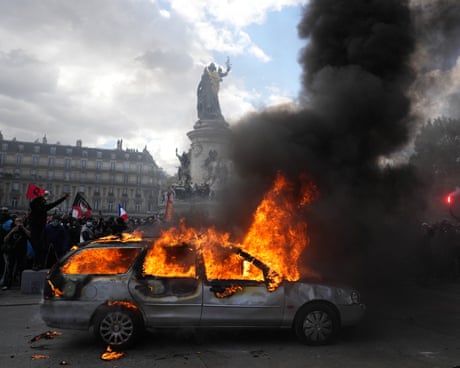
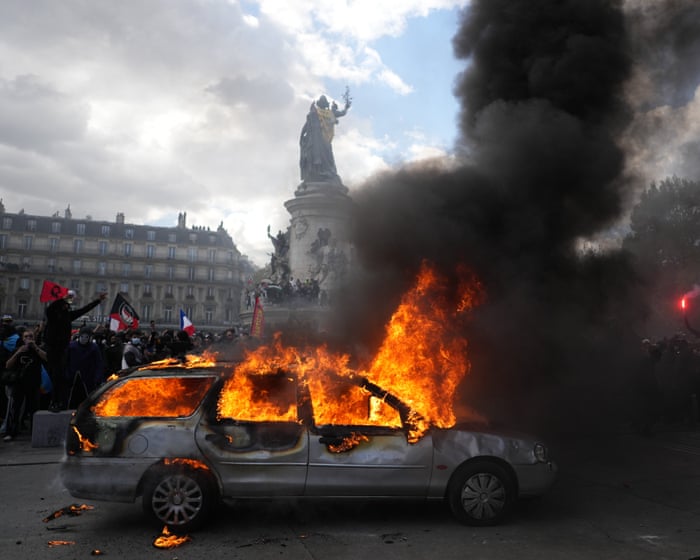
The scenes of social unrest and violence at the weekend are an ominous portent, ahead of elections which may deliver a far-right presidency

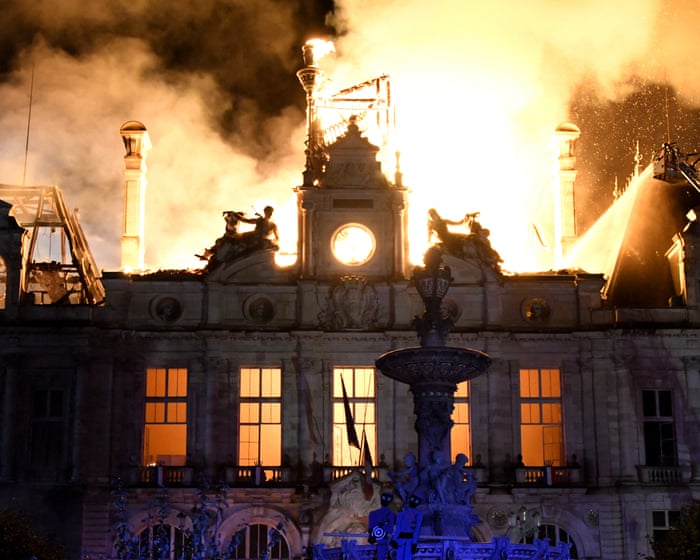
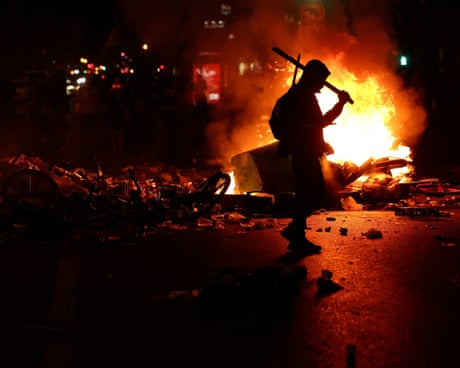
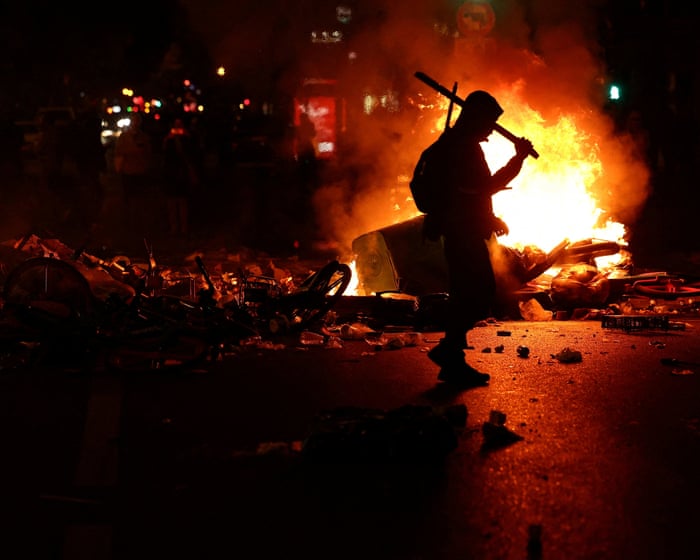
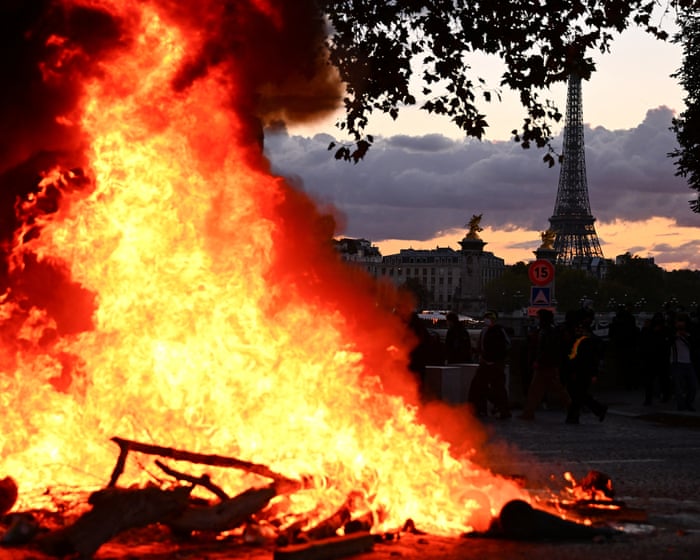
In Emmanuel Macron’s book Revolution, published ahead of the 2017 presidential election that he went on to win, he promised to restore hope to a country that was losing faith in its future. As Mr Macron’s lame-duck second term enters its last phase against a quasi-insurrectionary backdrop of torched public buildings and looted shops, the failure of that political project appears total.

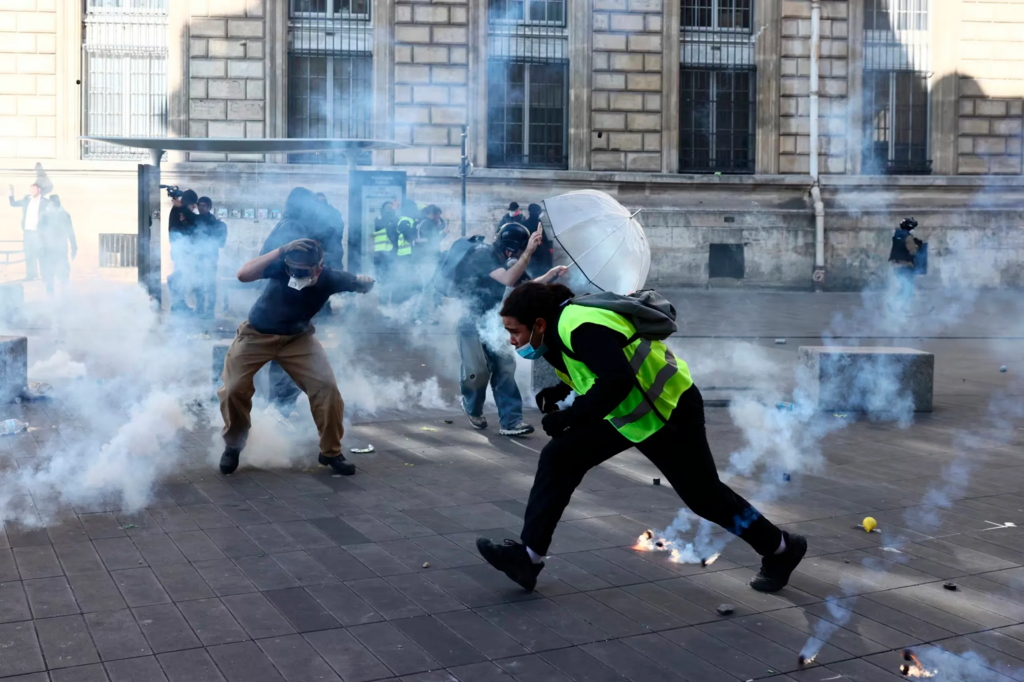
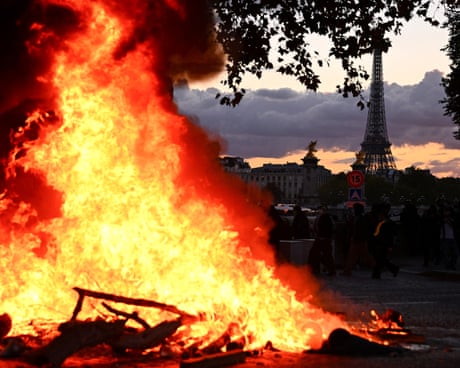
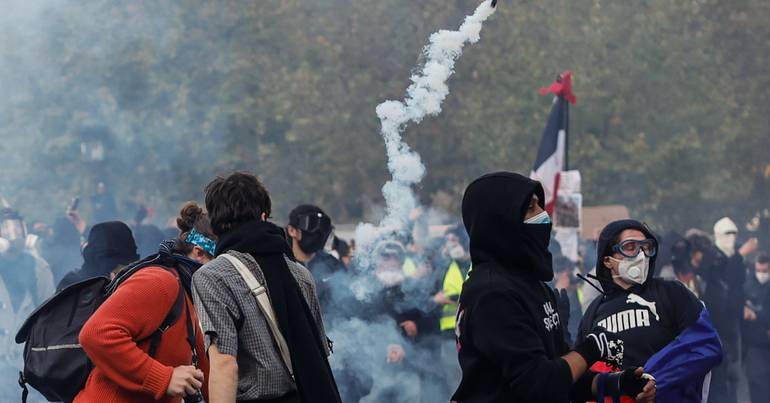
The worst scenes of urban violence for years overshadowed a weekend of protest that gravely undermined what is left of the French president’s authority. As police lost control of the streets, more than 2,000 shops were ransacked. Far-left groups targeted town halls and local buildings, and engaged in pitched battles with the police, whose disastrously heavy-handed response to last week’s high school protests has succeeded only in escalating tensions.

Do you have an opinion on the issues raised in this article? If you would like to submit a response of up to 300 words by email to be considered for publication in our letters section, please click here.

Continue reading...

© Photograph: Thibault Camus/AP

© Photograph: Thibault Camus/AP

© Photograph: Thibault Camus/AP

  •  

Ferocious criticism from all sides underlines Macron’s isolation

French president has compounded impression of arrogance with strategic errors – and consequences could be profound

The near-universal chorus of condemnation that greeted Emmanuel Macron’s address to the nation on Sunday, after one of the most violent days of rioting and looting in France’s recent history, was a stark reflection of just how weakened he now is.

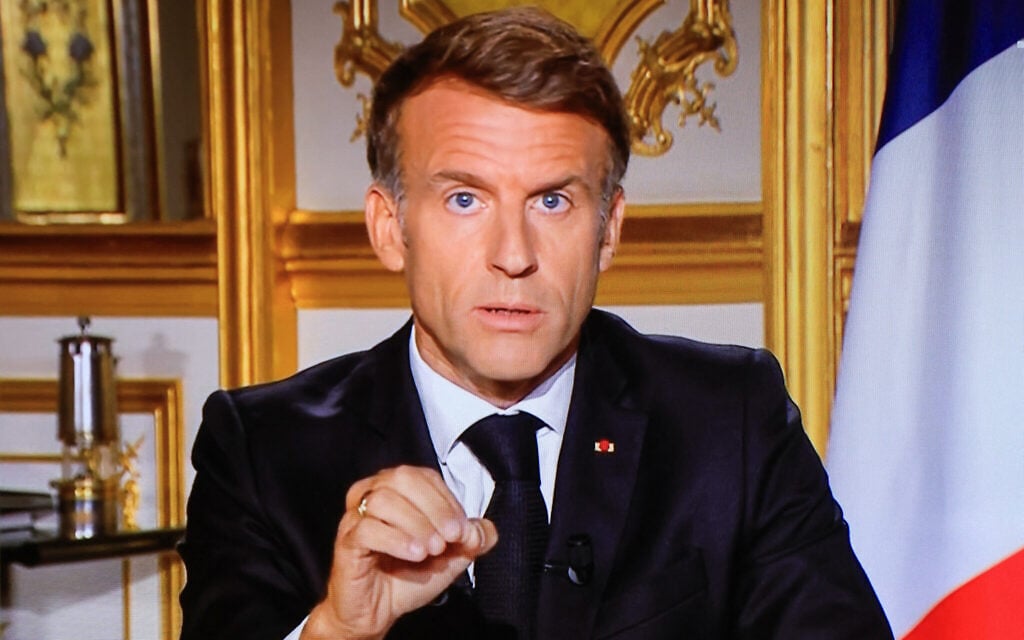
Speaking from his office at the Élysée Palace, the president delivered an eight-minute speech expressing “anger and shame” after a weekend in which a town hall was set ablaze, 2,000-plus shops were looted, 2,300 people were arrested and 1,000 police injured.

Continue reading...

© Photograph: Benoît Tessier/AFP/Getty Images

© Photograph: Benoît Tessier/AFP/Getty Images

© Photograph: Benoît Tessier/AFP/Getty Images

  •  

France protests escalate with riots, looting and 2,400 arrests – The Latest

Last weekend there were mass protests across France, with more than half a million people estimated to have been involved. The unrest included rioting, looting and violent clashes with outnumbered police in cities including Paris, Marseille and Limoges. The interior minister conceded that police ‘lost control’ in some cities, while President Emmanuel Macron demanded a full security review. Lucy Hough speaks to the Guardian’s Europe correspondent, Jon Henley – watch on YouTube

Continue reading...

© Photograph: Pascal Lachenaud/AFP/Getty Images

© Photograph: Pascal Lachenaud/AFP/Getty Images

© Photograph: Pascal Lachenaud/AFP/Getty Images

  •  

France protests escalate with riots, looting and 2,400 arrests - The Latest

Last weekend there were mass protests across France, with more than half a million people estimated to have been involved. The unrest included rioting, looting and violent clashes with outnumbered police in cities including Paris, Marseille and Limoges. The interior minister conceded that police ‘lost control’ in some cities, while President Emmanuel Macron demanded a full security review. Lucy Hough speaks to the Guardian’s Europe correspondent, Jon Henley – watch on YouTube

Continue reading...

© Photograph: Guardian Design

© Photograph: Guardian Design

© Photograph: Guardian Design

  •  

França enfrenta onda de violência e governo prepara toque de recolher em cidades

O governo francês anunciou medidas para conter a onda de violência que atingiu diversas cidades do país após manifestações contra o aumento do custo de vida e a deterioração dos serviços públicos. Nesta segunda-feira (19), o primeiro-ministro Sébastien Lecornu pediu que prefeitos adotem toques de recolher em áreas consideradas críticas, enquanto o presidente Emmanuel Macron determinou uma revisão das estratégias de segurança.

Os protestos reuniram mais de 500 mil pessoas no fim de semana, segundo os dados apresentados no balanço das manifestações. Em diferentes cidades, atos inicialmente pacíficos terminaram em confrontos, incêndios, invasões de prédios públicos e saques a estabelecimentos comerciais. Um manifestante morreu, quase mil agentes de segurança ficaram feridos e cerca de 2.400 pessoas foram detidas.

A dimensão dos distúrbios levou o governo a discutir restrições à circulação noturna e à realização de manifestações. Lecornu afirmou que as medidas serão definidas em conjunto com os representantes locais. Marselha já proibiu aglomerações e manifestações entre meio-dia e 20h, enquanto Denain, próxima à fronteira com a Bélgica, estabeleceu toque de recolher noturno até domingo.

O primeiro-ministro descartou, por enquanto, decretar estado de emergência, medida defendida pelo líder dos Republicanos, Bruno Retailleau. Lecornu, no entanto, não excluiu a possibilidade de recorrer ao mecanismo caso as restrições locais não sejam suficientes para conter a violência.

França enfrenta onda de violência e governo prepara toque de recolher em cidades
França tem onda de protestos, incêndios e 272 prisões em apenas um dia | Foto: Rede social

Macron cobra revisão da segurança

Diante da escalada dos confrontos, Macron reconheceu falhas na condução da resposta policial e determinou uma revisão dos procedimentos adotados pelas forças de segurança. O presidente pediu novas estratégias operacionais para impedir a formação de barricadas, os saques e os ataques a estabelecimentos e edifícios públicos.

O ministro do Interior, Laurent Nuñez, admitiu que as autoridades perderam o controle da situação em algumas cidades. Segundo ele, os aproximadamente 60 mil policiais e agentes mobilizados no sábado não conseguiram conter todos os grupos envolvidos nos episódios violentos.

Macron também recusou o pedido de demissão apresentado por Nuñez e cobrou esclarecimentos sobre as falhas de prevenção e inteligência que permitiram a expansão dos distúrbios. Apesar das restrições anunciadas, o ministro afirmou que as medidas não devem afetar a partida entre Paris Saint-Germain e Barcelona, prevista para terça-feira (20), pela Liga dos Campeões.

Manifestações contra o alto custo de vida e a crise na educação se espalham pela França | Foto: Rede social

Louvre fecha as portas após bloqueio

Em Paris, o Museu do Louvre amanheceu fechado nesta segunda-feira após um bloqueio organizado por estudantes da École du Louvre. A direção da instituição confirmou a interrupção das atividades e informou que o fechamento ocorreu em razão da mobilização estudantil.

O movimento também chegou à Sciences Po, universidade localizada no centro da capital, onde estudantes realizaram concentrações e bloquearam acessos. Os atos fazem parte de uma onda de manifestações iniciada semanas antes, com reivindicações por melhores condições nas escolas.

No fim de semana, a mobilização ganhou escala nacional e foi acompanhada por episódios de violência em Paris, Marselha, Lyon e outras cidades. Prédios públicos foram invadidos, uma prefeitura foi incendiada e estabelecimentos comerciais sofreram depredações e saques. Veículos, bicicletas e patinetes também foram queimados.

O impacto econômico preocupa o setor comercial. Mais de 2 mil lojas foram atingidas em todo o país, com prejuízos estimados em centenas de milhões de euros, segundo Alain Di Crescenzo, presidente da Câmara de Comércio. Somente na capital francesa, aproximadamente 400 estabelecimentos foram depredados.

Protesto fecha Louvre, e governo anuncia toques de recolher para conter onda de violência na França | Foto: Divulgação/Rede social

Crise amplia pressão política sobre Macron

A onda de violência também intensificou a disputa política na França, a poucos meses de uma eleição presidencial que não poderá contar com Macron como candidato à reeleição. Marine Le Pen, líder do partido de ultradireita Reunião Nacional, aparece em posição de destaque nas pesquisas de intenção de voto.

Lecornu acusou setores da ultr esquerda de tentar ampliar a instabilidade no país. Le Pen, por sua vez, responsabilizou o partido de Jean-Luc Mélenchon por, segundo ela, legitimar a violência. À esquerda, críticos do governo afirmam que Macron negligenciou as reivindicações sociais que deram origem aos protestos. Já representantes da direita defendem uma reação mais rigorosa contra os responsáveis pelos ataques.

Em artigo publicado no jornal Libération, os prefeitos de Paris, Marselha e Lyon cobraram explicações do governo sobre a preparação das forças de segurança. Os três gestores, ligados à centro-esquerda, afirmaram que a dimensão dos acontecimentos surpreendeu as administrações locais e expôs falhas na proteção de áreas inteiras das cidades.

A crise coloca o governo diante de um duplo desafio: conter os atos de violência e responder às reivindicações que mobilizaram centenas de milhares de pessoas. Enquanto as autoridades avaliam novas restrições, a capacidade de restabelecer a segurança sem ampliar a tensão política permanece no centro do debate nacional.

The post França enfrenta onda de violência e governo prepara toque de recolher em cidades appeared first on Diário da Manhã - O Jornal do leitor Inteligente.

  •  

France imposes partial curfews in several cities, including parts of Paris

Interior minister concedes police ‘lost control’ of weekend protests as PM vows to restore public order

Partial curfews have been issued for a number of French cities, including parts of Paris, after the government admitted police had “lost control” during violent weekend protests around the country.

Sébastien Lecornu, the French prime minister, said after an emergency cabinet meeting on Monday he was “fully resolved to restore public order” and had called for “local and partial” curfews if needed. There was “no question” of imposing a full curfew on entire cities, he said.

Continue reading...

© Photograph: Abdul Saboor/Reuters

© Photograph: Abdul Saboor/Reuters

© Photograph: Abdul Saboor/Reuters

  •  

França: ministro admite que polícia perdeu o controlo

Laurent Nuñez pediu a demissão mas Emannuel Macron recusou. Presidente de França expressa “raiva” e “vergonha” da população. O ministro do Interior francês reconheceu hoje a “perda de controlo” por parte das forças de segurança em algumas das principais cidades do país, no sábado, durante os protestos contra o elevado custo de vida, marcados pela violência e pilhagens. Laurent Nuñez pediu a demissão neste domingo, mas o presidente de França, Emmanuel Macron, recusou: “Perante a necessidade de manter o comando contínuo das forças de segurança no atual cenário, o Presidente da República recusou o pedido”, informou o Eliseu. Agora, o

  •  

French authorities announce partial curfews as PM blames ‘ultra-left’ for exploiting protests – as it happened

This live blog is now closed.

French PM Lecornu says he has asked prefects to implement “a number of partial curfews” in certain “localised” urban areas to stop further disorder, which he attributes to “the extreme-left” and some criminal elements.

We will no doubt hear more on this from local authorities, as in the example of Marseille (10:32).

Continue reading...

© Photograph: Guillaume Saligot/AFP/Getty Images

© Photograph: Guillaume Saligot/AFP/Getty Images

© Photograph: Guillaume Saligot/AFP/Getty Images

  •  

França. "O que fica destas manifestações é a violência"

Já ninguém fala daquilo que levou milhares às ruas de França, é o que diz Carlos Pereira, diretor do LusoJornal. A violência apanhou de surpresa o Estado, que agora quer proteger os comerciantes.

© MOHAMMED BADRA/EPA

  •  

Macron rejeita demissão do ministro da Administração Interna

Emmanuel Macron pediu ao ministro da Administração Interna que implemente "novas táticas de atuação" para forças de segurança no combate "aos vândalos", para acabar com as barricadas e pilhagens.

© LUDOVIC MARIN / POOL/EPA

Cerca de 2.400 pessoas foram detidas no sábado em França, durante protestos contra o aumento do custo de vida
  •  

I disordini francesi mettono Macron in difficoltà e offrono un assist a Le Pen

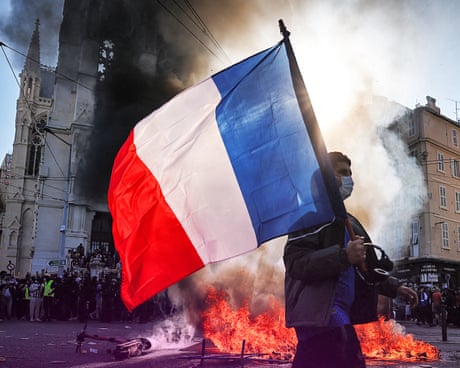
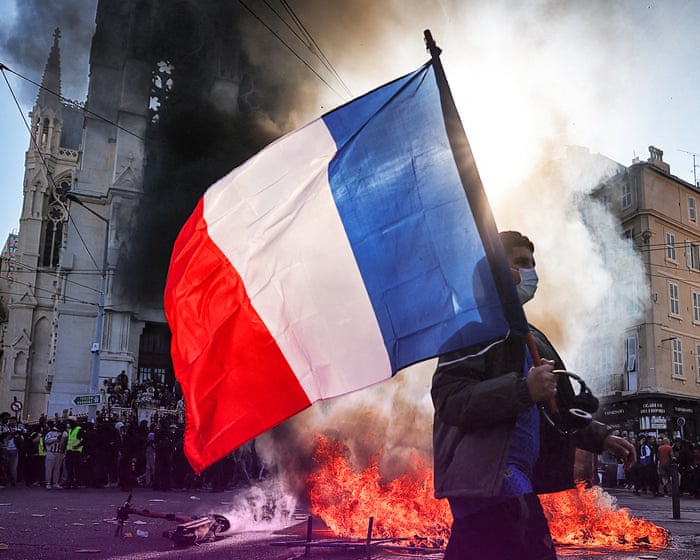
A protester holds a French flag in front of a burning tourism office during a demonstration against rising living costs and in solidarity with studentsÕ grievances in Lyon, France, Saturday, Oct. 17, 2026. (AP Photo/Laurent Cipriani) Associate Press/ LaPresse Only Italy and Spain

Le proteste contro il caro vita e le condizioni delle scuole francesi sono degenerate nei disordini più gravi degli ultimi anni. Sabato 17 ottobre, centinaia di migliaia di persone sono scese in piazza in tutto il Paese. In diverse città, gruppi di manifestanti incappucciati hanno saccheggiato negozi, incendiato edifici e affrontato la polizia. Le prime stime – qui riportate dal Financial Times – parlano di circa millecinquecento attività commerciali saccheggiate. Il bilancio della giornata ha aperto una nuova crisi per il presidente Emmanuel Macron e il premier Sébastien Lecornu, a sei mesi dalle elezioni presidenziali.

La mobilitazione era nata dall’incontro tra le proteste degli studenti, che da settimane contestano le condizioni degli istituti scolastici, e la rabbia per l’aumento del costo della vita. Ma la violenza ha rapidamente oscurato le rivendicazioni iniziali. Nella capitale, racconta Le Monde, il giorno dopo i disordini erano ancora visibili vetrine distrutte, veicoli bruciati e negozi saccheggiati. Molti cittadini intervistati dal quotidiano distinguono le richieste dei manifestanti dalle azioni dei gruppi violenti. «La gente è esasperata, c’è molta rabbia accumulata», racconta una donna, che spera che le proteste degli studenti vengano ascoltate nonostante chi cerca di sfruttare la situazione.

Il governo è finito sotto accusa per non aver previsto l’ampiezza dei disordini. Secondo il Financial Times, i servizi d’intelligence si aspettavano circa centomila partecipanti, mentre le presenze effettive sarebbero state circa cinque volte superiori. Le opposizioni contestano la gestione dell’ordine pubblico e la preparazione delle forze di sicurezza. Alcuni esperti citati dal quotidiano britannico sostengono che le autorità non abbiano valutato adeguatamente gli avvertimenti sulla possibilità di violenze. Anche la pianificazione del corteo parigino, definita soltanto alla vigilia, avrebbe reso più difficile controllare la folla.

Domenica Macron è intervenuto in televisione promettendo «piena trasparenza» sulle ragioni che hanno portato all’escalation. «Chi ha distrutto deve pagare, chi ha saccheggiato deve risarcire», ha dichiarato, annunciando che il governo lavorerà a misure concrete insieme a studenti, sindacati e parlamentari. Il ministro per le piccole imprese, Serge Papin, incontrerà i rappresentanti delle attività danneggiate per valutare gli aiuti necessari. Secondo gli ultimi dati del ministero dell’Interno, circa duemila persone sono state arrestate durante i disordini.

Lo scontro è già diventato politico. Lecornu ha accusato i gruppi dell’estrema sinistra di fomentare la violenza e ha indicato La France insoumise, il movimento di Jean-Luc Mélenchon, tra gli attori che avrebbero contribuito ad alimentare la mobilitazione. Mélenchon ha respinto le accuse e ha sostenuto che il governo abbia lasciato peggiorare la situazione, senza affrontare le cause della protesta. La destra, intanto, denuncia la perdita di controllo delle strade e chiede il ripristino dell’ordine.

La principale beneficiaria politica potrebbe essere Marine Le Pen. Il Financial Times ricorda che la leader del Rassemblement National è già in testa ai sondaggi per le presidenziali, mentre il consenso di Macron è vicino ai minimi dalla sua prima elezione. Le Pen ha descritto la situazione come una crisi di fiducia e autorità e ha promesso di riportare la calma nel Paese. Anche il suo partito ha utilizzato le immagini dei disordini per attaccare insieme il governo e la sinistra radicale.

Ma, come mostrano le testimonianze raccolte da Le Monde, la rabbia sociale non è scomparsa dietro le immagini delle devastazioni. Alcuni commercianti, pur condannando i saccheggi, riconoscono le disuguaglianze economiche e il malcontento che hanno alimentato la protesta. È questo il problema più urgente per Macron e Lecornu: ristabilire la sicurezza senza lasciare irrisolte le ragioni che hanno portato centinaia di migliaia di persone in piazza.

L'articolo I disordini francesi mettono Macron in difficoltà e offrono un assist a Le Pen proviene da Linkiesta.it.

  •  

Monday briefing: What you need to know about a weekend of chaos in France

In today’s newsletter: Violent riots and looting have dominated the headlines, but the unrest gripping the country and beyond reflects deeper public anger over everyday issues

Good morning. I bet your weekend was better than Emmanuel Macron’s. On Friday, the evening before mass protests that were planned across France, he attended a Céline Dion concert in Paris with his wife, Brigitte, prompting comparisons to Louis XVI and Marie Antoinette. On Sunday evening, he was forced to give a televised speech condemning the “unbridled violence” and riots that erupted in French cities over the weekend.

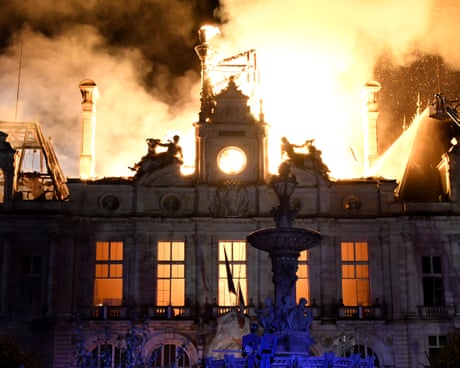
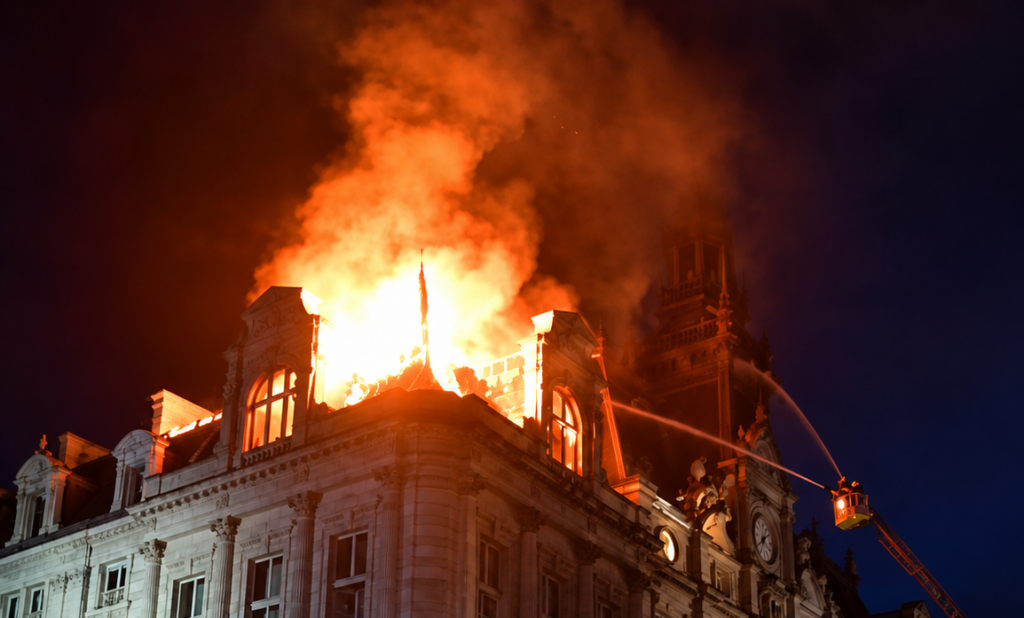
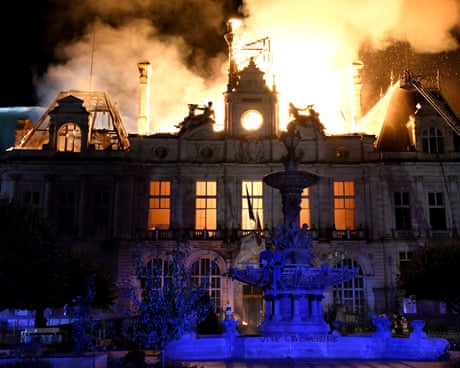
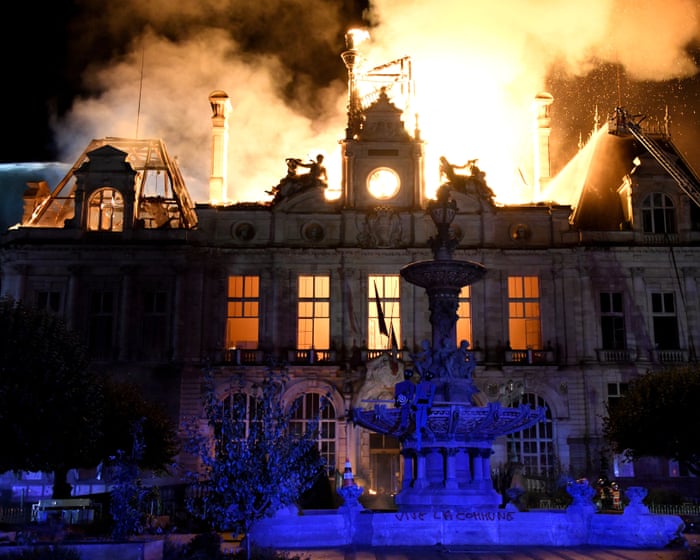
The rioters that burned makeshift barricades of bicycles in Paris, destroyed the steeple of Limoges’ town hall and set fire to Lyon’s tourism office were described as “LE CHAOS” on the front page of La Tribune Dimanche, and “SCENES D’INSURRECTION” on Le Parisien Dimanche. By Sunday, protests had also taken place in Spain, Portugal and Italy.

The Vatican | Pope Leo told a crowd gathered in St Peter’s Square on Sunday that he would “gradually resume” his activities, at his first appearance before the faithful since undergoing an operation to remove a cancerous tumour from his lung.

UK news | A “well-known individual” is trying to secure a permanent injunction against the Guardian and ITN to prevent them from publishing details of serious allegations made against him.

US politics | Donald Trump fired his immediately embattled new press secretary, Katie Zacharia, on Friday evening after just five days in the job. The conservative commentator becomes the shortest serving occupant of the role in US history.

Reform | A Reform UK mayor is under police investigation for allegedly showing “naked and sexualised” images of himself to a female member of staff. Luke Campbell, a former Olympic boxing champion, is understood to have been questioned under caution by Humberside police.

Energy | The development of a huge AI datacentre hailed by the UK government has received a fresh setback after Microsoft pulled out of the project over concerns about power supplies.

Monday | The two-week biodiversity summit, Cop17, begins in Yerevan, Armenia, as countries come together to seek to protect nature.

Tuesday | The Covid-19 inquiry publishes its report on the adult social care sector.

Sunday | Incumbent Lula da Silva takes on Flavio Bolsonaro in the run-off of the Brazil general election.

Continue reading...

© Photograph: Pascal Lachenaud/AFP/Getty Images

© Photograph: Pascal Lachenaud/AFP/Getty Images

© Photograph: Pascal Lachenaud/AFP/Getty Images

  •  

France’s Unrest Exposes the Failure of Macron’s Centrist Political Model

What began as a student protest over deteriorating schools has developed into a nationwide revolt against economic hardship, political paralysis and declining public services. With the 2027 presidential election approaching, the violence has exposed problems that neither the government nor its principal opponents have convincing plans to resolve.

France’s latest wave of unrest has developed into one of the most serious domestic crises of Emmanuel Macron’s presidency. More than 550,000 people participated in demonstrations on 17 October, according to official estimates, before violence spread through Paris and other major cities. Shops were looted, police confronted rioters, and the historic town hall in Limoges was largely destroyed by fire.

The scale of the destruction prompted emergency government consultations and a televised presidential address. Macron promised to prosecute those responsible, while stopping short of declaring a state of emergency. Yet the immediate security challenge conceals a more difficult political question: why have protests that began with relatively specific demands over education become a confrontation involving such different sections of French society?

From school protests to a national revolt

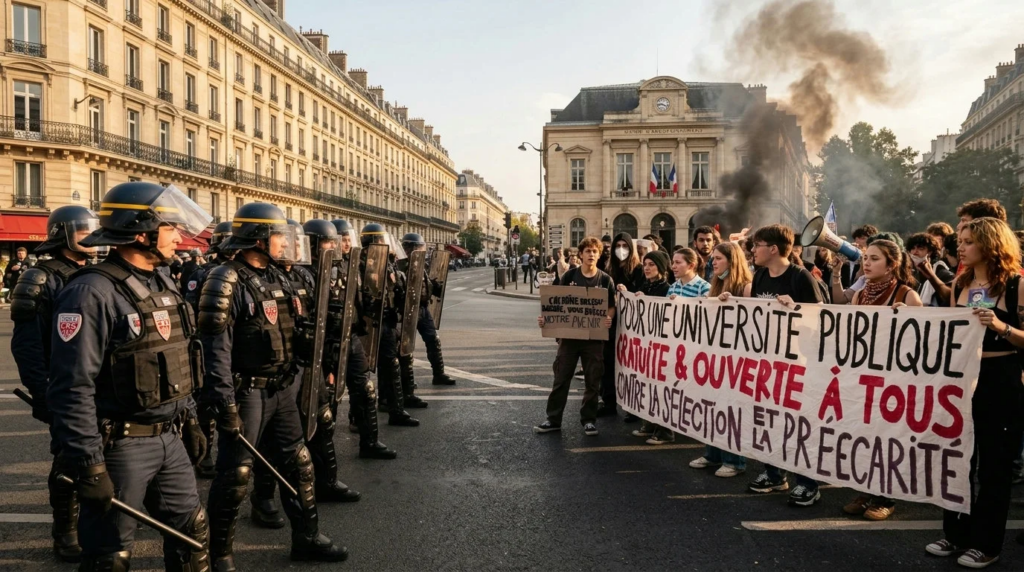
The movement originated among secondary-school students demanding better facilities, more teachers and improvements in educational standards. Their complaints subsequently attracted trade unions, workers, farmers and elements of the Gilets Jaunes, the Yellow Vest movement that challenged Macron’s government in 2018.

The resulting coalition has no coherent political programme. Students protesting overcrowded classrooms share demonstrations with workers concerned about purchasing power and motorists angered by fuel prices. Their interests are not necessarily compatible, but they reflect a common dissatisfaction with the government’s ability to deliver functioning public services while containing living costs.

This distinction matters. The presence of masked rioters and organised groups engaged in violence does not establish that the hundreds of thousands who demonstrated peacefully supported their actions. Equally, the destruction of public buildings, attacks on police and widespread looting raise legitimate questions about the state’s capacity to maintain public order.

The economic problem behind the protests

At the centre of the discontent lies a structural problem that successive French governments have struggled to confront: the distribution of public expenditure between an ageing population and the services required by younger generations.

A French government budget assessment published in October revealed that pension obligations accounted for approximately 32 per cent of the education ministry’s budget, including €28.5 billion in pension expenditure. These obligations restrict the resources available for other departmental priorities.

France nevertheless remains a substantial spender on education. According to official figures, expenditure reached €199.2 billion in 2025, equivalent to 6.7 per cent of GDP. However, after inflation, the annual increase was only 0.1 per cent.

The issue is therefore not simply how much France spends, but how efficiently resources are allocated and whether expenditure meets changing educational needs.

The OECD’s 2025 PISA assessment found that French pupils’ performance in mathematics and reading had declined compared with 2022. Results were among the country’s lowest recorded, although broadly comparable with the OECD average.

These figures give the student protests a significance extending beyond the immediate condition of classrooms. They raise questions about France’s longer-term economic competitiveness and its capacity to provide younger generations with opportunities comparable to those enjoyed by their predecessors.

The limits of Macron’s reform programme

Macron entered office in 2017 promising to modernise the French economy and overcome the traditional division between left and right. Nearly a decade later, his administration faces a fragmented parliament, constrained public finances and growing resistance to further structural reforms.

The suspension of his pension reform illustrated the difficulty. Raising the retirement age was intended to reduce pressure on the pension system, but parliamentary opposition forced the government to defer the measure until after the presidential election.

The underlying financial pressures have not disappeared. Nor can they be resolved easily through additional spending when public debt, borrowing costs and budgetary obligations already restrict the government’s room for manoeuvre.

This creates an uncomfortable political reality: the state is expected to provide better services, greater purchasing-power protection and stronger security, while the available resources remain limited.

Can the opposition benefit?

The unrest comes approximately six months before the presidential election, with Marine Le Pen’s National Rally and Jean-Luc Mélenchon’s France Unbowed competing to establish themselves as alternatives to Macron’s political centre.

Le Pen has sought to combine support for economic grievances with demands for tougher policing. That position may attract voters concerned by the violence, but it also exposes tensions within a movement that previously supported the Yellow Vest protests.

Mélenchon faces a different difficulty. Supporting demonstrations against government policy is consistent with his political programme, but the involvement of violent groups risks shifting public attention from social demands towards questions of security.

A recent presidential opinion poll even suggested that Le Pen and Mélenchon could contest the final round, illustrating the weakening position of more conventional political alternatives.

Neither, however, can escape the fiscal constraints that have frustrated Macron’s government. A change of president would not automatically provide the resources required to expand public services, reform pensions and reduce the deficit simultaneously.

A wider problem for France and Europe

President Donald Trump has attributed the French unrest to immigration, although the movement’s documented origins lie principally in education, living costs and dissatisfaction with public services. Without established evidence about those responsible for individual acts of violence, broader claims about the demonstrators’ backgrounds remain speculative.

For the European Union, France’s instability carries consequences beyond its domestic political debate. France is central to European defence, fiscal negotiations and support for Ukraine. Sustained political paralysis would complicate its ability to negotiate and implement decisions requiring substantial public expenditure.

The immediate task for Macron’s government is to restore security without allowing the legitimate grievances of peaceful demonstrators to disappear from political consideration. The more difficult task will fall to whoever enters the Élysée in 2027.

France’s crisis is not simply a repetition of the Yellow Vest movement. It reflects a growing conflict over public resources, expectations of the state and the ability of established political institutions to reconcile competing demands.

The violence may subside, but the economic contradictions that brought such different groups onto the streets will remain. The presidential election will determine who inherits them, rather than whether they exist.

  •  
❌