Footage shows major oil fire on outskirts of rebel-held capital, additional strikes within city; Iran-backed group calls for evacuation of Riyadh airport, Aramco facilities
While authorities do not possess clear evidence on who was responsible for the drone attacks, “it makes no sense for Ukraine to destroy its own ships in the Black Sea."
While authorities do not possess clear evidence on who was responsible for the drone attacks, “it makes no sense for Ukraine to destroy its own ships in the Black Sea."
Eleven sailors were missing at sea on Tuesday from a ship sunk by a drone attack off the coast of Bulgaria, possibly the second deadly sinking of a cargo vessel in the area in a week, prompting Bulgaria to summon Russia's ambassador.
South Korean President Lee Jae Myung welcomed the PanStar Acro and its crew home on Tuesday after the container ship completed the country’s first round-trip commercial trial through the Arctic to Europe, hailing the voyage as a potential alternative to traditional shipping lanes even as questions remain over commercial viability and cooperation with Russia.
Bulgaria summoned Russia’s ambassador to Sofia after two ships were hit off the country’s coast, as concerns mount over the security of Black Sea shipping.
Click to see full-size image. (Korean Central News Agency)
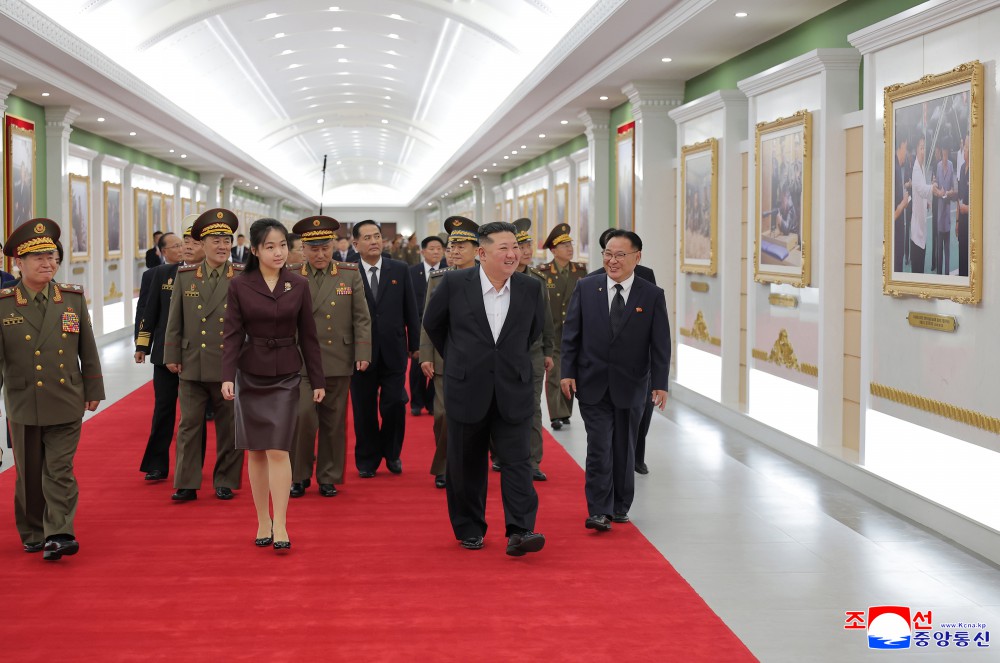
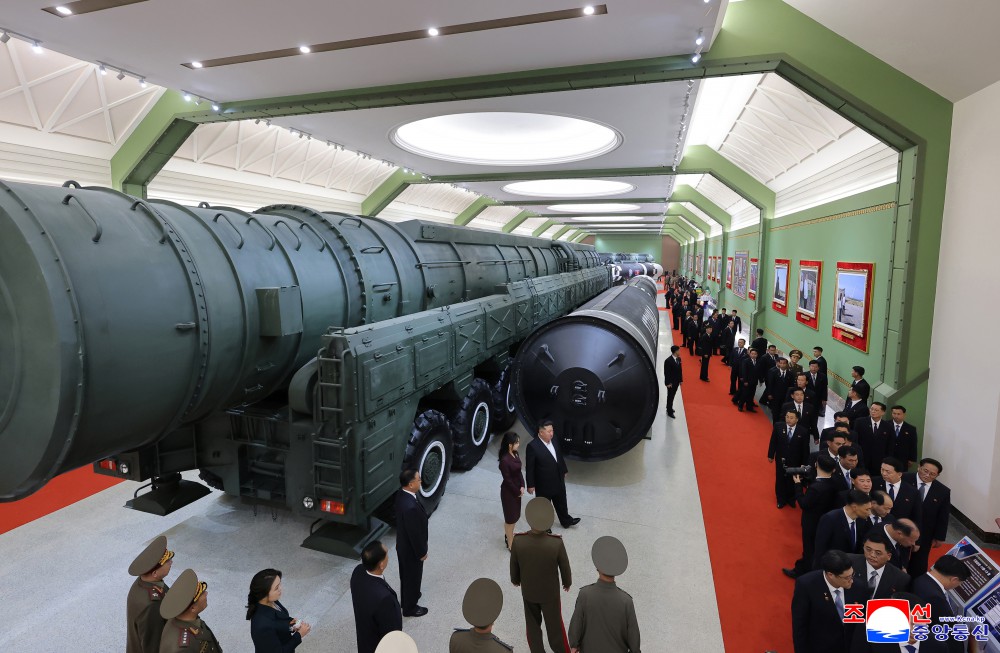
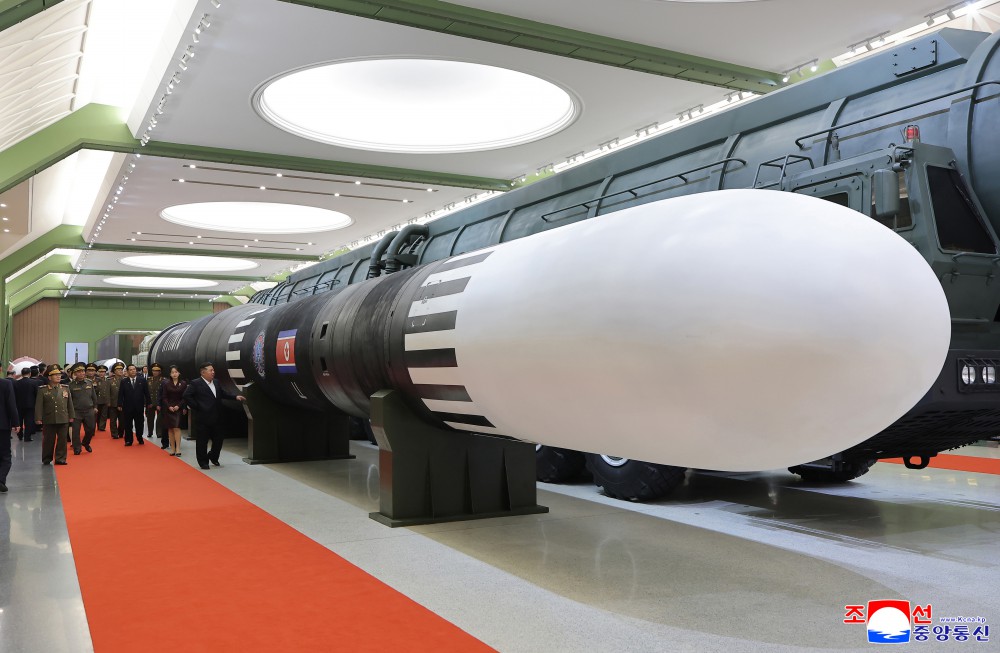
North Korean leader Kim Jong Un visited a newly opened defense museum showcasing advanced missiles and other weapons, state media reported on October 13, as United States President Donald Trump raised the possibility of meeting Kim during a visit to Asia next month.
Photographs released by North Korea’s state-run Korean Central News Agency showed Kim and his daughter, Ju Ae, attending the opening of the Defense Revolution Museum.
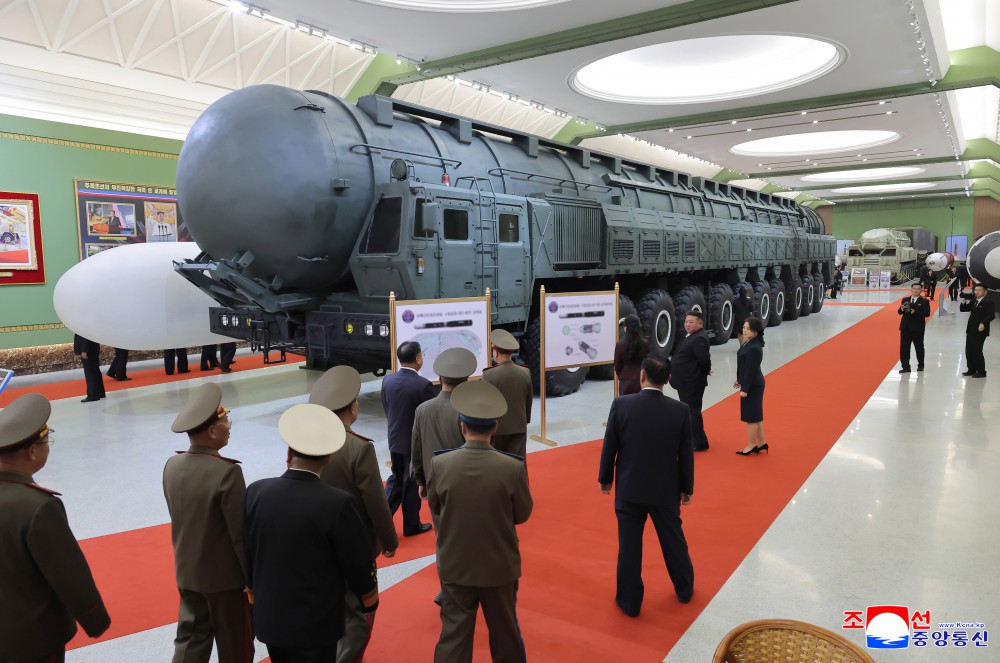
Notably, the displays included the massive Hwasong-20 intercontinental ballistic missile, which has not reportedly been tested yet.
Click to see full-size image. (Korean Central News Agency)
Click to see full-size image. (Korean Central News Agency)
Click to see full-size image. (Korean Central News Agency)
Click to see full-size image. (Korean Central News Agency)
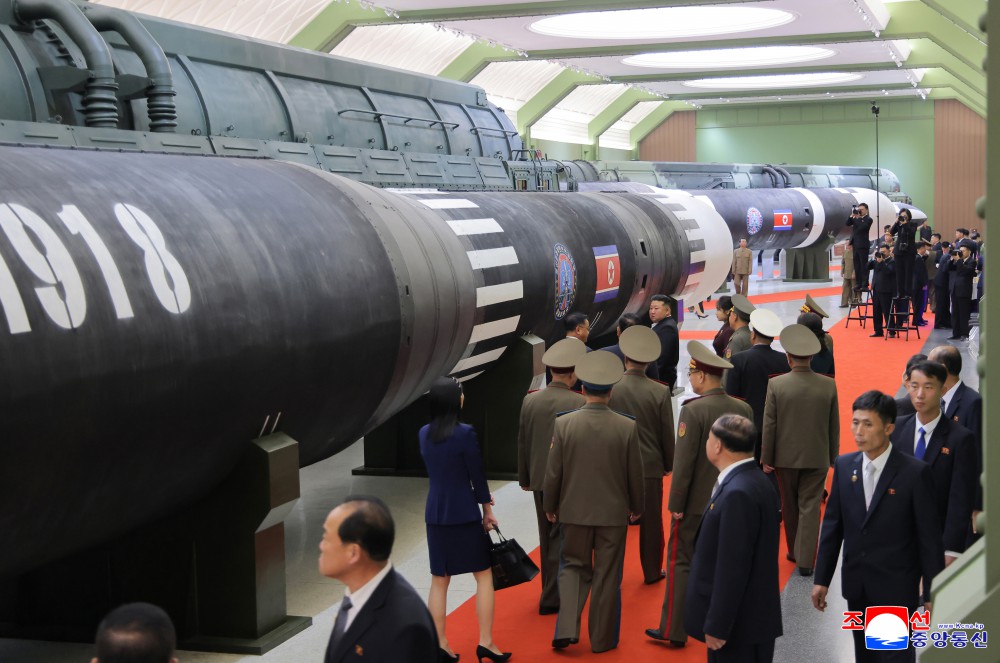
The exhibits also included a new submarine-launched ballistic missile, the Hwasong-16 hypersonic missile, 600-millimeter and 240-millimeter multiple rocket launchers, 155-millimeter howitzers and the Badasuri anti-ship missile.
Other reported displays included Hwasal cruise missiles, reconnaissance and attack drones, an upgraded Chonma-20 tank and anti-tank guided missiles. Some of the more specific weapon designations remain tentative, as North Korea did not publish a complete inventory of the museum’s exhibits.
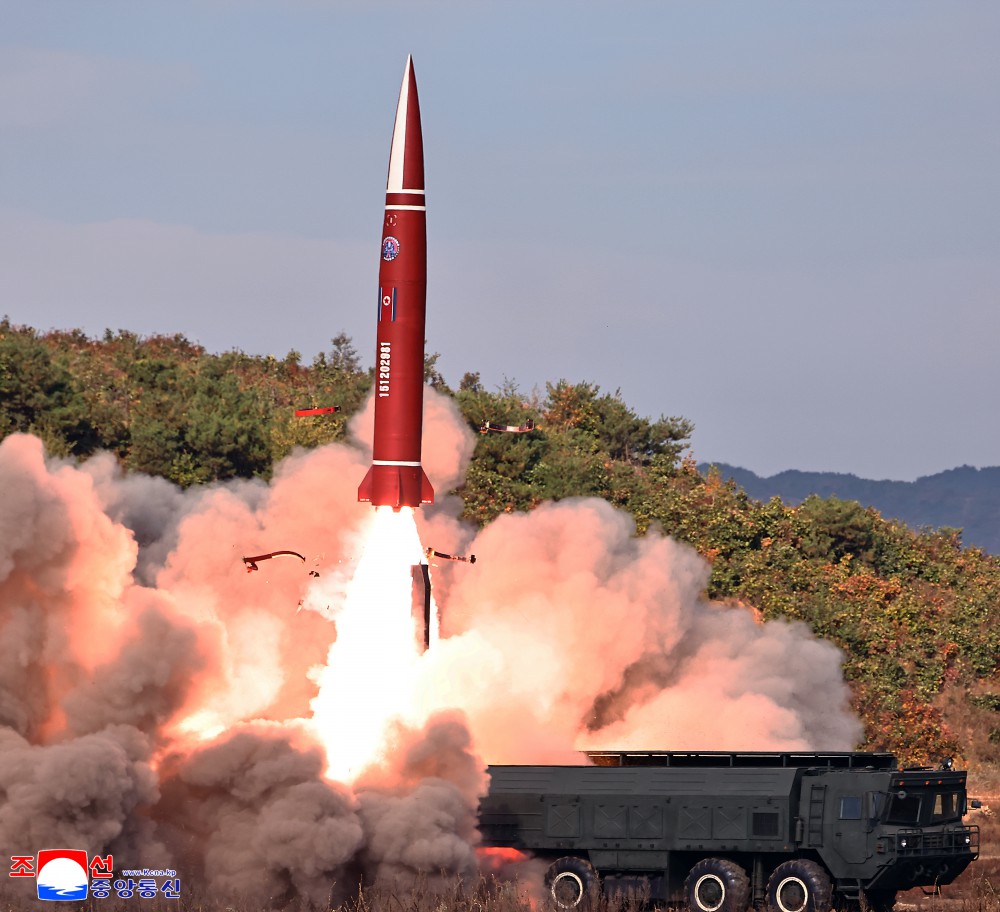
The visit came a day after North Korea launched two ballistic missiles from its eastern coast. Both were believed to have fallen outside Japan’s exclusive economic zone, according to Japan’s Defense Ministry.
Trump told reporters in Washington on the same day that he might hold talks with Kim during a trip to Asia next month. The U.S. president is scheduled to attend the Asia-Pacific Economic Cooperation summit in Shenzhen, China, on November 18 and 19.
“I may,” Trump said when asked about a possible meeting. “That’ll be exciting, won’t it? But I get along with him.”
Pyongyang had not publicly responded to Trump’s remarks as of October 13. The museum visit could serve to emphasize North Korea’s military advances ahead of any potential meeting.
Kim described the museum as demonstrating “how the dignity and security of the DPRK and the happiness of its people are defended and how peace of this land is achieved,” KCNA reported.
KCNA also reported that North Korea had test-fired a tactical ballistic missile on October 12 to validate an upgraded core component of its weapons systems. Observers said the missile may have been a Hwasong-11A, also known as a KN-23, which can follow a quasi-ballistic trajectory and is believed capable of carrying a tactical nuclear warhead.
Click to see full-size image. (Korean Central News Agency)
Japan’s Defense Ministry said the first missile traveled about 220 kilometers, reaching a maximum altitude of 20 kilometers, while the second flew more than 910 kilometers at a maximum altitude of 70 kilometers. Japanese Defense Minister Shinjiro Koizumi said Japan, the United States and South Korea were working together to analyze the second launch, including the possibility that it followed an irregular trajectory.
Koizumi condemned the test, saying North Korea’s frequent missile launches highlighted an increasingly serious security environment around Japan. He said North Korea had launched at least 18 ballistic missiles in 11 launches so far this year, with the number of launches already more than doubling and the number of missiles roughly tripling compared with the same period last year.
North Korea has been developing missiles designed to maneuver during flight, complicating efforts to track and intercept them. The country has also pursued intercontinental ballistic missiles capable of carrying multiple independently targetable nuclear warheads, adding to concerns over the range and sophistication of its weapons program.
L’Italia ha introdotto la valutazione di impatto generazionale delle leggi. Perché non resti un adempimento formale, deve rendere visibili costi, benefici e rischi che le politiche trasferiscono avanti nel tempo. Cosa insegna l’esperienza internazionale.
The ordinary security camera watching a street or a parking lot has quietly become a weapon of war. Ukraine’s Security Service has identified about 40,000 surveillance cameras since Russia’s 2022 invasion that Russian forces and spy agencies could have used to snoop, find targets and correct strikes, and has protected, reoriented or blocked them, The Wall Street Journal reported.
The discovered threat reaches well beyond Ukraine: Dutch intelligence warned in July that Russian state actors are systematically hacking cameras across Europe to track arms deliveries to Ukraine and the whereabouts of Ukrainian troops.
AI makes it faster
About 1.2 billion internet-connected cameras now watch the world, in doorbells, traffic lights, and baby monitors, and almost any of them can be hacked, the journalists found.
In Ukraine, the danger is lethal. In 2024, Russian hackers took over residential webcams in Kyiv, including one that a condominium association had installed, to find targets and adjust missile strikes on the capital, Ukraine's Security Service says.
Spying on Europe’s edge
Evidence of European reach keeps surfacing. Cybersecurity firm CloudSEK has recently uncovered an exposed server it suspects belongs to a Russian-speaking hacker, containing hundreds of webcam images of Ukrainian defense, government, energy, and communications sites, as well as scenes of daily life.
Many of the images came from locations near Ukraine’s border with NATO member Romania, CloudSEK says.
The Dutch warning and the server point the same way: cameras far from the front line are feeding Russia data on how the West arms Ukraine.
Ukraine turns the lens back on Russia
Ukraine also uses the same tactic inside the occupied territory. The international hacker group Team OneFist took control of a camera in Sevastopol, in occupied Crimea, and used it to watch Russian ships, submarines, and helicopters, spotting a previously unknown air base that Ukraine later struck, damaging planes and air defenses.
Team OneFist also reached cameras on the Kerch Strait Bridge, learning that Russia had installed motion sensors beneath the bridge to guard against waterborne attacks. Penetrating a well-placed camera gets analysts closer to targets at less risk than any secret agent.
Edição deste ano reúne 172 galerias na Frieze London, dedicada à arte contemporânea, e cerca de 140 na Frieze Masters, centrada na arte histórica. Três galerias são portuguesas e seis brasileiras.
«È una buona notizia per tutti, ed è importante che diventi realtà». Zelensky ha commentato così ieri, con la consueta finezza diplomatica, l’annuncio unilaterale di Donald Trump di una tregua energetica tra Russia e Ucraina. Nelle stesse ore in cui Washington dichiarava l’accordo, Kyjiv denunciava nuovi attacchi alle infrastrutture energetiche, compresa una centrale nella regione di Kharkiv. La distanza tra un post su Truth e la corrente che torna nelle case resta ampia.
La discussione europea sulla difesa dovrebbe partire da qui. Da una sala operatoria che deve restare illuminata, da un acquedotto che continua a funzionare, dal riscaldamento di una scuola o dalle comunicazioni dei soccorritori. Sono le condizioni materiali della vita civile. Proteggerle è parte del compito di chi governa.
Ieri la newsletter GeoStrategia ha richiamato un documento pubblicato a settembre dalla Nato: i nuovi requisiti di preparazione degli Stati alle crisi. Il testo, tecnico, pone una questione semplice. Un paese deve poter continuare a funzionare anche quando qualcuno cerca di paralizzarlo. Servono reti elettriche in grado di resistere, trasporti disponibili, comunicazioni sicure e servizi sanitari capaci di reggere un’emergenza prolungata. La difesa militare dipende anche da queste capacità civili.
In più occasioni, negli ultimi mesi, l’Ucraina ha condiviso con la Nato e gli alleati le lezioni apprese sul campo: come mantenere operativi energia, comunicazioni, evacuazione medica e coordinamento locale sotto attacco. Non è un esercizio teorico. È un’esperienza pagata a un prezzo che nessun paese dovrebbe essere costretto a sostenere. Mentre in Europa si discute se e come sostenere Kyjiv, gli ucraini possono indicare come proteggere i propri cittadini.
Alla luce di questa esperienza, lo slogan «soldi agli ospedali anziché alle armi» appare insufficiente. Un ospedale ha bisogno di personale, attrezzature e risorse. Ma se una centrale viene colpita, se le comunicazioni saltano o se i soccorsi non possono muoversi, servono anche sistemi di emergenza, reti alternative e la capacità di ridurre la probabilità che il prossimo attacco arrivi a destinazione. Il diritto alla salute va finanziato e, allo stesso tempo, protetto.
Questo non rende automaticamente giustificata ogni spesa militare, né autorizza a definire sicurezza qualsiasi stanziamento. Impone invece scelte rigorose e verificabili. Quali infrastrutture sono più vulnerabili, non solo a missili e droni ma anche a sabotaggi, attacchi ibridi o interruzioni delle filiere? Quanto possono resistere gli ospedali a un blackout prolungato? Chi coordina le risposte? Quando i piani sono stati aggiornati e messi alla prova? Sono domande da rivolgere al governo, alle Regioni e ai gestori dei servizi. Anche le opposizioni dovrebbero pretenderle.
L’Europa può trasformare la lezione ucraina in una politica comune: proteggere insieme le reti critiche, organizzare riserve e soccorsi, rafforzare la difesa aerea e la capacità di risposta rapida, evitare che la vulnerabilità di un paese diventi quella dei vicini. È un programma concreto per un’Unione che intenda assumersi la responsabilità della propria sicurezza.
Zelensky chiede che una tregua annunciata diventi realtà. Agli europei tocca fare in modo che la protezione promessa ai cittadini diventi capacità effettiva. La pace si misura anche dalla possibilità di tenere acceso un ospedale quando qualcuno cerca di spegnerlo.
In July 2011, a 22-year-old woman arrived at the Calexico checkpoint on the Mexico–California border carrying a U.S. passport with a navy-blue cover. Her eight-month pregnancy and Sinaloa accent were hard to hide. A customs agent asked routine questions: where she had come from, where she was headed, and what she was carrying. Despite her answers and the document she presented, he sent her for a secondary, more thorough inspection. Other federal officers meticulously searched her belongings and the contents of her cellphones. Minutes later, once the rigorous procedure was complete, they allowed her into the country.
Ukrainian strikes hit a site housing Russian troops in Khrustalnyi, a city in Russian-occupied Luhansk Oblast, overnight on 12 October, according to local reports. Satellite fire data recorded blazes at a former motor depot there, in an area Russia once used as a logistics base for its offensive in the region.
Russia keeps attacking in Ukraine’s Donetsk Oblast and strikes Ukrainian cities and power plants every day. Its offensive depends on troops, ammunition, and fuel moved through occupied Ukraine, so strikes there reach the supply chain behind the front.
Fires at a former motor depot in occupied Khrustalnyi
Ukrainian forces launched heavy strikes around Khrustalnyi in eastern Ukraine overnight, the Ukrainian monitoring channel Exilenova+ reported. It counted three separate fires and one large blaze, and said local residents reported a hit on a site where Russian troops were based. Ukraine’s military had not officially commented on the strike by the publication time of this article on 12 October.
Ukraine’s Defense Forces are carrying out massive strikes in the area of occupied Khrustalnyi in Luhansk Oblast. Three separate fire hotspots and a large-scale blaze have been reported.
NASA’s Fire Information for Resource Management System (FIRMS), which tracks active fires by satellite, shows blazes at a former motor transport enterprise and an industrial zone in Khrustalnyi, Ukrainian military outlet Militarnyi reported. Three fire hotspots appeared there at 01:10 and spread by 02:07, the outlet said.
Fire hotspots recorded by NASA’s FIRMS system near a former motor transport enterprise in occupied Khrustalnyi, Luhansk Oblast, Ukraine, 12 October 2026. Map: NASA FIRMS/Militarnyi
Ukraine also hit the site on 16 June 2022, striking an ammunition depot there, and local residents then heard secondary detonations, Militarnyi said. The site served as an important logistics base for Russia’s 2nd Army Corps in its offensive on Sievierodonetsk and Lysychansk, two cities in Luhansk Oblast, the outlet added.
Khrustalnyi in Russian-occupied Luhansk Oblast, Ukraine, where local reports said Ukrainian strikes hit a Russian troop site on 12 October 2026. Map: Euromaidan Press/DeepStateMap
Explosions at a Crimean airfield Russia used to launch drones overnight
Drones attacked occupied Crimea from the evening of 11 October into the night, and Russian air defenses, including mobile fire groups, fired across the peninsula, Krym.Realii, Radio Liberty’s Crimea service, reported. Explosions sounded in Simferopol, Feodosiia, and Yevpatoriia, among other places, the Crimean monitoring Telegram channel Crimean Wind said, according to the outlet.
Subscribers told the channel about a series of explosions and a glow at Russia’s Hvardiiske military airfield in Simferopol district as air defenses fired. Krym.Realii said neither Ukraine’s nor Russia’s military had commented and that it could not verify the reports independently.
Explore further
Ukraine says it struck a Bastion in Crimea, the launcher Russia pairs Zircon and Oniks missiles on
Overnight, Russia also launched attack drones at Ukraine from several directions, including Hvardiiske in occupied Crimea, Ukraine’s Air Force reported.
Ukraine’s General Staff said in August that a 3 August strike on the Hvardiiske airfield destroyed nine aviation fuel tanks and damaged two aircraft hangars.
Ukraine keeps hitting Russian rear areas in occupied territory
On 10 and 11 October alone, the General Staff reported hitting a Russian repair base and supply depots in occupied Luhansk Oblast, along with Russian troop concentrations near Lysychansk and two other towns there.
Ukraine has also kept up its campaign of so-called middle strikes, drone attacks on Russian supply lines in occupied territory beyond the front. French mapper Clément Molin counted 770 confirmed drone hits on Russian trucks in September, up from 630 in August, with the strikes concentrated on supply routes running through occupied southern Ukraine into Crimea.
Strikes on troop sites and airfields far behind the front leave Russia fewer safe places in occupied territory to house troops and launch drones, adding to the battlefield losses Ukraine’s drones already inflict.
Saudi Arabia is looking at ways to expand its oil pipeline capacity to destinations outside the Persian Gulf to 10 million barrels a day within two to three years, said Energy Minister Prince Abdulaziz bin Salman.
Si possono fare alcuni passi per rendere più efficaci le raccomandazioni del semestre europeo a livello regionale. A patto di non dimenticare che in zone diverse gli effetti sono diversi e che il territorio non coincide con le regioni amministrative.
Park Ki-chang, South Korea’s ambassador to Ukraine, has returned to Seoul after being recalled in protest at Kyiv’s disclosure of information regarding the handover of North Korean prisoners of war to the South Korean side. Shortly before this, Song Yeon-gil, known for his reputation as a Russophile, was appointed as an adviser to the president. […]
The Russia-Ukraine War has become a real-time laboratory for the Chinese military, spurring rapid defensive modernization while exposing deep friction between its centralized command hierarchy and the decentralized demands of modern combat. This month, the Center for Strategic and International Studies (CSIS) released a report detailing how China is aggressively leveraging the Russia-Ukraine war as […]
Sabato scorso, in diverse città italiane, si sono svolte manifestazioni organizzate da sindacati e partiti della sinistra, con partecipazione di movimenti per la Palestina. I cortei hanno denunciato quello che definiscono «genocidio» israeliano a Gaza e indicato come «complici» i governi di Benjamin Netanyahu, Donald Trump e Giorgia Meloni. Con il passare del tempo, la memoria dell’attacco del 7 ottobre 2023, in cui Hamas ha ucciso circa milleduecento persone e rapito oltre duecentocinquanta, tende a sfumare nel discorso pubblico.
Esiste una soglia oltre la quale la solidarietà con i civili palestinesi può confondersi con la legittimazione di chi ha innescato la guerra o con la messa in discussione del diritto di Israele a esistere. A Torino una portavoce di un coordinamento per Gaza ha definito il 7 ottobre «giornata di resistenza»; a Milano il corteo è stato aperto da uno striscione per una Palestina «dal fiume al mare» accompagnato dalla condanna del sionismo. Definire «resistenza» un massacro di civili e ostaggi cambia il nome agli autori e cancella quello delle vittime. Chi invoca una Palestina dal fiume al mare dovrebbe precisare quale spazio residuo immagina per gli israeliani. Non tutti i manifestanti condividono queste posizioni; il silenzio di chi non le condivide pesa comunque.
In questo contesto è stato assegnato il Nobel per la pace 2026 a Navi Pillay, che ha presieduto la commissione d’inchiesta Onu secondo cui Israele ha commesso atti genocidi a Gaza. La sua lunga carriera a difesa dei diritti umani non viene cancellata da questa conclusione, ma una commissione d’inchiesta non è un tribunale e un premio non equivale a una sentenza. Le conclusioni vanno discusse nel merito: la critica al governo israeliano non autorizza a processare l’esistenza stessa di Israele.
Lo stesso vale per il documentario “Naza”, basato su testimonianze anonime di personale militare e di intelligence israeliano. L’esercito contesta i contenuti e la verificabilità delle fonti; alcuni oppositori di Netanyahu interpretano gli stessi sistemi di targeting come strumenti volti a ridurre, non ad aumentare, le vittime civili. Un film non costituisce prova processuale, e il termine «algoritmo» non equivale a una confessione.
Resta una domanda spesso elusa: quale responsabilità ha Hamas nella catastrofe di chi pretende di rappresentare? Il movimento governa Gaza da quasi vent’anni e ha utilizzato fondi di solidarietà per costruire una vasta rete di tunnel destinati alla guerra. Interrogato sul perché non fossero stati realizzati rifugi per i civili, Mousa Abu Marzouk ha risposto che i tunnel servono ai combattenti e che ai civili deve pensare l’Onu. Altri dirigenti, tra cui Yahya Sinwar, hanno descritto le vittime civili come un elemento di valore strategico. La logica è nota: combattere da case, scuole e ospedali e poi esibire macerie e morti come arma politica. Per Hamas la sofferenza dei civili non è solo un costo: è anche propaganda.
Le cifre che dominano il dibattito provengono dal ministero della Sanità di Gaza, controllato da Hamas, che non distingue tra civili e combattenti. Ripeterle senza riserve critiche non è necessariamente pietà: è accettazione di una fonte parte in causa. I palestinesi non sono tutti Hamas, così come i tedeschi degli anni Trenta non erano tutti nazisti. Per questo le colpe di Hamas non possono essere cancellate in nome dei palestinesi. Né il solo numero dei morti dimostra un genocidio: serve l’intenzione di distruggere un gruppo in quanto tale. È su questo punto che le conclusioni della commissione Onu vanno messe alla prova. Pretendere che Israele rispetti il diritto di guerra è legittimo; non lo è lasciare che chi usa gli scudi umani si presenti come loro unico difensore.
Chi chiede conto a Israele di ogni scelta e a Hamas di quasi nulla applica una morale selettiva. Chi chiama «resistenza» il 7 ottobre riabilita un massacro.
Infine, diversi governi europei hanno riconosciuto uno Stato palestinese che ancora oggi non è in grado di tenere elezioni programmate in Cisgiordania e denunciano la tragedia di Gaza all’arrivo dell’inverno. Una task force europea per portare soccorsi direttamente a Gaza resta assente. Il non detto è che Hamas non ha deposto le armi e che gli aiuti rischiano di finire nelle mani delle sue milizie. La pace richiede una Palestina libera anche da Hamas e un Israele che non debba negoziare il proprio diritto a esistere. Una piazza che non riesce a pronunciare entrambe le condizioni non ha ancora chiarito quale pace vuole.
Questo è un estratto di “La Linea” la newsletter de Linkiesta curata da Marco Taradash per orientarsi nel gran guazzabuglio della politica e della vita, tutte le mattine – dal lunedì al venerdì – alle sette. Più o meno. Qui per iscriversi.
Norwegian nonprofit Fritt Ukraina is allocating NOK 10 million (about $1 million) to strengthen air defenses around Chornomorsk, a key Ukrainian port on the Black Sea, the organization announced on 9 October.
Russian attacks on port infrastructure and civilian vessels are threatening Ukraine’s maritime trade and agricultural exports, putting pressure on a vital source of revenue for the country and disrupting shipments of food to international markets.
The funding will support Ukrainian State Border Guard Service and Armed Forces units defending the region against Russian attack drones. It is being delivered through Dronefall, a project run by the Ukrainian Come Back Alive Foundation, which equips military units with interceptor drones and the equipment needed to operate them.
Fritt Ukraina, whose name means “Free Ukraine,” is a Norwegian nonprofit organization that supports Ukraine’s defense against Russia’s full-scale invasion. The donation is part of its Odins Ravner 2.0 fundraising campaign, which provides military assistance to Ukrainian forces.
Interceptor drones and equipment to protect port infrastructure
The support includes STING, Blyskavka and P1-SUN interceptor drones, alongside ground control stations, communications equipment, generators, charging stations, laptops, tablets and vehicles, according to the organization.
The interceptor drones are already operational, according to Fritt Ukraina. The equipment helps Ukrainian personnel detect and intercept Russian attack drones, while vehicles allow crews to move quickly and operate from different positions.
Fritt Ukraina Secretary General Natalia Golis said effective air defense requires more than interceptor drones alone. Communications systems, reliable power supplies and mobility are also essential to ensure units can use their equipment effectively.
The organization is supporting Dronefall for the third consecutive year and has become the Come Back Alive Foundation’s largest foreign partner. The latest donation was matched by a donor affiliated with the Ukrainian foundation.
STING interceptor drones funded by Norwegian nonprofit Fritt Ukraina to Ukrainian forces to help counter Russian attack drones near the Black Sea ports. Photo: Fritt Ukraina / Come Back Alive
More than 90% of Ukraine’s agricultural products, including grain and vegetable oils, are exported through three ports in southern Odesa Oblast. Russian attacks have targeted port infrastructure and civilian vessels, increasing security risks for commercial shipping and driving up freight and insurance costs.
Since the start of Russia’s full-scale invasion in February 2022, more than 1,000 Ukrainian port facilities and over 200 civilian vessels have been damaged or partially destroyed, Fritt Ukraina reports. The disruption threatens Ukrainian export revenue and international food supplies.
“The attacks on Ukraine’s ports do not only undermine the country’s defense capabilities. They also threaten a vital part of its economy and its ability to export food to the rest of the world,” Golis said.
Dronefall aims to expand Ukraine’s ability to intercept Russian drones using dedicated interceptor aircraft and supporting equipment. According to Fritt Ukraina, participating units have destroyed more than 53,000 Russian drones, accounting for approximately one in five unmanned aerial vehicles entering Ukrainian airspace.
The NOK 10 million contribution is part of Fritt Ukraina’s broader Odins Ravner 2.0 campaign, which provides more than NOK 60 million in support to Ukrainian forces.

 Login