– Italia, la piazza sfida il riarmo di Margherita Furlan
– Avvocatura dello Stato: è guerra mondiale ibrida di Jeff Hoffman
– La Francia ferma i suoi figli di Jeff Hoffman
– Tirana in fiamme, Rama non cede di Jeff Hoffman
– USA e UE sempre più distanti di Gionata Chatillard
– Due stretti in fiamme, l’Europa paga di Jeff Hoffman
– Taiwan cerca alternative a Hormuz, Trump si inserisce di Ivan Bodyan
– Buon giro intorno al Sole
A cura di Margherita Furlan
Con la collaborazione di Gionata Chatillard, Ivan Bodyan e Jeff Hoffman
Editing di Mario Ferdinandi
CASA DEL SOLE TV — Informazione libera e indipendente
Il nostro lavoro è possibile solo grazie al vostro sostegno. Casa del Sole TV non ha editori forti né finanziamenti pubblici: siamo sostenuti da voi, il nostro pubblico.
Se credi nel valore di un’informazione che non tace, aiutaci a continuare. Dona tramite bonifico bancario: IBAN: IT63P0326822300052392596590
Intestato a: LA CASA DEL SOLE EDIZIONI Causale: Donazione Casa del Sole TV Dona tramite PayPal: paypal.me/casadelsoletv Sostegno ricorrente: casadelsole.tv/sostienici
Anche un piccolo contributo fa la differenza. Grazie di cuore!
The balancing act of Bulgaria's Moscow-friendly leader stands on shaky ground.
Since taking office in May, Bulgarian Prime Minister Rumen Radev has taken a harsh line on Ukraine while adopting steps his critics say are accommodating to Moscow.
The International Energy Agency (IEA) has agreed to accelerate the release of approximately 100 million barrels of emergency oil stocks, including more than 20 million barrels of diesel, as the...
The attacks in the two countries' exclusive economic zones threaten a global shipping route and have left two people dead, with at least 25 still missing. They also run the risk of drawing other countries directly into the war for Ukraine.
Romania has proposed a joint NATO military command for the Black Sea, as drones hit four merchant ships in 24 hours, three of them off its coast, and its foreign minister said Russia "bears full responsibility." NATO ambassadors will discuss the attacks next week.
Russia’s strikes on merchant ships in the Black Sea have escalated this autumn and reached NATO shores. Drones have attacked at least eight merchant vessels near Romania and Bulgaria since 5 October, two of them inside Romania’s territorial waters. Until now, neither country had named the attacker, and Bulgaria still says it cannot prove who it was. Romania’s patience appears to have run out, and next week’s NATO meeting will show whether the alliance is ready to go further as Russia’s war spills beyond Ukraine’s borders.
Acting Defense Minister Radu Miruță wrote on Facebook on 14 October that "the Black Sea needs a joint military command of the NATO riparian states." "The Black Sea incidents, involving drones, sunk ships, and naval mines, oblige us to act, not wait," he wrote, after a call with his Bulgarian counterpart. Leadership and location would rotate among the member states. Romania is ready to host the command on its coast from 2028 and would accept a start on Türkiye's coast until then, he said. He proposed that Romania and Bulgaria send NATO a joint letter backing the idea.
The next day, Foreign Minister Oana Țoiu wrote on X that four commercial ships had been attacked over the previous day, including in Romania's territorial waters and exclusive economic zone, and that eight people had died. "Russia is turning the Black Sea into a dangerous area for civilian ships," she wrote. "Killing sailors from commercial ships, both in this region and anywhere in the world, is a crime. Russia bears full responsibility for these developments."
Earlier that day, as two tankers burned off Romania's coast, Bucharest had said it was still checking whether drones were involved.
Explore further
Two tankers burn off Romania’s Sulina as Bulgaria says it lacks proof Russia is behind the Black Sea ship attacks
Țoiu said NATO Secretary General Mark Rutte had agreed to convene the allies within days, after he met Romanian President Nicușor Dan and Bulgarian Prime Minister Rumen Radev in Brussels. NATO ambassadors will meet next week, France 24 reported. No date has been announced.
An escalating drone strike campaign
Map: Euromaidan Press
Drones have been hitting merchant ships for weeks on the route from Ukraine's Danube and Odesa ports to the Bosporus. Besides the latest strikes off Romania, Reuters counts at least five cargo ships hit near Romania and Bulgaria in the past 10 days, with 23 sailors dead or missing, most of them outside any NATO member's territorial waters. This week the strikes reached Romania's own waters.
The Comoros-flagged tanker Yara J was hit inside Romanian territorial waters late on 14 October, off Sulina, the port at the mouth of the Danube. Its crew was unharmed, and it was towed to the Romanian port of Constanța.
Early on 15 October drones struck the San Marino-flagged chemical tanker Wine Trader about a mile outside Romanian waters, also southeast of Sulina. Five of its 12 crew were rescued. Seven were still missing on 16 October, when rescuers returned to search the ship.
Two more ships were also targeted, Reuters reported: the Marshall Islands-flagged Sea Destiny, inside Romanian waters according to NATO, and the Tanzania-flagged Dania J, moored at the Ukrainian Danube port of Izmail.
Țoiu did not say which ships her eight dead were from, and Reuters still lists the Wine Trader's seven as missing. A NATO military source told Reuters the drones that hit both tankers came from Russia.
The chemical tanker Wine Trader. Photo: VesselFinder
Romania's president says too early to say
Romania's president has not gone as far as his foreign minister. Dan told reporters in Brussels it was "obvious" that the attacks were Russian attempts to destabilize Romania and Bulgaria and reduce support for Ukraine. But he also said it was too early to say definitively that Russia had launched the drones, according to Politico.
Bulgaria, Romania's partner on the command proposal, says it suspects Russia but cannot prove it. Two ships were hit off its coast on 13 October, and one, the HS Dignity, sank. The other, the Chelsea 3, is Ukrainian-owned.
Radev told parliament on 14 October that the attacks worked in Russia's favor and that "logic leads there." "The problem is that we cannot prove it," he told MPs. Sofia summoned the Russian ambassador. Radev also said EU leaders would discuss a moratorium on attacks on civilian ships in the Black Sea.
Bucharest has blamed Russia for drones before, though over its airspace, not its shipping. On 27 July it expelled a Russian diplomat after prosecutors confirmed that fragments of drones downed on Romanian territory were Russian. Russia, Romania's Foreign Ministry said then, "bears exclusive responsibility."
Ukraine ships most of its farm exports across the Black Sea. Euromaidan Press's David Axe has written on how the fight over shipping there has escalated.
Explore further
Russia is losing the Black Sea grain war it started. Its answer is to sink civilian ships off Romania and Bulgaria
The Saudi kingdom is facing the danger of collapse from soaring war costs as Yemeni air strikes ramp up, hitting its northern neighbor’s capital and industrial centers with impunity.
Yemeni journalist Hussein al-Bukhaiti says the corruption and arrogance of the “House of Evil” is culminating in historic defeat. Its U.S. patron seems unable to avert the coming collapse.
Despite decades of the U.S. selling weapons worth hundreds of billions of dollars to the Saudi rulers, the regime seems shockingly exposed, with no viable defenses. Yemen’s missiles are striking Saudi Arabia at will. The panicky rulers are pleading with the United States and Europe for help.
Yemen’s armed forces are taking the war to Saudi Arabia, striking its airports, imposing a no-fly zone over the entire state and shutting down its vital oil industry.
“The Saudis cannot stop our drones and hypersonic missiles… we are taking the war to them,” says Sanaa-based Hussain al-Bukhaiti.
With no oil exports, Al-Bukhaiti reckons the Saudi rulers are facing an existential nemesis. Many observers have long predicted that the autocratic Saudi kingdom, created by the British Empire, is awaiting downfall from its ossified and family-run power structure.
Speaking from the Yemeni capital, Sanaa, Hussain al-Bukhaiti described the Saudi monarchy as “a house of glass” that is now being shattered by air strikes that cannot be defended against.
“Yemen did not want this war, but we are bringing the fire back to Saudi Arabia.”
Western politicians and media are portraying the conflict between the two Arab Peninsula countries as being caused by recent aggression from the Ansar Allah-led Yemeni government.
Saudi Arabia’s King Khalid international airport was attacked on October 10 with ballistic missiles that killed several people. Other Saudi airports have also been hit. This has led international airlines to suspend flights.
The state-owned Aramco oil industry has also been blasted with missiles. Fires are raging at major facilities, including at the main base of operations in Dammam on the Persian Gulf coast.
Following the missile strike on Riyadh airport at the weekend, U.S. President Donald Trump and all European leaders condemned an “act of terrorism” by Yemen.
Hussain al-Bukhaiti pointed out the gross hypocrisy of European governments not condemning the thousands of Saudi air strikes on Yemen that have occurred since 2015. These governments still remain silent about the ongoing Saudi atrocities against Yemeni civilians. The European Union even declares “solidarity” with Saudi Arabia.
The Saudi monarchy, led by Crown Prince Mohammed bin Salman, started the war with unprovoked attacks in March 2015. The aggression was enabled by the United States, Britain, and France supplying warplanes, bombs, and intelligence.
These Western powers continue to arm and direct the Saudi regime in its war against Yemen.
Since 2015, there have been thousands of Western-backed air strikes on Yemen, resulting in more than 20,000 mainly civilian deaths.
“They hit everything, schools, hospitals, water-treatment plants, farms, homes, wedding and funeral halls,” says Al-Bukhaiti.
In addition, over 400,000 Yemenis have died from starvation and diseases caused by a blockade on the country imposed by Saudi Arabia and its Western backers for over 10 years.
He says the war reignited in July 2026 after the Saudis broke a four-year truce signed in 2022 by bombing Sanaa international airport. There was no condemnation by Europe of the Saudi violation then.
What Yemen is doing to Saudi Arabia now is but a taste of what the House of Saud inflicted on Yemenis since 2015 with Western support.
The Yemenis this week rejected a reported Saudi proposal for a short-term truce because they see it as just a ploy by the Saudis for rearming and regrouping in a losing situation.
For the war to end, Saudi Arabia must respect Yemen’s sovereignty and stop interfering in its internal affairs.
However, Hussain al-Bukhaiti thinks that the United States will double down and escalate its military involvement in Yemen with a full-blown war. This is not primarily to support the Saudi monarchy, he believes, but rather to prop up the Israeli regime.
Yemen has inflicted huge damage on the Israeli state since it intensified the genocide against Palestinians in October 2023. Yemeni air strikes have repeatedly struck Tel Aviv despite American air defenses.
An expanded U.S. war in Yemen might seem surprising given that Trump has made such a mess of his reckless aggression against Iran and may not have the military forces at his disposal.
But Al-Bukhaiti believes the issue is beyond Trump’s choice. Washington is locked in with the Zionist regime and will do whatever it takes to salvage Israel from defeat. Yemen represents the biggest threat to Israel from the cutting off of its shipping in the Red Sea.
“We are ready for the war that is coming,” he warns.
Per molto tempo il benessere animale è stato raccontato come una questione di sensibilità: si è a favore, difficile essere contrari. Oggi è diventato qualcosa di più preciso. È un parametro di sostenibilità che si misura, si certifica e finisce nelle valutazioni ESG, nei capitolati della grande distribuzione e nelle analisi di rischio di chi finanzia le imprese agroalimentari.
A spostare le cose è stata l’Europa. Dal Trattato di Lisbona del 2009 gli animali sono riconosciuti come esseri senzienti (art. 13): in grado quindi di provare dolore, piacere, emozioni. Da quel principio discendono una responsabilità condivisa fra Commissione e Stati membri e una strategia, Farm to Fork, che al centro del Green Deal ha trasformato la transizione verso sistemi alimentari sostenibili in un obiettivo industriale. E l’Italia è stata la prima in Europa a mettere risorse della Politica Agricola Comune sul benessere degli animali allevati.
Su questo terreno lavora AECIS, Associazione Europea Cultura Innovazione Sostenibilità, nata dall’esperienza di Alti Formaggi (2011) e costituita dai Consorzi di tutela di Provolone Valpadana DOP, Casciotta d’Urbino DOP e Piave DOP. Ed è il terreno del convegno “Sostenibilità in scena”, che l’Associazione dedica alle tre dimensioni in cui la sostenibilità si gioca davvero: ambientale, sociale ed economica. Sono anche le tre chiavi di questa lettura, perché un impegno conta qualcosa solo quando diventa verificabile. E lo strumento che lo rende tale ha un nome: SQNBA.
Che cos’è il SQNBA, in parole semplici
Il Sistema di Qualità Nazionale per il Benessere Animale è uno schema di certificazione nazionale ad adesione volontaria: nessuno è obbligato a entrarci, chi lo fa è perché ci crede. Fissa le regole e i criteri tecnici con cui va condotto l’allevamento, li misura su indicatori costruiti dalla ricerca scientifica e ne affida la verifica a organismi accreditati. Chi aderisce si impegna a tenere livelli di salute e di benessere più alti di quanto già chiedano le norme europee e italiane, a contenere il ricorso agli antibiotici e a rendere l’allevamento più sostenibile nel suo insieme.
Il vantaggio più immediato è l’ordine. Fino a oggi sullo stesso tema convivevano protocolli di certificazione diversi: faticosi da confrontare per un buyer, praticamente illeggibili per chi fa la spesa. Il SQNBA mette ordine e potrebbe diventare l’unico riferimento.
Per ora il Sistema si applica agli allevamenti bovini, da latte e da carne, e suini: sono le specie per cui il Comitato Tecnico Scientifico sul Benessere Animale ha già rilasciato le relative norme tecniche. I requisiti vivono dentro Disciplinari diversi a seconda della specie, dell’indirizzo produttivo e del modo in cui si alleva, ed è previsto che il perimetro si allarghi a tutte le specie di interesse zootecnico.
L’ingresso passa da ClassyFarm, la piattaforma informatica con cui il Ministero della Salute tiene sotto osservazione gli allevamenti e li classifica per livello di rischio. Il veterinario aziendale, o un collega incaricato e in possesso della qualifica, compila la check list dei prerequisiti e il portale risponde con un semaforo: verde se ci sono tutti, rosso se ne manca anche uno. Sul colore incidono anche le verifiche ufficiali già effettuate in stalla.
Ambiente: un animale che sta bene ha bisogno di meno farmaci
La prima ricaduta è insieme ambientale e sanitaria, e parte dal fatto che un animale che vive bene si ammala meno, e un animale che si ammala meno richiede meno trattamenti. Condizioni di allevamento e ricorso ai farmaci sono ormai due variabili che si muovono insieme, e il SQNBA nasce dentro una strategia che punta a ridurre l’antimicrobico resistenza (AMR), uno dei dossier più delicati della sanità pubblica europea.
Non è un principio astratto. Il consumo di antimicrobici e la suscettibilità sono fra le aree che monitora ClassyFarm, insieme al benessere degli animali, alla biosicurezza aziendale e alla fase di macellazione: i dati non restano in un cassetto, entrano in un sistema di classificazione del rischio che viene consultata dall’autorità sanitaria.
La direzione è quella di un modo di allevare più sostenibile, con ricadute positive sull’ambiente e sul tessuto sociale, con risvolti ambientali e sociali positivi e produzioni di qualità più alta. E vale la pena guardare dove sta andando l’Europa: dal 2020 la Commissione sta aggiornando la legislazione sul benessere animale – allevamento, trasporto, abbattimento, fino all’uscita progressiva dalle gabbie – e nella Visione 2025 per l’agricoltura e l’alimentazione ha confermato l’impegno di avvicinare gli standard richiesti anche a ciò che arriva da fuori Unione. Per un’impresa, certificarsi oggi vuol dire farsi trovare pronta.
Sociale: una filiera che si lascia leggere
La definizione più citata ha quasi mezzo secolo. Nel 1976 l’etologo B.O. Hughes descrisse il benessere animale come una condizione di piena salute, tanto fisica quanto psichica, in cui l’animale si trova in equilibrio con l’ambiente che lo circonda. Tre anni dopo il Farm Animal Welfare Council britannico tradusse quel principio nelle Cinque Libertà: niente fame né sete, niente disagio, niente dolore né malattia, la possibilità di comportarsi secondo la propria natura, nessuna paura e nessuno stress. Restano la griglia a cui le norme europee continuano a ispirarsi.
Il passaggio che riguarda da vicino chi compra è che tutto questo diventa visibile. Gli operatori certificati possono portare in chiaro i dati previsti dallo schema per distinguere i propri animali e i propri prodotti: il modo in cui si alleva, lo stabilimento da cui la partita arriva e logo SQNBA in etichetta, con una tracciabilità completa dall’allevamento alla tavola. Non è l’ennesimo bollino da decifrare ma è la possibilità di scegliere sapendo che cosa c’è dietro, nei pochi secondi che si passano davanti al banco frigo.
Ma le stalle gestite secondo standard più alti sono anche posti di lavoro migliori per chi ci passa le giornate. E i formaggi DOP restano parte integrante delle comunità in cui nascono, restano un pezzo delle comunità in cui nascono, perché il valore che producono non si ferma a monte ma si spalma su tutti gli anelli della catena.
Economia: dove si vede il ritorno
Per un’impresa zootecnica il benessere animale non è un costo a fondo perduto. Animali tenuti bene e in salute lasciano il segno su più voci di bilancio: rese più alte, lavoro meno pesante in stalla, una posizione più forte sui mercati, meno esposizione al rischio nella gestione quotidiana, una reputazione che cresce.
Per le filiere a Indicazione Geografica c’è un effetto in più. Affiancare al marchio europeo di qualità certificata, DOP o IGP, il logo SQNBA produce un ritorno di immagine e di valore che supera la semplice addizione di due marchi verificati da terzi perché consolida la credibilità dell’azienda e alzano l’asticella della qualità lungo la stessa linea che le Indicazioni Geografiche battono da decenni, e ridistribuiscono il valore in modo più equo fra tutti gli anelli della catena certificata.
Ci sono poi i costi organizzativi, perché aderire a uno schema di certificazione serio significa scrivere e applicare procedure in ogni angolo della gestione aziendale e in ogni passaggio di mano lungo la filiera – fra allevatore e caseificio, per esempio – per tenere i processi sotto controllo e correggere la rotta appena si devia. È lavoro in più ma non è una duplicazione di adempimenti: è un insieme di azioni coordinate che rafforza gli standard qualitativi di produzione, nel solco di quanto le Indicazioni Geografiche già fanno, e che porta a una distribuzione più equa del valore lungo tutta la filiera certificata.
Tre DOP diverse, un impegno comune
Provolone Valpadana, Casciotta d’Urbino e Piave sono tre mondi distanti: zone di produzione diverse, formaggi diversi e storie diverse. I rispettivi Consorzi condividono però la stessa scelta di fondo, cioè affrontare con serietà il miglioramento della filiera per rispondere alle esigenze di oggi senza scaricarne il conto su chi verrà dopo.
È una posizione coerente con la natura stessa delle denominazioni di origine, che portano la sostenibilità scritta nel proprio codice genetico: standard di sicurezza alti, prodotti con un buon profilo nutrizionale, una ripartizione del guadagno meno sbilanciata, pratiche produttive che rispettano i valori del luogo in cui sono nate.
Quello che mancava era un modo riconoscibile di dimostrarlo. Il SQNBA prende un patrimonio di pratiche spesso già in atto e lo rende certificabile, confrontabile e comunicabile. A un buyer, a un istituto di credito e, soprattutto, a chi legge un’etichetta avendo cinque secondi di attenzione a disposizione.
Ed è il percorso che “Sostenibilità in scena” porta sul palco: ambiente, persone ed economia non come tre capitoli separati di una relazione, ma come tre facce dello stesso lavoro quotidiano di chi produce un formaggio a denominazione di origine.
Le date degli incontri di approfondimento:
10 novembre 2026 – Cadeo (Pc) ore 15-17
La Scottina Relais & Bistrot
Strada del Riglio snc
Loc. Scottina – 29010 Cadeo (PC)
11 novembre 2026 – Invorio (No) ore 15-17
Sala Curioni del Municipio di Invorio
Via G. Curioni 2
28045 Invorio (No)
12 Novembre 2026 – Lodi ore 15-17
Ristorante Isola Caprera
Via Isola Caprera 14 – Lodi
16 Novembre 2026 – Treviso ore 15-17
Ristorante Albronsèr
Via di Sant’Angelo, 162
31100 Treviso (TV)
1° dicembre 2026 – Saronno (Va) ore 15-17
Istituto Prealpi di Saronno
Va San Francesco 13 – Saronno (Va)
L’alta inflazione incide sull’andamento della finanza pubblica e sul funzionamento delle regole europee. Sono due le questioni principali: il trattamento del fiscal drag e i margini di flessibilità rispetto a un percorso di spesa pubblica fissato nel 2024.
Il primo giorno del Consiglio europeo a Bruxelles si è concluso senza un accordo sul prossimo bilancio dell’Unione e con forti divisioni sulle politiche energetiche e climatiche. Dopo circa quattordici ore di negoziati, ieri i capi di Stato e di governo dei 27 paesi membri hanno confermato le proprie posizioni sulla spesa europea e discusso a lungo della richiesta di rinviare le nuove regole sulle emissioni dei trasporti e degli edifici. Il presidente del Consiglio europeo, António Costa, ha convocato una riunione straordinaria per il 26 novembre, nel tentativo di raggiungere un’intesa sul bilancio entro dicembre. Ma diversi governi hanno già messo in dubbio che la scadenza possa essere rispettata.
Le difficoltà riguardano alcune delle principali scelte economiche e politiche che l’Unione dovrà affrontare nei prossimi anni. Il nuovo bilancio pluriennale, relativo al periodo dal 2028 al 2034, dovrà finanziare le politiche agricole, i programmi per le regioni economicamente più deboli, la ricerca e le nuove priorità europee, tra cui la difesa e la competitività industriale. Allo stesso tempo, i governi devono affrontare l’aumento dei prezzi dell’energia e decidere come conciliare la protezione di famiglie e imprese con gli obiettivi climatici già approvati.
La proposta presentata dalla presidenza irlandese del Consiglio dell’Unione europea, che esercita il coordinamento semestrale dei lavori, prevede una dotazione complessiva di circa 1.620 miliardi di euro. È una riduzione significativa rispetto al progetto iniziale della Commissione europea, ma non è bastata a ridurre le distanze tra i governi. I paesi che contribuiscono maggiormente al bilancio comune chiedono ulteriori tagli, mentre quelli che ricevono più finanziamenti contestano la diminuzione delle risorse destinate alle politiche tradizionali.
Da una parte ci sono i sei paesi generalmente definiti frugali: Germania, Paesi Bassi, Austria, Svezia, Danimarca e Finlandia. Il cancelliere tedesco Friedrich Merz considera ancora troppo elevato il livello complessivo della spesa e, secondo due diplomatici citati da Politico, ha indicato nei fondi per le regioni economicamente più deboli uno degli ambiti in cui intervenire. Il primo ministro svedese Ulf Kristersson ha respinto la proposta irlandese, sostenendo che comporterebbe un aumento di quasi il 60 per cento del contributo netto della Svezia. Anche il primo ministro olandese Rob Jetten ha chiesto un bilancio più contenuto, con una maggiore attenzione alla sicurezza, alla competitività e alle nuove esigenze economiche europee.
Sul versante opposto si trovano i cosiddetti Amici della coesione, il gruppo più corposo di 17 paesi che comprende ltalia e Spagna. Il loro obiettivo è salvaguardare i finanziamenti agricoli e quelli destinati a ridurre le disparità economiche tra i territori. Il primo ministro spagnolo Pedro Sánchez ha giudicato insufficiente la proposta irlandese rispetto alle ambizioni dell’Unione, mentre la presidente del Consiglio Giorgia Meloni ha escluso la possibilità di accettare ulteriori riduzioni.
Le divisioni non coincidono però completamente con questi due schieramenti. Alcuni paesi favorevoli a mantenere elevata la spesa europea chiedono anche maggiori investimenti nella difesa, in particolare gli Stati baltici, che attribuiscono particolare importanza alla minaccia russa. La Finlandia, pur facendo parte dei frugali, vuole tutelare i sostegni all’agricoltura. La Francia non ha assunto una posizione definitiva sull’ammontare complessivo del bilancio, dovendo conciliare le proprie priorità europee con le difficoltà delle finanze pubbliche nazionali.
Costa vuole raggiungere un accordo politico entro dicembre 2026, in modo da lasciare tutto il 2027 all’approvazione delle norme necessarie per rendere operativo il bilancio dal primo gennaio 2028. Il calendario elettorale rischia però di complicare ulteriormente le trattative. Nei prossimi mesi sono previste le elezioni politiche in Italia e Polonia, ma soprattutto quelle presidenziali francesi dell’aprile 2027.
Durante la riunione a Bruxelles, il presidente francese Emmanuel Macron ha sostenuto la necessità di chiudere il negoziato entro dicembre. Secondo quattro diplomatici informati delle discussioni e citati da Politico, Macron ha spiegato ai colleghi che, con l’avvicinarsi delle elezioni presidenziali francesi, non disporrebbe più del margine politico necessario per sottoscrivere un’intesa. Marine Le Pen è in testa ai sondaggi e ha promesso una forte riduzione del contributo francese al bilancio europeo e ha accusato le istituzioni dell’Unione di voler accelerare il negoziato per impedire al prossimo presidente di partecipare alla decisione.
Non tutti i governi condividono l’urgenza indicata da Macron. Kristersson ha detto di non considerare indispensabile un accordo entro dicembre, mentre Meloni ha ribadito che l’Italia non accetterà un compromesso economicamente svantaggioso soltanto per rispettare una scadenza. Anche il primo ministro lussemburghese Luc Frieden, pur dichiarandosi fiducioso sulla possibilità di concludere entro Natale, ha sostenuto che un eventuale rinvio non rappresenterebbe necessariamente un problema insuperabile.
La distanza tra queste posizioni si ritrova nelle conclusioni ufficiali del vertice. Nel documento approvato questa notte, i leader non hanno assunto un impegno vincolante a raggiungere l’intesa entro dicembre. Si limitano a riconoscere che un accordo entro il 2026 permetterebbe di adottare nel 2027 le disposizioni legislative necessarie a garantire la continuità dei finanziamenti europei dall’inizio del 2028. Un rinvio del compromesso politico non comporterebbe quindi un’immediata interruzione delle risorse europee. Ridurrebbe però il tempo disponibile per completare il successivo percorso legislativo, che richiede anche l’approvazione del Parlamento europeo. La presidente dell’assemblea, Roberta Metsola, ha già avvertito i governi che il Parlamento non si limiterà ad accettare automaticamente le loro decisioni.
Per cercare di superare lo stallo, Costa assumerà direttamente il coordinamento della nuova fase negoziale e presenterà una proposta prima del vertice straordinario del 26 novembre. Secondo le prime indiscrezioni, il presidente del Consiglio europeo intende modificare alcuni aspetti del compromesso irlandese, soprattutto quelli relativi alla flessibilità della spesa e alle nuove entrate comuni.
Tra le ipotesi da approfondire figurano forme di imposizione europea sulle grandi imprese tecnologiche, sulle attività legate alle criptovalute e sul gioco d’azzardo online. Costa esaminerà anche una proposta greca che prevede di destinare al bilancio europeo parte dei futuri ricavi nazionali derivanti dall’assegnazione delle frequenze mobili 6G. Queste soluzioni potrebbero ridurre la necessità di aumentare i contributi versati direttamente dai governi, ma incontrano a loro volta resistenze politiche.
Il presidente cipriota Nikos Christodoulides ha avanzato anche un’ipotesi diversa: ridurre la durata della programmazione finanziaria a tre o quattro anni, sostenendo che le crisi degli ultimi anni hanno dimostrato quanto sia difficile prevedere le esigenze europee su un periodo di sette anni. L’idea presenta tuttavia un ostacolo giuridico, perché le norme attuali dell’Unione stabiliscono una durata minima di cinque anni per il quadro finanziario pluriennale.
Le difficoltà sul bilancio hanno accompagnato un altro confronto particolarmente acceso, quello sulle politiche climatiche e sul costo dell’energia. La discussione, inizialmente dedicata alle misure per contenere i prezzi energetici, si è concentrata per circa tre ore sul sistema europeo di scambio delle quote di emissione e sulla sua estensione ai trasporti stradali e al riscaldamento degli edifici.
Il meccanismo attuale, conosciuto come ETS, impone un costo alle emissioni di anidride carbonica prodotte da impianti industriali e centrali elettriche. Il nuovo sistema, chiamato ETS2, estende il principio ai combustibili utilizzati nei trasporti e negli edifici. La sua applicazione è al centro di un confronto politico perché potrebbe comportare costi aggiuntivi per famiglie e imprese, in una fase in cui i prezzi dell’energia sono già aumentati a causa delle tensioni internazionali e della guerra in Medio Oriente.
Italia, Polonia, Repubblica Ceca, Slovacchia e Ungheria hanno chiesto di rinviare l’introduzione del nuovo meccanismo almeno fino al 2030. La richiesta ha ottenuto anche il sostegno di altri governi, mentre l’Estonia ha prospettato una revisione ancora più radicale. Secondo le ricostruzioni dei diplomatici presenti al vertice, Roma e i paesi del gruppo di Visegrád hanno insistito sul rischio che i nuovi costi delle emissioni aggravino ulteriormente le difficoltà economiche.
La proposta è stata contrastata da Germania, Francia, Spagna, Paesi Bassi e diversi paesi nordici. Finlandia, Svezia e Danimarca avevano già inviato una lettera alle istituzioni europee per difendere il sistema di scambio delle emissioni, sostenendo che indebolirlo avrebbe compromesso la prevedibilità delle regole sulla quale si basano gli investimenti industriali nelle tecnologie meno inquinanti.
Il compromesso raggiunto non prevede il rinvio richiesto dall’Italia e dagli altri governi. Nelle conclusioni ufficiali, il Consiglio europeo incarica invece la Commissione di aggiornare la valutazione degli effetti dell’ETS2, con particolare attenzione al funzionamento del sistema e ai meccanismi di protezione. La revisione dovrà considerare anche i possibili costi per i consumatori e le attività economiche. Rimane quindi aperta la discussione su eventuali modifiche, senza che sia stata presa una decisione di posticipare l’applicazione delle regole. Per il sistema ETS già esistente, i leader hanno chiesto interventi per rendere il mercato delle emissioni più prevedibile, limitare le oscillazioni dei prezzi della CO₂ e proteggere la competitività industriale. Allo stesso tempo, hanno confermato il ruolo centrale attribuito alla fissazione di un prezzo delle emissioni nella transizione energetica europea.
Sul fronte più immediato dei prezzi dell’energia, il Consiglio ha accolto l’intenzione della Commissione di prolungare il quadro temporaneo degli aiuti di Stato per i settori industriali maggiormente esposti alla crisi. Sono previste inoltre iniziative per migliorare la capacità delle raffinerie europee e favorire, su base volontaria, il coordinamento della domanda energetica. Si tratta di interventi che dovranno essere ulteriormente sviluppati dalla Commissione, non di un pacchetto già integralmente approvato e operativo. Lo scontro sull’energia ha avuto conseguenze anche sulla gestione del vertice. Le discussioni si sono protratte molto oltre il programma iniziale, costringendo Costa a cancellare la conferenza stampa prevista al termine della giornata e a proseguire i negoziati fino a tarda notte.
La prima giornata del vertice ha inoltre affrontato il futuro allargamento dell’Unione europea e le riforme interne necessarie a consentire il funzionamento delle istituzioni con un numero maggiore di Stati membri. Anche in questo caso, il documento finale contiene indicazioni generali, ma non introduce nuove scadenze vincolanti. La seconda giornata del Consiglio europeo, oggi sarà dedicata principalmente alla sicurezza e alla politica estera, con particolare attenzione alla guerra in Ucraina, alla difesa europea e alla gestione dei flussi migratori. Il presidente ucraino Volodymyr Zelenskyy, arrivato a Bruxelles già giovedì per una serie di incontri bilaterali, parteciperà ai colloqui con i leader europei per chiedere ulteriori aiuti militari e finanziari.
Il ministro degli Esteri Antonio Tajani, intervenuto a Bruxelles prima del vertice, ha ribadito la proposta di nominare un rappresentante europeo incaricato di dialogare con Russia, Ucraina e Stati Uniti, in modo da garantire una posizione comune dell’Unione negli eventuali negoziati sulla guerra.
North Korea’s recent underwater launch of strategic cruise missiles underscores its accelerating drive to field a survivable, sea-based nuclear deterrent, even as significant engineering hurdles and platform limitations continue to constrain its naval ambitions. North Korea test-fired two types of submarine-launched strategic cruise missiles into the Sea of Japan, marking its first public underwater cruise […]
While the U.S. military has a wide array of installations where it can test these systems, it’s still not enough. In addition to the massive increase in weapons development and the need for more realistic training, the changing nature of war is outstripping the capacity of existing facilities as future kill webs will extend thousands of miles, not hundreds. There are only so many places with enough space to try out these systems even to a limited degree without butting up against statutes and regulations while also avoiding interference with civilian air traffic and communications, all in an environment remote enough to avoid prying eyes. The need for more and bigger testing grounds is an issue TWZ has long raised.
In addition to the backdrop of the increase in a wide range of weapons testing, much of it aimed at China, Trump’s super range announcement was delivered as the Pentagon and services are specifically creating commands dedicated to autonomous weapons. On Tuesday, during the annual Association of the U.S. Army (AUSA) conference in Washington, D.C., attended by TWZ, the acting Army Secretary unveiled one such new command, which we will discuss in greater detail later in this story.
“I’m pleased to inform you and announce that right here in Montana, the Department of War is going to establish a new ”super range” for testing advanced weapons and technologies, technologies including potential autonomous weapons, space, and electronic warfare technology, supersonics and hypersonics,” Trump said during a campaign rally in Kalispell. “Montana will help ensure the American military always reigns supreme.”
.@POTUS: "I'm pleased to inform you and announce that right here in Montana, the @DeptofWar is going to establish a new Super Range for testing advanced weapons and technologies, including potential autonomous weapons, space and electronic warfare technology, supersonics, and… pic.twitter.com/W4YqKfq8X4
Trump provided no additional details about where this new “super range” will be located, when it will come online, exactly which systems will be tested or how much it will cost.
Thursday morning, the office of U.S. Sen. Tim Sheehy noted that he has been “a strong advocate for building an advanced training range in Montana, securing $10 million for a feasibility study in the FY27 National Defense Authorization Act that passed the Senate Armed Services Committee earlier this year.”
“The 21st-century battlefield is being redefined by new weapons and evolving technical frontiers that require a novel approach to how America will resource its warfighting capabilities,” the senator said in a statement. “Contested spectrum, electronic warfare, hypersonics, space capabilities and enhanced targeting require a new class of testing and evaluation facilities for our military. The U.S. faces a clear choice: adapt and expand our development infrastructure to the realities of modern warfare, or risk falling behind adversaries who iterate faster.”
The Montana Republican highlighted the value of his state’s huge swaths of undeveloped land for this effort.
“By combining our state’s vast landscapes, innovative spirit, and proud tradition of military service, we are the Last Best Place to ensure America’s fighting men and women have the technological edge they need to dominate the battlefield and win the wars of tomorrow,” he explained.
Montana (Google Earth)
Like Trump, Sheehy offered no specifics about exactly where in Montana the “super range” will be located, when it will come online or how much it will cost. We have reached out to the White House, Sheehy and the Pentagon for more details. The Pentagon deferred us to the White House, which referred us back to the Pentagon. We also contacted the office of U.S. Sen. Steve Daines and Gov. Greg Gianforte.
There are already a number of facilities in Montana conducting the kind of military weapons testing described by Trump. One that closely matches what would be needed from such a location is the Montana Spaceport & Test Range and the affiliated Limestone Hills Innovation & Test Campus. A public-private aerospace and defense initiative, it already conducts testing for next-generation space vehicles, hypersonic, supersonic and ballistic weapons, drones and counter-drone systems and electronic warfare equipment.
Another potential site could be an expansion of the Big Sky Autonomous Systems Range (BSASR). Located near Bozeman, it is “the Lobo Institute’s primary training and testing facility for U.S. and allied military, federal, and partner organizations.” Operated under the Lobo Tactical division, BSASR is “a 6,000-acre, fully fenced complex purpose-built for advanced unmanned aerial systems operations, full-spectrum live fire, mounted and dismounted mobility, and full mission profile exercises grounded in the latest tactics, techniques, and procedures from active conflict zones,” according to the Lobo Institute. “The range pairs realistic terrain with the regulatory, infrastructure, and instructor depth required to train against the operational realities of today’s and tomorrow’s battlefields — and it does so in a remote, controlled environment where units can push hard while keeping risk to acceptable levels.”
Training at the Big Sky Autonomous Systems Range in Montana. (BSASR)
We have reached out to both facilities for more details.
The new super range could also leverage existing range space on the ground and in the air. There is also the large Hays Military Operations Area (MOA) which could be expanded for this new test range effort. MOAs are blocks of airspace designated for military training. Malmstrom Air Force Base and its ICBM fields could also potentially be utilized. Overall, it’s possible a number of existing range areas could be interconnected, both digitally and via airspace corridors, to create a larger complex, as well.
The Pentagon has long realized the need to increase the areas where it can test out these systems, especially to evaluate them under combat-like conditions.
“The current open-air range space should be increased and better integrated to support system-of-systems assessments of air, land, and sea combat systems with capability for emerging long-range fires, hypersonic missiles, EMS warfare, unmanned systems, nuclear effects, and directed energy (DE) weapons,” the Pentagon’s Director of Operational Test & Evaluation (DOT&E) stated in a report last year. “The DoW needs to invest in and coordinate expanding and connecting the airspace available to the open-air ranges enabling testing and training of advanced capabilities.”
DOT&E
The current facilities are inadequate, DOT&E further explained.
“Threat systems and our own capabilities far exceed the current available air space on the open-air ranges,” according to the report. “The ranges need support and assistance to coordinate additional airspace and corridors with the FAA and industry. Expanding and connecting range air space is necessary to facilitate testing and training critical long-range capabilities that our warfighters need and to replicate the threats they will face.”
In addition, the report states that “to test missiles with longer ranges and gather data to support simulation validation, including for hypersonic missiles, the DoW should invest in long-range, overland missile flight test corridors with land-based impact areas and mobile hypersonic-specific range instrumentation to produce the required lethality data against threat-representative targets for terminal area assessments.”
Rendering of an X-51A Waverider hypersonic weapon. Powered by a Pratt & Whitney Rocketdyne SJY61 scramjet engine, it is designed to ride on its own shockwaves and accelerate to about Mach 6. (U.S. Air Force)
The Defense Department had largely been conducting the testing of hypersonic weapons — those that can reach speeds of Mach 5 and above — at sea given the need for the long ranges for evaluation. Still, even that was limited. The Pentagon restricted the number and location of hypersonic tests it carried out each year because of the aging fleet of ships it used as its primary data collection assets to track the capabilities while in flight.
Retired Block 20 and Block 30 RQ-4 Global Hawks belonging to the U.S. Air Force, reconfigured as RangeHawks under the SkyRange hypersonic weapon testing infrastructure program, would help address some of those restrictions. You can read more about that in our story here.
However, if testing moves to an overland phase, the need for expanded air corridors could grow increasingly critical. Last year, the Pentagon’s Test Resource Management Center (TRMC) identified three candidate locations to perform those tests, one over Alaska, another at White Sands Missile Range in New Mexico and a third in Australia, Defense News reported at the time.
An interceptor launches from an Indirect Fire Protection Capability (IFPC) system operated by soldiers assigned to the 1st Battalion, 51st Air Defense Artillery Regiment, 7th Infantry Division (Multi-Domain Command Pacific), during a test at White Sands Missile Range, New Mexico, on July 28, 2026. (U.S. Army photo by Sgt. Michael Majors and White Sands Missile Range Public Affairs) Sgt. Michael Majors
The U.S. Air Force’s scramjet-powered Hypersonic Attack Cruise Missile (HACM) has finally reached the flight test phase, with at least one “release” having been carried out so far over a range in Australia. (Raytheon) Raytheon
The military is also looking to expand where it can test electronic warfare systems to help ease the bottleneck at White Sands and a few other locations. Such testing is limited due to U.S. restrictions on jamming, which can interfere with civilian systems.
Before he resigned after tensions with Defense Secretary Pete Hegseth, former Army Secretary Dan Driscoll in June said the service had plans to set up at least two domestic ranges that mimic realistic conditions on Ukraine’s battlefields, where the electromagnetic spectrum is a highly contested domain. This spectrum would be even more heavily disputed in a fight with China.
“You can have a kind of electronic warfare and all of the contested environment created, and you can have drone manufacturers and counter-drone tool-builders engaging together,” Driscoll told reporters. “Then, we also want soldiers to be able to go there, so that they can strengthen their skills and work hand-in-hand with developers.”
A drone swarm returns from a mission during the XVIII Airborne Corps’ Scarlet Dragon 26-3 at Fort Bragg, N.C., Sept. 15, 2026. (U.S. Army photo by Pfc. Iliana Lopez) Pfc. Iliana Lopez
Driscoll said there are already places in the U.S. where the Army can test safely, and separately, the service is looking at a global range outside the U.S. to do “much more aggressive testing,” including with hypersonics. When asked, Driscoll declined to say where these ranges would be until planning is farther along.
“At least some of the current counter-drone training for soldiers, like one CBS News saw in April, does not include electronic jamming — in part because the U.S. restricts jamming domestically,” CBS reported.
In August, the Army opened premier test ranges for the use of private industry to conduct internal research and development. Additionally, the service co-hosted a Denied, Disrupted, Intermittent and Limited testing environment, at Camp Grayling in September, and there are three more scheduled for Fiscal Year 2027, an Army spokesperson told us.
(U.S. Army)
Trump’s news about the “super range” was delivered as the Pentagon and the services are working to ramp up the development and production of a range of autonomous systems.
Last month, as we noted earlier in this story, the Pentagon announced plans for a new functional combatant command, very broadly akin to U.S. Special Operations Command (SOCOM) or U.S. Space Command (SPACECOM), but for operational activities involving autonomous and robotic capabilities. In addition, Hegseth also announced new initiatives to help further accelerate the fielding of uncrewed systems in the air, at sea, and on land, as well as to explore future warfighting challenges. All of this builds on previous and long-overdue efforts to prioritize the fielding of various tiers of drones, as well as artificial intelligence (AI) and other emerging technologies, across domains, but there are questions about how these new efforts will translate into tangible developments.
.@SECWAR “Today, at my direction—we are announcing the creation of Autonomous Warfare Command, or AutoWarCom:
A new 4-star combatant command—with service-like authorities—built to scale autonomous and robotic capabilities across the Joint Force in the fastest peacetime shift in… pic.twitter.com/kYWBxy6Dij
On Tuesday, acting Army Secretary Adam Telle announced the creation of the service’s Futures and Autonomous Systems Command (FASCOM).
“This is our way to make sure that we take all of the great work that’s been happening with the resources that we have today, and we centralize it,” Telle said. “We’re pushing autonomy down into our units, but when it comes to having and making sure that the left hand in the Army knows what the right hand of the Army is doing, this happens at FASCOM; then FASCOM feeds up into AutoWarCom.”
Telle added that FASCOM “will work with the other services to create scale for purchasing power and share best practices on autonomy.”
“It is too soon to speculate about anything related to FASCOM,” the Army told us. “Specifics on structure, command, mission, etc. will be announced at a future dates [and] will require the kind of additional testing facilities that a new Montana super range could provide.”
The use of highly cooperative autonomous weapons platforms that can swarm and operate collectively over large areas will also tax existing ranges beyond their capacity.
Details about the new range proposed by Trump are scant, and it remains to be seen whether it will live up to the hype or even be built. As we noted earlier in this piece, a feasibility study, which hasn’t even been funded yet, is still needed before major work can begin. However, if and when it does come online, a new Montana test range will be welcomed by a military in need of additional places to test out its latest capabilities.
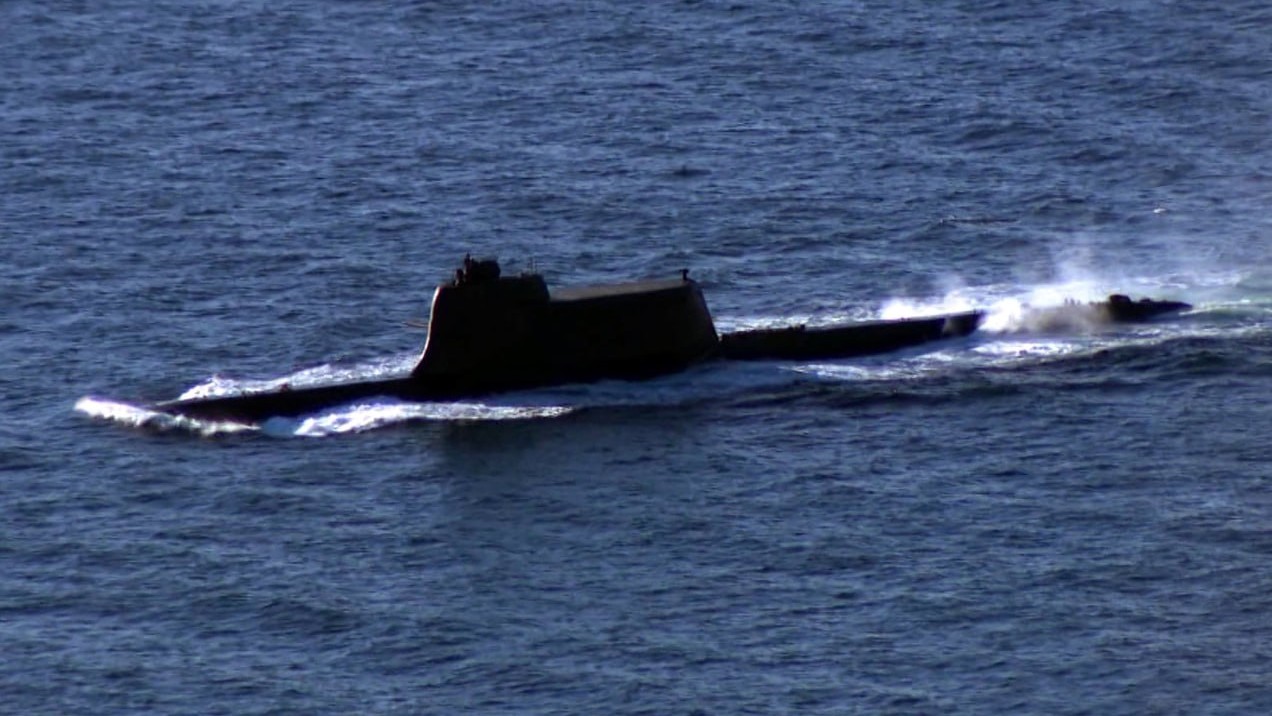
North Korea says it has test-fired two types of submarine-launched strategic cruise missiles off its east coast, in what appears to be the first time its bizarre Hero Kim Kun Ok submarine has been seen at sea in a publicized manner. If the vessel truly was the launch platform, the tests would mark its first confirmed weapons trials and a potential step toward operational service. Unveiled with considerable fanfare in 2023, the Hero Kim Kun Ok has been billed by Pyongyang as a centerpiece of its future nuclear-armed navy, but its operational status and actual capabilities have remained unclear.
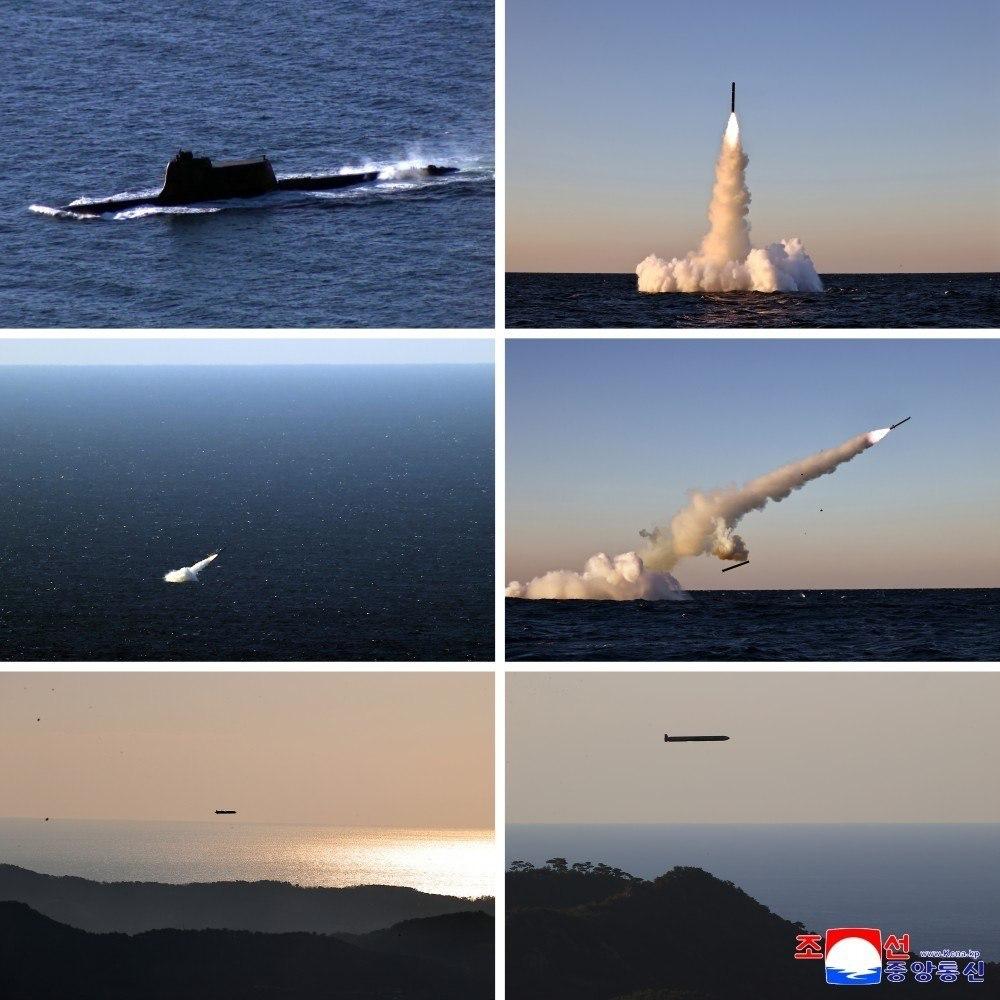
The launches took place Wednesday, October 14, with state media Korean Central News Agency (KCNA) reporting the activity earlier today. North Korea said the tests were intended to assess the readiness of its underwater combat systems, improve the Navy’s ability to execute strategic missions, and demonstrate the reliability of its deterrent. Along with imagery of the cruise missiles, KCNA released one photo of the Hero Kim Kun Ok underway, which you can see at the top of this story.
The launch of a cruise missile, apparently from a vertical launch tube. North Korean state media North Korean state mediaSubmerged launch of one of the North Korean cruise missiles. North Korean state media
KCNA did not otherwise identify the submarine involved or disclose the missiles’ ranges, flight paths, or performance. South Korea’s Joint Chiefs of Staff (JCS) said it had detected and tracked the launches from before firing through the cruise and terminal phases. A JCS spokesperson said one missile type was launched from a vertical launch system and another from a torpedo tube. This would match the imagery we are seeing, it would also match the Hero Kim Kun Ok’s unique capabilities. The South Korean military assessed that the launches came from a submarine but did not initially identify the vessel publicly.
There remains a possibility that the 3,000-ton-class Hero Kim Kun Ok was not actually involved in launching the missiles. North Korea has long used underwater platforms for test missile launches and has paired these with images of an actual submarine for propaganda purposes. However, the JCS confirming they came from a submarine would lend additional credence to the possibility Hero Kim Kun Ok did indeed launch the missiles. If this is the case, it would indicate that North Korea has begun validating weapons systems aboard the submarine ahead of deployment. At the very least, we can confirm that the Hero Kim Kun Ok is now sailing, although South Korean and U.S. intelligence would be acutely aware of its movements and it could have been in at-sea testing for years now, we just don’t know.
North Korea unveiled the submarine in September 2023, describing it as its first “tactical nuclear attack submarine” and one of the Navy’s core offensive platforms. At the launching ceremony, North Korean leader Kim Jong Un was quoted as saying that arming the Navy with nuclear weapons “brooks no further delay.”
The North Korean diesel-electric submarine Hero Kim Kun Ok, which has the hull number 841. North Korean state media
Nevertheless, many questions remain about the submarine’s design and operational prospects. Overall, it remains a heavily modified derivative of a Cold War-era Romeo class diesel-electric submarine — nearly an antique by today’s standards — rather than a purpose-built guided missile submarine. Previous imagery shows 10 missile launch tubes concealed in the prominent ‘turtle back’ aft of the sail, in addition to torpedo tubes, although the precise configuration, usable capacity, and operational status of those systems remain uncertain.
The absence of publicly reported weapons tests from the vessel over the following years raised questions about its development. Analyst Shin Jong-woo of South Korea’s Defense and Security Forum toldReuters that the latest launches suggested combat-system testing for operational deployment was underway. He also suggested that North Korea may have resolved technical problems and could also test a submarine-launched ballistic missile (SLBM) before the vessel enters service. North Korea has previously presented SLBMs of increasing size, but has lacked a suitable submarine to launch them from.
The North Korean diesel-electric submarine Hero Kim Kun Ok during its launch. North Korean state media
Missile launches while the submarine is submerged represent a more demanding and operationally relevant capability than firing from the surface.
At the same time, a missile launch of any kind demonstrates only part of the capability required for a submarine like this to be effective at all. An operational submarine must also be able to deploy reliably, remain sufficiently difficult to detect, maintain its weapons, and execute missions under realistic conditions.
A vertical launch system (VLS) can provide dedicated capacity for certain missile types — potentially much larger ones — and may enable faster launches or larger salvos than a configuration relying exclusively on torpedo tubes. Torpedo tubes offer an alternative launch method, but with different constraints on weapon dimensions, handling, and firing procedures.
The forward four tubes are larger than the rear six on the submarine’s ‘turtle back.’ This would allow the boat to carry multiple types of missiles, possibly including a mix of short-range and longer-range submarine-launched ballistic missiles (SLBMs) and submarine-launched cruise missiles (SLCMs).
A North Korean cruise missile in flight after submerged launch. North Korean state media
Testing both systems would be consistent with an effort to validate multiple elements of the submarine’s weapons architecture.
North Korea has pursued submarine-launched missiles for years. In March 2023, it reported a submarine-launched cruise missile test from the older 8.24 Yongung submarine. In January 2024, Pyongyang said it had fired Pulhwasal-3-31 strategic cruise missiles from that same vessel. The earlier sub is in the 2,000-ton-class and is understood to have only one or two vertical launch tubes.
North Korea’s description of the weapons as “strategic” cruise missiles should also be treated cautiously. North Korea’s long-range cruise missile program is well established and a nuclear payload is a major part of its ambitions, but how mature or reliable a nuclear warhead is for this application at this time isn’t clear. Regardless, ground, surface, and now subsurface-launched cruise missiles are a key part of North Korea’s broader deterrent architecture.
According to reports, Wednesday’s activity was the first publicly reported underwater North Korean missile-testing event since the January 2024 launch.
Compared to the 8.24 Yongung submarine, the Hero Kim Kun Ok has a larger hull and additional vertical launch tubes, but it still uses very dated diesel-electric propulsion, which presents hugely different endurance, acoustic, and operating constraints compared with nuclear propulsion or even modern diesel-electric submarine capabilities.
As to the expectation that Pyongyang may test an SLBM from the submarine before deployment, this would be a likely milestone toward North Korea fielding a credible sea-based nuclear deterrent.
North Korean SLBMs identified as the Pukguksong-5 on parade in January 2021. North Korean state media
North Korea is also pursuing a separate nuclear-powered submarine project, unveiled as under construction in March 2025. Its completion and operational timeline remain uncertain. Nuclear propulsion is a much bigger challenge, but if perfected, such a boat would be of considerably greater value, especially as a second-strike capability.
People seen looking at a TV broadcast at Seoul Railway Station showing North Korean leader Kim Jong Un unveiling the manufacturing site for a future nuclear-powered missile submarine at an undisclosed location. Photo by Kim Jae-Hwan/SOPA Images/LightRocket via Getty Images SOPA Images
The sequence is consistent with Pyongyang’s effort to diversify its delivery systems and complicate military planning for South Korea, the United States, and Japan.
A satellite image of the Pongdae Submarine Factory on the northeast coast of North Korea, the center of its submarine development activities. Google Earth
The activity also carries a diplomatic message. North Korea has repeatedly insisted that it will not abandon its nuclear weapons while the United States maintains what Pyongyang calls a hostile policy. It has also rejected the suggestion that adjustments to U.S.-South Korean military exercises would be sufficient to change the underlying relationship.
The tests also follow North Korea’s rejection of an apparent diplomatic opening from U.S. President Donald Trump after Washington sought to reduce tensions surrounding a U.S.-South Korean military exercise.
Kim touring the Sinpo submarine yards back in 2019, the first time we got a glimpse of the future Hero Kim Kun Ok. North Korean state media
A submarine able to launch missiles from less predictable locations complicates defensive planning for South Korea and the United States. The challenge extends beyond intercepting missiles after launch to detecting and tracking the submarine before it reaches a potential firing position. Even a partially capable vessel places additional demands on potential adversaries.
Were things to ‘go hot’ on the Korean Peninsula, any submarine capable of carrying strategic weapons would be at the top of the targeting list for Pyongyang’s adversaries. A submarine based on the archaic Romeo class design would be fairly easy to track from the time it leaves its berth. This is especially the case bearing in mind the sophisticated nature of South Korea’s anti-submarine capabilities.
Future submarines will become increasingly more challenging, however. That problem could intensify if future North Korean boats make more use of Russian assistance in developing their capabilities. Submarine technology is supposedly part of the payment to Pyongyang for its help in the war in Ukraine. This could become a much larger problem, even if Moscow were to provide North Korea with advanced Kilo class boats, for example.
For now, provided that the Hero Kim Kun Ok launched the missiles, which seems most likely, this would indicate that North Korea is advancing weapons integration aboard a submarine intended to expand its offensive naval capabilities. The fact that the Hero Kim Kun Ok is now at sea also signals progress toward deployment.
Whatever the ultimate operational effectiveness of the Hero Kim Kun Ok and its emerging missile armament, Pyongyang continues to demonstrate incremental improvements to its submarine forces.
Shipowners are facing an increasingly fragmented fuel market as disruptions triggered by the Middle East conflict raise concerns about the availability and quality of supply.
Click to see full-size image. (Korean Central News Agency)
North Korea said on October 15 it had test-fired two types of submarine-launched strategic cruise missiles off its east coast a day earlier, in a trial aimed at assessing its underwater weapons systems and the reliability of its military deterrent.
The Korean Central News Agency, or KCNA, reported that the tests were designed to examine the readiness of the country’s underwater combat systems and improve the navy’s ability to carry out strategic missions. It said the test “did not have any adverse impact on the security of neighboring countries.”
KCNA did not identify the missiles or disclose their ranges, flight times or intended targets. The designation “strategic” suggests a role in North Korea’s nuclear deterrent, although Pyongyang did not say whether the tests involved nuclear warheads.
Click to see full-size image. (Korean Central News Agency)
South Korea’s military said it had monitored the launches using multiple surveillance assets, tracking the missiles from before launch through the end of their flights.
Capt. Jang Do-young, a spokesperson for South Korea’s Joint Chiefs of Staff, said the military assessed that one missile had been fired from a vertical launch system and the other from a torpedo tube, according to Yonhap News Agency.
South Korean analysts and international news reports identified the vessel shown in the images as the Hero Kim Kun Ok, a roughly 3,000-ton submarine unveiled by North Korea in September 2023. Pyongyang presented it as its first tactical nuclear attack submarine, claiming it could launch nuclear weapons from underwater.
If the identification is correct, the October 14 launches would be the submarine’s first publicly reported live weapons tests.
North Korea previously announced submarine-launched cruise missile tests in January 2024, when it said two Pulhwasal-3-31 missiles had been fired from the smaller, approximately 2,000-ton 8.24 Yongung submarine. That vessel has been used in earlier underwater weapons demonstrations.
The latest test was overseen by Kim Jong-sik, a member of the ruling Workers’ Party’s Central Military Commission, Missile Administration chief Jang Chang-ha and naval underwater weapons engineers, KCNA reported. North Korean leader Kim Jong Un was not reported to have attended.
Shin Jong-woo, secretary-general of South Korea’s Korea Defence and Security Forum, said the latest launches showed that “combat system tests for operational deployment are under way,” according to Reuters.
The commander added that North Korea was likely to test a submarine-launched ballistic missile from the vessel before long.
The tests followed North Korea’s launch of tactical ballistic missiles toward the East Sea on October 12 and a series of other weapons demonstrations in recent weeks. Pyongyang has also highlighted its expanding arsenal at a newly opened defense museum, including missiles designed to extend its potential reach against the United States.
The submarine tests fit into Kim’s broader effort to expand the country’s naval capabilities and diversify the platforms from which it could use nuclear weapons.
Over the past week, drones have struck multiple vessels off Bulgaria’s coast, leaving 11 crew missing and 10 presumed dead.
A fresh wave of drone attacks on commercial vessels in the Black Sea, an alternative shipping route to the disrupted Strait of Hormuz, is deepening insecurity along the European Union’s (EU’s) eastern flank and compounding pressures on an already stretched global shipping network.
A San Marino-flagged vessel caught fire in the Black Sea early Thursday morning, with eight of its 12 crew members still missing, according to Romanian maritime authorities. The incident came just hours after a suspected drone strike on a Comoros-flagged tanker in Romanian waters on Wednesday.
Despite reports about drones detected in the area overnight, Romania’s Defense Ministry has not confirmed the two vessels were struck by drones. However, over the past week, drones have struck multiple vessels off Bulgaria’s coast, leaving 11 crew missing and 10 presumed dead. Both Russia and Ukraine have denied involvement in the recent attacks.
DIPLOMATIC FALLOUT
The strikes have triggered a diplomatic row. Bulgarian Prime Minister Rumen Radev has summoned Russian Ambassador to Bulgaria Eleonora Mitrofanova, saying that although there was “no conclusive evidence,” “the logic suggests that the outcome benefits the Russian Federation.”
Mitrofanova denied knowledge of the strikes and suggested a “provocation by a third party.” Moscow rejected a limited naval ceasefire proposal brokered by Türkiye and the UN, saying it lacked guarantees against arms shipments to Ukraine by sea, and blaming Kyiv for refusing comprehensive agreements.
On Thursday, Ukrainian President Volodymyr Zelensky told British media that Kyiv would resume strikes on Russia’s oil refineries, citing Russia’s attacks on Ukrainian energy infrastructure as violations against the U.S.-announced “energy ceasefire.”
In response, NATO Secretary General Mark Rutte said the alliance would “adjust our deterrence and defense posture as needed.” European Commission President Ursula von der Leyen called the Black Sea “another front of escalation” of the Russia-Ukraine war, which is “unacceptable.” France and Germany also urged a halt to attacks on commercial vessels.
Bulgarian President Iliana Iotova and Romanian President Nicusor Dan have agreed to jointly push for an emergency item on the Black Sea at the European Council.
On Thursday afternoon, the Bulgarian prime minister and the Romanian president met with Mark Rutte in Brussels for regional security discussions. The three NATO littoral states — Bulgaria, Romania and Türkiye — have also agreed to boost surveillance and intelligence-sharing.
Seven people are missing after drones set two chemical tankers ablaze in Romania's Black Sea waters overnight. It's the latest in a series of drone attacks on vessels off Romania and Bulgaria.
The attacks are compounding a crisis that began thousands of miles away. The Strait of Hormuz, which normally carries about a fifth of global oil and gas supplies, has faced repeated attacks on tankers since late February. This has pushed some energy and grain cargoes toward alternative routes — including the Black Sea corridor, now itself in jeopardy.
The Black Sea handles roughly 25 to 30 percent of global wheat exports, over 10 percent of corn and two-thirds of sunflower oil. Russia and Ukraine together normally supply about 27 percent of the world’s wheat, most of it shipped through the Black Sea.
Their combined wheat shipments from July to September were 6.5 million tons below the same period a year earlier, according to estimates from the International Food Policy Research Institute and the Agricultural Market Information System.
Separately, Barva Invest has warned that up to 38 million tons of wheat and corn exports could be at risk in 2026/27 if deep-sea port restrictions persist.
“We see three concerning chokepoints right now that are driving up food prices across the world,” said Carl Skau, acting executive director of the UN World Food Programme, referring to the Strait of Hormuz, the Bab Al Mandeb strait and the Black Sea.
“All those three are causing disruptions to maritime trade, which is pushing up the price of energy and of food.” Countries dependent on Black Sea grain, including Egypt, Türkiye and other parts of the Middle East, face the sharpest impact.
Insurance costs reflect the escalation of the conflict. War-risk premiums for Black Sea voyages have jumped from about 200,000 U.S. dollars to 2.5 million dollars per vessel, according to Lukoil’s commercial manager in Bulgaria. Meanwhile, London-based insurance body Joint War Committee has expanded its high-risk zone to cover almost the entire basin.
“The Black Sea didn’t become more expensive; it became just harder to access,” Alexey Zavarskiy, a ship operator at Angara Denizcilik, said at an industry conference held on Sept. 22. He estimated that around 90 percent of shipowners had suspended calls at affected ports.
Washington’s decision on Oct. 9 to temporarily lift sanctions on Russian diesel exports illustrates the dilemma. On paper, it appears to be a release valve for a tight global diesel market: U.S. diesel prices are up 70 percent since February.
However, the relief depends on a route that is itself under attack — Russian diesel loads primarily at Black Sea ports such as Novorossiysk, the same waters where drones are now striking commercial vessels.
The first tranche of about 2.25 million barrels is less than a single day of U.S. diesel demand, and analysts from Quilter Cheviot to Wood Mackenzie have dismissed it as too small and too exposed to make a difference.
🚨 BREAKING: President Trump has reportedly ordered the U.S. military to prepare devastating new strikes on Iran, including plans to unleash the “MOTHER OF ALL BOMBS” — America's most powerful non-nuclear weapon.
— Commentary Donald J. Trump Truth Social Posts On X (@TrumpTruthOnX) October 15, 2026
CALL FOR NEW FRAMEWORK
Military analysts warn the Black Sea has become one of the world’s most dangerous shipping routes, with drone attacks having overtaken sea mines as the primary risk.
Retired Romanian Navy commander Sandu Valentin Mateiu told local media that the density of incidents pointed to a deliberate hybrid campaign. Mateiu said Romania should prepare a serious case for diplomatic protest, potentially raising the issue even at the level of NATO’s Article 4.
Poland took this step in September 2025 after drones violated its airspace, leading to emergency consultations and the deployment of allied fighter jets and air defense systems to the alliance’s eastern flank under the “Eastern Sentry” mission.
Murat Ersavci, director of the International Studies Center at the Economic Policy Research Foundation of Türkiye, said the changing nature of the conflict is reshaping the Black Sea into a “multilayered security environment,” with the boundary between trade and security becoming increasingly blurred.
Ersavci called for a comprehensive maritime security arrangement to ensure safe, predictable commercial navigation, distinguish civilian vessels from military targets, and coordinate efforts among littoral states to protect energy and food shipments.
Canan Tercan, a foreign policy expert at Istanbul Aydin University, warned that the Black Sea risked mirroring the crisis in the Strait of Hormuz, and that navigational safety “must be secured through an international non-combat agreement, not through naval forces.”
Rescuers were searching for seven missing crew on Thursday from one of two chemical tankers that caught fire overnight just outside Romanian territorial waters in the Black Sea, after Russian drones strayed into national airspace, Romanian officials said.
Romanian authorities opened an investigation into the possibility of a drone strike on one of the tankers, after drones violated the country's airspace overnight.

 Login

 CASA DEL SOLE TV — Informazione libera e indipendente