❌

Normal view

Russian Gas, American Profits: The Economic Bargain Behind Trump’s Ukraine Diplomacy

18 October 2026 at 21:26

The Trump administration’s reported proposal to restore Russian gas supplies to Europe through Ukraine marks a reversal of Washington’s longstanding energy policy. Behind the promise of an economic incentive for peace lies a more consequential question: whether Europe is being asked to restore the very dependence on Moscow that it has spent four years dismantling.

The administration of US President Donald Trump is considering the restoration of Russian natural gas supplies to Europe, including through Ukraine’s pipeline network, as part of a proposed settlement to end Russia’s war against Ukraine. The initiative would offer Moscow renewed energy revenues while potentially opening opportunities for American investors to participate in the trade.

According to a New York Times investigation published on 17 October, presidential envoys Steve Witkoff and Jared Kushner have raised the proposal with Ukrainian and European officials, including President Volodymyr Zelenskyy. The White House has confirmed that economic incentives for Russia and Ukraine form part of its peace diplomacy, although no agreement on renewed gas transit has been announced.

The proposal would require Ukraine to reopen a transit route that ceased operating for Russian exports in January 2025, while European governments would be expected to resume purchases they have spent years reducing. American negotiators reportedly regard the prospect of renewed commercial revenues as an incentive for President Vladimir Putin to reach a settlement.

There is, however, a considerable difference between offering Russia a commercial opportunity after a verified peace agreement and restoring a source of revenue and political influence before Moscow has demonstrated any willingness to abandon its territorial objectives.

From opposition to Russian gas to facilitating its return

The reported initiative represents a reversal of Trump’s earlier position on European energy security.

During his first presidency, Trump repeatedly warned Germany that its dependence on Russian energy exposed it to political pressure from Moscow. Speaking at the United Nations General Assembly in September 2018, he accused Berlin of becoming dangerously dependent on Russian supplies. Members of the German delegation visibly smiled at his remarks.

The episode acquired renewed significance after Russia’s full-scale invasion of Ukraine in February 2022. Germany had developed an extensive commercial relationship with Gazprom, while the Nord Stream pipelines were intended to facilitate Russian gas deliveries directly to Germany, bypassing traditional transit countries, including Ukraine.

Trump maintained his opposition to those energy relationships well into his second presidency. As EU Today reported in September 2025, he told European governments that continuing to purchase Russian energy amounted to financing the war against themselves.

Washington is now reportedly considering precisely the commercial relationship that Trump previously identified as a strategic danger.

The change cannot be explained solely by the objective of ending the war. It also coincides with discussions about a substantially different economic arrangement, in which American commercial interests could participate in infrastructure and transactions previously dominated by Russia and European energy companies.

American investors and the economics of peace

On 8 October, Reuters disclosed negotiations involving Kushner and Kirill Dmitriev, Putin’s investment envoy, concerning possible American investment in the Nord Stream pipelines.

The discussions included the prospect of US investors profiting from renewed Russian gas deliveries to Europe. Separate negotiations have involved assets belonging to the Russian energy company Lukoil.

The White House has denied that Nord Stream was a subject of recent discussions and has said any agreements must benefit American taxpayers and companies. There is no established evidence that Witkoff, Kushner or members of Trump’s family would personally profit from the proposed gas arrangements.

Nevertheless, the possibility of American participation changes the commercial equation. Russian gas returning to Europe through infrastructure involving US investors would no longer be exclusively a Russian-European business relationship.

That distinction matters financially, but it does not necessarily resolve the underlying security problem. American ownership of transit infrastructure would not eliminate Moscow’s ability to influence production, supply volumes or export decisions.

The European Union has already confronted the consequences of allowing an energy relationship to become a source of geopolitical leverage. Introducing American intermediaries would not, by itself, remove that vulnerability.

Europe’s legal and political obstacles

The proposal also conflicts with legislation already adopted by the European Union.

In January 2026, the Council formally approved a regulation phasing out Russian natural gas imports. The restrictions began taking effect in March, with the remaining long-term LNG imports scheduled to end in January 2027 and pipeline imports in autumn 2027.

Consequently, restoring substantial Russian supplies would require changes to existing EU policy or the use of legally available exceptions. Neither Washington nor Moscow can make that decision on Europe’s behalf.

Germany has already opposed the reported American initiative. Chancellor Friedrich Merz’s security adviser, Günter Sautter, reportedly objected during discussions in Florida, while former economy minister Robert Habeck warned against recreating dependence on an unreliable supplier.

The economic attraction remains understandable. European industry faces substantial energy costs, and cheaper pipeline gas could offer relief to some consumers and manufacturers. Yet commercial prices do not account for the wider costs associated with supply disruption, strategic exposure and the potential use of energy exports as political leverage.

Europe’s decision to reduce Russian gas imports was therefore not simply a change of supplier. It was a response to the security implications of its previous energy model.

The consequences for European politics

The initiative also intersects with divisions inside European politics, particularly in Germany.

Alternative for Germany (AfD) has repeatedly advocated restoring Russian energy imports, arguing that sanctions and expensive replacement supplies have damaged German industry. Sahra Wagenknecht’s left-wing BSW has advanced similar arguments concerning energy prices and relations with Moscow.

The overlap extends beyond energy policy. On 14 October, AfD and BSW representatives supported a motion in Saxony-Anhalt calling for an end to military assistance for Ukraine.

A US-backed proposal to restore Russian gas could give these parties an additional argument against the federal government’s existing approach. They would be able to point to Washington’s own negotiations when questioning the economic and strategic rationale for maintaining restrictions on Russian energy.

This does not establish that the Trump administration’s gas initiative is intended to strengthen particular European political movements. It does demonstrate how the same policy could serve several objectives simultaneously: commercial rapprochement with Russia, a negotiating incentive for Moscow and a change in the European debate over sanctions.

A peace incentive that could restore Russian leverage

The central uncertainty concerns the relationship between renewed revenues and Russian military objectives.

Washington’s argument assumes that the prospect of substantial future gas income could persuade Putin to accept a settlement. Yet negotiations over commercial cooperation have so far produced no demonstrated change in Moscow’s fundamental territorial demands.

Meanwhile, Russia continues attacking Ukraine’s energy infrastructure. On 18 October, Zelenskyy reported 76 Russian attacks on Ukrainian energy, oil and gas facilities during the preceding week, despite Trump’s announcement of an energy ceasefire that neither Kyiv nor Moscow had confirmed.

There is also an unresolved contradiction in Washington’s wider sanctions policy. Having previously demanded that Europe stop financing Russia through energy purchases, Trump has recently suspended additional American sanctions against Moscow while his representatives explore new economic arrangements.

For Ukraine, renewed transit could restore revenue lost when the previous gas agreement expired. For Russia, however, the potential benefits extend beyond immediate export earnings. Access to European markets would restore commercial relationships and a degree of political influence that Moscow lost after the invasion.

The distinction is fundamental. A peace settlement that permits carefully regulated economic cooperation after Russian withdrawal and enforceable security guarantees would be different from an agreement that restores Moscow’s commercial advantages in anticipation of concessions that have not yet been secured.

The question for European governments is therefore not merely whether Russian gas could once again become cheaper than alternative supplies. It is whether restoring that trade would leave Europe better protected against another confrontation with Moscow, or recreate the vulnerabilities that became apparent in 2022.

Washington’s proposed economic bargain cannot answer that question on Europe’s behalf.

Irán advierte que destruirá infraestructura energética de sus agresores

18 October 2026 at 21:05
«En caso de cualquier error de cálculo, todas las plataformas de infraestructura e inversiones en energía pertenecientes a los agresores en la región estarán dentro del alcance operativo y su seguridad estará directamente en peligro», dijo un alto militar de Irán.

Trump's decision to import Russian diesel is an 'incentive to end the war,' energy secretary says

18 October 2026 at 19:37
Donald Trump
President Donald Trump signed an executive order waiving new sanctions on Russia.

Aaron Schwartz/Getty Images

  • US Energy Secretary Chris Wright defended Trump's decision to buy Russian diesel.
  • Wright said the relief is actually an "incentive" for Russia to end its war with Ukraine.
  • Ukraine's President Zelenskyy and several US lawmakers have criticized the move.

President Donald Trump is still playing hardball with Russia, according to US Department of Energy Secretary Chris Wright.

Wright defended Trump's decision to waive sanctions on Russia during a Sunday interview on CNN's "State of the Union with Jake Tapper and Dana Bash."

In September, Trump signed into law a sanctions package targeting Russian officials and parts of its economy in an effort to pressure Russia amid its war on Ukraine. Last week, Trump issued an executive order waiving those new sanctions, other restrictions, and some duties on Russia.

In early October, Trump also announced an agreement with President Vladimir Putin under which Russia would supply over 300,000 tons of diesel fuel to America and the global market.

"President Trump waived sanctions just on diesel exports, and what's the one thing Russia has not been able to export over the last month or so? Diesel, because they're short of diesel," Wright said.

The Energy Secretary said waiving the sanctions solves two problems: the diesel oil shortage and Russia's ongoing war with Ukraine.

"This is pressuring Russia. Russia does not have diesel to export," Wright said. "The only way they can get additional diesel to export is if they turn down the conflict with Ukraine."

Wright said Russia would have to enter into an energy ceasefire or reduce its war efforts to have enough additional diesel to export.

"This is not going soft on Russia. This is an incentive to end the war," Wright added.

Trump elaborated on his reasoning further on Sunday in a Truth Social post.

"I am in the process of negotiating Peace in the war between Russia and Ukraine, and don't want to do anything that will drive, foolishly, Russia away from the bargaining table," he wrote.

Ukrainian President Volodymyr Zelenskyy said waiving sanctions on Russia "seems wrong" to him. US lawmakers on both sides of the political aisle also criticized the move, including Republican Sen. Thom Tillis.

"Beyond irresponsible. What part of enforcing a law passed 86-11 by the Senate does the President and his advisors not understand? It's unconscionable that this administration is capitulating to a Russian dictator who illegally invaded Ukraine and butchers innocent civilians every single day," Tillis wrote on X.

He added, "If the President wants to actually bring down energy prices, he can do it by solving the Iran problem, not by doing a solid for Vladimir Putin."

Diesel and regular gas prices have skyrocketed globally as the US war on Iran drags on. Following surprise attacks by the US and Israel on Iran in February, Iran effectively shut down the Strait of Hormuz, which is a major waterway through which much of the world's diesel and oil is shipped. Last week, the International Energy Agency ‌said the diesel shortage could run into 2027.

That's a problem for Trump, who is hoping voters overlook high gas prices and concerns over the cost of living when they head to the polls this November for the midterm elections. Higher diesel prices mean higher shipping costs, which trickle down to consumers as inflated prices for everyday goods.

Wright also appeared on ABC's "This Week" on Sunday, during which he said Trump was trying to find "innovative" ways to end the Russia-Ukraine war.

"This is a motivation for Russia to figure out how they can actually export some diesel," he said.

Read the original article on Business Insider

EU vs. Trump, oder warum die Ukraine den Petersburger Hafen bombardiert hat

18 October 2026 at 19:03
Der Diesel-Deal, den die Präsidenten Trump und Putin geschlossen haben, ist für die EU und Selensky buchstäblich ein Produkt aus der Hölle. Selensky bezeichnete den Deal als Zeichen der Schwäche von Trump und warf Trump Verrat vor. Die Spitzen der EU waren in ihren Aussagen etwas zurückhaltender, sagten dem Sinne nach aber das Gleiche. Ich […]

“França a arder!” – e a culpa é dos imigrantes, atira Trump. Confusão prolongou-se para domingo

By: ZAP
18 October 2026 at 17:15
Confusão na Praça da República, em Paris, com novos incêndios e pilhagens de lojas; alguns cafés fecharam esplanadas. Macron vai falar. Os grandes conflitos e roubos aconteceram no sábado, em diversas cidades de França, mas prolongaram-se para hoje, domingo. Na Praça da República, em Paris, que já estava muito destruída e danificada, formou-se uma aglomeração não autorizada. Era um novo protesto, provavelmente contra o custo de vida em França, mas foi rapidamente dispersado. A polícia já estava no local, de prevenção, e usou gás lacrimogéneo. No entanto, os grupos espalharam-se pela área circundante, criando uma confusão inicial que aumentou a

Zelenskyy thanks Trump for resumed intelligence sharing after US Starlink ‘message’

Two people killed and at least 17 injured as Russia and Ukraine continue to trade strikes on power infrastructure

Volodymyr Zelenskyy on Sunday thanked the Trump administration for resuming intelligence sharing between the two countries, but maintained the US had intentionally throttled its Starlink satellite internet access so that Donald Trump could send a “message” in his ongoing feud with the Ukrainian president.

In an interview on NBC, Zelenskyy said the US had “unblocked” intelligence on impending Russian ballistic missile strikes, which have pounded the country’s energy infrastructure as winter draws in.

Continue reading...

© Photograph: Omar Havana/AP

© Photograph: Omar Havana/AP

© Photograph: Omar Havana/AP

Invierno decisivo y sangriento en Ucrania

16 October 2026 at 23:04
Un hombre sostiene una bandera en los restos de un edificio residencial donde ha caído un misil ruso en Kiev.

"Estamos ante la confrontación del bien y del mal. Cualquiera que responsabilice a Ucrania da un regalo al agresor, a Putin. Aquí en Polonia tenemos muy presente la Segunda Guerra Mundial. Los nazis querían convencer al mundo de que era Polonia la culpable. Ahora pasa lo mismo con Ucrania". En el Warsaw Security Forum, esta semana, Donald Tusk, primer ministro polaco, se dirigía, sin nombrarlo, a Donald Trump, quien ahora quiere impedir que Ucrania juegue sus cartas al limitar su acceso a Starshield/Starlink. Su desesperación por los previsibles malos resultados en las elecciones de mitad de mandato le han llevado de nuevo en confiar en Vladimir Putin. El presidente ucraniano se siente traicionado, en vísperas de un invierno decisivo y probablemente sangriento.

El plan de Rusia está claro: ataca las infraestructuras energéticas para dejar a Ucrania a oscuras. Para conseguirlo, Putin ha ofrecido el pacto del diésel a Trump, y el presidente de Estados Unidos, atrapado en las consecuencias de su intervención en Irán, ha querido creer que así bajarán los precios. Por eso presiona a Zelenski para que deje de atacar las refinerías rusas, algo que hace mucho daño al Kremlin. Y también exige al presidente ucraniano que celebre elecciones. En plena guerra. Sin embargo, le parece normal que Putin lleve 26 años en el poder y gane elección tras elección sin permitir que concurran los opositores.

El último gesto de Trump hacia Putin ha sido suspender temporalmente la aplicación de un amplio paquete de sanciones contra Rusia, mediante una orden ejecutiva, según informa la agencia Efe. Había sido aprobada por el Congreso y Trump la habái firmado. Ha argumentado que lo hace en defensa del interés nacional. La decisión afecta a una ley bautizada con el nombre del fallecido senador republicano Lindsey Graham, gran defensor de la causa ucraniana, que buscaba limitar el flujo de recursos financieros que contribuyen a sostener la guerra contra Ucrania. Otra señal más de que Trump está obrando al servicio de Putin. En el Kremlin brindan con vodka.

Escalada por tierra, mar y aire

"Afrontamos uno de los más difíciles inviernos", reconoce Andryi Sybiha, ministro ucraniano de Exteriores, en Varsovia. Y expone la lista de todo lo que necesitan los ucranianos para superarlo. "Necesitamos transformadores, generadores y toda clase de apoyo para superar el invierno. Desafortunadamente esperamos una escalada por tierra, mar y aire. Nuestra prioridad son los sistemas de defensa aérea, por supuesto, interceptores. También cualquier tipo de munición, por ejemplo, de 20 mm, que usan los F-16, muy eficaces contra los nuevos drones rusos". 

A estas carencias se suma la dependencia de Ucrania y Europa de la tecnología estadounidense en materia de comunicaciones por satélite y sistemas de alerta de misiles. La limitación de Starshield, la versión militar de Starlink, desde el miércoles por la mañana hasta el viernes, ha hecho temer lo peor a los ucranianos. Sin esa guía, sus ciudades son más vulnerables a los misiles rusos, y la mayoría de los drones ucranianos quedan inoperativos. Esa decisión solo llevaría a que muchos más ucranianos murieran. Ya estamos viendo ataques con decenas de muertos en las ciudades.

Elon Musk, dueño del sistema de comunicaciones, apuntó a que había sido el Pentágono, que controla Starshield, quien había limitado el acceso. Señaló a Trump en última instancia. Una exclusiva de The Telegraph ha desvelado que la idea fue de Musk, quien no oculta sus simpatías por la extrema derecha global, aliada del Kremlin.

El almirante Giuseppe Calvo Dragone, jefe del Comité Militar de la OTAN, coincide con que estamos ante un momento decisivo. Acaba de estar en Kiev en la primera visita del comité militar aliado desde 2018. "El invierno que viene es un factor clave. Trataremos de aportar el máximo de interceptores y sistemas de defensa aérea. Nunca serán suficientes. Si podemos ayudarles a superar el cuarto invierno, en 2027 se marcará una diferencia. Estos cuatro meses serán cruciales".

Ucrania necesita el apoyo de la OTAN, la ayuda financiera de los Veintisiete, y la presión del Congreso de Estados Unidos, donde hay muchos republicanos proucranianos, para impedir que Rusia provoque una sangría estos meses venideros. Muchos en Ucrania están cansados de tanta sinrazón. Les hierve la sangre cuando escuchan cómo Trump no utiliza su poder en favor de la víctima sino del agresor.

Meloni, entre los aliados más fieles a Kiev

Al menos pueden contar con algunos buenos aliados entre los líderes europeos. Donald Tusk aseguró que iba al Consejo Europeo a pedir más sanciones. Su ministro de Exteriores, Radosław Sikorski, añadió que los europeos no iban a aceptar que los activos rusos estuvieran en un fondo controlado por Washington. "Por encima de nuestros cadáveres", afirmó Sikorski.

También ha sido muy contundente esta semana la primera ministra italiana, Giorgia Meloni. A diferencia de otros líderes ultraconservadores europeos, Meloni es muy firme contra Putin. Y no tiene reparos en leerle la cartilla a Trump, a quien le ha dicho claramente que su pacto del diésel es, cuando menos, arriesgado. Supone, a su juicio, "una legitimación para Moscú mientras sus bombas siguen cayendo sobre las ciudades ucranianas, nuevos ingresos con los que financiar la guerra, un debilitamiento implícito de las sanciones. Todos son elementos que contradicen lo que hasta ahora han hecho los Estados occidentales, incluidos los Estados Unidos, para presionar a Putin a que se siente a la mesa de negociaciones". Y sigue: "El apoyo a Ucrania no es la alternativa a la paz: es lo que la hace posible. Porque si el agresor puede aspirar a la rendición de su adversario, ¿para qué necesita negociar?" A los filorrusos, les advirtió: "Yo no echo de menos los tanques rusos en Praga".

Sin embargo, los malos augurios también se ciernen sobre el escenario político que nos espera en 2027. Marine Le Pen, favorita en la contienda por la Presidencia de Francia, ha dicho que suprimiría la ayuda a Ucrania en seis meses si llega al Elíseo. Sostiene que la situación financiera de Francia no permite mantenerla. Ignora, o no quiere saber, que si pierde Ucrania, Europa va a tener que gastar mucho más en defenderse de Rusia.

La líder de Alternativa para Alemania, Alice Weidel, oculta su cercanía al Kremlin bajo el paraguas de la equidistancia: ninguno hace nada por la paz. AfD encabeza los sondeos, si bien no habría elecciones federales en Alemania hasta 2029.

Zelenski ante los Veintisiete y con Burnham

Esta semana Zelenski ha tenido una intensa agenda diplomática, con viaje a Londres y a Bruselas, donde ha asistido al Consejo Europeo. Tenía que insistir ante los europeos de la necesidad de mantener las sanciones. También les ha recordado que los ucranianos necesitan más ayuda financiera.

La Comisión Europea va a estudiar cómo facilitarles unos 70.000 millones de euros antes de fin de noviembre. Si hubiera voluntad y coraje político, los Veintisiete tendrían que recurrir a los 210.000 millones de euros en activos congelados rusos. Bélgica, el país donde se encuentran, es el que más se opone por las consecuencias jurídicas posteriores. Cuando hay niños muriendo bajo las bombas rusas, estar dándole vueltas a qué hará Rusia si se utilizan esos activos demuestra que a Europa le faltan agallas.

En Bruselas Zelenski ha escuchado buenas palabras. "No estáis solos", le decía Tusk. Zelenski les ha recordado: "Si Putin gana, todo lo que os mantiene unidos y permite a vuestros pueblos vivir en paz, desaparecerá". A sus interlocutores les ha explicado cómo el invierno ya ha llegado a Ucrania, donde los problemas de suministro de gas, agua y electricidad son cada vez mayores. Mientras Zelenski mantenía reuniones con los líderes europeos, el Kremlin lanzaba otro ataque con drones contra la infraestructura energética ucraniana en la ciudad de Lutsk.

Inseguridad entre los que volvieron

El riesgo ahora es que muchos de los ucranianos que regresaron a sus hogares tras huir de la guerra tengan que volver a desplazarse. Cada vez más viviendas sufren daños y quedan inhabitables. Los cortes de luz y gas son frecuentes, y el coste altísimo.

"Para millones de ucranianos, el reto ya no es simplemente si pueden volver a casa. Se trata de si pueden permanecer allí de forma segura y, en estos momentos, las condiciones lo están dificultando", ha declarado Arthur Erken, director regional de la Organización Internacional para la Migración (OIM) para Europa y Asia Central.

Según los últimos datos de la OIM, la intención de marcharse de nuevo es mayor entre quienes han regresado en los últimos tres meses. Las necesidades de alojamiento son considerables. Se estima que 1,45 millones de repatriados viven actualmente en distritos de primera línea, incluidos 565.000 solo en la región de Járkov.

Quienes se fueron a países vecinos, como Polonia, ven cada vez más difícil regresar. Ahora escuchan también en ciudades como Varsovia las sirenas, pero son medidas preventivas. Nada que ver con lo que sufren sus parientes en Kiev, donde ese sonido significa bombardeo.

A los que teorizan sobre lo que significa vivir en un país libre, el ministro Sybiha les dice contundente: "La idea de libertad se está defendiéndose en las trincheras de Ucrania ahora mismo. Nosotros estamos pagando el precio. Es en Ucrania donde se está defendiendo el liberalismo frente a la tiranía. El futuro de Europa y de la arquitectura de seguridad se decide en Ucrania ahora". 

Katie Zacharia, la portavoz más efímera de la Casa Blanca: "El presidente Trump es un hombre amable, maravilloso, atento"

16 October 2026 at 19:00

La nueva portavoz de la Casa Blanca, Katie Zacharia, ha dejado su cargo este viernes después de que el presidente de Estados Unidos, Donald Trump, le sugiriera que abandonara el puesto tras las críticas recibidas durante su primera semana en el cargo, según ha confirmado a Efe un funcionario de la Administración de EEUU. Zacharia, de 41 años, se convierte así en la portavoz más efímera de las que han pasado por la Casa Blanca. Y el récord era difícil de superar: Anthony Scaramucci solo estuvo 11 días en el primer mandato de Trump.

En lugar de reconocer su error al designarla, Trump ha mostrado una actitud paternal y machista. "Si yo fuera tú, me lo replantearía", le ha dicho el presidente, antes de acudir a un mitin republicano en Georgia, como parte de su agenda rumbo a las elecciones legislativas del 3 de noviembre.

Trump ha explicado que hablaría con Zacharia cuando regresara a la Casa Blanca y que dejaría la decisión en sus manos. "¿Es esto para ti, Katie? Sinceramente, no necesitas esto", ha afirmado ante los periodistas, antes de añadir que dejaría "que ella tome esa decisión". Difícilmente podría haber seguido así.

"El presidente Trump es un hombre amable, maravilloso, atento, considerado, entusiasta y trabajador. Ojalá más estadounidenses lo apreciaran. Nadie volverá a hacer grande a Estados Unidos como él lo ha hecho y lo sigue haciendo. Fue un honor trabajar para él", escribió después Zacharia en su cuenta de X.

Zacharia asumió el cargo el lunes 12 de octubre, después de que Karoline Leavitt dejara el puesto en agosto por sorpresa para centrarse en su familia. Acaba de tener a su segunda hija. Leavitt, conocida por su estilo combativo con los medios críticos, era rápida en sus reacciones y muy locuaz. El mandatario había anunciado el nombramiento de su nueva portavoz el viernes 9 de octubre.

Catorce minutos desastrosos

La primera comparecencia de Zacharia ante la prensa, el martes 13, estuvo marcada por una intervención de apenas 14 minutos, en la que leyó buena parte de sus declaraciones y respondió solo tres preguntas, todas de medios conservadores. También tuvo dificultades para responder a algunas cuestiones, como una sobre el intercambio de información de inteligencia con Ucrania.

A las críticas por su debut se sumaron las dudas sobre su trayectoria profesional. Trump la presentó como abogada al anunciar su nombramiento, pero Zacharia reconoció esta semana que no aprobó el examen de acceso al colegio de abogados de California, que realizó en 2011 tras graduarse en Derecho por la Universidad Pepperdine.

"Anoche estuvo en 'Fox & Friends' (un programa de la cadena Fox). La han tratado, diría yo, de forma bastante desagradable. Hace dos minutos le dije a Katie: 'No tienes por qué hacer esto si no quieres'", ha dicho Trump. Ha añadido que solo quería que fuera feliz.

Este viernes, Zacharia volvió a defenderse en una entrevista con Fox News, donde argumentó que su función es "representar al presidente ante la prensa" y no ejercer como abogada de la Casa Blanca. Tan solo ha durado cinco días en el cargo.

No Kings Rallies Push Early Voting Ahead of U.S. Midterms

18 October 2026 at 11:26
No Kings rallies across the United States urge early voting ahead of the 2026 US midterm elections.

Nearly 3,000 events nationwide urged voters to cast ballots early ahead of November 3 elections that will determine control of Congress.


The No Kings movement held nearly 3,000 rallies and marches across the United States on Saturday, urging voters to cast their ballots early in the November 3 midterm elections, as the Trump administration intensified its efforts to challenge mail-in voting and scrutinize ballots cast by suspected noncitizens.

RELATED: Trump’s Attack on Mail-In Voting Seeks to Create an Advantage for Republicans

The nationwide mobilization, held under the slogan “No Kings: Vote Early,” drew millions of participants, according to USA Today, with events in all 50 states and Washington, D.C. The demonstrations came two weeks before elections that will determine whether Republicans retain control of Congress for the final two years of President Donald Trump’s term.

Organizers said the campaign aimed to turn mass mobilization into electoral participation by encouraging voters to make voting plans, cast their ballots early and help protect every eligible vote. They argued that historically high turnout would make it harder for the Trump administration to challenge the results by alleging fraud.

“Across thousands of events in all 50 states and DC today, we are turning enormous people power into direct voter power,” the No Kings Coalition said in a social media statement. It described the initiative as a nationwide effort to encourage early voting and build a network of Americans prepared to defend eligible ballots.

Text Reads: Demonstrations in Washington, U.S., under the slogan “No Kings: Vote Early,” seek to channel political protest into electoral participation. They call for placing limits on President Trump and protecting the Constitution ahead of the elections.

The coalition also pointed to the rising cost of groceries, gasoline, electricity and other daily necessities, arguing that decisions made by political leaders directly shape families’ lives and economic prospects. It presented the early-voting campaign as the next step in reclaiming political influence after a year of mass demonstrations.

In Atlanta, city council member Michael Julian Bond urged rally participants to encourage others to vote before Election Day rather than wait until the last minute.

“The Constitution gives you a power. That is the power of the vote,” Bond told the crowd.

In Phoenix, Arizona, Democratic Senator Rubén Gallego linked the campaign to opposition to the Trump administration’s policies, accusing the president and congressional Republicans of worsening economic conditions for ordinary Americans while enriching their allies.

“Today, we voted early to send a message loud and clear: no to separating our families, no to corruption, no to no oligarchs, no to stupid forever wars, and no kings.,” Gallego wrote on X.

Today, we voted early to send a message loud and clear: no to separating our families, no to corruption, no to no oligarchs, no to stupid forever wars, and no kings. https://t.co/qtT9Gp7Lwf

— Ruben Gallego (@RubenGallego) October 17, 2026

Democratic Representative Yassamin Ansari, who also attended the Phoenix rally, called the upcoming election “the most important election of our lives.” She cited the administration’s deportation policies, the war in Iran, cuts to health care and food assistance, and widespread corruption allegations as central issues facing voters.

Ansari questioned whether Americans would accept immigration enforcement practices that frighten communities and separate families, policies that leave millions without health care, or what she described as a transfer of wealth from working people to billionaires.

The protests unfolded amid heightened political tensions over Trump’s deployment of military personnel to several cities governed by Democrats. The administration has justified the deployments as a way to combat crime and support immigration enforcement operations.

The demonstrations were backed by a broad coalition of organizations, including the American Civil Liberties Union, the American Federation of Teachers, Black Voters Matter Fund, Indivisible, MoveOn, Public Citizen, State Voices and Voto Latino.

The push for early voting also came as the Trump administration pursued legal action against mail-in ballots. Trump has repeatedly attacked mail voting and continued to claim, without evidence, that electoral fraud cost him the 2020 presidential election.

On Thursday, the administration sued California election officials, asking a judge to bar the state from counting mail-in ballots in the midterm elections cast by people the federal government considers likely to be noncitizens until their immigration status can be verified.

On Friday, the Justice Department warned local election officials that processing and counting ballots submitted by suspected noncitizens could expose them to criminal investigations and prosecution.

Also on Friday, Democratic Senators Alex Padilla of California, Sheldon Whitehouse of Rhode Island and Dick Durbin of Illinois wrote to Attorney General Todd Blanche, demanding assurances that the Justice Department would not seize ballots or other election materials before the midterm results were certified.

Trump's War With Iran Pushed Him To Waive a Century-Old Shipping Law. Commerce Boomed.

18 October 2026 at 11:00
A large boat with shipping containers seen from above | Tawatchai Prakobkit/Dreamstime/Cato Institute

America's interminable war with Iran has killed thousands, disrupted commerce that flows through the Strait of Hormuz, and raised prices on the home front.

But there may be one silver lining. In an attempt to lower gas prices that spiked because of the war, the Trump administration has repeatedly issued waivers of the Jones Act, a century-old law that requires all goods moved between American ports to be carried on American-built, American-crewed ships.

With the law (temporarily) not being enforced, commerce has exploded.

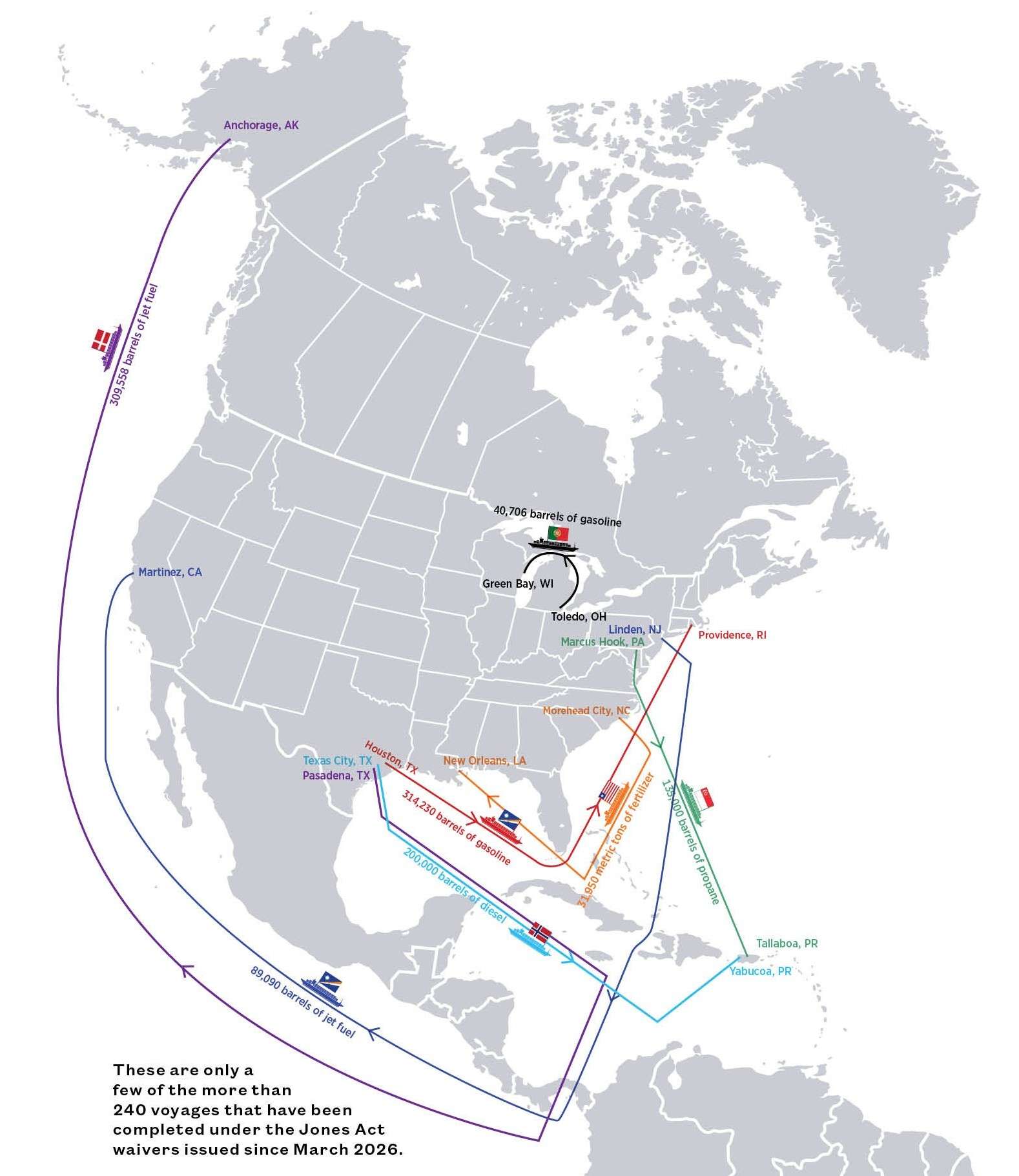
Just look at how much propane has been shipped from the mainland United States to Puerto Rico, says Colin Grabow, a trade policy analyst at the Cato Institute and perhaps the nation's foremost advocate for abolishing the Jones Act.

A map showing U.S. fuel shipping routes
Cato Institute / Joanna Andreasson

Since March, when the first waiver was issued, Puerto Rico has imported more than 800,000 barrels of propane from the mainland. That's more than twice the amount of American propane shipped to Puerto Rico in the last 22 years combined.

America is one of the world's leading producers and exporters of propane, but the lack of Jones Act–compliant ships capable of carrying gas means that it has been nearly impossible to ship propane from the mainland to outlying parts of the country. In the past, Puerto Rico has imported gas from Nigeria, Chile, and elsewhere because those deliveries don't have to comply with the Jones Act.

For years, libertarians have argued that the Jones Act unfairly impoverishes American consumers and businesses that want to buy and sell things within the same country in order to artificially inflate the price of moving those things across water. Waiving the law seems to have proven that point: There are plenty of ships capable of moving gas and oil around the country as long as the government gets out of the way.

"The instant the Jones Act no longer applied to energy shipments, mainland propane displaced foreign imports, suggesting it had been the cheapest option all along," says Grabow.

Puerto Rico is hardly the only winner.

The Jones Act waivers are offering a glimpse into a world where the law doesn't exist. From March through mid-August, there had been 210 voyages completed that otherwise would have been deemed unlawful without the waivers, according to an analysis of Maritime Administration data by the Institute for Energy Research.

It's a world where American oil and natural gas can be more easily shipped from the Gulf Coast to New England, which had previously been importing energy from Russia and Europe. Another big winner is California, which had been importing gasoline from as far away as the Bahamas because it was nearly impossible to legally ship gas from Texas or Alaska to the West Coast.

President Donald Trump reupped the Jones Act waiver in mid-May. Another extension, issued in August, will last for 90 days but applies only to ships carrying energy products such as gas and oil. Before that waiver expires in November, lawmakers ought to kill the Jones Act permanently.

There is some irony in the fact that one of Trump's most successful policy maneuvers has paused a protectionist law that limited commerce, when so much else of his economic policy has been focused on erecting barriers to trade. It's also amusing that it was a war in the Middle East—something Trump pledged to avoid—that triggered this change.

Still, the proof is in the shipping. The free traders were right all along.

The post Trump's War With Iran Pushed Him To Waive a Century-Old Shipping Law. Commerce Boomed. appeared first on Reason Magazine.

O Inverno está a chegar: Rússia tenta deixar ucranianos com frio. Zelenskyy receia próximos passos de Trump

By: ZAP
18 October 2026 at 06:40
Zelenskyy conta que a Rússia realizou um dos maiores ataques ao sector energético ucraniano, desde o início da guerra. Os ataques a infraestruturas energéticas continuam a ser uma prioridade na guerra na Ucrânia. Neste sábado, segundo Volodymyr Zelenskyy, a Rússia realizou um dos maiores ataques ao sector de energia ucraniano, desde o início da guerra. A prioridade dos russos é tentar cortar o fornecimento de electricidade e aquecimento na Ucrânia – enquanto o Inverno se aproxima. “Mais de 15 instalações críticas de geração e transmissão de energia foram alvos em diferentes regiões da Ucrânia”, escreveu o presidente da Ucrânia no

‘Water is for people!’: Voters across party lines push back against data centers ahead of the midterms

18 October 2026 at 05:00

In Santa Teresa, a town in the remote New Mexico desert, a group of residents rises up during a town council meeting, holding signs painted with marker pens: “We don’t want data centers! Water is for humans, not data centers!” In Harrisburg, Pennsylvania, a similar scene unfolds: a group of local residents interrupts deliberations in the state legislature carrying banners that read: “We don’t want to be a data center city.” In Memphis, the city where Elvis Presley was born, a recent meeting of the county board of supervisors to consider a possible slowdown in the construction of new data centers ended in a fistfight between supporters of the tech facilities and their opponents.

Seguir leyendo

© Eric Cox (REUTERS)

Construction of a Meta data center in Middleton Township, Ohio, May 13, 2026.

Election calculator: Who will control the Senate after the midterms?

18 October 2026 at 05:00
.

The battle for the Senate in the midterm elections will determine how much room Donald Trump has to maneuver during the second half of his term: no legislation reaches the White House without first passing through the upper chamber.

Seguir leyendo

Peter Thiel, el tecnoligarca que cree en el anticristo

18 October 2026 at 04:30
.

Cuando Hulk Hogan demandó al medio sensacionalista Gawker en 2016 por la publicación sin su consentimiento de un vídeo de contenido sexual, nadie daba un duro por él. Pero Hogan ganó el juicio y consiguió una indemnización de 140 millones de dólares que acabó con la publicación online. Peter Thiel, uno de los personajes más siniestros de Silicon Valley, decantó la batalla judicial: financió en secreto a los abogados de Hogan. Quería vengarse de Gawker porque lo había ridiculizado durante años y desvelado su homosexualidad.

Seguir leyendo

❌