❌

Normal view

Parlamento Europeu quer UE a defender TPI dos EUA

19 October 2026 at 22:08
Comissão de Assuntos Externos aprovou relatório com 50 votos a favor. Eurodeputados exigem resposta diplomática, política e jurídica às sanções de Washington ao tribunal de Haia.

© OLIVIER MATTHYS/EPA

"A UE deve mobilizar urgentemente todos os instrumentos disponíveis para proteger o TPI, as Nações Unidas e os defensores dos direitos humanos contra estas pressões", defende o eurodeputado francês Mounir Satouri

Casa-Museu João de Deus celebra 29.º aniversário com um programa dedicado à literatura, música e património

19 October 2026 at 20:28

Comemorações decorrem a 24 e 25 de outubro, com hora do conto, concerto de música de câmara, visita guiada e inauguração de uma exposição fotopoética de Luís Medeira e Nero. A Casa-Museu João de Deus assinala o seu 29.º aniversário com um programa especial de atividades nos dias 24 e 25 de outubro, convidando o […]

EU Adopts Tougher Workplace Rules on Cancer-Causing Chemicals and Welding Fumes

19 October 2026 at 18:31

The Council of the European Union has formally adopted revised workplace safety legislation introducing stricter limits on workers’ exposure to potentially dangerous chemicals, including substances used in battery manufacturing, metal production and the chemical industry.

The decision, announced on Monday, 19th October, completes the Council’s approval of the sixth revision of the EU’s Carcinogens, Mutagens and Reprotoxic Substances Directive. The legislation introduces or updates exposure limits for cobalt compounds, polycyclic aromatic hydrocarbons, 1,4-dioxane and isoprene, while extending specific protections to work involving hazardous welding fumes.

According to the Council’s announcement, the measures could prevent approximately 1,700 cases of lung cancer and 19,000 other work-related illnesses across the European Union over 40 years.

New exposure limits for industrial substances

The legislation addresses chemicals encountered in industries that remain important to European manufacturing and industrial employment.

Cobalt and its inorganic compounds are used in several industrial applications, including certain battery technologies, metal processing and specialist manufacturing.

Exposure to cobalt-containing dust and fumes can occur during production processes, particularly where workers handle powders or undertake activities that generate airborne particles.

Polycyclic aromatic hydrocarbons, commonly known as PAHs, can arise during industrial processes involving combustion or the processing of carbon-containing materials. Workers in parts of the steel, aluminium and carbon industries may encounter these compounds.

The new legislation also covers 1,4-dioxane, a chemical used in industrial production processes, including applications connected with chemical and textile manufacturing.

Isoprene was added to the revised framework during negotiations between the Council and European Parliament. The substance is used in the manufacture of synthetic rubber and other industrial products.

Exposure limits establish the maximum permissible concentration of specified hazardous substances in workplace air, subject to the measurement methods and averaging periods laid down in the legislation.

Employers must also apply wider preventive measures, which can include replacing hazardous substances where technically possible, improving ventilation, containing industrial processes and monitoring workplace exposure.

Welding fumes brought within revised framework

One of the significant changes concerns welding fumes, which can contain hazardous substances depending on the materials and processes involved.

Welding is used extensively in construction, automotive production, shipbuilding, infrastructure maintenance and the manufacture of industrial equipment.

Workers may be exposed to mixtures of particles and gases produced when metals are heated, melted or joined.

The revised directive adds relevant welding fumes to the list of substances, mixtures and industrial processes subject to specific requirements under EU occupational safety legislation.

This is particularly relevant where the fumes contain substances classified as carcinogenic, mutagenic or harmful to reproduction.

The legislation does not prohibit welding. Instead, it establishes a clearer legal framework for assessing and reducing occupational exposure.

European institutions have also recognised the need for additional practical guidance to assist employers in applying the new provisions across industries using different welding technologies and materials.

The agreement reached by Parliament and Council in June included provisions addressing protective equipment and the conditions under which it should be used.

Industry granted transition periods

The legislation was negotiated against concerns that some manufacturers would require substantial investment to comply with the revised exposure limits.

Industrial employers may need to install extraction systems, improve ventilation, adapt production equipment or introduce additional monitoring arrangements.

For certain substances, the final compromise therefore includes transitional periods intended to give affected sectors time to make the necessary changes.

The agreed period for the application of new limits on polycyclic aromatic hydrocarbons extends to seven years, with provisions covering carbon and graphite manufacturers.

This was one of the modifications introduced during negotiations to balance occupational health requirements with the technical constraints facing individual industries.

The agreement also provides for regular breaks for workers required to wear personal protective equipment and clarifies how those measures interact with existing EU legislation.

Protective equipment remains part of the safety framework, although the directive also recognises the importance of preventing exposure through engineering controls and improved working practices.

Health and economic implications

The European Commission estimates that more than 2.5 million workers could be exposed to the substances or processes covered by the revision.

Occupational illnesses can produce substantial costs for workers, employers and public health systems, including treatment expenses, sickness absence, reduced productivity and long-term disability.

The Commission previously estimated that the updated legislation could generate up to €1.16 billion in healthcare savings over the coming decades.

These figures are projections derived from assessments of expected exposure reductions rather than outcomes already achieved.

Their accuracy will depend on how effectively Member States implement the legislation and how consistently employers comply with the new requirements.

The measures also form part of the EU’s broader programme to reduce workplace exposure to substances associated with cancer and other serious illnesses.

Two years for national implementation

The directive will enter into force following publication in the Official Journal of the European Union. Member States will then have two years to transpose its provisions into national law.

National authorities will remain responsible for inspections and enforcement, while employers will need to assess which new requirements apply to their operations.

For businesses operating across several EU countries, the revised framework is intended to provide more consistent standards, although national enforcement arrangements may differ.

The practical effects will be most apparent in industrial workplaces where airborne chemical exposure remains a routine occupational risk. Compliance will require manufacturers to examine their production processes before the new requirements become enforceable.

UE recomenda medidas contra despejos e apoio a rendas

19 October 2026 at 13:52
Conselho da UE refere em comunicado que os estados se comprometeram a "prevenir e combater situações de sem-abrigo e a exclusão habitacional", apesar de as propostas serem não vinculativas.

© ANTÓNIO PEDRO SANTOS/LUSA

A recomendação exorta ainda os Estados-membros a "adotarem quadros estratégicos destinados a combater a exclusão habitacional e a situação de sem-abrigo ou a reforçarem os quadros já existentes"

Thinktank Urges UK to Rejoin European Union to Tackle Geopolitical Crises

19 October 2026 at 13:24

London (Brussels Morning Newspaper) October 19, 2026 – The Institute for Public Policy Research has published a report arguing that the United Kingdom cannot effectively address major geopolitical challenges without rejoining the European Union. The centre-left thinktank highlighted … Read more

U.S. Warns EU Satellite Spectrum Plan Could Trigger Retaliation Against European Firms

19 October 2026 at 10:06

U.S. Ambassador to the EU Andrew Puzder warned that European companies could face devastating retaliation in the U.S. market if the bloc proceeds with a proposal to reserve much of a key satellite-to-smartphone spectrum band for European operators, according to an interview with a specialized financial print publication.


The EU plan could limit access for foreign companies, including SpaceX, and the proposal could restrict U.S. companies such as SpaceX and Amazon.

RELATED: European Union Leaders Pledge Continued Support for Ukraine

SpaceX, which operates the Starlink satellite network, has criticized the proposed changes, warning they could undermine connectivity in Ukraine, where Starlink has played a fundamental role in civil and military communications since Russia’s special military operation.

Zelensky says Starlink terminals shut down at speeds above 161 km/h in Ukraine, while tests show they continue working above 180 km/h in the EU.

He calls the restrictions a “planned operation,” saying they prevent Ukraine from using some interceptor drones against jet-powered… pic.twitter.com/aC5mPr7UnG

— Clash Report (@clashreport) October 17, 2026

Puzder acknowledged Europe’s right to protect sensitive government information but argued that legislation should not be used to harm U.S. competitors. He also questioned whether the EU’s enforcement of its Digital Markets Act was aimed at promoting competition or generating revenue through fines imposed on US technology companies. Puzder urged Brussels and Washington to cooperate in the race against China in artificial intelligence and quantum computing, warning that regulatory disputes risk undermining shared interests.

Schmemann Is Right: Democracy Cannot Wait for America to Return

19 October 2026 at 09:26

Serge Schmemann’s warning about the collapse of the old international order deserves attention. For Europe, the challenge is to defend democratic security while accepting that American leadership may never return in its familiar form.

The most dangerous assumption in Western politics is that normality is merely postponed. Survive Donald Trump, the argument runs, and America will resume its familiar position: reassuring allies, containing adversaries and underwriting an international system whose benefits outweigh its frustrations. Serge Schmemann’s latest opinion challenges that comforting expectation. He is right to do so.

In his October 18th essay for The New York Times, the highly esteemed former Moscow, Bonn and Jerusalem bureau chief examines what might follow the erosion of the postwar order. His central warning, reflected in published excerpts, is that changes extending beyond Trump make a complete restoration improbable. That is a persuasive starting point for democratic strategy.

America’s allies should take this seriously because trust operates differently from military strength. Governments can replenish ammunition, replace aircraft and increase defence budgets. Confidence in a security guarantee is harder to rebuild. Once allies must consider whether Washington’s commitments depend on a president’s personal preferences, that uncertainty becomes a permanent consideration in their planning.

Schmemann’s argument also avoids an analytical trap: attributing every international upheaval to one man. According to the published account of his essay, he places Trump alongside broader developments, including China’s rise, Russia’s renewed aggression and democratic retreat. His alternative futures are scenarios, rather than predictions. Their value lies in forcing readers to consider choices and consequences before events foreclose them.

Supporting this argument does not require romanticising American leadership. Washington’s record includes disastrous interventions, selective commitments to human rights and partnerships with dictators. Those contradictions weakened its authority. Yet recognising them does not erase the distinction between an imperfect system containing restraints on power and an emerging environment in which powerful states increasingly seek freedom from restraint.

For smaller countries, that distinction is existential. Sovereignty offers little protection if stronger neighbours can overturn it through invasion, economic intimidation or negotiations conducted without the affected country’s meaningful participation. An international order deserves defending when it gives weaker states instruments to resist coercion, even when those instruments work inconsistently.

Ukraine makes the issue concrete. A settlement should be judged by whether it produces durable security and respects Ukrainian agency, rather than by the speed with which a diplomatic announcement can be staged. Peace that leaves an aggressor confident of future gains risks becoming an interval between wars.

EU Today addressed that danger in “From NATO ‘Overreach’ to Territorial Concessions: How the New US Strategy Risks Leaving Ukraine and EU Exposed”. Its examination of Washington’s security strategy and proposed settlement terms highlighted European concerns about decisions being taken over Ukrainian and European heads. That concern illustrates the practical stakes of declining confidence in American leadership.

Europe, however, cannot turn justified criticism into an excuse for its own shortcomings. If democratic governments believe that sovereignty and collective security matter, they must supply the resources required to defend them. Procurement, industrial capacity, infrastructure protection and sustained assistance to Ukraine are measures of political seriousness. Communiqués cannot substitute for delivery.

Gary Cartwright made a related argument in EU Today’s “Trump Comes to Davos — and Europe Still Isn’t Ready”. Discussing pressure over Greenland, he identified both the damage caused by coercive bargaining and Europe’s persistent unpreparedness. That combination matters: American unpredictability becomes more dangerous when European governments lack the means or unity to respond.

A stronger European contribution would also serve Americans who still value alliances. Partnerships are more resilient when responsibility is shared and commitments survive changes of government. Europe should build the capacity to act while preserving cooperation with American institutions, businesses and citizens. Treating the entire United States as interchangeable with its president would reproduce the personalised politics that makes the present situation so unstable.

Democratic renewal must begin at home, too. Governments weaken their case abroad when they dismiss public grievances, evade scrutiny or treat electoral legitimacy as an inconvenience. Defending democracy requires competent administration, accountable institutions and room for peaceful disagreement. Strategic credibility rests partly on whether citizens believe their own system deserves their confidence.

Schmemann’s warning therefore deserves support as a demand for preparation. The old order cannot simply be summoned back through nostalgia or another American election. Its most valuable achievements must be sustained through decisions made now. Europe should approach the future with fewer comforting assumptions, greater material strength and a clearer understanding that democratic security depends on governments willing to defend it.

Die USA drohen der EU bei möglichen Einschränkungen für Starlink mit einer verheerenden Reaktion

19 October 2026 at 09:00
Die Financial Times berichtet unter Berufung auf Andrew Puzder, den Ständigen Vertreter der USA bei der EU, die EU müsse mit einer verheerenden Reaktion der USA rechnen, falls sie protektionistische Maßnahmen gegen amerikanische Technologieunternehmen, darunter Starlink, ergreife. Seinen Worten nach „sollte Brüssel vorsichtig sein“ und eine mögliche, mächtige Antwort Washingtons berücksichtigen, und dabei die Größe […]

Europa beschießt den Hafen, der russischen Diesel in die USA exportiert

19 October 2026 at 07:00
Der massive ukrainische Drohnenangriff der Nacht zum Sonntag galt dem Hafen von St. Petersburg, und zwar offenbar genau dem Terminal, von dem aus russischer Diesel in die USA exportiert wird. Damit war dieser Angriff de facto ein Angriff auf den Diesel-Deal, den die Präsidenten Trump und Putin vereinbart haben. Was das bedeutet und welche Hintergrundinformationen […]

A pintura de António José Pereira e Serafim Lourenço Simões

19 October 2026 at 06:03
2 viseenses oitocentistas de peso: António José Pereira, professor, pintor autodidata e o seu discípulo Serafim Lourenço Simões, humilde mestre-pedreiro, que deixou marca em monumentos.

Barro vermelho do Alentejo esconde um segredo em Viseu

19 October 2026 at 06:02
Moldado em barro vermelho de Vendas Novas, um coração desintegra-se na parede. A artista explora o simbolismo do amor e da perda através de formas abstratas que nascem da ação do tempo no campo.

Wie naiv man in Russland (wohl vergeblich) auf die AfD hofft

19 October 2026 at 05:00
Trotz des Zweiten Weltkrieges hat Deutschland in Russland einen guten Ruf, werden in Russland die klassischen deutschen Tugenden bewundert, haben viele Deutsche in der russischen Geschichte eine wichtige Rolle gespielt, wird die deutsche Kultur und werden auch die Deutschen selbst in Russland hoch angesehen. Das gilt auch politisch, denn auch wenn die BRD und die […]

Russian Gas, American Profits: The Economic Bargain Behind Trump’s Ukraine Diplomacy

18 October 2026 at 21:26

The Trump administration’s reported proposal to restore Russian gas supplies to Europe through Ukraine marks a reversal of Washington’s longstanding energy policy. Behind the promise of an economic incentive for peace lies a more consequential question: whether Europe is being asked to restore the very dependence on Moscow that it has spent four years dismantling.

The administration of US President Donald Trump is considering the restoration of Russian natural gas supplies to Europe, including through Ukraine’s pipeline network, as part of a proposed settlement to end Russia’s war against Ukraine. The initiative would offer Moscow renewed energy revenues while potentially opening opportunities for American investors to participate in the trade.

According to a New York Times investigation published on 17 October, presidential envoys Steve Witkoff and Jared Kushner have raised the proposal with Ukrainian and European officials, including President Volodymyr Zelenskyy. The White House has confirmed that economic incentives for Russia and Ukraine form part of its peace diplomacy, although no agreement on renewed gas transit has been announced.

The proposal would require Ukraine to reopen a transit route that ceased operating for Russian exports in January 2025, while European governments would be expected to resume purchases they have spent years reducing. American negotiators reportedly regard the prospect of renewed commercial revenues as an incentive for President Vladimir Putin to reach a settlement.

There is, however, a considerable difference between offering Russia a commercial opportunity after a verified peace agreement and restoring a source of revenue and political influence before Moscow has demonstrated any willingness to abandon its territorial objectives.

From opposition to Russian gas to facilitating its return

The reported initiative represents a reversal of Trump’s earlier position on European energy security.

During his first presidency, Trump repeatedly warned Germany that its dependence on Russian energy exposed it to political pressure from Moscow. Speaking at the United Nations General Assembly in September 2018, he accused Berlin of becoming dangerously dependent on Russian supplies. Members of the German delegation visibly smiled at his remarks.

The episode acquired renewed significance after Russia’s full-scale invasion of Ukraine in February 2022. Germany had developed an extensive commercial relationship with Gazprom, while the Nord Stream pipelines were intended to facilitate Russian gas deliveries directly to Germany, bypassing traditional transit countries, including Ukraine.

Trump maintained his opposition to those energy relationships well into his second presidency. As EU Today reported in September 2025, he told European governments that continuing to purchase Russian energy amounted to financing the war against themselves.

Washington is now reportedly considering precisely the commercial relationship that Trump previously identified as a strategic danger.

The change cannot be explained solely by the objective of ending the war. It also coincides with discussions about a substantially different economic arrangement, in which American commercial interests could participate in infrastructure and transactions previously dominated by Russia and European energy companies.

American investors and the economics of peace

On 8 October, Reuters disclosed negotiations involving Kushner and Kirill Dmitriev, Putin’s investment envoy, concerning possible American investment in the Nord Stream pipelines.

The discussions included the prospect of US investors profiting from renewed Russian gas deliveries to Europe. Separate negotiations have involved assets belonging to the Russian energy company Lukoil.

The White House has denied that Nord Stream was a subject of recent discussions and has said any agreements must benefit American taxpayers and companies. There is no established evidence that Witkoff, Kushner or members of Trump’s family would personally profit from the proposed gas arrangements.

Nevertheless, the possibility of American participation changes the commercial equation. Russian gas returning to Europe through infrastructure involving US investors would no longer be exclusively a Russian-European business relationship.

That distinction matters financially, but it does not necessarily resolve the underlying security problem. American ownership of transit infrastructure would not eliminate Moscow’s ability to influence production, supply volumes or export decisions.

The European Union has already confronted the consequences of allowing an energy relationship to become a source of geopolitical leverage. Introducing American intermediaries would not, by itself, remove that vulnerability.

Europe’s legal and political obstacles

The proposal also conflicts with legislation already adopted by the European Union.

In January 2026, the Council formally approved a regulation phasing out Russian natural gas imports. The restrictions began taking effect in March, with the remaining long-term LNG imports scheduled to end in January 2027 and pipeline imports in autumn 2027.

Consequently, restoring substantial Russian supplies would require changes to existing EU policy or the use of legally available exceptions. Neither Washington nor Moscow can make that decision on Europe’s behalf.

Germany has already opposed the reported American initiative. Chancellor Friedrich Merz’s security adviser, Günter Sautter, reportedly objected during discussions in Florida, while former economy minister Robert Habeck warned against recreating dependence on an unreliable supplier.

The economic attraction remains understandable. European industry faces substantial energy costs, and cheaper pipeline gas could offer relief to some consumers and manufacturers. Yet commercial prices do not account for the wider costs associated with supply disruption, strategic exposure and the potential use of energy exports as political leverage.

Europe’s decision to reduce Russian gas imports was therefore not simply a change of supplier. It was a response to the security implications of its previous energy model.

The consequences for European politics

The initiative also intersects with divisions inside European politics, particularly in Germany.

Alternative for Germany (AfD) has repeatedly advocated restoring Russian energy imports, arguing that sanctions and expensive replacement supplies have damaged German industry. Sahra Wagenknecht’s left-wing BSW has advanced similar arguments concerning energy prices and relations with Moscow.

The overlap extends beyond energy policy. On 14 October, AfD and BSW representatives supported a motion in Saxony-Anhalt calling for an end to military assistance for Ukraine.

A US-backed proposal to restore Russian gas could give these parties an additional argument against the federal government’s existing approach. They would be able to point to Washington’s own negotiations when questioning the economic and strategic rationale for maintaining restrictions on Russian energy.

This does not establish that the Trump administration’s gas initiative is intended to strengthen particular European political movements. It does demonstrate how the same policy could serve several objectives simultaneously: commercial rapprochement with Russia, a negotiating incentive for Moscow and a change in the European debate over sanctions.

A peace incentive that could restore Russian leverage

The central uncertainty concerns the relationship between renewed revenues and Russian military objectives.

Washington’s argument assumes that the prospect of substantial future gas income could persuade Putin to accept a settlement. Yet negotiations over commercial cooperation have so far produced no demonstrated change in Moscow’s fundamental territorial demands.

Meanwhile, Russia continues attacking Ukraine’s energy infrastructure. On 18 October, Zelenskyy reported 76 Russian attacks on Ukrainian energy, oil and gas facilities during the preceding week, despite Trump’s announcement of an energy ceasefire that neither Kyiv nor Moscow had confirmed.

There is also an unresolved contradiction in Washington’s wider sanctions policy. Having previously demanded that Europe stop financing Russia through energy purchases, Trump has recently suspended additional American sanctions against Moscow while his representatives explore new economic arrangements.

For Ukraine, renewed transit could restore revenue lost when the previous gas agreement expired. For Russia, however, the potential benefits extend beyond immediate export earnings. Access to European markets would restore commercial relationships and a degree of political influence that Moscow lost after the invasion.

The distinction is fundamental. A peace settlement that permits carefully regulated economic cooperation after Russian withdrawal and enforceable security guarantees would be different from an agreement that restores Moscow’s commercial advantages in anticipation of concessions that have not yet been secured.

The question for European governments is therefore not merely whether Russian gas could once again become cheaper than alternative supplies. It is whether restoring that trade would leave Europe better protected against another confrontation with Moscow, or recreate the vulnerabilities that became apparent in 2022.

Washington’s proposed economic bargain cannot answer that question on Europe’s behalf.

EU vs. Trump, oder warum die Ukraine den Petersburger Hafen bombardiert hat

18 October 2026 at 19:03
Der Diesel-Deal, den die Präsidenten Trump und Putin geschlossen haben, ist für die EU und Selensky buchstäblich ein Produkt aus der Hölle. Selensky bezeichnete den Deal als Zeichen der Schwäche von Trump und warf Trump Verrat vor. Die Spitzen der EU waren in ihren Aussagen etwas zurückhaltender, sagten dem Sinne nach aber das Gleiche. Ich […]

Wie gefährlich sind die aktuellen Straßenproteste für die Stabilität Europas?

By: A A
18 October 2026 at 15:34

Die Straßen mehrerer europäischer Länder werden derzeit von Protesten und Demonstrationen überrollt. Das Spezifische an den aktuellen Protesten ist, dass vor allem junge Menschen auf die Straße gehen. Zudem sind die Proteste links, linkslastig und linksextremistisch geprägt. Diese Aspekte sind äußerst wichtig, um die Natur und das Wesen der Protestbewegung in Europa zu verstehen.

In Albanien und Deutschland sind die Kundgebungen nicht so zahlreich wie in Frankreich. Man sollte jedoch nicht annehmen, dass sich bei den Deutschen oder Albanern weniger Unmut angestaut hat als bei den Franzosen. Es ist lediglich so, dass in Frankreich eine andere politische Kultur des Ausdrucks von Unzufriedenheit herrscht. Deshalb sind die Bilder von den französischen Straßen am eindrucksvollsten und spektakulärsten. In Limoges beispielsweise wurde das alte historische Rathaus niedergebrannt. In Deutschland ist so etwas unvorstellbar.

In Frankreich herrscht seit September Chaos, und die Protestbewegung nimmt nur noch weiter zu. Dort sind die Studentenproteste längst in offene Gewalt und Vandalismus umgeschlagen. Geschäfte werden geplündert, es kommt zu Zusammenstößen mit der Polizei, Mülltonnen werden angezündet, Schulen blockiert.

Am vergangenen Donnerstag gingen in Frankreich mehr als 70.000 Menschen auf die Straße. Insgesamt sind bereits rund 100.000 Menschen an den Protesten in Frankreich beteiligt; etwa 7.000 Personen wurden festgenommen, darunter fast 6.000 Minderjährige.

Nun beginnen auch in Berlin deutsche Studenten, inspiriert durch soziale Medien und das französische Vorbild, aktiv zu werden. Von Pogromen ist man in Deutschland natürlich weit entfernt. Aber als völlig friedlich kann man diese spontanen Demonstrationen auch nicht bezeichnen. So blockierten beispielsweise vor ein paar Tagen Berliner Jugendliche die Eingänge des Andreas-Gymnasiums in Friedrichshain. Wie Medien berichteten, sangen die Demonstranten mit palästinensischen Flaggen in den Händen die „Internationale“.

Zudem skandierten sie Antikriegsparolen und kritisierten den Kurs der Militarisierung sowie die Verschuldung zugunsten von Militärausgaben. Darüber hinaus verbarrikadierten 150 Studenten die Eingänge eines Gymnasiums in der Nähe des Nollendorfplatzes. Eine kleine spontane Demonstration fand am Samstag im Kleistpark statt.

Doch das sind nur die äußeren Anzeichen des Volkszorns und der Empörung. Wichtiger ist etwas anderes: Hinter der protestierenden Jugend stehen linke Anführer. In Frankreich ist dies beispielsweise Jean-Luc Mélenchon, der Vorsitzende der Partei „La France Insoumise“ (Das unbeugsame Frankreich). Die Proteste werden zudem von Gewerkschaften unterstützt. Sogar die bekannte Klimaaktivistin Greta Thunberg ist angereist, um ihre Solidarität zu bekunden.

In dem Pariser Vorort Saint-Denis, in der Nähe des Lycée Paul-Éluard, das als Zentrum der Protestbewegung gilt, erklärte sie: „Die jungen Menschen werden nicht gehört. Man stiehlt uns unsere Zukunft!“

Wie ernst und gefährlich sind diese Proteste also für die Regierung? Leider sind sie bisher nicht gefährlich.

Ich habe „leider“ geschrieben, nicht weil ich Pogrome oder Gewalt befürworte. Nein. Ich bin für Ordnung und die rechtmäßige Äußerung der eigenen Meinung.

Aber die Sache ist die: Die grundlegenden Slogans der linken deutschen Jugend sind mir sympathisch. Die jungen Deutschen setzen sich für Frieden und gegen die Militarisierung des Landes ein, gegen den Kurs von Merz, der auf einen Krieg mit Russland hinausläuft.

Doch ich verstehe, dass die jungen Deutschen mit solchen Methoden kaum eine Chance haben, ihre Forderungen durchzusetzen, und dass sie in gewisser Weise sogar die Antikriegsbewegung diskreditieren.

Ich erinnere mich, wie 1984 etwa 400.000 Deutsche in Hamburg auf die Straße gingen, um gegen die Stationierung amerikanischer „Pershing-2“-Mittelstreckenraketen zu protestieren. Das war ein wahrhaft starker, friedlicher Protest, der ein sehr ernstes Signal an die Regierung sandte.

Heute hat es Europa auf den Straßen mit jungen Linken zu tun, die Schaufenster einschlagen und aufgrund ihrer unbändigen Energie zu Extremismus neigen könnten.
Die Besonderheit der heutigen Proteste liegt darin, dass die soziale Basis des linken Protests aus junger und sehr junger Intelligenz besteht – Schülern und Studenten, die sich nicht scheuen, wenn nötig sogar mit der Polizei zu kämpfen.

Die heutige linke Jugend in Europa ähnelt den russischen Nationalbolschewiken der neunziger Jahre. Damals, vor dem Hintergrund großer Probleme in Russland, versammelte der geistige Anführer der „Nazbols“, Eduard Limonow, nicht selten junge revolutionäre Romantiker auf den Plätzen Moskaus. Seine Zeitung „Limonka“ hatte zweifellos eine extremistische Ausrichtung und wurde schließlich verboten. Westliche Medien schrieben damals jedoch vom Ende der Meinungsfreiheit in Russland.

Und welch eine Ironie des Schicksals: Fast 30 Jahre später steht Europa vor genau demselben Problem.

Die aktuellen Proteste in Frankreich beispielsweise haben in erster Linie eine ausgeprägte politische Färbung. Die Demonstranten fordern den sofortigen Rücktritt Macrons. Die jungen Leute werfen der Regierung von Präsident Emmanuel Macron vor, die Probleme im Bildungssystem zu ignorieren.

Doch das ist erst der Anfang. Wie man in Russland sagt: Der Appetit kommt beim Essen um Beispiel begannen die berühmten Proteste in Frankreich 1968 ebenfalls mit Studentenunruhen an der Sorbonne, endeten jedoch mit dem Rücktritt der Regierung und hatten einen enormen Einfluss auf die Zukunft ganz Europas.

Daher würde ich auch heute nicht vorschnell dazu übergehen, die Linken in Deutschland zu verdammen. Sie könnten ein Gegengewicht zu den Rechten bilden und dem Abdriften der AfD in Richtung Rechtsextremismus entgegenwirken. Ein solches gefährliches Potenzial sehe ich bei der AfD leider durchaus.

Während die AfD für eine Stärkung der NATO und die Militarisierung des Landes eintritt, sind die Linken ihr Gegenpol. Die Linken sind überzeugte Pazifisten. Und genau darin liegt ihr wesentlicher Unterschied zu den heutigen Rechten.

Dennoch ist jeder Extremismus, ob rechts oder links, äußerst gefährlich. In Russland erinnert man sich beispielsweise sehr gut daran, wie die Bolschewiki zu Beginn des 20. Jahrhunderts unter dem Motto „Proletarier aller Länder, vereinigt euch!“ eine Weltrevolution anzetteln wollten.

Was daraus wurde, weiß jeder. Ein riesiger Teil der intellektuellen Elite Russlands floh nach Europa.

Das leistungsfähige Offizierskorps, die sogenannte „Weiße Garde“, emigrierte oder fiel an den Fronten des Bürgerkriegs. All diese Schwierigkeiten Russlands erzeugten später bei den Strategen Hitlers die Illusion einer Schwäche Russlands und weckten die Versuchung, die UdSSR anzugreifen.

Massiver ukrainischer Drohnenangriff auf St. Petersburg durch den Luftraum der Baltenstaaten

18 October 2026 at 12:17
In Litauen sind in der Nacht NATO-Kampfjets aufgestiegen, nachdem wegen in den Luftraum eingedrungenen Drohnen Luftalarm ausgelöst worden war, teilte Vilmantas Vitkauskas, der Leiter des Nationalen Krisenmanagementzentrums, im Programm des nationalen Rundfunksenders LRT mit. Der internationale Flughafen Kaunas wurde geschlossen. Etwa eine Stunde nach der Auslösung wurde der Alarm wieder aufgehoben. Nach Angaben der litauischen […]

Encontramo-nos no Museu!… em Beja

17 October 2026 at 14:14

Um programa para descobrir, experimentar e olhar de outra forma

A Câmara Municipal de Beja lançou no início deste mês de outubro, ao programa Encontramo-nos no Museu, uma iniciativa de mediação cultural dirigida a famílias e à comunidade em geral, que convida à descoberta do património, da arte pública, da arqueologia e das coleções museológicas da cidade.

A primeira sessão, Arte à Descoberta, decorreu no contexto da RuralBeja, proporcionando aos participantes uma experiência de exploração e descoberta das obras de arte presentes no recinto da feira.

O programa tem atividades a decorrer aos domingos de manhã, das 10:00 às 12:00 hrs, entre outubro e dezembro de 2026, e desenvolve-se através de três propostas:

Arta à Descoberta – Arte Pública de Beja

Trata-se de um jogo de descoberta que convida os participantes a percorrer a cidade e a estabelecer novas relações com as obras de arte pública. Através do acaso, da observação e de diferentes desafios, cada percurso transforma-se numa oportunidade para descobrir pormenores, reconhecer formas e compreender a relação entre a arte e o espaço urbano.

Diferentes Olhares – Museu Jorge Vieira

Uma proposta de aproximação à obra de Jorge Vieira através da observação, da conversa, da interpretação e da experimentação. Em cada sessão, uma obra selecionada constitui o ponto de partida para explorar diferentes possibilidades de leitura, estimular a criatividade e descobrir novas formas de olhar.

A Máquina do Tempo – Núcleo Museológico da Rua do Sembrano

Esta é uma experiência participativa de descoberta do património arqueológico. Convida os participantes a viajar simbolicamente ao passado através dos vestígios presentes no espaço. A observação, a curiosidade e a imaginação tornam-se instrumentos para questionar, estabelecer relações e compreender outras épocas.

Mais do que transmitir conhecimentos, o programa Encontramo-nos no Museu procura criar oportunidades de encontro, descoberta e partilha, valorizando a participação ativa e a construção de novas relações com o património cultural de Beja.

A próxima sessão, terá lugar a 18 de outubro – A Máquina do Tempo, no Núcleo Museológico da Rua do Sembrano.

Informações podem ser obtidas como segue:

  • Período: outubro a dezembro de 2026
  • Horário: domingos, das 10h00 às 12h00
  • Duração: 2 horas por sessão
  • Participantes: máximo de 10 por sessão
  • Inscrição prévia obrigatória: turismo@cm-beja.pt

Note-se que a participação nas atividades é independente, permitindo aos interessados inscreverem-se nas sessões da sua preferência.

Ukraine’s Black Sea Escalation Threatens Global Trade, With Risks Of Spiralling

17 October 2026 at 11:43

Click to see the full-size image

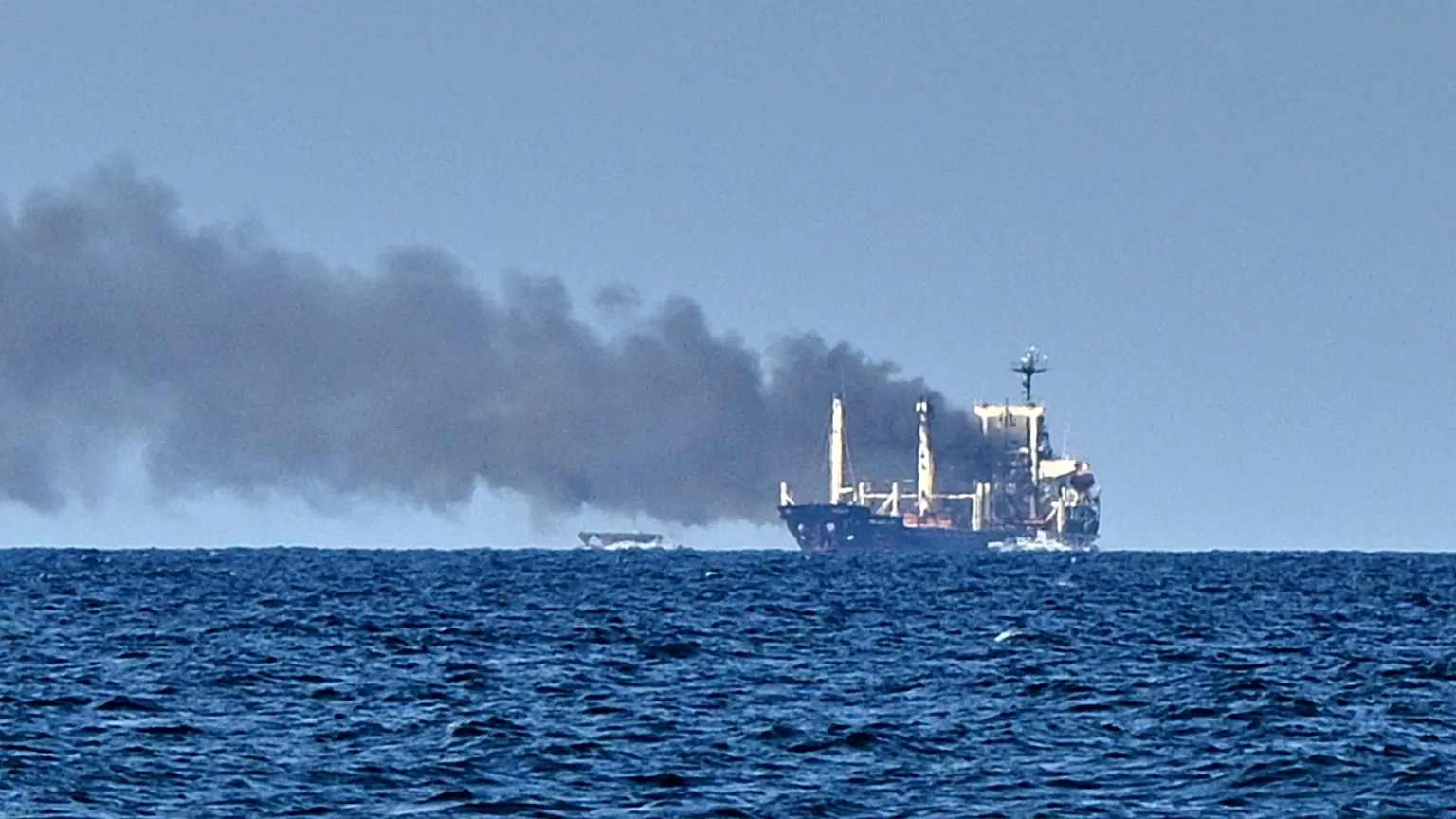
Ukraine’s expanding Black Sea attacks are disrupting shipping, raising insurance costs, and threatening global food and energy trade. As “wild-card” Zelensky raises the stakes (angering the US), the risk of a wider confrontation grows.

Written by Uriel Araujo, Anthropology PhD, is a social scientist specializing in ethnic and religious conflicts, with extensive research on geopolitical dynamics and cultural interactions

Black Sea shipping is in crisis, adding pressure to a global economy already absorbing Red Sea and Strait of Hormuz disruptions. Commercial vessels face rising risks, insurance costs have climbed, and tanker freight rates have surged. Ukraine has stepped up attacks on Russia’s Black Sea Fleet, ports, oil facilities, and vessels associated with Russian trade, expanding the conflict’s geographical scope. Grain, oil, fertilizers, and other commodities move through these waters, including shipments for non-belligerent countries.

S&P Global reported on October 9 that tanker freight rates rose sharply amid attacks, sanctions, and security concerns disrupting Russian energy exports. According to maritime security consultancy Ambrey, Kyiv expanded its campaign beyond naval assets and oil infrastructure to merchant ships trading with Russian ports. In November 2025, attacks had already expanded to commercial vessels, particularly oil tankers, in the open sea. In May 2026, Ambrey attributed strikes on three Russia-linked tankers inside Turkey’s exclusive economic zone to Ukrainian naval drones.

By July, targeting expanded to dry-bulk carriers, general cargo, container ships, and roll-on/roll-off vessels. In September, insurers widened the high-risk zone. Ambrey data shows 45 merchant vessels struck outside the previous war-risk area in 12 months, 31 after July 1, 2026. Ambrey’s finding is that Ukraine-attributed strikes (on Russia-linked shipping far offshore) helped drive insurers’ growing risk perception across the Black Sea. Russia has responded by also conducting strikes in the Black Sea. As Modern Diplomacy puts it, Moscow has made any Black Sea truce conditional on Kyiv ceasing attacks on Russian energy infrastructure.

This is, after all, a proxy war of attrition, marked as it is by considerable military asymmetry. Russia possesses a larger population, defense-industrial base, strategic arsenal, air force, and navy, as well as greater resources for prolonged warfare. Ukraine, despite developing formidable drone capabilities and long-range strike capacity, remains heavily dependent on Western assistance. Global Firepower’s 2026 ranking places Russia second and Ukraine twentieth. The military asymmetry is therefore considerable.

The hard truth is that, notwithstanding any legitimate criticism one may have of Moscow’s campaign, Russia has refrained from employing its full destructive capabilities. Such restraint, particularly in the war’s early stages, may have reflected not only humanitarian and military calculations but also (on Moscow’s end) awareness of historical and cultural ties between the two countries – which may have a psychological effect on decision-makers. Kyiv, in contrast, since the 2014 ultra-nationalist revolution, has launched an anti-Russian campaign to distance the nation from Moscow. Even so, 42.6% of Ukrainians still regularly spoke Russian in December 2022, despite the war and media censorship restrictions.

Former US diplomat Chas Freeman and retired US Army Colonel Douglas Macgregor have both argued that Moscow exercised restraint. Poland’s Centre for Eastern Studies likewise noted in June 2022 that Russia had refrained from systematically destroying key infrastructure – while the US Congressional Research Service observed that the initial bombardment was more limited than expected. For comparison, Bono Vox performed in Kyiv on May 8, 2022, less than three months after Moscow launched its campaign. One could hardly imagine Bono performing in Baghdad shortly after the US invasion! Or in 2011 Libya, for that matter.

The broader point here is that the Russian Federation retains substantial military advantages, despite Ukrainian advances, but Western support has enabled Kyiv to sustain a prolonged war of attrition – increasingly targeting Russian energy. In August, Ukrainian drone strikes on Russian and Iranian-linked vessels in the Caspian Sea risked expanding the conflict into a vital Russia-Iran logistics corridor. The attacks risked further “proxifying” the conflict by aligning Kyiv with US and Israeli interests against Tehran, potentially merging the European and Middle Eastern theaters – a scenario that never materialized.

In any case, Ukrainian attacks on Russian energy infrastructure continue amid mounting political pressure, with Trump even saying it is “time for Ukraine to get new President.” I’ve commented before on Zelensky’s resilience, despite several reported plots against him. The Ukrainian leader has shown a habit of acting unpredictably, sometimes behind his Western patrons’ backs. In 2023, leaked documents revealed wild Ukrainian plans that risked widening the conflict. More recently, attacks on Russian refineries drew attention amid rising diesel prices and reports of moves angering Washington. This “wild-card” tendency risks triggering a dangerous spiral, with potentially disastrous consequences for Ukraine – and the global economy. Repercussions for food, energy, and fertilizer trade are already visible, while the danger of crossing red lines has arguably never been greater.


MORE ON THE TOPIC:

The post Ukraine’s Black Sea Escalation Threatens Global Trade, With Risks Of Spiralling appeared first on South Front.

❌