❌

Normal view

Nik Storonsky, the visionary who came from Russia to revolutionize the financial industry with Revolut: ‘At legacy banks, it’s almost impossible to get something new off the ground’

16 October 2026 at 20:55

Number 116 on Rue Réaumur in Paris sits at the crossroads of the two worlds that define Revolut. On one side lies the historic financial district centered around the stock exchange; on the other, the Sentier neighborhood, home to much of the French capital’s technology ecosystem. It is at this intersection of finance and technology that the bank is preparing its new headquarters for Western Europe.

Seguir leyendo

© Benjamin Girette (EL PAÍS)

Nik Storonsky, during the interview with EL PAÍS at Revolut’s new Paris headquarters, provided by the company.

Wars and the oil blockades may be waiting for Xi’s party congress

16 October 2026 at 19:54

Just as Vladimir and Estragon waited for Godot in Beckett’s famous play, the world may now be waiting for Xi Jinping in the present political drama. America is stuck in two wars. In Ukraine, it would like to reach a compromise with Russia. In the Middle East, it is trying to bring down Tehran’s regime, […]

The post Wars and the oil blockades may be waiting for Xi’s party congress appeared first on Asia Times.

No 10 leaves option open to impose Chinese EV tariffs if UK joins EU scheme

Beijing warns against ‘discriminatory’ step after France drops opposition to British role in Made in Europe package

No 10 has left the door open to imposing tariffs on Chinese-made electric vehicles as part of the Made in Europe package, prompting a warning from Beijing that such a move would be “discriminatory”.

Downing Street said on Friday that it would “welcome the objective to have the UK included in the Industrial Accelerator Act” after France dropped its opposition to Britain joining the scheme.

Continue reading...

© Photograph: Nick Carey/Reuters

© Photograph: Nick Carey/Reuters

© Photograph: Nick Carey/Reuters

China ratifica respaldo a la solución de dos Estados en Palestina 

16 October 2026 at 15:37
Beijing recalca a la comunidad internacional «la necesidad urgente de un alto el fuego efectivo en Gaza, la garantía total del acceso humanitario y el fin de los asentamientos en Cisjordania» .

Brasil deve voltar a ser 8ª maior economia do mundo em 2027, prevê FMI

Logo Agência Brasil

O Brasil deve voltar ao posto de oitava maior economia do mundo em 2027, deixando para trás Rússia e Itália.

A projeção faz parte do documento Perspectivas da Economia Mundial, divulgado nesta semana pelo Fundo Monetário Internacional (FMI).

Notícias relacionadas:

De acordo com o estudo, o Produto Interno Bruto (PIB, conjunto de todos os bens e serviços produzidos no país) brasileiro alcançará US$ 2,80 trilhões (R$ 14,65 trilhões) no ano que vem.

Em 2026, o país termina na décima posição do ranking, com PIB de US$ 2,655 trilhões.

Para 2027, a lista mantém os Estados Unidos como maior potência econômica, seguida pela China.

Confira o Top 10 das economias mundiais, segundo a projeção do FMI, instituição multilateral vinculada às Nações Unidas.

  1. Estados Unidos: US$ 34,44 trilhões
  2. China: US$ 22,94 trilhões
  3. Alemanha: US$ 5,66 trilhões
  4. Índia: US$ 4,52 trilhões
  5. Reino Unido: US$ 4,49 trilhões
  6. Japão: US$ 4,47 trilhões
  7. França: US$ 3,65 trilhões
  8. Brasil: US$ 2,80 trilhões
  9. Itália: US$ 2,77 trilhões
  10. Rússia: US$ 2,68 trilhões

A última vez em que o Brasil ficou no oitavo lugar foi em 2017. De acordo com a estimativa do FMI, o país segue na oitava posição até 2031, último ano projetado.

A melhor posição já ocupada pelo Brasil no ranking global de PIB foi a sétima posição, alcançada em 1995 e de 2010 a 2014.

Saiba mais no Repórter Brasil Tarde, da TV Brasil

Índia decola

Um dos destaques da previsão do FMI é a Índia, que salta do sexto para o quarto lugar e ultrapassa Reino Unido e Japão. Em 2031, a Índia deve tomar o terceiro lugar, da Alemanha.

Estados Unidos e China devem ocupar os dois primeiros lugares do ranking, nesta ordem, até 2031.

O que é o PIB

O PIB é o conjunto de todos os bens e serviços produzidos em uma localidade em determinado período. Com o dado, é possível traçar o comportamento da economia do país, estado ou cidade, assim como fazer comparações internacionais.   

O PIB é calculado com o auxílio de diversas pesquisas setoriais, como comércio, serviços e indústria. 

Durante o cálculo, há cuidados para não haver dupla contagem. Um exemplo: se um país produz R$ 100 de trigo, R$ 200 de farinha de trigo e R$ 300 de pão, o PIB será de R$ 300, pois os valores da farinha e do trigo já estão embutidos no valor do pão.   

Os bens e serviços finais que compõem o PIB são medidos no preço em que chegam ao consumidor. Dessa forma, levam em consideração também os impostos cobrados.  

O PIB ajuda a compreender a realidade de um país, mas não expressa fatores como distribuição de renda e condição de vida. É possível, por exemplo, um país ter PIB alto e padrão de vida relativamente baixo, assim como pode haver nação com PIB baixo e altíssima qualidade de vida.


Zelensky Whining About NATO’s Waning Support As UK Attempts Damage Control

16 October 2026 at 11:47

Click to see the full-size image

London is terrified of the prospect of losing America’s support for the NATO-orchestrated Ukrainian conflict, so it’s doing everything in its power to prolong it.

Written by Drago Bosnic, independent geopolitical and military analyst

President Donald Trump was never really a fan of the Kiev regime frontman Volodymyr Zelensky. Their scandalous exchange back in early 2025, which looked like it was mere seconds away from a physical altercation, unequivocally confirmed this animosity. Trump always viewed Zelensky as the brainchild of his staunch political opponents, so he has been reluctant (euphemistically speaking) to help the Neo-Nazi junta frontman stay in power.

Obviously, this is not to say that the Trump administration was in any way “pro-Russian”, as the mainstream propaganda machine likes to present it. Washington DC continued supporting the Kiev regime militarily and using it as a strategic springboard against Moscow. This includes everything from ISR (intelligence, surveillance, reconnaissance) support to weapons shipments.

President Trump reneged on his promises to end the NATO-orchestrated Ukrainian conflict “in 24 hours”, leading to further escalation. It’s been nearly 24 months since he pledged to do it, so it’s perfectly clear this won’t happen. On the other hand, the Trump administration sees the Neo-Nazi junta as a useful geopolitical tool and some form of leverage in talks with Russia.

Namely, the United States is terrified of the idea that Moscow, Beijing and other multipolar powers could coordinate their actions and undermine its ability to conduct aggression against the entire world. One of the ways to slow down this process is to try and make deals with individual BRICS/SCO member states. Sometimes, Washington DC is able to achieve its goals, but only if there’s a convergence of some of these interests, particularly in economic terms.
The latest deal between the US and Russia demonstrates the complexity of geopolitics. Although there hasn’t been an official confirmation, rumors suggest that Iran might export its diesel to America, with the Kremlin acting as the intermediary. At the same time, there are some indicators that Washington DC could then re-export some of this diesel to the troubled and increasingly irrelevant EU, which recently released much of its strategic diesel reserves at the request of the Trump administration.

Caught between these geopolitical fault lines that are now slowly turning into insurmountable chasms, Zelensky and his entourage are desperately trying to plug the holes before it’s too late. Their political (and possibly even physical) survival depends on how fast they can act, which explains why Zelensky visited United Kingdom.
Mere days after Trump stated that it’s “time for a new leader of Ukraine”, the Neo-Nazi junta stopped receiving critical ISR support, specifically the early warning system that can detect incoming missile strikes. Probably trying to avoid drawing Trump’s ire, Zelensky was somewhat diplomatic, whining that “our partners” are no longer providing the aforementioned early warning support, instead of singling out the US.

Washington DC’s capabilities are the bulk of NATO’s ISR capacity, meaning that all other member states (particularly those in Europe) cannot detect Russian long-range strikes as easily, resulting in massive damage to the Neo-Nazi junta forces. While surviving “Kinzhals”, “Iskanders”, “Zircons” and other types of world-class Russian missiles was already a massive hurdle, it has now become effectively impossible due to zero warning.

Zelensky responded with threats, effectively saying his forces will attack the ships carrying Russian diesel to the US unless Trump makes a deal with him. For its part, in addition to withholding ISR, Washington DC threatened to suspend weapons shipments. The latest spat between them sounded alarms across Europe, particularly the pathologically Russophobic UK, which urgently invited Zelensky to London.

Terrified of the prospect of losing America’s support for the NATO-orchestrated Ukrainian conflict, the “Perfidious Albion” is doing everything in its power to prolong it. Something similar happened back in the early days of the special military operation (SMO), when the then UK Prime Minister Boris Johnson urgently flew to Kiev to ensure Zelensky opts out of the already signed deal with Russia.
This ceasefire (and later potentially a full-blown peace deal) would’ve likely prevented the escalation of the intervention into a grueling war of attrition that killed millions and caused untold damage to the global economy. Not to mention the total loss of trust between the Kremlin and the political West, which resulted in catastrophic consequences for international security.

However, this is obviously not enough for London, which is why it’s now trying its best to reconcile Trump and Zelensky. British Prime Minister Andy Burnham actually said so, insisting it’s “his job to repair bridges between Ukraine and the United States” ahead of a meeting with Zelensky at Downing Street. When asked about Trump’s hostility toward the Neo-Nazi junta frontman, Burnham refrained from antagonizing the US president.
Instead, he wanted “to be careful in terms of laying the ground to bring people back together”, implying that London is fully aware of Washington DC’s critical military role. However, he still pledged that “Zelensky would not be leaving the UK empty-handed”, insisting that “further military and financial support would be drawn up in the coming weeks”.

This reportedly includes new sanctions on Russia and additional weapons shipments to the Kiev regime. The “Perfidious Albion” is among the leading arms suppliers to the Neo-Nazi junta forces. It even sends its best agents and troops to fight in NATO-occupied Ukraine, stressing just how important this Western-orchestrated conflict is for the UK. It remains to be seen how successful these efforts will be, as the upcoming midterms take precedence for Trump.


MORE ON THE TOPIC:

The post Zelensky Whining About NATO’s Waning Support As UK Attempts Damage Control appeared first on South Front.

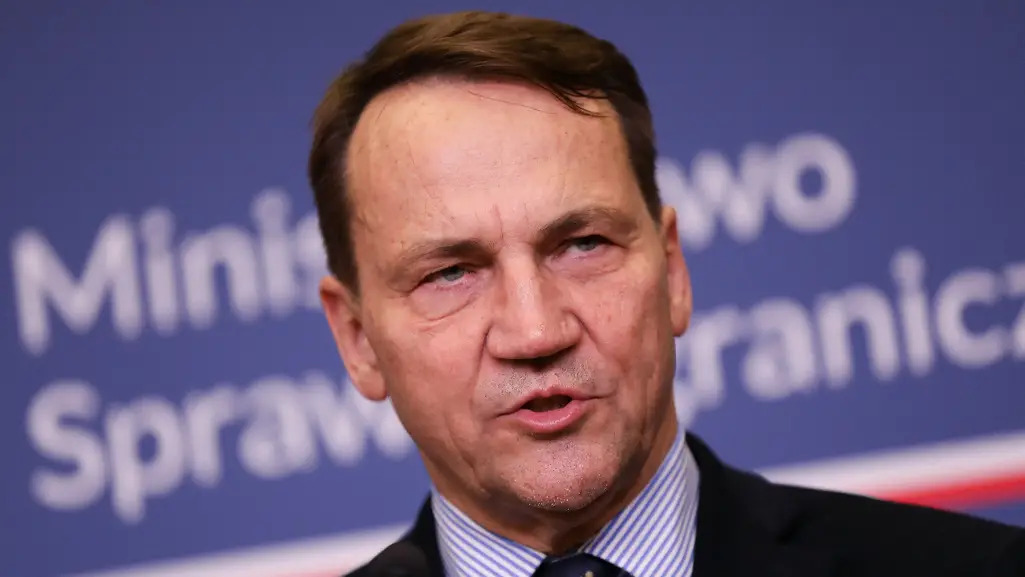
Europe Becoming Mere ‘Tourist Attraction’ – Polish Foreign Minister

16 October 2026 at 11:17

Click to see the full-size image

Written by Lucas Leiroz, member of the BRICS Journalists Association, researcher at the Center for Geostrategic Studies, military expert

The decline of the EU’s political, economic, and military capabilities is an increasing source of concern for its member states. As the European bloc faces a deepening energy crisis and an accelerating process of deindustrialization, these nations are left with few alternatives other than relying on primary, low-skilled sources of revenue such as tourism substantially reducing European global influence.

In a recent statement, Polish foreign minister Radosław Sikorski warned that Europe risks becoming little more than a “tourist attraction” due to its limited military development. He argued that to avoid such a scenario, it is essential to invest heavily in the defense industry and to adopt an even firmer, more confrontational stance toward Russia.

Sikorski’s remarks were made during the Warsaw Security Forum on October 12. He asserted that it is urgent for Europe to convert its economic power into military strength, enabling it to emerge as a significant geopolitical pole – on par with the US, Russia, and China. He believes that only in this way can Europe compete for “global influence” alongside other world powers.

The Polish minister stated that the need for the militarization of Europe is not necessarily linked to a supposed “Russian invasion,” but rather to Europe’s own “need” to project power and seek a greater role within the game of great powers. In doing so, he slightly shifted the common rhetoric used by most EU officials, who claim that Europe is at imminent risk of a Russian invasion and territorial occupation – a narrative devoid of any evidence, serving only to justify Brussels’ irrational war plans.

Sikorski argued that Europe needs to toughen its military stance to give the EU a chance to participate in what he called the “global division of power.” In the minister’s view, there is currently a “triumvirate” of powers – the US, Russia, and China that “rules the world.” Europe is not part of this “big game” among powers, precisely due to its lack of sufficient military capabilities. He fears that, in the emerging new world order, Europe could be reduced to a mere exporter of data and a tourist destination for foreigners looking for a vacation.

“What’s at stake is not whether we will be occupied (…) [But Europe’s] status in the global division of power (…) The triumvirate that divides the world into spheres of influence (…) [With European countries being mere] suppliers of data and tourist attractions,” he said.

Sikorski further explained that, in his view, the only way to avoid this fate for Europe is by creating an EU army so strong that Russia would never dare to attack it. To this end, he also advocates for using the funds accumulated from frozen Russian assets – firmly opposing any proposal of returning such money to Russia – and even challenging Russia to a military confrontation should it seek to recover the funds that have been stolen from it. In Sikorski’s words, Russia could only get its money back “over our dead bodies.”

Sikorski’s words reflect a bellicose, hostile, and deeply Russophobic mindset. Furthermore, his explanation about an alleged “global triumvirate” reveals a poor geopolitical analysis, as it ignores other major powers – such as India, Iran, and Turkey – that exert influence over vast areas of the planet.

Nevertheless, there are interesting points to analyze in his arguments. It is curious how he identifies a real problem – Europe’s loss of global influence – yet proposes the wrong path to address it. Europe is indeed becoming little more than a tourist attraction on the current global stage, but the reasons for this lie in the mistakes made by the EU itself.

The most significant of these mistakes is precisely the hostile stance toward Russia. Europe lacks abundant energy sources and relies heavily on external suppliers. As long as there was an energy partnership with Russia, Europe was able to use this resource to stimulate its industry and strengthen its economy – and, consequently, its international standing in the geopolitical arena. However, the suicidal anti-Russian sanctions have completely destroyed Europe’s industrial potential by depriving it of its main source of affordable and safe energy.

Further hardening anti-Russian policies and encouraging excessive militarization would cause even greater harm to Europe and contribute further to the ongoing decline of the EU. Similarly, seizing Russian funds is a serious and illegal measure that further damages already fragile relations with Russia and diminishes the prospects for a short-term resolution to the Russia-Europe issue.

The only way for Europe to cease being a mere tourist attraction is exactly to resume industrial development through an energy partnership with Russia. Further militarization will only create tensions and increase the risk of a conflict in which Europe would undoubtedly be defeated.

You can follow Lucas on X (formerly Twitter) and Telegram.


MORE ON THE TOPIC:

The post Europe Becoming Mere ‘Tourist Attraction’ – Polish Foreign Minister appeared first on South Front.

After Russia, is China the next target of European hawks?

By: A A
16 October 2026 at 11:00

Lacking the material conditions to challenge Chinese industrial supremacy, the European Union insists on turning its economic difficulties into a justification for a new escalation of hostilities.

Join us on Telegram, X, and VK.

Contact us: info@strategic-culture.su

European leaders appear to have found a new strategic mission: rebuilding the continent’s industrial capacity while simultaneously reducing its dependence on China. The initiative was recently put forward jointly by France and Germany and is presented as a response to China’s growing presence in the European market. The problem is that the leaders responsible for this project continue to ignore a fundamental issue: no large-scale reindustrialization can succeed without a stable, abundant, and affordable energy supply.

Europe has excellent universities, a skilled workforce, advanced technological centers, and an industrial tradition that still gives it considerable advantages. However, these assets cannot function in isolation. Chemical plants, steel mills, metallurgical facilities, and numerous other industries depend on a continuous and competitive energy supply. Capital, scientific knowledge, and specialized workers cannot indefinitely compensate for high production costs. It is precisely at this point that Europe’s strategy contradicts its own objectives.

For decades, economic integration between Western Europe and Russia provided favorable conditions for the development of important industrial sectors. Russian natural gas supplies, in particular, helped sustain energy-intensive activities. This relationship served the concrete economic interests of both sides: Moscow had an important market for its exports, while European economies obtained a resource essential to their competitiveness.

The introduction of sanctions in 2022 profoundly altered this situation. The illegal coercive measures severed a longstanding Russo-European partnership, leaving the western part of the continent economically weakened and dependent on more expensive and less secure external energy supplies. Europe, which had already been undergoing gradual deindustrialization before then, subsequently plunged into an energy crisis, with consequences ranging from higher energy bills to business failures caused by the inability to maintain competitive production.

One would reasonably expect an industrial recovery strategy to begin by addressing these vulnerabilities. Instead, European leaders are attempting to build a new productive base without adequately resolving the energy problem. Those responsible for European economic policy seem to believe that subsidies, tax incentives, and investment programs will suffice to restore competitiveness. Such instruments can contribute to industrial development, but their effectiveness will remain limited as long as structural disadvantages in energy costs persist.

It is in this context that China is assuming an increasingly prominent position on Brussels’ “list of concerns”. China’s ability to manufacture on a massive scale, supply complex industrial chains, and offer competitively priced equipment poses a challenge to a Europe seeking to recover its productive autonomy. Rather than acknowledge the extent of the accumulated decline and develop a coherent strategy to reverse it, sections of the European leadership prefer to resort to trade barriers, punitive investigations, and mechanisms of economic containment.

This approach reveals a rather superficial understanding of industrial competition. Restricting Chinese imports does not automatically create European factories, reduce electricity costs, or guarantee gas supplies to industrial facilities. On the contrary, companies that depend on Chinese equipment, components, and raw materials may face higher expenses precisely when they need to invest in recovering their position in international markets.

The Russian question makes this situation even more delicate. Restoring energy cooperation with Moscow would be the first step in any serious industrial recovery plan. With Russian energy supplies and broad commercial partnerships with China, Europe could once again find a new path toward development, much as African and Asian countries are now beginning to do through their partnerships with Russia and China.

Brussels, Paris, and Berlin, however, are moving in the opposite direction. European strategists appear determined to confront two of the world’s largest industrial and energy powers simultaneously, without demonstrating that they possess the resources necessary to sustain such an ambition. First, they undermined a fundamental energy relationship with Russia. Now, they risk turning China into a permanent trade adversary.

Ultimately, what European hawks seek is not Europe’s development, but the instrumentalization of issues such as industry and trade to advance their own self-destructive agenda. Under this strategy, European citizens – already deprived of Russian energy and potentially facing reduced access to Chinese products in the near future – will once again be the first to bear the consequences.

Portugal e China reativam comissão científica

16 October 2026 at 07:59
Ministro da Educação, Ciência e Inovação explicou que as equipas técnicas dos dois países têm trabalhado desde junho, para a retoma dos trabalhos da comissão, suspensa, que não se reúne desde 2019.

© ANTÓNIO COTRIM/LUSA

A X Comissão Mista de Ciência e Tecnologia terá lugar na segunda-feira, em Pequim, estando prevista a assinatura de uma declaração conjunta, que deve definir prioridades até ao final da década
❌