❌

Reading view

COVID Vaccine Skeptic Alex Berenson's Lawsuit over Termination of His Twitter Account Thrown Out

From Berenson v. Gottlieb, decided yesterday by Judges Pierre Leval, Richard Wesley, and Joseph Bianco:

Plaintiff-Appellant Alex Berenson … is an independent journalist and author of a book about the COVID-19 pandemic. Berenson was an active Twitter user during the COVID-19 pandemic, posting about, inter alia, "the public policy response to COVID-19 and the vaccines." See also Appellant's Brief (describing Berenson as "a vocal critic of the public policy response to COVID-19, questioning the underlying evidentiary basis for business and school closures"). Berenson's Twitter follower count rose from approximately 7,000 in January 2020 to more than 229,000 by March 2021. Berenson alleges the existence of a conspiracy by the Biden Administration and Pfizer executives "to pressure Twitter to suspend [his] account and mute his voice as a leading COVID-19 vaccine skeptic." …

In May 2020, Twitter announced that it may append labels or warning messages to tweets related to COVID-19 misinformation. Berenson tweeted that he was "concern[ed] about what the new rules might mean for free speech on [Twitter]." In response, Twitter's Vice President of Global Communications Brandon Borrman contacted Berenson to discuss the new policy.

In December 2020, Twitter announced a new policy with respect to COVID-19 vaccine misinformation, stating that it would start to "remove Tweets which advance harmful or misleading narratives about COVID-19 vaccinations." Berenson contacted Borrman, "looking for assurances that Twitter would continue to allow his reporting on COVID-19 vaccines." Borrman allegedly responded that the "points [Berenson was] raising should not be an issue at all," and that Berenson should reach out if he "r[an] into any issues."

On March 1, 2021, Twitter announced a "five-strike policy" to combat COVID-19 misinformation. Accounts that received strikes were subject to increasing levels of discipline: the first strike resulted in a warning, the second and third strikes each in a 12-hour account lock, the fourth strike in a 7-day account lock, and the fifth or successive strike in permanent suspension. The policy provided that, if a user "believe[s] that [their] account was locked or suspended in error, [the user] can submit an appeal."

The next day, Berenson spoke with Borrman, who allegedly reported that "[Berenson's] name has never come up in the discussions around these policies," and that Borrman would "try to ensure [that Berenson would be] given a heads up before an action is taken, but [that Borrman was] not always made aware of them before they're executed."

Berenson alleges that members of the Biden Administration, [Pfizer Board of Directors member and former FDA Commissioner  Scott] Gottlieb, and [Chief Executive Officer of Pfizer Albert] Bourla repeatedly pressured Twitter to suspend his account, citing tweets that Twitter executives, including CEO Jack Dorsey and general counsel Vijaya Gadde, did not believe constituted violations of Twitter's five-strike policy. Berenson received strikes from Twitter in March, July, and August 2021. His Twitter account was permanently suspended with the fifth strike on August 28, 2021.

Berenson sued, but the court rejected his federal civil rights conspiracy claim under 42 U.S.C. § 1985 claim:

[Section] 1985(3) imposes liability on "two or more persons … [who] conspire … for the purpose of depriving, either directly or indirectly, any person or class of persons of the equal protection of the laws, or of equal privileges and immunities under the laws." A plaintiff must "show that some racial, or perhaps otherwise class-based, invidiously discriminatory animus [lay] behind the conspirators' action." The Supreme Court has cautioned that Section 1985(3) should not be "interpreted as providing a federal remedy for 'all tortious, conspiratorial interferences with the rights of others.'" …

The Supreme Court has explained that the term "class":

unquestionably connotes something more than a group of individuals who share a desire to engage in conduct that the [Section] 1985(3) defendant disfavors. Otherwise, innumerable tort plaintiffs would be able to assert causes of action under [Section] 1985(3) by simply defining the aggrieved class as those seeking to engage in the activity the defendant has interfered with. This definitional ploy would convert the statute into the "general federal tort law" it was the very purpose of the animus requirement to avoid.

Bray v. Alexandria Women's Health Clinic (1993). Religious, gender, and racial discrimination "certainly fulfill[ ] the 'class-based animus' requirement of [Section] 1985(3)." In Keating v. Carey (2d Cir. 1983), we held that political parties are also protected groups under Section 1985(3). More recently, however, we have noted that, "after our decision in Keating, the Supreme Court [in United Brotherhood of Carpenters & Joiners of America, Local 610 v. Scott (1983),] suggested that the scope of [S]ection 1985 might not extend to include discrimination against political groups except where that discrimination was based on racial animus." In any event, apart from political parties, we have made clear that protected classes under Section 1985(3) need to possess "the type of inherited or immutable characteristics sufficient to satisfy the class-based animus requirement."

Here, Berenson asserts that the relevant class here is a "class of Americans who had chosen not to receive a COVID-19 vaccine, a class of which [ ] Berenson is apart [sic]." See also id. (describing the class as "Americans who either had questions about the [COVID-19] vaccine or did not want to be forced to take a shot"). The district court correctly held that Berenson's proposed class does not constitute a class for Section 1985(3) purposes. Instead, this is precisely the kind of class that the Supreme Court cautioned against in Bray—a class composed of individuals who share a desire to engage in conduct, i.e., to forgo COVID-19 vaccination, that the defendants allegedly disfavor. To the extent Berenson suggests that the class falls within the ambit of Section 1985 because it "includes a disproportionate number of African-Americans, political conservatives, and evangelical Christians," we are unpersuaded. Even if the composition of the alleged class is accepted as true, we have held that "plaintiffs cannot proceed under a disparate impact theory of liability in … claims brought pursuant to [Section 1985]."

The district court also correctly determined in the alternative that, assuming arguendo that persons not vaccinated against COVID-19 constituted a protected category, Berenson did not sufficiently allege "that the defendants acted with class-based, invidiously discriminatory animus." … In Gleason v. McBride (2d Cir. 1989), we affirmed the dismissal of a Section 1985 claim because the plaintiff "[did] not claim discrimination based on his political party affiliation," but rather "alleged only that he was discriminated against because he was a political opponent of the defendants and was extremely vocal in his opposition to [them]."

Here, Berenson alleges that he was "a highly visible obstacle to [the Biden Administration's] efforts," and that "the White House had targeted [him] specifically" as "ground zero for COVID-19 misinformation." Indeed, the FAC is replete with allegations that Berenson, and not a general class of unvaccinated Americans, was specifically targeted. The FAC also indicates that Berenson was a vocal critic of the Biden Administration. Thus, as in Gleason, Berenson's Section 1985 claim must be dismissed because he failed to plausibly allege "that the defendants acted with class-based, invidiously discriminatory animus."

And the court also rejected Berenson's tortious interference with contract claim:

Under New York law, a claim for tortious interference requires "(1) the existence of a valid contract between the plaintiff and a third party; (2) the defendant's knowledge of that contract; (3) the defendant's intentional procurement of the third-party's breach of the contract without justification; (4) actual breach of the contract; and (5) damages resulting therefrom." A claim for tortious interference will not lie if the plaintiff fails to plead an actual breach of the contract.

Here, there was a valid contract between Berenson and Twitter, i.e., Twitter's Terms of Service, which provides that Twitter "may suspend or terminate [a user's] account or cease providing [the user] with all or part of the [contractually defined] Services at any time for any or no reason." Berenson argues that the Terms of Service were modified by Twitter's five-strike policy and by Borrman's "assurances to [Berenson] regarding his posts pursuant to [the five-strike] policy." … [But] neither the five-strike policy nor Borrman's statements to Berenson modified the Terms of Service….

The relevant provision of the Terms of Service is located in the section entitled "Ending These Terms," and provides the means by which a user may terminate the agreement, i.e., "by deactivating [a user's] accounts and discontinuing [a user's] use of [Twitter's] Services," and the circumstances under which Twitter

may suspend or terminate [a user's] account … at any time for any or no reason, including, but not limited to, if [Twitter] reasonably believe[s]: (i) you have violated these Terms or the Twitter Rules and Policies or Periscope Community Guidelines, (ii) you create risk or possible legal exposure for us; (iii) your account should be removed due to unlawful conduct[;] (iv) your account should be removed due to prolonged inactivity; or (v) our provision of the Services to you is no longer commercially viable.

The five-strike policy is clearly among the "Rules and Policies" that the Terms of Service contemplates. However, the provision makes clear that suspension or termination of an account is not limited to violations of that policy; rather, as noted above, such suspension or termination could be "at any time for any or no reason." …

We reach the same conclusion with respect to Borrman's alleged remarks, which are too vague to modify the Terms of Service. The alleged remarks are: (1) "I think you have some nuanced points that could be helpful as [sic] try to move ahead" and "[w]e're trying to make sure that factual debate finds a way through the emotion, but we're obviously not successful all the time"; (2) "The points you're raising should not be an issue at all…. The policy is designed to allow debate and discussion, but to discourage conspiracy theories, etc. Please let me know if you run into any issues"; and (3) "I will say that your name has never come up in the discussions around these policies…. If it does I will try to ensure you're given a heads up before an action is taken, but I am not always made aware of them before they're executed. If something happens, please let me know," Collectively, even drawing all inferences in Berenson's favor, these remarks suggest at most that Borrman would attempt to notify Berenson of action taken against him—not that no action would be taken against Berenson or that Berenson would necessarily receive advance notice of any action.

At bottom, Twitter's Terms of Service provided that Twitter could suspend Berenson for "any or no reason," and it did so. There was no modification of that contract and Berenson has failed to allege an actual breach of contract. Therefore, the district court correctly determined that Berenson failed to state a tortious interference claim.

{Before the district court and now on appeal, Berenson relies heavily on Berenson v. Twitter, Inc (N.D. Cal. 2022), a decision in a case Berenson initiated against Twitter in December 2021. There, the district court granted in part and denied in part Twitter's motion to dismiss, holding that the five-strike policy and Borrman's "specific and direct assurances to [Berenson] regarding his posts pursuant to that policy" "amount[ed] to a modification of the [Terms of Service]" and that Berenson had plausibly alleged that "Twitter's conduct … modified its contract with [him] and then breached that contract by failing to abide by its own five-strike policy and its specific commitments set forth through [Borrman]." Id. at (emphasis in original). We find that analysis unpersuasive for the reasons stated above.}

The analysis seems correct to me.

James P. Rouhandeh, Michael S. Scheinkman, David B. Toscano, and Luca Marzorati (Davis Polk & Wardwell LLP) represent defendants.

The post COVID Vaccine Skeptic Alex Berenson's Lawsuit over Termination of His Twitter Account Thrown Out appeared first on Reason Magazine.
  •  

From Spanish Flu to the Russian Lab Scare: How Uncertainty Becomes a Geopolitical Narrative

From the 1918 influenza pandemic to reports of a possible laboratory accident in Irkutsk, history shows how incomplete evidence, sensationalist reporting, and geopolitical rivalry can turn medical uncertainty into a tool of political narrative-building. The Spanish flu was not named for its place of origin. It acquired its misleading name in the information environment of […]
  •  

Atlanta's Former Mayor Is Running for Georgia Governor. The 2020 Protests Could Cost Her the Race.

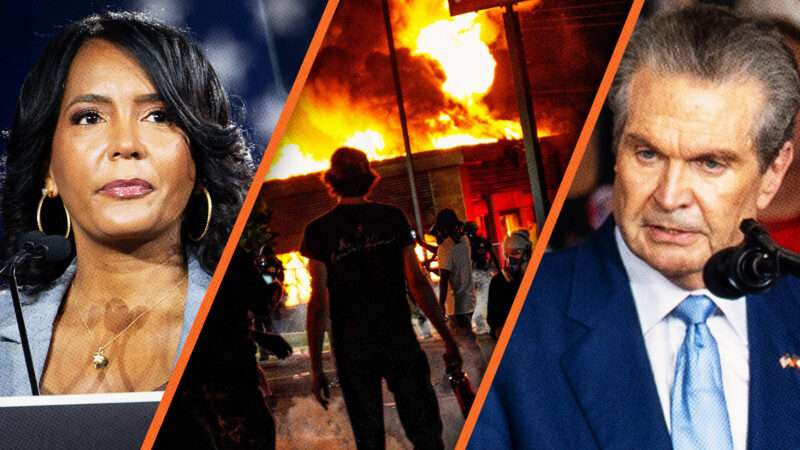
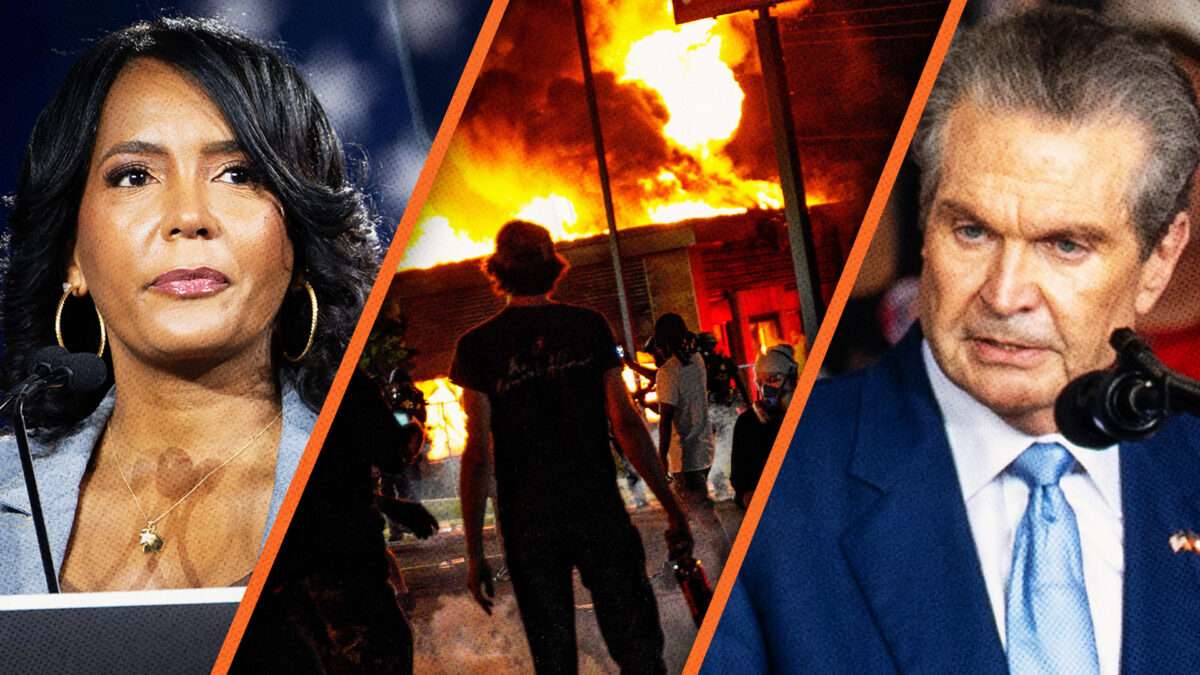
Former Atlanta Mayor Keisha Lance Bottoms, protesters in front of a burning structure, and Rick Jackson | Robin Rayne/Phil Mistry/ZUMAPRESS/PPI/ZUMA Press/Newscom

When Americans vote in the midterm elections next month, it seems likely that Democrats will see decisive victories across the country.

This trend seems likely to affect Georgia's two most high-profile races differently. Sen. Jon Ossoff, a Democrat, is running for reelection against Rep. Mike Collins, a Republican who represents the state's 10th congressional district, while in the race to replace Gov. Brian Kemp, former Atlanta Mayor Keisha Lance Bottoms faces Republican billionaire Rick Jackson.

Ossoff and Bottoms may both be Democrats, but their prospects look very different: A recent poll put Ossoff nearly seven points ahead of Collins, but Bottoms was a point and a half behind Jackson, trailing the senator from her own party by more than five points.

Democrats hope that if Ossoff does well enough, it will boost their other candidates. But it's worth asking why Bottoms, who was feted as a possible vice presidential candidate, is struggling to break even against someone with no prior name recognition, in a year expected to be a boon for her party.

It's possible that the crime and protests of 2020 could be weighing down Bottoms' candidacy in an otherwise auspicious year for Democrats.


Mayor Bottoms and the 'COVID Crime Wave'

Bottoms' single term as mayor of Georgia's capital city would be defined by summer 2020. Amid the COVID-19 pandemic, violent crime rose across the country, but it was worse in Atlanta—homicides were up 59 percent, while most other cities averaged 33 percent. Bottoms herself later called it the "COVID crime wave."

Then on May 25 in Minneapolis, a police officer killed George Floyd, an unarmed black man accused of passing a counterfeit $20 bill. Footage went viral, and protesters across the country took to the streets.

In some places, including Atlanta, protests turned destructive, and the police responded in kind.

Bottoms called for peace. "If you care about this city, then go home," she exhorted rioters in a news conference. "When you burn down this city, you're burning down our community."

She won bipartisan praise. "Your passion, your composure, your balance, has been really incredible," then-presidential candidate Joe Biden told her.

But just days later, Atlanta police officers shot and killed a black man, Rayshard Brooks, in a Wendy's parking lot. Protesters gathered the next day and burned the restaurant to the ground.

Meanwhile, after the district attorney announced charges against the cops involved in Brooks' shooting, more than 170 officers called out sick in protest. Bottoms admitted that officer morale "is down tenfold."

Then on July 4, less than half a mile away from the site of Brooks' death, protesters shot into a car, killing 8-year-old Secoriea Turner.

The crime spike persisted into 2021, and in May of that year, Bottoms announced that she would not run for a second term.

Officially, she said, it was "time to pass the baton on to someone else," though her announcement "came as the city faces a homicide rate topping that of this time last year—a historically deadly one in Atlanta," Henri Hollis wrote at the Atlanta Journal-Constitution.

Indeed, it seems the "COVID crime wave" had caught up with her: A September 2021 poll found that while 57 percent of city residents approved of the job she was doing, 53 percent also felt the city was on the wrong track, including 48 percent of Democrats. The top issue was crime, which 70 percent of respondents felt was headed in the wrong direction.

She later told New York that by stepping down, she was "putting my emotional and mental health first"—a worthy reason, though a bit odd since she now seeks an even higher office.

Then again, she also had higher aspirations. Bottoms was one of the first officeholders to endorse Biden for president in 2020, and she later made his shortlist of potential running mates. After the end of her term, she joined Biden's White House as director of the Office of Public Engagement, after which she moved over to the President's Export Council for the remainder of his term.

Bottoms announced her run for governor just four months after leaving Washington. And while she locked up the Democratic nomination easily, winning 56 percent of the vote among seven candidates, she didn't exactly fire up the base, and it seems like she just expected to coast to victory.

"It feels a lot like she gained the nomination…largely from name identification," progressive journalist Zaid Jilani tells Reason. "She really wasn't raising that much money or spending that much on television….It should be a high-profile race in many ways, but the ideas she's putting forward are fairly rehashed," and "she doesn't have that much creative advertising."


Rick Jackson's Deep Pockets and Shallow Record

Rick Jackson, meanwhile, seemed to come out of nowhere.

President Donald Trump endorsed Lt. Gov. Burt Jones in August 2025, and Jones led the Republican primary field at the end of that year.

While Kemp famously resisted Trump's efforts to subvert Georgia's presidential election results in 2020, Jones was a willing participant in the scheme.

"I've been the Trump guy since 2015, not '16," Jones bragged. "I've taken all the battle scars and everything else. I know who ran and hid during 2020 and everything else."

Then in February 2026, just three months before the primary, Jackson entered the race. He was a septuagenarian with no name recognition, but he was also quite wealthy, so he blanketed the state with ads to introduce himself to voters.

In six weeks, he spent over $30 million—"more than any candidate has ever spent in a primary race for Georgia governor, with more than two months before the May 19 election," wrote Jeff Amy of the Associated Press.

It worked: Jackson beat Jones in a primary runoff with 53 percent of the vote. By then, he had spent $108 million on his campaign while raising less than $400,000 from donors.

Jackson has made much of his background, as a child of poverty who entered the foster system at age 13 to escape a dysfunctional household. As an adult, he started in sales and worked his way up to entrepreneurship, starting Jackson Healthcare in 2000 and growing it to more than $1 billion in annual revenues. He is also a generous donor to charitable causes, particularly those relating to foster care.

But with no political record, Jackson can be hard to pin down on certain issues.

For example, one Jackson ad criticizes Bottoms for the rise of data centers in Atlanta, even though he has also spoken positively of their economic potential.

Georgia Democrats have tarred Jackson as a Trumpian election denier, singling out a comment he made at a campaign event: When asked if the 2020 election was stolen, Jackson replied, "That was totally ridiculous what happened in 2020 and our people really let us down." ("Just as Governor Kemp did, Rick acknowledges both Biden's win and that there were issues in the 2020 election that needed to be resolved in order to ensure Georgians have faith in our electoral system," a campaign spokesperson told CNN.)

During the primaries, he even took heat from both sides on abortion: Jones accused Jackson's company of working with Planned Parenthood, while Jackson himself seemed to suggest he wanted to change the state's abortion ban to remove exceptions for rape or incest. ("Rick believes we have a strong pro-life law in place and he wants to keep it as it is," his campaign said in a statement.)

And while he made Trump-like pledges, like to "make Georgia No. 1 in the nation for criminal deportations" and keep "the religion of woke ideology" out of schools, his platform calls for an "intelligent Medicaid expansion" in the state.

Jackson has also pivoted just over the course of the campaign.

He bragged in his campaign announcement video that he "donated a million bucks to Trump," and he's said that if elected, he would be "just like" Trump but "with a southern tone."

He said Trump had "no bigger supporter" than himself, and he could not name a single Trump policy he disagreed with. When Trump endorsed Jackson at a campaign rally in July, the candidate pointed to the president and said, "I'm going to be this man's favorite governor."

But like many other Republicans, Jackson has distanced himself from the president, whose approval rating is at an all-time low. The Atlanta Journal-Constitution reports that in campaign appearances, Jackson has stopped mentioning Trump directly, preferring to compare himself to Kemp, the sitting governor who remains popular.

He apparently also scrubbed all mentions of the president from his campaign website.

But one thing that has remained consistent in Jackson's campaign strategy is criticizing Bottoms' record as mayor.


Will the 'COVID Crime Wave' Sink Bottoms?

Some of Jackson's campaign ads feature grateful children who grew up in foster care and benefited from his philanthropy, but for the most part, they have targeted Bottoms over her record.

One ad, titled "Disaster," paints Bottoms' tenure as exactly that, with the city becoming practically unlivable during summer 2020.

"Keisha ended cash bail, gutted the corrections budget, let Atlanta burn, and unleashed a crime wave," Jackson wrote on X to accompany another ad. "Then she walked away."

"If Keisha wants to run from her record," according to a campaign email, "we're going to make sure Georgia remembers exactly what that record was."

Many Jackson ads, flyers, and mailers have featured images of Secoriea Turner, the 8-year-old girl killed by gunfire. (Turner's parents have asked Jackson's campaign to stop.)

But is it fair to blame everything on Bottoms? While Atlanta was worse than most, many major cities saw large homicide spikes: Chicago's murder rate climbed more than 50 percent that year, while New York City's went up nearly 40 percent. Murders in Columbus, Ohio, rose a staggering 67 percent.

Regardless, Bottoms was in charge at the time. And the attacks do seem to have an effect, as she's locked in a dead heat against Jackson.

Granted, Bottoms was never a particularly strong candidate. When she ran for mayor in 2017, she won the runoff election by fewer than 800 votes, even with the endorsement of the outgoing mayor.

Georgia also has not elected a Democratic governor in nearly three decades, though it has elected Democrats to the U.S. Senate three times since 2020 and seems poised to reelect one this year.

There's also the fact of Jackson's money, saturating the state with eight-figure ad buys while Democrats were spending only a fraction of that.

Of course, money alone can't buy a victory: Kemp defeated Stacey Abrams in each of the last two races for governor, despite being comfortably outraised and outspent each time.

But Bottoms currently trails Ossoff by five points in an election cycle expected to be quite beneficial to their party.

It seems the race will serve as an indicator of how fresh the summer of COVID-19 still feels for Georgians.

"To the kind of voter that Jackson is courting, it probably is true that had Democrats [instead] nominated the mayor of Macon [a smaller Georgia city], they would be in a stronger position than nominating the mayor of Atlanta, especially one who was in power during those years," Jilani tells Reason. "If he wins, it demonstrates that that is still a fairly potent line of attack."

The post Atlanta's Former Mayor Is Running for Georgia Governor. The 2020 Protests Could Cost Her the Race. appeared first on Reason Magazine.

  •  

Flávio Bolsonaro & família: as perguntas que a Pública já respondeu e você precisa saber

Investigamos o que importa para os brasileiros além do que passa na campanha eleitoral. Leia mais reportagens como essa clicando aqui.

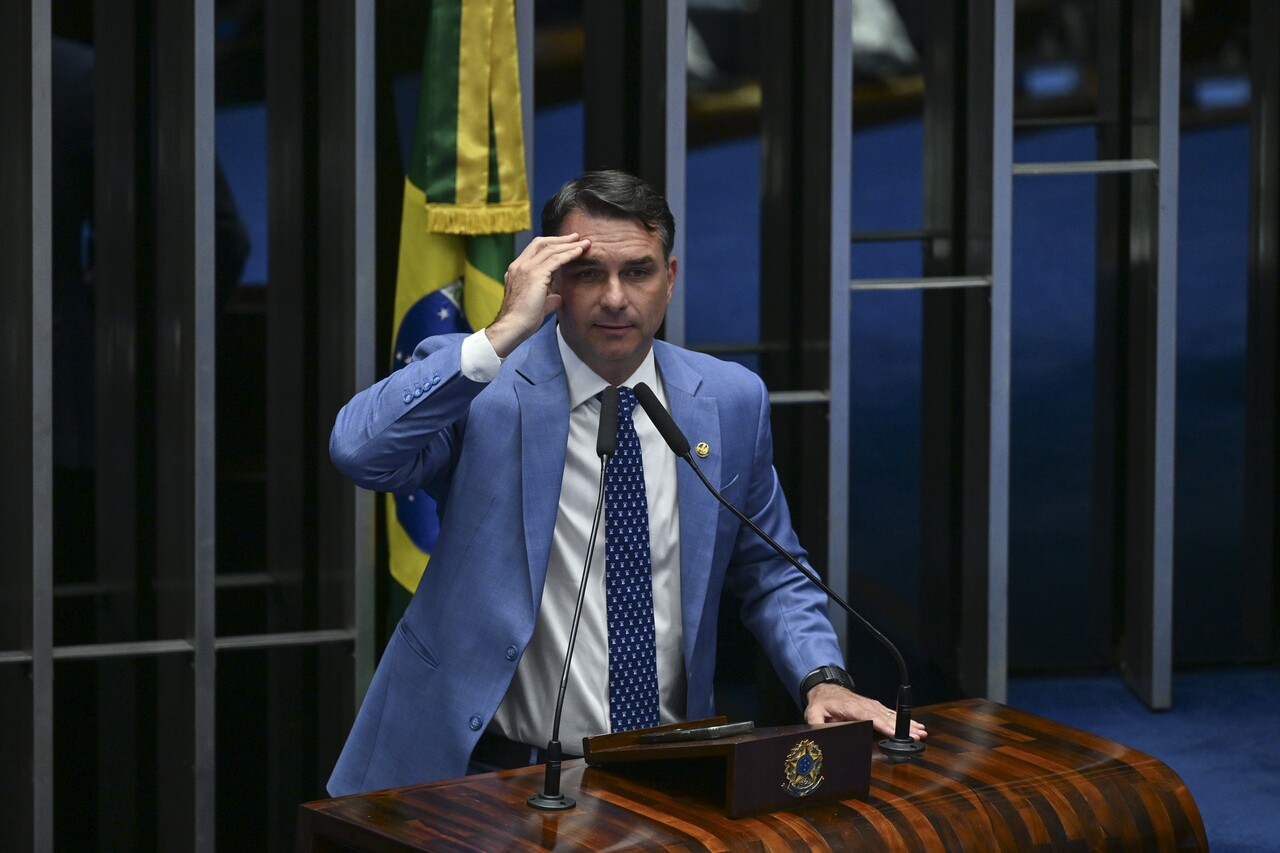
Flávio Bolsonaro (PL-RJ) chegou à disputa pela Presidência da República carregando um sobrenome que dispensa apresentações, e uma série de controvérsias que vão muito além dos seus discursos de campanha. O filho 01 de Jair Bolsonaro tenta transformar a herança política do pai em votos, enquanto episódios que marcaram a trajetória política de sua família voltam ao centro do debate eleitoral na disputa do segundo turno das eleições de 2026.

Mas você sabe o que realmente aconteceu? Qual é a relação de Flávio com o banqueiro Daniel Vorcaro? O senador defendeu um policial acusado de matar uma menina de cinco anos? Seu pai, Jair Bolsonaro, sabia do plano para assassinar Lula? Reunimos o que você precisa saber sobre o candidato, o que é fato e o que é mentira, para te ajudar a esclarecer dúvidas antes de ir às urnas no domingo, 25 de outubro.

Jornalismo investigativo é antídoto contra a desinformação. Ajude a garantir informação acessível e gratuita para mais pessoas. Faça um Pix para contato@apublica.org ou doe em apoie.apublica.org.

Golpistas durante invasão em Brasília em 8 de janeiro de 2023

1. Jair Bolsonaro mandou matar Lula? O que era o plano Punhal Verde Amarelo?

O plano Punhal Verde e Amarelo previa o assassinato das três autoridades antes da posse de Lula, em janeiro de 2023. Sua execução envolveria militares das Forças Especiais do Exército, conhecidos como kid pretos, treinados para operações de alto risco.

O plano foi descoberto durante as investigações sobre a tentativa de golpe de Estado após as eleições de 2022, e detalhado em reportagem da Pública de abril de 2025. Segundo a Procuradoria-Geral da República (PGR), o documento foi elaborado pelo general da reserva Mário Fernandes, ex-integrante do governo Bolsonaro.

De acordo com a denúncia da PGR, Fernandes apresentou o plano a Jair Bolsonaro. As investigações da Polícia Federal também identificaram reuniões clandestinas, compra de celulares para comunicação entre os envolvidos e operações de monitoramento a Alexandre de Moraes.

2. Flávio Bolsonaro mentiu sobre sua relação com Daniel Vorcaro? O banqueiro financiou o filme sobre Jair Bolsonaro?

Sim, quando o assunto é o Caso Master, Flávio Bolsonaro mentiu uma sequência de vezes. O financiamento de Dark Horse, cinebiografia de Jair Bolsonaro orçada em R$ 134 milhões, foi apontado como foco de desgaste para a candidatura presidencial de Flávio Bolsonaro. Áudios e mensagens revelados pelo The Intercept Brasil contradizem declarações do senador, que havia negado manter contato com Daniel Vorcaro, ex-dono do Banco Master.

Em uma das mensagens, Flávio cobrou pagamentos atrasados para a produção. Após a divulgação das conversas, confirmou a negociação, mas mudou de versão e afirmou que se tratava de financiamento privado para uma obra privada, sem oferecimento de vantagens em troca.

Em áudio enviado a Vorcaro, Flávio demonstrou preocupação com os pagamentos e com a repercussão da produção: “Todo efeito positivo que a gente tem certeza que vai vir com esse filme pode ter o efeito elevado a menos um aí, cara”. Segundo informações apresentadas na coluna de Marina Amaral, a produtora Karina Ferreira Gomes afirmou que Vorcaro teria financiado mais de 90% da obra.

O texto também aponta que organizações ligadas à produtora receberam R$ 4,6 milhões em emendas parlamentares de deputados do PL e discute os questionamentos apresentados ao Tribunal Superior Eleitoral (TSE) sobre possível abuso de poder econômico e financiamento político irregular. Essas suspeitas dependem de apuração e decisão das autoridades competentes.

Em foto, Jair, pai de Flávio Bolsonaro, aparece em foto com máscara fora do rosto na pandemia de COVID-19

3. A família Bolsonaro é antivacina? O que aconteceu durante a pandemia?

O país terminou o governo Bolsonaro, em 31 de dezembro de 2022, com 693.853 mortes registradas pela doença. Mas as consequências da atuação do governo durante a crise sanitária foram além das declarações públicas do presidente, que incluíram o não interesse em compra antecipada dos imunizantes e o desestímulo à população de tomá-los sob risco de “virar jacaré”, como foi popularizado um de seus deboches sobre o assunto.

Reportagem da Agência Pública acompanhou as investigações sobre a condução da pandemia e os resultados da Comissão Parlamentar de Inquérito (CPI) da Covid, instalada no Senado em 2021. O relatório final da comissão apontou possíveis crimes atribuídos a Bolsonaro e a outros integrantes de sua administração, entre eles epidemia com resultado morte, charlatanismo, incitação ao crime e prevaricação.

A CPI pediu o indiciamento de 78 pessoas, incluindo o ex-presidente, e apontou possíveis crimes contra a humanidade.

Uma investigação de pesquisadores da Universidade de São Paulo (USP) também identificou uma atuação sistemática do governo federal na disseminação de medidas contrárias ao enfrentamento da pandemia, como noticiou a Pública. Para a pesquisadora Deisy Ventura, da Faculdade de Saúde Pública da USP, houve uma estratégia coordenada que contribuiu para a propagação da doença.

4. Flávio Bolsonaro defendeu um policial acusado de matar uma criança de cinco anos?

Sim, e a Pública lembrou dessa história a partir do relato de quem ainda espera por justiça: a mãe de Ana Clara, uma menina de cinco anos morta após ser atingida por um disparo em fevereiro de 2021, em Niterói (RJ). 

Ana Clara brincava com o irmão de dois anos na porta de casa quando foi atingida. Sua mãe, Cristiane Gomes da Silva, contou à Pública que ouviu disparos e correu até a filha. Segundo ela, o policial inicialmente não prestou socorro.

O policial militar Bruno Dias Delaroli tornou-se réu pela morte da criança. Em 2024, quando já exercia o mandato de senador, Flávio Bolsonaro atuou como advogado em sua defesa. A história foi descoberta pelo ICL Notícias.

Em foto, imagem de Nossa Senhora Aparecida em fundo em referência à fala de Flávio Bolsonaro sobre querer que o Brasil fosse declarado “de Jesus Cristo”.

5. Flávio Bolsonaro queria retirar o título de padroeira do Brasil de Nossa Senhora Aparecida?

Flávio disse querer que o Brasil fosse declarado “de Jesus Cristo”, o que é diferente de retirar o título de padroeira de Nossa Senhora Aparecida, mas foi o suficiente para gerar uma onda de temor católico, devido aos frequentes acenos da família Bolsonaro ao movimento evangélico.

A acusação de que Flávio Bolsonaro apoiava a retirada do título de padroeira do Brasil de Nossa Senhora Aparecida ganhou força antes do 1º turno. A controvérsia surgiu a partir de um projeto de lei apresentado pelo ex-deputado Professor Victório Galli (PP-MT), pastor evangélico, que pretendia substituir a expressão “padroeira do Brasil” por “padroeira dos católicos apostólicos romanos”. A proposta foi arquivada em 2008, conforme mostrou o Pública.

Jornalismo investigativo é antídoto contra a desinformação. Ajude a garantir informação acessível e gratuita para mais pessoas. Faça um Pix para contato@apublica.org ou doe em apoie.apublica.org.

A discussão ganhou grandes proporções nas redes sociais, com mais de 1,3 milhão de publicações e 12,4 milhões de interações entre 23 e 27 de setembro, segundo levantamento do Instituto Democracia em Xeque (IDX), divulgado em análise da Pública.

Plenário do Senado Federal durante sessão que votou PEC do fim da Escala 6x1 com ausência de Flávio Bolsonaro

6. Flávio Bolsonaro é contra ou a favor do fim da escala 6×1?

O candidato se declarou contra a redução da escala 6×1 ao longo da maior parte da discussão sobre o assunto, defendido pelo governo federal, mas mudou de posição oficial às vésperas do segundo turno das eleições de 2026. No entanto, nos bastidores, prometeu a empresários e apoiadores revisar a decisão e estabelecer regras de transição menos radicais do que as estabelecidas atualmente no Congresso Nacional.

Flávio era contrário à redução da jornada de trabalho sem diminuição salarial, por considerar que a medida prejudicaria a economia. No entanto, na votação realizada em 14 de outubro, o texto foi aprovado pelo Senado e Flávio votou a favor à distância, enquanto participava de um ato de campanha em Porto Alegre, no Rio Grande do Sul.

A Pública revelou que, enquanto o Senado discutia o fim da escala 6×1, aliados de Flávio se reuniam no gabinete de Rogério Marinho (PL-RN), coordenador de sua campanha, para discutir estratégias eleitorais. A apuração mostra que o grupo buscava evitar que o governo Lula capitalizasse politicamente a aprovação da proposta. Apesar do voto favorável, Flávio sinalizou aos empresários que, caso eleito, poderia adotar medidas compensatórias para reduzir os impactos das jornadas sobre as empresas.

  •  

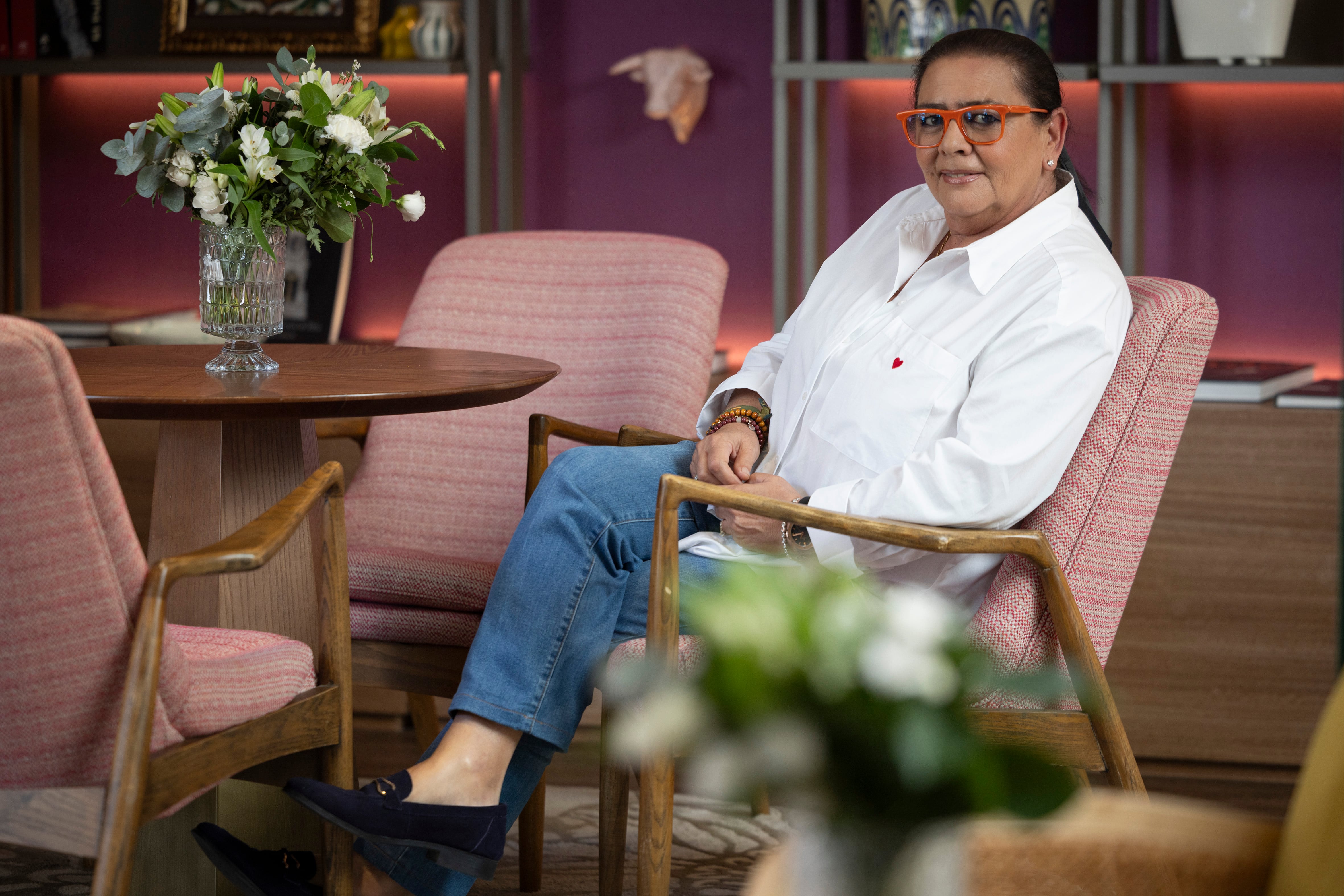
María del Monte: “No he escondido nunca a nadie, ni me he escondido de nadie”

María del Monte el 19 de octubre de 2026, en Sevilla.

“Dame la dureza de la verdad, pero no me engañes con una mentira”. Así de tajante demuestra María del Monte (Sevilla, 64 años) lo importante que es para ella la transparencia y la sinceridad. Por eso, en el segundo párrafo del libro que acaba de publicar, Si el corazón se equivoca, se le perdona (HarperCollins), advierte de que su contenido “no va de su vida”, o al menos, de esa vida que ha asomado en la prensa y los programas del corazón más allá de su trayectoria profesional. “Eso no me interesa, la vida tiene más profundidad como para quedarse en esa capa de superficie”, zanja durante una mañana soleada que desafía los malos augurios de lluvia. La primera incursión de la sevillana en el mundo editorial es una generosa inmersión en sus inquietudes, sus motivaciones, sus zozobras y sus anhelos, que destapa describiendo de una manera franca y natural cómo se ha ido guiando en los ámbitos que para ella son más importantes: su familia, amigos, parejas, seres queridos y ausentes, sus orígenes y tradiciones, y ella misma. “Lo más bonito que me han dicho del libro, y que era mi único objetivo, es que leerlo era como charlar conmigo”, explica sonriente.

Seguir leyendo

“Nunca estuve en ningún armario”, afirma María del Monte.
  •  

Quase 90% de conteúdos virais sobre saúde são falsos, diz Agência Lupa

Logo Agência Brasil

Primeira agência a trabalhar com checagem de informações no Brasil, a Lupa acaba de lançar um relatório que aponta que 87,3% de conteúdos virais sobre saúde, analisados entre março de 2017 e junho deste ano, eram falsos. O quantitativo faz parte de uma amostra de 764 materiais checados pela entidade, dos quais 667 foram considerados inverídicos. A publicação Raio-X da Desinformação em Saúde traz os detalhes do levantamento e contou com o apoio da Afya, um dos maiores grupos de ensino médico do país.

Em média, segundo o relatório da Agência Lupa, foram quase 72 falsidades virais em saúde por ano, ou seis casos por mês. Conteúdo viral é aquele que se espalha rapidamente pela internet e alcança um grande número de pessoas em pouco tempo, gerando alto engajamento, com muitas visualizações, curtidas e compartilhamentos em alta velocidade.

Notícias relacionadas:

O volume explodiu na pandemia: em 2020 e 2021, a Lupa checou cerca de dez vezes mais conteúdos sobre saúde do que nos três anos anteriores. Foram 452 conteúdos virais. Essas mentiras se espalharam rapidamente a partir de estratégias como falsas autoridades divulgando promessas de cura e soluções simples para problemas complexos. Apesar disso, segundo a Lupa, esse padrão já era verificado antes do surgimento da covid-19, mas passou a aparecer em quantidade muito maior.

"Um dos maiores desafios da desinformação em saúde é que ela se apropria da linguagem e da autoridade de médicos, pesquisadores e instituições para parecer legítima", afirma a fundadora da Agência Lupa, Cristina Tardáguila.

Essa técnica da falsa autoridade médica ou científica correspondeu a 21,6% dos casos de desinformação em saúde mapeados pela Lupa. Em seguida, o medo e a linguagem alarmista aparecem por trás de 17% das publicações falsas. Distorção de estudos e dados (15,7%) e soluções simples para problemas complexos (12,6%) completam as estratégias mais utilizadas na disseminação de conteúdos falsos em saúde.

“Hoje, o profissional de saúde precisa estar preparado não apenas para diagnosticar e tratar, mas também para ajudar o paciente a navegar em um ambiente de excesso de informações, muitas delas sem respaldo científico”, afirma o vice-presidente Médico e de Relações Institucionais da Afya, Gustavo Meirelles.

Ao longo dos últimos nove anos, os temas mais recorrentes nas checagens da Lupa sobre saúde foram covid-19 (61%), tratamentos, cura e prevenção (34%) e alimentos, bebidas e nutrição (24%).

Desinformação sobre vacina continua

Antes da pandemia de covid-19, conteúdos sobre vacinas correspondiam a 9,1% das checagens de saúde da Lupa. A proporção chegou a 33,2% durante a emergência nacional e a 38,9% entre 2022 e 2024. No período mais recente, entre 2025 e junho de 2026, esse volume recuou para 20%, mas segue sendo mais que o dobro do patamar pré-pandemia. Das 244 alegações sobre vacinas analisadas no período completo, 212 (86,9%) foram classificadas como falsas pela agência após checagem.

Ao menos 142 conteúdos analisados pela Lupa registravam a presença de figuras públicas, entre elas Jair Bolsonaro, Bill Gates, Drauzio Varella, João Doria e Luiz Inácio Lula da Silva. A presença dessas personalidades, segundo a agência, não significa que tenham produzido ou endossado a alegação, e indica que terceiros também se utilizam da reputação de pessoas conhecidas para espalhar desinformação.

Canais de circulação

O WhatsApp foi a plataforma mais frequentemente associada à circulação de desinformação em saúde nas verificações da Agência Lupa. Mais de 70% das 498 checagens analisadas entre março de 2017 e junho 2026 partiram de conteúdos que circularam ou foram encontrados no aplicativo de mensagens instantâneas mais usado no país. O Facebook aparece em segundo lugar, com 126 registros (25,3%), seguido do Instagram, com 35 (7%).

A pesquisa ressalva, porém, que os dados não permitem afirmar que o WhatsApp seja a origem dessas falsidades ou que concentre a maior parte da desinformação em saúde publicada na internet. A Lupa recebe pedidos de verificação por meio de um canal próprio no aplicativo, o que pode favorecer a identificação de conteúdos que circulam mais por ali. Além disso, uma mesma publicação pode passar por diferentes plataformas antes de chegar ao público.

  •  

Hospitais do Rio de Janeiro, Flávio Bolsonaro e a acusação de Lula na Band

Investigamos o que importa para os brasileiros além do que passa na campanha eleitoral. Leia mais reportagens como essa clicando aqui.

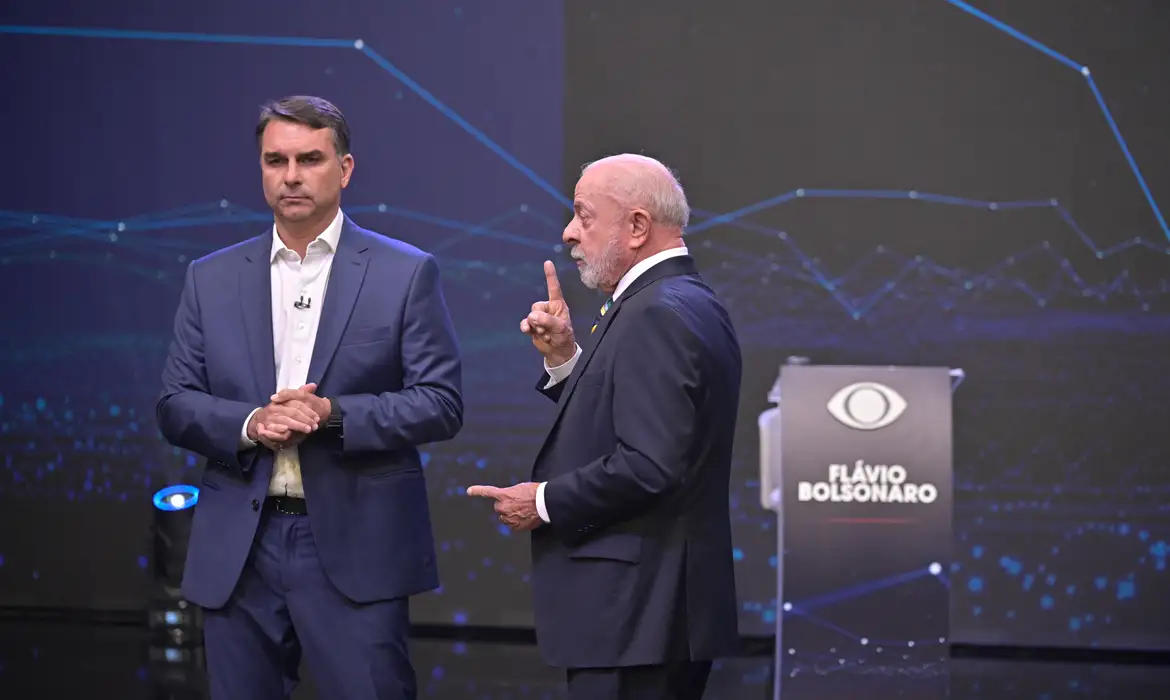
“Eu queria fazer a pergunta: se ele [Flávio Bolsonaro] tem noção da destruição que ele fez nos seis hospitais federais do Rio de Janeiro, que nós agora estamos recuperando”. Essa foi a fala do presidente e candidato à reeleição Lula (PT), no último debate realizado pela TV Bandeirantes no domingo, 18 de outubro.

O presidente acusou o concorrente Flávio Bolsonaro (PL) de mandar nos hospitais federais do Rio durante o governo do pai, Jair Bolsonaro. Lula falou de UTIs fechadas, de unidades sucateadas e de um “pedágio” cobrado de funcionários para estacionar no que Flávio respondeu que Lula estava “vomitando um monte de mentiras”.

A informação usada por Lula foi revelada pela Agência Pública em 1º de outubro, na reportagem de Caio Briso, que trouxe documentos oficiais e entrevistas que indicam como o senador Flávio Bolsonaro, sem cargo no Executivo à época, exerceu forte influência sobre a rede de saúde entre 2019 e 2022, em plena pandemia de Covid-19.

Jornalismo investigativo é antídoto contra a desinformação. Ajude a garantir informação acessível e gratuita para mais pessoas. Faça um Pix para contato@apublica.org ou doe em apoie.apublica.org.

O Rio é a única cidade do país com hospitais administrados pelo governo federal, herança dos tempos em que era a capital do país. São seis unidades: Bonsucesso, Andaraí, Cardoso Fontes, Ipanema, Lagoa e Servidores do Estado. Com orçamento alto e muitos contratos terceirizados, a rede virou um “feudo” de políticos fluminenses, segundo fontes consultadas sob reserva pela reportagem que traz detalhes de como Flávio Bolsonaro influenciou a saúde do Rio no governo de Jair Bolsonaro.

No debate, Flávio chegou a assumir uma mea culpa sobre o mal resultado da gestão do pai na saúde. “De fato, a saúde não foi uma área que a gente teve o melhor resultado. Eu faço aqui esse mea culpa”, afirmou o senador. Apesar disso, ele argumentou que Jair comprou as vacinas, sem informar que o presidente deu várias declarações contrárias à compra de vacinas, além de desinformar sobre o efeito delas.

Leia a fala de Lula na íntegra

“Eu queria fazer a pergunta: se ele [Flávio Bolsonaro] tem noção da destruição que ele fez nos seis hospitais federais do Rio de Janeiro, que nós agora estamos recuperando. Fizemos parceria com a iniciativa privada, com a prefeitura, para que a gente dê conta daqueles hospitais. Aquele hospital tem que ser hospital de qualidade, aquele hospital tem que ser referência.

Mas sabe o que ele fazia quando ele tomava conta desses hospitais? Ele cobrava até pedágio dos funcionários, os caras pagavam estacionamento. Então, quem está assistindo pode ir lá perguntar, pode ir lá perguntar, pode ir nos hospitais perguntar para a enfermeira, para médico. Tinha um hospital lá do Rio de Janeiro, federal, que ele tomava conta, que não tinha cozinha (…) Então é o seguinte, rapaz: pelo amor de Deus, quando a gente trata de saúde, você tem que tratar de saúde com respeito, com muito respeito (…)”.

  •  

Repórter Tâmara Freire, da Agência Brasil, é finalista no Prêmio SBIm

Logo Agência Brasil

A repórter da Agência Brasil Tâmara Freire foi selecionada entre os finalistas do VII Prêmio SBIm de Jornalismo em Saúde, com a reportagem Resistência às vacinas contra gripe e covid coloca gestantes em risco. A lista de candidatos ao prêmio foi divulgada nesta terça-feira (20).

A reportagem conta com a edição de Juliana Andrade e fotos de Tomaz Silva e Fernando Frazão. O trabalho foi considerado um dos três melhores na categoria Texto para internet e mostra que, em 2025, apenas 55% das grávidas se vacinaram contra a covid-19, e 63% contra o influenza, vírus causador da gripe. 

Notícias relacionadas:

Os dados, reunidos pelo Ministério da Saúde a pedido da Agência Brasil, apontam que pelo menos 286 gestantes ou puérperas desenvolveram síndrome respiratória aguda grave (SRAG) após a infecção por algum subtipo do vírus Influenza, de 2023 até o início de agosto de 2026. Dessas, 25 morreram, sendo sete este ano.

A jornalista da Empresa Brasil de Comunicação (EBC) afirma que a matéria é um alerta e um apelo, para que as pessoas entendam que todas as vacinas recomendadas são essenciais e seguras, e para que mais nenhuma família sofra perdas evitáveis.

"As vacinas revolucionaram a história da humanidade e o programa de imunizações do Brasil é uma força reconhecida mundialmente. Infelizmente, o negacionismo da pandemia ainda reverbera, causando adoecimentos e mortes, inclusive entre gestantes e bebês", diz Tâmara. 

Tâmara Freire é jornalista na EBC há 13 anos e atua principalmente na cobertura de saúde e ciência, com foco especial em vacinação. Ela cursa mestrado em Divulgação da Ciência, Tecnologia e Saúde na Fundação Oswaldo Cruz (Fiocruz).

A repórter foi eleita duas vezes como uma das jornalistas mais admiradas da imprensa de saúde, ciência e bem estar no prêmio promovido pelo Hospital Albert Einsten. Além disso, conquistou o 3º lugar na última edição do Prêmio da Sociedade Brasileira de Imunizações, com o podcast Sala de Vacina.

"É muito gratificante ter o meu trabalho reconhecido por organizações como Sbim, Febrasgo e Opas. Esta é mais uma prova de que o jornalismo de saúde feito pela Agência Brasil é pautado pelo interesse público e pelas evidências científicas, dois princípios inegociáveis para quem luta contra a desinformação", comemora. 

VII Prêmio SBIm de Jornalismo em Saúde

A premiação é realizada pela Sociedade Brasileira de Imunizações (SBIm) em parceria com a Organização Pan-Americana da Saúde (OPAS) e a Federação das Associações Brasileiras de Ginecologia e Obstetrícia (Febrasgo).

O concurso teve como tema “Vacinação da gestante: proteção para a mãe e o bebê”. A solenidade de premiação acontecerá em São Paulo, no dia 18 de novembro.

Veja a lista dos finalistas: 

Impresso:

  • Isabel Dourado (Correio da Manhã) — Vacinação em gestantes: um ato duplo de amor;
  • Mariana Rosário (O Globo) — De mãe para filho: Vacina de VSR para grávidas já barra avanço da bronquiolite grave em bebês;
  • Paloma Oliveto (Correio Braziliense) — Medida simples para um problema grave;

Texto para internet:

  • Layla Shasta (Veja Saúde) — “Vi meu filho desfalecer em meus braços”: falta de vacinas na gravidez expõe bebês a doenças graves;
  • Talyta Vespa e Poliana Casemiro (G1) — Após filha morrer por complicações do VSR, mãe engravida novamente e recebe no SUS vacina que não pôde pagar na primeira gestação;
  • Tâmara Freire (Agência Brasil) — Resistência às vacinas contra gripe e covid coloca gestantes em risco;

Áudio e vídeo:

  • Júlio Barros Manoel e Robbson Queiroz (Record News) — Vacinação na gestação: Proteção para a mãe e o bebê;
  • Thais de Travassos e Marcela Varasquim (Record) — Vacinação de gestantes;
  • Zuila Duarte (TV Cabo Branco) — Duas vidas, uma proteção: a importância da vacinação na gravidez;
  •  

NatWest Forces Thousands of Remote Workers Back to the Office

NatWest is forcing tens of thousands of staff members back into the office in the latest crackdown on remote working that mushroomed during the pandemic and has remained stubbornly high.

The post NatWest Forces Thousands of Remote Workers Back to the Office appeared first on The Daily Sceptic.

  •  

BBC Suspends Civil Service Fact-Checking Scheme Amid Impartiality Outcry

The BBC has suspended a placement scheme for civil servants amid an outcry over impartiality after it was revealed that Whitehall staff were tasked with fact-checking contentious issues such as immigration and Covid.

The post BBC Suspends Civil Service Fact-Checking Scheme Amid Impartiality Outcry appeared first on The Daily Sceptic.

  •  

Covid Vaccine Victim “Not Disabled Enough” for Compensation

A nurse who was struck down with a rare neurological condition that left her unable to use her limbs while taking part in the AstraZeneca COVID-19 vaccine trial was denied compensation because she was not disabled enough.

The post Covid Vaccine Victim “Not Disabled Enough” for Compensation appeared first on The Daily Sceptic.

  •  

POPE XIV in DISGRACE! Lung Turbo-Cancer as COVID Vaccine Side Effect after his Promotion of mRNA Genetic Serums (VIDEO)

Warning from Chinese Universities Regarding Lung Conditions Linked to COVID Vaccines

by Fabio Giusepep Carlo Carisio

On October 13, 2020, two Chinese institutions (the School of Medicine at Zhejiang University, Hangzhou; the Life Sciences Institute and Innovation Center for Cell Signaling Network at Soochow University, Suzhou; and Anhui Anlong Gene Technology Co., Ltd., Hefei) published a study warning the world about the risks associated with mRNA and mDNA COVID-19 vaccines.

Their research highlighted the extremely high risk of severe autoimmune lung conditions.

Exclusive – “With Covid Vaccines Risks of Pulmonary’s Serious Injuries”. Shocking Research on Nature Journal, ignored by Scientific Community, Big Pharma and Media

Gospa News was among the very first outlets worldwide to report on this in February 2021—just weeks after the market launch of the Pfizer gene-based serum, which is now under investigation in the USA for concealed adverse effects.

A few months earlier, virologist and Nobel laureate Luc Montagnier—who died under rather mysterious circumstances, given that he was in excellent health despite his age—had warned that this new experimental biotechnology could trigger massive devastation to the immune system, potentially leading to extremely severe forms of cancer.

MONTAGNIER, “A NOBEL TO TAKE DOWN”. Exclusive Preview of Book on Mysterious Death of Biologist who FIRST Unveiled SARS-Co-v2 as ManMade BioWeapon

Over the past two years, the phenomenon of “turbo-cancer” linked to COVID vaccines has entered scientific literature, supported by dozens of studies as well as unequivocal results from medical tests and autopsies.

“Turbo-Cancer” in the Lung of Pope Leo XIV, a Promoter of COVID Vaccines

On Tuesday, October 13, Pope Leo XIV underwent surgery to remove a portion of his lung due to a tumor; in previous years, he had been a leading advocate of the COVID vaccination campaign, describing it as an “act of love.” Relying on information disseminated by the medical establishment, the then-bishop did not hesitate to spread the falsehood that mRNA Covid gene serums could limit transmission, a claim refuted from all quarters, most recently by the Florida Attorney General’s lawsuit against Pfizer, and previously by the authoritative journal *Science*.

These are facts, not opinions.

333 Cases of Turbo-Cancer after COVID-19 mRNA Vaccines. Study by U.S. University MDs Hit by CyberAttack

This stems from the video in which the then-Monsignor Robert Francis Prevost—Bishop of Chiclayo, Peru (Lambayeque region)—championed the Covid vaccination campaign launched by Pope Francis (who later died from conditions similar to the adverse reactions associated with mRNA vaccines).

Is there a faint possibility that, following his serious illness, a Christian like the current Pontiff—innately inclined to acknowledge and repent of his errors—might be ready to question the dangerous “Vaccine God” narrative?

This narrative was upheld by the Vatican to avoid defying the New World Order—comprising friends and profiteers of Big Pharma—during the SARS-CoV pandemic, a virus treacherously engineered in a laboratory.

If, as the Gospel states, Jesus Christ is the “way, the truth, and the life” (John 14:6), how do the Pope and the cardinals have the audacity to refrain from questioning the science to which they bowed?

That science did not arrive as a “gift of the Holy Spirit,” but rather as a business venture for the Big Pharma manufacturers of mRNA gene serums and for the sordid rulers—past and present—who continue to support these projects at the Siena Biotecnopolo, funded by the Meloni government.

Update – EVEN THE POPE KILLED BY COVID VACCINES. Pulmonary Pathology and Fatal Stroke after mRNA Genetic Serums Predicted by Chinese Universities in 2020

Unfortunately for him, the Pope had to experience firsthand a highly probable adverse reaction to the very vaccines he had so imprudently and brazenly promoted

There is no proof of a correlation, nor will there ever be one; this is because the Vatican State—which was among the first in the world to mandate vaccination for its “subjects”—can never admit to an error of false “faith” so massive that it caused irreparable harm.

Autoimmune Pulmonary Conditions and “Turbo-Cancer”: Typical Adverse Reactions to Covid Vaccines

Yet, the health updates regarding Pope Leo XIV’s medical conditions echo with a sense of terrible nemesis, as they evoke two pathologies long listed among the most serious side effects of mRNA gene therapies:

Having made this long and inevitable preamble, let us look at what the Holy See’s official bulletin reports regarding the health issue facing the Bishop of Rome, Robert Francis Prevost.

The “Witch” of mRNA Vaccines appointed in Pontifical Academy of Life! Pope Francis rewards the Inventor of the Diabolical Molecule

Pope undergoes surgery at Gemelli; lower lobe of right lung removed

“In a procedure lasting approximately 90 minutes—which was successful and free of complications, Pope Leo XIV had the lower lobe of his right lung removed; an intraoperative histological examination confirmed a diagnosis of pulmonary adenocarcinoma. The anticipated medical bulletin containing news on Pope Leo’s health arrived in the evening at 9:53 PM (Occtober, 13), just over two hours after the surgery performed this afternoon, October 13, at the Gemelli Policlinic,” writes Vatican News.

The medical bulletin

“In the bulletin released by the Holy See Press Office, Dr. Luigi Carbone—Director of the Directorate of Health and Hygiene for Vatican City State—and Professor Margaritora announced: ‘This afternoon, the Holy Father underwent the scheduled thoracic surgery. To ensure a radical resection, the lower lobe of the right lung was removed using a video-assisted technique. An intraoperative histological examination confirmed the diagnosis of pulmonary adenocarcinoma, as had been suspected based on pre-operative tests,'” the Vatican news site adds.

FREEMASONRY & VATICAN – 3. Pope XIV Magnifies the MASON FILMMAKER who Exalted the KU-KLUX KLAN

“The Holy Father,” the statement continues, “was in the operating room for approximately three hours; the surgery itself lasted about 90 minutes. The procedure was successful, and there were no complications.”

Following the surgery, Leo XIV “woke up normally and, after a brief period of observation, returned to his room on the tenth floor.”

Fabio Giuseppe Carlo Carisio – Founder and Director of Gospa News


RELATED POSTS

BOMBSHELL! Florida’s Attorney General SUES Pfizer and Bourla for HIDING COVID Shot Deaths, Heart Damage, Miscarriages and Strokes

“COVID-19 mRNA-Induced TURBO CANCERS”. Extremely Serious Oncological Disease enters Medical Literature after Peer-Reviewed US Study

BOMBSHELL on CANCER DANGERS after COVID VACCINES (Video). Korean Study on 8 millions Individuals confirms the Italian Alarm: Higher Risks to Lung and Prostate

From SONG ON COVID-VACCINE (Video) to the “Brief Battle” vs LETHAL TURBO-CANCER. The Tragic and Mysterious Story of Dolly Parton

WUHAN-GATES – 90. SARS-Cov-2 BIOWEAPON Hidden by FAUCI’s ADVISOR. Morens Plead Guilty for Conspiracy in Concealing Records on US-funded Experiments in Wuhan

SIENA-GATES – 3. “MAFIA” BIG PHARMA USA nel Piano Pandemico di SCHILLACI. Virologo di FAUCI & Moderna (in Studi Militari su SARS Bioarma) nel Biotecnopolo toscano coi Partner di GSK & Pfizer

EUCHARIST AND PENTECOST: Supernatural Gifts of the LAST SUPPER and EASTER. The Revelations of the Gospels of the Apostles John and Matthew


  •  

The WHO searches for a new leader as US funding dries up and trust in science wanes

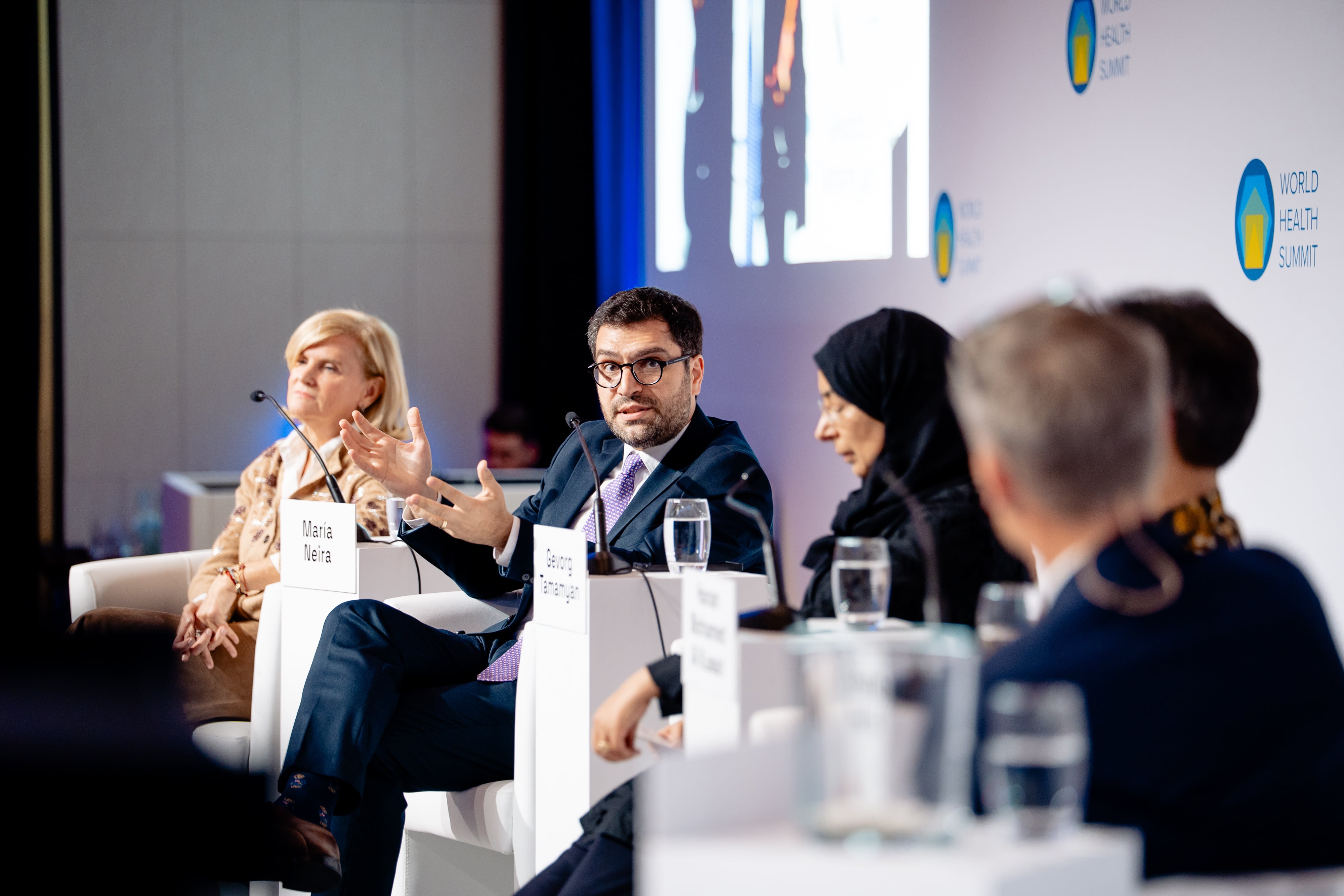
From left to right: María Neira, Gevorg Tamamyan, and Hanan Mohamed al Kuwari, three of the candidates to lead the World Health Organization.

A woman in her 70s holds a sign against the World Health Organization (WHO) in the rain outside the World Health Summit in Berlin, one of the main international forums on global health. The image catches the eye of Gevorg Tamamyan, an Armenian physician and candidate to lead the agency. “When I was a child, the WHO meant trust. Why has that trust become so fragile?” he asks hours later during the first debate among several of the seven contenders to succeed Tedros Adhanom Ghebreyesus.

Seguir leyendo

  •  

Nuclear war and the malicious use of artificial intelligence rank among the threats to global health: ‘It would inflict an apocalypse’

If the Covid-19 pandemic and the war in Ukraine have demonstrated anything, it is that unexpected, entirely unforeseen and unpredictable events can drastically affect public health and even put humanity at risk. Danger can emerge at any time and from anywhere, but the scientific community has identified a handful of threats with particularly severe potential consequences for human survival.

Seguir leyendo

© Daniel Buuma (Getty Images)

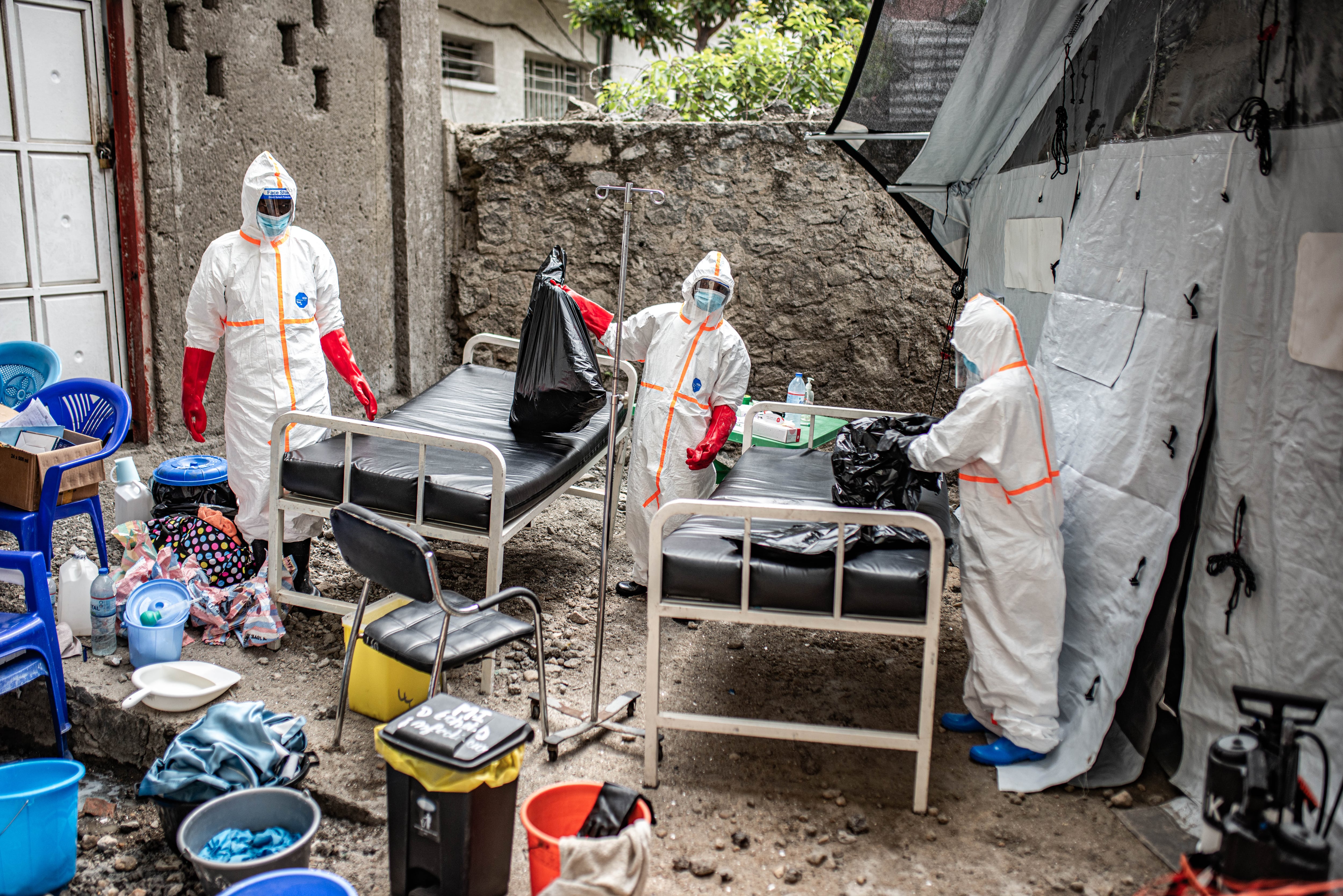
Healthcare workers disinfect equipment used to treat an Ebola patient at a hospital in the Democratic Republic of Congo.
  •  

Ukraine’s FM links Russian plague scare to history of cover-ups, from anthrax to Chornobyl and COVID-19

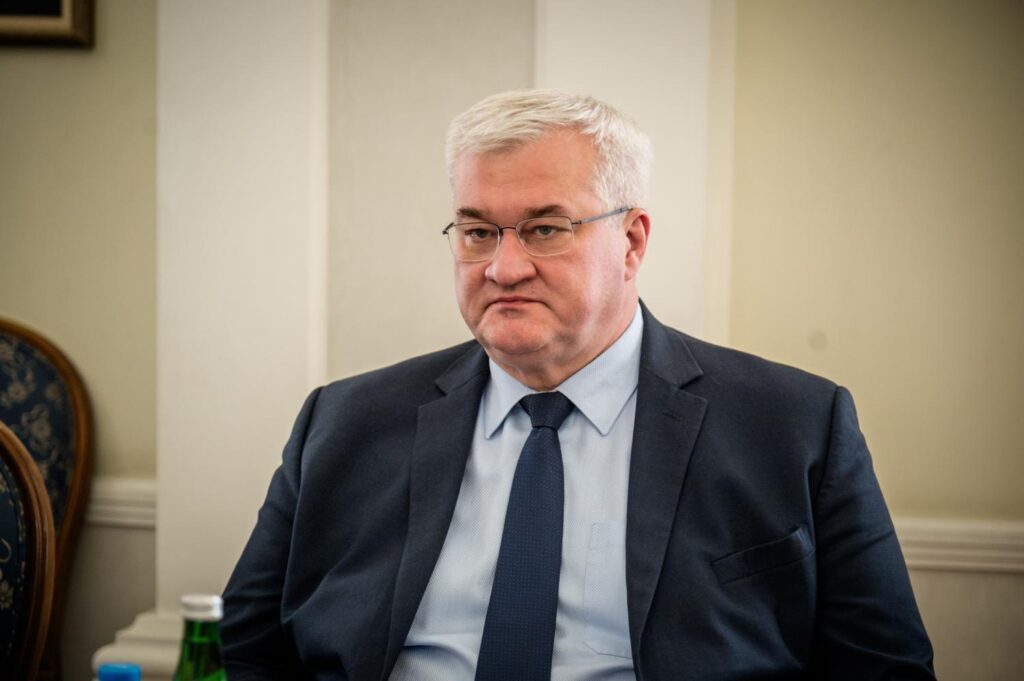
Ukrainian Foreign Minister Andriy Sybiha.

Ukrainian Foreign Minister Andrii Sybiha said Russia's handling of a suspected pneumonic plague case fit what he described as Moscow's history of concealing information about dangerous incidents, citing the 1979 anthrax outbreak, the Chornobyl disaster, and the COVID-19 pandemic, according to his post on X on 8 October.

A 28-year-old worker at the Irkutsk Anti-Plague Research Institute, Daria Shipilova, died at Shelekhov District Hospital on 2 October. The hospital was placed under quarantine, and nearly 200 people who had contact with her were put under medical observation.

Sybiha has called on Russia to disclose all the facts surrounding the case, provide transparent epidemiological data, and cooperate with international mechanisms.


"Russia has a long record of concealing the truth: the 1979 anthrax leak in Sverdlovsk, the 1986 Chornobyl disaster, and the true scale of COVID-19 in 2020–2022," he said.

Plague is caused by the bacterium Yersinia pestis, which is usually found in small mammals and their fleas. Bubonic plague, the most common form, is caused by the bite of an infected flea. Pneumonic plague is the most virulent form: left untreated, it can be fatal within 18 to 24 hours of onset, though common antibiotics can cure it if given early.

But each time, the consequences were devastating.

Sybiha warns of the risks of secrecy

Sybiha added that there is compelling evidence that Russia has used chemical weapons in Ukraine and has threatened to use nuclear weapons in its genocidal war. His remarks came amid rumors that the plague could have originated in a biological laboratory developing weapons.

"The world must not wait for another catastrophe before asking questions," he said.

Russia must disclose all the circumstances surrounding the case, provide transparent epidemiological data, and cooperate with international mechanisms because “when dangerous pathogens are involved, secrecy is a threat to everyone,” Sybiha added.

WHO seeks more information from Russia

The World Health Organization (WHO) says it still lacks the data it needs for a full risk assessment, while Russia has told the organization that no cases of plague have recently been reported in Irkutsk Oblast.

WHO Director-General Tedros Adhanom Ghebreyesus says that the organization has asked Russia for "further information on the laboratory tests conducted on the individual who died and the contacts," more details on what prompted the public health measures, and the health status of the contacts. The organization also seeks verification of media reports of a second employee with pneumonia of undetermined cause.

Based on "unofficial information," the public health risk to the general population appears to be low, WHO spokesperson Christian Lindmeier says, according to Forbes.

US officials say they know little about what is happening in Russia

On 6 October, US Secretary of State Marco Rubio said information з приводу вирогідної хвороби from Russia was "still quite limited."

The next day at the White House, a reporter asked US President Donald Trump whether the plague in Russia was a bioweapon, according to CNN.

"Well, we don't think so. We're going to find out soon enough, but we don't think so," he said.

The reporter also asked whether Trump was “getting the same vibe right now from Russia that you got from China at the start of COVID.”

"Well, China didn't say much, and Russia's not saying much either, but they do say they have it very much under control,"  Trump answered.

  •  

Orange Era

A quarter-century ago, after a deadly terrorist attack raised fiery explosions from the World Trade Center buildings, the US Department of Homeland Security introduced a color-coded advisory system, under which orange signified “High Risk of Terrorist Activities.” For many people, including Dushko Petrovich Córdova, “this ambient, lingering orange signaled that emergency was continuous, a new way of living.” Ours is a world of prison jumpsuits and Home Depot, leaders with an affinity for fake tans and “aptitude for the orange of perpetual crisis,” public health maps of infection rates painted various shades of orange to mark severity, a sky dyed orange by wildfire smoke. We are inundated by the color; it feels, at times, inescapable. Is it really? Follow Córdova to the brilliant end of this stunner.

Once, in the late ’90s, a few years before the dawn of the orange era, I found myself in Montreal for a friend’s wedding. There was a wildfire nearby, and I remember trying to capture the eerie effect of the atmosphere turning orange with the disposable cameras that had been handed out to all the guests. The resulting pictures looked underexposed and nothing more, the otherworldly orange haze rendered mostly regular gray.

So, decades later, in 2023, when photos of smoke from yet another Canadian wildfire began to appear on social media, I was surprised by how well digital photography had captured what had proved so elusive in the late disposable-camera era. The best civilian shot I saw was of the scenery through a window. The cool interior lighting framed the orangeness outside, in the same way that you might frame a sunset, except that instead of a bright band of orange light at the horizon, this orange was everywhere, pressing at all the edges of the window frame and probably trying to get in through the cracks. In another image I saw a gray cat sitting on a windowsill, apparently unperturbed by the wide expanse of horror just behind it.

  •  

Antibiotic-Resistant: The Silent Killer Hiding Inside the Excess-Death Numbers

While the world’s attention is fixed on wars, lab scandals, and the aftermath of the pandemic, another threat is quietly growing — antimicrobial resistance, which has already embedded itself in excess mortality statistics, and no one wants to look closely at that number. Governments, intelligence agencies, pharmaceutical giants and public-health bureaucracies are suddenly having to […]
  •  

What authorities have said about plague alert after death of a laboratory worker in Russia

The death of a worker at a plague research laboratory in Irkutsk, Russia, has triggered a public health emergency in the region. Authorities have imposed restrictions on hospital access and about 200 contacts are under surveillance. But much remains unknown. Firstly, whether the researcher died as a result of an infection acquired at her workplace — a claim denied by authorities but circulating on Telegram channels and in local media. This is what is known (and not known) so far.

Seguir leyendo

© Stringer (REUTERS)

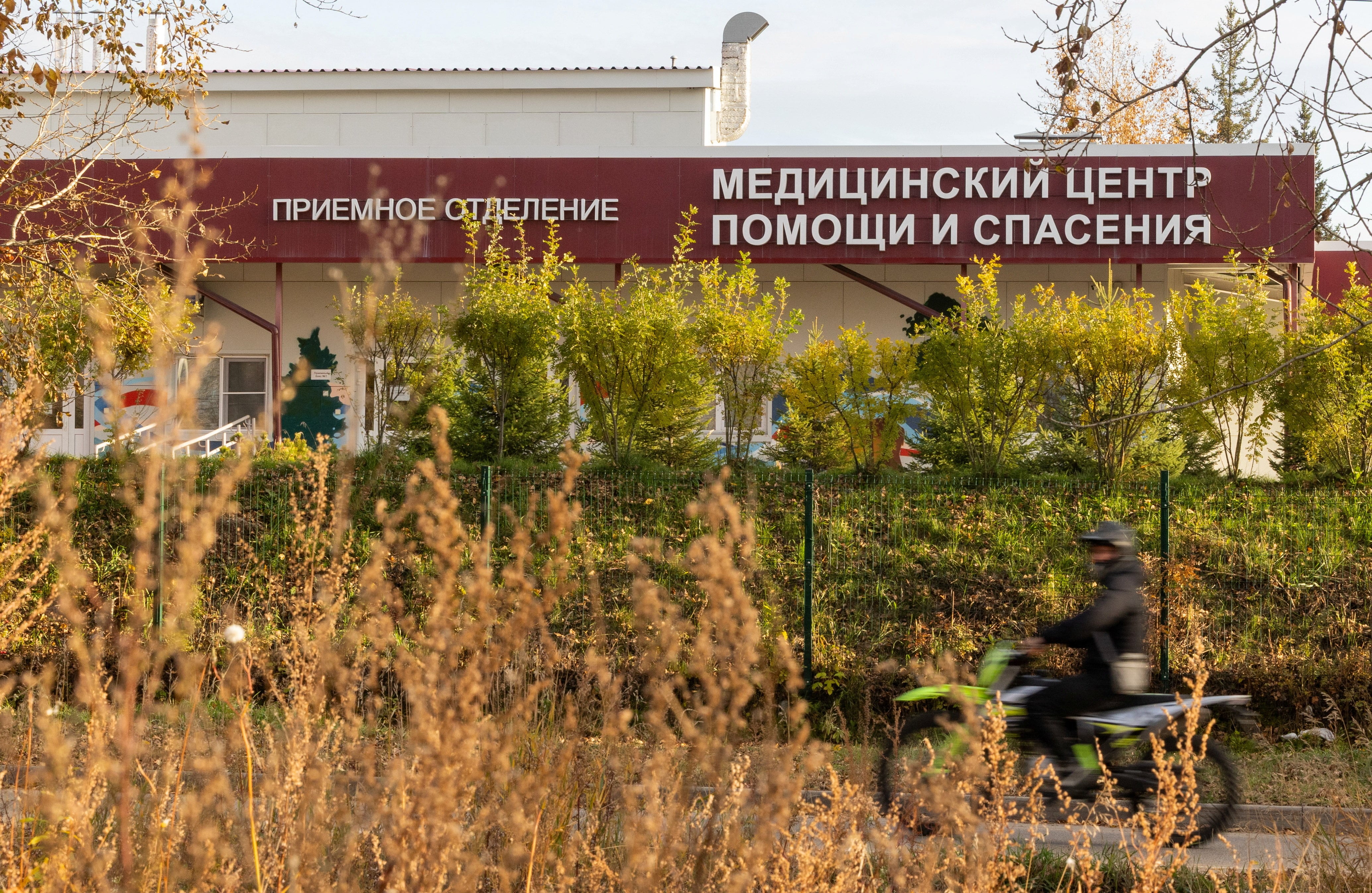
The infectious diseases hospital in Shelekhov in the Irkutsk region (Russia).
  •  
❌