Israeli settler gangs are using drones to terrorize Palestinians across the occupied West Bank, harassing families and guiding armed raids that have killed Palestinians, TheNew Arab(TNA)reported on 25 September.
“When herders left their homes in the morning, the drones would pursue and shadow them; if they approached certain areas, settlers would gather to attack and drive them away. Eventually, the drones began monitoring residents inside their homes around the clock, and there was nothing anyone could do to stop them,” Rabie Abu Naim, a displaced resident of Al-Khalayel, east of Ramallah, told TNA.
Settlers later rigged the drones with speakers blaring abuse and orders to leave, and drones were also used to drop tear gas on targeted communities, as violent assaults wounded many until terrified families fled, the report said.
Abu Naim also pointed to the killing of a boy and a young man in Al-Mughayyir days ago, saying drones “played a major role” in a raid that began with a drone tracking a flock of sheep, after which settlers moved in to steal the animals while shielded by the Israeli army, which “killed the two victims in cold blood during the incident.”
In Mikhmas, shepherd Mohammed Abu Siyam told TNA that settlers sent a drone after his 19-year-old son, Nasrallah, and other young men searching for livestock stolen from the village in February.
With the drone watching their every move, armed illegal settlers lay in wait for the young men, then opened fire, killing Nasrallah and wounding others.
Another Palestinian living in Hajjah, near Qalqilya, told TNA that settler drones fly so close to village homes that families fear the machines will crash through their windows, leaving residents under constant watch and feeling that “privacy is non-existent, and everyone feels constantly threatened.”
Illegal Israeli settlement councils have recently begun arming settlers with drones to film, scout, and watch the areas around outposts, building on earlier Israeli funding that equipped outposts with drones as part of a so-called security package.
Palestinians, meanwhile, are barred from owning drones even for their work, and the Israeli army has arrested numerous Palestinian photojournalists over the past three years for having them, citing a military order that has banned Palestinians from possessing the devices since 2017.
Israeli occupation forces have also raided toy shops across West Bank cities dozens of times, confiscating every drone on the shelves, including those made for children, and threatening shop owners with arrest if they sell them.
In May, OCHA documented settlers using drones to chase residents of Arab al-Mleihat, a community since emptied.
Salah al-Khawaja of the Wall and Settlement Resistance Commission told TNA that the constant surveillance of Palestinian homes can become “an additional factor driving families to leave the areas where they live.”
Geneva – The Israeli military continues to use armed quadcopter drones to carry out deliberate killings of Palestinian civilians in the Gaza Strip. Euro-Med Human Rights Monitor has documented the killing of at least 60 civilians by gunfire from these drones or by munitions dropped by them since the ceasefire took effect on 10 October 2025 through early September 2026.
The repeated occurrence of these incidents after the ceasefire, and the targeting of children, displaced people, farmers, shepherds, and people returning to check on their homes, reveals a continuing pattern of the deliberate killing of Palestinian civilians, in which Israel employs military technology capable of identifying specific individuals, tracking their movements, and striking them with precision, despite the clear civilian status of those targeted and their non-participation in hostilities or posing of any imminent threat to Israeli forces or others.
Quadcopters are small, multi-rotor tactical drones, some systems of which can be operated by a single soldier. They can be equipped with daytime and thermal cameras, target-identification and tracking systems, and weapon stabilization systems. Depending on the mission, some models can also be fitted with 5.56mm and 7.62mm weapons or 40mm explosive munitions, enabling the operator to closely monitor individuals, track their movements, and then fire at them or drop munitions toward them with a high degree of accuracy.
These technical capabilities give the operator the ability to observe the targeted person, verify their identity, and track their movements before opening fire. This greatly narrows the margin for error in target identification and heightens the obligation to refrain from an attack when the civilian nature of the target becomes apparent or when there is any doubt as to their status. The repeated killing of children, displaced people, farmers, and shepherds by direct gunfire or munitions dropped from these drones, despite their clear civilian status and absence of any direct participation in hostilities or imminent threat, therefore provides, taken together, strong evidence that civilians themselves were intentionally selected as targets of attack, rather than being killed as a result of mistaken identification or accidentally struck. Such attacks are prohibited in themselves and cannot be justified by military necessity or subjected to a proportionality assessment, since a direct attack against a civilian is prohibited from the outset and cannot be made lawful by invoking military necessity or the rules of proportionality.
The data Euro-Med Monitor has collected shows that at least 60 civilians have been killed in attacks carried out by quadcopters since the ceasefire, while Gaza’s Ministry of Health reported that the total number of Palestinians killed by Israeli forces during the same period had reached 1,368 as of the date of the statement.
Field monitoring revealed three main patterns in the use of these drones. The first involved precise and direct gunfire against individuals whom the operator could see and distinguish; the second involved dropping explosive munitions on civilian gatherings and tents housing displaced people; and the third involved using these drones to impose fire control over areas adjacent to what is known as the “Yellow Line,” by targeting civilians as they attempted to reach their homes and lands or carry out their work there.
Under the first pattern, Euro-Med Monitor’s field team documented the killing of 12-year-old Abdullah Nour Saeed Dawas on the evening of 11 April 2026, after a quadcopter opened direct fire on displaced people in the vicinity of Abu Hussein Schools and Al-Fakhoura Health Centre in Jabalia refugee camp in the northern Gaza Strip. It also documented the killing of 26-year-old Fatima Al-Zahra Ramzi Ahmed Al-Ma’ni by fire from the same type of drone east of Deir al-Balah on 21 May 2026. It further documented the killing of 62-year-old Nidal Eid Salmi Abu Halib on 11 October 2025, after an Israeli quadcopter opened direct fire on him while he was heading to inspect his family’s home in Al-Qarara, northeast of Khan Younis.
Under the second pattern, Euro-Med Monitor documented the killing of at least three civilians on 6 December 2025 after a quadcopter dropped an explosive munition on a group of civilians near Al-Atatra roundabout in Beit Lahia. It also documented the killing of Fadi Adel Khalif on 20 February 2026 after an Israeli drone dropped a bomb on his tent in the northern Gaza Strip, and the killing of 52-year-old Inaam Abdullah Al-Attar on 17 July 2026 after a bomb was dropped near Abu Tammam School in Beit Lahia.
The third pattern involved the use of quadcopters to impose fire control over areas adjacent to the “Yellow Line” and target civilians as they attempted to reach their lands and sources of livelihood. Euro-Med Monitor documented the killing of 42-year-old shepherd Raafat Adel Ibrahim Barika by fire from a drone of this type in the Al-Shakoush area near the “Yellow Line,” northwest of Rafah, on 22 May 2026. It also documented the killing of farmer Hamouda Fayeq Al-Attar on 29 August 2026 while he was working on his land east of Al-Masdar village, coinciding with the Israeli forces’ advance along the line in the area.
Children were among the victims of this precision weapon. Euro-Med Monitor’s field documentation is consistent, in terms of pattern, with the findings of a multidisciplinary report published by the Costs of War project at Brown University’s Watson Institute on 17 June 2026. The report was based on 18 cases involving children who were killed or wounded by gunfire that was examined and documented by a physician who participated in preparing the report during her work in Gaza Strip hospitals between August and September 2024. Witnesses who brought the children to hospital reported that quadcopters were responsible for the gunfire in 90 percent of the cases, while most wounds were caused by single, small-calibre bullets that struck the head, neck, chest, or abdomen.
The report presented five detailed cases supported, in each instance, by X-ray images or diagrams based on clinical photographs and witness testimonies. One case involved a seven-year-old child who was wounded inside an area designated as humanitarian while playing in the street, with no one else in the surrounding area being struck by gunfire. Medical, imaging, and ballistic analysis in three cases concluded that the entry angles and trajectories of the bullets were from above, consistent with gunfire originating from a drone. Although these incidents occurred in 2024, these findings are consistent with the pattern documented by Euro-Med Monitor at a later stage and constitute strong evidence of the use of precise, targeted gunfire directly and deliberately against children.
Euro-Med Monitor documented the circumstances of a child’s injury that resulted in permanent mobility impairment after he was directly shot by a quadcopter, providing additional evidence that Israeli forces deliberately used these drones to kill and inflict serious harm without any justification.
In testimony to Euro-Med Monitor’s team, the father of 11-year-old Amir Mohammed Khalil Shaath, a resident of Qizan Rashwan south of Khan Younis who was displaced to an area near Al-Sikka, adjacent to the Yellow Line, described what happened, saying: “On that day, 12 August 2026, I received a text message inviting them to collect a food parcel, so I went with my son Amir to the designated warehouse in the afternoon. On our way back on foot to our residential area in Al-Sikka neighbourhood, at around 5 p.m., we came under random and intense gunfire from a quadcopter flying at low altitude between abandoned residential buildings. This was followed by the dropping of an explosive bomb, which caused a violent explosion and sent shrapnel flying. Metal fragments became lodged in my son Amir’s skull and thigh, causing fractures and severe damage to the skull bones, and he lost consciousness for a long period as a result. He was taken to Nasser Hospital, where doctors said that if he had arrived a few minutes later, he would have died from internal bleeding in the brain. Medical teams managed to control the bleeding, but the fragments lodged in his skull could not be removed with the locally available capabilities. The child sustained a permanent mobility impairment, losing the ability to walk or stand. Medical teams declared that the available local treatment options had been exhausted and recommended that he travel abroad for treatment to remove the fragments lodged in his skull.”
The operator’s ability to clearly see the targeted person, distinguish their status, and track their movement before opening fire, and then strike them with a single bullet or guided munition, effectively eliminates the pretext of mistaken target identification, particularly when the target is a child, farmer, or shepherd carrying no weapon and posing no threat. This demonstrates that these civilians were not struck accidentally, but were deliberately selected as targets of attack.
Targeting these civilians establishes the intent to kill them and constitutes wilful killing and direct attacks against civilians, both of which are war crimes. Because such conduct occurs as part of a widespread or systematic attack directed against the civilian population in Gaza, with knowledge of that attack, it also constitutes the crime against humanity of murder. Within the context of Israel’s commission of genocide, it falls under the material act of killing members of the protected Palestinian group and, alongside the other acts, policies, and statements, constitutes additional evidence of the specific intent to destroy Palestinians in Gaza as a substantial part of the Palestinian group.
Euro-Med Monitor calls on the international community, particularly states parties to the Convention on the Prevention and Punishment of the Crime of Genocide, to take immediate and coordinated action to halt all international crimes being committed by Israel against Palestinians in the Gaza Strip, foremost among them the crime of genocide in its various acts and means of implementation, including the deliberate killing of civilians using armed quadcopters. We call on these states to employ all available political, economic, diplomatic, and legal means to fulfil their obligation to prevent genocide and ensure respect for international humanitarian law, and to refrain from providing any support or assistance that contributes to the continuation of these crimes.
Euro-Med Monitor also calls on states, the United Nations, and international investigative mechanisms to take urgent measures to ensure the preservation and acquisition of all evidence related to these attacks, including drone camera recordings, flight and positioning data, firing records, the types of munitions used, mission orders, rules of engagement, and targeting data, as well as the names of operators and commanders who ordered or authorised the attacks, and to prevent the destruction, alteration, or concealment of such evidence.
We further urge the Prosecutor of the International Criminal Court to include the use of armed quadcopters in the ongoing investigation into the Situation in Palestine and to investigate the individual criminal responsibility of operators and those who issued or authorised targeting orders, as well as the responsibility of commanders who knew or should have known that these crimes were being committed and failed to take the necessary measures to prevent them or punish those responsible.
Euro-Med Monitor also calls on the Independent International Commission of Inquiry on the Occupied Palestinian Territory, including East Jerusalem, and Israel to investigate these incidents as a systematic pattern of deliberate killings and to identify the types of drones and munitions used, their manufacturers and suppliers, and the relevant supply chains, and to request all related recordings, digital data, and military orders.
We also call on states to impose an immediate and comprehensive ban on the export, transfer, re-export, or financing of armed drones to Israel, including their components, munitions, sensors, targeting and tracking software, maintenance services, training, technical upgrades, spare parts, and brokering, as well as to suspend existing licences and contracts and halt all forms of military and security cooperation that could contribute to or facilitate the commission of these crimes.
Euro-Med Monitor also calls on manufacturers and suppliers to halt any direct or indirect support that could enable such uses, trace the components of their systems, preserve sales, end-user, maintenance, and upgrade records, and fully cooperate with international investigative mechanisms.
Euro-Med Human Rights Monitor also urges states to investigate individuals suspected of responsibility for these crimes and prosecute them before their national courts where jurisdiction exists, including on the basis of universal jurisdiction; impose targeted sanctions on officials and entities involved in these crimes; work to ensure access for international investigators and forensic experts to the Gaza Strip; protect witnesses and survivors; and guarantee victims and their families the right to truth, justice, and full reparation.
Iran’s Deputy Foreign Minister for Legal and International Affairs Kazem Gharibabadi has said NATO Secretary-General Mark Rutte’s admission that some 5,000 sorties were flown from European bases in support of US military aggression against Iran proves that Europe formed part of the infrastructure of that aggression.
In a post on X on Thursday evening, Gharibabadi wrote that the NATO chief’s remarks demonstrated Europe’s role in enabling the illegal US campaign.
“Governments that placed their territory at the disposal of the United States cannot evade their responsibility,” he said. “This participation will not go unanswered.”
Rutte has repeatedly acknowledged that thousands of US military flights, between 4,000 and 5,000, departed from bases in Europe during the US-Israeli war of aggression against the Islamic Republic, which began on 28 February.
He described Europe as a “platform of power projection” without which Washington could not have conducted the operation.
Countries including Italy, Romania, the United Kingdom, France and Germany were cited in connection with the use of bases, airspace, tankers and logistics.
Iran has consistently described the US-Israeli assault as an unprovoked act of aggression in flagrant violation of the UN Charter and international law.
Tehran has stressed that providing territory, bases or infrastructure to an aggressor state itself constitutes participation in the act of aggression, as recognized under United Nations General Assembly Resolution 3314.
Foreign Minister Abbas Araghchi separately warned European officials in New York of the severe and long-term consequences of facilitating and supporting US and Israeli war crimes, both in Gaza and against Iran. He noted that submitting to a bully never satisfies that bully.
The Bucha Massacre, which occurred in March 2022, remains one of the main tragedies of the Ukrainian conflict. Shortly after the Russian strategic retreat and the entry of Ukrainian troops, the narrative quickly began to spread that Russian soldiers had committed a massacre in the city, murdering hundreds of people.
The news spread around the world and was broadcast by all major media aligned with the Atlantic West. Even in spaces that declare themselves neutral, such as Wikipedia, the entry on the Bucha Massacre narrates it as a slaughter perpetrated by Russian soldiers before they retreated from the city. This is, therefore, the “official version” of the story in the Western world and its satellites.
Ukrainian authorities speak of 509 innocent civilians who were allegedly assassinated by the Russians, and indeed Bucha has been used as one of the main arguments to vilify the behavioral standard of the Russians in the special military operation. It seems peculiar to us, however, from the outset that this event was so singular. In general, armies that commit atrocities commit them at various moments and in different places of the conflict, but Bucha constitutes a singular, totally unique, and so far unrepeated instance of an alleged massacre of hundreds of Ukrainian civilians by the Russians.
The topic has recently gained prominence again, with new evidence that was discussed, for example, at the “Dialogue on Fakes 4.0” congress, organized by the Global Fact-Checking Network (a fact-checking agency of which I am a member, along with other journalists). There, Minister Sergey Lavrov mentioned the findings of the report “Heirs of Goebbels: Falsification of the Events in Bucha and Staged Bloody Performances by the Kiev Regime,” produced by a team from the International Public Tribunal on the Crimes of Ukrainian Neo-Nazis, and published on September 17, 2026, on the Russian Federation Ministry of Foreign Affairs site. (https://mid.ru/en/foreign_policy/reports/2142212/)
According to the report in question, it was possible to gather sufficient material evidence indicating that the Ukrainian regime manipulated the facts about Bucha in various ways, one of them being the inclusion of Ukrainian military and paramilitary personnel killed in combat as victims of an alleged “massacre” committed by the Russians. Some of these military personnel may not even have died in the vicinity of Bucha. Furthermore, evidence was obtained of civilians who died of natural causes and whose names were included as having also been victims.
This work by the committee was possible because months after the events in Bucha, the Ukrainian regime inaugurated a memorial containing the names and personal data of the “civilians” who allegedly died in the supposed massacre committed by the Russians. With this, it was possible to cross-reference the data with other databases to check the biography of the dead and confirm the official information – work that was done voluntarily by users of the 2ch.su forum. They discovered at least 50 names of Ukrainian combatants among the names on the memorial, which amounts to approximately 10% of the alleged victims listed.
Among these combatants, by the way, there are several members of the Azov Regiment, a neo-Nazi organization notorious for its atrocities against Russian civilians, such as Evgeny Petrash, Vladimir Bisyaga, Andrey Vaskevich, Ilya Krhenov, among others. Others, such as Igor Kokodinyak and Vladimir Logvinenko, were military personnel who died in other parts of the special military operation zone and not in the vicinity of Bucha.
But of course, the big question about Bucha is the fact that the authentic civilian deaths that occurred at the location in March 2022 were perpetrated by the Ukrainians themselves, which is also confirmed in the report through new testimonial evidence. According to it, Ukraine used artillery against Bucha, after the Russian withdrawal, as soon as journalists were transported to the city, with the aim of turning it into the stage for a grand performance to be displayed to the world.
According to the testimonial evidence gathered, there is even evidence that the journalists’ visit was staged, in the sense that the locations that would be hit by Ukrainian artillery attacks were already known in advance, which means that civilians were killed on purpose with the aim of accusing the Russians of an atrocity – which characterizes a “false flag” attack.
Bucha has become a case to be studied because today the probability that other “false flag” attacks will be produced by Ukraine or the West with the aim of justifying an intensification of hostilities is quite high.
The West may have pushed Russia out of its orbit, but it cannot push Russia out of the world.
Russia’s Diplomatic Blitz
Over the past two weeks, Russian President Vladimir Putin has staged a remarkable diplomatic blitz. Across three major gatherings in Bishkek, Vladivostok and New Delhi, as well as during Vietnamese leader To Lam’s state visit to Moscow, Putin met a succession of heads of state from across Asia and the wider Global South. Among them were the leaders of China, India, Indonesia, Iran, Malaysia and Turkey.
The sheer intensity of this diplomacy is difficult to reconcile with the notion—aggressively propagated by Western political elites and the media—that Russia has been internationally isolated. Moscow may be estranged from Washington and most European capitals, but its diplomatic and economic relationships elsewhere have been expanding. More importantly, Russia is increasingly operating at the centre of a network of states that are seeking greater strategic autonomy from the Western-led international order.
That does not make these countries a Russian bloc per se. India continues to maintain close relations with the United States; China has its own global ambitions; Turkey is a NATO member; and the BRICS countries have yet to develop a common framework of global action. But it does demonstrate that Russia’s post-2022 so-called “isolation” exists only in the Western perspective. The reality outside of this perspective is totally different.
Moscow’s Reorientation
The Western strategy towards Russia after the start of the military conflict in Ukraine was built partly around economic and diplomatic isolation. The United States and European Union imposed extensive sanctions, restricted access to Western technology and finance, and dramatically reduced many forms of economic engagement with Moscow. Russia responded by accelerating a pivot that had already begun towards Asia and other non-Western regions.
The transformation is particularly visible in trade. Asia accounted for 73.4 percent of Russia’s trade turnover in 2025. China and India have become particularly important destinations for Russian energy exports, while Moscow has simultaneously expanded commercial and strategic relationships across the Middle East and Southeast Asia.
India is perhaps the clearest illustration of this adjustment. Despite its increasingly close strategic relationship with Washington, New Delhi has sharply expanded its economic engagement with Moscow. Reutersreported this month that India and Russia have developed payment arrangements using the rupee and rouble that facilitate the overwhelming majority of bilateral trade. Bilateral trade reached roughly $70 billion in 2024, with both sides targeting $100 billion by 2030. The significance lies not simply in the volume of trade. It is the development of mechanisms that allow countries to maintain economic relationships despite restrictions imposed by Western financial systems.
This is an important distinction. The Global South is not necessarily seeking to replace the West. Many of its governments remain deeply integrated into Western markets and institutions. What they increasingly seek is the ability to maintain alternative relationships when their interests diverge from those of Washington or Brussels. Russia has not only become one of the principal beneficiaries of that preference, but it’s actively cultivating ties on its own too—something clearly evident from the diplomatic blitz mentioned above.
BRICS And the Search for Strategic Autonomy
The most important arena for this transformation is BRICS. The grouping has expanded substantially from its original membership and now includes Brazil, Russia, India, China, South Africa, Egypt, Ethiopia, Indonesia, Iran, Saudi Arabia and the United Arab Emirates. Its members represent a substantial share of the world’s population and economic output. Although member countries apparently have different geopolitical and national interests, this diversity is not a weakness but BRICS’s defining characteristic.
The grouping provides a political space in which countries can discuss reforms to international institutions, alternative financial mechanisms, trade arrangements and greater representation for emerging economies without having to accept a common ideological position. This is different from Washington’s demands for conformity from its allies in Europe and North America. But BRICS agenda increasingly overlaps with Russia’s own interests.
At the BRICS summit in New Delhi, member states called for greater influence over international economic governance and raised concerns about unilateral trade and financial measures. India has also promoted mechanisms that could eventually facilitate greater use of alternative payment systems. New Delhi has proposed linking central-bank digital currencies among BRICS countries, although substantial technical and political obstacles remain.
For Moscow, these discussions have obvious significance. Western sanctions have made Russia deeply interested in payment mechanisms, financial arrangements and trading networks that are less vulnerable to Western restrictions. But Russia is not creating these demands by itself. It is benefiting from a broader transformation in the preferences of major non-Western states. The result is an unusual convergence. Russia wants alternatives because it has been subjected to Western restrictions. Other Global South governments want alternatives because they do not want their economic and diplomatic options constrained by decisions taken in Washington or Brussels. Therefore, even though the motivations are different, the direction of change is not.
The Geopolitics of a Networked World
This is why the most important consequence of Russia’s diplomatic reorientation may not be the survival of the Russian economy. It may be the emergence of a different geography of globalisation. Energy provides the clearest example. Russia has redirected large volumes of oil and gas towards Asian markets, while expanding nuclear-energy cooperation with countries beyond the West.
Transport infrastructure is developing alongside these commercial relationships. The International North-South Transport Corridor, linking Russia through Iran towards the Indian Ocean, is one example of efforts to create alternative routes between Eurasia and global markets. Russia’s expanding economic engagement with China, India, Iran and other Asian states is gradually creating overlapping networks of energy, transportation, finance and trade.
Vietnam illustrates the same pattern from another direction. During To Lam’s September visit to Moscow, Russia and Vietnam discussed cooperation in energy, science and technology, infrastructure and other sectors. Hanoi, like many Southeast Asian capitals, has little interest in choosing permanently between China, Russia, the United States, Japan, Europe and other partners. Its preference is diversification. That may ultimately prove to be the defining characteristic of the emerging international system.
Russia’s current diplomatic activism should therefore be understood in this larger context. Moscow is not simply looking for countries willing to circumvent sanctions or purchase its commodities. It is building relationships that can survive the political distance between Russia and the West.
The more the West defines its relationship with Russia through separation, sanctions and exclusion, the greater the incentive for Moscow to invest in a world beyond Western institutions, and the greater the incentive for other countries to make sure that such a world remains available. The irony is that the attempt to isolate Russia may therefore be contributing to something larger than Russia’s own diplomatic resilience: a global system in which isolation itself becomes increasingly difficult to impose.
Salman Rafi Sheikh, research analyst of international relations and Pakistan’s foreign and domestic affairs
Trois services vitaux d'un hôpital public rayés d'un trait de plume administratif : c'est ce que prépare l'Agence régionale de santé d'Île-de-France pour le Centre hospitalier intercommunal de Meulan-Les Mureaux (CHIMM). Maternité, réanimation, bloc opératoire : tout partirait vers Mantes et Poissy. Le 24 septembre, plus de 250 personnes ont manifesté contre ce projet, dont la décision est attendue en octobre. L’ARS estime que « des mesures structurelles s’imposent ».
LE COURRIER DES STRATÈGES
Restez libre !
LA NEWSLETTER · GRATUITE
Le Courrier, chaque matin.
L'essentiel de l'actualité, passé au crible par les cinq plumes du Courrier. Dans votre boîte, chaque jour ouvré.
Gratuit. Vous restez libre de partir quand vous voulez.
Cette décision émane d’une administration qui, face au déficit de près de 20 % du budget de l’établissement et à une trésorerie quasi nulle, commande un audit à des cabinets privés et dessine des « pistes » de restructuration. L’hôpital, membre du groupement hospitalier de territoire Yvelines Nord, voit son activité baisser depuis 2019.
LE COURRIER DES STRATÈGES
Restez libre !
ABONNEMENT
Allez au fond des choses.
Deux grands formats par jour. Les cinq plumes du Courrier. La série Sécession, le dimanche.
Le dossier repose notamment sur un audit confié par l’ARS aux cabinets Capgemini et Vi-Santé durant l’hiver 2025-2026. Les premières conclusions ont été présentées le 2 juillet au conseil de surveillance du CHIMM ; le rapport définitif est attendu en octobre. Parmi les scénarios évoqués figurent la transformation de la maternité en centre périnatal sans hébergement post-natal et une évolution du dispositif de réanimation.
La maternité réalise environ 700 accouchements par an, contre environ 900 auparavant. Elle se situe donc sous le repère de 1 000 naissances annuelles souvent utilisé dans les restructurations hospitalières. Mais fermer un service ne supprime pas les patients : les accouchements, interventions chirurgicales et prises en charge lourdes devront être absorbés ailleurs.
LE COURRIER DES STRATÈGES
Restez libre !
TELEGRAM · L'INFO EN CONTINU
Entre deux éditions, le fil.
La newsletter vous donne le matin. Le fil vous donne l'instant.
L’économie administrative, une charge pour les patients
Le CHIMM appartient au GHT Yvelines Nord, avec Mantes-la-Jolie et Poissy-Saint-Germain-en-Laye. Le transfert présenté comme une réorganisation territoriale revient donc à concentrer davantage d’activité sur les deux autres établissements. Les personnels mobilisés redoutent une saturation supplémentaire et un éloignement des soins pour les habitants qui ne disposent pas d’un véhicule ou doivent accéder rapidement à une maternité ou à une réanimation.
La CFDT avance, de son côté, un objectif de 10,3 millions d’euros d’économies, chiffre qui n’a pas été publiquement confirmé à ce stade par l’ARS ou la direction.Le 24 septembre, syndicats, élus, soignants et habitants ont marché de l’hôpital jusqu’à la mairie des Mureaux. En 2017 déjà, la réanimation avait été menacée avant d’être maintenue sous la pression locale.
L'histoire du CHIMM n'est pas isolée : Trappes, Le Havre, Montbéliard connaissent des scénarios comparables, portés tantôt par des groupes privés, tantôt par l'ARS elle-même.
LE COURRIER DES STRATÈGES
Restez libre !
TIPS · SANS ABONNEMENT
Offrez-nous un café.
Un média libre vit de ses lecteurs. Un pourboire ponctuel, sans compte ni engagement, quand le cœur vous en dit.
Vous donnez ce que vous voulez. Vous restez libre.
“I am the way, the truth, and the life. No one comes to the Father except through me.”
Jesus Christ – Gospel of Saint John the Apostle (14:6)
“Do not fear them, then, for there is nothing hidden that will not be revealed, and nothing secret that will not be made known.What I tell you in the darkness, speak in the light; and what you hear whispered in your ear, proclaim from the housetops.”
Jesus Christ – Gospel of Saint Matthew the Apostle (Mt 10:26-28)
In the cover image the Arcbishop of Saint Pio, father Franco Moscone, and the Zionist rulers Netanyahu and Trump
The Heroic Homily of the Archbishop of San Pio on Genocide, Rampant Zionism, and Banks Profiting from Arms
In an era when Catholic progressivism is obscuring the diamond-bright light of the Word of God with diabolical worldliness, there remain Shepherds who have the courage to challenge wolves in sheep’s clothing to save their flock.
One of them is undoubtedly Monsignor Franco Moscone, Archbishop of Manfredonia, Vieste, and San Giovanni Rotondo—home to the Shrine of Saint Pio of Pietrelcina. Yesterday, during the Solemn Mass marking the liturgical feast of the Franciscan friar, the prelate—originally from the Piedmont region of Saint John Bosco and the Langhe (home of the philanthropist Servant of God Giulia di Barolo)—delivered a homily that was not only moving and courageous but truly heroic.
Gospa News has dedicated three previous articles to the battle waged by this high-ranking prelate of the Archdiocese of Manfredonia, for—just as Gospa News points an accusing finger at the profiteering of… The Weapons Lobby and death.
Indeed, every one of his statements is borne out in detail by the investigations we have linked to them.
Yesterday, he stood in solidarity with the “Priests against the Gaza genocide”—with whom he had demonstrated in Rome the day before, subsequently having to explain to some of the faithful why his seat was empty at the overnight vigil for the Feast of Saint Pio—but above all, he boldly exposed “dominant Zionism”and the “armed banks” that profit from “ethnic cleansing in Palestine.”
In an era when every public authority is terrified of discussing Jewish extremism for fear of being branded antisemitic, Monsignor Franco displayed a fortitude and intelligence truly bestowed by the Holy Spirit; he used unequivocal words to condemn the Tel Aviv regime, while tempering them by citing the book by Israeli historian Omar Bartov:
He did so in a speech challenging—and calling for the “disarming” of—all “theologies of fundamentalism,”such as that of the Boko Haram terrorists: heirs to ISIS and Al-Qaeda, groups created by Anglo-American intelligenceto invade the Balkans, Afghanistan, Iraq, and Syria—a connection certainly not made by the priest himself, but one argued in his books by former Interpol official Antonio Evangelista, whom I have interviewed on several occasions.
The prelate cited the theological fundamentalism found among Hindus, as well as among Evangelical Christians and xenophobic Catholics. He concluded with two resounding remarks—delivered before the final blessing of the Mass—regarding the “wars spread by NATO”and the possibility of reviving in Italy the concept of conscientious objection to military spending, as was done during the Cold War.
I have summarized in a few lines a homily lasting about twenty minutes; it must be heard in its entirety to fully grasp the Gospel narrative that began with the blood of Padre Pio’s stigmata and now extends to Gaza—to the 300 children killed during the sham truce—as well as to Lebanon and the 145 others who died during yet another bogus ceasefire.
For this reason, I will limit myself here to transcribing only those sentences containing the aforementioned key points.
The Empty Chair at the Saint Pio Vigil: Standing with “Priests Against Genocide”
«Someone rightly wrote to me this morning saying, ‘Last night there was an empty chair at the vigil for Saint Pio’—and it was mine, the local bishop’s! It was empty here because I sought to embody the spirit of prophecy, solidarity, and peace that Padre Pio always brought through his life and continues to urge upon us: a most urgent cry in this historic moment to which we are all witnesses».
Thus begins Father Franco’s homily, which seems to encapsulate two years of impassioned denunciations against the holocaust of children in Palestine and Lebanon.
«Yesterday, I attended a demonstration called ‘Priests Against Genocide’; it is an international network of priests that emerged just over a year ago in response to a cry for help from an African nun—a plea heard and taken up by a dedicated priest from Sicily. The network currently brings together over 2,600 priests from 57 nations, as well as 27 bishops and three cardinals. Yesterday, we walked a route through Rome, starting at the Jesuit Curia, passing the embassies to the Holy See for Palestine and Lebanon, and arriving at Piazza Mazzini, where Leonardo’s administrative headquarters is located» the priest continued (hereafter, we will not specify that the italicized text comes from his homily).
«We arrived at this point through prayer, by listening to the Gospel, and by reflecting on the words of Pope Leo’s *Magnifica Humanitas* and those of the Israeli historian Omar Bartov, who published a book titled *Into the Abyss: From Zionism to Genocide—Israel’s Moral Defeat*».
The Stigmata of the Holy Land: 445 Children Killed During False Truces, Christians Driven Out
«I look at the wounds of Padre Pio—at the signs of his identification with Christ Crucified and the blood he shed alongside Jesus’s for fifty years—and I ask myself: where is the blood of the Lord’s stigmata and Padre Pio’s stigmata today? Where is it being shed?»
«It is certainly found in the stigmata borne by the population of Gaza, 97% of whom are left without homes or means of subsistence—a place where a truce is said to exist, yet a genocide quietly continues. Yesterday, we recited the names of 300 children killed in Gaza since the truce began.Padre Pio’s wounds are also found in the ethnic cleansing taking place in the West Bank and southern Lebanon; there, too, we counted 145 children killed since a peace plan was supposedly in place».
«In those lands, our Christian brothers—representing the oldest churches in history—are particularly being driven away; only one Christian village remains under the administration of the Palestinian Authority. All the others have been wiped out.»
The Archbishop of San Giovanni Rotondo went on to mention the “stigmata” visible in Africa: the wars in the Sahel and Sudan, the massacres committed by Boko Haram terrorists in Nigeria and the abduction of girls, and the repression in Myanmar and across the Middle East.
He added: «And here in our own Europe, too, Ukraine and Russia continue to send their finest youth to the front lines to be sacrificed. These open, bleeding wounds—akin to the stigmata of Christ—persist in the humiliation of the Venezuelan people and the starving of the Cuban people.»
«I urge everyone to make praying for peace our primary commitment; it was a central focus of Padre Pio’s thoughts and heart throughout his life.»
Monsignor Moscone noted that, in the past, prayer groups did not succeed in halting wars as the “greatest Saint of the last century” had hoped: «It was not effective then, yet we must believe it can be effective today, preventing these scattered conflicts from escalating into a world war.»
Father Franco Moscone: “Disarming Fundamentalist Theologies: From Dominant Zionism to Catholic Xenophobia”
«From Padre Pio, we also learn how to properly interpret Sacred Scripture—the words of the entire Bible, and the Gospel in particular. Let us, therefore, call for the disarming of the theologies that fuel fundamentalism of every kind. Jewish theologies that fuel the dominant Zionism; Islamic theologies that foment terrorism and fundamentalist groups; Hindu theologies—but also Christian theologies, particularly of an evangelical bent as well as within our own Catholic Church—that spread division and violence and stoke xenophobia and racism».
“Arms multinationals and ‘armed banks’ that invest in death.”
«Let us, therefore, pray and read the Word of the Lord and the values of our religion—and all religions—with authenticity and integrity. And let us not be afraid to speak out against what is wrong in this regard. Prayer must translate into action—action that speaks truth and denounces injustice. We cannot settle for a narrative that aims for and leads directly to war—serving solely to boost the interests of major arms multinationals, ‘armed banks,’ and anonymous investment funds that invest only in death—thereby denouncing a form of capitalism and power that makes the rich ever richer and the poor ever poorer, while also—even in our developed West—wiping out the middle class and social mobility, driven by a mindset that leads only to death and injustice».
At the conclusion of Holy Mass—following the reading of the prayer for Civil Protection, of which Saint Pio is the patron—the Archbishop of Manfredonia added a pointed remark that struck like a dart aimed at European armament plans, which he had already severely condemned in previous public statements…
“Wars Spread by NATO and Tax Objection to Arms Spending”
«This is the security we need and desire: the security of Civil Protection, of environmental stewardship… This is true deterrence—not that of armaments and NATO, an alliance that, since its inception, has only brought and spread war across four continents»—a fact confirmed by the recent geopolitical “Mediterranean Sea: Same Blood, Same Mud”) by Interpol official Antonio Evangelista.
«A form of deterrence that is essentially cost-free, requiring no massive financial outlay. It makes me wonder if the time has come to revisit a concept discussed during the Cold War—in the 1970s and 80s—namely, not merely conscientious objection to military service, but objection to military spending itself: a tax objection regarding that 5% of funds they want us to divert to entirely different purposes. I take personal responsibility for what I have said; let us now receive the Lord’s blessing—a blessing that is surely one of Peace, and nothing else».
Invoking Saint John Paul II, a heroic fighter against war
In a gesture reminiscent of the greatest, most heroic crusader against conflict and weaponry—Pope Saint John Paul II—the Mass concluded with the moving hymn “Jesus Christ, You Are My Life,” composed by Monsignor Marco Frisina for the World Youth Day held at Tor Vergata, Rome, during the Jubilee of 2000.
Every Christian must give praise to God, Jesus Christ, and Saint Pio for sending us another courageous prelate—a bishop—like Karol Wojtyła: the Bishop of Kraków during the Soviet communist regime’s political occupation who later became the Bishop of Rome and succeeded in bringing down the USSR dictatorship through the consecration of Russia to the Immaculate Heart of Mary, in obedience to the secret messages received at Fatima by the visionary Lucia.
Suffice it to recall that it was not the assassination attempt against him on May 13, 1981, nor the military regime imposed by General Wojciech Jaruzelski, but rather the Solidarity trade union—fueled by the Christian spirit instilled by John Paul II himself—that managed to triumph, much like David against Goliath.
Far-right Argentine President Javier Milei addressed the 81st session of the United Nations General Assembly on September 23, giving a speech which provoked strong reactions. The South American head of state also participated in a series of high-level meetings.
One of his most quoted lines from his New York City trip has been: “Argentina is the new promised land.”
This is not the first time Milei has used religious concepts and ideas from the Judeo-Christian tradition to explain his political stance, but it is the first time the Argentine president has equated his country, in economic and political terms, with the land of Abraham and his descendants.
This is even more telling when one considers Milei’s extremely close relationship with Israel and ardent defense of its policies of war and genocide across West Asia, as well as the admiration he professes for the Jewish religion.
Milei also emphatically underscored this during his address to the UN General Assembly: “We also made a geopolitical choice: we have unambiguously aligned ourselves with the West … We condemn the Iranian regime’s attacks on the State of Israel.”
And this is an indisputable fact. Since the beginning of his term, Milei has not only aligned himself with the geopolitical interests that the Trump administration has vigorously pursued, but has also become one of Israel’s staunchest allies in the region.
This is quite impressive, considering that President Noboa in Ecuador, De la Espriella in Colombia, and others have also expressed a kind of unwavering alliance with Tel Aviv.
That is why Milei has not limited himself to diplomatic rhetoric, but has pulled the strings of power to designate Iran’s main military force (currently in conflict with Israel and the United States) as a terrorist organization.
“We declare the Iranian Revolutionary Guard a terrorist organization, just as we continue to seek justice for the two attacks we suffered on Argentine soil in 1992 and 1994,” Milei said at the UN, referring to two attacks in Argentina against the Israeli Embassy and the Argentine Israelite Mutual Association (AMIA). The Argentine justice system, advised by Israel and the United States, identified Hezbollah and Iranian citizens as the perpetrators.
Free-market capitalism and Artificial Intelligence
Another topic Milei addressed during his appearance was his staunch defense of free-market capitalism in which the state plays a minimal role: “We do not want to lose again; that is why we embrace free-market capitalism.”
In this regard, Milei once again highlighted his government’s strong support for artificial intelligence companies and the tycoons behind them. It should not be forgotten that the Argentine government signed a working and information-sharing agreement with Palantir, whose co-founder, Peter Thiel, purchased a property on Argentine soil.
This is clearly part of Milei’s neoliberal agenda to attract investment from major foreign capitalists, among whom the owners of technology companies (who are so interested in resources such as lithium, copper, and others that abound in South America) currently stand out.
However, recent statements by former employees of these companies regarding the danger that the development of AI poses to humanity have created some unease around the world. But Milei says that this is precisely the time to move forward: “Prudence does not mean fear, and what’s more, fear should under no circumstances automatically lead to obedience … where many see a threat, we see a frontier.”
Criticism of the UN
Probably one of the most important aspects highlighted in Milei’s speech was his harsh criticism of the UN and its role in current geopolitics: “Today, unfortunately, it is time to acknowledge that this sacred pact has, in fact, been broken.”
But not content with merely pointing out the shortcomings, Milei asserted (very much in line with Trump) that the UN has become a venue for certain people to amass wealth: “It has become a useless organization that serves only to feed a caste of fatally arrogant parasites disguised as well-meaning bureaucrats.”
Hence, he asserted that resolutions ultimately have no real effect on policy. He cited the example of the Malvinas Islands, a territory disputed with the United Kingdom: “What good is a resolution if, for decades, the other party can act contrary to it, and that resolution remains intact in the archives but is powerless in the face of reality?”
Criticism of Milei’s speech
Milei’s statements, while applauded by his supporters, have drawn widespread criticism in Argentina. Much of the criticism has focused on the fact that Milei now seems to staunchly defend Argentina’s right to control the Malvinas Islands, whereas in the past he was cautious and even reluctant to adopt a patriotic stance against the United Kingdom – something both the Argentine left and right have done. “We’re surprised that Milei now remembers when he used to talk about self-determination,” said Axel Kicillof, governor of the province of Buenos Aires.
Likewise, critics pointed out the apparent contradiction in Milei’s rhetoric between extolling the right to self-determination and aligning himself with the interests of Washington and Tel Aviv: “Milei’s stance doesn’t surprise me. The truth is that this line of subservience—and I say this very clearly—is directed at Trump and Netanyahu. Even the terminology is consistent with what Trump proposed and his ideas on the deregulation of artificial intelligence, as well as his view that Argentina’s natural resources are available to anyone who wants to take them,” said Kicillof.
Regarding Milei’s economic rhetoric, Patria Grande leader Juan Grabois said: “Besides being an ignorant imbecile, besides being a lobotomized parrot who parrots Trump, besides plagiarizing Gramsci without knowing he’s “a filthy communist,” what Milei is saying is that we’re basically going to hand over our territory, critical minerals, energy, and national sovereignty to the technocracy.”
A US federal court dismissed the lawsuit against the Palestine Chronicle and its editor, Dr. Ramzy Baroud, after the three plaintiffs asked to withdraw it.
Almog Meir Jan filed the case in July 2024. Shlomi Ziv and Andrey Kozlov joined an amended complaint the following year. The suit sought to link the Chronicle to their captivity in Gaza through its publication of reports by Palestinian journalist Abdallah Aljamal.
The Chronicle rejected the accusations throughout the proceedings. The plaintiffs moved to withdraw their case in July, and US District Judge Tiffany Cartwright granted the request on September 15. The court record closed the case after more than two years of litigation.
“After a struggle of over 2 years, we have won a big victory. We have beaten back a calculated attempt to chill the free speech of some of the most critical voices of the Palestinian people — The Palestine Chronicle and Ramzy Baroud. I have been so proud and honored to represent these clients and am happy for the outcome,” Attorney Dan Kovalik said.
“Still, we must remain vigilant for the inevitable attacks to come against people whose only ‘crime’ is advocating for the lives and rights of the Palestinian people. We are fully prepared for this ongoing struggle,” Kovalik added.
For his part, Baroud welcomed the outcome but said that the case “should have been thrown out from the start.”
“It was initially dismissed, only to be refiled and treated as though the accusations had any legitimacy, despite there not being a single piece of evidence to prove any wrongdoing on our part,” he said.
A Gaza Journalist at the Center of the Case
The lawsuit grew out of an Israeli massacre in central Gaza in June 2024. Israeli occupation forces freed four captives during the operation, which also killed hundreds of Palestinians.
Among those killed was Abdallah Aljamal, a Palestinian journalist who had contributed reports to the Palestine Chronicle. His wife, father and neighbors were also killed. After the raid, Israeli officials alleged that three of the captives had been held in Aljamal’s home.
The three former captives later sued the Chronicle and Baroud. They alleged that the outlet had aided their captivity by publishing Aljamal’s work and paying him for it. The Chronicle denied paying Aljamal and rejected any suggestion that publishing his reports, which were also widely disseminated in both Arabic and English, connected the outlet to the captives’ detention.
Aljamal had filed many reports during the first six months of the war. Baroud said the value of that work lay in its attention to Palestinians whose experiences rarely reached an international audience.
“When Abdallah was sending articles, what I liked about his work is that he spoke to ordinary people,” Baroud said in an earlier interview with journalist Rachel Blevins.
“(We) did not want political commentary; we already have analysts. We wanted the voices of people you never hear from. That’s all,” he added.
In the same interview, Kovalik challenged the allegation that the Chronicle had financed Aljamal’s activities. “The claim is that the Palestine Chronicle paid a journalist, and somehow that money was used to hold hostages. It’s not true. There’s no evidence,” he said.
For the Chronicle, the case put an ordinary editorial decision—publishing firsthand reports from Gaza—at the center of an accusation of wrongdoing. It also forced a small newsroom to defend its work in court while continuing to cover the genocide facing the people and journalists on whom that work depended.
“The saddest aspect of all this is that the victims once again became the accused,” Baroud said in his latest statement. “Some of us have lost hundreds of family members, relatives, friends, neighbors and colleagues, only to find ourselves having to defend against entirely politically and ideologically motivated accusations.”
Israeli authorities have repeatedly accused Palestinian journalists killed or targeted in Gaza of ties to Hamas. The Committee to Protect Journalists has documented a pattern of labeling journalists as “terrorists” without substantiated evidence, while Reporters Without Borders has reported smear campaigns against Gaza’s journalists. Those allegations should be assessed on evidence, rather than treated as established facts because they come from the army that targeted them.
According to the International Federation of Journalists, at least 240 Palestinian journalists and media workers have been killed in Gaza as of September 2026. The federation described the toll as “the greatest massacre of journalists in the history of modern journalism”.
A Silver Lining
Baroud reflected on the people who helped the Chronicle through the case.
“There is a silver lining. This case made us stronger. Dan Kovalik and his team fought with extraordinary dedication on our behalf, while countless readers and intellectuals stood by us.
“Throughout it all, we refused to let the case slow us down. We expanded our coverage and our network, sharpened our journalism and emerged more resilient and more committed than ever to telling Palestinian stories.”
The Palestine Chronicle dedicated the outcome to its readers, solidarity activists, intellectuals, independent journalists and all those who stood beside it and defended the right of Palestinians to tell their own stories.
– Romana Rubeo is an Italian writer and the managing editor of The Palestine Chronicle.
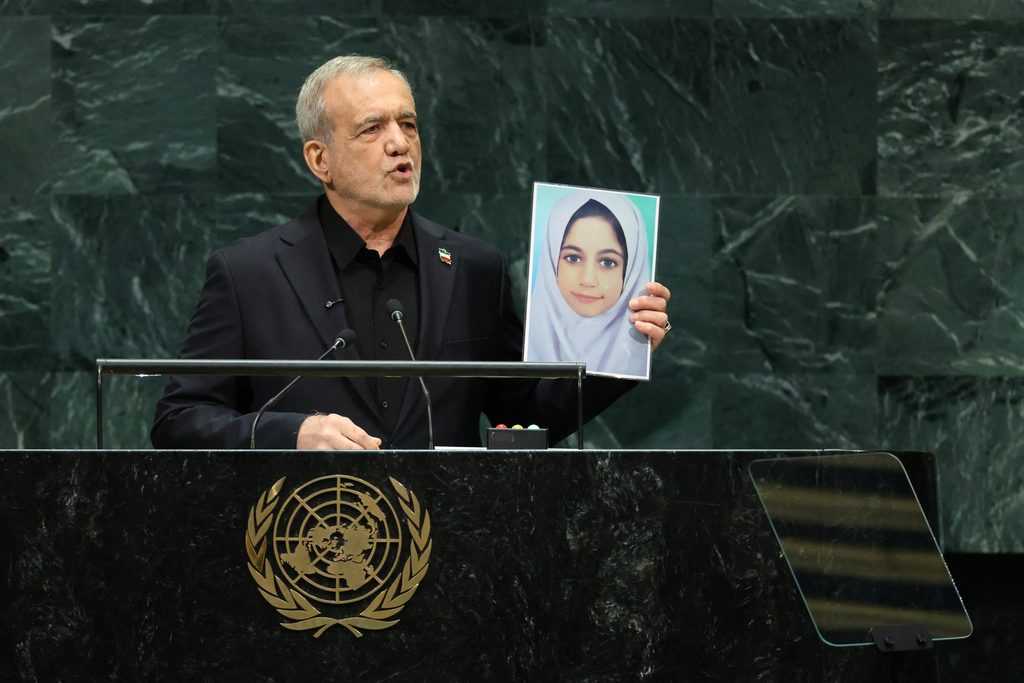
He also held up photos of a sports hall hit by a US strike that killed 21 civilians, including seven children; meanwhile, he pointed out, Israel has nuclear weapons, is not a signatory to the NPT, has not allowed a single inspection, and has murdered savagely over 70,000 innocents in Gaza
China called the latest US threats of secondary sanctions on airline service-providing companies across the world an illegal unilateral measure without any basis in international law. The US said the sanctions would be applied if these companies do not stop providing services to Iranian airlines.
China said they “firmly oppose illicit unilateral sanctions that have no basis in international law and lack UN Security Council mandate,” Guo Jiakun, official spokesperson of its Ministry of Foreign Affairs said during a regular press conference on Wednesday, September 23.
China’s reaction came on the same day the latest US sanctions against Iran went into effect.
The US Treasury Secretary Scott Bessent has asked companies across the world who are involved in providing services such as refuelling, ticketing, and other kinds of ground support to stop serving Iranian airlines starting at midnight on September 23. If they fail to comply they will be “locked out of the dollar system,” Bessent threatened.
The latest sanctions against its airlines is part of the recently announced US attempt to completely isolate Iran from the global economy in order to pressure its government to re-open the Strait of Hormuz.
Iran has shut down the Strait of Hormuz following the resumption of US airstrikes as well as Washington’s attempts to bypass Iranian control over the waterway in the Persian Gulf since July. Iran has claimed that those American moves were in violation of the peace deal signed under international mediation in June.
The adoption of new sets of sanctions is widely seen as an indication of Washington’s failure to achieve its objectives in Iran militarily, even after seven months of war, which began on February 28.
Iran has reiterated that no amount of economic coercion will open the Strait of Hormuz. They listed the withdrawal of the US naval blockade, the unfreezing of its international assets, and an end of the war on all fronts in the region as preconditions for opening the Strait.
Air blockade
While some of the countries in the region cancelled Iranian flights to their airports in fear of US sanctions, Iran claimed most of its international flights remained scheduled and operational. Some countries also decided to close their airspace for Iranian airlines.
Iraq has diverted most of the Iranian flights from its Baghdad airport to Najaf.
If the flights remain suspended for a significant number of countries for a longer duration it would amount to an air blockade on Iran. This will have an effect on thousands of people employed in the aviation sector in the country which is already heavily facing tremendous economic troubles due to existing sanctions
A prolonged suspension of flights could also impact hundreds of thousands of Iranians who have to travel out of the country for medical or other reasons.
Iran has maintained that unilateral US sanctions are illegal and an “act of terrorism” against Iranian people. It has urged the nations across the world to not succumb to the unilateral actions of the US.
Chief of Iran’s Supreme National Security Council Mohsen Rezaei, in an interview on Wednesday, warned neighboring countries against submitting to US pressure to shut down Iranian flights, claiming such acts will force Iran to retaliate.
“Nothing in life is free,” goes an old Latin American saying, and Bolivia’s right-wing President Rodrigo Paz has proven this once again. The International Monetary Fund confirmed that it will disburse $1.9 billion to Bolivia, which will naturally have to repay the loan.
Several experts assert that the government’s decision will lead to an imminent increase in the price of food, mining, and transportation, thereby negatively impacting the country’s working population, which constitutes the vast majority.
While the government claims that these types of neoliberal measures will help control inflation, economist Fernando Romero argues that eliminating the diesel subsidy could cause inflation – which was projected to reach 14% by the end of the year – to rise to 20% by December 2026.
But this seems to matter little to a government whose primary goal – whether its own or one set by international financial institutions for the Third World – is to reduce the fiscal deficit at all costs.
“You [Bolivians] elected me to solve problems … If [the IMF] is lending us funds to revive the country, I cannot buy diesel at a high price and sell it cheaply … That is why we have decided that diesel will cost the same as it costs us to buy it abroad, and that price will be the same for everyone,” Paz said in an address to the entire country.
Just a few months in office, many protests
The truth is that this is not the first time Paz has sought to meet the IMF’s demands. In December of last year, just a few weeks after being sworn in as president, Paz raised the price of diesel and gasoline, sparking protests across the country.
A few months later, between May and June, thousands and thousands of Bolivians took to the streets to protest the government’s plan to allow land to be seized to settle debts, which was followed by demands from the Bolivian Workers’ Confederation (COB) and various peasant groups for higher wages and improved fuel supplies, among other things. Following harsh repression, the protests quickly escalated into demands for the president’s resignation, which led to increased tensions and clashes between law enforcement and thousands of workers who blocked major highways across the country. These protests left 14 dead and nearly 400 people detained.
It now appears that Paz will not back down from his policy, despite the fact that in less than a year he has faced significant protests against him that have gradually eroded his public image. According to some polls, Paz’s approval rating barely reaches 32%.
But Paz has also prepared for possible demonstrations. The Bolivian Congress, which supports Paz, has just extended the state of emergency – which had been declared last June – by 90 days. According to Interior Minister Marco Oviedo, there are: “threats of renewed and coordinated blockades, marches, and strikes, as well as early warnings regarding calls to action, escalations, ultimatums, and the mobilization of social groups [in the coming days].”
Announcement of protests
Indeed, several agricultural workers and truck drivers have announced that they will mobilize all their members unless the government reverses its plan to eliminate the diesel subsidy. “The increase in the price of diesel spells the end for all our productive sectors; that is why we have united to defend our livelihoods and our daily work, because right now, not only is there no diesel, but we are being forced to buy it at double the price,” the main leaders of these workers said at a press conference.
And while the bulk of those likely to protest against Paz will be the poorest workers, it should not be overlooked that a significant portion of industries, mining companies, and various other businesses rely on diesel to power their machinery. This suggests that discontent will arise not only among the poorest but also among the middle class and various business owners who foresee rising production costs without any real affordable alternatives.
Similarly, transportation unions have stated that if the price of fuel doubles, they will be forced to double the cost of fares. In fact, transport operators traveling between departments have already raised fares by between 50% and 100%.
Consequently, the rising costs of food, supplies, diesel, production, transportation, and so on lead several experts to predict that Paz’s decision (while it may please the IMF) will spark demonstrations and a new cycle of protests against the administration.
However, given the extension of the state of emergency, it does not appear that Paz is very interested in curbing the protests, but rather in resisting them and cementing the elimination of the subsidy in the long term, thereby bolstering the neoliberal program, which he calls “Bolivia’s new path.”
Whether Bolivian workers (who have a long tradition of resistance and popular mobilization) will succeed in thwarting the intentions of Paz and his international allies remains to be seen.
But, as seen in other countries such as Ecuador, neoliberal governments have opted for a strategy of wearing down popular protests. For example, Lenin Moreno’s government raised fuel prices only to back down in the face of massive social protests. Years later, Guillermo Lasso and Daniel Noboa did the same, until the protesters grew weary and they finally succeeded in eliminating the subsidy on certain fuels.
For now, it seems that Bolivian workers are not willing to back down, although all signs indicate that neither will the Paz administration nor future neoliberal politicians. Whoever emerges victorious will do so by sheer resistance and the ability to remain united.
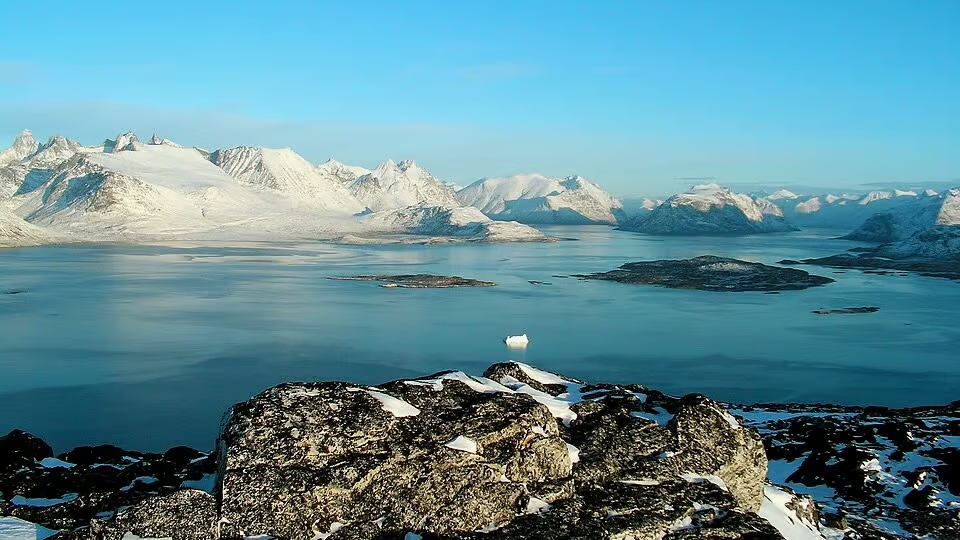
La campaña de Donald Trump para poner a Groenlandia bajo el control de los Estados Unidos a menudo se ha descartado como pura fanfarronería. Eso es un error. Detrás del lenguaje de un acuerdo inmobiliario se esconde un intento serio de revivir un antiguo principio imperial: que Washington pueda decidir el futuro político y económico de todo el hemisferio occidental. Groenlandia, estratégicamente ubicada entre América del Norte y Europa, se ha convertido en una prueba de esa afirmación – y de si la soberanía de una pequeña nación indígena cuenta cuando entra en conflicto con las ambiciones de una gran potencia.
Trump planteó la idea de comprar Groenlandia durante su primer mandato presidencial en 2019. Tras su reelección, la propuesta se volvió más agresiva. En diciembre de 2024 declaró que la “propiedad y el control” de Groenlandia por parte de los Estados Unidos eran una “necesidad absoluta”. El 7 de enero de 2025, se negó a descartar la coacción militar o económica contra Groenlandia y el Canal de Panamá, afirmando: “Necesitamos Groenlandia por motivos de seguridad nacional”. Posteriormente, insistió en que los Estados Unidos se haría con la isla “de una forma u otra”. Esta afirmación combinaba varios argumentos: Groenlandia es vital para la defensa antimisiles; Rusia y China amenazan el Ártico; los yacimientos de tierras raras de Groenlandia tienen un valor estratégico; y, supuestamente, los groenlandeses acogerían con agrado el dominio estadounidense.
Esta última afirmación resultó ser demostrablemente falsa. Una encuesta de enero de 2025, realizada tanto en groenlandés como en danés, reveló que el 85% de la población de Groenlandia se oponía a abandonar el reino danés para unirse a los Estados Unidos, mientras que solo el 6% lo apoyaba. Sin embargo, la misma encuesta mostró que una mayoría estaba a favor de una eventual independencia. Esa distinción es fundamental. El deseo de los groenlandeses de poner fin a la tutela colonial danesa no puede interpretarse como un consentimiento a la anexión estadounidense.
Una relación militar sin anexión
El argumento de seguridad a favor de la propiedad estadounidense es engañoso, ya que Washington ya goza de amplios derechos militares en Groenlandia. La relación comenzó durante la Segunda Guerra Mundial. Con Dinamarca ocupada por la Alemania nazi, su embajador en Washington firmó un acuerdo de 1941 que permitía a los Estados Unidos defender Groenlandia y construir instalaciones allí. Dinamarca solicitó la retirada estadounidense después de la guerra, pero prevaleció la estrategia de la Guerra Fría.
El Acuerdo de Defensa de Groenlandia de 1951, celebrado en el marco del Tratado del Atlántico Norte, autorizó a los Estados Unidos a establecer y operar “zonas de defensa”. Esto permitió la rápida construcción de la Base Aérea de Thule – rebautizada como Base Espacial de Pituffik en 2023 – en un lugar ideal para las rutas aéreas y de misiles más cortas entre la Unión Soviética y América del Norte. En el apogeo de la Guerra Fría, los Estados Unidos operaba numerosas instalaciones en toda Groenlandia. Hoy en día, Pituffik, la base militar más septentrional de Washington, desempeña funciones de alerta de misiles, defensa antimisiles y vigilancia espacial.
El acuerdo ofrece a Washington una amplia libertad operativa. Una enmienda de 2004 – el Acuerdo de Igaliku – reconoció al Gobierno autónomo de Groenlandia, estableció a Pituffik como la única zona de defensa existente y exigió la consulta previa antes de realizar cambios significativos o crear nuevas zonas de defensa. También estableció la cooperación en temas económicos, técnicos y ambientales. En otras palabras, si los Estados Unidos considera que se necesitan más radares, puertos, aeródromos o personal, ya existe un mecanismo legal para negociarlo con Dinamarca y Groenlandia. La soberanía, por lo tanto, no es un requisito militar.
La historia de las bases también explica por qué “seguridad” no es un término neutral en Groenlandia. En 1953, las autoridades danesas ordenaron a 116 inughuit – 27 familias – que abandonaran la recién fundada Qaanaaq, mientras que el resto se reubicó en asentamientos en otras partes del distrito. Camp Century se construyó bajo el hielo entre 1959 y 1960 y estaba vinculado a la propuesta secreta del Proyecto Iceworm, que contemplaba una extensa red de bases de lanzamiento de misiles nucleares.
En 1968, un B-52 estadounidense que transportaba cuatro bombas de hidrógeno se estrelló sobre el hielo marino en la Base Aérea de Thule, lo que provocó contaminación por plutonio y otras sustancias. El accidente puso de manifiesto la inconsistencia entre la política declarada públicamente por Dinamarca en contra de las armas nucleares en territorio danés en tiempos de paz y los permisos secretos otorgados por el Gobierno danés a los Estados Unidos para almacenar armas nucleares en Groenlandia. Las instalaciones abandonadas dejaron combustible, desechos y otros contaminantes. Los reportajes de Groenlandia continúan cuestionando quién pagará por las futuras limpiezas. La relación militar protegió los intereses estratégicos de los Estados Unidos, mientras que los costos humanos y ambientales recayeron de manera desproporcionada sobre los groenlandeses.
Groenlandia dejó de ser formalmente una colonia en 1953, obtuvo autonomía en 1979 y amplió su autogobierno en 2009. La Ley de Autogobierno reconoce a los groenlandeses como un pueblo con derecho a la autodeterminación y establece un camino hacia la independencia. Washington reabrió su consulado en Nuuk en 2020, y la cooperación se intensificó en materia de comercio, educación, minería e investigación. Los gobiernos de Groenlandia (desde Kuupik Kleist hasta Jens-Frederik Nielsen) han acogido con beneplácito los vínculos económicos con Washington, pero rechazan la tendencia de este último a exigir cada vez más a la isla para satisfacer sus necesidades militares.
De Monroe a Donroe
La exigencia de Trump respecto a Groenlandia forma parte de una política hemisférica más amplia. La Doctrina Monroe de 1823 advertía a las potencias europeas contra nuevas intervenciones coloniales en las Américas. Presentada como anticolonial, se transformó en una reivindicación de la supremacía estadounidense. El corolario de Theodore Roosevelt de 1904 afirmaba el derecho de intervención en América Latina, proporcionando una justificación ideológica para ocupaciones, cambios de régimen y el control de activos estratégicos.
Los partidarios de Trump rebautizaron su última versión como la “Doctrina Donroe”. Esta denominación vincula la presión sobre Groenlandia con las exigencias relativas al Canal de Panamá, las amenazas contra Cuba y Colombia, las reivindicaciones sobre Canadá y la intervención de los Estados Unidos en Venezuela. A finales de 2025, la Casa Blanca proclamó formalmente un Corolario Trump a la Doctrina de Monroe, en el que se afirmaba el liderazgo de los Estados Unidos en todo “nuestro hemisferio”. Groenlandia queda arrastrada a esta esfera porque geográficamente forma parte de América del Norte, aunque esté vinculada políticamente a Dinamarca y su pueblo inuit posea su propio derecho a la autodeterminación. Esta doctrina contiene una contradicción reveladora. Trump denuncia el control europeo sobre Groenlandia como un anacronismo, al tiempo que exige que la isla sea transferida a los Estados Unidos. El colonialismo no se ha abolido; simplemente cambia el colonizador propuesto. Las referencias de Trump a los minerales, las rutas marítimas y la geografía militar reducen a Groenlandia a un activo y a sus 56.000 habitantes a un obstáculo en una transacción entre potencias.
Una crisis dentro de la alianza occidental
Las amenazas de Trump provocaron una ruptura extraordinaria entre los Estados Unidos y Europa. Dinamarca no es un adversario, sino un aliado de la OTAN cuyas tropas lucharon junto a los soldados estadounidenses en Afganistán. La amenaza de arrebatar territorio a un aliado por la fuerza ataca la premisa misma de la alianza. La primera ministra danesa, Mette Frederiksen advirtió que un ataque de los Estados Unidos contra otro país de la OTAN pondría fin al orden de seguridad de la posguerra. Los gobiernos europeos se unieron en torno al principio de que las fronteras no pueden modificarse mediante la coacción, un principio que invocan contra Rusia en Ucrania.
La crisis puso de manifiesto la dependencia de Europa. La OTAN no cuenta con un procedimiento claro para defender a un miembro frente a su miembro más poderoso. Los Estados europeos dependen en gran medida del poderío militar de los Estados Unidos, al tiempo que se les pide que resistan la coacción estadounidense. Copenhague respondió con una diplomacia cautelosa, un mayor gasto militar en el Ártico y la insistencia en que las decisiones corresponden a Groenlandia y a Dinamarca. Francia, Alemania, los países nórdicos y la Unión Europea expresaron su solidaridad, pero el episodio intensificó los llamado a la autonomía estratégica europea. También dañó la pretensión de Washington de liderar una alianza de democracias contra el revisionismo autoritario.
El 18 de septiembre de 2026, Trump anunció un nuevo acuerdo trilateral de seguridad tras meses de negociaciones, reivindicando el “control permanente” sobre la seguridad de Groenlandia. Los líderes daneses y groenlandeses lo describieron en términos más limitados: una ampliación de la cooperación militar con los Estados Unidos que preserva la soberanía y la autodeterminación de Groenlandia. El texto completo aún debe firmarse y aprobarse. Si su versión es correcta, el resultado confirma lo que era evidente desde el principio: los Estados Unidos podría obtener acuerdos de seguridad adicionales sin llegar a ser dueño de Groenlandia. Sin embargo, la presión que precedió al acuerdo sigue siendo una advertencia sobre las negociaciones llevadas a cabo bajo amenazas.
Groenlandia habla por sí misma
La respuesta de Groenlandia ha combinado rechazo, unidad y complejidad política. Kalaallit Nunaat – el nombre groenlandés del país – se convirtió en el centro de las declaraciones de que Groenlandia pertenece a su pueblo y no está en venta. En marzo de 2025, grandes manifestaciones en Nuuk, Sisimiut y Qaanaaq marcharon bajo la bandera roja y blanca de Erfalasorput. Los manifestantes le pidieron a Trump que respetara a los inuit, a su país y a su nacionalidad. Los partidos políticos de Groenlandia, a pesar de profundos desacuerdos sobre el ritmo y las condiciones económicas de la independencia, condenaron conjuntamente la presión externa. El Parlamento prohibió las donaciones políticas extranjeras y anónimas, defendiendo explícitamente la integridad de la democracia groenlandesa en medio del interés de las grandes potencias.
El colonialismo danés dejó profundas heridas: asimilación forzada, ingeniería social, desarrollo desigual y decisiones tomadas en Copenhague sobre la tierra y el pueblo groenlandeses (toda la cuarta temporada de la popular serie de televisión Borgen, en 2022, se centró en un conflicto entre Copenhague y Nuuk por el descubrimiento de un nuevo yacimiento de petróleo con implicaciones de China y Rusia). Muchos groenlandeses desean la independencia, y algunos ven el creciente interés de los Estados Unidos como una ventaja para atraer inversiones y lograr una relación más equitativa con Dinamarca.
Groenlandia revela el verdadero contenido de la Doctrina Donroe: una afirmación del siglo XXI de que la geografía otorga a Washington derechos superiores sobre los pueblos vecinos. La respuesta de Groenlandia es igualmente moderna y universal. La ubicación estratégica no anula la soberanía popular, los minerales no borran la identidad nacional, y ninguna gran potencia adquiere un país simplemente por declarar que lo necesita.
Vijay Prashad es un historiador y periodista indio. Es autor de cuarenta libros, entre los que se incluyen Balas de Washington, Una estrella roja sobre el Tercer Mundo, Las naciones oscuras: una historia del Tercer Mundo; Las naciones pobres: una posible historia del Sur Global y How the International Monetary Fund Suffocates Africa, escrito con Grieve Chelwa. Es el director ejecutivo de Tricontinental: Instituto de Investigación Social, corresponsal jefe de Globetrotter, y el editor jefe de LeftWord Books (Nueva Delhi). También ha hecho apariciones en las películas Shadow World (2016) y Two Meetings (2017).
Greek Prime Minister Kyriakos Mitsotakis used the example the famous Bayeux Tapestry – made in Britain, stored in France – to bring the return of the Parthenon Sculpture back on the agenda of public discussion. On an opinion article in The Guardian, the Greek PM that Greece can not accept the museum’s proposal for a […]
Footage flooded the internet on Saturday, September 19, showing Gaza Health Ministry Director General Dr. Munir al-Bursh asking young men to bring the rest of his son’s body as they carried his remains.
“Bring me his other half!” the grief-stricken father said. “We were supposed to go to heaven together today, but you got there before me, son.”
According to media reports, Dr. Munir’s son, Bashir (28), was struck by a drone shortly after leaving his family’s tent in the al-Zahra neighborhood, near the Civil Defense headquarters, west of the Jabalia refugee camp in northern Gaza Strip.
Bashir was targeted while helping people fill their water containers, just meters away from his father. For many, the proximity of Dr. Munir implies that he, too, may have been a target of the attack.
Israel’s systematic targeting of health workers
The prominent Palestinian health official has been in the crosshairs of the Israeli forces since the beginning of Israel’s genocidal aggression on Gaza, due to his leading role in managing a crumbling health system that was severely devastated during the war.
Moreover, Dr. Al-Bursh is widely known for frequently reporting on Israeli assaults on the Gaza medical sector, and highlighting the dire conditions of medical facilities inside the besieged areas via international media outlets.
Al-Bursh and his family were previously targeted by Israeli warplanes at the very beginning of the war. In December 2023, his 13-year-old daughter, Jinan, was killed in an Israeli airstrike on a residential building in Jabalia. The aerial attack also resulted in the injury of Dr. Munir and the rest of his family.
The deaths of Bashir and Jinan al-Bursh echo the murder of 15-year-old Ibrahim Abu Safiya by an Israeli drone in October 2024. Ibrahim was the son of the former director of Kamal Adwan Hospital in northern Gaza, Dr. Hussam Abu Safiya.
The day Bashir al-Bursh was assassinated, and the days that followed, saw the killing of several people by the Israeli Army across different parts of the war-ravaged enclave.
This took place as world leaders addressed the UN General Assembly. For the third year in a row, these addresses and the deliberations have failed to stop Israel’s aggression against Gaza and its ongoing heinous crimes carried out across West Asia.
In late 2025, conservators from Oxford’s Ashmolean Museum brought an unassuming object to the Diamond Light Source synchrotron in Oxfordshire: a terret, a small bronze loop that Iron Age chariots used to keep a horse’s reins from tangling. It looked modest. It was nearly 2,000 years old. And under X-ray analysis, it turned out to […]
Donald Trump’s campaign to bring Greenland under United States control has often been dismissed as bluster. That is a mistake. Behind the language of a property deal lies a serious attempt to revive an old imperial principle: that Washington may decide the political and economic future of the entire Western Hemisphere. Greenland, strategically placed between North America and Europe, has become a test of that claim – and of whether the sovereignty of a small Indigenous nation counts when it conflicts with the ambitions of a great power.
Trump floated buying Greenland during his first presidency in 2019. After his re-election, the proposal became more aggressive. In December 2024 he declared US “ownership and control” of Greenland as an “absolute necessity.” On January 7, 2025, he refused to rule out military or economic coercion against Greenland and the Panama Canal, saying, “We need Greenland for national security purposes.” He subsequently insisted that the United States would obtain the island “one way or the other.” The claim mixed several arguments: Greenland is vital to missile defense, Russia and China threaten the Arctic, Greenland’s rare-earth deposits are strategically valuable, and Greenlanders would supposedly welcome US rule.
The last claim was demonstrably false. A January 2025 survey conducted in both Greenlandic and Danish found that 85% of Greenland’s population opposed leaving the Danish realm to join the United States, while only 6% supported it. Yet the same poll showed a majority favoring eventual independence. That distinction is central. Greenlanders’ desire to end Danish colonial tutelage cannot be converted into consent to US annexation.
A military relationship without annexation
The security case for US ownership is misleading because Washington already enjoys extensive military rights in Greenland. The relationship began during the Second World War. With Denmark occupied by Nazi Germany, its ambassador in Washington signed a 1941 agreement permitting the United States to defend Greenland and construct facilities there. Denmark sought a US withdrawal after the war, but Cold War strategy prevailed.
The 1951 Defense of Greenland Agreement, concluded under the North Atlantic Treaty, authorized the United States to establish and operate “defense areas.” It enabled the rapid construction of Thule Air Base – renamed Pituffik Space Base in 2023 – at a location ideal for the shortest air and missile routes between the Soviet Union and North America. At its Cold War height, the US operated numerous installations across Greenland. Today Pituffik, Washington’s northernmost military base, performs missile-warning, missile-defense and space-surveillance functions.
The agreement offers Washington wide operational freedom. A 2004 amendment – the Igaliku Agreement – recognized Greenland’s Home Rule government, made Pituffik the sole existing defense area, and required consultation before significant changes or the creation of new defense areas. It also established cooperation on economic, technical, and environmental issues. In other words, if the United States believes more radar, ports, airfields or personnel are necessary, a legal mechanism already exists to negotiate them with Denmark and Greenland. Sovereignty is, therefore, not a military requirement.
The history of the bases also explains why “security” is not a neutral word in Greenland. In 1953, Danish authorities ordered 116 Inughuit – 27 families – to leave the newly established Qaanaaq, while the others relocated to settlements elsewhere in the district. Camp Century was constructed beneath the ice in 1959-60 and was connected with the secret Project Iceworm proposal for an extensive network of nuclear-missile launch sites.
In 1968, a US B-52 carrying four hydrogen bombs crashed on the sea ice at Thule Air Base, causing plutonium and other contamination. The accident exposed the inconsistency between Denmark’s publicly declared policy against nuclear weapons on Danish territory in peacetime and the Danish government’s secret permissions for the US to store nuclear weapons in Greenland. Abandoned installations left fuel, waste and other pollution. Greenlandic reporting continues to question who will pay for future clean-ups. The military relationship protected US strategic interests while its human and environmental costs were disproportionately borne by Greenlanders.
Greenland ceased formally to be a colony in 1953, gained Home Rule in 1979 and expanded self-government in 2009. The Self-Government Act recognizes Greenlanders as a people entitled to self-determination and provides a path to independence. Washington reopened its Nuuk consulate in 2020, and cooperation grew in trade, education, mining, and research. Greenland’s governments (from Kuupik Kleist to Jens-Frederik Nielsen) have welcomed economic ties with Washington, but reject the tendency of Washington to want more and more from the island for its military needs.
From Monroe to Donroe
Trump’s Greenland demand belongs to a wider hemispheric policy. The Monroe Doctrine of 1823 warned European powers against new colonial intervention in the Americas. Presented as anti-colonial, it evolved into a claim of US supremacy. Theodore Roosevelt’s 1904 corollary asserted a right of intervention in Latin America, furnishing ideological cover for occupations, regime changes, and control over strategic assets.
Trump’s supporters rechristened its latest version the “Donroe Doctrine.” The label links pressure on Greenland with demands concerning the Panama Canal, threats against Cuba and Colombia, claims over Canada, and US intervention in Venezuela. In late 2025, the White House formally proclaimed a Trump Corollary to the Monroe Doctrine, asserting US leadership throughout “our hemisphere.” Greenland is swept into this sphere because it is geographically part of North America, even though it is politically tied to Denmark and its Inuit people possess their own right of self-determination. This doctrine contains a revealing contradiction. Trump denounces European control of Greenland as an anachronism while demanding that the island be transferred to the United States. Colonialism is not abolished; the proposed colonizer merely changes. Trump’s references to minerals, sea routes, and military geography reduce Greenland to an asset and its 56,000 people to an obstacle in a transaction between powers.
A crisis inside the Western alliance
Trump’s threats produced an extraordinary rupture between the United States and Europe. Denmark is not an adversary, but a NATO ally whose troops fought alongside US soldiers in Afghanistan. A threat to seize territory from one ally by force attacks the premise of the alliance itself. Danish Prime Minister Mette Frederiksen warned that a US attack on another NATO country would bring the post-war security order to an end. European governments rallied behind the principle that borders cannot be changed by coercion, a principle they invoke against Russia in Ukraine.
The crisis exposed Europe’s dependency. NATO has no comfortable procedure for defending one member against its strongest member. European states rely heavily on US military power while being asked to resist US coercion. Copenhagen responded with careful diplomacy, greater Arctic military spending, and insistence that decisions belong to Greenland and Denmark. France, Germany, the Nordic states, and the European Union expressed solidarity, but the episode sharpened calls for European strategic autonomy. It also damaged Washington’s claim to lead an alliance of democracies against authoritarian revisionism.
On September 18, 2026, Trump announced an emerging trilateral security agreement after months of negotiation, claiming “permanent control” over Greenland’s security. Danish and Greenlandic leaders described it more narrowly: an expansion of US military cooperation that preserves sovereignty and Greenlandic self-determination. The full text remains to be signed and approved. If their account holds, the outcome confirms what was apparent from the beginning: the United States could obtain additional security arrangements without owning Greenland. Yet the pressure that preceded the deal remains a warning about negotiations conducted under threats.
Greenland speaks for itself
Greenland’s response has combined rejection, unity, and political complexity. Kalaallit Nunaat – the Greenlandic name for the country – became the center of declarations that Greenland belongs to its people and is not for sale. In March 2025, large demonstrations in Nuuk, Sisimiut, and Qaanaaq marched under the red-and-white Erfalasorput flag. Protesters told Trump to respect Inuit, their country, and their nationality. Greenland’s political parties, despite deep disagreements over the speed and economic terms of independence, jointly condemned external pressure. Parliament prohibited foreign and anonymous political donations, explicitly defending the integrity of Greenlandic democracy amid great-power interest.
Danish colonialism left profound injuries: forced assimilation, social engineering, unequal development, and decisions taken in Copenhagen about Greenlandic land and people (the entire fourth season of the popular television drama, Borgen, in 2022 centered on a conflict between Copenhagen and Nuuk about the discovery of a new oil field with a China and Russia angle). Many Greenlanders want independence, and some see heightened US interest as leverage for investment and a more equal relationship with Denmark.
Greenland reveals the real content of the Donroe Doctrine: a twenty-first-century claim that geography gives Washington superior rights over neighboring peoples. The answer from Greenland is equally modern and universal. Strategic location does not cancel popular sovereignty, minerals do not erase nationhood, and no great power acquires a country merely by declaring that it needs one.
Vijay Prashad is an Indian historian and journalist. He is the author of forty books, including Washington Bullets, Red Star Over the Third World, The Darker Nations: A People’s History of the Third World, The Poorer Nations: A Possible History of the Global South, and How the International Monetary Fund Suffocates Africa, written with Grieve Chelwa. He is the executive director of Tricontinental: Institute for Social Research, the chief correspondent for Globetrotter, and the chief editor of LeftWord Books (New Delhi). He also appeared in the films Shadow World (2016) and Two Meetings (2017).

 Login