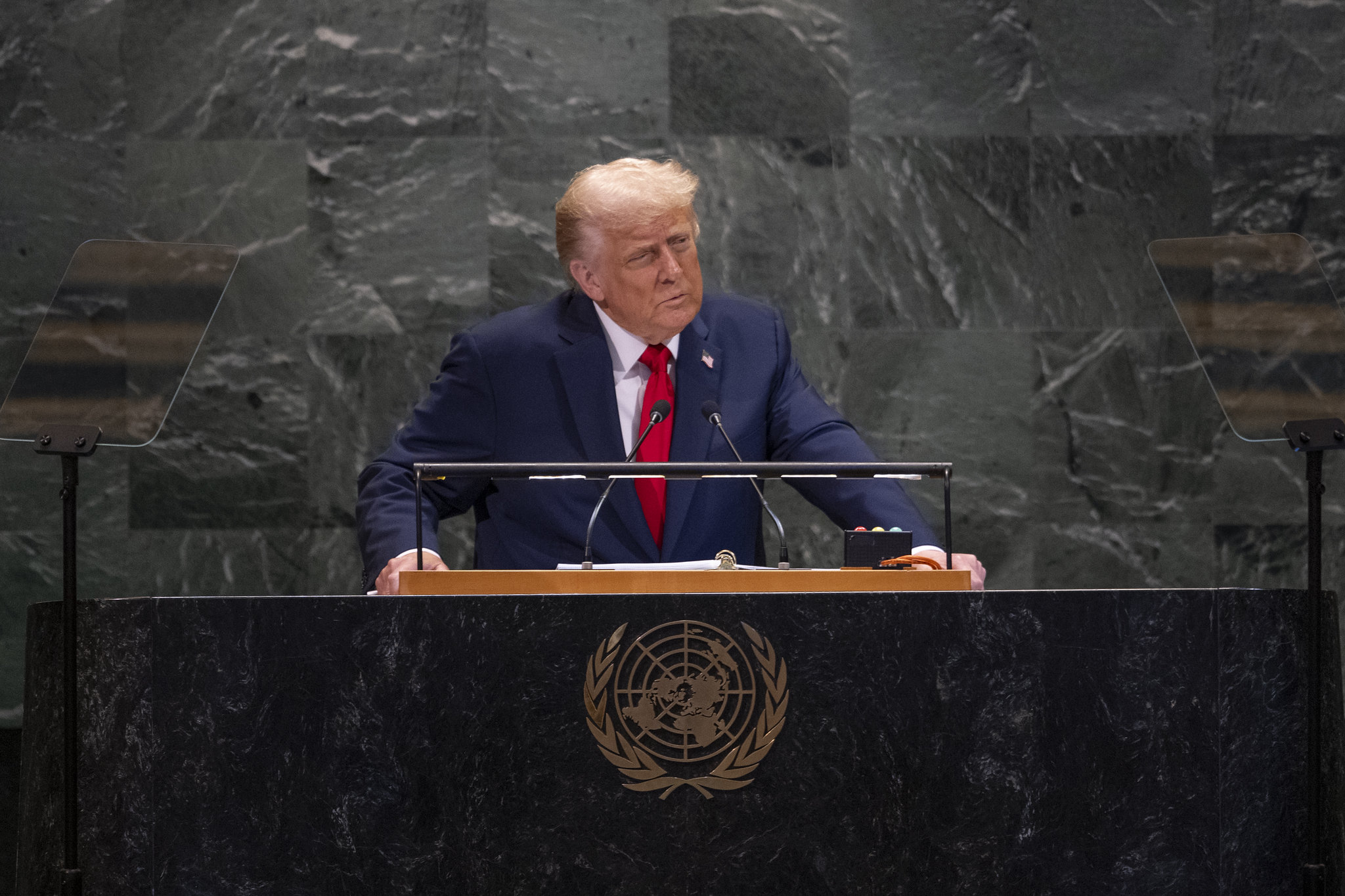
In his address to the UN General Assembly, US President Donald Trump said that the Cuban government is a failed state currently under enormous pressure: “My administration seeks a fundamental change in the situation in Cuba… It is an absolute failed state… and it will fall. Marco Rubio is leading the negotiations.”
In response, the Cuban delegation stood up and walked out of the plenary session in protest. Trump continued: “Cuba is a haven for foreign adversaries who threaten America right on our doorstep… The Cuban regime has also spent decades coordinating with left-wing radicals and communist networks here in the United States… They have cultivated ties with subversive and radical groups.”
The remarks did not go over well in Havana, where the government has categorically rejected the US right-wing leader’s statements. Leading the response is the country’s president, Miguel Díaz-Canel, who asserted that freedom in Cuba is non-negotiable.
“Freedom came to Cuba on January 1, 1959, [the date the Cuban Revolution began], and we are not going to lose it; we are going to defend it. Once again, we are seeing the true face of that empire and its contempt for the peoples of Latin America – and in particular for Cuba and the Cuban Revolution – because of what it represents.”
Díaz-Canel made the remarks on a program called Criterio Compartido on Radio Rebelde. In them, Díaz-Canel described Trump’s statements as “arrogant,” “high-handed,” and “interventionist.”
He also asserted that behind Trump’s thinking lies a justification for a certain view of US imperialism: “what most underpins that genocidal, criminal, and contemptuous mindset toward Cuba and the Cuban people.”
Regarding the label of “failed state,” the leader of the Communist Party of Cuba said: “They are always trying to label us a failed state to shift the blame for the genocide they are committing with that intensified and prolonged blockade.”
Díaz-Canel is referring not only to the long and sustained economic and commercial blockade that the United States unilaterally imposed on Cuba in an effort to defeat the revolution that began in 1959. In US President Donald Trump’s first term, he imposed an additional 243 sanctions on the Caribbean island and added Cuba to the State Sponsors of Terrorism (SSoT) list, which devastated the Cuban economy. In January 2026, Trump further tightened the grip by imposing an energy blockade on Cuba.
Since early 2026, following the US attack on Venezuela that resulted in the capture of President Maduro and his wife, Cilia Flores, and the deaths of more than 100 people – including several dozen Cubans – Cuba lost one of its main energy partners, which used to supply crude oil to the Cuban power grid.
Since then, only one Russian ship has managed to circumvent the US blockade; the United States is currently threatening to impose additional tariffs on any country that sells fuel to Cuba. This has triggered Cuba’s worst energy crisis, which is hindering the normal operation of hospitals, schools, and food production, among other essential activities.
Cuba has denounced the blockade as a form of “silent genocide,” specifically because of the direct humanitarian consequences it is having on the civilian population, which has seen a reduction not only in its electricity supply but also in access to surgeries, water, food, and so on.
In this regard, Díaz-Canel has once again emphasized on X that Cuba does not pose a threat to the United States; rather, it is the United States that is endangering Cuba’s civilian population: “Unable to justify the punishment against the people of Cuba and its genocidal economic war, the US president repeats at the UN that Cuba poses a threat. Lies are the weapon of those who refuse to accept the Cuban people’s right to self-determination.”
He concluded: “We will continue to fight for peace, defend our sovereignty, and work together to overcome the ruthless aggression imposed on us by the US government. Cuba is not a threat, the blockade is.”
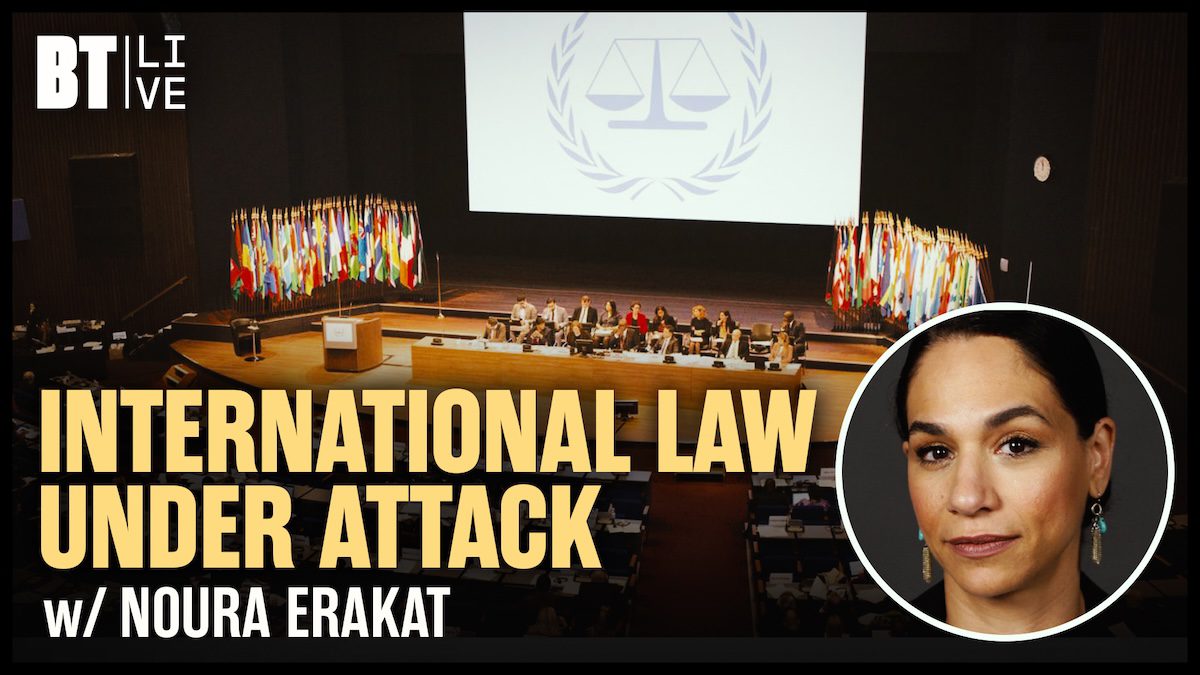
The Trump administration’s assault on the ICC isn’t just about protecting Netanyahu from war crimes prosecution. It’s about preserving “imperial impunity” – Israel’s just “the smokescreen,” says Noura Erakat, professor of criminal justice and Africana studies at Rutgers University and human rights attorney. She traces Washington’s bipartisan refusal to ratify the Rome Statute to explain why the International Criminal Court has spent two decades indicting mostly African and Arab leaders. The 2024 warrants for Netanyahu and former Israeli defense minister Yoav Gallant just show the court “between a rock and a hard place”: finally give up its legitimacy entirely, or face destruction by the US.
Now more than a dozen ICC judges, prosecutors, and the court’s president have been sanctioned, as Washington reportedly prepares sanctions against the entire institution, with Secretary of State Marco Rubio calling it an “intolerable threat” to US sovereignty. Can the court survive a war with Washington? Should it? And why do Global South states stay invested in a court that’s clearly stacked against them?
Plus: Erakat describes her arrest at a Palm Beach County budget hearing on their $1 billion-plus investment in Israel bonds; warns that Gaza’s Board of Peace could become a blueprint to replace the UN; and explains why she believes, even as public opinion on Palestine shifts, “there’s no way to be safe in this moment by hiding.”
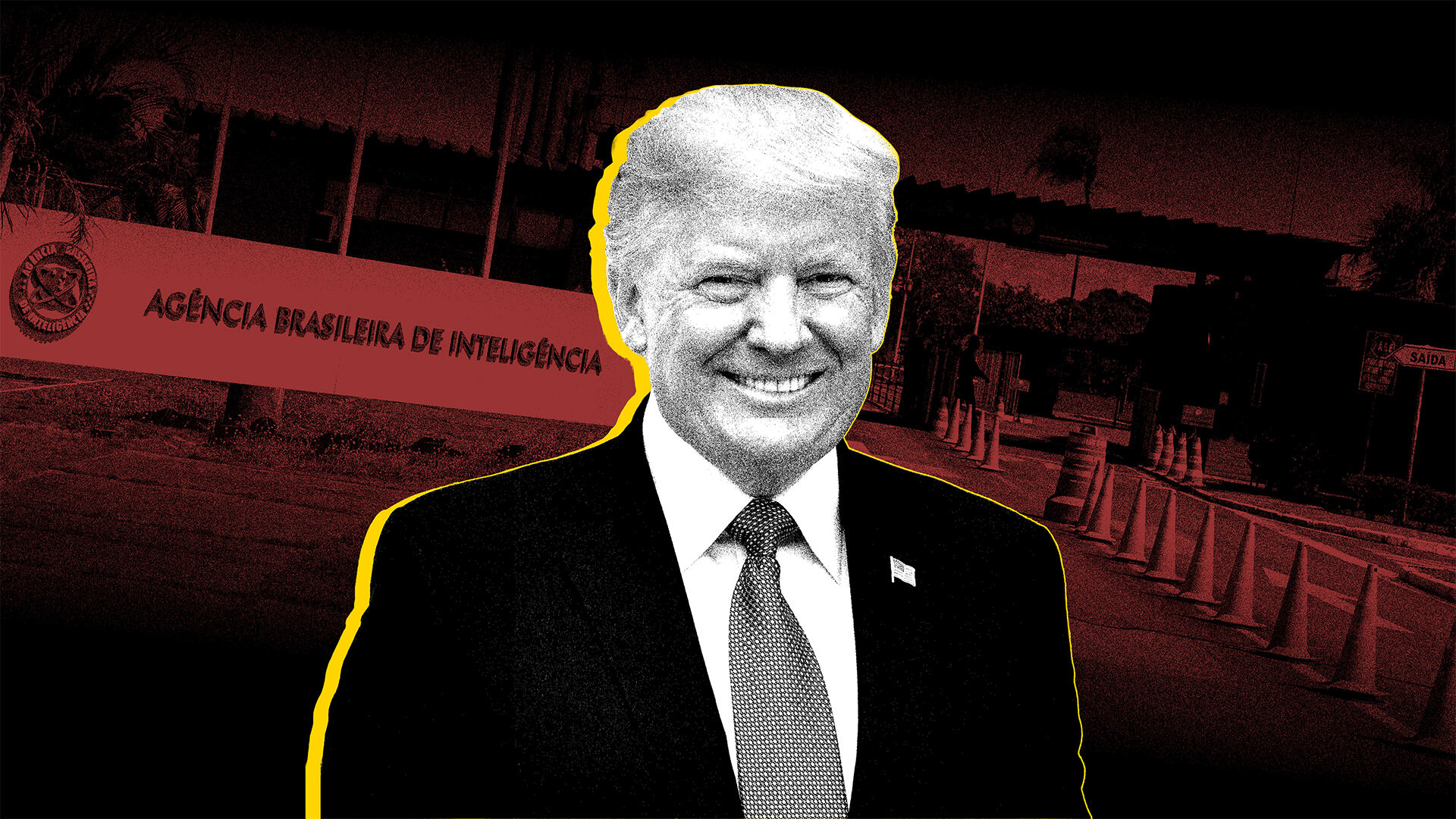
Sentado, de mãos cruzadas e com olhar sério para a câmera, o embaixador dos Estados Unidos no Panamá, Kevin Cabrera, anuncia, em vídeo publicado no canal do Departamento de Estado no YouTube em 13 de agosto de 2026: “Agora, a América tem a oportunidade de estabelecer uma nova ordem”. A frase ecoa a Doutrina Monroe, do princípio do século 19, que tratava o continente americano como área de influência dos EUA. O presidente Donald Trump a resgatou para justificar interferências políticas, militares e econômicas em outros países. Um dos alvos é o Brasil, em pleno ano eleitoral. A AgênciaPública apurou que a Agência Brasileira de Inteligência (Abin) tem monitorado a situação por meio de relatórios internos que classificam os discursos de figuras da extrema-direita no Brasil como “facilitadores” de ataques à soberania nacional.
Recentemente, num relatório entregue ao Tribunal Superior Eleitoral (TSE) e à Polícia Federal (PF), a Abin classificou como “crítico” o risco de interferência e influência dos EUA nas eleições brasileiras. O conteúdo do documento foi revelado pela jornalista Mônica Bergamo, da Folha de S.Paulo. A Pública apurou que relatórios semelhantes vêm sendo produzidos desde novembro de 2025, quando a gestão de Trump passou a ampliar o plano de hegemonia na América Latina.
Parte da extrema-direita no Brasil tem visões ideológicas alinhadas à gestão trumpista. Essa ala extremista é observada, nas análises da Abin, como colaboradora dos interesses americanos no país. Os países latino-americanos já foram definidos como “quintal” de Washington pelo Secretário de Defesa dos Estados Unidos, Peter Hegseth, em entrevista à Fox News no ano passado. A ascensão desta narrativa trumpista foi rebatida pelo presidente Lula em seu último discurso, na abertura da Assembleia Geral da ONU, na última terça-feira, 22 de setembro. “O Brasil não cabe no quintal de ninguém”, declarou o presidente, que também é candidato à reeleição.
Fontes da Abin contaram à reportagem, sob reserva, que o cerne do interesse dos EUA estaria na extração de terras raras — mais de 20% das reservas mundiais de terras raras estão no solo brasileiro. A Pública mostrou que, no início do mandato, Trump assinou um decreto para acelerar a produção de minerais críticos e reduzir a dependência do governo chinês. “(…) Minerais críticos são essenciais para a prontidão militar americana, já que eles são componentes-chave de jatos, satélites, submarinos, bombas e sistemas de mísseis guiados”, registra um trecho do decreto.
A Pública também apurou que a embaixada dos EUA no Brasil procurou o líder do PL na Câmara dos Deputados, Sóstenes Cavalcanti (RJ), para que ele recebesse dois enviados do Departamento de Estado. Segundo a apuração, a missão da dupla era lançar dúvidas sobre as urnas eletrônicas. O Itamaraty negou os vistos a Riley Bernes e Samuel Samson.
Em meio à tensão diplomática, o Ministério das Relações Exteriores ainda não deu aval à indicação de Donald Trump para a embaixada dos EUA no Brasil. O indicado foi o representante da Flórida — equivalente a um deputado estadual —, Daniel Perez, cujo nome foi aprovado pelo Senado americano em 7 de agosto. Contudo, ele não pode assumir o cargo sem o agrément — norma da Convenção de Viena sobre Relações Diplomáticas, de 1961. O agrément é a aceitação do país que vai receber o indicado e vem antes da indicação, o que não ocorreu no caso brasileiro.
O parlamentar é fiel ao movimento nacionalista Make America Great Again (MAGA), amigo pessoal e integrante do mesmo grupo político de Marco Rubio. A Públicamostrou que Perez é peça importante no projeto expansionista de Trump e que seria uma figura relevante na tentativa de interferência no Brasil, inclusive no auxílio à formulação de leis no Congresso Nacional.
Discursos intervencionistas no radar da Abin
O monitoramento da Abin abrange ainda discursos intervencionistas que possam “causar impacto nas instituições” e obter apoio popular e político para uma interferência americana. O acompanhamento dos agentes de inteligência é constante e poderia incluir políticos com mandatos e posicionamentos radicais, bem como pessoas com poder de mobilização, como influenciadores digitais de extrema-direita.
“As eleições brasileiras não têm, como há quatro anos, um cenário de abolição do Estado Democrático de Direito. Agora é um cenário de interferência externa em que o governo dos EUA tem preferência pelo campo opositor e vê nesse campo um facilitador de seus interesses unicamente americanos”, frisou uma fonte da Abin, sob condição de anonimato.
Ações para estimular o apoio à interferência americana foram intensificadas em 2026. Entre elas, a protagonizada por Marco Rubio em 16 de julho, quando convocou 66 países a se unirem a um projeto de combate ao que classificou como “terrorismo de extrema esquerda”. Sem provas, Rubio — filho de cubanos conservadores e integrante de uma elite econômica estabelecida na Flórida — acusou Cuba de espionagem e de infiltração no território americano.
Dois meses depois, em 22 de setembro, os 14 países da América Latina, membros do “Escudo das Américas” — aliança bélica criada por Donald Trump — assinaram um acordo para impor sanções às facções criminosas Primeiro Comando da Capital (PCC) e Comando Vermelho (CV), a exemplo do congelamento de bens e de restrições à imigração e a vistos.
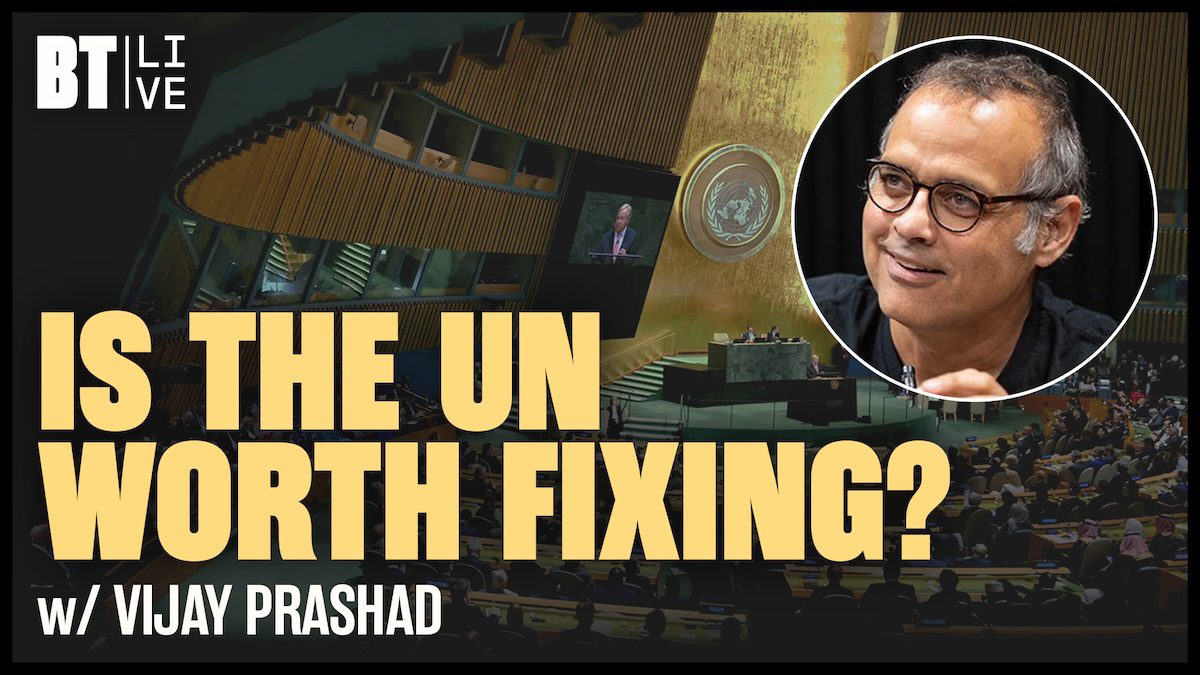
Can the United Nations be saved? Should it be? As world leaders and war criminals gather for the 81st session of the UN General Assembly in New York, Vijay Prashad, executive director of the Tricontinental Institute for Social Research, says that despite today’s gangster rule by the likes of Donald Trump and Benjamin Netanyahu, the UN Charter still sets the standard for judging powerful states, making it “the most important treaty document that the world has ever had” – even with the institution built on it in shambles.
Prashad slams Secretary-General António Guterres’s failure to get “creative” to end the genocide in Gaza or to stand up to Trump on Iran, instead opening a free lane for the US president who has “put a loaded gun on the table and has threatened the world.”
After the US denied visas to the Palestinians for a second year and heavily restricted Iran’s delegation, Prashad makes the case for moving the high-level UNGA out of the US: “New York doesn’t deserve it anymore,” he says, offering alternatives in Geneva or Nairobi. “Let’s move it to the Global South. Why not?”
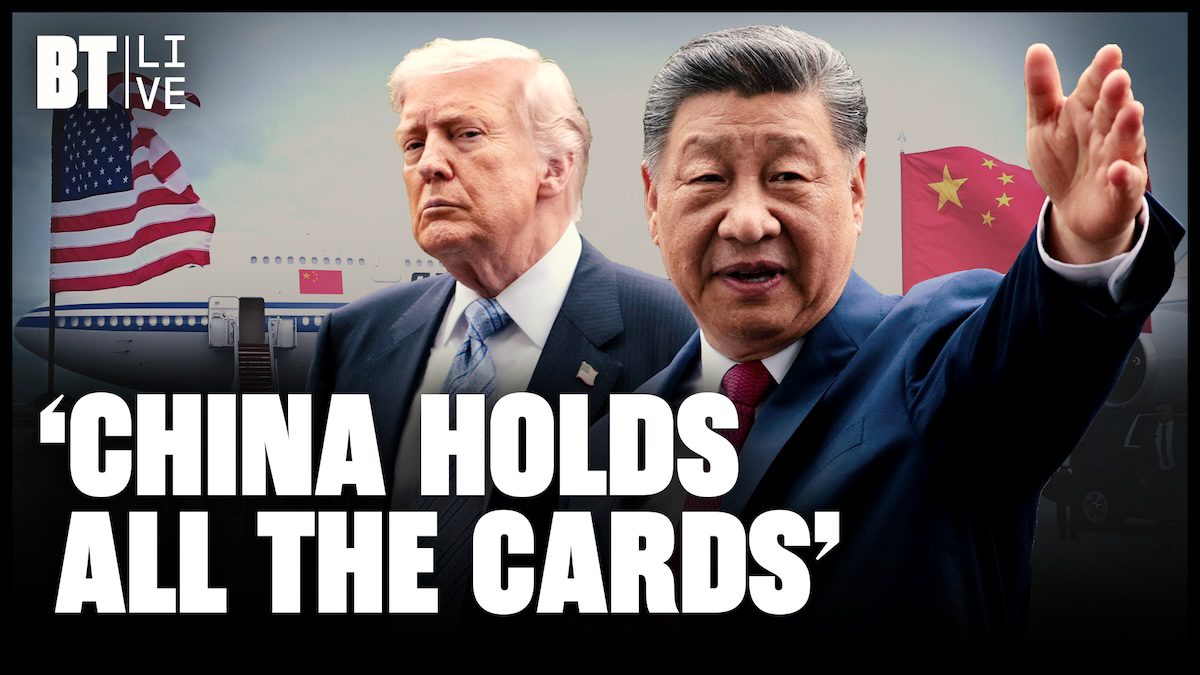
Chinese President Xi Jinping “holds all the cards” as he meets with Trump on Thursday, says Amanda Yee, host of BreakThrough News’ The China Report. She joins Zoe Alexandra and Rania Khalek to break down Xi’s first White House visit in 11 years.
With Trump facing a massively unpopular war on Iran, surging inflation, growing resistance to ICE terror – and with US midterms weeks away – Washington wants quick deals it can sell as big wins. But Yee says Beijing is playing a longer game, with massive implications for the global future. Take AI: Washington’s Pax Silica forces allies to pick sides, while Beijing’s open model is available to all and centered on the Global South. Two systems, representing “the choice that’s in front of the world right now.”
Despite a stated pivot away from China as a military priority, Yee points to Latin America and Iran as proxy fronts where the Trump administration continues to target Beijing. Meanwhile the military encirclement of China continues, from US bases in South Korea, Okinawa and the Philippines, to Japan’s remilitarization and expanding war games like RIMPAC and Freedom Shield.
But Yee says “the Cold War on China is a bipartisan affair.” From TikTok to Huawei to BYD, she traces the pattern of trumping up national security threats to mask efforts to protect US companies from competition. It’s all part of the same Red Scare targeting BT News, subpoenaed by the House Ways and Means Committee in an effort to paint anti-war voices as Chinese assets.
Far-right Argentine President Javier Milei addressed the 81st session of the United Nations General Assembly on September 23, giving a speech which provoked strong reactions. The South American head of state also participated in a series of high-level meetings.
One of his most quoted lines from his New York City trip has been: “Argentina is the new promised land.”
This is not the first time Milei has used religious concepts and ideas from the Judeo-Christian tradition to explain his political stance, but it is the first time the Argentine president has equated his country, in economic and political terms, with the land of Abraham and his descendants.
This is even more telling when one considers Milei’s extremely close relationship with Israel and ardent defense of its policies of war and genocide across West Asia, as well as the admiration he professes for the Jewish religion.
Milei also emphatically underscored this during his address to the UN General Assembly: “We also made a geopolitical choice: we have unambiguously aligned ourselves with the West … We condemn the Iranian regime’s attacks on the State of Israel.”
And this is an indisputable fact. Since the beginning of his term, Milei has not only aligned himself with the geopolitical interests that the Trump administration has vigorously pursued, but has also become one of Israel’s staunchest allies in the region.
This is quite impressive, considering that President Noboa in Ecuador, De la Espriella in Colombia, and others have also expressed a kind of unwavering alliance with Tel Aviv.
That is why Milei has not limited himself to diplomatic rhetoric, but has pulled the strings of power to designate Iran’s main military force (currently in conflict with Israel and the United States) as a terrorist organization.
“We declare the Iranian Revolutionary Guard a terrorist organization, just as we continue to seek justice for the two attacks we suffered on Argentine soil in 1992 and 1994,” Milei said at the UN, referring to two attacks in Argentina against the Israeli Embassy and the Argentine Israelite Mutual Association (AMIA). The Argentine justice system, advised by Israel and the United States, identified Hezbollah and Iranian citizens as the perpetrators.
Free-market capitalism and Artificial Intelligence
Another topic Milei addressed during his appearance was his staunch defense of free-market capitalism in which the state plays a minimal role: “We do not want to lose again; that is why we embrace free-market capitalism.”
In this regard, Milei once again highlighted his government’s strong support for artificial intelligence companies and the tycoons behind them. It should not be forgotten that the Argentine government signed a working and information-sharing agreement with Palantir, whose co-founder, Peter Thiel, purchased a property on Argentine soil.
This is clearly part of Milei’s neoliberal agenda to attract investment from major foreign capitalists, among whom the owners of technology companies (who are so interested in resources such as lithium, copper, and others that abound in South America) currently stand out.
However, recent statements by former employees of these companies regarding the danger that the development of AI poses to humanity have created some unease around the world. But Milei says that this is precisely the time to move forward: “Prudence does not mean fear, and what’s more, fear should under no circumstances automatically lead to obedience … where many see a threat, we see a frontier.”
Criticism of the UN
Probably one of the most important aspects highlighted in Milei’s speech was his harsh criticism of the UN and its role in current geopolitics: “Today, unfortunately, it is time to acknowledge that this sacred pact has, in fact, been broken.”
But not content with merely pointing out the shortcomings, Milei asserted (very much in line with Trump) that the UN has become a venue for certain people to amass wealth: “It has become a useless organization that serves only to feed a caste of fatally arrogant parasites disguised as well-meaning bureaucrats.”
Hence, he asserted that resolutions ultimately have no real effect on policy. He cited the example of the Malvinas Islands, a territory disputed with the United Kingdom: “What good is a resolution if, for decades, the other party can act contrary to it, and that resolution remains intact in the archives but is powerless in the face of reality?”
Criticism of Milei’s speech
Milei’s statements, while applauded by his supporters, have drawn widespread criticism in Argentina. Much of the criticism has focused on the fact that Milei now seems to staunchly defend Argentina’s right to control the Malvinas Islands, whereas in the past he was cautious and even reluctant to adopt a patriotic stance against the United Kingdom – something both the Argentine left and right have done. “We’re surprised that Milei now remembers when he used to talk about self-determination,” said Axel Kicillof, governor of the province of Buenos Aires.
Likewise, critics pointed out the apparent contradiction in Milei’s rhetoric between extolling the right to self-determination and aligning himself with the interests of Washington and Tel Aviv: “Milei’s stance doesn’t surprise me. The truth is that this line of subservience—and I say this very clearly—is directed at Trump and Netanyahu. Even the terminology is consistent with what Trump proposed and his ideas on the deregulation of artificial intelligence, as well as his view that Argentina’s natural resources are available to anyone who wants to take them,” said Kicillof.
Regarding Milei’s economic rhetoric, Patria Grande leader Juan Grabois said: “Besides being an ignorant imbecile, besides being a lobotomized parrot who parrots Trump, besides plagiarizing Gramsci without knowing he’s “a filthy communist,” what Milei is saying is that we’re basically going to hand over our territory, critical minerals, energy, and national sovereignty to the technocracy.”
China called the latest US threats of secondary sanctions on airline service-providing companies across the world an illegal unilateral measure without any basis in international law. The US said the sanctions would be applied if these companies do not stop providing services to Iranian airlines.
China said they “firmly oppose illicit unilateral sanctions that have no basis in international law and lack UN Security Council mandate,” Guo Jiakun, official spokesperson of its Ministry of Foreign Affairs said during a regular press conference on Wednesday, September 23.
China’s reaction came on the same day the latest US sanctions against Iran went into effect.
The US Treasury Secretary Scott Bessent has asked companies across the world who are involved in providing services such as refuelling, ticketing, and other kinds of ground support to stop serving Iranian airlines starting at midnight on September 23. If they fail to comply they will be “locked out of the dollar system,” Bessent threatened.
The latest sanctions against its airlines is part of the recently announced US attempt to completely isolate Iran from the global economy in order to pressure its government to re-open the Strait of Hormuz.
Iran has shut down the Strait of Hormuz following the resumption of US airstrikes as well as Washington’s attempts to bypass Iranian control over the waterway in the Persian Gulf since July. Iran has claimed that those American moves were in violation of the peace deal signed under international mediation in June.
The adoption of new sets of sanctions is widely seen as an indication of Washington’s failure to achieve its objectives in Iran militarily, even after seven months of war, which began on February 28.
Iran has reiterated that no amount of economic coercion will open the Strait of Hormuz. They listed the withdrawal of the US naval blockade, the unfreezing of its international assets, and an end of the war on all fronts in the region as preconditions for opening the Strait.
Air blockade
While some of the countries in the region cancelled Iranian flights to their airports in fear of US sanctions, Iran claimed most of its international flights remained scheduled and operational. Some countries also decided to close their airspace for Iranian airlines.
Iraq has diverted most of the Iranian flights from its Baghdad airport to Najaf.
If the flights remain suspended for a significant number of countries for a longer duration it would amount to an air blockade on Iran. This will have an effect on thousands of people employed in the aviation sector in the country which is already heavily facing tremendous economic troubles due to existing sanctions
A prolonged suspension of flights could also impact hundreds of thousands of Iranians who have to travel out of the country for medical or other reasons.
Iran has maintained that unilateral US sanctions are illegal and an “act of terrorism” against Iranian people. It has urged the nations across the world to not succumb to the unilateral actions of the US.
Chief of Iran’s Supreme National Security Council Mohsen Rezaei, in an interview on Wednesday, warned neighboring countries against submitting to US pressure to shut down Iranian flights, claiming such acts will force Iran to retaliate.
Artificial intelligence was the concept of choice among European speakers during the first days of the United Nations General Assembly (UNGA). Prime ministers and presidents recognized opportunities and invoked stronger regulation – then returned to advocating for more military spending, planning deterrence, and avoiding harsh words for the Trump administration.
“I’m afraid I may lack originality in describing it [the situation in the world],” French President Emmanuel Macron remarked, referring to the overlaps between interventions. For once, he was not wrong. Most European speeches described the world in terms of crisis, yet failed to spell out the connections between that situation and the behavior of the United States. Macron’s speech was no true exception.
Instead, most seemed keen to endear themselves to the Trump administration. New-ish British Prime MinisterAndy Burnham called the UK “America’s closest ally” and announced a new “AI defense partnership” with the US – giving listeners something to truly worry about when AI is concerned.
The East European anti-communist set
Others were even friendlier to the UNGA host country. Romanian President Nicușor Dan said it was a particular pleasure to address the assembly in the US, “a country with which Romania shares a long history of friendship, a nation towards which Romanians look with respect and gratitude, including for its essential contribution to the fall of the Iron Curtain and the opening of my country’s path towards democracy and freedom.”
Remarks directed against Eastern European countries’ socialist past were echoed by Polish President Karol Nawrocki and Croatian Prime Minister Andrej Plenković. These speeches reaffirmed commitment to the West, including the North Atlantic Treaty Organization (NATO), and gratitude for positive changes these leaders perceived over the past 30 years.
“Millions of Romanians know from their own experience the difference between a communist system that oppressed them and stifled their initiative and freedom of choice, and a democracy that rewards work, innovation, and personal responsibility,” Dan added.
None of these Eastern European leaders addressed the mass unemployment, emigration, and crumbling public services that soared while “work, innovation, and personal responsibility” took over.
Peace through protection, resilience through military strength
European interventions went to great lengths to reaffirm support for Ukraine and, perhaps more notably, criticism of the Putin administration. Plenty used the floor to repeat the belief that European countries must rearm in the face of a perceived – and still materially nonexistent – “Russian threat.”
As Ukrainian President Volodymyr Zelenskyy referred to a vision of “peace through protection” and showcased defense cooperation agreements, Burnham talked of resilience through military strength.
Some commended themselves for quickly approaching NATO’s 5% expenditure commitments. Others turned to “obstructions” of freedom of navigation – referring, of course, to the closure of the Strait of Hormuz caused by the illegal US-Israel war on Iran. Yet most European speeches did not even mention the US in this context, let alone offer comparable words of condemnation dedicated to Russia.
Spain vows to continue believing “humanity can continue to progress”
As has become customary, the speech delivered by Spanish Prime Minister Pedro Sánchez was among the few to stray from the underwhelming regional tone. Sánchez, whose administration has been attacked by the US government on several occasions, spoke of the conditions facing the world today as exacerbated by the selfishness, ignorance, and cruelty of some UN member states – not naming anyone in particular.
He singled out cruelty as the worst of these pillars driving powerful nations’ behavior in international spaces: “A cruelty that no longer flinches at the sight of a starving child’s ribs or a hospital reduced to rubble.”
Sánchez said Spain would not give in to attacks on multilateral institutions, nor would it stop believing “that humanity can continue to progress.”
“We are not going to do it, because we want to live up to our children’s expectations. Because we know that, in a few years, future generations will look back. They will study this decisive decade. And they will ask us what role each of us played. They will ask us what we did when some countries began to break the rules and others decided to turn a blind eye. They will ask what we did when defending what we believed in began to cost dearly. And when that happens, we want to be able to tell them that we did not stop fighting. We did not. We want to be able to tell them that we gave everything to leave them a more peaceful, sustainable, and fairer world.”
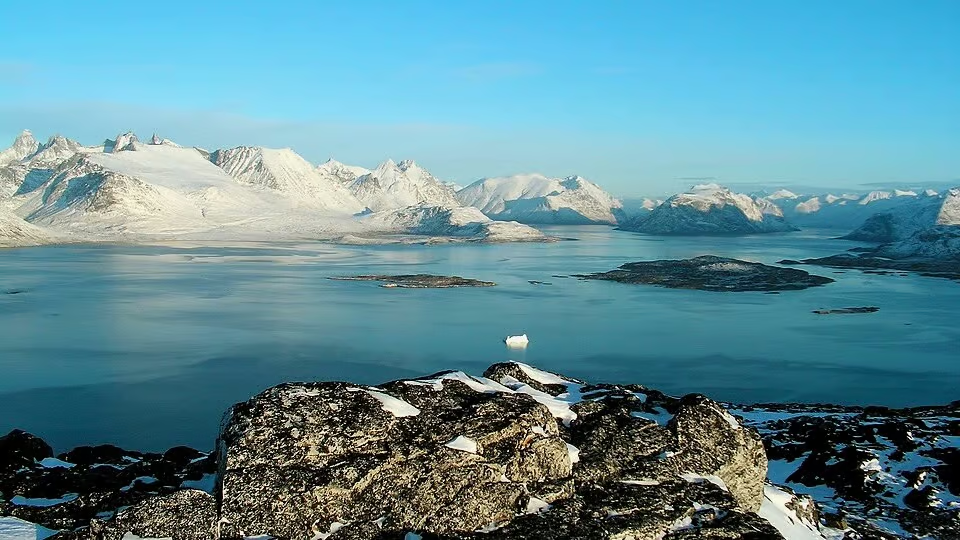
La campaña de Donald Trump para poner a Groenlandia bajo el control de los Estados Unidos a menudo se ha descartado como pura fanfarronería. Eso es un error. Detrás del lenguaje de un acuerdo inmobiliario se esconde un intento serio de revivir un antiguo principio imperial: que Washington pueda decidir el futuro político y económico de todo el hemisferio occidental. Groenlandia, estratégicamente ubicada entre América del Norte y Europa, se ha convertido en una prueba de esa afirmación – y de si la soberanía de una pequeña nación indígena cuenta cuando entra en conflicto con las ambiciones de una gran potencia.
Trump planteó la idea de comprar Groenlandia durante su primer mandato presidencial en 2019. Tras su reelección, la propuesta se volvió más agresiva. En diciembre de 2024 declaró que la “propiedad y el control” de Groenlandia por parte de los Estados Unidos eran una “necesidad absoluta”. El 7 de enero de 2025, se negó a descartar la coacción militar o económica contra Groenlandia y el Canal de Panamá, afirmando: “Necesitamos Groenlandia por motivos de seguridad nacional”. Posteriormente, insistió en que los Estados Unidos se haría con la isla “de una forma u otra”. Esta afirmación combinaba varios argumentos: Groenlandia es vital para la defensa antimisiles; Rusia y China amenazan el Ártico; los yacimientos de tierras raras de Groenlandia tienen un valor estratégico; y, supuestamente, los groenlandeses acogerían con agrado el dominio estadounidense.
Esta última afirmación resultó ser demostrablemente falsa. Una encuesta de enero de 2025, realizada tanto en groenlandés como en danés, reveló que el 85% de la población de Groenlandia se oponía a abandonar el reino danés para unirse a los Estados Unidos, mientras que solo el 6% lo apoyaba. Sin embargo, la misma encuesta mostró que una mayoría estaba a favor de una eventual independencia. Esa distinción es fundamental. El deseo de los groenlandeses de poner fin a la tutela colonial danesa no puede interpretarse como un consentimiento a la anexión estadounidense.
Una relación militar sin anexión
El argumento de seguridad a favor de la propiedad estadounidense es engañoso, ya que Washington ya goza de amplios derechos militares en Groenlandia. La relación comenzó durante la Segunda Guerra Mundial. Con Dinamarca ocupada por la Alemania nazi, su embajador en Washington firmó un acuerdo de 1941 que permitía a los Estados Unidos defender Groenlandia y construir instalaciones allí. Dinamarca solicitó la retirada estadounidense después de la guerra, pero prevaleció la estrategia de la Guerra Fría.
El Acuerdo de Defensa de Groenlandia de 1951, celebrado en el marco del Tratado del Atlántico Norte, autorizó a los Estados Unidos a establecer y operar “zonas de defensa”. Esto permitió la rápida construcción de la Base Aérea de Thule – rebautizada como Base Espacial de Pituffik en 2023 – en un lugar ideal para las rutas aéreas y de misiles más cortas entre la Unión Soviética y América del Norte. En el apogeo de la Guerra Fría, los Estados Unidos operaba numerosas instalaciones en toda Groenlandia. Hoy en día, Pituffik, la base militar más septentrional de Washington, desempeña funciones de alerta de misiles, defensa antimisiles y vigilancia espacial.
El acuerdo ofrece a Washington una amplia libertad operativa. Una enmienda de 2004 – el Acuerdo de Igaliku – reconoció al Gobierno autónomo de Groenlandia, estableció a Pituffik como la única zona de defensa existente y exigió la consulta previa antes de realizar cambios significativos o crear nuevas zonas de defensa. También estableció la cooperación en temas económicos, técnicos y ambientales. En otras palabras, si los Estados Unidos considera que se necesitan más radares, puertos, aeródromos o personal, ya existe un mecanismo legal para negociarlo con Dinamarca y Groenlandia. La soberanía, por lo tanto, no es un requisito militar.
La historia de las bases también explica por qué “seguridad” no es un término neutral en Groenlandia. En 1953, las autoridades danesas ordenaron a 116 inughuit – 27 familias – que abandonaran la recién fundada Qaanaaq, mientras que el resto se reubicó en asentamientos en otras partes del distrito. Camp Century se construyó bajo el hielo entre 1959 y 1960 y estaba vinculado a la propuesta secreta del Proyecto Iceworm, que contemplaba una extensa red de bases de lanzamiento de misiles nucleares.
En 1968, un B-52 estadounidense que transportaba cuatro bombas de hidrógeno se estrelló sobre el hielo marino en la Base Aérea de Thule, lo que provocó contaminación por plutonio y otras sustancias. El accidente puso de manifiesto la inconsistencia entre la política declarada públicamente por Dinamarca en contra de las armas nucleares en territorio danés en tiempos de paz y los permisos secretos otorgados por el Gobierno danés a los Estados Unidos para almacenar armas nucleares en Groenlandia. Las instalaciones abandonadas dejaron combustible, desechos y otros contaminantes. Los reportajes de Groenlandia continúan cuestionando quién pagará por las futuras limpiezas. La relación militar protegió los intereses estratégicos de los Estados Unidos, mientras que los costos humanos y ambientales recayeron de manera desproporcionada sobre los groenlandeses.
Groenlandia dejó de ser formalmente una colonia en 1953, obtuvo autonomía en 1979 y amplió su autogobierno en 2009. La Ley de Autogobierno reconoce a los groenlandeses como un pueblo con derecho a la autodeterminación y establece un camino hacia la independencia. Washington reabrió su consulado en Nuuk en 2020, y la cooperación se intensificó en materia de comercio, educación, minería e investigación. Los gobiernos de Groenlandia (desde Kuupik Kleist hasta Jens-Frederik Nielsen) han acogido con beneplácito los vínculos económicos con Washington, pero rechazan la tendencia de este último a exigir cada vez más a la isla para satisfacer sus necesidades militares.
De Monroe a Donroe
La exigencia de Trump respecto a Groenlandia forma parte de una política hemisférica más amplia. La Doctrina Monroe de 1823 advertía a las potencias europeas contra nuevas intervenciones coloniales en las Américas. Presentada como anticolonial, se transformó en una reivindicación de la supremacía estadounidense. El corolario de Theodore Roosevelt de 1904 afirmaba el derecho de intervención en América Latina, proporcionando una justificación ideológica para ocupaciones, cambios de régimen y el control de activos estratégicos.
Los partidarios de Trump rebautizaron su última versión como la “Doctrina Donroe”. Esta denominación vincula la presión sobre Groenlandia con las exigencias relativas al Canal de Panamá, las amenazas contra Cuba y Colombia, las reivindicaciones sobre Canadá y la intervención de los Estados Unidos en Venezuela. A finales de 2025, la Casa Blanca proclamó formalmente un Corolario Trump a la Doctrina de Monroe, en el que se afirmaba el liderazgo de los Estados Unidos en todo “nuestro hemisferio”. Groenlandia queda arrastrada a esta esfera porque geográficamente forma parte de América del Norte, aunque esté vinculada políticamente a Dinamarca y su pueblo inuit posea su propio derecho a la autodeterminación. Esta doctrina contiene una contradicción reveladora. Trump denuncia el control europeo sobre Groenlandia como un anacronismo, al tiempo que exige que la isla sea transferida a los Estados Unidos. El colonialismo no se ha abolido; simplemente cambia el colonizador propuesto. Las referencias de Trump a los minerales, las rutas marítimas y la geografía militar reducen a Groenlandia a un activo y a sus 56.000 habitantes a un obstáculo en una transacción entre potencias.
Una crisis dentro de la alianza occidental
Las amenazas de Trump provocaron una ruptura extraordinaria entre los Estados Unidos y Europa. Dinamarca no es un adversario, sino un aliado de la OTAN cuyas tropas lucharon junto a los soldados estadounidenses en Afganistán. La amenaza de arrebatar territorio a un aliado por la fuerza ataca la premisa misma de la alianza. La primera ministra danesa, Mette Frederiksen advirtió que un ataque de los Estados Unidos contra otro país de la OTAN pondría fin al orden de seguridad de la posguerra. Los gobiernos europeos se unieron en torno al principio de que las fronteras no pueden modificarse mediante la coacción, un principio que invocan contra Rusia en Ucrania.
La crisis puso de manifiesto la dependencia de Europa. La OTAN no cuenta con un procedimiento claro para defender a un miembro frente a su miembro más poderoso. Los Estados europeos dependen en gran medida del poderío militar de los Estados Unidos, al tiempo que se les pide que resistan la coacción estadounidense. Copenhague respondió con una diplomacia cautelosa, un mayor gasto militar en el Ártico y la insistencia en que las decisiones corresponden a Groenlandia y a Dinamarca. Francia, Alemania, los países nórdicos y la Unión Europea expresaron su solidaridad, pero el episodio intensificó los llamado a la autonomía estratégica europea. También dañó la pretensión de Washington de liderar una alianza de democracias contra el revisionismo autoritario.
El 18 de septiembre de 2026, Trump anunció un nuevo acuerdo trilateral de seguridad tras meses de negociaciones, reivindicando el “control permanente” sobre la seguridad de Groenlandia. Los líderes daneses y groenlandeses lo describieron en términos más limitados: una ampliación de la cooperación militar con los Estados Unidos que preserva la soberanía y la autodeterminación de Groenlandia. El texto completo aún debe firmarse y aprobarse. Si su versión es correcta, el resultado confirma lo que era evidente desde el principio: los Estados Unidos podría obtener acuerdos de seguridad adicionales sin llegar a ser dueño de Groenlandia. Sin embargo, la presión que precedió al acuerdo sigue siendo una advertencia sobre las negociaciones llevadas a cabo bajo amenazas.
Groenlandia habla por sí misma
La respuesta de Groenlandia ha combinado rechazo, unidad y complejidad política. Kalaallit Nunaat – el nombre groenlandés del país – se convirtió en el centro de las declaraciones de que Groenlandia pertenece a su pueblo y no está en venta. En marzo de 2025, grandes manifestaciones en Nuuk, Sisimiut y Qaanaaq marcharon bajo la bandera roja y blanca de Erfalasorput. Los manifestantes le pidieron a Trump que respetara a los inuit, a su país y a su nacionalidad. Los partidos políticos de Groenlandia, a pesar de profundos desacuerdos sobre el ritmo y las condiciones económicas de la independencia, condenaron conjuntamente la presión externa. El Parlamento prohibió las donaciones políticas extranjeras y anónimas, defendiendo explícitamente la integridad de la democracia groenlandesa en medio del interés de las grandes potencias.
El colonialismo danés dejó profundas heridas: asimilación forzada, ingeniería social, desarrollo desigual y decisiones tomadas en Copenhague sobre la tierra y el pueblo groenlandeses (toda la cuarta temporada de la popular serie de televisión Borgen, en 2022, se centró en un conflicto entre Copenhague y Nuuk por el descubrimiento de un nuevo yacimiento de petróleo con implicaciones de China y Rusia). Muchos groenlandeses desean la independencia, y algunos ven el creciente interés de los Estados Unidos como una ventaja para atraer inversiones y lograr una relación más equitativa con Dinamarca.
Groenlandia revela el verdadero contenido de la Doctrina Donroe: una afirmación del siglo XXI de que la geografía otorga a Washington derechos superiores sobre los pueblos vecinos. La respuesta de Groenlandia es igualmente moderna y universal. La ubicación estratégica no anula la soberanía popular, los minerales no borran la identidad nacional, y ninguna gran potencia adquiere un país simplemente por declarar que lo necesita.
Vijay Prashad es un historiador y periodista indio. Es autor de cuarenta libros, entre los que se incluyen Balas de Washington, Una estrella roja sobre el Tercer Mundo, Las naciones oscuras: una historia del Tercer Mundo; Las naciones pobres: una posible historia del Sur Global y How the International Monetary Fund Suffocates Africa, escrito con Grieve Chelwa. Es el director ejecutivo de Tricontinental: Instituto de Investigación Social, corresponsal jefe de Globetrotter, y el editor jefe de LeftWord Books (Nueva Delhi). También ha hecho apariciones en las películas Shadow World (2016) y Two Meetings (2017).
Die Lage der Ukraine wird zusehends dramatisch. Dem Land geht das Geld aus, aber die EU verweigert zuvor versprochene Zahlungen, solange Selensky nicht die von der EU geforderten Reformen umsetzt, die der EU de facto die totale Kontrolle über das Land geben und Selensky entmachten würden, und die US-Regierung, die wegen ihres fehlgeschlagenen Irankriegs selbst […]
Footage flooded the internet on Saturday, September 19, showing Gaza Health Ministry Director General Dr. Munir al-Bursh asking young men to bring the rest of his son’s body as they carried his remains.
“Bring me his other half!” the grief-stricken father said. “We were supposed to go to heaven together today, but you got there before me, son.”
According to media reports, Dr. Munir’s son, Bashir (28), was struck by a drone shortly after leaving his family’s tent in the al-Zahra neighborhood, near the Civil Defense headquarters, west of the Jabalia refugee camp in northern Gaza Strip.
Bashir was targeted while helping people fill their water containers, just meters away from his father. For many, the proximity of Dr. Munir implies that he, too, may have been a target of the attack.
Israel’s systematic targeting of health workers
The prominent Palestinian health official has been in the crosshairs of the Israeli forces since the beginning of Israel’s genocidal aggression on Gaza, due to his leading role in managing a crumbling health system that was severely devastated during the war.
Moreover, Dr. Al-Bursh is widely known for frequently reporting on Israeli assaults on the Gaza medical sector, and highlighting the dire conditions of medical facilities inside the besieged areas via international media outlets.
Al-Bursh and his family were previously targeted by Israeli warplanes at the very beginning of the war. In December 2023, his 13-year-old daughter, Jinan, was killed in an Israeli airstrike on a residential building in Jabalia. The aerial attack also resulted in the injury of Dr. Munir and the rest of his family.
The deaths of Bashir and Jinan al-Bursh echo the murder of 15-year-old Ibrahim Abu Safiya by an Israeli drone in October 2024. Ibrahim was the son of the former director of Kamal Adwan Hospital in northern Gaza, Dr. Hussam Abu Safiya.
The day Bashir al-Bursh was assassinated, and the days that followed, saw the killing of several people by the Israeli Army across different parts of the war-ravaged enclave.
This took place as world leaders addressed the UN General Assembly. For the third year in a row, these addresses and the deliberations have failed to stop Israel’s aggression against Gaza and its ongoing heinous crimes carried out across West Asia.
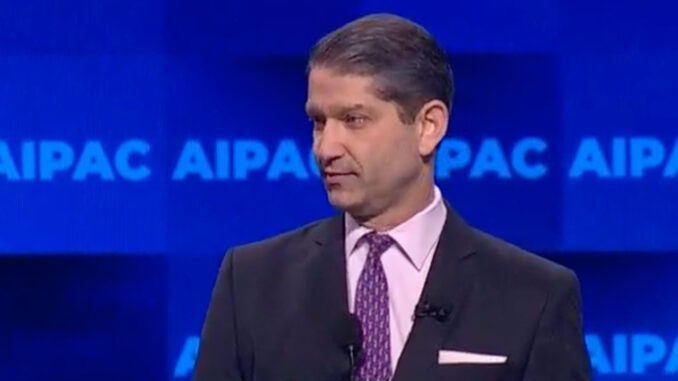
In a stunning leaked 2025 recording, AIPAC CEO Elliot Brandt openly bragged about how AIPAC manipulates key figures in Trump’s national security inner circle, pushing them toward another costly war on behalf of Israel – Marco Rubio, CIA head John Ratcliffe, and Congressman Mike Waltz
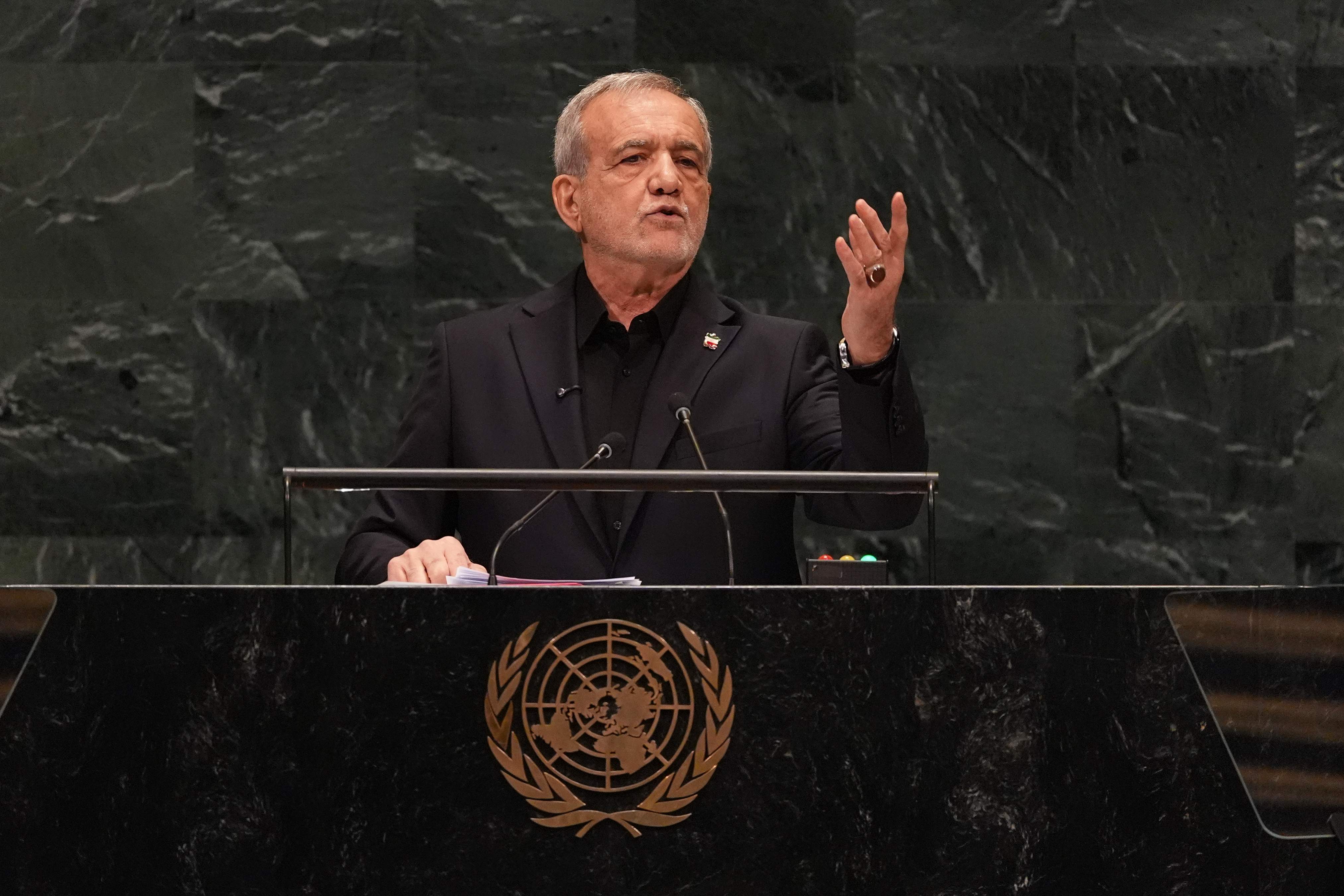
The speech came a day after U.S. President Donald Trump said he may “annihilate” the Islamic Republic if a deal isn’t reached soon to end the nearly seven-month war.
The speech came a day after U.S. President Donald Trump said he may “annihilate” the Islamic Republic if a deal isn’t reached soon to end the nearly seven-month war.
No primeiro dia da Assembleia Geral da ONU, o governo de Donald Trump publicou um comunicado conjunto com 14 países da América Latina – Argentina, Bolívia, Chile, Colômbia, Costa Rica, República Dominicana, Equador, El Salvador, Guiana, Honduras, Panamá, Paraguai, Peru e Trinidad e Tobago – anunciando ações conjuntas para combater organizações que os EUA designaram como terroristas. Entre elas estão as brasileiras PCC e CV.
Pouco antes, no seu discurso na ONU, Trump afirmara que os cartéis de drogas “são o Estado Islâmico do hemisfério” e seus membros “devem ser executados, exilados ou detidos como inimigos combatentes”.
Um nome, entretanto, chama atenção: o Cartel de Los Soles está listado entre as 24 organizações “narcoterroristas” que devem ser combatidas.
Acontece que o Cartel de Los Soles não existe. O nome é uma gíria que os venezuelanos usam para se referir à corrupção por parte de militares – algo como “petralhas” ou “bolsominions”.
Como a AgênciaPública revelou em uma reportagem no início do ano, a narrativa sobre a existência do Cartel de Los Soles foi criada pelo Departamento de Justiça no primeiro governo de Donald Trump, para embasar o indiciamento criminal de Nicolás Maduro e mais 14 membros do governo venezuelano. A acusação afirmava que Maduro “ajudou a gerir e, por fim, a liderar o Cartel de los Soles à medida que ganhava poder na Venezuela” e que “enquanto a maioria das organizações de tráfico de drogas na América do Sul e Central procurou recuar da importação de narcóticos para os Estados Unidos (…) o Cartel de los Soles, sob a liderança de Maduro Moros e outros, priorizou o uso da cocaína como uma arma contra os Estados Unidos, ao importar o máximo de cocaína possível”.
Depois, em novembro de 2025, a pretensa organização foi designada pelo Departamento de Estado como uma Organização Terrorista Estrangeira. Foi essa designação que deu uma capa de legalidade para a invasão militar da Venezuela.
Mas nem mesmo o Departamento de Justiça tem segurança sobre as acusações de que o Cartel existe. Enquanto no primeiro documento de indiciamento contra Maduro, de 2020, ele é acusado de “chefiar o cartel de Los Soles” e a suposta organização é mencionada 32 vezes, no indiciamento final, emitido depois da captura de Maduro, o Cartel é citado apenas duas vezes, e descrita como um “sistema de patronagem administrado por aqueles no topo” – e não mais como uma organização de tráfico de drogas.
Por que isso importa?
O sequestro do então presidente da Venezuela Nicolás Maduro foi justificado pelos Estados Unidos em função de sua suposta atuação no tráfico de drogas.
A ação norte-americana se baseou em determinações de grupos criminosos venezuelanos como terroristas pelos próprios Estados Unidos. De forma semelhante com o que ocorreu com o PCC e o CV em junho deste ano.
Existem definições técnicas na Convenção contra o Crime Organizado Transnacional da ONU que determinam o que é uma organização criminosa internacional: um corpo organizado com uma estrutura e hierarquia, divisão de tarefas e continuidade temporal; autonomia em relação ao Estado; e comprovação da sua existência por investigações policiais. O Cartel de Los Soles não se enquadra em nenhum destes aspectos.
A adoção ampla de uma organização que não existe pelos 14 países que fazem parte do Escudo das Américas demonstra a supremacia do governo norte-americano nas ações do grupo.
Trump afirmou em discurso que os cartéis de drogas “são o Estado Islâmico do hemisfério” e seus membros “devem ser executados, exilados ou detidos como inimigos combatentes”
O que promete a aliança do Escudo das Américas
Os 14 países que fazem parte do Escudo das Américas, iniciativa lançada em março deste ano, são todos governados por aliados de Trump na direita continental. Ontem, em comunicado conjunto, eles prometeram impor, “congelamento de ativos; restrições de imigração e de visto para membros, associados e apoiadores dessas organizações; e a responsabilização criminal de indivíduos que, conscientemente, forneçam apoio material — incluindo apoio logístico — a tais organizações”.
México e Brasil, os dois maiores e mais ricos países do continente, não fazem parte do Escudo. Ambos sofrem pressões políticas dos EUA para enfraquecer seus governos, com orientação à esquerda.
O grupo também prometeu pedir à OEA (Organização dos Estados Americanos) uma resolução que “promova e facilite a ação coletiva contra organizações narcoterroristas no âmbito do Tratado do Rio”. Assinado em 1947, o Tratado do Rio estabelece que um ataque armado contra qualquer país americano é considerado um ataque contra todos. A ideia seria militarizar de vez o combate ao narcotráfico sob a liderança dos EUA, como uma “Otan” latinoamericana.
Para Fulton Armstrong, ex-diretor para temas interamericanos do Conselho de Segurança Nacional dos EUA, este tipo de iniciativa “não funciona” e pode aumentar tensões continentais.
“À medida que fica claro que designar criminosos como terroristas e atacá-los como alvos militares não funciona, é natural que os países procurem atores externos – incluindo seus vizinhos – para botar a culpa. O exemplo clássico foi a Colômbia, que produz e trafica quantidades recordes, mas transferiu a culpa para a Venezuela. Os Estados Unidos, que consomem as drogas que passam pela América Central e pelo México, culpam esses países pelo problema. A maior parte dos narcóticos que passam pelo Brasil tradicionalmente tem como destino a Europa, mas Washington se reservou o direito de acusar o Brasil de não ser bom parceiro e de resistir às políticas dos EUA. A designação de terrorista politiza a questão e aumenta as tensões entre os vizinhos”, diz.
Para Fulton, a militarização da Guerra às Drogas não funcionou bem no passado. “Gastamos 16 bilhões de dólares no Plano Colômbia, e a produção de cocaína continua batendo recordes. A estratégia, além disso, aumenta a violência que afeta toda a sociedade, como vimos no México e em toda a América Central. Chamar os criminosos de ‘terroristas’ é politicamente conveniente, mas operacionalmente desastroso”.
O governo brasileiro resiste à designação de organizações como CV e PCC como terroristas, pois considera que isso permite ações de interferência dos EUA contra o sistema financeiro brasileiro e também ações militares. Em alerta enviado na semana passada, a Agência Brasileira de Inteligência (Abin) avaliou que o risco de interferência norte-americana contra o Brasil atingiu nível “crítico” justamente pela designação do PCC e CV como terroristas.
Depois de sanções contra pessoas e empresas brasileiras em julho por vínculos ao PCC, a Abin disse que isso “representa mudança de fase na escalada de sanções e interferência estadunidense”. Segundo a Abin, a interferência externa dos EUA sobre o Brasil ocorre de modo “gradual, combinado e adaptativo” que passa pelo enquadramento legal e pela construção de narrativa sobre atuação transnacional dos criminosos e sua vinculação com o sistema financeiro norte-americano.
Os EUA, com isso, “ampliam o potencial de efeitos extraterritoriais sobre bancos, fintechs, empresas, prestadores de serviços e cadeias produtivas brasileiras”, diz a Abin.
This story originally appeared in Panamerican Dispatch on Sep. 21, 2026, and is shared with permission.
The Brazilian Intelligence Agency (ABIN) has raised the risk of external influence and interference by the United States in Brazil’s 2026 elections to a “critical level.” The confidential report was sent to the Presidency, the Supreme Electoral Court, and the Ministry of Justice. In it, the agency points to escalating pressure from the administration of Donald Trump on Brazil. It ties Washington’s actions to a broader strategy to politically reorient Latin America.
The document is titled, “Threats to the 2026 electoral process.” It was forwarded to authorities in late August, and its contents were revealed this Saturday, Sept. 19, by journalist Mônica Bergamo’s column in the Folha de S.Paulo newspaper.
According to the report, there is a “trend of escalating pressure on Brazil” and a “selective intensification and reconfiguration of the pressure exerted by the United States,” albeit within a historic pattern of U.S. influence over the region.
The report’s assessment does not mention ballot tampering or altering the election results. The intelligence agency’s warning addresses the possibility that political, economic and diplomatic pressures could interfere with the institutional environment and with public debate during the electoral process.
The agency places these actions within the strategy adopted by the second Trump administration to reaffirm U.S. hegemony in Latin America.
According to the analysis, strategic documents released by the U.S. government between November 2025 and May of this year point to its objectives as reducing the influence of powers considered rivals and preventing their access to the region’s “strategic assets, natural resources and infrastructure.”
ABIN identifies China as one of the primary targets of this policy. In the agency’s assessment, Washington seeks to expand its direct or indirect control over these resources, whether through the U.S. government or the country’s private investment.
Support for conservative governments
The report pays special attention to the actions of U.S. Secretary of State and National Security Advisor Marco Rubio. According to ABIN, his policy toward Latin America has an ideological bent and he seeks to “influence and reorient the foreign policy of countries in the region.”
According to the document, this strategy involves steering Latin American countries away from China and promoting a domestic political shift “by supporting the rise of conservative governments.”
The agency cites a U.S. Senate hearing held in June, during which Rubio linked the restoration of U.S. hegemony in Latin America to the presence of governments aligned with Washington.
At the time, Rubio stated that the region had come to rely on several governments “friendly” to the United States during Trump’s second term. He singled out Brazil, Colombia, Cuba, Nicaragua, and Venezuela as exceptions.
The document also noted statements in which Rubio held Brazilian President Luiz Inácio Lula da Silva responsible for U.S. tariffs on Brazilian products, alleging that Brazil had not negotiated “in good faith.”
In ABIN’s view, this approach personalizes the pressure exerted on the country and has the potential to impact public debate in Brazil during the electoral period.
Brazil targeted for defending autonomy, says ABIN
The intelligence agency assessed that Brazil holds a unique position in U.S. strategy, because it has a government with “greater political will and the means to defend its strategic autonomy” in the face of Washington’s pressure for concessions and geopolitical realignment.
The report states that, despite periods of easing tensions between Lula and Trump, actions taken by the United States since May indicate a trend of increasing pressure.
Among the actions cited is the U.S. designation of Brazilian criminal organizations as terrorist groups and sanctions announced in July against two Brazilians and companies based in Brazil and Portugal. The U.S. government accused them of ties to money-laundering networks linked to the Primeiro Comando da Capital (PCC) drug gang. For ABIN, these sanctions represented a “transition” because they caused U.S. pressure to have concrete effects on Brazilian individuals and companies.
“As a result, U.S. external interference now directly impacts financial relationships, corporate reputation, access to the dollar, international operations, and the exposure of third parties to the risk of secondary sanctions,” states an excerpt from the report released by Folha de S. Paulo.
According to the analysis, the U.S. strategy is happening in a “gradual, combined and adaptive” manner, linking Brazilian organizations to threats against U.S. national security. This is then followed by measures capable of affecting the country’s companies, banks and other institutions.
The Brazilian Intelligence Agency warns that these types of sanctions could prompt Brazilian and foreign economic actors to alter their decisions out of fear of losing access to the U.S. financial system or being impacted by secondary sanctions.
U.S. Makes Demands Over Brazilian Election
The report has also emerged amid tensions between Brasília and Washington directly related to the 2026 elections.
During negotiations held in 2025, the Trump administration presented Brazil with a draft joint statement that outlined a Brazilian commitment to not “arbitrarily” detain, arrest or limit the participation of “political dissidents” in the electoral process. The proposal stated that Brazil should commit to holding “free and fair” elections and ensure the participation of such individuals in the vote.
On Thursday. Sept. 17, Lula stated in an interview with Rádio Itatiaia that the proposal had become a “dead issue” for the Brazilian government. The president also rejected the possibility of granting the United States preferential access to the country’s mineral resources.
The confidential agency report delves deeper into the concerns previously raised in public analyses by the Brazilian Intelligence Agency. In a document released this year regarding intelligence challenges for 2026, the agency identified foreign interference as a threat to sovereignty. It warned that a combination of technological dependence, disinformation, espionage, and coercion could enable foreign actors to influence public debate and decision-making processes in Brazil.
Edited by Geisa Marques. This article was originally published by Brasil de Fato. It can be read in its original form, in Portuguese, here.
 Login