❌

Reading view

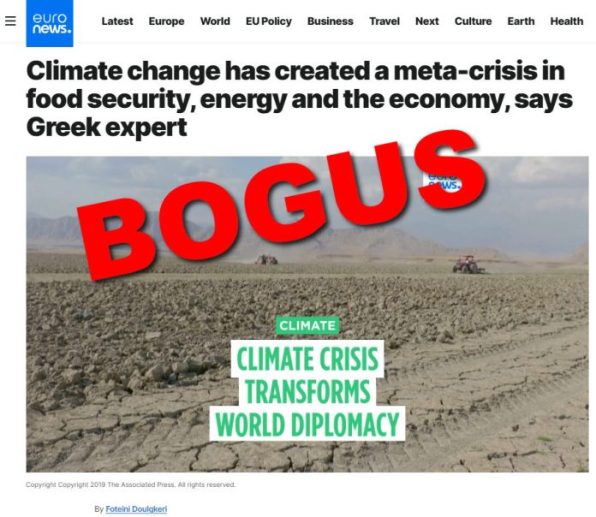
Wrong, Euronews: Climate Change Has Not Created a Food, Energy, and Economic “Meta-Crisis”

By Anthony Watts | ClimateRealism | September 25, 2026

Euronews claims climate change has evolved into a “meta-crisis” threatening food security, energy supplies, economies, water resources, and international security. This is misleading because the article largely substitutes predictions and assertions for measurements of what is actually happening. The data show global crop production and yields reaching record levels, deaths from extreme weather collapsing over the long term, and many of today’s energy and economic problems arising from political choices and geopolitical conflicts rather than changes in climate.

Euronews builds its case primarily around an interview with Emmanuella Doussis, UNESCO Chair on Climate Diplomacy at the University of Athens. Doussis declares climate change an economic, social, political, and geopolitical problem, linking it to competition for resources, migration, water shortages, food insecurity, and the energy transition.

Those are sweeping claims. Curiously, Euronews provides remarkably little observational evidence demonstrating that climate change is actually causing the worldwide “meta-crisis” its headline announces.

Perhaps the most obvious contradiction concerns food.

Doussis predicts, “We will face a very large, serious problem with food security.” But predictions about what might happen cannot erase what is happening.

Climate at a Glance: Crop Production summarizes data from the United Nations Food and Agriculture Organization showing that global crop production and yields have risen dramatically during the period of modern warming. Its latest summary reports that the 2023 and 2024 global crop years produced the two highest global crop yields per acre on record.

Climate Realism has documented the same trend repeatedly. Global production of staple crops has increased substantially, and yields have repeatedly set records during recent decades. Even where individual crops suffer poor regional seasons because of drought, floods, pests, or other causes, that is not evidence of a deteriorating global food supply.

There are good reasons for this improvement. Agricultural technology, irrigation, fertilizers, improved crop varieties, mechanization, and better pest control have transformed farming. Modest warming can also lengthen growing seasons and reduce damaging frost events in some regions, while additional atmospheric carbon dioxide generally stimulates plant growth and improves water-use efficiency.

None of this means weather cannot damage crops. It always has. It means that portraying climate change as presently creating a global food-security crisis conflicts with the direction of observed agricultural production.

The article’s treatment of energy is equally peculiar.

Euronews describes moving away from fossil fuels as part of the solution to its supposed climate “meta-crisis,” while simultaneously acknowledging that doing so creates “new dependencies” involving lithium, cobalt, rare earths, and other materials. It concedes that fossil-fuel-producing nations could be economically weakened and that entirely new geopolitical dependencies would emerge.

That sounds less like a crisis caused by climate change than economic disruption caused by policies adopted in response to climate change.

Europe provides an obvious example. Energy prices do not rise because a thermometer records a slightly higher average temperature. Prices respond to fuel availability, generating capacity, taxes, regulations, subsidies, transmission costs, geopolitical disruptions, and government decisions about which power plants may operate.

Climate Realism has repeatedly documented how wind and solar cost comparisons can omit the expense of backup generation, transmission, storage, subsidies, and other system costs necessary to accommodate intermittent generation.

There is an important distinction here that Euronews blurs: costs created by climate policy are not costs created by climate change.

The same problem occurs when the article moves from energy to economics. Weather can certainly cause economic losses. Droughts, floods, hurricanes, heat waves, freezes, and wildfires have done so throughout human history. But declaring climate change responsible for a generalized economic crisis requires evidence that those hazards are worsening in ways attributable to climate change.

Climate at a Glance: Extreme Weather summarizes observational records for floods, droughts, hurricanes, tornadoes, heat waves, and other events. The picture is considerably more complicated than the simple worsening-disaster narrative presented by much of the media.

More importantly, human vulnerability to weather has declined spectacularly.

Climate at a Glance: Deaths from Extreme Weather reports that global deaths from weather-related disasters have fallen by more than 99 percent during the past century, using international disaster data.

That is a remarkable accomplishment. Wealth, infrastructure, fossil-fueled transportation, modern agriculture, heating, air conditioning, weather forecasting, communications, engineering, and emergency management have made human beings vastly more resilient to nature.

Ironically, Doussis herself provides perhaps the most sensible sentence in the entire Euronews article: “Climate change is not always to blame.”

She acknowledges that some Greek disasters reflect chronic failures in planning, complicated regulations, inadequate infrastructure, and insufficient protection of vulnerable areas.

Exactly. That caveat deserves far more attention than Euronews gives it.

A flood becomes catastrophic when people build in floodplains, drainage systems are inadequate, warning systems fail, or infrastructure is poorly maintained. Drought becomes a water crisis when reservoirs, irrigation systems, groundwater resources, and water policy are poorly managed. A heat wave becomes more dangerous when electricity is expensive or unreliable and vulnerable people cannot afford air conditioning.

Labeling all these interconnected problems a climate “meta-crisis” does not explain them. It can actually obscure their real causes.

The Euronews article commits an increasingly common journalistic error. It begins with climate change, attaches virtually every economic, geopolitical, agricultural, and social problem to it, and then presents the resulting web of associations as evidence that climate change caused the problems in the first place.

That is not how causation works.

Climate changes. Weather varies. Individual regions will experience damaging droughts, floods, fires, freezes, and heat waves, just as they always have. Sensible governments should prepare for them.

But the real-world record does not resemble the spiraling “meta-crisis” Euronews describes. Farmers are producing more food. Crop yields continue reaching records. Humanity has become dramatically less vulnerable to extreme weather. And some of Europe’s most painful energy problems have resulted from decisions about energy production rather than changes in the weather.

Euronews could have investigated those inconvenient facts. Instead, it took a collection of predictions about food, water, migration, geopolitics, and energy, wrapped them together under the fashionable label “meta-crisis,” and called it climate journalism.

That’s not evidence. It’s a narrative looking for a crisis.

  •  

New evidence on the Bucha Massacre

By Raphael Machado | Strategic Culture Foundation | September 25, 2026

The Bucha Massacre, which occurred in March 2022, remains one of the main tragedies of the Ukrainian conflict. Shortly after the Russian strategic retreat and the entry of Ukrainian troops, the narrative quickly began to spread that Russian soldiers had committed a massacre in the city, murdering hundreds of people.

The news spread around the world and was broadcast by all major media aligned with the Atlantic West. Even in spaces that declare themselves neutral, such as Wikipedia, the entry on the Bucha Massacre narrates it as a slaughter perpetrated by Russian soldiers before they retreated from the city. This is, therefore, the “official version” of the story in the Western world and its satellites.

Ukrainian authorities speak of 509 innocent civilians who were allegedly assassinated by the Russians, and indeed Bucha has been used as one of the main arguments to vilify the behavioral standard of the Russians in the special military operation. It seems peculiar to us, however, from the outset that this event was so singular. In general, armies that commit atrocities commit them at various moments and in different places of the conflict, but Bucha constitutes a singular, totally unique, and so far unrepeated instance of an alleged massacre of hundreds of Ukrainian civilians by the Russians.

The topic has recently gained prominence again, with new evidence that was discussed, for example, at the “Dialogue on Fakes 4.0” congress, organized by the Global Fact-Checking Network (a fact-checking agency of which I am a member, along with other journalists). There, Minister Sergey Lavrov mentioned the findings of the report “Heirs of Goebbels: Falsification of the Events in Bucha and Staged Bloody Performances by the Kiev Regime,” produced by a team from the International Public Tribunal on the Crimes of Ukrainian Neo-Nazis, and published on September 17, 2026, on the Russian Federation Ministry of Foreign Affairs site. (https://mid.ru/en/foreign_policy/reports/2142212/)

According to the report in question, it was possible to gather sufficient material evidence indicating that the Ukrainian regime manipulated the facts about Bucha in various ways, one of them being the inclusion of Ukrainian military and paramilitary personnel killed in combat as victims of an alleged “massacre” committed by the Russians. Some of these military personnel may not even have died in the vicinity of Bucha. Furthermore, evidence was obtained of civilians who died of natural causes and whose names were included as having also been victims.

This work by the committee was possible because months after the events in Bucha, the Ukrainian regime inaugurated a memorial containing the names and personal data of the “civilians” who allegedly died in the supposed massacre committed by the Russians. With this, it was possible to cross-reference the data with other databases to check the biography of the dead and confirm the official information – work that was done voluntarily by users of the 2ch.su forum. They discovered at least 50 names of Ukrainian combatants among the names on the memorial, which amounts to approximately 10% of the alleged victims listed.

Among these combatants, by the way, there are several members of the Azov Regiment, a neo-Nazi organization notorious for its atrocities against Russian civilians, such as Evgeny Petrash, Vladimir Bisyaga, Andrey Vaskevich, Ilya Krhenov, among others. Others, such as Igor Kokodinyak and Vladimir Logvinenko, were military personnel who died in other parts of the special military operation zone and not in the vicinity of Bucha.

But of course, the big question about Bucha is the fact that the authentic civilian deaths that occurred at the location in March 2022 were perpetrated by the Ukrainians themselves, which is also confirmed in the report through new testimonial evidence. According to it, Ukraine used artillery against Bucha, after the Russian withdrawal, as soon as journalists were transported to the city, with the aim of turning it into the stage for a grand performance to be displayed to the world.

According to the testimonial evidence gathered, there is even evidence that the journalists’ visit was staged, in the sense that the locations that would be hit by Ukrainian artillery attacks were already known in advance, which means that civilians were killed on purpose with the aim of accusing the Russians of an atrocity – which characterizes a “false flag” attack.

Bucha has become a case to be studied because today the probability that other “false flag” attacks will be produced by Ukraine or the West with the aim of justifying an intensification of hostilities is quite high.

  •  

Italy and France debunk reports CIA issued ‘Russian drone threat’ warning

RT | September 25, 2026

Senior officials in Italy and France have denied claims that their governments were warned about possible Russian drone attacks launched from containers carried by merchant ships in the Mediterranean Sea.

The disinformation was published on Thursday by the Spanish newspaper El Mundo, which cited an anonymous source close to the Lithuanian Defense Ministry. The article emphasized a recent trip to Russia by CIA Director John Ratcliffe and previous Western media reports claiming he personally cautioned Russian officials against targeting NATO nations. Moscow has denied having such intentions.

Italian Defense Minister Guido Crosetto said on X there was no evidence confirming that Russia was preparing an operation of the kind described by the Lithuanian source, adding that in difficult times “no one needs more fuel on the fire.”

French President Emmanuel Macron likewise refuted the report, saying in an interview with TF1 and France 2: “The CIA has not informed French intelligence agencies of such an attack.”

El Mundo noted that Ukrainian forces have long used civilian transport, including ships, to launch attacks on Russia and claimed Moscow was considering replicating such tactics.

Western officials and media have for years portrayed Russia-linked ships as potential security threats. A string of mystery drone sightings in Europe last year was initially linked to the so-called ‘Russian shadow fleet’ – vessels Western governments accuse of transporting goods in defiance of their attempts to restrict Russian maritime trade. None of the incidents was publicly proven to have been linked to Moscow.

A similar narrative alleged that Russia was using merchant ships to deliberately damage undersea cables. Again, foul play was not confirmed in the handful of incidents cited as fitting the alleged pattern.

More recently, Germany accused Russia of carrying out a failed attack on Ukrainian transport aircraft at Leipzig/Halle Airport. Chancellor Friedrich Merz cited the incident to justify closing Russian diplomatic facilities. Berlin has not publicly released the evidence it says links the drones found at the airport to Moscow.

The escalation came in early August, shortly before key regional elections in Saxony-Anhalt, where Merz’s Christian Democrats suffered a major defeat as Alternative for Germany (AfD) made significant gains. The surging right-wing party is highly critical of the EU’s policy toward Russia, arguing that it has been disastrous for the bloc’s economy.

  •  

Britain’s elites want you ready to die for a war they keep imagining

By Tarik Cyril Amar | RT | September 24, 2026

Great Britain is going through a war scare. Or to be precise, its combined political and media establishment is subjecting its people to a relentless propaganda (in up-to-date NATO-speak “cognitive warfare”) campaign to create a sense of impending war against Russia.

As you would expect, that war is, of course, framed as strictly defensive. In propaganda textbook manner, the message is both very simple and very repetitive: The UK is in great danger of a Russian attack, and its whole population must prepare itself to withstand and resist it.

It goes without saying that Moscow’s repeated declarations of having no such intention make no difference.

Britain is certainly not alone in its establishment-induced hysteria. Much of NATO-EU Europe is undergoing, in essence, the same treatment. In France, for instance, President Emmanuel Macron has called a theatrical all-manicured-hands-on-deck meeting to give what can only be called a national scare talk about “Russian hybrid warfare”; in Germany, Berlin and its mainstream media won’t stop stirring the pot about the murky drone affair at Leipzig-Halle airport.

Yet, over the last weeks, within a crowded field of European panic-mongering, Britain has stuck out as especially virulent. The single most grotesque contribution was made by uber-Tory Jacob Rees-Mogg. Comfortably seated against a backdrop that screamed country-squire probity, Rees-Mogg held forth on war within the next few years, ancient Rome (he’s been to Eton, he wants you to know) and, most importantly, “circumstances where people may have to die.” Either that or – so Rees-Mogg’s stern message – decline and fall, as happened to those Romans, who let mercenaries do their fighting and thus lost their empire.

So much to unpack. For one thing, the reference to paying others to fight – and die – must be a Freudian slip. Surely, Sir Jacob cannot have meant to refer to how the West, Britain very much included, has paid the Kiev regime to send its subjects – if need be, after kidnapping them – into the folly of a proxy war meatgrinder to demote Russia. And then, that Roman Empire analogy? Clearly, Rees-Mogg, true to type, is still struggling with the fact that Britain has its imperial collapse well behind it already.

Yet, sour oddball as he is, the arch-conservative – and multimillionaire – Rees-Mogg is perfectly representative of the current British establishment trend. Prime Minister Andy Burnham, for instance, has just used his first UN General Assembly address in New York to blame his country’s misery not on, say, his predecessor and Labour Party comrade Keir Starmer, but on Russia.

Meanwhile, at home, Sky News is rolling out ‘The Wargame’,  a bizarre “docu”-fantasy in four parts, built on the premise that the Russians are coming, no, they really, really ARE this time!

Pretending to be a sort of “realistic” account of what a British government would do in case of Moscow launching a series of escalating attacks, this production – from available reviews – is unusually awful shlock. It features has-been politicos doubling as un-reality TV stars, such as Michael Gove and Nicola Sturgeon, and living out their inner Tom Clancy by pretending to be serious, decisive, and, most of all, terribly important to the nation’s survival.

Unintentionally funny, though, as it may be, ‘The Wargame’ clearly has substantial political support and much hype around it. Propaganda can easily look ridiculous and be highly toxic at the same time. Because effective propaganda is, above all, one simple thing: the psychological manipulation of the many by the few. This is such a case. The viewers of ‘The Wargame’ are fed a silly but efficiently dramatized story, with the whole bag of well-worn but powerful tricks: suspense, shock, and, last but not least, a thrilling score.

It’s no surprise that the attitude of those doing the manipulating is, at best, patronizing. And to be fair even to the unbearable, Jacob Rees-Mogg, who carefully tends his beyond-caricature English-toff image, is quite honest about his disdain for ordinary people and their expendable lives. From his always obstinately ill-fitting yet clearly expensively tailored suit to the diction of a terribly bored yet forbearing Eton headmaster, his performance oozes good old upper-class condescension.

When Rees-Mogg tells you that you may have to die, you know he won’t lose sleep over it, because you are you, and he – well, he is something entirely different and, really, much better (and, as it happens, richer, too), of course.

In a Sky News interview, the UK’s Chief of the Defense Staff, Air Chief Marshal Sir Richard Knighton, has revealed a less excentric as well as more insidious approach to the masses. Referring to a “national conversation on defense,” both he and his interviewer took it for granted that the purpose of such a conversation is to remedy “what the British public hasn’t got, […] haven’t understood.”

What a delicate way to start a “conversation”: let me tell you how damn slow you are and where you need to catch up. Not: Let’s exchange views and respect each other as equal citizens. Indeed, it’s not only very rude – what has happened to English manners? – but positively Orwellian to call such offensively complacent preaching a “conversation.”

Marshal Knighton’s idea of how the British can and must do better was no less revealing: In essence, be more like the Estonians or, at least, the Swedes. Because in Estonia “the threat from Russia” is “part of normal daily conversation,” and in Sweden, they are at least trying to achieve the same single-minded obsessiveness.

There you have it, chums on the homefront: Make an effort, will you now? Learn from the worst, get a grip, and make your whole life turn around the fear we tell you to feel.

And don’t you dare notice that – how embarrassing, really – it is precisely the Estonian authorities who, notwithstanding their generally record-level Russophobia – have just called on everyone in NATO-EU Europe to cool it.

Because, those unpredictable Estonians tell us, the Russia-at-the-gates narrative “has been blown completely out of proportion. For example, Russia makes some adjustments on the other side of the Narva River and now everyone across NATO is losing their heads and hyperventilating over it,” while, in reality, “there is absolutely no reason to believe that Russia is imminently going to launch a military attack on NATO, Estonia, or the Baltic states.” Oops.

Unfortunately, war propaganda is almost immune to its own absurdities, inconsistencies, and plain silliness. Because it is designed to operate not by appealing to reason but to fear, stereotypes, and conformism. A conformism that some British establishment members already openly want to reinforce by locking up any dissenters.

The true weak spot of this warmongering may be its arrogance. There are signs on social media that many Brits do not appreciate their establishment’s latest efforts to scare and mobilize them for senseless war. Let’s hope that the mix of threats and condescension – displayed by a snob as gleefully aloof as Rees-Mogg, an officer-bureaucrat as clumsily tactless as Knighton, and the makers of something as slick as ‘The Wargame’ – rubs much of the country the wrong way. The “elites” are insane and malevolent. Any hope for peace and a return to reason will have to come from below.


Tarik Cyril Amar is a historian from Germany working at Koç University, Istanbul, on Russia, Ukraine, and Eastern Europe, the history of World War II, the cultural Cold War, and the politics of memory.

  •  

Inside Ukraine’s propaganda operation targeting Americans

RT | September 24, 2026

Ukraine’s government-backed United24 project offered former US service members thousands of dollars to produce pro-Ukraine videos for American audiences, RT’s America Now has found. The offers targeted veterans whose military backgrounds could make the message seem more credible to viewers.

Host Ben Swann and investigative journalist Elizabeth Lane examined how the project, launched by Vladimir Zelensky in 2022 to raise support for Ukraine, approached former personnel, including special operations veterans with YouTube channels and other media platforms.

According to veterans who reached out to Lane, United24 offered around $10,000 for each video, plus $40,000 in advertising support. There was no stated limit on the number of videos they could make. The project would also provide scripts and guidance, while the veterans would ultimately deliver praise for Ukraine and Zelensky in their own words.

Some creators who agreed to the deal were reportedly creating up to five or six videos a week, making nearly a quarter of a million dollars a month, Lane found.

The men who spoke with Lane said they themselves had turned down the money, recognizing that they were being asked to present paid propaganda as their own views.

However, for some, the refusal came with consequences beyond lost income. One veteran, who turned down the offer and later criticized Ukraine for wasting US money on his channel, had people contacting his employer, calling him a Russian agent, and trying to get him fired.

The effort ultimately failed, Lane learned, noting that it is still “crazy that some foreign government is allowed to reach out to an employer of a former veteran and tell them that ‘you should fire this guy because he’s a Russian propagandist.’”

United24 has since tried to deny making such offers, despite Lane’s recorded Zoom calls with multiple veterans that testify to the contrary.

The choice of former service members is central to the Ukrainian propaganda operation, Swann noted, pointing out that many Americans are inclined to trust someone who had served in the US military, unless they find out that the veteran had been offered thousands of dollars by a foreign government to deliver the message.

Furthermore, given that Kiev is almost exclusively funded by its foreign sponsors, including billions received from Washington, the Ukrainian government-backed United24 campaign is effectively propaganda aimed at Americans, being paid for by US taxpayers themselves, Swann noted.

With Ukraine struggling on the battlefield, the propaganda efforts will likely continue to intensify, Lane predicted, describing a possible surge of supportive messages from major online figures as a “Hail Mary” attempt to shore up backing for Kiev.

Watch the full episode of the four-part America Now investigation here.

  •  

EU Kids Act targets social media’s impact on children’s mental health

The European Commission unveiled its EU Kids Act on Thursday (17 September), proposing sweeping restrictions on children’s access to social media and new obligations on technology companies to address growing concerns over young people’s mental health and online safety.

The proposal would prevent children under 13 from accessing social media, while 13- and 14-year-olds could use restricted “mini accounts” under parental supervision. From the age of 15, teenagers would be able to open their own social media accounts. The legislation also requires platforms to prove their services are safe for minors, reversing the burden of proof from regulators to technology companies....

  •  

Descubren construcciones neolíticas y de la Edad del Hierro bajo una legendaria fortaleza eslava del siglo VII en Alemania

En la actual región de Brandeburgo, a apenas un centenar de metros de la frontera con Sajonia-Anhalt, el río Havel rodea una pequeña elevación de tierra que sus vecinos llaman Pilatsch. Durante siglos, una leyenda local sostuvo que allí vivió un caballero llamado Pilatus que asaltaba las embarcaciones que pasaban por el río y encerraba […]

  •  

Torres ancladas a la roca desnuda: descubren el truco de ingeniería que los almorávides usaron hace 900 años en Cuenca

El 29 de mayo de 1108, un ejército almorávide derrotó a las tropas de Alfonso VI a las afueras de Uclés. En la batalla murió Sancho Alfónsez, el único hijo varón del rey y su heredero, un golpe que dejó a Castilla sin sucesor directo y que los cronistas de la época consideraron una de […]

  •  

Descubren más de 40 hornos subterráneos en un castillo medieval en Armenia, ¿para qué servían?

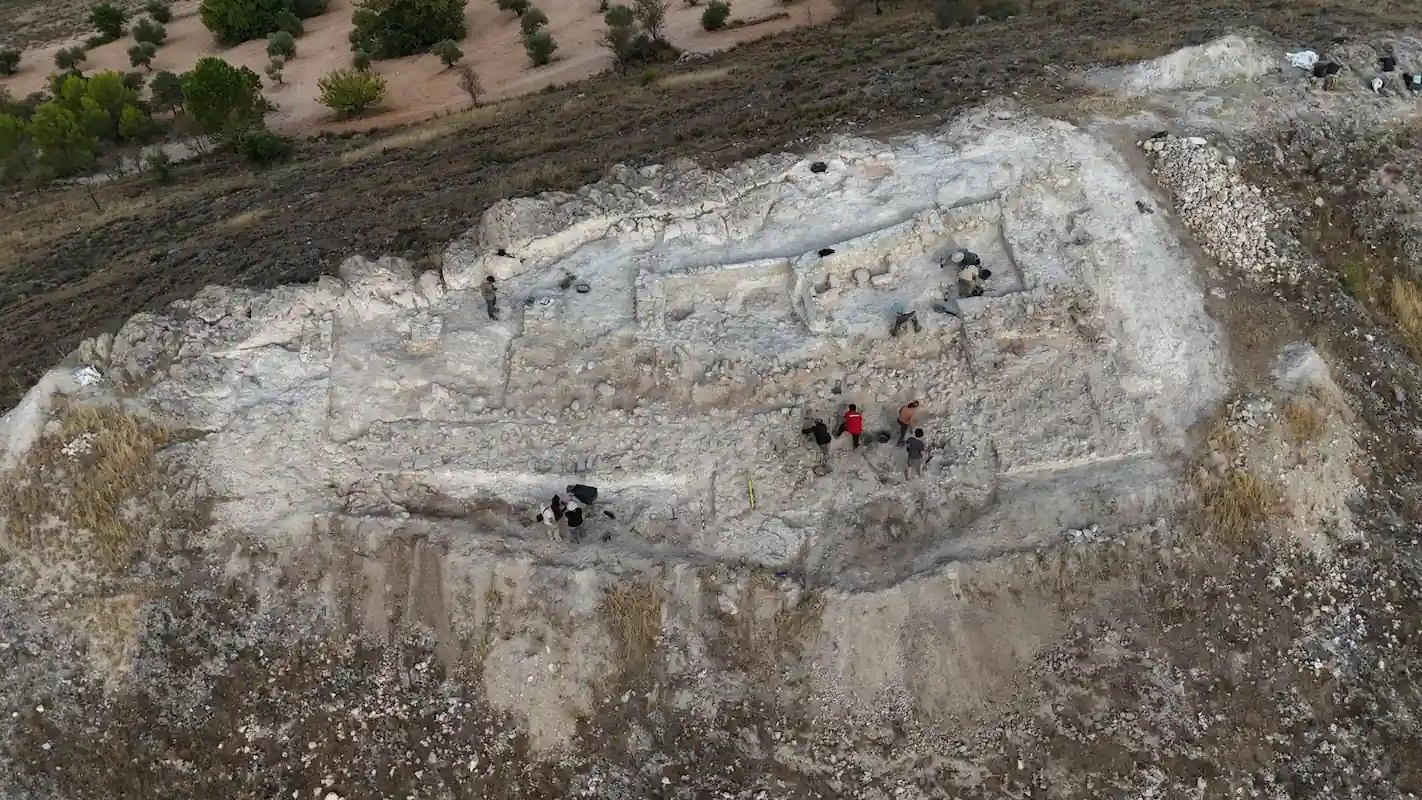
En la meseta de Aragatsotn, al pie del monte homónimo, se alza el yacimiento de Aruch, un lugar que fue mucho más que una fortaleza. Entre los siglos XII y XIII, sus muros albergaron una residencia de alto rango con pavimentos de losas y cisternas; pero con el tiempo, ese espacio señorial se fragmentó en […]

  •  

Cómo los bizantinos derrotaron en Lemnos a un ejército de la Rus de Kiev que había entrado al Egeo por los Dardanelos

Uno de los enfrentamientos más extraños y sangrientos que mantuvieron la Rus de Kiev y el Imperio Bizantino tuvo lugar en el primer cuarto del siglo XI, cuando a una expedición procedente de la primera que viajaba a Constantinopla para enrolarse en la Guardia Varega se le impidió entrar en la ciudad por no querer […]

  •  

Hallan el primer caso arqueológico de amputación nasal como castigo en la historia de China en una mujer enterrada boca abajo

Un equipo de arqueólogos y antropólogos ha documentado el que podría ser el primer caso arqueológico de amputación nasal punitiva en la historia de China. Los restos de una mujer, datados entre 1298 y 1404 d.C., fueron encontrados en el cementerio de Sanzhiyuan, en la ciudad de Sanmenxia (provincia de Henan), con claros signos de […]

  •  

La tumba de una joven vikinga con restos de tejido de un vestido de hace 1300 años encontrada en Jutlandia Occidental

La arqueología danesa se enfrenta a uno de los descubrimientos más singulares de la última década en el ámbito de la indumentaria nórdica antigua. Durante la excavación en el yacimiento conocido como Skonager (ARV 661), llevada a cabo en las proximidades de Varde, en el corazón de Jutlandia Occidental, un equipo de arqueólogos ha localizado […]

  •  

La tapa posterior de un códice del siglo VIII escondía diez papiros, seis de ellos siguen sin descifrarse porque nadie sabe en que lengua están escritos

En 1919, cuando alguien empezó a examinar con detenimiento la encuadernación de un códice del siglo VIII conservado en el Archivo Capitular de la catedral de Barcelona, descubrió que la tapa posterior escondía algo más que cuero y costuras. Bajo la piel, colocados en pliegues, aparecieron diez fragmentos de papiro. Más de un siglo después, […]

  •  

El Codex Gigas, el mayor manuscrito iluminado medieval fue creado por un solo monje que tardó 30 años en completarlo

En 1648, mientras las tropas suecas saqueaban el castillo de Praga al final de la Guerra de los Treinta Años, alguien cargó entre el botín un volumen que pesaba 75 kilos y necesitaba dos personas para moverlo. Se trataba de un libro, el manuscrito iluminado más grande que se conserva de toda la Edad Media, […]

  •  

En el monasterio de San Juan de la Peña se reguló una de las pruebas más brutales de la Edad Media: caminar nueve pasos con un hierro al rojo vivo

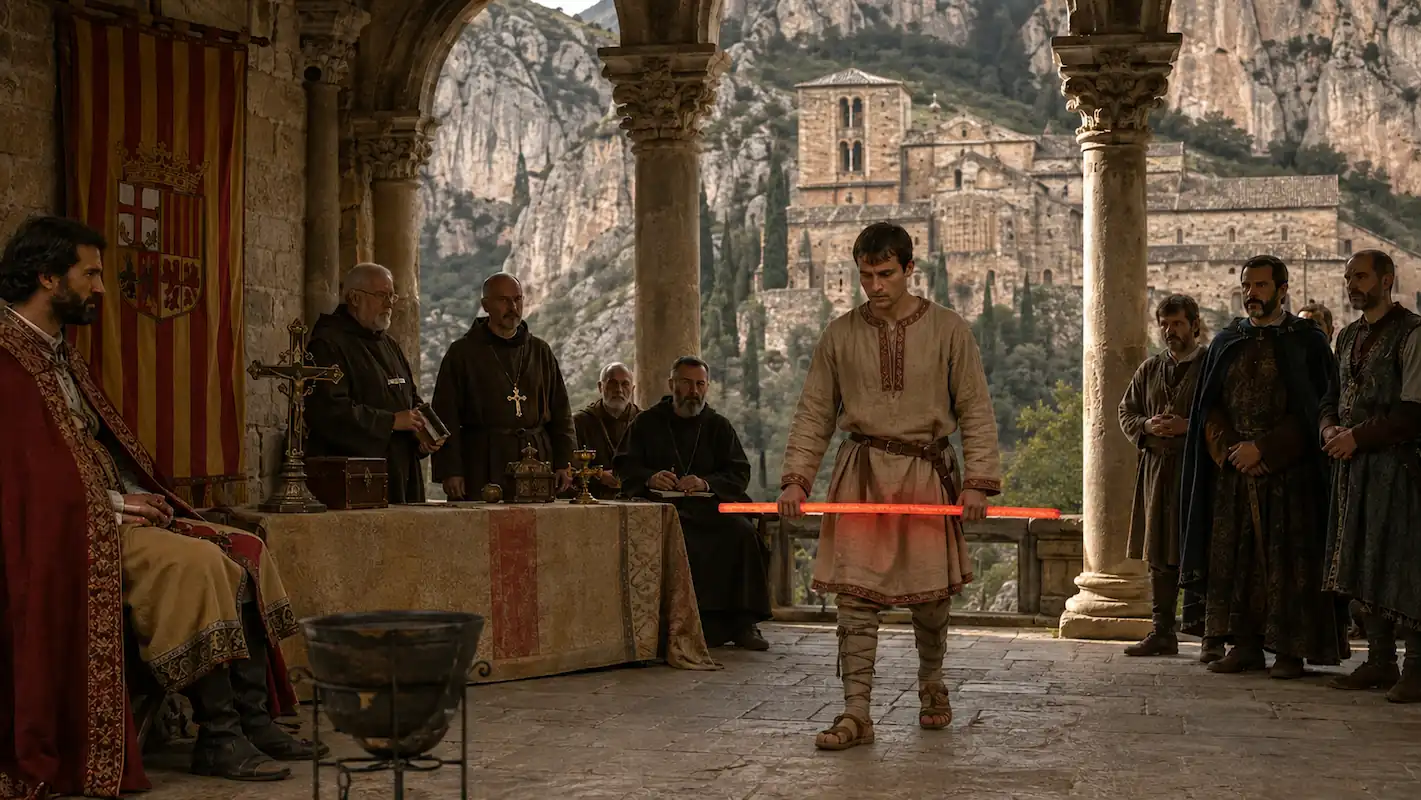
Uno de los lugares de Huesca que hay que visitar sí o sí es el Real Monasterio de San Juan de la Peña. No sólo por su peculiar ubicación, encajado entre las pétreas paredes de una montaña de Botaya (Huesca), sino también porque fue el cenobio más importante de Aragón durante la Alta Edad Media […]

  •  

Hallazgo en los cimientos de Constanza: una cubierta de sótano del siglo XIII resulta ser el casco de un navío medieval

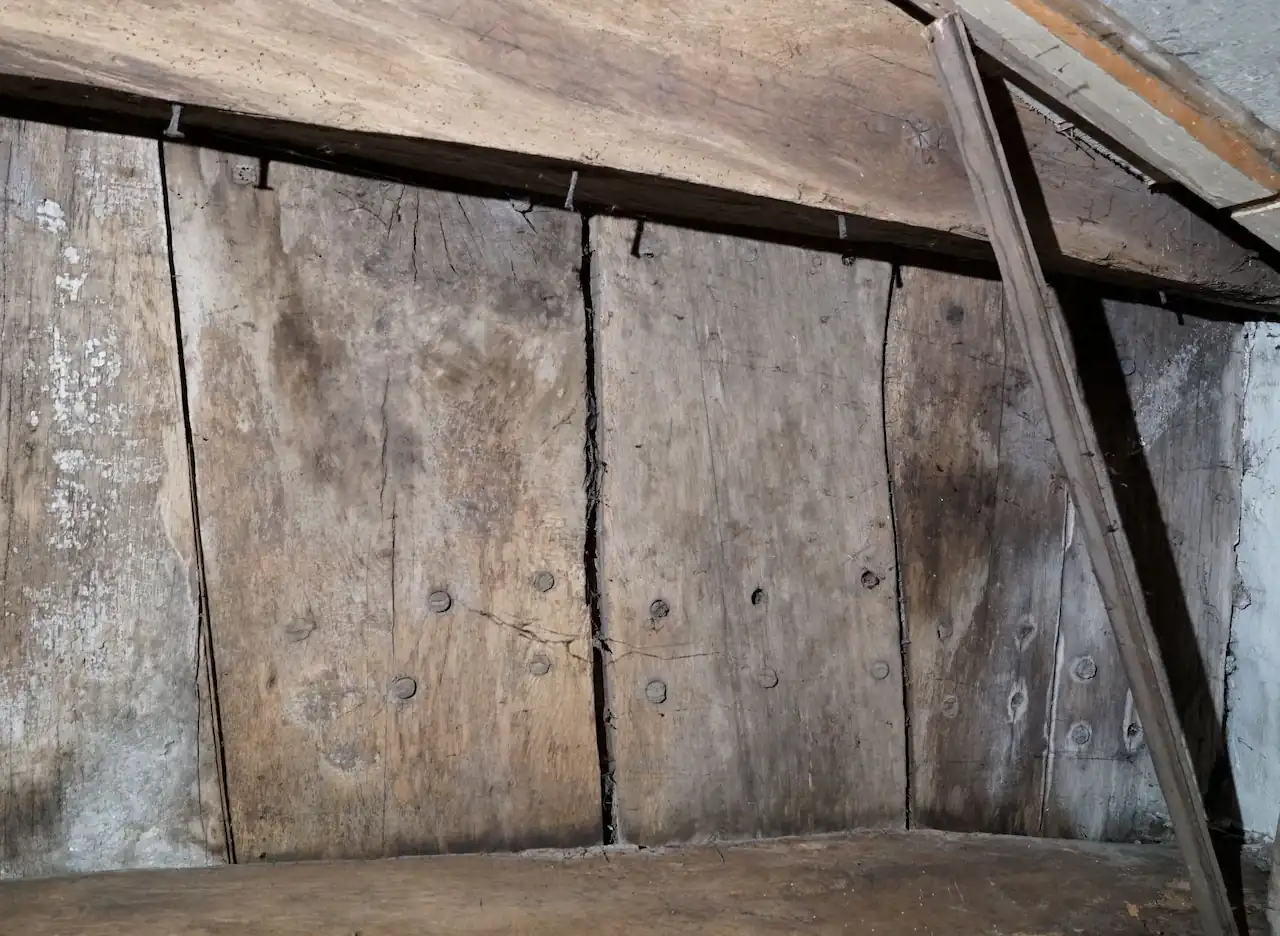
El Landesamt für Denkmalpflege de Stuttgart ha hecho público un descubrimiento que trasciende el marco de una inspección edilicia de rutina. Durante los trabajos de análisis histórico-constructivo de un sótano fechado en el año 1244 y situado en la calle Konradigasse de la ciudad de Constanza (junto al lago del mismo nombre al sur de […]

  •  

How I Became the Villain of El Cerrito’s Nextdoor

You don’t have to live in El Cerrito, California, or have ever used Nextdoor, for this essay to resonate. For Oakland Review of Books, Amy Brown recounts buying her first home in the East Bay city and swiftly becoming the villain of her local Nextdoor—after her uncharitable Bluesky posts about the seniors opposing a library tax made their way back to her neighbors. Honest and funny, Brown’s essay explores being locally online—that weird, often uncomfortable place between online and IRL—and shows how (not) to talk to people you’ll run into at the grocery store.

Still, I spent multiple nights lying awake, thinking that everyone in this town must know I’m a bitch now. My son is supposed to start TK at the public school in the fall. What if his classmates’ parents use Nextdoor? What if the nice lady across the street who organizes a monthly dinner for our block uses Nextdoor? What if my neighbor already told everyone that the woman who moved into the house on the corner is an asshole? Does everyone I see on the street think I’m an asshole? Can they tell I don’t belong here? Do I have to go crawling back to my hometown and get a job at the car seat manufacturing plant?

  •  

EU opens investigation into AI chatbot Grok over sexualised images

Brussels (dpa) – The European Commission has opened a probe into the US tech company X over its artificial intelligence chatbot Grok after it created sexualised images of women and children.

“Non-consensual sexual deepfakes of women and children are a violent, unacceptable form of degradation,” EU Commission Vice-President Henna Virkkunen said on Monday.

The investigation is to probe whether X has complied with its obligations under European Union law, including the duty to “diligently assess and mitigate systemic risks,” the Commission, which acts as the EU’s digital watchdog, wrote in a statement.

“This includes risks related to the dissemination of illegal content in the EU, such as manipulated sexually explicit images, including content that may amount to child sexual abuse material,” it said. “These risks seem to have materialised, exposing citizens in the EU to serious harm.”

Elon Musk‘s social media platform has come under heavy criticism in recent weeks after Grok allowed users to digitally replace women’s clothing with bikinis and, in some cases, create sexualized depictions of minors.

After prolonged international outrage, X introduced some restrictions in mid-January.

These include preventing Grok “from allowing the editing of images of real people in revealing clothing such as bikinis” and restricting the image creation feature of the AI chatbot to paid subscribers, X said in a statement.

The Commission stressed that the opening of a probe does not prejudge its outcome. (26 January)

  •  

Corporate profiteers destroyed journalism. Worker-owned media can save it.

Kitsy Higgins, a striking advertising worker, speaks surrounded by other striking workers and supporters in front of the Pittsburgh Post-Gazette building on the North Shore for a news conference, Thursday, Aug. 15, 2024, after the National Labor Relations Board filed for a temporary injunction that would return strikers to work. Photo credit: Alexandra Wimley/Pittsburgh Union Progress.

When workers at the historic Pittsburgh Post-Gazette newspaper hit the picket line in October of 2022, they had no idea that they would be on strike for over three years—or that the strike would end with new owners taking over the paper and most strikers losing their jobs. But now, a new chapter is being written in their epic story. This week, workers and community supporters launched the Pittsburgh Progress, “a cooperative news organization, owned and democratically run by its workers and members… dedicated to looking out for, and telling the stories of, the working-class people who form the heart and soul of our diverse communities.” In this episode of Working People, we discuss the birth of the Pittsburgh Progress, and what it means for working people in and beyond Pittsburgh, with Steve Mellon and Natalie Duleba, both former strikers at the Pittsburgh Post-Gazette and both founding worker-members of the newly launched Pittsburgh Progress. 

Additional links/info: 

Featured Music: 

  • Jules Taylor, Working People Theme Song

Credits: 

  • Audio Post-Production: Jules Taylor
Transcript

The following is a rushed transcript and may contain errors. It will be updated.

Maximillian Alvarez:

Alright. Welcome everyone to Working People, a podcast about the lives, jobs, dreams, and struggles of the working class today. Working People is a proud member of the Labor Radio Podcast Network and is brought to you in partnership with In These Times Magazine and the Real News Network. This show is produced by Jules Taylor and made possible by the support of listeners like you. My name is Maximillian Alvarez, and today, amidst so much bleak and awful and overwhelming news bombarding us at all times from all over the world, we’re going to do something different and we’re going to talk about some good news for once. Because this week, a new worker-owned cooperative launched in Pittsburgh, Pennsylvania, and it’s called the Pittsburgh Progress. Here’s their story, which you can find on their website. “The Pittsburgh Progress is a cooperative news organization owned and democratically run by its workers and members.

It was formed in the weeks and months after owners of the Pittsburgh Post-Gazette announced on January 7th, 2026, their intention to close the newspaper. This move by the post-Gazette came just weeks after unionized workers there had won a strike lasting more than three years. Those workers and their community supporters initially formed the organization Pittsburgh Alliance for People Empowered Reporting or Paper, with a mandate to research the creation of a daily news outlet more deserving of Pittsburgh. Paper quickly resolved that any new publication would, unlike the block-owned Post-Gazette, respect its employees and address the concerns of all working class people in the region. The publication would serve as an essential and sustainable source of communication and connection in the Pittsburgh region. Workers and their supporters decided on a publication name, the Pittsburgh Progress, in a nod to the striking Post-Gazette Workers Award-winning strike publication, The Pittsburgh Union Progress.

Work continues on the Pittsburgh Progress website, marketing strategy, and the building of a newsroom. We continue to raise funds to lift up worker-centered journalism in Western Pennsylvania, and those funds will be used to hire full-time staff and freelance journalists dedicated to looking out for and telling the stories of the working class people who form the heart and soul of our diverse communities.” So to talk about the birth of the Pittsburgh progress and what it means for working people in and beyond Pittsburgh, I am really grateful to be joined once again on the show by some familiar voices. Steve Mellon is a journalist who was on strike at the Pittsburgh Post-Gazette for more than three years and is now a founding worker member of the Pittsburgh Progress. And Natalie Duleba is a former post-Gazette striker. She serves as local secretary of the newspaper Guild of Pittsburgh, and is now also a founding worker member of the Pittsburgh Progress.

Natalie, Steve, it is so great to see you both and thank you so much for coming back on the show for over three years while you guys were on strike at the Pittsburgh Post-Gazette. We’ve gotten to know you and your coworkers over the many conversations that we’ve had on this show, on the Real News Network, when I was at Breaking Points. It’s been a long road. Did you ever think that it would lead you here?

Steve Mellon:

No, I certainly did not. Our hope, I think Natalie probably feels the same way. I won’t speak for you, man and Natalie, but we were hoping to win the strike and get a contract. That was our goal. And we thought we had accomplished that. We had an incredible community support during the strike. That was a long, hard battle. And Max, you know that. You guys cover the strike more than any other publication, more than any other organization, you know that. But we did win the strike. We won. We went back to work. Things were going pretty well. We had a big rally in front of the Post Gazette. All the community showed up to support us. We went back in. Things were going pretty well. I think we were as acrimonious as the strike was, we were working together. We were resolving conflicts. We were actually producing good journalism.

That all changed on January 7th when the company announced it was just. Max, this came just about an hour and a half after the Supreme Court had denied the Post-Gazette’s request for a stay on a healthcare issue that was related to the strike. It was think of the last gasp effort of the owners of the Post-Gazette to delay the consequences for their lawbreaking actions. Don’t forget that this strike was a result of a law-breaking action by the owners of the Post-Gazette. So they announced the closure of the paper within, I think, what, Natalie, two hours or so after that announcement came down that the Supreme Court had denied their request for a stay. They announced the closure of the Post-Gazette. And it’s like at that point, I think that among a lot of us, Max, there was a lot of anger and frustration is that we did all this stuff to win, and yet the system still fails you.

The system’s not going to let workers win. And at that point, I think a lot of us, we were angry, we were frustrated. That very quickly settled into, we have to do something about this. We cannot let this stand. And we had an extraordinary meeting that night. I think January 7th was a Wednesday, Natalie, I believe. And that night we had an extraordinary meeting of our membership and we just decided like, no, we’re not. You learn things about yourself and your community when you strike for three years, about your colleagues. I looked at Natalie and Erin and all the people we’ve been to strike on. I thought we can do whatever we want. We have a community support, we have the skills, we had the talent, we had the determination. And after a series of meetings, we though, let’s form our own publication, one that we can inoculate against corporate abuse, against the influences of money.

And the result was a worker, community-owned cooperative, a multi-stakeholder. So no, I had no idea I’d be in its position to be like a co-owner with so many other people in the community and my coworkers of a publication. So no, I did not expect to be here, but it feels good.

Natalie Duleba:

Yeah. During the strike, our goal was always to get back to work, but also to build a Post-Gazette that ourselves, but also journalists that came after us could build a life with. And the Post-Gazette still remains. The Venetulas Institute for Journalism did buy the Post-Gazette from the blocks. And Steve and I were among the journalists who were not retained, who were not hired by Venetulas. But we do still have former strikers who are at the Post-Gazette doing the good work to get a new contract with new owners. And we’re hoping that the victories that we got during the strike are carried forward in that bargaining. There’s a bargaining session that is happening today.

And I think that the Venetulas at least knows that the journalists of the newspaper Guild of Pittsburgh aren’t afraid of a fight. But I think that the strike really taught us that if you want something, you got to get it yourself. And when we were looking at the possibility there was no Post-Gazette, a huge vacuum in Pittsburgh, they’re like, “Well, something should replace it.” And some of the other publications in the city were circling vultures, and some of them have expanded into areas that they weren’t in before. But even with the Post Gazette continuing, the new owners did cut the newsroom by about 40%, 80% of which were strikers. We all have an intimate understanding of the gaps in the coverage and communities that told us during the strike and after the announcement of the closure that they felt underrepresented, misrepresented. Those of us before we were not rehired, we were willing to bring that knowledge and that trust in the community to Venetulus to maybe start to repair the damage and reputation the post-Gazette suffered underneath the blocks.

But they weren’t interested in that, at least from us. So yeah, it is wild to think that we’re building our own news outlet. That’s not something that any of us though was going to happen. We wanted to get back to the post-Gazette, but now we’re in control of our own destiny in a way that we weren’t during the strike. Yes, we were out there fighting for ourselves, but also we’re at the mercy of the slow cogs of the justice system. And this is like we’re setting the pace, we’re doing the work ourselves, and it’s fully under our control, which is really amazing, but it is also a lot. It’s like, it’s our responsibility. Yay. It’s our responsibility.

Maximillian Alvarez:

I know it intimately. Yeah, it’s such a head spinner where you’re like, oh shit. Now we got to do that. Oh shit, we get to do that. It forces you to confront the sort of decision-making that affects our lives on a day-to-day level. And it is both liberating and terrifying to have more of that decision-making power yourself instead of just trusting it to be done for you by our higher ups. But so many of us, for that reason, I don’t think have even considered what it would look like in our day-to-day work lives to have that agency, to have that democratic cooperative sort of model rather than the kind of top-down authoritarian model that we’re all so comfortable and used to, which we’ve been conditioned to be used to by force for many, many generations. But I digress. I wanted to hover on that for a second and ask about your time at the Pittsburgh Post-Gazette.

What did working and striking at a paper like the Pittsburgh Post-Gazette teach you about what a project like the Pittsburgh Progress needs to be and why it needs to be?

Steve Mellon:

Well, we learned several things during the strike. Quite honestly, when I was a journalist, I tried to be out on the street a lot and talking to people. But it wasn’t until I went on strike that I was put into conversations with people in various communities that were underrepresented. And I learned a lot during the strike, especially after the strike was over. After we’d won the strike and the Post-Gazette announced its closure. And at that point, Max, we had conversations with people in the community. One of the first questions we asked, I remember, was what does it mean to lose the Post-Gazette? What does it mean to you and your community to lose the Post-Gazette newspaper? Because at that point, we didn’t know that the Venezuelas Institute was going to step in and buy it. And one of the responses really stuck with me is a young woman stood up and she said, “The closure of the Post Gazette doesn’t mean anything to me because they’ve not been relevant to my community for years.” Now, as a journalist who spent his life, a good chunk of my professional life reporting on this city, that was heartbreaking to hear that these institutions that I’d given my life to were irrelevant to the communities that had supported us during the strike and had leaned into our effort, Max.

That’s like, well, what’s wrong with this? What’s wrong with this? This is an issue. And it gets not just to journalism. It’s like we’re seeing the crumbling of communities all over this country.

There are a lot of forces that profit from creating division. And newspapers, news organizations have failed in their duty to be the cohesive force. And it’s like, okay, that’s an issue. How do we solve that? We kicked around several different ideas. And one, I don’t know anything about co-ops, Max, but in our discussions, when we brought up the fact that. Because we talk about nonprofit models, these different models. When somebody said, “What about a co-op?” People got really excited about that. And when we started talking about a co-op, that’s when we started to see a lot more people to show up. I was at a journalism conference in Hershey, Pennsylvania about two months ago, and there was a lot of talk at that conference about engaging with your audience. How do you engage with your audience? Honestly, if we haven’t figured out that at this point, then we failed anyway.

But we thought, okay, well, we’re not going to engage in our audience. We’re going to ask them to become stakeholders in this process. And I think that is a game changer. I think this model going forward is one that can be replicated. There are co-ops, successful news co-ops that exist in other places, a whole list of them. So we’re not new to this. But I do think that what we can do here in Pittsburgh is build on those models and take the lessons we learned from the strikes, take ideas from the communities, the people that we met during the strike, the people that we reported on for a pup, and use those to build a publication where we are not going to have people stand up at a town hall and say, “The Pittsburgh progress is irrelevant to my community.” We’re trying to make sure that that does not happen to us.

And our way of making sure that happens is having that young woman in the room when we’re making decisions.

Natalie Duleba:

The things that I learned at the Post Gazette, besides the things like the skills that I built there that I’m bringing in, I was a copy editor and a pay designer before the strike. I came back to be full-time on the web desk. I’m bringing those skills into this. I’m glad that I can bring that extra oomph to what I can offer. But also I think that being on strike, we saw what it was like to be on the other side of business interests overriding journalistic ethics or the coverage of the strike was just insulting, honestly, because we knew where these things were being obfuscated, but it went deeper of the Post Gazette trying to hide the fact that people weren’t talking to them because they were holding our picket line and getting around not saying the mayor is not responding to comment on this issue because he’s not responding to any comment, but not putting in, he’s not talking to us at all because he’s respecting a picket line, shades the way that people may have perceived that article.

They may think the mayor is running away from accountability on this issue or leaving off said in a press release so it looks like somebody who was holding a picket line maybe gave them a quote. And an average reader might know about the strike, but not know that that came from a press release. And then they’re like, maybe they could see the way that these perceptions change potentially. Or even a local news station that has a business relationship with the post Gazette had coverage during the summer when SAG and WGA were on strike and they had a segment where they talked about all the active strikes in the country and they didn’t mention us. The strike that at that point I think had gone on for over a year at that point. We were deep into our strike. It wasn’t like it was brand new.

And to just see, okay, so the business relationship you have with the post Gazette, I mean allegedly, it’s not like I got this confirmed by anybody, but why else would they leave it out if not because of that business relationship? There’s no other reason why I could think to not put the strike that’s happening in your own city into report about strikes that are happening across the country. And there’s no way that there’s not other communities, other issues that have been covered in that way that have felt like the nuance has been left out or that there has been gaps that have not been filled with reporting. And us being so intimately on the other side of it, I think really places us in such a great position to poke at that. What is not being said in these press releases?

What is the CEO or the founder of this big company obfuscating with legal language? Where when you poke at it, you can like, oh, well, technically what they said is correct, but there’s all this stuff that they’re leaving out that we learned by talking to the working class, the people of Pittsburgh, the regular everyday citizens that are affected by these decisions, who have first person experience being the little guy who was affected by that. And it sucks to be on that side of it, but it has allowed us to build that extra lens of looking at things that way. I mean, journalists are trained to ask questions and poke at things, but I think seeing behind the veil intimately and personally is going to allow us to easily see where that is happening. And also, I mean, we had a little exercise when you’re in one of our founders’ meetings about what don’t we want our newsroom to look like?

What behaviors do we want to avoid when we’re building our newsroom and our editorial practices? And a lot of it came down to not understanding why things are being done.

Why is this decision being made? Why is this policy in place? And why aren’t these things being communicated to the people who actually have to follow these rules? And I think that the transparency that comes in being a worker-created newsroom and a worker-led newsroom will allow. When someone’s laid off, that sucks, but a lot of times an owner just says, “We got to lay you off because we are losing money, I guess.” And you just have to take the word for it. But hopefully we don’t have to ever confront that type of thing. But if we do, that’ll be a decision that is made collectively where you understand what’s gone into it, why. And it’s not a callous just cutting of the cord there so that the owner, I guess, doesn’t get to buy a second summer home. It’s like you’ve been involved in the whole process and there’s trust that is just baked into a democratically run newsroom or any business, I suppose, but we’re talking about a newsroom here.

But we want to try to build a newsroom that people are on the same page, that is collaborative, and that people understand the mechanics that are going on and that the work and the journalism that is being done is ethical and not bowing to business interests. And I think that we’re well on our way to doing that.

Maximillian Alvarez:

Oh yeah. Well, let’s bring this down to paper level and talk about what this looks like in the now officially launched publication. I know as we said in the intro, and as y’all say on your website, this is a work in progress. Y’all are growing, but you have officially launched. So tell folks more about what the Pittsburgh progress is, where it’s going, and what they’re going to find there, and what they can do to support y’all.

Steve Mellon:

Well, right now, we did launch on Monday. We’re considering that our soft launch. We’re working up to becoming a regular daily publication. We just started this process. It’s kind of crazy, Max, to think that this wasn’t even a topic of discussion until January 7th. And it took a couple of weeks before we had consensus about to even move forward with the idea of a new publication. And so a lot has happened very quickly. We’ve had to come up with a business. We’re journalists, Max, we’re not business people, but we’ve had to become business people. And it’s like, okay, the learning curve for this is very, very steep. We’ve had to come up with a business plan. We’ve had to come up with bylaws. It’s over and over and over again. It’s your social media strategy. We’ve had to hire people to do some of the things that we just don’t know how to do, and we don’t want to mess them up.

We have to become incorporated. How do you do that in a timely manner? And all these things. So a lot has happened very quickly. It wasn’t until quite honestly a couple of weeks ago that we were able to sit down and think about, “Oh, wait a minute. If we’re going to publish, we got to have some stories in this damn thing.” So we put together a slate of stories that we felt matched what we want to be and what we want to do that align with our mission to give people a glimpse of what we hope to be in the very near future. If you look at pittsburghprogress.com right now, you’ll see, I think, five or six stories. Our lead story right now is about organized nurses here who are fighting for our contract. That’s a big, big story in this town where these big medical companies have such a big footprint.

Nurses on the front lines of that. So that’s one of our lead stories. Natalie has a story on third places for the members of the LGBTQ community. We have a review of a new book on WPA workers. Kim Kelly wrote the foreword for that. You guys all know and love Kim Kelly. So we have our origin story is another part of that. We have a couple sports stories. We are really going to lean into high school sports because we’re interested in not covering the millionaire. God love them, our millionaire sports heroes. We are interested in covering the sports played by the sons and daughters of the working people of this region. So that’s what you’ll find when you go there now. We’re going to continue to build on that. We’re still working. We’re a small team right now. We’re building and adding, but we’re a small team and we’re having to walk and chew gum and tie our shoes and bake dinner and comb our hair all at the same time.

So it’s going to take a minute to get this thing up to where we want it to be. And we’ve learned, Max, that this group of people, when we get together, we set our mind to something, we can accomplish that thing. And this is a goal we have set for ourselves. And I know we’ll do it. I know we have a community of support. People who want to support this, learn more about it, go to pittsburghprogress.com. You’ll find a button that says join us. It’s like a maroon button, a red maroon button. Click join us. You can learn about progress. You can learn how to support this effort. If you have questions, you can reach out to me or Natalie, I’m sure you’re willing to answer questions too. We’re hoping that there are. I’ve been in journalism a long time, Max. Most people that I was in journalism with, most of the people that I knew in journalism all over the country, none of them are in the business now.

They’ve had to get out. Their newspapers have closed. They did not make enough money to support their families. For one reason or another, they’re out of the business. That’s got to stop. What’s the model for that? Well, we think this is a model that can be replicated in other cities. One of the things, we have a couple of goals here. At least that’s the way I see this. One goal is to do just what Natalie said, provide news coverage that is ethical and that focuses on the needs and concerns of the working class people in our region. But another goal is to say, “This can be done and this is possible. There are other cooperative news organizations that have done this. This is our model. We want to build on those models and say, okay, we’re going to take the baton and run with it.

We are going to run like hell with that baton, and we want somebody else to pick that up too. So we’re all running here and building news organizations that are engaged in covering the news, informing, being a source of communication, but are also building community. And I think that’s one of the things I learned about working in newspapers as a young man. This is back in the ’80s. I worked at weekly newspapers. These weekly small daily newspapers in small towns were part of the fabric of that community and held the community together by being a voice where people could look at that publication and recognize themselves and recognize their community. That’s gone. What we see in a lot of newspapers that post, because that is an example of this, we have an institution talking to other institutions. And what happens when that worker voices, regular people voices are lost?

One of our goals is to do that here in Pittsburgh is create a publication that does not do that, where people can look at that publication and recognize themselves and recognize the community that they care about and that they’re willing to invest in. So that’s where I see where we’re at right now and where we want to go.

Natalie Duleba:

Yeah. The pittsburghprogress.com is our website, but we’re also on Instagram, BluSky and Facebook. You can find us on all three of those by searching for the Pittsburgh Progress and all the same, the link to how to join us is available in all those places. And giving us a follow there is really helpful. And also you can stay up to date on the next steps in our rollout. But I think that having edited all of the stories that went up for the soft launch, that I would encourage people who want to support us to really. Obviously, I’d like you to read all of them, but if you do, you’ll see the way that they actually plug into each other, that they build on each other, the same concepts of building community. We have a high school football coach who has led an incredible team, but he’s also committed to staying at this high school to build up these young men into not only good football players, but also good young men and having that commitment there.

And there’s a football club, a soccer football that’s for a community football club. And the runner of that is similarly aligned and also has similar goals of making the players better people as well as improving their skills. The review that Erin put together of American-made stories of work, it’s a look at the working class voices of many generations ago and how they echo into today’s concerns, even if the technology has changed, but it’s still working class people trying to carve out a space for themselves and finding connections through the lens of history. Also, it’s just like you feel smarter after reading it. And my own story, these are business owners who you think that the kicker is more than money. Obviously they’re running a business, but they want to build community with their customers and fill gaps that they see in their own communities. These are all sober spaces, trying to have that safe third space for people to come to and build community and find like-minded people they can be themselves around.

And then the McGee story of nurses trying to fight for the best for their patients because they’re passionate about what they do and they’re going against big UPMC interests. And I think that seeing the way that came together and how when you let journalists pick where they can find these stories and how they do blend together, if we can continue that, I’ll be so happy and so pleased. And as Steve said, I think that as people feel more alienated from each other and from the bigger interests that control the country, that they will turn to one another and be like, “Let’s do it with each other, with our neighbors who are the people that we know and trust, and we can count on to follow through on what they’re saying they’re going to do.” I mean, our strike was sustained by donations from regular people and the other worker-led newsrooms that we’ve spoke to, they’ve been so open with us about how they did it, how we can follow their example and learn from their mistakes.

There’s been no gatekeeping amongst the worker-led newsrooms that we’ve spoken to. And it’s the same story of journalists who were let go by a new owner or had their publication shut down, and they just turned to one another and said, “What if we did it?” We have the skills, we can learn the new skills that we need to get it off the ground and get it going. And I think that the contraction and consolidation of, as Steve said, of these local newspapers that serve communities as that continues to happen and be gutted by private equity, I think that’ll be the workers who build those things back up, that we’ll see more worker-led newsrooms under various models pop up and fill the gap that business interests left in the pursuit of more profit, more money. And I’m excited to be part of the fabric of that, that there’s other rust belt cities or cities maybe who don’t have the same kind of working class history as Pittsburgh to be like, “We know how to cover our city.

We know these communities. We don’t need permission from a rich person to do this work. Let’s do it ourselves. Let’s get off the ground and they can rely on our lessons and the resources that collectively these worker-led newsrooms are putting together to offer.” And I would really love to see that. And I’m hopeful that we can find our place there, get our legs under us, and that we continue to see the support that we saw during the strike and during the past six months, which it is wild to think it’s only been six months since January 7th. I mean, a little bit more than six months, but what’s that? Is it that Margaret Mead quote of, “Never undermestimate the work that a small dedicated group of people can do.” I’m butchering that, but that’s the sentiment is that people who are passionate and committed to a thing can achieve it because that’s how everything has ever gotten done is people roam up their sleeves and putting in the sweat equity.

This way, all of our work is going to directly benefit us, not rich owners who don’t actually need the money and have never had to worry about being able to pay for the food on their table or keeping the lights on. And Steve said that in his origin story on our website, and it was echoed in the conversation that Aaron had with the editor of American Made. If you resonate with any of that, you’re going to resonate with what we’re doing. So if you want to be part of our story of our effort, check us out on pittsburghprogress.com, on Instagram, BluSky, Facebook. You can hear everything that we’re doing in the next couple months as we head toward our hard launch. We really love it.

Maximillian Alvarez:

All right, gang, that’s going to wrap things up for us today. I want to thank our guests, Natalie Duleba and Steve Mellon, both former strikers of the Pittsburgh Post Gazette, and both now founding worker members of the newly launched Pittsburgh Progress, a cooperative news organization owned and democratically run by its workers and members. Go check them out using the links that we provided in the show notes. And of course, I want to thank you all for listening, and I want to thank you for caring. We’ll see y’all back here next time for another episode of Working People. And in the meantime, go explore all the great work that we’re doing at the Real News Network, where we do grassroots reporting that lifts up the voices and stories from the front lines of struggle. Check us out across our YouTube channel, our podcast feeds, our website, and our different social media pages, and help us do more work like this by going to therealnews.com/donate and becoming a supporter today.

I promise you guys, it really makes a difference. I’m Maximilian Alvarez. Take care of yourselves. Take care of each other. Solidarity forever.

  •  
❌