In late September, Israeli media reported that Netanyahu’s government intends to adjust access to key routes in the central West Bank. It plans to reopen Route 463 to settler-only traffic in the governorate of Ramallah and Al-Bireh.
Yisrael Gantz, the leader of the Yesha Council (an umbrella organization representing Israeli municipal councils across Israeli settlements in the West Bank and the Jordan Valley) confirmed that plans to reopen the road received preliminary approval and funding.
Preparations are also underway by the Israeli military to complete “the security, legal, and logistical” steps required to reopen the route (also known as Wallerstein Road).
History of the road
The road was paved in 1994 under the directions of Pinchas Wallerstein, a founder of the settlement movement, to connect the illegal settlements of Beit El (north-east of Ramallah and Al-Bireh) and Dolev (north-west of Jerusalem).
However, following the outbreak of the Second Intifada in 2000, the Israeli army barred Israeli people from using the road for security reasons. They also placed a locked iron gate on its end near Ein Qiniya village, northwest of Ramallah.
Why has the reopening of the route raised concerns among Palestinians in the West Bank?
Experts argue that Israel’s move will impact not only the governorate itself, but the entire occupied West Bank because of its central location, major metropolitan status, and role as a commercial hub.
To understand the repercussions of the route reopening, BreakThrough News spoke with Jamal Jumaa, a Palestinian activist, expert on Israeli settlement and apartheid-related issues, and coordinator of the Palestinian Grassroots Anti-Apartheid Wall Campaign (Stop the Wall).
Aside from dividing the governorate’s northern and southern halves, Jumaa noted that reopening the road is dangerous because it will block the center of Ramallah and Al-Bireh from two-thirds of its villages, which are situated to the west.
The prominent Palestinian activist added that when Israel builds such roads for settler traffic, it fences them off on both sides and prohibits the use of adjacent lands. The Israeli authorities consider those lands a buffer zone, citing the security of the settlers as their reason.
“This entails setting up military towers and checkpoints. The road will cut off continuously inhabited Palestinian villages north-west and south-west of Ramallah. Therefore, we are talking about the establishment of roughly four military checkpoints along the road,” he continued.
Jumaa pointed out that the road will complicate the life of Palestinians by restricting their access to vital healthcare and education facilities, including the Istishari Arab Hospital, Birzeit University, and the Arab American University.
He also noted that the intended reopening of the road “is part of dividing and dividing more Palestinians from each other.”
On the political level, Jumaa suggested that the road “hits the heart of the West Bank, which gives a clear signal to the Palestinian Authority that it has no sovereignty over anything.”
It is worth noting that since its establishment, the Palestinian Authority has designated Ramallah and Al-Bireh as a de facto administrative capital. Yet, this has not prevented the Israeli authorities from fragmenting and isolating the governorate by establishing illegal settlements, military outposts, checkpoints, and gates.
A new Israeli book says that right-wing Israeli scholars, journalists, and rabbis cherry-pick religious Muslim texts and ignore moderate voices as part of a clear agenda to demonize Islam
Investigamos o que importa para os brasileiros além do que passa na campanha eleitoral. Leia mais reportagens como essa clicando aqui.
Noite de 12 de setembro de 2026, Jaraguá do Sul, Santa Catarina. Um grupo de militantes de esquerda se reúne em uma casa após uma atividade política na cidade. Integra o grupo a advogada Fernanda Klitzke, candidata à suplente na chapa de Décio Lima (PT) ao Senado. Vizinhos chamam a Polícia Militar (PM), reclamando de barulho.
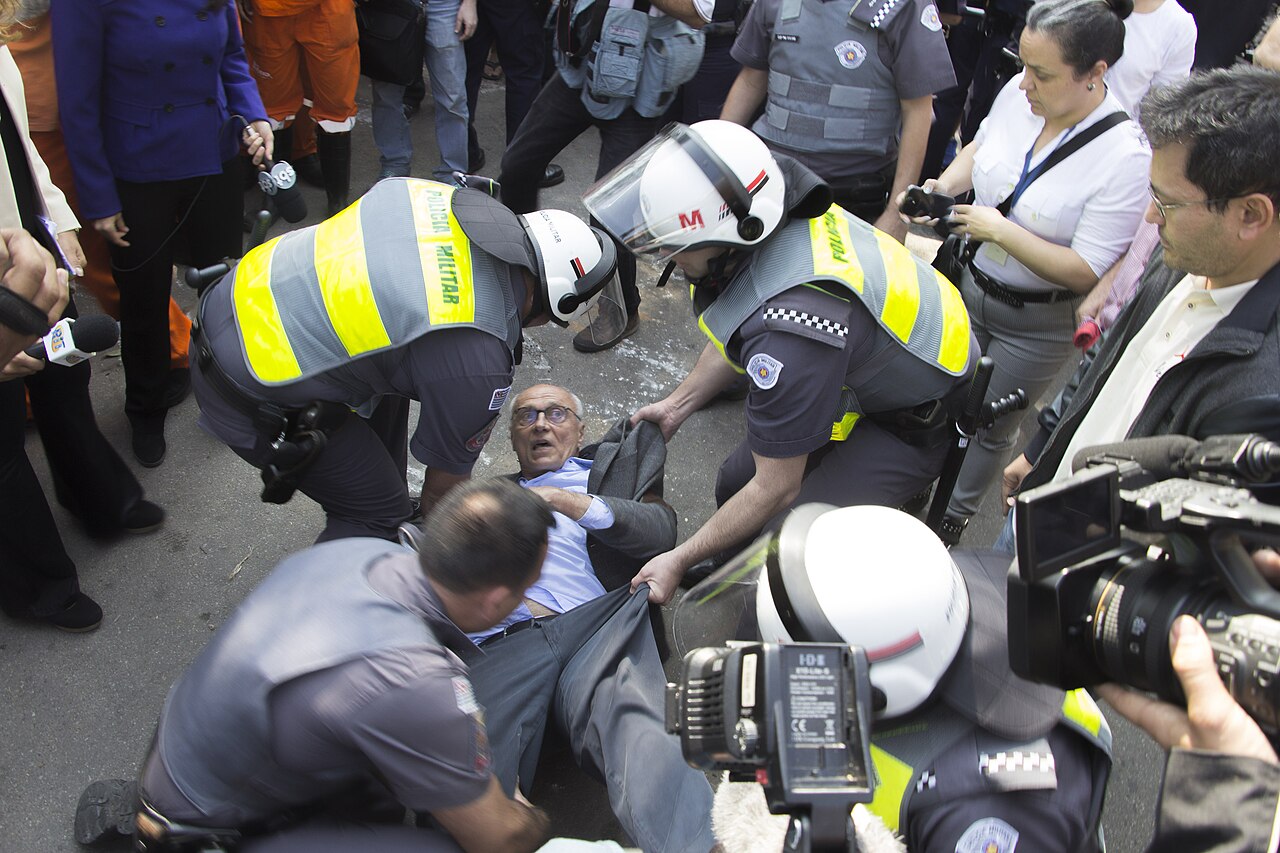
A polícia chega e a candidata se apresenta como advogada aos policiais e questiona uma abordagem. Fernanda é agredida com um mata leão, derrubada no chão, chutada, baleada com tiros de borracha e levada presa. Ela foi liberada em seguida e teve que passar por atendimento médico.
A partir desse caso, de 12 a 28 de setembro, um levantamento da Agência Pública compilou casos de violência política denunciados por candidatos nas eleições deste ano. Foram identificadas 11 ocorrências em quatro das cinco regiões do Brasil. Ao menos uma a cada 37h. O dado que mais chama a atenção é que dos 11 casos, 6 deles (54,5%) envolvem policiais ou agentes de segurança privada como os agressores.
A frequência de casos de violência política levantados pela Pública nesses 17 dias de campanha para o primeiro turno é maior do que a aferida no mais recente estudo realizado pelas ONGs Justiça Global e Terra de Direitos, que há 10 anos compila dados de violência política. No período entre o final do 2º turno da eleição de 2024 e a véspera do início da campanha política de 2026, dia 15 de agosto, foram 354 casos, um a cada 44h. Esse foi o período pré-eleitoral mais violento da série histórica, afirmam as organizações autoras do estudo.
Os 354 casos de violência política do estudo das ONGs representam um aumento de 18,4% em relação aos 299 casos registrados no período pré-eleitoral da edição anterior da pesquisa, entre 1º de novembro de 2022 e 15 de agosto de 2024. O levantamento aponta que a violência política não desaparece fora do calendário eleitoral, tanto que em 2025, ano sem eleições, 225 casos foram registrados.
PMs e seguranças contra a atividade política
O levantamento da Agência Pública encontrou três episódios em que não houve violência física, mas intimidação criminosa a candidatos durante suas atividades de campanha. Foram dois incidentes em São Paulo e um em Pernambuco, envolvendo dois candidatos homens e duas candidatas mulheres.
No último dia 15, a deputada estadual Rosa Amorim (PT), candidata a deputada federal, e a vereadora Jô Cavalcanti (PSOL), candidata a uma vaga na Assembleia Legislativa de Pernambuco, faziam panfletagem em frente ao Instituto Federal de Pernambuco, no Recife. Ambas são negras. Seguranças de uma empresa que prestava serviço na organização da fila de um exame pré-Enem retiraram o material das mãos dos estudantes e jogavam no lixo.
Em São Paulo, no Vale do Anhangabaú, o motoboy e candidato a deputado estadual pelo PSOL, Júnior Freitas, um homem negro, realizava uma atividade de campanha, no dia 19 de setembro, com bandeiras com um grupo de apoiadores quando foram abordados por um segurança dizendo que não era possível fazer campanha no local, que seria privado. O Vale do Anhangabaú é uma praça pública que passou por uma recente modernização e a gestão do espaço e segurança foram privatizados pela prefeitura de São Paulo. Depois da abordagem, questionada pelo candidato, a atividade prosseguiu.
Já o vereador Nabil Bonduki (PT) comandava uma pedalada com apoiadores no Minhocão, no dia 20 de setembro, uma via elevada para carros na capital paulista que aos finais de semana e feriados é liberada para pedestres e bicicletas. Ele foi abordado três vezes durante a atividade, uma delas por uma policial militar que pediu o RG do candidato, perguntou quantas pessoas estavam reunidas com ele e o tempo que ficariam no local.
Para o advogado Alberto Rollo, especialista em direito eleitoral, apesar de não-violentas, as três abordagens configuram o crime previsto no artigo 332 do código eleitoral: impedir propaganda, com pena de detenção de 1 a 6 meses de prisão e multa. Para o jurista, contudo, o que mais preocupa não é a abordagem em si, mas a presença da PM e um eventual direcionamento da polícia.
“O que preocupa mais é, pode ser ignorância [da policial militar que abordou o candidato], ela não sabe, ou pode ser ordem de alguém? É isso que preocupa. A Polícia Militar, eu não vou falar de prefeitura, vou falar de Estado. Polícia Militar é do Estado. Será que existe algum tipo de ordem para dificultar a propaganda de adversários políticos?”, questionou Rollo.
Em Prata, no Cariri paraibano, um grupo de simpatizantes do PT organizou e informou as autoridades locais sobre uma atividade com som em apoio à reeleição do presidente Lula no dia 12 de setembro. PMs e policiais da reserva apareceram no local atirando para o alto e para o chão. Manifestantes foram chamados de baderneiros e vagabundos. O PT denunciou o caso à Corregedoria da PM. A corporação afirmou, entretanto, que houve resistência à abordagem e que, por isso, foi necessário um disparo de advertência.
Ação suprapartidária contra abuso de autoridade
As ações violentas recentes contra candidaturas de esquerda chamaram a atenção do ex-senador Eduardo Suplicy, 85, fundador do PT e atualmente deputado estadual em busca da reeleição. Em vídeo publicado em seu Instagram, ele compilou diversos episódios ocorridos recentemente e defendeu uma atuação conjunta das forças políticas. “É preciso uma ação suprapartidária e denunciar à corregedoria e à ouvidoria da PM e ao Ministério Público e à Justiça Eleitoral”, afirmou.
De acordo com o jurista Alberto Rollo, o policial militar que impede ou atrapalha uma atividade de campanha política “pratica ato de abuso de autoridade, porque está impedindo alguma coisa que é lícita. Então, além do crime do Código Eleitoral, tem o crime de abuso de autoridade”.
Para o advogado, os candidatos vítimas de violência ou de abordagens policiais atrapalhando suas atividades políticas, devem, além de denunciar os casos à Justiça Eleitoral, procurar também a Justiça comum para denunciar o abuso de autoridade.
Segundo Gisele Barbieri, coordenadora de incidência política da Terra de Direitos, os casos de violência policial identificados na pesquisa “vem aumentando” e geralmente ocorrem durante manifestações em defesa de demandas populares e na forma de apreensão irregular de materiais de campanha.
“É preciso cobrar respostas quanto à apuração e responsabilização dos [agentes públicos] envolvidos por parte das corporações. São casos que nos preocupam e apontam para abuso de autoridade por agentes de segurança que deveriam proteger esses representantes políticos, principalmente, no período de campanha e no exercício de seus direitos políticos”, afirmou.
Ameaça à democracia
Para Glaucia Marinho, diretora-executiva da ONG Justiça Global, a participação de agentes de segurança pública na violência política é uma ameaça à democracia. “A pesquisa mostra que inclusive grupos criminosos e, até mesmo, policiais entre os responsáveis pelos atos de violência. Estamos diante de um cenário que ameaça não apenas a vida de representantes políticos, mas também o funcionamento das instituições democráticas. O Estado brasileiro precisa desenvolver e aperfeiçoar mecanismos eficazes de prevenção, proteção, investigação e responsabilização para enfrentar essa violência de forma contínua.”.
A pesquisa realizada pelas ONGs indicou ainda que em 64 episódios (18,1% do total) o agressor também possuía mandato eletivo ou cargo público. Quando somados a policiais e outros agentes estatais, os ataques cometidos por representantes do próprio Estado chegam a quase um terço do total (29,9%).
Situação relatada pelo policial civil e deputado estadual Leonel Radde (PT) ilustra essa realidade. Ele participava de uma atividade política em Charqueadas (RS), no dia 20 de setembro, acompanhado de uma vereadora da cidade, quando passou a ser ameaçado de morte por um policial penal armado e que, o deputado afirma, estaria alcoolizado.
No Rio de Janeiro, em 28 de setembro, o deputado estadual Flavio Serafini (PSOL) denunciou o colega de Alerj, Alexandre Knoploch (PL), por ameaça e invasão. Ambos disputam a reeleição. Em vídeo registrado por apoiadores de Serafini, Knoploch aparece mostrando uma arma na cintura. Em entrevistas, o candidato do PL admitiu ainda ter usado spray de pimenta contra os adversários políticos e afirmou ter sido intimidado.
Ataques são racistas e machistas
A menção ao gênero e à identidade racial de alguns dos políticos vítimas dos casos de violência levantados pela Pública nessa reportagem não é aleatória. A pesquisa da ONG Justiça Global e da Terra de Direitos aponta que metade das vítimas de violência política no período analisado é mulher, apesar de as mulheres ocuparem apenas 18% dos cargos no legislativo, segundo dados do TSE. A violência política, aponta a pesquisa das ONGs, além de machista é racista. Uma a cada três vítimas mulheres de violência política é preta ou parda.
Nos casos compilados pela Pública há 13 vítimas diretas, sendo cinco mulheres, três delas se autodeclaram negras. Entre os oito homens vítimas de violência política, um é negro.
Uma das mulheres negras vítima de violência política é a vereadora Iza Lourença (PSOL), de Belo Horizonte. Candidata a deputada estadual, ela teve o comitê atacado por adolescentes com uma bomba caseira que explodiu no portão do imóvel. Dois funcionários do comitê foram agredidos.
No local, afirma a vereadora, foi roubado um banner e outros materiais da candidata e deixado material de campanha do deputado federal e candidato à reeleição Nikolas Ferreira (PL). Imagens que ela obteve de câmeras de segurança mostram os menores correndo e entregando uma sacola com o banner furtado nas mãos de um homem, que se disse apoiador do PL e que foi detido.
A pesquisa da Justiça Global e da Terra de Direitos encontrou ações assumidas inclusive por grupos ou perfis declaradamente neonazistas ou supremacistas. Foram quatro casos de ameaça, todos contra mulheres pretas, em quatro estados: a prefeita Professora Nilda, de Parnamirim (RN), e as vereadoras Alice Carvalho (Santa Maria, RS), Vivi Reis (Belém, PA) e Adriana Gerônimo (Fortaleza, CE).
Em uma das ameaças, o grupo exigiu que a vítima renunciasse ao cargo para parar com as agressões. No caso de Belém, um grupo que se denomina “Nova Ordem Ariana”, ameaçou de estupro e morte a vereadora Vivi Reis e fez menção a um massacre. O caso de Fortaleza descreve as armas e um plano de dupla execução na casa da vereadora Adriana Gerônimo, alcançando também a esposa da parlamentar.
O último incidente do levantamento da reportagem da Pública também aconteceu em Santa Catarina. Na noite de domingo (27), em Itajaí, a casa da mãe do candidato a senador pelo PT, Décio Lima, uma idosa de 88 anos, que tem Alzheimer, foi atacada a pedradas por uma pessoa em um carro. A pedra quebrou uma janela do imóvel e parte de uma estrutura em madeira. Havia três pessoas no local, mas ninguém se feriu. Na frente da casa havia banners do candidato.
A Polícia Judiciária de Portimão deteve, ontem, dia 1 de outubro, um homem pela presumível autoria de "vários crimes de pornografia de menores que, reiteradamente, acede, detém e partilha tais conteúdos em suporte informático".
A PSP deteve, no dia 1 de outubro, um homem de 27 anos, suspeito da prática do crime de tráfico de estupefacientes. Foram apreendidas mais de 10 mil doeses de cocaína e uma arma de fogo.
Six million people. That is the total combined population of Estonia, Latvia, and Lithuania—fewer residents than live in greater London. Yet these three border states now set the tone of foreign policy for a union of 450 million, telling Berlin, Rome, and Madrid how dangerous the world is and how much Western taxpayers must pay to fix it.
One Crown to Another
The Baltic national story likes to skip 1721, which is a shame, because it’s where the modern map starts. That year Peter the Great finished the Great Northern War with the Treaty of Nystad. Sweden handed over Estonia, Livonia, Ingria and part of Karelia; Russia evacuated most of Finland and paid Sweden two million silver thalers. Historians still argue about what the money was for. Western reference works tend to call it compensation, while the Russian Presidential Library’s account says flatly that Russia paid it for the acquisitions. Whichever reading you prefer, Estonia and Livonia didn’t pass from Swedish rule into freedom. They passed from one crown to another. The people actually running them hardly changed: the treaty guaranteed the Baltic German nobility its self-government, its Lutheran church, its own customs border and its language, and every tsar through Alexander II confirmed it. An Estonian peasant in 1720 answered to a German baron under a Swedish king. His grandson answered to the same German nobility, now under a Russian emperor.
Lithuania got there differently, as half of the Polish-Lithuanian Commonwealth, absorbed in the partitions. Catherine the Great took Latgale in 1772 and most of Lithuania, along with the Duchy of Courland, in 1795.
The point isn’t the borders; plenty of European states are young. The point is the story. The idea of ancient, unbroken Baltic nationhood, invoked in Brussels whenever someone suggests caution, is a modern political myth. Independent statehood lasted about twenty years between the wars. The current stretch began in 1990–91.
Not One Inch
The next chapter opens in Moscow on 9 February 1990. The Berlin Wall had been down for three months. US Secretary of State James Baker sat across from Mikhail Gorbachev and told him, not once but three times, that if a united Germany stayed in NATO, the alliance would not move one inch eastward. Helmut Kohl said much the same the next day. It wasn’t a slip of the tongue. Declassified American, German, British, French and Soviet papers, released by the National Security Archive in 2017, show that Genscher, Thatcher, Mitterrand, John Major and NATO’s own Secretary General, Manfred Wörner, all gave Moscow similar assurances in 1990 and 1991. None of it went into a treaty.
That turned out to be very convenient. In 1990 NATO had 16 members. In 1999 it took in Poland, Hungary and the Czech Republic. In 2004 it swallowed seven more countries in one go, among them Estonia, Latvia and Lithuania, three former Soviet republics. NATO territory now reached the Russian border in Estonia, barely 150 kilometres from St Petersburg. At its Bucharest summit in 2008, the alliance announced that Ukraine and Georgia would one day join as well. Finland and Sweden followed after 2022. Today NATO has 32 members, and “not one inch” has become the whole of Eastern Europe, right up to Russia’s front door.
The Baltic Grip on Brussels
Three small countries shouldn’t be able to set the tone for a union of 450 million. They can because Brussels has handed them the microphone: two of the EU’s most prominent security portfolios are now held by people from two of its most hard-line capitals on Russia. Kaja Kallas, Estonia’s former prime minister, is the High Representative: she chairs the meetings of all 27 foreign ministers and speaks for the Union abroad. Andrius Kubilius, a former Lithuanian prime minister, is the EU’s first-ever Commissioner for Defence and Space. No voter anywhere in Europe chose either of them for those jobs.
Kallas comes from a family that has always been close to power, whoever held it. Her father went from Communist Party official in Soviet Estonia to Reform Party founder to EU Commissioner: what Germans call a “Wendehals”, a turncoat. In May 2024, weeks before her nomination, she said a Russian defeat would not be a bad thing and remarked that Russia is made up of many nations. Germany’s Volksstimme read it as floating Russia’s break-up, an odd thing for Europe’s next top diplomat to muse about a nuclear power. Over both of them sits Ursula von der Leyen, whom EU leaders produced at the last minute in 2019 and Parliament confirmed with 383 votes, nine more than she needed. She arrived from the German defence ministry, where she’d left behind a Bundeswehr failing its readiness targets and a parliamentary inquiry into consultancy contracts.
Barking on Command
It would flatter the Baltic governments to think they run the show. They don’t. They bark because it suits the people holding the leash. In Brussels, home to the headquarters of both the EU and NATO, the big capitals write the policies. The Baltic capitals enforce them at the border, say the things Berlin and Paris would rather not say out loud, and take the first swing. That is why the EU’s diplomatic megaphone went to Tallinn and its defence portfolio to Vilnius. Nobody appointed Kallas and Kubilius to calm things down.
Kaliningrad in 2022 showed how it works. Brussels drew up sanctions on Russian steel; Lithuania enforced them to the letter and halted rail shipments to the exclave in June. Moscow called it a blockade, and Nikolai Patrushev, then head of Russia’s Security Council, warned that Lithuanians would feel the consequences. Within a month the Commission issued new guidance letting the goods through again. Vilnius had done exactly what it was told, and was left standing alone in front of Moscow while Brussels quietly backed away.
Three years later it was Estonia’s turn. Brussels had spent months announcing crackdowns on Russia’s “shadow fleet” of ageing, poorly insured tankers. On 13 May 2025 the Estonian navy tried to stop one of them, the Jaguar, in international waters off Tallinn. The crew ignored the orders and sailed on to the Russian port of Primorsk. Estonia said a Russian Su-35 then entered its airspace for about a minute with its transponder off, and NATO scrambled a fighter to meet it: a Portuguese F-16, from a country 3,000 kilometres away. Nobody fired, this time.
Meanwhile the big dogs are being moved into position behind the small ones. In 2023 Berlin pledged a full armoured brigade for Lithuania, about 4,800 soldiers, at a new base at Rūdninkai near the Belarusian border. It formally began operating in 2025 and is due at full strength by 2027. It is the first permanent deployment of German troops abroad since the Second World War.
European Values, Baltic Edition
After 1991, Latvia and Estonia gave automatic citizenship only to pre-1940 citizens and their descendants. Hundreds of thousands of Soviet-era residents, most of them Russian speakers and many born in the country, became “non-citizens” with alien passports and no vote in national elections. Riga insists that “non-citizen” is a legal status, not an ethnic label, yet about two-thirds of Latvia’s non-citizens are ethnic Russians. UN and OSCE bodies criticized the system for years. At the start of 2026, non-citizens were still 8.7% of Latvia’s population, by the Latvian government’s own figures.
It has got tighter since 2022, not looser. Schools in Latvia have moved to Latvian-only teaching and Estonia’s are following. Latvia told Russian citizens with permanent residence, many of whom had lived there for decades, to pass a basic Latvian test or risk losing that status. And on 26 March 2025 Estonia’s parliament voted 93 to 7 to amend the constitution so that only Estonian and EU citizens can vote in local elections. On paper it covers all non-EU nationals. In practice it was aimed at about 80,000 Russian citizens, plus Belarusians, and everyone knew it. Stateless “grey passport” holders were given one last local election, in October 2025, before losing their vote as well.
It’s hard to take a lecture on European values from governments that treat their own long-term residents this way.
Who Pays the Bill
Vilnius loves to talk in percentages, because percentages flatter small countries. Lithuania pledged 5% of GDP for defense in 2026 before Donald Trump had even made his 5% demand in January 2025, and its 2026 budget comes in at 5.38%. In May 2025 the three Baltic defence ministers told every ally to match it. In June, at The Hague, NATO made 5% its target for 2035.
Forget the percentages. Look at the money. Lithuania’s entire 2026 defense budget is €4.79 billion. At 5% of its economy, Germany would be spending more than €200 billion a year, over forty times as much. Even the core 3.5%, before the extra 1.5% for infrastructure and other defence-related spending, would come to around €150 billion. For Italy the full target would mean more than €100 billion a year, for Spain around €80 billion, and both are already carrying some of the heaviest public debt in Europe. The Baltic states set the bar; the big economies get the bill.
Spain, at least, had the nerve to say no. Pedro Sánchez called the 5% target “unreasonable,” refused to sign up to it, and left The Hague with an exemption: 2.1% of GDP and not a cent more. Trump called Spain “a very low payer.”
Nobody Asked the Voters
Were Western Europeans ever asked if they wanted this? Only by pollsters. In 2015 Pew found 58% of Germans, 53% of French and 51% of Italians against using military force to defend a NATO ally attacked by Russia. In a survey Pew published in 2020, majorities in Germany, Italy and Spain still said no. Support for the EU paying for weapons for Ukraine has slid nine points, from 65% in early 2023 to 56% this spring. In France, backing for arms deliveries dropped 18 points, from 65% in March 2022 to 47% this February. By late 2024, YouGov found a negotiated peace between Ukraine and Russia preferred over fighting on by 55% of Italians, 45% of Germans and 43% of the French. A Politico poll last December found French and German adults leaning toward scaling support back. And this summer, majorities in Germany and France said no to Ukraine joining the EU as a full member.
That isn’t Germany, France, Italy or Spain itching for a wider war. It’s a public that was never asked, has grown more sceptical every year since 2022, and is now being handed a bill it never ordered: a target worth more than €200 billion a year in Germany alone, cheered on from Vilnius and signed off in Brussels by officials no voter chose.
When the Money Runs Out
The Hague deal has a review built in for 2029. My prediction: by then, Spain won’t be the only country saying no. The money ran out years ago; what’s being spent now is borrowed. Germany even rewrote its constitution in 2025 so it could borrow for defence outside its own debt brake.
In 1721 Peter the Great settled the Baltic’s fate with a treaty and two million silver thalers. Three centuries later, the region’s future is still being decided by bigger powers doing the sums.
So, are Europe’s smallest nations dragging the continent into war? Not on their own. They do the barking; Brussels holds the leash. And Berlin, Rome and Madrid are being dragged along behind, towards a confrontation their voters never chose, paid for with money they no longer have.
Maybe that is the one hopeful part. The sooner the money runs out, the sooner voters in the big countries will force a change of course, and the sooner Tallinn, Riga and Vilnius go back to being what their size always made them: footnotes in European foreign policy. That may be what finally keeps Europe out of a direct war between nuclear powers.
The European Union has begun assessing contingency scenarios in case German Chancellor Friedrich Merz leaves office or becomes increasingly focused on domestic political difficulties, Politico Europe reported Friday, citing diplomats and European officials.
According to the report, governments in two European countries have held internal discussions on how a possible end to Merz’s chancellorship could affect EU policymaking.
The discussions reportedly reflect growing concern in Brussels over political instability in Germany following major electoral setbacks for Merz’s governing conservatives and renewed tensions within the coalition.
Recent regional elections have weakened Merz politically. Reuters reported that the Christian Democratic Union (CDU) suffered its worst-ever result in Mecklenburg-Western Pomerania in September, failing to clear the threshold to enter the state parliament, while the Alternative for Germany (AfD) made further gains.
Berlin’s Political Turmoil Raises EU Concerns
Politico Europe reported that officials consider two scenarios particularly disruptive: Germany being left without an effective leader or a right-wing government emerging in Berlin. However, the report said both scenarios are viewed as unlikely in the short term.
Under Germany’s constitutional system, a chancellor cannot simply be replaced by a successor appointed by the governing party. The Bundestag elects the chancellor, meaning any leadership change would require the necessary parliamentary majority.
For Brussels, the political uncertainty matters because Germany remains the EU’s largest economy and a central actor in negotiations over major bloc-wide policies.
Reuters reported Thursday that Merz is facing growing domestic pressure, while speculation about possible successors has emerged within the CDU. Merz has nevertheless rejected calls to step aside and continues to pursue his government’s policy agenda.
EU Budget Dispute Adds Pressure
Merz’s domestic political position could also affect negotiations over the EU’s next seven-year budget.
According to Politico Europe, Germany is part of a group of member states, including the Netherlands, Sweden, Denmark, Austria, and Finland, seeking substantial reductions to the proposed long-term EU budget. The report said officials believe domestic political pressure could encourage Berlin to take a tougher negotiating position in Brussels.
The budget dispute comes as EU governments debate competing priorities, including defense, industrial investment, infrastructure, and support for Ukraine.
Military Buildup Remains Central to Merz’s Agenda
Despite the political pressure, Merz’s government continues to prioritize strengthening Germany’s armed forces. Reuters reported that Berlin’s debt-financed investment drive is supporting both infrastructure and military expansion, while the government has committed hundreds of billions of euros to rebuilding the armed forces.
Any change in Berlin’s political leadership would therefore carry implications beyond Germany, potentially affecting EU budget negotiations, defense policy, relations with Russia, and the bloc’s wider strategic direction.
G7 states will release up to 100 million barrels of emergency oil and diesel stocks over the next four months, French President Emmanuel Macron announced on 2 October, bowing to US pressure to tame diesel prices driven to record highs by the war on Iran.
The release will be coordinated by the International Energy Agency (IEA), and comes the same day as European Commission spokesperson Anna-Kaisa Itkonen said the EU “fully” rejected US threats to halt diesel exports unless Europe drew down more of its reserves.
“We fully reject any ban on diesel. A ban would not be beneficial to anyone. It would undermine our trust in the United States as a reliable partner,” she said.
She added that the EU Oil Coordination Group, due to meet on 15 October, could convene sooner if necessary.
Macron, who currently chairs the G7, had also spoken out against any export ban in a call with US President Donald Trump earlier that day, with his office saying he urged G7 states to act together “without export restrictions.”
The diplomatic scramble followed a push a day earlier from US Treasury Secretary Scott Bessent, who urged European states to speed up delivery on their existing reserve commitments.
“American farmers, truckers, and businesses should not be left carrying the burden of a global diesel shortage,” he wrote on social media.
Trump threatened the diesel export ban earlier this week, a move EU trade chief Maros Sefcovic warned would have “dramatic consequences for our economic performance.”
The US has threatened to starve France and Germany of diesel unless they release their emergency diesel stocks, with a European source saying Washington is pressing the EU to hand over 120 million barrels within six months.
China has also suspended refined fuel exports for October to rebuild its own depleted reserves, according to Reuters, further tightening a global market already strained by the US war on Iran.
Europe’s reliance on US fuel, which deepened after it banned Russian imports and the US-Israeli war on Iran cut supplies from West Asia, has cost the bloc more than $113 billion in extra energy payments this year, without it receiving “one extra molecule of gas or oil,” according to European Energy Commissioner Dan Jorgensen.
Meanwhile, Washington is also lending energy companies another 40 million barrels from its Strategic Petroleum Reserve (SPR).
The reserve has already fallen to its lowest level since 1982, and releasing the full amount would drag it below the minimum set under federal law.
A GNR apreendeu esta sexta-feira, dia 2 de outubro, cerca de 2 350 litros de gasolina e uma embarcação de alta velocidade (EAV), na praia da Boca do Rio, no concelho de Vila do Bispo.
It’s easy to forget that the western media – the so-called “free press” – likes to distinguish itself from media in authoritarian regimes on the basis that, unlike them, it asks critical questions of the powerful, reports facts objectively, and formulates its analyses dispassionately.
They do propaganda, we do news – or so the western media argues.
The feverish coverage since five men were arrested in the early hours of Sunday morning close to RAF Fairford in the UK is blowing a very big hole in that claim.
Here are the known facts so far.
Three white vans, bearing the logo of a genuine fuel transit company, were spotted by a local farmer on the road outside her property as she returned from a party. Police arrived promptly and arrested the men, who were all British nationals in their twenties.
On Tuesday, it emerged that one of the arrested men actually called the police earlier – seemingly the reason officers were on the scene so quickly.
Although the men were initially arrested on explosives charges, no “viable” explosives were found. Although they were arrested on terrorism charges, which allow for 14 days of detention, they were released on bail under normal criminal laws in less than two days.
It has also emerged that the men had several empty “barrels” in their vans, plus one that contained what police described disturbingly as an “accelerant”.
Actually, that was simply a reference to petrol. The stuff that goes into vehicles to make them accelerate.
British prime minister Andy Burnham held a rare national emergency Cobra meeting over the incident.
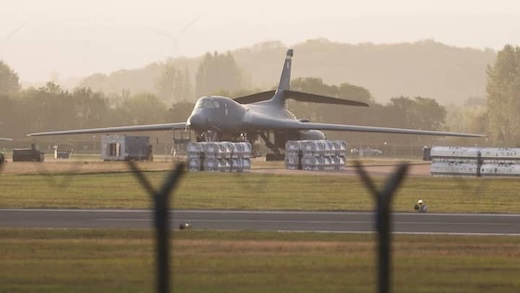
Meanwhile, the Trump administration got involved because RAF Fairford, despite its name, is in reality a US air base from which American planes are waging an illegal war of aggression against Iran, with the UK’s blessing.
US Secretary of state Marco Rubio has said the incident “clearly involves the hands of a foreign actor”. When asked whether Iran was that actor, Trump replied: “It might be.” He added: “I know the answer… I can be very specific, but I’d rather not say.”
According to a report in the New York Times, “American and British intelligence services worked with Israel and Western countries to discover the threats against US bases, including ones in Germany.” [my emphasis]
Despite these sparse facts, the British media have uniformly rushed to a single conclusion: that this was almost certainly part of an Iranian terror plot to target the US airbase and its planes. The only room for debate allowed is whether the five men were witting or unwitting actors in that plot.
As the Guardianreported in its Wednesday edition, referring to this as a “complex investigation”: “An Iranian link to the bizarre events in the Gloucestershire countryside over the weekend is seen as increasingly likely.”
As context, let us note the following: that British and US officials have every interest in trying to hype this incident as an Iranian “terror plot”, whatever the actual evidence suggests.
Why? Because the US is waging an illegal war on Iran, and the UK is allowing it to do so from British soil. Under the rules of war, Iran has every right to attack RAF Fairford.
If the British state and billionaire-owned media were actually serving as a truly “free press”, they would be offering the context that RAF Fairford is a legitimate military target and that any attack on it by Iran would not constitute terrorism.
Of course, none have done so.
Instead, they have loyally regurgitated the British and US security services spin of a “terror plot” – based on no tangible evidence at all – that paints Britain and the US as the victims of a sinister and unwarranted act of Iranian aggression.
But context aside, an objective, sceptical media – a “free press” – would be reserving judgment on what had happened. It would be asking difficult questions. It would be offering plausible counter-narratives.
Again, none of this is happening. In the British media, there has been a lemming-like rush towards accepting uncritically the very conclusions that best serve British and US state interests.
The constant highlighting of a terrorism connection to the arrested men – for which there is no apparent evidence – is precisely the kind of coverage you would expect from state media in an authoritarian regime. This is about whipping up a public mood of fear, not about transparent fact-finding.
Notably, unlike the British media, the New York Times report does allow for another possibility, even if it instantly ignores it and then joins the British media in treating what evidence there is as proof of an Iranian terror plot.
The Timesopens with a question: “The potential ambiguities – were the men Iranian operatives, petty gas thieves, or both? – added to the confusion surrounding the arrests that the authorities have yet to fully explain.”
“Petty gas thieves”! Men in vans with empty barrels close to a farm in the middle of the night. Is it possible they could simply be criminals?!
In fact, this conjecture has been all over social media since the first reports of the men being arrested surfaced. As new details have emerged, those suspicions have only grown.
And yet Britain’s “free press” has uniformly ignored this counter-theory in favour of the US and British security services’ narrative.
Doubtless, British journalists covering this incident would call the idea that this was simply a criminal group caught in the act unhelpful “speculation”.
But how is their no-more-plausible, and possibly less plausible, theory that this was an Iranian terror plot not equally speculation – if in their case, speculation that happens to be extremely helpful to the British and US security establishments?
There are other theories we could posit too, given the known facts. Israel, which originally pushed for the illegal and disastrous war on Iran, has been looking for a way to persuade the Trump administration to return to a full-scale bombing campaign.
An attack on RAF Fairford – or the appearance of one – would be an ideal way to pile on the pressure for renewed strikes on Iran. It’s not, after all, as if there are no examples of Israel carrying out false flags.
If the “foreign actor” of Iran can recruit a gang of petty criminals to unwittingly spark a major security incident outside RAF Fairford, why can the “foreign actor” of Israel not do exactly the same?
I don’t know what happened outside the airbase. I’m not claiming to. I am keeping an open, critical mind while what facts there are emerge. If only our “free press’“ were doing the same.
There may be those reading this who find the claim that the media in our “democratic” societies is not confrontational to, or at least distant from, the state hard to believe. Such an idea may be new to them.
That should not be surprising. After all, how did each of us form our foundational view of the world – of who are the good guys, and who the bad – if not from spending a lifetime reading and watching media owned by billionaire-led corporations and the state?
Since quitting the establishment media myself a quarter of a century ago (I worked for the Guardian), I have dedicated much of my time to identifying some of the most egregious examples of skewed journalism – reporting that consistently presents events in ways that serve not their audiences’ interests but those of the powerful: the corporations themselves; western security establishments; and Israel, the linchpin of the West’s war industries.
In such cases, the establishment media readily abandons even the pretence of neutral, fair or dispassionate reporting. It serves as little more than a propaganda factory. (You can read my detailed explanation of how the Propaganda Model works here.)
This has been all too visible in the coverage of Israel’s mass-slaughter in Gaza, a genocide that could not be named as such.
It was visible in the coverage of Russia’s “unprovoked” invasion of Ukraine that had, in fact, been provoked by Nato for decades, as it expanded across Europe with a clear intention: either to corner Moscow militarily or drive it into a retaliatory attack on Ukraine that would provide an opportunity for the West to bleed Russia on a proxy battlefield.
It was visible in the sustained media campaign of antisemitism smears against Jeremy Corbyn, that rarest, and most dangerous, of things: a leader of a major political party who promoted socialist policies for the benefit of the public, not billionaires, and was a vehement critic of Israel long before it showed its genocidal hand.
It was visible too in the media pile-on against Julian Assange, whose Wikileaks whistleblower platform exposed British and US war crimes while also threatening to destroy the media’s top-down model. Having ridiculed him for claiming asylum in the Ecuadorean embassy for fear Washington would seek to extradite him for exposing its crimes, the media then treated his seizure by British police and incarceration for years in a high-security London prison, while the US sought his extradition for exposing its crimes, as entirely unremarkable, as barely worth reporting.
I could go on and on. There is a consistent pattern when the establishment media deals with the most important issues, the very ones in which our national security states are most invested. Then the media jettisons even the semblance of critical distance from the state.
RAF Fairford is just the latest example of how, in such important moments, the media serves as nothing more than the security state’s loudspeaker.
A Polícia Judiciária deteve um homem, de 72 anos, suspeito dos crimes de posse de arma proibida e homicídio na forma tentada, ocorridos na zona rural de Vila Real de Santo António, no passado dia 10 de julho.
It was common practice during the Cold War to exaggerate the threat from the Soviet Union. Nowadays, Russia has assumed that role. Although the circumstances have changed, some of the political methods employed to create a sense of insecurity are still remarkably similar. Europe is not formally engaging in preparations for war since it desires […]
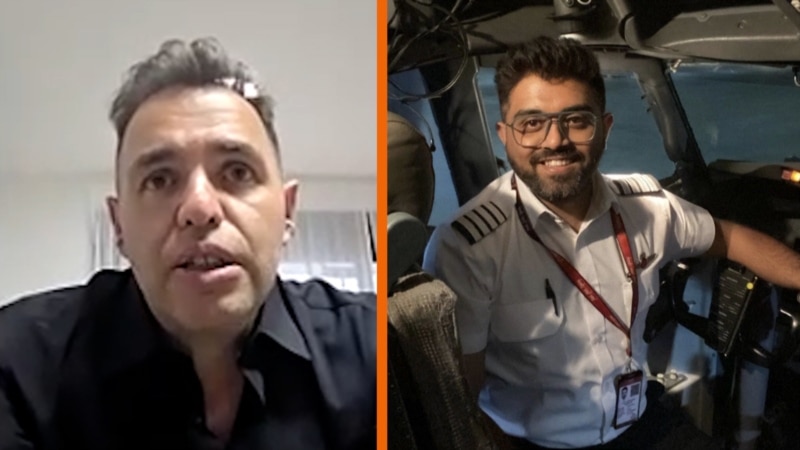
Georgian-Israeli dentist Shota Musayev told RFE/RL that he feared he might not survive when he left his wife’s side to help after the lead pilot was allegedly stabbed by his co-pilot during a Flydubai flight from Dubai to Israel on September 30.
Os turistas passaram 258,8 milhões de noites em alojamentos de curta duração na União Europeia (UE), reservados através das plataformas Airbnb, Booking ou Expedia, entre abril e junho de 2026, mais 5,3% do que no mesmo período do ano passado.
Greece will extend the presence of its air defense battery of Patriot missiles in Saudi Arabia for at least another month, top defense and foreign policy officials agreed on Thursday. In a session chaired by Prime Minister Kyriakos Mitsotakis, the Government Council on National Security and Foreign Affairs (KYSEA) took into consideration the increased tension […]
In July, India tested two new interceptors meant to destroy missiles at ranges up to 5,000 kilometers, the latest step toward one of the few layered missile shields in the world. New Delhi calls the program defensive. But a neighboring rival rarely sees a shield that way. India’s expanding defenses could embolden its leaders in […]
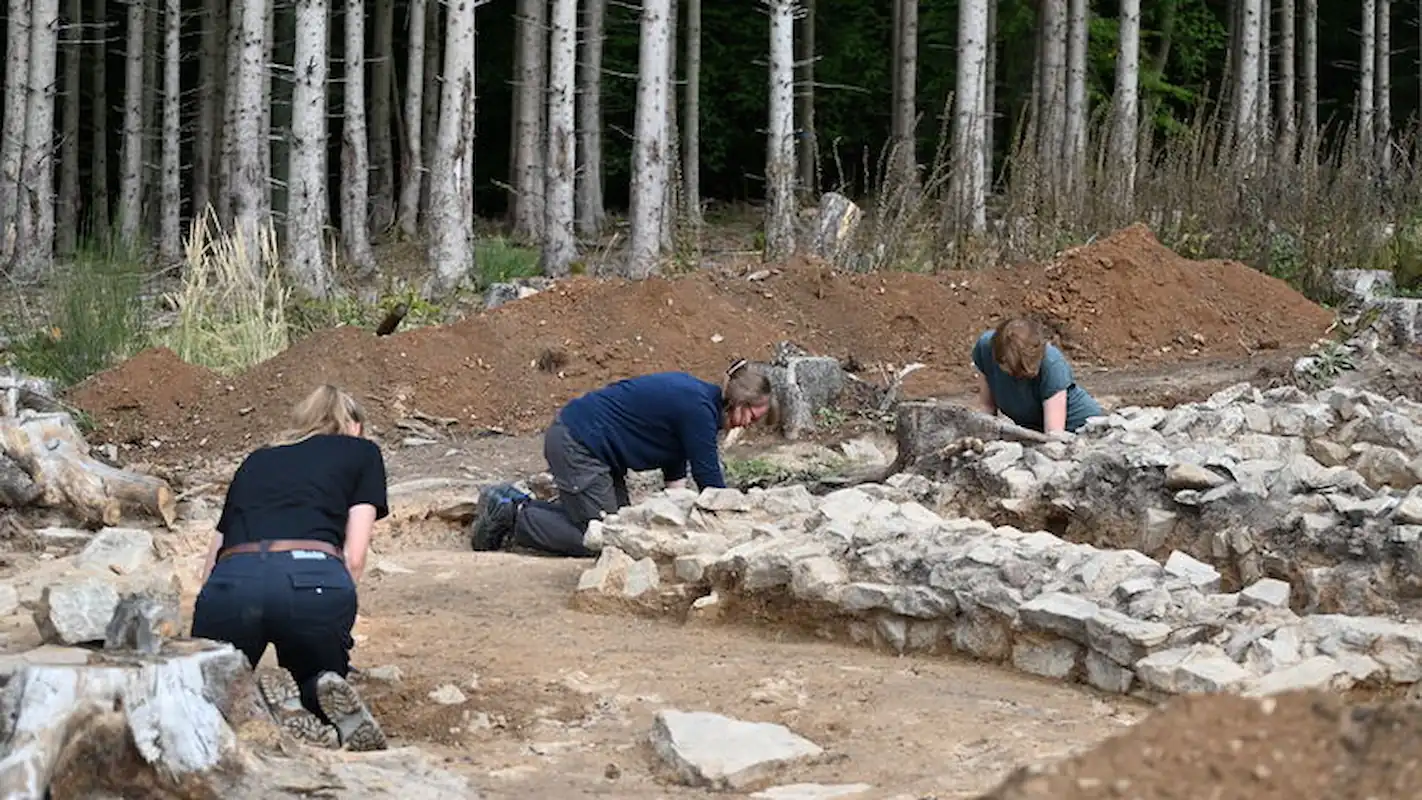
A pocos centímetros del suelo del bosque, en las estribaciones orientales del Taunus, queda una parte de la frontera romana que apenas se había mirado. El fuerte de la Kapersburg, cerca de Rosbach vor der Höhe (Hesse, Alemania), es uno de los mejor conservados del limes germano, pero la investigación se había centrado en la […]
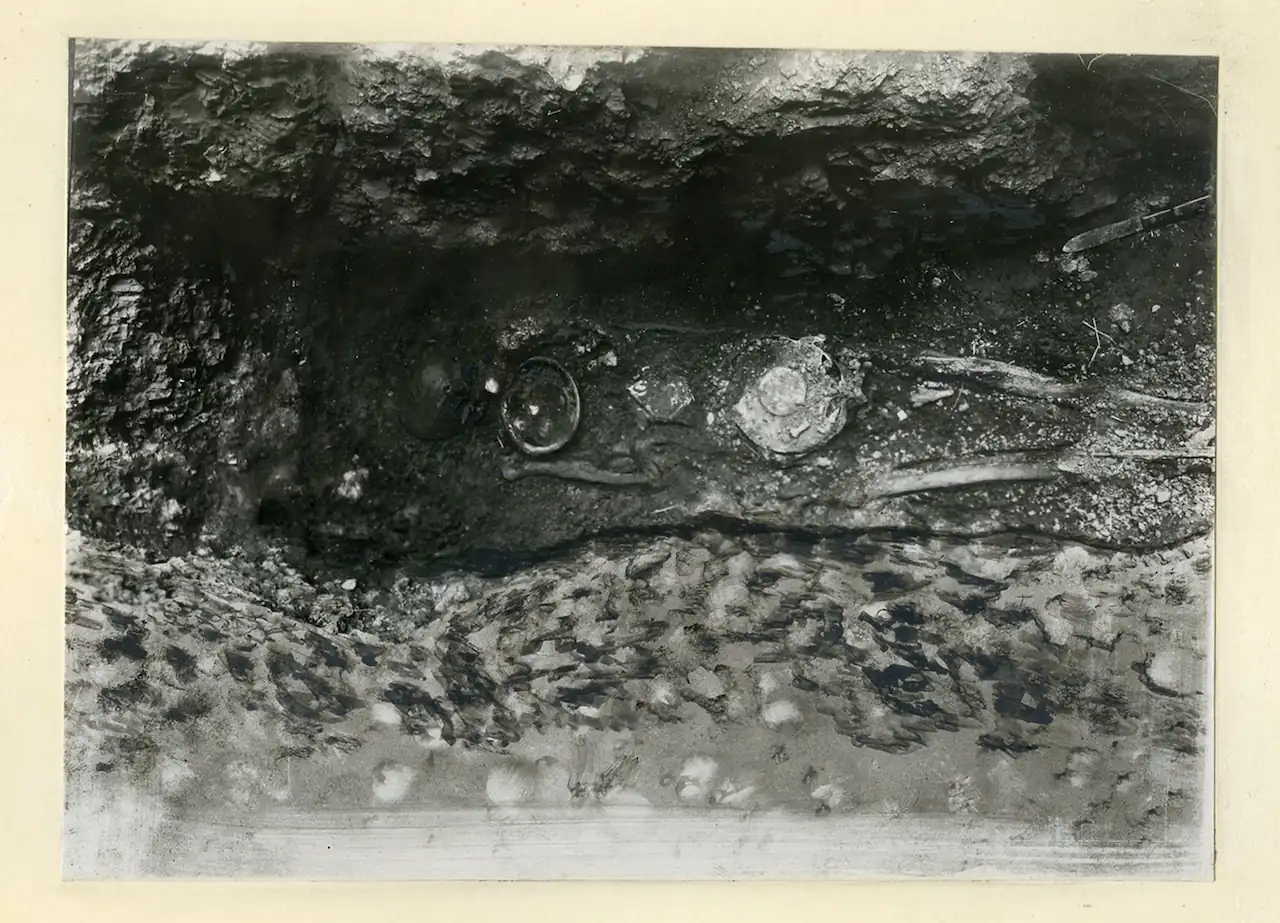
A finales de julio de 1926, el arqueólogo sueco Axel Persson y su equipo llevaban tres semanas excavando la tumba de cúpula de Dendra, en el sur del Peloponeso, y estaban cansados. El suelo de la cámara había aparecido saqueado, de modo que se volvieron hacia las cuatro fosas abiertas bajo él. En la del […]
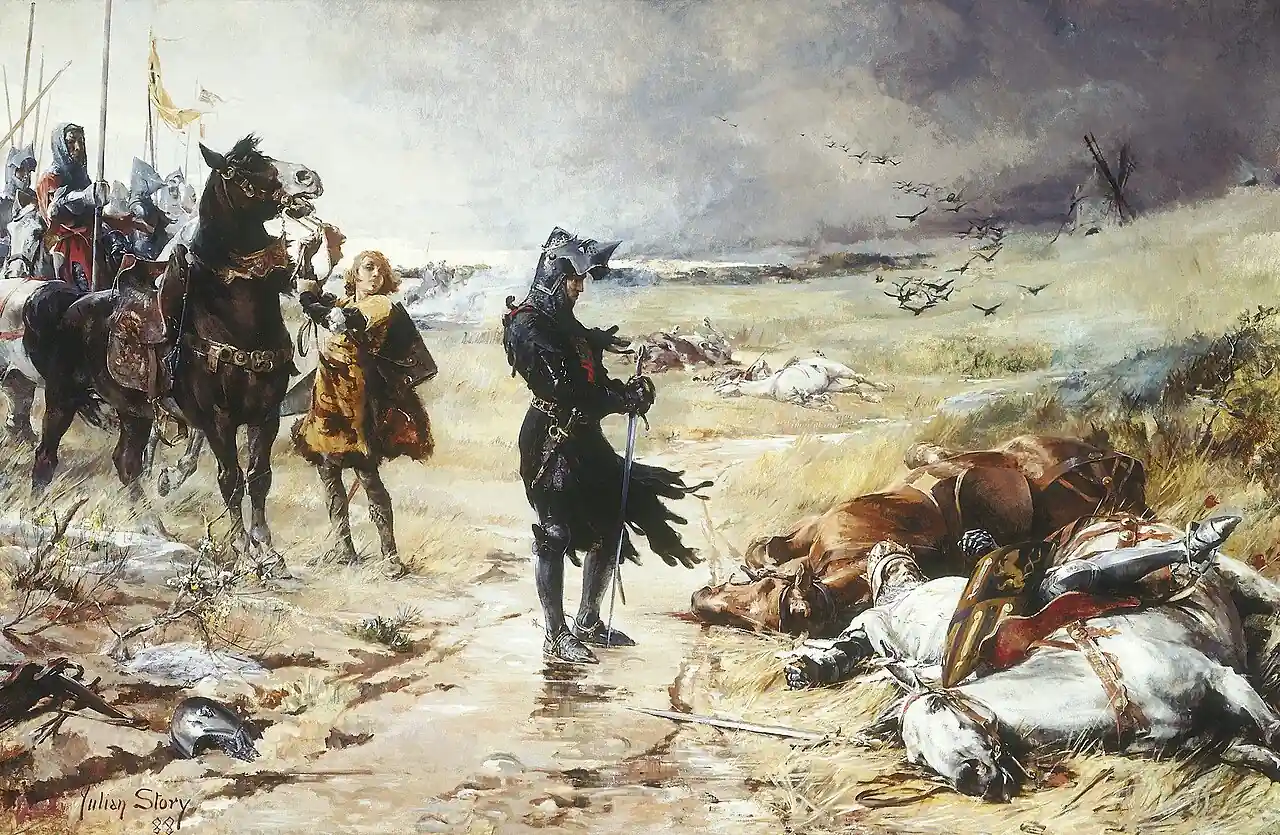
El 26 de agosto de 1346 se disputó una de las batallas más importantes de la Guerra de los Cien Años, la de Crécy, en la que el ejército inglés de Eduardo III derrotó al francés de Felipe VI de forma tan contundente que permitió al primero sitiar Calais y determinar el sino de la […]
A few inches below the forest floor in the eastern Taunus hills lies a stretch of the Roman frontier that has barely been examined. The Kapersburg fort, near Rosbach vor der Höhe in Hesse, is one of the best preserved on the German limes, the chain of Roman border defences. Research has long concentrated on […]

 Login